Category: Fashion

Retail News Asia is committed to providing both local and global retailers with the latest Fashion news throughout the Asian market. This on a daily base.

  • Boss launches NFT in social impact project

    Boss launches NFT in social impact project

    Premium fashion brand Boss has collaborated with NFT company Boss Beauties to introduce the Boss x Boss Beauties Dream Like a Boss program, which aims to mentor young women.

    One of the Boss Beauties NFTs is on auction until March 12 and the revenue will be donated to the co-created mentorship program. In addition, a limited-edition T-shirt featuring the NFT is being sold on Boss’s website, with a share of sales going to the Dream Like a Boss program.

    According to Boss, the collaboration is an opportunity for both brands “to provide young women from historically marginalised and underrepresented groups with invaluable skills and insights for their professional development.”

    The program will offer mentorship talks, along with real-life business experiences by executives at Hugo Boss and all mentees will be funded by the Boss x Boss Beauties auction.

    “Establishing the Dream Like a Boss program will allow us to give back to our communities, to provide a space for creativity and growth, and to amplify voices that echo our brand values in a supportive and inclusive way,” said Rashmi Verma, head of global diversity and Inclusion at Hugo Boss.

    “Joining forces with Boss Beauties is an important step in creating equal opportunities for all women, and this is just the beginning of many great things to come.”

  • Ukraine war to sully clothes sales from Levi to Ralph Lauren

    Ukraine war to sully clothes sales from Levi to Ralph Lauren

    Levi Strauss and Ralph Lauren are among U.S. apparel brands likely to be worst hit by Russia’s invasion of Ukraine which is again clogging supply chains in Europe where they derive at least a quarter of sales, Wall Street analysts say.

    American clothes firms’ European businesses were just recovering from two years of pandemic restrictions. But war-related Western sanctions on Moscow, airspace bans, and shipping route changes have put new squeezes on East-West supply chains.

    “Cargo checks are now one of the biggest disruptions to shippers, making sure they are not breaking sanctions at ports in the EU (European Union) and the UK,” said Jane Hali, CEO of investment research firm Jane Hali & Associates.

    Analysts see particular exposure to Calvin Klein and Tommy Hilfiger owner PVH, Levi Strauss, Ralph Lauren, Michael Kors owner Capri Holdings and Nike , who get roughly 25%-40% of sales from Europe.

    “Europe is definitely going to feel the brunt of the economic damage … which will impact consumer sentiment and consumer wallets,” CFRA Research analyst Zachary Warring said on the fallout for apparel retailers.

    Due to the war, Wedbush analysts have reduced yearly revenue growth estimates by anywhere from 100 to 400 basis points for Adidas AG. and at least eight U.S.-based companies including Skechers USA and Farfetch Ltd.

    The brokerage also downgraded ratings on PVH and Ralph Lauren’s stock to “neutral” from “outperform,” while reducing Nike’s price target.

    Adding to sales pressures, numerous brands have also halted operations in Russia altogether in protest or because of the newly-difficult operating environment. Chinese manufacturers had been sending more goods to Europe by rail across Russia.

    Companies with a smaller European presence, such as Carter’s, Bath & Body Works Inc and Kate Spade-owner Tapestry, are likely to be more insulated, analysts said, but the challenge remains sector-wide.

    “We’re afraid it won’t just be retailers with high exposure to Europe but most of retail,” CFRA’s Warring said.

  • Fashion group Shandong Ruyi’s creditors seek control of Lycra

    Fashion group Shandong Ruyi’s creditors seek control of Lycra

    Creditors of debt-laden fashion conglomerate Shandong Ruyi Technology Group will seek control of Lycra after Ruyi defaulted on a $400 million loan it took from them to buy the fibre maker. A statement from the creditors on Monday said that Ruyi, known for its ambition to become the LVMH of China, has not been able to repay the Lycra loan since May 2019.

    The lenders include Hong Kong-based China Everbright Limited and Tor Investment Management, along with Seoul-based private equity firm Lindeman Partners and its affiliate Lindeman Asia.

    Their steps to assume full equity control of Lycra include the appointment of receivers for the assets of Lycra’s parents. Ruyi and Lycra did not respond immediately to requests for comment on Tuesday. Ruyi bought control of Lycra from U.S. conglomerate Koch Industries for $2.6 billion in 2019, borrowing about $1 billion for the deal.

    Reuters reported in 2020 that some of Ruyi’s creditors had hired a restructuring specialist to sound out potential buyers for Lycra after weakening the financial performance of the manufacturer of the eponymous stretchy material fears of a loan default.

    However, no deal materialised and Ruyi decided to look for alternative means of rescue. Ruyi, the roots of which are in the textiles industry, began a buying spree in 2015 that included SMCP, Aquascutum and Savile Row tailor Gieves & Hawkes, aiming to establish itself as a luxury fashion house.

    But the Chinese conglomerate has struggled under the weight of its debts and its financial difficulties worsened with the COVID-19 pandemic.

    French fashion group SMCP last month removed five board members associated with Ruyi after the conglomerate defaulted on bonds used to acquire shares in the French business.

  • Italy’s OVS launches in Cambodia

    Italy’s OVS launches in Cambodia

    The Italian-Cambodian Business Association (ICBA) is pleased to officially announce the launch of a new initiative called “Italy in Cambodia”– Everything Authentically Italian in Cambodia”.

    It is a non-for-profit program aiming to promote and celebrate Italian excellence and the 100% Made by Italy in Cambodia through an online platform.

    The initiative, which has received the endorsement of the Italian Embassy in Bangkok and the European Chamber of Commerce in Cambodia (Eurocham), wants to boost on-line shopping and digital consumption.

    Says Luisa Gentile, Creator and Director of the program “As a long- term Italian ex-pat, I have always been proud of the excellence of the Italians in the world and their ability to innovate without losing sight of tradition. With Italy in Cambodia, we will put our small but vibrant community of Italian professionals and entrepreneurs in Cambodia under the spotlight, albeit a “virtual” one.

    We will provide our on-line readers special promotions and deals to introduce the Italian lifestyle, food, culture, and products, help them to virtually meet and find Italian professionals and entrepreneurs who made Cambodia their home and, above all, make them discover and experience the true spirit of Italy in Cambodia.

    Our ultimate goal is to become the most trusted source online for everything genuinely Italian in the Kingdom of Wonder, addressing both the local community, international travelers, business investors, and anyone who loves Italy or wants to be connected with Italy while in Cambodia.”

    Says about the initiative Aurelio Flacco, Chairman of ICBA and Honorary Consul of Italy in Phnom Penh “Operating digitally is the key way to stay in business, through mandated shutdowns and restricted activity. ICBA aims to support the Italian businesses already established in Cambodia –through this newly created on-line platform, Italy in Cambodia.

    Our final goal is to help, particularly the small and medium-sized Italian companies, to grow and reach new customers online and, eventually, support them and their local staff, to thrive in these difficult times.“

    The registration to Italy in Cambodia is free of charge and is open to all Italian professionals or entrepreneurs residents in Cambodia.

  • Halo Food Co acquires The Healthy Mummy for $17 million

    Halo Food Co acquires The Healthy Mummy for $17 million

    Global online health and fitness platform, The Healthy Mummy has been acquired for $17 million by Halo Food Co.

    The brand offers mums a range of health and wellness programs that include exercises, supplements information, recipes, and merchandise. It was founded by Rhian Allen in 2010 and operates in the UK, the US and Australia.

    The business boasts more than 86,000 digital subscribers hence the acquisition will add sizeable cross-brand sales to Halo Food Co’s profit mix.

    Halo Food Co is a product development company in Australia and New Zealand. The ASX-listed company’s manufacturing capabilities will aid The Healthy Mummy product profile to expand and develop in order to scale the business further.

    “To say we are a customer-centric business is an understatement and I have and will always strive to make every customer and mum happy with what we offer and do as a business,” said Rhian Allen, founder of The Healthy Mummy.

    “Partnering with Halo Food Co was something I feel very happy about as I firmly believe that the Halo team will help to further my own vision and belief of ‘customer first’ and will allow us to serve you better with incredible product innovation and an even wider range of products,” she added.

    “The business is a natural fit to the existing Halo business, increasing the lifetime value of customers to the group and adding high margin digital distribution channels and cross-sell capability that would otherwise take years to establish organically,” Halo CEO, Danny Rotman said.

    Since last year, the e-commerce company has started selling its products at physical retail stores including Priceline Pharmacies.

  • Adidas expects to grow China sales this year

    Adidas expects to grow China sales this year

    German sportswear company Adidas said on Thursday it would grow in its key market of China in 2022 even after it was hit by renewed pandemic restrictions and the aftermath of a consumer boycott of Western brands.

    The comments come after Manager Magazin reported Adidas expects sales in China to be down 400 million euros ($455 million) in 2022, without citing its sources.

    Asked about the article, an Adidas spokesperson said: “Our business in China grew in 2021 and our business in China will grow in 2022 as well.”

    Adidas’s third-quarter sales fell 15% in Greater China, although they were up 15% in the first nine months of the year. The company reports full-year 2021 results on March 9.

    Western brands have come under fire in China for saying they would not source cotton from Xinjiang after reports of human rights abuses against Uyghur Muslims in the region. Beijing denies any abuses.

    Adidas said last year it had launched an action plan to try to revive its fortunes in China, long its most important growth market. It has set up a dedicated studio for marketing and is increasing its creation of products just for the Chinese market.

    Manager Magazin said the situation was seen as so critical that Adidas sales chief Roland Auschel had traveled to China in January despite quarantine requirements.

    Rival Nike said in December supply issues and fresh COVID-19 lockdowns led to a 20% fall in revenue in Greater China in its fiscal second quarter.

  • Kering bullish on Chinese domestic luxury consumption

    Kering bullish on Chinese domestic luxury consumption

    French luxury goods Kering sounded a positive note on its forecasts for its performance this year in China, even if the country’s consumers are not expected to resume traveling abroad for at least a year.

    Group managing director Jean-Francois Palus told analysts on Thursday the company had deepened its presence in mainland China during the pandemic, notably through e-commerce on Alibaba’s Tmall platform as well as its own websites in the country.

    He also cited internal tourist flows to the duty-free shopping hub of Hainan as well as other parts of the country as fuelling luxury sales growth.

    The executive said he was optimistic about the health of Chinese consumption, noting a lot of new consumers beginning to buy luxury products, with “a good propensity to buy and to buy more.”

  • Uniqlo plans five more stores in Singapore

    Uniqlo plans five more stores in Singapore

    Apparel retailer Uniqlo says it will open another five stores in Singapore, taking its network there to 31 stores.

    The first neighbourhood store will open at Ang Mo Kio and Clementi in the first quarter of this year. Uniqlo says the 1297sqm store will be a testbed for inclusive in-store features such as a wheelchair-friendly fitting room, community partnership projects, and sustainability initiatives.

    The locations of the other four new stores have yet to be confirmed.

    Yuki Yamada, CEO at Uniqlo Singapore and Malaysia, said: “To complement our existing network of mall-based outlets, the new store at Ang Mo Kia 51 will bring LifeWear essentials closer home to the heartlanders to enjoy shopping convenience.

    “As a global retailer, we are in a unique position to use our business to benefit the community around us by offering greater inclusivity and contributing meaningfully to a more sustainable society,” she added.

    The brand works with special education schools and social service organisations to provide an assisted shopping experience to customers with special needs in their preferred time slots which must be booked in advance.

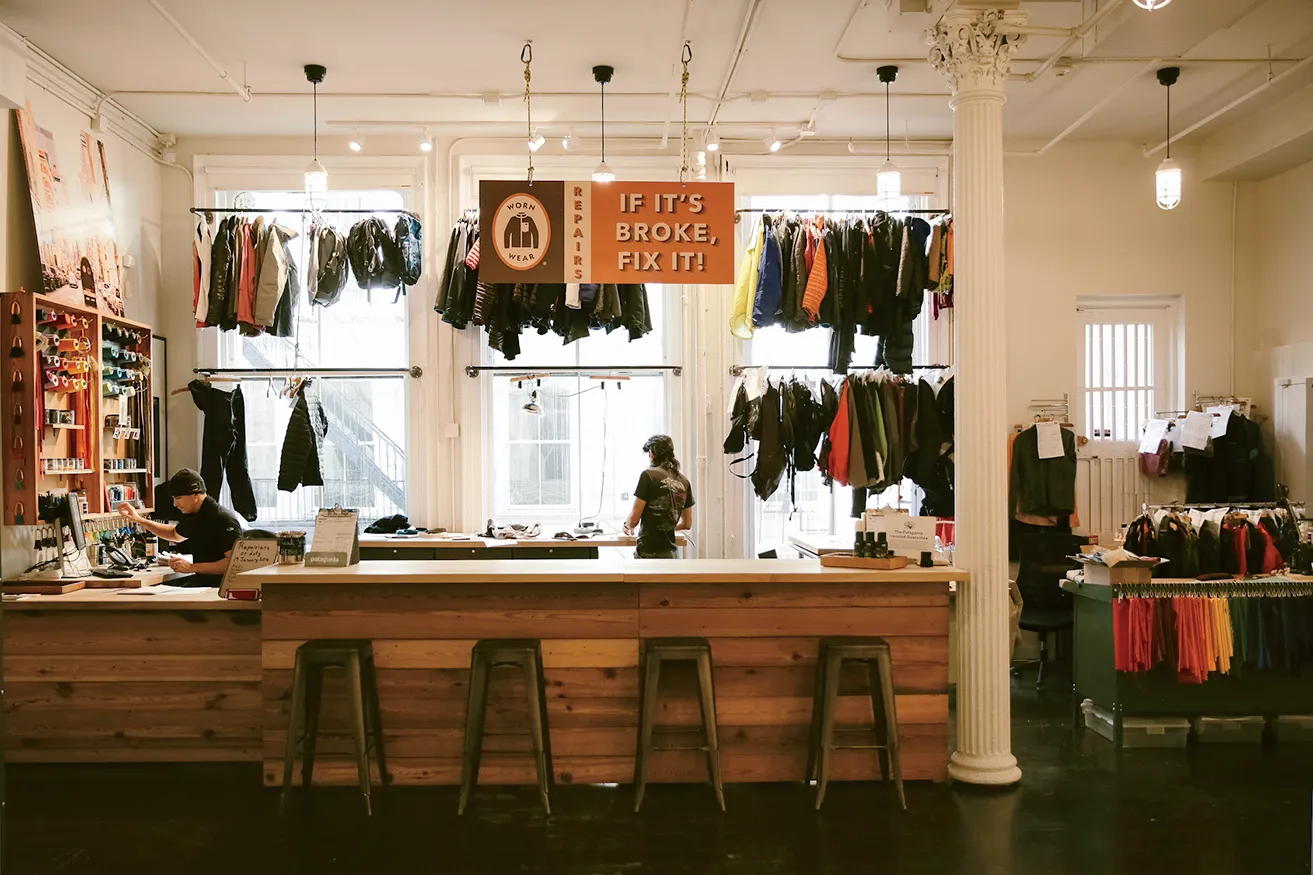
    The company has also launched Uniqlo Repair Studio in store, the first permanent offering in Asia to extend the life of Uniqlo’s clothing. Trained staff at the site will repair and alter damaged clothing.

  • Louis Vuitton set to raise prices this week as costs climb

    Louis Vuitton set to raise prices this week as costs climb

    Louis Vuitton, LVMH’s top fashion brand, will raise prices globally on Wednesday as a result of increased manufacturing and transportation costs, a spokesperson for the French luxury goods company in China told Reuters.

    Louis Vuitton, the world’s biggest luxury brand, will become one of the first big labels in the industry to hike prices widely this year to protect its margins as costs soar.

    The price increases will affect Louis Vuitton stores worldwide and cover leather goods, fashion accessories and perfumes, the spokesperson said on Tuesday. She did not give further details on the scale of the rises, beyond saying that they would vary depending on the product.

    “The price adjustment takes into account changes in production costs, raw materials, transportation as well as inflation,” the label said in a statement given to Reuters.

    Some bloggers on Chinese social media said the price of some models of handbags such as Capucines and Neverfull, now priced at 46,500 yuan (US$7,323) and 12,000 yuan ($1,890) respectively, would rise by 20 per cent or more in China, without citing sources.

    PurseBop, a website tracking the luxury market, cited speculation that the increase would be between around 4% on the lower end and 15-18% on average on the higher end.

    Presenting record 2021 sales and profits for the fashion and leather goods division, which is led by Vuitton and Dior, LVMH’s billionaire boss Bernard Arnault said in January the group had enough wiggle room to increase prices in an inflationary environment but would have to be “reasonable.”

    Throughout the coronavirus pandemic, luxury goods companies have been taking advantage of surging demand for high-end fashion and accessories to push their brands even more upmarket.

    Chanel increased prices on some of its handbags three times last year, with the popular Classic Flap bag, currently selling at $8,200, now costing $3,000 or nearly 60 per cent more than before the pandemic in 2019.

  • E-commerce saved fashion designer Tadashi Shoji during pandemic

    E-commerce saved fashion designer Tadashi Shoji during pandemic

    After closing all his stores, veteran fashion designer Tadashi Shoji said he has been able to keep his business afloat during the Covid-19 pandemic thanks to the success of e-commerce and custom sales.

    The Los Angeles, California-based brand released its digital runway show online on Saturday during New York Fashion Week.

    Keeping costs low, the video was filmed in the company’s cafeteria with creative lighting and editing.

    “Logistically it’s very hard, but it’s very fortunate for us because of Covid our e-com is increasing tremendously. That’s helping me to survive in this Covid time,” Shoji said.

    “If we didn’t have this strong e-com infrastructure for us I think, I think our business went down,” he said.

    Shoji said this season was inspired by “boundless expression” and has added different silhouettes to his normal body-con repertoire.

    Menswear was the inspiration for many looks with stretch velvet, shimmer and slits providing femininity.

    The designer’s signature draped tulle, lace and hand beading made the collection look familiar to his long-time fans.

    New York Fashion Week will end on Feb 16 with over 150 designers having presented their collections live or online.

  • Havaianas parent’s sales surge as international strategy pays off

    Havaianas parent’s sales surge as international strategy pays off

    Alpargatas, the parent of Havaianas, is reaping the benefits of a three-year-old international expansion strategy, despite the impact of Covid on cross-border travel.

    In the year to December, Alpargatas recorded sales of  US$739 million, a 25.7-per-cent improvement in 2020. Outside its home market of Brazil, net revenue climbed 41.5 percent US$227 million.

    “The numbers are the result of a long-term strategy. Three years ago, we established that Alpargatas’ long-term value creation thesis would be based on leveraging the strength of desired and hyper-connected brands such as Havaianas,” said CEO Beto Funari.

    “In this short period, we have proved this thesis as we accelerate the brand’s growth and restructure the business portfolio.”

    The company sold a record 260 million pairs of flip-flops, up 13 percent year on year. Of those, 31 million pairs were sold outside Brazil, an improvement of 38.8 percent versus 2020.

    Funari also said the company’s growing portfolio of non-flip flop products – sandals, flats, sneakers, accessories, and apparel – increased by more than 200 percent during the period.

    In December, Alpargatas secured a deal to acquire a 49.9 percent stake in Californian sustainable footwear brand Rothy’s. Now it is planning a share issue to help fund the acquisition, expected to raise around $400 million.

  • Boohoo launches vegan makeup and beauty range

    Boohoo launches vegan makeup and beauty range

    The range called Boohoo Beauty, features items for brows, lips, eyes, and face, and is available in various shades to suit multiple complexions and skin tones. It comprises lip gloss, lip liner, blusher, bronzer lipstick, and a contour stick.

    Customers can also buy tools and accessories including a brush cleaner, light-up mirror, fast-drying wrap for hair, and a false lash applicator.

    Available to purchase on boohoo.com, prices range from £5 for a lip gloss to £38 for a make-up palette.

    Lou Maddison, lead hair and make-up artist at Boohoo, said: “As well as the range being 100% cruelty-free and made with a vegan formula, all packaging used within this collection is recyclable. Products are boosted with ingredients such as hyaluronic acid, aloe, coconut oil, and botanical extracts.

    “The products are lightweight, water-resistant, and transfer-proof, perfect for everyday use and taking a look from day to night.”

  • Breitling unveils Seoul flagship with a cafe and its first restaurant

    Breitling unveils Seoul flagship with a cafe and its first restaurant

    Breitling opened its largest flagship, the 8,000-square-foot Breitling Townhouse Hannam. Located in the fashionable Hannam district of Seoul, South Korea, known for its international embassies and luxury fashion flagships, the space combines retail with a Breitling Café, terrace, and the first-ever restaurant, Breitling Kitchen. The Breitling Townhouse’s combination of retail with food and beverage will make it a top destination in this vibrant area.

    All Breitling boutiques are designed as chic industrial lofts that combine vintage decor with streamlined contemporary design for a modern-retro feel. A second recurring motif is “air, sea, and land” – the three universes that the Breitling watch families were developed for. In the Breitling Townhouse Hannam, these design themes are very prominent.

    The flagship boutique is a 2,000-square-foot retail space that has Breitling’s latest watch collections on display in an aviation-lounge-inspired atmosphere. The brand’s newest flagship is also home to Breitling Equipment – a shop-in-shop that carries tools and accessories inspired by Breitling’s universes.

    Breitling Kitchen is the brand’s first-ever restaurant led by chef Kim Hyeong-Kyu. Guests can choose from seating zones themed by air, sea, and land or reserve a private dining room in the Breitling universe of their choice. Breitling Café is an inviting street-level coffee shop that serves a well-crafted selection of specialty coffees, freshly baked goods, and fine patisseries.

    Customers and visitors can also enjoy an outdoor seating area that serves as both an extension to the café and private event space. Vintage Corridor is a walk-through heritage experience that tells the Breitling story with interactive displays.

    This opening gives a clue at what to expect from Breitling as a leader in the neo-luxury space.

  • Nike cries foul over virtual shoes, suing retailer that sells sneaker NFTs

    Nike cries foul over virtual shoes, suing retailer that sells sneaker NFTs

    Sneaker giant Nike sued online reseller StockX in New York federal court on Thursday for selling unauthorized images of Nike shoes, marking the latest lawsuit over digital assets known as non-fungible tokens.

    Nike said StockX’s NFTs infringe its trademarks and are likely to confuse consumers. Its lawsuit asked for unspecified money damages and an order blocking their sales.

    Detroit-based StockX, a platform for reselling sneakers, handbags, and other goods, was valued at more than $3.8 billion last year.

    A representative for the company did not respond to a request for comment, nor did Nike or its attorneys.

    Nike said StockX last month began selling unauthorized NFTs of its sneakers, telling buyers they would be able to redeem the tokens for physical versions of the shoes “in the near future.”

    The complaint said StockX has sold over 500 Nike-branded NFTs.

    The lawsuit said complaints about the NFTs’ “inflated prices and murky terms of purchase and ownership” and buyers’ doubts about the legitimacy of StockX’s model have hurt Nike’s business reputation.

    Nike said it will release “a number of virtual products” later this month in conjunction with the digital art studio RTFKT, which it acquired in December.

    NFTs have recently exploded in popularity, and lawsuits over them have begun to hit U.S. courts. Miramax sued director Quentin Tarantino in November over his plans to auction NFTs related to the 1994 film “Pulp Fiction,” which he directed and the studio distributed.

    Last month, Hermes sued artist Mason Rothschild over his “MetaBirkin” NFTs of the French company’s Birkin bags.

  • Vans owner slips as production delays, China curbs hit sales forecast

    Vans owner slips as production delays, China curbs hit sales forecast

    Vans shoe maker VF Corp cut its full-year revenue forecast on Friday as it struggles with material shortages, labor issues at factories, and a slump in sales in China due to COVID-related lockdowns, sending its shares down over 6 percent.

    Fresh pandemic restrictions and store closures late last year in many Asian countries, including China, took a toll on many US apparel makers that for years have relied on these countries for the bulk of their production and sales growth.

    VF Corp said the fast-spreading Omicron variant of the coronavirus was also impacting its sales across the world.

    “The latest virus surge across Europe has contributed to declining consumer confidence, deteriorating traffic, and stretched retail staff in our stores,” VF Chief Financial Officer Matt Puckett said on an earnings call.

    Despite facing labor and raw material shortages, VF said it expected manufacturing to return to near full capacity in the coming weeks.

    The company cut its fiscal 2022 revenue forecast to about US$11.85 billion from US$12 billion. It expects revenue for its “Active” unit, which houses the Vans and Supreme brands, to increase between 31 percent and 33 percent, compared with a prior range of 35 percent to 37 percent gain.

    The Denver, Colorado-based company’s total revenue rose 22 percent to $3.62 billion in the third quarter ended Jan 1, slightly ahead of analysts’ average estimate of US$3.60 billion, according to IBES data from Refinitiv.