Category: Fashion

Retail News Asia is committed to providing both local and global retailers with the latest Fashion news throughout the Asian market. This on a daily base.

  • Victoria’s Secret sells stake in China business to new JV partner

    Victoria’s Secret sells stake in China business to new JV partner

    In a statement, Victoria’s Secret CEO Martin Waters called Regina Miracle “a valued merchandise supplier partner for more than twenty years.”

    The brand is maintaining control of its business in China, but has turned to a local, known player to run it, and that makes sense, according to Jane Hali, chief executive at Jane Hali & Associates.

    “This seems to be a wise solution to distribution in China,” she said by email. “Companies are successful when they are consumer-centric and know their customers wants and needs. Victoria’s Secret was in China but it was unsuccessful under their management.”

    The brand’s results in China have nevertheless represented a bright spot in its global performance, according to UBS analysts led by Jay Sole. Victoria’s Secret’s international growth has been disappointing for the last five to seven years, possibly due to an over-emphasis on its Victoria’s Secret Beauty and Accessories stores in some places and because “the intimate apparel category is proving to be more nuanced than previously thought, in terms of what styles, sizes, price points, and brand messaging consumers want in each market,” according to the UBS research note. The analysts pointed to several ways that Victoria’s Secret has sought to gain traction abroad, including via joint ventures like the one announced Tuesday, along with franchising, wholesale and company-operated stores.

    Waters said the establishment of this joint venture finishes up a multi-year repositioning of the brand’s international operations. “We expect the partnership will positively impact the speed and agility of the business to benefit consumers and provide us with a platform for a strong future in this important market,” he said.

    UBS analysts do see room for growth in China. They crunched WeChat data and found the brand to be “on a solid path,” even improving among Chinese consumers while other U.S. brands weathered backlash there. Furthermore, Victoria’s Secret’s social media initiatives seem to be resonating with Chinese consumers, and the brand could probably add to the 63 stores it was running there as of October, UBS also said this week.

  • FLC launches jewelry brand

    FLC launches jewelry brand

    Conglomerate FLC on Wednesday entered the jewelry industry with the new brand FJC, establishing its first store in Hanoi.

    Located at Bamboo Airways Tower in Cau Giay District, FJC’s first store sells 24-karat gold, jewelry, diamond and fengshui accessories.

    The jewelry business will help FLC complete its ecosystem, which already includes real estate, aviation and tourism, said FLC Deputy Chairwoman Dang Luu Van, who is also the chairwoman of FJC.

    More FJC stores will be set up at FLC resorts and urban areas across the country, she added.

    The main competitors of FJC will be long-established jewelry brands like Saigon Jewelry Company (SJC), Phu Nhuan Jewelry (PNJ) and DOJI.

    FLC targets a revenue of VND27 trillion and profit of VND2.1 trillion this year, double from last year.

  • Uniqlo set to come to Hai Phong

    Uniqlo set to come to Hai Phong

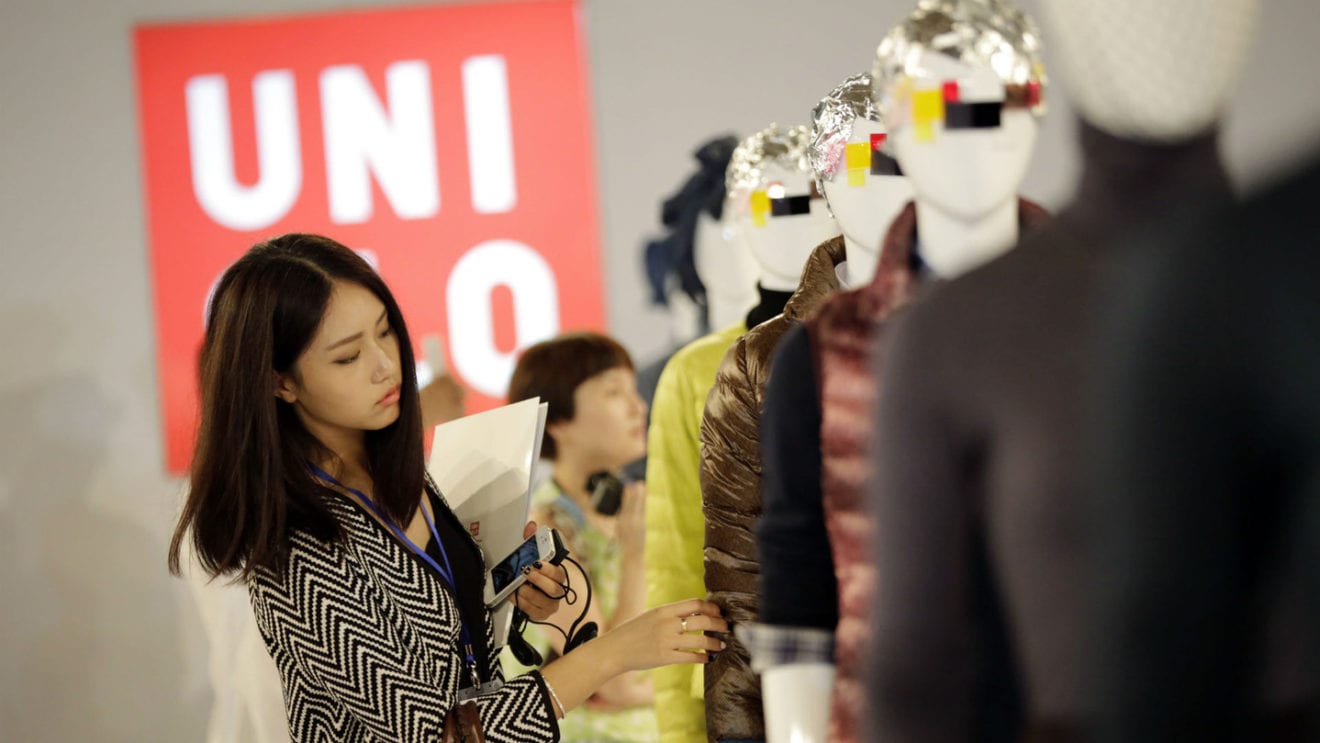
    Japanese fashion brand Uniqlo plans to open its first store in the northern city of Hai Phong this summer.

    It will be a 2,000-square-meter outlet at Aeon Mall Le Chan.

    Uniqlo, which came to the Vietnamese market two years ago, now has 10 stores in Hanoi and HCMC.

    Globally, it has over 2,300 in 25 countries and territories.

    German research firm Statista estimates Vietnam’s fashion industry to grow at an average annual rate of 22.5 percent in 2017-22 to reach US$988 million.

  • First Adidas Brand Centre launches in Singapore, brand’s largest there yet

    First Adidas Brand Centre launches in Singapore, brand’s largest there yet

    Sportswear brand Adidas launched its first Singapore brand center, named Homeground, in Knightsbridge along Orchard Road. Occupying three floors, it claims to be the largest mono-brand retail sports destination in the country. It offers the largest array of Adidas performance and Originals apparel, footwear, as well as accessories in Singapore.

    Adidas claims that the design of the brand center is “deeply rooted in Singapore identity” and “celebrates its diversity as a multicultural country”. Created in partnership with numerous local designers, the design takes inspiration from iconic everyday Singapore scenes. For example, a wall-mounted mural that takes the form of an Adidas shoe is actually a collage of locally-inspired elements weaved together in a wall-mounted mural.

    In addition, the brand center’s sustainability wall is inspired by the coastline of the Singapore River and is made with layers of crafted reclaimed wood.

    The “Local Delights” section features vibrant artwork that is inspired by traditional cakes and snacks such as Tutu Kueh, Ang Ku Kueh, Kueh Bahulu, Muruku, and the colorful Kueh Lapis cake.

    There’s also an anamorphic ceiling installation in the MakerLab, where 180 pieces of stainless-steel trefoils come together to form an intricate ceiling artwork that is both a trefoil and the coastline of Singapore at the same time.

    Besides enjoying first-in-region launches and Singapore exclusives at the Homeground store, shoppers can look forward to the Singapore Key City Tee, a local-themed graphic print t-shirt.

    In line with the brand center’s launch, Adidas will be rolling out the “Bring it to Me” service over the next few months, which will be exclusive to the brand centre.

    Shoppers can have the products delivered to them as they continue browsing the other items at the store by scanning the footwear via the Adidas app or QR code to indicate their preferred sizes.

    For more information, you can check out the Adidas Homeground website, Adidas Singapore’s Instagram, and Facebook pages.

  • Asos hit by supply chain disruption, volatile Christmas demand

    Asos hit by supply chain disruption, volatile Christmas demand

    British online fashion retailer ASOS reiterated its already downgraded outlook on Thursday after supply chain constraints and volatile demand limited sales growth in its four months to Dec. 31 trading period.

    It posted total sales growth of 5%, following a 22% rise in the year to end August, and said gross margin decreased by 400 basis points to 43.0% driven by a need to discount goods and higher freight costs.

    For the full year it reiterated its outlook of revenue growth in the range of 10%-15% and adjusted profit before tax of 110 million pounds to 140 million pounds. That hit its shares when it was published in October, and would represent a more than 40% drop on the year before.

    “ASOS has delivered a robust start to the year, in line with the guidance we set out at full-year results, despite challenging market conditions,” Chief Operating Officer Mat Dunn said.

    ASOS, once a darling of the stockmarket, was hit by a difficult end to 2021, when it cut its annual profit forecast and parted ways with its CEO following supply chain pressures and a return by shoppers to pre-pandemic ways.

    While shoppers often return partywear clothing and fashion, incurring a cost for the company, they retained the athleisure wear bought during the pandemic to use at home, giving the company a boost to its finances during lockdowns.

    Its shares are down 56% this year, prior to Thursday’s update, mirroring similar falls seen at rival Boohoo which has also been hit by high product return rates, disruption to international deliveries and inbound freight costs.

    ASOS added that it intended to move to the LSE’s main stock market, expected by the end of February.

  • Uniqlo owner’s profits boosted by overseas surge as Japan sales fall

    Uniqlo owner’s profits boosted by overseas surge as Japan sales fall

    Japan’s Fast Retailing, owner of clothing brand Uniqlo, said on Thursday overseas markets powered profit growth in the first quarter, even as sales declined at home and in China.

    The results marked a reversal from the past few years when China and Japan were the big sales and profit growth drivers for the retailer.

    Operating profit rose 5.6 percent to 119.4 billion yen ($1.04 billion) in the three months ended Nov. 30. That beat the market’s consensus of 102.6 billion yen, according to the average of analysts’ forecasts from Refinitiv.

    The company maintained its forecast for operating profit to climb 8.4 percent to 270 billion yen in the fiscal year ending in August.

    Uniqlo’s international business reported record first-quarter results, driven by sales from South Asia, North America, and Europe. The pandemic weighed on results in China, while warm weather in Japan depressed sales of Fall and Winter clothes.

    The company said in October it expects a gradual recovery to pre-pandemic levels as Covid-19 vaccinations progress and as it makes further inroads in the Chinese market.

    Fast Retailing opened a flagship store in Beijing in November, its third megastore in mainland China, and plans to open 100 locations in the country each year going forward.

    But the company has also flagged the risk of continued production and logistic delays that have plagued major clothing groups. In September, Fast Retailing said some clothing releases would be delayed due to pandemic-related lockdowns at partner factories in Vietnam.

    In addition, the rapid depreciation of the yen is raising costs for raw materials and shipping, adding to domestic pricing pressure, chief financial officer Takeshi Okazaki told reporters in Tokyo.

    “We have reached a point where we have no choice but to raise the prices of some products,” he said.

    As the company becomes increasingly global, strength or weakness of the yen will become less important, and stable currency markets are ideal for operations, he added.

    Fast Retailing’s shares have fallen 9.5 percent year-to-date, compared with a 1.1 percent drop in the benchmark Nikkei 225 index.

  • Adidas Japan to launch brand centre in Harajuku

    Adidas Japan to launch brand centre in Harajuku

    The largest Adidas store to date on Japanese soil extends over two floors and a surface area of 1,000 square meters. In addition to countless products for a wide range of sporting activities, the new Adidas Brand Center, which is located just a few minutes’ walk from Shibuya Station, also offers an exclusive “Tokyo Collection”. This was designed especially for the new store and is exclusively available here.

    The “Digital Footwear Wall” offers space for up to 45 different shoe models and can be filled with matching campaign images as required. The store was designed in cooperation with a number of Japanese artists, whose works partly also decorate the salesrooms. In addition, characteristic design elements can be found throughout the store, which serves as references to the metropolis of Tokyo.

    On the occasion of the opening of the Brand Center at the end of July, visitors had the opportunity to purchase limited-edition T-shirts created in cooperation with the store’s artists and designers. According to Adidas, the store will continue to be used as a regular venue for events featuring local artists even after the opening-period.

    The Tokyo store also includes a special area dedicated to sustainability, offering Adidas Parley and Primeblue products and communicating information about the sustainability efforts of the Herzogenaurach-based sporting goods manufacturer. In partnership with the non-profit organization Parley, Adidas collects plastic waste before it can be discharged into the sea and uses it to produce high-quality sportswear. “Partnering with Parley on a shared mission to use 100% recycled polyester in our products by 2024, we created Primeblue. A high-performance recycled material made in part with Parley Ocean Plastic,” says the statement on the Adidas website.

  • Thousands strike work after Nike supplier cuts Tet bonus

    Thousands strike work after Nike supplier cuts Tet bonus

    Thousands of workers of Taiwanese-invested footwear maker Pouchen Vietnam, a Nike contract manufacturer, struck work Friday, demanding the same Tet bonus as last year.

    They refused to return to work after finishing their lunch to protest the company’s policy to pay less bonus than last year for the coming Tet (Lunar New Year) festival. Tet, the most important Vietnamese festival, falls in early February this year. The workers stood on national road 1K in front of their factory’s entrance, causing traffic congestion for hours. The strike affected others and all 14,000 workers of the factory in Bien Hoa Town, southern Dong Nai Province, stopped working.

    A mobile police team was dispatched to maintain order in the area. A female worker said that the company had announced Thursday that employees who have worked for it a full year or more will be given Tet bonuses of 1-1.54 months’ salary – around VND5 million ($217) to nearly VND20 million.

    The highest bonus in 2021 was 1.87 months’ salary, and in previous years, 2.2 months. “With this (coefficient), workers’ Tet bonus in 2022 will be lower than before,” she added.

    A Pouchen representative said that in 2021, the company had faced difficulties in production and business. When the fourth wave of Covid-19 broke out, the factory had to stop working from July 12 to Sept. 30, 2021. On Oct. 5, 2021, it resumed production, but at 60 percent capacity.

    Due to the failure to fulfill the production plan, profits fell, so the Tet bonus, the biggest and most anticipated reward for workers, could not be the same as the previous year. The rep also said that under the collective labor agreement, the company would pay Tet bonus to employees based on its business performance.

    Nguyen Thi Nhu Y, head of the Dong Nai Provincial Labor Confederation, said the union was coordinating with authorities to resolve the situation. She noted that Pouchen’s Tet bonus was higher than the local industry average.Nguyen Huu Nguyen, Chairman of the People’s Committee of Bien Hoa, said relevant agencies are trying to negotiate with the board of directors of Pouchen to increase the Tet bonus. “However, employees need to share the company’s difficulties, because Covid-19 has caused businesses to suspend operations for months,” he said.

    Pouchen Vietnam, part of Taiwan’s Pouchen Group, has one more factory in Dong Nai and six others in HCMC and the three southern provinces of Tien Giang, Tay Ninh and Ba Ria – Vung Tau for a total of 130,000 employees. The group is expected to spend more than VND1.2 trillion on Tet bonuses this year.

  • Procter & Gamble buys Tula skincare

    Procter & Gamble buys Tula skincare

    Procter & Gamble is buying Tula Skincare for an undisclosed amount. According to industry observers, Tula had sales of $150 million last year. The acquisition is P&G’s third in just two months and underscores the CPG giant’s focus on prestige beauty. In November, P&G purchased Farmacy Beauty. Last month, P&G acquired Ouai, a haircare company.
    The three acquisitions bolster P&G’s existing prestige brand portfolio, which already includes SK-II and First Aid Beauty. Clearly, the maker of Olay is ready to take on competitors like L’Oréal, Estée Lauder , and Unilever in the prestige beauty space.

    Looking for more insights on the dynamic skincare market? Check out Efficacy Challenges and Anti-Aging & Wellness Corner. Our industry experts keep you up-to-date on the latest skincare innovations.

  • Inside Swarovski’s first Asian flagship store, at Shanghai

    Inside Swarovski’s first Asian flagship store, at Shanghai

    Swarovski has just opened its first Asian flagship store in HK Plaza, Shanghai. On the heels of the brand opening its Instant Wonder pop-up boutiques in 27 key locations around the world earlier this year, the Shanghai flagship will welcome customers into Swarovski’s world on a more permanent basis.

    “Throughout the journey of our transformation, we have been working towards a moment like this,” notes CEO Michele Molon, “The moment where guests can not only explore Swarovski products, but immerse themselves in our point of view, our personality, and the experience of intimately understanding the sense of joy and innovation from which each item is created.”

    As one of the key markets of Swarovski — and luxury as a whole — China, in particular the creative hub of Shanghai, feels like the natural place to open the brand’s first flagship in Asia. And this is no normal flagship. Creative Director Giovanna Engelbert sought to create in Wonderlab a place that transports customers into the imaginative world of Swarovski.

    Rooted in brand codes, colors, packaging, and heritage, the Swarovski Wonderlab does just that. “I am incredibly excited to unveil this beautiful space, inspired by the forward-moving landscape of China and her people. It’s the biggest, most ambitious store we’ve made, centimeter by centimeter thought through and brought into reality,” commented Englebert.

    Ambitious isn’t even half of it. Take in the metallic pink of the Wonder Room with a rotating central display and custom Swarovski Swan chairs or the Lucent stairwell which climbs to the Dream Room. Robotic arms nod to the innovation behind Swarovski’s developing offering, standing in stark contrast to the pastel pinks and mesmerizing crystals that define the rest of Wonderlab. The Swarovski Wonderlab is nothing short of a dreamscape in the heart of Shanghai.

    Swarovski’s Shanghai flagship opened on December 10, so be sure to visit for a taste of the future of retail if you’re in Shanghai.

  • Babeeni’s hand-smocked clothing for children meets diverse tastes

    Babeeni’s hand-smocked clothing for children meets diverse tastes

    Babeeni Co., Ltd satisfies customers from different markets with its designs for dresses, swimwear for children, women and families.

    Established in 2007, Babeeni has been a reputable manufacturer and exporter of children’s clothing in Vietnam. It has a head office at 66 Viet Hung Street, Long Bien District, Hanoi and five factories totaling 150,000 square meters in Hai Duong and Lao Cai provinces.

    With 2,120 employees in hand-embroidery and sewing techniques, as well as advanced machines and production lines, Babeeni meets an annual capacity of around 3 million pieces of all types of clothing for children, women, men and families.

    Target markets mainly include the United States and Europe, along with the Middle East and Asian countries like Japan, South Korea, and Thailand.

    Babeeni‘s clothing products feature an exquisite style with traditional hand-embroidery, hand-smocked patterns and appliqued motifs to meet customer needs. The garments are made of new and high-quality fabric guaranteed to be safe, with cotton certificated from an American origin.

    Besides, Babeeni is capable of meeting custom requests for different types of materials, designs or patterns.

    With the wish for long-term cooperation, Babeeni has product return policy that is ready to give feedback or solutions for merchandiser of the purchaser. Babeeni also provides 24/7 sales, design consulting and logistics services to serve orders with reasonable prices, satisfactory quality and on-time delivery.

    Until now, Babeeni has attracted thousands of customers, most of whom have cooperated with the manufacturer for many years. The company aims to expand into more international markets.

    Duong Thi Phuong Hien (Marry Le) – CEO and founder of Babeen, shared her business philosophy: “Business is not for profit but for promoting happiness and beauty. When you buy Babeeni’s products, you are getting the best from our heart and passion in fashion.”

    If you want to start up your own clothing boutique and have any idea on clothing designs, contact via phone +84-823 776 668 (Whatsapp).

  • Nike eyes recovery as Vietnam factories reopen

    Nike eyes recovery as Vietnam factories reopen

    Sportswear maker Nike is confident the resumption in production in Vietnam will boost the company’s future recovery.

    “Compared to ninety days ago, we are increasingly confident supply will normalize heading into fiscal 2023” as all factories in Vietnam were operational and production was at about 80 percent of what it was before the closures, finance chief Matthew Friend said.

    Social distancing in Vietnam, where more than half of Nike’s footwear and about a third of its apparel manufacturing occurs, in the July-September period caused the company to cancel production of roughly 130 million units.

    But as the government eased its social distancing regulations early October, its factories have reopened.

    The company forecasts growth to be in the lower single digits for the next quarter because of the continuing impact of lost production from pandemic-related disruptions in Vietnam where an average 18,000 new cases were recorded in the last seven days.

    Friend said Nike will continue to watch the Omicron variant to see what impacts it may bring to production.

    Demand for Nike’s goods continues to outpace supply. The previous quarter, Nike reported a 10-week delay in production because of a lockdown in Vietnam and said it expected flat revenue growth for the November quarter.

    Nike posted a revenue of $11.4 billion in the quarter ending Nov. 30, up 1 percent from the same period a year earlier. Analysts expected revenue of $11.2 billion.

  • Skechers takes control of Philippines operation

    Skechers takes control of Philippines operation

    Skechers parent, The Comfort Technology Company, has transitioned the operations of the footwear brand in the Philippines from its third-party distributor, Trendworks International, to Skechers USA Philippines.

    The company said the move is to maximize the brand’s growth in the region. Trendworks International will continue to sell Skechers products through the end of this year.

    In addition, Skechers USA Philippines will expand the brand’s presence in the country, opening 10 to 12 additional concept stores during the first half of next year, including those in key department and specialty stores such as Planet Sports and The SM Store.

    “The Philippines has immense potential for Skechers, and with our dedicated team focused on growth and delivering the integrated capabilities of Skechers,” said David Weinberg, COO at Skechers USA. “We believe this step accelerates that potential.

    “With Skechers’ appealing lifestyle collections, groundbreaking comfort innovations and our corporate support, we believe the Philippines can become a key market for us in Southeast Asia.”

    According to Suzette Pasustento, country manager for Skechers USA Philippines, the company is currently under the first phase of re-establishing the brand in the market, including setting up new offices in Manila and opening a distribution centre. The company has also opened its first new store this month.

    “With this new dedicated approach, we will be able to reach more of the 100 million men, women and children in this country and offer them a wider selection of great Skechers products through expanded channels,” said  Pasustento.

    “In 2022, we will introduce new product categories, open more retail locations and expand our door count with new retailers, as well as launch a comprehensive marketing campaign.”

  • Miniso to rebrand US stores as $10 N’ Under banner to attract Gen Z

    Miniso to rebrand US stores as $10 N’ Under banner to attract Gen Z

    As Chinese discount retailer Miniso opened its 5000th store this week, the company said it would rebrand all of its US stores $10 N’ Under.  The 5000th store is located in Boston, and was one of four US stores to open on the same day. In a statement, the company said its expansion in North America was among its fastest rollout internationally.

    While the company has built a presence in 100 markets since its 2013 debut, the bulk of its network is in Greater China. Expansion in other countries has seen mixed results, but the company says its US strategy of using the $10 N’Under banner is winning over Gen Z consumers.

    “The strong market response towards our $10 N’ Under stores validates our strategy to cater to Gen Z who place a premium on value: they want trendy, quality products at an affordable price,” said Andrew Xie, GM at Miniso North America.

    Existing US Miniso stores will be rebranded by the end of this month, by which time the retailer expects to have 100 stores operating across the country.

    Xie says store deco will be unique to certain US locations. “For instance, its SoHo pop-up in New York City features a wide variety of plush toys and pillows exuding warmth and comfort.”

    Elsewhere in the world, the company plans to continue to expand, but in the statement said it would “proactively respond to changes in different markets” suggesting it is aware its offer may not suit all regions. Outside China, it has stores in the UK, Italy, Spain, India, Mexico, Singapore, Vietnam and Australia, offering products ranging from homewares cosmetics, toys and food.

    Next year it plans to expand its offer to attract Gen Z shoppers, adding scented products, plush toys, and “fun accessories”. “Miniso will localise its product portfolio based on market trends to meet local consumer needs,” said overseas VP Vincent Huang.

  • L’Oreal buys US vegan brand Youth to the People

    L’Oreal buys US vegan brand Youth to the People

    L’Oreal has added American vegan skincare brand, Youth to the People, to its portfolio of skincare brands.

    Founded in 2015 by two cousins, Greg Gonzalez and Joe Cloyes, the brand is known for formulas that combine premium vegan blends of superfood extracts with science.

    “Its skincare expertise based on healthy, vegan, high-efficacy formulas make it a very strategic addition to L’Oreal Luxe,” said Cyril Chapuy, president of L’Oreal Luxe.

    “The brand’s core values and distinctive spirit reflected in its initiatives to amplify diverse voices, build a fairer world, and enhance consciousness of the planet will be further celebrated at L’Oreal not only because they are precious to us, but because they are very true to our own values.”

    The brand’s investors include Sandbridge Capital, Strand Equity and Carisa Janes. Its products are available across the US, Canada, Australia and selected European countries. The brand is expected to record more than US$50 million of sales this year.

    “We founded Youth to the People to continue our family’s legacy of making skincare and to inspire and represent our community,” said Cloyes and Gonzalez.

    “Joining the L’Oréal family gives us the opportunity to realize all the dreams of Youth to the People.”