Category: Fashion

Retail News Asia is committed to providing both local and global retailers with the latest Fashion news throughout the Asian market. This on a daily base.

  • Sweaty Betty opens first Singapore store

    Sweaty Betty opens first Singapore store

    British activewear retailer Sweaty Betty has made its Singapore debut, more than two years after entering Asia.

    Located in the city’s Ion Orchard mall, Sweaty Betty Singapore offers a full range of its lifestyle and activewear, including Pride Collection and Halle Berry x Sweaty Betty Collection.

    The Singapore launch is part of Sweaty Betty’s plan to expand and strengthen its presence in the Asian market. The brand, often referred to as a rival to Canada’s Lululemon, first entered Asia in 2019 opening a store in Hong Kong’s IFC mall.

    Founded in Notting Hill, London in 1998 by Simon and Tamara Hill-Norton, Sweaty Betty is renowned for its bum-sculpting leggings, innovative prints, and technical high-performance fabrics.

    The retailer now operates more than 60 outlets, mostly across the UK and the US.

  • L’Occitane posts record profit as China becomes its largest market

    L’Occitane posts record profit as China becomes its largest market

    Beauty products retailer L’Occitane International has reported sales and profit beyond expectation after successfully adapting to the challenges of selling products during a global pandemic.

    Despite the Covid crisis, like-for-like net sales of US$1.83 billion were down just 1.1 percent against the previous year, but net profit grew by 36.3 percent to a record $187 million, representing 10.2 percent of net sales.

    China is now the company’s largest market, with year-on-year growth of 36 percent.

    The overall performance was largely driven by a strong focus on online sales in the absence of travel retail business and long periods of physical store closures – more than 75 percent of the company’s outlets were closed at the peak of the pandemic. Global e-commerce turnover soared 69.2 percent and accounted for more than one-third of overall sales.

    Social selling was a key component of the online push, with 68 projects in Europe alone, including personal shopping concierge services, live streaming, and online consultation services.

    “Thanks to the group’s agility and adaptability in a socially distant world, the strong sales recovery in the second half of the year helped recover most of the ground lost earlier in the year, resulting in only a slight sales decline,” said chairman Reinold Geiger in a Hong Kong stock exchange filing.

    “Importantly, the group made tremendous progress in expanding its bottom line – recording an operating margin of 14.3 percent with contribution from its online channels, excellent performance in key markets in Asia, strong results from its newer brands, as well as greater operational efficiency.”

    He put the strong performance down to the group adhering to five pillars of its strategy to build trust, sustainable growth and profitability: empowering teams; executing fundamentals, especially in a retail context; adopting an omnichannel, mobile and digital approach; engaging customers; and strengthening brand commitments.

    Geiger said China was undisputedly the group’s best-performing market, coinciding with it being among the first to emerge from Covid-19. During the fourth quarter, L’Occitane International’s China sales grew by more than 50 percent, boosted by successful Chinese New Year and Women’s Day promotional campaigns, as well as a low base the previous year. Physical roadshows during Chinese New Year encouraged product sampling and conversion.

    Meanwhile, Geiger says two major restructuring activities will help the business achieve greater efficiency in future years.

    Last October, the company announced a reorganization that led to the loss of some 300 positions globally from its 9000-strong workforce, mostly at corporate offices. And in January, its US subsidiary, L’Occitane, Inc, commenced voluntary Chapter 11 bankruptcy protection in order to accelerate its store rationalization process. By the end of March, 25 underperforming US stores were closed. The Chapter 11 process is expected to achieve savings of up to $12 million annually for the next four to five years.

  • Burberry CEO resigns to lead rival luxury retailer

    Burberry CEO resigns to lead rival luxury retailer

    Marco Gobbetti is to give up his role as CEO of Burberry after leading the brand and business for almost five years.

    According to a report, Gobbetti will return home to Italy to lead rival luxury goods group Ferragamo.

    Gobbetti will stay with Burberry until the end of this year while the company searches for a successor, and to ensure an orderly transition.

    “Gobbetti has had a transformative impact and established a clearly defined purpose and strategy, an outstanding team, and strong brand momentum,” said Gerry Murphy, chairman of Burberry. “The board and I are naturally disappointed by Marco’s decision but we understand and fully respect his desire to return to Italy after nearly 20 years abroad”.

    Gobbetti became CEO and joined Burberry’s board in 2017, succeeding Christopher Bailey who left the group the following year. Prior to Burberry, Gobbetti was chief executive of Moschino and Givenchy before holding executive positions at French brand Celine in 2008.

    “With Burberry re-energised and firmly set on a path to strong growth, I feel that now is the right time for me to step down,” said Gobbetti. “I would like to thank my colleagues as well as Gerry and the board for their partnership.

    “I am fully committed to supporting them through the transition and I have every confidence that the creativity and strong values that define Burberry will continue to drive the company’s future success.”

  • Bauhaus ekes profit out of store closures, refocuses on profitability

    Bauhaus ekes profit out of store closures, refocuses on profitability

    Fashion group Bauhaus saw turnover fall 58.1 percent to $47.9 million during the year to 31 March 2021, pushing gross profit down 55 percent to $31 million.

    The group was able to deliver a net profit result of $12.8 million – a vast improvement on last year’s $18 million loss – though this was primarily attributable to government subsidies and the cash gained in selling off over half of its retail stores.

    “The novel coronavirus outbreak in 2020 has severely hit not only local retail sectors but also depressed many economic activities worldwide,” the business wrote in an update to its investors.

    “The same-store-sales growth rate fell to about -40 percent for the year under review. In addition, to confront with ongoing challenges brought on by Covid-19, the group made essential strategic moves to refocus resources on its familiar markets.”

    In December, Bauhaus said it would close all stores in all markets outside of Hong Kong and Macau by the end of March 2021 in order to focus on profitability. This has led the brand’s store count of 102 in 2020 to plummet to 49 in 2021.

    During FY21, its Hong Kong and Macau segment saw sales fall 45.6 percent, compared to its other regions which fell by 89 percent. Hong Kong and Macau accounted for approximately 92 percent of the group’s total turnover.

    Given that the threat of Covid-19 still resonates in many parts of the world, the business expects strong headwinds for the year ahead, and is anticipating a “prolonged path to thorough recovery”.

    “The group will maintain a manageable scale of operations at a reasonable profitability level and does not intend to aggressively do fast and quantitative expansion in the near future until seeing strong signs of sustainable economic activity,” the business said.

    Instead, Bauhaus will focus on making its now-lean business profitable.

  • Playboy owner to acquire Aussie lingerie brand Honey Birdette

    Playboy owner to acquire Aussie lingerie brand Honey Birdette

    PLBY Group is to buy racy Australian luxury lingerie brand Honey Birdette for approximately US$333 million. PLBY Group CEO Ben Kohn said he is “thrilled by the brand’s potential to become a multi-million-dollar luxury lifestyle franchise”.

    “Our plan is two-fold: to leverage PLBY Group and the Playboy brand’s global operations to accelerate Honey Birdette’s expansion into new territories and product categories, and to take advantage of Honey Birdette’s superior product design, sourcing, and direct-to-consumer capabilities to accelerate our Playboy-branded lingerie, loungewear, swimwear, and sexual wellness go-to-market plans targeting the masstige consumer,” Kohn said.

    “This acquisition is expected to further our mission to become the leading pleasure and leisure lifestyle platform and our commitment to deliver long-term value to our shareholders.”

    Honey Birdette is forecast to generate $73 million in revenue this financial year, representing growth of over 40 percent. The acquisition will help the brand expand its leadership in the sexual wellness category and its shared sourcing and product design capabilities. The transaction is expected to close in the third quarter of 2021.

    Honey Birdette was first launched in 2006, when its first boutique opened in Brisbane, selling glamorous lingerie and adult toys. It has since expanded to more than 60 stores across Australia, the US, and the UK, and flagship stores are slated to open in the coming months in Dallas, Miami, and New York. Meanwhile, loungewear and swimwear will soon be added to the Honey Birdette product range.

    “When I founded Honey Birdette 15 years ago, my ambition was to build a brand for women, by women; a brand that would serve as a platform for confidence and sexual and body empowerment,” said Eloise Monaghan, founder and managing director of Honey Birdette.

    “Today is a momentous and proud day for the Honey Birdette team as we enter into partnership with one of the world’s most iconic brands and the lifestyle platform it represents. I’m thrilled to join Ben and the whole PLBY Group team on a mission to build a lifestyle of pleasure for all.”

  • Gentle Monster opens another flagship store

    Gentle Monster opens another flagship store

    South Korean luxury eyewear brand Gentle Monster has unveiled its latest themed store in Starfield Hanam, Seoul.

    Dubbed ‘Self Similarity’, the theme reinterprets the mathematical concept through visual and spatial elements. The Starfield Hanam storehouses various artwork, images, and installations representing “the infinite possibility of ‘expansion’” through repeating geometric structures, such as fractals, Mandelbrot sets, and Julia sets.

    The newly opened flagship features The Probe, the brand’s six-legged walking robot which can also be seen in the Haus Dosan outlet.

    “The kinetic installations located at the facade, repeatedly expanding and contracting, and artwork that expresses infinite proliferation show Gentle Monster’s unique and artistic perspective on the concept of self-similarity,” the company described.

    Meanwhile, Gentle Monster chose Starfield Hanam to land Nudake’s second store in South Korea, offering a range of artistic desserts.

  • Garment production may slow down over Covid-19

    Garment production may slow down over Covid-19

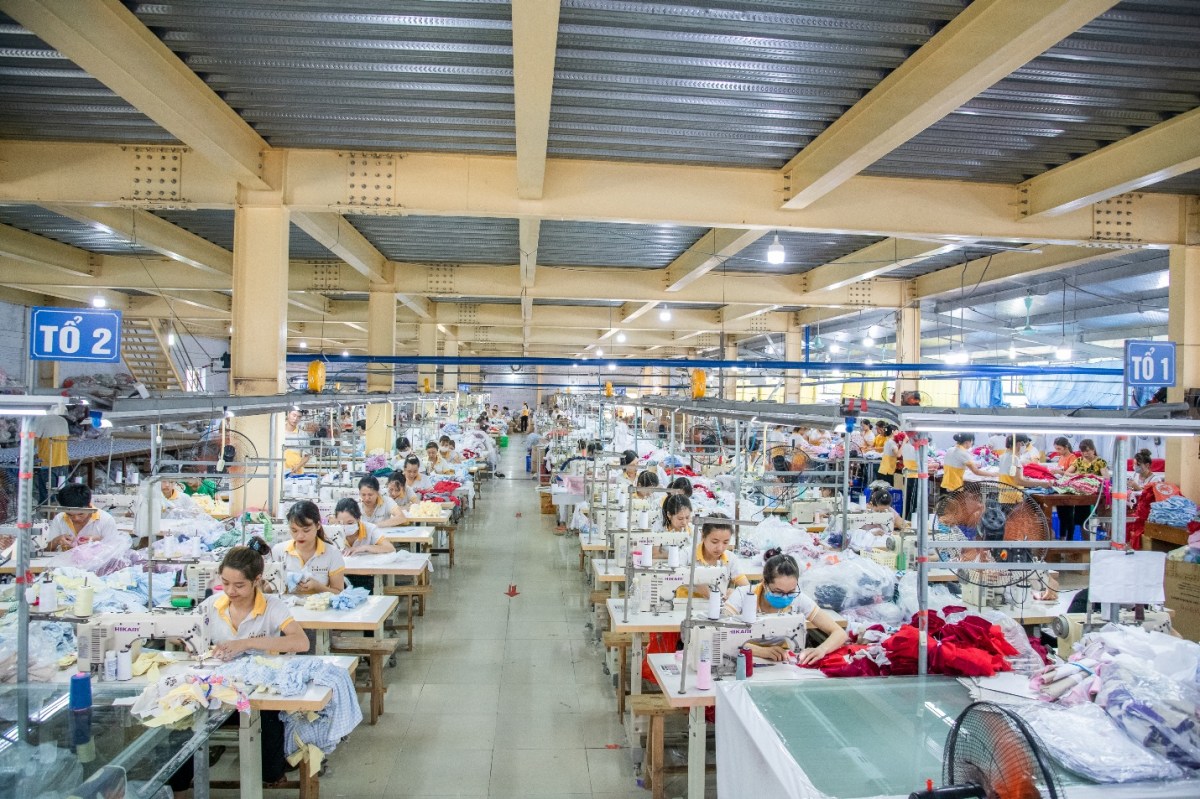
    The textiles and garment sector is likely to be impacted by the Covid-19 situation getting more complicated across Vietnam. Industry insiders say the pandemic situation in HCMC, in particular, will drag the sector down in the remaining months of the year.

    The pandemic has already penetrated some industrial parks in HCMC, so if the staff of garment and textile firms get infected, work would stop and fulfillment of orders would slow down, said Pham Xuan Hong, head of HCMC Association of Garment, Textile, Embroidery, and Knitting (AGTEK).

    Garment and textile firms are labor-intensive affairs with many workers concentrating in certain places, so the risk of Covid-19 breaking out in factories is very high, said Le Tien Truong, chairman of Vietnam National Textile and Garment Group (Vinatex), adding that the production chain is likely to be broken amid the outbreak.

    Vinatex has 150,000 workers nationwide, with most of its affiliates having an average workforce of 2,000 each.

    In the first three waves of Covid-19, no Vinatex affiliates reported any Covid-19 infection. In the ongoing fourth wave, some enterprises in the northern province of Bac Ninh and the central city of Da Nang have reported infected workers.

    “This is the first time in 18 months of Covid outbreaks that workers in Vinatex affiliates have been infected with the disease, forcing them to stop production and face considerable losses,” the Vinatex chairman said.

    If production comes to a halt due to Covid-19, goods delivery will be delayed, causing losses for producers and exporters, he said.

    Affected enterprises will have to shift to transporting goods by air, instead of by sea to ensure timely shipment. This would make the shipment prohibitively expensive, Truong noted.

    Vinatex and AGTEK have proposed the government prioritizes vaccination against Covid-19 for garment and textile workers. Most garment and textile firms have said they are willing to cover all vaccination costs.

    Vietnam’s textiles and garment export turnover reached $5.8 billion in the first five months, a year-on-year rise of 4.8 percent.

  • Cartier unveils complex, wooden-fronted Osaka store

    Cartier unveils complex, wooden-fronted Osaka store

    Cartier has reopened its flagship in Ginza, Tokyo following extensive renovations. The flagship store covers a surface of 10,764-square-feet.

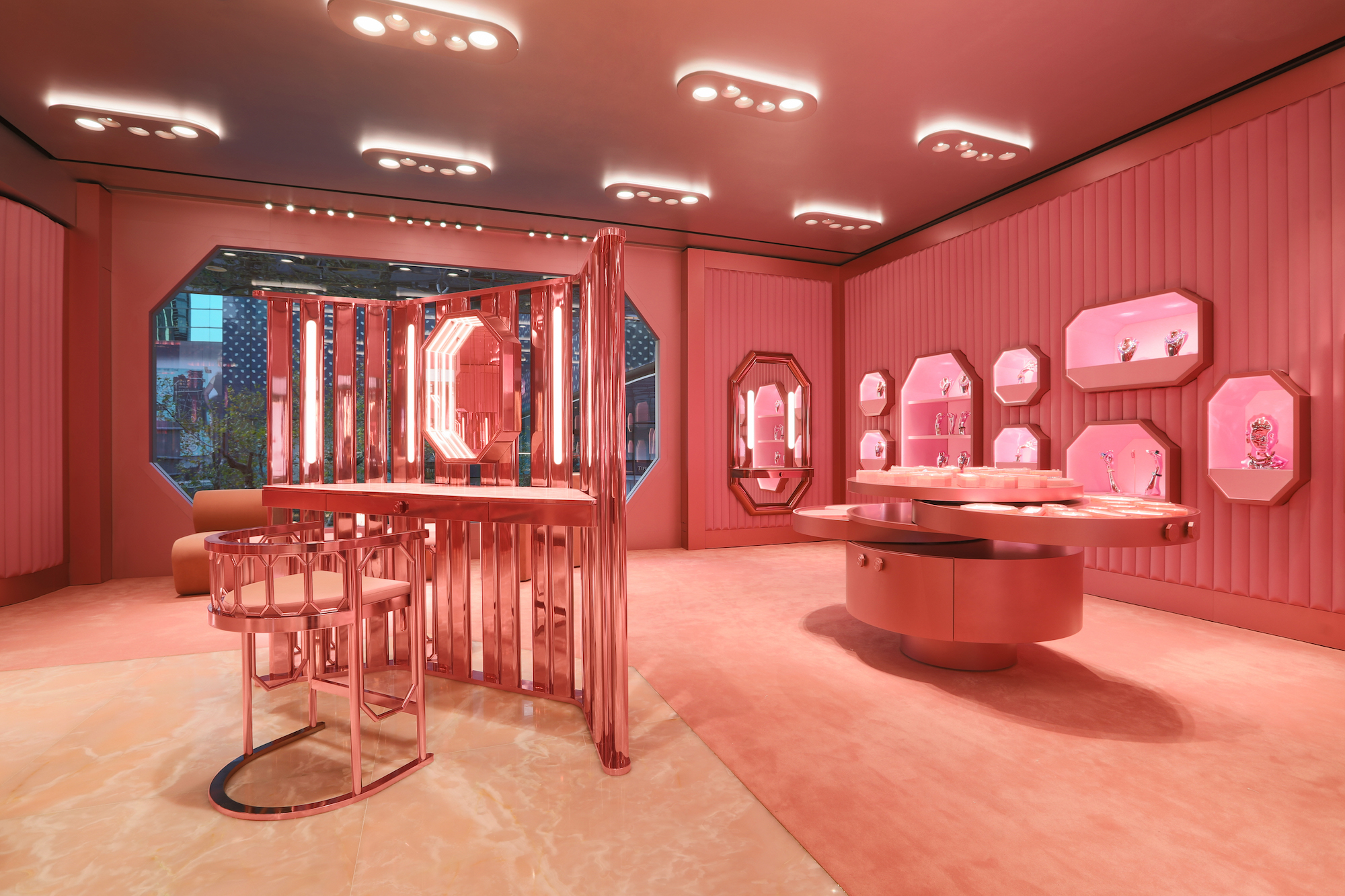
    The Ginza boutique houses the luxury jewelry company’s men’s and women’s watch collections on the first floor, diamonds, including engagement rings, contemporary designs, and special orders, on the second floor, and fashion accessories and leather goods on the lower level. Interior designer Bruno Moinard created unique spaces for each floor, with the first floor featuring brown tones and soft hues of beige, gold, and champagne, and the second floor featuring feminine contrasting hues of ivory and champagne.

    The façade, which was designed by Sylvain Dubuisson, was constructed in two sections with the lower part being a dark brown, orange-toned granite stone façade inspired by the company’s boutique in Paris on Rue de la Paix, and the second section featuring Japanese screens, or Shoji, made from traditional paper and wood cuts arranged to resemble a Japanese cedar, or Sugi, which is Japan’s national tree.

    Cartier first entered the Asia market in 1970 in Hong Kong and later opened in Singapore in 1973. The jewelry company opened a boutique in Ginza in 1991 and opened the flagship in 2003, which introduced Cartier’s interior design concept by Moinard. The boutique was renovated and reopened in 2007, and it reopens again after being renovated for two years.

  • Zara joint venture records loss in India

    Zara joint venture records loss in India

    Inditex, the Spanish owner of fashion brand Zara posted its first-ever loss in India as sales dipped by 28% due to Covid lockdowns and related staggered reopening during the financial year 2021 (FY21). The fashion house consistently posted profits in India since entering the country in 2010.

    Zara’s joint venture partner with Tata, Inditex Trent, which runs 21 stores in India saw its revenue decline to Rs 1,126 crore in FY21. The company posted a net loss of Rs 41 crore as per Trent’s annual report released Thursday. It posted a profit of Rs 104 crore in the previous year. It is one of the most profitable apparel retailers in the country.

    Trent’s annual report said FY21 started with significant uncertainty due to the pandemic. It added that operating profit was hit by a drop in sales and restaurants profits due to Covid-related lockdowns and trade restrictions.

    According to an Economic Times report, Trent has yet another association with Inditex group to operate Massimo Dutti stores in India. It saw revenues drop by 50% to Rs 34 crore in FY21 with a net loss of Rs 8 crore.

  • Taiwanese footwear maker suspends 18,000 workers over Covid-19 linkage

    Taiwanese footwear maker suspends 18,000 workers over Covid-19 linkage

    Over 18,000 workers of Pou Sung Vietnam were temporarily suspended due to a worker having close contact with a suspected Covid-19 case.

    Health authority found the wife of a suspected Covid-19 case working at the Dong Nai-based firm with 27,000 employees. The worker, who came in close contact with the suspected Covid-19 case, had her sample taken and is awaiting results.

    The company has suspended 18,403 workers starting Saturday morning to disinfect the entire factory, according to Le Nhat Truong, chairman of the labor union of Pou Sung Vietnam.

    It is also tracing those who traveled in the same vehicle carrying the Covid-19 linkage worker. The firm employs 300 vehicles to pick up over 10,000 staff in remote areas across the southern provinces of Dong Nai and Binh Thuan.

    Dong Nai Province has 31 industrial zones and one high-tech zone, with 1,400 enterprises employing more than 620,000 workers.

    The province found two Covid-19 cases Saturday, ending its 45-day streak without new Covid-19 cases.

    Dong Nai has so far recorded three confirmed Covid-19 case since the fourth coronavirus wave hit on April 27.

  • SaSa International Closing 20 Hong Kong stores

    SaSa International Closing 20 Hong Kong stores

    Sa Sa International (0178) projects to close 15 to 20 shops in Hong Kong by the end of March 2022, but will add 30 stores in the mainland after recording a net loss of more than HK$350 million for the fiscal year ending March.

    Sa Sa said that it will close some physical stores in Hong Kong, especially in tourist areas, to cut down on rental costs.

    The group stated that the leases of 38 of their Hong Kong shops expired this year. Last year, the renewal rent in tourist areas was reduced by about 70 percent and in non-tourist areas by about 26 percent.

    So far this year, the rent renewal in tourist areas was reduced by 65 percent and in non-tourist areas by about 30 percent.

    As of the end of March, Hong Kong and Macau stores were reduced from 112 stores to 100 stores, Malaysian stores were reduced from 79 to 75, and mainland stores increased from 44 to 57.

    The group will focus more resources on its online business.

    This came after its net loss narrowed by 32 percent year-on-year to HK$351.4 million.

    Basic loss per share amounted to 11.3 HK cents. The board does not recommend the payment of a final dividend.

    Turnover for the continuing operations decreased by 46.8 percent to HK$3.04 billion. Sales of retail and wholesale in Hong Kong and Macau reduced by 57.8 percent to HK$1.99 billion. Mainland revenue rose 15.9 percent in yuan to HK$289.85 million. From April 1 to June 9, sales rose 55.1 percent. Hong Kong and Macau sales rose 53.5 percent and mainland sales rose 30.7 percent due to low base effect.

  • Unilever buys digital-first skincare brand Paula’s Choice

    Unilever buys digital-first skincare brand Paula’s Choice

    Unilever is to add digital-led skincare brand Paula’s Choice to its portfolio after reaching a purchase agreement with TA Associates.

    The value of the deal – expected to be completed in the third quarter this year – has not yet been disclosed. According to Unilever, Paula’s Choice will join its Prestige division which manages other skincare brands such as Tatcha, Murad, and Dermalogica.

    “Developing Unilever’s portfolio in the high-growth premium skin-care segment is one of our strategic priorities,” said Sunny Jain, president of beauty & personal care at Unilever.

    “Paula’s Choice is a true pioneer in the digital space for beauty and has created a mission-based brand rooted in truth and transparency,” said Vasiliki Petrou, VP and CEO of Unilever Prestige.

    Founded in 1995 by Paula Begoun, the direct to consumer brand Paula’s Choice is known for its science-backed products and digital tools, including its ‘Ingredient Dictionary’ that breaks down the research behind nearly 4000 ingredients, and ‘Expert Advice’, a curated online hub of skincare and ingredient knowledge.

  • Oriental Watch profit soars as Chinese shop at home instead of travel

    Oriental Watch profit soars as Chinese shop at home instead of travel

    Most readers would already be aware that Oriental Watch Holdings’ stock increased significantly by 37% over the past three months. As most would know, fundamentals are what usually guide market price movements over the long term, so we decided to look at the company’s key financial indicators today to determine if they have any role to play in the recent price movement. Specifically, we decided to study Oriental Watch Holdings’ ROE in this article.

    Return on equity or ROE is an important factor to be considered by a shareholder because it tells them how effectively their capital is being reinvested. In short, ROE shows the profit each dollar generates with respect to its shareholder investments.

    The ‘return’ is the profit over the last twelve months. That means that for every HK$1 worth of shareholders’ equity, the company generated HK$0.05 in profit.

    So far, we’ve learned that ROE is a measure of a company’s profitability. Depending on how much of these profits the company reinvests or “retains”, and how effectively it does so, we are then able to assess a company’s earnings growth potential. Generally speaking, other things being equal, firms with a high return on equity and profit retention, have a higher growth rate than firms that don’t share these attributes.

    On the face of it, Oriental Watch Holdings’ ROE is not much to talk about. We then compared the company’s ROE to the broader industry and were disappointed to see that the ROE is lower than the industry average of 8.5%. However, we were pleasantly surprised to see that Oriental Watch Holdings grew its net income at a significant rate of 42% in the last five years. So, there might be other aspects that are positively influencing the company’s earnings growth. Such as – high earnings retention or efficient management in place.

    Next, on comparing with the industry net income growth, we found that Oriental Watch Holdings’ growth is quite high when compared to the industry average growth of 8.5% in the same period, which is great to see.

    The basis for attaching value to a company is, to a great extent, tied to its earnings growth. What investors need to determine next is if the expected earnings growth, or the lack of it, is already built into the share price. This then helps them determine if the stock is placed for a bright or bleak future. Is Oriental Watch Holdings fairly valued compared to other companies? These 3 valuation measures might help you decide.

    The three-year median payout ratio for Oriental Watch Holdings is 45%, which is moderately low. The company is retaining the remaining 55%. So it seems that Oriental Watch Holdings is reinvesting efficiently in a way that it sees impressive growth in its earnings (discussed above) and pays a dividend that’s well covered.

    Moreover, Oriental Watch Holdings is determined to keep sharing its profits with shareholders which we infer from its long history of paying a dividend for at least ten years.

  • China to become major buyer of Vietnam’s garments

    China to become major buyer of Vietnam’s garments

    China is set to become a major export market for Vietnam’s textile and garment industry, making up for the lull in traditional markets like Japan and the EU.

    According to Vietnam National Textile and Garment Group (Vinatex), Covid-19 has rendered some of the main markets unstable. For example, the E.U. is facing the risk of a pandemic resurgence, while Japan’s economy is yet to revive. Therefore, Vietnam’s textile and garment exports to these two markets are not expected to rise this year.

    Meanwhile, China has indicated in its 14th five-year plan that it will not concentrate on textile and garment production in the 2021-2025 period.

    Vietnam’s textile and garment exports to China in Q1 experienced the highest growth among the five largest textile and garment export markets (the U.S., Japan, South Korea, E.U., and China), Vinatex reported. Textile and garment export value to China during the period was as high as that to the E.U. at $680 million.

    One challenge for Vinatex this year is the falling demand of office wear, which is one of the group’s main products. Amidst the pandemic, consumers prefer casual wear and sportswear. Another difficulty is that inflation is expected to rise this year, resulting in higher lending rates and increased financial expenses.

    Vinatex targets revenues of VND1.5 trillion ($66 million) this year, up 5 percent year-on-year, and pre-tax profit of VND201 billion, up 37 percent. The group said it will continue to divest from ineffective companies this year.

    Vietnam’s textile and garment exports in the first five months of 2021 hit $12.2 billion, up 15 percent year-on-year, according to the General Statistics Office.

  • Temples inspire design of Uniqlo’s latest Tokyo retail store

    Temples inspire design of Uniqlo’s latest Tokyo retail store

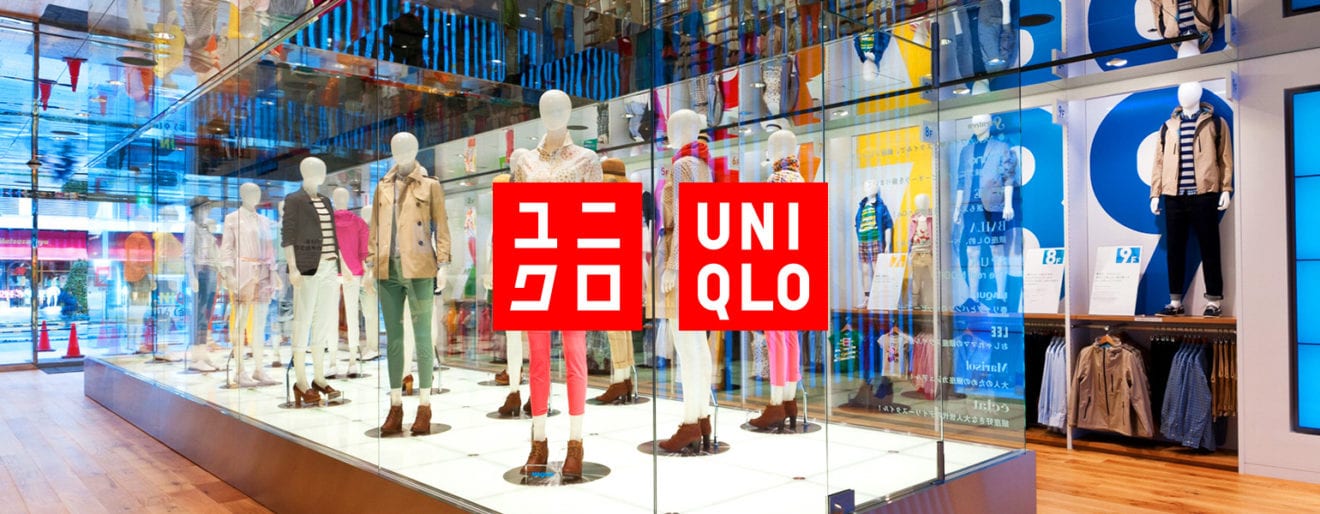
    Uniqlo opened the doors of its newest large-format store on Friday, in the historic and culturally significant neighborhood of Asakusa. The store follows the concept of “our neighborhood” and aims to support the area’s local businesses, residents, and artisans.

    With a selling area of more than 21,000 square feet, Uniqlo Asakusa also boasts one of the longest continuous store windows of any Uniqlo store. It is located in the heart of Asakusa, which prior to the COVID-19 pandemic was bustling with international tourists on any day of the week. The area is known for its historic pedestrian lanes lined with souvenir stores and leading up to Senso-ji, Tokyo’s oldest Buddhist temple and one of its most significant. It is also a district that hosts the workshops and stores of many traditional craftspeople, some of whom Uniqlo featured in various ways inside the store.

    The double-level main entrance to the store is dominated by a giant paper and wooden lantern, which was created by a local workshop and hand-painted with the Uniqlo logo. At nearly six feet per side, it was both the largest lantern the shop had ever created, as well as the first cubic one. In addition, signage used throughout the store was inspired by “senjafuda” votive strips that are a common sight at temples and shrines across Japan.

    Uniqlo also collaborated with local businesses on various products to mark the opening of the store. For example, small ceramic plates designed with traditional snack-maker Asakusa Tokiwado will be available for sale in limited quantities, while original teacups will be given to the first 3,000 customers to spend 5,000 yen or more during the opening weekend. There are also original UTme! stamps that are only available at the Asakusa store to use in customizing T-shirts and tote bags.

    Throughout the store, Uniqlo has highlighted products from local shops, from stationery to skateboards, encouraging customers to explore the neighborhood in order to purchase such items and discover others. Other features of the store include a larger than usual space where customers can try on and order tailor-made items, areas highlighting sustainability and fitting rooms that feature artworks by a local artist, and photographs of Asakusa from the past and present.