Category: Fashion

Retail News Asia is committed to providing both local and global retailers with the latest Fashion news throughout the Asian market. This on a daily base.

  • Esprit issues shock profit warning

    Esprit issues shock profit warning

    Apparel retailer Esprit says it is on track to record its first profitable half year since the second part of 2017.

    In a positive profit alert filed with the Hong Kong stock exchange the embattled retailer – which lost US$463 million in the six months to June last year, mainly through writedowns – says it expects a profit of “not less than HKD 110 million” (US$14 million) for the six months to June this year. However, HKD 85 million ($10.9 million) of is due to currency-exchange gains.

    Sales for the half-year were down 6 per cent to HKD 3.8 billion (US$488 million).

    During the past three years, the company has slashed its store network, quit all Asian markets, culled staff and restructured its European operations under a form of bankruptcy protection to try to stem years of losses.

    Esprit’s acting executive chairman Christin Chiu said the reduction in sales was due to Covid-related lockdowns in key markets, and the closure of its Asia-Pacific retail operations.

    She said the group overcame the adverse effects of a significant decrease in consumer traffic and continued to implement its cost-control policy and development strategies, resulting in positive improvement in the overall operating conditions.

    “This performance reflects accelerated growth in the e-commerce channel in the first half of 2021, with a 17-per-cent year-on-year increase in the segment revenue.”

    She said the turnaround from loss to profit was due to the significant reduction in writedowns, cost control measures, higher sales and gross profit through its e-commerce channel, and the exchange gain.

    Esprit plans to release its interim results on August 24.

  • Giordano sales rebound, delivering first-half profit despite fewer stores

    Giordano sales rebound, delivering first-half profit despite fewer stores

    Hong Kong-listed apparel retailer Giordano is back in the black after first-half sales rose 19 percent against the prior year – including 44 percent in the second quarter.

    Giordano, which now has 2094 stores across Southeast Asia, Greater China, and the Middle East, reported a post-tax profit of HKD60 million (US$7.71 million) for the half, in which its gross margin grew by 2.4 percentage points to 57 percent. The profit was a stark contrast to the Covid-impacted comparable period’s loss of HKD175 million ($22.5 million).

    And despite ongoing disruption to sales in various markets, the company pared back its inventory turn from 138 days to 124.

    The retailer closed a net 93 stores during the period, but its online sales soared 21.6 percent and now represent 10.1 percent of total group sales. Wholesale sales to franchises rose by 21.1 percent.

    While the company incurred a loss in Hong Kong and Macau – where mainland tourists were effectively barred for the entire period – increased sales to local consumers, the closure of unprofitable stores and rent reductions helped lessen the impact.

    “The average rental is still high despite gloomy consumer sentiment and the absence of incoming tourists,” said chairman and CEO Peter Lau in a results filing. “Management is continuing to negotiate with landlords for more affordable rental arrangements.”

    However, sales in Mainland China delivered a double-digit increase despite fewer stores.

    “Online sales and the franchising business continue to be our focus of development,” said Lau. “The online gross margin improved with increases in selling prices and fewer discounts.”

  • Nike launching sustainable concept store in Seoul

    Nike launching sustainable concept store in Seoul

    After launching the Rise concept store last year to Guangzhou, China, sportswear giant Nike has unveiled a new version of the concept which will launch in Seoul, South Korea.

    The store will feature a new digital platform, Sports Pulse, which will seek to bridge the gap between physical and online retail and create an “immersive retail experience”, as well as an interactive RFID-enabled footwear table, Inside Track, where shoppers can compare product details by simply placing products on the table.

    Three new ‘experience zones’ will also be debuted in the Seoul store: The Sports Hub, which will help shoppers connect with sporting opportunities in the city; The City Replay, a space to showcase hyperlocal products; and The Huddle, a place for a group or one-on-one expert sessions tailored to their fitness goals.

    And, according to Nike, it does so while also boosting the business’ sustainability and circularity.

    “In addition to being among the first Nike stores to secure a LEED Gold certification, Nike Seoul is also the first in Asia to launch … Nike’s fully integrated service for recycling and donating gently worn footwear and apparel,” the business said in a statement.

    “Shoppers can drop off gently-worn shoes – and now, for the first time, apparel – to the Seoul store, where the products will either be recycled or donated to partnering organizations that help communities facing disasters and other challenging circumstances.”

  • Adidas hit by China boycott, Vietnam factory closures

    Adidas hit by China boycott, Vietnam factory closures

    Adidas felt the impact of a Chinese boycott of Western brands on its second-quarter results and is also suffering from the closure of factories in Vietnam due to Covid-19 infections.

    The German sportswear company still raised its outlook for full-year sales and profitability as it said it has seen demand recover in China since calls for a boycott in late March, and said it hopes to restore production in Vietnam soon.

    But Adidas shares were down 4.1 percent by 9:50 GMT as analysts noted that its growth was lagging rivals Nike and Puma, which both reported that sales nearly doubled in recent earnings releases.

    Second-quarter sales at Adidas rose 52 percent to 5.077 billion euros ($6 billion), while operating profit came in at 543 million euros, ahead of analysts’ average forecasts.

    Adidas raised its 2021 outlook to predict sales will grow up to 20 percent, and net income from continuing operations will reach 1.4-1.5 billion euros. That compared to Puma’s forecast for sales to rise at least 20 percent for 2021.

    Adidas already saw online sales return to growth in China in June, Chief Executive Kasper Rorsted told journalists, adding he expects the country to record strong growth for the full year and he welcomed a government drive to promote youth sport.

    The company hopes to be able to restart production in Vietnam after the scheduled end of a coronavirus lockdown on Aug. 15 and is working on reallocating production to other centres in the meantime.

    Vietnam usually accounts for 28 percent of Adidas sourcing and its factories mostly make shoes for the company, with a lag of three to four months before products hit the shelves.

    The combined impact of supply chain problems, new Covid-19 lockdowns in Asia and tensions with China could amount to more than 500 million euros in lost sales in the second half, said finance chief Harm Ohlmeyer.

    Ohlmeyer added he expects Adidas to seal a deal to divest the underperforming Reebok brand by the end of the summer.

  • Garment firms fear order plunge

    Garment firms fear order plunge

    Vietnam, the world’s second-biggest garment exporter, is facing the risk of losing orders to competitors amid the complicated Covid-19 situation in August.

    Gia Dinh Group JSC in the southern province of Binh Duong has secured orders till the end of December, but face higher material prices plus late shipments, along with higher logistics costs. The company’s management board said if the pandemic prolongs, it would fail to fulfill its orders.

    Over 80 percent of garment and textile enterprises in the southern region have had to either lower labor productivity or suspend operations to combat the disease.

    Vu Duc Giang, chairman of the Vietnam Textile and Apparel Association (VITAS), said production in August is “extremely difficult”, especially for firms in southern localities imposing social distancing. Up to 90 percent of production chains in the south have been broken.

    Meanwhile, only 70-80 percent of garment and textile companies in the northern region are still operating.

    Delivery pressure amid outbreaks is a big challenge for garment and textile enterprises now, he said, stating that if they fail to meet delivery deadlines, their customers would cancel orders, which will affect production both this year and the next.

    “If the Vietnamese market is not stable, partners will shift orders (to other countries). Garments are seasonal. Nobody wants to buy outdated clothes though they are on sale,” the VITAS chairman said.

    The Ministry of Industry and Trade also stated garment and textile enterprises in Vietnam are facing the risk of international clients postponing or canceling orders, and shifting their focus to other countries. “When the pandemic is controlled, it will be very difficult to resume business relations, and that will take time,” the ministry said.

    The VITAS chairman also mentioned the risk of labor shortages. Many workers have left Ho Chi Mih City for their hometowns to avoid being infected with the coronavirus, and only 60-65 percent may return to the city when the Covid-19 outbreak is pushed back, according to Giang. “There will be rather severe labor shortages in the coming time,” he predicted.

    Vietnam exported $18.6 billion worth of textile and garment products in the first seven months of this year, a year-on-year increase of 14.1 percent, according to the General Statistics Office.

  • Foot Locker is breaking into Japan’s sneakerhead culture

    Foot Locker is breaking into Japan’s sneakerhead culture

    Hidefumi Hommyo got an unusual start in the sneaker business. A native of Japan who became acquainted with the US while studying at Temple University in Philadelphia, Hommyo realized sneakers that were rare in Japan could be found easily, and cheaply, in the US. He made trips up and down the east coast in the mid-1990s, scouring basements and garages for shoes such as the original Nike Air Jordan 1 from 1985 or the Nike Air Force 1 from 1982. He would buy them for just $15 or $20 a pair, he recalled on a podcast last year, and sell them for $400 at his stores in Japan, where streetwear and sneaker fandom were starting to take off.

    Hommyo caught Nike’s notice, and when he opened his next shop, atmos, as a traditional retailer in the backstreets of Tokyo’s Harajuku neighborhood in 2000, Nike was his first vendor. Since, atmos has built a global profile among sneaker fans, largely with its sought-after collaborations with sneaker makers. It now has 49 stores, including 10 outside Japan in cities such as New York, and a substantial digital business.

    Its success has attracted another big name in sneakers: Foot Locker today announced it is acquiring atmos for $360 million.

    The purchase gives Foot Locker a “strategic foothold in Japan,” the company said, a market it estimates to be worth $6 billion. Atmos, focused on a niche of young, discerning shoppers, owns just a slice of that. Its sales last year were approximately $175 million, according to the announcement. But the deal still helps Foot Locker expand in the fast-growing Asian market, and further into the premium end of sneakers and streetwear.

    While Foot Locker has a global footprint, it’s still primarily a US business. As of Jan. 30, 2021, it had nearly 2,000 stores in the US and its territories across its various store brands, which include Foot Locker as well as offshoots such as Kids Foot Locker and chains such as Champs and Footaction. Foot Locker specifically had 848 US stores. Foot Locker Asia, on the other hand, had just 20 stores.

    Atmos immediately increases Foot Locker’s presence in the world’s third-largest economy. Foot Locker will also benefit from atmos’s digital channels, which generated more than 60% of its sales last year.

    At the same time, Foot Locker pointed to atmos’s distinct brand and “potential for Foot Locker, Inc. collaborations” as strategic benefits in a presentation about the deal prepared for analysts. Atmos is known in the world of sneakers and streetwear for its taste and for co-producing some of the most sought-after collaborations on the market. Foot Locker is more a mass retailer, though one that’s made itself a destination for sneakerheads through its releases of sneakers such as Jordans and Yeezys. By acquiring atmos, Foot Locker gets its cultural credibility in sneakers and streetwear, while Foot Locker also apparently sees potential to use atmos’s expertise to launch its own collaborations.

    Foot Locker announced another purchase, too. It’s buying WSS, a regional retailer with 93 off-mall stores around the southwestern US, where Foot Locker says it has room to grow. Those stores are generally not in malls, too, which could help at a moment when malls, where Foot Locker has many of its US stores, are seeing traffic declines. Importantly, WSS also has a strong following among Latino shoppers, a demographic group with growing spending power.

    Foot Locker paid $750 million for the company, which generated $425 million in sales in its 2020 fiscal year.

  • Indian beauty startup Nykaa to raise US$500 million through IPO

    Indian beauty startup Nykaa to raise US$500 million through IPO

    Indian e-commerce beauty company Nykaa plans to raise US$500 million through its initial public offering (IPO), a source with direct knowledge of the matter told Reuters, becoming the latest homegrown startup to pursue a listing on the domestic bourses.

    Private equity firm TPG-backed Nykaa, based in Mumbai, sells cosmetics, grooming products, and clothes. Nykaa said its IPO will consist of a fresh issue of shares of up to 5.25 billion rupees (S$95.49 million) and an offer for sale of up to 43.1 million shares, according to a copy of its draft red herring prospectus dated Monday.

    The source said the 5.25 billion rupees will come from fresh shares issued to investors, while the rest will come from existing shareholders.

    Nykaa’s filing comes after food-delivery firm Zomato’s stellar debut last month. Launched in 2012, Nykaa grew popular by selling cosmetics and grooming products on its website and apps, before expanding into fashion, pet care, and household supplies.

  • H&M to open first store in Cambodia next year

    H&M to open first store in Cambodia next year

    Swedish multinational clothing retail company Hennes & Mauritz AB (H&M) has announced the opening of its first store in Cambodia next year, according to a press release issued in early July.

    The firm, however, did not disclose the specific date and location of this first store.

    H&M already has a large presence in the region with 11 stores in Vietnam and 43 in Thailand.

    The decision to expand its stores to Cambodia was made after the company assessed the potential of Cambodia given the gradual increase of local purchasing power.

    The firm has been manufacturing its products in Cambodia since the 1990s.

  • US apparel companies seek speedy vaccination of Vietnamese workers

    US apparel companies seek speedy vaccination of Vietnamese workers

    The American Apparel & Footwear Association (AAFA) has requested the U.S. and Vietnam governments to speed up the distribution of vaccines to major suppliers of Adidas, Gap and other brands.

    “We urge you to dramatically ramp up distribution of vaccines, including America’s stockpile of AstraZeneca vaccines, to countries like Vietnam now,” Steve Lamar, president and CEO of the association, said in a letter to U.S. President Joe Biden.

    Immediate and dramatic action by the U.S. will not only save millions of lives worldwide but could also promote America’s economic recovery, he added.

    Vietnam is the second-largest supplier of apparel, footwear and travel goods to the U.S., accounting for 20 percent of all U.S. imports, he said.

    “This is why the success of the U.S. apparel and footwear industry, and our three million American workers, is directly dependent on our suppliers around the world, including those in Vietnam, having healthy workforces,” he wrote.

    In a separate letter to Prime Minister Pham Minh Chinh, Lamar urged that the Vietnamese government takes “several key emergency actions to help control the spread of Covid-19, particularly in the south, to thwart a growing humanitarian crisis.”

    The U.S. has already provided five million doses, but the association is advocating that the government supplies more on an urgent basis, he said.

    Vietnam, particularly southern localities, is experiencing a severe Covid-19 wave that has recorded over 116,900 infections since the end of April, in which Ho Chi Minh City accounts for 66 percent.

    Major suppliers for global brands like Adidas and Nike in the country have shut down operations or operating at limited capacity under strict social distancing orders.

  • Nike and Adidas face supply-chain disruption after Vietnam factory closure

    Nike and Adidas face supply-chain disruption after Vietnam factory closure

    Taiwan’s Pou Chen, which makes footwear for companies such as Nike and Adidas, suspended operations at its plant in Ho Chi Minh City on Wednesday as COVID-19 curbs hit factories in the country’s business hub.

    Vietnam’s health ministry said in a statement that production at Pou Chen’s Pouyuen Vietnam factory would be suspended for 10 days.

    State media said 49 infections had been detected at the plant in Ho Chi Minh City, which is at the epicenter of the country’s worst coronavirus outbreak.

    The company did not immediately respond to an email seeking comment.

    Shares in Pou Chen, the world’s largest manufacturer of branded athletic and casual footwear, closed down 1.3% on Wednesday.

    After successfully containing the disease for much of the pandemic, Vietnam has faced a more stubborn outbreak since late April.

    Record infections and strict curbs on movement have left plants operating below capacity in northern provinces where suppliers for Apple, Samsung Electronics and other global tech firms are located, sources have said.

    Pouyuen Vietnam, the largest employer in the city with 56,000 workers, was unable to arrange for its workers to sleep at the site as required by authorities to allow the business to remain open, the health ministry said on Wednesday.

    Last year, Pouyuen Vietnam was ordered to suspend its production for two days after failing to meet local social distancing rules.

    Earlier this week, state media said authorities also ordered 29 companies in the Tan Thuan Export Processing Zone, an industrial park, to suspend production due to the outbreak.

    In the neighboring Saigon Hi-Tech Park, which houses international companies, more than 700 infections were detected in recent days and authorities ordered companies to shut units with infected workers, state media reported.

    Despite the latest outbreak, Vietnam has recorded far lower caseloads than many other countries with 36,605 infections in total and 130 deaths.

  • China sales help Armani bounce back from pandemic

    China sales help Armani bounce back from pandemic

    Sales at Giorgio Armani jumped 34% in the first half of 2021 as business in China and the United States helped the Italian fashion group bounce back, although it said it could be next year before it fully recovers from the pandemic.

    “The goal is to return to pre-pandemic levels by 2022, with… over 2 billion euros in direct consolidated revenues,” Chairman and CEO Giorgio Armani said on Sunday in a statement announcing 2020 results and the trend for January-June.

    The luxury group said consolidated net sales had fallen 25% last year to 1.6 billion euros ($1.9 billion), with most of the decline occurring in the first half of 2020.

    Luxury goods sales around the world fell sharply last year for the first time in years as the pandemic forced shop closures and brought international tourism to a virtual halt.

    “The drop in revenues in 2020 should be read not only as a consequence of the pandemic but also in line with Giorgio Armani’s own strategic principle of ‘less is more’,” said Armani Deputy Managing Director Giuseppe Marsocci.

    The Milan-based group did not give the value of total sales in January-June but said the positive sales trend so far this year pointed to a much better profitability scenario for 2021.

    For the whole of last year the group made a consolidated net profit of 90 million euros but an operating loss (EBIT) of 29 million euros.

    It also said on Sunday that its financial position improved significantly in the first half with net cash and cash equivalents of 1.088 billion euros “ensuring the financial resources necessary for the Group’s medium to long-term stability and growth”.

    Speculation about succession plans at Armani has come to the fore recently, especially after the 87-year-old designer said he could consider teaming up with another Italian company.

    Sources said earlier this month that John Elkann, scion of Italy’s Agnelli family, had explored a possible tie-up as part of plans to build a luxury conglomerate.

  • Burberry opens new London flagship

    Burberry opens new London flagship

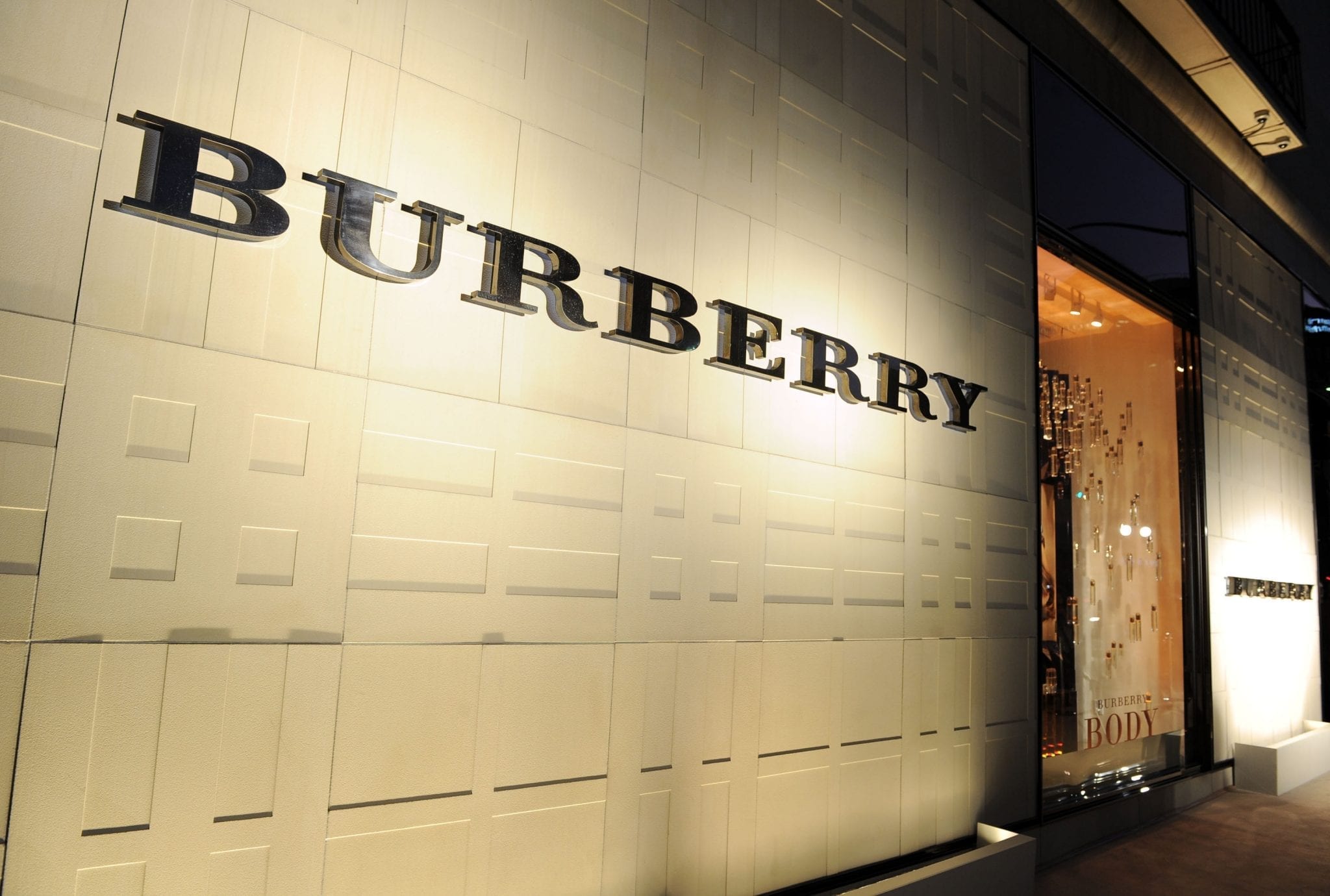
    Change is afoot at Burberry. Since 2018, the British heritage brand’s Chief Creative Officer Riccardo Tisci has been reimagining the label with the goal of finessing its high-end luxury status. Working closely with CEO Marco Gobbetti, who recently announced he’ll be stepping down from his role at the end of the year, Tisci has revamped Burberry’s aesthetic image. From a logo rebrand by Peter Saville to a CGI campaign with Nick Knight and Tom Wandrag, Tisci’s collections have modernized house codes and staples such as the trench coat, whilst also setting a more conceptual agenda, as seen in the S/S 22 menswear collection. Now, Burberry debuts its new flagship store at No.1 Sloane Street, London, inviting the world to experience the Burberry universe afresh.

    Despite the digital race towards virtual living and surge in online shopping during the pandemic, placing a focus on real-life stores remains a priority for luxury big dogs like Burberry. In 2020, the brand opened a hybrid physical-digital store in Shenzhen, China, to cater to local shoppers as the country slowly reopened ahead of the West. As stores worldwide begin inviting shoppers back in, brands must be mindful of where they’re placing their bets on consumers making a physical trip to the store after months of placing orders online. The new Burberry flagship offers a unique shopping experience, telling the stories behind the brand’s latest collections and drops such as the signature Olympia and TB bags to entice visitors back to the physical.

    Designed with the renowned architect Vincenzo De Cotiis, the store merges Burberry’s past, present and future. Architecture references British classicism and brutalism, whilst the Burberry house check can be found throughout the space, such as on mirrored lighting grids in the ceiling. A dedicated area on the ground floor spotlights the trench coat made from gabardine, which the brand’s founder Thomas Burberry invented in 1879. Head upstairs to womenswear and menswear, and you’ll find sculptural furniture, seating and fixtures, in a space that offers the ultimate luxury experience.

  • Bally signs up Johnny Huang as brand ambassador

    Bally signs up Johnny Huang as brand ambassador

    Bally is underlining the strength of the Chinese consumer with its latest campaign as it has signed up Chinese actor and model Huang Jingyu, also known as Johnny Huang, as the campaign’s star and as its brand ambassador more widely.

    “The award-winning Chinese actor will reinterpret our pioneering spirit with his signature style and edge,” the company said. In its 170th anniversary year, it’s also planning plenty of major activities with the celebrity.

    The company has 60 stores in China and a dedicated webstore there, as well as a prominent presence on e-tail sites like Tmall and on local social media.

    Buit it’s not all about China, of course, with the actor also being known internationally. In fact, his appointment is the first time a Chinese personality has acted as global face for the label.

    The company said its new spokesmodel is “a formidable actor” with a “dynamic personality and modern sense of style” that works well with Bally.

    As well as fronting the AW21 campaign alongside model Zhao Jiali, he will continue as the brand’s ambassador for its SS22 imagery and will appear at Bally events such as store openings like that for the planned Bally Hike pop-up in Beijing. That store will feature a dedicated hiking clothing and accessories collection.

  • LVMH takes control of Off-White label

    LVMH takes control of Off-White label

    French luxury group LVMH is acquiring a 60% stake in Off-White, the label of designer Virgil Abloh who has been responsible for Louis Vuitton’s men’s collections since 2018.

    LVMH reports that it has taken a majority stake in Off-White, the brand launched in Milan in 2013 by American designer Virgil Abloh. This will give the world’s largest luxury goods company a firm foothold in streetwear, a highly profitable segment that has risen to prominence within haute couture in recent years.

    LVMH will own 60% of the brand while the founder will retain a 40% stake. Further details of the transaction were not disclosed, writes Les Echos.

    Until now, Off-White was controlled by New Guards, an Italian group that also owns Palm Angels and Heron Preston. New Guards was bought by Farfetch in August 2019 for around 600 million euros. As a licensee, Farfetch will continue to operate the brand.

    Within its segment, Off-White is a major player. The label already has 56 stores worldwide and counts more than 10 million followers on Instagram. In February, Andrea Grilli, the big boss of New Guards, announced that he is aiming for sales of one billion dollars within five to ten years.

    The deal highlights the ever-closer partnership between Abloh and the French luxury house. The story began in 2007, when the designer of Ghanaian-American descent, who at the time was still artistic director for Kanye West, collaborated on the creation of a Fendi collection. In 2015, Abloh was then a finalist for the LVMH Young Designer Award. Three years ago, he was appointed head of Louis Vuitton’s men’s collections.

  • Nike could run out of Vietnamese sneakers

    Nike could run out of Vietnamese sneakers

    The shutdown of two contract manufacturers in Vietnam due to Covid-19 could worsen Nike’s sneaker supply problems, a market research company has warned.

    The fact that South Korea’s Changshin Vietnam and Taiwan’s Pou Chen Corp in HCMC have stopped operating since last week “may exacerbate the supply chain disruptions that the company has had to deal with,” S&P Global Market Intelligence said in a report.

    Vietnam accounted for 49 percent of U.S. seaborne imports linked to Nike and its products in the second quarter, it said.

    Nike said in fiscal 2020 contract factories in Vietnam made roughly 50 percent of its branded footwear.

    There is a refocusing on China, the report said, pointing out that in the second quarter of this year, growth of U.S. seaborne imports linked to Nike from Vietnam was 6.6 percent year-on-year while it was 54.6 percent for China.

    A Nike spokeswoman said in an emailed statement: “We continue to work with our suppliers to support their efforts in response to the dynamic and unprecedented nature of Covid-19.”

    HCMC has recorded over 39,500 Covid-19 cases since April 27.