Category: Fashion

Retail News Asia is committed to providing both local and global retailers with the latest Fashion news throughout the Asian market. This on a daily base.

  • Adidas lowers 2022 expectations amid China lockdowns

    Adidas lowers 2022 expectations amid China lockdowns

    Adidas lowered expectations for 2022 after a first-quarter slump as renewed COVID-19-related lockdowns in Greater China continues to hit the German sportswear company.

    First-quarter currency-adjusted sales shrank by 3% worldwide, to 5.3 billion euros ($5.58 billion), while profit from continuing operations fell 38%, to 310 million euros, it said on Friday.

    In Greater China, sales collapsed by 35% in the first quarter; for the year, revenue is expected to fall significantly due to store closures and strong traffic declines.

    The company now expects to come in at the lower end of its 2022 forecast for an 11-13% increase in currency-neutral sales as well as for net income from continuing operations of between 1.8 and 1.9 billion euros.

    Adidas also cut its operating margin forecast, saying it will remain at the previous year’s level of 9.4% instead of increasing to 11%.

    “In this environment, characterized by severe external challenges, it is imperative to stay focused on our strategic objectives,” said Chief Executive Kasper Rorsted.

    “While we will remain agile, we will not jeopardize our long-term growth opportunity for short-term profit optimization.”

    The company expects a return to growth in the second quarter despite the continued sales decline in Greater China and a 200-million-euro negative impact from supply chain constraints.

    In the second half of 2022, net sales are expected to grow over 20%, driven, among other things, by unconstrained supply, strong momentum in Western markets and major sports events.

  • Adidas seals long-term partnership with Foot Locker

    Adidas seals long-term partnership with Foot Locker

    Adidas, a global leader in the sporting goods industry, and Foot Locker, Inc. (NYSE: FL) (“Foot Locker”), the New York-based specialty athletic retailer, today announced a new and enhanced partnership built around product innovation, elevated experiences, and deeper consumer connectivity. This enhanced relationship will establish Foot Locker as the lead partner for adidas in the basketball category, accelerate energy and hype launches, as well as include the development and expansion of key franchises across women’s, kids, and apparel. Including all Foot Locker banners in North America, EMEA, and Asia-Pacific, the new strategic partnership will target over $2 billion in retail sales by 2025, nearly tripling levels from 2021. In 2022, adidas expects to generate incremental revenues of up to €100 million as a result of the new partnership.

    “We are delighted to be deepening our partnership with Foot Locker as we continue to execute our ‘Own the Game’ strategy,” said adidas CEO Kasper Rorsted. “Consumers will be at the heart of this exciting collaboration and will be able to experience the adidas brand and its key product franchises, as well as new product innovations, at Foot Locker, stronger than ever before.”

    “We are excited to build on our partnership with adidas as we continue our strategy to broaden our selection of footwear and apparel for the sport and sneaker communities,” said Richard A. Johnson, Chairman and Chief Executive Officer of Foot Locker, Inc. “This close partnership will enable us to bring consumers even more unique, pinnacle products from iconic brands, as well as accelerate our push into apparel, adding new dimension to our assortment and bringing more customers into our ecosystem.”

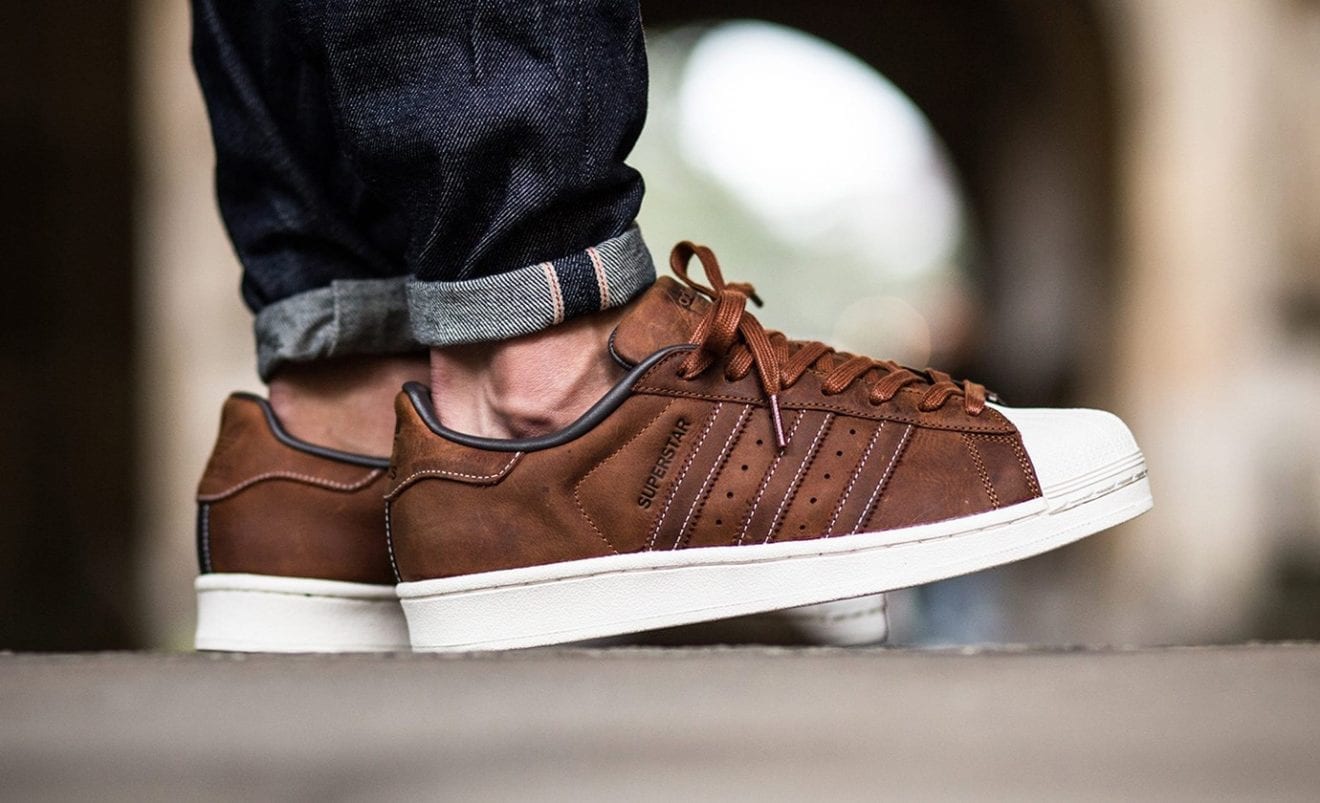
    Foot Locker will lead adidas’ basketball offering, led by Fear of God founder and designer Jerry Lorenzo, spanning the lifestyle and performance categories, and develop exclusive positions in both areas. In addition, the collaboration will focus on key Originals franchises including NMD, Superstar and Stan Smith, and on the adidas influencer partnership portfolio. It will also include a prominent role for Foot Locker in the launch of adidas’ new Sportswear product division targeting the lifestyle consumer.

    To execute the new plan, adidas will provide Foot Locker with a dedicated team to deliver an elevated consumer experience both in stores and online to help create demand and elevate the marketplace. This will involve partnership on product development, exclusive Foot Locker positioning, increased product allocations, shared marketing spend, and an elevated premium presence across Foot Locker’s entire portfolio of banners with a special focus on key cities and communities that the companies jointly serve. Lastly, to provide consumers with a seamless consumer journey, on and offline, both partners will increase their digital focus and accelerate the rollout of the adidas partner program at Foot Locker.

  • Shein unveils a purpose-led clothing range

    Shein unveils a purpose-led clothing range

    SHEIN, an online retailer of fashion, beauty and lifestyle products, today announced the launch of evoluSHEIN, a purpose-driven collection available to SHEIN customers around the world beginning April 29. With inclusive sizing, responsibly sourced materials, and the collection supporting women’s empowerment projects worldwide, the new line will be an affordable option for customers seeking to make a positive impact with their product choices.

    By shopping the evoluSHEIN line, customers can proudly say they are supporting the work of Vital Voices – a leading international non-profit that invests in women leaders taking on the world’s greatest challenges, including gender-based violence, the climate crisis, economic inequities, and more.

    The first release of evoluSHEIN clothing will feature recycled polyester – a fiber obtained from plastic waste. To produce the fabric, materials such as used plastic bottles are carefully cleaned, shredded into pieces, melted down, and spun into polyester fiber. Compared to virgin polyester production, the recycled polyester process requires less source materials and significantly reduces the amount of water and energy needed. Reducing waste and introducing recycled materials are key pillars of SHEIN’s vision of a circular economy and a sustainable future for accessible fashion. EvoluSHEIN will serve as a testing ground for new purpose-drive innovations SHEIN will be adopting throughout its greater collection.

    These evoluSHEIN recycled polyester pieces and packaging have been produced exclusively with suppliers certified to the Global Recycled Standard (GRS). This globally recognized certification supports traceability of recycled material through all stages of the supply chain, and sets strict social and environmental requirements. The GRS is managed by Textile Exchange, a global non-profit leading the apparel industry toward a more sustainable future. With more than 700 members representing leading brands, retailers, and suppliers in the industry, Textile Exchange is a force for collaboration and positive impact, and SHEIN is proud to be a member of this community.

    “We are committed to building a more responsible fashion ecosystem,” said Adam Whinston, Global Head of Environmental, Social and Governance at SHEIN. “Launching evoluSHEIN is one important step in our sustainability commitments this year, which touches on each of our key focus areas – protecting the environment, supporting communities, and empowering entrepreneurs. We invite all our partners and customers to join us in the journey.”

    Founded in 2012 as an e-commerce retailer with the mission of making the beauty of fashion accessible to all, SHEIN’s strategic small-batch production and digital retail model have helped the brand avoid many of the environmental impacts associated with traditional retail store footprints. Over the last ten years, SHEIN has advocated for a fashion revolution and developed tools to help suppliers with advanced technologies that support the planet. These collective efforts include turning traditional factories into agile supply chains with collaborative technology systems that drastically reduce inventory waste and help conserve natural resources in the production process.

    Customers worldwide are invited to join the evoluSHEIN starting April 29. The initial evoluSHEIN product line will feature women’s tops, dresses, and bottoms, with extended sizes dropping early this summer. SHEIN plans to expand the line to more than 1,500 product SKUs by the end of September 2022, with future evoluSHEIN styles featuring additional preferred materials options, including forest-safe viscose, consciously cultivated cotton, and additional certification programs for recycled fibers.

  • Hugo Boss the latest lux brand to launch resale offer

    Hugo Boss the latest lux brand to launch resale offer

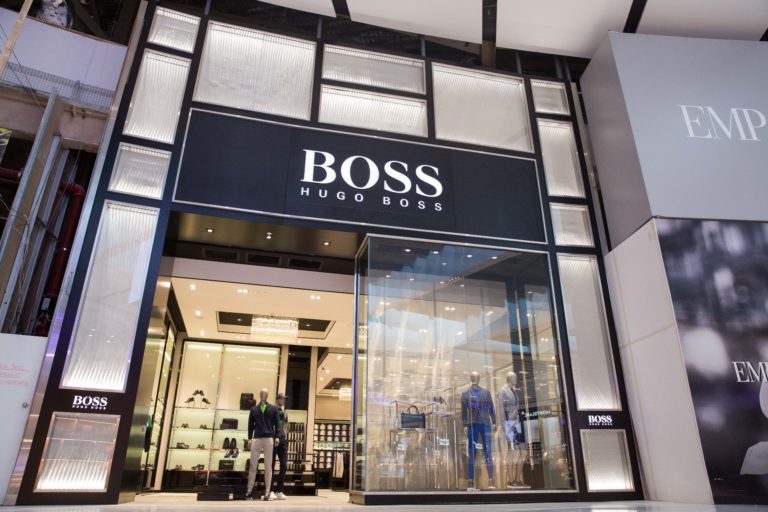
    Luxury fashion brand Hugo Boss has committed to a premium resale platform, which is set to launch in the third quarter of this year, encouraging customers to buy pre-owned items.

    According to the company, resale is a fast-growing market that helps reduce the fashion industry’s impact on the environment. Hugo Boss expects the initiative to extend its products’ life cycle and help limit its resource consumption.

    The online platform allows customers to return their used items to Hugo Boss in return for a credit that can be spent online on new or pre-owned items, or in-store. After a quality check, the pre-owned products will be sold on Hugo Boss Pre-Loved and ready for their second life in a new wardrobe.

    In addition, Hugo Boss will also launch a care and repair service to help customers cover the repair of their clothes and ensure the items can last longer.

    These are parts of Hugo Boss’s broader strategy unveiled on Earth Day to enhance its circular business model. The German fashion house also reports its circular products must meet three requirements: being made from renewable or recycled materials, being fully recyclable, and designed for longevity.

    “The high quality of our products allows them to have several lives, and our entry into the growing resale market is a natural step for us as a company,” said Heiko Schafer, COO of Hugo Boss.

  • Chinese shun foreign brands

    Chinese shun foreign brands

    Catwalks canceled, showrooms closed, stores shuttered: the pandemic has led to massive disruption across the fashion industry. Even in China, which has coped with the pandemic better than many countries, multi-brand store buyers have been forced to place orders online, rather than in the showroom. And they don’t like it much.

    All this has led many Chinese fashion buyers to order more conservatively this year or ignore international brands and opt for local Chinese labels.

    Olivia Chen, head of Assemble by Réel, a high-end store in Shanghai’s centrally-located Réel Mall, says that virtual ordering makes her feel like something is missing. “In a showroom, you’re immersed in an environment that conveys the season’s atmosphere. We can use a variety of sensory clues to gain insight into the story the designer wants to convey,” says Chen. “These elements create a certain kind of atmosphere, one that has a lasting and powerful influence. Images and other materials related to remote purchases can evoke some of that feeling, but it can’t achieve a high degree of resonance.”

    Chen emphasises the difference between an image of a product and the product in real life, whether it’s in the weight of the fabric or the way the fabric moves on the body.

    Eric Young, head of high-profile designer store Le Monde de SHC in Shanghai, agrees. “Many times you have no choice but to judge a product from a photo or small picture, but even with Zoom, the imaging quality of different showrooms is actually very different,” he says. In Paris, he points out, a whole series of brands can be viewed in the space of a day. By contrast, online ordering is a long repetitive process of frustration. “In the end, one grows numb to viewing things online,” he says.

    More buyers would prefer to make the long trip to Europe for a more immersive experience — it would let them buy more boldly, explore new hot brands and interact with designer brands on a more personal level. Frustrated that they can’t travel, some buyers have come up with alternative solutions: from the AW21 season, Shanghai buyer store Eth0s set up a small showroom for 15 foreign brands including Geoffrey B. Small, Marc Le Bihan and Antonio Marras.

    Chen also notes that extra materials are being provided to improve the online experience. “The main change since the pandemic started is that brands are providing auxiliary materials before a Zoom meeting, including introductions to a line, lookbooks and fabric samples,” she says.

    As Chen notes, a shift to online ordering already predated the pandemic to some extent. “Actually a lot of brands started doing online ordering before this,” agrees Jony, manager of Chengdu buyer store Clap. “But it’s a plan B at best. Physical ordering is still extremely necessary.”

    Like many Chinese buyers, Le Monde de SHC’s Eric Young is reluctant to take a risk with new foreign brands that he cannot physically touch and see for himself. That problem has encouraged buyers to play safe, making safer purchases. “It’s also an opportunity for local designers. As long as the lines they launch are good enough, they’ll definitely have a higher chance of getting orders than they would have before the pandemic. Shanghai Fashion Week this past April was more active than it’s ever been,” he says.

    At Eth0s, another leading Shanghai store, head Chen Fei has struggled to find the right Chinese brands that match his outlook. “We have been very committed to finding domestic brands, and we’ve met some good designers, but… we want a brand that shares our world view,” he explains.

    Chen Fei has not played safe, looking for bold special pieces to excite his customers. “Everyone was quite frustrated because of the lockdown, and we wanted to stimulate the pleasure they get from consuming. And we wanted customers to be happier.”

    Chen Fei argues that the brands, rather than store buyers such as himself, have played it safer. “One thing that got more conservative was their style designs; another was their business decisions,” he says.

    In Chengdu, Clap has reduced its budget for foreign designer brands by 30 to 50 per cent — instead, Clap has bought local high-impact brands. Fashion pieces with strong graphics are often bestsellers, says Jony. “Such styles may excite customers more easily, because when you’re not sure about the line itself or the fabric, the easiest way to decide what you’re going to buy is through graphic design.”

    Olivia Chen of Assemble by Réel believes that if an effective purchasing programme is maintained, sales can be guaranteed. Post-pandemic, Assemble has maintained a sell-out rate of around 85 per cent.

    The current situation has some time to run yet. Even the most optimistic forecasts do not predict normal travel resuming before the beginning of 2022. That means at least another season or two of ordering online.

    With that in mind, Chen Fei believes brands should find better ways of presenting every detail of their clothes, especially more high-priced products. “If we can’t see the brand information clearly, it’s possible we’ll consider reducing our order, but where the information is clear, we feel quite confident about placing an order. For example, Rick Owens is very good — they have a representative in China and will try to provide very complete information. For example, if a style has five fabrics they’ll do their best to provide samples. We’ve bought from them for a long time. We even know the body shape of the model the brand uses, so there won’t be any big deviations in our orders.”

    Foreign showrooms are looking to enter the Chinese market. At Shanghai Fashion Week in April, Antwerp agency Up Next brought a number of brands, including Casablanca, Botter and Sweetlimejuice.

    Fresh design ideas and exciting new brands remain a driving force for the most fashion-forward stores. While easy-to-wear brands at attractive price points are likely to sell well in China, as in any market, the new generation of buyer-led stores are also serving the tastes of some increasingly sophisticated customers. “A lot of female consumers have gotten really niche in their tastes, and wear the clothes really well, better even than the brand’s own styling,” says Chen Fei. “They wear the clothes in ways the brand didn’t expect them to.”

  • Lush launches a 24-hour vending machine

    Lush launches a 24-hour vending machine

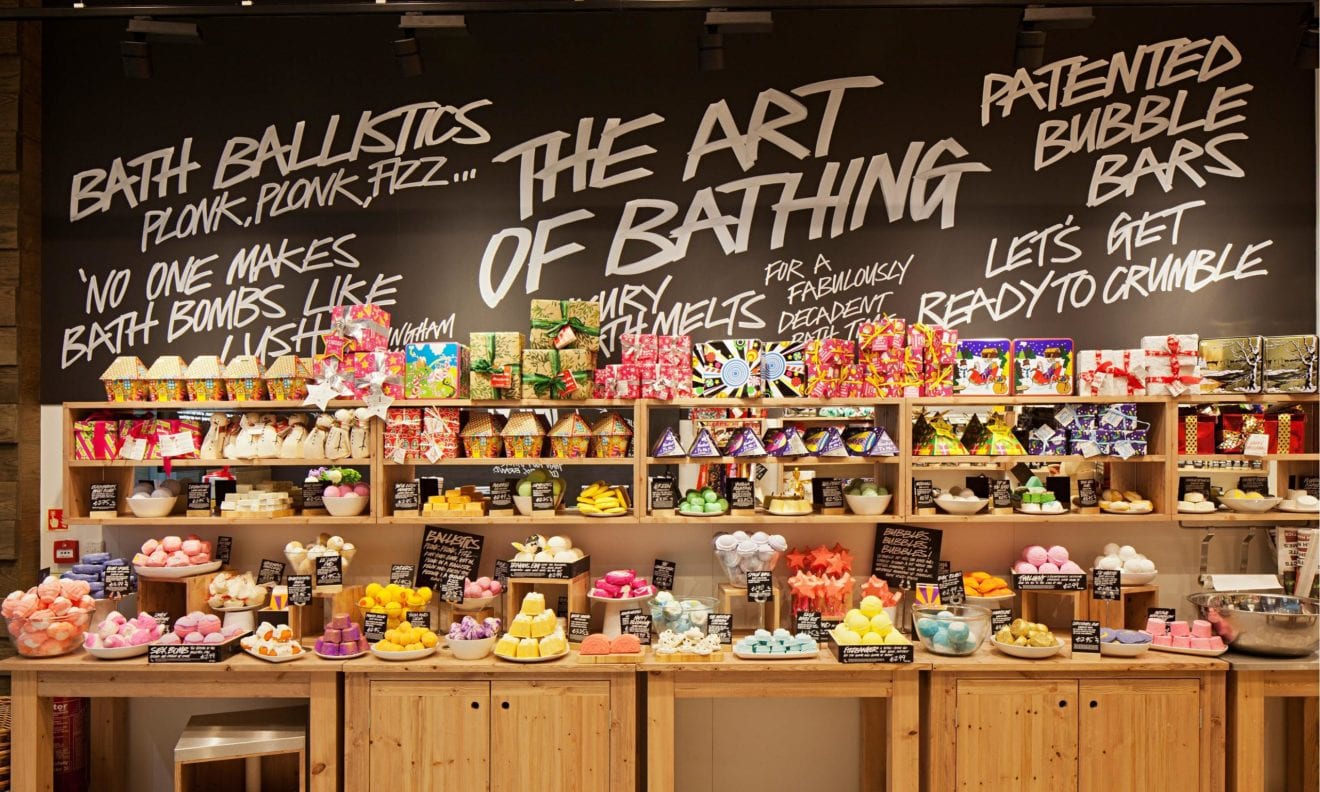
    Cosmetic brand Lush has opened its first 24-hour vending machine, located in Coal Drop’s Yard at King’s Cross in London.

    Lush said it aims to provide customers with a distinctive retail experience by allowing them to purchase its products at any time of the day.

    The machine is shaped like a circular kiosk. Customers walk around to and view the products, which include wrapped gift boxes. Moreover, it is sustainably designed, running on low energy.

    The Ilocker vending machine is designed by Anmac, whose owners are Andrew Alpine and his wife Gemma Jackson, a couple well known for designing numerous film and television series sets, including for The Piano, The Beach, Bridget Jones’ Diary and Game of Thrones.

    “Lush has always strived to dazzle our customers, from our product innovations through to bringing our core values into every aspect of our retailing,” said Charlotte Howe, a member of the Lush Group retail team.

    “Using the highest quality of automated retail machines with our partner, Anmac, we are able to surprise and delight with a micro store that is open 24 hours a day. It is a retail theatre that never sleeps – live glow on the go.”

    The London pop-up will run for six months during which time the company will change the product range and merchandising design to ensure ongoing customer interest.

  • M&Ms steps out with Adidas

    M&Ms steps out with Adidas

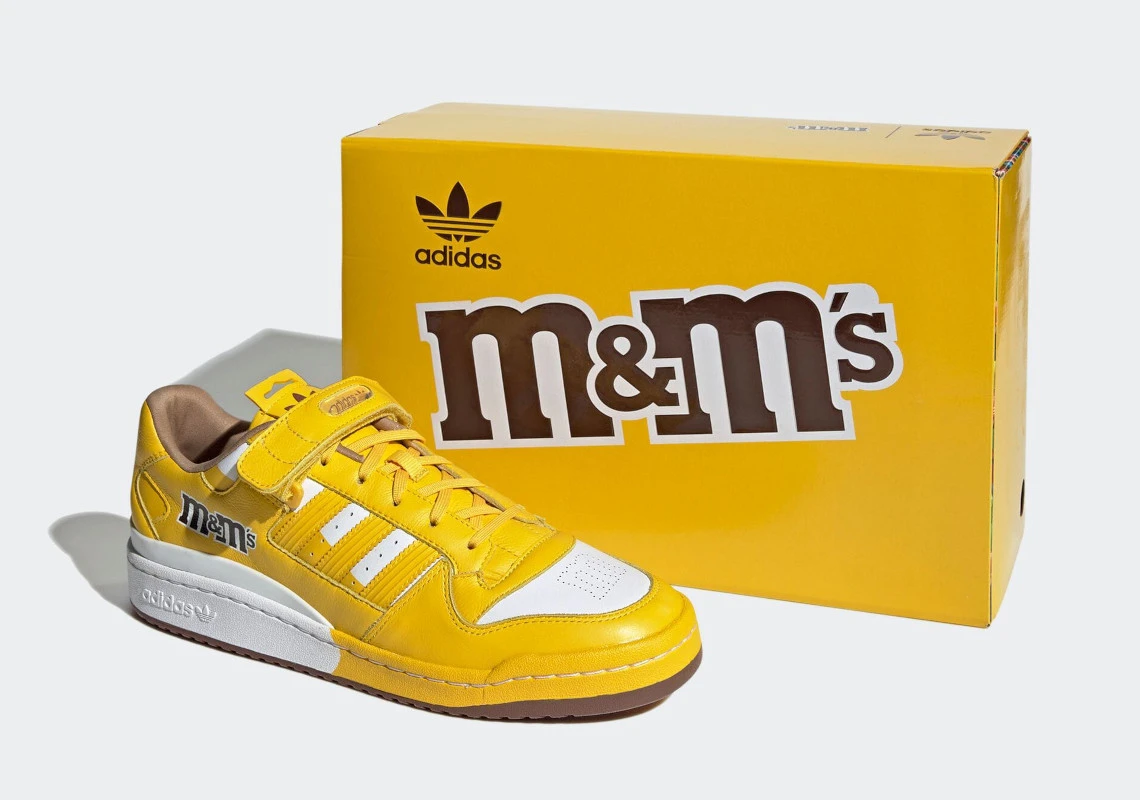
    Sportswear label Adidas has collaborated with confectionery brand M&M’s to launch a limited-edition sneaker called Originals Forum Lo 84, inspired by the chocolate brand’s distinctive packaging.

    The sneakers feature a yellow rubberized leather complemented by bounded TPU 3-Stripes branding and a high heel. Both are drawn on M&M’s Peanut variant packaging. The “M” letter is perforated on both toe boxes and a removable M&M’s brand flag is attached to the lacing.

    In addition, each pair of sneakers comes with a set of accessories: six pairs of laces, 19-lace jewels, three pairs of alternative straps and seven different Velcro chocolate candy lentils.

    According to Adidas, the sneakers are also packaged in a bright yellow co-branded box inspired by the famous M&M’s Peanut variant packaging to fit the playful look.

    “The M&M’s brand has long been committed to bringing people together by creating colorful fun for all, as part of our mission to create a word where everyone feels they belong,” said Jane Hwang, global marketing VP at Mars Wrigley.

    “Mars is proud to celebrate fans from all communities through this collaboration, which is also customizable, allowing sneaker and candy fans … personal expression.”

    The new Adidas sneakers Originals Forum Lo 84 M&M’s are available to purchase globally through the Adidas website and from selected retailers.

  • Singapore sneaker reseller Ox Street to launch in Australia, NZ

    Singapore sneaker reseller Ox Street to launch in Australia, NZ

    Singapore-based online sneaker resale marketplace Ox Street is launching a trans-Tasman expansion, opening an e-commerce store in Australia.

    “Australia is a perfect fit for the community we want to build in the long-term,” said Gijs Verheijke, founder and CEO at Ox Street. “We see a big supply gap when it comes to Australian buyers having access to the most coveted sneakers, whether they’re hot new drops or all-time classics.”

    Verheijke said the company, which was acquired by Carousell last October, has already built a large network of resellers across Australia and New Zealand during the past few years. Ox Street said the emphasis is on enabling faster delivery times and greater access to supply in an industry dominated by US and European megabrands.

    The Australasian launch is part of Ox Street’s ambition to build a “global hub for sneakerheads,” Verheijke said. The company’s short term plan is to build brand equity and a large part of that is being trusted to robustly authenticate the products before they reach buyers.

    Founded in 2019, Ox Street operates across eight Southeast Asian countries, targeting Gen Y and Z investors, collectors and fashion-conscious consumers. The brand reported sales growth surging more than four-fold during the past year.

    As part of the Australia launch, Ox Street has partnered with Sneaker Freaker in an Instagram-based sneaker giveaway worth more than $2000.

  • Uniqlo owner sees big profit drop in China due to Covid restrictions

    Uniqlo owner sees big profit drop in China due to Covid restrictions

    Clothing brand Uniqlo’s Japanese owner said on Thursday its China operation would report a large profit decline in the current fiscal year owing to the country’s Covid-19 restrictions.

    Fast Retailing < is a bellwether for how major global retailers are being impacted by Covid-related shutdowns in China, one of the biggest growth markets for many Western brands.

    China is Fast Retailing’s biggest foreign market, with 863 stores on the mainland and almost 90 outlets in Shanghai, where stringent lockdown measures, introduced in late March, remain in place to contain the country’s worst outbreak of the pandemic.

    The fast fashion retailer said it expects revenue declines and a large drop in profit in its Greater China segment in the second half and for the whole of fiscal 2022 due to Covid restrictions.

    Sales in Greater China region which includes Hong Kong and Taiwan struggled in March, as up to 133 stores were temporarily shut down.

    Fast Retailing has more Uniqlo stores in China than in its home market of Japan. It opened a flagship store in Beijing in November, its third megastore in mainland China, and plans to open 100 locations in the country each year going forward.

    The weakening yen and higher costs for raw materials and shipping have forced Fast Retailing to consider price hikes, a major shift for a company that has long competed on the inexpensiveness of basic items like socks and underwear.

    The company reported a record half-year profit on Thursday, buoyed by sales growth in North America, Europe, and other parts of Asia, while revenue and profit declined in China.

    Operating profit climbed 18 per cent to 189 billion yen ($1.51 billion) in the six months through February from a year earlier.

    The company maintained its full-year profit forecast at 270 billion yen. That compares with a consensus forecast for a

  • Uniqlo owner sees big profit drop in China due to Covid restrictions

    Uniqlo owner sees big profit drop in China due to Covid restrictions

    The owner of Japanese clothing brand Uniqlo on Thursday flagged a big profit drop in China due to COVID-19 restrictions, while its chief executive sounded alarm about the weakening yen’s potential to drive up costs.

    Fast Retailing is a rare bellwether for both global retailers in China, its biggest foreign market, and consumer demand in Japan, where it has carved out a dominant position by offering casual clothing to famously price-conscious shoppers.

    It and other multi-national retailers are now being forced to deal with lockdown measures in China. Fast Retailing has 863 stores on the mainland and almost 90 outlets in Shanghai, where strict measures, introduced in late March, remain in place to contain the country’s worst outbreak of the pandemic.

    McDonald’s and Starbucks, which each have dozens of outlets in Shanghai, have also been impacted as has production for retailers such as H&M, and Nike.

    Fast Retailing said it expects revenue declines and a large drop in profit in its Greater China segment in the second half and for the whole of fiscal 2022 due to COVID restrictions.

    Sales in the Greater China region, which includes Hong Kong and Taiwan, were hit in March, as up to 133 stores were temporarily shut.

    It has more Uniqlo stores in China than in Japan. It opened a flagship store in Beijing in November, and plans to open in 100 locations in the country each year.

    Separately, luxury brand Hermes said it had a strong start of the year in China until the beginning of March and is confident stores closed in Shanghai will reopen quickly.

    But the weakening yen and higher costs have forced Fast Retailing to consider price rises, a major shift for a company that has long competed on price.

    “There’s absolutely no merit to a weak yen,” Chief Executive Tadashi Yanai told reporters.

    “Japan is engaged in the business of importing raw materials from all over the world, processing them, adding value to them, and selling them. In this context, there is no advantage if the value of a country’s currency weakens.”

    The yen has been hammered this year, falling to the weakest level in almost 20 years against the dollar. For many Japanese companies that manufacture offshore – like Fast Retailing – the weak yen is less of a benefit than for traditional exporters.

    The company reported a record half-year profit on Thursday, buoyed by sales growth in North America, Europe, and other parts of Asia, while revenue and profit declined in Japan and China.

    Operating profit climbed 18% to 189 billion yen ($1.51 billion) in the six months through February from a year earlier.

    The company maintained its full-year profit forecast at 270 billion yen. That compares with a consensus forecast for annual profit to total 278 billion yen, according to a Refinitiv poll of 11 analysts.

    The Ukraine crisis has created another headwind, leading the company to close its 50 stores in Russia, after it initially resisted calls to exit the market along with other major brands.

    Prior to the earnings release, shares in Fast Retailing closed up 2.1%, versus a 1.2% gain in the broader market.
  • Levi Strauss sets up its own operation in Thailand

    Levi Strauss sets up its own operation in Thailand

    Levi Strauss & Co, the trademark owner of Levi’s denim, has established its own operation in Thailand after a 25-year distribution contract with DKSH ended last month, allowing the brand to connect directly with Thai aficionados.

    According to Sameer Koul, the company’s general manager for Southeast Asia, the business of Levi’s in Thailand would from now on be handled by LS&Co Thailand, the firm’s own subsidiary.

    Thailand is the second country in the Southeast Asian market in which Levi’s has decided to run its own business 100%, following Singapore. This is a strategic move to accelerate its growth, reach a wider customer base and cope with the competitive environment.

    “Thailand has a huge opportunity to grow our business due to a favorable customer demographic. Levi’s has very strong brand recognition among Thai fans. Moreover, Thai customers love to express themselves,” Mr Koul said.

    According to Mr Koul, the company expects that running its own operation rather than it being run by a distributor would ensure the brand would directly reach generations of local customers, particularly those aged between 18-30.

    Members of this age group typically buy 1.5-2 pairs of jeans per year, compared to an average of one pair per year among others not included in this group.

    Product characteristics are also being adjusted while brick-and-mortar stores will be refurbished under a new store format known as “NextGen Indigo Stores”.

    At present, there are eight NextGen Indigo Stores in Thailand including outlets at Siam Paragon, Emporium, Central Lat Phrao and Central Festival Chiang Mai.

    At Levi’s Lat Phrao shop, customers are able to customize their own products in terms of design and decoration. The company also launched an inaugural Thai version of its website allowing consumers to access its products more easily.

    Mr Koul said during 2019-2020, the global fashion industry faced a 20% decline in terms of sales due to the pandemic.

    Nonetheless, Levi reported strong financial performance in 2021, with net revenue of US$5.8 billion, which was similar to the figure for 2019.

    Of the total, 55% of revenue was from the international market, up from 49% in 2016.

  • Puma South Korea names new CEO

    Puma South Korea names new CEO

    Puma Korea announced on the 12th that it has appointed Lee Na-young as its new CEO. The new CEO is said to be a sales and marketing expert with more than 20 years of experience in the distribution industry related to sporting goods and food and beverages. She has been working as a sports brand expert for domestic and global offices of Reebok and Adidas for the last 10 years or so. She joined Puma Korea in 2020 and oversaw sales and marketing operations.

    Puma Korea expects that the new CEO Lee will actively and quickly respond to the rapidly changing market conditions in line with the brand slogan ‘FOREVER FASTER’ based on his rich experience in sports goods and distribution and marketing. In particular, Puma reflected an active and quick response strategy not only in its products, but also in its organization and management culture. In the rapidly changing era after the COVID-19 pandemic (global pandemic), we have organized an organization with an optimized brand and introduced a quick decision-making system. Product production has been promoted localization.

    New CEO Lee said, “While the overall growth of the sports goods and sportswear industry has been stagnant due to the recent COVID-19 impact, Puma has continued to innovate to target changing consumer tastes. We will develop an aggressive business centering on marketing,” he said.

  • Uniqlo launches online alteration service

    Uniqlo launches online alteration service

    Fashion is a great tool of self-expression, but it’s not always accessible for people with disabilities, illnesses, and injuries. Since a lot of clothes can be hard to put on when your mobility is limited, there are very few clothes available, and a lot of disabled people, especially in Japan, have a hard time finding clothing that’s easy to wear but also stylish.

    That’s why former Uniqlo employee Teppei Maeda started clothing alterations service Kiyasuku, which translates as “easy to put on” or “easy to wear.” After discussing clothing options for people with disabilities with a hearing-impaired coworker, Maeda decided to interview hundreds of people to learn more. That’s how he found out that the biggest fashion challenge for people with disabilities is that there just aren’t enough types of clothes they can wear.

    So Maeda began to think about what he could do to help, and that’s how Kiyasuku, Japan’s first-ever online tailoring service specifically for individuals with disabilities, was born. The company offers to modify the parts of clothes that make them difficult to put on. For example, they can alter T-shirts and sweatshirts so that they open up in the front, and remove zippers and buttons and replace them with velcro. They can work with all kinds of garments, from casual wear to outerwear. That’s a service that’s hard to find.

    The order process is also extremely easy and all done online. Once you have an item of clothing you want to be altered, you access the website, indicate what alterations you want, and choose your tailor. After a digital meeting with the tailor through the website, you send off your clothes via the post, and they’ll fix it up for you and send it back.

    The staff at Kiyasuku are highly dedicated to the cause with an earnest desire to help people in need, so you can rest assured that your clothing will be well taken care of. One member is even the parent of a child with a disability, who learned to sew by altering clothes for their child.

    Kiyasuku sounds like a great service that lets people wear clothes they want to wear, not just because it’s something they’ll be able to wear. Want to wear the latest Pokemon graphic tees from UNIQLO, but can’t pull them over your head? Want to be comfy and stylish at home with hakama pajamas but find them tricky to get on? Or have you always wanted to go gothic lolita but never thought you could be able to put all the different pieces together? Kiyasuku can probably help.

  • Pandora names new China GM

    Pandora names new China GM

    Pandora has named former FMCG and beauty industry executive Irving Holmes Wong as general manager for China to lead the Danish jewelry brand’s growth in a “key market”.

    Irving Holmes Wong, who previously held senior management positions at Avon, Bacardi-Martini, Revlon, and L’Oreal, will join Pandora as senior vice president and general manager of the Greater China cluster, reporting to chief commercial officer, Martino Pessina.

    He will be responsible for Pandora’s business in the Greater China region, which employs more than 2,000 people and covers 250 concept stores across mainland China, Hong Kong, Taiwan and Macau.

    China is the world’s largest jewelry market, and Pandora states the region has “significant growth opportunities”. As part of its Phoenix strategy, Pandora has set a long-term target to triple the Chinese business versus 2019 and laid out a two-phase plan to achieve the growth. In the first phase, Pandora will solidify the brand by establishing the core proposition of collectability, affordability and self-expression, while the second phase will focus on growing Pandora’s store network.

    In 2021, Pandora generated 1.1 billion Danish Krone revenue in mainland China, accounting for approximately 5 percent of the company’s total revenue.

    Commenting on the appointment, Pessina said in a statement: “Irving is a senior executive who has successfully transformed and grown businesses in China and neighbouring markets. He is a strategic brand-builder and brings valuable turnaround and growth-acceleration experience that will help us strengthen our position in Greater China and reach our Phoenix targets.”

    Wong, who will join Pandora on April 7, added: “I feel passionate about reviving the brand in China and leading our coming growth chapter. Pandora’s ambition and strong commitment to the region is very motivating. I find Pandora to be a legacy brand with a clear purpose and story and look very much forward to joining.”

  • Sephora makes Vietnam debut

    Sephora makes Vietnam debut

    Beauty retailer Sephora has entered the Vietnamese market with a dedicated ecommerce store after an initial trial period of five months.

    Local customers can now buy directly from Sephora online, but there is no word yet on whether the global brand will open a physical store.

    About 90% of Vietnam’s cosmetics market is filled with foreign brands, led by South Korean products and followed by European and Japanese names. Market revenue, on the other hand, is pegged at US$514 million.

    Sephora enhanced its Asian presence in 2019 with debuts in South Korea, Hong Kong, and New Zealand. It now has 200 stores in 16 Asian countries.