Category: Finance

Retail News Asia is committed to providing both local and global retailers with the latest Finance news throughout the Asian market. This on a daily base.

  • HSBC Singapore Strengthens Board

    HSBC Singapore Strengthens Board

    HSBC Singapore has named a new executive director to its board, while Winston Ngan, who retired as a partner of EY Singapore, joins as an independent non-executive director.

    Wong Kee Joo, who was appointed as Singapore CEO on 1 June 2021, brings more than 26 years of banking experience across markets like the U.K., Thailand, Hong Kong and China. He was previously HSBC’s regional head of global payments and cash management (GLCM) for the Asia Pacific region since January 2015.

    Ngan brings 26 years of professional services experience, including stints with Ernst & Young (EY) in Singapore and Canada. Before retiring, he led EY’s Financial Services Assurance practice, overseeing 1,300 audit professionals across Asean, including Singapore.

    HSBC reiterated its commitment to Singapore as a strategic priority market and said it aims to double the total wealth balances of its Wealth and Personal Banking business in the next five years.

    Among the bank’s priorities are growing frontline wealth teams to support high net worth (HNW) and ultra-high net worth (UHNW) customer segments; accelerating growth in offshore customer segments, in particular overseas Chinese and Indians, and UHNW market share; and ramping up digital banking capabilities and expanding its product and solution suite, including adding more ESG-themed investments.

    As we head into our next phase of growth, Kee Joo’s extensive regional experience in wholesale banking will further strengthen our ability to tap HSBC corporate clients’ personal banking and wealth needs for growth, while Winston’s deep knowledge of Singapore’s banking regulatory requirements will ensure that we have a robust audit framework and the necessary internal controls in place, Mukhtar Hussain, HSBC Singapore chairman, said in the announcement.
  • Huawei Eyes Digital Finance Expansion

    Huawei Eyes Digital Finance Expansion

    Huawei is eyeing opportunities in digital finance to diversify its revenue mix amid ongoing U.S. sanction pressure against its smartphone and telecom equipment business.

    Huawei is the latest major Chinese player to make an entry into the global digital finance market, eyeing growth opportunities from Southeast Asia, the Middle East, Latin America, and Africa where financial inclusiveness is underdeveloped.

    Intelligent finance itself has a market valued at several hundreds of billions of dollars, but the potential is bigger because there will be cross-sector opportunities,» said Huawei’s global financial services business unit president Jason Cao in a report.

    Digitalized financial services have already penetrated into various commercial fields, and a cross-industry, full-scenario eco-system can be built by us to serve the clients.

    Huawei will look to leverage various capabilities, including facial recognition and big data technology, to develop innovative solutions.

    It recently formed an alliance with 25 partners including software developers, fintech companies, and risk managers to create an ecosystem of digital financial solutions.

    You do not just offer what financial firms demand in the new era, Cao said. The key to staying ahead is developing innovative scenario-based solutions.

    Huawei will look to be less reliant on its smartphone and telecom equipment business amid ongoing pressure from U.S. sanctions such as export controls to cut access to high-end chip suppliers.

    In addition, Meng Wanzhou, Huawei’s chief financial officer and daughter of founder Ren Zheng Fei, is currently in a legal battle to fight extradition to the U.S. over accusations that she deceived HSBC to bypass sanctions against Iran.

    Meng’s lawyers are scheduled this month to convince a Canada-based judge to allow them to rely on newly discovered evidence that supposedly proves that HSBC was aware of the sanctions risks. The evidence is believed to be sourced from documents in a recent agreement between Meng, Huawei and HSBC which resulted from a court ruling in Hong Kong.

  • DBS Kicks Off Business at Chinese Securities JV

    DBS Kicks Off Business at Chinese Securities JV

    DBS’ securities joint venture in China will officially commence business operations after receiving its license from the mainland regulator.

    Securities joint venture DBS Securities (China) will kick off operations, according to a statement, effective immediately after receiving its securities business license from the China Securities and Regulatory Commission.

    The joint venture will operate brokerage, securities investment consulting, securities underwriting and sponsorships, as well as proprietary trading.

    DBS joins other global banks to capitalize on China’s market-opening especially with regards to the securities business where the likes of J.P. Morgan and Goldman Sachs are seeking to obtain full ownership of their joint ventures.

    Today, DBS Securities is honored to become the first Sino-Singapore securities joint venture, said DBS group chief executive Piyush Gupta. We hope to continue to facilitate China’s economic growth and look forward to contributing to its ‘Dual Circulation’ strategy.

    DBS Securities currently has a registered capital of 1.5 billion yuan ($230 million) and is majority-owned by DBS (51 percent). Other shareholders include Donghao Lansheng Investment Management (24.67 percent), Shanghai Huangpu Investment Holding (13.33 percent), Shanghai Huiyang Asset Management (6.5 percent) and Shanghai Huangpu Guidance Fund Equity Investment (4.5 percent).

  • Singapore Fintech Gets Digital Bank License in Philippines

    Singapore Fintech Gets Digital Bank License in Philippines

    Unobank will be entirely regulated under the Digital Banking License framework in the Philippines.

    DigibankAsia, a Singapore-headquartered fintech, has become the first fintech to receive a license to operate a digital bank in the Philippines, it announced in a statement on Tuesday.

    Uno, which is operated by Singapore-based DigibankAsia, has been working with digital services and consulting firm Xebia, fintech software provider Backbase, cloud banking provider Mambu and Amazon Web Services, for its rollout in the Philippines, which has among the lowest banking penetration in Southeast Asia.

    The Bangko Sentral ng Pilipinas’ vision and foresight to digitize the local banking industry is future-forward and apt, because ultimately it will help align the Philippines as a modern banking center for the region, Manish Bhai, Unobank CEO, said in the announcement.
    According to Uno, it aims to bridge the financial inclusion gap to help pave the way for all Filipinos to have access to basic financial services, and hopes to extend its services to the rest of Southeast Asia and South Asia.

    Around 70 percent of the population of the Philippines is considered unbanked, while the country has very high mobile penetration, with 60 percent owning a smartphone and 67 percent of the population using the internet.

    The country’s banking regulator previously issued two digital banking licenses, which are conversions from previous bank licenses.

  • Standard Chartered Private Bank Loses Managing Director

    Standard Chartered Private Bank Loses Managing Director

    Standard Chartered has lost a managing director and senior private banker in Hong Kong.

    Phoebe Chow has left Standard Chartered Private Bank, sources said after more than four years with the British lender.

    When contacted, a spokesperson for the bank declined to comment on the exit.

    Chow joined Standard Chartered Private Bank in 2017 to oversee various client markets including the Philippines and Taiwan. Previously, she was a Singapore-based team leader at Credit Suisse where she worked for more than eight years.

    Standard Chartered’s private banking arm has effectively fallen under a new structure this year after it merged with retail banking and wealth management into a single consumer, private and business banking (CPBB) unit.

    Standard Chartered Private Bank was under the watch of CPBB chief executive Judy Hsu after its former head Dider von Daeniken left last year until the recent replacement hire of ex-UBS banker Raymond Ang two months ago.

  • Vietnam stock market posts world’s highest gains

    Vietnam stock market posts world’s highest gains

    Vietnam’s benchmark VN-Index has surged 34.51 percent in the first half of this year, marking the highest increase in the world.

    Abu Dhabi was second with its stock market rising 33.06 percent, followed by Austria with 32.65 percent, according to China-based stock database StockQ.

    With an increase in five consecutive sessions in the past week, VN-Index reached 1,374.05 points last Friday, up 4.06 percent from a week earlier. Vietnam ranked third among the most active markets in the past week after Argentina and Hungary, according to the Chinese stock database.

    Abundant cash flow, constantly increasing number of new investors, and immediate measures to reduce congestion has propelled the stock market.

    The number of new investors entering the stock market in May scaled a new monthly record, with over 113,000 new trading accounts opened.

    The VN-Index’s continuous growth has broken most forecasts made by domestic securities companies.

    Citing geopolitical risks and complicated developments of the Covid-19 pandemic, the Viet Dragon Securities Company (VDSC) had forecast that the VN-Index could reach a high of 1,272 points, equivalent to a year-on-year increase of about 15 percent.

    Other securities firms like Ho Chi Minh Securities Corporation (HSC), Vietcombank Securities (VCBS) and Viet Capital Securities (VCSC) made similar forecasts of the index reaching 1,250-1,280 points.

    The index has surged rapidly, pushing the price-earnings (P/E) ratio to 18.8. While this figure is still much lower than other Southeast Asian countries, including the Philippines, Indonesia and Thailand, it shows Vietnam’s stock market is coming of age.

    In a newly released strategy report, VNDirect Securities said: “The market is no longer undervalued but also not too high, meaning that businesses need more time to improve their results and pull the valuation ground to a more attractive level.”

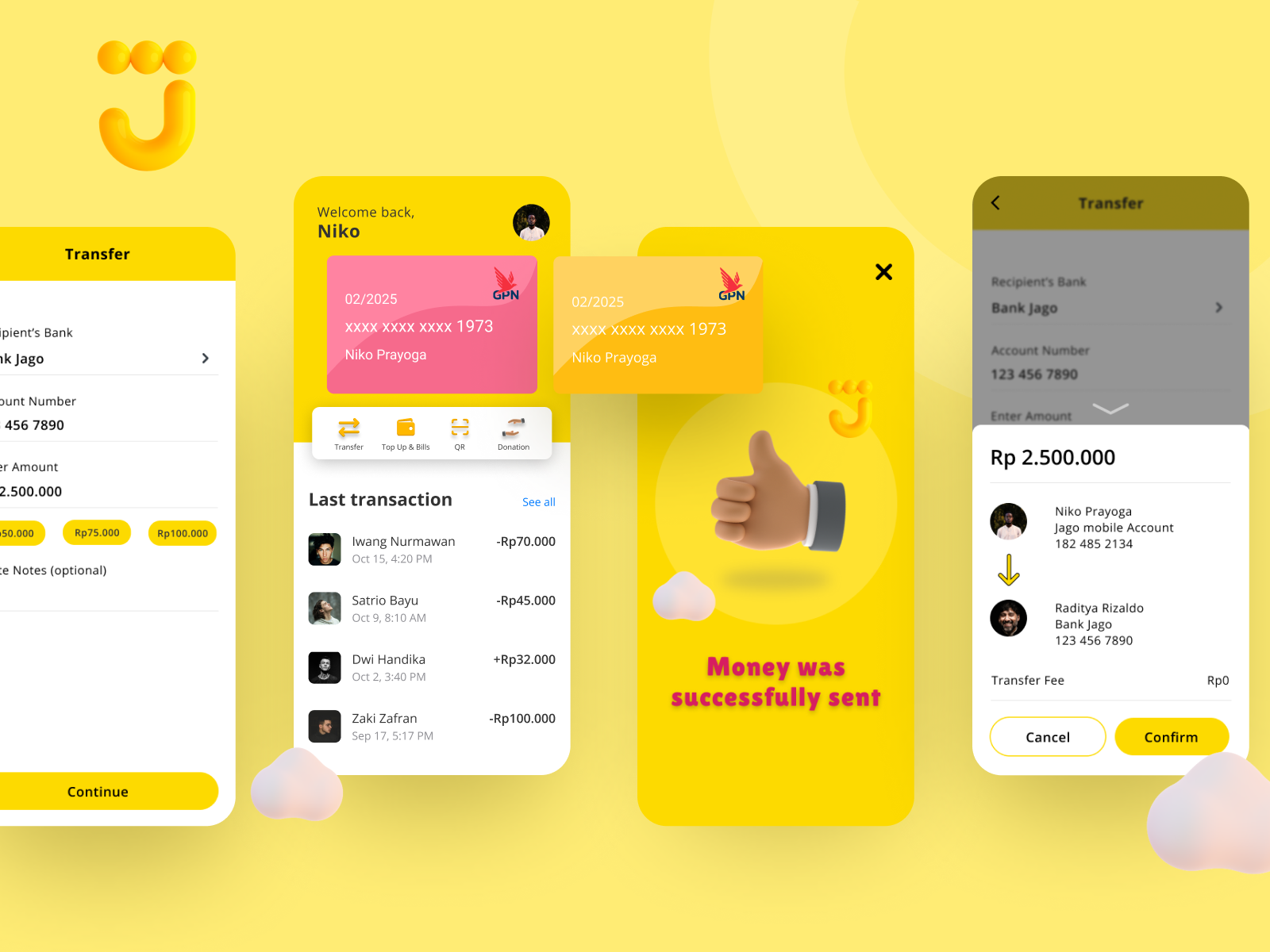
  • Bank Jago Partners Mambu and Google Cloud for Digital Bank

    Bank Jago Partners Mambu and Google Cloud for Digital Bank

    The strategic partnership allows the bank to operate in the cloud in Indonesia, where banking data must remain in-country, according to an announcement this week.

    The digital bank will use Mambu’s SaaS banking platform and Google Cloud to offer new services to meet the needs and demands of Indonesian customers.

    Bank Jago launched its smartphone app in April 2021 in Indonesia, home to the fourth-largest unbanked population globally.

    Its service offerings include everyday transactions and payments, and the bank has plans to branch out into SME lending.

    Bank Jago believes that technology is not only providing new experiences to its customers, but it also enables the bank to operate efficiently, and to constantly create innovative breakthroughs, Kharim Siregar, Bank Jago president director, said in the announcement

    Formerly known as Bank Arto, Bank Jago is backed by the likes of super app Gojek, which recently increased its stake in the lender, as well as Singapore state investor GIC.

  • Philippines Targets Ex-Wirecard COO

    Philippines Targets Ex-Wirecard COO

    The Wirecard scandal continues to unravel as authorities in the Philippines file criminal complaints against its former chief operating officers and others.

    The Philippine’s National Bureau of Investigation (NBI) filed criminal complaints against individuals involved in the Wirecard scandal over accused violation of banking, cybercrime and e-commerce laws, according to a report citing a text message from Justice Minister Menardo Guevarra.

    NBI recommended charge against ex-Wirecard COO Jan Marsalek, Manila-based lawyer Mark Tolentino, Joey Dela Cruz Arellano, Judith Singayan Pe, and other unnamed individuals, according to a separate statement from the prosecutor general’s office.

    If found guilty, the charged individual could face up to 12 years of imprisonment and a maximum fine of around $42,000.

    Wirecard continues to face the aftermath of a scandal involving 1.9 billion euros ($2.3 billion) of missing funds despite documents that allege its previous existence and witness by auditor EY.

    Tolentino’s law firm was used by Wirecard to open foreign currency bank accounts with BDO Unibank and Bank of the Philippine Islands (BPI) – the two banks that the German firm claimed held the now missing funds.

    Arellano is being accused of issuing forged documents confirming that Wirecard held cash at BPI and receiving payments for the task by Pe and other unnamed individuals.

  • China Bans Crypto-Linked Social Media Accounts

    China Bans Crypto-Linked Social Media Accounts

    China’s crypto crackdown continues to ramp up as it banned several influential social media accounts focused on crypto-related content over the weekend.

    At least a dozen popular Weibo accounts featuring content about cryptocurrencies have been suspended or shut down over claimed violation of the Chinese social media platform’s relevant laws and regulations.

    This follows the announcement by Chinese authorities last month to intensify their crackdown on Bitcoin mining and trading behavior.

    The latest social media crackdown is not a first for China which made previously similar moves to ban influential crypto-related accounts.

    In 2019, Weibo banned the social media accounts of Binance co-founder Yi He and Tron founder Justin Sun.

  • StanChart Keeps Affluent Clients Engaged Amid Border Closures

    StanChart Keeps Affluent Clients Engaged Amid Border Closures

    The bank is deploying digital functionalities to keep clients stay engaged with relationship managers and investment advisors while travel is halted.

    Since April, almost half of its affluent clients have been using the bank’s My RM app, with significant usage from International Banking clients, Standard Chartered said.

    Embedded within its online and mobile banking platforms, My RM allows file sharing, screen sharing, and audio call functions, so clients can interact with their relationship managers directly, schedule appointments, and authorise investment transactions securely anywhere.

    With over 30 percent of the bank’s affluent clients in Singapore being international, having the right channels to stay in contact with clients is crucial, especially during these times, the bank said in an announcement on Friday.

    International Banking is a growing business for Standard Chartered with assets under management growing 30 percent over the past year, despite headwinds, according to the bank.

    To cater to this growth and tap on Singapore’s reputation as an international wealth hub, Standard Chartered plans to double its relationship managers and double its International Banking business in the next five years.

  • HSBC Splits Top APAC Role

    HSBC Splits Top APAC Role

    The bank’s headquarters in Central will be open to all employees from Monday, as the fourth wave of Covid-19 infections ease in the territory.

    Staff will be able to return to their desks subject to seating capacity plans in individual departments, citing an internal memo seen by the newspaper.

    Businesses and functions are encouraged to determine appropriate in-office and remote working ratios for their teams based on new ways of working,» the memo said. Staff who choose to work from home for personal or family reasons will be allowed to do so.

    The bank’s headquarters have been closed since March, after several staff working there tested positive for Covid-19.

    The British lender has embraced flexible working, and recently changed its human resources guidelines to allow home-based remote working for as many as four days a week.

    In Singapore, where the bank employs some 3,300 staff, its Future of Work plans are underpinned by ensuring customer focus; flexibility for how, when, and where employees work; and ensuring that its offices are designed and used to build collaboration and networks.

    Statements issued by multiple global banks in Hong Kong have indicated gradual resumption towards normal operations after months of tightened social distancing measures.

    HSBC is among financial sector firms that have joined the city’s push for wider adoption of vaccination. The bank is offering Hong Kong-based employees one day off per dose of vaccine received – a benefit entitled to even previously vaccinated staff.

    In May, Hong Kong authorities said senior executives of financial firms in the city apply for exemptions from the compulsory quarantine arrangements when they return or travel to Hong Kong.

  • J.P. Morgan Seeks Full Ownership of Chinese JV

    J.P. Morgan Seeks Full Ownership of Chinese JV

    J.P. Morgan is seeking regulatory approval to obtain full ownership of its mainland Chinese securities joint venture.

    J.P. Morgan has applied to regulators for approval of its full ownership of the securities joint venture, according to a report citing China chief executive Mark Leung.

    The bank currently has a 71 percent stake in the unit after last boosting ownership in November 2020.

    J.P. Morgan joins Goldman Sachs in the race to become the first to obtain full ownership of their securities unit in mainland China.

  • Citi Boosts Wealth Ambitions With Family Office Hire

    Citi Boosts Wealth Ambitions With Family Office Hire

    The wealth planning specialist catering to ultra high net-worth individuals began her career 16 years ago as a wealth management associate at Citi.

    Faye Ong, previously head wealth planning for South Asia at Union Bancaire Privee, has rejoined the bank as head of the family office advisory, private capital group, according to a LinkedIn post on Wednesday.

    Citi has been investing in growing its offerings for family offices, which have proliferated in Singapore in recent years, that reported the news, noted.

    A bank spokesperson confirmed the hire.

    Citi has placed its bets on four wealth hubs, which includes Singapore, as it consolidates its operations globally.

    Citi has previously stated its intentions to double its wealth management market share in Singapore from the current 5 percent, and triple the number of clients by 2025. To achieve this, it is looking to hire over 330 relationship managers.

  • Pandemic Accelerating Shift to Cashless Society By 4 Years

    Pandemic Accelerating Shift to Cashless Society By 4 Years

    A new study by the payments giant reveals the growing popularity of digital payment methods such as online wallets, mobile contactless payments and QR code payments among Singaporeans.

    The ongoing Covid-19 pandemic is hastening the demise of cash-based transactions in the city-state by at least four years, Visa said in its Consumer Payment Attitudes Study, published Thursday.

    The survey shows a preference among Singapore consumers for contactless card payments (31 percent), followed by online card payments (23 percent). Visa said that more than 9 in 10 transactions of its transactions by Singapore consumers are contactless – one of the highest in the world.

    Fewer than one in five Singaporean consumers (15 percent) prefer using cash, the survey revealed, noting that its use has fallen by 45 percent for public transport transactions and 42 percent for health and fitness-related transactions. Overall, more than one-third of Singaporean consumers who prefer using cash (35 percent) used this payment method less frequently.

    According to the survey, Singaporean consumers have shown receptiveness to emerging payment trends, including installment payments (87 percent) and real-time bill payments (80 percent).

    The stickiness of new digital payment habits formed during the pandemic cannot be underestimated… With cash usage decreasing, we believe there is a significant opportunity to encourage more usage of digital payments in the country, Kunal Chatterjee, Visa country manager for Singapore and Brunei, said in a statement.

  • Newbies continue to flock to stock market

    Newbies continue to flock to stock market

    The number of new stock trading accounts opened by retail investors in May topped 113,670, a new monthly record, according to the Vietnam Securities Depository.

    May was the third month in a row in which more than 100,000 accounts were opened. There were 3.2 million retail accounts and nearly 12,000 belonging to organizations.

    The invasion of the market by new investors took the total trading value on the Ho Chi Minh Stock Exchange (HoSE), Hanoi Stock Exchange, and Unlisted Public Companies Market to over VND531 trillion ($23 billion) in May.

    HoSE accounted for VND448.5 trillion, a 19 percent increase from the previous month.

    The boom has created pressure on the HoSE trading board, which had to shut down for the first time ever on Tuesday after the morning session as a surge in transactions threatened to overwhelm it.