Category: Finance

Retail News Asia is committed to providing both local and global retailers with the latest Finance news throughout the Asian market. This on a daily base.

  • Elon Musk’s tweets send Vietnamese crypto investors into spiral of anxiety

    Elon Musk’s tweets send Vietnamese crypto investors into spiral of anxiety

    Elon Musk’s recent tweets have partly contributed to sending Bitcoin and other cryptocurrencies tumbling, and Vietnamese investors into losses and diminishing their hope in the future of digital currencies.

    Thien Tuan from the northern town of Mong Cai has seen his VND30 million ($1,300) investment in several cryptocurrencies depreciate by nearly 40 percent in the last few days.

    The 28-year-old had entered the crypto market in early April with no prior investment experience. Half of his savings is now in XRP, which has fallen 36 percent since mid-April, and Dogecoin, which has lost half its value in two weeks.

    He says: “Some of my friends have advised me to exit the market and look for other reliable assets like gold. I’m worried my losses will rise to 80-90 percent in the coming weeks.”

    On several Facebook groups of which he is a member, hundreds of people are expressing similar concerns about Bitcoin, Dogecoin and other cryptocurrencies after their prices plunged due to the remarks made by Musk and other reasons.

    In March Mush had announced that customers could buy Tesla cars using bitcoin, but on May 13 he said in a tweet the company had suspended the plan. Bitcoin lost 12 percent almost immediately.

    In another Twitter comment on May 17 Musk seemed to imply Tesla could sell its Bitcoin holdings, which sent the cryptocurrency down another 8 percent.

    The world’s most popular coin has lost 47 percent from its peak in mid-April, while other cryptocurrencies too are down by double digits.

    Other factors that contributed to the falls are China further cracking down on digital currencies and Binance Holdings, the largest cryptocurrency exchange, being investigated by U.S. authorities for money laundering and tax offenses.

    Tran Cuong, 22, of Hanoi invested $700 in Bitcoin and Dogecoin, and says “I have lost nearly $500 due to Elon Musk’s tweets.”

    The sharp falls have raised concerns among coin miners in Vietnam.

    Viet Hung of the southern province of Dong Nai only started mining a month ago and was expecting to recoup his investment by the end of the year.

    “Now that the market has plunged, I don’t know whether to continue mining or sell the equipment and cut my losses,” he says.

    Minh Huy, a seller of mining rigs in HCMC, says many prospective buyers have suspended purchase plans to watch how the market moves before making a final decision.

    Some of these deals are potentially worth billions of dong (VND1 billion = $43,500).

    “The plunging market not only hurts investors but also hardware suppliers,” Huy says.

    Hoang Bao of Hanoi, who has years of experience in coin mining, says he has yet to see people sell off equipment, but feared that if prices keep falling the market could soon turn “chaotic.”

    “The worst-case scenario is that rigs will be left to gather dust like last time, but this time it will be on a much bigger scale,” he says, referring to the 2018 Bitcoin selloff.

    Bitcoin and other cryptocurrencies are not recognized as a legitimate means of payment in Vietnam. The State Bank of Vietnam has warned that owning, trading and using cryptocurrencies are risky and not protected by law.
  • VietinBank to pay dividends in shares for last three years

    VietinBank to pay dividends in shares for last three years

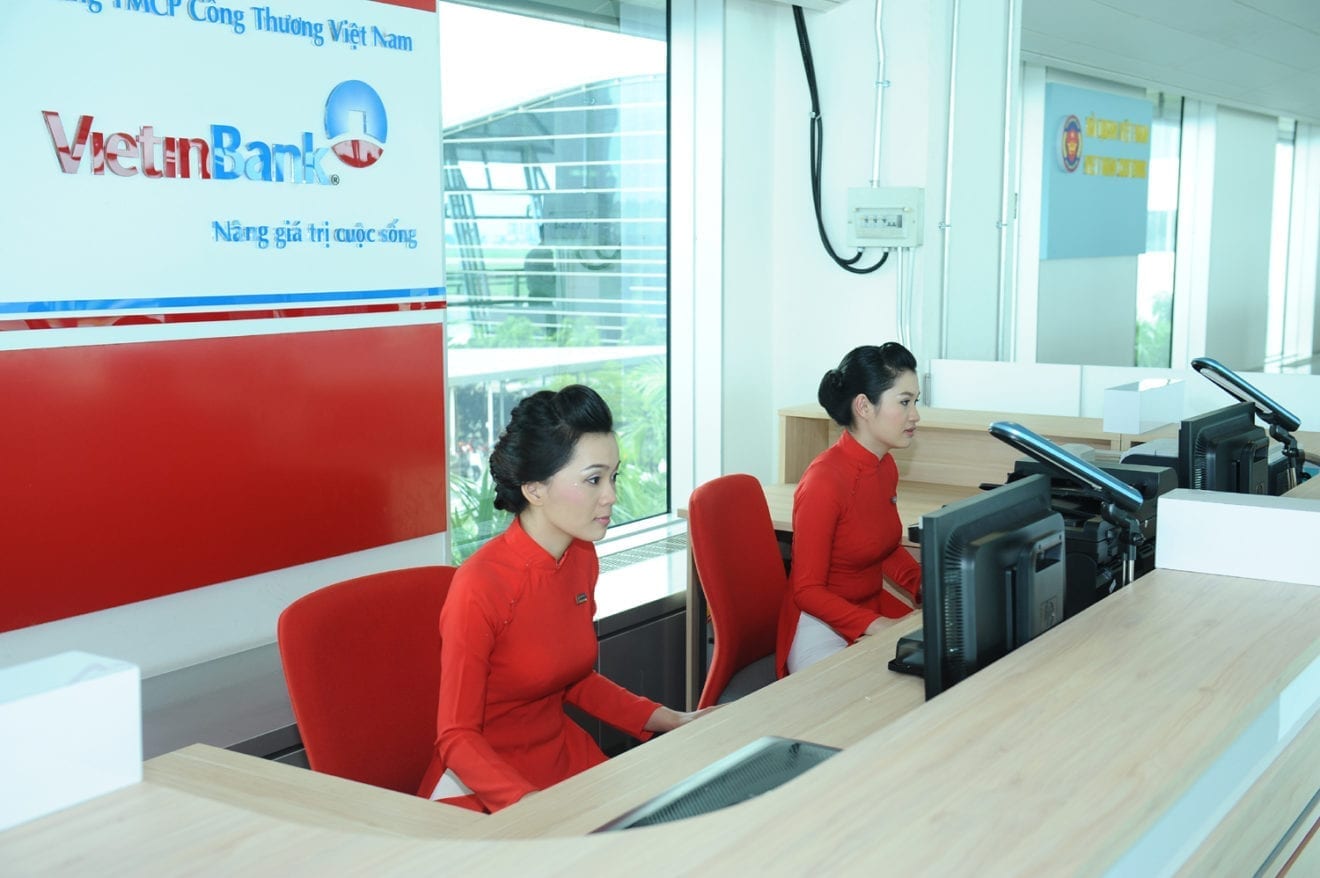
    The government has approved VietinBank’s plans to pay dividends for 2017-19 at a total rate of 28.79 shares for every 100 owned.

    The government owns a 64.46 percent stake in the lender.

    CTG shares gained 6.1 percent to rise to a new all-time high of VND51,200 ($2.22) on Monday, and has gained 48 percent this year.

    Its pre-tax profits rose by 2.7 times year-on-year in the first quarter to VND8.06 trillion.

  • DBS Triples Vacancies at Female-Focused Job Fair

    DBS Triples Vacancies at Female-Focused Job Fair

    The second edition of the bank’s virtual career fair sees vacancies for women technologists almost treble to 140.

    The bank is focusing its outreach efforts on filling five engineering roles: Engineering Lead; Solution Architect; ReactJS Developer; Full Stack Developer; and Software Development Engineering in Test, at its Women in Tech» career fair, which is returning in June 2021.

    We believe that by driving diversity in our engineering roles we will be able to incorporate a multiplicity of views and perspectives upstream so as to deliver outstanding digital experiences for our customers, Soh Siew Choo, DBS head of big data/AI and consumer banking technology, said in an announcement on Tuesday.

    Candidates must complete an online assessment by June 8, and shortlisted applicants will be invited to an online hiring day on 12 June 2021.

    According to DBS. there is a strong pipeline for of women for technology roles. The bank received more than 500 applications for 50 job opportunities at its inaugural virtual career fair, held amid the pandemic in October 2020.

    Among the new hires from last year’s edition was Lo Man Ling, vice president of consumer banking digital platform, who joined the bank after more than nine years in the public sector.

    DBS said the share of applications from women rose to over 30 percent, as compared to 5 percent in previous years, and the number of offers made to women also increased about five times, as a result of its efforts to reach out to women.

  • OCBC to Grow Transaction Banking Division

    OCBC to Grow Transaction Banking Division

    The bank aims to grow the division by another 50 headcounts to 150 in total by the end of the year. The bank is looking to boost its transaction banking workforce with specialized staff who can help it to develop products and services, and in particular, those with regional skill sets that can support clients in its key markets, OCBC’s Melvyn Low told «The Straits Times.»

    The bank’s head of global transaction banking said the rise of mobile and internet banking, as well as application programming interfaces (APIs) that connect various platforms, are prompting a shift in the skills in demand.

    The division provides corporate banking solutions, including cash management, APIs, trade and supply chain finance solutions, and also serves the bank’s overseas markets in Malaysia, Indonesia, and Greater China.

    I need a very deep appreciation of new technologies like APIs, blockchain, and for data, Low said about the desired candidates. It’s not just about knowing how to look at and consume data, but how to use it to target clients, identify their flows and capture them with solutions using new technologies, Low added.

    He also cited mobile payments, platform connectivity, and cross-border instant payments as areas with the potential to grow.

    In its recent quarterly trading update, the bank highlighted growing momentum from renewed market optimism across its businesses, as well as improved quarterly earnings from its overseas banking subsidiaries.

  • Citi Appoints Credit Card Head in Singapore

    Citi Appoints Credit Card Head in Singapore

    Citi names a new Singapore head of credit cards and personal loans for its global consumer banking business.

    Citi appointed Serene Gay to the new role, according to a statement, to oversee customer growth, portfolio management, product management, and customer retention for credit cards and ready credit.

    Gay succeeds Vikas Kumar who will join Citi’s U.S. consumer unsecured leading team as head of personal installment after leading the Singapore credit card and personal loans unit for over four years.

    Gay has 16 years of experience at Citi across Singapore, Thailand and China, and was most recently the head of client growth, cards, and loans for APAC and EMEA.

    Singapore is one of four key markets – alongside Hong Kong, UAE, and London – for Citi after it made a major strategic overhaul to exit 13 other consumer banking markets, citing a lack of scale to be competitive.

    Our consumer business in Singapore is strategically important and a critical source of innovation and growth, said head of APAC and EMEA consumer bank Kartik Mani.

  • Singlife Poaches From DBS

    Singlife Poaches From DBS

    A veteran in the financial services industry and longtime DBS manager joins Singapore’s Aviva Singlife as its new group CEO.

    Pearlyn Phau Yee Meng will join Singapore’s Aviva Singlife as Executive Director and group CEO, the firm announced in a media release on Monday.

    Subject to regulatory approval, Phau Yee Meng’s appointment as group CEO will be effective on 18 August 2021. Also subject to regulatory approval, she will take on additional roles as executive director and CEO of both of the Group’s two Singapore licensed insurers, Singlife and Aviva Singapore. The scheme of transfer that will combine the two entities has been approved by the Monetary Authority of Singapore (MAS). It is now subject to the approval of Singapore courts and is expected to complete later this year.

    Following Phau Yee Meng’s appointment in August, Nishit Majmudar, currently CEO of Aviva Singapore, will step down from his executive and board roles and become a senior advisor to the board. Walter de Oude, who has acted as group CEO prior to Phau Yee Meng’s appointment, will continue on the board as deputy chairman, Aviva Singlife Holdings. Both will therefore be well placed in their respective roles to assist Phau Yee Meng and ensure a smooth transition into her new role, the release states.

    A veteran in the financial services industry, Phau Yee Meng has held various senior leadership roles within DBS Group, both in Singapore and Hong Kong. She is currently the group head of consumer products, marketing and ecosystem partnerships with oversight across the product lines in the region and a mandate to scale growth exponentially via strategic partnerships. Prior to this, Phau Yee Meng was the deputy group head of consumer banking & wealth management and has also spent four years in Hong Kong as the head of consumer banking & wealth management, DBS Bank Hong Kong.

    Phau Yee Meng, a Singaporean, has an exceptional track record of executing key strategies and business transformation initiatives across regional retail and wealth franchises, including being a key driver of emerging digital banking strategies. She was also instrumental in the negotiation, construction, management and delivery of DBS’ principal bancassurance partnerships and has built a deep network within the wider insurance community in Singapore and the region.

  • Beijing’s Crypto Crackdown Sends Mining Abroad

    Beijing’s Crypto Crackdown Sends Mining Abroad

    Cryptocurrency miners in China are shifting their operations to other markets abroad following Beijing’s latest crackdown.

    A committee from China’s State Council announced on Friday that it would crack down on crypto, specifically naming Bitcoin as a major concern.

    The government will crackdown on bitcoin mining and trading behavior, and resolutely prevent the transfer of individual risks to the society, said the committee led by Vice Premier Liu He.

    Although the statement stopped short of communicating or signaling an outright ban, miners in China – estimated to account for as much as 70 percent of global crypto supply – are already planning to shift their operations abroad.

    Huobi Mall, an arm of major cryptocurrency exchange Huobi, said over the weekend that it had suspended its custody business and is now contacting overseas service providers to export mini rigs in the future.

    Crypto mining pool BTC.TOP also announced the suspension of its China business over regulatory risks and its founder Jiang Zhuoer said that the firm will mainly conduct its crypto mining operations in North America in the future.

  • Hong Kong to Bar Retail Access to Cryptocurrencies

    Hong Kong to Bar Retail Access to Cryptocurrencies

    The Hong Kong government is seeking to restrict cryptocurrency access to wealthier investors amid an ongoing global crackdown by regulators.

    Cryptocurrency exchanges operating in Hong Kong will have to licensed by the Securities and Futures Commission (SFC) and limit access to professional investors – defined as individuals with a portfolio of HK$8 million ($1.03 million) – according to government proposals published on Friday.

    Hong Kong’s Financial Servies and Treasury Bureau (FSTB) said it had been consulting the market on the changes since last year and intends to advance its proposals into law in the upcoming 2021-22 session of the city’s legislative assembly.

    The FSTB continues to advance the regulatory changes despite concerns by local players that the restriction against retail access could drive exchange abroad and investors to unregulated channels.

    According to the FSTB, confining the services of a [virtual asset] exchange to professional investors is appropriate at least for the initial stage of the licensing regime.

    Hong Kong authorities’ move to tighten on crypto coincides with similar regulatory efforts elsewhere including China’s crackdown on mining and trading as well as U.S. tax proposals to report cryptocurrency transferal of over $10,000.

  • UBS Fined for Rigging European Bond Trading

    UBS Fined for Rigging European Bond Trading

    The European Commission censured seven investment banks for maintaining a cartel on European government bond-trading. The Swiss bank was hit with the largest fine, despite cooperating.

    Brussels extracted a total of 371 million euros ($453 million) on UBS, UniCredit, and Nomura for a seven-bank ring which colluded between 2007 and 2011 on prices and volumes of European government bonds, the commission said in a statement on Thursday.

    The other banks censured in the cartel were not fined: Natwest had blown the whistle on it, while Bank of America and Natixis escaped because their wrong-doing fell outside of a time period for which fines could be levied. Lastly, WestLB, now Portigon, generated zero revenue from the scheme in the last business year, capping its potential fine at nil.

    UBS, which racked up the biggest fine (174.2 million euros), told domestic agency AWP that it is considering an appeal. The fine will take roughly $100 million out of UBS’ second-quarter results, it said.

    The Swiss bank’s fine would have been 45 percent higher had it not cooperated with the commission, overseen by Brussels’ anti-trust chief Margrethe Vestager. The commission fined Nomura 130 million euros and Italy’s Unicredit, now run by UBS’ former top investment banker Andrea Orcel, 69 million euros.

  • HSBC to Fund New Climate Solutions

    HSBC to Fund New Climate Solutions

    The bank is collaborating with the World Resources Institute (WRI) and WWF to unlock access to finance to help new climate-based projects create real-world impact. HSBC said it would put in $100 million of funding – half of which will be deployed in Asia – over the next five years to build towards a net-zero economy, according to a statement on Thursday.

    Keeping global temperature rises within safe limits requires new thinking and new technology. Asia is particularly vulnerable to climate change, but it is also where solutions are emerging fast, Peter Wong, HSBC deputy chairman and CEO said in the statement.

    The partnership covers 14 markets in Asia Pacific, including Australia, India, Indonesia, Hong Kong, Japan, mainland China, South Korea and Vietnam, across three funding streams: energy transition, nature-based solutions, and business innovation.

    The bank cited several projects as examples: improving industry access to renewables and green technologies in China, working with partners in Thailand to restore parts of Chiangmai’s degraded forests and advance sustainable agriculture, and supporting Hong Kong start-ups focused on climate innovations.

    Ignoring the human impact on climate will delay reducing inequality and achieving sustainable long-term growth in the region, the bank said.

    The Climate Solutions Partnership is part of the bank’s previously announced ambitious plans to combat climate change, under which it is setting aside $1 trillion in green financing to support customers in the transition to net-zero.

    Climate activists have criticized the bank for its support for the fossil fuel industry, alleging that it has invested some $80 billion in fossil fuels since the Paris Agreement in 2015.

    In March, the bank committed to phasing out support for the coal industry by 2030 in the developed world and by 2040 in the developing world, following pressure from activist investors.

  • Deutsche Bank Sets Up ESG Center in Singapore

    Deutsche Bank Sets Up ESG Center in Singapore

    Deutsche Bank has set up a Singapore-based center focused on developing environmental, social and governance-related solutions.

    Deutsche Bank’s center will focus on innovation in ESG and fintech to develop new products to address market gaps, according to a statement.

    In addition to internal activities, the center will also share global best practices with regulators and regional bodies in Asia, such as Asean and Asia Pacific Economic Cooperation.

    The center will house a sizeable team that will work across all business divisions, developing solutions across impact monitoring, data management and payments to unbanked communities.

    The transition of Asia towards sustainable practices requires ESG transaction models, products, solutions and regulatory measures which meet international standards while supporting on-the-ground realities in Asia, said Deutsche Bank’s APAC head of ESG Kamran Khan.

  • Maybank Kim Eng Appoints Singapore Chief

    Maybank Kim Eng Appoints Singapore Chief

    He replaces Harmeet Singh Bedi, who left after six years at the firm in 2020 for Prime US Reit, a Singapore real estate investment trust.

    Maybank Kim Eng, the fully owned investment banking arm of Malaysia-headquartered Maybank, has appointed Aditya Laroia as chief executive officer, Singapore, according to an announcement on Wednesday.

    Laroia joined Maybank Kim Eng in 2020 as head of prime brokerage and country head of investment management in Singapore. In his new role, he will be responsible for the firm’s overall securities and investment banking business in Singapore and the execution of its five-year plan that is anchored by a sustainability-first approach.

    The new chief brings over 23 years’ experience in financial markets in New York, London and Asia.

    He was previously head of sales Asia-Pacific at Saxo Markets, responsible for managing all sales and commercial activities for Saxo Group in the region. Before joining Saxo in 2012, he spent 4 years at Nomura in London, and 10 years at Lehman Brothers.

    Singapore is a key home market for Maybank Kim Eng Group as it is a financial gateway for many of its client segments, Group CEO Ami Moris said in the announcement.

    With Aditya’s global experience and strong capital markets knowhow, I am confident that he will strengthen our franchise in Singapore to continue providing Asean-leading solutions to our clients, Moris said.

  • UBS Cuts 700 Jobs

    UBS Cuts 700 Jobs

    Swiss bankers are the first to go in the Swiss bank’s current round of cuts. UBS has started cutting jobs as part of its current round of cost-savings measures, with around 700 employees in Switzerland affected.

    Most of the cuts will be in the corporate center although 200 jobs will go in wealth management and UBS Switzerland. These are in addition to the roughly 125 jobs UBS was going to get rid of before the Covid-19 pandemic put those plans on ice

    UBS CEO Ralph Hamers announced a $1 billion cost-savings target during first-quarter results last month. UBS’s cuts are aimed at the jobs expected to become redundant as a result of its ongoing digitalization processes. finews.com reported on the plans in April. They are expected to be wide-ranging and take out 3,000 jobs in total.

    UBS has not confirmed the figure but it is realistic in view of the savings targets and the bank’s cost structures. It also announced that restructuring costs would total $300 million in the second quarter, most of which were in the scope of the cuts originally announced last year.

    According to Bloomberg, around a dozen managing directors as well as more junior bankers in the advisory and trading business were recently let go. In wealth management, about five managing directors and several executive directors were impacted. In the investment bank, most of those cuts were those responsible for wealth management clients.

    CEO Hamers said his current efforts are aimed at implementing and executing the transformation and digitalization strategy, which is expected to take about three years.

  • BTC Slide Continues as China Warns of Crackdown

    BTC Slide Continues as China Warns of Crackdown

    The People’s Bank of China repeated its warning against cryptocurrencies, saying that digital tokens could not be used as a form of payment.

    The country’s central bank posted a joint notice from banking and internet industry associations on its official WeChat account, warning the finance industry not to offer cryptocurrency services.

    Virtual currencies should not and cannot be used in the market because they’re not real currencies and that financial and payments institutions are not allowed to price products or services with virtual currency, the notice said.

    Bitcoin fell over 14 percent in 24 hours to hover around $40,000 on Wednesday. Other major cryptocurrencies also continued to fall, including ethereum, which dipped below $3,000 for the first time since May 2.

    Bitcoin’s weeklong slide was promoted by Tesla founder Elon Musk’s comments about its environmental impact. The cryptocurrency has fallen nearly 40 percent since its high of over $64,000 in February.

    Less than two years ago, regulators in Shanghai, Shenzhen and Beijing began ramping up efforts to probe or shut down exchanges, which resulted in the closure of several Chinese exchange operators.

    The country is readying to realize part of its blockchain ambitions with the launch of its own central bank-backed digital currency and has laid the regulatory foundation for the launch.

  • HSBC Rolls Out Digital Wallet for SMEs in Singapore

    HSBC Rolls Out Digital Wallet for SMEs in Singapore

    The bank has launched a digital wallet for businesses in Singapore, which enables them to send, receive and hold cash in multiple currencies.

    HSBC’s Digital Wallet, which aims to significantly reduce the time it takes for SMEs to make business payments, is also being launched in the U.K. and the U.S., with a pipeline of further markets as well as new currencies and enhancements, the bank said in an announcement.

    The multi-currency wallet is integrated into its business banking platform HSBCnet, and removes the need for businesses to use third-party providers for international transactions, HSBC said. For example, businesses in Singapore can pay their Malaysia counterparts directly in ringgit.

    Li Lian Ng, HSBC’s head of business banking, Singapore, said the bank is committed to scaling up its SME banking capabilities in Singapore. The bank previously announced its strategy to scale-up its SME business and increase its share in the market to 15 percent by 2021.

    Since then, it has launched a number of products and initiatives for SMEs, including the online banking platform HSBCnet, Green Loans, the «Pioneer» programme for fast growing businesses, international business banking, and a not-for-profit proposition.

    HSBC said that Singapore’s SMEs are doubling down on their international connectivity and prioritizing resilience in their supply chains, with 87 percent planning to expand their international business, citing a survey conducted among local businesses with annual revenue between S$5 million and S$100 million.

    Drawing on HSBC’s deep digital expertise and wide global network, we are helping SMEs to build resilience and trust within their global supply chains whilst making everyday banking easier, Ng said.