Category: Finance

Retail News Asia is committed to providing both local and global retailers with the latest Finance news throughout the Asian market. This on a daily base.

  • Former UBS Boss to Head Banker Lobby

    Former UBS Boss to Head Banker Lobby

    The weighty trade group is tapping Marcel Rohner, who ran UBS during the financial crisis, as its next chairman.

    Marcel Rohner will succeed long-standing Swiss Bankers Association Chairman Herbert Scheidt, effective mid-September, the Basel-based lobby said in a statement on Tuesday. The 57-year-old Rohner has sat on the SBA’s board for the past three years.

    He is better known as the man thrust into the CEO job at UBS 16 months before the Swiss wealth manager was forced to take a government bailout in October of 2008. After stepping down four months later, he has taken jobs including deputy chair of Geneva’s Union Bancaire Privée and overseer at property firm Warteck Invest and in firms controlled by Swiss investors Daniel Aegerter.

    Rohner will lead a lobby where interests are drifting apart. Cooperative Raiffeisen left six months ago, disillusioned over the influence of weightier actors like UBS and Credit Suisse at the traditionally conservative and influential business association.

    I am familiar with the highs and lows of the banking business and with large, medium-sized and small institutions, Rohner said in a statement by the SBA. The most important lesson I have learned is that for the banks, shared interests are the norm and diverging interests the exception.

  • OCBC Posts Record High Quarterly Net Profit

    OCBC Posts Record High Quarterly Net Profit

    The quarter’s earnings were driven by broad-based income growth and lower allowances. OCBC Bank recorded a net profit of S$1.5 billion ($1.13 billion) for the January-March period, a jump of 115 percent from the same period last year (S$698 million), and 33 percent higher than the preceding quarter (S$1.13 billion), according to financial results posted on Friday.

    The bank said the record quarterly profit was driven by broad-based income growth and lower allowances. OCBC hit a new high in fee income (S$585 million), while making a far smaller allowance compared with the year-ago period (S$161 million vs. $657 million). Performance was also boosted by its insurance arm Great Eastern, which reported a twelvefold increase in profits this quarter.

    Income from wealth management, comprising insurance, premier and private banking, asset management, and stockbroking, rose 40 percent to S$1.21 billion – 41 percent of the group’s total income.

    Assets under management at Bank of Singapore, its private banking arm, rose 1 percent from the previous quarter to reach $123 billion as of 31 March 2021.

    OCBC highlighted growing momentum from renewed market optimism across its businesses, as well as improved quarterly earnings from its overseas banking subsidiaries.

    While we remain watchful of the prevailing risks in the operating environment, our strong balance sheet and capital position will enable us to capitalize on opportunities arising from improved economic conditions, particularly in ASEAN and Greater China,» OCBC chief Helen Wong said.

    Earnings at Singapore’s «big three» local banks all beat analyst estimates (DBS: S$1.44 billion, OCBC: S$1.13 billion, UOB: S$891.4 million, according to Refinitiv).

    DBS, which announced its first-quarter results last week, also experienced a strong quarter, doubling its income from the quarter before to reach S$2.01 billion and posting record wealth management fees.

    UOB’s earnings grew to S$1 billion for the same period – up 46 percent on the back of strong fees, trading, and investment income.

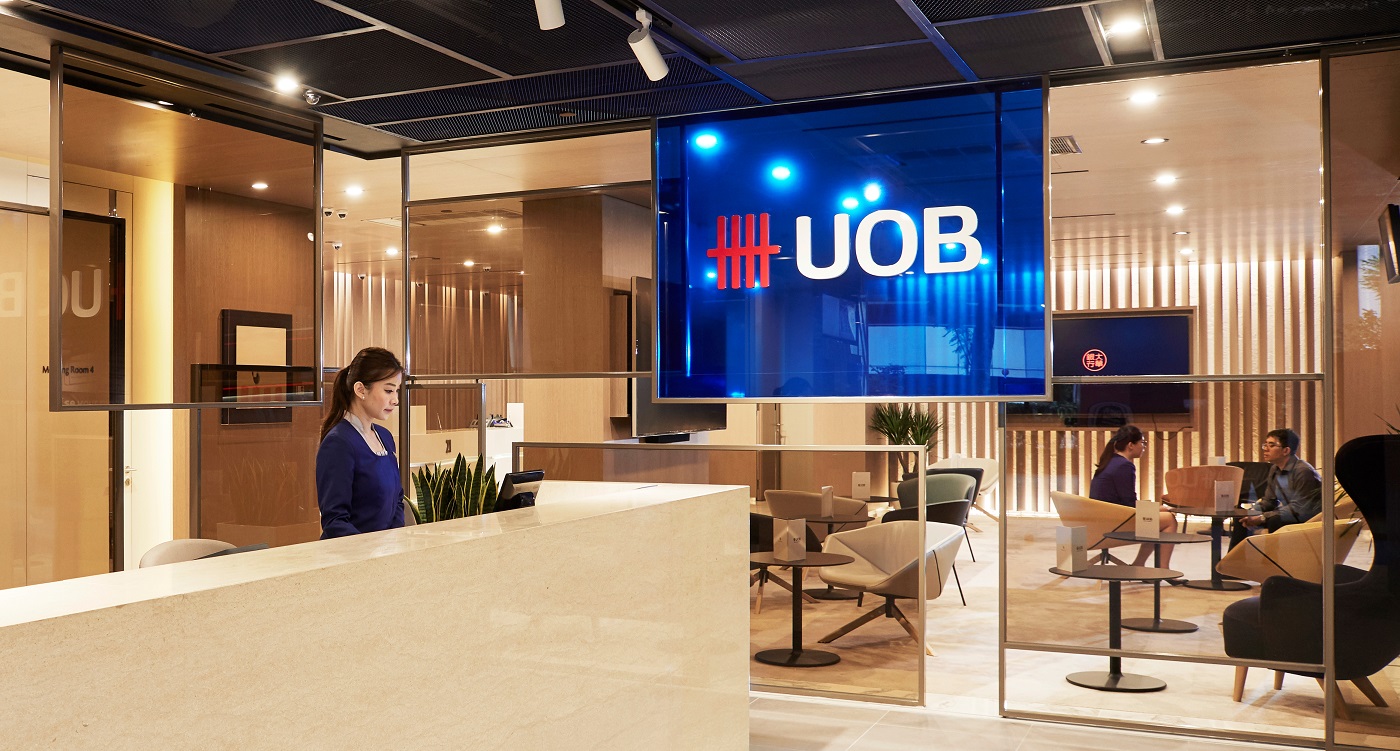
  • UOB Mulls Citi Asset Hunt in Asia

    UOB Mulls Citi Asset Hunt in Asia

    UOB is the latest bank to express interest in potentially acquiring Citi’s retail assets in the Asia Pacific region.

    UOB chief executive Wee Ee Cheong said that the Singapore lender would provide more clarity on acquisition plans after Citi release more details later this month.

    As long as it’s a strategic fit, is at the right price and makes sense for the long term, we will look at it.

    Numerous banks – both global and local – have reportedly expressed interest in potentially acquiring assets from Citi’s 13-market consumer banking exit in Australia, Bahrain, Indonesia, South Korea, Malaysia, the Philippines, Poland, Russia, Taiwan, Thailand, Vietnam, India, and China.

    DBS, Standard Chartered, Kotak Mahindra Bank and Axis Bank are reportedly eyeing the opportunities in India.

    And Citi’s retail assets in Australia reportedly drew interest from ANZ, ING Bank, Macquarie, Bank of Queensland, and local insurer Suncorp.

    Other banks that are also reportedly in the APAC hunt include Singapore’s OCBC and Japan’s Mitsubishi UFJ Financial Group.

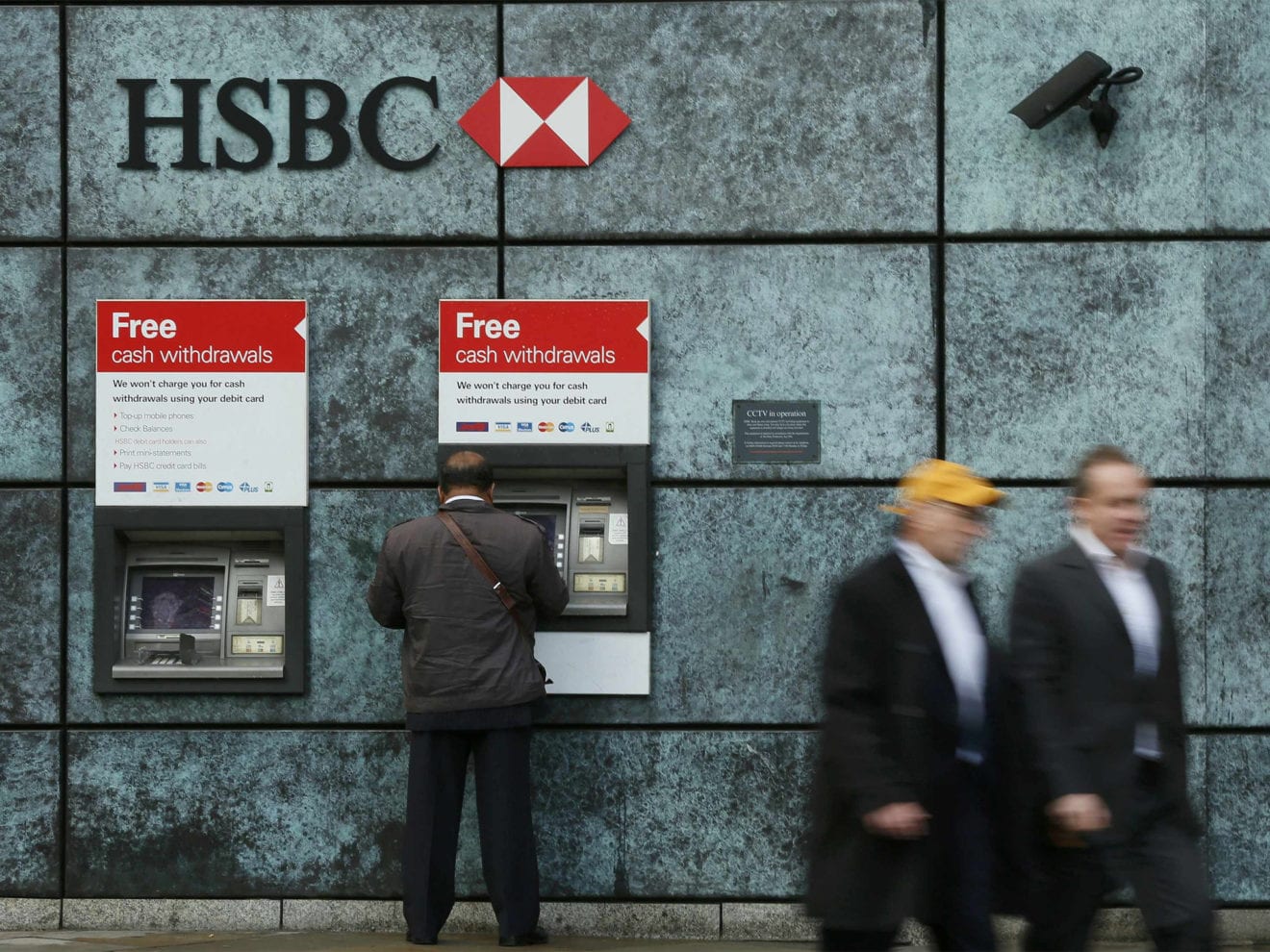
  • Digital Dominates Wealth Sales for HSBC

    Digital Dominates Wealth Sales for HSBC

    Digital channels dominated HSBC’s retail wealth management business in Asia, making up a dominant majority of sales in the unit.

    Nearly 80 percent of HSBC’s retail wealth sales were conducted through its digital channels, according to a statement from the bank.

    The strong adoption is driven by a multi-billion dollar push to expand HSBC’s wealth management ambitions in the region.

    Our $3.5 billion investments are underway, enabling us to deliver a robust start in Asia this year across the full spectrum of our wealth clients, said Asia head of wealth and personal banking Greg Hingston.

    The bank also posted strong regional inflows with $6.6 billion of net new money for the private banking arm and $3.3 billion for the asset management arm – a whopping 89 percent and over 400 percent increase.

    In the quarter, the two units made up 50 percent and 29 percent of the global private banking and asset management businesses, respectively.

    The bank will also maintain its hiring plans to add more than 5,000 client-facing wealth roles over the next five years, including relationship managers.

    According to the statement, it is on track to hiring 1,000 of those roles in 2021.

  • DBS has Strong Interest in Cryptocurrencies

    DBS has Strong Interest in Cryptocurrencies

    The bank is seeing more traction for its crypto assets business, which provides cryptocurrency trading and digital custody for accredited investors.

    Daily trading value on DBS’ digital exchange has grown tenfold since its launch to reach $30-40 million, with an investor base of 120 accredited investors and some S$80 million in digital assets under custody, DBS chief Piyush Gupta said at a media briefing last week as it announced its first-quarter results.

    I do think given the amount of interest in all the four cryptos that we trade now, that interest is quite high. And therefore, I do think it will pick up. But whether it picks up to tens of millions, or hundreds of millions of income over the next few years, it’s hard to say. So my thinking is, we should get in there, figure it out and grow and then we’ll get a better sense for how big this could be in time,» Gupta said, adding that the bank has a pipeline of hundreds of customers.

    The DBS Digital Exchange offers exchange services between SGD, USD, HKD, JPY, and four of the most established cryptocurrencies: bitcoin, ether, bitcoin cash, and XRP. Gupta said the bank would be scaling the business in subsequent quarters by issuing security tokens and extending the exchange’s trading hours, which currently works during Asian trading hours, to round-the-clock.

    Earlier this month, the bank also announced the development of Partior – an open industry platform with Temasek and J.P. Morgan that aims to reimagine and accelerate value movements for payments, trade, and foreign exchange settlement.

  • OCBC Posts Record High Quarterly Net Profit

    OCBC Posts Record High Quarterly Net Profit

    The quarter’s earnings were driven by broad-based income growth and lower allowances. OCBC Bank recorded a net profit of S$1.5 billion ($1.13 billion) for the January-March period, a jump of 115 percent from the same period last year (S$698 million), and 33 percent higher than the preceding quarter (S$1.13 billion), according to financial results posted on Friday.

    The bank said the record quarterly profit was driven by broad-based income growth and lower allowances. OCBC hit a new high in fee income (S$585 million), while making a far smaller allowance compared with the year-ago period (S$161 million vs. $657 million). Performance was also boosted by its insurance arm Great Eastern, which reported a twelvefold increase in profits this quarter.

    Income from wealth management, comprising insurance, premier and private banking, asset management and stockbroking, rose 40 percent to S$1.21 billion – 41 percent of the group’s total income.

    Assets under management at Bank of Singapore, its private banking arm, rose 1 percent from the previous quarter to reach $123 billion as at 31 March 2021.

    OCBC highlighted growing momentum from renewed market optimism across its businesses, as well as improved quarterly earnings from its overseas banking subsidiaries.

    While we remain watchful of the prevailing risks in the operating environment, our strong balance sheet and capital position will enable us to capitalize on opportunities arising from improved economic conditions, particularly in ASEAN and Greater China,» OCBC chief Helen Wong said.

    Earnings at Singapore’s «big three» local banks all beat analyst estimates (DBS: S$1.44 billion, OCBC: S$1.13 billion, UOB: S$891.4 million, according to Refinitiv).

    DBS, which announced its first-quarter results last week, also experienced a strong quarter, doubling its income from the quarter before to reach S$2.01 billion and posting record wealth management fees.

    UOB’s earnings grew to S$1 billion for the same period – up 46 percent on the back of strong fees, trading and investment income.

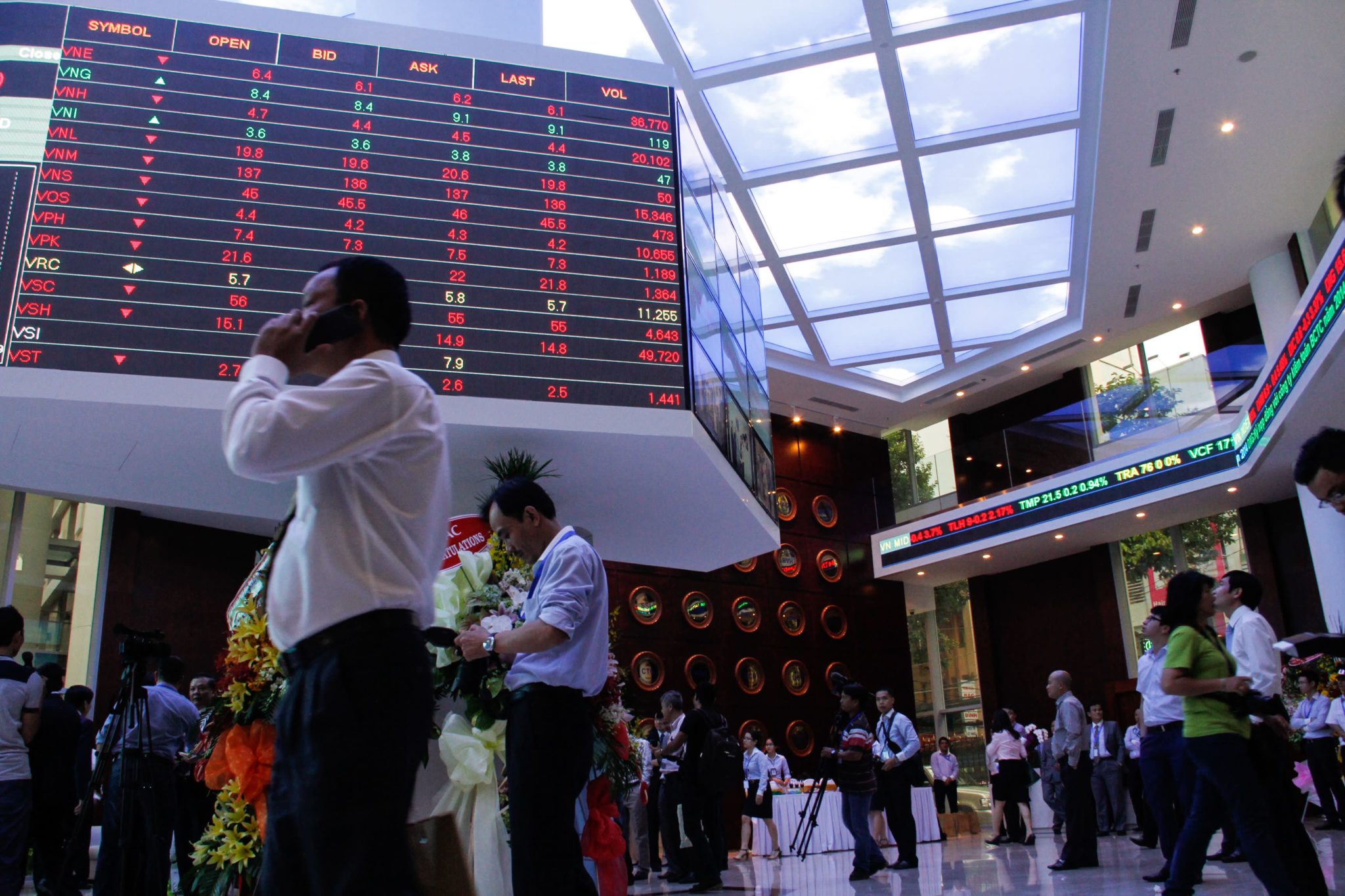
  • Vietnam stock market daily trading value closes in on Singapore

    Vietnam stock market daily trading value closes in on Singapore

    The average daily securities trading value surged 5.6 times year-on-year in April to $725 million, nearly equivalent to that of Singapore, according to HSBC.

    The lender said in a recent report that the figure, which far exceeds those of Malaysia and Indonesia, was due to the increase in new investors and recovery of the economy.

    In March, the number of new trading accounts hit a record 113,900, taking the total to over 3.02 million.

    The economic recovery is underpinned by strong FDI flows, improvements in the manufacturing segment, and increased consumption, the report said.

    The benchmark VN-Index has risen 12.9 percent in the year-to-date compared to 4.2 percent for Asia ex-Japan.

    The index has repeatedly scaled new peaks this year after surpassing the psychological barrier of 1,204 points first reached in 2018.

    HSBC expected the market to continue to rise in the absence of alternative asset classes and bank deposit rates in decline.

    Though foreign investors have been pulling out of the stock market, HSBC said they would not be able to ignore Vietnam for much longer since it has proved to be one of the most resilient growth economies and 24 out of the 30 blue chips have still not reached the foreign cap.

    Besides, despite rising to record levels, the VN-Index remains 5 percent lower than its five-year average level with a price-to-earnings ratio of 15.1.

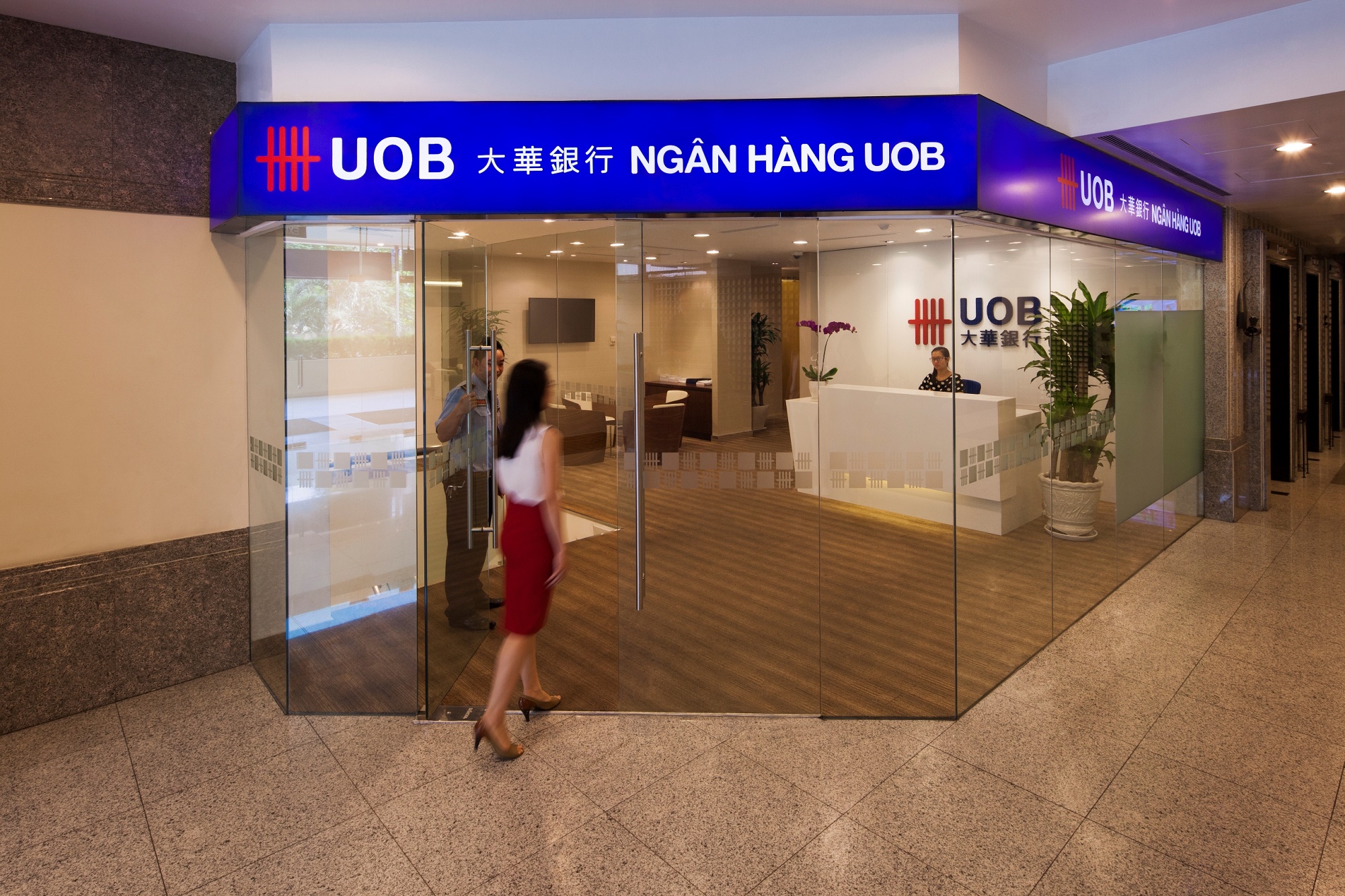
  • Net Profits Rebound at UOB

    Net Profits Rebound at UOB

    The bank’s quarterly earnings surged on the back of strong fees, trading, and investment income as business momentum improved.

    UOB’s earnings grew to S$1 billion ($750 million) in the first quarter of 2021 – up 46 percent from the previous quarter’s S$688 million and up 18 percent from the same period last year, according to financial results posted on Thursday.

    Income grew 11 percent to reach pre-Covid levels at S$2.5 billion, while fee income reached a new high to reach S$638 million (+22 percent), led by wealth management fees from investments and bancassurance. The bank also saw stronger activity in loans and investment banking, as well as treasury income. Its wealth management assets grew 10 percent to S$136 billion, of which 60 percent was from customers abroad.

    The bank highlighted growth across its key markets in Singapore, North Asia, and its Asean franchise. It expressed optimism as sentiment and business activities pick up and trade flows resume between Asean and Greater China.

    Across our key markets, we are seeing robust credit demand from our large corporate and institutional clients, Wee Ee Cheong, UOB deputy chairman, and CEO, said.

    Sustainability was a key theme for UOB, as total sustainable financing reached $12 billion during the quarter. During this period, the bank also issued Singapore’s first sustainability bond and global first dual-tranche sustainability bond.

    The bank’s AUM in ESG-focused investments also reached S$2.2 billion at the end of the quarter.

    DBS, which announced its first-quarter results last week, also experienced a strong quarter, doubling its income from the quarter before to reach S$2.01 billion and posting record wealth management fees.

    OCBC is due to release its quarterly results tomorrow, but its insurance arm Great Eastern has already reported a twelvefold increase in profits this quarter.

  • SGX Restores Services After Outage

    SGX Restores Services After Outage

    The bourse’s web pages were discovered to be progressively inaccessible across different network providers from 4:30 p.m. SGT on Tuesday.

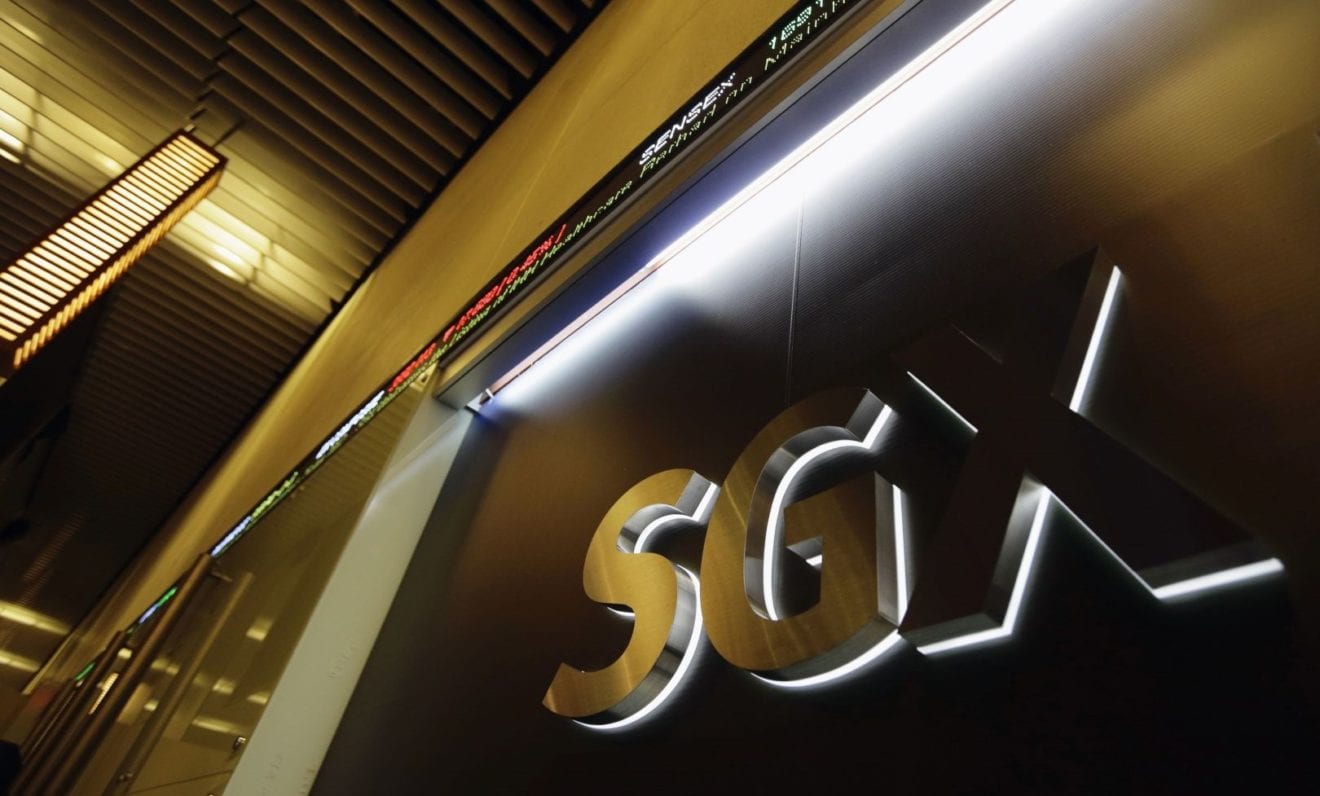
    Singapore Exchange’s website and web-based applications were restored on Tuesday night, following an outage that took place in the afternoon.

    Its case was a domain name system (DNS) issue, SGX said on Twitter, noting that it’s trading and clearing systems are separate from the website. It also said that there is no indication that its systems were compromised.

    While it did not affect trading, the outage limited access to SGX price information and SGX-listed company announcements.

    Several mainboard companies were due to release their financial results on Tuesday evening. Users were urged to visit their brokers’ websites or alternative sources during the outage.

  • ANZ Seeks Growth Opportunities at Home

    ANZ Seeks Growth Opportunities at Home

    Australian & New Zealand Banking Group is open to potential acquisitions for domestic growth, including retail assets from Citigroup’s retreat. Chief executive Shayne Elliot said that ANZ was in a really strong position to seek growth opportunities, according to a report. Elliot did not rule out potential acquisitions like retail assets from Citi, which recently exited 13 consumer banking markets.

    If opportunities come along, we have the capacity managerially, which is really important, because it’s not just about the money, and we certainly have the financials to take those things seriously. We will take the opportunity when it comes, he explained.

    Capital for growth at the Australasian lender was boosted by its recent performance after profits for the six months ended March 31 surged to A$2.99 billion ($2.3 billion) compared to A$1.41 billion in the previous year.

    This was driven in part by money set aside for bad debt provisions but were no longer required.

    Other banks with reported interest in Citi’s retail assets in Australia include ING Bank, Macquarie, Bank of Queensland, and local insurer Suncorp.

    Citi recently announced a major consumer banking pullout from 13 markets, including Australia and India.

    In India, Citi’s retail exit is also drawing interest from the likes of DBS, Standard Chartered, and local lenders Kotak Mahindra and Axis Bank.

  • Mastercard Eyes Digital Yuan Opportunities

    Mastercard Eyes Digital Yuan Opportunities

    Global payments giant Mastercard is in talks with various central banks with an eye on opportunities in central bank digital currencies.

    Amongst the central banks in discussion with Mastercard is the People’s Bank of China, according to a report citing APAC co-president Ling Hai.

    Circulation of central bank digital currencies (CBDC) outside of their home country could be converted into foreign currencies with a card clearing network acting as the conversion agent, Ling explained.

    While central banks can address their domestic issues associated with digital sovereign currencies, the role we can always play is on interoperability when the payment goes beyond a country’s borders, he said. For us, supporting a central bank digital currency is similar to adding another fiat currency onto our network.

    Mastercard is already increasingly establishing its digital currency capabilities with an existing partnership with the Bahamas where it provides prepaid card services to help travelers convert their CBDC – the Bahamas Sand dollar – into other fiat currencies.

    Centralized digital currencies aside, Mastercard also announced plans to increase support for select decentralized cryptocurrencies.

    Within China, it is also awaiting final approval for a license to conduct its card business onshore.

  • DBS in Advanced Talks for Citi’s India Consumer Unit

    DBS in Advanced Talks for Citi’s India Consumer Unit

    Citi is keen to exit its India consumer banking operations soon and would like to sell the entire set-up in one go, sources told India media.

    Talks with DBS Bank are at an advanced stage and they are keen to take up the entire consumer banking operation,» a person familiar with the matter said.

    DBS was one of the first foreign lenders to operate a wholly-owned subsidiary in India, and has been keen to expand operations in the country. Last year, it took control of loss-making Lakshi Vilas Bank and merged it with its India entity.

    DBS chief executive Piyush Gupta said,the bank is always looking at assets that could be beneficial to the franchise, but we do want to get caught in a bidding frenzy, when asked about the bank’s interest in Citi’s retail assets in Asia at a media briefing last week on DBS’ first-quarter results.

    Standard Chartered and local lenders Kotak Mahindra Bank and Axis Bank are also said to be interested, while SBI Cards and Payment Services is eyeing Citi’s credit card portfolio there. Private lender Yes Bank also joined the list of interested parties.

    In February, Citi announced its intention to exit its consumer banking business in 13 markets, 10 of which are in Asia, in a move to double down on wealth.

    Citibank India has 35 branches and employs 19,000 people,  serving 2.9 million retail customers, including 1.2 million bank accounts and 2.2 million credit card accounts, according to «Mint.» It has a 6 percent market share of retail credit card spends in India.

  • HSBC AM Names Asia Head of Credit Research

    HSBC AM Names Asia Head of Credit Research

    HSBC’s asset management arm appoints a new head of credit research in Asia amid an ongoing expansion across its product range and distribution capabilities in the region.

    HSBC Asset Management appoints Seok Poh Yeoh as head of credit research for Asia, according to a statement, effective immediately.

    In her Hong Kong-based role, Yeoh reports locally to head of Asian fixed income Elizabeth Allen as well as Paris-based global head of credit research Tina Radovic.

    Yeoh has 16 years of industry experience and was most recently a financial and corporate credit research analyst at Credit Suisse. She rejoins HSBC Asset Management after first joining in 2012 as a financial analyst.

    The latest hire follows announced ambitions by HSBC Asset Management to enhance its platform in mainland China, India, and Southeast Asia, most notably for the high net worth product range across alternatives, sustainability, and thematic equities.

    According to the bank, HSBC Asset Management has Asian fixed income assets under management totaling nearly $73 billion as of March 31 this year.

  • Fraudulent digital apps stalk, rob Vietnamese netizens

    Fraudulent digital apps stalk, rob Vietnamese netizens

    Investment platforms offering quick, handsome profits are mushrooming in Vietnam as fraudsters look to take advantage of gullible social media users.

    Over 700 reports have recently been filed with HCMC police by thousands who have been tricked by smartphone app Coolcat. The extent of fraud is estimated at VND200 billion ($8.7 million), the police said.

    This is just one of many apps that have made their appearance in Vietnam recently, aiming to trick investors with promises of quick and easy profits.

    Over 160 investors this month claimed to have been tricked by Bounty, a website that rewards users with money if they interact with online vendors on social media, such as liking a post on Facebook or subscribing to a YouTube channel. There are 10 levels of users, and users up their levels by putting in more money, which will allow them to complete tasks with higher profits.

    Ngoc, an investor, was able to gain VND1.4 million ($61) in just a few days, so she decided to invest a total of VND194 million in the platform and invited others to join.

    But on April 24, Bounty investors started to leave the groups and stopped posting on social media; and three days later, the website interface was changed from Vietnamese to Chinese.

    Another platform, Lifeshop, allows users to make money by placing fake orders on online shopping websites. By placing 12 orders a user can make VND25,000, but he or she can make more by spending money to advance to higher levels.

    Similarly, an app called Lucky Money offers commissions of 1-5 percent for each task a user completes, without providing any information about the company behind it.

    Hatching eggs apparently can make money too, with the app TamaGo promising 5 percent interest in just eight hours if investors put in a sum of money to “hatch” a digital egg.

    Promoters of the app say it is developed in Singapore and is being welcomed in Japan and South Korea, but offer no statistics or other evidence.

    “You will never lose,” they assert.

    Dinh Trong Thinh, senior lecturer at the Academy of Finance in Hanoi, said that many investors are drawn to this kind of investment because they think they can withdraw early without making losses.

    This business is not regulated in Vietnam and investors have to engage in them at their own risk, he said.

    Early birds might make some money with these platforms, but later investors will likely lose, he added.

    Ngo Tan Vu Khanh, a faculty member of University of Economics Ho Chi Minh City, said that creating an app is very easy these days. Whenever a suspicious app crashes, another will replace it. Developers can even make several such apps with some adjustments of users interface to lure new investors in, he said.

    Until there is a legal framework to regulate such apps, users should not invest in them as the chance of losing money is very high, he added.

  • China cryptocurrency craze drives hard drive shortage in Vietnam

    China cryptocurrency craze drives hard drive shortage in Vietnam

    Large capacity hard drives are virtually out of stock in Vietnam because of a cryptocurrency mining craze in China.

    Customers and market observers say local people have been buying large-capacity hard drives in bulk and reselling them to the Chinese amidst a new mining craze for the Chia cryptocurrency in China.

    People who need to buy large space hard drives have commented on online groups for computer component buyers that they could not find any 6TB or larger-spaced hard drives, so they were having to buy smaller ones to merge into a large one.

    Hoang Lam, Subject Matter Expert of data storage company Seagate Vietnam said that Seagate’s 4TB hard drives have been out of stock since last month because “many of our customers bought the hard drives in bulk, from hundreds to thousands in one order, instead of a few units in one order as usual.”

    A computer component distributor in HCMC said that their hard drive sales surged by 50 percent last month despite prices rising 10-20 percent, and now the store is out of stock.

    Thanh Phong, a cryptocurrency miner and cryptocurrency mining gear seller, said the chokehold on large capacity hard drives supply in Vietnam was caused by the cryptocurrency mining boom for Chia in China.

    Chia is built around a cryptographic technique called Proof of Space and Time, which allows the cryptocurrency to be mined with unused storage space on hard drives rather unlike others like Bitcoin or Ethereum that use graphics cards. The more unused storage on the hard drive, the more Chia can be mined.

    Phong said that the Chia craze is yet to spread to Vietnam. Therefore, Vietnamese were buying hard drives in bulk to sell them to China.

    The Chinese miners have been stockpiling hard drives, preparing for Chia’s launch in May. As a result, hard drives with large capacities, from 4TB to 18 TB, have already been sold out on many Chinese e-commerce platforms.

    According to manmanbuy.com, a Chinese website that tracks and compares historical prices of products on China’s popular e-commerce platforms, the price of hard drives has surged 300 percent since the end of last year.

    Chia is the brainchild of Bram Cohen, the creator of BitTorrent, a peer-to-peer protocol that allows users to distribute data and electronic files over the Internet in a decentralized manner. Cohen created Chia in 2017 with the aim of making a cryptocurrency that consumes less energy and generates less carbon when mining, compared to Bitcoin or Ethereum.