Category: Finance

Retail News Asia is committed to providing both local and global retailers with the latest Finance news throughout the Asian market. This on a daily base.

  • HSBC AM Names Asia Head of Credit Research

    HSBC AM Names Asia Head of Credit Research

    HSBC’s asset management arm appoints a new head of credit research in Asia amid an ongoing expansion across its product range and distribution capabilities in the region.

    HSBC Asset Management appoints Seok Poh Yeoh as head of credit research for Asia, according to a statement, effective immediately.

    In her Hong Kong-based role, Yeoh reports locally to head of Asian fixed income Elizabeth Allen as well as Paris-based global head of credit research Tina Radovic.

    Yeoh has 16 years of industry experience and was most recently a financial and corporate credit research analyst at Credit Suisse. She rejoins HSBC Asset Management after first joining in 2012 as a financial analyst.

    The latest hire follows announced ambitions by HSBC Asset Management to enhance its platform in mainland China, India, and Southeast Asia, most notably for the high net worth product range across alternatives, sustainability, and thematic equities.

    According to the bank, HSBC Asset Management has Asian fixed income assets under management totaling nearly $73 billion as of March 31 this year.

  • Citi Registers Stellar Growth in Asia

    Citi Registers Stellar Growth in Asia

    Citigroup CEO Jane Fraser’s first-quarter debut featured strong earnings worldwide and in Asia where the American lender is eyeing growth opportunities, particularly from private wealth in the region.

    Citi’s consumer banking unit in Asia saw $5.2 billion in net new money in the first quarter of 2021 – a 13 percent year-on-year increase – according to a memo seen.

    Investment sales, investment revenue and invested assets all saw decent growth at 48 percent, 22 percent and 29 percent, respectively.

    Citi’s private banking arm delivered its best quarter ever with a 2 percent increase, driven in part by growth in managed investments.

    Citi also posted strong growth from its investment banking business in Asia which saw an 84 percent increase in revenues from continued momentum in equity capital markets.

    Looking ahead, we have excellent momentum, a crisp strategy and tremendous opportunity across our region, said Citi’s APAC chief executive Peter Babej in the memo. The coming months and years will be defining for Citi.

    Overall, the bank posted $4.1 billion of revenue and $1.3 billion of net income in the region which contributed to 21 percent of global revenues, according to its latest published results.

  • China Widens Regulatory Net for Fintech Crackdown

    China Widens Regulatory Net for Fintech Crackdown

    More than a dozen major technology firms in China are set to face similar restrictions imposed on Jack Ma’s Ant Group as Beijing widens its fintech crackdown.

    13 tech titans – including Tencent, ByteDance, JD.com, Meituan and Didi Chuxing – were summoned to a meeting over a series of new requirements for their financial units, according to a joint statement by Chinese regulators.

    State representatives at the meeting included the central bank, the banking and insurance regulator, the securities regulator and the foreign exchange watchdog. The 13 tech firms will face similar requirements previously imposed on Jack Ma’s Ant Group including the restructuring of financial units into holding companies for regulatory supervision.

    Restrictions will be tightened in numerous areas such as payment links to financial products, collection of customer data, credit scoring services and overseas listings.

    The latest regulatory push against the broader fintech sector follows the headline crackdown against Ant Group with the latest move being a probe against its IPO backers and considerations for the divestment of Ma’s stake.

  • Asian Gaming Giant Adds Bitcoin to Balance Sheet

    Asian Gaming Giant Adds Bitcoin to Balance Sheet

    Nexon has joined other publicly listed companies such as Microstrategy and Tesla in holding the cryptocurrency as a hedge against inflation.

    The South Korean-Japanese video game publisher purchased some 1,707 bitcoin for about $100 million, equivalent to less than 2 percent of the company’s total cash and cash equivalents on hand, it said in an announcement this week.

    Nexon owns major gaming franchises including Maple Story, Kart Rider and Dungeon & Fighter. It is listed in Tokyo and is part of the Nikkei 225.

    Our purchase of bitcoin reflects a disciplined strategy for protecting shareholder value and for maintaining the purchasing power of our cash assets, Owen Mahoney, president and CEO of Nexon, explained in the statement, saying the company needs to think seriously about the future purchasing power of our cash in a world of potential currency debasement.

    In the current economic environment, we believe bitcoin offers long-term stability and liquidity while maintaining the value of our cash for future investments, he added.

  • Singapore and Thailand Link National Payment Infrastructures

    Singapore and Thailand Link National Payment Infrastructures

    In a world-first, the two countries have established a link between Singapore’s PayNow and Thailand’s equivalent PromptPay.

    Customers in Singapore with DBS, OCBC, and UOB accounts, and customers of Bangkok Bank, Kasikorn Bank, Krung Thai Bank, and Siam Commercial Bank in Thailand will be able to securely perform cross-border peer-to-peer transactions of up to S$1,000 or THB25,000 using just their mobile numbers.

    The transactions will take place at the near real-time speed at a fee that is competitive to remittance services. Over time, participating banks and use cases will be scaled up and expanded, the Association of Banks in Singapore said in an announcement on Thursday.

    Monetary Authority of Singapore (MAS) and the Bank of Thailand first mooted the possibility of a link between their respective countries’ networks in 2017.  The announcement said the two sides spent the past few years working to align their target operating model, business rules, technical connectivity as well as legal framework.

    Wee Ee Cheong, ABS chairman, deputy chairman and CEO of UOB, said the initiative is also «an important step to connecting payment systems across ASEAN at scale in the future.

    MAS managing director Ravi Menon previously said MAS is keen to help other central banks in the region to expand the linkage, so that more people across Southeast Asia can benefit.

  • HSBC Rolls Out Institutional Family Office Services

    HSBC Rolls Out Institutional Family Office Services

    Single-family office clients across Asia will be able to tap on HSBC’s team of investment banking specialists and institutional execution services.

    HSBC said that combining the family office and wealth planning strengths of its private banking business with the expertise and reach of its global banking and markets business will allow it to better serve the growing needs and levels of sophistication of family offices.

    In an announcement on Thursday, the bank cited the growing number of ultra-high net worth families in Asia and the scale of wealth transfer happening in the region, where $1.9 trillion is expected to be passed on to the next generation.

    The bank’s family office relationships will be able to access a wider range of solutions and opportunities, including financing solutions and product capabilities, including institutional market access, prime services, and private deals, the announcement said.

    As wealthy individuals and businesses professionalize the management of their family wealth, we will deliver the full strength of advisory and structuring capabilities in our private banking and investment banking teams to meet our clients’ increasingly sophisticated investment and family needs, Siew Meng Tan, regional head of HSBC Private Banking, Asia-Pacific, said.

    HSBC said the move is aligned with its ambition to become the leading wealth bank in the region. The bank previously announced plans to invest over $3.5 billion in the next five years to accelerate the growth of its Wealth and Personal Banking (WPB) business in Asia.

  • StanChart Beats Forecasts with Improved Impairments

    StanChart Beats Forecasts with Improved Impairments

    Credit impairments fell sharply at Standard Chartered, enabling the growth market-focused lender to beat analyst estimates and deliver profitability in the first quarter.

    Standard Chartered posted pre-tax profits of $1.4 billion, according to its latest results, marking an 18 percent increase compared with $1.2 billion last year.

    It also beat compiled analyst forecasts of $1.08 billion.

    Amongst the most notable improvements was from credit impairment charges which fell sharply from $354 million in the previous quarter to just $20 million.

    The bank also registered strong performance from its wealth management businesses which saw a record quarter with a 21 percent increase in income from strong sales of foreign exchange and equity-related products.

    In Asia, it boosted its pre-tax profits by 21 percent to $1.23 billion.

    In line with its continued pursuit to cut office space – in Singapore and Hong Kong, for example – and permanently adopt flexible working conditions, the bank will also significantly reduce its branch network.

    Standard Chartered will cut the number of branches by half to around 400 after having as many as 1,200 worldwide in 2014.

  • DBS Doubles Quarterly Earnings

    DBS Doubles Quarterly Earnings

    The board is recommending an interim dividend of 18 cents per share, to which the scrip dividend scheme will be applied. Net profit at DBS grew to S$2.01 billion ($1.52 billion) for the January-March period, up from S$1.01 in the previous quarter and 72 percent higher year-on-year, according to first-quarter earnings posted on Friday.

    It cited strong business momentum and stabilizing asset quality as behind the record quarter – loans grew 3 percent and deposits increased 2 percent from the previous quarter, while fee income rose 28 percent on-quarter to a record S$953 million and Treasury Markets income reached a new high. Bad loans were also at pre-pandemic levels.

    Wealth management fees also grew 24 percent to a record S$519 million on the back of strong investor demand across a wide range of investment products in a low-interest rate environment, DBS said.

    This has been an extraordinary quarter for our business as we fired on all cylinders, Piyush Gupta, DBS chief executive, said in a statement.

    During the quarter, DBS grew its franchise in the Greater Bay Area with a stake in Shenzhen Rural Commercial Bank, and announced the development of Partior – an open industry platform with Temasek and J.P. Morgan that aims to reimagine and accelerate value movements for payments, trade, and foreign exchange settlement.

    The global economic rebound is strengthening and we are bullish about prospects for the coming year, Gupta added.

  • HSBC AM Names Asia Head of Credit Research

    HSBC AM Names Asia Head of Credit Research

    HSBC’s asset management arm appoints a new head of credit research in Asia amid an ongoing expansion across its product range and distribution capabilities in the region.

    HSBC Asset Management appoints Seok Poh Yeoh as head of credit research for Asia, according to a statement, effective immediately.

    In her Hong Kong-based role, Yeoh reports locally to head of Asian fixed income Elizabeth Allen as well as Paris-based global head of credit research Tina Radovic.

    Yeoh has 16 years of industry experience and was most recently a financial and corporate credit research analyst at Credit Suisse. She rejoins HSBC Asset Management after first joining in 2012 as a financial analyst.

    The latest hire follows announced ambitions by HSBC Asset Management to enhance its platform in mainland China, India, and Southeast Asia, most notably for the high net worth product range across alternatives, sustainability, and thematic equities.

    According to the bank, HSBC Asset Management has Asian fixed income assets under management totaling nearly $73 billion as of March 31 this year.

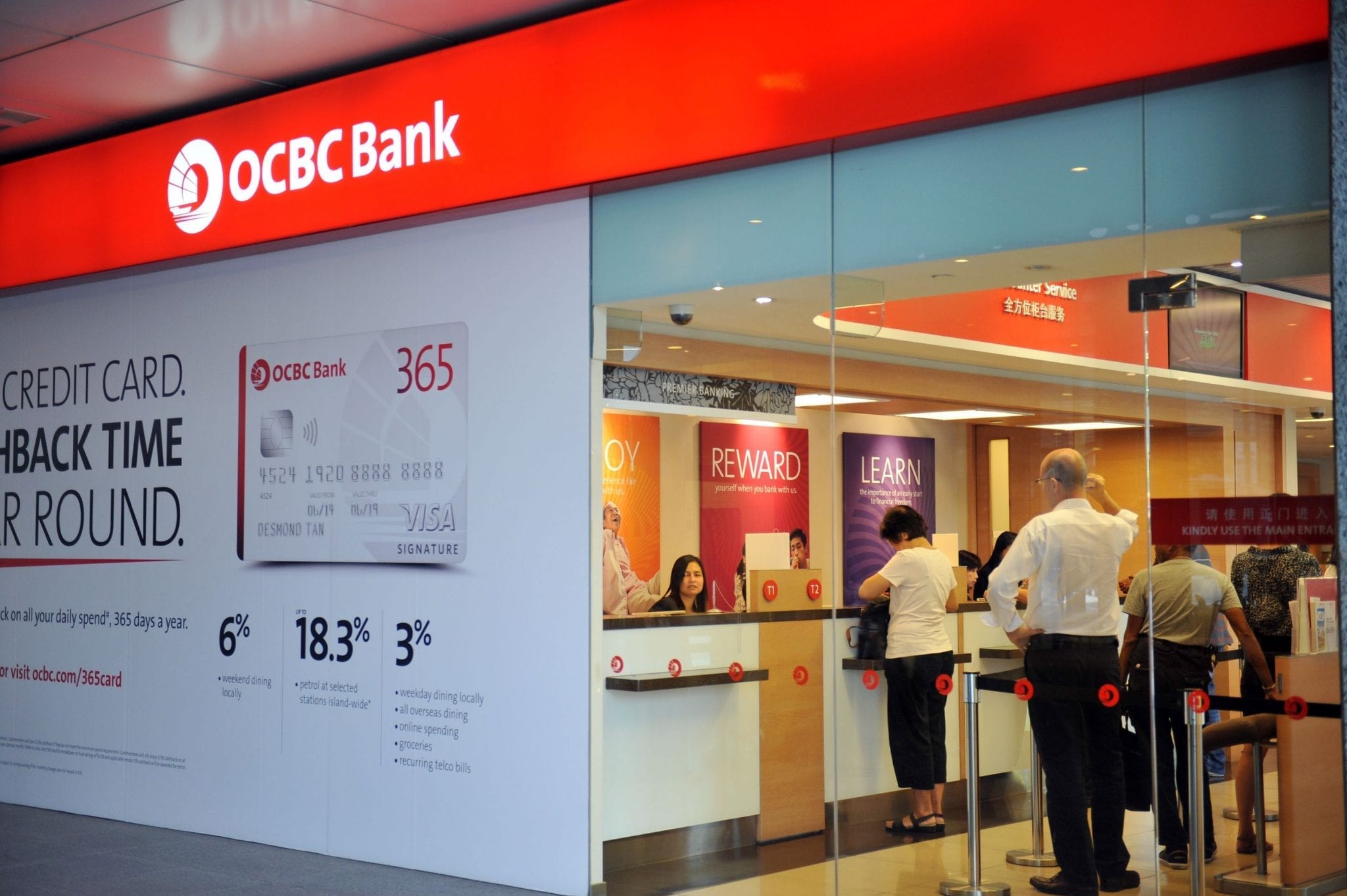
  • OCBC to Review Office Space Needs

    OCBC to Review Office Space Needs

    The bank is considering reducing the number of branches and office space as it moves towards a hybrid work model.

    We may not need so many branches servicing our customers, so certainly I think there will be a review in terms of our office requirements as we move forward,» chairman Ooi Sang Kuang said at the bank’s virtual annual shareholder meeting on Thursday.

    Last year, former OCBC chairman Samuel Tsien said the bank expects fewer physical branches and offices being open in the future, as a surge in the adoption of digital banking services prompted OCBC to rethink its branch network strategy, and Covid-19 prompted a shift towards hybrid working from home and the office.

    Other banks that have permanently reduced their physical footprint in Singapore include DBS, which will give up 75,000 square feet of space – about two and a half floors out of the more than a dozen floors it occupies at Tower 3 of the Marina Bay Financial Centre; Citi, which is offloading three floors; and Mizuho, which is cutting less than one floor of office space.

    During the meeting, Helen Wong, OCBC’s new chief executive, said the bank would focus on deepening its reach into Asean markets and to capitalize on the growing Asean-Greater China flows, expanding its wealth management franchise, accelerating digitalization and building a regional sustainable bank.

  • OCB shares ‘undervalued,’ says bank chairman

    OCB shares ‘undervalued,’ says bank chairman

    Shares of OCB are undervalued by 25 percent, its chairman Trinh Van Tuan said at the private lender’s annual general meeting Wednesday.

    He said his assertion was backed by many stock brokerages that have suggested a price of VND30,000 ($1.31) for the OCB ticker, currently trading on the Ho Chi Minh Stock Exchange (HoSE) at VND24,000.

    A private bank usually has a price to earnings (P/E) ratio of 11, while that of OCB is less than 7, he said. The P/E ratio reflects how much investors are willing to pay today for future growth expectations.

    OCB listed on the HoSE on January 28 when the market plunged, pulling it down by 20 percent in the first session. The ticker has since recovered by 27 percent.

    The bank plans to pay dividends by shares with each shareholder allowed to buy 20-25 more shares for every 100 shares owned.

    It also wants to issue 70 million shares via private placements and five million shares to its employees. Several foreign investors have expressed interest in the bank since last year, Tuan said.

    The bank’s charter capital is set to rise by 32 percent this year to VND14.45 trillion ($627 million).

    Last year, the bank’s pre-tax profit surged 37 percent year on year to VND4.42 trillion. It targets a 25 percent credit growth this year, pending approval from the central bank.

  • VietinBank Securities expects surge in profits

    VietinBank Securities expects surge in profits

    VietinBank Securities targets pre-tax profits of VND180 billion ($7.8 million) this year, up 20 percent from 2020, as the stock market continues to rise.

    The company secured a $30-million loan from a consortium of four Taiwanese banks in March and another $60 million from Korea’s Woori Bank and Taiwan’s Fubon Bank and Cathay United Bank a month later.

    It is its highest profit target since 2017, with CEO Tran Phuc Vinh explaining that the low deposit interest rates which are diverting funds into the stock market, and the increasing number of new investors are the factors for the optimism.

    The loans provide it with funds for margin financing and investing in corporate bonds and certificates of deposit, Vinh said.

    It reported a 20 percent rise in revenues to VND610 billion last year and an 8 percent increase in pre-tax profits to VND151 billion.

    Vietnam’s benchmark VN-Index has risen 10.5 percent from the end of last year to 1,219.75 points Tuesday. Brokerage FPT Securities forecast that VN-Index could hit 1,351-1,400 points this year.

    The stock market saw nearly 258,000 new trading accounts opened in the first quarter, accounting for 65 percent of the figure recorded in 2020 as a whole, according to the Vietnam Securities Depository (VSD).

    This took the total number of accounts to nearly 3.02 million as of last month, equivalent to 2.8 percent of Vietnam’s population.

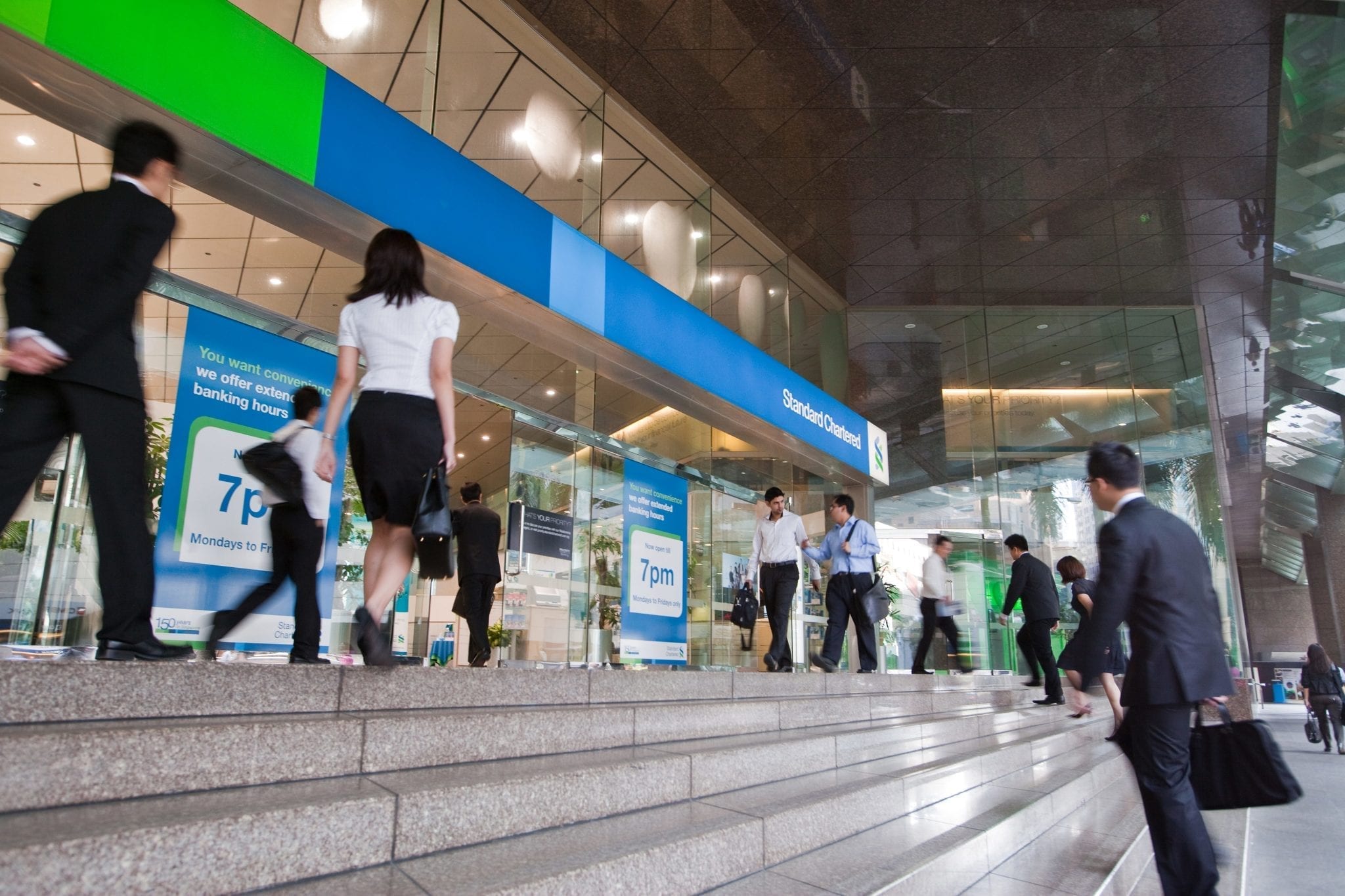
  • Standard Chartered to Offload Office Space in Singapore

    Standard Chartered to Offload Office Space in Singapore

    Standard Chartered bank is reportedly considering slashing office space in the Singapore business district, where it occupies 21 floors at Marina Bay Financial Centre Tower 1.

    While plans are under discussion and subject to change, sources told «Bloomberg» that the bank is weighing several options, including cutting 80,000 square feet, or four floors of offices.

    Another option is to shed half of the 420,000 square feet it currently occupies or retaining just four floors – the minimum required for the bank to keep its logo on the building’s facade, the report said.

    The downsizing follows similar moves in Hong Kong, where it is giving up the lease on eight floors of its Standard Chartered Bank Building in the central business district, and renting out three floors it owns from its offices in the industrial district of Kwun Tong.

    The move also falls in line with the bank’s plans to permanently offer flexible work options to around 90 percent of its 85,000 employees around the world by 2023. Some 80 percent of its employees in Singapore currently work from home, the bank said.

    Standard Chartered is planning to optimize the use of its office space by and cater to the wellness of its staff by providing amenities such as gyms, according to the report. A large number of staff also work out of a facility at Changi Business Park, where it opened a learning hub in December 2020 to boost its workforce.

    Other banks that have permanently shed space in Singapore include DBS, which will give up 75,000 square feet of space – about two and a half floors out of the more than a dozen floors it occupies at Tower 3 of the Marina Bay Financial Centre; Citi, which is offloading three floors; and Mizuho, which is cutting less than one floor of office space.

  • Deutsche Bank Sidesteps Archegos Hit

    Deutsche Bank Sidesteps Archegos Hit

    The German bank pulled off what Swiss rivals failed to: avoid major losses from the collapse of the family office-hedge fund.

    Frankfurt-based Deutsche Bank swung to a net profit of 908 million euros ($1.1 billion) in the first quarter, from a loss of 43 million euros year-ago, it said in a statement on Wednesday. The result was powered by its investment bank, which is still feeding its business with revenue.

    In doing so, the German bank largely avoided what is now more than $10 billion in losses from Archegos, which hit Credit Suisse the worst but didn’t leave UBS unscathed either. CEO Christian Sewing is now in his fourth year of reviving Deutsche Bank, following years of outsize risk-taking.

    The bank had quickly offloaded roughly $4 billion in collateral against Archegos’ business before others. On Tuesday, Deutsche reported investment banking revenue surged by nearly one-third in the last three months, illustrating that Deutsche is still heavily reliant on Wall Street.

    By contrast, revenue in its wealth management arm overseen by Claudio de Sanctis edged two percent lower. The unit won 7 billion euros of fresh money into investments products and lent 2 billion euros more to clients in the quarter.

    Deutsche’s international private bank hiked overall assets to 267 billion euros, from 252 billion euros at year-end. The bank’s quarter overall represents its healthiest in seven years.

    It comes against the backdrop of Credit Suisse sliding deeper into crisis: the Swiss bank took the biggest Archegos hit on Wall Street – 4.4 billion Swiss francs ($4.7 billion) – or nearly half the total which has surfaced publicly so far. UBS took a $774 million one, it reported on Tuesday, as well as another $87 million in the coming quarter.

  • DBS, Temasek and J.P. Morgan to Disrupt Payments Landscape

    DBS, Temasek and J.P. Morgan to Disrupt Payments Landscape

    The trio is developing an open industry platform that aims to reimagine and accelerate value movements for payments, trade, and foreign exchange settlement.

    Partior aims to disrupt the cross-border payments landscape by using blockchain and smart contracts to make digital clearing and settlement more efficient and address common pain points such as multiple validations on payment details by banks, according to a joint announcement on Wednesday.

    The open platform will enable banks around the world to provide real-time cross-border multi-currency payments, trade finance, foreign exchange, and delivery versus payment (DVP) securities settlements, with programmability, immutability, traceability built into its suite of services, the announcement said.

    Partior also plans to develop wholesale payments rails based on digitized commercial bank money to enable instantaneous settlement of payments for various types of financial transactions, which will help banks overcome challenges presented by the current standard sequential method of processing global payments.

    Partior is a pioneering step towards providing foundational global infrastructure for transacting with digital currencies in a trusted environment, spurring a wide range of use-cases in the blockchain ecosystem,» Sopnendu Mohanty, MAS chief fintech officer, said in the announcement.

    The platform will be designed to complement ongoing central bank digital currencies initiatives and use cases. It will focus initially on facilitating flows primarily between Singapore-based banks in both U.S. dollars and Singapore dollars, with the aim to expand service offerings to other markets and currencies later on.

    The three partners previously worked on blockchain payments as part of Project Ubin, a collaborative project between the Monetary Authority of Singapore (MAS) and the industry to explore the use of blockchain and distributed ledger technology (DLT) for clearing and settlement of payments and securities.