Category: Finance

Retail News Asia is committed to providing both local and global retailers with the latest Finance news throughout the Asian market. This on a daily base.

  • Techcombank profits sharply up

    Techcombank profits sharply up

    Vietnam’s largest private lender, Techcombank, reported a 23 percent rise in pre-tax profit last year to VND15.8 trillion ($683.62 million).

    It remained the third most profitable bank in the country behind state-owned Vietcombank and VietinBank.

    Its revenues rose 28 percent to VND27 trillion, nearly 70 percent of its interest income. The rest mostly comprised income from fees and securities investment.

    Provisions were up 2.8 times to over VND2.6 trillion as businesses, hit hard by the Covid-19 pandemic, struggled to repay loans.

    Credit grew at a whopping 23 percent against the country’s average of 10.14 percent.

  • HSBC Appoints Singapore Commercial Banking Head

    HSBC Appoints Singapore Commercial Banking Head

    HSBC has promoted a Hong Kong corporate banker previously covering the tech sector to become its head of the commercial banking unit in Singapore.

    Regina Lee has been named as HSBC’s Singapore head of commercial banking, according to a statement, effective March 1 this year.

    Lee will replace Alan Turner who will relocate to the commercial banking unit in Canada after three years in Singapore.

    She will report to CEO of HSBC Singapore Tony Cripps and APAC head of commercial banking Stuart Tait.

    Lee has over 20 years experiencing across corporate and commercial banking. She was most recently a managing director of corporate banking in HSBC’s Hong Kong unit where she led the coverage team for TMT (technology, media, and telecommunications), consumer, retail and commodities.

    In addition, Lee has extensive operational and risk management experience as HSBC’s former chief operating officer for the commercial bank in Hong Kong and she also separately oversaw operational risk and control division for commercial banking in the broader APAC region. Previously, she also led business development for HSBC Hong Kong’s global trade and receivables finance business and the commercial banking business in Macau.

    Singapore continues to be a strategic growth market for the group, offering significant opportunities from its increasing status as an international investment hub and springboard to Southeast Asia, Cripps said.

  • Bank of Singapore Sees Strong IAM Growth

    Bank of Singapore Sees Strong IAM Growth

    OCBC’s private banking arm, Bank of Singapore, saw a major boost in new clients and revenue from independent asset managers in the midst of a pandemic, according to senior market head Teresa Lee said.

    Independent asset managers (IAM) have been one of the major strategic focus for growing our business, said Bank of Singapore’s Greater China and North Asia senior market head Teresa Lee in an interview.

    According to the Singaporean private bank, the number of onboarded IAMs grew almost 50 percent year-on-year, as of November last year, with overall IAM revenue from the same period nearly doubling. This was owed in no small part to the Hong Kong IAMs business which has seen accelerated growth following the launch of a hub dedicated to the segment several years ago.

    We have successfully set up our Hong Kong-based ‘IAM Excellence Center’ in May 2018 to act as a hub to provide dedicated support such as onboarding, trade execution, services, marketing and more, Lee added. We have managed to see good progress in new relationships and client acquisition, especially for Greater China.

    Not unlike its competitors, the coronavirus pandemic has disrupted operations and driven digital transformation at Bank of Singapore.

    In a separate conversation with its global chief operating officer Sonjoy Phukan in mid-2020, he noted that over 70 percent of client accounts have already signed up for digital services.

    Similarly for the IAM segment, Lee noted growing adoption – close to 500 participants logged on to a market outlook for an online IAM Forum in April last year.

    Despite the digital gains, Lee echoed private banks’ industrywide belief that the «human touch» was unlikely to go extinct anytime soon.

    Digital capabilities can only accelerate and maintain some processes while others cannot be replaced, she said. I believe that the human touch continues to be key to maintaining relationships.

    Examples of the relevance of high-touch services remain in areas such as wealth or legacy planning, where the bank hired seasoned veteran and ex-APAC head of the practice for HSBC Private Banking Joanna Ho last year.

    In 2020, China was a rare case of growth amongst major economies at 2.3 percent, according to its national data, and mainland equity markets have been buoyed by tech, healthcare and other rallies.

    Similarly, Bank of Singapore has seen strong growth in assets under management across all Greater China client segments which posted a 17 percent increase as of the third quarter last year, outpacing the private bank’s overall growth of 5 percent to $116 billion.

    Lee also expressed confidence that Hong Kong will maintain its hub status and that it will always be an important financial center, especially for Greater China clients, adding that she observed no significant wealth shift to Singapore.

  • Whisky-Backed Securities Trading Goes Live in Singapore

    Whisky-Backed Securities Trading Goes Live in Singapore

    Hg Exchange went live this week with whisky-based asset-backed securities trading, becoming Southeast Asia’s first bourse with the offering.

    Five whisky-linked securities were actively traded through the blockchain-based bourse for the first time yesterday, according to a statement, with total volumes valued at 700,000 British pounds ($956,000).

    Hg Exchange’s (HGX) is a private bourse that features not only whisky-linked securities but also other financial securities such as private equity, venture capital funds, and real estate.

    Its founding partners include Asia-focused financial firms PhillipCapital and PrimePartners alongside private tech platform Fundnel and blockchain platform Zilliqa.

    Demand from Asia in fine whiskeys has grown in recent years concurrently with persistent wealth accumulation. There was a most notable surge in the region during the mid-2010s after the release of the Japanese television series Massan, then a popular drama about a whisky distiller, sparking widespread demand.

    The strongest returns yielded from HGX’s first trading day was from the Port Ellen which saw over 30 percent gains yesterday.

    We are delighted by the positive reaction to this whisky-based asset-backed securities from accredited investors in Singapore, across Asia and around the world, said Gerald Ong, deputy chairman and executive director of PrimePartners Corporate Finance Holdings.

  • UBS Profits Double in APAC Wealth Unit

    UBS Profits Double in APAC Wealth Unit

    Asia Pacific profits in the fourth quarter of 2020 more than doubled year-on-year at UBS, driven by a strong increase in invested assets.

    Profits before tax at UBS’s APAC unit increased by $95 million to reach $169 million – a nearly 130 percent increase – driven by an increase in both transaction-based income and recurring net fee income from a strong increase in invested assets.

    Asia’s largest private bank by far, UBS saw another strong quarter of net new money with $13.2 billion, outpacing all other regions. Invested assets in the region reached $560 billion, a $57 billion increase compared to the last quarter.

    Worldwide, invested assets at UBS Global Wealth Management grew an additional $262 billion to reach $3 trillion, a 10 percent increase compared to the third quarter, as markets continue to reach new highs amid a coronavirus pandemic.

    Overall, the world’s largest wealth manager also posted net new money of $21.1 billion, with net inflows from all regions.

    Asia’s lead over other regions was helped in no small part by a single inflow of $4 billion, already more than the combined net inflows of the Americas ($1.4 billion) and Switzerland ($700 million).

    While an operating income increase of $60 million played no small role in the surge in profits, cost control was also a significant factor.

    Cost/income ratio at UBS’s Asia wealth unit saw a sizable decrease from 85.6 percent to 70.5 percent.

  • China’s Fintech Balancing Act

    China’s Fintech Balancing Act

    Days after the public reappearance of Alibaba founder Jack Ma, top Beijing authorities are facing a balancing act between reining in the dominance of internet giants while keeping the fintech industry sufficiently free to innovate.

    Investigations into fintech giant Ant Group will not undermine the firm’s business development nor does it signal a move against private businesses in mainland China, according to recent comments from Liang Tao, vice president of the China Banking and Insurance Regulatory Commission (CBIRC).

    In fact, banks and insurance agencies are encouraged to continue cooperation with internet platforms, said Liang in a recent press conference where he also credited the sector’s contributions to fintech advancements as well as improved financial efficiency and inclusiveness in China.

    Separately last month, the People’s Daily – the Chinese Communist Party’s official newspaper – published an editorial that downplayed political factors in the ongoing antitrust investigations, adding that the strengthening of anti-monopoly supervision will not bring about a ‘winter’ in the industry, but rather a new starting point for better and healthier development.

    Despite comments from state media and the CBIRC that tightening would have limited impact, China’s central bank recently signaled government intervention into payments providers deemed to dominant with the possibility of breakups should their market share be too high.

    The People’s Bank of China (PBoC) defined a digital payments monopoly as any non-bank provider with at least half of the market share for online transactions; any two non-bank providers with a two-thirds; or any three providers with three-quarters.

    The PBoC also proposed last week that it could advise the state council’s antitrust committee to take action should non-bank institutions severely hinder the healthy development of the payment service market».

    Following the scrapped $35 billion Ant IPO, the formation of a dedicated task force for the firm and the three-month disappearance of Jack Ma, Beijing’s top watchdogs signal a renewed take on the mainland’s fintech sector with hopes of controlling growth without obstructing innovation.

    Should Ma’s Ant Group be forced to break up as a result of the antitrust investigations, it remains to be seen how the outlook for the broader industry would be impacted but fintech giant could see its valuations slashed significantly.

    According to estimates from «Bloomberg Intelligence», Ant’s payment arm Alipay could see its value halved under the draft regulatory proposals. This could result in the overall Ant Group’s valuation plunging to around $108 billion, down from the original $320 billion before the IPO pullout, with further decreases should a breakup occur.

  • HSBC’s Noel Quinn Faces Questions from British MPs

    HSBC’s Noel Quinn Faces Questions from British MPs

    HSBC chief executive Noel Quinn is scheduled for a virtual session tomorrow with the U.K.’s Foreign Affairs Committee where he is expected to face tough questions about the bank’s relationship with Beijing.

    HSBC’s Noel Quinn alongside chief compliance officer Colin Bell will face questioning from the British parliament’s Foreign Affairs Committee (FAC) this week regarding political developments in Hong Kong.

    This occurs just days after self-exiled activist Ted Hui called on British member of parliament (MP) to investigate the British lender over frozen accounts and an apology from Quinn saying he had «no choice» after being instructed by Hong Kong police.

    The virtual session between FAC and top HSBC executives is scheduled for tomorrow with a private meeting followed by a public one at 2:30 pm in the U.K.

    The FAC meeting is expected to cover a number of recent events in Hong Kong including the passing of the national security law and the freezing of accounts belonging to activists involved in local protests.

    On Quinn’s emailed apology to Hui last week, Conservative MP and FAC chair Tom Tugendhat called the response «extraordinary» adding that the HSBC CEO was clearly defending his actions by denying responsibility, according to a  report.

    Companies listed in London should expect to be scrutinized according to the values we hold, not those of a foreign dictatorship,» he said.

    According to Hui, who self-exiled to the U.K., he has recently shared evidence and detailed information regarding the recent account freezes, as requested by FAC members.

    Any banks, businesses or organizations helping the communist tyranny to suppress the freedom of Hong Kong people will inevitably pay a heavy price internationally, Hui said in a social media post over the weekend.

    I will do everything I can to make these organizations face the consequences.

  • China’s Central Bank Signals Break-Up Risk for Non-Bank Players

    China’s Central Bank Signals Break-Up Risk for Non-Bank Players

    The latest draft rules proposed by the People’s Bank of China signals even more regulatory tightening against the mainland fintech sector including the potential to even break up non-bank institutions deemed to hinder payment development.

    The People’s Bank of China (PBoC) proposed this week that it could advise the state council’s antitrust committee to take action should non-bank institutions severely hinder the healthy development of the payment service market.

    Actions suggested include the ability to break-up non-bank financial institutions that are deemed to be too dominant and abusive of their leading market positions.

    This spells more tightening for the likes of payment giants like Ant’s Alipay or Tencent’s Tenpay which own the majority of mainland China’s digital payment market share.

    According to guidelines released earlier this month, the PBoC defines a digital payments monopoly as any non-bank service provider with at least half of the market share for online transactions.

    Two non-bank providers with a combined market share of two-thirds or three providers with three-quarters will also qualify for antitrust investigations.

    Two or three firms having less than a 10 percent market share will not trigger investigations, the PBoC added.

    The new rules spell headwinds for China’s leading fintech giants whose dominance could at the very least potentially face supervision over capital adequacy requirements especially if they offer deposit products with interest rate payments, if not a full break up.

    While onlookers remain cautious, some have expressed optimism about limited intervention due the risk of such actions resulting in curbed innovation.

    Globally, regulations have actually intensified to rein in the dominance of big tech. In our view, this is meant to prevent market abuse, said UBS Global Wealth Management’s APAC CIO Min Lan Tan in a recent virtual roundtable. Regulators will be careful not to stifle innovation. Significant changes in business models or the breakup of companies, we think, is unlikely.

  • Bidders Emerge for AXA’s Singapore Unit

    Bidders Emerge for AXA’s Singapore Unit

    Three bidders have reportedly emerged as frontrunners for AXA’s business in Singapore after the French insurer first signaled a potential sale in August last year.

    HSBC, Malayan Banking’s insurance joint venture Etiqa and an at least one Chinese firm are reportedly in the running, according to a «Bloomberg» report citing unnamed sources.

    Etiqa was established in 2005 and provides general and life insurance solutions. It was founded as a merger between a Maybank-Ageas joint venture and Malaysia’s National Insurance.

    HSBC also has an existing insurance business in Singapore and its chairman Mark Tucker recently called for accelerated expansion across Asia.

    According to the report, expectations are for the sale to raise about $700 million amid AXA CEO Thomas Buberi’s attempt to shift focus to property and casualty insurance, evidenced by its $15.3 billion purchase of XL Group in 2008.

    The three frontrunners will have a few weeks before submitting binding bids for AXA Singapore.

    AXA’s Singapore unit offers life, property, and casualty insurance and it generated 615 million euros ($745 million) of revenue for 2019, according to its annual report.

  • CCB Nabs Bank of China President

    CCB Nabs Bank of China President

    China Construction Bank, the world’s second-largest commercial lender, hires from rival Bank of China to appoint a new president.

    Wang Jiang was named president of CCB, according to a Caixin report citing unnamed sources, filing a position that has been vacant for two months.

    Wang will also serve as vice chairman for the Shanghai and Hong Kong-listed CCB.

    Wang, 57, will be returning to CCB where he worked for many years including as its the general manager of its Hubei and Shanghai branches.

    At Bank of China, he was a vice-chairman since January 2020 and president since December 2019. He was also named vice chairman and non-executive director of Bank of China’s Hong Kong subsidiary in March 2020.

    Wang graduated from Shandong Economics College in 1984 and obtained his Doctoral Degree in economics from Xiamen University in 1999.

  • Ralph Hamers’ Long Road to Leaving ING Behind

    Ralph Hamers’ Long Road to Leaving ING Behind

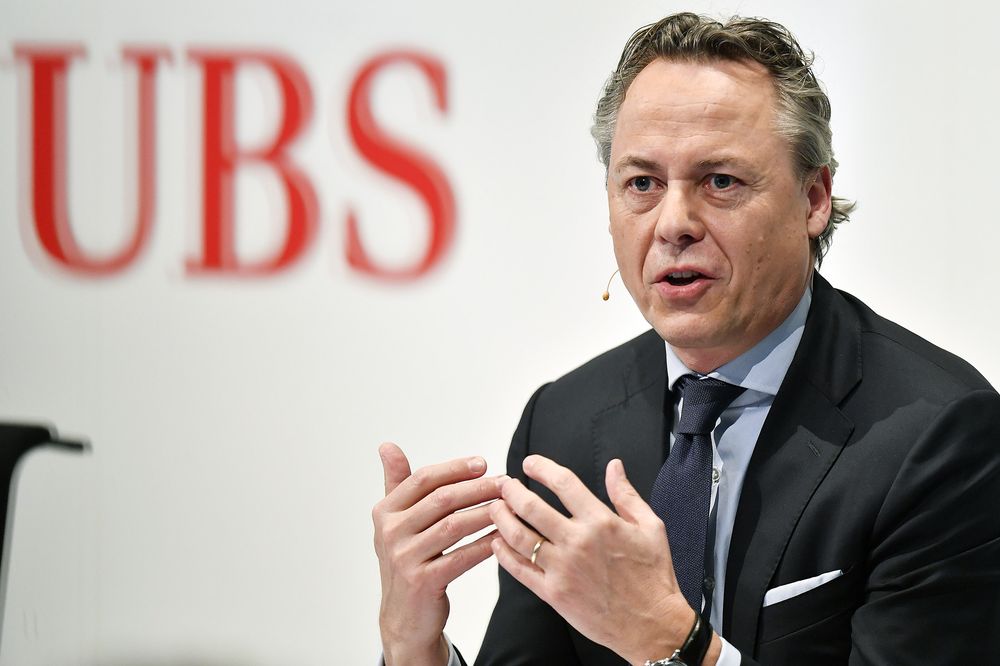
    The UBS boss has a long road to shaking off his past: he faces an 18-month journey before knowing if prosecutors will charge him in a Dutch money-laundering investigation.

    A Dutch criminal probe into whether Ralph Hamers and money laundering is ticking on after prosecutors agreed to comply with a surprising court ruling last month. Prosecutors were ordered to revisit a money-laundering scandal at ING that culminated in a 775 million euro ($939 million) settlement.

    We’re currently clarifying the organizational questions in relation to the court’s decision,» the Dutch prosecutor told HandelsblattThe German outlet reported that it may take prosecutors as long as 18 months to decide whether to press charges against Hamers or not, citing a person familiar with the investigation.

    The matter is potentially explosive for the Swiss lender, which hired him in full knowledge of the 2018 settlement – UBS had ordered an outside evaluation of Hamers while recruiting him, and the Dutch banker also passed Swiss fitness and probity checks by regulator Finma.

    What UBS didn’t know is that a Dutch activist, Pieter Lakeman, would successfully force the 2018 settlement to be reopened. This represents a major stumbling block for Hamers, who ran ING from 2013 until mid-2020, then joined UBS in September and took over fully three months ago.

    The Dutch prosecutor’s comments perfectly exemplify the logistics involved in reopening the investigation: Hamers has since moved to Switzerland and is widely expected to later this month unveil an outline of his plans to modernize and update UBS during his tenure.

    But he must also appear in-person in the Netherlands when prosecutors want to question him, seriously cutting into his chockfull calendar running the Swiss lender. The pandemic also complicates his life in a very practical way: Switzerland last week reimposed a mandatory ten-day quarantine on travels from the Netherlands (the Netherlands requires the same of all visitors from abroad).

  • Forgotten Passwords: $140 Billion Bitcoin Write-Off?

    Forgotten Passwords: $140 Billion Bitcoin Write-Off?

    Nearly $140 billion worth of Bitcoins is at risk of being permanently lost, according to online platform Chainalysis, due to forgotten passwords for decryption.

    3.7 million Bitcoins worth almost $140 billion could permanently vanish from the market, as of January 18 this year.

    Based on June 2020 figures, this represents around one-fifth of the total 18.6 million Bitcoins created in the market. Bitcoin’s infrastructure is designed to cap supply at 21 million.

    German-born San Francisco-based programmer Stefan Thomas first shined a light on the issue after he revealed that he failed to gain access to his crypto wallet to access over more than $200 million worth of Bitcoin.

    Thomas had already made eight successful attempts and he has two more remaining to save his sizeable Bitcoin holdings.

    I would just lay in bed and think about it. Then I would go to the computer with some new strategy, and it wouldn’t work, and I would be desperate again, he recalls. I got to a point where I said to myself, ‘Let it be in the past, just for your own mental health.

  • VPBank profits jump 26 pct

    VPBank profits jump 26 pct

    Lender VPBank reported a 26 percent jump in pre-tax profit last year to VND13 trillion ($564.24 million).

    The second and fourth quarters saw its highest ever quarterly profits of VND3.67 trillion and VND3.62 trillion.

    The lender’s profits exceeded those of state giant BIDV and private lender VIB.

    Its income was up 7.3 percent to VND39 trillion, with interest income accounting for nearly 83 percent.

    Services and securities trading were profitable, but foreign exchange trading caused a loss.

    Credit growth was 13.1 percent, and non-performing loans accounted for 2.9 percent.

    In 2019, VPBank had reported the sixth-largest pre-tax profit behind Vietcombank, Techcombank, Agribank, VietinBank, and BIDV.

  • Nomura Hires More Than 20 Private Bankers

    Nomura Hires More Than 20 Private Bankers

    Japanese bank Nomura aims to more than triple assets under management in its International Wealth Management business by March 2025, through an accelerated expansion of the client franchise and enhancement of the wealth management product and services platform.

    All these individuals have been hired in Hong Kong and Singapore following the integration of International Wealth Management into Nomura’s Wholesale business, and the appointment of Ravi Raju as Head of International Wealth Management in September 2020, the firm said in a media release on Tuesday.

    Our ability to attract top talent from the industry is an acknowledgment by the market that we are serious about our ambitions to build a leading wealth management business and are well-positioned as a platform of choice for aspiring relationship managers in the region. The initial focus of the recruitment drive has been to strengthen our presence across Greater China, Southeast Asia and the Global South Asia market,» he said. Some of the senior hires include:

    Client Coverage

    Wayne Yang has joined as Managing Director and Group Head, Greater China, from Baxian Private and Investment Bank, where he was CEO. He started his career more than 30 years ago and has held multiple senior-level positions at private banks including two stints spanning two decades at Citi’s private bank. He has also held leadership roles at the Asia Pacific private banking teams of Merrill Lynch and Deutsche Bank.

    Trevor Mak has been hired as Managing Director and Relationship Manager for Hong Kong. He joined from UOB Kay Hian where he was Managing Director, Private Wealth Management, since March 2020. Before that, he was a Managing Director at Citigroup’s private bank, covering Hong Kong HNW clients for over 12 years. He started his banking career with Standard Chartered in 1984 in Hong Kong, and has worked in private banking at UBS, Coutts, Standard Chartered and Julius Baer.

    Johnny Liu was appointed Managing Director focused on family office coverage for Greater China. He joined from Aldworth Management, a family office, where he was a partner. Before that he was Managing Director and Head of Global UHNW Advisors, Greater China, at UBS’s private bank. He has also worked at HSBC, Credit Suisse and Deutsche Bank in wealth management and investment banking roles.

    Kitty Chen joined as Managing Director and Team Lead for China. She moved after a short stint as Managing Director with Union Bancaire Privee in their Hong Kong office. Before that, she was an Executive Director at Credit Suisse’s private bank, where she spent eight years covering mainland China-based clients. She has also worked in the private banking divisions of Merrill Lynch, ING and HSBC.

    Adil Khan has been appointed Managing Director and Group Head, Southeast Asia, focusing on the NRI market in the Middle East and Southeast Asia as well as the Middle East market. He joined from Citi Private Bank where he was Managing Director and Team Head for the Global India business, and was responsible for the Middle East desk in Asia, working with bankers from the Middle East booking business into Asia. Prior to that, he was Middle East CEO for EFG Bank, based in Dubai.

    Brajesh Jha has been appointed Managing Director and Group Head, Southeast Asia. He joined from BNP Paribas Wealth Management where he was Managing Director and Head for Southeast Asia markets that included Thailand and Vietnam for three years. Prior to BNP, he spent over 10 years with UBS, both in wealth management and investment banking in multiple senior roles.

    Mohit Gupta has joined as Managing Director and Team Lead for Southeast Asia NRI from BNP Paribas Wealth Management where he was Managing Director and Team Head, Indian Markets, covering family offices and UHNW clients from Singapore. Prior to this, he was in various investment advisory roles with Credit Suisse and Standard Chartered for 12 years.

    Charly Madan has been appointed Managing Director and Team Lead, Southeast Asia, focusing on Thailand and Vietnam. He joined from BNP Paribas where he was also Managing Director and Team Leader responsible for UHNW clients in Thailand and Vietnam. He has over 30 years of experience in financial services and has held several senior roles in Thailand including Chairman of CNP REIT, CFO & CRO of Pruksa Real Estate, Country Executive, Thailand, and Asia Pacific Head of Capital and Portfolio Management at Royal Bank of Scotland, Head of Corporate Banking at Bank of Ayudhya and Country Officer at Citibank.

    Nini Rojanavanich has been appointed Executive Director and Relationship Manager, Southeast Asia, covering Thailand and Vietnam. She joined from BNP Paribas Wealth Management in Singapore where she was a Director in the UHNW client segment for Thailand. Prior to that, she was with Sumitomo Mitsui Banking Corporation in charge of its Financial Institutions Group in Thailand, and has held other leadership roles with institutions including Royal Bank of Scotland, Citibank, Bangkok Bank and ABN AMRO.

    Umesh Pandey has been appointed Executive Director and Relationship Manager, Southeast Asia, covering Thailand and Vietnam. He joined from BNP Paribas Wealth Management which he joined in October 2019. Prior to that, he was in the media industry, having spent 16 years over two stints at the Bangkok Post where his last role was as Editor-in-Chief. He has also worked as a Thailand correspondent for Reuters and The Wall Street Journal.

    Kripa Bathija has joined as Executive Director and Relationship Manager covering family offices and UHNW clients in Southeast Asia. She was at Bank of Singapore where she was a Director covering a similar demographic of clients for over seven years. She has also worked with Citibank across various geographies for seven years, with the majority of that time spent with the firm’s Singapore wealth management unit focused on the NRI business.

    Investment Products & Advisory Solutions

    Akshay Prasad has joined as Managing Director and Head of Investment Products & Advisory Solutions, Asia Pacific, from Deutsche Bank’s wealth unit where he worked for nearly 14 years. His last role there was as Managing Director and Head of Investment Advisory, Global South Asia, where he managed a sales team delivering cross-asset advisory and discretionary solutions for clients across Asia and Europe. He started his career with Citi’s wealth management unit.

    Sooraj Arur has joined as Executive Director and Head of Lending & Credit Solutions, Asia Pacific. He joined from Deutsche Bank where he was a Director in structured lending, originating financing deals, structuring credit solutions and negotiating bespoke loan documentation for Asia Pacific wealth management clients in markets including Singapore, Hong Kong, Indonesia, Thailand, India and the Middle East. Before Deutsche, he was a credit specialist at Citibank.

    Aditya Sehgal joined as Executive Director to help drive transformation and business development for Investment Products & Advisory Solutions. He came from Deutsche Bank Wealth Management, where he was a Director and cross-asset investment specialist. There, he provided bespoke multi-asset structured solutions for clients’ investment and hedging needs by partnering with coverage teams in Singapore, Hong Kong and Dubai. He worked at Deutsche for 11 years.

    Infrastructure and Platform

    Mohan Kuppuswamy joined as Executive Director and Head of Architecture & Technology, Asia Pacific, from HSBC where he was Program Head for Platform, implementing Avaloq for Singapore and Hong Kong. Prior to that, he worked for eight years in multiple roles at Deutsche Bank in Asia and Europe, and for over a decade at Citibank including at its private bank in treasury, operations and technology.

    TS Murali has been appointed Executive Director and Head of Front Office Risk and Supervision, Asia Pacific. He joins from Citi Private Bank where he was Business Unit Manager, South Asia, for seven years. In this role, he directly managed the sales support team, ensuring the business operated within applicable regulatory frameworks with appropriate operational and control infrastructure. He has worked at Citigroup and its affiliates since 1993 in various roles across business and operations.

  • HSBC’s Noel Quinn Apologizes to Self-Exiled Hong Konger

    HSBC’s Noel Quinn Apologizes to Self-Exiled Hong Konger

    Self-exiled lawmaker Ted Hui publicly shared and criticized HSBC CEO Noel Quinn’s apology over frozen accounts which claimed that the bank was done on orders by the Hong Kong police.

    I regret that HSBC is not able to operate your bank and credit card accounts, said Quinn in an email dated January 11 and sent to Hui who has shared an image on his Facebook account.

    Quinn explained that the bank had no choice but to take action after being instructed by the Hong Kong police, Hui said, and he also apologized over communications with HSBC.

    The ex-Democratic Party member and his family’s accounts were allegedly frozen by HSBC alongside Hang Seng Bank and Bank of China after police said they were probing for a money laundering linked to a crowdfunding campaign.

    According to Hui, there is no legal basis for freezing his nor his family’s accounts, underlining a specific concern that he had not received questions regarding any suspicious transactions prior to the move.

    Hui has since said his family accounts were unfrozen and his personal accounts were partially released. He also noted that HK$200,000 ($25,800) had been frozen, less than the initial HK$850,000 ($110,000) claimed by local police.

    HSBC said it would not comment on specific accounts and maintains its stance that it must comply with the jurisdictions in which it operates.

    Hui also said that the bank had initially chosen to cancel his account before changing its decision to just freezing it.

    I can hardly accept the nearly laughable U-turn explanation given by HSBC regarding my credit cards, from ‘a commercial decision to cancel’ to ‘frozen only’ after enormous public criticisms, he said. This is not so much a mistake made by a frontline staff member.