Category: Finance

Retail News Asia is committed to providing both local and global retailers with the latest Finance news throughout the Asian market. This on a daily base.

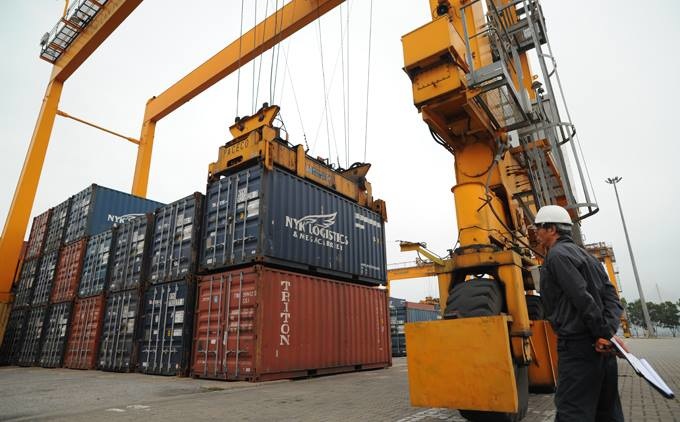
  • Indonesia’s November Trade Deficit Widest Since July 2013

    Indonesia’s November Trade Deficit Widest Since July 2013

    Indonesia posted its widest monthly trade deficit in over five years in November as exports, especially that of palm oil and pulp, slumped, data from the statistics bureau showed on Monday. The deficit in November was $2.05 billion, compared with October’s revised deficit of $1.77 billion and the biggest trade gap since July 2013, according to Refinitiv data. A Reuters poll had expected a deficit of $830 million.

    The rupiah weakened slightly after the trade data to 14,620 a dollar at 12.45 p.m. from 14,600 before the announcement.

    Exports surprisingly fell 3.28 percent in November from a year earlier to $14.83 billion, the worst monthly performance since June 2017. The poll’s median was for a 3.95 percent increase for exports.

    A decline in overseas sales of a range of products, such as palm oil, jewelry, pulp and paper, and crude oil, was the main reason for the drop, Central Statistics Agency (BPS) head Suhariyanto said at a news conference.

    Export revenues from vegetable oils, including palm and coconut oil, fell nearly 19 percent in November from a year earlier due to weak prices, he said.

    November imports stood at $16.88 billion, up 11.68 percent from a year earlier, topping the poll’s 10.50 percent estimate, but down from the nearly 24 percent growth in October.

    Southeast Asia’s largest economy has been struggling to contain imports in recent months. Some measures, including higher tariffs, have been imposed to curb imports.

    Authorities have also sped up negotiations for free trade deals to gain better access for exports, in a bid to reduce the trade gap and support the rupiah.

    Bank Indonesia has also hiked interest rates six times since May to try to attract portfolio investment needed to fund the widening current-account deficit.

    Fakhrul Fulvian, an economist at Trimegah Sekuritas, said the worse-than-expected trade deficit would “lower the expectation of improving current-account balance” in the fourth quarter. But he argued that the central bank would not have to raise rates again because it already did in November.

    Maybank Indonesia economist Myrdal Gunarto agreed.

    “The movement of the exchange rate in domestic market remains manageable and the trade deficit was supported by returning foreign inflows,” Gunarto said. “With that, we project Bank Indonesia will still maintain its policy interest rate at the current level.”

  • Malaysia’s CIMB to gain RM200m from stockbroking business transfer

    Malaysia’s CIMB to gain RM200m from stockbroking business transfer

    CIMB Group Holdings Bhd is expected to record a gain of disposal of approximately RM200 million from the process of transferring the group’s stockbroking business to its joint venture company with China Galaxy Securities Co Ltd.

    This comes after taking into account the premium on the disposal of approximately RM433 million and goodwill attributable to the business.

    CIMB said the consideration in connection with the proposed business transfer will be satisfied in cash and it was determined based on the future prospects and net asset value of the in-scope business as at Dec 31, 2015, which amounted to RM565.6 million.

    The consideration is subject to closing audit adjustments, if any.

    Jupiter Securities, the subsidiary of China Galaxy Securities Co Ltd (CGS)-CIMB Holdings Sdn Bhd, which is the Malaysian joint venture entity, will operate the stockbroking business.

    CIMB said in a stock exchange filing that its wholly owned subsidiary CIMB Group Sdn Bhd (CIMBG), China Galaxy’s wholly owned unit China Galaxy International Financial Holdings Ltd (CGI), and CGS-CIMB Holdings Sdn Bhd has inked a share subscription agreement for the subscription of new shares in CGS-CIMB Holdings Sdn Bhd.

    The proposed business transfer entails the sale of CIMB Investment Bank Bhd’s cash equities business and 100% equity interest in CIMB Futures Sdn Bhd as well as CIMB Bank Bhd’s equity financing services business and share margin financing granted in connection with the cash equities to Jupiter Securities.

    After the completion of the exercise, CIMBG and CGI will hold 50% stake each in the Malaysian JV entity.

    The exercises are expected to be completed in the first half of 2019.

  • World Bank cuts Malaysia’s 2018 GDP growth forecast again

    World Bank cuts Malaysia’s 2018 GDP growth forecast again

    The World Bank has again revised downward its projection for Malaysia’s 2018 gross domestic product (GDP) growth to 4.7% from 4.9% after taking into account factors such the rigorous rationalisation of expenditure by the government and slowdown in private and public investment. It last cut the country’s GDP growth forecast in October, to 4.9% from 5.4%.

    Malaysia’s third quarter GDP growth moderated to 4.4%, bringing about a nine-month expansion of 4.7%.

    Despite a moderation in growth, the World Bank believes that the Malaysian economy remains resilient and continues to be anchored by private consumption, although it has been cooling down after the reintroduction of the sales and service tax.

    The key drivers for private consumption are stable labour market conditions, cost of living aid and tax refunds payment.

    Private investment in the manufacturing and commodity sectors are also expected to be sustained.

    Speaking at the launch of the World Bank’s Malaysia Economic Monitor on Realising Human Potential Report, World Bank Group economist Shakira Teh Sharifuddin said Malaysia’s economic growth is projected to remain flat at 4.7% in 2019, with external factors such as current trade tensions and increased volatility in the financial and commodity markets expected to weigh on the overall economy.

    In addition to the escalating trade tensions, monetary normalisation in advanced economies, high dependency on oil revenue and high level of public debt are seen as potential risk for the government.

    The percentage of the federal government’s revenue to GDP has seen a steep decline between 2012 and 2018, falling from 21.4% to 16.2%. In 2019, the share of revenue to GDP is expected to be reduced further to 15.1%.

    This, Shakira said, leaves the government with limited space to respond to economic shocks.

    In the near term, the government is expected to rigorously embark on fiscal consolidation measures with expenditure expected to decline to 18.1% of GDP from the 2018 estimate of 20.3%.

    Shakira said that while the introduction of new taxes in the budget is welcomed, the government should relook the incentive mechanisms.

    On another note, the World Bank stressed on the need for Malaysia to accelerate the development of its human capital if it wishes to join the ranks of a high-income nation.

    While Malaysia, which ranked 55th out of 157 countries in the Human Capital Index, fared well in some areas, there is room for improvement in certain areas, noted the report.

    It also states the prevalence of stunting among Malaysian children which affect more than one in five Malaysian children, a key indicator of malnutrition. In the absence of renewed efforts to develop human capital, a child born today in Malaysia will only reach a productivity level of 62%.

    In terms of education, the 12.2 years spent by Malaysians in school only equates to the 9.1 years learning outcome of school goers in the highest performing system.

  • November inflation seen easing to 0.5%

    November inflation seen easing to 0.5%

    Malaysia’s consumer price index (CPI) is expected to rise 0.5% in November from a year earlier, a Reuters poll showed, marginally slower than the previous month amid lower transport prices. Inflation has been mild since the government removed an unpopular consumption tax in June and reinstated a narrower sales and services tax (SST) three months later.

    The annual inflation rate was 0.6% in October. It has been rising after hitting a three-and-a-half year low of 0.2% in August.

    Economists expect any pickup in inflation due to the reintroduction of SST to be muted, softened further by the government’s decision to fix pump prices for premium RON95 petrol for the rest of the year.

    Last month, Malaysia’s central bank said inflation had been largely benign in the third quarter, but was expected to edge upwards the rest of the year and into 2019.

  • Google Korea office raided by tax agency

    Google Korea office raided by tax agency

    The National Tax Service (NTS) launched an investigation into Google Korea on Wednesday, sending an official to secure accounting documents at the company’s office in Gangnam District, southern Seoul. The investigation is thought to be into YouTubers suspected of avoiding taxes, as NTS Commissioner Han Sung-hee previously promised during the National Assembly’s annual questioning session in October to take measures to “prevent tax evasion” by well-paid YouTubers.

    Commissioner Han revealed that the NTS had advised 513 YouTubers to pay income taxes in the past, and was open to launching investigations into those who have not declared taxes.

    The raid comes just a day after global IT giants like Google and Amazon were ordered to start paying 10 percent value-added tax (VAT) in Korea from next July.

    The National Assembly passed a bill to revise the country’s Value-Added Tax Act in a move to impose VAT on foreign IT firms, the Assembly announced Tuesday. Specifically, the revision means IT firms will have to pay 10 percent in taxes for revenue made from business-to-consumer services, which include online advertisements and cloud computing services.

    Also subject to VAT will be revenue made from online-to-offline services like hotel booking platforms that market online to raise sales in physical stores, as well as sharing economy services, which are spearheaded by companies like Airbnb. The revision will go into effect from July 1 next year.

    “We will continue discussing the issue of taxing business-to-business transactions between Korean and overseas firms, which could not be agreed on in this revision,” said Rep. Park Sun-sook of the minor opposition Bareunmirae Party, who submitted the bill for the revision.

    Like in other countries, the issue of taxing global IT giants has been the subject of fierce debate in Korea. Politicians have long raised concerns over how little IT giants like Google are being taxed in Korea, while domestic IT firms have bemoaned how the “reverse discrimination” was allowing overseas competitors to thrive at the expense of domestic companies.

    Google Korea is estimated to have paid less than 20 billion won ($17.7 million) in corporate taxes in 2016, when it raised nearly 5 trillion won in revenue in Korea in the same year through the Google Play store and YouTube advertisements. In 2017, however, Naver, which earned slightly less at around 4.67 trillion won, paid a total of 423 billion won in taxes, or 20 times more than Google.

    Strengthening regulations on corporate taxes will be much more difficult to achieve than changing VAT rules, however.

    Current international agreements like the OECD Model Tax Convention and tax treaties protect enterprises from paying income tax to foreign countries if they do not have permanent establishments in those countries. Though the definition of permanent establishments is often questioned, by current standards, Korea is not home to permanent establishments of any of the major IT firms – they mostly operate small affiliates here and conduct most of their business online from headquarters in the United States and other countries.

    These global IT firms only need to fulfill the corporate tax requirements for revenues made by their Korean subsidiaries, which is not much.

  • South Korea’s Kookmin Bank licensed to open Vietnam branch

    South Korea’s Kookmin Bank licensed to open Vietnam branch

    The State Bank of Vietnam has licensed South Korea’s Kookmin Bank to open a branch in Hanoi, the government said on Tuesday. The branch has a chartered capital of $35 million and the contract runs for 99 years, the government said in a statement.

    South Korea is the largest source of foreign direct investment in Vietnam and the Southeast Asian country’s second largest trading partner.

  • Vietnamese currency falls to new low, could go lower

    Vietnamese currency falls to new low, could go lower

    The official exchange rate between Vietnamese dong and U.S. dollar reached its highest this year Wednesday, and  experts said the dong could depreciate further. The State Bank of Vietnam set a central exchange rate of VND22,757 on Wednesday, the sixth time the rate has gone up in the last two weeks.

    The dong has fallen by VND352, or 1.57 percent, against the greenback since the beginning of the year.

    The dollar’s value increased at commercial banks. At 3p.m. Wednesday, Vietcombank sold the dollar for VND23,350, VND15 higher than Tuesday.

    Vietinbank also sold its dollar for VND23,350, VND17 higher than Tuesday, while BIDV sold it at VND23,355, VND25 higher.

    The dollar also inched up on the free market. At 11.30 a.m. Wednesday, it was selling for VND23,360-23,410, VND10-20 higher than on Tuesday.

    Economist Nguyen Tri Hieu said that the reason for the hike was high demand for dollars toward the end of the year as businesses often import large amounts of materials needed for manufacturing.

    The ongoing U.S.-China trade war continues to exert exchange rate pressures, despite the U.S. announcing a 90-day halt on additional tariffs on Chinese goods starting next year, as there is no certainty that tensions will decline, he said.

    “There is a high possibility that the dong’s value will continue to fall this year,” Hieu said.

    Hieu said that the government should also devaluate the dong against the Chinese yuan so that the trade deficit between Vietnam and China can be reduced.

    Vietnam relies heavily on China for materials and equipment for its labor-intensive manufacturing sector.

    As the yuan’s value has fallen by 9 percent to the dollar since the beginning of this year, some experts have said that the dong should be devaluated even more to avoid impacts a cheaper yuan. Cheap made-in-China goods could be imported in large quantities to Vietnam and compete with domestic products, they said.

    But economist Tran Dinh Thien said that the dong should be kept at a balanced rate between the U.S. dollar and the Chinese yuan. A 2-3 percent band a year is acceptable, he added.

    A stronger dollar will benefit exporters, but will also create stronger pressure on inflation and interest rates which will increase business costs in a country with high imports and public debt, Thien said at a recent conference.

    He added that the fluctuation of the dong should be controlled to help local companies conduct their business with greater certainty.

    The government doesn’t want businesses to suffer shocks, he said.

    Prime Minister Nguyen Xuan Phuc had said in August that the devaluation of the dong needs to be kept within a 2-percent band this year compared with the end of last year.

  • Indonesia’s November Inflation Rate Surprisingly Picks Up

    Indonesia’s November Inflation Rate Surprisingly Picks Up

    Indonesia’s annual inflation rate accelerated for a second straight month in November, the statistics office said on Monday, against an expectation for price pressures to ease. The consumer price index rose 3.23 percent in November from a year earlier, Central Statistics Agency (BPS) chief Suhariyanto said, attributing the increase to rising prices of some food products and airfares. On a monthly basis, it rose 0.27 percent.

    October’s rate was 3.16 percent, while a Reuters poll had expected a November annual inflation rate of 3.15 percent.

    The November rate was still well within the central bank’s target range of 2.5 percent to 4.5 percent for 2018.

    The annual core inflation rate, which excludes government-controlled and volatile prices, also picked up more than expected in November to 3.03 percent, from 2.94 percent in October. The poll had expected a core inflation rate of 2.97 percent.

    Bank Indonesia has hiked interest rates six times this year by a total of 175 basis points since May to support the rupiah, despite benign inflation. The currency plumbed levels not seen since 1998 earlier this year but has sharply strengthened last month due to improving global investor sentiment.

  • Vietnam eyes $10,000 per capita income by 2035

    Vietnam eyes $10,000 per capita income by 2035

    Vietnam has set target of increasing GDP per capita to $6,500 in 2030, and $10,000, or four times the current value, in 2035. The GDP in those years would then be $670 billion and $1.05 trillion, according to an economic policy framework for the period up to 2035 recently issued by the Ministry of Planning and Investment. This will make Vietnam an upper middle-income country.

    Vietnam has also targeted to reduce its poverty rate to 1 percent and increasing the middle-class rate to 50 percent by 2035.

    The middle and affluent class now is categorized as those earning $714 a month or more, according to the Boston Consulting Group.

    According to the document, encouraging the continued development of the private sector and developing human resources and innovations taking advantage of the Fourth Industrial Revolution would be two of the driving forces for economic growth.

    The country hopes to have two million private businesses that contribute 50 percent of its GDP by 2020 and 60-65 percent by 2030.

    The reforms to achieve these goals will focus on modernizing the economy and developing the private sector, building innovation capacity, improving economic efficiency of urbanization, and building modern institutions and efficient governance.

    Vietnam also aims to ensure its development is environmentally sustainable and equitable, promote social inclusion and enhance its adaptability to climate change.

    Minister of Planning and Investment Nguyen Chi Dung said strong reforms are needed to continue developing and not fall behind the times.

    Speaking to Vietnam’s development partners at a forum on reform and development Wednesday, Prime Minister Nguyen Xuan Phuc said: “We have the aspiration to become a prosperous economy, but we are fully aware that the road will be uneven with many challenges. Those are the challenges from both within the economy and the impacts caused by fluctuations in the global economy.”

    To address these issues he pledged his government would soon speed up administrative reform and establish an economic system that enables all economic entities to have the right to participate in making development plans and policies.

    “Vietnam will focus on building its soft and digital infrastructure to convert the economy into a digital one, reform its recruitment mechanism and focus on training human resources to make use of the fourth industrial revolution as a driving force for growth.”

    According to World Bank Group statistics, Vietnam’s GDP per capita in 2017 is $2,343. The figure for Singapore is $57,714, Malaysia ($9,945), Thailand ($6,594), the Philippines ($2,989) and Myanmar ($1,298).

    Minister Dung estimated that Vietnam’s GDP would grow by 6.57 percent on average in the 2016-2018 period, meeting the National’s Assembly target of 6.5-6.7 percent growth.

    In the first nine months this year, Vietnam’s GDP grew by 6.98 percent, the highest nine-month growth rate since 2011. The economy grew by 6.81 percent last year, the highest rate in a decade.

  • Vietnam solar power investment rush poses an overload risk

    Vietnam solar power investment rush poses an overload risk

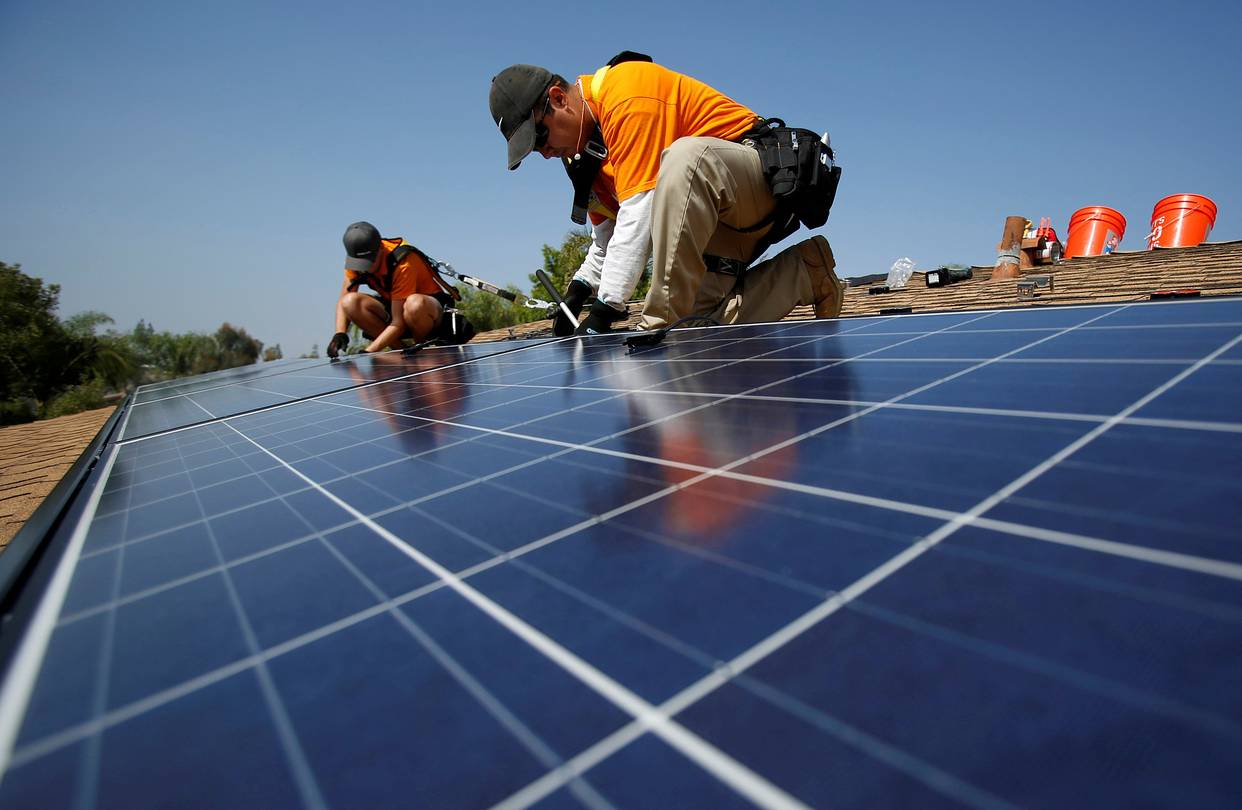
    The investment rush in solar energy could end up testing Vietnam’s weak power infrastructure, experts say. They say that both transmission capacity and the ability of grids to absorb the energy produced by new projects are suspect, as of now. The 9.35 U.S. cents per kWh Feed in Tariff (FIT) for solar power in Vietnam has sparked an investment rush.

    The latest project to be completed is the 49MW Krong Pa plant in the Central Highlands province of Gia Lai. It began operations last week.

    The investor, TTC Group, a corporation that invests in real estate, energy and education projects, has 19 other solar power projects underway.

    Other corporations have also been rolling out ambitious plans. The Xuan Cau Group plans to invest in a 2,000MW solar power project in southern Tay Ninh Province, while the Xuan Thien Corporation plans a 3,000MW project in the Central Highlands province of Dak Lak.

    September statistics from the Ministry of Industry and Trade show that 121 solar power projects been approved, which are expected to add 6,100 MW of output by 2020 and another 7,200 MW by 2030.

    Of these, 25 have signed power purchase agreements with Vietnam’s biggest power producer and sole distributor, Vietnam Electricity (EVN).

    In addition, another 221 projects await authorization, with a combined 13,000 MW of potential output.

    At this rate, the combined solar power output would accounts for 60 percent of Vietnam’s total output from all power sources kinds of power. It also far exceeds the country’s plan for solar energy output of 850MW by 2020, and 4,000 MW in the 4 following years.

    “There is an investment boom in solar power projects, but this is not good,” said Toby Couture, an expert of the German Corporation for International Cooperation (GIZ).

    He said authorities should come up with a balanced forecasting framework, rather than letting the market overheat.

    On top of the race to get projects completed before June 30, 2019 to enjoy the preferential FIT, the explosion of investment in solar power is also raising concerns over overloading of the power grid once the projects become operational.

    According to Vu Ngoc Duc of the Energy Institute under the Ministry of Industry and Trade, the fact that most projects are concentrated in central provinces of Ninh Thuan and Binh Thuan, and Dak Lak carries the risk of overloading the current power grid.

    Power plants cannot be plugged in without considering the capacity of each power transmission line, he said.

    Dinh Quang Tri, acting general director of EVN, admitted that 9.5 cents a kWh was still cheaper than electricity from oil, but the main problems the utility faces are infrastructural.

    Central Vietnam has relatively weak electricity infrastructure because of low consumption, but it is where the new renewable energy projects will be concentrated, he said.

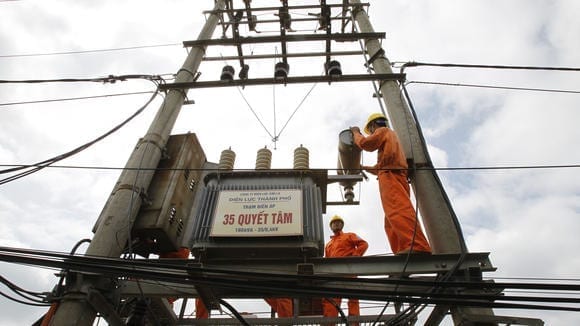
    “The lines cannot take thousands of megawatts at the same time,” said Tri, adding that EVN had petitioned the government to plan and approve additional transmission lines.

    However, the procedures for planning, land clearance and construction will take a long time, so the existing grid will not be able to keep up with capacity of new solar plants.

    “This is a huge challenge. If we don’t purchase electricity from these solar plants, there will be a shortage. But if these projects are completed too quickly, the grid will not be able to load it all,” Tri said.

    He said that to avoid overloading the transmission grid, the Government should promote household solar panels, suitable for the low voltage grid, so that no additional investment into the transmission grid is required.

    Deputy Minister of Industry and Trade Dang Hoang An said that the ministry was directing the re-planning of local and national power development. It is assigning grid development units the task of resolving infrastructural bottlenecks to support approved solar power projects, he added.

    Solar power currently accounts for just 0.01 percent of the country’s total power output, but the government plans to increase the ratio to 3.3 percent by 2030 and 20 percent by 2050.

  • Visa Thailand to strengthen security in payment

    Visa Thailand to strengthen security in payment

    Visa, the world’s leader in digital payments, has today launched its Future of Security Roadmap for Thailand, outlining a robust approach for strengthening payments security in the country over the next 3 years. Visa’s Roadmap focuses on a number of key initiatives which will enable security to evolve at the same pace as the technologies changing the way we pay. These security initiatives include:

    • Devalue data by removing the sensitive data from the ecosystem and making stolen account details useless.
    • Protect data by implementing safeguards to protect personal data as well as account details.
    • Harness data by identifying potential fraud before it occurs and increase confidence in approving good transactions.
    • Empower everyone, including accountholders, 3rd party providers and merchants, to play an active role in securing payments.

    Suripong Tantiyanon, Country Manager, Visa Thailand said: “We are proud to be launching our Thailand Future of Security Roadmap. Securing the commerce ecosystem is our highest priority and one we view as a shared responsibility between payment networks, consumers, banks, and the government. Technology has enabled new innovative ways to pay and be paid, but it has also brought unique risks. To stay ahead of fraud, we need to work together and give security the same attention and investment as we do the innovations driving new commerce experiences.”

    The release of Visa’s Roadmap comes at a time of rapid change for payments in Thailand with innovations such as mobile payments set to enhance the payment experience for consumers. According to Visa’s Consumer Payment Attitudes Study, security remains a key consideration for consumers across Southeast Asia with two-thirds (67 percent) concerned about the safety of their personal information when using their mobile phone to make payments.

    When asked specifically about what their top three concerns were when using their mobile phones to make payments, consumers in Thailand said losing my phone or having my phone stolen, my phone getting hacked or someone intercepting my data, and malware or viruses being installed on my phone.

    Visa works with industry stakeholders including financial institutions, merchants, policy makers, law enforcement and accountholders to secure payments. The Visa Future of Security Roadmap is the product of comprehensive consultations and collaboration, making it an authoritative document on Thailand payments security.

    Visa is delivering roadmaps around the world to ensure the security of the global commerce ecosystem, as well as working with Thai industry bodies to align security initiatives.


  • Vietnam’s wind power tariffs attractive, but concern rises

    Vietnam’s wind power tariffs attractive, but concern rises

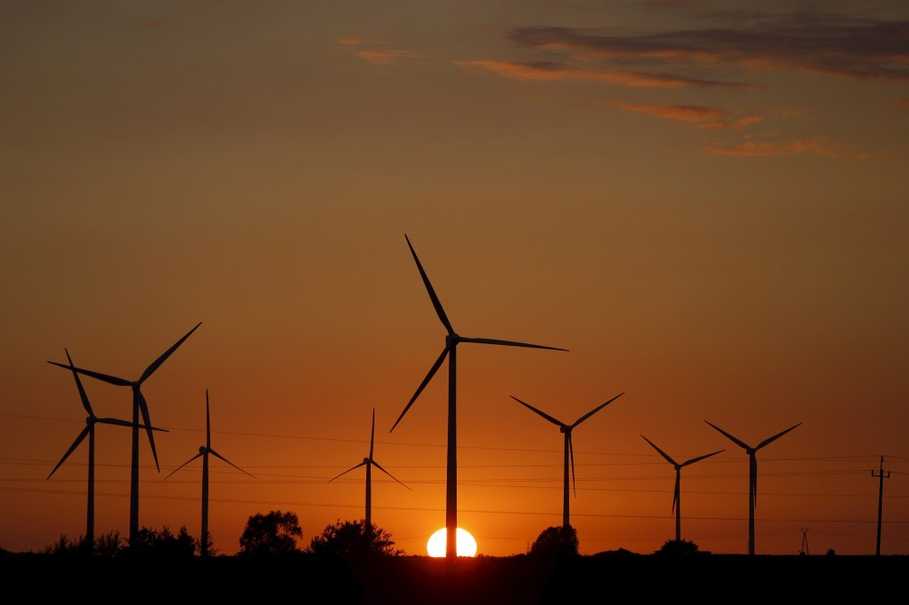
    Vietnam’s new feed-in tariffs are attracting great interest in wind power, but investors are concerned about grid connection and purchase agreements. The new feed-in tariffs (FIT) are expected to be attractive to domestic and foreign investors, Tommaso Rovatti Studihard, South East Asia sales director for wind power developer Vestas Asia Pacific said.

    The government recently approved tariff revisions under Decision 39 on support mechanisms for the development of wind power.

    The decision, effective from November 1 this year, raises the tariffs from 7.8 US cents per kWh to 8.5 US cents for onshore and 9.8 US cents for offshore generation respectively.

    “Electricity demand will grow at an estimated 8 – 10 percent a year from now to 2030. This represents realistic opportunities for investors,” Studihard said.

    Conjecturing that the national plan envisages adding 1,000 MW of wind power by 2020 and 6,000 MW by 2030, he said the targets are achievable.

    “Vestas is excited about the Vietnamese market, probably this is the most promising market in the Asian region with very good wind resources,” he said.

    Vestas has so far put three wind power projects into operation in Vietnam and plans to have another project come online by 2019 and “do a lot more in the future.”

    Studihard noted that over the next three to five years there are huge opportunities in Vietnam to have some gigawatts of wind power, but the bankability of the power purchase agreement (PPA) remains an issue with many investors, especially international investors, and banks finding it a little difficult to be comfortable with.

    There are no clear termination and force majeure clauses in the PPA, which hinders the attraction of foreign investment, especially from banks and credit institutions, he explained.

    “One more problem is Vietnam’s weak grid capacity, which would become a bottleneck for developing wind and other renewables. The grid needs to be upgraded to tap the great potential Vietnam has for offerable, sustainable and reliable wind power.”

    Bui Van Thinh, CEO of the Thuan Binh Wind Power JSC (TBW), said having gained success in developing the 24MW Phu Lac wind power project in the central province of Binh Thuan, TBW is completing procedures to start construction of a 30MW wind power project in neighboring Ninh Thuan Province.

    But the weak grid capacity is the biggest challenge to expanding renewables like wind and solar power, he said.

    The transmission line near Phu Lac site could handle 100MW, compatible with two 50MW wind power projects.

    Overload capacity is imminent once a solar power project connects with the transmission line, Thinh noted, citing the concerning fact that there are eight solar power projects in the locality approved to connect with the grid.

    “The government should instruct the state-run Electricity of Vietnam (EVN) to install transmission lines to cope with the renewable power projects across the country, especially those in Ninh Thuan and Binh Thuan.”

    Ninh Thuan and Binh Thuan are central provinces that have the greatest potential for renewable energy in the country.

    While 2,000 MW of solar power are proposed to be generated in Ninh Thuan, the local transmission line can only handle a few hundred megawatts. Thus, 110 kV or 220 kV transmission lines need to be installed before pushing the power to the 500kV transmission line and sending it to Ho Chi Minh City or Danang City, Thinh added.

    Nguyen Van Thanh, deputy head of the Ministry of Industry and Trade’s Electricity and Renewable Energy Authority, said demand for energy, wind power in particular, has been growing rapidly.

    The need for ensuring energy security but also sustainable development has changed Vietnam from an energy seller to buyer, with the country’s dependence on imported energy sources also rising, he said.

    Vietnam also faces a shortage of primary energy, with coal imports posing many risks related to supply, price and transportation, he noted.

    “Given that, efficient exploitation of new and renewable sources would play a key role in the country’s socio-economic development, energy security and sustainable development.

    “The country is working diligently to draft policies for the efficient and economical use of energy, diversification of energy sources and increasing application of new and eco-friendly technologies,” Thanh added.

    Under the revised Power Development Plan VII, power stations in the country are expected to generate a total of 60,000 MW by 2020. Of these, coal-fired stations would make the largest proportion of 42.7 percent, followed by hydropower (30.1 percent), gas-fired plants (14.9 percent) and renewable energy sources (9.9 percent).

    By 2030, the total capacity would soar to 129,500 MW, with coal and gas-fired plants accounting for 42.6 percent and 14.7 percent respectively, similar to the figures set for 2020. But the ratio of renewable energy sources is set to double to 21 percent by then.

  • Cashless services explode in Vietnam

    Cashless services explode in Vietnam

    Vietnam’s central bank says the value of cashless transactions more than doubled over the first three quarters of 2018. The Department of Payments at the State Bank of Vietnam reported a strong rise in payments over electronic channels between January and September, compared to the same period last year. Accordingly, the value of online payments rose by 18.3 percent, while transactions over mobile apps and e-wallets rose by 126 percent and 161 percent respectively.

    The number of transactions over Internet, mobile and e-wallet channels also rose 33 percent, 30 percent and 28 percent respectively.

    “Mobile payment is becoming a new trend with the rise of technologies such as QR codes, contact and contactless payments, and the tokenization of card information,” said Nghiem Thanh Son, deputy director of the department.

    The first months of 2018 saw the number of users and the value of transactions through electronic channels such as online, mobile and e-wallets rocket at many banks.

    At Sacombank, statistics show that as of October, the number of registrations for online banking reached over 1.3 million accounts and for mobile banking 1.1 million accounts. The total value of transactions per month through both channels exceeded VND108 trillion ($4.63 billion).

    For VietinBank, the country’s second largest lender by assets, the number of internet banking users in the first half of this year surged 114 percent over the same period last year to a total of 1.5 million accounts and VND44.26 trillion ($1.90 billion) in total transaction value.

    Its mobile banking users also reached 1.5 million, engaging in transactions totalling VND64.35 trillion ($2.76 billion) between January and June.

    Over 7 million people are using digital services provided by MBBank. The average transaction value per month reached VND27.4 trillion ($1.17 billion), with digital transactions making up approximately 2.6 million out of 3 million total monthly transactions seen at this bank.

    Nguyen Hoang Minh, deputy director of the State Bank’s HCMC branch, noted that the number of online banking customers has seen average annual increase of 20 percent in recent years.

    Minh said that in order to continue developing non-cash payment channels, credit institutions should pay attention to linking their cashless systems with the public sector, specifically in areas like health, education, payroll and utilities.

    Cashless services should also expand to include online payment options for public services like buses, trains and other smart urban solutions, he said.

  • Vietnam must avoid power cuts next year: PM

    Vietnam must avoid power cuts next year: PM

    Prime Minister Vietnam Nguyen Xuan Phuc has ordered agencies to ensure that the country won’t suffer power shortages in 2019. The Prime Minister has communicated this to relevant agencies several times, Mai Tien Dung, Minister and Chairman of the Government Office, said at the government’s regular press conference on Monday.

    The communiqués have instructed the agencies to ensure that there’s no electricity shortage for both industrial and domestic uses, emphasizing they would be held responsible for failures, Dung said.

    The PM has also tasked relevant agencies with definitively resolving the ongoing issue of coal shortage for thermal power plants, which Vietnam Electricity (EVN) has warned could lead to power cuts early next year.

    The national power utility said in a recent report to Deputy Prime Minister Trinh Dinh Dung that the country will need over 54 million tons of coal for electricity production next year, of which 43.4 million tons will come from domestic production and 10.68 million tons will be imported.

    But the country’s only two suppliers, Vietnam National Coal-Mineral Industries Corporation (Vinacomin) and the North-Eastern Company (NECO) under the Ministry of Defense, will only be able to produce 37.21 million tons of coal next year, 6.19 million tons lower than estimated demand, EVN said.

    Speaking at the press conference, Deputy Minister of Industry and Trade Do Thang Hai said a total of four different electricity supply plans have been drafted, all of which designed to ensure there would be no power shortages next year.

    However, in certain cases, Vietnam would still need to produce 2-7 billion kWh of electricity from expensive oil-powered generators.

    “If we want to have enough electricity then we must increase the production of electricity by oil, which would be more expensive,” he said, asking consumers to make plans to save electricity.

    Regarding the issue of coal shortage, Hai asserted that Vinacomin and NECO have both supplied enough coal for thermal power plants as committed.

    “The two major coal suppliers have tried their best. If coal from domestic sources is not enough to supply [thermal power plants] then we will import more,” he said.

    The deputy minister also said a scenario for regulating electricity prices next year would be reported to the government later this month.

    “The electricity price for next year is being carefully considered and the scenario is being built in accordance with regulations, including factoring in the effect on inflation,” he said.

    Vietnam currently relies largely on hydropower and thermal power plants for its electricity needs. However, its hydropower potential is almost fully exploited and its oil and gas reserves are running low.

    Thermal energy is expected to account for over 48 percent of the country’s power production next year.

    Vietnam, one of Asia’s fastest-growing economies, has been struggling to develop its energy industry, and its heavy reliance on non renewable sources could prove problematic in the future, experts say.

    World Bank country director for Vietnam Ousmane Dione said at a recent forum that Vietnam will need to raise up $150 billion by 2030 to develop its energy sector; that electricity demand in the country will grow by about 8 percent a year for the next decade.

  • Maybank sees marginally lower net profit for Q3

    Maybank sees marginally lower net profit for Q3

    Malayan Banking Bhd posted marginally lower net profit for the third quarter ended Sept 30, 2018 of RM1.96 billion, compared with RM2.03 billion in the corresponding quarter in 2017, on lower net operating income, higher allowances for impairment losses on loans, advances, financing and other debts and lower share of profits in associates and joint ventures .

    For the quarter under review, the group registered a net operating income of RM5.69 billion, compared with RM5.89 billion a year earlier, impacted by a dip in fee based income owing mainly to lower investment and trading proceeds as well as foreign exchange fluctuations. Notwithstanding this, operating profit for the third quarter ended Sept 30, 2018 was higher at RM2.61 billion from RM2.60 billion a year, as the group benefited from lower overhead expenses which declined 6.2% from a year earlier, as well as lower impairment losses which fell 5.5%.

    Maybank group said its key priorities for 2018 include maintaining pricing discipline across our products, focus on attaining cheaper funding sources to support loan growth, growing our loan portfolio within our risk appetite, while proactively managing our asset quality.

    The group has implemented MFRS 9 on Jan 1, 2018, of which the impairment assessment is based on the expected credit loss model that uses forward looking assumptions as opposed to an incurred loss model under the previous accounting standard. The group’s capital and liquidity positions remain strong notwithstanding the implementation of MFRS 9.

    Barring any unforeseen circumstances, the group expects its financial performance for 2018 to be satisfactory against the expected growth prospects of its key home markets. The group has set its Headline Key Performance Indicator for Return on Equity of 11%.

    Net profit for the nine month period ended Sept 30, 2018, was 7.39% higher at RM5.79 billion, compared with RM5.39 billion for the period in 2017.

    This was on 3.82% higher revenue of RM35.09 billion, compared with RM33.79 billion.