Category: Finance

Retail News Asia is committed to providing both local and global retailers with the latest Finance news throughout the Asian market. This on a daily base.

  • Raiffeisen Unveils Exciting Strategy Extension: A New Chapter for Growth!

    Raiffeisen Unveils Exciting Strategy Extension: A New Chapter for Growth!

    Raiffeisen Delays New Strategy: Aiming for Cohesion at the Top

    Raiffeisen has announced a significant shift in its strategic planning timeline, opting to unveil a new group strategy at the end of 2026 instead of the previously anticipated date. This one-year delay is a strategic move to ensure that both the incoming chair of the board and the newly appointed CEO, Gabriel Brenna, have a hand in shaping the bank’s future direction, as the institution stated in a recent release.

    The new board chair is set to be elected during the general meeting scheduled for June 2026. Current chair Thomas Müller has confirmed he will not seek re-election, leaving the board in search of a successor—a process that is still actively underway. In a game of musical chairs, the position has become particularly crucial, with the leadership baton passing hands in a race against time.

    Turning the page, Brenna will officially step into the CEO role in December 2025, succeeding Heinz Huber, who announced his resignation in December 2024. By synchronizing these changes, Raiffeisen seems keen on building a cohesive leadership team—one that can navigate the complex landscape of the banking sector, perhaps hoping to avoid any hiccups that could lead to strategic misalignment. After all, in the world of retail banking, an indecisive leader can be like an empty shopping cart: lacking direction and prone to drift.

    Questions & Answers

    Why has Raiffeisen decided to delay its new group strategy?
    Raiffeisen has postponed its strategy rollout to ensure that both the new CEO and the incoming chair of the board can participate in the development process, fostering a more cohesive leadership vision.

    When will the search for a new board chair be resolved?
    The election for the new chair is set for June 2026, with the current chair, Thomas Müller, opting not to seek re-election.

    What changes are expected with the new CEO Gabriel Brenna?
    Gabriel Brenna is set to take over in December 2025, succeeding Heinz Huber, marking a pivotal moment in Raiffeisen’s leadership and strategic direction as he shapes the future of the bank.


  • UOB Upgrades Vietnam’s 2025 GDP Growth Forecast to an Optimistic 7.5%

    UOB Upgrades Vietnam’s 2025 GDP Growth Forecast to an Optimistic 7.5%

    Vietnam’s economy is on a remarkable upswing, with the latest data from UOB’s Global Economics & Markets Research unit indicating a booming GDP expansion of 7.52% in the first half of the year—the fastest growth for this period since 2011. This vibrant increase is largely driven by a notable 14% surge in exports, fueled further by a boost in market sentiment following U.S. President Donald Trump’s temporary reduction of reciprocal tariffs to a baseline rate of 10% for 90 days.

    Tariff Landscape and Future Projections

    The elimination of tariff uncertainties in the second half of the year has set the stage for Vietnamese exports, with specific rates now locked in ahead of the August deadline. Vietnam faces a 20% levy but remains hopeful; UOB forecasts a solid 10% growth in exports for 2025, building on last year’s impressive 14% growth.

    Manufacturing and Foreign Investments Flourish

    Additional indicators reflect Vietnam’s economic resilience. The Manufacturing Purchasing Managers’ Index (PMI) rebounded to 52.4 in July, emerging from three months of contraction. Meanwhile, industrial output surged by 9% year-on-year, indicating robust manufacturing activity amidst fluctuating global conditions.

    Foreign direct investment (FDI) has also shown signs of vitality, reaching $13.6 billion as of July, a rise from $12.6 billion the previous year. Analysts suggest that full-year inflows could exceed $20 billion, although this would still trail last year’s total of $25.4 billion.

    A Bold Infrastructure Investment Plan

    In a bid to solidify growth, Vietnam’s government announced an ambitious $48 billion infrastructure investment plan in mid-August, encompassing 250 projects. This plan prioritizes urban development and transport, with 129 projects financed at a cost of $18 billion, while the remaining 121 projects—valued at $30.5 billion—will attract financing from foreign entities.

    Glimmers of Optimism in Monetary Policy

    UOB maintains its outlook for 2026 at a consistent 7% growth rate, with the Vietnamese government aiming for a target GDP growth of 8.3-8.5% for the current year. UOB analysts suggest that the strong second-half outlook, coupled with ongoing pressures on the Vietnamese dong, will likely keep the central bank’s refinancing rate steady at 4.5%. If drastic weakening of business conditions occurs, a reduction to a pandemic-era low of 4% could be considered—though this scenario remains unlikely.

    On the currency front, the dong may find itself struggling to capitalize on a potential weakening of the U.S. dollar, likely to occur once the Federal Reserve begins to cut rates. Nevertheless, UOB forecasts that dollar exchange rates will ease gradually, projecting VND26,300 in the last quarter of this year, VND26,200 in the following quarter, and VND26,000 by the third quarter of 2026.

    Questions & Answers

    How is Vietnam’s GDP growth in the first half of this year compared to past years?
    Vietnam’s GDP grew by 7.52% in the first half of the year, marking the fastest expansion for that period since 2011.

    What are the key drivers behind this growth?
    The robust growth is primarily attributed to a significant 14% increase in exports, supported by positive market sentiment following tariff reductions announced by the U.S. government.

    What steps is the Vietnamese government taking to sustain economic growth?
    Vietnam unveiled a $48 billion infrastructure investment plan covering 250 projects, with a focus on urban development and transport, showing a strong commitment to enhancing economic foundations.

  • Could Ending Vietnam’s Gold Monopoly Lower Prices? Here’s What You Need to Know!

    Could Ending Vietnam’s Gold Monopoly Lower Prices? Here’s What You Need to Know!

    In a significant shift for Vietnam’s gold market, the government has issued a decree that allows select banks and businesses to engage in the import and production of gold bars— a privilege that has long been reserved for the state-owned Saigon Jewelry Company. This landmark decision marks the first substantial change in gold market regulations in over a decade, aiming to stimulate competition and ease supply constraints.

    Now, approximately eight banks and three private jewelry firms, including the well-known SJC, are poised to qualify under the new guidelines. According to Huynh Trung Khanh, vice chairman of the Vietnam Gold Traders Association, the full impact of this decree on gold prices may take some time to materialize. “For now, we need to await further guidance on how the decree should be implemented and for additional gold to flood the market,” he explained.

    Khanh emphasized that the real test lies in how much gold will actually be imported, but he is optimistic about future prospects. He forecasts that, over time, the gap between domestic and global gold prices—currently hovering around VND20 million (US$760)—could shrink to about VND4-5 million per tael of 37.5 grams or 1.2 ounces.

    Experts agree on the potential benefits of reducing monopoly control. A representative from gold trading firm Phu Quy noted that dismantling the monopoly would not only reduce speculation but also enhance transparency and stability within the market. Nguyen Trung Anh, chairman of jeweler Ancarat, echoed this sentiment, identifying the new policy as a golden opportunity for capable businesses to seize upon rising bullion demand.

    “This will foster healthy competition, driving prices down while improving quality and service,” Trung Anh asserted. However, he warned that the pace at which prices decline will depend on various factors, including foreign exchange rates and the State Bank of Vietnam’s monetary policies.

    For years, industry experts have pointed to this monopoly as a key contributor to the disparity between local and global gold prices. The central bank has acknowledged that relying solely on state production required draining foreign currency reserves for gold imports whenever local supplies dwindled.

    The Vietnam Gold Traders Association has stated that these regulatory changes will alleviate the sourcing challenges that jewelers have faced. In fact, an executive from Phu Nhuan Jewelry previously lamented the extraordinary difficulties in procuring gold for jewelry production— a reality that may now begin to change with this new competitive landscape.

    Questions & Answers

    What prompted the Vietnamese government to change the gold market regulations?
    The government aimed to stimulate competition and ease supply constraints by allowing select banks and businesses to import and produce gold bars, breaking the long-standing monopoly held by the Saigon Jewelry Company.

    How many banks and jewelry firms are expected to qualify under the new decree?
    Approximately eight banks and three jewelry firms, including prominent player SJC, are expected to qualify under the revised regulations.

    What impact do experts foresee from the new gold market regulations?
    Experts anticipate that the elimination of the monopoly will reduce speculation and significantly narrow the price gap between local and global gold, potentially enhancing competition, quality, and service in the market.

  • APAC Instant Payments Expected to Surge to $170.2B by 2029, Says GlobalData

    APAC Instant Payments Expected to Surge to $170.2B by 2029, Says GlobalData

    It’s becoming clear that Asia is leading the charge in the world of instant payments. According to estimates by GlobalData, the instant payments market across 14 Asia Pacific countries is set to grow at a compound annual growth rate (CAGR) of 11.6% between 2025 and 2029, reaching a staggering valuation of $170.2 billion.

    Rapid Growth Driven by the Digital Shift

    This remarkable growth is fueled by several interlinked factors, including a consumer preference for electronic payment methods, advancements in payment infrastructure, and a growing financially aware population. Ravi Sharma, the lead banking and payments analyst at GlobalData, notes that countries like China, Japan, South Korea, and India have already established strong footholds in the instant payments market.

    China’s Dominance in the Market

    Leading the pack is China, which is projected to see its instant payments market value soar to $81.9 trillion by 2029. South Korea and Japan are expected to follow, with instant payments valued at $35.8 trillion and $31.5 trillion, respectively. Meanwhile, India, although trailing behind in terms of market value at $7.5 trillion, astonishingly leads in transaction volume. The nation is set to record a remarkable 191.5 billion instant payment transactions by 2024, primarily propelled by the impressive growth of its Unified Payments Interface (UPI), the national payment framework that has revolutionized digital transactions.

    Opportunities on the Horizon

    The surge in cross-border payment linkages is unlocking new business opportunities across the region. Sharma emphasizes that the future looks bright for the instant payments landscape in Asia Pacific. “As government initiatives continue to evolve, payment infrastructures improve, and QR code-based payments become more favored over traditional POS systems, consumer inclination towards electronic payments is expected to solidify,” he states.

    In this dynamic financial environment, it’s not just a race to digitize; it’s also a friendly competition of who can innovate faster. As consumers become increasingly tech-savvy, retail businesses must stay ahead of the curve to capture the evolving marketplace.

    Questions & Answers

    What is driving the growth of instant payments in Asia?
    The growth is primarily driven by increased consumer preference for electronic payments, enhanced payment infrastructure, and a more financially aware population.

    Which country is projected to have the highest value in instant payments?
    China is expected to lead the region, with its instant payments market projected to reach $81.9 trillion by 2029.

    How does India fare in the instant payments space?
    While India trails behind in market value at $7.5 trillion, it surpasses all other countries in transaction volume, with anticipated instant payment transactions reaching 191.5 billion by 2024.

  • Hong Kong Banks Urged to Dive into the Future with Tokenized Deposits and Assets Exploration

    Hong Kong Banks Urged to Dive into the Future with Tokenized Deposits and Assets Exploration

    Authorities in Hong Kong are gearing up to regulate the burgeoning sector of tokenized finance. The Hong Kong Monetary Authority (HKMA) is set to advance Project Ensemble, an initiative aimed at urging local commercial banks to embrace tokenized deposits and facilitate real-time transactions of tokenized assets. This bold step signals a significant shift in the city’s financial landscape.

    In his Policy Address on September 17, Chief Executive John Lee announced, “We are implementing a regime for stablecoin issuers and formulating legislative proposals regarding licensing regimes for digital asset dealing and custodian service providers.” This proactive approach not only addresses regulatory needs but also positions Hong Kong as a competitive player in the global digital asset arena.

    The HKMA is expected to play a crucial role in overseeing the issuance of tokenized bonds while encouraging banks to enhance their risk management practices through a supervisory sandbox environment. This innovative framework allows for the experimentation of new financial products in a controlled setting before a full-scale launch.

    Meanwhile, the Securities & Futures Commission (SFC) is exploring the introduction of a broader array of digital asset products for professional investors, prioritizing adequate investor protection measures. Lee remarked that “the SFC will also introduce automated reporting and data surveillance tools” to mitigate risks tied to digital assets, further reinforcing Hong Kong’s commitment to creating a secure investment ecosystem.

    In a relevant twist for sustainability enthusiasts, Lee also highlighted plans to strengthen collaboration with the Greater Bay Area (GBA) carbon market. The government intends to work closely with mainland regulatory bodies to address the intricacies of participating in the international carbon market. This includes developing voluntary carbon credit standards, as well as streamlining registration, trading, and settlement processes associated with carbon emission reductions, reminiscent of a high-stakes dance between finance and environmental stewardship.

    Questions & Answers

    What is Project Ensemble?
    Project Ensemble is an initiative by the Hong Kong Monetary Authority aimed at encouraging local banks to adopt tokenized deposits and facilitate real-time transactions of tokenized assets, thereby modernizing the financial infrastructure in Hong Kong.

    What measures is the SFC planning to enhance investor protection?
    The Securities & Futures Commission plans to introduce automated reporting and data surveillance tools as part of its strategy to protect professional investors from the inherent risks associated with digital assets.

    How will Hong Kong’s collaboration with the GBA carbon market evolve?
    Hong Kong will deepen its cooperation with the Greater Bay Area’s carbon market, focusing on developing voluntary carbon credit standards and improving processes for registration, trading, and settlement of carbon emissions, showcasing a commitment to sustainability in finance.

  • SoftBank’s PayPay Poised for Exciting Launch into International Markets!

    SoftBank’s PayPay Poised for Exciting Launch into International Markets!

    PayPay, the mobile payment service owned by SoftBank Group, is poised to expand its reach beyond Japan, with plans to launch its app for international use as early as late September. This move aims to cater to the growing number of Japanese travelers seeking seamless payment solutions while abroad.

    The service will initially be accepted at Alipay+ partner stores in South Korea, marking a significant step in PayPay’s strategy to capture the attention of international consumers and support Japanese tourists. This opening coincides with a surge in cross-border tourism as the world continues to rebound from pandemic restrictions.

    Masayoshi Yanase, a corporate officer at PayPay, shared insights during a press conference, affirming the company’s commitment to enhancing its digital services for users navigating unfamiliar markets. “With the globe opening up, we’ve recognized the need for our customers to make transactions abroad as smoothly as they do at home,” he stated.

    This initiative by PayPay represents more than just a functional upgrade; it’s a strategic pivot in the competitive landscape of mobile payment solutions in Asia. With increasing collaboration among digital payment platforms, this could very well be the start of a payment revolution across the region, and who wouldn’t want to pay with a simple tap instead of fumbling for cash?

    Questions & Answers

    How will PayPay’s expansion benefit travelers?
    The expansion allows Japanese travelers to make transactions in South Korea seamlessly, addressing a crucial need for smooth payment solutions abroad.

    What strategic advantages does this move present for PayPay?
    By collaborating with Alipay+ partner stores, PayPay positions itself competitively in the rapidly evolving mobile payment landscape in Asia, enabling it to attract both tourists and international consumers.

    What recent trends in tourism might influence PayPay’s strategy?
    The rebound in cross-border tourism following pandemic restrictions increases demand for accessible payment solutions, making this expansion timely and relevant for their target audience.

  • Fast Retailing Marks Historic Milestone: First Japanese Retailer To Hit 1 Trillion Yen In Domestic Sales

    Fast Retailing Marks Historic Milestone: First Japanese Retailer To Hit 1 Trillion Yen In Domestic Sales

    Fast Retailing, the parent company of Uniqlo, has made history as the first Japanese clothing company to achieve domestic sales of 1 trillion yen. In the fiscal year ending in August, Uniqlo’s domestic sales increased by 10% to approximately 1.03 trillion yen, equivalent to $6.98 billion. By the end of August, Uniqlo had 784 stores in Japan, the first of which opened its doors in Hiroshima 41 years ago. These impressive domestic sales figures encompass revenue from physical stores, online sales from the brand’s e-commerce site, and 10 franchise locations.

    Fast Retailing’s sales have seen a marked uptick since the fiscal year of 2022, thanks to a series of store and product overhauls. Over the past five years, the company has shuttered 30 stores across Japan. At the same time, the average sales floor space per store has been expanded by 10%, allowing for a broader product display and stirring up customer demand. This strategy resulted in a 13% rise in average sales per store.

    Innovative Business Approach

    Among the company’s operational triumphs was the launch of the ‘Management Cockpit’ platform. This platform gathers product reviews from the online store and customer feedback from the support center. This data is then leveraged to enhance existing products, create new merchandise, and generate demand forecasts.

    The introduction of the platform has allowed Fast Retailing to swiftly manufacture in-demand products, consequently reducing the time from production to sale. Additionally, the platform helps to prevent an oversupply of items by cutting production of those with low demand.

    Future Projections

    Looking at the broader picture, Fast Retailing’s consolidated sales revenue is projected to grow by 10% to 3.4 trillion yen by fiscal year 2025. Net profit is also expected to rise by 10%, setting a new record at 410 billion yen.

    Currently, Fast Retailing holds the third position in the global apparel industry in terms of sales, trailing behind H&M in second place and Inditex, the parent company of Zara, in the top spot.

    Questions & Answers

    What sales milestone has Fast Retailing recently achieved?
    Fast Retailing has become the first clothing company in Japan to reach 1 trillion yen in domestic sales.

    What strategies has Fast Retailing used to boost their sales?
    Fast Retailing has increased the average sales floor space in their stores by 10% and introduced the ‘Management Cockpit’ platform to gather data and improve their product offering.

    What are Fast Retailing’s projections for future sales and profits?
    Fast Retailing anticipates its consolidated sales revenue will grow by 10% to 3.4 trillion yen in FY25, with a net profit increase of 10% to a record 410 billion yen.

  • China and Indonesia Launch Innovative Pilot Program for Cross-Border QR Payments

    China and Indonesia Launch Innovative Pilot Program for Cross-Border QR Payments

    In an exciting development for cross-border commerce, selected users from China can now engage in QR payments while visiting Indonesia, thanks to a collaborative pilot initiative between the two nations. This innovation allows users to make payments using the UnionPay and Alipay apps through Indonesia’s QRIS system, which stands for “Quick Response Code Indonesian Standard.” With more than 40 million QRIS merchants participating, this move promises to enhance the purchasing experience for tourists and business travelers alike.

    As part of this initiative, the pilot program allows not just Chinese users but also selected merchants from China’s UnionPay and Alipay networks to accept QR payments from a variety of Indonesian mobile payment applications. It’s almost like creating a financial handshake between countries, all facilitated by the convenience of QR codes.

    The payment processing will unfold in the local currencies of each country, adding another layer of efficiency to the transaction process, as confirmed in the recent press release. With the pilot phase currently underway, stakeholders anticipate that the QR payment system will be fully operational by 2025, making it a significant stride towards seamless cross-border transactions.

    UnionPay International (UPI) has laid the groundwork for this ambitious project by signing a memorandum of cooperation with the Indonesian Payment System Association, Ant International, as well as the Bank of China (Hong Kong) Jakarta branch. The move solidifies the partnership, which is further cemented through separate agreements with four Indonesian switch networks: Rintis, ALTO, Artajasa, and Jalin. As the program progresses, it could transform how payments are made between these two vibrant economies, potentially sparking interest from other nations to join the QR payment revolution.

    Questions & Answers

    How does the QR payment system work between China and Indonesia?
    Users from China can make QR payments in Indonesia using the UnionPay and Alipay apps, utilizing the QRIS system to facilitate transactions through 40 million participating merchants.

    What currencies will be used in these transactions?
    The QR payment linkages will be settled in the respective local currencies of China and Indonesia, ensuring a smooth transaction process for users.

    When is the QR payment linkage expected to become fully operational?
    The initiative is projected to be fully operational by 2025, following the current sandbox phase of the pilot program.

  • Bank of Commerce Philippines Enhances Service with Upgraded Systems for 140 Branches and ATMs!

    Bank of Commerce Philippines Enhances Service with Upgraded Systems for 140 Branches and ATMs!

    In a bold step towards modernizing its operations, Bank of Commerce (BankCom), a prominent Philippine bank, has successfully migrated to a new core banking system. This significant upgrade, which encompasses the bank’s 140 branches and expansive ATM network, was officially announced on September 15, 2025.

    A Collaborative Triumph

    BankCom’s ambitious project was brought to fruition through a partnership with Infosys, a leader in digital banking solutions, and IBM, renowned for its expertise in global hybrid cloud services and artificial intelligence. BankCom president and CEO Michaelangelo R. Aguilar highlighted the collaborative effort behind the migration, noting that it was completed in just one weekend due to the seamless coordination among employees, vendors, and partners.

    Enhancing Customer Experience

    Aguilar emphasized the importance of these advancements, stating, “These enhancements are a significant part of our digital transformation, as we continue to innovate to help ensure we’re delivering better banking experiences for our customers.” As part of the upgrade, BankCom aims to enhance flexibility in its product and service offerings while significantly improving the efficiency, reliability, and security of its banking experience.

    Financial Strength and Industry Position

    BankCom is not just any bank; it’s a publicly-listed universal institution and an affiliate of the San Miguel Corporation (SMC). The bank reported an impressive unaudited net income of PHP 1.86 billion as of June 30, 2025, further solidifying its position as a key player in the Philippine banking landscape.

    Questions & Answers

    What motivated BankCom to upgrade its core banking system?
    BankCom aims to innovate and enhance customer experiences through improved flexibility, efficiency, and security across its banking services.

    How long did the migration take and what facilitated its success?
    The migration was completed in just one weekend, thanks to the close cooperation among employees, vendors, and partners.

    What is BankCom’s recent financial performance?
    As of June 30, 2025, BankCom reported an unaudited net income of PHP 1.86 billion, strengthening its market presence and financial stability.

  • Japan’s First Stablecoin: What It Means for Government Bond Demand and the Future of Finance

    Japan’s First Stablecoin: What It Means for Government Bond Demand and the Future of Finance

    Japan is gearing up for a significant financial innovation with plans to introduce its first stablecoin by late 2025. This move, while groundbreaking, is not predicted to shake up the dynamics of Japanese government bonds significantly. According to Bank of America (BofA) Global Research, the Financial Services Agency (FSA) is preparing to greenlight this JPY-denominated stablecoin in the autumn, which will be pegged to the country’s legal tender.

    JPYC’s Financial Strategy

    The fintech company expected to spearhead this initiative, JPYC, aims to maintain the stability of the new digital currency at JPY1 by holding a mix of highly liquid assets, including deposits and government bonds. While the launch is certainly a pivotal moment for Japan’s financial landscape, BofA’s analysis suggests that the immediate effect on the supply and demand for Japanese government bonds will be minimal.

    Stablecoins and Japanese Government Bonds

    BofA Global Research notes that the upcoming stablecoin launch is projected to result in a modest increase in annual issuances of Japanese government bonds — estimated at around $1.88 billion (JPY 277.7 billion). This forecast is based on JPYC’s ambitious target of issuing JPY1 trillion in stablecoins over the next three years, with approximately 20% of this amount reportedly backed by cash and deposits, and a substantial 80% by JGBs. However, this increase pales in comparison to the monthly JGB issuance from the Ministry of Finance, which ranges between JPY11 trillion and JPY12 trillion.

    Outlook for Japanese Stablecoins

    Despite several other Japanese companies reportedly eyeing the stablecoin market, the current sentiment remains cautiously optimistic. BofA Global Research emphasizes that, at least for now, the emergence of stablecoins in Japan is not forecasted to spur any significant demand for JGBs. As the financial sector watches closely, the stablecoin landscape could open new avenues for digital finance in Japan — a realm where innovation often dances cheek to cheek with tradition.

    Questions & Answers

    What is the expected launch date for Japan’s first stablecoin?
    Japan’s first stablecoin is set to launch in late 2025, pending authorization from the Financial Services Agency.

    How does JPYC plan to ensure the stability of its stablecoin?
    JPYC intends to maintain the stablecoin’s value at JPY1 by backing it with a mix of liquid assets, including cash, deposits, and government bonds.

    Will the introduction of stablecoins significantly impact Japanese government bond demand?
    According to Bank of America, while the launch may slightly increase annual JGB issuances, it is not expected to significantly affect supply and demand dynamics for Japanese government bonds.

  • Gold Prices Dip: What Could It Mean for Retail Investors?

    Gold Prices Dip: What Could It Mean for Retail Investors?

    As gold prices dip in Vietnam, a contrasting trend is seen in the global market. In the latest market update, the price of gold bars from the Saigon Jewelry Company fell by 1.43% to VND131.4 million (approximately US$4,980.1) per tael. Meanwhile, local bullion prices still outstrip global ones by VND15 million per tael, a notable gap in the current economy.

    Gold ring prices also took a hit, decreasing by 1.23% to VND128 million per tael. For reference, a tael weighs about 37.5 grams or 1.2 ounces, a unit familiar to both traders and collectors alike.

    Globally, however, the gold market is witnessing a different dynamic. Prices edged upward on Friday, marking a potential fourth consecutive weekly gain driven by growing concerns over a weakening U.S. labor market that overshadowed inflation fears ahead of a widely anticipated Federal Reserve rate cut next week, according to Reuters.

    Spot gold rose 0.5% to $3,651.92 per ounce, hovering near a record high of $3,673.95 reached earlier in the week. This week alone, bullion has appreciated by 1.8%, reflecting its resilience amid economic uncertainty. U.S. gold futures for December delivery also saw an increase, climbing 0.5% to $3,690.30.

    “It’s not far off from $3,700 … so that could happen at any moment,” remarked Ryan McIntyre, managing partner at Sprott Inc. “In the short term, we see some resistance at about $3,900 according to our technical analysis, but long term, we believe it is still heavily under-owned by most institutions.” This sentiment reflects a broader trend that sees gold as a high-stakes player in the global financial game.

    So far this year, gold has soared about 39%, a remarkable feat fueled by a soft dollar, robust central bank purchases, dovish economic policy, and growing global uncertainties that keep investors on their toes.

    Questions & Answers

    How have local gold prices in Vietnam compared to global rates?
    Local gold prices have decreased, with the Saigon Jewelry Company reporting prices down by 1.43%, yet they remain VND15 million per tael higher than global prices.

    What are the key factors driving the global increase in gold prices?
    The increase is largely attributed to concerns over a weakening U.S. labor market, overshadowing inflation fears, as well as sustained interest from central banks and investors amid economic uncertainty.

    What predictions are experts making about gold prices in the near future?
    Experts suggest that gold could soon reach or surpass the $3,700 mark, with some forecasting resistance at around $3,900 in the short term, while highlighting its potential for longer-term growth due to under-ownership by institutions.

  • Dollar Experiences Slight Dip Against Dong in Black Market Trading

    Dollar Experiences Slight Dip Against Dong in Black Market Trading

    The U.S. dollar fell against the Vietnamese dong on the black market Saturday morning despite a global gain.

    Dollar Moves in Unexpected Ways

    The U.S. dollar dipped by 0.24% to VND 26,950 at unofficial exchange points on Saturday. This drop occurred even as the greenback gained globally, highlighting the fluid dynamics at play in foreign exchange markets.

    Official Rates Hold Steady

    Meanwhile, Vietcombank maintained its official exchange rate at VND 26,476, while the State Bank of Vietnam opted to keep its rate unchanged at VND 25,216. This stability in local rates contrasts sharply with the movements observed in the black market, where traders often respond more acutely to shifts in sentiment and market conditions.

    A Global Context

    In the broader global landscape, the dollar had a mixed day on Friday, recovering slightly after experiencing a downturn fueled by a rise in U.S. jobless claims and a slight increase in inflation. As anticipation builds ahead of next week’s Federal Reserve meeting—where analysts speculate a potential interest rate cut could take place after a substantial pause—the currency faces additional scrutiny.

    Yen and Dollar Dynamics

    The dollar gained 0.2% against the yen, reaching 147.53 yen. This marks three consecutive weeks of growth against the Japanese currency. The latest U.S.-Japan joint statement emphasized the importance of allowing markets to dictate exchange rates, urging against excessive volatility. Traders have keenly absorbed this messaging, further influencing market behavior.

    Trends on the Dollar Index

    The dollar index remained relatively stable at 97.59, yet it is poised for its second straight weekly decline, with a 0.1% drop over the week. This slight shift signals traders’ cautious approach as they navigate uncertainties ahead in the market.

    Questions & Answers

    How did the U.S. dollar perform against the Vietnamese dong on the black market?
    The U.S. dollar fell by 0.24% to VND 26,950 at unofficial exchange points, contrasting with its global gains.

    What exchange rates did Vietcombank and the State Bank of Vietnam set?
    Vietcombank maintained its rate at VND 26,476, while the State Bank of Vietnam kept its rate unchanged at VND 25,216.

    What context surrounds the dollar’s performance globally?
    The dollar experienced mixed results as it recovered from a decline caused by increased U.S. jobless claims and an uptick in inflation ahead of a Federal Reserve meeting that might lead to interest rate cuts.

  • BlackRock Eyes Growth in Middle East’s Flourishing Millionaire Market

    BlackRock Eyes Growth in Middle East’s Flourishing Millionaire Market

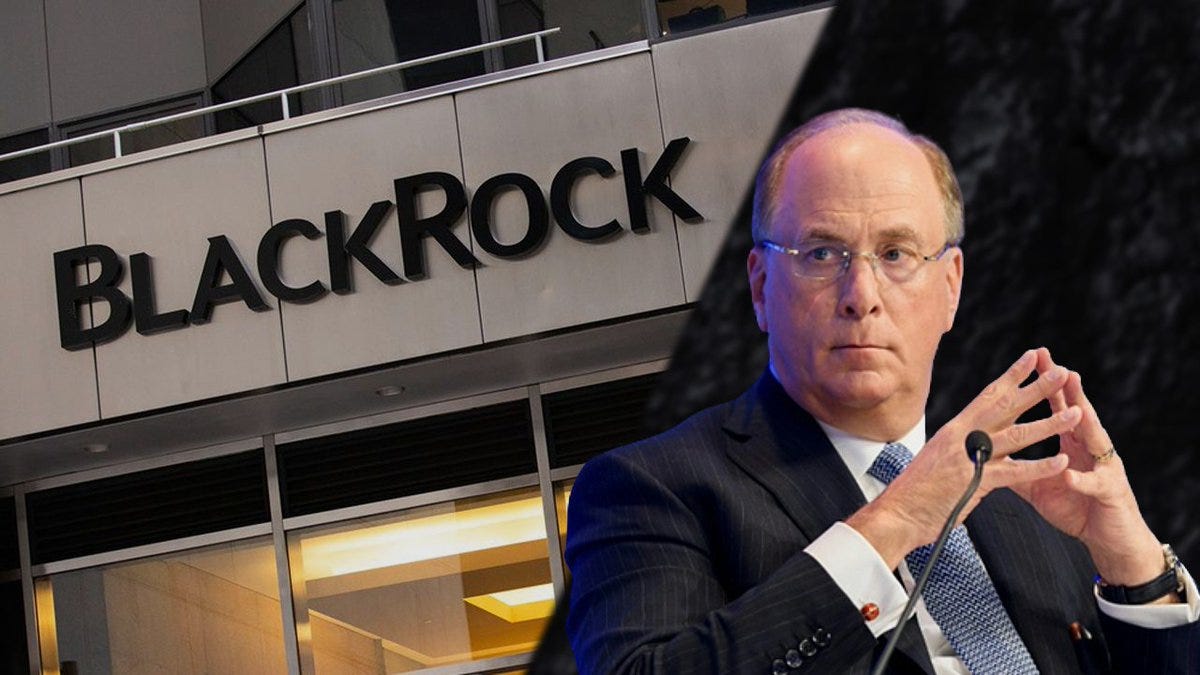
    The world’s largest asset manager, Blackrock, is making a significant move into Kuwait, a nation where around 15 percent of its citizens hold millionaire status. This financial giant is positioning itself in a virtually debt-free state known for its vibrant investment landscape amid a favorable global economic backdrop.

    In a press announcement by the Kuwaiti news agency KUNA, it was revealed that Blackrock has tapped Ali Al-Qadhi to lead its new branch in Kuwait. This announcement follows the Kuwaiti Capital Markets Authority’s recent approval of a license for Blackrock Advisors (UK) Ltd, signaling the firm’s commitment to establishing a stronghold in the region.

    Strategic Partnerships Open Doors

    Blackrock’s ambition in Kuwait was first discussed during a visit from co-founder and CEO Larry Fink to the ruler of Kuwait, Sheikh Mishal Al-Ahmad Al-Jaber Al-Sabah, in February. Fink pledged that Blackrock would back the government’s ambitious “Kuwait Vision 2035,” a strategy aimed at transforming the small oil-rich nation into a global financial and trade hub. With existing offices in Riyadh, Doha, Dubai, and Abu Dhabi, Blackrock’s expansion into Kuwait reflects its strategic focus on the region.

    Managing $12.5 trillion in assets, the firm aims to provide financial consulting to high-net-worth individuals (HNWIs) as well as to state-owned and private investment firms in a country with a population of 5 million. Kuwait ranks third globally for the percentage of millionaires, just behind Switzerland and Hong Kong. The Kuwait Investment Authority (KIA), which boasts a $1 trillion portfolio, holds a 5.57% stake in Mercedes-Benz and has recently supported Blackrock’s initiatives in building global infrastructure for artificial intelligence.

    A Stable Haven amid Global Unrest

    The Gulf’s burgeoning high-net-worth community is reportedly thriving due to rising oil prices, a boom in global stock markets, and a post-pandemic rebound in trade and tourism. Additionally, the relatively weak U.S. dollar is drawing investments from Europe, the UK, and East Asia, while all Gulf currencies are pegged to the dollar—except for Kuwait, whose dinar floats against a basket of currencies. Impressively, Kuwait’s public debt was a mere 3% of GDP in 2024.

    Interestingly, recent geopolitical crises in the region have largely sidestepped Kuwait. In September, credit rating agency Fitch reaffirmed Kuwait’s “AA–” rating with a stable outlook, though analysts are nudging the government to expedite reforms aimed at diversifying the economy beyond oil and enhancing transparency within the financial sector.

    Questions & Answers

    What does Blackrock’s new branch in Kuwait signify for the local market?
    Blackrock’s new branch reflects the growing importance of Kuwait as a financial hub, particularly for high-net-worth individuals and investment opportunities.

    How significant are Kuwait’s high-net-worth individuals in the global context?
    With 15 percent of its population classified as millionaires, Kuwait ranks third in the world for millionaire density, highlighting a lucrative market for strategic financial services.

    What challenges does Kuwait face despite its economic advantages?
    While Kuwait enjoys a stable economy with low public debt, analysts point to the need for reforms to diversify the economy and improve transparency within the financial sector to sustain its growth.

  • ANZ to Streamline Operations: 3,500 Job Cuts and Shift in Contractual Services Announced

    ANZ to Streamline Operations: 3,500 Job Cuts and Shift in Contractual Services Announced

    In a significant move aimed at streamlining operations, Australia and New Zealand (ANZ) Banking Group Limited plans to cut approximately 3,500 jobs by September 2026. The announcement, made on September 9, 2025, included details about the bank’s intent to reduce its reliance on consultants and third-party services, as part of a broader strategy to simplify its structure.

    Job Cuts and Consultant Reductions

    ANZ’s Chief Executive Officer, Nuno Matos, stated that the bank would also re-evaluate its relationships with around 1,000 managed services contractors. “Our changes also include ending or reviewing our engagements with consultants and other third parties,” Matos noted, underscoring the bank’s intention to operate more efficiently.

    Financial Impact of Restructuring

    The financial implications of these changes are notable; ANZ anticipates a restructuring charge of approximately $560 million before tax in the second half of 2025. This financial adjustment highlights the challenges that lie ahead as the bank navigates its transformation.

    Support for Departing Employees

    Matos acknowledged the emotional toll these changes could have on employees. “We know this will be difficult news for some of our staff,” he remarked, emphasizing the importance of handling the situation with care. “While some of these changes have already commenced, we are committed to working through the impacts as quickly and safely as we can, with both care and respect for our teams affected.”

    In an effort to cushion the blow for those losing their jobs, ANZ has pledged to roll out a robust support program. This initiative will offer individual assistance, career advice, planning support services, and access to a career training fund to help affected employees transition smoothly into new opportunities. After all, in the world of finance, job cuts can be a bit like reorganizing a Tetris game—there’s often more at stake than just the blocks on the screen.

    Questions & Answers

    What is the reason behind ANZ’s decision to cut jobs?
    The layoffs are part of a broader strategy to simplify the bank’s operations and reduce reliance on consultants and third-party services.

    How many jobs will be affected by ANZ’s restructuring?
    Approximately 3,500 jobs are expected to be cut by September 2026.

    What support will be available for employees affected by the layoffs?
    ANZ will provide a comprehensive support program that includes individual assistance, career advice, planning support services, and access to a career training fund.

  • Dollar Dips Against Dong: What This Means for Retailers and Consumers Alike

    Dollar Dips Against Dong: What This Means for Retailers and Consumers Alike

    The U.S. dollar weakened against the Vietnamese dong Wednesday morning, despite maintaining its strength against major currencies. Vietcombank reported it sold the dollar at VND26,482, reflecting a slight dip of 0.06% from the previous day. The greenback was trading around VND26,680 on the black market, highlighting the currency’s fluctuating nature.

    Vietnam’s Central Bank Adjusts Reference Rate

    The State Bank of Vietnam took a decisive step, lowering its reference rate by 0.06 percent to VND25,221. This adjustment mirrors the complex dynamics driving the currency market in the region.

    Global Context Influences Local Trends

    Internationally, the U.S. dollar maintained its footing on Wednesday. Traders are keeping a watchful eye on impending inflation reports that may significantly influence future interest rate decisions by the Federal Reserve. Kieran Williams, head of Asia FX at InTouch Capital Markets, pointed out that while a large cut seems unlikely next week, the data will indeed shape market expectations for rate easing heading into the year’s final stretch.

    Currency Markets in a State of Flux

    This atmosphere of uncertainty left the currency markets teetering during Asian trading hours. The euro slipped slightly to $1.16985 after a 0.5% decline in the previous session, while the British pound was recorded at $1.3522. The Japanese yen held steady against the dollar, trading at around 147.42.

    Meanwhile, the Australian dollar hovered at $0.6587, flirting with a seven-week high reached just a day prior. Stand back! The dollar index, which gauges the U.S. currency against six others, remained stable at 97.834 after a 0.3% gain the previous day. However, the index has stumbled about 10% in 2025, as unpredictable U.S. trade policies and expectations surrounding rate cuts undermine the dollar’s appeal.

    Questions & Answers

    How has the U.S. dollar performed against the Vietnamese dong recently?
    The U.S. dollar has weakened slightly against the Vietnamese dong, recently selling at VND26,482, down 0.06% from the previous day.

    What impact are inflation reports expected to have on the currency market?
    Inflation reports are anticipated to guide traders on interest rate decisions from the Federal Reserve, affecting market expectations for economic easing as year-end approaches.

    How is the overall stability of the dollar index influencing trade?
    The dollar index remains stable at 97.834, but it’s down about 10% in 2025, primarily due to volatile U.S. trade policies and shifting expectations surrounding rate cuts, impacting the dollar’s attractiveness in international markets.