Category: Finance

Retail News Asia is committed to providing both local and global retailers with the latest Finance news throughout the Asian market. This on a daily base.

  • Revolut Expands as a Bank

    Revolut Expands as a Bank

    Europe’s most valuable fintech has already amassed 18 million app users worldwide. Some of those are about to become bank customers.

    The London-headquartered neobank is launching as a bank in ten additional European markets, lifting the number of countries it operates in to 28, it said in a statement. The challenger bank can now protect client deposits up to 100,000 euros in Belgium, Denmark, Finland, Germany, Iceland, Lichtenstein, Luxembourg, Netherlands, Spain, and Sweden, using its European specialized banking license.

    In a few clicks clients from these countries will be able to upgrade to Revolut Bank from within the app, it said.

    Deposits will be secured by the Lithuanian State company deposit and investment insurance, it added.

    Over the past few years, Revolut’s rapid level of growth has added pressure on Swiss banks to boost their digital services. Since its inception in 2015 the company has attracted more than 18 million customers globally, it says on its website.

  • Crypto Bank Raises Money for Foreign Expansion

    Crypto Bank Raises Money for Foreign Expansion

    Seba is raising nearly $120 million, in a bid to fuel its expansion outside of Switzerland. Zug-based Seba raised 110 million Swiss francs ($118 million) from a host of new and existing investors, it said in a statement on Wednesday. The round was significantly oversubscribed, with demand far exceeding the initial funding target, the fledgling bank said. It didn’t disclose a valuation of itself, as rivals have done.

    Seba said it will use the funds to keep hiring and to expand into new markets. Investors in this round included Altive, Ordway Selections, Summer Capital, DeFi Technologies, Alameda Research, and Julius Baer.

    This comes just days after rival Sygnum raised $90 million in Asia-focused fundraising. The two banks were both granted licenses in Switzerland 28 months ago.

  • UBS Digital Expert Exits for Fintech Role

    UBS Digital Expert Exits for Fintech Role

    The digital expert who jump-started UBS’ platform plans is leaving for a job at a Swiss financial start-up.

    Martha Boeckenfeld is exiting at UBS, where she has was brought in as head of digital platforms and marketplaces in Switzerland over two years ago, finews.com has learned. The 56-year-old German native will join the advisory board of Gentwo, a securitization fintech.

    A spokesman for the Swiss bank confirmed her exit, which comes several months after her job was quietly downgraded last September. Boeckenfeld’s team at UBS will report to Asia wealth co-head August Hatecke, effective immediately.

    Gentwo was founded by Philippe Naegeli and Patrick Loepfe four years ago. Its Assetrush platform seeks to connect financial innovators and investors both digitally as well as physically, through events.

    The Zurich-based start-up recently added Spiros Margaris to the board that Boeckenfeld is joining, alongside Beat Hodel and Marc Bernegger

  • Security Hot Spot: Bankers’ Phones

    Security Hot Spot: Bankers’ Phones

    Uncertainty over the use of private mobiles for work is rife as banks request access to employees’ phones and authorities clamp down on documentation lapses.

    It’s time to look at where the dangers lie in using our personal phones for work after recent events, including J.P.Morgan’s $200 million dollar fine for not documenting conversations conducted on private mobiles, Credit Suisse asking to access employees’ devices, and the Swiss army ‘s military-wide switch from Whatsapp to Swiss-made messenger service Threema.

    Yet, pinpointing the danger to a single area is impossible. The combination of hardware, operating system, and apps installed on our phones, determines how safe our personal devices are, Urs Kuederli, PwC Switzerland’s cybersecurity and privacy lead said. For someone who works in a bank the sheer act of installing Whatsapp for example on an unprotected phone can pose more than just a data breach, he says.

    Given that the messaging service goes through a user’s entire phonebook and uploads all contacts – potentially including client contact information – to a server located abroad, installing the chat app can represent a violation of the banking act and banking secrecy laws.

    The storage of data on U.S. servers, which U.S. authorities can access, was also the reason behind the Swiss Army’s recent decision to shift internal communication from Whatsapp to Swiss-based messenger service Threema, as Tagesanzeiger reported last week.

    Companies should ensure that employees can split functionalities and data used privately from those used for business purposes, by using device management systems, such as Microsoft Intune, MobileIron, or Blackberrywork, Kuederli says. These have so-called container solutions.

    While these do not provide a one hundred percent guarantee, they offer a good balance between security and usability, Kuederli adds.

    There is also the option of carrying around two devices, one strictly for work and one for private use. While this might not very convenient, it is more data-secure.

    It could also be a better solution for those Credit Suisse employees who find that giving their employer access to their mobile phones is an intrusion into their privacy, as we reported last month.

    However, most of the Credit Suisse staff don’t use an additional work phone but receive a monthly reimbursed sum to cover work calls on their personal mobile phones, the outlet wrote.

    Although the Swiss Financial Authority (Finma) prescribes that all communication related to securities trading or information with supervisory relevance must be recorded for two years, it leaves it up to the banks themselves to determine their own communication policies.

    The financial watchdog supervises that internal requirements are adhered to and if it finds that an individual has breached an employer’s policies, it can take action against the bank as well as against the individual.

    Extra caution is now required as Swiss companies revert back to remote working.

    Financial institutions have adapted their processes to the new way of working as well as improving their data security efforts since the first COVID-19 lockdown, yet «there are still lapses and the

  • Swissquote Buys Luxembourg Lender

    Swissquote Buys Luxembourg Lender

    The Swiss digital bank is buying a bank in Luxembourg, in a bid to tackle the wider European market.

    Gland, Switzerland-based Swissquote is buying Keytrade Bank in Luxembourg, it said in an emailed statement on Wednesday. Neither bank disclosed the financial details of the deal.

    Twenty-three-year-old Keytrade has 1.7 billion euros ($1.9 billion) in client assets. Swissquote will take over a majority of its employees through its European-based bank.

    The Swiss bank said Keytrade vaults it to the largest online trading bank in Luxembourg, underpinning its growth plans in Europe. With the acquisition of Keytrade Bank Luxembourg, we will strengthen our European expansion, CEO Mark Buerki said.

    Moreover, we will continue to develop our service offering to suit the needs of institutional as well as private clients in Luxembourg and the European Union.

    The deal is expected to close by mid-year, and Swissquote it would disclose further details when it reported financial results on March 17.

  • New Ticino Bank Launches

    New Ticino Bank Launches

    Banca Generali’s new Swiss unit appoints an experienced banker as CEO, another sign of the recovering prospects for Lugano’s financial hub.

    The recent appointment of Renato Santi as CEO of Bank BG Suisse is just the latest sign of a budding recovery in the region’s financial industry.

    According to official records, the Swiss unit of Italy’s Banca Generali was established last October in Lugano. It does not yet have a banking license, although it is hoping to receive one from the Swiss Financial Market Supervisory Authority (Finma) this year.

    Santi is an experienced banker who worked for more than 10 years at Banca della Svizzera Italiana (BSI) before it was taken over from EFG International, a Swiss private bank, in 2016.  His last job at BSI was head of the Ticino, Zurich, and Italian regions. After his stint at BSI, Santi joined the Swiss business of Danish-Chinese bank Saxo although he left them last December to take up his new role at the start of 2022.

    Generali first entered the Swiss market in 2019 with its now completed takeover of Valeur, a Lugano-based asset manager. The business was renamed BG Valeur under the operational management of Alida Carcano. According to sources, the asset manager will continue to exist alongside BG Suisse in future.

    Banca Generali’s exact strategy for BG Suisse will be disclosed at an investor day in February, a group spokesperson saidwith plans afoot to start a business in the second half of the year.

    The launch of Bank BG Suisse is the third push into the Swiss market by a major Italian bank. The first was Intesa Sanpaolo’s takeover of a 69 percent stake in Geneva-based private bank Reyl.

    Reyl is slated to serve the Italian financial institution as to its hub for European private banking. Lugano will play a central role in that as it is close to the Italian border, a fact also helped by Intesa’s takeover of Bank Morval in 2017. Its business in Southern Switzerland will be merged with Reyl’s.

    The Ticino finance hub is gaining in importance after years of decline. Italy’s economic prosperity under Mario Draghi, who has served as the country’s prime minister since February 2021, is likely to accelerate that that trend.

    Reflecting that, The Milan Exchange gained 20 percent in 2021, with Intesa Sanpaolo shares up by 16 percent, Generali’s gaining 30 percent, and Unicredit’s rising a very significant 75 percent.

  • Hong Kong Sends Bankers Home

    Hong Kong Sends Bankers Home

    Tighter government COVID-19 restrictions from Saturday already prompted UBS and other banks to re-impose workplace limits.

    The Hong Kong government yesterday announced a raft of new COVID-19 restrictions yesterday following a number of untraceable Omnicron variant cases, a step that is already prompting UBS and other banks to ask bankers to resume working from home.

    The government says on its website that the enhanced restrictions will take effect from January 7 and last for 14 days. Group gatherings of more than four people will be prohibited and restaurants will have to close at 6pm.

    All leisure and sports facilities, gyms and bars will be fully closed. It has also suspended all flights from Australia, Canada, France, India, Pakistan, the Philippines, the UK, and the U.S.

    UBS is splitting its 2,500 workforces into groups, with one working from home and the other in the office in an alternate fashion, according to a report, citing an internal memo.

    Employees have also been asked to curtail movement in the office and sharply limit socialization outside their direct teams, the memo indicates. Other banks taking similar steps include HSBC, Bank of America, and Standard Chartered, the news outlet said.

    Others are expected to follow as the restrictions come into effect.

  • Bitcoin Suisse Taps Ex-UBS Banker as CEO

    Bitcoin Suisse Taps Ex-UBS Banker as CEO

    The Swiss crypto broker’s CEO is stepping down after four years. His replacement is an ex-UBS banker well-known for his technology expertise.

    Arthur Vayloyan is stepping down as CEO of Bitcoin Suisse at the end of March, the Zug-based crypto firm said in a statement on Friday. He will be replaced by Dirk Klee, effective April 1. Vayloyan will remain one of five board members of the firm.

    Like Vayloyan, Klee comes from traditional financial services: he was the operating chief of UBS’ flagship wealth unit for five years before in 2018 taking the top job at Barclays for wealth management and investments in the U.K.

    Bitcoin Suisse didn’t provide a specific reason for the CEO change. The news comes one week after co-founder Niklas Nikolajsen relinquished the chair job to Luzius Meisser.

    The nine-year-old firm is coming off a turbulent 2021: it was forced to retreat on a Swiss banking license, after being told by regulator Finma that it hadn’t done enough to root out money laundering. This led Bitcoin Suisse to strengthen its ranks several months later.

    It remains wildly profitable: Niklajsen said Bitcoin Suisse is on its way to nearly doubling last year’s net profit of 24.1 million Swiss francs ($26.1 million), in a social media post last month.

    Klee, a German native, has made a career of innovating traditional financial services: he ran a large part of Blackrock’s exchange-traded funds business in Europe before moving to UBS in 2013.

    There, he was responsible for a $1 billion technology project to unify UBS’ disparate wealth platforms. Most recently, he oversaw the rollout of a digital tool for Barclays’ affluent U.K. clients.

  • Vietnam stock market 7th biggest gainer globally

    Vietnam stock market 7th biggest gainer globally

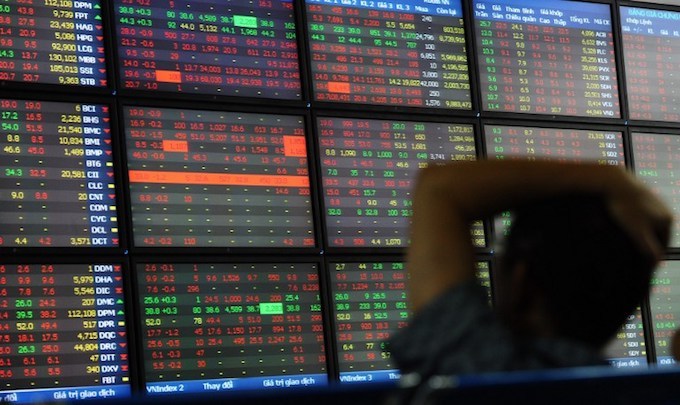
    Vietnam’s stock market was the seventh biggest gainer last year at 35.7 percent, outperforming regional peers, as new retail investors rushed to a new asset for profit.

    With the benchmark VN-Index rising 394 points to close the year at 1,498 points, Vietnam listed among the top 10 gaining stock markets in the world with Abu Dhabi, Argentina, and Iceland in the top 3.

    In Asia, Vietnam outperformed major markets like Taiwan (24 percent), Thailand (14 percent), and Indonesia (10 percent).

    Some markets like Malaysia and Hong Kong posted a decline.

    2021 was the third year in a row the VN-Index went up. Growth was 7.6 percent and 14.7 percent in the previous years.

    Growth exceeded forecasts of several brokerages at around 1,300 or 1,400 points.

    Several analysts said with a price-to-earnings ratio of 17.47, the Vietnam market is still “cheaper” than others in the region.

    The main bourse, Ho Chi Minh Stock Exchange (HoSE), closed the year with a market cap of VND5,830 trillion ($256.21 billion).

    Brokerage VNDirect has forecast the VN-Index could reach 1,700 points this year.

  • Bitmex Announces CEO for Swiss Business

    Bitmex Announces CEO for Swiss Business

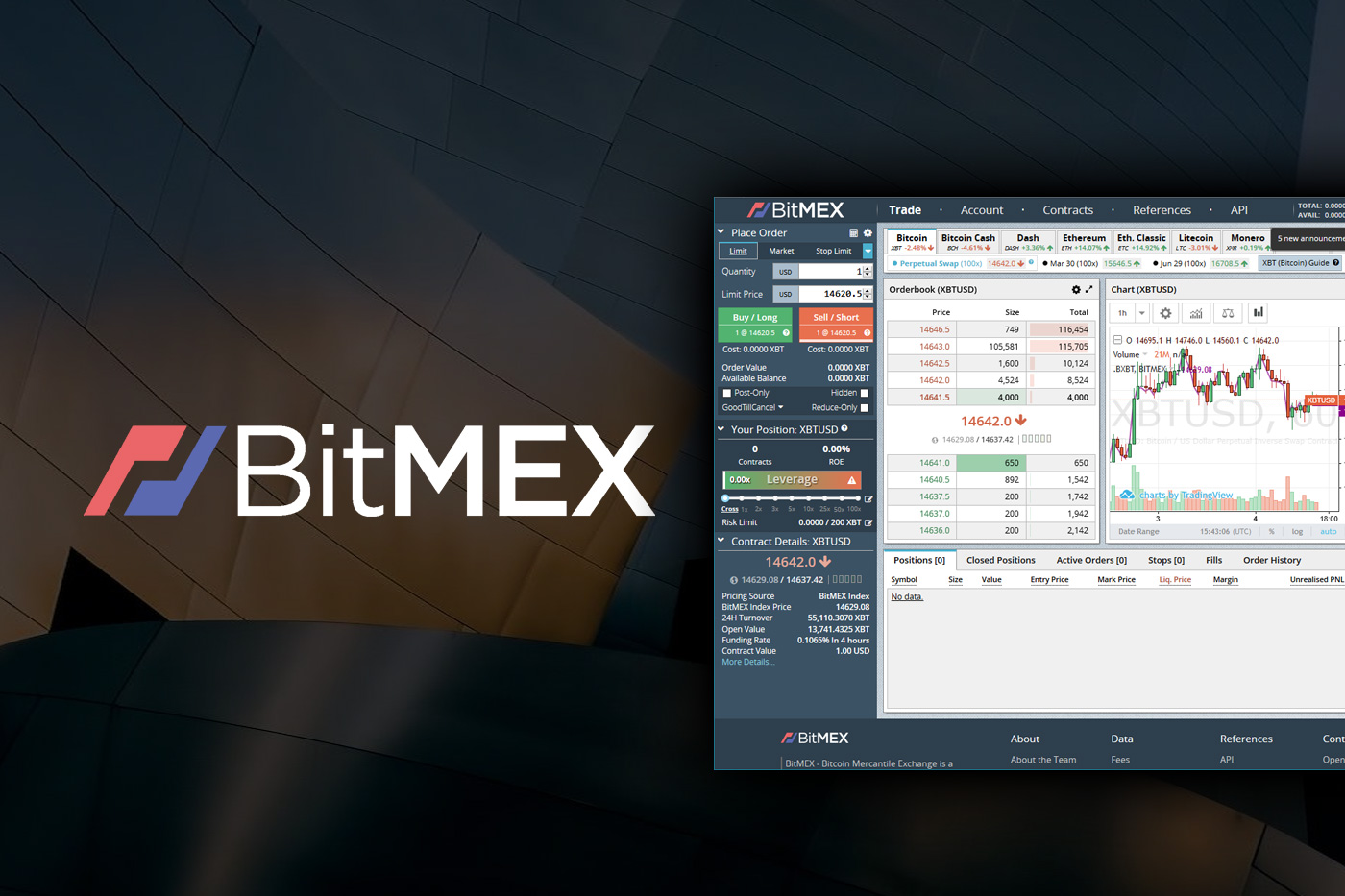
    After announcing plans to expand in Switzerland, the trading crypto exchange has now found someone to lead its Swiss business.

    Seychelles-based Bitmex is appointing Ivo Sauter as chief executive of Bitmex Link Switzerland, according to his Linkedin profile. Sauter joins the crypto trading exchange from Gazprombank where he worked as a chief digital, transformation, and strategy officer.

    Bitmex is a platform for crypto asset trading. Bitmex Link is the exchange’s digital trading asset service, which includes spot trading, brokerage, custody, information products and a so-called academy for digital asset and crypto trading training.

    The company announced its intention to launch a Swiss office last year, along with plans to apply for a Finma license.

  • Young Vietnamese look to cryptocurrencies to get rich quick

    Young Vietnamese look to cryptocurrencies to get rich quick

    Cryptocurrencies are becoming a new investment favorite in the country, but many are learning what goes up rapidly could come down at the same speed. This year Minh Quan of Hanoi started to study the cryptocurrency market for the first time after a friend urged him to invest in it. The real estate broker started with a $1,000 investment in a startup he barely knew.

    “I invested because the founders have good physiognomy,” he says.

    The startup picked up and the founders were able to secure funding from foreign funds, and Quan’s investment appreciated five-fold within a month.

    Young Vietnamese like Quan are becoming increasingly interested in cryptocurrencies, hoping to get rich quick despite a lack of legal support for them and high risk.

    Vietnam is among the top 15 countries in the world by number of cryptocurrency investors, with most being under 35 years old, Lynn Hoang, Vietnam country director for trading platform Binance, said.

    Though the government does not recognize Bitcoin and other cryptocurrencies, it still led globally in cryptocurrency adoption with 41 percent of respondents claiming to have bought Bitcoin and others, according to a survey in August by U.S. financial consultancy Finder.

    Minh Anh, who is in his 20s, has found that while predicting the market is nearly impossible, a thoughtful and safe investment strategy could help him navigate the cryptocurrency world.

    He only invests a small amount in it and only in cryptocurrencies managed by experienced people, he says.

    “I only invest 25 percent of my total assets into crypto. After placing an order I turn off the app to not be distracted by the volatility”.

    This year he made profits of hundreds of millions of dong (VND100 million = $4,380).

    But with great profit potential come great risks.

    With bank deposit interest rates sharply down, Hanh, a bank teller, withdrew money from stocks to invest in cryptocurrency futures, which allow investors to predict the market future and bet on it.

    However, lacking sufficient knowledge of the market, she lost all her money and decided to stop investing in futures altogether.

    Le Trong and his wife invested all their savings into cryptocurrencies in 2017 when the market was booming. They even borrowed to invest.

    But then the market fell, hurling them into a crisis as debt collectors began to call constantly. Trong’s wife went into a depression, and it took the couple several years to repay their debts.

    “I’ll never get involved with crypto again,” he says.

    Lynn Hoang of Binance says the two basic rules for cryptocurrency investment are knowing how to protect your investment and not using leverage.

    New investors should opt for cryptos with a large market cap, she says, likening it to buying blue chips in the stock market.

    Whether one’s strategy is to invest for the long term or short term, it is important not to be greedy, she warns.

    Thuong, an investor in Hanoi, has learned that lesson.

    When Bitcoin dropped to around $54,000 on December 4, she poured most of her savings into it, thinking she had found the bottom.

    But the fall continued down to $43,000, and, without cash, she has been unable to buy more to average the price.

    “Controlling your greed sounds easy, but it is not,” she says.
  • Exynos 2200 finally has a reveal date

    Exynos 2200 finally has a reveal date

    Samsung has finally announced a date for the reveal of the in-house Exynos 2200 chip that will likely power the Galaxy S22 series.

    Samsung and AMD have been working on a GPU for quite some time and it will be integrated into the South Korean giant’s next flagship chip. According to a new rumor, the GPU itself will be called the Xclipse 920.

    The company has confirmed that the RDNA 2-powered chip will be unveiled on January 11, which is also when the Galaxy S21 FE is rumored to go on sale.

    Samsung has steadily been upping its chip game. Last year, it embraced Arm’s CPU designs, and now, the AMD-made GPU will take care of the graphics. Whether the new Exynos chip will live up to the hype is a whole different question.

    Qualcomm claims that its new chip offers 20 percent faster CPU capabilities and 30 percent better graphics when compared to the Snapdragon 888. Although the Exynos 2200 is expected to have the same core architecture as the Snapdragon 8 Gen 1 which will fuel the American variants of the Galaxy S22, it may lag behind in performance.

    Per a recent leak, Samsung’s new SoC will offer a 5 percent improvement in CPU performance and a 17 percent increase in graphics when compared to the Exynos 2100 that powers the Galaxy S21 range. That’s not necessarily a cause for concern, because the same leak says that artificial intelligence performance will improve by a staggering 117 percent.

    Although today’s premium phones are plenty fast already, we are still curious to see how the Exynos 2200 will stack up against the flagship chips that power the top phones of 2021. Samsung will allegedly announce the Galaxy S22 series in February.

  • Netstars Vietnam partners with M-service to promote non-cash payment for TeteShop users

    Netstars Vietnam partners with M-service to promote non-cash payment for TeteShop users

    Netstars Vietnam will cooperate with Mobile Online Services JSC (M service) to provide grocery stores with payment solutions both online and offline.

    The collaboration agreement signed by Netstars Vietnam Co., Lt (Netstars Vietnam), a member of the multinational fintech startup Netstars, and M service, a leading fintech company that operates the Momo super app in Vietnam, aims to promote non-cash payment services and digital merchant tools for grocery stores in Vietnam.

    Amid the Covid pandemic, most traditional business activities are being affected. The partnership intends to enable grocery stores to easily receive payments both online and offline via the Tete Shop service, a smartphone-based shop management application for grocery stores with more than 10,000 registered shops. This will help merchants reduce physical contact and reduce the risk of Covid infection.

    Currently, Momo has more than 25 million users in Vietnam.

    While Netstars has a great market share in multi QR payment solutions in the Japan market, its local arm has integrated with most leading banks and e-wallets in Vietnam, accepting payments from more than 80 percent of mobile banking and e-wallet applications on the market.

    Along with payment solutions, Netstars Vietnam also provides a smartphone-based shop management app Tete Shop for grocery stores with more than 10,000 registered outlets.

    Netstars Vietnam has demonstrated its commitment to bring professional solutions to grocery stores and its passion to contribute to the development of Vietnam. Both parties plan to jointly promote and expand the Tete Shop and Momo Super app to remote, rural, and isolated areas with the goal of providing digital transformation to 1.4 million grocery stores in Vietnam.

  • Crypto Pi app disappears from Google Play Store

    Crypto Pi app disappears from Google Play Store

    Cryptocurrency mining app Pi Network has disappeared from Google Play Store for Android devices, making investors concerned about the future of the project.

    “I cannot download the app. I am worried all my mining efforts up until now would be thrown away,” said Le Tu in the southern province of Dong Nai.

    The Pi Network app, the main tool for users to “mine” the cryptocurrency by checking in every day, “is currently going through a regular review cycle and is unavailable to download through Google Play Store,” the developers of the coin said on their website.

    “We expect to be back up on the Play Store soon,” they noted, adding users could manually download the app via a link.

    There seems to be no issue with the app on App Store for Apple devices.

    Bang, admin of a group of Pi users, also known as Pioneers, speculated that the project is set to transition to the main phase and was therefore temporarily removed from Google Play.

    The app ranked seventh among downloads in Vietnam on Google Play Store last month.

    Pi has become a controversial cryptocurrency as the developers allow anyone to own it by tapping on their smartphone once every day without any investment or much details about the development phase.

    Some experts have said the project lack transparency and called on people to be careful to avoid being scammed.

  • BNP Paribas Left With Cash After U.S. Exit

    BNP Paribas Left With Cash After U.S. Exit

    BNP Paribas is exiting its U.S. retail business providing its expansion plans with a financial boost. The French bank is selling its U.S. Bank of the West – for $16.3billion to Bank of Montreal, it said in a statement Monday

    With the sale proceeds BNP Paribas could be on the lookout to buy a smaller tech company, the British newspaper writes, citing analysts who added that no deal was imminent.

    It will concentrate on expanding its business in Europe, the report says. In this context, an acquisition in Switzerland could also be an option.

    Last month BNP Paribas spotted a deal with Credit Suisse: the Swiss lender, which suffered more than $5 billion in losses on Archegos’ unwind earlier this year, offloaded its prime brokerage clients to its French counterpart.