Category: Finance

Retail News Asia is committed to providing both local and global retailers with the latest Finance news throughout the Asian market. This on a daily base.

  • Russia’s large holdings of foreign exchange could pose a problem for financial markets.

    Russia’s large holdings of foreign exchange could pose a problem for financial markets.

    Russia holds vast foreign exchange reserves, a large chunk of which are held offshore, having the potential to upend money markets.

    The country had international reserves totaling $630 billion at the end of January, consisting of $467 billion in foreign exchange and $132 billion in gold. The rest consists of special drawing rights (SDRs) and IMF reserves, Bank of Russia data showed.

    With the country’s invasion of Ukraine Thursday, a critical question is how much of these reserves are outside of Russia.

    Credit Suisse strategist Zoltan Pozar, crunched the numbers to determine just that. The resulting figure using Bank of Russia data with that from financial markets was that $300 billion is being held offshore, according to the report.

    Pozar estimates around  $200 billion is held in swap agreements with an additional $100 billion in overseas bank deposits, a sum more than enough to cause a shift in funding markets.

    If things escalate, it’s hard not to see a direct impact on FX swaps and U.S. dollar Libor fixings given Russia’s vast financial surpluses and where those surpluses are deployed, he said.

    On Thursday, the Bank of Russia announced emergency measures to maintain financial market stability, including intervening in the foreign exchange markets.

    Markets are likely hoping the mountain of cash doesn’t turn out to be an erupting volcano.

  • Revolut Founders: a Russian and a Ukrainian

    Revolut Founders: a Russian and a Ukrainian

    Vladimir Putin could learn a thing or two about successful cooperation from the co-founders of Revolut.

    Revolut’s co-founders CEO Nik Storonsky and CTO Vlad Yatsenko, who are Russian and Ukrainian respectively, show what a successful collaboration between the two nationalities can accomplish.

    Founded in 2015, Revolut is both the fastest growing and widely used neo bank in Switzerland. While not a real bank itself, Revolut partners with Credit Suisse to provide its services.

    Like the connection of their Swiss neobank to Credit Suisse, both men also share a Swiss connection. Storonsky was an emerging markets equity derivatives trader at Credit Suisse, and Yatsenko worked at Paradeplatz rival UBS.

    On Thursday the U.K. revealed a list of sanctions against Russia, with Foreign Secretary Liz Truss stressing that it is an «unprecedented package of sanctions decisively delivers the highest economic cost we have ever imposed on the Kremlin.

    For now, the U.K. sanctions appear to be targeted at Russian President Vladimir Putin, his inner circle and raising finance on the UK financial markets. Both Storonsky and Yatsenko are certainly watching the conflict unfold in personal terms. The business side is also keeping an eye on developments.

    As a U.K. business subject to regulation by the Financial Conduct Authority (FCA), Revolut operates in compliance with all applicable sanctions law and legislation. We continue to monitor the situation in Ukraine carefully and will take any further actions required as necessary, a spokesman for Revolut told finews.com.

    But when you talk about destruction, don’t you know that you can count me out, to quote the Beatles.

  • Rabobank sounds warning of food price inflation

    Rabobank sounds warning of food price inflation

    The current tremendous inflationary pressure on the cost base of virtually every food producer has yet to be absorbed further downstream in the supply chain. Will it be the consumer, the food retailer, or the foodservice operator that ultimately picks up the bill? Or will the problem be pushed back into the chain?

    Inflation in itself is not necessarily a bad thing, according to Rabobank’s chief macroeconomist – as long as everyone expects and calculates with the same inflation rate, that is. Well, the current cost inflation in food was definitely not modeled for and is unprecedented. Apart from maybe depreciation, virtually every cost line in the P&L is experiencing upward pressure. Whether it is agri commodities, packaging, transport, energy, or personnel costs, all have shown a massive price increase. And relief is nowhere in sight in the short term. Part of the cost increases even have a structural nature, as supply chains are shifting from ‘just in time’ to ‘just in case.’

    The exact magnitude of the cost inflation is difficult to gauge. Supplies are often covered by contracts, so the actual contracted prices and timing of contract renewals will differ from company to company. Moreover, the cost inflation a company experience depends on the type of products it produces, which raw materials are used, and where products are sourced. A bakery company will have more issues with the gas price, whereas a beer company will monitor glass and aluminum prices more closely, and a nut trader has to deal with the 822% price hike in container prices from Asia.

    So, rather than focusing on the cost itself, we have asked a broad range of suppliers throughout Europe how much they would have to raise their prices to food retailers and foodservice operators in order to cover their exploded cost base. The answers ranged from 0% up to 30% or more. On average, suppliers are looking for about 9% to 10% higher prices (PPI) toward retailers and foodservice companies to cope with the inflated costs. One thing is for sure, given the average operating margins in food production, not many producers will be able to absorb the cost inflation in their own operation. Many producers made it abundantly clear that subsidizing their products was not an option, so negotiations will be tough this autumn.

    Whatever You Do, Don’t Blink First

    The obvious next question is: What will food retailers do? Given the operational leverage in their business model, passing through any price inflation is in the best interest of supermarket organizations – in theory, that is. Food retailers across Europe are active in highly competitive markets. Being first to raise consumer prices would likely be detrimental to a retailer’s reputation and, if competition holds out long enough, also to sales volumes and market share. Also, the food retailer’s profit margin would not suffice to absorb a 10% higher cost of goods sold bill.

    It will be a matter of closely monitoring competition, timing any consumer price hikes carefully (preferably later than competitors), and weighing how much of the cost inflation can be absorbed without aggravating the stock market, shareholders, or co-op members. History provides ambivalent clues as to how supermarkets have dealt with previous inflation peaks.

    Looking back some 20 years, we have seen the cost base and producer prices in the EU-27 peak before, in 2007/08 and 2010/11. In the first cost rally, food retailers benefited from a favorable economic climate – just ahead of the financial crisis – and clearly decided to pass most of the inflation on to the consumer (CPI) with a limited delay. In 2010/11, the financial crisis and associated tax increases took a toll on consumers’ wallets, and, consequently, food retailers were much more cautious in how much and when they raised the prices on their shelves. Whether the economic climate in today’s market reflects 2007/08 more or the broader inflation experienced outside food more closely resembles the 2010/11 consumer is the million dollar question.

    In order to calculate an index representing the cost inflation of food producers, we have constructed a cost base of a nonexistent, average food company that uses the FAO food stuff index as agricultural raw materials (40% of costs), the Eurostat energy index representing transport, production, and packaging (30% of costs), and the Eurostat labor cost index for all staff-related costs in production, sales, marketing and, administration (30% of costs).

    The Worst Is Yet to Come for the Consumer

    Given that neither the food producer nor the food retailer are able or willing to absorb the cost price inflation in full, the consumer will likely be confronted with higher grocery prices sometime in the early months of 2022, though not necessarily in one go. Food retailers may choose to raise consumer prices in phases in order not to upset the consumer too much.

    The good news for most consumers is that they have means to circumvent that inflation in their budgets by trading down to cheaper products or cheaper channels: buying ground beef instead of steaks, opting for private label products instead of brands, shopping at hard discount instead of full-service supermarkets, or having dinner in a QSR outlet rather than a fast-casual restaurant.

    To make it more complicated, this trading down by the consumer may trigger substantial volume shifts in demand, which both food producers and food retailers will need to factor into their decisions on how to deal with the unprecedented inflationary pressure.


  • HSBC More Than Doubles Profit

    HSBC More Than Doubles Profit

    HSBC more than doubled its profit in 2021, despite flat revenues and costs, driven by a significant improvement in expected credit losses. HSBC reported $14.7 billion in profit after tax for 2021, according to its latest results, marking a 141 percent increase compared to 2020. Revenue ($49.6 billion, down 2 percent) and operating expenses ($32.1 billion, up 1 percent) stayed flat but the bank saw a significant improvement in expected credit losses (ECL) with a net release of $900 million compared to an $8.8 billion charge last year.

    The global economic recovery supported our 2021 financial performance, as the release of expected credit losses resulted in an improvement in the profitability of the Group and all global businesses, said HSBC group chief executive Noel Quinn.

    Our interest-rate sensitive business lines continued to be adversely impacted by low-interest rates, but our net interest margin remained broadly stable during 2021 and the outlook is now significantly more positive.

    In addition to better ECLs, the bank also highlighted a higher share of profit from its associates as a key driver of the positive results in 2021, increasing 11 percent to $29.5 billion. HSBC’s principal associates include Bank of Communications and the Saudi British Bank.

    The bank was profitable across all regions, most notably in Europe where its U.K. business posted a pre-tax profit of $3.5 billion compared to a $4.2 billion loss in the previous year.

    But pre-tax profit in Asia dipped 5 percent to $12.2 billion with a material decrease in Hong Kong from $8.2 billion in 2020 to $5.9 billion in 2021.

    While the bank observes «good business momentum» coming into 2022 in most areas, with expectations of mid-single-digit lending growth, Asia may continue to see headwinds.

    The bank expects weaker performance for Asia in the first quarter, specifically within the region’s wealth unit.

  • UBS Fintech Pioneer Joins Digitization Initiative

    UBS Fintech Pioneer Joins Digitization Initiative

    The Open Wealth Association is taking a big step toward a standardized digital interface for wealth managers by appointing a top UBS executive to its board.

    Switzerland’s largest bank is the seventh member of the Open Wealth Association, whose mission is to strengthen Switzerland as a financial hub and innovation center.

    It aims to connect financial institutions, WealthTechs and other service providers, and setting the Open API standard for the global wealth management community.

    To help in these efforts, UBS is delegating its head of multichannel, Andreas Kubli, to the association’s board, Open Wealth announced Thursday. He is considered one of UBS’s digitalization pioneers and has an excellent network. UBS is expected to contribute in particular to the development of an API standard for international wealth management.

    The Open Wealth Association is the result of an initiative between the St. Galler Kantonalbank (SGKB) and the consulting firm Synpulse

    We are proud that after just one year we are already working with seven major custodian banks and more than 30 wealth techs and service providers in the association, Zurich-based Open Wealth Association and Synpulse partner, Raphael Bianchi said.

  • Consumer Bank Cembra Books Record Profits

    Consumer Bank Cembra Books Record Profits

    Swiss consumer lending specialist Cembra Money Bank posted record profits last year. The credit card business in particular grew.

    Cembra’s net income increased 6 percent to 161.5 million Swiss francs in 2021, even though revenues decreased 2 percent to 487.0 million Swiss francs, the bank said Wednesday in announcing its annual results.

    CEO Holger Laubenthal said the robust development in all business areas and our excellent loss ratio enable us to report a record profit in a challenging environment. Moreover, Cembra also won new partners in the credit card and Buy Now Pay Later areas, he added.

    Interest income declined 5 percent due to a lower receivables base in the personal loans business, while at the same time interest expenses decreased by 3 percent to 26 million Swiss francs.

    Total net loans and advances to customers at the end of 2021 amounted to 6.2 billion Swiss francs, a decrease of 1 percent compared with the previous year. In personal loans, receivables decreased by 5 percent to 2.5 billion Swiss francs, while vehicle financing decreased 1 percent to 2.8 billion Swiss francs.

    The impact of the Covid 19 pandemic in Switzerland and the cautious underwriting policy in new business, were cited as factors.

    Receivables in the credit card business increased by 6 percent to 1.0 billion Swiss francs, boosted by an increase in card issuance of 4 percent year-on-year to 1.07 million.

    The Board of Directors will propose a 3 percent dividend per share increase to 3.85 Swiss francs at its next General Meeting on April 21.

    The main shareholders are UBS Fund Management which owns at least 5 percent, followed by Blackrock, Credit Suisse Funds and Swisscanto which each own at least 3 percent of Cembra, according to its website.

  • Switzerland and Singapore to Teamup on Fintech

    Switzerland and Singapore to Teamup on Fintech

    Switzerland and Singapore, the often called Switzerland of Asia, are looking towards financial sector digitalization. A conference slated for June in Zurich seeks to do just that.

    The Point Zero Forum» intends to bring public sector leaders together with top private sector counterparts in businesses and finance, from June 21 to 23 in Zurich, Switzerland’s State Secretariat for International Financial Matters (SIF) announced on Monday.

    The event will feature a high-caliber lineup, including Swiss Federal Councillor Ueli Maurer and Singapore’s Deputy Prime Minister Heng Swee Keat, who will open the event. The President of the Swiss National Bank (SNB), Thomas Jordan , and UBS Group CEO Ralph Hamers, will also be in attendance, according to the program from the website.

    The directors of the respective financial supervisory authorities, Ravi Menon from the Monetary Authority of Singapore (MAS) and Urban Angehrn from the Swiss Financial Market Supervisory Authority (Finma) will also join the conference.

    Deputy Prime Minister Heng Swee Keat, who also serves as Coordinating Minister for Economic Policy,  sums up the need for such an endeavor.

    Digital technology has enormous potential to change the world for the better, especially through finance. To unleash the potential, we need to seek new ways of working together, address key global challenges in partnership, and seize the new opportunities.

  • Private Banking Drops its Traditional Restraint

    Private Banking Drops its Traditional Restraint

    New money is flooding private banks although it is not necessarily from millionaires. The catchphrase is potential. Last year was a record one for Swiss private banking, as one institute after another reported a historic high. There is a key metric that sticks out, and one that the sector had difficulty with until recently.

    Invested assets, or assets under management, are clearly growing again as 2021’s buoyant equity markets drove double-digit gains at UBS, Julius Baer and Geneva-based private bank Pictet.

    It should be a triumph for the sector, the mainstay of Swiss finance. But looking more closely, one thing does stand out – private bankers have become far less choosy.

    The unwritten $1 million US dollar barrier to entry no longer seems to apply when it comes to so-called net new money, net new assets, or even UBS’s mouthful for the term, net new fee-generating assets – all of which can be generalized as expressions of new client investment mandates and assets isolated of exchange rate and market movements.

    Swiss private banks have become more flexible that way, confirms Andreas Arni in an interview with finews.com. We are not a retail bank. In that way, there is an entry threshold. But we don’t have a strict minimum. We look at the potential of the client. You can say that, generally, we welcome younger people who have established their own company.

    Julius Baer, which is seeing new momentum in its Swiss business, has also been swayed by modest fortunes. A spokesperson confirmed that there is no fixed minimum for the bank in its home market. We can lend our hand even with a relatively moderate level of assets for clients who have a long-term perspective related to the growth of their wealth.

    The million seems to have been replaced by the promise of future millions. Although it is by no means a safe bet, it is a trend that digitalization has made possible.

    The trend towards internet-based advisory models has been propelled forward by the pandemic, turning numerous young entrepreneurs into millionaires. And the spread of crypto-investments, and their fluctuating prices, has made some of them very wealthy practically overnight.

    Traditional private banking is a geriatric business. In Switzerland, wealth is concentrated in the hands of retirees. More than out of five households where the male spouse is more than 65 years old has taxable assets of more than $1 million, Zurich statisticians have calculated.

    But private banks can now use digital channels to efficiently serve smaller piles of client assets. A clear example of that is market leader UBS, which bought robo-advisor Wealthfront in the U.S. for $1.4 billion. It did that in the hope of acquiring a more youthful clientele while in the domestic market, Vontobel offers up its Volt app, which gives users active asset management advice. The minimum assets required – about $10,000.

    Practice shows, however, that it is best to invest a medium-sized six digit figure if a client wants to fully benefit from Vontobel’s investment expertise, a company spokesperson maintained.

    And there are, of course, exceptions that only serve to confirm the rule. Pictet says it welcomes clients if they have about $2 million to invest although they do not officially confirm the figure. Although the sector may not be showing as much restraint as before, it still seems to adhere to another well-practiced characteristic. Silence.

  • HSBC Cuts Over 100 Swiss Jobs in Geneva

    HSBC Cuts Over 100 Swiss Jobs in Geneva

    A year ago, HSBC’s Swiss private bank was still considering Geneva as a growth market. Now it is cutting jobs and reducing its office space in Geneva.

    After a bad year for Swiss private bank HSBC in which wealthy clients withdrew a net $1 billion, it is cutting 110 jobs in Switzerland and reducing office space in Geneva, British newspaper Financial Times reported Monday.

    Employees at the Quai des Bergues office in Geneva’s city center were informed last Monday that two floors of the building would be closed and more workers would have to share their desks.

    The move is part of the bank’s plan to reduce the costs of its office space in the city by around 20 percent over the next few years, making a significant contribution to improving the company’s profitability in Switzerland, according to an internal memo seen by the FT.

    The cuts in Switzerland come just a year after HSBC Group said the country was a market it wanted to invest in to grow its wealth management business.

    Many of the back- and middle-office functions will be moved to lower-cost locations, such as Poland and Mumbai, according to further reports. The reduction of office space is part of the British HSBC Group’s strategy to radically cut costs; at its headquarters in London, these costs are to be reduced by as much as 40 percent, as finews.ch also reported earlier.

    The measures taken in Geneva illustrate the pressure on HSBC’s Swiss private bank, which saw net new money outflows of around $1 billion last year.

    The FT suggests the decline was due to some very large clients withdrawing their assets, rather than a decline in the overall number of clients. HSBC will present its 2021 financial statements on February 22, 2022.

    HSBC’s spokesman said the job cuts in Geneva would have no impact on the front office, adding the bank plans to continue hiring relationship managers and investment advisors in the coming years.

    We remain fully committed to Switzerland,» he told the British newspaper. The Swiss bank will grow its business with clients from Europe, the Middle East and Asia, expand its offering to ultra-high-net-worth clients and continue to hire talent.

  • Binance Invests in Media To Educate on Blockchain

    Binance Invests in Media To Educate on Blockchain

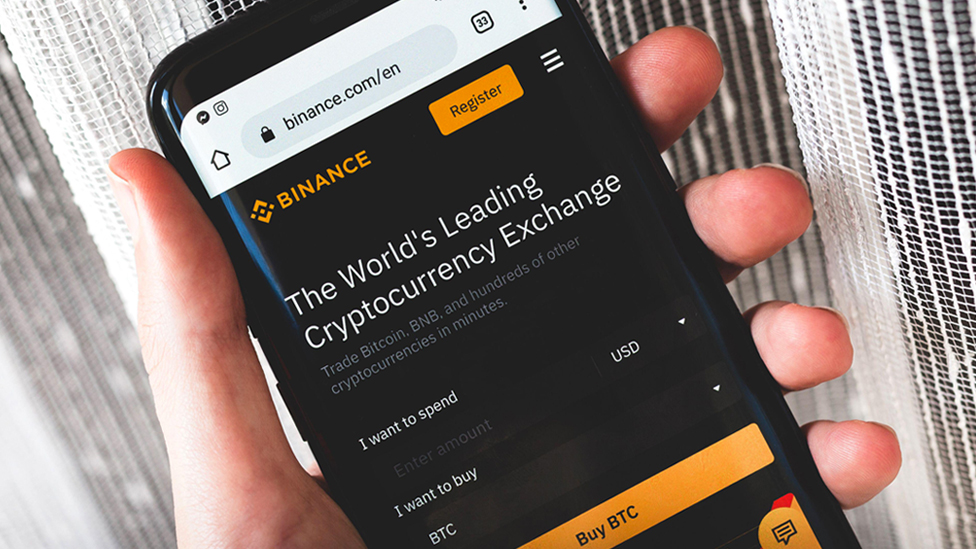
    Cryptocurrency player Binance is going old school, making a $200 million investment in media brand Forbes via a SPAC investment.

    Forbes is set to go public by the end of the first quarter via an acquisition by Magnum Opus Acquisition Ltd., which is a special purpose acquisition company (SPAC) already listed on the New York Stock Exchange.

    Binance is investing in the deal via a $200 million commitment to the total $400 million private investment in public equity, or PIPE, Forbes said in a press release Friday. PIPEs are common in SPAC deals as the SPAC entity may not have raised enough equity initially to complete its planned business combinations.

    The deal’s PIPE size will remain at $400 million, with Binance taking over existing subscription agreements, the statement said.

    Under the deal, Binance is expected to advise Forbes on its digital assets and Web3 strategy, the statement said. Web3 is a conceptual new iteration of the world wide web-based on blockchain technology, but it has not yet been implemented.

    Forbes is committed to demystifying the complexities and providing helpful information about blockchain technologies and all emerging digital assets, said Mike Federle, CEO of Forbes, in the statement. With Binance’s investment in Forbes, we now have the experience, network, and resources of the world’s leading crypto exchange and one of the world’s most successful blockchain innovators.

    Changpeng CZ Zhao, founder and CEO of Binance, added that media is an essential element for building widespread consumer understanding of blockchain technologies.

    We look forward to bolstering Forbes’ digital initiatives, as they evolve into a next-level investment insights platform, Zhao said in the statement.

    As part of the deal, Patrick Hillmann, chief communications officer for Binance, and Bill Chin, head of Binance Labs, which is Binance’s venture capital arm and incubator, will join Forbes’ board of directors, the statement said.

    The overall acquisition of Forbes values the combined company at an implied pro forma enterprise value of $630 million, Forbes has said previously.

  • Are Bankers Ready To Become Gamers

    Are Bankers Ready To Become Gamers

    Play-to-Earn games where participants convert digital credits into real-world money are gaining in popularity and are the gaming industry’s next big thing. Blockchain-based technology is upending the gaming industry. Until recently, regular games didn’t offer monetary compensation to gamers. Instead, proceeds flowed to game platforms.

    These new types of play-to-earn games are an early iteration of what many see as the promise of Web3,» Alexander Braun, an executive director at Capco responsible for digital strategy and innovation.

    In the early web, referred to as web1, users consumed content in a way best described as read-only.

    Technological advances gave way to Web2, giving users read-write access, and enabling them to load content onto platforms such as YouTube and Facebook.  These platforms went on to monetize the shared content.

    Introducing non-fungible tokens (NFTs) allows players to earn and own digital assets, which they can convert into money and use outside the game. This decentralization of economic ownership is a key component of Web3.

    In this sense, these games have become virtual economies. The hype around NFTs and the metaverse are closely connected to this development, Braun says.

    The global video gaming market is estimated to reach $268 billion by 2025. This sum should be setting off alarm bells at banks.

    The NFTs earned in such games are manifold and include virtual characters, decorative items, and pieces of land, which players can earn and transfer into real-world money.

    Microsoft’s $70 billion planned acquisition of game developer Activision Blizzard last month, and Walmart’s filing of patents last year related to creating and selling virtual goods show the importance businesses are assigning to games and the metaverse.

    Some go as far as to say the paradigm shift in gaming could serve as a blueprint for the start of a new economy, based on a self-governing financial system. One in which the way people interact with traditional financial institutions and with governments will fundamentally change.

    This expectation is certainly the driving force behind the billions of dollars invested in blockchain-related projects, Braun says.

    Banks can enter the trend in different ways beyond the short-term gain of improving efficiencies and streamlining outdated processes. It is also a massive opportunity for them to generate new business, Braun says.

    Yet the discussion is currently dominated by the banks’ fear their role as an intermediary will be made redundant by blockchain technology, he adds.

    However, if banks learn the costly lessons from the software industry, which was afraid of being disintermediated by open-source-software in the late 1990’s, initially fighting it and almost going extinct in the process, only to later embrace it becoming all the more profitable as a result, they will have an important and very prosperous role to play in the future, Braun says.

    Or is the real question: will gamers become bankers before bankers become gamers?

  • Vietnam gold prices rise to new record

    Vietnam gold prices rise to new record

    Gold prices in Vietnam hit a new peak Monday ahead of the God of Wealth Day amid surging demand.

    Saigon Jewelry Company (SJC) sold its gold at VND63.5 million ($2,801.49) per tael Monday afternoon, up 1.02 percent from Friday. A tael equals 37.5 grams or 1.2 ounces.

    Prices at another major reseller, DOJI, stood at VND63.4 million.

    The increase came ahead of the annual God of Wealth Day on Friday. This is the time when Vietnamese often purchase gold with the belief that the metal could bring good fortune to their business and family through Lunar New Year.

    Global gold prices hit a more than the one-week peak of $1,812.80 per ounce Monday, as inflationary pressures due to surging oil prices helped cushion the impact of a U.S. Treasury yield rally after an upbeat jobs report.

    “Gold is getting a little bit defensive, realizing that we could be in this state for hyperinflation,” Stephen Innes, managing partner at SPI Asset Management said.

  • Credit Suisse Securitizes Yachts With Derivatives

    Credit Suisse Securitizes Yachts With Derivatives

    Credit Suisse used complex derivatives to offload the risks of billions in loans to oligarchs and tycoons to hedge funds.

    Credit Suisse securitized a portfolio of loans linked to the yachts and private jets of its wealthiest clients using derivatives, allowing the bank to offload the risks from lending to ultra-wealthy oligarchs and entrepreneurs. The loans amounted to about $2 billion.

    The securitization was handled by a unit in the bank which had been sanctioned previously. Due to the unusual collateral underlying the securitization, it offered an interest rate of more than 11 percent to attract hedge funds to the $80 million transaction, the report said, citing an investor presentation.

    The presentation revealed that a third of the 12 defaults on its yacht and aircraft loans in 2017 and 2018 were related to US sanctions against Russian oligarchs. Earlier press reports said that oligarchs Oleg Deripaska and brothers Arkady and Boris Rotenberg had to cancel their private jet leases with the bank.

    The Swiss bank, which only began lending to yachts in 2014, has expanded the business with outstanding loans topping $1 billion last year.

    In a statement sent to finews.com,  Credit Suisse said:  This synthetic risk-weighted asset transfer, which priced in line with other significant risk transactions, offered competitive investment and hedging terms for our professional investor clients while increasing the capital flexibility of the bank.

  • KBank earns S&P Global Sustainability Award with Gold Class distinction

    KBank earns S&P Global Sustainability Award with Gold Class distinction

    Kasikornbank (KBank) has risen to the forefront as a world-class Bank of Sustainability after it was awarded the prestigious S&P Global Sustainability Award with Gold Class distinction in recognition of its distinctive performance that has harmoniously integrated environment, social and economic/governance (ESG) aspects into its operations. The Bank has also demonstrated its commitment to developing its work in response to challenges and opportunities balanced across all dimensions.

    Ms. Kattiya Indaravijaya, KBank Chief Executive Officer, said that with our belief in the principles of a Bank of Sustainability under good corporate governance, appropriate risk and effective cost management, KBank has focused on a balance in our business operations across all three dimensions, i.e., the economy, society and environment. We are committed to elevating our standards of sustainable operations, as evidenced by our participation in both national and international assessments.

    KBank is the first and only Thai bank to be selected for inclusion in the Dow Jones Sustainability Indices(DJSIfor the sixth consecutive year. In the latest development, the Bank has won an S&P Global Sustainability Award, earning the prestigious S&P Global ESG Score with Gold Class distinction – the highest level in the global banking industry.S&P Global has assessed 7,554 leading companies worldwide which are members of the Dow Jones Sustainability Indices (DJSI). Of this number, 71 banks have been selected to be included in the Sustainability Yearbook 2022, with 3 banks earning Gold Class distinction; 14 banks, Silver Class; and 9 banks, Bronze Class.

    In considering the award, S&P Global has assessed KBank’s operations in three dimensions, as follows:

    In terms of the economy/corporate governance, S&P Global has assessed KBank’s operations, with the weight given to economic operations at 55 percent. The assessment shows that KBank has sound corporate governance operations, plus the best crisis and risk management, as well as anti-financial crime policies and measures compared to related operations of other banks worldwide. Additionally, KBank has created value from the efficient use of numerous resources, including financial data and technologies, while also collaborating with its business partners in various ecosystems with the aim of developing innovations and services to generate sustainable returns and meet the customers’ lifestyle and business needs during both the COVID-19 crisis and ‘new normal’ period in a sustainable manner.

    In terms of the society, S&P Global has assessed KBank’s operations, with the weight given to social contributions at 32 percent. The assessment shows that KBank has the best human rights operations, plus management of CSR activity, occupational health and safety, financial inclusion, and disclosure of social data compared to related operations of other banks worldwide. Moreover, KBank has promoted sustainable society by developing platforms for the provision of financial literacy and various skills to meet the lifestyle needs of the new era. Notable endeavors include the launch of Klasssi and AFTERKLASS platforms, and other CSR activities that are intended to maintain and foster cordial relations with communities under the ‘Tham Di Tham Dai’ (Employee Volunteer Hours) project.

    In terms of the environment, S&P Global has assessed KBank’s operations, with the weight given to environmental operations at 13 percent. The assessment shows that KBank has the best reporting system for environmental data compared to related operations of other banks globally. Under its environmental operations, KBank has announced its Net Zero Commitment.  

    Along with this, the Bank has developed its climate change strategies by making necessary adjustments to the Bank’s operations in order to reduce greenhouse gas (GHG) emissions and promote awareness of climate change among customers, businesses and the society as a whole. Such strategies should enable shifts in consumer behaviors, improvement of production processes, reduced energy consumption, and creation of real changes in alignment with this urgent agenda of the global community.

    Ms. Kattiya said in closing that with our belief in the principles of a Bank of Sustainability, KBank focuses on elevating our work standards, accounting for the environment, society and governance. This can be achieved through the development of environmentally friendly financial products and services in order to support our customers on their decarbonization journeys, and aid the Thai society in the transition to a net zero economy. Furthermore, the Bank aims to provide retail customers improved access to financial services in order to generate sustainable value for all stakeholders, and pass a sustainable world on to future generations.

  • Switzerland’s Fastest Growing Neobank

    Switzerland’s Fastest Growing Neobank

    A neobank that doesn’t exist in Switzerland is its fastest-growing and has the most clients.

    Revolut is Switzerland’s fastest growing Neobank among the eight actors in the country, the results of a survey, revealed Friday.

    Moreover, the bank has the most clients in the country which is amazing for a neobank that doesn’t actually exist in Switzerland, the report said.

    While leading in the growth and customer base rankings, Revolut was ranked fourth by MoneyToday readers behind Yuh, Neon and FlowBank.

    Neobanks are fintechs providing mostly digital online banking services without holding a banking license themselves. In order to operate, they need to partner with a bank that has does; in Revolut’s case, this is Credit Suisse.