Category: Finance

Retail News Asia is committed to providing both local and global retailers with the latest Finance news throughout the Asian market. This on a daily base.

  • VN-Index slips after gaining streak

    VN-Index slips after gaining streak

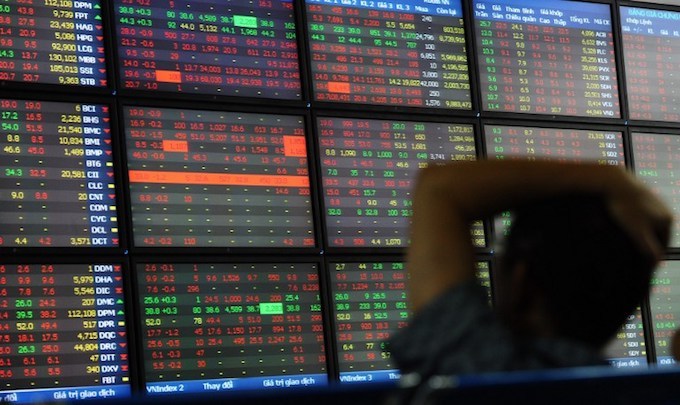
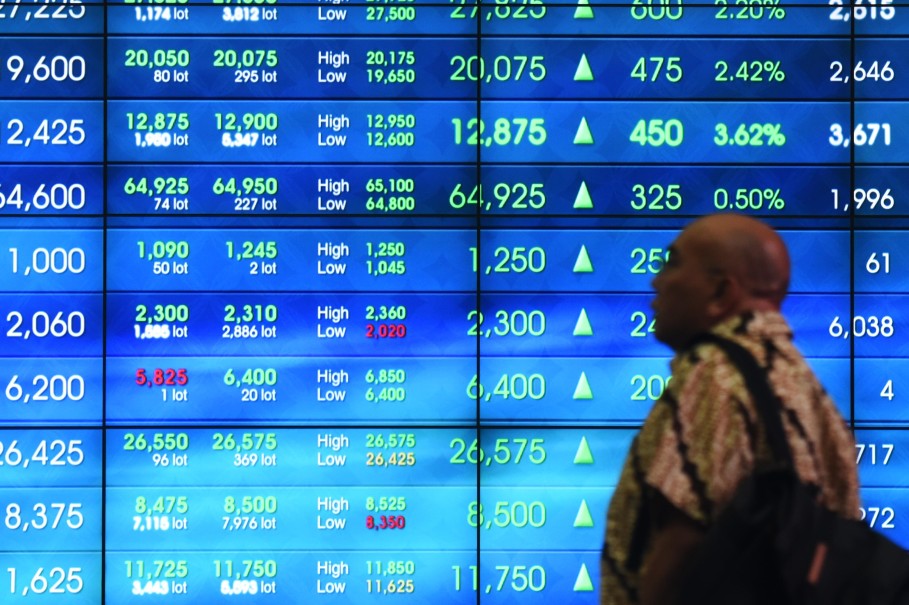
    Vietnam’s benchmark VN-Index dipped 0.1 percent to 1,502.34 points Wednesday after six gaining sessions.

    The index climbed by 10 points in the morning but strong selling pressure in the afternoon pulled it down by 1.4 points after rising nearly 58 points in the last six sessions.

    Trading value on the Ho Chi Minh Stock Exchange (HoSE), on which the index is based, declined marginally to VND28.04 trillion ($1.23 billion).

    The VN30 basket, comprising the 30 largest capped stocks, saw 22 tickers in the red, with GAS of state-owned Petrovietnam Gas falling 2.3 percent after three sessions in the red.

    PNJ of Phu Nhuan Jewelry dropped 1.8 percent, and PLX of fuel distributor Petrolimex, down 1.4 percent.

    Other losers included HDB of HDBank and PDR of Phat Dat Real Estate Development, both down 1.1 percent.

    Seven blue-chip tickers gained, with POW of electricity producer Petrovietnam Power Corporation rising 2.4 percent and SAB of brewer Sabeco gaining 2.3 percent.

    Foreign investors were net buyers to the tune of VND1.02 billion, with focus on DGC of Duc Giang Chemicals Group and MSN of conglomerate Masan Group.

    The HNX-Index for stocks on the Hanoi Stock Exchange, home to mid and small caps, rose 0.16 percent, while the UPCoM-Index for the Unlisted Public Companies Market fell 0.19 percent.

  • UBS Named as Bank for Shell Company of Roger Ng’s Wife

    UBS Named as Bank for Shell Company of Roger Ng’s Wife

    In the latest of Roger Ng’s 1MDB trial, an FBI agent claims that his wife played a major role in creating a shell company to open an account with Swiss financial giant UBS.

    Roger Ng’s wife, Hwee Bin Lim, played a central and crucial role» in helping her husband launder illicit payments from the 1MDB bond deals.

    Prosecutors claim that Low and his associates siphoned at least $500 million from the first $1.75 billion bond transactions called «Project Magnolia» with ex-Goldman colleague Tim Leissner testifying that he had received more than $60 million from Low into accounts controlled by his then-wife Judy Chan Leissner before using those accounts to send $35.1 million to Ng through an entity set up by Lim.

    In the latest development, FBI special agent Sean Fern took the stand and testified about Lim’s role in setting the shell entity using a raft of emails as proof.

    According to Fern, Lim inquired about creating a shell entity one day before the first 1DMB bond deal closed. The shell company – first named «Silken Waters» before later being renamed «Victoria Square» – was opened along with a bank account at UBS.

    Although Lim’s mother, Tan Kim Chin, was listed as the beneficial owner, Fern said he traced emails showing that bankers communicated directly with Lim about Victoria Square and the UBS account.

    Ng has argued that the money sent from Leissner’s wife to Lim, who has not been charged, was for an unrelated business transaction.

  • VietinBank Securities eyes another record year

    VietinBank Securities eyes another record year

    VietinBank Securities eyes record profits again this year through the stock market itself is likely to be down.

    Its board has approved a profit target of VND505 billion ($22 million), 5 percent up from last year.

    Last year pre-tax profits tripled to VND480 billion on revenues of VND1.06 trillion.

    Tran Phuc Vinh, its chairman, said though the stock market is no longer booming like last year and growth is likely to be slower this year, he expected the number of new retail investors to keep rising.

    “We need to invest in technology, and increase salaries, bonuses, and commissions to attract more brokers and collaborators”.

    The brokerage is also set to enter corporate bond consultancy and distribution and step up financial activities by raising its margin rate to 200 percent of shares owned.

  • Maybe SNB Should Invest in Bitcoin

    Maybe SNB Should Invest in Bitcoin

    It has long been clear to aficionados that crytptocurrencies are a new asset class belonging in portfolios as an inflation hedge. The Swiss National Bank can benefit from this, an industry expert explains.

    The Swiss National Bank has a number of extremely large investments in equities and other instruments, which it has used to counter the strength of an over-valued Swiss franc. In recent years, the SNB has made profits in the billions, but large exposures can also lead to substantial losses, due to rising inflation and higher interest rates taking the steam out of stock markets.

    While the bank has substantial foreign currency holdings which it invests as a passive investor, cryptocurrencies are not currently one of its investment vehicles. Still, there is a great deal of interest in the bank over blockchain and digital currency developments.

    Bitcoin Suisse chair Luzius Meisser, along with thirty other shareholders of the SNB, have requested the central bank invest in Bitcoin, according to an interview in Netzwoche.

    The euro is Switzerland’s main trading currency, and high inflation in the eurozone is contributing to the destruction of value. Investing in cryptocurrencies can contribute to price stability while strengthening Switzerland’s political independence, Meisser said in the interview.

  • Sberbank Approved to Issue Digital Assets

    Sberbank Approved to Issue Digital Assets

    Russia’s largest bank has been approved by the Bank of Russia to issue digital financial assets on its platform starting a month from now.

    Sberbank received regulatory approval to start issuing digital financial assets (DFAs), Russia’s largest bank announced in a statement Thursday. It has been included in the list of information system operators issuing digital financial assets (DFAs) on March 17, 2022, which means it has been approved by the Bank of Russia.

    Companies will be able to issue DFAs using Sberbank’s proprietary platform, proving cash requirements which will, in turn, enable them to attract market investments. Moreover, they can also acquire DFAs on the Sber system where they can invest funds lying idle to generate income.

    Companies will be able to make their first transaction on our blockchain platform one month from now. We are just starting our work with digital assets, realizing that further development requires adaptation of the current regulatory framework. To do that, we are ready to work closely with the regulator and executive bodies, Sergey Popov, direction of Sberbank’s Transaction Business Division, said.

    Sberbank’s license to issue DFA’s comes two month’s after Russia’s central bank warned of the risks of crypto-assets.

    The Bank of Russia issued a consultation paper in January warning that wider adoption of cryptocurrencies creates significant risks for the Russian financial market. As there are no restrictions in place, a further increase in Russians’ cryptocurrency investments and an extensive involvement of banks and other financial institutions in the cryptocurrency market might exacerbate risks inherent in this activity and pose systemic threats.

    The same day as Sberbank’s announcement, European Supervisory Authorities (ESAs comprising EBA, ESMA and EIOPA) issued a warning to consumers that crypto assets are highly risky and speculative.

    With growing consumer interest in crypto-assets, the ESAs warned that most assets are neither suitable for retail consumers as investments nor as means of payment or exchange, warning they could lose all their invested money.

    The ESAs also warned of the dangers of misleading advertisements, particularly on social media and from influencers and, that «should investments fail, there is little recourse available through existing EU financial services rules.

    Commenting on the situation in Ukraine, the ESAs said they welcome the clarification by the Council of the European Union of the scope of the restrictive measures against Russian and Belarusian entities and individuals as regards crypto-assets.

    In 2020, the Swiss subsidiary of Sberbank entered into a partnership with Geneva-based start-up Komogo, a blockchain trade finance platform.

    But earlier this month, the Swiss Bankers Association excluded both Sberbank and Gazprombank from its organization, saying Swiss banks maintain strict compliance with all applicable regulations and measures, including sanctions imposed by Swiss, international and supranational bodies. Integrity and reputation are important key factors for the financial center.

    Both Ukraine and Russia are among the top 20 countries adopting crypto according to the Chainalysis Global Crypto Adoption Index for 2021, coming in at 4th and 18th, respectively. The year before, they occupied the first two spots, although the methodology for 2021 contained one less metric than the year before, with the number of on-chain deposits dropped from the study.

  • UBS Exiting Mitsubishi Venture in Japan

    UBS Exiting Mitsubishi Venture in Japan

    Switzerland’s largest bank is selling its joint real estate venture with Mitsubishi to an investment firm.

    UBS announced it is exiting a 20-year joint real estate venture in Japan, agreeing with its partner Mitsubishi to sell its Mitsubishi Corp.-UBS Realty Inc. (MC-USBR) to investment firm KKR, UBS said in a statement released Thursday.

    UBS said it expects to book a gain in asset management and a CET1 capital increase of $900 million upon finalization of the transaction which is expected to be in April of this year.

    The joint venture between Mitsubishi and UBS Asset Management Real Estate & Private Markets was formed in 2000 and has since grown into one of the largest real estate asset management companies in Japan.

    MC-UBSR manages two Tokyo Stock Exchange-listed J-REITs, the Japan Metropolitan Fund Investment Corporation (JMF) and the Industrial & Infrastructure Fund Investment Corporation (IIF), with assets under management of around $15 billion.

    The sale does not mean that UBS is exiting the Japanese real estate market, UBS Asset Management President Suni Harford said.

    The Japanese market remains a cornerstone of our Real Estate & Private Markets business in Asia Pacific, and we remain focused on serving the needs of our clients and capturing growth opportunities in this strategically important region. Through our rapidly growing real estate investment unit, UBS Japan Advisors, we will continue to advise our clients on Japanese property investments, Harford said.

    UBS’s  said that its asset and wealth management divisions along investment banking businesses operating in Japan are not affected by the sale

  • Stock trading hits five-week low

    Stock trading hits five-week low

    Vietnam’s benchmark VN-Index rose 0.45 percent to 1,459.33 points Wednesday with trading value plunging to a five-week low as investors tread carefully amid uncertainties. The index stayed in the green throughout the day and closed nearly seven points higher after rising over six points Tuesday.

    Markets in China and other Asian countries also rose Wednesday afternoon on rising hopes Beijing will roll out more economic stimulus.

    But the trading value on the Ho Chi Minh Stock Exchange (HoSE), on which the index is based, plunged 14 percent to VND18.74 trillion ($819 million), lowest since February 7. The VN30 basket, comprising the 30 largest capped stocks, saw 15 tickers in the green, with BVH of insurance company Bao Viet Holdings rising 2 percent after hitting a four-week low.

    SAB of brewer Sabeco gained 1.8 percent, and VCB of state-owned lender Vietcombank went up 1.7 percent.

    Other gainers included MBB of lender MB, up 1.6 percent, and KDH of real estate firm Khang Dien House, up 1.2 percent.

    Twelve blue-chip stocks fell, with BID of state-owned lender BIDV losing 1.2 percent and VJC of budget airline Vietjet falling 0.7 percent.

    PDR of Phat Dat Real Estate Development and POW of electricity producer Petrovietnam Power Corporation both dropped 0.6 percent.

    Foreign investors were net sellers for the eight straight sessions to the tune of VND300 billion with focus on VIC of biggest private conglomerate Vingroup and VHM of real estate giant Vinhomes.

    The HNX-Index for stocks on the Hanoi Stock Exchange, home to mid and small caps, rose 0.60 percent while the UPCoM-Index for the Unlisted Public Companies Market gained 0.42 percent.

  • Starbucks forges regional partnership with Grab

    Starbucks forges regional partnership with Grab

    Starbucks today announced an integrated partnership with Grab, Southeast Asia’s leading superapp, across six markets, including the Philippines, Thailand, Singapore, Malaysia, Indonesia, and Vietnam. The partnership will provide customers across Southeast Asia with a seamless Starbucks Experience, allowing them to earn Starbucks Rewards benefits on purchases through Grab, have more ways to order and pay in stores, and enjoy their Starbucks orders sooner with last-mile delivery fulfillment through Grab’s delivery network.

    Customers will be able to enjoy more personalized and convenient experiences that deepen their connection to Starbucks through a range of Grab services including GrabPay, GrabRewards, GrabFood, GrabExpress and GrabGifts. Building on Starbucks and Grab’s shared commitment to creating a positive impact, the partnership will also help provide food assistance to communities in need across Southeast Asia, while reducing food waste, through the expansion of Starbucks FoodShare food donation program, starting in the Philippines this March.

    “As one of the most digitally connected regions in the world, Southeast Asia continues to inspire us to elevate the Starbucks Experience,” said Erin Silvoy, vice president, product and marketing, Starbucks Asia Pacific. “Our partnership with Grab allows us to provide more options for customers to create a Starbucks Experience that is right for them, while also helping to deliver positive impact in the communities we serve through FoodShare program.”

    “Consumers like the convenience of food delivery but they also enjoy meeting up with friends in Starbucks over a cup of coffee. We believe the online ordering and in-store dining experience will become more connected, as brands in Southeast Asia look for ways to bridge these channels. We are excited to be working with Starbucks, one of the most iconic and loved coffee retailers, on this wide-ranging partnership to deliver a more personalized, rewarding, and seamless experience to our customers,” added Saad Ahmed, Managing Director, Commercial at Grab.

    A first for Starbucks in Southeast Asia, Starbucks will integrate Starbucks Rewards with the Grab platform so that customers can enjoy more ways to earn rewards on their Starbucks orders. Starbucks Rewards members will be able to link their accounts with GrabRewards to earn both Stars and GrabRewards points for every order made through GrabFood.

    In the future, customers will also have the option to sign up for a Starbucks Rewards membership via the Grab app and redeem free beverages, birthday treats, and exclusive offers* . The company will introduce this new feature in the Philippines in the second half of 2022, with plans to expand to additional Southeast Asia markets by 2024.

    Customers will be able to enjoy the Starbucks experience through expanded options and solutions through Grab including:

    •  Pay with the same e-wallet online and in-store: Customers will have the option to pay for their orders via their GrabPay e-wallets in-store and in-app, giving them more ways to earn GrabRewards as well as Starbucks Rewards Stars.
    • Order online for in-store pick-up via GrabFood: Customers can skip the line and order their favorite food and beverage items directly from GrabFood’s self-pick up feature, which will inform them when their orders are ready for pick up.
    • Instant delivery via GrabExpress: Customers can get their favorite Starbucks food and beverages delivered to their doorsteps faster than before by GrabExpress, when they order via Starbucks owned channels .
    • Social gifting through GrabGifts: Customers can now purchase and send pre-loaded Starbucks gift cards to friends and family via the Grab app in the Philippines, Thailand, Singapore, Malaysia, Indonesia, and Vietnam.

    Creating positive impact through Starbucks FoodShare program

    As part of Starbucks People Positive aspirations, focused on enhancing the well-being of all who connect with Starbucks, the company will launch its FoodShare food donation program this March in the Philippines, starting with 40 stores in the Metro Manila area. Starbucks regional partnership with Grab will enable participating stores to connect with Grab drivers to pick up food donations from stores daily and deliver them to local non-profit organizations such as the Philippine Food Bank Foundation. Starbucks aims to expand the reach of the program to more communities in the Philippines, as well as additional markets throughout Southeast Asia.

    FoodShare started in 2016 after Starbucks partners (employees) advocated for a program that would allow stores to donate unsold food and distribute it to people facing hunger in communities across the U.S. FoodShare is now available at 100% of US and Canada company-owned stores.

    Since entering the Southeast Asia region over 25 years ago, Starbucks has expanded to more than 1,882 stores across the Philippines, Thailand, Singapore, Malaysia, Indonesia, and Vietnam, with more than 19,853 partners proudly wearing the green apron. The company is committed to driving continued sustainable growth by investing in digital innovations that deliver meaningful value and convenience
    and social impact initiatives that create positive impact in the communities we serve.
  • Former Wirecard Bosses Indicted

    Former Wirecard Bosses Indicted

    Three ex-Wirecard bosses could face ten years in prison after prosecutors issue indictments, while one former executive is still on the run.

    In June 2020, German fintech Wirecard was forced to admit that there was a 1.9 billion euros ($2.2 billion) hole in its balance sheet, leading to bankruptcy proceedings. Now, three former heads of the firm have been indicted, according to a story in Germany’s Handelsblatt.

    Prosecutors in Munich accuse former Wirecard CEO Markus Braun of professional fraud, misappropriation of company assets, balance sheet falsification, and manipulation of the company’s stock price, according to the 480-page indictment obtained by the German newspaper.

    Oliver Bellenhaus, who managed Wirecard’s Dubai office, and Stephan von Erffa, responsible for accounting, were charged along with Braun, and could face up to ten years in prison. Bellenhaus, alleged to have embezzled millions, has confessed and is the key witness for the prosecution. Testimony he provided so far has led to the imprisonment of Braun and von Erffa.

    Left out of the indictment is Jan Marsalek, the former Wirecard COO, who is a wanted fugitive, and could currently be in Russia, the paper said.

    Investigators say that Braun and his co-defendants were cooking Wirecard’s books as early as 2015, with fake bookings and revenues with partner companies. As a result, it is very likely the former managers will have to stand trial, Handelsblatt said. They are presumed innocent.

    Wirecards auditors, EY, have been dragged into the proceedings, with insolvency administrator Michael Jaffé exploring claims for damages against the auditor. If it can be established that EY made intentional errors when auditing Wirecard’s books, they would be subject to unlimited liability.

    A report last year from Germany’s Institute of Public Auditors known as the «Wambach Report,» didn’t paint a very flattering picture of EY’s auditing of Wirecards books,  another Handelsblatt report said.

  • More Money Reaching Fewer Fintechs

    More Money Reaching Fewer Fintechs

    Although there was a slight slowdown in the Swiss fintech scene last year, there is still much to celebrate.

    In 2021, the number of fintech companies in Switzerland declined for the first time in six years, yet the volume of business increased, according to an industry study by Lucerne University of Applied Sciences and Arts (HSLU)

    At year-end Switzerland was home to 384 fintechs, down by 21 companies in 2020. Since 2015, the number of companies in the sector had grown steadily year on year, with a real boom from 2017 to 2018 when numbers jumped from 220 to 356 firms.

    Despite the decline, the report highlights positive trends such as the increase in employees working at fintech companies and the total amount of funding received by firms.

    Venture capital activity in the Swiss fintech sector reached record levels, while the number of financing rounds increased to 87 from 61 in the previous year. Volume also rose significantly to 446 million Swiss francs from 259 million Swiss francs the year before.Thematically, analytics, artificial intelligence and big data are in the lead, with analytics seen as an area, which will continue to grow.

    The potential of using data in the financial sector is increasingly being recognized, but not yet fully exploited, Thomas Ankenbrand, lecturer and project leader at the university said.

    The number of companies focusing on B2B, i.e., business customers, has also increased, while companies are predominantly internationally oriented, he said. «The low-growth Swiss home market is often too small for fintech companies hungry for growth, Ankenbrand said.

    Open finance is also an important area: «Especially in the area of wealth management, open finance offers good opportunities for success,» he said, pointing to the global market size and Swiss market share.

    Financial ecosystems as a future business model will require the widespread adoption of common standards, something that banks and fintechs are still struggling with, he said.

  • Samsung Pay’s security receives a “very good” test rating

    Samsung Pay’s security receives a “very good” test rating

    Samsung Pay’s security is in the “very good” category. This was announced by the tech giant in an official newsroom post. According to the post, Samsung Pay scored 450 points out of 500 in a security test conducted by an independent agency called umlaut. Umlaut is part of the Ireland-based IT company Accenture and offers ‘advisory and engineering services to clients all over the world.’

    In its post, Samsung stated that Samsung Pay meets the requirements of umlaut’s test procedure in ‘all tested aspects.’ During the security test, Samsung Pay was tested in four areas:

    • security of data traffic between smartphone and bank
    • compliance with secure programming standards
    • data protection on the smartphone
    • protection against malicious attacks by third parties.

    In the “security of data traffic” tests, testers inspected the types of security algorithms and protocols implemented into Samsung Pay. They also examined how sensitive data is transmitted and if the app has the appropriate measures in place to protect its users from man-in-the-middle attacks, which control and manipulate data traffic.

    In the “compliance with secure programming standards” test, the testers from umlaut checked if Samsung Pay uses secure programming methods and if there is any hidden sensitive information in the app’s source code. During the “checking data protection” tests, the experts tested how securely the Samsung Pay app stores sensitive data and if this data is protected from third parties. The app was also tested against impersonation attacks. These are attacks where the user was tricked into using Samsung Pay on fake apps or websites.

    In regard to Samsung Pay’s good test results, Gerrit Povel, Vice President, Direct to Consumer Division at Samsung Germany, stated, “We play it safe with mobile payment. The result of the independent test by umlaut proves the high priority that security has in the development and operation of the Samsung Pay app. The rating ‘very good’ underlines the role of Samsung Pay as a leading solution in mobile payment.”

  • UBS Discloses Russian Exposure

    UBS Discloses Russian Exposure

    Switzerland’s biggest bank warns about ongoing effects on markets and the global economy from measures caused by Russia’s attack on Ukraine.

    Out of UBS’ total emerging market exposure of $20.9 billion at the end of last year, $634 million was attributable to exposure in Russia, the bank said in its annual report for 2021 Monday.

    This amount, which has been reduced since, does not include assets totaling $51 million held in the bank’s Russian subsidiary. Nor does it account for unexpected increases in exposures due to settlement risk on certain open transactions with Russian banks and non-bank counterparties or Russian underlying due to sanctions, it said. As of March 3, the bank identified a «small number» of global wealth management clients subject to the recently introduced sanctions, who had outstanding loans below $10 million.

    As of the same date, UBS’ market risk exposure to Russia was limited while direct country risk exposures to Ukraine and Belarus as of December 31 were insignificant. Furthermore, the bank does not hold any material reliance on Ukrainian or Belarusian collateral within its Lombard portfolio, it said.

  • UBS Bankers in Spain Jumping Ship

    UBS Bankers in Spain Jumping Ship

    UBS sees bankers and managers depart from its Spanish unit prior to its sale to a local competitor. A decision by UBS last year to sell its Spanish unit to Singular bank appears to have led to an exodus of at least eight private bankers and managers, Bloomberg reported Wednesday.

    Two of the departing bankers are said to handle very wealthy clients, while another investment manager with over 16 years experience is joining them.

    The departures add to those who left since UBS announced the sale in October. They include Jose Maria Abril Taboada, who joined Spain’s Bankinter in February, and Jose Maria Gil de Santivanes who in January left for Credit Suisse, the report adds.

    UBS’s European bank led by manager Christine Novakovic, is selling its Spanish branch to Singular Bank, which specializes in digital solutions. Investment banking and fund sales activities in the country are not part of the sale, however.

    The sale, which is expected to be concluded in the third quarter of this year, was to include all client assets and the UBS team in Madrid. In that respect, some new calculations might be due.

  • UBS Revamps Family Office

    UBS Revamps Family Office

    The architect of UBS’ family office business and top banker, Joe Stadler, is stepping aside as the unit gets an overhaul.

    UBS is reshuffling its global family office division, which caters to the needs of its wealthiest clients, citing an internal memo.

    The prestigious unit will become part of the new global family and institutional wealth (GFIW) unit, which will combine various services including Lombard lending, trading, hedge fund services (prime brokerage) and private market activities. Changes are effective April, the report said.

    The new unit will be headed by investment banker George Athanasopoulos, who will report to both investment bank chief Rob Karofsky and the two co-heads of global wealth management (GWM), Iqbal Khan and Tom Naratil.

    Athanasopoulos will continue to continue to serve as co-head of UBS trading and will report to both investment bank chief Rob Karofsky.

    As executive vice chair in GWM, placed directly under divisional head Khan, Stadler will be responsible for individual clients in the division.

  • Sanctions Hit First Banks

    Sanctions Hit First Banks

    The first Eurozone Banks get hit by sanctions while Switzerland is waiting to see if the Federal Government follows in the EU’s steps.

    To some degree or another, Swiss banks will not be able to escape sanctions against Russia, whether they affect corporate loans, commodity trade financing or business with wealthy clients from Russia.

    Switzerland’s second-largest bank, Credit Suisse, has stopped financing of commodity trades out of Russia, for example.

    Swiss financial watchdog Finma told finews.com it is in talks with banks about the risks posed by sanctions on their Russian business. It is unclear to what extent subsidiary institutions operating in Switzerland such as Sberbank (Switzerland), Gazprombank (Switzerland) and VTB Capital, primarily in financing commodity deals, will be affected.

    Sberbank, Gazprombank and the Association of Foreign Banks in Switzerland declined comment to finews.com on the current situation.

    In the Eurozone, Russia’s Sberbank subsidiaries are teetering on bankruptcy due to sanctions imposed by the EU, the U.S. and U.K.. According to the ECB’s banking regulator, they are no longer able to service their debts or other liabilities, and the parent company is also prohibited from injecting funds.

    According to the report, Vienna-based Sberbank Europe and its two euro-area subsidiaries, Sberbank in Croatia and Sberbank Banka in Slovenia, are affected.

    Sberbank Europe and its subsidiaries experienced significant deposit outflows as a result of the impact of geopolitical tensions on their reputations,» the banking regulator said in a statement. «As a result, their liquidity position has deteriorated. Moreover, no measures are available where there is a realistic prospect that this position will be restored at the group level and at the level of individual subsidiaries in the banking union.

    The Austrian Financial Market Authority (FMA) also reacted, temporarily suspending nearly all business operations of Sberbank’s European subsidiary. The Vienna-based bank is «not allowed to carry out any withdrawals, transfers or other transactions.» Depositors, however, are allowed to withdraw 100 euros per day to cover daily needs.

    We are making every effort and fully support the authorities to use their powers to address this unprecedented situation in the best interest of customers, Sberbank Europe CEO Sonja Sarkoezi wrote in a statement.

    Several banks in the group have seen a significant outflow of customer deposits within a very short period of time, she said, resulting in daily cash withdrawals being restricted in some cases.