Category: Finance

Retail News Asia is committed to providing both local and global retailers with the latest Finance news throughout the Asian market. This on a daily base.

  • Axa Invests in Digital Health App

    Axa Invests in Digital Health App

    Axa Switzerland is expanding its focus on health by backing a start-up offering digital health solutions at work.

    Axa Switzerland is supporting health tech start-up Kinastic as a lead investor, it said in a statement Thursday, without disclosing further details of the deal.

    Kinastic is an app offered to staff by their employers to improve health in the workplace with tailored programs around exercise at work, nutrition, and mental strength.

    Axa previously launched Wecare, a health program included in its occupational benefits package sold to companies.

    We want to help as many employees as possible lead a healthy lifestyle – and we want to do this digitally and as individually as possible, Kinastic CEO Michael Kubli, said in the statement.

    The Winterthur-based startup has been working with

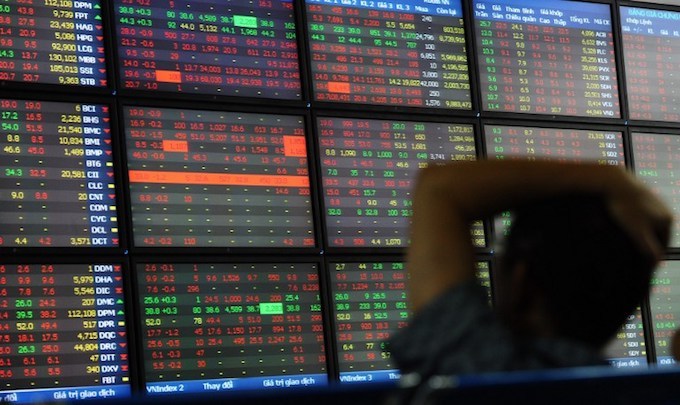
  • Nearly half of main bourse stocks hit floor prices

    Nearly half of main bourse stocks hit floor prices

    Vietnam’s benchmark VN-Index plunged 4.49 percent to 1,269.62 points Monday, a nine-month low, with 221 tickers out of 484 on the Ho Chi Minh Stock Exchange hitting the floor. The index stayed in the red throughout the day and closed nearly 60 points lower after losing 31 points in the last session.

    It is now at the lowest since July 23 last year, having fallen 15 percent since the beginning of the year.

    Major Asian markets also closed in the red Monday, with China’s Hang Seng Index losing 3.8 percent and Japan’s Nikkei 225 falling 2.5 percent, weighed by global growth worries due to lockdowns in China and aggressive policy tightening from central banks.

    The VN30 basket, comprising the 30 largest capped stocks, saw all tickers losing, with 13 of them closing at floor price.

    MWG of electronics retail chain Mobile World, PLX of fuel distributor Petrolimex and TCB of the largest private lender Techcombank all fell 7 percent.

    BID of state-owned lender BIDV, BVH of insurance company Bao Viet Holdings and CTG of state-owned lender VietinBank dropped 6.9 percent.

    Foreign investors were net buyers to the tune of VND547 billion, mainly buying VHM of real estate giant Vinhomes and HPG of steelmaker Hoa Phat Group.

    The HNX-Index for stocks on the Hanoi Stock Exchange, home to mid and small caps, dropped 5.84 percent, while the UPCoM-Index for the Unlisted Public Companies Market fell 5.28 percent.

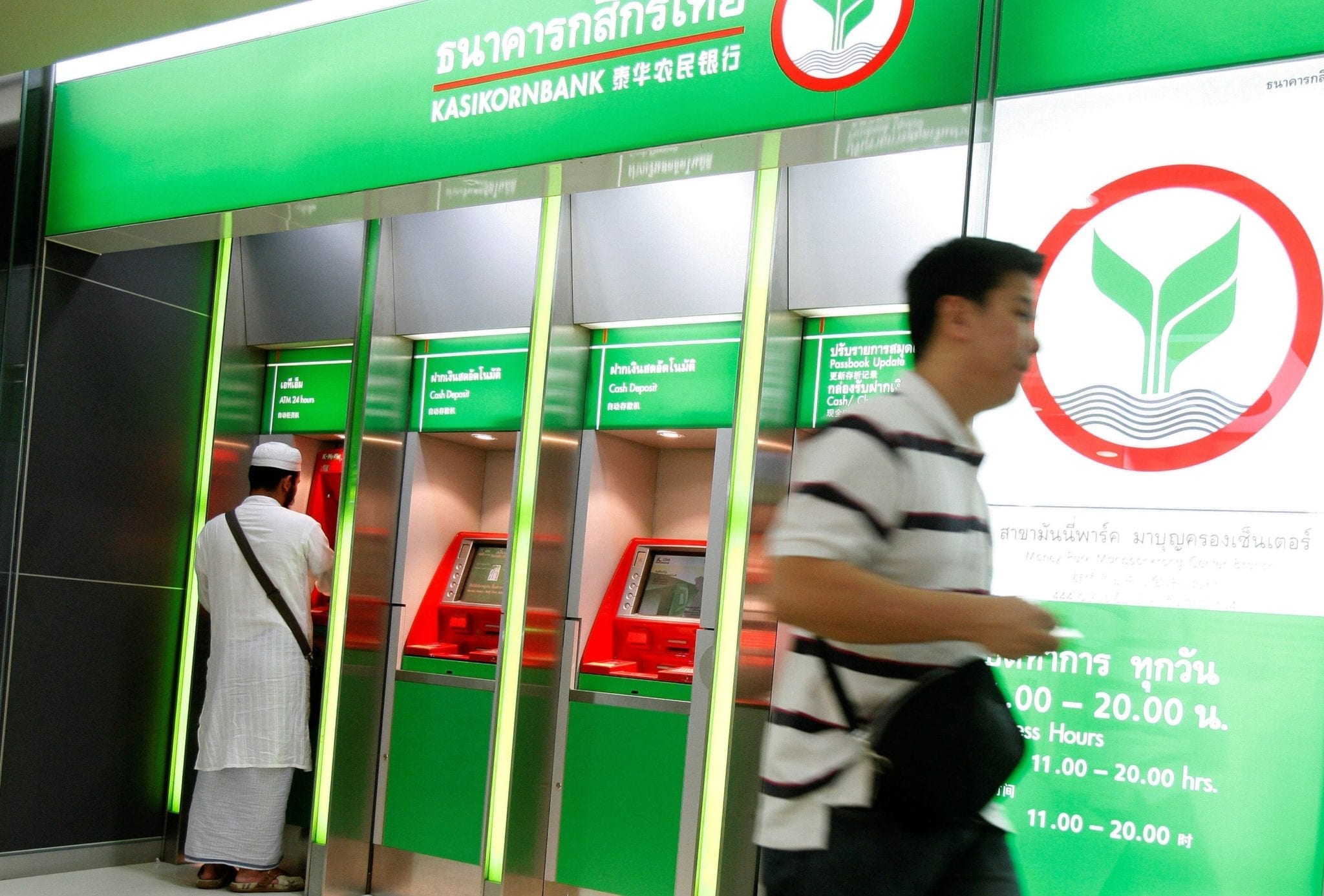
  • KBank appoints Ms. Voranuch Dejakaisaya as Executive Chairman-KBTG

    KBank appoints Ms. Voranuch Dejakaisaya as Executive Chairman-KBTG

    KBank recently announced the appointment of Ms. Voranuch Dejakaisaya as Executive ChairmanKASIKORN BusinessTechnology Group (KBTG) to supervise the IT systems of KBTG and KBank, and help steer the organizations’ transformation plans and regional expansion.

    Ms. Voranuch Dejakaisaya, currently aged 62, graduated with a Bachelor of Science, Statistics, Chulalongkorn University, and a Master of Business Administration (M.B.A), Chulalongkorn University. She has extensive work experience with a number of organizations, including GE Capital (Thailand) as Chief Information Officer SEA/IT Regional Head, Bank of Ayudhya PCL as Chief Information, and Siam Commercial Bank PCL as Chief Information & Operations Officer. Prior to her retirement, she was Chief Technology Officer at SCBX PCL. She then joined KBank as Executive Chairman-KBTG in May 2022.

    Ms. Voranuch Dejakaisaya received the CIO50 ASEAN 2019” award (Ranked #1) from the International Data Group (IDG) – a world-class IT consulting company, and the “Chief Information and Technology of the Year 2019” award from The Asian Banker. Additionally, she was Chairman of the Thai Bankers’ Association’s CIO Club from 2019 to 2020.

  • Zurich Fintech Hires Wirecard Whistleblower

    Zurich Fintech Hires Wirecard Whistleblower

    A former CEO of German fintech Wirecard is joining a Zurich-based startup. Blockchain fintech FQX is hiring James Freis as a regulatory technology officer, it said in an emailed statement Friday.

    Freis helped uncover fraudulent activities at Wirecard, going on to lead the company as its CEO. His ties to the payments company, which continues to be at the center of an international financial scandal, have put him in the media spotlight.

    We’re honored to have James Freis join our team. With his unique combination of skills at the intersection of regulation, financial market infrastructure, and technology he is ideally positioned to work on FQX’s RegTech Engine to enable programmable debt securities and compliance by design, FQX’s Co-CEO Benedikt Schuppli, said.

    Freis started his career at the U.S. Federal Reserve in New York. From 1999 to 2005 he worked for the Bank for International Settlements (BIS) in Basel. In 2007, he was appointed CEO of the Financial Crimes Enforcement Network (FinCEN), an agency of the U.S. Department of Justice (DOJ).

    After a six-year term as managing director at Deutsche Boerse, Freis joined Wirecard as a manager in 2020. In June of the same year, the company was forced to admit that there was a 1.9 billion euros ($2.2 billion) hole in its balance sheet, after which long-time Wirecard boss Markus Braun was pressured to resign.

    Freis stepped into the CEO position which he held for seven months.

  • UBS Nets Southeast Asia Wealth Planning Veteran

    UBS Nets Southeast Asia Wealth Planning Veteran

    UBS Global Wealth Management to bolster Southeast Asia wealth planning capabilities with a 20-year veteran. Michelle Lau will join UBS Global Wealth Management (GWM) as its head of wealth planning, Southeast Asia.

    Based in Singapore, Lau will start her new role in the third quarter of 2022.

    Lau is a seasoned veteran with 20 years of experience at HSBC Private Bank where she held various roles including APAC regional head of wealth planning. After last spearheading the ultra-high net worth desk at HSBC Singapore, she joined IPG Howden as its Southeast Asia chief executive to oversee the region, together with the Middle East.

    Wealth Planning Demand

    Private banks continue to focus on enhancing wealth planning capabilities in order to cater to client demands as part of an expected large-scale generational transfer of wealth transfer in Asia expected to total $2.54 trillion by 2030, according to a report by Wealth-X.

    We are confident that Lau will elevate our wealth planning offerings to the next level, accelerate our life insurance positioning and continue to develop and build the team to provide holistic coverage on all ‘legacy-related’ topics to our clients, said UBS GWM’s APAC co-head of advisory & sales and client services Dino Rinaldi in the memo.

    A spokesperson for the bank confirmed the contents of the memo.

  • Saxo Bank: Female Investors Pile In to Stocks

    Saxo Bank: Female Investors Pile In to Stocks

    Inflation has finally managed what banks have been trying to for years – get women investors into equities, CEO George Falkner said.

    Everything is becoming more expensive but I am not getting anything on my account: George Falkner has been hearing that often. Although he has only been running the Swiss online arm of Danish lender Saxo Bank since last December, he has dealt with the pandemic, the Ukraine war, rising interest rates – and higher inflation. According to him, those same factors are driving his clients and an increasing proportion of them are women.

    One-third of our new clients are female», the CEO said, who finds himself running a pure-play digital bank after a career in investment and private banking. Inflation appears to be a driving impulse, he observes. They want to understand the forces that are driving inflation and figure out how to protect their assets against it.

    We see that women investors are more long-term oriented and not as interested in trading, Falkner conveys. They also appear to be particularly interested in material assets such as precious metals.

    That fits in well with the investment business that Saxo wants to build up in Switzerland. Although trading remains the online bank’s most important pillar, it is also on the look for revenues from medium- and long-term-oriented investors. Inflation has been a surprising driver in all of that as it attracts a younger – and more female – clientele.

    According to Falkner, Saxo Switzerland has been registering twice as many new investment clients as trading clients, with first-quarter 2022 revenues being up 15 percent from a year earlier.

    Looking back at 2021, he remembers how almost couldn’t onboard everyone, Falkner indicates. Yet purely from a performance perspective, 2021 was weaker than a year earlier, as the bank reported Wednesday. Net profit fell slightly to 7.7 million Swiss francs ($7.9 million). Operating revenues fell to 22.1 million francs from 25.3 million a year earlier. According to Falkner, that is partly due to the acquisition of Strateo, a domestic competitor.

    Saxo has also been drawing younger investors through its white label partnership with robo-advisors such as Selma Finance, Truewealth, and Invoya, which use it as a trading platform, and which are growing strongly. Some are seeing several hundred new clients a month, he says. It also comes after a long dry spell for bot-driven managers in 2019.

    This has all led to Switzerland becoming the third best market for the Scandinavian group, according to Falkner. In May, he wants to start testing something Saxo has been doing in Denmark – holding evening investment seminars for women. He wants to hold the first in a flower shop and he already has more than 200 guests signed up. But he himself will not be going, he emphasizes, as the event is women only.

  • Google Joins Swiss Open Banking Initiative

    Google Joins Swiss Open Banking Initiative

    Switzerland’s Openwealth initiative gains momentum as one of the world’s largest cloud providers becomes a member.

    Google Cloud becomes the latest addition to the Openwealth Association, joining as an API service provider, the organization announced on Thursday.

    The application programming interface (API) allows third-party providers to dock with IT platforms, in this case, banks and wealth managers. As a leading cloud provider, Google Cloud will allow Openwealth to disseminate the API standard globally.

    Apigee, Google’s API management platform, is one of the most widely used open API publishing software solutions in the world, used by many OpenWealth members, it said.

    The Swiss industry initiative aims to standardize the interfaces of a wide range of institutions and simplify data exchange between custodian banks and portfolio management system providers and custodian banks themselves.

    Google joins UBS, Credit Suisse, Julius Baer, ZKB, and SIX, among others, in the industry initiative.

  • VN-Index gains with plunging trading value

    VN-Index gains with plunging trading value

    Vietnam’s benchmark VN-Index rose 0.93 percent to 1,353.77 points Wednesday but with trading value lowest in nine months as investors’ sentiment remain low after recent plunges. The index stayed in the red throughout the day but strong buying pressure in the last hour of trading pushed it up over 12 points.

    Together with the Tuesday session, VN-Index has risen nearly 43 points after losing 68 points on Monday in one of the worst trading sessions in Vietnam’s stock market history.

    Trading on the Ho Chi Minh Stock Exchange (HoSE), on which the index is based, fell nearly 31 percent to VND14.54 trillion ($633.09 million), lowest since the end of July.

    The VN30 basket, comprising the 30 largest capped stocks, saw 14 tickers gained, led by HPG of steelmaker Hoa Phat Group with a 3.2 percent rise.

    It was followed by STB of Ho Chi Minh City-based lender Sacombank, up 2.9 percent, and MSN of conglomerate Masan Group, up 2.6 percent.

    CTG of state-owned lender VietinBank rose 2.4 percent, and GVR of Vietnam Rubber Group gained 2.1 percent.

    Eleven blue chips fell, with VRE of retail real estate arm Vincom Retail falling 1.8 percent.

    FPT of IT giant FPT Corporation, VNM of dairy giant Vinamilk and VPB of private lender VPBank all fell 1.2 percent.

    Foreign investors were net sellers to the tune of VND261 billion, mainly selling VND of brokerage VNDirect and DXG of real estate developer Dat Xanh Group.

    The HNX-Index for stocks on the Hanoi Stock Exchange, home to mid and small caps, rose 3.45 percent while the UPCoM-Index for the Unlisted Public Companies Market gained 0.22 percent.

  • No Back to the Office at UBS

    No Back to the Office at UBS

    The transition to a new working culture at UBS is well underway as many employees adopt agile working methods, while others gain total freedom.

    Around 10,000 – or one in ten – employees at Switzerland’s largest bank now work according to agile working methods, the bank said in its earnings release Tuesday.

    Agile, which is often used in software development where product cycles are short and requirements for a solution can change quickly, has the objective of making teams more efficient and flexible. It is central to CEO Ralph Hamers’ grand plan to foster a culture of engineers at UBS.

    Flexibility is also a priority when it comes to the bank’s working arrangements: In the USA, the bank is offering certain employees the possibility to work completely from their home office, while continuing to support hybrid working methods in other locations.

    In Swiss banking, a 40 to 60 percent rule for remote working could become the new standard, and one adopted by Credit Suisse last month.

  • UBS Weathers First Quarter Headwinds

    UBS Weathers First Quarter Headwinds

    Switzerland’s largest bank UBS has weathered multiple first-quarter headwinds, turning its best first-quarter net profit in over a decade. UBS reported Tuesday a net profit of $2.1 billion in the first quarter, exceeding expectations, showing the bank was able to steer a course through several challenges in the first quarter and posted its best first-quarter results since 2007.

    The result improved on the $1.3 billion reported for the fourth quarter of last year and was better than the $1.8 billion booked during the first three months of 2021.

    Switzerland’s largest bank accomplished this in the face of the Ukraine war, inflation showing no signs of abating anytime soon, and central banks that are tightening the loose-money spigots. «Our strong results today speak to our ability to accomplish our objectives regardless of the backdrop,» said UBS CEO Ralph Hamers.

    UBS said it reduced its Russia exposure early and actively and had a direct country exposure of $400 million as of March 31 of 2022. It expects a firm-wide P&L negative impact of $100 million.

    The bank said it is not conducting any new business in Russia or with Russia-domiciled clients. However, it will continue to monitor settlement risk on certain transactions with Russian bank and non-bank counter parties, which might result in unexpected increases in exposures.

    Pre-tax profit was $2.7 billion, improving by one billion dollars from the fourth quarter result of $1.7 and bettering the comparative year-ago quarter of $2.3 billion.

    Earnings per share were $0.61 in the first quarter, up from $0.38 in the fourth quarter of last year and higher than the $0.49 reported during the first quarter of 2021, the results showed.

    Global wealth management (GWM) booked a pre-tax profit of $1.3 billion, with the unit reporting net new fee-generating assets of $19 billion in the first quarter compared to 36.2 billion in the same year-ago quarter. Total fee-generating assets were $3.1 trillion As of the first quarter of last year, the GWM unit no longer reports net new money every quarter, and will only disclose the figure in its annual report.

    Earlier this month, finews.com reported that 2021 was a bumper year for Swiss banks attracting new money inflows. But this year, wealth and asset managers are facing geopolitical and economic uncertainty resulting from the ongoing war in Ukraine and inflation showing no sign of abating anytime soon. Add to the mix central banks that are starting to close the taps of easy money flowing into financial markets.

    The investment bank’s division’s 126 percent pre-tax profit growth from the comparative quarter was mainly attributable to Archegos-related losses in the same quarter last year. Excluding that loss, revenues increased by 4 percent, or just over $100 million, primarily from increased revenues in equity derivatives, rates, and foreign exchange.

    While the path of economic growth has become much more uncertain, UBS expects growth in economic activity to continue, but increased uncertainty could continue to affect client activity levels and asset prices. However, even as central banks are tightening policy to arrest rising inflation, the banks said that rising interest rates, notably the US dollar, are expected to lead to higher net interest income.


  • The Russian Bank That Escaped Sanctions So Far

    The Russian Bank That Escaped Sanctions So Far

    Tinkoff Bank has so far avoided being sanctioned as its founder and Putin critic Oleg Tinkov stayed in an orbit neither too close nor far from the Kremlin.

    The Russian bank Tinkoff has avoided being directly caught in sanctions that hit rival banks such as Sberbank and Gazprombank related to Russia’s invasion of Ukraine.

    Founded by Oleg Tinkov 16 years ago, Tinkoff Bank is one of Russia’s largest banks that is not state-run and, in addition to avoiding sanctions, has remained on the all-important Swift global messaging system.

    As a result, the bank has benefitted as people flocked to open accounts at the bank, while others transferred funds from Sberbank and VTB, which together account for nearly half of the banking market.

    Tinkov bristles at being labeled an oligarch, and the son of a coal miner and seamstress prefers being viewed as a self-made businessman who didn’t need a cozy relationship to win big contracts. He is also an outspoken critic of the War in Ukraine.

    In a series of posts on Instagram, he said I don’t see ANY beneficiary of the crazy war! Innocent people and soldiers are dying» he said in one. In another, he wrote How will the army be good, if everything else in the country is shit and mired in nepotism and servility?. That is a pretty clear indication he is attempting to distance himself from Russian President Vladimir Putin.

    While the bank he founded has managed to escape sanctions, Tinkov himself has not. Last month he was put on the sanctions list in the U.K., which means having had his assets frozen, barred from doing business with companies and citizens there, and is prohibited from entering the country.

    The bank, however, said this would not affect it since he no longer holds a majority or controlling interest, having reduced his stake to 35 percent. Moreover, the bank said he no longer works there and is now being run by Oliver Hughes and Pavel Fedorov.

    Tinkov has also tangled with western governments, notably the U.S. where he was accused of under-reporting assets to the Internal Revenue Service (IRS) to the tune of $1 billion after Tinkoff Bank went public.

    Just before the IPO, Tinkov renounced his U.S. citizenship, which is something the IRS views as a big no-no. For people giving up their citizenship having a net worth over of $2 million, an exit tax based on all assets including homes, deferred compensation, and pensions at the time of expatriation is likely to be applied. The case was later settled for just over $500 million, allowing him to avoid extradition to the U.S.

  • UBS Currently Sees Little Hope for Credit Suisse

    UBS Currently Sees Little Hope for Credit Suisse

    Switzerland’s two major banks are usually cautious about rating each other’s shares. But right now, UBS sees little potential in its rival. Credit Suisse’s share continued to lose value and they are now trading just above 7 Swiss francs ($7.3) after it made a warning earlier this week that it would report a first-quarter loss. There is little to suggest that the stock will recover in the foreseeable future, especially after CEO Thomas Gottstein spoke of 2022 as a transition year. Now, many bank analysts seem to be chiming in with the same view.

    British investment bank Barclays lowered its price target for Credit Suisse shares from 7.50 francs to 7.00 francs on Thursday, with their banking specialist, Amit Goel, rating the stock as underweight, which ultimately can be interpreted as a recommendation to sell.

    UBS banking analyst Daniele Brupbacher was a little less harsh on his employers’ rival, giving Credit Suisse shares a twelve-month price target of CHF 7.40 and rating the stock as neutral earlier this week. So while not advising to sell, he is advising against buying it even at such a low price.

    When the two major Swiss banks rate each other, they usually do so rather cautiously. Although they are ultimately competitors, they also play a decisive role in shaping the Swiss financial center. And no one is interested in having just one big bank in the future.

    In an interview earlier this year, UBS CEO Ralph Hamers said that it’s never a good thing when a competitor has problems because the reputation of all banks suffers as a result.

    For decades, the business models of UBS and CS were quite similar, but have diverged over the past decade or so. UBS saw no need to repaint, merely touching up its success model, as former UBS Chairman Axel Weber liked to say. Credit Suisse has been laboring for years to make a new start without success, and scandal after scandal has beleaguered the bank.

    This is reflected in the performance of Credit Suisse’s share price and the corresponding ratings of UBS. The last time UBS banking analyst Brupbacher gave his rival shares a buy rating was in April of last year. At that time, the stock was trading at 9.73 francs, and UBS had formulated a price target of 10.80 francs.

    In December 2021, UBS downgraded Credit Suisse shares to neutral, mainly due to the ongoing turbulence surrounding the Greensill funds and the Archegos hedge fund, but also because then Chairman António Horta-Osório had not succeeded in giving the bank a new, credible strategy. UBS’s target price for Credit Suisse’s shares was 9.30 Swiss francs, cut again in February to 8.50 francs and now to 7.50.

    It is quite clear. From now on, there will definitely be one financial center – two business models – and the two competitors will open up a new capital in Swiss banking history. While UBS pulls away, Credit Suisse will be hard-pressed to avoid announcing personnel changes when it presents its quarterly figures next Wednesday. That is the only real way it can credibly hold out the prospect of a new start.

  • Upgrade to Apple Pay tightens fraud prevention features

    Upgrade to Apple Pay tightens fraud prevention features

    Apple Pay is the company’s mobile payment platform. It’s a brilliant money-making scheme because Apple receives a cut of .15% of the value of each transaction that uses the feature (15 cents for each $100 purchase). With more than a million retail stores, gas stations, supermarkets, and restaurants accepting Apple Pay in the U.S. alone at the start of this month, the volume of transactions that run through the platform is large enough to generate big bucks for Apple.
    Some Twitter users noted that a notification badge showed up on their payment credit card inside the Wallet app today. That is because Apple has upgraded Apple Pay to improve the fraud prevention for some credit cards. According to Apple, “For cards with certain enhanced fraud prevention, when you attempt an online or in-app transaction, your device will evaluate information about your Apple ID, device, and location (if you have enabled Location Services), to develop fraud prevention assessments which are used by Apple to identify and prevent fraud.”
    Apple adds that it will share “fraud prevention assessments as well as information about your transaction (such as purchase amount, currency, and date) with your payment card network for fraud prevention.” You can avoid having to share this data with your payment card’s network by changing the payment card that you use for purchases made with Apple Pay to one that doesn’t sport the notification.

    To remove your payment card on the Wallet app, open the app and tap on the image of that card. Press on the three dots in the upper right of the display and when the new page loads, scroll to the bottom and tap on Remove This Card to well, remove this card. To add a new card, open the Wallet app and tap the “+” icon on the upper right of the display. You then scan the card and follow the directions to add it to the Wallet app.

    While this writer doesn’t see the notification badge on a Visa card placed in the Wallet app, some Visa users worldwide have started to see the badge. With so much cash tumbling into Apple’s coffers from Apple Pay, anything that Apple can do to get more users to pay using the platform brings more money to Apple’s bottom line. If that means making the card used for Apple Pay transactions safer to use thanks to enhanced fraud notification, so be it.


  • Switzerland as a Sustainability, Blockchain and Fintech Hub

    Switzerland as a Sustainability, Blockchain and Fintech Hub

    It seems rather paradoxical that Switzerland is both a hub for sustainability and an energy-gobbling blockchain hub.

    The latest data from Switzerland’s Department of Finance underscores the growing importance of blockchain and fintech for the country’s financial sector. At the same time, sustainable investments are high on the agenda in Switzerland, the two seemingly at odds with each other.

    The financial industry continues to be one of the most important sectors in Switzerland, even as other areas of the economy have grown more strongly, a report compiled by the State Secretariat for International Financial (SIF) showed.

    The contribution to the Swiss economy from financial and insurance services increased slightly to CHF 66.9 billion in 2021 compared with CHF 64.4 billion a decade ago. At the same time, Switzerland’s GDP expanded more rapidly.

    Employment figures show this as well. Most recently, around 212,000 people worked in the sector, compared with around 216,000 ten years ago. Only outside the core financial sector did employment grow in the last decade, from around 50,000 to 63,000.

    According to the data, sustainable investments showed steep growth, their volume growing by 31 percent last year to over 1.5 trillion Swiss francs, according to a market survey conducted by Swiss Sustainable Finance (SSF).

    Switzerland has developed into a hub for startups in blockchain technology and fintech. The number of companies has grown to 1,128 in 2021 from 960 in the previous year, employing 6,002 people compared to 5,184 in 2020.

    According to a study, the number of fintech companies stagnated in 2021, but the volume of business nevertheless increased.

  • UBS U.S. Legal Dispute Ends With a Wire Transfer

    UBS U.S. Legal Dispute Ends With a Wire Transfer

    A lengthy legal battle waged ends in defeat for the Swiss bank and a multi-million dollar wire transfer to a former compliance officer in Chicago.

    Having exhausted multiple appeals in a defamation suit in the United States, and with no option left other than the Supreme Court, UBS’s business in the U.S. agreed to pay a former compliance officer $14.1 million via wire transfer on April 12, ending a four-year legal dispute, according to a report from advisorhub.com.

    The officer was fired in 2018, and sued the firm later that year for defamation, initially winning an $11.1 million award following arbitration. He alleged his termination filing, known as a U5, was defamatory as he had been accused of supervisory failings of employees executing uncovered options strategies. He also stood accused of giving «varied responses» when his actions were reviewed, the report said.

    He was one of several people fired after a number of junior brokers cost the firm $3.7 million in options trades in employee accounts, but the former officer said he was not properly informed by the firm’s supervision office of margin calls against the brokers, and sued the firm.

    He was awarded $11.1 million in December 2019 in what was the largest employee arbitration penalty that year. The award comprised $7.5 million in punitive damages, $3.1 million in compensatory damages for severance, and nearly $500,000 in legal fees.

    The award was upheld by a court in January of 2020, with the judgment increasing to over $12 million as it included additional statutory interest and attorney fees.

    Ultimately, UBS ended up paying around $3 million more than the initial amount due to the lengthy appeals process because of the accrued interest and increased legal costs.

    Now, to continue appealing the case, the UBS would have had to petition the United States Supreme court. A UBS spokesperson declined to comment, according to the report.