Category: Finance

Retail News Asia is committed to providing both local and global retailers with the latest Finance news throughout the Asian market. This on a daily base.

  • VN-Index plunges with rising trade

    VN-Index plunges with rising trade

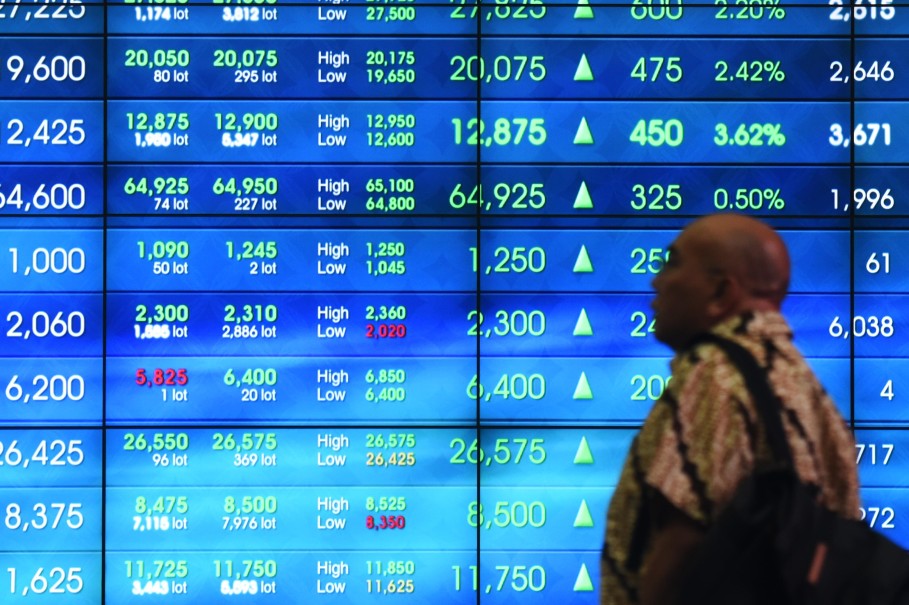
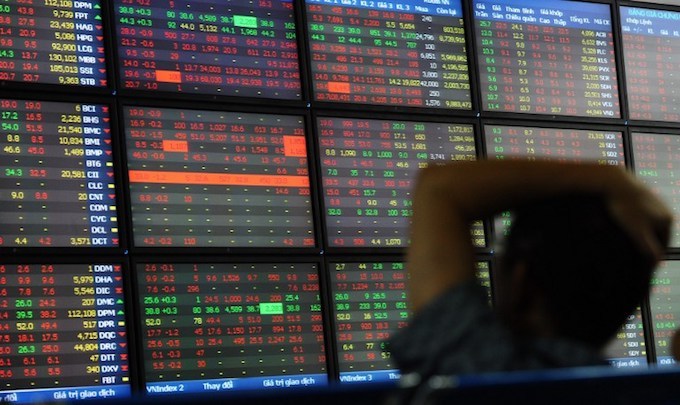
    Vietnam’s benchmark VN-Index dropped 1.56 percent to 1217.30 points Friday with trading value rising double-digit.

    The index closed 19 points lower after gaining nearly 23 points on Thursday. It has lost 67 points this week as global markets plunged due to concerns of inflation and disrupted supply chains.

    Trading on the Ho Chi Minh Stock Exchange (HoSE) increased by 17.5 percent to VND17.33 trillion, highest in four sessions. The VN-30 basket, comprising the 30 largest capped stocks, saw 22 tickers dropped.

    SSI dropped 7 percent to the lowest since March last year in its seventh losing session in a row.

    It was followed by eight banking stocks, losing between 6.4 percent and 3.6 percent, including MBB of lender MB, TPB of private TPBank and CTG of state-owned lender VietinBank.

    Five blue chips rose, with MSN of conglomerate Masan Group rising 5.7 percent and GAS of state-owned Petrovietnam Gas gaining 4.7 percent.

    Foreign investors were net buyers to the tune of VND309.68 billion, mainly picking up HPG of steelmaker Hoa Phat Group and VND of brokerage VNDirect.

    The HNX-Index at the Hanoi Stock Exchange, where mid and small caps list, was down 2.68 percent while the UPCoM-Index at the Unlisted Public Companies Market was down by 2.41 percent.

  • UBS to Stand Trial in French Harassment Case

    UBS to Stand Trial in French Harassment Case

    The French subsidiary of UBS must stand trial on suspicion of harassment. The focus is on the French subsidiary’s alleged crackdown on whistleblowers.

    UBS has suffered a defeat in France before the country’s Court of Cassation, one of the four courts of last resort in the country. The French branch of Switzerland’s largest bank must now stand trial for the alleged harassment of two whistleblowers who revealed tax fraud. The focus is on the French subsidiary’s alleged crackdown on whistleblowers.

    The decision of the court was viewed by the «AFP» news agency on Thursday. In a ruling on Tuesday, France’s highest court rejected appeals by the bank against its summons to appear before the Paris criminal court, according to Swiss news agency AWP.

    The former head of internal audit, Nicolas Forissier, as well as former event and communication manager Stéphanie Gibaud, helped get the tax fraud case against the major Swiss bank rolling in France, resulting in UBS being investigated for tax fraud.

    A lawyer for UBS France did not respond to inquiries from the French news agency AFP.

  • UBS Adds Private Banking Trio for Southeast Asia

    UBS Adds Private Banking Trio for Southeast Asia

    UBS’ global wealth arm has expanded its coverage of Southeast Asian high net worth individuals with the appointment of three new private bankers.

    Maria Lourdes Kristen Quintos joins UBS as a senior client advisor focusing on ultra-high net worth (UHNW) clients, according to an internal memo.

    Quintos has over 35 years of banking experience, most recently at Maybank ATR Kim Eng Capital Partners Inc. where she was its president and chief executive officer. Previously, she was also a chief representative at Bank of Singapore in Manila serving high net worth (HNW) clients, institutions and pension funds.

    In addition, Nicolo Nicandro and Natalie Boey have also joined UBS as client advisors focusing on HNW and UHNW clients in the Philippines.

    Nicandro was previously a senior associate and investment counselor at Bank of Singapore in Manilla where he advised and managed global multi-asset portfolios for private clients. Boey held a similar role at Citi where she spent nearly 15 years, including 10 years of focus on Philippines market coverage.

    The three new additions join the bank’s global wealth management APAC Thailand and Philippines business sector.

    A spokesperson for the bank confirmed the contents of the memo.

  • HSBC lowers Vietnam inflation forecast

    HSBC lowers Vietnam inflation forecast

    HSBC has cut its inflation forecast for Vietnam from 3.7 percent to 3.5 percent, thanks to stable food supply and weaker than expected impacts of fuel costs.

    Food and gasoline prices are two main drivers of inflation in ASEAN, but are likely to hit Vietnam less hard than other countries, the bank said.

    According to the General Statistic Office, the consumer price index (CPI) rose by 2.25 percent in the first five months this year as against 1.29 percent last year, driven by the prices of gasoline, food and some other goods.

    HSBC said Vietnam’s energy inflation has gained further momentum, with transportation, one of the items in the basket of goods and services that make up the CPI, seeing the biggest jump last month of 2.34 percent.

    The rise in global fuel prices, and reduced production by Vietnam’s biggest refinery, Nghi Son, has worsened a shortage in the country.

    The government on Monday adjusted gas prices up by 2.5 percent to VND32,370 ($1.39) a liter. It has hiked prices by over 35 percent so far this year.

    Vietnam started to feel the rising food costs, but the pressure has eased thanks to steady domestic supply, HSBC said.

    It expected inflation to temporarily surpass the government’s target of 4 percent if gas prices keep rising.

    The State Bank of Vietnam could raise interest rates by 50 percentage points in the third quarter, and another 75 points next year to cope with inflationary risks, it said.

  • E-wallet MoMo buys stake in securities firm

    E-wallet MoMo buys stake in securities firm

    The owner of e-wallet MoMo has purchased more than 4.4 million shares, or a 49 stake, in Hanoi-based CV Securities JSC (CVS). The deal was struck Thursday and Online Mobile Services JSC, or M Service, has received more than 4.4 shares from two shareholders of CVS – its vice chairman Jiang Wen and general director Nguyen Kim Hau – the securities firm said in a statement sent to the State Securities Commission of Vietnam (SCC).

    Established in 2009, CVS was first known as Hong Bang Securities JSC and renamed Hung Thinh Securities in 2015. The company also moved its headquarters from Ho Chi Minh City to Hanoi.

    Its annual revenue was VND4.4 billion ($190,000) and VND4.8 billion in 2020 and 2021 respectively. As of the first quarter of 2022, CVS had recorded a cumulative loss of more than VND80 billion.

    The new deal makes M_Service the second fintech firm to invest in a securities company after Finhay, who bought shares in Vina Securities early this week.

    Both Momo and Finhay are invested in by Thien Viet Securities (TVS). As of March 31, TVS recorded the original cost of investment in M_Service at VND27.8 billion and nearly VND62.5 billion at Finhay.

    Momo had 31 million users and 140,000 payment acceptance points last year. The wallet is now a partner of more than 50 banks, and financial and insurance companies.

    The e-wallet has completed a $200-million Series E funding round funded by a consortium of investors led by Japan’s Mizuho Bank. Investment funds Ward Ferry, Goodwater Capital and Kora Management make up the rest of the consortium.

    A media representative said he could not announce a specific figure, but MoMo’s valuation exceeds $2 billion, making it a startup unicorn.

  • Vietnam’s Luna investors face turbulence

    Vietnam’s Luna investors face turbulence

    The ‘revived’ Luna cryptocurrency has dashed many investors’ hopes by falling to an all-time low. Hoang Anh, a marketer in Hanoi, said he owns both the new and old versions of Terra’s cryptocurrency, Luna and Lunc, or Luna Classic.

    He had viewed Lunc, whose market cap has fallen to less than a billion dollars from US$40 billion a couple months ago, as a gamble, but was hopeful about the new version.

    Like many other amateur investors, he too bought Luna in early June at $8 a token after it had doubled to over $11 on May 31. But it has since plummeted to $2-3 despite a rebound in most large-cap cryptocurrencies.

    Anh said he had to sell to cut a portion losses, but kept the rest in the hope the price would recover following measures by the development team.

    Another Hanoian investor, Duc Duyet, bought $1,000 worth of Luna on May 31 as a long-term investment and also bought some Lunc to try bottom-fishing.

    But Luna has lost over 70 percent of its value since, while Lunc has fallen close to his cost price after making some gains.

    “Perhaps I should delete the trading app so that I don’t have to worry about it any more.”

    The Luna investor community in Vietnam is in pain. Some bought not only Luna and Lunc but also some other Terra-related cryptocurrencies like ANC and USTC. Overall, their values have fallen by at least 20 percent.

    “Are we being scammed for a second time, everyone?” Ngoc Bach, an investor, posted in a cryptocurrency group.

    In those groups, members are divided into two camps: some still have faith in the development team and are holding on to the tokens, waiting for prices to surge, but others have thrown in the towel and sold out.

    Nguyen Tien Bac, an administrator of a group, said many Vietnamese investors are still looking to profit from Luna and Lunc.

    They believe Lunc, once among the top 10 cryptocurrency by market cap, is “too big to fail” while the new Luna reached the billion-dollar mark immediately after listing.

    But Bac warned that prices are unlikely to climb any since supply of tokens in the trillions now.

    “Gains, if any, will possibly be because of manipulation.”

    A recent expose and the development team’s silence have dragged Luna’s price down, according to the blockchain-focused website CryptoSlate.

    On June 6, a Twitter-based Terra community whistleblower known as “FatMan” revealed that Terraform Labs, developer of Luna, and its founder Do Kwon had other secret and shadow wallets holding at least 42 million LUNA tokens, worth over $200 million.

    This went against their claim of only issuing to the community and not holding any Luna.

    Terraform Labs has yet to respond to FatMan’s allegation.

    Do Kwon’s Twitter account has also been silent about future plans recently, and even went private for some time, heightening investor fears over crypto rug pulling.

    CoinDesk reporter Krisztian Sandor said investing in either Luna or Lunc was “highly risky at this point”.

    “It’s like purchasing a house burned down to ashes or putting money upfront for plans that only exist on paper, respectively.”

    He called Lunc’s prospect “uncertain”, as developers now have little incentive to build any project on top of it.

    For the newer cryptocurrency, the challenge is how many of the numerous protocols and development teams that were building on old Terra would stick around to develop applications.

    Therefore, activity and user numbers pertaining to the new blockchain “would ultimately determine how much Luna is worth and if it will succeed,” he said.

  • Vietnam ranks 5th globally in NFT users

    Vietnam ranks 5th globally in NFT users

    Vietnam ranks fifth globally in the number of non-fungible token users at over two million as of last year, a study has found.

    The country had 2.19 million users last year, behind Thailand, Brazil, the U.S. and China, according to the Digital Economy Compass 2022 study by Germany-based data portal Statista.

    In terms NFT penetration rate, it also ranked fifth at 2.24 percent, behind Thailand, Canada, Australia and Brazil.

    The penetration rate is the share of active paying customers (or accounts) from the total population last year.

    Another recent survey by Australian data research company Finder revealed Vietnam ranks fifth globally in the ratio of non-fungible token game players.

    Twenty-three percent of respondents in Vietnam said they play NFT games, according to the survey conducted between March and May.

    It was ranked behind India, Hong Kong, the United Arab Emirates and the Philippines.

    Vietnam has made headlines in the non-fungible token world in recent years with Axie Infinity, one of the most popular NFT games globally.

  • Hong Kong Must Reopen to Remain a Financial Hub

    Hong Kong Must Reopen to Remain a Financial Hub

    Outgoing city chief executive Carrie Lam makes frank comments to CNBC before her departure at the end of the month.

    Hong Kong’s embattled chief executive Carrie Lam, who has faced a difficult, tempestuous five-year term that included the 2019 pro-democratic protests, the subsequent introduction of the city’s National Security Law, and the Covid-19 pandemic, appeared to be more forcefully speaking her mind than had previously been the case in an interview with CNBC on Friday.

    She apparently indicated to viewers that the city could not continue to function as a financial hub if the current border controls remain in place, as this has made people impatient.

    The border control measures have really made people very impatient. Of course, they’ve undermined Hong Kong’s status as a hub. If you cannot travel freely to other places and into the mainland, how could you be a hub?

    Despite recent steps to relax some pandemic restrictions, Hong Kong continues to require a 7-day quarantine for any foreign arrivals. It also continues to employ extensive contact tracing and testing requirements city-wide, among other measures.

    Lam discussed the departure of foreigners and expatriates, saying that this was not due to the National Security Law, but the extent and duration of the strict pandemic controls. Other topics that were discussed included the one country, two systems governing principle in Hong Kong, which she believed had been mischaracterized by overseas media.

    I sometimes find it very disturbing that a lot of Western media try to portray Hong Kong as just another Chinese city and have no proper recognition or understanding of one country, two systems, Carrie Lam said.

    She maintained that freedom of expression, assembly and media continued to be upheld in the city.

  • Vietnam urges banks to merge, become more competitive

    Vietnam urges banks to merge, become more competitive

    The Vietnamese government is urging banks to merge and increase their scale toward becoming more competitive. It wants to make Vietnam an ASEAN leader in the banking sector.

    The government wants banks to have a capital adequacy ratio of at least 10-11 percent by 2023, and 11-12 percent by 2025, according to a recent plan to restructure credit organizations and handle bad debts during the 2021-2025 period.

    The capital adequacy ratio is a measure of how much capital a bank has available to handle a certain amount of loss before facing the risks of becoming insolvent.

    The government has said it wants Vietnam’s banking sector to become a top four leader in the ASEAN bloc. It has asked banks to make plans to increase their charter capital and improve their management.

    Big banks should have a minimum charter capital of VND15 trillion by 2025, and small and medium banks, VND5 trillion, it said.

    The government also wants banks to have a bad debt ratio of under 3 percent by 2025.

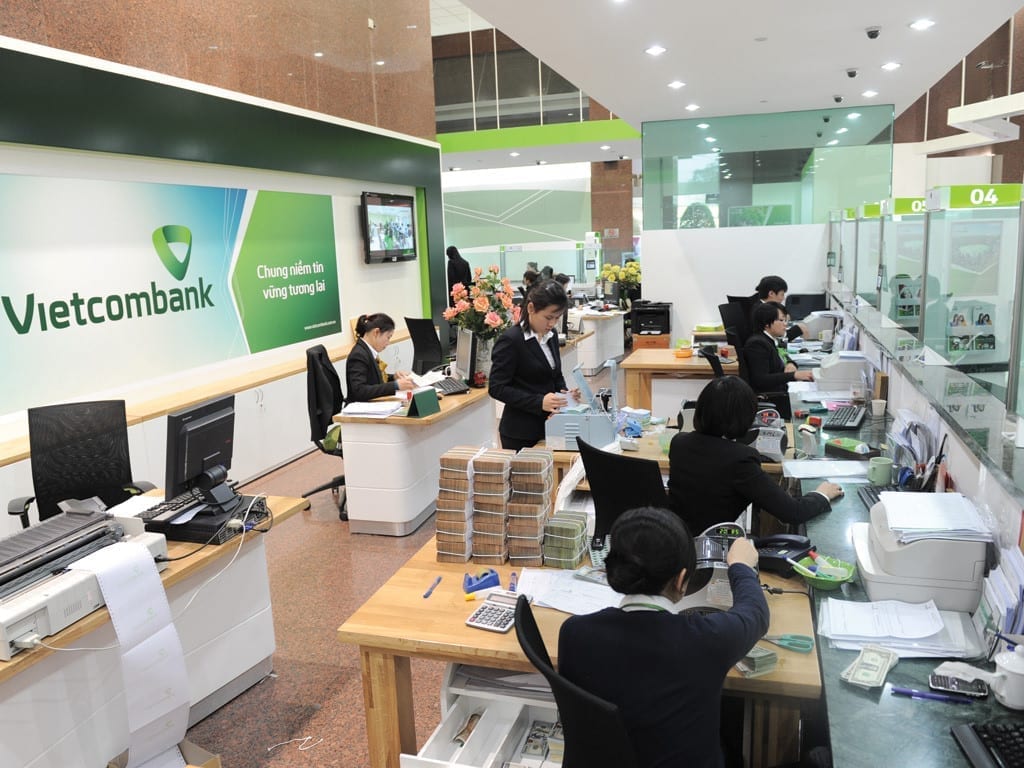
    Vietnam has 31 domestic commercial banks, with the biggest in terms of charter capital being state-owned lenders BIDV, Vietinbank and Vietcombank, according to the State Bank of Vietnam.

  • A German Bank Wants its Customers to go Cashless

    A German Bank Wants its Customers to go Cashless

    In a country where cash has been king for decades, Deutsche Bank will stop allowing customers to pick up cash at its counters.

    There is a German adage that Geld Stinkt Nicht, which translates into money doesn’t stink, and helps to explain the country’s strong, and perhaps a stereotypical, preference for cash over the years. Deutsche Bank is seeking to change that.

    In tapping into another German trait, that of frugality, Lars Stoy, who heads domestic retail banking operations of Germany’s largest commercial bank said at an investor conference that «In the future, I don’t want to offer cash in the branches anymore, because holding cash incurs costs.

    While not specifying a timeline for the changes, Stoy said that cash would only be offered in a few large centers and that generally, he wants to further reduce the number of branches in Germany.

    The main task of the branch is sales along with “advising customers on investments, mortgages, to a certain extent on consumer loans and insurance. Once that is the case, then the branches will be profitable again, Stoy said.

    Moreover, the plans are in response to changes in customer behavior, with the trend toward cashless payments significantly increasing, while at the same time demand for personal advice is also on the rise, Stoy said.

    In terms of cash supply, Deutsche Bank will maintain a nationwide network of ATMs adding that money can also be withdrawn at supermarkets or gas stations.

  • Rumors, manipulation plague Vietnam markets

    Rumors, manipulation plague Vietnam markets

    Vietnam’s stock and corporate bond markets are heavily affected by rumors and sophisticated manipulation, which pose the need for more transparent and thorough regulations, a minister has said.

    Many tickers have been pushed up to new peaks without improvement in business results, with many companies failing to submit their earnings in time, Minister of Finance Ho Duc Phoc informed the National Assembly in a recent report.

    “The stock market is still in an early stage of development and is therefore heavily affected by investor sentiment. Rumors, fears of cash flow and inflation pressure have caused the market to plunge recently.”

    Vietnam’s benchmark VN-Index hit this year’s bottom on May 16, the lowest in 11 months. The plunge came after VN-Index increased by nearly 36 percent last year as one of the best performers globally. The number of new stock accounts opened last year alone equaled that of the previous 10 years.

    But the market turned bearish in April and has struggled to recover since.

    Phoc is also concerned about risks faced by a speeding corporate bond market.

    Many amateurs who fail to meet government criteria have cheated to secure bonds, made possible by the violations of commercial banks and stock brokerages, he said.

    One typical example involves property developer Tan Hoang Minh, whose chairman Do Anh Dung was arrested in early April on suspicions of “fraudulent appropriation of assets,” he added.

    Governor of the State Bank of Vietnam Nguyen Thi Hong called for more thorough solutions to prevent future violations.

    In the long run, the government needs to make the corporate bond market a key capital mobilization channel for the economy, she added.

    Phoc said changes will be made to tighten regulations on bond issuances, listed on a dedicated market for corporate bonds.

  • Deutsche Bank Calls Russia IT Staff to Germany

    Deutsche Bank Calls Russia IT Staff to Germany

    Having a large IT center in St. Petersburg leaves Deutsche Bank highly exposed to Russian sanctions. As a result, it has decided to take a bold action.

    Deutsche Bank brought several hundred Russian computer scientists to Berlin, as reported by Germany’s citing anonymous sources.

    The bank operated a large technology center in St. Petersburg, Russia, for years. With Russia’s war of aggression against Ukraine and the West’s sanctions, the hub comprising some 1,500 programmers, previously made headlines.

    The number of staff there represents about a quarter of investment banking IT specialists.

    At the time, the report stated there was no code or data housed in the Russian Technology Center (RTC), and after a three-day stress test last week, Deutsche Bank told regulators there was no immediate systemic risk to its IT infrastructure.

    A failure of the center would be a major blow to Deutsche Bank. By moving to Berlin, Deutsche Bank reduces the risk of losing an enormous amount of expertise. In the meantime, the major Swiss banks UBS and Credit Suisse have also moved to withdraw staff from Russia or put them on leave.

  • Blue chip stocks hit highest in weeks

    Blue chip stocks hit highest in weeks

    Vietnam’s benchmark VN-Index rose 0.16 percent to 1290.01 points Monday with a double-digit surge in trade as blue chip stocks climbed to the highest in weeks.

    The index closed two points higher after losing nearly one point on Friday. Trading on the Ho Chi Minh Stock Exchange (HoSE) increased by 31 percent to VND16.94 trillion ($730.64 million).

    The VN-30 basket, comprising the 30 largest capped stocks, saw 11 tickers gained. GAS of state-owned Petrovietnam Gas rose 4.6 percent to a new peak, having increased by 37 percent in the last three weeks. MSN of conglomerate Masan Group went up 3.7 percent to the highest in over a month.

    PLX of fuel distributor Petrolimex gained 3.2 percent to the highest in over a month. Sixteen blue chip stocks fell, with TPB of private TPBank losing 3.6 percent. STB of Ho Chi Minh City-based lender Sacombank dropped 3.1 percent, while NVL of real estate developer Novaland Group lost 1.5 percent.

    Foreign investors were net buyers to the tune of VND44 billion, mainly buying DPM of Petrovietnam Fertilizer & Chemicals Corporation and Binh Son Refining and Petrochemical Jsc (BSR).

    The HNX-Index at the Hanoi Stock Exchange, where mid and small caps list, was down 1.18 percent while the UPCoM-Index at the Unlisted Public Companies Market fell 0.29 percent.

  • Creating new cross-border opportunities post-Covid

    Creating new cross-border opportunities post-Covid

    Discover the current and upcoming shopping behaviours that will shape the future of cross-border commerce, and emerging trends that will help integrate and bring seamless shopping experiences to your customers.

    During the pandemic, 10 years of forecasted growth happened in the span of 90 days. This year, the global e-commerce market is expected to be valued at US$5.55 trillion and will reach $6.17 trillion by 2023, making up nearly a quarter of total retail sales. Though retailers have often shied away from expanding into new markets due to their complexity, closed borders pushed businesses to venture beyond their native markets, supported by the advancement of merchant tools. In a recent webinar hosted by Inside Retail Asia, luxury flash sale showroom OnTheList shares its international expansion journey amidst the pandemic, with global payments provider PayPal advising strategic tips for merchants looking to enter foreign markets.

    The pandemic impact

    The fight for survival spurred by product shortages and in-person shopping safety accelerated consumers’ digital adoption, as countries with the lowest e-commerce penetration saw the largest migration to online shopping with Southeast Asia welcoming 70 million new shoppers since the beginning of the pandemic with no signs of slowing down. As shoppers become more comfortable with the online environment and shopping globally, consumers’ expectations have increased, urging retailers to keep up and meet their demands in competing with new entrants. Having the wealth of product options suddenly available (albeit faced with shipping challenges) has lured shoppers away from brick-and-mortar to the world wide web.

    Despite national campaigns and broad sentiment to support local retailers, consumers are choosing to shop outside of their home countries for numerous reasons. A study by PayPal revealed that Japanese consumers favour shopping abroad due to price sensitivity and unique products available. Equally, businesses have been casting their net beyond their home markets in hopes of recapturing lost businesses overseas. Cross-border merchants have found new revenue opportunities abroad and larger audience reach, all the while competing with local sellers. One in two surveyed e-commerce merchants in Hong Kong had been actively looking to reach new customers in other markets as part of their efforts to recapture lost businesses.

    Originally starting with a 7000sqft physical showroom in Central, Hong Kong, the space had been temporarily shut during lockdowns. Shifting from a 90 per cent offline presence to online, members were pushed to snatch Jimmy Choo flash sales online, all the while inventory build-up became a problem for luxury retailers.

    “Many of them (brand partners) were impacted at different stages with regards to traffic in their stores or even stores being closed, so this posed an opportunity for OnTheList to step in and partner with them to find solutions for their inventory”, shared Adele Leong, SEA MD at OnTheList. The organic transition to online catapulted OnTheList’s digital transformation to scale and expand to Australia, Malaysia and South Korea all within a short period.

    What normally was recognised as slow sales seasons in the months of March and April, PayPal equally witnessed a volume uptake in transactions and merchant sign-ups as more consumers turned online for products and services overseas that were not available locally due to supply shortages.

    “A lot of businesses had to look for new ways of survival; they have to think about being agile and responding to new ways of catering to consumer demands” explained Syd Wong, head of enterprise sales at PayPal (Hong Kong, Taiwan, Korea). As new consumers migrated from traditional in-store experiences to online, more than 67 per cent of transactions were also taken on mobile rather than desktop, prompted by the government’s push to use digital payments and wallets during subsidy payouts in an attempt to reignite the retail economy.

    Entering new markets

    The challenges of global expansion and localisation cannot be tackled with just one global site and a currency converter widget. Truly understanding customers abroad is the key to every successful market entry, where localisation plays a huge part in connecting and retaining local consumers through understanding cultural nuances and adapting content appropriately. E-commerce marketplace Techsembly identified localisation can increase a site’s conversion rate by up to 70 per cent, where consumers are more likely to purchase if the retailer’s website is displayed in their native language with their preferred local payment options available.

    “We just couldn’t make that trip to each market to see what has happened to find opportunities, particularly for offline. We had to really depend on the local teams to maximise our operational expertise,” said Leong.

    From an organic China expansion to cross-border scaling, OnTheList is a successful case study of a retailer’s international growth during the pandemic, all the while remote. The brand relied on brand partners and members as the main basis to explore new market openings.

    “There’s really no big secret. We took the time to understand all the localisation factors that were important for us to be successful. For example, the type of brands that we worked with, the way we communicated with our members and understanding the types of shopping habits, cultures and payment methods” revealed Leong. OnTheList expanded into new markets as pure online retailers, all the while dabbling with physical pop-ups to test market potential to expedite expansion.

    The long-standing debate between outsourcing to service providers or building in-house for cross-border retail and payments stands to benefit retailers without remote resources abroad.

    “One of the barriers to think about is the sensitivity to some of the local country’s consumer behaviours and their types of payment preferences,” commented Wong, noting specific local payment behaviours vary from Octopus-loving Hong Kongers as opposed to consumers in Europe in comparison.

    PayPal prides itself on its flexibility, being able to work with local partners and shopping cart solutions to integrate payment options for a seamless checkout experience, with language and customer support provided.

    “Work with a global partner with experience and feet on the street of each market that you’re actually expanding into so you can actually leverage some of the expertise and experience in the local markets” suggested Wong. “We have actually started to work with local partners to accept local payment types to cater towards local consumer preferences to help merchants go into new markets easier” he adds.

    With over 180 fiat currencies available, it is suggested at least 30 to 40 currencies need to be available in order to be recognised and supported in order to gain substantial sales benefits. Offering multiple payment options may be complex, but payment technology providers such as PayPal have simplified cross-border payments, allowing merchants to scale into new markets with ease.

    Future payment trends

    With the rise of social commerce, consumers have higher expectations for convenience and seamless checkout experiences. Retailers like OnTheList are pressured to invest in improving their e-commerce platform and apps to cater to the demand and new expectations. Mobile payments are deemed a must-have as 99 per cent of Gen Z have the highest smartphone usage compared to all generations.

    “You need to present a smooth user interface across all devices for consumers, especially the ability to checkout and pay, regardless of what devices you’re actually on,” emphasised Wong.

    As Gen Z and Gen Alpha enter the workforce with new spending power, young and aspiring professionals wanting to spend more at certain times have prompted the uptick of ‘Buy Now Pay Later’ schemes. Though more prominent in Western countries such as the US, UK and Europe, the trend is also seen catching up in Asia.

    Leong reports: “This for us has been particularly interesting because it brings us a very new and interesting pool of aspiring customers, people that are in the earlier stages of their career who may not be able to afford full-price luxury. But by having Buy Now Pay Later, they can experience luxury brand products before becoming a full-price customer eventually.”

    As Asia adapts to the new normal, so are solutions and services that have been evolving ever since to better serve the various different markets and changing consumer behaviours. Brands are to face the latest demands with agility to cater for the future generation of consumers under new opportunities, across the borders.
  • The Best Digitalized Swiss Private Banks

    The Best Digitalized Swiss Private Banks

    There is a large gap between private banking and your average smartphone app, according to a new study. But a small avant-garde makes headway.

    Swiss traditional private banking pure-play Julius Baer seems to be the grand citadel of Insta-bankers. That is the surprising conclusion of a study by consultancy Columbus Consulting.

    It ranked 27 of the larger Swiss private banks based on how they did in both digitalization and client experience.

    According to Columbus, Julius Baer is the most digitalized private bank in the country. «It made the top in 2022 based on a strong showing in social networking and good results for its website and digital marketing», the team around partner Rémi Chadel indicated.

    The bank showed a sharp increase in YouTube subscribers, good engagement on Instagram, and had the second-largest Linkedin community among Swiss private banks surveyed.

    But the experts also maintain the bank lags others when it comes to a mobile smartphone app.

    In any case, it was enough to bunt local investment house Vontobel out of first place. They didn’t make the grade as a result of a «weak social networking performance», the study says. And that is exactly where Julius Baer scored highly. Lombard Odier, which came in third place, managed to outdo the others in social media and in digital marketing. But the Geneva-based private bank did not do as well when it came to its website and mobile apps.

    Pictet came in fourth, as it tested best for client experience based on a sample test. Others in the top ten include Union Bancaire Privée, EFG, Banque Cantonale Vaudoise (BCV) unit Piguet Galland (which jumped up five places), Zurich-based private bank Bergos, J. Safra Sarasin and Banque Edmond de Rothschild.

    Even though the rankings did not change that much last year, investments still rose substantially. According to the study’s authors, spending on digital marketing alone was up 15 percent at 2.9 million francs while their websites drew 31 percent more views than they did in 2020.

    In total, the institutes get about 525,000 visits a month on their diverse channels. That means that the digitalization drive prompted by the pandemic shows little signs of ebbing.

    But activity levels are uneven. The three leading banks in the ranking make up 85 percent of all internet consumption of all the 27 banks reviewed. About 30 percent of those surveyed did not offer a mobile app. That is not much of a change from a year earlier, the authors maintain, somewhat laconically. But that nonchalance could turn on them quickly given the current pace of progress and change.

    The private banks are also dwarfed when it comes to digitalization by the retail banks. Swiss postal unit Postfinance, which emphasizes TikTok, has 14 times as much traffic as all the 27 private banks do together.

    Some have been trying to catch up by experimenting. Apparently, Linkedin has become a preferred meeting site for new, highly affluent clients. It is also the leading social outlet for private bankers, with the highest overall engagement at 78 percent, and 72 percent of bankers being subscribers.

    Some institutes have made it a habit to communicate digitally, much as they did during the pandemic. Private banks have also been invested heavily in digitalizing their client relationships and integrating that with their needs and demands.

    That means that some of the institutes are starting to understand what they want through data. Digital marketing has become a new tool in the advisory arsenal and the Columbus consultants are certain it will help them introduce new services in future.