Category: Finance

Retail News Asia is committed to providing both local and global retailers with the latest Finance news throughout the Asian market. This on a daily base.

  • HSBC hikes Vietnam growth forecast

    HSBC hikes Vietnam growth forecast

    Lender HSBC has raised its growth forecast for Vietnam from 6.6 percent to 6.9 percent thanks to the country’s broad-based recovery from two years of Covid-19 impacts.

    Fading Omicron risks and easing of restrictions have set the basis for Vietnam’s return to normalcy, with GDP growth in the second quarter hitting 7.7 percent year-on-year, a regional outperformer, the bank reported Wednesday.

    Services, which once bore the brunt of an economic hit, have seen a meaningful recovery, while tourism-related and consumer-facing services have largely benefitted from sustained re-openings.

    Retail sales overshot 17 percent year-on-year in the second quarter, signalling a return of rebounding household consumption.

    Vietnam welcomed 0.5 million visitors in the second quarter, almost five times more than those in the first quarter, taking total tourists to 0.6 million in the first six months.

    Manufacturing continues to roar, with industrial production growth accelerated to over 25 percent year-on-year in the second quarter.

    This helped export growth hit over 20 percent year-on-year in the second quarter, a third of which came from firm computer and smartphone shipments.

    However, the impact of high energy prices is becoming increasingly clear, HSBC said.

    Elevated commodity prices have turned the trade balance into a deficit in the second quarter, likely exacerbating the deteriorating current account.

    Despite a firm rebound in household consumption, high oil prices would likely take a bite out of residents’ wallets, dampening the pace of its continued recovery.

    “Given elevated global oil prices, we expect upward pressures to inflation to persist,” the report said, adding that inflation could hit 3.5 percent this year and exceed 4 percent from the last quarter this year to the second quarter next year.

    With surging energy prices considered, the bank trimmed its Vietnam growth forecast for 2023 from 6.7 percent to 6.3 percent.

    Vietnams’ GDP expanded by 2.6 percent last year. The government targets 6-6.5 percent this year.
  • ONE Swiss Bank Sees Return to Profit

    ONE Swiss Bank Sees Return to Profit

    Swiss private bank One Swiss Bank is expecting to post a profit and improved net income for the first half of 2022 compared with the same period last year, it said in a statement Friday.

    In the first half of 2021, the private bank reported a 2.78 million Swiss franc loss after merging with Banque Profil de Gestion.

    The presentation of One Bank’s half-year results will be brought forward to July 13, 2022, from the end of the month, the statement said.

  • Globe Backs Digitalization Plans Of New Philippine Government

    Globe Backs Digitalization Plans Of New Philippine Government

    Globe Telecom has announced that it supports the digitalization plans of the Philippines’ new administration.

    One of the leading digital solutions providers, Globe stated that it is ready to collaborate with the government to provide its industry leading product line and services to improve digitalization in public offices and agencies, as well as deliver speedier and more reliable transactions to the public.

    Globe’s CEO, Ernest Cu, said in a statement, “We welcome the new administration’s goal of increasing digitalization in government for streamlined processes. This will ultimately redound to improved public service– an aspiration that Globe deeply shares with the government as we serve a customer base of 92 million people.”

    He added, “Our network and infrastructure are ready to support the government and we look forward to working closely with the new administration to achieve this shared goal.”

    Globe has so far installed 234 additional cell sites across the country as of the first quarter of 2022, pursuant to its goals of 1,700 new sites this year. And it has put up 91 new tower companies, each on air since the beginning of this year.

    The company also upgraded more than 3,500 mobile sites, and accelerated its 5G coverage by installing 380 new 5G sites, all by the end of the first quarter of this year.

  • Dragon Capital buys 2.1 million shares of Sacombank

    Dragon Capital buys 2.1 million shares of Sacombank

    Asset management company Dragon Capital has bought 2.1 million shares of HCMC-based Sacombank, increasing its stake in the bank to 6.09 percent.

    On June 29, two affiliated funds, CTBC Vietnam Equity Fund and Norges Bank, bought 2.3 million shares of the lender while a third, Samsung Vietnam Securities Master Investment Trust, sold 200,000 shares.

    The value of the deal is estimated at VND47.5 billion (US$2.03 million) based on the share’s closing price last Wednesday.

    Funds under Dragon Capital own 114.8 million shares or a 6.09 percent stake in the bank.

    In March, Dragon Capital had raised its stake from 4.98 percent to 5.05 percent, after its largest fund, Vietnam Enterprise Investment Limited, bought 1.25 million shares.

  • Vietnamese currency hits 2-year low against dollar

    Vietnamese currency hits 2-year low against dollar

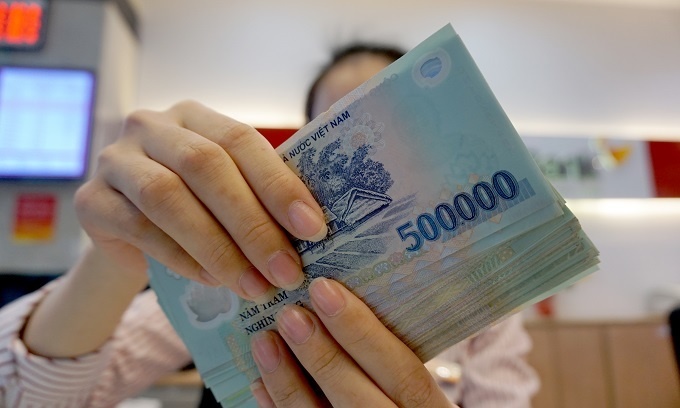
    Vietnamese banks on Monday traded the dong against the U.S. dollar at the lowest rate in two years as the greenback strengthens globally amid economic uncertainty. The Vietnamese dong declined by 0.3 percent from last weekend to VND23,510 per U.S. dollar at state-owned Vietcombank.

    It fell by 0.34 percent at BIDV and 0.26 percent at Vietinbank, also state-owned lenders. Among private lenders, the currency is 0.21 percent weaker at Sacombank, and 0.17 percent weaker at Eximbank. The changes came after the State Bank of Vietnam on Monday let the Vietnamese dong slide by 0.04 percent against the greenback to VND23,121, the lowest this year.

    It has been pumping more U.S. dollar into the market to reduce pressure on the exchange rate.

    RongViet Securities estimates that the central bank has sold over $10 billion to the market this year, or around 10 percent of Vietnam’s foreign exchange reserves, to stabilize the market.

    The U.S. Dollar Index has been hovering around a 20-year high mark since last month amid global economic uncertainty caused by the Russia-Ukraine crisis and supply chain disruptions due to China’s “zero-Covid” policy.

    Concerns of global inflation has urged investors to buy more U.S. dollars as a safe-haven currency.

  • Pi miners anxiously await monetization

    Pi miners anxiously await monetization

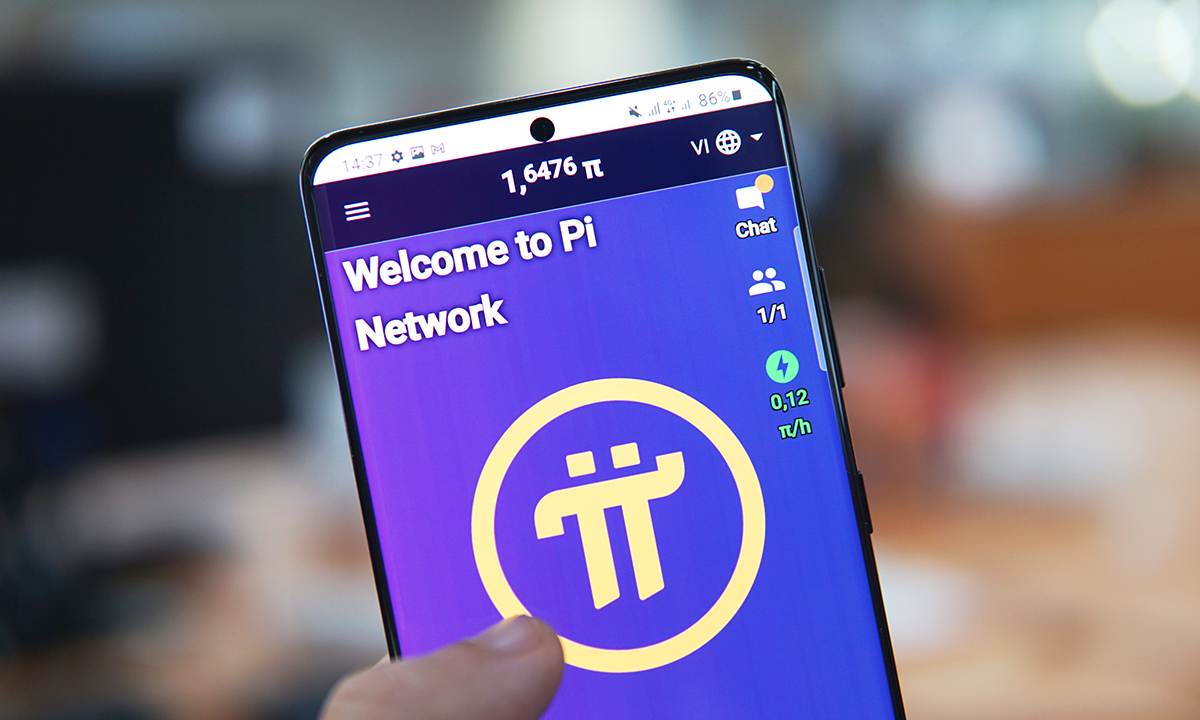
    Vietnamese people are expecting good money from cryptocurrency Pi following developer’s promise of a mainnet launch on June 28.

    The system is making steady progress towards transiting to launch by around Pi2 Day – June 28, the development team announced on the Pi Network app last Tuesday.

    Since Monday night, Pi miners in Vietnam have started to wait for the transition. Many claimed to be business owners and said they will accept the token as a payment method as soon as the coin can be exchanged.

    Pi and other cryptocurrencies are not legal tender in Vietnam, Dao Minh Tu, the deputy governor of the State Bank of Vietnam, has said.

    Huynh Tan of HCMC said he has signed in the app to earn rewards every day for the last three years.

    “I have joined the project since its beta stage. Now it is about to enter the mainnet stage, so I hope to be able to exchange Pi for money or something.”

    He said prices of thousands dollars is “very unlikely” as there are 100 billion tokens, but the ‘consensus price’ may be of any number.

    A poll on a Pi group found 75 percent of nearly 3,400 users believing in a ‘consensus price’ of US$6,700.

    “What will you buy first once each Pi token is worth thousands of dollars?”, a member asked on a Pi group with 100,000 members and attracted over 300 comments.

    Many said they intended to buy a house, a car or give away the money after selling the token.

    But investors will have to wait until developers allow them to transfer the token.

    Last year, Pi announced it had entered mainnet, but that will be split into two phases: closed and open network — the former allows user-to-user transactions, and the latter allows exchanging with other cryptocurrencies.

    Doubts

    Meanwhile, many are skeptical about the developer’s pledges.

    “There is no certainty in the statement, just a general announcement of mainnet launch around the Pi2 Day. They did the same thing last year, but there has yet been any development,” Anh Minh, a Pi miner said.

    Pi Network also made no announcement on its social media accounts on June 28 — an unusual move as most crypto projects constantly provide users new information during key phases.

    Over the last six months, the project has reduced mining rate, required users to lock up part of their token, and started the KYC (know-your-customer) process.

    Some users were allowed to exchange the token internally, but only as a demo.

    Up to date, the token cannot be exchanged with other cryptocurrencies, and mostly remain worthless.

  • UBS Strategy Chief Leaves After Short Tenure

    UBS Strategy Chief Leaves After Short Tenure

    After just one and a half years in charge, UBS’s head of strategy is leaving and changing his career course.

    UBS strategy chief Christian Zeinler is stepping down from his post at Switzerland’s largest bank to become an entrepreneur. CEO Ralph Hamers announced the move in a letter to employees.

    Chief of Staff Marsha Yuan will take over the function on July 1 on an interim basis in addition to her current role.

    Zeinler has been with UBS for about five years, and in February 2021, was entrusted by Hamers with the further development of group strategy in addition to his role as head of strategy development in the wealth management business. He also served as chief of staff to Iqbal Khan, co-head of Global Wealth Management (GWM). However, Zeinler wanted to continue his entrepreneurial journey outside the financial services industry, involving the development of a small- to medium-sized which will be primarily family-owned.

    Before joining UBS, he spent just over nine years in various roles at the strategy consulting firm McKinsey.

    By various metrics, UBS posted very good results last year and kicked off 2022 with its best start in 15 years. In addition to digitalization, the bank is currently pursuing a strategy focused on greater flexibility in the organization. During his five-year tenure at UBS, Christian has helped shape the future of our firm, Hamers wrote in the memo. UBS is not about to change horses and will be sticking to the existing strategy, Hamers said.

  • UBS Offers its Compliance Knowledge via a Regtech

    UBS Offers its Compliance Knowledge via a Regtech

    UBS has put a great deal of effort into its compliance guidelines and action models. That accumulated legal knowledge is now being offered to third parties for the first time. UBS has compiled its financial market legislation and compliance knowledge in an expansive collection of documents. This know-how in the form of legal commentaries and the interpretation of laws is now being made available to other Swiss financial services providers, according to a statement on Tuesday.

    The offerings can be accessed via the Partnervine platform, a Zurich-based startup specializing in marketing legal texts and services. The financial guidelines FidSA and FinIA as well as the revised Collective Investment Schemes Act provide the framework for the action and decision paths developed by the UBS.

    The core element of the knowledge collection is a catalog of over 630 questions and answers that Swiss financial service providers can use for orientation. In addition, the collection contains decision trees, glossaries, tables, graphics, and cross-references to related topics and documents delivered in static pdf format.

    The documents are offered in English only, but forms are also available in German, French and Italian. Access can be purchased either as a complete package or as topic-specific access to separate, smaller bundles, and come as static PDF files, according to the statement.

    PartnerVine’s platform allows us to share our legal know-how on regulatory matters with other Swiss financial service providers helping them to navigate the complex regulatory environment, says Barbara Koch-Lehmann, group general counsel COO at UBS. She sees smaller financial institutions or asset managers, as a potential client group.

    It is much easier and cost-effective especially for smaller Swiss financial service providers to plug into UBS’s knowledge than develop it themselves. Because it is the first time that a large company has provided comprehensive access to their legal know-how, it is a major milestone for legal operations globally, says PartnerVine CEO Jordan Urstadt.

    Urstadt sees foreign banks operating in Switzerland as potential customers for UBS’s product, mainly because the documents are available in English. In Switzerland, the use is limited due to legal constraints.

  • HSBC Appoints Switzerland and EMEA Private Banking Head

    HSBC Appoints Switzerland and EMEA Private Banking Head

    A former executive vice-chairman of global wealth management of UBS Switzerland joins HSBC as head of Switzerland and EMEA private banking. Gabriel Castello is joining HSBC in Zurich and Geneva in July and taking on a wide range of responsibilities at the bank, the HSBC announced Tuesday.

    Subject to regulatory approval, Castello becomes the regional head of private banking for EMEA, CEO of the Swiss Private Bank, and country head for Switzerland starting in July. Switzerland is HSBC’s largest private banking operation in Europe.

    Castello brings more than 30 years of experience in private banking and wealth management and was previously at Quintet bank as a partner and member of the group executive committee. Before that, he was at UBS for 13 years in various roles, including CEO of France, head of wealth management in Latin America, and executive vice-chairman of global wealth management, UBS Switzerland. He also spent 17 years at CaixaBank in Spain and France.

    He takes over from Alex Classen who is leaving HSBC after nearly four years at the firm.

  • Blue chip stocks hit weekly high

    Blue chip stocks hit weekly high

    Vietnam’s benchmark VN-Index rose 1.46 percent to 1,202.82 points Monday with most blue chip ending in the green. The index closed 17.34 points higher after losing 3.4 points Friday.

    Trading on the Ho Chi Minh Stock Exchange increased by nearly 21 percent to VND12.32 trillion ($529.7 million).

    The VN-30 basket, comprising the 30 largest capped stocks, surged to the highest in a week with 26 tickers gaining.

    SSI of leading brokerage SSI Securities rose 6.7 percent, extending its gaining streak to the fourth session in a row.

    NVL of real estate developer Novaland closed 6.5 percent higher, with trading value highest since last December.

    Other winners included PNJ of Phu Nhuan Jewelry, up 6.1 percent, and HPG of steelmaker Hoa Phat, up 5 percent.

    Four bucked the trend, led by VIC of Vietnam’s biggest conglomerate Vingroup JSC with a 1.1 percent drop. The ticker is now at a 27-month low, having fallen 42 percent from its peak last April.

    VNM of dairy giant Vinamilk, and MWG of electronics retailer Mobile World both lost 0.6 percent.

    VCB of the largest state-owned lender Vietcombank closed 0.1 percent lower.

    Foreign investors were net buyers to the tune of VND250.6 billion, focusing on VND of brokerage VNDirect Securities, CTG of VietinBank and GEX of Gelex Group.

    The HNX-Index at the Hanoi Stock Exchange, where mid and small caps list, was up 1.63 percent while the UPCoM-Index at the Unlisted Public Companies Market was up by 1.15 percent.

  • UBS Looks to Wall Street for Respect

    UBS Looks to Wall Street for Respect

    Kelleher, a 30-year Morgan Stanley veteran, became chairman earlier this year in what many viewed as a surprise announcement. His selection becomes obvious. He won the post over European candidates including Roche’s  Christoph Franz, former SNB head Philipp Hildebrand, and ex-Unicredit boss Jean-Pierre Mustier.

    UBS is one of the most valuable European banks with a price-to-book ratio of 1, compared to Wall Street firms JPMorgan and Morgan Stanley, each of which trade at 1.3. That puts UBS in company with Goldman Sachs and Wells Fargo. By comparison, Credit Suisse trades at 0.3 along with Societe Generale and Deutsche Bank. Barclay’s and HSBC claim ratios of 0.4 and o.6, respectively. According to the report, Kelleher and Hamers have spoken with major US investment houses such as Capital Group, T Rowe Price, Wellington, and Fidelity during their roadshow, in an attempt to persuade them to increase their holdings in UBS, which did not comment on the talks.

    Because UBS’ business is heavily focused on higher-margin wealth management and less on higher-risk investment banking, the bank’s board believes its market capitalization could be double its book value, one of the sources added.

    If we are a European bank with European investors, we will trade at one times book. The goal is two times.

  • Vietnamese buy Bitcoin in hope it has bottomed

    Vietnamese buy Bitcoin in hope it has bottomed

    Many investors are buying Bitcoin after the cryptocurrency’s price fell to US$20,000, its lowest level since December 2020. Thanh Binh of HCMC says he turned off notifications on his crypto trading app after buying it at $38,000 and losing over VND40 million ($1,720).

    But he has returned and bought a 10th of a token after prices dropped below $20,000.

    “The market has bottomed out and will recover by the end of this year, and so this is the right time for buying in,” he says hopefully.

    Hai Ly of the southern province of Dong Nai has invested VND70 million in Bitcoin and Ethereum, the two largest tokens by market cap. She wanted to diversify her portfolio and thinks their current prices are reasonable.

    She says Bitcoin operates in four-year cycles, and prices fall sharply at the end of each cycle before scaling new peaks.

    “The current cycle started in January 2019 and ended between May and July this year. Considering other factors, the current crypto slump is not abnormal.”

    Prices will recover and hit a new peak by mid-2023, she says.

    Many investors see an opportunity in the current fall in cryptocurrency prices though the recent sell-offs wiped billions of dollars from the market.

    Search related to Bitcoin has surged to the highest levels in a year according to data from analytical website Google Trends.

    Hope is also fueled by rumors that Binance, the largest cryptocurrency exchange, has quietly bottom fished a large amount of Bitcoin.

    Over 100,000 tokens have been added to the exchange’s cold wallet (physical device that keeps cryptocurrency completely offline), crypto-focused site Coingape has discovered from on-chain data.

    They amount to 0.5 percent of all mined Bitcoin and are worth over $2 billion at current prices. But CEO Changpeng Zhao denies it, saying the increase “means more users deposited in Binance.”

    Money is also coming into crypto-centric investment funds. They have raised over $125 million in the week ended June 6 and $506 million in the year-to-date, asset management company CoinShares reported.

    Short-term Bitcoin funds, mainly used for speculating on the cryptocurrency’s slump, received $1.3 million. Bitcoin is being traded the fastest in a year, Yahoo Finance said.

    But there are risks associated with bottom fishing Bitcoin and other cryptocurrencies, experts warn.

    Le Sy Nguyen, ASEAN regional manager of crypto exchange Bybit, says current prices are not attractive.

    The collapse of cryptocurrency Luna and its paired stablecoin Tether, and recent interest hikes in the U.S. have greatly affected market sentiments, with many investors opting out trading on extreme fear.

    “Anything can happen in this [volatile] period, which poses great risks to investors who try to benefit from bottom fishing in the short term.”

    He says investors should invest for the long term or wait until the market stabilizes. “But no one can be sure whether it has hit bottom.”

    The slump could prolong until the end of this year, he says.

    The founder of a digital assets startup, who does not want to be named, says it is impossible to give advice on whether to buy or not at the “current sensitive time.”

    “It is inappropriate to evaluate digital assets using methods used for stocks, as they do not generate income like companies The number of wallets, users and transactions are key indicators of this market.”

  • Vietnamese regain hope in ‘next Bitcoin’

    Vietnamese regain hope in ‘next Bitcoin’

    People are rushing to mine cryptocurrency Pi prompted by news of new developments including an open mainnet launch.

    Open mainnet, which is said to allow users to trade the token for other cryptocurrencies, “will begin on 2022 Pi Day (14/3) or Pi2 Day (28/6)” depending on “the maturity of the Enclosed Network economy and the progress of KYC (know-your-customer),” its developer announced last year.

    “My two-year wait will finally pay off if everything happens as planned,” Thanh Lam, a Pi investor in HCMC said.

    Like many amateur investors in Vietnam, Lam started investing in the cryptocurrency in 2020 and now has over a thousand tokens. He quit logging into the app daily a while ago after he was disappointed with the delay by the developer.

    But he returned recently after many users were asked for KYC and the fact Pi2 Day was imminent.

    “If Pi can reach the target price of a few hundreds or thousands of dollars, my 1,000 tokens will be enough.”

    He is eagerly waiting for his KYC process, a minimum requirement for most cryptocurrencies to verify users’ legality and prevent money laundering.

    “If I am not verified, my tokens will be useless.”

    Other users take a harsher approach to the cryptocurrency. “If nothing happens by the end of June, I’ll delete the [Pi Network] app,” Ngoc Nhu, 28, from the central province of Binh Dinh said.

    “I don’t expect prices to hit thousands of dollars like others, but hope it will be of some value so that my two years of efforts are not wasted.”

    Pi Browser, the mobile app meant for the KYC, recently became the fourth most downloaded non-gaming app in Vietnam on Apple App Store, and sixth most downloaded on Google Play store.

    The search for ‘KYC Pi’ has also doubled from last December, according to analysis tool Google Trend.

    Phien Vo, an administrator of a Pi group with over 130,000 members, said: “KYC is the most important step. Next steps can only be carried out once the authentication process succeeds.”

    On Monday Pi Network’s developer said the KYC process has been completed for over half the users. There were an estimated 35 million users as of May, and up to 90,000 can be authenticated in a day.

    The developer’s promises have sparked great expectations. A poll on a Pi group found 75 percent of nearly 3,400 users believing in a ‘consensus price’ of US$6,700.

    But it is now worth nothing since it has not been listed on any exchange. Pi and other cryptocurrencies are not legal tender in Vietnam, Dao Minh Tu, the deputy governor of the State Bank of Vietnam, has said.

    “Currently, most forecasts of Pi’s value are baseless,” Vo said, adding that prices would only be determined once it enters the open mainnet phase.

  • Former UBS Investment Strategist Joins Bellevue

    Former UBS Investment Strategist Joins Bellevue

    The Swiss-based Bellevue Group is consolidating its management business in Germany under a single leader.

    Gerit Heinz becomes head of portfolio management at Bellevue, while also running the firm’s asset management business in Germany, starting July 2022, a spokeswoman for the Bellevue confirmed upon request to finews.com.

    In this role, Heinz replaces Starcapital’s current CEO Manfred Schlumberger, who is said to be seeking a new challenge. The German asset manager, based in Oberursel near Frankfurt am Main, is being integrated into Bellevue Group after acquiring it in 2016, as also reported by finews.com.

    The move means that Bellevue’s German business will be managed entirely from Frankfurt in the future, with Heinz reporting to Bellevue Group CEO André Rueegg.

    Heinz started his professional career as an equity strategist and portfolio manager in Commerzbank’s private client division. In 2002, he moved to UBS Germany, becoming a buy side analyst for German equities.

    While at UBS, he advanced to head of the Investment Office Germany over 14 years. He left UBS at the beginning of 2017 to join Deutsche Bank.

  • Vietnam to speed up foreign currency selling

    Vietnam to speed up foreign currency selling

    The State Bank of Vietnam is set to increase the frequency of currency selling amid rising U.S. interest rates, which have strengthened the greenback.

    With a foreign exchange reserve of over $100 billion, the central bank will continue to sell its foreign currency to stabilize the market, Pham Chi Quang, deputy head of the bank’s currency policy department, said Monday.

    “The State Bank of Vietnam will increase its sale of foreign currency to increase market supply.”

    The central bank’s decision came after the U.S. Federal Reserve on May 16 increased its interest rate by 0.75 percentage point, the biggest increase in 28 years and the third time this year.

    The increases boosted the U.S. Dollar Index, which measures the value of the greenback against a basket of foreign currencies, by 10 percent compared to the start of the year.

    But Quang said the Vietnamese dong had only weakened against the U.S. dollar by around 2 percent so far this year, which shows the dong is stable.

    Demand for foreign currency is met on time, especially for businesses who need to import essential items amid rising energy and commodity prices, he added.

    The State Bank will continue to manage the currency exchange rate with flexibility to absorb external shocks, help stabilize the macro economy and control inflation.