Category: Finance

Retail News Asia is committed to providing both local and global retailers with the latest Finance news throughout the Asian market. This on a daily base.

  • Singapore Considers More Tightening for Retail Crypto

    Singapore Considers More Tightening for Retail Crypto

    The Monetary Authority Singapore is reeling back on retail access to cryptocurrencies with the latest consideration for more curbs.

    The MAS is considering tightening crypto rules for retail investors by «adding friction» to mass access, according to managing director Ravi Menon in a speech published online. This includes the possible addition of suitability tests as well as restrictions on the use of leverage and credit.

    Market volatility this year has led a number of crypto players in the city-state to suffer including exchange Zipmex and lender Hodlnaut. In the latest, fallen Singapore hedge fund Three Arrows’ co-founder Su Zhu reemerged in public to deliver an affidavit defending himself against liquidator claims.

    Despite its concerns, Menon notes that a regulatory ban is not a viable option as it is «not likely to work».

    The cryptocurrency world is borderless. With just a mobile phone, Singaporeans have access to any number of crypto exchanges in the world and can buy or sell any number of cryptocurrencies, Menon said in the opening address of a seminar held today.

    Singapore continues to rethink mass access to cryptocurrencies following guidelines issued in January to limit trading services providers from public promotion.

  • UBS Faces Fine Over Messaging App Misuse

    UBS Faces Fine Over Messaging App Misuse

    A settlement is near in the US involving banks’ illegal use of personal messenger apps. Those banks involved, including UBS, are facing fines of up to $200 million each, according to media reports.

    Banks, which for months have been subject to investigations by the Securities and Exchange Commission (SEC) and the Commodity Futures Trading Commission (CFTC) into unauthorized communication via messaging apps, are close to reaching an agreement.

    The banks under investigation would concede in a settlement their employees violated regulatory requirements by using personal messaging apps such as WhatsApp or Signal. The fines are expected to be up to a total of $200 million per bank, according to the report, with the cumulative amount likely to exceed $1 billion. The settlement is expected to be announced by the end of September.

    The affected banks include UBS, Bank of America, Barclays, Citigroup, Deutsche Bank, Goldman Sachs, and Morgan Stanley, according to the statement. Jefferies and Nomura are also said to be close to reaching an agreement with regulators, but due to their smaller size, they would pay lower fines.

    The SEC and CFTC planned to announce the settlements by the end of the fiscal year on September 30, so that the results could be included in the government’s annual enforcement statistics. Neither the agencies nor the banks would comment to the newspaper.

    The expected settlements would be modeled on the agreement reached with the brokerage unit of JP Morgan Chase last December where JP Morgan Securities paid $200 million. That included a $125 million payment to the SEC and $75 million to the CFTC, and admission over a failure of due diligence over record keeping.

    Authorities have been investigating how traders and brokers used encrypted apps to discuss investment terms, client meetings, and other business. Brokerage firms are required to retain and monitor their employees’ written communications to provide evidence to regulators examining compliance with investor protection laws.

    With the onset of the pandemic and the introduction of the home office, the use of these non-compliant channels increased. In addition to compliance violations, authorities are also concerned about security vulnerabilities that can arise from mixing work and personal apps as well as devices, which could allow hackers to gain access to sensitive systems, according to the paper.

    Still, given the multiple points of vulnerability, it is likely to remain difficult for banks to completely police the use of such apps. Given that a messaging service goes through a user’s entire phonebook and uploads all contacts – potentially including client contact information – to a server located abroad, installing the chat app can represent a violation of the banking act and banking secrecy laws.

    The sheer act of installing Whatsapp for example on an unprotected phone can pose more than just a data breach, Urs Kuederli, PwC Switzerland’s cybersecurity and privacy lead.

  • Tether Switches Auditor

    Tether Switches Auditor

    The issuer of the world’s largest stablecoin has hired a new auditing company and will publish reserve updates on a monthly basis.

    Tether Holdings is partnering BDO Italia to conduct regular reviews and attestations of its foreign exchange reserves and will publish an attestation of its reserves for the second quarter in the coming days, it said in a statement late Thursday.

    BDO Italia is replacing previous auditor Cayman-based MHA Cayman.

    The reports that list the assets that make up stablecoins’ reserves are closely followed by crypto investors. However, they are not certified audits, as they do not require verification of the underlying data confirming whether an issuer’s information about its reserves is materially accurate.

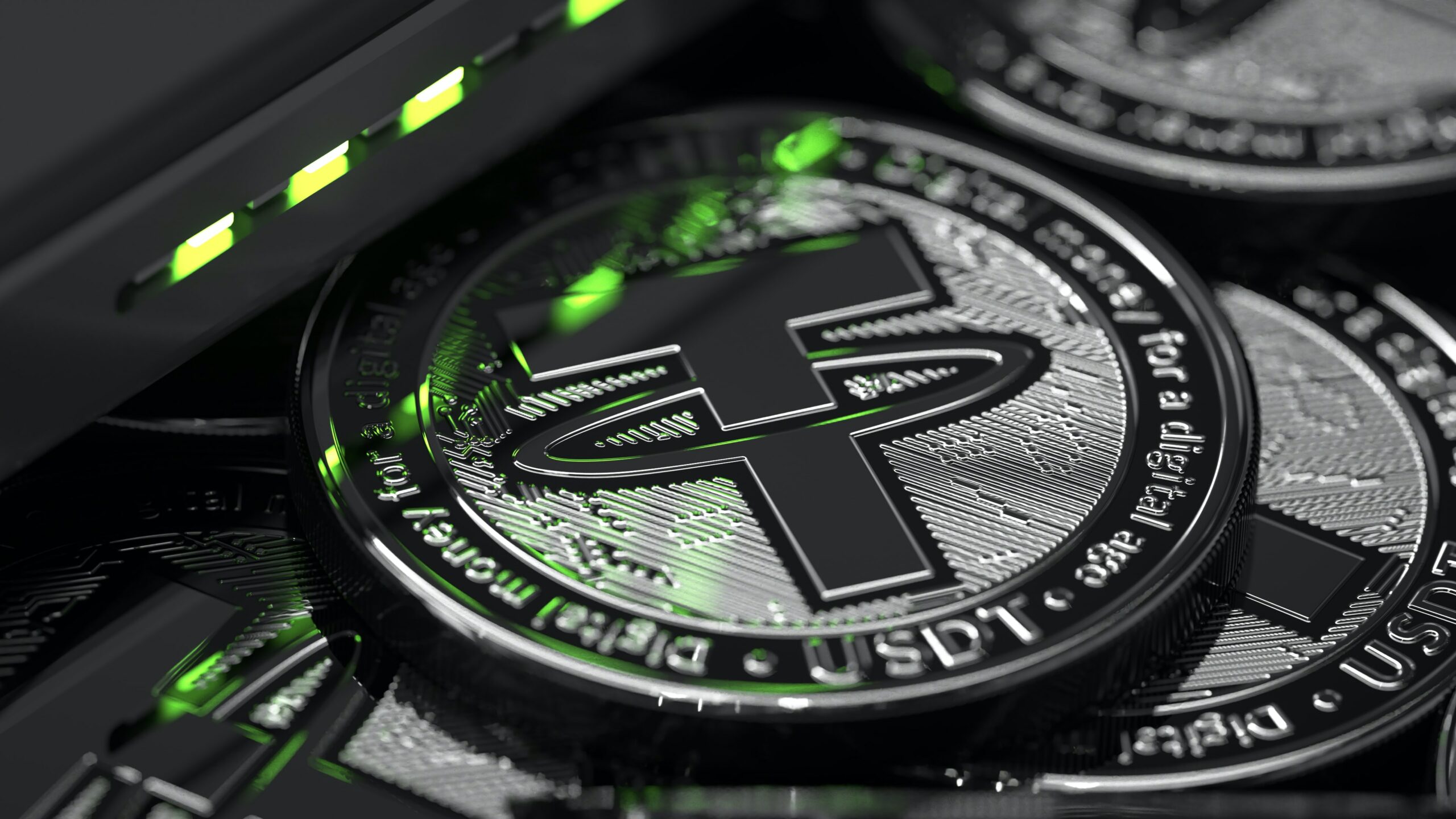
    Tether, the issuer of the world’s largest stablecoin by market capitalization, USDT, has long been embroiled in controversy over the status of its reserves, which are used to back the supply of USDT.

    In February 2021, Tether was banned from operating in New York state. As part of an $18.5 million settlement with the New York State Attorney General’s Office, Tether is required to disclose its reserves each quarter. Last October, the company was fined $41 million by the Commodity Futures Trading Commission (CFTC) for making untrue and misleading statements about the reserves that support the stablecoin.

    Tether has previously faced questions about its holding of commercial papers in its reserves in particular.

    According to the company, this portion has been significantly reduced from $30 billion in previous years to $3.7 billion in July with plans to remove this asset class altogether. Until now, Tether has submitted its attestation reports quarterly and with a large delay.

    Stablecoin competitors such as Circle and Paxos submit monthly reports on their reserves. Both have limited themselves to holding only government bonds or bank deposits.

    In the wake of the collapse of the Terra Luna ecosystem, USDT’s market capitalization has fallen from $83 billion to about $67 billion this year. Circle’s USDC stablecoin, which is also pegged to the U.S. dollar, gained some of those outflows.

  • Stock market settlement to be speeded up by 4 hours

    Stock market settlement to be speeded up by 4 hours

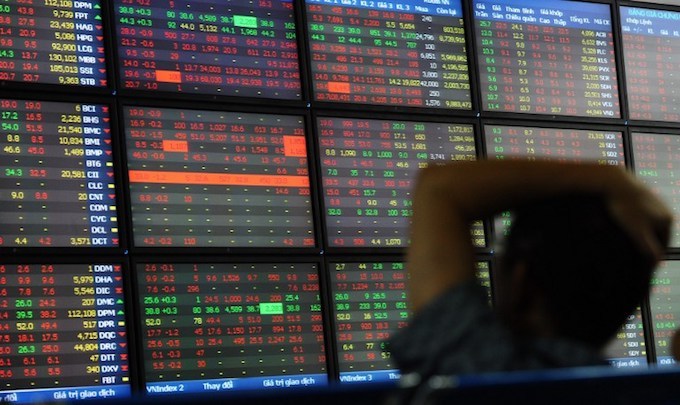
    The stock settlement cycle is set to be shortened by four hours, enabling investors to receive their share or money on the second morning after a transaction.

    Thus, from August 29, they will get them at 11-11:30 a.m on the second day (T+2) instead of the current 3:30-4 p.m.

    Now they have to wait until the next morning to sell securities they buy since trading ends at 2:45 p.m.

    Depository participants must transfer money and stocks to customers before 1:00 p.m and report to the Vietnam Securities Depository before 4:30 p.m.

  • UBS Outlines Mass Millionaire Ambitions in Greater China

    UBS Outlines Mass Millionaire Ambitions in Greater China

    UBS global wealth management has established a dedicated team to mass millionaires in the region and unveiled its ambition to double the number of clients in the segment for the Greater China market.

    UBS global wealth management has established a team dedicated to the coverage of private clients – mass millionaires with a net worth of $1 million to $5 million – the bank said during a media briefing yesterday when it announced the launch of the new business model for Greater China. Within this segment, it is mainly targeting four main groups of individuals: entrepreneurs, young families, financial and non-financial professionals.

    The Swiss private bank aims to double the number of clients in the segment over the next three years. Currently, the private client segment accounts for a mid-single-digit percentage of the total number of Greater China clients.

    The private client team has about 60 staff, including client advisors and specialists, alongside a wealth concierge team.

    In covering the mass millionaire market in Greater China, UBS’ digital capabilities will feature strongly, particularly with the usage of its content platform Circle One, which includes actionable investment ideas, and its digital banking app.

    UBS will rely on three levels of engagement with private clients including bank-led investing via discretionary portfolio management, an advisory model and self-directed investing – an option that is particularly suitable for financial professionals who are well acquainted with financial products and services.

    The private client market is a well-established segment in the industry with Hong Kong being one of the fastest creators of mass wealth, including one millionaire out of every 13 people living in the city, according to a study by Citibank. In fact, consumer banking units in Hong Kong have longstanding businesses covering the segment under the same nomenclature including Citigold Private Client and DBS Treasures Private Client.

    But UBS is confident that its wealth management roots will serve it well with competitive advantages such as a dedicated multi-asset chief investment office or access to a product shelf designed for the ultra-rich with solutions like customized discretionary mandates or exclusive hedge funds.

    «We are not a retail bank,» said Jamee Wong, UBS’ private client head for Greater China, commenting on competing against established rivals in the market. «We are a premier private bank and a wealth manager. This is in our DNA. We do wealth management every single day.»

  • UBS Hires Greater China Head of Philanthropy

    UBS Hires Greater China Head of Philanthropy

    UBS has hired a 25-year veteran as its head of philanthropy services for Hong Kong and the broader Greater China region.

    Ming Geng joins UBS Global Wealth Management as its head of philanthropy services for Hong Kong and Greater China, according to an internal memo. Based in Hong Kong, Geng reports to head of social impact & philanthropy services Tom Hall with local supervision by head of A&S client services Christina Tung.

    Geng has over 25 years of experience in global health, global development affairs and philanthropy. Prior to joining UBS, she was the head of corporate affairs at Viatris Pharmaceutical, Greater China.

    Previously she served as the deputy director at Bill & Melinda Gates Foundation’s China office between 2008 and 2019 following 10 years of leadership and management experience at various other global organizations including The Global Alliance for Improved Nutrition, The Yew Chung Education Foundation, and UNICEF.

    A spokesperson for the bank confirmed the hire.

  • Inflation Drives LatAm Nations to be Top Markets for Binance

    Inflation Drives LatAm Nations to be Top Markets for Binance

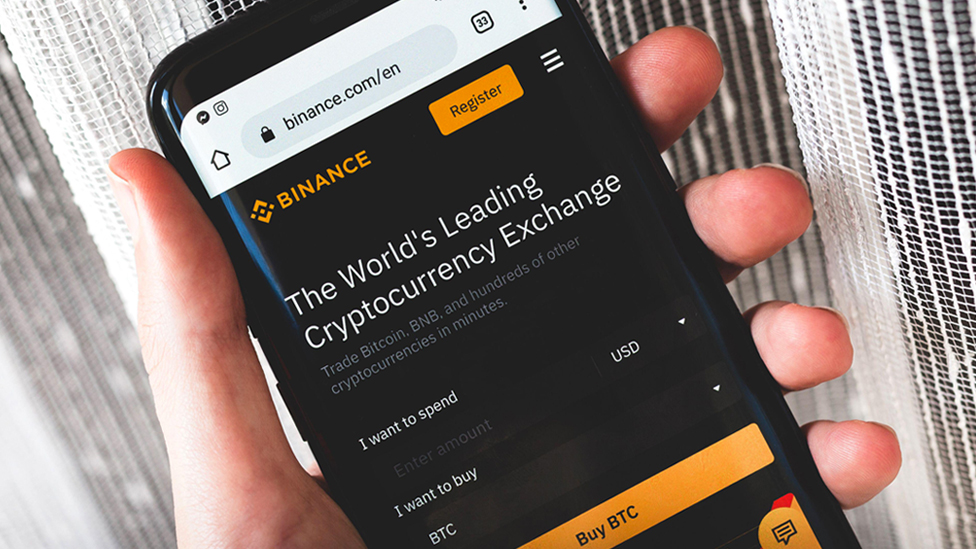
    Rising inflation and a strengthening dollar have driven Latin American countries to become market leaders for crypto giant Binance.

    Now that we are seeing inflation ramping up worldwide, we are seeing that more and more people are seeking cryptocurrency, like bitcoin, as a way to protect themselves from inflation, said Maximiliano Hinz, Binance’s head in Latin America.

    According to Hinz, Latin American countries have become the top markets for Binance, such as Brazil, Mexico and Argentina, where annual inflation is 90 percent.

    Overall, Latin America and the Caribbean posted an inflation rate of nearly 9.8 percent in 2021, according to data compiled by Statista.

    While a number of Latin American nations have yet to pass meaningful crypto legislation, unlike El Salvador which made headlines for adopting bitcoin as legal tender, Hinz does not necessarily view this as an issue.

    Regulation is a framework, but it’s not always negative that something isn’t regulated, he said. If something isn’t banned, then it’s legal.

  • How to choose a trading account on Forex?

    How to choose a trading account on Forex?

    Currently, the Forex market is a hot topic all over the world. In today’s difficult times, many people are looking for a market that will not be affected by the financial crisis. It is the Forex market that works in any crisis. Every day, there are transactions worth several trillion dollars. That is why it attracts many people and financial institutions.

    Private traders trade in the Forex market only through intermediaries, companies that have the status of market participant. Practically, to start working in the foreign exchange market, you need to open a trading account with a brokerage company. Terms of trade vary greatly depending on the type of account. For comfortable work, you need to be able to choose the right one from many accounts. Some beginners try to find the answer to the question: what is standard account in forex?

    Multiple accounts

    Most brokerage companies offer customers a choice of several types of accounts, which differ in minimum deposits, transaction amounts, pricing methods, trading platforms and other features. But, basically, accounts are distinguished by minimal deposits and trading volumes.

    What is a standard account?

    This account is one of the most common. In fact, this is the reason why it is known as a standard account. The minimum deposit between brokers ranges from $100 to $10,000. Standard accounts are suitable for a wide range of traders. In recent years, the technology of crushing the standard lot has spread. Forex companies give the opportunity to open positions with a minimum volume of 0.01. It became possible due to:

    • computerization of trade transactions;
    • increase the number of traders. 

    The broker can summarize the positions of clients and bring standard volumes to the market.

    Standard account holders are usually able to trade many currency pairs and difference contracts. In turn, standard accounts may differ in pricing method and transaction technology. The same company can offer several accounts with STP and ECN technologies, fixed and floating spreads. These technologies involve taking traders’ transactions to the interbank market. 

    An important characteristic of a standard account is segregation. It means that clients’ money is kept separately from the company’s funds, which ensures their safety.

    The Forex market is quite popular. Behind this popularity there are many factors. One of the main factors is the amount of profit that can be made. However, trade also involves some risks. If you do not manage properly, you may suffer significant losses. So you should carefully consider the choice of broker and trading account.


  • Cryptocurrency ATM Installation Rates in the Doldrums

    Cryptocurrency ATM Installation Rates in the Doldrums

    As cryptocurrencies were booming, the number of cryptocurrency ATMs grew accordingly. Now that Bitcoin & Co are trading well below last year’s highs, the pace of installations is waning.

    There are currently around 39,000 cryptocurrency ATMs installed worldwide, corresponding to a nearly 4,000 percent increase since 2017. But since the beginning of 2022, installation rates have plummeted as the cryptocurrency market crashed.

    Crypto ATM installations saw a meteoric rise from January 2020 to January 2022, increasing fivefold to 34,388 machines worldwide. But since the start of the year, barely 5,000 new machines have been installed, and this month, a net total of 44 were even removed. The last time the net number dropped for an entire month was in November 2015, according to US business magazine Forbes.

    The customers are less active, hence the operators get less volume, hence (they) don’t grow that fast and don’t install that many ATMs Patrick Mueller of online service Coin ATM Radar told Forbes. As of July, the net increase in ATMs was 572, modest compared to the peak of 2000 set in 2021. «However if you compare to the last bull cycle in 2017-2018, there was only around 250 net growth per month. So in the current bear cycle, we are still 2 (times) higher than the previous bull cycle, Mueller notes.

    The first physical ATM was installed in Vancouver, Canada, in October 2013, and of the roughly 39,000 crypto ATMs in operation, 95 percent are in North America. The US has by far the largest share of the global market at 87.9 percent, followed by Canada at 6.3 percent and Spain at 0.6 percent.

    In Europe, a net of 15 machines has been removed this year, while 78 machines have been shut down in the United States. Switzerland currently has 150 cryptocurrency ATMs, according to Coin ATM Radar, with Zurich having the most with 46 ahead of Geneva’s 19 and 17 in Lausanne.

    Still Low Penetration

    Overall, the global installation rate of crypto ATMs is still very low. This may be partly because crypto ATMs do not function like typical ATMs, since they are rarely operated by financial institutions and do not link to bank accounts.

    Instead, users deposit cash that is transferred to a digital wallet via a cryptocurrency QR code. Despite the integration of new cryptocurrencies, bitcoin remains the leading asset with over 99 percent of crypto ATMs supporting it.

  • High Taxes Are Driving a Crypto Exodus in Japan

    Japan’s cryptocurrency industry is undergoing a wave of exits to friendlier markets due to the high corporate tax rate.

    At least 20 firms are choosing to establish their crypto business elsewhere and leave Japan, said Sota Watanabe, chief executive of digital infrastructure developer Stake Technologies, in an interview with Bloomberg.

    Crypto firms have been exiting Japan in recent years due to pressure from high taxes including a corporate tax rate of about 30 percent and an individual tax rate of up to 55 percent for crypto gains.

    In an effort to maintain the competitiveness of crypto in Japan, two of the top industry bodies – the Japan Cryptoasset Business Association and the Japan Virtual and Crypto assets Exchange Association – are reportedly submitting a proposal to the financial regulator for tax changes.

    According to a separate report citing a memo, the two groups planned to ask the government to stop taxing paper gains for crypto holdings held by companies for purposes other than short-term trading. The lobby groups also propose a uniform 20 percent income tax on individual investors’ crypto gains, instead of the current arrangement with rates as high as 55 percent.

    According to Watanabe, Japan is lagging behind in the global tech race while a growing number of governments elsewhere are ramping up efforts to woo crypto firms.

    Japan is an impossible place to do business,» he said. «The global battle for a Web 3.0 hegemony is underway, and yet, Japan isn’t even at the start line.

    Stake Technologies relocated to Singapore in 2020 over tax pressures but Watanabe hopes to return to his home country of Japan, assuming that the government will yield to industry calls and lower corporate taxes on crypto next year. He also noted that it may take a few more years before the tax rate for individual investors is reduced.

  • Blackrock Enters the Crypto World

    Blackrock Enters the Crypto World

    The world’s largest asset manager wants to make cryptocurrencies more accessible to its institutional clients. A welcome step for partner Coinbase, which is facing regulatory problems.

    You could hardly find two more divergent viewpoints on cryptocurrencies. Tee Fong Seng, head of private banking at Geneva-based bank Pictet in Asia, caused a stir at the Wealth Management Summit in Singapore with his statement Crypto will be an asset class that we cannot ignore but today, I don’t think there is a place for private bankers and private bank portfolios. Contrast that with the world’s largest asset manager, Blackrock, partnering with the US crypto exchange Coinbase.

    Through this cooperation, Blackrock CEO Larry Fink aims to make cryptocurrencies directly accessible to institutional investors, starting with Bitcoin. Under the agreement, users of Blackrock’s Aladdin institutional investment platform can sign up for Coinbase Prime to access crypto trading, custody, prime brokerage, and reporting. To participate in crypto trading, institutions must be clients of both Blackrock and Coinbase.

    The integration comes about four months after Fink’s announcement that Blackrock would explore ways to offer digital assets to its clients.

    Coinbase Prime institutional trading solution boasts around 13,000 institutional clients and is specifically tailored towards institutions such as hedge funds, financial institutions, asset- and financial managers. For Coinbase’s crypto ecosystem, the collaboration with Blackrock represents a huge vote of confidence given Blackrock’s $8.5 trillion in assets under management at the end of the second quarter.

    The partnership shows that institutional investors are becoming increasingly confident in the crypto market. This year, several major financial players either have entered the market or expanded their existing initiatives and offerings in digital assets. Blackrock, JP Morgan, Goldman Sachs, Deutsche Bank and Morgan Stanley are but a fraction of a growing list of traditional financial institutions using digital assets.

    This year’s crash in cryptocurrencies seems to be helping institutional adoption, with investors who felt they missed the boat now seeing current prices as a good entry point. Joseph Chalom, Blackrock’s Global Head of Strategic Ecosystem Partnerships, said the firm’s institutional clients «are increasingly interested in engaging in the digital asset markets and are focused on how to efficiently manage the operational lifecycle of these assets.»

    For Coinbase, this partnership couldn’t have come at a better time. Its US-listed shares, considered an indicator of overall crypto market sentiment, currently trading about 65 percent lower than at the end of last year, 2021 closed about 10 percent higher on Thursday following the Blackrock announcement.

    Coinbase, however, is facing regulatory issues. A former Coinbase product manager and two alleged accomplices are currently facing charges in a US federal court in Manhattan. Ishan Wahi is accused by U.S. law enforcement and the Securities and Exchange Commission (SEC) of insider trading while working at Coinbase.

    According to media reports, the SEC is investigating the company for selling digital assets that should have been registered as securities, prompting long-time Coinbase supporter and investor Cathie Wood to unload Coinbase shares in a big way.

  • Stores’ claims of accepting Pi payment turn out to be misleading

    Stores’ claims of accepting Pi payment turn out to be misleading

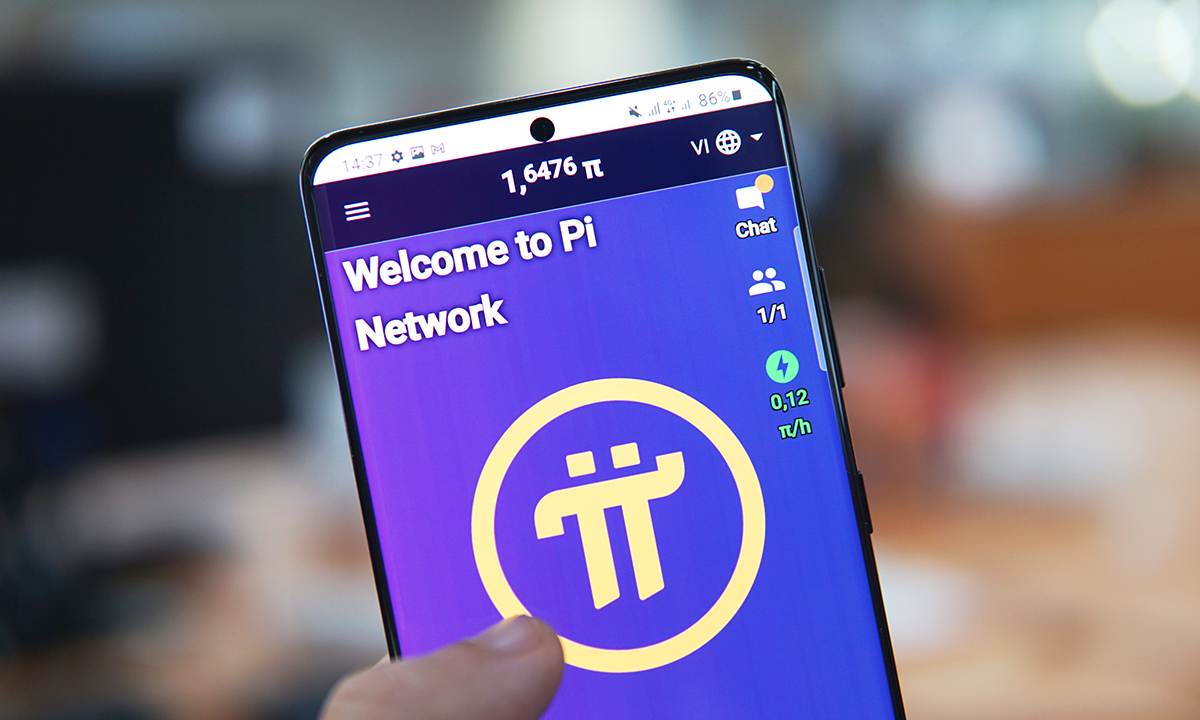
    Some stores accept payment in cryptocurrency Pi but only partially and require buyers to pay mainly in cash.

    “I saw a post selling a used iPhone 11 and thought I could buy it with a dozen Pi tokens,” Thanh Son of HCMC said.

    But it turned out he could only pay 10 percent with Pi and the remaining VND12.5 million ($535) had to be paid in cash.

    “I can easily buy the same phone for VND12.5 million without spending a single Pi,” he said wistfully, adding it was a trick sellers used to entice Pi owners.

    He later contacted some other sellers and got pretty much the same answer.

    “Some places require a smaller proportion of cash but they undervalue Pi.”

    Some investors had begun to claim they bought food and equipment using Pi on social media since July 13 when the cryptocurrency’s developers allowed it to be traded.

    Cryptocurrencies are not legal tender in Vietnam, and issuing, trading or using one for payment attract fines of up to VND100 million.

    Sellers try to avoid legal risks by calling deals using Pi “exchanges” rather than “transactions.”

    A person who asked not to be identified said they had put down a VND10 million deposit for a car after the dealer made an offer “exclusively for the Pi owner community.”

    But the seller actually does not accept payment using Pi.

    He reportedly told the person: “Once Pi enters the open mainnet phase, you guys, Pi owners, can offer it for legal tender. Then you bring the legal tender to us and take your car.”

    The dealer claimed over 100 people had deposited. It is far from clear when, and if ever, the crypto will become legal tender.

    There is a chance the people would lose their deposits, an expert warned.

  • UBS Appoints Hong Kong Asset Management Head

    UBS Appoints Hong Kong Asset Management Head

    UBS has named a new head for its Hong Kong asset management unit, succeeding Adolfo Oliete who will relocate to London.

    Hayden Briscoe has been appointed as UBS Asset Management head for Hong Kong, according to an internal memo, reporting to APAC asset management head Raymond Yin.

    Briscoe started his career in Sydney before moving to Hong Kong in 2013 and joining the asset management unit in 2016. He will also retain his existing role as head of GEM and APAC for fixed income.

    Briscoe succeeds Adolfo Oliete who will return to London over the summer and continue his role as hedge fund solutions (HFS) head of APAC investments and a member of the HFS global business’ senior leadership team. Oliete will relocate following a 14-month stint as asset management head of Hong Kong.

    A spokesperson for the bank confirmed the contents of the memo.

  • New management To Steer UBS Hedge Funds Business

    New management To Steer UBS Hedge Funds Business

    The Swiss bank’s cherished hedge fund boutique O’Connor is reshuffling its top management at a time when the industry is seeing significant outflows.

    UBS is naming Blake Hiltabrand as global head of UBS O’Connor business, and is appointing Bernard (Bernie) Ahkong and Casey Talbot as co-CIOs of the unit, it said in a statement Friday.

    All three will replace Kevin Russell, who carried out the roles of CEO and CIO at the bank’s hedge fund business and looks back on a 29 year career in the industry, it said.

    Hiltabrand, who currently co-heads event driven strategies will assume his new role on October 1. Hiltabrand has worked at UBS O’Connor for over 15 years and is a senior member of UBS O’Connor’s management team and capital allocation forum.

    Talbot currently heads of credit strategies for the global multi-strategy portfolio and will assume the additional role of co-CIO for the portfolio. Casey joined UBS O’Connor in 2013 from Deutsche Bank and is a senior member of the UBS O’Connor capital allocation forum.

    Ahkong, who heads UBS O’Connor in Europe and is the portfolio manager for the European long/short equity team, re-joined the firm in 2016 from BlueCrest Capital, having previously been a portfolio manager at UBS O’Connor from 2006-2013. He is also a senior member of the UBS O’Connor capital allocation forum.
    Hedge funds have seen huge outflows this year, with institutional investors withdrewing an estimated $27.5 billion from hedge funds in the second quarter as they position themselves for global inflation and a recession.

  • Vietnam main securities exchange continues to use FPT trading system

    Vietnam main securities exchange continues to use FPT trading system

    The Ho Chi Minh Stock Exchange will continue to use the trading system developed by FPT while waiting for a replacement from South Korea, Ministry of Finance and bourse officials said.

    The system developed by FPT Information System, a subsidiary of the tech giant, in July last year helped cope with the trading load that had become unsustainable for around half a year.

    It increased the capacity of Vietnam’s main exchange from 900,000 transactions a day to five million.

    On November 19 last year the largest ever number of transactions of 1.84 million was recorded, or just a third of what the system could handle, Dang Truong Thach, deputy director of FPT IS, pointed out.

    Deputy Minister of Finance Nguyen Duc Chi said its replacement, KRX, is being developed in South Korea and seen rapid progress.

    “It will be ready within months.”

    It is being developed under a VND600-billion (US$25.69 million) deal signed in 2012 between HoSE and the Korea Exchange.

    It will allow odd-lot trading and a T+0 settlement cycle (meaning investors will receive their shares or money on the day of trade instead of two days later).

    For the last 10 years HoSE has repeatedly been missing deadlines for installing a new system.