Category: Finance

Retail News Asia is committed to providing both local and global retailers with the latest Finance news throughout the Asian market. This on a daily base.

  • SEC Authorizes Spot Bitcoin ETFs

    SEC Authorizes Spot Bitcoin ETFs

    The Securities and Exchange Commission has delivered a landmark approval of spot Bitcoin exchange-traded funds. This is a highly anticipated event that is expected to further crypto’s entry into mainstream finance.

    The US Securities and Exchange Commission (SEC) has approved 11 applications for spot Bitcoin exchange-traded funds (ETF), including those from BlackRock, Ark Investments, Fidelity, Invesco and more.

    Since 2004, this agency has had experience overseeing spot non-security commodity exchange-traded products (ETPs), such as those holding certain precious metals. That experience will be valuable in our oversight of spot bitcoin ETP trading,» said SEC chairman Gary Gensler in a statement highlighting investor protection.

    Despite approving the inaugural entry of spot Bitcoin in the ETF industry, Gensler noted that this did not reflect positive sentiments about the digital asset class.

    Though we’re merit neutral, I’d note that the underlying assets in the metals ETPs have consumer and industrial uses, while, in contrast, bitcoin is primarily a speculative, volatile asset that’s also used for illicit activity including ransomware, money laundering, sanction evasion and terrorist financing,» Gensler added.

    While we approved the listing and trading of certain spot bitcoin ETP shares today, we did not approve or endorse bitcoin. Investors should remain cautious about the myriad risks associated with bitcoin and products whose value is tied to crypto,» he said.

  • Google Wallet now stores airline boarding passes on your wrist

    Google Wallet now stores airline boarding passes on your wrist

    In a recent update, Google Wallet for Wear OS has expanded its capabilities to include support for airline boarding passes. This comes after the addition of loyalty card support back in December.

    Your Wear OS 3+ device will now display a new notification from the Google Wallet app on your smartwatch. This notification will inform you about your boarding pass for the flight to any airport with an option to tap on it to “View pass” and thus access the QR code for easy gate scanning.

    This much-needed addition greatly enhances the functionality of Google Wallet for Wear OS, allowing it to integrate with a broader range of phone features seamlessly. When Google introduced loyalty card support in December, it was initially limited to basic membership programs and other types of passes. Unfortunately, excluded from the list were COVID cards, health insurance cards, and private passes.

    Some users have reported seeing this feature already available on the Pixel Watch 2, while original Pixel Watch users are still waiting for the update, which appears to be server-side. However, as this was not a feature that was announced as a Pixel Watch 2 exclusive, there shouldn’t be any reason why the original Google Pixel Watch wouldn’t receive it.

    The support documentation for Google Wallet also includes information on how to find your passes on your smartwatch’s Wallet app, and even includes troubleshooting info should you not be able to find the option to add your boarding pass to your watch. The documentation states that passes are automatically added across all of your synced devices, but your watch must be running Wear OS 3.5 or newer and the Google Wallet app on the watch must be version 23.46.x or above. Additionally, it is stated that Fitbit devices aren’t supported.

  • Central bank reveals investor interest in restructuring troubled lender SCB

    Central bank reveals investor interest in restructuring troubled lender SCB

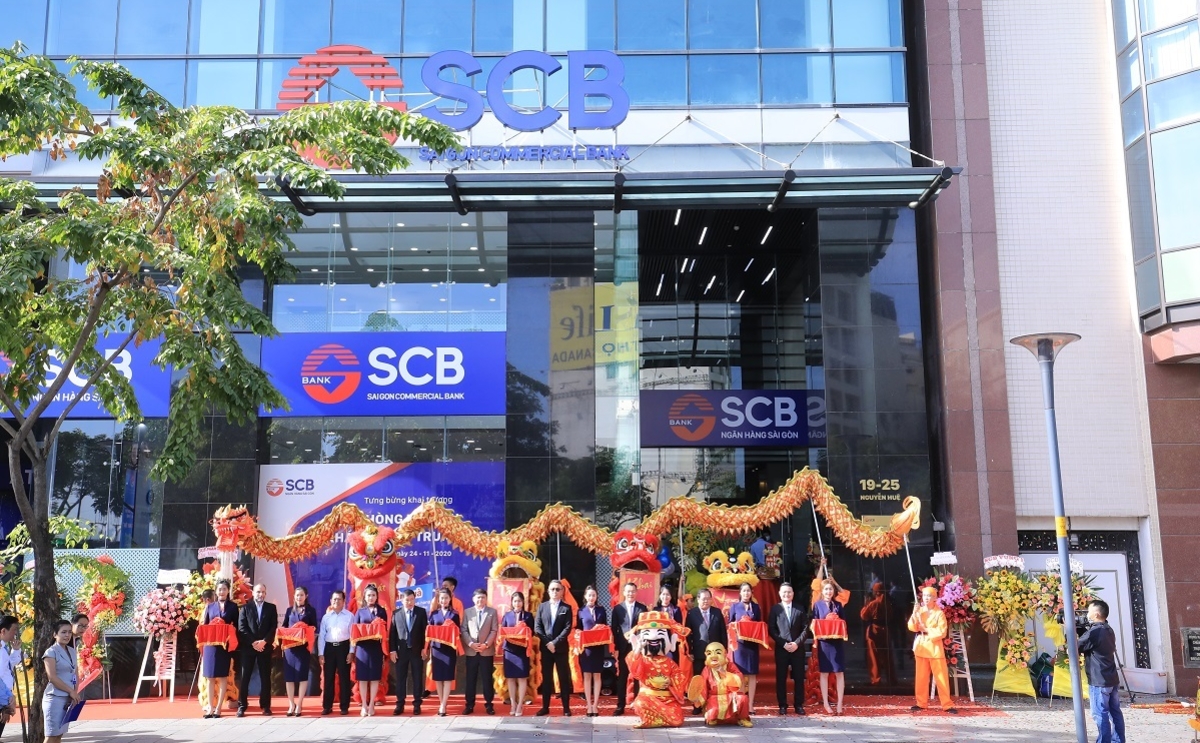
    The State Bank of Vietnam (SBV) is considering proposals from investors to restructure the Saigon Commercial Bank (SCB), a bank experiencing financial difficulties.

    After SCB faced a run in October 2022, the central bank put the private lender under special control to limit negative impacts on it and credit institutions in general.

    Historically, several banks under special control have successfully recovered and prospered.

    The SBV is also formulating plans to restructure other struggling banks, including CBBank, OceanBank, GP Bank, and DongABank.

    While plans to restructure these banks are being considered and prepared for approval, progress is lagging behind the anticipated schedule.

    The government has previously indicated the challenge of finding financially healthy commercial banks willing to merge with these ailing institutions.

    Additionally, banks require time to persuade shareholders, particularly major and foreign strategic shareholders, to agree to mandatory transfers.

    In mid-December, meeting with the leaders of Mizuho, one of the three largest banks in Japan, Prime Minister Pham Minh Chinh asked them to participate in restructuring Vietnam’s weak banks.

  • Samsung Wallet rolls out mobile driver’s licenses

    Samsung Wallet rolls out mobile driver’s licenses

    Samsung Wallet, the app that lets users store and manage their cards, tickets, and coupons on their Samsung Galaxy smartphones, has added a new feature: mobile driver’s licenses and state IDs. The company announced back in October that it will bring this feature to Arizona and Iowa, however, other than “coming later this year,” no specific date was given for when it would exactly go live.

    Now, it looks like the wait is over as the feature is live in Arizona, according to the Arizona Department of Transportation announcement. Samsung Wallet users who are Arizona residents can now store a digital version of their physical cards on their phones and use them at places that accept digital IDs, such as TSA checkpoints at select airports.

    This feature offers more convenience and security for users, as they don’t have to carry their physical cards with them and risk losing or damaging them. The digital IDs are also encrypted and protected by fingerprint or PIN authentication, so only the authorized user can access them.

    To add a mobile driver’s license or state ID to Samsung Wallet, users just need to open the app, go to the Quick access tab, and click on the ‘+’ button. Select ‘Digital IDs’ from there, and click on the ‘Driver’s License/State ID’ option. At that point, users will need to scan the front and back of their ID card and verify their identity with a face scan.

    Samsung says the face scan is only for verification purposes and does not store any biometric data. After submitting the scan, users need to authenticate with their fingerprint or PIN to complete the process.

    This convenience isn’t just limited to air travel, though. Samsung envisions a future where digital IDs can be used for age verification, entering age-restricted establishments, and even renting a car. While Arizona is the first to experience this revolution, Samsung promises to add more states and functionalities in the near future.

  • Lowe’s finally adds support for Apple Pay

    Lowe’s finally adds support for Apple Pay

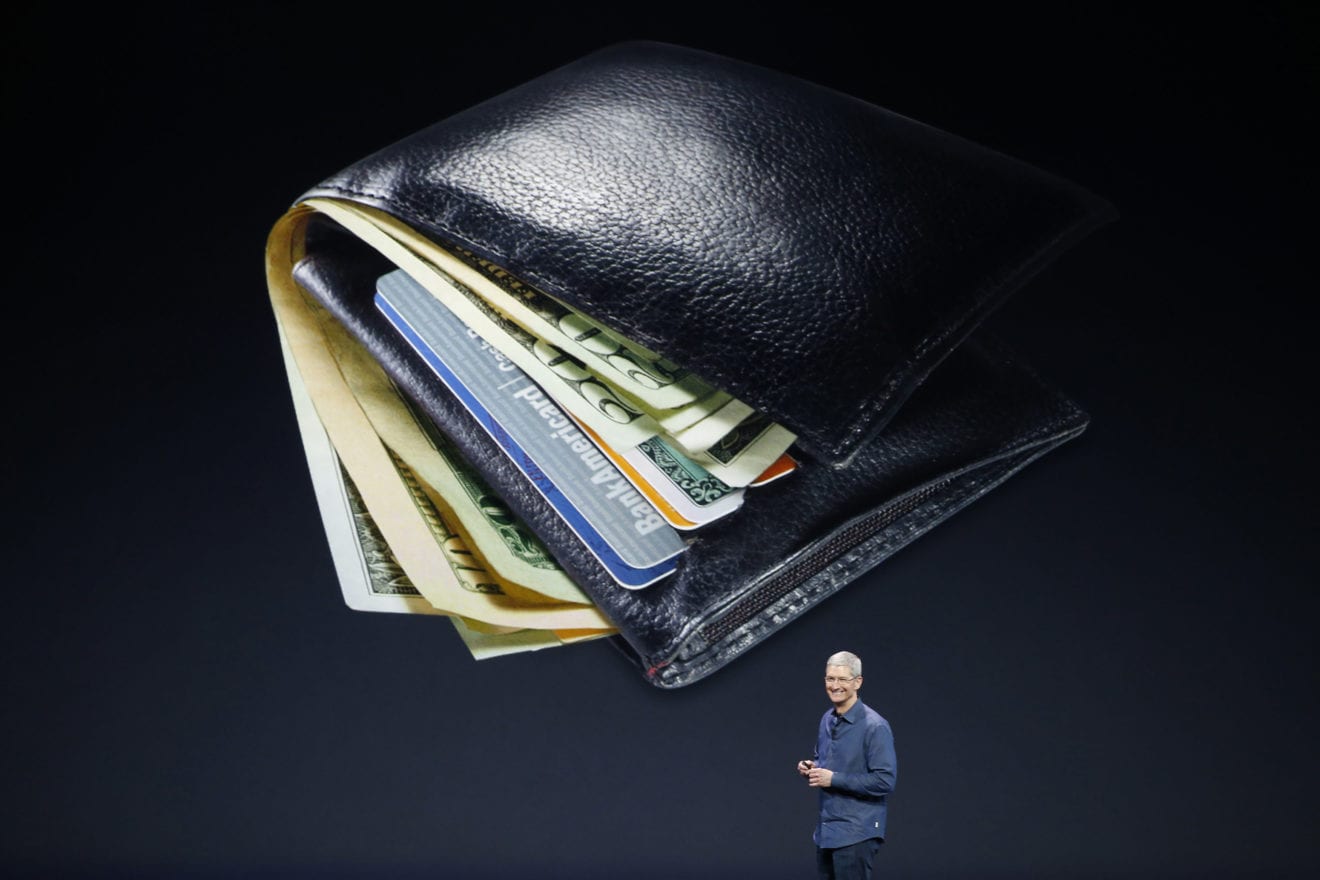
    The second-largest hardware chain in the U.S. has finally decided to support Apple Pay. For those who don’t know what Apple Pay is, it is the mobile payment service that allows an iPhone user to select a credit, debit, or prepaid card from the Wallet app and tap the phone against a POS machine to complete a transaction at a retail store.

    You don’t have to fumble for your wallet to grab your credit card, especially when you’re bundled up to stay warm in the bitter cold, and you don’t have to worry about your card’s information being stolen by a skimmer placed inside a card slot by a criminal. It’s just so darn convenient and it costs you nothing to use it. Apple collects .15% of the value of every transaction rung up with Apple Pay. That means that on a $100 transaction, Apple earns the princely total of 15 cents.

    But this is a volume business after all and with so many people using Apple Pay, the service is expected to generate $4 billion in revenue for Apple this year which is more than double the $1.9 billion that Apple Pay raked in for Apple in 2022. Earlier this year Apple promoted Apple Pay with a series of ads. And now, after a long absence, Lowe’s is adding Apple Pay support to its 2,100 retail locations in the U.S.

    This is a shrewd move by Lowe’s and an attempt to take some business away from the number one hardware chain in the U.S. since Home Depot does not support Apple Pay. Another huge retailer that doesn’t support Apple Pay is Walmart. Eight years ago we told you when the largest discount retailer in the states launched its own mobile payment service imaginatively titled Walmart Pay.

    Using Walmart Pay requires you to install the iOS or Android version of the Walmart app on your phone. Earlier this year Kroger tried to apply some pressure to competitor Walmart by accepting Apple Pay for the first time starting last April.

    It would be quite a big deal for Apple if Walmart were to add support for Apple Pay like Lowe’s did because, eventually, continued growth for Apple Pay will have to come from the addition of more retailers, especially those huge chains that previously held back support for the service.

    If you’re like me, there is that feeling when Face ID verifies you and that “ding” goes off indicating that your payment via Apple Pay has been accepted. And we have no doubt that Apple loves that sound too since it means more money, albeit in nickels and dimes, is being added to its coffers.

  • National Citizen Bank to double charter capital with private placement

    National Citizen Bank to double charter capital with private placement

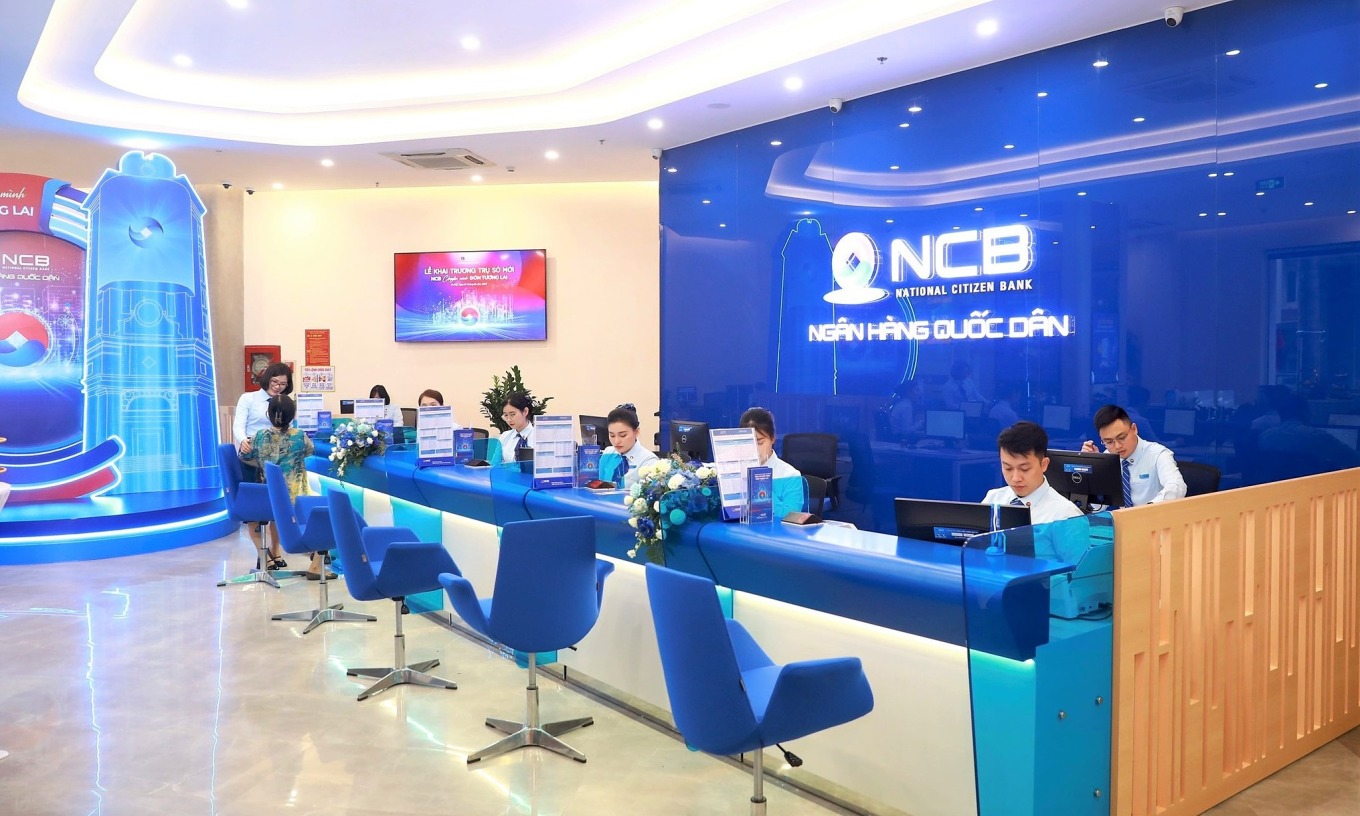
    National Citizen Bank (NCB) has approved a private placement to issue 620 million new shares in 2024 to double its capital.

    The issuance is scheduled for the second quarter. The issued shares will be blocked from trading for one year.

    If the plan succeeds, NCB’s charter capital will rise from VND5.6 trillion to VND11.8 trillion ($213 million to 487 million).

    NCB has for years been among the banks with the lowest amount of capital in Vietnam.

    The minimum charter capital requirement in the country is VND3 trillion. Household appliance maker Sun Group became a shareholder in the bank last year.

    NCB is in the process of restructuring. It has a bad debt ratio of more than 3%.

  • Citi organizes Vietnam Digital Leaders Summit 2023

    Citi organizes Vietnam Digital Leaders Summit 2023

    Citi brought together about 100 leaders in the Vietnam technology landscape, including founders, management teams, and investors, to discuss how the new economy is shaping the future of Vietnam.

    The Vietnam Digital Leaders Summit 2023, hosted by Citi Commercial Bank (CCB) and Citi’s Investment Bank, featured keynote speeches and lively panel discussions covering various topics, from scale-up journeys and macroeconomic challenges to fundraising strategies.

    Speakers and panels also touched on investor perspectives on opportunities in Vietnam and stories on the strategic shift in focus from exponential growth to sustainable profitability. Many speakers addressed the opportunities and pitfalls of harnessing AI throughout the day.

    Shervone Saw, CCB’s Asia Digital Head, highlighted that Citi established its technology industry vertical eight years ago to support the startup ecosystem. The unit supports technology startups from infancy to maturity, offering customized solutions for every step of the journey.

    Citi’s global network powers companies as they expand into new geographies. Citi is a pioneer in the technology industry in Vietnam, witnessing the rapid rise of companies to the unicorn stage.

    At the event, James Perry, APAC Co-Head of TMT Investment Banking, showed that in 2023, private investment into technology companies in Southeast Asia is on track to surpass pre-Covid levels, despite substantial declines from the peak levels in 2021.

    “We understand the importance of having a structured and dedicated approach to support the demands of fast-growing tech firms, particularly in a low-growth and volatile macro-environment. Our goal is to work with clients to form a winning strategy, to achieve new milestones, and to help them deliver their strategic objectives,” said Lin Hsiu-Yi, ASEAN & Singapore Head of Citi Commercial Bank.

    In Vietnam, Citi has supported and served clients for nearly three decades, helping them navigate the opportunities and challenges of rapid growth and international expansion by enabling them to scale faster.

    This flagship event served as a platform for engagement, connection, and exploration of new growth opportunities for clients, investors, industry veterans, and the Citi team.

    “Whether clients are considering expansion, exploring partnerships, or seeking strategic financing, our dedicated team is ready to support their needs and enable their businesses to get into the next phase of growth,” said Ramachandran A.S., Vietnam Citi Country Officer.

  • Dollar gains little against dong

    Dollar gains little against dong

    The U.S. dollar rose against the Vietnamese dong Wednesday morning.

    Vietcombank sold the dollar at VND24,450, up 0.08% from Tuesday.

    The State Bank of Vietnam raised its reference rate by 0.10% to VND23,951.

    The greenback went up 0.08% to VND24,700 on the black market.

    It has increased against the dong by 3.03% since the beginning of the year.

    Globally, the dollar was near a two-week high against a basket of currencies on Wednesday as investors assessed U.S. economic data that showed a cooling labour market, while wagering the Federal Reserve will cut rates next year.

    The dollar index, which measures the U.S. currency against six rivals, was 0.019% higher at 103.99, having climbed 0.3% overnight. The index is up 0.5% this month, after sliding 3% in November, its steepest monthly decline in a year.

    The euro was at $1.0795, having dropped to three-week low of $1.07785 on Tuesday.

    Sterling was last at $1.2601, up 0.06% on the day. The Japanese yen strengthened 0.03% to 147.12 per dollar.

  • Apple, Goldman Sachs partnership reportedly coming to an end

    Apple, Goldman Sachs partnership reportedly coming to an end

    This past summer we told you that global investment banking firm Goldman Sachs, Apple’s partner in the Apple Card, was looking to exit the partnership. At the time, American Express was considered a possible replacement for Goldman Sachs. The Apple Card launched in August 2019 with no fees charged for late payments, going over the credit limit, or for an annual membership.

    Account holders get 3% back on Apple Pay purchases made using the Apple Card at the Apple Store (both physical and online), the App Store, Uber and Uber Eats, Walgreens, Nike, Panera Bread, T-Mobile, ExxonMobil, and Ace Hardware. On purchases made from other retailers that accept the Apple Card via Apple Pay, customers get 2% cash back. The cashback amount belonging to each cardholder is tallied daily and can even be swept daily into an interest-bearing savings account.

    Today, a person familiar with the situation told CNBC’s Leslie Picker that Apple has presented Goldman Sachs with a proposal that will dissolve the Apple-Goldman Sachs partnership within the next 12 to 15 months. This would force Apple to find a new financial partner to keep the popular Apple Card alive along with Apple’s high-yielding savings account. While Apple offers the card via its Wallet app, Goldman Sachs runs the operations’ back-end.

    An Apple representative told CNBC today, “Apple and Goldman Sachs are focused on providing an incredible experience for our customers to help them lead healthier financial lives. The award-winning Apple Card has seen a great reception from consumers, and we will continue to innovate and deliver the best tools and services for them.” It isn’t clear whether Apple has a deal with a new partner although, as we mentioned at the beginning of this article, American Express was rumored in July to be interested in the business.

    At the start of this year, a report said that Goldman Sachs had put aside $1.2 billion in loan-loss provisions for its consumer credit division covering the first nine months of 2022. These funds are put aside by a bank to cover debt that the bank believes will not be repaid. At the time, analysts said that the large increase in load-loss provisions was due to the Apple Card.

    Goldman originally hoped to have its consumer credit division, which includes the Apple Card, hit the breakeven mark in 2022. But that has been pushed back until 2025. Last year, Wolfe Research analyst Bill Carcache said, “The Apple Card portfolio may generate lower revenues and face higher loss content relative to the industry average.”

    If Goldman does want out, we’d expect Apple to announce a partnership with another firm fairly quickly. Stay tuned.

  • Mastercard JV Approved to Begin Domestic Payments Processing in China

    Mastercard JV Approved to Begin Domestic Payments Processing in China

    Mastercard today announced that its joint venture entity, Mastercard NUCC Information Technology (Beijing) Co., Ltd., has received formal approval from the People’s Bank of China (PBOC) and the National Administration of Financial Regulation (NAFR) to commence domestic bankcard clearing activity in China.  

    “We are pleased to have reached this milestone with our local partner NUCC. Mastercard’s deeper participation in the Chinese market will benefit the country, its consumers and its businesses, while simultaneously boosting our company’s mission of connecting and powering an inclusive digital economy that benefits everyone and unlocks priceless possibilities for all,” said Michael Miebach, CEO of Mastercard.  

    In February 2020, the PBOC principally approved the application from Mastercard NUCC to begin formal preparations to set up a domestic bankcard clearing institution in China. Since that time, the JV has established standards, rules, structures and infrastructure in line with local regulatory requirements, and obtained the required certificates for a local switch business.  

    “Mastercard NUCC is committed to being in China as an active partner, working to expand issuance and acceptance of Mastercard-branded products for the benefit of local businesses and consumers. As we ramp up our domestic operations, we look forward to working with customers and partners in China to harness technologies and innovations in a way that empowers local businesses and delivers the best payments experiences to people every day,” said Ling Hai, chairman of the board of Mastercard NUCC and co-president, international markets at Mastercard.  

    In recent years, Mastercard has built a strong cross-border portfolio in China that includes tens of millions of bank cards and millions of acceptance points across the country, helping power connectivity to the global economy and driving cross-border and inbound commerce in China. Earlier this year, Mastercard enabled inbound acceptance via Alipay and Tencent wallets so that international cardholders can pay safely and conveniently like a local at tens of millions of QR payment points when traveling around China.  

  • KBank Financial Conglomerate acquires additional investments in Bank Maspion

    KBank Financial Conglomerate acquires additional investments in Bank Maspion

    KASIKORNBANK FINANCIAL CONGLOMERATE has acquired additional investments in PT Bank Maspion Indonesia Tbk (Bank Maspion) in Indonesia through KASIKORN VISION FINANCIAL PTE. LTD. (KVF) and PT. KASIKORN VISION FINANCIAL INDONESIA. Following the capital injection, the post-investment valuation of Bank Maspion stands at 15.441 billion Baht, an increase of 8.0 billion Baht. Therefore, the subsidiaries increased its stake in Bank Maspion to 84.55 percent, from 67.68 percent, reaffirming its position as a controlling shareholder in this Indonesian bank. The move also reinforces KBank’s goal of becoming the largest bank in East Java.

    Mr. Pattarapong Kanhasuwan, Chairman of KASIKORN VISION FINANCIAL COMPANY PTE. LTD. (KVF), said, “KASIKORNBANK FINANCIAL CONGLOMERATE initially acquired a stake in Bank Maspion in 2017. In the latest development, the subsidiaries have acquired additional shares in Bank Maspion, increasing its stake to 84.55 percent. The valuation of Bank Maspion after the capital injection amounted to 15.441 billion Baht, increasing 8.0 billion Baht. This strategic move will contribute significantly to the continuous growth of Bank Maspion, strengthening its operations and enhancing its customer service capabilities, while fortifying KBank’s position as the controlling shareholder of Bank Maspion.”
    KBank has leveraged its more than 78 years of experience in the banking business, along with its capability and expertise in financial innovations and technologies, to cement Bank Maspion’s strengths in all aspects. Such endeavors are intended to ensure that Bank Maspion becomes a “Right Financial Partner” that can provide services beyond traditional financial products in order to support the growth of customers’ businesses and facilitate Indonesia’s long-term economic growth through the implementation of business strategies that focus on three customer segments, namely corporate, SME and retail.

    • Corporate customer segment has exhibited bright growth prospects and is a major driver of the Indonesian economy. With that in mind, KBank intends to enhance Bank Maspion’s service provision capability and deepen client relationships in order to be a potential source of financing and offer comprehensive banking services.
    • For the SME customer segment, KBank has developed and improved products and services to make it easier to audit income, approve loans and lift various restrictions in order to respond to customers’ needs more quickly while also maintaining the security of related transactions. KBank is planning to offer P2P lending soon, as well.
    • As for the retail customer segment, KBank aims to expand its retail customer base through the design and development of various products and services, including Payroll, QRIS (Indonesian Standard QR Payment), deposit accounts, and personal loans, while introducing marketing campaigns to meet the diverse needs and behaviors of retail customers in their daily lives.

    Mr. Pattarapong added that the capital injection is in alignment with the Bank’s strategy of business expansion to become A Regional Bank of Choice within AEC+3. The focus is on enhancing capabilities in financial innovations and technologies to provide services beyond banking solutions in response to current changes. KBank’s competitive advantage of a service network in key strategic areas across the region will strengthen connectivity between Indonesia and the AEC+3 market. The effort is in line with KBank’s goal of becoming the largest bank in East Java by 2027.

  • UBS Makes Extremely Bold Forecast

    UBS Makes Extremely Bold Forecast

    Switzerland’s largest bank puts out a view predicting a drastic cut in US interest rates by the Federal Reserve. Their forecast is completely out of sync with the rest of the market and peers.

    Every year, Saxo chief economist Steen Jakobsen draws significant attention in the financial markets with his list of ten Outrageous Predictions. They are sometimes meant to be taken with a pinch of salt although they often have a deeper background, prompting readers to think about things entirely differently.

    But you cannot often cast the economists at Switzerland’s largest bank, UBS, in much the same light.

    Yet on Monday, they surprised the market by leaning way out of the window when it comes to US interest rates next year as they believe that the Federal Reserve under Jerome Powell will cut rates by 2.50 to 2.75 percent by the end of 2024.

    It would not be an exaggeration to say that the forecast did not fit anyone’s consensus as the level they are forecasting rates to end up is about 275 basis points below current levels.

    That is almost four times as much as the markets are expecting, where predictions are for a cut of around 75 basis points. The UBS forecast is also way off the median forecast of a Fed funds rate of 5.1 percent at the end of 2024, or a cut of 25 basis points at best.

    According to Bhanu Baweja, chief strategist at UBS’s investment banking business, a continued decline in inflation will allow the Fed to start easing monetary policy from March on.

    The UBS experts also believe that the American economy will weaken far quicker than the market assumes and that there will be a slight recession by the middle of 2024, something that also contrasts with other economists who are predicting a soft landing instead.

  • Capvis Lures Investment from Chinese Giant Alibaba.com

    Capvis Lures Investment from Chinese Giant Alibaba.com

    Funds belonging to the Zug-based private equity specialist sell a stake to Alibaba.com. The China-based B2B platform intends to use it to expand and grow in Europe.

    Capvis has managed a coup. The Baar based private equity specialist has completed the sale of its majority stake in B2B platform operator Visable, an announcement sent by the company on Tuesday indicates.

    The sales price is not being disclosed.  Capvis bought a stake in Visable in 2017 and has developed into the European market leader for e-commerce platforms with the international marketplace europages based in Paris.

    Alibaba.com is a subsidiary of Chinese internet giant Alibaba International Digital Commerce.With this step, Capvis cements its position internationally. It was founded in 1990 and it is now, with the significantly larger Partners Group, one of the last independent pioneer private equity firms in Switzerland as former competitors such as Zurmont and Adveq have been sold to competitors in the meantime.

    Since its founding, Capvis has concluded 62 transitions corresponding to total capital of around 4 billion euros, with ten companies concluding successful IPOs.

  • PWC Makes its Way to the Top in Switzerland – and Hopes for UBS

    PWC Makes its Way to the Top in Switzerland – and Hopes for UBS

    Last year was so good for the consulting firm that it now leads the Swiss market. The financial sector plays an important role in that, says managing partner Gustav Baldinger.

    Digital transformation, consolidation, regulation. What ends up giving executives headaches turns out to be a field day for consultants. That, at least, is clearly visible at Pricewaterhouse Coopers, one of the big four. Figures show that gross revenues rose by 30 percent in the financial year to June.

    Its accountancy leg saw numbers rise by 10 percent, while the tax and legal advisory business were up 6 percent. That helped gross services income reach 1.1 billion francs.

    There were various drivers, indicates Gustav Baldinger (image below) about developments in recent months. The managing partner and head of the business consultancy practice at PWC Switzerland is seen as the architect of its recent growth spurt. During his watch, domestic economic growth was generally buoyant and many companies invested in digital transformation efforts and technology, particularly in Cloud-based applications.

    The transaction business developed particularly well and it received many contracts as a result of regulatory impetus.

    PWC ranked second in the Swiss market for a long time but it is now the market leader in all three areas although it is a claim that another big four consultancy, Deloitte, still believes it has a right to.

    We are clearly by far the largest when compared directly as a group in the areas of accounting and tax advice, Baldinger insists, having spent more than two decades working for PWC domestically. The advisory area has also been growing strongly, particularly in services for the financial sector, the managing partner added.

    That adds up. Financial sector clients are the largest and most important segment for the consultancy in Switzerland as around a third of the business is generated from them. And one of the clients has generated a good deal of talk in recent times. Credit Suisse. PWC was the bank’s external auditor and it provided comfort in the 2022 annual report that it remained a going concern. Shortly afterward, what was once UBS rescued Switzerland’s second-largest bank in a government-prompted takeover.

    Credit Suisse’s collapse also puts PWC in a different position. We will continue to audit it with the same level of detail and quality in 2023, Baldinger indicates. Because of this mandate, it is not in a position to offer consulting services. We will only be able to offer UBS consultancy ideas during the course of 2024 when our mandate ends, Baldinger says.

    Currently, Oliver Wyman has the lead when it comes to the Credit Suisse integration, according to various media reports.

    But Baldinger and his work colleagues have other things up their sleeves. Growth in all areas of services is not the same. The market for business and tax consultancy is growing thanks to the Cloud, and the cyber and data sectors. There is also a demand for restructuring and regulatory compliance.

    We are seeing some delays in decision-making with strategic projects both internationally and in the middle market as well as a consolidation and splitting out of individual phases, he says. But there are also other contrasting developments. Some companies are accelerating their transformation efforts in order to be better prepared for the next growth cycle.

    Balidinger has high hopes for new technologies. «It is clear that new technologies like generative AI and cyber will penetrate all functions of enterprise and the big four massively. He also sees clear opportunities for consulting work as companies will have to adjust and confront ethical issues in connection with generative AI.

    PWC is not just trying to convince companies to make those kinds of investments. It is doing them as well. It wants to invest about 50 million francs in artificial intelligence over the next three years.

  • Vietcombank makes biggest profit among lenders in Q3

    Vietcombank makes biggest profit among lenders in Q3

    Vietcombank remained the biggest profit earner among lenders in the third quarter, a period in which half of all listed banks saw smaller profits following a race to lure deposits.

    Vietcombank made a profit of VND9 trillion (US$375 million) in the third quarter, up 20% year-on-year, followed by MB with VND7.3 trillion, and BIDV with VND5.9 trillion.

    Meanwhile, Techcombank reported a profit of nearly VND5.9 trillion, down 12%.

    Twenty-seven listed banks have just released their financial statements for the first nine months. Instead of reporting huge profits like they all did over last three years, 14 banks reported smaller profits.

    BVBank’s profit dropped by 85% year-on-year to VND60 billion (US$2.5 million), and ABBank’s profit fell from VND1.75 trillion in the first nine months of last year to VND700 billion.

    These are the smallest Q3 profits the two banks have earned in five years, mainly due to capital costs increasing more than credit income. ABBank also faced pressure on credit risk provision costs.

    VPBank and Eximbank profits were halved, while earnings at VietABank, LPBank, BacABank, VietBank and SeABank dropped by 20% or more.

    Less than half of the listed banks enjoyed bigger profits, including Vietcombank (up 18%), BIDV (12%), VietinBank (10%), MB (10%), ACB (11%), HDBank (8%), VIB (7%), Sacombank (54%), MSB (8%), OCB (48%), NamABank (10%) and KienlongBank (25%).

    Among the 10 banks with the largest profits, Techcombank, VPBank and SHB saw smaller profits compared with the same period last year.

    VPBank ranked 10th with a profit of VND8.3 trillion, compared to third place last Q3 with earnings of VND19.8 trillion. The bank had difficulties with consumer lending and there were no longer any unusual revenues from the re-signing insurance contracts.

    Techcombank lost its second ranking, standing in the fifth position after its profit decreased by 18% to VND17 trillion.

    SHB’s profit dropped by 8% to VND8.5 trillion.

    Vietcombank maintained its first ranking, followed by MB, BIDV and VietinBank.

    Banks’ business performance deteriorated a mostly successful race to mobilize capital, which started at end of last year.

    SCB’s crisis in October last year, along with the collapse of some U.S. banks, caused increasingly strained liquidity in the banking system.

    Last October, the State Bank put SCB under special control after people withdrew money in droves at many SCB branches and transaction offices.

    Late last year, banks were concerned with defense and liquidity reserves. This led to a charge to mobilize capital, pushing deposit interest rates up to 11-12% a year at times.

    Interest rates quickly cooled down from the second quarter of this year, but the amount of deposits banks mobilized at high interest rates have not yet matured, pushing capital costs up sharply.

    Current account savings accounts (CASA), a source of cheap capital for banks, have continuously decreased since the end of last year due to cash flows trending into the savings channel.

    The falling stock market, and the dormant real estate and bond markets, also caused people to reduce spending and investment.

    In addition, a series of companies withdrew money to serve capital needs and pay financial obligations, including the buying back corporate bonds before maturity.

    This series of factors caused the CASA ratio to decline throughout the banking industry.

    These factors caused capital costs in the banking industry to skyrocket, with some banks even having to double the expense over the same period last year.

    Meanwhile, many banks found it difficult to lend when production and business as a whole slowed down, and the bond and real estate markets froze.

    The banking industry’s credit growth by the end of September had only increased 6.92%, figure as low as Covid period nadirs.

    Credit balance at many banks also grew at the lowest rate in many years. At BVBank, credit growth by the end of September had reached a mere 4.2%.

    This caused credit revenues to not increase at pace with expenses, and income from credit also barely increased or declined.

    Securities companies predicted that profit growth of the banking industry would end the year at 10% this year, a meagre showing compared to last year’s growth rate of 30%.