Category: Finance

Retail News Asia is committed to providing both local and global retailers with the latest Finance news throughout the Asian market. This on a daily base.

  • Chinese people rush to gold amid uncertain economy, crisis-ridden real estate market

    Chinese people rush to gold amid uncertain economy, crisis-ridden real estate market

    People in China have been turning to gold despite rising prices as the precious metal is deemed the best safe haven asset amid economic uncertainties and a crisis-hit property sector.

    Prices of the yellow metal have gained about 11% in the year to date, Business Insider reported.

    Despite this, Caibai, a renowned jewelry store in Beijing, China, has seen more and more customers, many of whom have no great wealth and only modest savings, buying gold as a way to safeguard their wealth amid economic uncertainties, as reported by French newspaper Le Monde.

    As China struggles to recover from several years of pandemic and reels from a property sector in crisis, gold remains the best safe haven asset for its citizens.

    “It’s reliable. People think it’s the best investment. There was also real estate and the stock market, but today people are hesitant, whereas gold has continued to rise,” Wang Anmei, a salesman at Caibai, explained.

    The demand for safe havens has pushed China’s gold consumption up 5.94% from a year earlier to 308.91 tons in the first quarter of 2024, according to data from the China Gold Association cited by state-owned daily newspaper China Daily.

    The gold rush is not only seen among people in China, but its central bank has also been snapping up the precious metal.

    According to industry association World Gold Council, the People’s Bank of China (PBOC) purchased 225 tons of gold in 2023, the most for a single year since at least 1977.

    This also makes PBOC the world’s largest institutional buyer of gold, the association said.

    The central bank had been snapping up the yellow metal for 18 straight months before pausing last month when spot gold prices hit a record high of $2,449.89 per ounce, official data showed on Friday.

    It had actually started to slow purchases in April, when it bought just 1.87 tons of the precious metal, down from 4.98 in March and 12.1 in February.

    Nonetheless, industry players said that they are expected to resume buying yellow metal once prices ease.

    “They are just waiting and watching. If prices correct to the US$2,200 per ounce level, they will resume again,” David Tait, CEO of the World Gold Council (WGC), told Reuters.
  • VN-Index starts week with a 0.4% drop

    VN-Index starts week with a 0.4% drop

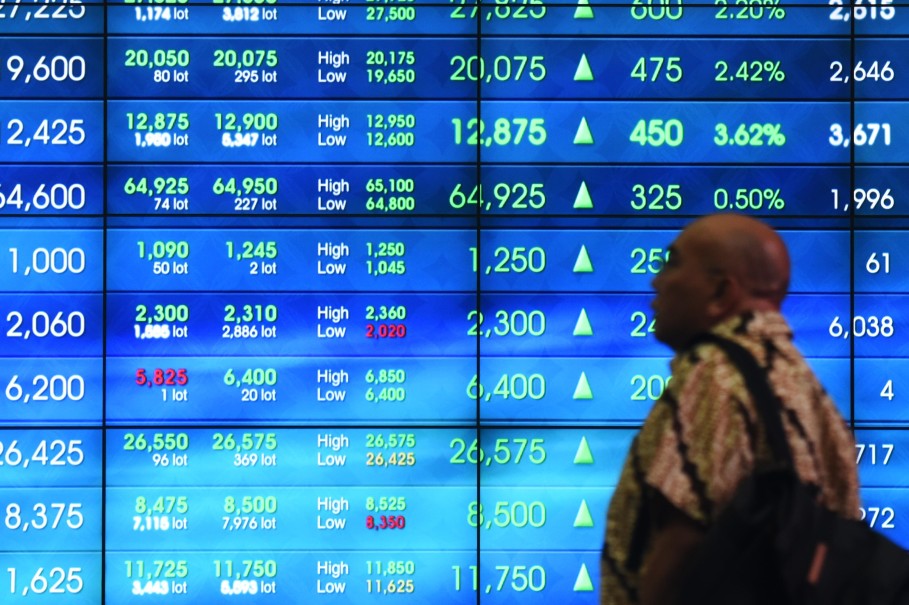
    Vietnam’s benchmark VN-Index fell 0.40% to 1,274.77 points Monday.

    The index closed 5.14 points lower after dropping 21.60 points in the previous session.

    Trading on the Ho Chi Minh Stock Exchange decreased by 22% to VND22.990 trillion (US$903.2 million).

    The VN-30 basket, comprising the 30 largest capped stocks, saw 20 tickers fell.

    MSN of conglomerate Masan Group saw a 2.3% decline, BID of state-owned bank BIDV fell 2.1%, and VIB of private lender VIB closed 2.0% lower.

    Eight blue chips gained. SSB of lender SeABank went up 1.8%, followed by POW of electricity producer Petrovietnam Power Corporation with a 1.5% growth and HPG of steelmaker Hoa Phat Group, up 1.2%.

    Foreign investors were net seller to the tune of VND790 billion, mainly selling VHM of property giant Vinhomes and HPG of Hoa Phat Group.

    The HNX-Index for stocks on the Hanoi Stock Exchange, home to mid and small caps, fell 0.33%, while the UPCoM-Index for the Unlisted Public Companies Market went down 0.01%.

  • Apple Pay Later is shut down; replacement is coming later this year

    Apple Pay Later is shut down; replacement is coming later this year

    In March 2023, a preview of Apple Pay Later was unveiled allowing users to borrow from $50 up to $1,000 and repay the debt in four equal amounts over six weeks with no fees or interest charged. By last October, Apple Pay Later was available to all iPhone users. Loans were tracked and payments were made from the Wallet app. Wait, why did we use the past tense when writing about Apple Pay Later? That’s because the feature has been discontinued by Apple starting today. Any loans still open can be paid off via the Wallet app.

    Apple is expected to add new features to Apple Pay later this year including one that will show users installment loans that they can apply for from buy now, pay later firm Affirm, and from credit and debit cards.

    “Starting later this year, users across the globe will be able to access installment loans offered through credit and debit cards, as well as lenders, when checking out with Apple Pay. With the introduction of this new global installment loan offering, we will no longer offer Apple Pay Later in the U.S. Our focus continues to be on providing our users with access to easy, secure and private payment options with Apple Pay, and this solution will enable us to bring flexible payments to more users, in more places across the globe, in collaboration with Apple Pay enabled banks and lenders.”-Apple statement made to 9to5Mac

    While Apple Pay Later was available only to U.S. iPhone users, the new installment loans feature available later this year will be offered in various countries worldwide. During WWDC last week, Apple posted that later this year “The ability to access installments from credit and debit cards with Apple Pay will roll out starting in Australia with ANZ; in Spain with CaixaBank; in the U.K. with HSBC and Monzo; and in the U.S. with Citi, Synchrony, and issuers with Fiserv. Users in the U.S. will also be able to apply for loans directly through Affirm when they check out with Apple Pay.”

    Also looking ahead to later this year, Apple wrote, “Apple Pay introduces even more flexibility and choice for users when they check out online and in-app. Users can view and redeem rewards, and access installment loan offerings from eligible credit or debit cards, when purchasing online or in-app with iPhone and iPad. These features will be available for any Apple Pay-enabled bank or issuer to integrate in supported markets.”

    From the preview in March 2023, Apple Pay Later lasted 447 days. But from the full launch of the service last October, the feature lasted only eight months. My gut feeling is that Apple would rather offer the new installment loans feature coming later in 2024 possibly because it will be available in more countries rather than just the U.S.

  • Vietcombank enables online registration for gold purchases

    State-owned Vietcombank has introduced an online registration system for gold bar purchases starting Wednesday.

    Customers can register to buy gold from 9 a.m. daily and collect their orders in the afternoon.

    Vietcombank said that it promises to keep all customer information confidential and only use it for gold bar transactions.

    Vietcombank assures that all customer information will remain confidential and will only be used for gold bar transactions. This initiative makes Vietcombank the first of the four state-owned banks to offer online registration for gold purchases.

    At other state-owned banks, such as Agribank, BIDV, and VietinBank, customers still need to queue for tokens in the morning and return in the afternoon to collect their gold.

    Since earlier this month, long queues have been seen at these banks as the State Bank of Vietnam (SBV) began distributing gold bars through them. Some customers have been lining up as early as 4 a.m. to secure tokens, with each branch serving only 20-40 customers per day.

    The SBV recently confirmed that there is sufficient gold to meet retail demand. However, the bank noted that some individuals have been hiring others to queue in order to hoard gold and drive up prices. Consequently, the SBV has requested government officials to investigate signs of speculation.

    The price of Saigon Jewelry Company gold bars has remained steady at nearly VND77 million ($3,026.37) over the past four days, approximately 8.5% higher than the global rate.

  • Singapore banks intensify wealthy client checks after $2.2B money laundering case

    Singapore banks intensify wealthy client checks after $2.2B money laundering case

    Citigroup, DBS Group Holdings and other banks involved in Singapore’s historic S$3 billion (US$2.2 billion) money laundering scandal, are increasing scrutiny of their rich customers to prevent involvement with illegal money flows.
    Citi has instructed its wealth bankers to complete training on warning signs of money laundering within a month, people familiar with the matter told Bloomberg News.

    These signs include clients from China’s Fujian and Guangdong provinces who do not speak English but hold “golden” passports from countries like Turkey, Saint Kitts and Nevis, or Vanuatu.

    Significant transfers labeled as “loan repayments” to Citi customers from Hong Kong-based firms with no online presence are another red flag.

    Swiss investment bank UBS Group, which acquired lender Credit Suisse in 2023, is also providing additional staff training.

    Credit Suisse and Citigroup’s local unit held the largest amounts on deposit for the convicted in the scandal.

    Singapore’s largest bank DBS Group, which had about S$100 million in exposure, is tightening its processes for vetting major client transactions.

    Additionally, private bankers across several institutions are undergoing extra training to detect methods used by criminals to conceal their backgrounds and sources of funds.

    Lenders in Singapore are voluntarily enhancing controls to close loopholes that allowed a group of criminals from China to launder more than S$3 billion in proceeds from online gambling through at least 16 financial institutions in the city-state’s largest-ever money laundering case, which came to light in August 2023, The Straits Times reported.

    The Monetary Authority of Singapore (MAS), the country’s central bank, recently completed on-site inspections of some banks that were involved in the case.

    Banks that had extensive dealings with the criminals through deposit accounts, loans, and other financial services are expected to face fines and other punitive measures from the financial regulator once the review concludes.

    MAS will also evaluate whether these institutions have implemented adequate and appropriate safeguards against money laundering and terrorism financing and take action if they have not met the required standards, The Business Times reported.

    The regulator also requested that banks not linked to the case have their know-your-customer (KYC) measures reviewed by external consultants.

  • Government advisers want gold transactions taxed

    Government advisers want gold transactions taxed

    Advisers to the State Bank of Vietnam (SBV) have proposed taxing gold transactions to prevent speculation and price manipulation.

    “Taxing gold will reduce the demand of some buyers, especially those who buy to speculate and to manipulate price”, said Nguyen Thi Mui, a member of the Financial Policy Advisory Council, at a meeting with the SBV on Sunday.

    She added that taxing gold buyers will urge them to invest in other assets and eventually lower gold prices, which will also ensure fairness with non-gold investors.

    Le Xuan Nghia, former deputy chairman of the National Financial Supervisory Committee, said that taxing is the most efficient measure to prevent smuggling.

    “It is sometimes even more effective than administrative policies in preventing smuggling”.

    Gold has been the most profitable asset this year, with a 22% gain in five months that exceeds that of bank deposits, stocks, and bonds.

    Analysts have said that the lack of safe-haven assets have urged people to buy gold while property recovery is slow and stocks have yet to be popular among the majority of the population.

    Gold prices have been since last week as the central bank began selling gold bars through four state-owned lenders at prices lower than market rates to narrow the gap between domestic and global rates.

    Gold is now at VND76.98 million ($3,028.32) per tael, unchanged since Friday.

  • Banks overwhelmed, unable to meet gold demand

    Banks overwhelmed, unable to meet gold demand

    Gold buyers rushed to banks early Tuesday morning to get queue tokens but many had to leave empty-handed since there were too many people.

    Nam arrived at a branch of Vietcombank in Hanoi at 7 a.m. but minutes after opening the bank said it could no longer receive more customers. “The bank took in only 40 customers and told the rest to come back tomorrow,” he said.

    On Monday he received token number 122 but only 20 people were able to buy. A staff member took his contact details and asked him to come back to buy, but when he did another told him that all scheduled purchases had been canceled and he had to queue again. Another Hanoi resident, Hoa, visited a bank for the second time on the morning but could not buy. “There was no priority for those who had queued the previous day”, she said. “We all had to queue again.”

    Since Monday the four state-owned lenders Agribank, BIDV, Vietcombank, and VietinBank saw a surge in number of customers after the State Bank of Vietnam began to distribute gold through them.

    A deputy CEO of one of the four banks, who asked to be anonymous, said that the number of buyers has exceeded the anticipation of the banks. He said that every transaction takes a long time because customers have to fill in several forms to prevent money laundering. As the banks filled up, some left to buy at stores of Saigon Jewelry Company (SJC), the state-owned gold distributor.

    But by 10.30 a.m. all SJC stores in Hanoi had run out of bullion. The situation was no better in HCMC. At an SJC store in District 3, the parking lot was full by 9.30 a.m. as customers filled up the facility. After 45 minutes of distributing tokens, the store had 300 people waiting in the queue.

    The store limited each person to one tael of 37.5 grams or 1.2 ounces. The state-owned lenders sell gold at the same prices as SJC. Saigon Jewelry Company gold bar prices dropped 1.25% to VND78.98 million ($3,107.00) per tael Tuesday morning, a three-month low.

  • Bitpanda Enters Into Partnership With Deutsche Bank

    Bitpanda Enters Into Partnership With Deutsche Bank

    Deutsche Bank will provide Bitpanda customers with real-time payment solutions for incoming and outgoing transactions. This partnership between a Tier 1 bank and an emerging crypto company marks a significant step for the entire digital asset industry.

    As part of the collaboration, Deutsche Bank will provide Bitpanda with access to local IBANs in Germany. Customers will therefore be able to deposit or withdraw fiat currencies at Bitpanda, with transactions being processed via Deutsche Bank.

    According to a press release on Tuesday, this API-based account solution is expected to streamline and enhance the experience for users and ensure confidence, speed, and efficiency.

    Bitpanda is a regulated multi-asset broker platform offering more than 2,800 selected virtual assets and indices as well as stocks, ETFs and commodities to retail investors.

    With over 4 million users and counting, the Austrian-fintech envisions the further cooperation with traditional financial service providers as a strategic and pivotal goal to «shape the future of the financial service industry.»

    Meanwhile, Deutsche Bank can thereby venture into entirely new business areas.

    Bringing the best parts of the industry together is where we can create real value for people, says the deputy Bitpanda CEO, Lukas Enzersdorfer-Konrad. «Deutsche Bank’s commitment to working with new and innovative players in the financial industry continues to make our partnership possible.

    With Bitpanda, a recognised and regulated fintech provider, we are confident to help build a secure and trusted environment for users in this innovative field of virtual asset investing, added Kilian Thalhammer, Global Head of Merchant Solutions, Deutsche Bank.

  • UBS Gets Off Lightly With Money Laundering Fine

    UBS Gets Off Lightly With Money Laundering Fine

    The Federal Department of Finance (EFD) fined UBS for failing to report suspected money laundering. The long-standing cases all revolve around the former president of Yemen.

    The number of unreported cases to the Financial Department is alarmingly high. Internally, UBS recorded 5,438 warning notices in connection with its relationships with former Yemeni President Ali Abdullah Saleh and his family. However, the bank did not forward these warnings to the Money Laundering Reporting Office Switzerland (MROS).

    Saleh ruled Yemen for over three decades and faced international criticism for corruption. At UBS, he was classified as a PEP, or politically exposed person. As a rule, relationships with such clients should be clarified extra carefully.The relationship dates back to 2004. Not only Saleh and his two wives but also a total of 25 people related to Saleh had customer relationships with UBS.

    The EFD’s penalty notice from April 4 mentions a case from 2009. At that time, Saleh’s son personally submitted a check from the Sultan of Oman for 10 million dollars in Zurich. An internal bank note is cited: It is generally known that wealthy rulers in the Arab world support their poorer colleagues with such gifts. According to the EFD, this was a flimsy excuse, and the bank should have raised the alarm.

    In 2011, amid the turmoil of the Arab Spring, the bank reviewed the business relationship, which resulted in the aforementioned 5,438 warning notices. Subsequently, almost all of the Saleh family’s accounts were closed, but no MROS report was made.

    UBS also failed in the handling, as this allowed very large sums of money, presumably associated with corrupt practices by Ali Abdullah Saleh, to be withdrawn from state control.

    The responsible individuals could not be identified due to only partially or incompletely submitted documents. As a result, the penalty was automatically lower. The department also noted that UBS has since improved its risk management.

    Saleh lost power in Yemen in 2012 and was killed by Houthi fighters in 2017.

  • With Google Pay going the way of the dodo soon, you need to start withdrawing funds

    With Google Pay going the way of the dodo soon, you need to start withdrawing funds

    In late February, Google announced that the Google Pay app was shutting down in the US. The company wants people to transition to Google Wallet, which offers many of Google Pay’s features, including paying at online checkouts and in stores. Google Pay will stop working for US citizens after June 4, so if you have a lot of funds, you might want to start transferring them to your bank account.

    Google Wallet, as the name implies, is more of a digital wallet and can be used to store payment cards and other digital items like your driver’s license and loyalty cards. According to Google, it’s used five more times than Google Pay in the US, but what it did not mention is that Google Wallet doesn’t have Google Pay’s peer-to-peer payment feature.

    If you want to transfer funds from the Google Pay app to your bank account, you should do it by June 4. After that date, you will have to visit the Google Pay website to transfer money out of it.

    Even if that doesn’t sound too much of a hassle to you, you should start withdrawing cash right away if there’s a lot of it in your Google Pay account.

    That’s because currently, you can withdraw up to $5,000 from the app every day if your account is verified. The app has a rolling $20,000 7-day limit, meaning you cannot withdraw more than $20,000 within a 7-day period. If your identity is not verified, the total limit is $700 for seven days.

    Google is informing customers that new daily and weekly caps will apply once the app is sunsetted, per Droid Life. Starting June 4, you will not be able to withdraw more than $200 in any given week. Whether you access the limit in a single transaction or withdraw it over a 7-day period is up to you.

  • Dollar slips against dong

    Dollar slips against dong

    The U.S. dollar fell against the Vietnamese dong Tuesday morning.

    Vietcombank sold the dollar at VND25,468, down 0.05% from Monday.

    The State Bank of Vietnam kept its reference rate stable at VND24,245.

    The greenback went up 0.27% to VND25,840 on the black market.

    It has increased against the dong by 4.29% since the beginning of the year.

    The dollar waned on Tuesday following a slight pick up in risk appetite, but it held tight ranges against its peers ahead of key inflation data from major economies this week that markets are looking to for guidance on the global interest rate outlook.

    Currency moves were largely subdued in early Asia hours after a quiet overnight session due to holidays in Britain and the United States, but the overall mood was positive with world shares firming.

    The euro was a touch firmer at $1.0860 despite some dovish comments from European Central Bank (ECB) policymakers on Monday and data showing German business morale stagnated in May.

  • Gold prices soar to new high

    Gold prices soar to new high

    Saigon Jewelry Company gold bullion prices rose by 0. 35% to VND86.2 million (US$3,390.2) per tael Monday morning, surpassing the previous peak of VND85.8 million achieved last Friday.

    Gold ring prices went up by a more modest 0.13% to VND74.9 million per tael. A tael equals 37.5 grams or 1.2 ounces.

    The State Bank of Vietnam has been unable to narrow the price gap because its gold auctions have been canceled several times due to low participation as businesses deemed its floor prices to be too high.

    Globally, gold price (XAU/USD) loses its recovery momentum around $2,295 on Monday during the early Asian session.

    Investors will keep an eye on Fedspeaks this week, along with the first reading of the US Michigan Consumer Sentiment Index for May this Friday

    The precious metal climbed to $2,320 after the US Employment data was released last Friday due to the downbeat US economic data but erased its earlier gains after the hawkish remarks from the Fed.

    Gold price trades on a softer note near $2,295 on Monday.

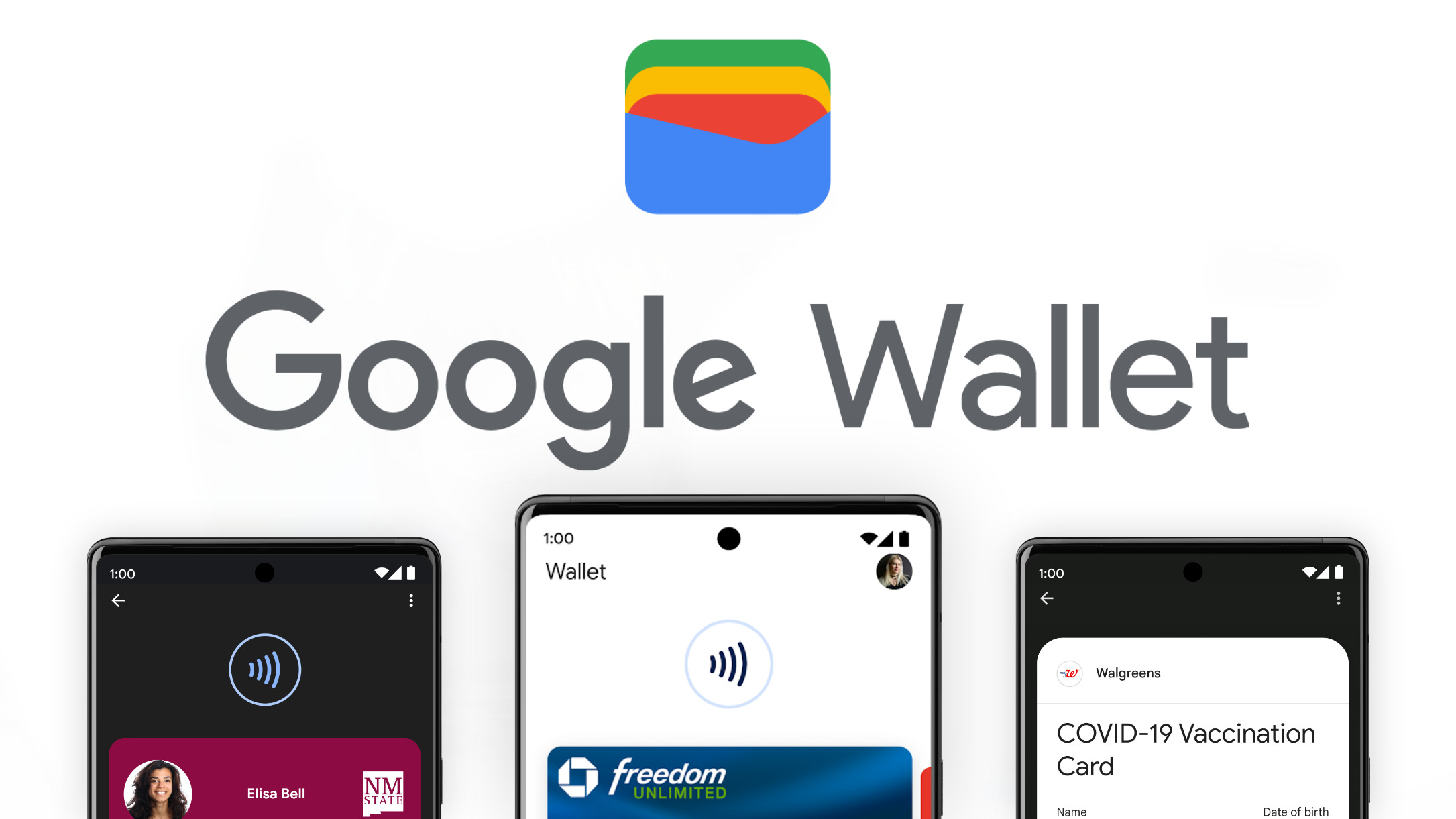
  • Google Wallet gets a small menu update and easier access to your saved payment cards

    Google Wallet gets a small menu update and easier access to your saved payment cards

    Google Wallet just underwent a small but useful menu change designed to simplify the way you manage payment cards within the app. This change better highlights your saved payment methods and adjusts the language slightly for clarity.

    The most noticeable change is “Payment setup” replacing the previous “Tap to pay setup” option. While tapping “Payment setup” takes you to the same setup checklist for contactless payments, there’s a minor quirk: you still can’t hide the checklist after setup’s complete. It would be useful if Google fixed this, freeing up valuable screen space and further decluttering the interface.

    The “Participating banks” option has also been replaced by “Payment methods”. This is a much more helpful addition, taking you directly to your saved payment cards. The page clearly displays your default card’s information, with security measures like on-device encryption in place, and allows you to easily add more cards. You can even use the “Edit card order” feature to customize how your cards appear in the Wallet.

    Keep in mind, though, that as noted in the original report, there’s no word yet on whether “Participating banks” will disappear entirely or just be moved to a different part of the Wallet settings. For now, there’s still a Google support page listing compatible banks, which is handy when you’re first getting started with the app.

    If you haven’t seen the change already, be on the lookout for Google Wallet version 24.14.x, or a later release, as it may have been part of a server-side update. It may seem subtle, but definitely shows how Google is focused on streamlining the Google Wallet user experience. This focus on ease-of-use is always welcome, particularly with features like contactless payments that involve sensitive financial data.

  • Alternative payments become preferred method in Hong Kong e-commerce market

    Alternative payments become preferred method in Hong Kong e-commerce market

    Alternative payments were the most preferred payment method for e-commerce purchases in Hong Kong last year, accounting for 41.7 percent of the market.

    According to GlobalData’s 2023 Financial Services Consumer Survey, these methods were increasingly popular mainly because of their simplicity, speed, and convenience.

    As Chinese e-commerce sites gain popularity among Hong Kong consumers, alternative payment solutions such as Alipay and WeChat Pay also become more well-known. International payment systems like Apple Pay, PayPal, and Google Pay are also available on the market.

    Meanwhile, cash on delivery is declining, accounting for only 6.3 percent of e-commerce sales, owing to the increased popularity of electronic payments.

    According to the survey, more than 85 percent of Hong Kong consumers had purchased online in the last six months, with only 5 percent having never shopped online.

    Hong Kong’s e-commerce market grew by 9.2 percent last year to US$20.2 billion as more consumers switched from offline to online purchasing. The e-commerce market is predicted to expand by 13.1 percent to US$22.9 billion this year.

    “The e-commerce sales in Hong Kong have been growing at a robust pace, supported by rising internet and smartphone penetration, robust online payment infrastructure, coupled with increasing consumer confidence in online transactions,” said Ravi Sharma, lead banking and payments analyst at GlobalData.

  • UBS Tops Out New HQ in Hong Kong

    UBS Tops Out New HQ in Hong Kong

    Switzerland’s UBS is doubling down on Hong Kong. Today, it topped out its new office based in West Kowloon.

    UBS topped out its new Hong Kong office building on Wednesday. The ceremony, featured UBS group CEO Sergio Ermotti, Asia global wealth management (GWM) chair Amy Lo, GWM president Iqbal Khan and leading executives from Hong Kong property giant Sun Hung Kai.

    The office is based in West Kowloon, which is located across the Victoria Harbor from Hong Kong’s traditional central business district. It is located next to major commercial building ICC, which houses banking rivals like Morgan Stanley and Deutsche Bank, as well as the high-speed rail that can quickly access mainland China, including southern Shenzhen in around 14 minutes.

    Currently, UBS has five different offices in Hong Kong and under the new arrangement, it will consolidate the work spaces and occupy 14 floors in the West Kowloon commercial building. The bank will start moving into the new office in early 2026.

    «Hong Kong is a strategic market for UBS in Asia,» Ermotti said in a statement. Our new office building marks an exciting new chapter for UBS as it will bring all of our Hong Kong operations under one roof, enhancing collaboration across all business divisions and facilitating the continued growth of our franchise.