Category: Finance

Retail News Asia is committed to providing both local and global retailers with the latest Finance news throughout the Asian market. This on a daily base.

  • Switzerland’s First Private Digital Bank is Open for Business

    Switzerland’s First Private Digital Bank is Open for Business

    Swiss digital bank Alpian received its banking license from Finma in April. The launch of its private banking app marks the start of business operations.

    Alpian bills itself as the first Finma-licensed digital private bank in Switzerland. The app, through which the bank exclusively offers its services, is now available for download in the Apple and Google Play Stores, according to a statement on Tuesday.

    The bank’s digital service geared toward mobile devices, combines everyday services and private banking, bringing a new combination of banking and investment services to the market. The hybrid concept combines a secure, state-of-the-art banking platform with the support and advice of experienced wealth advisors, it said.

    The offering is designed to give affluent clients access to services otherwise reserved for the clientele of traditional private banks. It offers professional and highly personalized services at a management fee of 0.75 percent which Alpian calls «competitive».

    A unique selling point compared to other neo-banks is a video call function that can be used to contact advisors from within the app. Personal contact with advisors is an indispensable part of the offering, according to Alpian.

    The digital bank, originally launched by the Geneva-based Reyl Group, received its banking license from Finma in the spring after a two-year lead time. According to the information previously provided, it intends to offer its services exclusively to Swiss customers. The target group is between 100,000 and one million Swiss francs of assets.
  • Revolut is Nipping at the Heels of Traditional Swiss Banks

    Revolut is Nipping at the Heels of Traditional Swiss Banks

    The Swiss retail banking business is becoming increasingly digitalized. A study sheds light on the newcomers challenging established players.

    Efforts to digitize banking services continue to grow in Switzerland, with the gap between retail banks and digital banks narrowing. The biggest differences remain in the functions offered and the customer experience, where neobanks stand out through innovation and their primarily digital customer relationships, according to a digitalization study by Swiss consultancy Colombus Consulting.

    The Swiss digitization rankings continue to be led by UBS, Postfinance, Raiffeisen, and Credit Suisse. In eighth place comes Yuh, the first newcomer. The neo-bank emerged from a partnership between Postfinance and Swissquote, overtaking the latter after just 18 months.

    Moreover, retail banks are catching up with digital banks and their hybrid services, the report adds. The digital reach of Swiss retail banks increased by 12 percent to 26 million monthly visits, while social media reach increased by 7 percent to 2.3 million subscribers.

    According to Jean Meneveau, director of Colombus Consulting Switzerland, traditional retail banks need to score points in the highly competitive market, especially with innovations. Credit Suisse, for example, offeres more digital services with its CSX brand, while CIC was the last bank to enter this niche, launching CIC ON, offering a whole range of digital and personal finance solutions.

    In just a few years, mobile apps have evolved from a simple showcase for customer services around e-banking to an offering where banks are concentrating all of their innovation efforts.

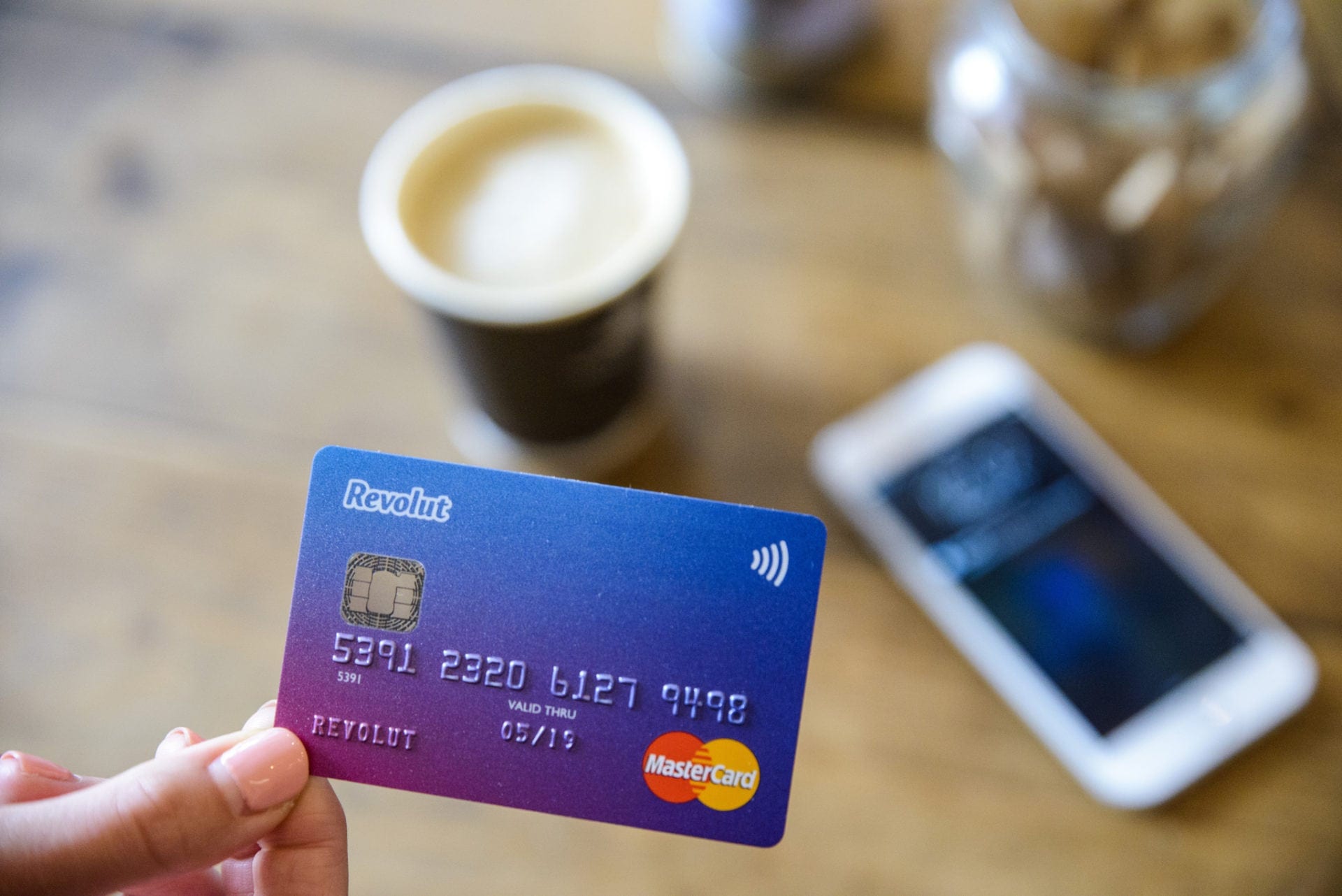
    In this area, Revolut remains unbeatable, according to the study authors with special functions such as time-limited bank cards and instant payments competing directly with Twint. Nevertheless, large banks in particular continue to prefer this payment solution, but 80 percent of all respondents now use it.

    When it comes to social networks, 58 percent of the banks surveyed use Linkedin, while only 20 percent have an active Tik Tok account. Apparently, the aim is to appeal to professionals in a serious setting rather than to younger people in an unconventional setting, the report says.

    Another difference is in the content disseminated. Where traditional banks emphasize their ESG products and CSR commitment, neo-banks are more likely to talk about new technologies and cryptocurrencies.

    Opening an account is becoming increasingly digitized, with two-thirds of participants offering such services. However, the more conservative institutions in particular, are focusing on a hybrid customer relationship, using both digital channels for simple tasks and personal consultations for more complex customer needs.

    Overall, customers are not at the point yet where they want to use digital channels for transactions to do with buying real estate or retirement planning.

  • More Vietnamese opt for QR payments

    More Vietnamese opt for QR payments

    It has been months since Hai Van last checked her purse, since she makes almost all payments by scanning QR codes with her phone.

    The media company in Hanoi’s Cau Giay District says: “Whether it is having breakfast and lunch at the office, making supermarket trips in the evening or hanging out with friends at a cafe, QR payments are readily available, and the deductions are made directly from my e-wallet.

    “Occasionally I have to transfer money or pay cash when making online purchases. But other than that, most transactions are done through scanning codes.”

    This began unexpectedly over a year ago amid Covid-19.

    “Once, I was buying from a street vendor without any loose change, and the lady offered a QR code to pay,” she says.

    Without a purse with cash and cards, her handbag’s weight has reduced in half.

    “I am more worried about running out of phone battery than forgetting my purse.”

    The Tam, owner of a grocery store in Vinh Phuc Province, has also grown accustomed to receiving payments through online bank transfer instead of cash.

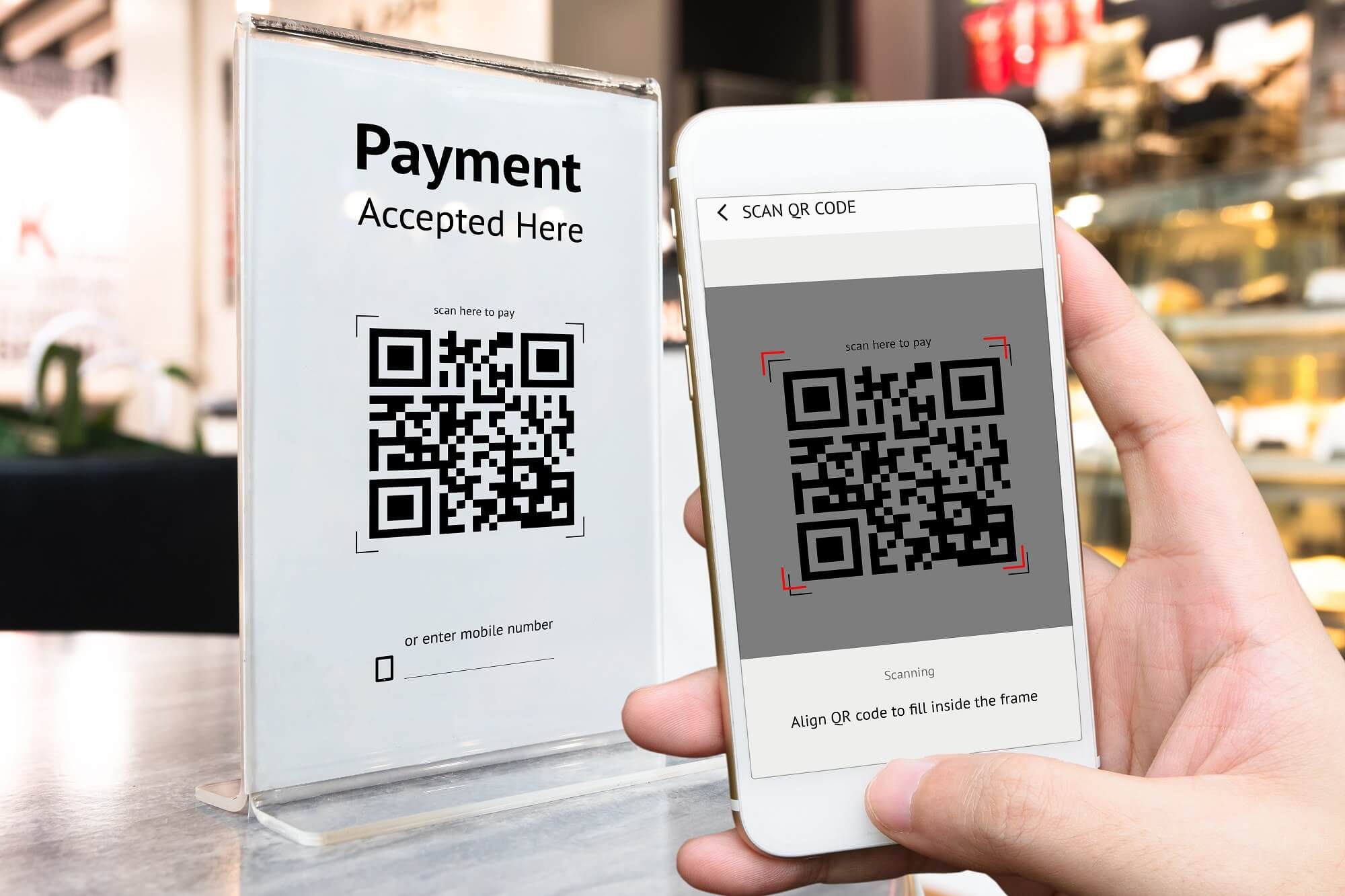
    For over a year his store has had a QR code displayed in the most prominent place with the sign “QR Payment Accepted.”

    He says: “Customers in the village often do not carry cash. Rather than buy at another shop on credit, they gradually got into the habit of coming to mine for QR payment.

    “Gone are the days when I had to count money and give back change… all there is to do now is check the numbers.”

    Now almost half of all transactions at his store are done by scanning codes.

    After gaining popularity through e-wallet apps such as VNPay, MoMo and Viettel Money, QR codes are now directly integrated into bank apps.

    Last year, Napas set up VietQR, simplifying this process and allowing customers of any bank in the system to transfer money to another bank just by scanning.

    The State Bank of Vietnam’s payments department said digital banking services, especially electronic payments, are growing rapidly.

    In the first half of this year, the number and value of transactions via mobile phones increased by 98.3% and 84.3%.

    “I have witnessed people in rural areas easily make payments using QR codes,” Tran Quy, director of the Vietnam Digital Economy Development Institute, says.

    According to statistics from the Ministry of Information and Communications, the country has 81.4 million mobile Internet subscribers, an imperative for using QR codes.

    But many experts say full potential has yet to be achieved.

    In The Tam’s case, seniors and children, a major demographic among his grocery store customers, are often unable to use QR codes due to the need for a smartphone linked to a bank account.

    Not everyone in the countryside even among other age groups has these two readily available, he says.

    His store has encountered payment errors on numerous occasions due to an unstable Internet connection, he says.

    “Just one wrong transaction and I might have to retrace the whole thing, which takes a long time.”

    Hoang Quynh, an office worker in Ho Chi Minh City who used to have three or four e-wallets with QR scanning facility but has cut down to one, says: “Sometimes stores would have an array of codes but I still cannot pay unless it includes the provider of my application. I wish there was a co

  • UBS Secures New Office Space in Hong Kong

    UBS Secures New Office Space in Hong Kong

    Switzerland’s largest bank will lease 250,000 square feet of new office space in Hong Kong outside the traditional central business district.

    Swiss banking giant UBS will lease 250,000 square feet of new office space in Hong Kong, according to a statement by Sun Hung Kai, the developer of the property. According to them, UBS, as the first anchor tenant, will lease the top nine floors of the tallest tower in the West Kowloon terminus project, which connects Hong Kong and mainland China via high-speed rail.

    The project is expected to be completed by 2025 and UBS is expected to occupy the new premises in early 2026. The Swiss bank plans to relocate staff from four current locations in Hong Kong, including its six-floor main office at IFC, the city’s second-tallest building.

    The new office is located across the harbor from Hong Kong island, where the main central business district is based, and rent is estimated to be around half of that paid by IFC tenants. In addition, it sits atop the high-speed rail station that should keep travel from Hong Kong to southern Guangzhou to under an hour, which is ideal for the bank’s Greater Bay Area growth strategy.

    We are excited to be moving to the workplace of the future with state-of-the-art infrastructure that brings together and empowers all of our UBS colleagues in Hong Kong under one roof, said UBS’s APAC co-head of wealth management and Hong Kong chief executive

  • Vietnam stock market becomes world’s worst performer

    Vietnam stock market becomes world’s worst performer

    Vietnam’s stock market was the world’s worst performer this week with an 8.5% decline.

    It was followed by Russia, down 4.8%, and Venezuela, down 1.87%, according to market data provider StockQ.

    Over the last four weeks Vietnam has been the world’s second worst performer behind Russia, with the VN-Index falling by 16.67%.

    The VN30 basket, comprising the 30 largest capped stocks, declined by 18.51% in the period.

    Some of the worst performers were private lenders Techcombank and VPBank and electronics retail chain Mobile World.

    The State Bank of Vietnam raised its policy rates last month to control inflation.

    The dollar has been rising to new peaks against the dong as well as most other currencies amid rising interest rates in the U.S. and geopolitical tensions.

    “Margin call pressure forced investors to sell off recently and the panic among investors has not subsided yet,” Phung Trung Kien, founder of asset management firm Vietnam Holdings said.

    “Cash flow to the market is quite limited these days as most of the important rates such as interbank interest rates have been increasing a lot.”

    Nguyen Anh Duc, head of institutional sales at SSI Securities Corp, said retail investors are “extremely panicky and they are taking flight without regard for which stocks they are selling.”

    But some investment funds, such as Coeli Asset Management SA and Asia Frontier Capital are looking to buy more of Vietnam stocks given the country’s long-term economic prospects.

  • Banks expect Q4 interest rate hikes

    Banks expect Q4 interest rate hikes

    Most commercial banks expect deposit and lending interest rates to rise in the fourth quarter this year, a survey by the State Bank of Vietnam has found.

    The central bank’s survey, which polled 96% of all domestic and foreign lenders in Vietnam between August 25 and September 10, found that over 59% expect rates to go up by an average 0.37% points per annum in the last quarter this year.

    Over 66% of lenders anticipate that the average rate increase will be 0.56% points per annum.

    In the last four weeks, more than 30 lenders have increased their deposit interest rates by up to 1.9% points.

    Some are offering 7.45% per annum for 12-month deposits.

    The central bank survey also found that 88.3% of lenders expect positive pre-tax profit growth this year while 6.8% anticipate a decline.

    They estimate forecast capital mobilization growth for the year at 10.2%, lower than the credit growth of 14.9%.

    The State Bank of Vietnam (SBV) last week used open market operations to pump VND28.1 trillion ($1.18 billion) into the market and sold foreign currencies worth VND35 trillion.

    Tight liquidity has caused interest rates on loans to increase sharply. On Tuesday, the overnight interest rate surged to 8-9% per year. It was around 7.5% per year for other terms.

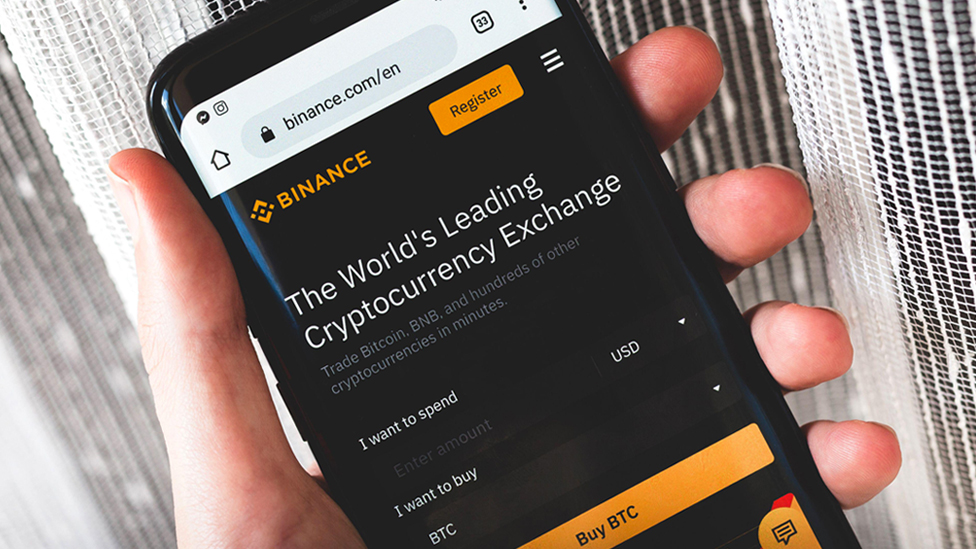
  • Binance Coins Suffers $100 Million Hack

    Binance Coins Suffers $100 Million Hack

    Binance has been hit with a hack that resulted in the theft of around $100 million of tokens issued by the crypto giant.

    $100 to $110 million of Binance Coin has been stolen, according to a spokesperson for Binance-backed BNB Chain. This is likely due to a hack involving the bridge, BSC Token Hub, which has now been suspended.

    BNB Chain is working with security services to freeze the transfer of stolen funds with at least $7 million already frozen.

    According to Binance co-founder Changpeng Zhao, the blockchain issues are contained now and the firm in all likelihood will cover any fund that the hackers get away with.

    The crypto market has been largely under pressure in 2022 with not only a $2 trillion plunge in market value but also an estimated $2 billion lost to hacks, often by North Korea-linked actors.

  • UBS Hit with Another US Fine

    UBS Hit with Another US Fine

    Switzerland’s largest bank gets fined in the US for violating short-selling regulations. The Financial Industry Regulatory Authority (FINRA), which regulates US-based brokerages, is fining UBS Securities $2.5 million for violating short-selling regulations over nine years, it said in a statement issued Monday.

    FINRA, which is overseen by the Securities Exchange Commission, found that UBS did not close out at least 5,300 positions in a timely enough fashion between 2009 and 2018, routing or executing more than 73,000 security short sales without first borrowing or arranging to borrow the shares. That meant that the regulator’s close-out requirements were not satisfied.

    Although UBS conducted annual reviews of its systems, it failed to identify the improper treatment of shares associated with long-selling activities by clients.

    Switzerland’s largest bank also failed to detect red flags present in its books and records that should have indicated systems failures that showed certain buy-in orders as limit orders, according to the regulator.

    UBS consented to the entry of FINRA’s findings without admitting or denying the charges.

  • HSBC Mulls Sale of Canada Unit

    HSBC Mulls Sale of Canada Unit

    HSBC continues to explore ways to improve profitability via market exits, this time with the potential sale of its Canada business. HSBC is reviewing strategic options for its Canada business, according to a statement from the bank.

    A review of the business is in its early stages, and one of the options would be the sale of HSBC’s 100 percent stake in the Canada unit, according to a report by British media outlet Sky News citing unnamed sources. HSBC is working with JPMorgan to sound out prospective buyers for the business, and the deal could be valued at an estimated $7 billion though no final decision has been made.

    If successful, the sale of the Canada unit would mark yet another market departure to improve profitability and another move to defend Ping An’s campaign to push for the bank to break up by spinning off its Asia arm.

    Last year, HSBC rejigged its retail business with the announcement of a US exit and the sale of its France unit. And over the weekend, HSBC started briefing a group of fund manager investors on the potential listing of its Indonesia business, according to a report citing unnamed sources.

  • UBS and Zurich Strengthen Partnership

    UBS and Zurich Strengthen Partnership

    UBS and Zurich Insurance are building on their collaboration with a new product aimed at small to mid-sized companies.

    Zurich is offering UBS clients insurance solutions via the bank’s e-banking, addressing the needs of small to mid-sized companies as these mature, the partners said in a statement Monday.

    Some companies will go from having a capital deposits account with mandatory accident insurance and occupational benefits insurance to requiring insurance for leased equipment, for example.

    In the case that they expand abroad, these companies will go on open a foreign currency account and might need to add international insurance coverage, the statement said.

    The cooperation guarantees full data protection, with neither of the entities passing bank-specific data or insurance-specific information to each other.

  • UBP Appoints New Chief Investment Officer

    UBP Appoints New Chief Investment Officer

    The interest rate hike in emerging markets has started much earlier than in the OECD area. Switzerland’s Union Bancaire Privee is responding to this with two appointments.

    Sergio Trigo Paz has been appointed Chief Investment Officer at Union Bancaire Privée (UBP), according to a media release.

    Paz was head of emerging markets at Blackrock for 10 years until March of this year. He is based in London and heads a team of nine, which are spread across London, Zurich, and Hong Kong.

    UPB also appointed Soledad Rocio Acoroni as a portfolio manager who will join the firm in Zurich, coming from Larrain Vial AM in Chile.

    There, as portfolio manager, she handled strategies in Latin American corporate securities, ESG strategies in sovereign and corporate bonds issued in the region with low carbon footprints, and strategies in Argentine government and corporate bonds.

  • UBS Brings Key4 to Pensions and Retirement

    UBS Brings Key4 to Pensions and Retirement

    Switzerland’s largest bank is expanding its digital offering. UBS is making its UBS key4 available to clients saving in 3a retirement accounts or retirement custody accounts, it said in a statement Thursday.

    The offer, which clients can access on their phones, is part of the bank’s range of UBS key4 products. It is available to all users and not exclusively to UBS key4 clients, the statement said.

    It’s never too early to start saving for your retirement. With our fully digital offering for private pension planning, we can give young people in particular access to a very important financial topic. In just a few minutes, they can start paving the way for their future on their smartphones,» chief operating officer of UBS Switzerland Sabine Magri, said in the statement.

  • Deloitte Switzerland Expands Management Team

    Deloitte Switzerland Expands Management Team

    The Swiss accountancy firm is adding two specialists to its management team.

    Deloitte Switzerland is appointing Liza Engel to chief sustainability officer and Yousif Al-Adhami to technology advisory leader and adding both to its management board, effective immediately, it said in its results report last week.

    Engel, who has been with Deloite Switzerland for four years, was previously 15 years at Swisscom.

    Yousif Al-Adhami, heads Enterprise Technology & Performance and will make sure that Deloitte offers its clients innovative solutions encompassing strategies, technology and implementation, the report said.

    The firm is also making Veronica Melian People & Purpose Part

  • Mastercard partners with Buy2Sell in cross-border payment solutions in Asia

    Mastercard partners with Buy2Sell in cross-border payment solutions in Asia

    Buy2Sell, an e-commerce B2B platform in Singapore, has announced a new strategic partnership with Mastercard. For a global orientation to 2025, Buy2Sell is also moving towards expanding its cross-border sales through its e-commerce. Buy2Sell will enable multiple payment types to various delivery channels via a single connection through Mastercard cross-border services. At Buy2Sell’s platform, Mastercard is a payment gateway for services, including purchasing and logistics.

    Mastercard’s cross-border payment solution provides buyers and sellers that transact globally through the Buy2Sell platform an easy and safe payment solution for their purchases via a fast, secure, and traceable cross-border payment trail.

    With this partnership, the Buy2Sell platform optimizes the remittance rate for trade imports into Vietnam. Mastercard cross-border services enable financial institutions and partners to build flexible solutions that support multiple use cases and can reach a variety of payment endpoints nearly anywhere in the world via a single connection.

    Mastercard’s platform plays a key role in improving worldwide connectivity and provides innovative payment applications that give customers a choice to route transactions over card or account-to-account infrastructure. The Mastercard network supports multiple delivery channels, including bank accounts, mobile wallets, cash-out locations, and cards, as well as different payment types such as Business-to-Business (B2B), Business-to-Person (B2P), Person-to-Person (P2P), and Person-to-Business (P2B).

    Buy2Sell, headquartered in Singapore, is a leading B2B e-commerce platform. It operates many import and export B2B transactions, mainly on high-end goods supplied between Vietnam, Singapore, Hong Kong, and South Korea.

    For a global orientation to 2025, Buy2Sell is also moving towards expanding its cross-border sales through its e-commerce.

    Mastercard is a global technology company in the payments industry. With connections across more than 210 countries and territories, Mastercard’s mission is to connect and power an inclusive, digital economy that benefits everyone.

  • UBS Brings Key4 to Pensions and Retirement

    UBS Brings Key4 to Pensions and Retirement

    Switzerland’s largest bank is expanding its digital offering.

    UBS is making its UBS key4 available to clients saving in 3a retirement accounts or retirement custody accounts, it said in a statement Thursday.

    The offer, which clients can access on their phones, is part of the bank’s range of UBS key4 products. It is available to all users and not exclusively to UBS key4 clients, the statement said.

    It’s never too early to start saving for your retirement. With our fully digital offering for private pension planning, we can give young people in particular access to a very important financial topic. In just a few minutes, they can start paving the way for their future on their smartphones, chief operating officer of UBS Switzerland Sabine Magri, said in the statement.