Category: Finance

Retail News Asia is committed to providing both local and global retailers with the latest Finance news throughout the Asian market. This on a daily base.

  • Google is allegedly resurrecting Google Wallet, but not the way we think

    Google is allegedly resurrecting Google Wallet, but not the way we think

    Google Wallet could be making a comeback, but it won’t be the way we think On Twitter, Esper’s Senior Technical Editor, Mishaal Rahman, posted that Google Wallet is coming back from the dead, not as a standalone app, but as a “Wallet” interface within Google Play Services. The goal of the change is to provide a way to access and manage your payment, transit, and other cards that are part of your digital wallet.

    But wait, isn’t Google Pay already doing that? Yeah, it does. According to Rahman, you will continue to use Google Pay to make payments, and Wallet will be where you will keep your cards.

    But how will you access this Wallet interface? From Rahman’s screenshots, we assume that the new UI will be accessible directly from the Google Pay app. Also, one of the screenshots says, “learn how passes in your Wallet will appear across Google.” This may mean that the cards stored in Wallet could be accessible on other Google services as well.

    In 2011, Google created Google Wallet to function as an NFC payment app and as a place to store your digital cards. But in 2018, it combined Google Wallet and Android Pay and created Google Pay. From there on, Google Pay became the app for making NFC payments and the place from which you can manage your digital wallet.

    So, if Google Pay already does this, then why bring Wallet back? It seems like a branding choice to make it more obvious which UI does what. Google Pay would be strictly the service we use for payments. And there will be the Google Wallet, where we can manage payment cards, loyalty cards, vouchers, and tickets.

    This push to bring back the Wallet branding may also indicate that Google is planning to enhance its functionality — who knows, maybe support for driver’s licenses a-la Apple Wallet?

  • TPBank eyes 36-percent hike in profits

    TPBank eyes 36-percent hike in profits

    Private lender TPBank expects its pre-tax profits to top VND8.2 trillion ($358 million) this year, up 36 percent from 2021.

    It also targets a 20 percent increase in assets to VND350 trillion.

    The bank plans a rights issue of 527 million shares this year to raise VND5.3 trillion and increase its charter capital to VND21 trillion.

    VnDirect Securities has forecast 25 percent growth for TPBank this year, higher than the 20 percent expected for the sector.

    BaoViet Securities has forecast its compounded annual growth rate to top 31.4 percent in 2020-22 and return on average equity (ROAE) in the period of 24.8 percent.

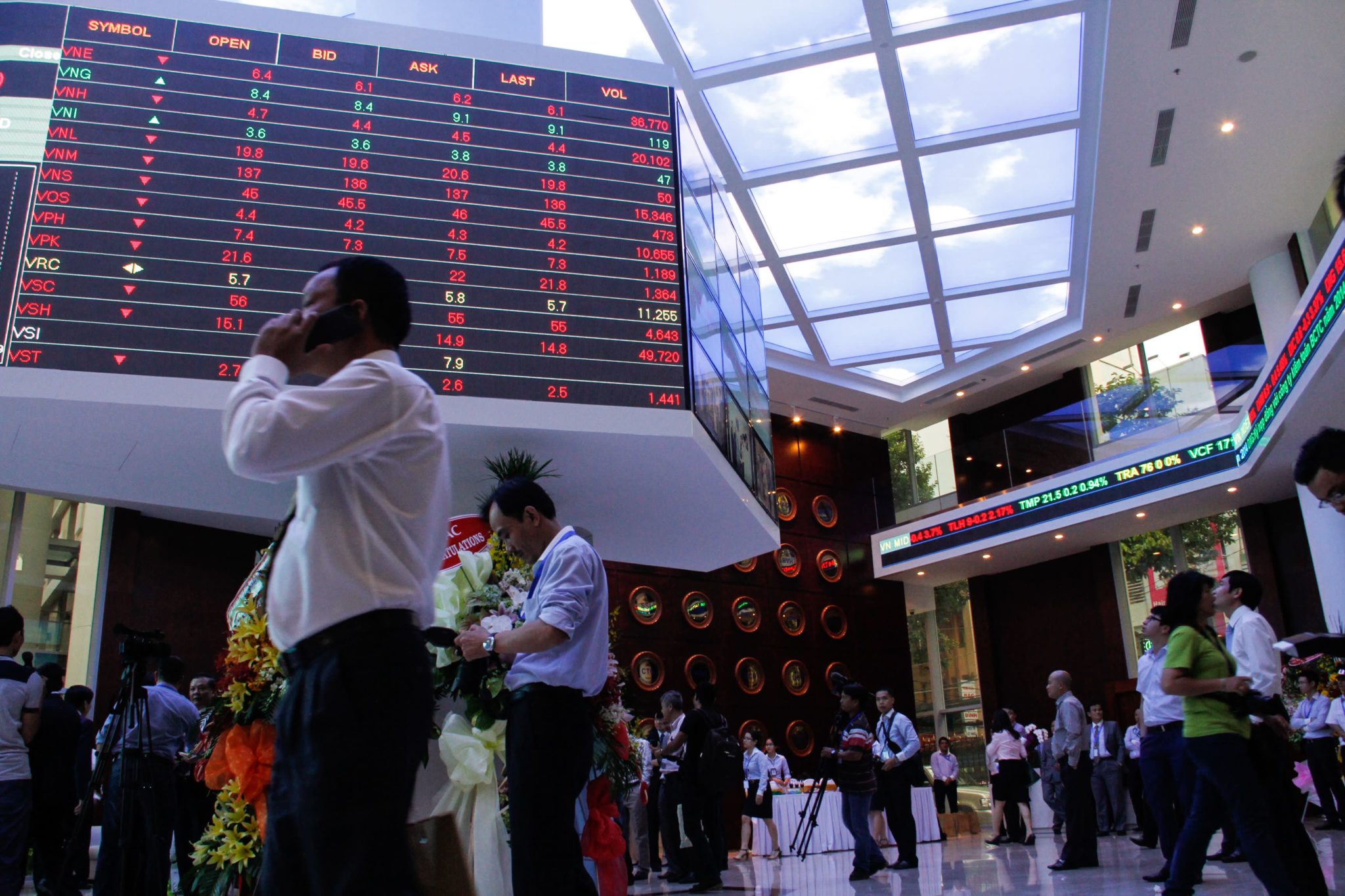
  • Stocks plunge to 11-week low

    Stocks plunge to 11-week low

    Vietnam’s benchmark VN-Index started off the week in the red with a 1.25 percent drop to 1,440.23 points Monday morning, the lowest in 11 weeks.

    The index fell by 17 points as of 11:06 a.m. after ending in the red in four out of the last six sessions.

    The main bourse Ho Chi Minh Stock Exchange (HoSE) saw 361 tickers in the red and 107 in the green.

    Brokerages have forecast earlier that the market would drop in the short term.

    The VN30 basket, comprising the 30 largest capped stocks, saw 15 tickers in the red, with SSI of leading brokerage SSI Securities Corporation falling 4.5 percent to the lowest since August last year.

    VHM of real estate giant Vinhomes dropped 3.4 percent, the lowest in over a year.

    Other losers included CTG of state-owned lender VietinBank, down 3.5 percent, MBB of lender MB, down 2.7 percent, and VIC of biggest private conglomerate Vingroup, down 2.9 percent. Fourteen blue chips bucked the trend, with PNJ of Phu Nhuan Jewelry rising 3.2 percent and FPT of IT giant FPT Corporation gaining 2.2 percent. Both were at new peaks.

    They were followed by SAB of brewer Sabeco, up 2 percent, and TPB of private TPBank, up 1.6 percent.

    Foreign investors are buying the dips with a VND88 billion net purchase, focusing on DPM of Petrovietnam Fertilizer & Chemicals Corporation and NLG of real estate developer Nam Long Investment Corp.

    The HNX-Index for stocks on the Hanoi Stock Exchange, home to mid and small caps, was losing 2.51 percent, while the UPCoM-Index for the Unlisted Public Companies Market was losing 1.5 percent.

  • Standard Chartered sees Vietnam inflation higher than central bank forecast

    Standard Chartered sees Vietnam inflation higher than central bank forecast

    Standard Chartered Bank expects inflation of 4.2 percent this year, slightly higher than the central bank forecast, driven by the geopolitical situation and higher commodity prices.

    “Over the medium term, demand-push inflationary factors are likely to kick in as the economy recovers,” the lender said in a note, adding that supply-side factors pose upside risks to inflation, particularly given the ongoing geopolitical situation.

    It forecasts a further increase in the rate next year to 5.5 percent.

    The State Bank of Vietnam targets inflation of not more than 4 percent this year.

    Prices rose by 1.8 percent last year, the lowest rate in six years.

    The Asian Development Bank this month forecast Vietnam’s inflation to hit 3.8 percent this year and 4 percent next year, pointing to the instability in global oil prices.

    Standard Chartered was confident about Vietnam’s growth potential, forecasting GDP growth of 6.7 percent this year (2.6 percent last year), saying the recent bounce in economic indicators have become more broad-based.

    Tim Leelahaphan, the bank’s economist for Thailand and Vietnam, said: “The government lifted its quarantine requirement for international arrivals in mid-March. We think the reopening of tourism, which accounts for close to 10 percent of GDP, is the key development to watch in the second quarter after a two-year closure.”

    Vietnam remains a manufacturing hub and a key link in the global supply chain despite geopolitical and pandemic-related challenges, the bank said.

    FDI started recovering this year after contracting last year, and the bank expects this to continue, particularly in sectors such as manufacturing, electricity and gas,.

    Several major global tech companies have shifted (or plan to shift) production to Vietnam from China in recent years to diversify their supply chains, Leelahaphan added.

  • Ethereum Mastermind Supporting Ukraine

    Ethereum Mastermind Supporting Ukraine

    Russian-born Vitalik Buterin has quietly transferred Ethereum donations of around $5 million to the benefit of Ukraine.

    Ukraine has been receiving a lot of support from the crypto world since the Russian invasion, including Vitalik Buterin, co-founder of the Zug-based Ethereum (ETH).

    The software pioneer transferred ETH donations worth some $5 million to Ukraine in early April, Aid for Ukraine said on its Twitter channel. The organization is a joint initiative of the Ukrainian government, crypto exchanges FTX, Everstake, and Kuna, which collect crypto donations for the country.

    Buterin lived in Russia until he was six years old when his parents emigrated to Canada. According to the Ukrainian institution, he did not announce the transaction despite the large donation amount. It was linked to him through the Ethereum domain name vitalik.eth, which served as the origin of the transfer.

    Half of the donation went directly to Aid for Ukraine, and the other to the Unchain Fund, a cryptocurrency charity initiative founded by activists from the blockchain community to provide humanitarian aid to Ukrainians.

  • Game Your Way to a Job at Julius Baer

    Game Your Way to a Job at Julius Baer

    The Swiss bank is launching its own video game to attract future tech talent. In an effort to attract future tech talent, Swiss bank Julius Baer is offering its own game on the video game platform Roblox where candidates can take the Be Baer Challenge in the metaverse, the bank announced Monday.

    How many times must children have heard their parents admonish get off of the computer and go play outside, or do your homework and stop playing games?

    Now they can play and look for a job.

    The Julius Baer Challenge was launched on April 11 and requires the users to employ logical and analytical thinking, creativity, and speed in a gaming environment. Players can create their own avatar which can roam around the bank’s virtual headquarters in Zurich in 3D. The challenge has four different levels where prizes can be won, and a showroom that informs players about jobs and benefits at the bank.

    We are thrilled to have been able to implement this unconventional approach to attract tech talent. We wanted to bring a ‘Super Mario’ aspect to the banking world. Gaming requires curiosity, agility, and a drive to advance to the next level. These skills are highly sought after in a banking environment said Guido Ruoss, global head of human resources at the bank.

    The Be Baer Challenge was designed in partnership with E-Sports and gaming experts aimed at creating an inspiring location in the Roblox metaverse. Founded in 2004, Roblox is a global gaming platform with 55 million daily active users with video games are available on PCs, Xbox, and cell phones. There are currently 9.6 million developers on the platform.

    Maybe now, kids will be hearing from their parents «what are you doing outside? Come in and get on the computer and look for a job!»

  • UBS Sets Up Diversity Focused Investment Team

    UBS Sets Up Diversity Focused Investment Team

    UBS has created a new unit dedicated to diversity and inclusion. Switzerland’s largest bank has created a new wealth management unit aimed at mobilizing client funds to offer investments that promote equality and expand outcomes for underrepresented or marginalized groups, according to a report.

    Karen Sunderam will lead the group from New York. According to her LinkedIn profile, she has been with UBS for nearly five years and has been the head of inclusive investing solutions since May last year.

    By responding to client requests for investment options that reflect personal values and are aimed at social good, UBS will offer clients opportunities to channel their money to firms at least partly owned by minorities. This also includes products led by portfolio managers who self-identify as racial or ethnic minorities, women, veterans, disabled and LGBTQ, «Bloomberg» reported.

    Under CEO Ralph Hamers, UBS has dedicated itself to the «purpose» of reinventing investing and connecting people for a better world. Head of sustainability Michael Baldinger was tasked in May 2021 with weaving these threads across the group and advancing diversity.

  • New UBS Chair Under Pressure to Deliver

    New UBS Chair Under Pressure to Deliver

    Shareholders of UBS voted incoming chairman Colm Kelleher into office with overwhelming support. Now he must meet their expectations.

    With UBS’s record results last year it is no surprise there was no shareholder rebellion at today’s annual general meeting and that shareholders voted overwhelmingly in support of new and existing board members. Incoming chairman Irishman Colm Kelleher garnered 97.7 percent of the votes in favor, the bank said at today’s annual general meeting (AGM).

    Kelleher worked for Morgan Stanley for three decades, last serving as president of the investment bank from which he retired in 2019. He was somewhat of a surprise selection to take over from Axel Weber who is stepping aside because of a 10-year term limit.

    UBS’s new chairman won the post over candidates such as Roche’s overseer Christoph Franz, Swiss ex-central banker Philipp Hildebrand, and ex-Unicredit boss Jean-Pierre Mustier.

    Perhaps because Kelleher is not Swiss, the candidate for the vice-chair was Lukas Gaehwiler, elected today with an approval rating of 96.9 percent, thus adding «Swissness» to the board. Gaehwiler is the chairman of UBS Switzerland since 2017 and was a member of the UBS Group Executive Board from 2010 to 2016. Before that, he was at rival Credit Suisse for 20 years. part of Gaehwiler’s job will be to represent UBS in Switzerland’s powerful industry associations and the corridors of political power.

    The following were elected to an additional one-year term:

    • Jeremy Anderson (98.46%)
    • Claudia Boeckstiegel (98.70%)
    • William C. Dudley (99.10%)
    • Patrick Firmenich (99.11%)
    • Fred Hu (95.83%)
    • Mark Hughes (99.12%)
    • Nathalie Rachou (99.12%)
    • Julie G. Richardson (97.79%)
    • Dieter Wemmer (98.59%)
    • Jeanette Wong (98.40%)

    The shareholders approved the discharge of the members of the board of directors and the group executive board from legal matters for the 2021 financial year by 93.15 percent, but that excludes all issues related to a cross-border tax dispute with France.

  • More Central Banks Mulling Digital Currencies

    More Central Banks Mulling Digital Currencies

    Many central banks have or plan to launch digital central bank money. A PwC study looks at the winners and losers.

    A study from PwC released Monday analyzing central banks’ level of maturity and development of their digital currencies (CBDCs), shows that Nigeria’s eNaira scores high in retail models, with Thailand the frontrunner among wholesale customers.

    According to PwC’s Global CBDC Index report, over 80 percent of central banks have issued CBDCs or are in the process of doing so.

    This year’s PwC report looks at two separate models, retail and wholesale, ranking CBDCs on a scale of 100.

    Thailand came out atop the wholesale rankings, followed by Hong Kong and Singapore. Switzerland jumped up two spots from 12th to move into the top 10 globally and to second place in Europe.

    The Swiss National Bank (SNB) completed Phase II of the CBDC’s Helvetia project in January 2022. Together with five commercial banks, the SNB examined the settlement of interbank, monetary policy, and cross-border transactions on SIX Digital Exchange’s (SDX) test systems, the Swiss real-time gross settlement system SIX Interbank Clearing (SIC), and the core banking systems.

    Retail CBDCs reached a higher level of maturity than their wholesale counterparts, according to PwC, with the Nigerian eNaira receiving a score of 95, making it the most developed in the retail category.

    Also notable in the retail category was the Bahamas, which became the first country ever to introduce a digital central bank currency – the Sand Dollar. Jamaica’s Jam-Dex is scheduled to launch later this year. Thailand and Hong Kong top the large customer category for their joint mBridge project for cross-border payments.

    PwC found that stablecoins, which are private virtual digital currencies that peg their market value to an external reference, have become an integral part of the crypto ecosystem. It is impossible for any crypto fund or institution to be active in the crypto world without using stablecoins, the report said.

  • World Bank lowers Vietnam growth forecast to 5.3 pct

    World Bank lowers Vietnam growth forecast to 5.3 pct

    The World Bank has cut its growth forecast for Vietnam this year to 5.3 percent, due to surging Covid-19 infection in Q1 and economic slowdown in its major export markets.

    This has been the second time the bank lowers its 2022 projection for the country. Last October it had expected a growth rate of 6.5 percent, lowered to 5.5 percent in January.

    Vietnam’s GDP is expected to grow by 5.3 percent this year and stabilize at around 6.5 percent in a scenario with eased mobility restrictions domestically and internationally, it added to a report released Tuesday.

    It forecasts the service sector to gradually recover during the year as consumer confidence is restored and tourism resumes from mid-2022 onward.

    But manufacturing will grow at a slower pace mirroring moderating growth in Vietnam’s main export markets of the U.S., the European Union and China.

    But it warned of the outlook of heightened risks from external economic shock, including the Russia-Ukraine conflict and new Covid-19 variants, slowing recovery of domestic demand, and labor shortage due to a surge in infections.

    “Additional shocks could lead to a low case scenario where GDP grows 4 percent in 2022, recovering to 6 percent and 6.5 percent in 2023 and 2024, respectively”.

    The World Bank recommended the Vietnamese government to deploy a strong fiscal policy support, and accommodative and prudent monetary policy.

    It was also cautious about economic and human capital consequences of inequality, which was driven up by the pandemic and lockdowns between last May and September.

    Vietnam’s economy grew by 2.6 percent last year, well below its pre-pandemic trend of 7 percent.

  • UBS Loses a Top IT Talent to Consulting Firm

    UBS Loses a Top IT Talent to Consulting Firm

    The man who kept the heart of the core banking system at UBS beating is moving to a Big Four consulting firm.

    Prafull Sharma, who joined UBS in 2019 and served as managing director and head of core banking systems, is moving on to PricewaterhouseCoopers (PwC), the consulting and auditing firm announced Friday.

    Sharma has also appointed a partner in the financial services consulting division, and becomes the new head of CIO Advisory at PwC, focusing on technology, strategy and cloud transformation,

    Prior to his stint at UBS where he was also chief data officer for personal and corporate banking under multichannel chief Andreas Kubli, Sharma was at PwC competitor KPMG Switzerland.

  • HSBC lowers Vietnam growth forecast

    HSBC lowers Vietnam growth forecast

    HSBC has lowered its GDP growth forecast for Vietnam from 6.5 percent to 6.2 percent due to inflationary pressures amid rising global energy prices.

    “Vietnam is facing multiple challenges given elevated global energy prices. It will increase its energy bills, deteriorating its terms of trade position,” the bank said.

    The country’s imports of crude oil and petroleum in March were double and four times the 2021 monthly averages, and the rising trend seems set to continue.

    This is likely to shrink Vietnam’s external metrics, making it run a second consecutive current account deficit, and higher oil prices would increase the cost of living, dampening recovery in private consumption, the lender said.

    It raised its inflation forecast for the year to 3.7 percent due to the high energy prices, saying this would increasingly call for the need for monetary normalization. The government targets inflation of not more than 4 percent.

    The bank pointed out that the GDP growth of 5 percent in the first quarter was higher than its forecast of 4.7 percent, indicating the country is firmly back on the recovery track.

    The manufacturing sector remained the key driver of growth in the first quarter, driven by a double-digit increase in electronics production.

    Exports grew by 13 percent year-on-year thanks to increased demand for electronics products though strong figures were reported across sectors like textile, footwear, machinery, and wooden products.

    With Vietnam reopening its borders on March 15, HSBC expects a “small rebound” in tourism this year.

    Authorities are hoping to get 8-9 million foreign tourists this year, 40-50 percent of the 2019 numbers.

    Economic growth of 6.2 percent will however make Vietnam one of the region’s top performers.

  • UBS Announces Share Repurchase

    UBS Announces Share Repurchase

    Switzerland’s largest bank announced it will commence a new share buyback program starting March 31.

    UBS announced it is moving ahead with plans to purchase up to $6 billion of its shares over the next two years starting tomorrow, the bank said in a statement released today.

    In conjunction with a share buyback program launched in February 2021, UBS intends to purchase up to $5 billion by the end of this year.

    As part of the 2021 repurchase program, UBS bought back over 240 million of its shares, representing 6.5 percent of current registered capital at the time. The value of the transaction was 3.8 billion Swiss francs of which 1.5 billion francs ($1.6 billion) took place in 2022, the bank said.

  • Raiffeisen Planning Digital Services Expansion

    Raiffeisen Planning Digital Services Expansion

    The Swiss cooperative bank plans to spend a significant portion of its 500 million Swiss franc strategy budget on digitization by 2025.

    Over the past several years, Raiffeisen Switzerland was replacing outdated banking systems which had taken up numerous resources. With that project now completed, the bank can proceed with its digitalization plans.

    Raiffeisen has attached great strategic importance to digitalization even before the group strategy. Our digital channels, especially our e-banking, have enormous significance. However, we want to position our digital solutions more broadly and continue to drive digitization as a complement to our physical branches, interim CIO Robert Schleich said in an interview with inside-it.ch

    With the foundation now in place for implementing digital products, Raiffeisen has reached a comfortable starting position from which digital services can be expanded, Schleich said.

    But the bank is not starting completely from scratch. Its mobile e-banking app has over one million users and, according to Schleich, is gaining ground among competitors. He admitted the bank was lagging behind competitors, but now that the core banking system has been renewed it can be built upon.

    Process efficiency is also an important element, Schleich said. For the core mortgage lending business, it’s not just about digitizing the existing process, but also improving it. That means the ability to conveniently apply for mortgages online and to be able to check the application more quickly.

    We’re spending 500 million francs on the entire group strategy by 2025. There’s more to it than digitization. For example, new customer business or the diversification of income. However, a significant portion of the overall budget is reserved for digitization itself, Schleich said.

    Schleich will be handing the CIO reins to Niklaus Mannhart in September 2022 at the latest, but cannot discuss issues with him since he is still under contract at his current employer.

    For now «I’m concentrating fully on the interim management of IT at Raiffeisen Switzerland. We are currently discussing what will happen after that. There are more than enough exciting tasks at Raiffeisen,» he said.

  • Crypto Platform Sponsoring World Cup in Qatar

    Crypto Platform Sponsoring World Cup in Qatar

    FIFA announces the world’s fastest-growing cryptocurrency platform as a sponsorship partner of this year’s World Cup soccer tournament held in Qatar.

    Crypto.com will be the exclusive cryptocurrency trading platform sponsor of World Cup Qatar 2022, the Federation Internationale de Football Association (FIFA) announced Tuesday in Zurich, expanding its reach in global sports.

    The sponsorship includes opportunities for some of the more than 10 million users of the platform to attend matches and win exclusive merchandise, FIFA said.

    Sports sponsorship is nothing new to Crypto.com, whose beneficiaries include Formula 1, MMA, basketball, ice hockey and soccer. The company also has naming rights for a sports and entertainment venue in Los Angeles; the Crypto.com Arena.

    «Through our partnership with FIFA, we will continue to use our platform in innovative ways so that Crypto.com can power the future of world-class sports and fan experiences around the world,» said Kris Marszalek, co-founder and chief executive officer of Crypto.com.

    The World Cup will be held in Qatar from November 21 to December 18, 2022