Category: Finance

Retail News Asia is committed to providing both local and global retailers with the latest Finance news throughout the Asian market. This on a daily base.

  • B2B Payments Firm Spenmo Receives Funding for Regional Build-Out

    B2B Payments Firm Spenmo Receives Funding for Regional Build-Out

    The Singapore-based startup has secured one of the largest Series A funding rounds to date in the country, which will allow it to expand in Southeast Asia.

    Spenmo has announced a $34 million raise in a Series A investment round led by New York-based private equity and venture capital firm Insight Partners, according to a statement on Wednesday.

    The fundraising round, which was oversubscribed by a multiple of five, saw the participation of Lee Fixel’s Addition, Salesforce Ventures, Alpha JWC, Global Founders’ Capital, Broadhaven, Operator Partners and Commerce Ventures, alongside several high-profile angel investors.

    Spenmo helps businesses manage payments, and its products include smart corporate cards and automated bill payments. It graduated from the Y-combinator startup accelerator in 2020. Since its launch in Singapore last year, it has expanded across Southeast Asia, bringing on several thousand customers, Spenmo said.

    The company said it sees growth opportunities in the region, which has over 20 million small and medium sized businesses that  largely do not use any software to manage their payables other than piecemeal solutions such as spreadsheets or manpower.

    Our space has typically been thought of as a back-office function, but finance and accounts payables is a critical part of running a business, Mohandass Kalaichelvan, CEO and Founder of Spenmo, said.

  • Singapore-Based Fintech Thunes Makes Strategic Appointments

    Singapore-Based Fintech Thunes Makes Strategic Appointments

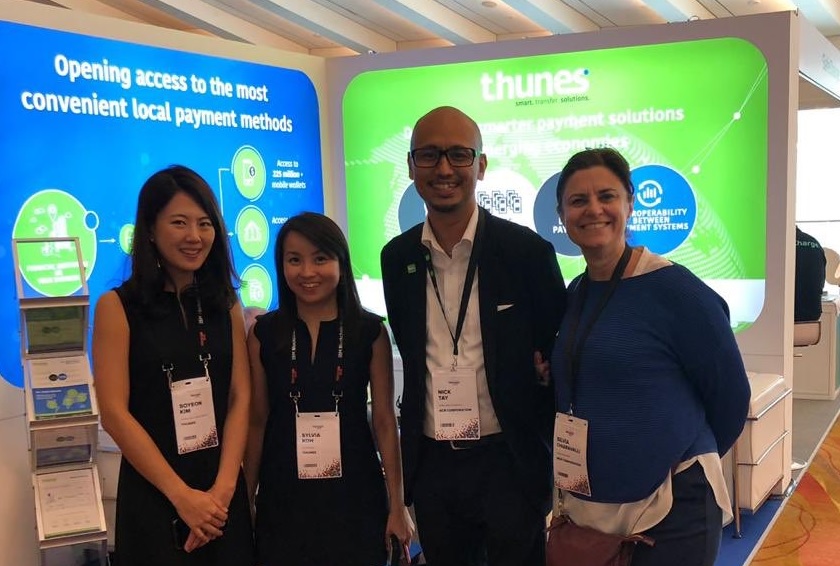
    The fintech startup has made a pair of executive hires to support its global growth strategy. Thunes has appointed Irina Chuchkina as chief marketing officer and Babul Balakrishnan as head of customer care, who will both be based in Singapore, the global cross-border payments firm said on Tuesday.

    Fintech marketing leader Chuchkina, who is also an Executive Committee Member in the Singapore Fintech Association, brings over 15 years of experience in the payments and technology space in Europe and Asia, including at Rapyd, Grab and Visa. She will lead Thunes’ global marketing strategy.

    Balakrishnan has over two decades of experience across various industries with a focus on customer service and customer experience. He joins from telco StarHub, where he was AVP of customer experience operations. He will work with the various business units to elevate customer care into customer experience across Thunes’ partner network.

    The appointments follow the announcement of Thunes’ acquisition of Europe payments platform Limonetik, to complement its cross-border payments solutions. The company has also made several other strategic hires the last 12 months to support its expansion plans.

    Launched in 2016, Thunes is headquartered in Singapore and operates regional offices in London, Shanghai, New York, Dubai, and Nairobi. In September 2020, it raised $60 million in a Series B funding round led by Africa-focused Helios Investment Partners.

  • Evergrande’s Lenders Prepare Loan Loss Provisions and Rollovers

    Evergrande’s Lenders Prepare Loan Loss Provisions and Rollovers

    Several of China’s largest banks that issued loans to Evergrande are now reportedly considering taking on loan loss provisions and rolling over near-term obligations.

    Agricultural Bank of China – the nation’s third-largest lender by assets – has made some loan loss provisions for Evergrande-related exposure, according to a report citing unnamed sources.

    Separately, China Minsheng Banking Corp and China CITIC Bank Corp are prepared to roll over some of Evergrande’s near-term debt obligations.

    According to the report, Chinese bank exposure to Evergrande has decreased in the past year, such as a 10 billion yuan ($1.55 billion) reduction of Evergrande loan exposure to 30 billion yuan at Minsheng.

    There is a possibility that the government may intervene to manage an orderly collapse of Evergande, the report said, adding that regulators have completed related risk assessments.

    In a leaked 2020 document, Evergrande was believed to have liabilities with over 128 banks and 121 non-banking institutions. Although the document was written off as a fabrication by Evergrande, it is reportedly viewed with credibility amongst analysts.

  • DBS Announces More Tech Job Openings

    DBS Announces More Tech Job Openings

    DBS continues to add tech talent with plans to hire around 150 related positions via a virtual hackathon.

    DBS will hire for around 150 technology positions through a virtual hackathon, Hack2Hire, an annual program in its fourth edition, according to a statement.

    The positions will be for 14 developer and engineering roles across artificial intelligence (AI), machine learning, and blockchain technologies.

    Successful candidates from the hackathon will be invited for a final interview during the event.

    The latest expansion follows 140 tech job openings previously announced in May during the bank’s female-focused virtual career fair.

    With Covid-19 greatly accelerating the pace of digital adoption, it is now more important than ever to ensure that our digital offerings continue to stay ahead of our customers’ needs, said DBS’ group head of big data/AI and consumer banking technology Soh Siew Choo.

  • UBS China Fund Caught in Tech Maelstrom

    UBS China Fund Caught in Tech Maelstrom

    UBS’s $10 billion China Opportunity fund caught in the downdraft of the country’s harsh tech crackdown.

    It was only last April that Bin Shi gave a fireside chat on a UBS asset management hosted website. The bank’s head of China equities appeared optimistic about the outlook for Chinese equities, saying it was likely the tech sector had seen the worst in terms of anti-trust penalties.

    As a result, he felt confident buying high-quality A-share titles listed in Shanghai and Shenzhen.

    And when Shi talks, investors tend to listen – given he currently manages four different vehicles focusing on Chinese equities, the largest being the China Opportunity Fund.

    It is one of the most important equity funds at UBS. It has a highly successful track record, and assets under management were $14.4 billion at the end of 2020. Over the past five years, it posted an annualized return of more than 12 percent.

    Until this year, Morningstar ranked it as a five-star fund while Citywire has long rated Shi highly.

    What that means is that Shi gets talked about. In Switzerland, the fund seemed to attract new money almost by magnetic force, envious market competitors say.

    But over the past few months that force has likely weakened significantly. Things have not turned out as Shi expected. A-shares continue to tank, as do Chinese securities listed overseas. In summer, the fund recorded double-digit declines and it lost a Morningstar star in July. As of right now, the fund is down almost 22 percent this year.

    That means that it trails the MSCI China Index and many of its peer funds. It still managed $10.4 billion in assets in June with the first half report recording redemptions of about $3.8 billion, although that was still more than offset by inflows of $4.2 billion. But if you factor in market performance, the current shortfall is more likely to be about $1.2 billion.

    That is more than likely to be a big hit for Shi. When asked by finews.com, UBS said that it takes the long-term view when it comes to identifying market prospects and it invests in companies with strong management and a long-term vision that allow them to ably manage geopolitical, regulatory and other external events.

    China is more volatile than other markets, and such an environment creates opportunities for active managers to create value,, a spokesperson said.

    It appears that the fund bet billions of dollars on the Chinese companies bearing the brunt of the anti-cartel and regulatory crackdown. Its holdings of Tencent comprise 9.76 percent of the portfolio, Alibaba and other Jack Ma companies, including Ant, which is being split up, make up 5.74 percent. In comparison to peers, it appears to be overweight in financials.

    In the meantime, the Chinese government seems to be ramping up scrutiny of the insurance sector. One of the largest insurers is Ping An, which is 5.29 percent of the portfolio. Authorities are also taking steps against video games, which is likely to impact major games producer Netease (4.97 percent of the portfolio).

    The brutal decline in Chinese equities has proven controversial, given that it has become mixed up in the U.S.-China trade war, the pandemic and violations of human rights in China. Market legend George Soros has called Blackrock’s recent move into China a «tragic mistake». He warned that the world’s largest asset manager was likely to lose money as a result, warning that the recent steps against the tech sector are a symbol that Chinese President Xi Jinping will do anything to remain in power.

    One of the world’s mostly closely watched investors, Cathie Woods, recently sold off a sizeable chunk of her funds holdings in China tech.

    Blackrock and UBS have no choice but to grin and bear it. The Chinese investment market is a long-term gamble and one in which UBS managed to position itself before other competitors. UBS is also intent on making more investments there. That also holds for the funds business. It is expanding its palette of products and it is shortly expected to launch a new China Healthcare fund.

    But if UBS China funds continue to bleed, that could change. It is mostly investors outside the mainland that have been burned by the tech crash and they make most of their money from them.

    They seem to have had enough of the way Chinese authorities have been acting, which they see as unpredictable and overly draconian.

  • DBS Announces More Tech Job Openings

    DBS Announces More Tech Job Openings

    DBS continues to add tech talent with plans to hire around 150 related positions via a virtual hackathon.

    DBS will hire for around 150 technology positions through a virtual hackathon, Hack2Hire, an annual program in its fourth edition, according to a statement.

    The positions will be for 14 developer and engineering roles across artificial intelligence (AI), machine learning and blockchain technologies.

    Successful candidates from the hackathon will be invited for a final interview during the event.

    The latest expansion follows 140 job openings previously announced in May during the bank’s female-focused virtual career fair.

    With Covid-19 greatly accelerating the pace of digital adoption, it is now more important than ever to ensure that our digital offerings continue to stay ahead of our customers’ needs, said DBS’ group head of big data/AI and consumer banking technology Soh Siew Choo.

  • Singapore and India to Link Real-Time Payment Systems

    Singapore and India to Link Real-Time Payment Systems

    The link will facilitate instant, low-cost fund transfers directly from one bank account to another between Singapore and India.

    Singapore will be linking its national e-payments system PayNow to India’s Unified Payments Interface (UPI) by mind-2022, according to an announcement by the Monetary Authority of Singapore on Tuesday.

    This means that users in Singapore will be able to make fund transfers to users in India using a UPI virtual payment address. Transfers from India to Singapore can be made using the user’s mobile phone number.

    The linkage will provide for increased volumes of remittance traffic, multi-entity participation, automation of capital control rules, and enriched message formats to accommodate future innovation by linkage participants, the announcement said.

    As the cost and inefficiencies of remittances between Singapore and India is expected to be substantially reduced, MAS said the link will further anchor the substantial trade, travel and remittance flows between the two countries.

    Earlier this year, Singapore and Thailand connected their payments infrastructures to enable cross-border peer-to-peer transactions of up to S$1,000 or THB25,000 using just their mobile numbers.

  • Payments Platform 2C2P Partners Atome to Grow BNPL Reach

    Payments Platform 2C2P Partners Atome to Grow BNPL Reach

    The regional partnership will support thousands of merchants across Southeast Asia, as competition in the Buy Now Pay Later (BNPL) space heats up.

    Global payments platform 2C2P is partnering Buy Now Pay Later (BNPL) brand Atome, which will allow its network of online and offline merchants across the region to offer BNPL as an alternative payment method to their customers.

    Merchants using 2C2P’s platform in Singapore and Malaysia will be able to offer their customers the option to pay using Atome, either online or in-store, which allows them to make payments over three months with zero interest, service fees or annual fees.

    Headquartered in Singapore, Atome has a presence across Southeast Asia, India and Greater China. The platform was launched in 2019, and currently partners over 5,000 online and offline retailers in nine markets.

    Its partnership with 2C2P is expected to roll out in other markets such as Thailand, Philippines and Indonesia in the near future, the announcement said.

    BNPL payment methods have seen surge in popularity, particularly among millennials and Gen Z consumers. Merchants are also tapping on its growth to increase customer conversion, average order size and repeat sales.

    The market is estimated to grow to $33.6 billion by 2027, with Asia being the fastest-growing regions due to increasing rates of mobile Internet penetration, according to a 2020 study by Coherent.

    Earlier this month, U.S. fintech giant PayPal announced a mostly cash deal to acquire Japan BNPL platform Paidy for ¥300 billion (about $2.7 billion). Square, run by Twitter CEO Jack Dorsey bought Australian BNPL platform Afterpay for $29 billion last month.

  • DBS Stalwart Joins OCBC to Head Wholesale Banking

    DBS Stalwart Joins OCBC to Head Wholesale Banking

    A DBS veteran will take on a new key position at OCBC, which is part of the bank’s plans to grow and expand across its key markets.

    OCBC has appointed Tan Teck Long as group head of wholesale banking, according to a filing with Singapore Exchange (SGX) on Wednesday.

    Tan joins from DBS Bank, where he has been group chief risk officer since 2018. His previous roles at the bank, which he joined in 2003, include group head of corporate investment banking, China head of institutional banking group based in Shanghai and group head of real estate, building and construction industry.

    In his new role, Tan will have global responsibilities for global corporate banking, global commercial banking, global transaction banking, emerging business, global financial institutions, group investment banking and mezzanine capital unit, the announcement said.

  • Deutsche Bank Wealth Management Hires Ex-DBS Duo

    Deutsche Bank Wealth Management Hires Ex-DBS Duo

    Deutsche Bank Wealth Management has hired two former executives from DBS Private Bank to bolster its South Asia business.  Shankar Jha joins the German private bank’s global South Asia (GSA) team in Singapore as a managing director and group head, according to a statement, reporting to global South Asia head Amrit Singh.

    Jha has over 20 years of private banking experience, most recently with DBS Private Bank where he spent six years, last as a senior director and team leader. Previously, he also worked for UBS Wealth Management and Citi Private Bank.

    Deutsche Bank Wealth Management also hired Sachin Thussu as a director and senior investment advisor.

    Based in Singapore, he will be part of the investment management team and report to head of investment management global GSA Ritesh Goenka.

    Thussu has over 20 years of experience across financial markets – most notably, FX and precious metals – and cross-asset advisory. Prior to joining Deutsche Bank, he worked for DBS Private Bank, Credit Suisse, Standard Chartered Private Bank and Citi covering private wealth and quasi institutional clients from London, Zurich and Singapore.

    Year-to-date, Deutsche Bank’s GSA unit has hired 14 relationship managers across Dubai, Geneva and Singapore.

    Notable additions include ex-Julius Baer bankers Dhananjay Rathore as a managing director and Rajasekar Ayyalu as a director based in India where four relationship managers have been hired thus far this year. Other newly hired directors include Richard Van-Dirmen, Hervé Alykhan Ladak, Randeep Singh and Harshin Shah.

    The GSA unit also added three investment advisors in Dubai and Singapore.

    At Deutsche Bank Wealth Management, we value the importance of the GSA market to the Bank’s Asia strategy, and will continue investing, said Singh in the statement.

  • HSBC lowers Vietnam’s growth forecast

    HSBC lowers Vietnam’s growth forecast

    Lender HSBC has lowered its growth forecast for Vietnam from 7.1 percent to 5.1 percent given the ongoing fourth Covid-19 wave that has disrupted key economic activities.

    “The impact of the Delta variant as it spread across the country and in particular the economic heartland of Vietnam in the south meant a swift re-introduction of lockdowns and travel restrictions,” said CEO of HSBC Vietnam Tim Evans in a recent note.

    He forecast GDP growth would be in the range of 5-5.5 percent, depending on the speed and effectiveness of the vaccination rollout, re-opening of the economy and recovery and resumption of major export markets.

    But growth could only reach 3.5-4 percent if the vaccination programme is not fast enough and lockdown and social distancing continue to be lengthened, he said.

    This will cause more adverse impacts on the economy amid increased pressure on supply chains, he added.

    Vietnam in recent months has seen unprecedented disruption to its supply chain, which has caused declining industrial production while key global brands struggled to keep manufacturing going.

    In August, mobility in the country fell 60 percent on average from pre-pandemic levels, which resulted in a 40 percent year-on-year drop in retail sales, HSBC data shows.

    But there are positive signals that indicate an imminent recovery. Ho Chi Minh City, the Covid-19 epicenter, has given the first Covid-19 vaccination dose to nearly 90 percent of its population and is set to have the majority of residents fully vaccinated by the end of this month.

    The State Bank of Vietnam (SBV) has increased credit growth for some commercial banks from 10-12 percent to 14-15 percent this year, which would allow banks to lend more.

    Vietnam remains a highly attractive investment destination in the medium term, given the recent reports of investment from Samsung and LG Display, Evans said.

    “Strong foreign currency reserves coupled with a stable currency, inflation being under-control, continued strong FDI inflows with an emphasis on the manufacturing sector all position Vietnam will for the future.”

    HSBC forecasts next year’s GDP growth at 6.8 percent. It was 2.9 percent last year.

    Several other organizations including the World Bank and Asian Development Bank have lowered their growth forecast for Vietnam because of Covid-19.

  • Citi Nets Ex-Goldman Southeast Asia Investment Banker

    Citi Nets Ex-Goldman Southeast Asia Investment Banker

    Citigroup has reportedly hired the former Southeast Asia head of investment banking from Goldman Sachs.

    Harry Naysmith will join Citi as its vice chairman of banking, capital markets and advisory for Southeast Asia.

    Naismith joined Goldman Sachs in 2013, last as its Southeast Asia head of investment banking. Previously, he also spent five years with ABN AMRO.

    Naysmith is the second Goldman head of Southeast Asia investment banking to join Citi in recent years.

    12-year Goldman executive and former Southeast Asia investment banking co-head Udhay Furtado left in September 2018 to join Citi as its co-head of equity capital markets.

  • DBS Digital Exchange to Grow Security Token Offerings

    DBS Digital Exchange to Grow Security Token Offerings

    The platform plans to tap on the growing popularity of cryptocurrencies and digital assets among corporate investors, accredited individuals and family offices.

    DBS plans to list at least half a dozen security tokens by end-2022 on DDEx, the bank’s institutional-focused digital asset exchange, the exchange’s chairman said on Monday.

    According to Eng-Kwok Seat Moey, who is also head of capital markets, the bank’s position as one of the biggest wealth managers in Asia and its expertise in originating deals in capital markets would help it attract users and grow trading volume.

    The bank listed its first security token on the platform in May 2021, in the form of a S$15 million digital bond.

    Eng-Kwok repeated CEO Piyush Gupta’s target of growing the digital exchange’s investor base to about 1,000 customers this year, and said DBS wants to grow this number by 20-30 percent annually for the next three years as digital tokens gain acceptability.

    DDEx was launched in December 2020 with an initial offering that covered cryptocurrency trading. As of August 2021, it housed around 400 investors with close to S$130 million ($95.8 million) of digital assets in its custodial services.

  • SGX Directors to Retire

    SGX Directors to Retire

    Singapore Exchange (SGX), has announced personnel changes to its board of directors.

    Jane Diplock, non-executive non-independent director, will be retiring from the board by rotation at the end of the bourse’s 22nd Annual General Meeting on 7 October, SGX said in a filing on Tuesday.

    Diplock, 72, was also a member of SGX’s audit and risk management committees. She was appointed to her role in 2011.

    Also retiring from office on 7 October is non-executive non-independent director Ng Wai Keng, who is being considered for an appointment that requires him to address any potential conflict of interest. Ng, 54, was appointed to the position in 2018, and was also a member of SGX’s remuneration and staff development committee.

  • PayPal Inks Deal to Expand Asia Reach

    PayPal Inks Deal to Expand Asia Reach

    The U.S. fintech giant announced a mostly cash deal to acquire Japan’s buy now, pay later (BNPL) payments platform Paidy for ¥300 billion (about $2.7 billion) on Wednesday.

    The acquisition will expand PayPal’s capabilities, distribution and relevance in the domestic payments market in Japan, the third-largest e-commerce market in the world, complementing the company’s existing cross-border e-commerce business in the country, PayPal said in a statement.

    According to an investor presentation, shopping volume in Japan more than tripled to around $200 billion in the last 10 years, with more than two-thirds of all purchases paid for in cash, thereby presenting a huge opportunity for BNPL to proliferate.

    Founded in 2008, Paidy has 6 million users. PayPal already has stakes in other BNPL businesses, including Sezzle and Z1P.AX.

    Under the BNPL model, unsecured loans are extended to online shoppers similar to a credit card, but these are smaller in amount and have a shorter repayment schedule. Such platforms have seen a boom in popularity over the past year, though critics see them as a debt trap.

    In another major deal in the space, Square, run by Twitter CEO Jack Dorsey bought Australian Afterpay for $29 billion last month.