Category: Finance

Retail News Asia is committed to providing both local and global retailers with the latest Finance news throughout the Asian market. This on a daily base.

  • General director of VietinBank appointed new chairman

    General director of VietinBank appointed new chairman

    Vietnam Bank for Industry and Trade (VietinBank) has elected General Director Tran Minh Binh as the bank’s new chairman for the 2019-2024 term.

    The appointment came Tuesday, two months after the bank’s former chairman, Le Duc Tho, was appointed secretary of Ben Tre Provincial Party Committee from July.

    Tran Minh Binh, 47, holds a Master’s degree in Business Administration from National Economics University – Belgium’s ULB University.

    Binh has more than 22 years of experience working at VietinBank, including 17 years as a professional manager at the head office and branches and eight years as a senior manager.

    On the same day, the bank also assigned Nguyen Hoang Dung, its deputy general director, as general director in charge of the executive board, replacing Tran Minh Binh.

    VietinBank, the third-largest lender by total assets in Vietnam, made a consolidated net profit of VND10.81 trillion ($473.69 million) in the second quarter of 2021, up 44.52 percent compared to the same figure in 2020, according to the bank’s financial report.

  • Citi Commercial Bank Opens China Desk in Singapore

    Citi Commercial Bank Opens China Desk in Singapore

    The new China desk in Singapore adds to CCB’s network of six Asia desks in the region, which supports clients’ banking needs across intra-Asia growth corridors.

    Citi Commercial Bank (CCB) Asia Pacific has set up a China desk in Singapore, facilitating access to the cit-state and wider ASEAN region for emerging corporates from China, it announced on Monday.

    Mona Zhang, previously parent account manager for mid corporates in CCB China’s office, is leading the desk. Zhang brings a wealth of knowledge and experience in understanding the business landscape in China and serving the needs of Chinese corporates.

    She will build the bank’s relationships with China-based clients and support their expansion plans into Singapore and as well as the rest of ASEAN, Citi said in a statement.

    Citi highlighted CCB’s growth across China to Singapore as well as China to ASEAN corridors. Last year, it more than doubled revenue in the China to Singapore corridor, supported by 35 percent growth in new client acquisition. Momentum in new client acquisition also resulted in a doubling of revenue in the China to ASEAN corridor last year, Citi said.

    Singapore and the broader ASEAN region are key markets for growth for expanding Chinese emerging corporates. A majority of these clients set up holding companies in Singapore for their ASEAN units, with the market serving as a treasury and funding hub, Lin Hsiu-Yi, CCB ASEAN and Singapore head, said.

    Other CCB desks in the region include a Korea desk in China, Hong Kong, India and Vietnam; a Greater China desk in Hong Kong; and a China desk in India.

  • StanChart Announces Details on Digital Bank Venture with NTUC

    StanChart Announces Details on Digital Bank Venture with NTUC

    A StanChart veteran has been appointed to lead its digital-only bank in Singapore. Standard Chartered Singapore’s head of consumer, private and business banking, Dwaipayan Sadhu, has been appointed CEO of the bank’s new digital venture with NTUC Enterprise, details of which were released on Monday.

    Sadhu, who has more than two decades of experience across wealth management, payments, deposits, consumer lending, and digital banking, will hold both roles concurrently while transitioning to his new position by the end of the year.

    Standard Chartered will take a 60 percent stake in the venture, worth S$144 million ($107.28 million), with the NTUC’s enterprise arm taking the remaining 40 percent stake, worth S$96 million.

    Singapore is Standard Chartered’s second-largest market after Hong Kong. The bank announced plans for the digital venture with NTUC about a year ago, soon after it obtained the Significantly Rooted Foreign Bank (SRFB) status in Singapore, which gives it significant advantages such as the ability to set up a digital-only unit, lower amounts in paid-up capital and a greater number of places of businesses.

    Four other digital banks, which obtained licenses under a different process, are set to be launched in the republic in the coming year.

    With the new digital bank, Standard Chartered will be the only entity to operate a virtual bank in the region’s two largest hubs. In Hong Kong, it runs Mox – jointly owned with telecom firms PCCW and Hong Kong Telecom, and online travel agency trip.com.

  • HSBC Plans for Permanent Hybrid Work Model

    HSBC Plans for Permanent Hybrid Work Model

    HSBC is the latest to embrace hybrid working with plans to make it a permanent model for the bank worldwide.

    My own view on the return to office is it would be a waste if we didn’t learn from the last 18 months, said HSBC group chief executive Noel Quinn.

    The bank’s work-from-home embracement is part of broader plans to cut costs including a 40 percent reduction in property footprint in the coming years. It also changed its office policy to include two employees per desk, excluding branches, and scrapped the executive floor of its London-based headquarter.

    We’ve learned to live and operate in a very different way, Quinn said, though he noted that he didn’t want to be overly prescriptive.

    Despite the plans, Quinn highlighted some of the advantages of the physical workspace such as social relationships or spontaneity.

    I don’t want to lose that DNA and that teamwork, he said. I’m really glad to be back in the office, seeing colleagues and having conversations in the corridor or in getting stuff done on the spur of the moment, rather than having to book a VC call or a telephone call.

    Quinn also highlighted traveling in the pandemic era, with the bank expecting budget in this area to shrink by 50 percent.

    I remember one day sitting at home, I traveled the world in a day, talking to clients in different parts of the world, he said. You can’t do that forever. You still want to have face-to-face interaction.

    Global banks remain divided on work-from-home measures with some like Citi and Standard Chartered signaling or planning a permanent shift while others like Goldman Sachs and Morgan Stanley preferring a return to the office.

  • Binance Halts Singapore Products

    Binance Halts Singapore Products

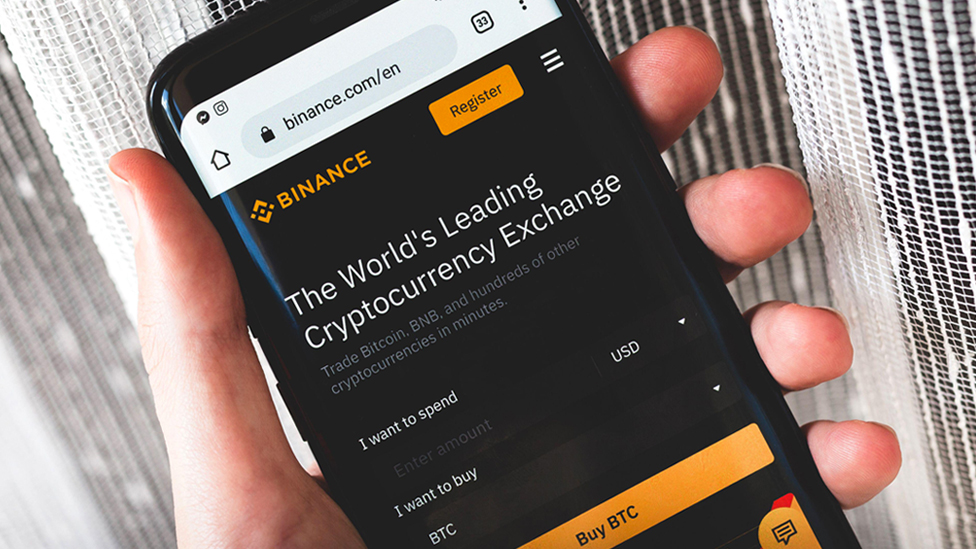
    Cryptocurrency exchange Binance has responded to a warning by Singapore’s regulator by removing some of its offerings in the city-state.

    Binance will cease Singapore dollar trading pairs and payment options, according to a blog post over the weekend, alongside the removal of its app from Singapore’s online stores.

    The halt will begin as of Friday and users have been advised to complete all related peer-to-peer trades and remove related trade ads by Thursday to avoid disputes.

    Consumer protection is important to all of us, Binance.com said in a statement. We are ready to assist regulators from around the world and together find the optimal way to set a fair playing field.

    The latest move only relates to Binance.com with no services changes on Binance.sg, Binance’s Singapore entity, according to a spokesperson.

    Binance Asia Services, which operates Binance.sg, recently submitted a license application to the Monetary Authority of Singapore. It is currently exempt from holding a license for the provision of digital payment token services until the review of its license application is completed.

  • MAS Orders Binance Halt

    MAS Orders Binance Halt

    The Monetary Authority of Singapore has ordered crypto giant Binance to halt its services in the city-state over a potential breach of local payment rules.

    Binance must stop offering services in Singapore, according to a report citing a MAS statement, over a potential breach of the Payment Services Act.

    According to the regulator, Binance provided payment services to and solicited business from Singapore residents without an appropriate license.

    In response, Binance said its Singapore operations are conducted via Binance Asia Services (BAS) which is a separate legal entity from Binance.com.

    BAS operates Binance.sg, does not offer any products or services via Binance.com, and has its own local executive and management team.

    BAS has submitted a license application and is currently exempt from holding one for digital payment token services, MAS said, adding that the application remains under review and is subject to the firm demonstrating that it is able to meet requirements.

    On the other hand, Binance didn’t apply for a license under local law and the regulator has added the crypto firm to its investor alert list.

    MAS has been engaging BAS and expects an immediate it to begin an orderly suspension of its facilitation of transfers of digital payment token assets between BAS and Binance, the regulator added.

  • BNP Paribas in Talks to Form China Wealth Management JV

    BNP Paribas in Talks to Form China Wealth Management JV

    BNP Paribas’ asset management arm is reportedly in talks with a Chinese «big four» bank to form a wealth management joint venture in the mainland.

    BNP Paribas is in talks with Agricultural Bank of China’s (AgBank) wealth unit to form a wealth management joint venture, according to a report citing unnamed sources.

    BNP Paribas is expected to hold majority stakes in the joint venture.

    BNP Paribas joins the likes of Blackrock, Goldman Sachs and other global financial institutions seeking to tap into China’s $19 trillion wealth management market.

    French rival Amundi had initially discussed venture plans with AgBank but ultimately chose Bank of China as its partner.

    AgBank and other major state banks face political pressure to form wealth management joint ventures, the report added, indicating China’s willingness to open up.

    Within mainland China, BNP Paribas Asset Management already owns a Chinese mutual fund venture.

  • UBS Takes Stake in AI Advisor Platform

    UBS Takes Stake in AI Advisor Platform

    UBS is taking a stake in an artificial intelligence platform that matches institutional clients with investment experts.

    UBS has invested $5 million in Lynk in its latest funding round, taking the technology company’s total funding to $35 million, Lynk said in a press release Wednesday. Lynk says it has a network of more than 840,000 global experts. Its proprietary technology is driven by an AI data engine that indexes individuals based on their experience and expertise to match users with subject matter experts on its platform.

    Lynk was founded by Peggy Choi in 2015. The firm has eight offices, including New York, Hong Kong, Singapore, Mumbai, Shanghai and Toronto.

    UBS announced a global alliance with Lynk in May for its institutional investor clients and subscribed to the platform in 2020. The collaboration is run via UBS Investment Bank’s principal investment team.

  • Nordea AM to Open ESG Hub in Singapore

    Nordea AM to Open ESG Hub in Singapore

    The hub will enable Nordea to to enhance its local servicing, ESG capabilities, investment platform and distribution reach in the region.

    The asset management arm of financial services group Nordea is planning to open an ESG hub – its first outside its Nordic headquarters – in Singapore, in response to its growth and successes in the region, the firm announced on Wednesday.

    The hub will allow NAM to be closer to clients in the Asia-Pacific region and better understand how companies are embracing sustainability in the region, Nordea Asset Management said in the statement.

    Sustainability issues have gained significant interest in Asia in recent years, and investors are increasingly asking for ESG solutions. The time is right to meet that demand, Nils Bolmstrand, CEO of Nordea Asset Management, said.

    NAM’s local Singapore distribution office was established in 2013, and will be fully integrated with NAM’s ESG-focused internal investment boutiques as well as NAM’s Responsible Investments team.

    The hub is slated to be launched in the latter part of 2021.

  • SeABank offers shares below half the market price

    SeABank offers shares below half the market price

    Private lender SeABank is offering 136 million shares to existing shareholders at the price of VND15,000 (over $0.6), lower than market value in late August by 58 percent.

    New share transactions are expected to take place in the last two quarters of this year, lifting SeABank’s chartered capital to VND14.784 trillion.

    Foreign shareholders also have the right to buy more shares, though their total rate of share ownership in SeABank remains capped at 5 percent.

    SeABank plans to raise VND2.040 trillion through this share issuance, of which VND1.540 trillion would be lent to corporate and individual clients and replace capital mobilized from other sources. The rest would be invested in government and credit institution bonds.

    By the end of June, SeABank assets stood at over VND186.930 trillion, while its bad debt ratio dropped to 1.76 percent. It made before-tax profits of nearly VND1.560 trillion in the first half of this year, compared with VND1.729 trillion in the whole of last year.

  • Chinese State Firms to Take Stakes in Ant’s Credit Scoring JV

    Chinese State Firms to Take Stakes in Ant’s Credit Scoring JV

    Plans are reportedly underway for Ant to establish a personal credit scoring joint venture with state-backed companies set to take major stakes in the new firm.

    The ownership plans include Ant and Zhejiang Tourism Investment Group Co Ltd each owning 35 percent in the credit scoring joint venture, according to a Reuters report citing unnamed sources.

    Other state-backed parents include Hangzhou Finance and Investment Group and Zhejiang Electronic Port, with each expected to hold slightly more than 5 percent

    Transfar Group, parent of logistics and financial services firm Transfar Zhilian Co Ltd, will be the only non-state investor with a total stake of 7 percent.

    The proposed credit scoring joint venture will collect, manage and analyze consumer data to score people’s credit.

    Shareholders will invest about 500 million yuan ($77.4 million) in the entity as registered capital.

    The plan is for the firm to be launched as soon as October.

    According to the report, the establishment of the new firm and its ownership structure are part of restructuring orders by regulators who halted Ant’s blockbuster IPO in November last year.

    The credit scoring joint venture will consolidate Ant’s main business data operations and make regulatory oversight easier.

    The joint venture’s establishment will mark the third licensed personal credit-scoring firm alongside Baihang Credit Scoring and Pudao Credit Rating Co Ltd.

  • SGX to Ease Rules for SPAC Listings

    SGX to Ease Rules for SPAC Listings

    Singapore Exchange is reportedly readying to issue easier rules for the listing of special purpose acquisition companies in the city-state.

    SGX is preparing to be the first major Asian bourse to accept SPAC listings, according to a Reuters report citing unnamed sources.

    The exchange’s regulatory arm is now considering easing a minimum S$300 million ($223.2 million) market value proposal for SPACs and a proposal that warrants cannot be detached from underlying shares.

    SGX is expected to introduce other measures to safeguard investor interests but would simplify proposed guidelines to maintain attractiveness for SPACs.

    The latest report of looser listings rules follows market feedback that some of SGX’s earlier proposals were too strict.

    Singapore is attempting to improve its profile as an IPO destination of choice while Southeast Asian startups have been listing in their home markets or the U.S.Funds raised at SGX fell to a six-year low of $239 million, according to Refiniv data, representing less than 3 percent of Southeast Asia’s total $8.4 billion.

    Within the region, Singapore ranked behind Malaysia, the Philippines, Indonesia, and Thailand in terms of funds raised.

  • UBS Misses Mark With Coffee-Coded Survey

    UBS Misses Mark With Coffee-Coded Survey

    The Swiss bank wants its domestic employees to talk about their ethnicity – coming uncomfortably close to long-held stereotypes in the process.

    Zurich-based UBS asked its 21,598 Swiss-based employees to fill out a survey describing their ethnicity, telling them ethnic diversity is a key pillar in achieving its strategic goals.

    The survey – ethnic diversity is important to us – is illustrated with eight espresso cups of varying shades from black to milky white. UBS is asking its employees to categorize their ethnicity as Asian, Black, Hispanic, or White.

    Other options include two or more ethnic groups and other ethnic groups. Employees also have the option of demurring on disclosing their ethnic heritage or presumably not filling out the survey at all.

    UBS’ intentions in the survey are commendable: it can only reach its diversity goals if it tackles the issue of discrimination internally. And of course, to do so, it needs data.

    The way UBS – which employs 73,000 people in more than 50 countries – is gathering this data is inept and eerily reminiscent of colonial-era stereotypes. The bank’s human resources officers seem to believe that the global population can be grouped into four ethnicities. Modern ethnology has identified more than 1,300 ethnicities worldwide.

    UBS has chosen to group ethnicities along geographies – Asia, Latin America – and along with race: white, black. It avoided stumbling identifying all four of the survey’s ethnicities with a race, but it isn’t clear why it views white and black alone as ethnicities.

    The link between ethnic identity and skin color is rooted in a racially tinged stereotype popularized by Carl Linnaeus, a Swedish botanist. In the 18th century, Linnaeus divided humans according to race: white, black, red, and yellow.

    He also baked in how he perceived social and emotional features, a view that favored white Europeans like him. Linnaeus’ views took root during the Enlightenment and established themselves for some years afterward. Immanuel Kant and other enlightenment thinkers viewed dark skin as inferior to white.

    UBS’ likening race to espresso cups also leans hard into stereotypes prevalent in advertising, where black skin was frequently used to sell products like chocolate or coffee. Using imagery of black people, advertisers attempted to portray these consumer goods as something exotic or wild.

    The advertising industry has largely abandoned this practice. One would have wished for a similar light-bulb moment of age-old stereotypes from UBS’ diversity team.
  • Vietcombank gets new chairman

    Vietcombank gets new chairman

    Vietnam’s biggest state-owned lender, Vietcombank, has named Pham Quang Dung as its new chairman until 2023.

    Dung, 48, has been its CEO and a member of the board since 2014.

    Nguyen Thanh Tung, deputy director, temporarily takes over as CEO until a new person is appointed.

    Dung has 27 years’ experience in the financial and banking industry.

    He joined Vietcombank in 1994, and has served in various positions including deputy director of a financial division in Hong Kong and deputy director of the bank.

    The previous chairman of the bank, Nghiem Xuan Thanh, was appointed the Secretary of the Party Committee of Hau Giang Province in early July.

    Vietcombank is 74.8 percent owned by the government, 15 percent by Japan’s Mizuho Corporate Bank and the rest by other shareholders.

  • UOB Shuffles Board

    UOB Shuffles Board

    UOB has announced changes to its board, including the addition of a 40-year banking veteran as its new independent director.

    Tracey Woon joins UOB as an independent director as well as a member of its audit committee and board risk management committee, according to a statement, effective September 1.

    Woon, 65, is currently a director at Singapore Press Holdings, a member of the Securities Industry Council and the Listings Advisory Committee of the Singapore Exchange amongst other roles.

    Woon is a 40-year banking veteran in the region and was previously UBS’ APAC global wealth management vice-chair from 2016 until her retirement in 2020 and Citibank’s ASEAN corporate and investment banking vice-chair and UBS’ APAC global wealth management vice-chair.

    Other changes to UOB’s board include the addition of Dinh Ba Thanh and the exit of James Koh, 75, who will step down effective August 31 after nine years as an independent director since 2012.

    Thanh, 64, is the founder and chief executive of Vietnam’s largest integrated media tech group DatVietVAC Group Holdings, which was established in 1993 as the country’s first privately-owned advertising and media company. Thanh currently also serves on the board of trustees at the Asia Business Council and is also a member of the World Economic Forum.

    The appointment of the two new directors will further enhance the diversity of the board,» said UOB chairman Wong Kan Seng. In guiding the group in its regional strategy, the board will benefit from Tracey’s extensive background in banking across the region and Thanh’s insights in transforming his business into a successful media entertainment technology company in Vietnam.