Category: Finance

Retail News Asia is committed to providing both local and global retailers with the latest Finance news throughout the Asian market. This on a daily base.

  • UBS Loses Out to Goldman Sachs for NNIP

    UBS Loses Out to Goldman Sachs for NNIP

    Goldman Sachs has bought a Dutch asset manager for which UBS was one of the other bidders as the European sector looks to consolidate.

    U.S. investment bank Goldman Sachs is buying Dutch insurer NN’s asset management business, the companies announced Thursday. European bidders lost out to Goldman Sachs, including Switzerland’s largest bank, UBS.

    Goldman will pay around 1.6 billion euros ($1.9 billion) for NN Investment Partners. The around $355 billion in assets the unit manages will now be added to the $2.3 trillion already managed by the U.S. bank’s fund arm.

    UBS, whose own asset management unit still has not gained the critical mass necessary to be a forerunner in the industry is not only on the lookout for takeover targets but also might be interested in a possible bid for the business.

    Since both Deutsche Bank’s fund unit DWS and UBS both missed out on NN IP, this could fuel speculation about a rapprochement after preliminary talks between the two failed in 2019.

    Credit Suisse Asset Management, which was badly shaken by the closure of its supply chain funds after the collapse of Greensill Capital, is also considered a takeover candidate.

    There is widespread talk of a merger with UBS asset management or DWS joining the two of them. However, Credit Suisse’s chairman, António Horta Osório, intends to take his time mulling major strategic moves until at least the autumn.

    At the end of June, UBS Asset Management had invested assets of $1.2 trillion and CSAM had 471 billion Swiss francs ($519 billion) in client assets under management.

    Even after the Dutch acquisition, Goldman still has plenty of money and is interested in further acquisitions.

    Goldman Sachs CEO David Solomon said the bank would certainly take a serious look at further acquisitions in asset management, if they could accelerate its growth.

    The asset management industry continues to consolidate, he added. If you look at most of the leading players, the thing that most of them have is their businesses are global and at scale.

  • Standard Chartered Adds ASEAN Private Banker

    Standard Chartered Adds ASEAN Private Banker

    Standard Chartered added a private banker focused on the south and southeast Asia market, joining most recently from Bank of Singapore.

    Standard Chartered Private Bank appoints Lawrence Goh as managing director and deputy market head for ASEAN and South Asia, according to a statement.

    Based in Singapore, Goh reports to Cedric Lizin, regional head, private banking ASEAN & South Asia and global head of global South Asian community.

    Goh has 20 years of experience in the financial sector including five in asset management and the last fifteen in private wealth management, specifically in the ASEAN region. He was most recently at Bank of Singapore where he spent 12 years covering various southeast Asia markets. Previously, he also worked for Citi Private Bank covering ultra-high net worth individuals and families in Singapore, Malaysia, Brunei and Australia.

  • Thai Central Bank to Trial Retail Digital Currency

    Thai Central Bank to Trial Retail Digital Currency

    The pilot will initially be conducted on a limited group under the BOT before it is expanded to the public, retail stores, banks and non-banking facilities.

    The Bank of Thailand is set to begin testing a retail central bank digital currency (CBDC) in the second quarter of 2022, the central bank said in a statement on Thursday.

    The BOT will assess all results and associated risks from the Pilot Test, to ensure that Retail CBDC is beneficial to the public, business sector, and country as a whole, and does not undermine economic and financial stability in the future, Vachira Arromdee, BOT assistant governor, said in the statement.

    BOT said public demand for retail CBDC will gradually rise over time and that CBDC could become an alternative payment option in the future.

    It cited a public survey and focus group discussions conducted in April 2021, in which most respondents agreed with the BOT’s approach to retail CBDC development and viewed the currency as a beneficial infrastructure open to access and competition, with the potential to foster greater development of a safe financial innovation in the future.

    Respondents also agreed that the CBDC design guidelines can help mitigate any negative impacts on the Thai financial sector.

  • Hong Kong Anti-Sanctions Law Details Begin Surfacing

    Hong Kong Anti-Sanctions Law Details Begin Surfacing

    China’s top parliament is in the last of its four-day meeting on draft bills with some broad indications unveiled about Hong Kong’s anti-sanctions law, including a rough timeline and government entities to be involved.

    China’s National People’s Congress (NPC) Standing Committee is expected to formally approve the anti-sanctions law today, marking an end to its four-day closed-door talks on various draft bills.

    Although approval of the law is a foregone conclusion – Hong Kong’s sole delegate to the NPC Standing Committee Tam Yiu-chung had already flagged Friday as the day the legislation will be officially introduced – the financial industry is still closely watching for signs on how and when implementation will occur.

    While the NPC Standing Committee is expected to approve the law’s insertion into the Basic Law – Hong Kong’s own constitution – the city will draft its own version locally, according to a report citing unnamed government insiders.

    The government had no choice but to address growing corporate concerns due to the critical importance of upholding’s Hong Kong’s status as a global financial hub, the source explained.

    The mainland’s version is a bit too broad, which has caused great fear among international businesses in the city, the source said. Some suggested the local version should be more specific so as to alleviate worries, while others also think a vague law could give the government flexibility. The government, therefore, has to get a green light from the central government on how much it can do.

    According to the report, entities to be involved with drafting the local legislation include chief executive Carrie Lam, Financial Secretary Paul Chan, the Hong Kong Monetary Authority as well as the bureaus for financial services, security and constitutional and mainland affairs.

    Separately, Chan was scheduled to meet lawmakers over the matter this week but the discussions were abruptly canceled.

    The government has not decided which bureau should take the lead, while the financial secretary has been listening to views in society, one of the sources said.

    And in order to obtain sufficient feedback from key stakeholders, Hong Kong lawmakers will be working on a local draft of the anti-sanctions at least until next year.

    Lam had previously said that she did not have an explicit deadline for implementation but added that completion within the current term, which ends in October before the next session opens in early 2022, would be an extremely tight timetable to rush a piece of legislation with the necessary consultation with stakeholders.

    In addition to the NPC Standing Committee meeting this week, the industry will also look for more clarity from a delegation led by Huang Liuquan, a deputy director of the State Council’s Hong Kong and Macau Affairs Office, when they visit the city next week to brief lawmakers on the nation’s 14th five-year plan.

  • Vietnam leads globally in cryptocurrency adoption

    Vietnam leads globally in cryptocurrency adoption

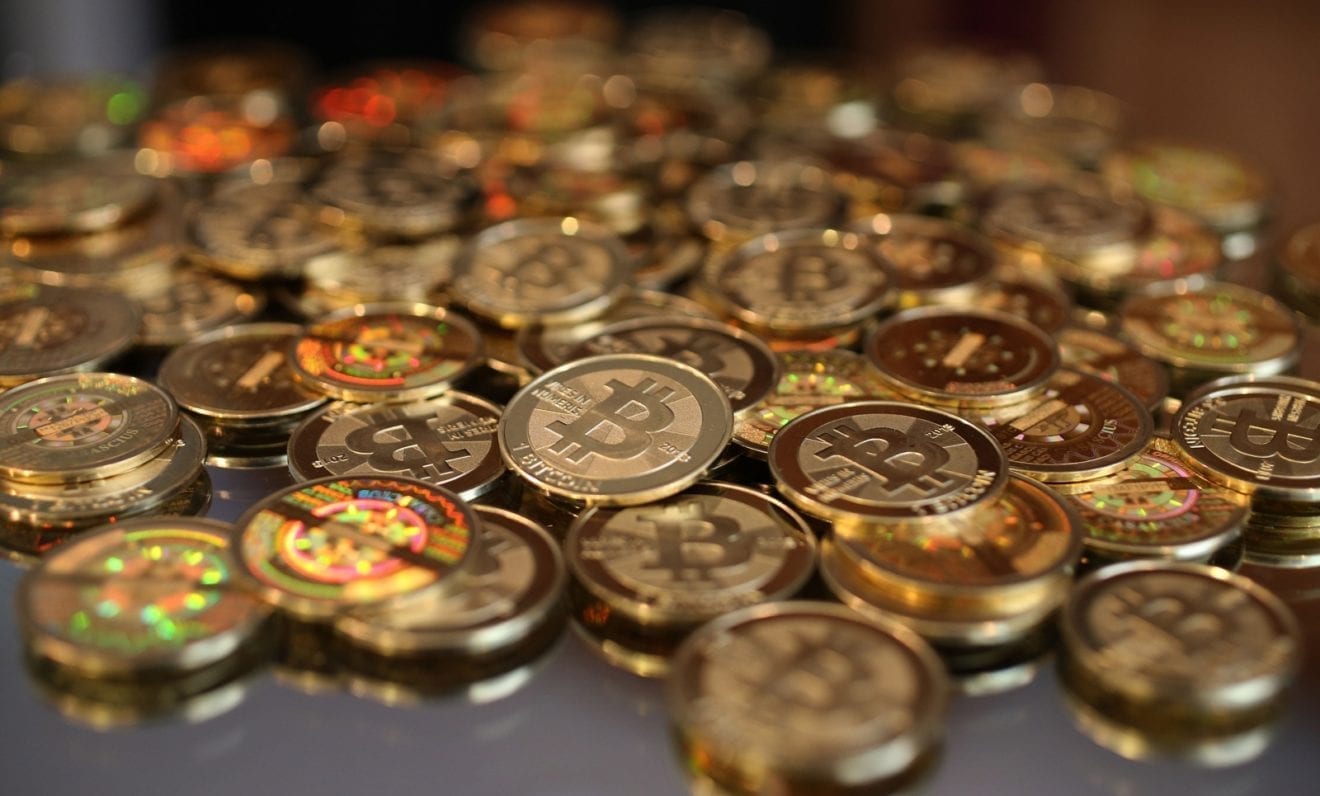
    Vietnam leads globally in cryptocurrency adoption with 41 percent of respondents claiming to have bought Bitcoin and the like, according to a recent survey.

    Twenty percent of Vietnamese said they had purchased Bitcoin, the highest among 27 countries polled with 42,000 respondents, according to the survey by U.S. based financial consultancy Finder.

    “Remittance payments may have played a significant role in these numbers, with cryptocurrency an option for migrants who want to send money home and avoid exchange fees,” the report stated.

    Despite having the 53rd largest economy based on gross domestic product, Vietnam placed 13th in realized Bitcoin gains for 2020, according to Cointelegraph.

    Adoption was especially high in Asia, with 30 percent of respondents in Indonesia and India claiming to have bought cryptocurrency, the Finder’s survey found.

    In Malaysia and the Philippines, this proportion was 29 percent and 28 percent, respectively.

    There were between 1,160 and 2,511 respondents for each country covered in the study.

    Data from Statista in February showed Vietnam had the second-highest rate in terms of cryptocurrency use among 74 surveyed economies, driven by remittance payments.

    Bitcoin and other cryptocurrencies are not recognized as legitimate means of payment in Vietnam. The State Bank of Vietnam has warned that owning, trading and using cryptocurrencies are risky and not protected by law.

  • Korean Internet Giant Opens Blockchain Units in Singapore

    Korean Internet Giant Opens Blockchain Units in Singapore

    Kakao Group will pursue the globalization of its public blockchain project, Klaytn, from the city-state.

    South Korea’s Kakao Group has established two new blockchain entities in Singapore – nonprofit Klaytn Foundation and global accelerator unit Krust, it announced in a statement.

    Kakao Foundation said in a statement that it would work proactively and systematically to expand the Klaytn network, while Krust, led by Dean Song, will work with the foundation to help accelerate its mission.

    We will actively invest our human as well as financial resources in developers and businesses of the blockchain world to accelerate the growth of our ecosystem and the development of our technology, the foundation said. Founded in 2010, Kakao Group operates messenger app KakaoTalk and internet bank KakaoBank. Kakao also recently won a bid to pilot South Korea’s central bank digital currency (CBDC) project.

    The Singapore development is funded by a $300 million blockchain development war chest that also includes an improvement reserve fund used for service maintenance purposes.

  • UOB Investment Banker Joins Chinese Brokerage

    UOB Investment Banker Joins Chinese Brokerage

    The experienced equity brokerage and investment banker will head up Haitong Securities’ corporate finance team in Singapore.

    UOB’s former head of equity capital markets (ECM) Jack Kang has joined Haitong International Securities (Singapore) as an executive director.

    Kang, who moved to Haitong in July, spent 11 years at UOB. He was previously ECM vice president at CIMB Securities, and ECM head at Phillip Securities.

    The publication noted the demand for investment bankers in Singapore, especially those with experience in the tech sector, amid a surge in deals, as well as a rapid expansion of Chinese firms in the city-state.

    We are expanding cautiously in line with business needs, Kang said.

  • HSBC Launches Portfolio-Based Advisory for HNW Clients

    HSBC Launches Portfolio-Based Advisory for HNW Clients

    HSBC continues expanding its wealth management offering with the latest addition of a portfolio-based advisory solution.

    HSBC has launched its portfolio-based advisory solution Wealth Portfolio Plus (WPP) targeting its Hong Kong-based Jade segment – clients with $1 million or more in investable assets.

    Previously, HSBC Jade clients could only select individual products that are aligned to their risk profiles but the new offering will enable them to review investment portfolios holistically and grant access to a wider range of products.

    We’re thrilled to bring portfolio-based advisory services to customers for the first time outside of a private bank through Wealth Portfolio Plus, powered by BlackRock’s Aladdin Wealth technology, said Sami Abouzahr HSBC’s head of customer wealth, wealth, and personal banking, Hong Kong. Since WPP provides portfolio-level rather than transactional-level analysis, new investment options can then become available to customers that fit their needs.

    The WPP offering follows the launch of risk management solution Wealth Portfolio Intelligence Service (WPIS) last year which targets high net worth and affluent banking clients.

    Thus far, WPIS has generated over 130,000 risk assessment reports and contributed nearly HK$30 billion ($3.86 billion) in net sales growth from more than 70,000 cases of investment portfolio rebalancing.

    HSBC continues to expand its offering as part of its broader ambitions to become a leading wealth manager in Asia by 2025.

    In June, the private bank launched online trading in Asia. And in April, it rolled out institutional services for single-family offices in the region.

  • DBS Receives In-Principle Crypto Approval in Singapore

    DBS Receives In-Principle Crypto Approval in Singapore

    DBS becomes Singapore’s second crypto player to secure an in-principle approval from the Monetary Authority of Singapore to offer token services.

    DBS Vickers – the brokerage arm of DBS – has received in-principle approval from the MAS under the Payment Services (PS) Act to provide digital payment token services, according to a statement.

    As a member of DBS Digital Exchange (DDEx), DBS Vickers will be able to «directly support asset managers and companies to trade in digital payment tokens through DDEx.

    DBS will also upgrade its digital exchange with operations running beyond the previous Asian hours to round-the-clock trading from August 16.

    We have seen keen interest among asset managers and corporates for access to digital payment token services, and with DBSV receiving in-principle approval under the PS Act, we are well-placed to meet this growing demand,» said DBS group head of capital markets Eng-Kwok Seat Moey.

    This could add to DDEx’s volumes in the coming months, and, coupled with DDEx going operational round-the-clock, help accelerate growth for DDEx. We are confident of doubling our investor base by the end of the year.

    DDEx has just completed its second quarter since launching in December 2020 and houses around 400 investors with close to S$130 million ($95.8 million) of digital assets in its custodial services.

    Trading volume in the second quarter reached S$180 million, more than quintupling the previous quarter.

    In June, DDEx listed its inaugural security token offering in the form of a S$15 million digital bond.

  • OCBC Deputy President Retires

    OCBC Deputy President Retires

    OCBC’s deputy president will retire after 22 years with the Singaporean bank. OCBC deputy president Ching Wei Hong will retire at the end of September, according to an exchange filing.

    Ching first joined OCBC in November 1999 as head of transaction banking and has since held various senior roles including chief financial officer, chief operating officer and chairman of Bank of Singapore before being named deputy president in early 2020.

    I am deeply grateful to Wei Hong for building a strong foundation upon which our wealth management and consumer banking businesses will grow from strength to strength. Please join me in wishing him a healthy and happy retirement, according to a report citing an email from chief executive Helen Wong.

    Separately, the bank has appointed Sunny Quek as acting head of global consumer financial services, effective October 1, as well as director of OCBC Securities, subject to regulatory approval.

    Quek will report to Wong and Bank of Singapore CEO Bahren Shaari. Quek is currently OCBC’s head of consumer financial services in Singapore.

  • UBS Launches Wealth Management JV in Japan

    UBS Launches Wealth Management JV in Japan

    UBS and Sumitomo Mitsui Trust further their two-year alliance with the latest launch of a wealth management joint venture in Japan.

    UBS and Sumitomo Mitsui Trust Holdings (SMTH) has launched operations under joint venture UBS SuMi TRUST Wealth Management, according to a statement, across Japan in Tokyo, Osaka and Nagoya.

    The new company is the first in Japan to offer global securities and wealth management capabilities paired with custody, real estate, inheritance, and wealth transfer expertise of a Japanese trust banking group, UBS said.

    UBS and SMTH first announced the establishment of a wealth management alliance in June 2019.

    Soon thereafter, the two groups established a consultation and event organizing company to identify prospective new clients and began cross-selling each other’s products into their respective client bases.

    We knew that with a powerful partner specialized in this unique trust banking market, we could multiply the success we have already achieved organically,» said Victor Chang, UBS SuMi TRUST Wealth Management’s president and representatives director as well as the Japan head of wealth management. «No other wealth manager in Japan boasts the same breadth and depth of our services, not to mention global reach.

  • Asia Assets Climb Higher at HSBC Private Banking

    Asia Assets Climb Higher at HSBC Private Banking

    Assets under management at HSBC Private Banking climbed higher, driven in part by more than $9 billion of net new inflows in the first half of 2021.

    Asia assets under management at HSBC Private Banking grew 25 percent to $193 billion in the first half of this year, according to a statement, driven in part by $9.3 billion of net new money inflows.

    This accounts for over 45 percent of HSBC Private Banking’s total assets under management worldwide at $427 billion, according to its recent interim report.

    In addition to private banking, HSBC also saw growth across its affluent segments in Asia – Premier and Jade – with a 7 percent increase in the number of affluent and higher net worth clients to 1.7 million.

    Asian wealth revenues in the first half increased 26 percent and account for much of global wealth revenue growth.

    Asian wealth balances – the sum of client assets from HSBC’s Premier, Jade, and private banking segments – reached a new high of $810 billion and accounted for $49 percent of global assets.

    HSBC continues to pursue its ambitions of becoming a leading wealth manager by 2025.

    It has rolled out a series of mobile solutions and digital enhancements for wealth clients in key Asian markets.

    The bank also added around 600 full-time employees in the first half – including 350 personal wealth planners for its mainland China mobile services HSBC Pinnacle with plans to add another 100. The bank said it is on track to hire over 1,00 client-face wealth staff in Asia by the end of 2021.

    The positive momentum of our Asian Wealth business this year shows the traction we are seeing on-the-ground with our clients, as we forge ahead with our considerable investments in technology, products, and people,» said APAC regional head of wealth and personal banking Greg Hingston.

  • Binance Shuts Futures Accounts in Hong Kong

    Binance Shuts Futures Accounts in Hong Kong

    The world’s largest crypto exchange Binance said it would no longer allow new users to open futures accounts in Hong Kong, following warnings issued by the city’s regulators.

    Existing users will have a 90-day period to close their positions, Binance said, and no new positions thereafter can be opened.

    As the market leader, Binance constantly evaluates its product and service offerings,» the firm said in an announcement, adding that it was the first major firm to proactively restrict access to crypto-linked derivatives. We will be restricting Hong Kong users in respect of derivatives products (including all futures, options, margin products and leveraged tokens) in line with our commitment to compliance.

    The latest move follows a warning issued by the Securities and Futures Commission in July stating that the cryptocurrency exchange was not licensed or registered to offer securities.

  • DBS Reports Progress on Digital Exchange

    DBS Reports Progress on Digital Exchange

    The Singapore bank, one of the first traditional lenders in the region to launch its own digital exchange, now has S$100 million in digital assets in custody.

    I’m quite pleased, it is going quite well,» chief executive Piyush Gupta said on Tuesday during a briefing with analysts after presenting the bank’s second-quarter 2021 financial results, Blockworks reported.

    The exchange – DDEx – now has around 400 clients and did around $133 million in transactions during the quarter, Gupta said. Its assets under custody are also up 60 percent since May, when it had an investor base of 120 clients and some S$80 million in digital assets under custody.

    At the same time, Gupta said his target was to grow the digital exchange’s investor base to about 1,000 customers this year, adding that he expects the volume to pick up once the exchange extends its trading hours past the Singapore business day.

    DDEx launched in December 2020 with an initial offering that covered cryptocurrency trading of bitcoin, ether, bitcoin cash, and XRP, now expanded to include digital stocks and bonds. In May 2021, the bank launched a crypto trust offering that combined wealth planning services with emerging digital currencies.

    Overall, the bank posted a record-high profit of S$3.71 billion ($2.75 billion) for the first half of 2021, marking 54 percent year-on-year growth.

  • StanChart to Launch Green Branch

    StanChart to Launch Green Branch

    Standard Chartered is planning to open a green branch in Hong Kong as part of its ongoing push for sustainable finance.

    The new branch will be fully paperless and offer a wide range of green banking products, according to Standard Chartered’s Hong Kong chief executive Mary Huen during a media briefing.

    Funds held in green deposits will only be used to finance projects that help reduce pollution, such as renewable energy installations.

    Standard Chartered’s green branch launch is in line with China’s climate change ambitions with Beijing pledging last year to achieve carbon neutrality by 2060.

    In June, the Hong Kong Monetary Authority also said it would allocate more to stocks and bonds that consider environmental, social, and governance (ESG) factors.

    With the promotion by the governments and the strong demand of customers, we believe in the huge opportunities arising from green finance businesses such as green bonds, green loans and green deposits. This is why we believe it would be a good idea to have a green branch,» Huen said. «The green branch concept will hopefully help to bring awareness that companies and individuals can help to contribute to sustainability.