Category: Food

Retail News Asia is committed to providing both local and global retailers with the latest Food and Food & Beverage news throughout the Asian market. This on a daily base.

  • Taco Bell reveals massive expansion plan in Asia

    Taco Bell reveals massive expansion plan in Asia

    US Mexican-themed dining chain Taco Bell says it plans to drive growth by expanding its presence in Asian markets. The brand intends to double its number of overseas restaurants to more than 500 outlets within the next few years. Taco Bell’s previous rollouts in Asian markets have occasionally been unsuccessful. An early franchise operation in Japan closed in the 1980s, although it reappeared in the territory four years ago. The brand also withdrew from Singapore in 2009.

    “Consumers weren’t ready in terms of awareness and the brand wasn’t positioned right at the time”, said president of Taco Bell International Liz Williams. The brand now expects to fare well in the territory with its more international young population and “heightened awareness” of Mexican food.

    A new store opening in Thailand this week will be modified for the market, including a spicier salsa recipe to suit local tastes. Forty more Thai locations are planned to open under local franchise partner Thoresen Thai Agencies.

    Taco Bell, operated by Yum! Brands, has 7000 restaurants in the US.

  • Korean firm to set up halal ramen plant in Malaysia

    Korean firm to set up halal ramen plant in Malaysia

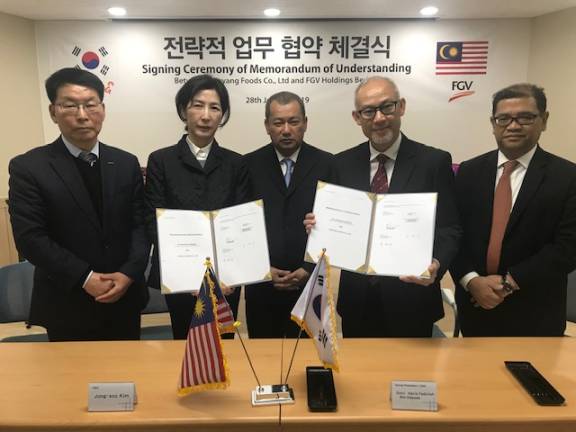
    FGV Holdings Bhd is looking to partner with South Korea’s Samyang Foods Co Ltd for the establishment of Samyang Halal’s production facilities in Malaysia. FGV told Bursa Malaysia that it had signed a memorandum of understanding (MoU) with Samyang. The production facilities will focus on serving halal ramen and instant noodle products for Malaysia and global markets.

    FGV’s newly appointed CEO Datuk Haris Fadzilah Hassan said the collaboration is part of he group’s strategic direction to expand its downstream business by diversifying the product offerings and penetrating into new markets.

    Its logistics and support businesses sector is also set to benefit from this partnership by providing a total logistics supply chain solution.

    “With this MoU, FGV hopes to explore the opportunity for both parties to establish a halal ramen and instant noodle manufacturing plant in Malaysia. The global halal food market is one of the fastest growing segments in the food industry and is expected to reach more than US$740 billion in value by 2025,” Haris said.

    FGV said the collaboration will also give FGV access to Samyang’s supply chain, which includes cooking oil, vegetable fats and sugar for its existing ramen plant in Wonju, South Korea.

    Samyang is listed on the Korean Stock Exchange with a market capitalisation of KRW459.514 billion (RM1.68 billion). It is in the business of manufacturing and selling various food products such as ramen, snacks, dairy products, sauces, and frozen dumplings.

    FGV noted that its downstream entity Delima Oil Products Sdn Bhd (DOP) can leverage on Samyang’s strong R&D and global distribution networks to improve quality and expand the reach of its “Saji” products regionally and globally.

    “In addition, DOP will benefit from Samyang’s ver 50 years’ experience in the ramen and instant noodle industry to strengthen its own products and brand positioning.”

  • Vietnam’s largest brewery, foreign-owned, refuses to humor taxman

    Vietnam’s largest brewery, foreign-owned, refuses to humor taxman

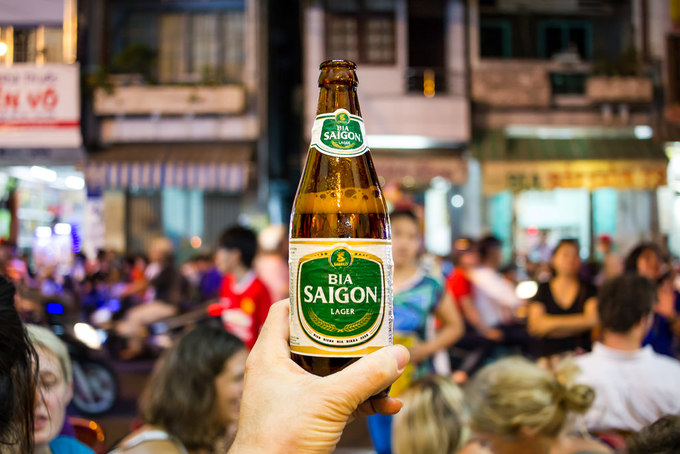
    While Sabeco is still at loggerheads with the taxman over alleged back taxes of $135.73 million, it has not provisioned for it. Its 2018 accounts make no mention of the amount in dispute though the HCMC Tax Department has claimed it owes that in taxes and fines and even tried to seize the money from the company’s bank account. Vietnam’s largest brewer, Saigon Beer Alcohol Beverage Corporation (Sabeco), claims it has accurately declared and paid taxes based on guidance from the Ministry of Finance and tax authorities.

    A month ago the department said it would seize VND3.1 trillion ($135.73 million) from the brewery’s bank account for overdue special consumption tax payable between 2007 and 2015 and penalties for administrative violations. But there was reportedly no money in the account.

    Le Duy Minh, deputy head of the tax department, said the account has been temporarily blocked.

    “We have asked Sabeco to provide details of other bank accounts, but it has not fulfilled that request.”

    Sabeco general director Neo Gim Siong Bennett said in a statement on December 30 that Sabeco had not violated any tax regulations.

    Thus, the enforcement action by the tax department was a violation of Vietnamese laws since it was taken “without a valid administrative decision” and “contradicts the written guidance issued by the finance ministry, General Department of Taxation and the city department itself.”

    Speaking about the dispute, Prime Minister Nguyen Xuan Phuc earlier this month asked the tax authorities to desist from action and wait for related ministries and other agencies to come to a decision.

    Mai Tien Dung, Chairman of the Prime Minister’s Office said that government agencies are scrutinizing the case as it involves “foreign elements.”

    Sabeco’s revenues last year rose 5 percent to more than VND36 trillion ($1.56 billion) but higher expenses and falling profits at its joint venture and affiliate companies caused its profit after tax to fall by 11 percent to VND4.4 trillion ($191 million).

    In December 2017 Thai Beverage acquired a 53.59 percent stake in Sabeco from the Ministry of Industry and Trade for $4.84 billion through a local entity, Viet Beverage (VietBev).

    Sabeco now has a 42.8 percent of the beer market, according to the Ho Chi Minh City Securities Corporation. It produced nearly 1.85 billion liters of beer last year.

  • Zen Group Thailand prepares to go public

    Zen Group Thailand prepares to go public

    Thailand’s Zen Group is planning to list an IPO to fund expansion of its restaurant chains. With designs to become the leader in Thailand’s food service industry, the company plans to sell 75 million shares in the firm. The proceeds are expected to fund new restaurants in both domestic and international markets, as well as improving existing venues and increasing efficiency.

    While the Japanese-themed chain Zen is the group’s best-known chain, it also operates a string of Thai-branded restaurants including Tummour and Khiang, along with Japanese brands Aka, Musha, On the Table, Vietnamese chain IWO Pho and a Singaporean-style Granny’s Chicken Rice.

    “This year, we plan to add 36 of our owned branches and 87 franchise branches, and in 2020, we plan to expand by a further 50 of our owned branches and 175 franchise branches”, said CEO Boonyong Tansakul.

    The group expects its total revenue to reach THB10 billion (US$315.55 million) by 2022.

    “In the past two years, the group has invested in the management system within the organisation, including increasing personnel and investing in information systems to support business expansion both domestically and internationally”, said Tansakul.

    “This has led to increased administrative expenses, but the result is that at present the group stands ready to expand business and can use the support base that it had prepared beforehand to fully support growth”.

  • International Food Business: Current scenario and future in India

    International Food Business: Current scenario and future in India

    The misconception about Gourmet Food in India is amazing. There are many who equate gourmet with imported food, which is far from the reality. To encapsulate what the concept of gourmet is all about, let me say that it is less about the food than about the person who is the subject of the word. The term and its associated connotations are used positively to describe people with a refined taste and passion towards food.

    Add the word gourmet to any food or drink and, voila, it feels fancier, more upscale and generally more desirable. Gourmet food connotes food and drink that takes extra care to make or acquire. Gourmet food has a certain flair around it as it is usually found or made only in certain locations. The ingredients used are usually exotic, hard to find in regular grocery stores, and they are usually unique in flavor and/ or texture. Gourmet ingredients usually blend herbs and spices in an interesting manner to add flavour to the food. For example, lemon olive oil spray, black truffle balsamic glaze, and white wine vinegar are a unique take on the otherwise simple ingredients.

    Being an advocate of international food business for over 20 years now, I have seen the F&B sector in India go through various highs and lows over the years. But the one thing that I can say with absolute certainty is that the gourmet food category in the country has a tremendous scope and potential to grow in multiple areas, many of which still remain a virgin territory for food companies wanting to explore the business of international foods. We have been working diligently to bring new and exciting global gourmet food brands from all around the world to India. We have built our reputation through a commitment to offer unique products at competitive prices and we strive to never compromise on the quality of products or services that we offer. It is a passion for many of us who function in the realm of international food business and we aim to bring diversity to our Indian consumer base.

    Two-Way Trade is the Key to Future

    We firmly believe in two-way trade and in the current globalized world, it is a grave mistake to keep our consumers deprived of food options and opportunities available elsewhere in the world – from gourmet cheese to epicurean chocolates to the varieties of rice or spices or fresh fruits or exotic vegetables. The list is never ending and we must continue to explore to make it even more expansive. Unfortunately, our trade figures have been none too encouraging on this count. In the calendar year (CY) 2016, India exported consumer foods worth US$ 11 billion and imported consumer foods valued at US$ 4.25 billion. While our exports grew by 0.50 percent over the previous year, imports showed a decline of about five percent.

    The low takeoff of international food in India is surprising considering that there are quite a few success narratives around it: Italian pasta, Vietnamese basa, mayonnaise, Californian almonds, Canadian canola oil, Chileans walnuts and Washington apples, to name a few. When we look at Italian pasta, considered to be one of the most gourmet ingredients in Italian cuisine, the product is widely available in the country – from hand made to artisanal to commercially made – and it has penetrated the deepest corners of the Indian market with extensive marketing, transforming the kitchens of the aspirational Indians.

    A commodity like Californian almonds, which has about 80 percent of almond market share in India, touched a whopping US$ 693 million sales figure in India for 2016.

    For imported foods to expand their consumer base in India, it must be kept in mind that Indian consumers are rational shoppers who want value for money.

    Obviously, there is no one-size fits-all concept for a country as big as India but to have a deeper market penetration it is important to learn from the market leaders and try to do things the right way. Many of us confuse India with China, which is just not the case as the Indian market has its own set of business dynamics and consumption patterns here continue to evolve and offer valuable lessons in business.

    Teething Issues and Role of Associations like FIFI

    While on the one hand, we are facing teething issues like those associated with demonetization or Goods and Service Tax (GST), on the other hand, we also have government agencies like the Food Safety and Standards Authority of India that is willing to think out of the box and listen to the version of the trade side. We, at the Forum of Indian Food Importers (FIFI), have given numerous representations to Government of India and are pleased to note that several of our suggestions have been entertained as we always had a logical and scientific presentation to make. We still have some pending areas of concerns but are pretty confident that the regulator and trade will be able to come together on a common ground in the interest of the greater good of the food industry and consumers. Food safety is of utmost priority for us and, as industry representatives, we want global suppliers to understand the fact that Indian consumers have become very demanding and want only quality products. We are clearly out of the era when international companies looked at India as a not very important market for their food products. For many global food companies, India is now a critical country for doing international trade.

    Government’s Initiatives

    The Food and Beverage sector is governed by several Government of India agencies like Ministry of Health’s Food Safety and Standards Authority of India (FSSAI), Ministry of Food Processing and Industries (MoFPI), Ministry of Consumer Welfare, Food and Public Distribution, Ministry of Agriculture, Ministry of Commerce and Industries, and Ministry of Finance.

    With Government of India’s “Make in India” campaign, MoFPI aims to boost growth in the food processing sector by leveraging reforms such as 100 per cent foreign direct investment (FDI) in marketing of food products and by offering various incentives at the central and state government level along with a strong focus on supply chain infrastructure.

    – Government of India has relaxed foreign direct investment (FDI) norms for the sector, allowing up to 100 percent FDI in food product e-commerce through the automatic route.

    – FSSAI plans to invest around Rs 482 crore (US$ 72.3 million) to strengthen the food testing infrastructure in India, by upgrading 59 existing food testing laboratories and setting up 62 new mobile testing labs across the country. Additionally, FSSAI has been aggressively introducing numerous notifications pertaining to imported Food and Beverage category.

    – The Indian Council for Fertilizer and Nutrient Research (ICFNR) will adopt international best practices for research in the fertiliser sector, which will enable farmers to get good quality fertilizers at affordable rates and thereby achieve food security for the common man.

    International Chains Entering Indian Market

    With India opening the doors to numerous international restaurant chains, the youth is able to break the tradition and try several new international cuisines. This exposure is generating employment, changing the F&B scenario in India, bringing in international business practices, world-class technology, standard operating procedures and opening the way for trade. These chains buy imported ingredients or products to get a marketing edge or when such ingredients are not available domestically. They are able to lead the way for upscale manufacturing in the country and create more avenues for employment. It is important for us as an industry to understand that our strategy should be to grow hand-in-hand with these international chains and to open more ways for doing business with all stakeholders. Some of these chains, which already have a sizable market presence in India, are Chilli’s, Barista, Café Coffee Day, Au Bon Pain, McDonald’s, Subway, KFC, Starbucks, Tacobell, among others.

    Market Size Growing Despite all Odds:

    Despite numerous challenges such as high base tariffs and the fallout from the implementation of new regulations like demonetization and GST, the Indian market for imported and international foods is showing a noticeable growth trend. India is emerging as a favorite market destination for many national and international players in the food business. The Indian foodservice sector is valued at US$ 48 billion and is anticipated to grow to US$ 77 billion at a Compound Annual Growth Rate (CAGR) of 10 percent by 2021. The Indian food and grocery market is the world’s sixth largest, with retail contributing 70 percent of the sales. The Indian food processing industry accounts for 32 per cent of the country’s total food market, is one of the largest industries in India and is ranked fifth in terms of production, consumption, export and expected growth. The Indian gourmet food market is currently valued at USD 1.3 billion and is growing at a CAGR of 20 percent. India’s organic food market is expected to increase three times its current size by 2020.

    The online food ordering business in India is in a nascent stage but has a huge potential and a promising future. The online food delivery industry grew at 150 percent year-on-year with an estimated Gross Merchandise Value (GMV) of US$ 300 million in 2016.

    Emergence of Social Media

    We should not underestimate the role of the new generation bloggers and social media enthusiasts who are instrumental in shaping the trends and are helping brands and products to get visibility and gain popularity with the consumers. They are emerging as an alternative to the traditional media and are a less expensive media tool. However, they also act as watchdogs of quality and standards for the foodservice industry. Social media is helping to generate exciting stories around the foodservice industry but at the same time, we need more honest voices that understand the food business and its nuances better.

    Traditional Marketing Avenues Still Hold True

    While new marketing tools are becoming popular, the traditional methods should not be considered obsolete as they continue to have deeper penetration and visibility. Participation at trade shows and conferences, print and electronic media activities continue to rule the game and offer a range of visibility without comparable alternatives.

    Way Forward for the Imported F&B Industry

    The Indian consumers represent a community of diverse sentiments. A majority of them favour an experimental palate, which creates a plethora of opportunities for the international F&B sector in country. While maintaining a balance between aspiration and tradition agrees perfectly with the Indian palate, culinary trends originating in the West are promptly picked up by Indian social media and are translated on the ground with an instant recognition. The earlier practice of trends coming to India after three to five years of introduction in the Western world is now a thing of the past. This willingness to accept international trends without any inhibition has played a pivotal role in the marketing of international brands in India and has opened up the entire market for international foods. As a result, recent years have seen the launch of numerous new categories like gluten-free breads, organic chocolates and many others products in country. However, as mentioned earlier, it is important for us to ensure quality delivery to our consumers and adhere to the food safety regulations. We need a more organized voice in trade to echo the this message and to take the India story to many more global markets.
  • Gourmet Investments brings Ministry Of Crab to India

    Gourmet Investments brings Ministry Of Crab to India

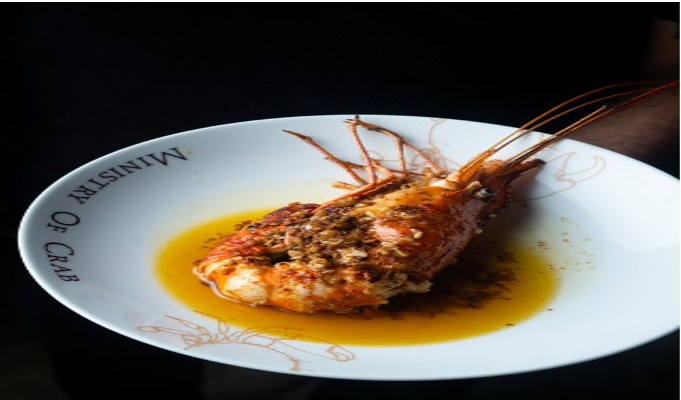
    Gourmet Investments Pvt. Ltd brings Mumbai’s most awaited launch of the year with the unveiling of Ministry Of Crab’s first-ever outlet in India. The grand launch of Sri- Lanka’s beloved restaurant is scheduled to take place at Zaveri House, Khar, Mumbai. Ministry Of Crab is the brainchild of celebrated chef and restaurateur Dharshan Munidasa in partnership with Sri Lankan cricket legends Mahela Jayawardane and Kumar Sangakkara. With its exemplary services and menu, Ministry Of Crab has safely secured its place for 3 consecutive years in the list of Asia’s 50 Best Restaurants.

    It was incepted in Sri Lanka on December 12, 2011 in the renovated 400-year-old Dutch Hospital, where it has successfully hosted the most renowned personalities from all walks of life. A haven for food lovers, Ministry Of Crab promises an unforgettable culinary experience with an array of intensely delicious recipes.

    Replicating success from the past, Ministry Of Crab becomes the newest entrant in India’s restaurant market by joining hands with GIPL. GIPL has extended unwavering support to a veteran of several landmark restaurant launches in India with the likes of PizzaExpress, Typhoon Shelter, The Bandra Project, The Runway Project, The Market Project, and The Poona Project. Through such partnerships, GIPL is committed to expanding its portfolio in food and beverage industry.

    Commenting on the partnership, Ramit Bharti Mittal, CEO of Gourmet Investments Pvt. Ltd., said, “We are thrilled to bring Ministry Of Crab to India. It is our constant endeavor to open doors for such brands that resonate with our values and we feel there couldn’t be a better choice for us than Ministry Of Crab. We see immense potential in Indian market for Ministry Of crab and through our strategic partnership, we embark on a new journey to deliver the best-in-class dining culinary experience to our customers.”

    Deepinder Batth, COO of Gourmet Investments Pvt. Ltd., says, “We envision transforming the gastronomic landscape of the country and with the launch of Ministry Of Crab, we feel we are moving towards that direction. MOC has received an exceptional response from food lovers in Sri-Lanka and Shanghai and we are excited to welcome the outlet in our country.”

    On coming to India, Chef Dharshan Munidasa says, “We are looking forward to working with Indian chefs in the country. As our delectable recipes are curated to perfection, we are sure the restaurant is slated to be an ultimate dining destination. We are happy to have partnered with Gourmet Investments, as they have shared our value system and are committed to bringing the DNA of Ministry of Crab to give our guests an authentic experience.”

  • Jollibee to sue Chinese copycat

    Jollibee to sue Chinese copycat

    Jollibee Foods has confirmed it is taking legal action against a copycat restaurant in China. A recent Facebook post which went viral featuring the Chinese restaurant – named JoyRulBee – drew much attention among internet users in the Philippines, after a Filipino couple travelling in Guangxi spotted the the familiar mascot and documented the knockoff.

    Pictures and a video showed that both the exterior and interior of the restaurant were close copies of the Jollibee brand, while the menu was also markedly similar.

    Jollibee’s response to the post indicated the firm was already aware of the existence of the copycat restaurant and has initiated legal proceedings to protect its trademark.

  • Revealing Subway Hong Kong’s new strategy

    Revealing Subway Hong Kong’s new strategy

    Subway Hong Kong has chosen a university campus to launch the first of its new-generation store concepts in Greater China. The Fresh Forward restaurant decor marks a modernisation for the iconic made-to-order sandwich chain which with a new development office in Hong Kong and Macau is achieving same-store annual sales growth of more than 20 per cent. The new development office management team, comprising CEO Christel LeBrun, GM Jamie LeBrun and director Mark Rutherglen have more than 50 years of Subway experience between them.

    Subway Hong Kong’s new Fresh Forward restaurant opened on level 3 of City University’s Lau Ming Wai Building in late August. It takes up a 900sqft site and seats 30 guests, making it one of the largest Subways in Hong Kong and Macau. The larger footprint is representative of the new development office’s strategy to develop the brand on a larger scale, unlike the smaller kiosk-style locations opened in the past.

    During the grand opening the store served more than 1300 customers, fulfilling 200-plus orders an hour during peak lunch periods. “Last year, we focused a lot of energy on better service, fresher products and cleaner restaurants,” said Christel LeBrun. “The way in which our sandwich artists and managers handled the volume on opening day is a testament to how far the operations have come in 12 months.”

    Subway Hong Kong expects that by the end of this year half of its outlets across the two territories will be remodelled to the new concept which Jamie LeBrun describes as “Subway stepping into the 21st Century”.

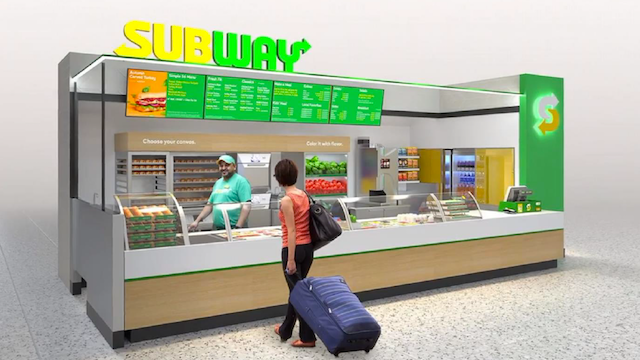
    Features of the new look include digital and interactive menu boards that have a more product-focused design and are controlled centrally via a content-management system.

    New fresh-vegetable and bread displays show customers how the chain’s products are prepared fresh in store each day.

    Brightly coloured furniture and eye-catching graphics on the walls create a more welcoming and “fresh” environment for dine-in customers, who can enjoy the convenience of power points for laptops and USB charging ports to recharge smart devices.

    “Our customers want good food, better value and clean restaurants. And we’re giving them that,” said Jamie LeBrun.

    Michael Kyprianou, director of development with Subway Hong Kong and a part owner of the City University store, describes the new concept as “an absolute game changer”.

    Future Fresh Forward stores in the two cities will be set up to cater better to online ordering.

    “With the move towards services like Deliveroo and Foodpanda, we have redesigned the back of house so where we have a prep bench, you can lift it up and you’ll have a salad bar so you can assemble orders at the back of the store for delivery,” says Jamie LeBrun. “So when orders are coming in online during peak hours, someone will be out the back preparing orders and not interfering with the in-store trade.”

    Jamie LeBrun says some Hong Kong Subway stores can earn up to 25 per cent of their sales online. “That’s how big the online space is. When it’s raining, no one wants to go out and pick it up. People have got short lunchtimes too – no one wants to go stand in line.”

    Menu evolution

    A major part of Subway’s success last year was a revamped menu which Jamie LeBrun says will continue to evolve to reflect local tastes and feature ‘limited-time offers’.

    “Product innovation is the cornerstone of future success for our business.”

    An avocado promotion in stores last year with three popular combinations – Roast Chicken and Avocado, Bacon and Avocado and Turkey, Bacon and Avocado – achieved sales 200 per cent higher than forecast.

    This year, Subway Hong Kong promises a new product every six weeks, including limited time offers such as Black Pepper Beef, Shrimp and Avocado and Rotisserie Chicken sandwiches.

    “Currently in restaurants you will find a Japanese Curry Chicken that offers a great warm flavour for these colder months,” says Christel LeBrun.

    Late last year, the company expanded the core menu offer adding coffee to new restaurants through a partnership with Kolb, offering fair-trade coffee beans and fresh milk in hot or cold drinks made in store.

    This year, Subway Hong Kong plans another menu-centric initiative called ‘restore the core’ – the first part of this initiative will be an analysis of existing items and optimising the menu based on what is popular and what can be removed. The second part is then to improve on the products left on the menu.

    Also this year, Subway will be more engaged in the community by sponsoring major ‘active lifestyle and sporting’ events around the territory to boost its profile and make consumers aware of its new outlet design and menu.

    “We are looking at a few events that complement the Subway brand to partner with this year, we are eager to get back into the event space and engage more with our customers,” says Jamie leBrun.

    On World Sandwich Day the company plans to launch a promotion with proceeds donated to those in need via the St James Settlement in Hong Kong. “A number of restaurants were doing 130 sandwiches an hour, every hour for eight hours on the day last year,” says Christel LeBrun.

    Franchisee search

    The development office has several new outlets scheduled to open during the next six weeks, including a new Fresh Forward outlet on Hollywood Road, Central.

    New franchisees are being sought to to help expand its store network now the brand has revamped its decor and upgraded its menu.

    “We are looking for new franchisees that are team players to help grow the brand in the right way,” explains Christel LeBrun.

    “People that are looking to own their own business or be their own boss. Training is provided so it doesn’t matter what background they come from. We have doctors, lawyers, graduates, teachers, parents and everyone in between,” adds Jamie LeBrun.

    Four new franchisees joined last year with another 10 sought this year with the longer-term goal to have 100 outlets in the two territories within 10 years.

  • Dhaba restaurant opens its 10th outlet in Aerocity India

    Dhaba restaurant opens its 10th outlet in Aerocity India

    Dhaba Estd 1986 Delhi by Azure Hospitality is all set to land itself at Delhi’s posh new Aerocity. The award winning deliciousness carries forward the thirty year legacy as it stamps another one at Delhi’s most favourite leisure destinations, The Walk at Aerocity. At Dhaba Estd 1986 Delhi, one not only experiences fabulous Dhaba food but from the moment the patrons enter till the time of their exit, the ambience recreates unparalleled highway eatery nostalgia. Given a shot of new age fun and kitschy interiors with the legendary classics on the menu along with some nouveau beauties – Dhaba is set to recreate the same magic again – but with more full-on Punjabi flair.

    “Keeping the drama to a minimum, we plan another Dhaba, where food is the king yet again. We are thrilled to share that Delhi’s prime food, beverage and leisure destination Worldmark at Aerocity is about to get struck with Dhaba’s dildaar Punjabi love that has been warmly accepted in Delhi NCR, Pune, Chennai, Hyderabad and Bangalore. Aerocity restaurant marks the tenth outlet for us after five successful years across the country. The response has always been heart-warming and we look forward to the same yet again,” say Rahul Khanna and Kabir Suri, Directors, Azure Hospitality.

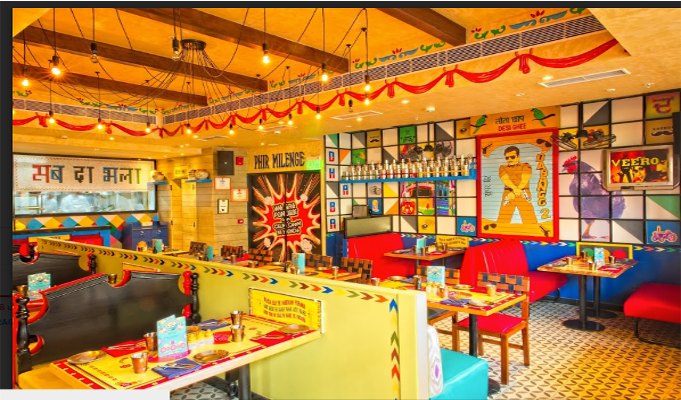
    Dhaba comes in a new avatar with signature kitschy quirk, vintage collages and retro Indian décor of the 80s and 90s, and use of popular Indian weaving techniques in ikat fabrics. Designed by Atul Anand, this 52-seater outlet showcases environmental friendly décor using recycled elements and community tables for group seating. The ambience effortlessly infuses the excitement of a highway meal; and in fact, takes it up a fair few notches! The creative chaos of colours, quirky desi quotes, revival of vintage black and white Bollywood posters and the signature truck art adds to the overall dining experience. The mood of the restaurant is further enhanced by the mock façade of a building, which is designed like a small town.

    With a crafted legacy of over 30 years, the real highway magic always takes place in the kitchen. With a legendary classic Indian menu divided into three drooling parts – the Tandoor, Tawa and Patila, food at Dhaba will be a true showstopper amongst corporate and tourists visiting the location. Chef Ravi Saxena expertly helms the Dhaba kitchen chronicle, reconditioning its fabled signature recipes bringing forth the best of highway cuisine and North Indian cuisine concepts. With signature recipes since 1986 and the new experimental highway specials, there are a whole lot of new and signature dishes for everyone to try.

    The food menu is inspired by travels down the highways of India and the eccentric by-lanes of old towns famous for unique age-old recipes. In addition to the age –old classics, the new menu experiments with newer flavours showcasing Highway specials, not only from Punjab but from all over the country. The essence and soul of Dhaba is Punjabi, however a whole range of regional dishes are now available for indulgence.

  • How technology is revolutionising the foodservice industry

    How technology is revolutionising the foodservice industry

    We are at the beginning of the most radical transformation of the foodservice industry. Until now, technological innovations in the industry meant ordering food from an app or paying bill through tablets. But now restaurant owners are upping the ante, taking the game to the next level by experimenting with technology like never before. From introducing interactive smart tables and virtual bars to replacing servers with robots, restaurateurs are revolutionising the foodservice industry in the best way possible to enhance the overall customer experience.

    Interactive Smart Tables

    Mumbai-based Drinx Exchange has introduced electronic tech tables, where customers can interact with an electronic screen on the table they’re dining on. From watching live scores of sports, to receiving personalised offers, tracking their orders, paying their bill, and even singing along with the music in the bar, these tech tables will ensure consumers remain engaged through the time they’re in the restaurant. The screen also keeps giving them live offers that are just right for what they drink.

    The electronic table also splits the bill among the number of diners on the table and the payment can be settled on the table itself by scanning a Paytm QR Code on the screen

    Furthermore, the prices of drinks also fluctuate just like the stock exchange and customers can vote to crash the market price. Apart from this, the table also helps the customers in checking the status of their cab if they book it from Drinx Exchange app.

    According to Founders, Drinx Exchange, Rahul Dingra and Dibyendu Bindal, “The bar aims to ease the experience of ordering and makes it less stressful and more exciting for its millennial customers.”

    Virtual Bar

    The Beer Café has recently introduced ‘URBAR’, a virtual bar which allows patrons to reserve and consume their favourite brands.

    One can explore from a wide selection of alco-beverage, pre-pay and stock them in ‘URBar’. The latest ‘wallet for customer’s drinks’ initiative highlights the brand’s vision to redefine the alco-beverage space through technology differentiation and further strengthen its position as a pioneer.

    The patrons can log in to The Beer Café’s mobile app, and click on the URBar icon, reserve in the form of bottle (for spirits), keg (for draught beer), or case (for bottled beer) and start consuming.

    This not only gives patrons the privilege to buy their favourite brands at a special price but also benefits in the form of one price across the nation. A consumer can choose any portion he/she wishes to consume at any Beer Café outlet spread across 12 cities and save the rest for their next outing. The bottle/ keg purchased stands as a prepaid instrument and stock diminishes as the consumer opts to consume.

    There are multiple convenient ways of recharging the account. Customers can use an ‘online’ mobile wallet to add balance to their brew bucks – which is The Beer Café’s own currency. Or ‘pay at store’ by just walking into the closest The Beer Café outlet and the brew crew will be happy to assist the customers.

    What’s more, it also gives patrons the option to spread the cheer around by gifting customisable amounts of their reserved stock to friends, family and colleagues.

    Rahul Singh, Founder & CEO, The Beer Café says, “At The Beer Café, we believe that social drinking should first and foremost be about the experience. Our focus is to improve customer’s real world experience, their choices of brand and location. With the URBar feature, we are giving the users a chance to experience our differentiated proposition in the virtual realm. It is a delightful addition to the existing feature on The Beer Café mobile app. With this initiative we have raised the bar – quite literally!”

    Futuristic Robot

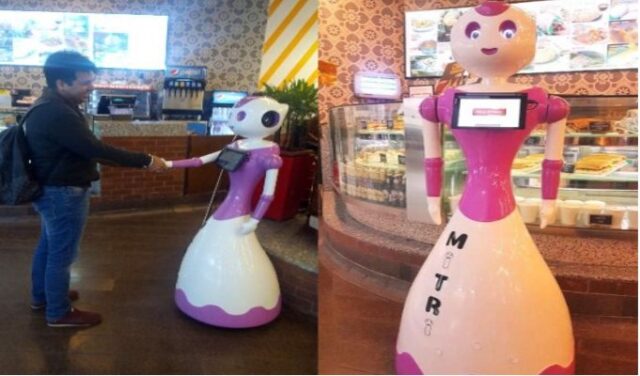
    Travel Food Services (TFS), travel food and retail company, unveils the latest in technology – Mitri, the robot, to make the experience of travellers interactive and fun.

    Mitri will be engaging with customers at TFS’s Dilli Streat outlet at Indira Gandhi International Airport, New Delhi, and is the first ever airport installation in the F&B segment.

    Visitors to the Dilli Streat outlet will be met and greeted by Mitri, who will facilitate activities and engage with them by providing menu detail. It would also be offering food recommendations. Mitri is a testament to Travel Food Service’s commitment of enhancing the travel experience in India, and presents a true example of how technology like Artificial Intelligence can help improve customer satisfaction, and drive productivity and sales.

    Commenting on the latest technology, Gaurav Dewan, COO and Business Head, Travel Food Services said, “We are always on the lookout for latest innovative technologies that can enhance the experience and satisfaction of our customers. We are extremely excited to present Mitri at our Dilli Streat outlet at the Delhi Airport. With Mitri being such an innovative and futuristic concept, and given her success, we are hopeful to bringing her to more outlets across India.”

    Robots Replacing Servers

    At a restaurant in Alibaba Group Holding Ltd’s futuristic ‘FlyZoo’ hotel, tall capsule-shaped robots deliver food that guests have ordered via the FlyZoo app. Meanwhile, at a separate bar, a large robotic arm can mix more than 20 different types of cocktails.

  • Pizza Hut India betting big on delivery in 2019

    Pizza Hut India betting big on delivery in 2019

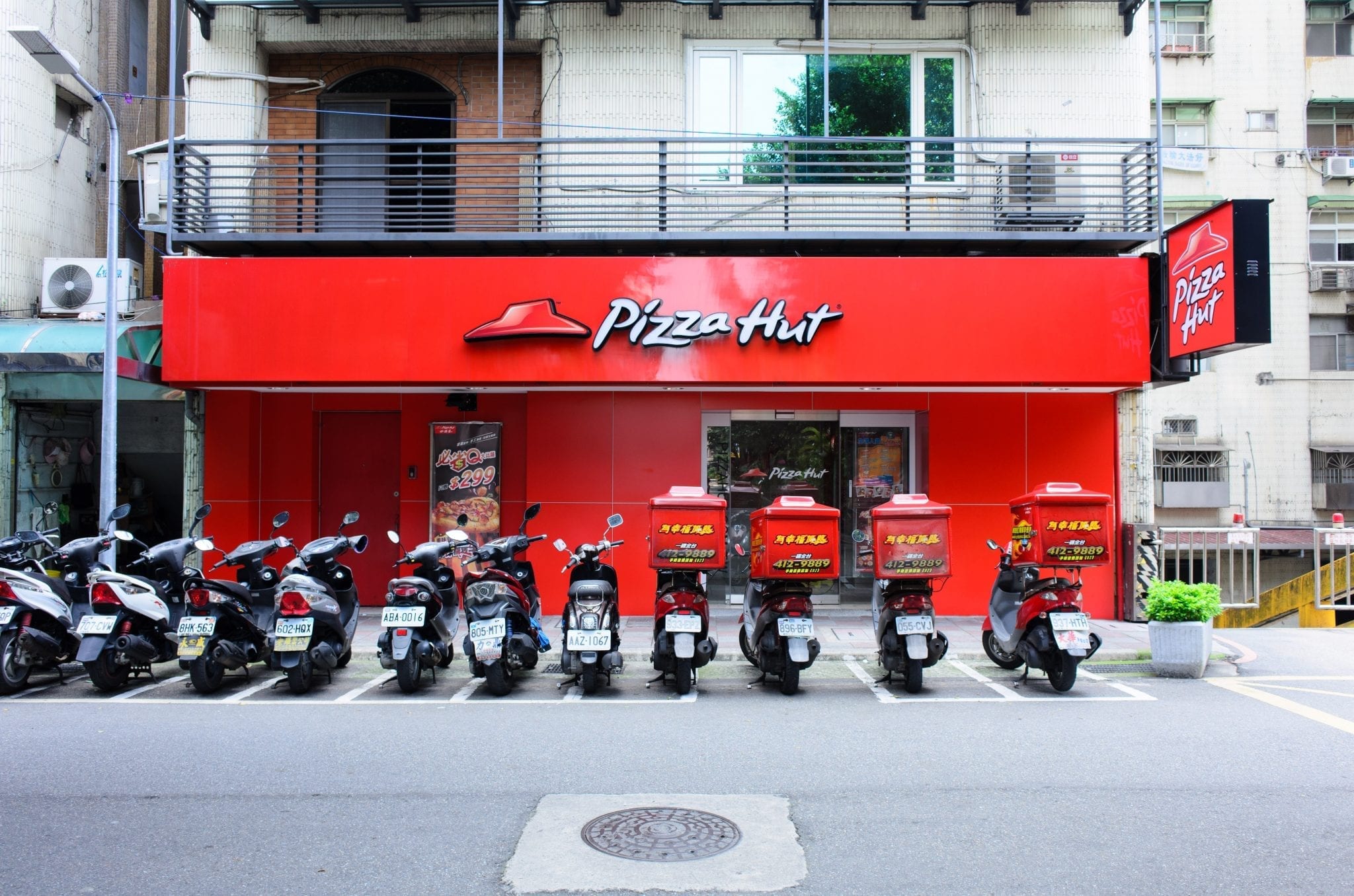
    Pizza Hut India has announced that the company will focus on delivery as a key driver of business growth in 2019 and introduce various initiatives to further enhance the delivery experience for consumers. Coherent with this aim, the brand has launched a rider tracking feature across its digital ordering platforms – mobile-site, mobile app and desktop site. The feature is available across all cities where Pizza Hut has delivery services.

    The rider tracking feature has been launched by Pizza Hut as a solution based on key behavioral findings of the brand’s large consumer base, majority of whom are tech-savvy, on-the-go millennials. The findings have shown that consumers choose brands which adapt to their lifestyle, understand their preferences and enable them to take charge. Also, with changing consumer habits, pizzas have evolved from being a special occasion treat to becoming a part of everyday food consumption in India. Therefore, hassle-free and seamless food ordering and delivery experience has become a vital deciding factor, apart from taste and quality. Rider-tracking is an enabler of the convenience that consumers are seeking, further bolstered by value offers.

    Commenting on the launch of the feature, Prashant Gaur, Chief Brand and Customer Officer, Pizza Hut India Subcontinent said, “At Pizza Hut, we take a lot of pride in serving the freshest and the tastiest pizzas to all the pizza lovers in the country. Apart from great taste, elevating the overall experience across every consumer touchpoint is our biggest focus, and we are implementing this strategy through initiatives like rider tracking feature and value offers. We are confident that these initiatives will further enable us to stay relevant and blend even more seamlessly into the daily lives of our consumers.”

    The upscaling of the delivery channel comes at a time when Pizza Hut India Subcontinent has achieved strong business results with 10 successive quarters of positive Same Store Sales Growth. The brand has been steadily expanding its physical store footprint and launched its 500th physical store in the Indian Subcontinent. Pizza Hut also pioneered the Fast-Casual Delco (FCD) concept in India, which offers a seamless integration of dine-in, takeaway and delivery channels, all under one roof. The company recently upgraded all its digi-tech assets including the website, m-site and mobile app. These initiatives have enabled Pizza Hut to deliver on the promise of providing the easiest, fastest and the tastiest pizza experience to consumers in India. As a result, Pizza Hut has been voted the most trusted brand in India for the 12th time in a row (as per a reputed media house) and was awarded the prestigious EFFIE Gold in the Foods and Confectionery category in 2018 for its outstanding consumer-centric performance.

  • Unison Capital could bag US$442 million for Gong Cha deal

    Unison Capital could bag US$442 million for Gong Cha deal

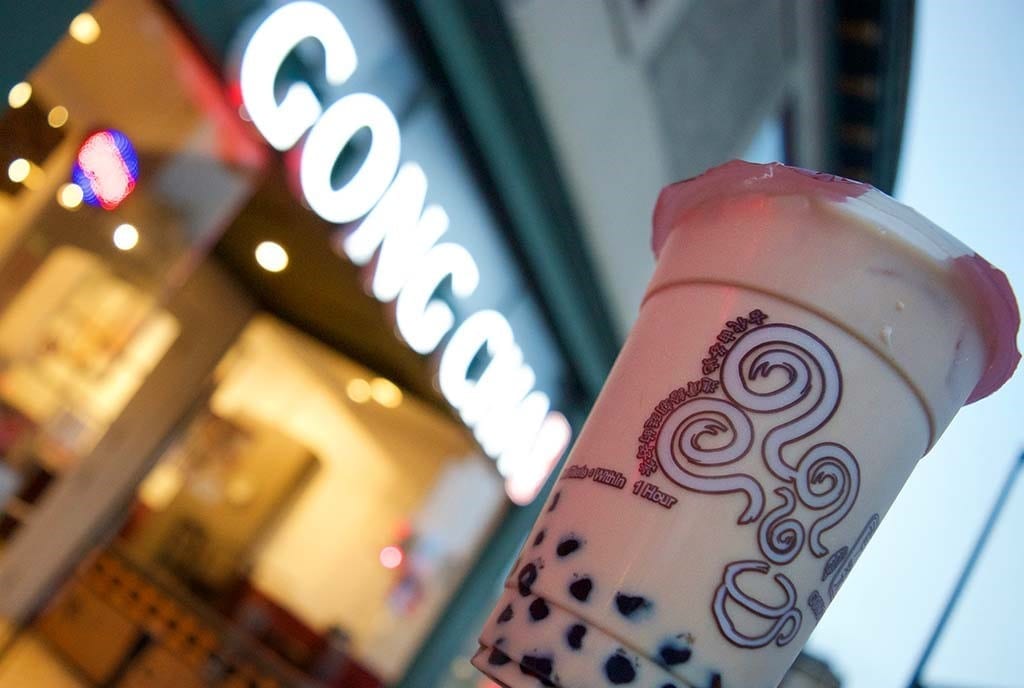
    South Korean private equity firm Unison Capital is selling its Gong Cha bubble tea franchise in a deal likely to fetch up to US$442 million. The company purchased the brand four years ago for KRW34 billion ($30 million), before taking over its global headquarters in Taiwan in a KRW40 billion ($35.45 million) deal in 2017. The brand’s HQ operates stores in 16 countries.

    The offer has attracted interest from major South Korean F&B players, considering the brand’s stable cash flows and EBITDA margin of 24–25 per cent, compared with Starbucks’ 21 per cent.

    The brand runs 448 outlets within South Korea, and derives 70 per cent of its sales from directly managed stores within Korea and Japan. The firm plans to expand its global store count from 900 to 1700 by 2021, expanding into 10 more countries during the period – with concrete plans to establish stores in the UK, Mexico, Thailand, Indonesia and Cambodia.

    Sales are forecast at KRW180 billion ($159.54 million) this year, compared to KRW134 billion ($118.77 million) last year.

  • Burger Singh India to launch 10 drive thru outlets by 2022

    Burger Singh India to launch 10 drive thru outlets by 2022

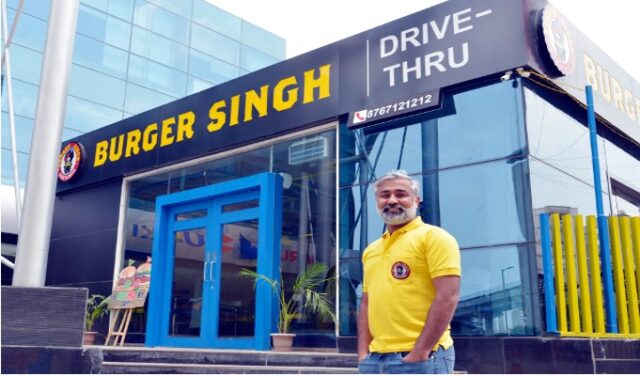
    Burger Singh, the chain of Indianised burgers, has announced its plans to invest substantially in the burgeoning concept of drive thrus, and launch 10 drive thru outlets within the next three years. Overall, the company aims to open 100 outlets in the country by 2022. Speaking on the launch, Kabir Jeet Singh, Co-founder and CEO of Burger Singh said, “Consumer experiences are evolving, and the demand for swift and efficient food outlets has been validated by the popularity of drive thrus. By 2022, over 10 percent of our outlets in the country will be drive-thru outlets.”

    Located on the Golf Course Road in Gurugram, the first Burger Singh drive thru offers swift Indianised burger feasts to the busy and rushed of the city.

    Burger Singh is the largest chain of homegrown Indian flavour burgers in the QSR category in India, with a strong presence in West & North India with 25 outlets in Delhi NCR, Jaipur, Dehradun, Nagpur and Pune. The brand has also ventured in the UK with two outlets in London and has emerged as the most popular brand of Indian burgers in the state.

    The brand has also announced its aggressive expansion plans for the next three years. The company will be hiring over 450 employees by 2020, setting up 100 new outlets.

    Kabir Jeet Singh said, “2019 is expected to be a landmark year for Burger Singh, and we are looking at growing our operations and revenues at least by double in the year. We are planning to expand our operations to more cities in India, which would demand additional manpower to manage the new outlets, and will be hiring aggressively to support our growth. Also, we need to multifold our staff in the corporate office, especially marketing, procurement and hiring teams, to keep up with the expansion, and business targets”

    “We plan to hire resources across all profiles, for delivery and outlets, pan-India and for the corporate office,” he added.

    Known for Indianizing a typical western flavour, Burger Singh specialities include the vegetarian Keema Pao, the Pao Bhaji Burger, the Malabar Express Chicken Burger & Channa Burger for the vegetarians, the Jaatputt Chicken Burger, the Amritsari Murgh Makhani Burger, the Udta Punjab Burger, the Bunty Pappeh Da Aloo Burger and the United States of Punjab Burgers in both vegetarian & non-vegetarian options, amongst others.

    The company is headquartered in Gurgaon, Haryana

  • Travel Food Services India introduces the futuristic robot – Mitri

    Travel Food Services India introduces the futuristic robot – Mitri

    Travel Food Services (TFS), India’s leading Travel Food and Retail Company, unveils the latest in technology – Mitri, the Robot, to make the experience of travellers interactive and fun. Mitri will be engaging with customers at TFS’s Dilli Streat outlet at Indira Gandhi International Airport, New Delhi, and is the first ever airport installation in the F&B segment.

    Visitors to the Dilli Streat outlet will be met and greeted by Mitri, who will facilitate activities and engage with them by providing menu detail. It would also be offering food recommendations. Mitri is a testament to Travel Food Service’s commitment of enhancing the travel experience in India, and presents a true example of how technology like Artificial Intelligence can help improve customer satisfaction, and drive productivity and sales.

    Commenting on the latest technology, Gaurav Dewan, COO and Business Head, Travel Food Services said, “We are always on the lookout for latest innovative technologies that can enhance the experience and satisfaction of our customers. We are extremely excited to present Mitri at our Dilli Streat outlet at the Delhi Airport. With Mitri being such an innovative and futuristic concept, and given her success, we are hopeful to bringing her to more outlets across India.”

  • Taoyuanming Shanghai tests automated stores

    Taoyuanming Shanghai tests automated stores

    Swedish-Chinese firm MobyMart is expanding its automated store format in China in collaboration with Shanghai fruit retailer Taoyuanming. Two stores are operating, one in Hefei and one outside Shanghai. While expansion in the region is the firm’s priority this year, its long-term sights are set on Europe and North America. According to brand co-founder Per Cromwell, MobyMart initially opened a corner-store-format mobile vending platform for coffee, which evolved into MobyMart, a mobile platform for “vending everything”.

    “We found a very visionary fruit retailer in the suburbs of Shanghai, Taoyuanming, and basically they had physical stores but they wanted to have unmanned stores,” said Cromwell.

    “We saw that we didn’t actually need to make too many adjustments to our existing system because basically what we had to do was pre-pack all the fruit — we needed to have fixed units and not have people buying by weight … and when we opened it up to the public it was an instant success.”

    The store carries around 50 SKUs at a time.

    Taoyuanming is reportedly so pleased with the results that two more automated stores are scheduled to open early this year, which may be followed by staffless stores if successful.

    The firm’s strategy is to provide a platform to small retailers.

    “If you are for instance a fruit store outside Shanghai and you want to expand from a few stores to 10 stores in your neighbourhood, then you can’t really start buying BingoBoxes because it’s quite complicated and expensive technology,” says Cromwell.

    The MobyMart model relies on customers scanning their product, while cameras and sensors serve as a back-up. This  “very simple technology” allows for opening “a lot of stores at a very low cost,” Cromwell says.

    “It won’t be 100-per-cent staffless because you still need someone circulating the store and making sure everything’s fine and restocked, but one person in one day can operate eight to 10 stores depending on how spread out they are. So you have much more efficiency with the staff you do have.”

    He added that AI and big data will help store operators know what products will be needed at what locations and at what time.

    “If we have a request of some sort, that is something that will also solve the last mile problem,” he said.
    The whole store and system is expected to retail for around US$15,000. MobyMart also has a prototype mobile store with automated driverless vehicle capacity – although its rollout is restricted by legislation around the technology.