Category: Food

Retail News Asia is committed to providing both local and global retailers with the latest Food and Food & Beverage news throughout the Asian market. This on a daily base.

  • Godiva to Open the First Shop in Bangkok

    Godiva to Open the First Shop in Bangkok

    Months after popular ice-cream brand Ben&Jerry opened their first shop in Bangkok, looks like we will be able to continue to binge on new, sweet treats at Godiva.

    Godiva, the Belgian luxury chocolate store, announced it will launch its first shop in Bangkok at Groove, in CentralWorld.

    Selling an assortment of premium chocolates, biscuits and frappé drinks. Let’s hope they stock their famous chocolate-covered strawberries as well. Godiva has long been one of the premium edible souvenirs that Thai people buy for each other when traveling abroad.

    The opening date has not yet been confirmed.

  • Governement expects food self-sufficiency in 2018

    Governement expects food self-sufficiency in 2018

    Food self-sufficiency is expected to be realized in 2018, and there will be no imports in 2016, Vice President Jusuf Kalla asserted.

    “Food-sufficiency is expected to be realized within three years for which the efforts have started a year ago,” Kalla said here Friday.

    In order to reach the target several steps have been implemented, including improvement of irrigation methods, and seedling and fertilizer preparation, he added.

    Food security and resilience have been an issue for Indonesia for some time now. It was once a major rice exporter in Asia but is now relying quite heavily on rice imports to meet peoples staple food requirements.

    Food security is also an important social objective.

    Therefore, relying on food markets outside the country in order to meet the needs of Indonesias growing population is critical.

  • Hooters Taiwan launch marks Asian expansion

    Hooters Taiwan launch marks Asian expansion

    Atlanta-based operator and franchiser Hooters of America will enter Taiwan with five new locations.

    The Hooters Taiwan restaurants will be opened by Hooters’ Asian partner, Bangkok-based franchisee Destination Resorts.

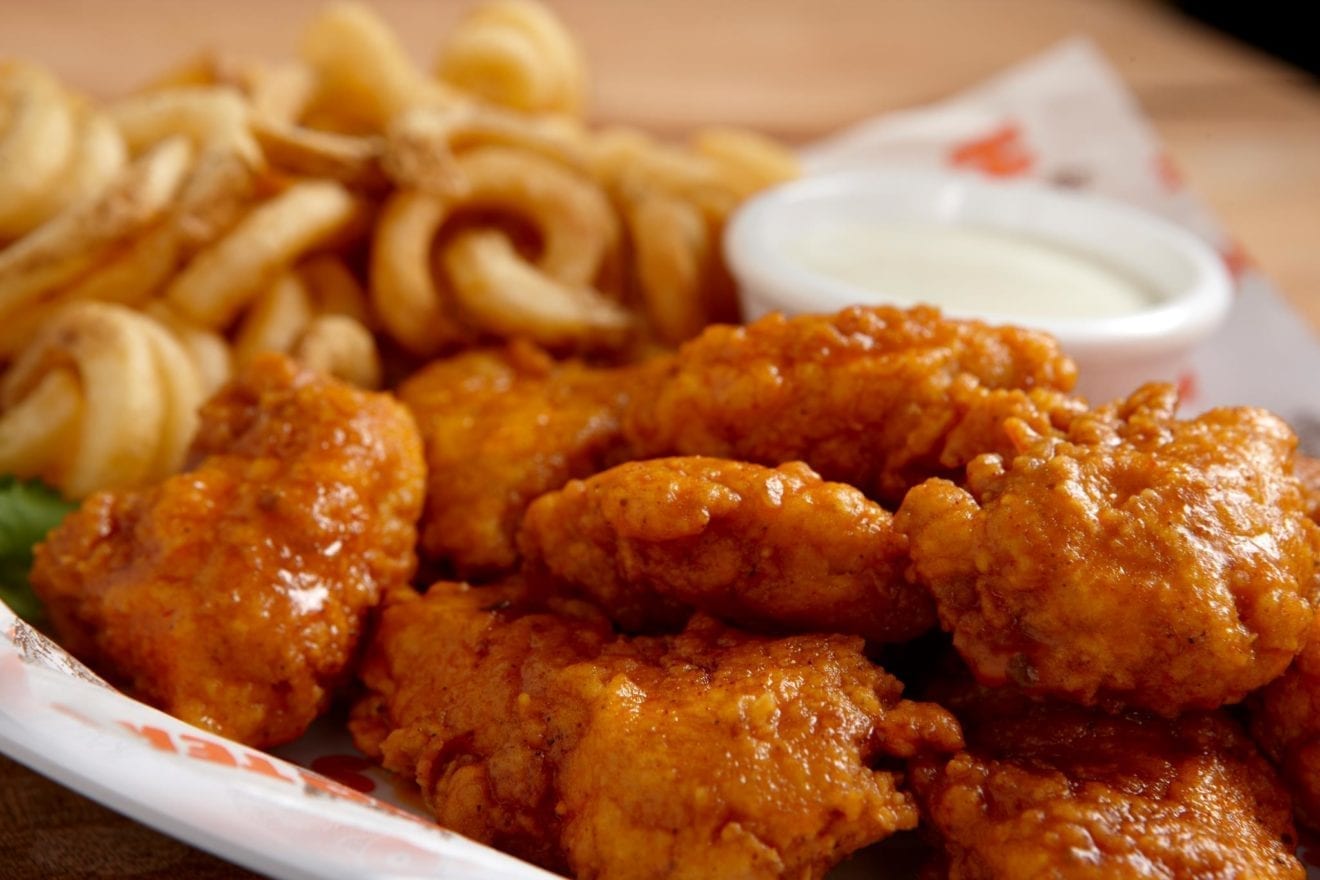
    The first is scheduled to open in Taipei, with typical menu including wings, burgers and salads. The other four will be in Kaohsiung, Taichung, Taoyuan and Tainan.

    “With existing bustling locations throughout Asia, we’ve seen proven demand for Hooters’ world-famous chicken wings served with iconic Hooters Girl hospitality,” said Gary Murray, CEO, Destination Resorts.

    hooters-hong-kong

    Hooters expects good growth in Taiwan thanks to a robust economy and strong brand recognition in the market.

    Earlier this year the franchisee opened two more Thailand locations, the largest international Hooters in Pattaya, and the nation’s fourth location in Bangkok’s Nana district.

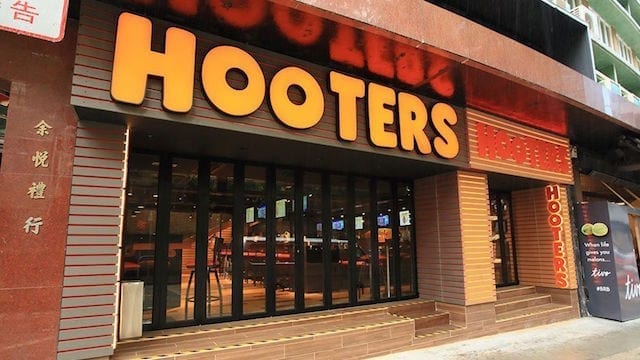
    It also recently opened the first Hooters in Hong Kong. (pictured)

    Four more are planned this year – in Samui, Thailand; Manila Eastwood in Philippines; Marina Bay in Singapore and in Phnom Penh, Cambodia.

    The new locations will incorporate the latest design features that deliver “the familiar, fun-loving persona of the Hooters brand along with contemporary elements that combine to deliver a one-of-a-kind guest experience”.

    Hooters is the franchisor and operator of more than 420 Hooters restaurants in 42 states of the US and 26 countries.

  • McDonald’s Malaysia ‘not in hurry’ to sell

    McDonald’s Malaysia ‘not in hurry’ to sell

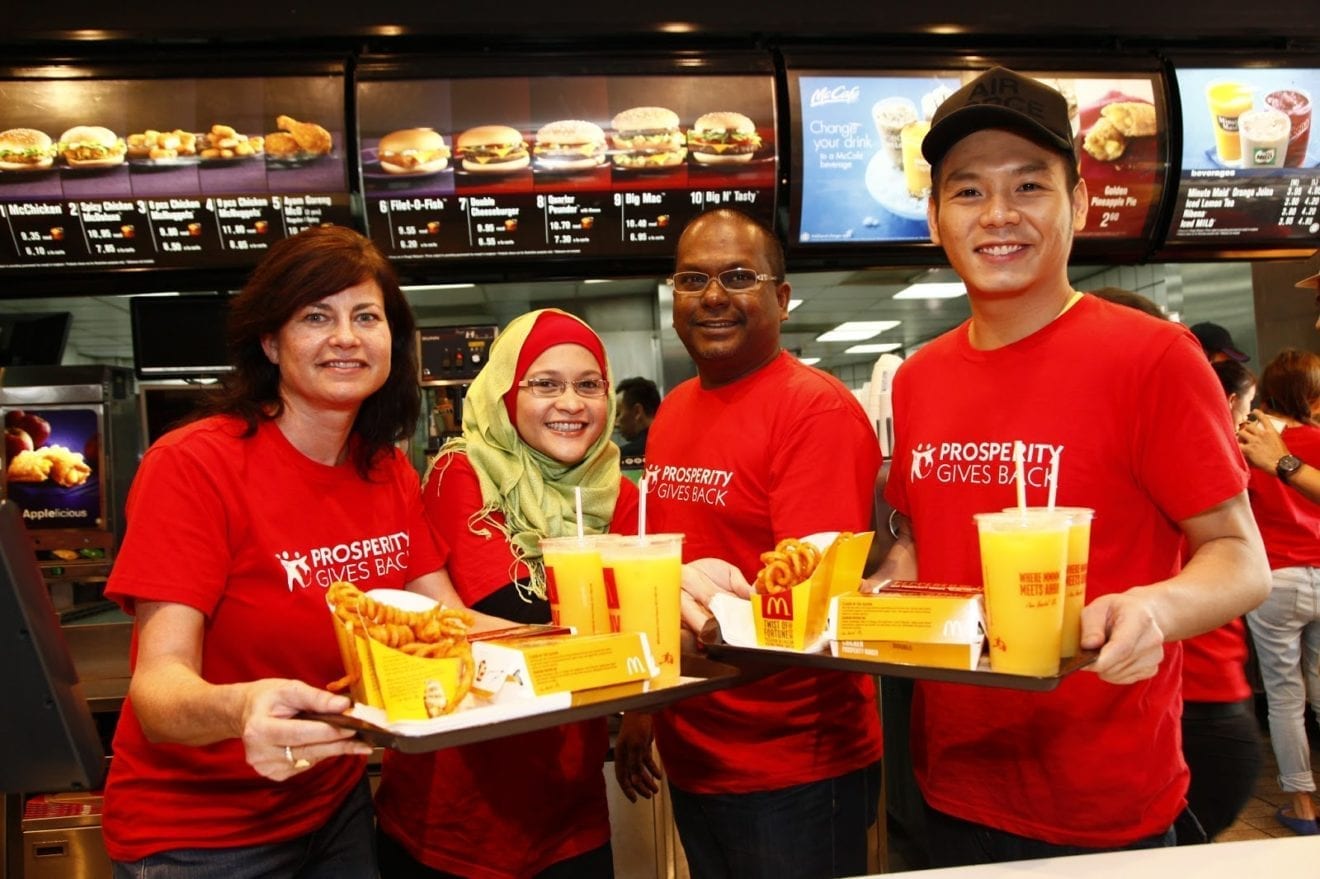
    Despite shortlisting several bidders for the McDonald’s Singapore and McDonald’s Malaysia franchise rights, Malaysian subsidiary Golden Arches Restaurants says it is not in a hurry to sell.

    MD Azmir Jaafar says the deal is being discussed with the shortlisted bidders, but no time frame has been set to complete the transaction.

    “We want to find the right partner who understands the local market and can ensure continuity of McDonald’s value and tradition, as well as be backed by strong capital.”

    He says it has always been the group’s idea to sell the franchise rights to a local partner, which would be more efficient than management by a corporate entity.

    McDonald’s Corp announced a revamp of its ownership models throughout Asia in July, including plans to offload its China, Hong Kong, Malaysia, Singapore and South Korea master franchises.

    CEO Steve Easterbrook’s plan covers about 4000 restaurants with an ultimate goal of having at least 95 per cent of the group’s restaurants franchised.

    Meanwhile, Azmir says that as the Malaysian deal is a business transaction “we will ensure the valuation is done properly”.

    “Still potential”

    There are 260 McDonald’s restaurants in Malaysia, with Golden Arches managing 200 and the rest in the hands of a third party. Though Malaysia has a population of only about 30 million people, which is relatively smaller than China and Indonesia, Azmir still sees huge potential in the market.

    “There are still many underserved areas,” he says. “As the government is improving the infrastructure in Sabah and Sarawak, I think we can expand our footprint into Kota Kinabalu and Kuching and other cities.”

    Azmir says the company intends to open 30 stores in the Klang Valley, Johor, Melaka and Penang as well as Sabah and Sarawak in the next three years. Five to seven new stores are targeted for this year, with one in Presint 2, Putrajaya, and another in Chukai, Terengganu, already open.

    “Our expansion plan is focussed on stand-alone stores as this model works very well, especially in terms of accessibility and convenience. Our ultimate goal is to have 500 stores in the country.”

    Azmir says the company also intends to renovate and remodel up to 30 outlets, each to cost about RM1 million (US$241,700). They have been open for nearly 30 years and will also have their technology upgraded.

    Combined, McDonald’s Singapore and McDonald’s Malaysia have enjoyed record sales in the past few months and is still targeting higher double-digit growth this year.

    Even following the introduction of the goods and services tax in Malaysia in April last year, Azmir says the company raised its selling prices by only about 1 per cent to offset the higher raw-material cost.
    He believes McDonald’s has captured up to 42 per cent market share in the Malaysian fast-food market.

  • Yum China has ‘huge potential’

    Yum China has ‘huge potential’

    Yum China is set to exploit “huge potential” after its spin-off from its US parent, says Neil Saunders, CEO of Conlumino.

    Commenting on the parent company’s latest results, the US-based retail commentator said  while the China division once again delivered “an anemic performance” with total system sales declining by 3 per cent over the prior year, the best is yet to come.

    Revenue at both Pizza Hut and KFC fell on a same-restaurant basis.

    “This means that in the year to date, in real terms the China operation has posted no real sales growth. Fortunately, changes to value-added tax in the country allowed Yum! to ease up operating profits across the quarter,” said Saunders.

    “The position of China as a business which has huge potential once it gets through the current patch of slow growth, largely justifies its imminent spin-off into a completely separate operation. The divorce from the rest of the Yum! operation will allow both sides to focus more on their respective priorities and opportunities.”

    He said the overall global result for Yum! Brands suggest the company is making good headway in an increasingly challenging market.

    “However, the reality is far more mixed – mostly because Yum!’s growth figures are flattered by the fact the company strips out exchange rate fluctuations. When these are put back in, total revenue experienced a shrink of 3 per cent over the prior year – a far less impressive outcome.

    “In terms of the core business, the main focus needs to be Pizza Hut which has become something of a problem child for Yum! Over the quarter system sales shrank by 2 per cent in real terms, underpinned by a 1 per cent decline in same-restaurant sales. While there are some markets in which the brand is performing well, these continues to be overshadowed by the US which accounts for the majority of Pizza Hut’s revenue.”

    Saunders said that while admittedly the overall casual dining market, in which Pizza Hut loosely falls, saw customer traffic and spend decline over the third quarter.

    “However, our data also show that Pizza Hut is losing customer share to delivery services like Papa John’s and Domino’s. A defection to cheaper fast-food alternatives, especially among younger families, has also been unhelpful. This is an uncomfortable position and underlines the fact that Pizza Hut still has much work to do in terms of reinvigorating its brand.”

    Taco Bell, meanwhile, had a better quarter with a 5 per cent system-sales growth and 3 per cent same-restaurant growth.

    “While Taco Bell has benefitted from challenges at Chipotle, in our view most of the success is down to a change in marketing which is now more relevant to the younger millennial audience. Menu simplification and focus on popular lines has also helped to drive growth. We think these steps should be seen as part of a longer term upswing in the brand’s fortune.”

    Saunders said that while KFC had a much better quarter than the previous one, especially in the US, Conlumino still harbors concerns about the brand’s longer term growth prospects as younger upstarts like Chick-Fil-A or Popeyes Louisiana Kitchen continue to gain traction.

    “As such, we see KFC’s latest upswing as part of a more turbulent longer term picture.”

  • Barry Callebaut Opens First Chocolate Factory in Indonesia

    Barry Callebaut Opens First Chocolate Factory in Indonesia

    Swiss chocolate producer Barry Callebaut has expanded its operations in Indonesia with the grand opening of its first chocolate factory in the country.

    Through a long-term outsourcing agreement with GarudaFood Group, one of the largest food and beverage companies in Indonesia, Barry Callebaut built its three-story, 43,000-sq.-ft. factory on the premises of GarudaFood’s biscuit plant in Gresik. Barry Callebaut will also supply GarudaFood with 10,000 tons of chocolate per year.

    Antoine de Saint-Affrique, Barry Callebaut’s ceo, said the new factory, which will employ 50 people, is a “cornerstone” in its strategy to strengthen its position in Asian Pacific markets.

    “It also enables us to grow our already significant presence in Indonesia — an important emerging market with about 260 million people that offers above-average growth opportunities,” he says. “We are truly excited that our strong relationship with GarudaFood and this new factory will provide GarudaFood with the means to differentiate themselves in an increasingly competitive market.”

    GarudaFood CEO Hardianto Atmadja said the partnership will give GarudaFood the opportunity to put emphasis on biscuit production, including its Gery brand.

    “The chocolate production lines at the Barry Callebaut factory allow us to focus our manufacturing facilities in Indonesia on biscuits and strengthen the factory as a key competence center for our biscuits products in Indonesia,” he says. “This move will help us to further develop our successful biscuit brands.”

    Barry Callebaut also operates chocolate grinding facilities in Bandung and Makassar, Indonesia, employing more than 500 people. The company also has chocolate factories in China, India, Japan, Singapore and Malaysia.

  • McDonald’s China Stores Could Fetch $2 Billion

    McDonald’s China Stores Could Fetch $2 Billion

    McDonald’s Corp. Chief Executive Steve Easterbrook, aiming to slim down the Golden Arches and boost profit, has turned to the market where he can do something big, fast: China.

    The Oak Brook, Ill., chain is looking to cut a deal to turn its 2,200-store empire in China—65% of which it owns and operates—into a cash machine through all-out franchising. The move, for which a partner could be determined before the end of the year, is expected to fetch between $1.5 billion and $2 billion up front from investors, people familiar with the matter said.

    McDonald’s would also rake in an estimated 5% to 7% of sales for the 20-year life of the deal. It would keep a minority stake in these far-flung stores, while slashing its operational costs and preserving capital.

    The timing of the initiative also reflects the maturing of the fast-food business in China, where McDonald’s and Yum Brands Inc.—owner of Kentucky Fried Chicken and Pizza Hut—have operated for a quarter-century.

    As big consumer chains move from the familiar streets of Beijing, Shanghai, Guangzhou and other metropolises to smaller cities, they need Chinese partners with knowledge of the country’s real estate and market demographics to know where to put new stores and how to supply them.

    “In the lower-tier cities, we want to accelerate, and a local partner would have more local wisdom and more local resources,” Phyllis Cheung, chief executive of McDonald’s China, said in an interview. “The whole idea of franchising is that you have more flexibility and speed to market—and are more able to answer to consumer needs.”

    There appears to be a healthy appetite for the deal. A clutch of at least six bidders has shown interest in a McDonald’s China franchising deal, including U.S. private-equity giantsCarlyle Group LP, TPG and Bain Capital LLC, according to people familiar with the situation.

    The three private-equity firms have teamed up with local Chinese partners, such as CiticLtd. and Wumart Stores Inc., who know local market conditions. McDonald’s is also looking to cut a similar deal with outside investors for its South Korea stores.

    In China and Hong Kong, McDonald’s is asking its potential partner to take over its more than 1,400 company-owned restaurants and build 1,300 new stores. It still has room to grow in China, the only major market where the number of Kentucky Fried Chicken stores—5,000 and counting—outstrips the number of McDonald’s stores.

    The winner will operate in a country where the novelty of burgers, fries and shakes has long since faded. It will need to find new ways to satisfy Chinese consumers demanding healthier, more upscale and personalized alternatives.

    Bessie Wang, 33 years old, began eating at McDonald’s in grade school soon after the fast-food chain entered China 26 years ago, becoming a fan of the company’s fried-chicken sandwiches.

    On a recent weekday, Ms. Wang was dining on a spicy chicken sandwich at the McDonald’s on Beijing’s Wangfujing shopping street. But her visits have declined.

    “Taste isn’t the issue; it’s health reasons,” said Ms. Wang, an office administrator. “I don’t need to go as often anymore because other restaurants offer fried-chicken dishes.”

    Sales from established McDonald’s stores in China have bounced back from a supplier issue that led to shortages of hamburgers and chicken at some restaurants in 2014. Same-store McDonald’s sales in the country shrank for four consecutive quarters before they began recovering in the middle of last year, according to figures provided on the company’s earnings calls.

    And competition is rising. Dicos, a Taiwanese-owned chain, for example, offers chicken sandwiches at more than 2,000 restaurants in China, matching the scale of McDonald’s. Another growing Chinese fast-food chain, known as Real Kung Fu, sports a Bruce Lee logo, offering bowls of Chinese noodles with beef and pork.

    The growing competition, Ms. Cheung said, is one reason McDonald’s is looking for a Chinese partner with a “deep understanding” of China’s market, rather than one that can simply bankroll new stores.

    Yum announced a similar move last year to spin off its KFC and Pizza Hut operations in China and maintain a foothold in the country through royalty payments.

    For companies such as McDonald’s and Yum, moving toward a franchise-only model in China makes sense now because the market has matured to the point where there are more people with experience running fast-food chains and fast-casual restaurants, according to Ben Cavender, director at China Market Research Group.

    “There’s a stronger talent pool, and they have the capability to operate a franchise and operate it well,” he said. “Brands are also clamoring to try to grow into new markets, and they might not be able to do it quickly by themselves, and they need help.”

  • Indonesia to reach self sufficiency in salt supply

    Indonesia to reach self sufficiency in salt supply

    The government is optimistic the country would be self sufficient in salt supply in 2017, an official said here on Wednesday.

    Agung Kuswandono, the Deputy II in Coordination of Natural Resources and Service at the office of the Coordinating Minister for Maritime Affairs said self sufficiency in salt supply is expected to be reached in 2017.

    Agung said the Marine and Fisheries Ministry has taken various steps to improve the quality of the farmers salt to meet the standards for household consumption and industries.

    He said the country needs around 4.02 million tons of salt including 2.05 million tons of industrial salt and 1.97 million tons of consumption salt.

    The domestic production is around 3.8 million tons a year including 3.1 million tons of farmers salt and 700,000 tons produced by the state -owned salt company PT Garam.

    Based on data from the Indonesian Association of Salt Consuming Industries (AIPGI), in 2015 , the country needs 400,000 tons of salt to preserve fishes a year.

    The process of fish salting generally does not use iodine although iodine is important for human health, Agung said.

    Indonesia imports salt especially from Australia to cover the deficit in domestic supply

  • McDonald’s Philippines in massive expansion plan

    McDonald’s Philippines in massive expansion plan

    The McDonald’s Philippines network is set to nearly double by 2020.

    Parent Alliance Global Group (AGI) says it will reach 500 outlets by the end of 2016 – and it plans to open another 400 restaurants between 2017 and 2020.

    The plan was revealed during a briefing of AGI’s broader plan to boost its commercial and retail businesses with a special focus on regions outside Luzon where the pace of economic growth is gaining speed.

    “We have already laid out the foundation and made significant investments across all our business segments, both here and abroad, in order to future-proof our growth,” said Andrew Tan, founder of AIG, during a shareholder briefing.

    The broader AGI retail portfolio will be expanded from 236,000 sqm currently to 633,000 sqm during the next five years, meaning an annual addition of 80,000 sqm, three times the 25,000 sqm added between 2010 and 2015.

    Expanding the McDonald’s store network nationwide will take advantage of a widespread improvement in consumer demand, he said.

    AGI president and COO Kingson U Sian described the township developments of AGI subsidiary Megaworld as “a platform for the conglomerate to take advantage of the government’s thrust to develop the provinces”.

    “These 3000 hectares that we have for 21 townships – 90 per cent of that is actually outside Metro Manila. So, clearly we are already well positioned if government develops or invests or encourages more development outside Metro Manila,” he said.

    “If growth is spurred in Visayas and Mindanao – a sleeping giant – if we can create more interest and infrastructure spending in the south, then that would obviously increase. We believe if we do it properly, maybe from 6-7 per cent we can grow at a faster clip because now we have three engines of growth,” Sian said.

  • PJ’s Coffee expands to Vietnam

    PJ’s Coffee expands to Vietnam

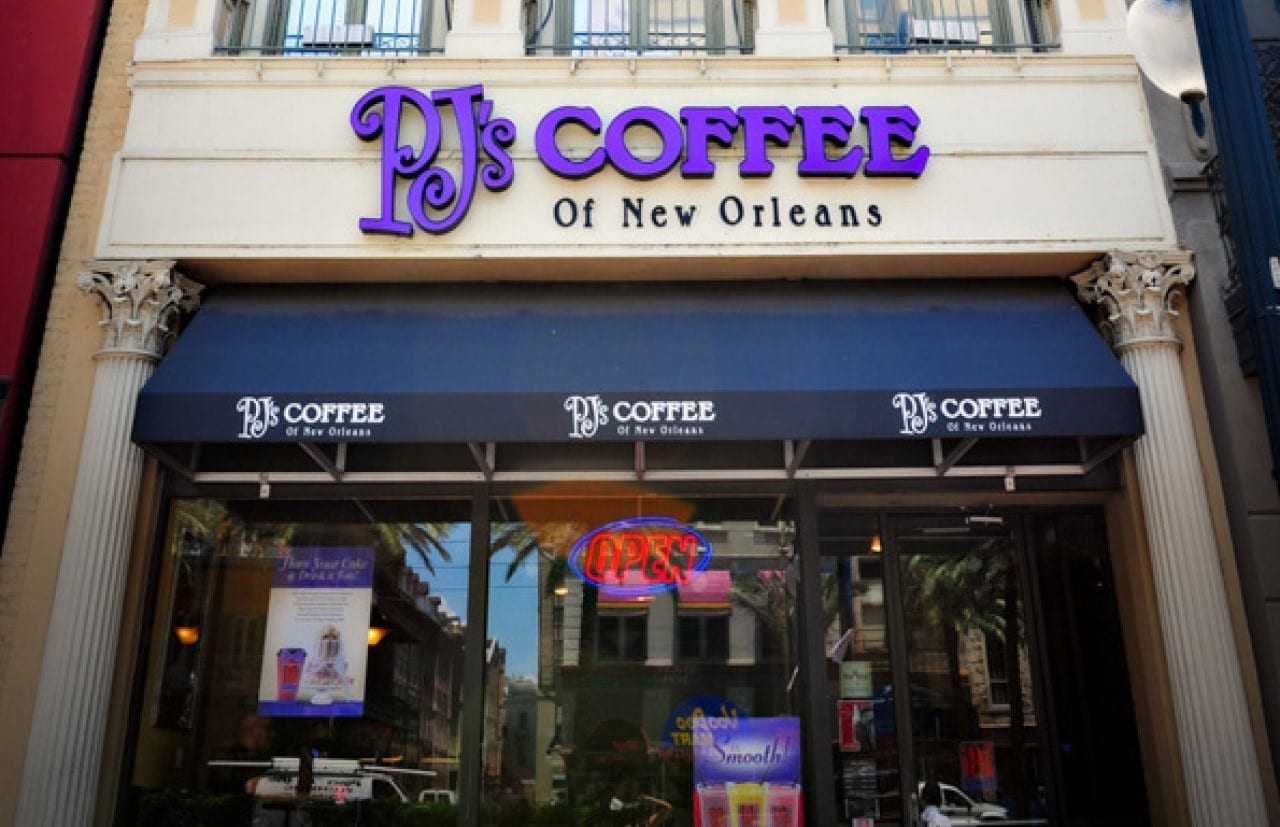
    The New Orleans chain PJ’s Coffee has opened its first shop in Ho Chi Minh City, Vietnam.

    The cafe is located in the Union Square shopping mall, while a second shop is planned to be opened in December. Within five years, PJ’s plans to open 10 more shops in Vietnam and 10 more in other Southeast Asian markets  before moving into the Middle East.

    The company says the Vietnamese population’s passion for coffee – with similar daily consumption habits to people in New Orleans – has encouraged the expansion plan.

    The Vietnam PJ’s Coffee shop menu features pastries, teas and iced, frozen and hot coffee drinks.

    PJ's coffee Vietnam

    PJ’s, now under the management of Ballard Brands, was founded in 1978 by Phyllis Jordan and operates 85 coffee shops in seven states of the US.

    In Vietnam, the chain is managed by master franchisee Rick Yvanovich.

  • Panda Express heading for Japan

    Panda Express heading for Japan

    US Chinese fast-food chain Panda Express, a staple of mall food courts in California, is about to launch in Japan.

    It will be in the hands of I&P Runway Japan, a joint entity set up last year between Panda Express owner Panda Restaurant Group and Chikara no Moto, the restaurant management group behind the tonkotsu ramen chain Ippudo. Originally formed to help Ippudo gain a foothold in the US, the JV is now aiming to open the first Japanese Panda Express before the end of the year.

    Other American fast-food chains such as KFC, Krispy Kreme and McDonald’s have had success in Japan, tweaking their menus to suit local tastes.

  • Indonesian coffee potential grows unlimited

    Indonesian coffee potential grows unlimited

    The Australian Ambassador to Indonesia, Paul Grigson, who is also a coffee connoisseur, said the potential in unlimited for the Indonesian coffee agriculture and industry.

    In a press release from the Australian Embassy in Jakarta on Friday, the ambassador said the Australians and Indonesians enjoy drinking coffee, often in cozy cafes.

    “As the third largest coffee producer and exporter in the world, Indonesia is a haven for coffee addicts,” he said.

    He added the Australian Rural Development Program (PRISMA), which is part of the Australia Indonesia Partnership For Rural Economic Development (AIP-Rural), has helped more than 2,200 farmers and is expected to reach 10,000 coffee producers in 2018.

    “I was amazed by the incredible coffee culture, where coffee can be cold fusion, pour-over or tubruk. And there’s also some inspiring latte foam art,” Grigson said.

    “Tubruk” coffee is Indonesian-style coffee, in which coarse coffee grounds are boiled, along with solid sugar, resulting in a thick drink.

    According to Grigson, during his stay in Indonesia, almost all coffee grown in the country was enjoyed by him, including Gayo coffee from Aceh, Toraja coffee from South Sulawesi, and Bajawa Flores coffee from East Nusa Tengggara.

    “Jakartas thriving coffee culture not only makes it easier for me to get my coffee, but it opens up more opportunities for young people to enter the business. With many Indonesian baristas learning their art in Australia, this is a fusion of cultures we can all enjoy,” the ambassador said.

    Along with the increase in coffee consumption worldwide, Indonesia, as the third largest coffee producer after Brazil and Vietnam, has a great opportunity to improve the quality and volume of coffee production, in order to meet the international demand for specialty coffee.

    East Java province is estimated to have 54,300 coffee farmers, and a coffee production land area equivalent to 8.1 percent of the nation’s production area.

    Meanwhile, East Nusa Tenggara province has about 51,752 coffee farmers and its area for coffee production reaches 57 percent of the nation’s production area.

  • Why Is China The Center-Piece Of Starbucks’ Growth Story?

    Why Is China The Center-Piece Of Starbucks’ Growth Story?

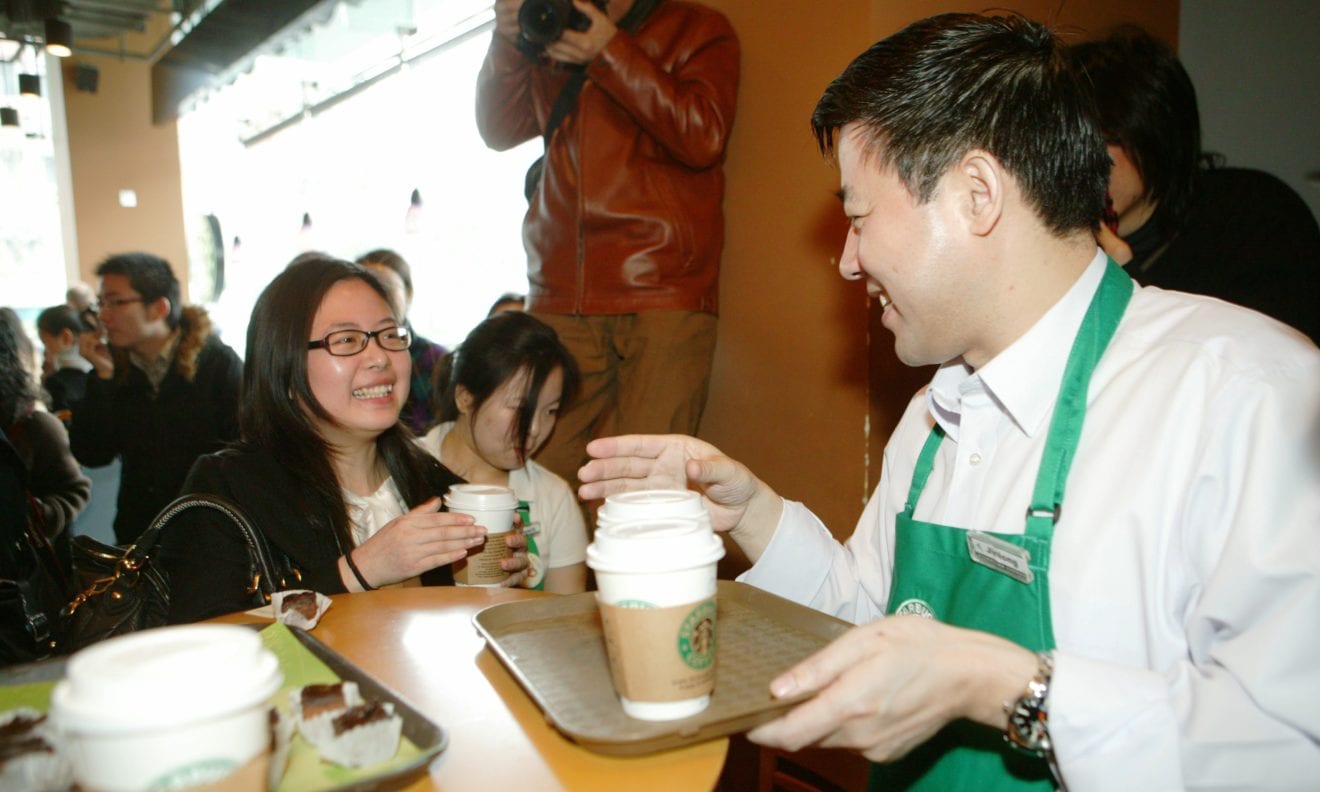
    China is the brightest star of the Starbucks growth story. The company has almost 2,300 stores in over 100 cities in China, and continues to open more than one store per day. China outshone the other regions in the June quarter, by posting 7% comparable sales growth due to increased traffic. Further, China accounts for over 10 million of the 19 million Starbucks Reward members in China and Asia Pacific (CAP). To reinforce China’s growth potential, Starbucks has plans to open up 2,500 stores for the next five years in the region.

    s1

    Why Is The Focus On China?

    Starbucks is facing intense competition from western brands like McDonald’s, Dunkin’ Donuts, and Burger King, to establish a foothold in China, not to mention the existing domestic players. However, Starbucks differs from the other food chains in the fact that it is seeing continued success in the region, while others, like McDonald’s, which is selling-off its restaurants in mainland China, are seeing their business flailing. The question to be asked here is why is everyone focusing on China. There are a number of reasons. Firstly, the American market is largely mature. Consequently, a large growth impetus cannot be expected from the U.S. That means Starbucks, like others, needs to look at emerging countries and markets with low penetration to drive revenues. This leads us to China, which is the second largest economy in the world. The middle income class in China is expected to double over a period as short as five years. Although, its economy has slowed down recently, China is still among the fastest growing nations, far ahead of Europe and the States.

    s2

    What Is The Reason Behind Starbucks’ Success In China?

    According to data from Roland Berger, Starbucks dominated the Chinese coffee market with an impressive 60% share, while McDonald’s and Costa only make for 13% and 11% of the total. One of the major reasons behind Starbucks’ success in China, when others are failing, is its commitment towards delivering what customers want. Instead of trying to pitch the U.S. bestsellers in China, it came up with new and innovative products, such as green-tea flavored coffee, which holds appeal for the country’s masses. Secondly, rather than pushing take-out orders, which account for the majority of American sales, Starbucks adapted to local consumer wants and promoted dine-in service. Although dine-in services bring in lesser revenue per square meter, Starbucks’ high pricing strategy in the area results in China being as profitable a market as the U.S.

    In addition to all this, Starbucks proved itself to be an employee-friendly workplace. While most western conglomerates treat their Chinese employees like cheap labor, causing the turnover rate to be high, Starbucks has invested in its employees through programs like student loans and subsidized accommodation. This further strengthened Starbucks position in China as satisfied employees are the best marketing agents a company can possibly ask for as they are the ones responsible for customer experience. Moreover, it has smartly partnered with local companies in various parts of China to overcome hurdles, deal with the complex foreign laws, and thus, grow effectively. The recent partnerships with the Chinese company, Tingyi, to manufacture and sell “ready to drink” products in China, is one example.

    s3

    What Is Next For Starbucks In China?

    According to the management, Starbucks plans to make China its largest retail market by the end of 2019. As mentioned before, it plans to open 2,500 new stores over the next five years in the region, even as the concerns about the slowdown in China increase. In 2017, it plans to open up a 30,000 square-foot Starbucks Shanghai Roastery and Tasting Room to appeal to the growing and increasingly rich upper class of China.

    Starbucks has also begun sourcing its coffee beans from areas within China, to seem less foreign and help the domestic coffee industry flourish. Further, Starbucks has branched out into selling tea drinks, such as Teavana, in China. According to Euromonitor, the size of China’s retail tea market was nearly $10 billion in 2014, the largest in the world and far ahead of second-positioned Russia.

    s3

  • Future Group buys Sangam Direct chain

    Future Group buys Sangam Direct chain

    Indian retail giant Future Group has bought Sangam Direct, a chain of grocery stores previously known as Sabka Bazaar, from Wadhawan Retail Ventures.

    Future group CEO Kishore Biyani has announced the deal without disclosing any figures.

    It is Future Group’s third acquisition in northern India in the food and groceries space in the past three years after Big Apple and EasyDay. In the south, the company acquired Nilgiris last year and is in talks to buy the retail business of Heritage Foods.

    Sangam Direct and Heritage Foods will add Rs800 crore (US$120 million) to Future Group’s annual revenue, says Biyani.

    Heritage Foods, which has 114 stores in Bengaluru and Hyderabad, reported revenue of Rs582.9 crore for 2015-16, up 18 per cent. Sangam Direct, which has about 35 stores across Bengaluru and Delhi, was started by Hindustan Unilever in 2001 as its online groceries delivery platform. It was acquired in 2007 by the Wadhawan group, which owned the Spinach retail chain.

    Future Group, through Future Retail and Future Consumer Enterprise, has about 800 stores. About 500 are small-format EasyDay and Nilgiris convenience stores, the rest being the larger-format stores of Big Bazaar and FBB, which is the group’s fashion retail offering.

    Future Consumer Enterprise also runs 5000 Annapurna Bhandars in partnership with the government of Rajasthan. Future Group is the parent of listed retail companies Future Retail, Future Lifestyle Fashions and Future Consumer Enterprise.

  • Tokyo Tsuta ramen eatery to open in Singapore

    Tokyo Tsuta ramen eatery to open in Singapore

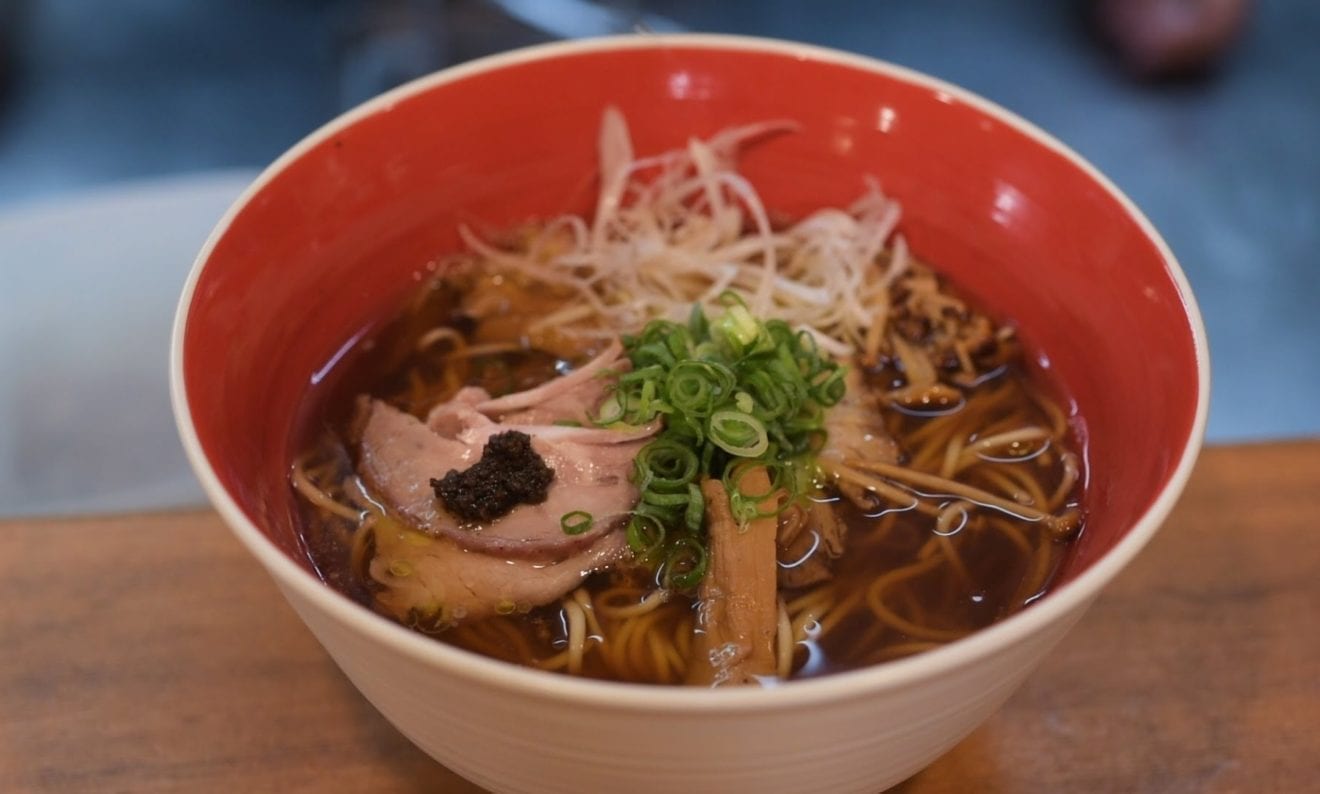
    The world’s only Michelin-starred ramen restaurant Tsuta is to open in Singapore in October.

    The Japanese eatery has been signed up by Pacific Plaza on Scotts Rd and will mark the restaurant’s first location outside its home market.

    Earning a coveted Michelin star this year has boosted the already-popular Tokyo establishment into something approaching cult status. The restaurant, located in the suburb of Sugamo, has just nine seats and limits its servings of ramen to 150 bowls each day. That has prompted customers to queue from as early as 6am so as not to risk missing out and tickets for a day’s dining usually sell out by 8am.

    The Pacific Plaza restaurant will be twice the size, with 18 seats and offer three soup bases – miso, Shoyu soba and shio soba. Chefs will be carefully trained to ensure the quality of the dishes served match those sold in Tokyo – and that the ramen sold is “the best in Singapore”.

    Tsuta ramen seats

    Founder Onishi says there are many pork-bone ramen shops in Asia, but he was determined to be different.

    “My aim is to create a ramen shop that can leave an impact with its unique dashi and umami flavours, and become as popular as tonkotsu ramen. For me, shoyu ramen is what usually comes to mind when one thinks of Japanese ramen.”

    Images courtesy of Mitsueki, Singapore food and travel blogger. Read more about Tsuta and view more photos here.