Category: General

Retail News Asia is committed to providing both local and global retailers with the latest General Retail news throughout the Asian market. This on a daily base.

  • Hong Kong airport Retail revamp Finalised

    Hong Kong airport Retail revamp Finalised

    A major Hong Kong airport revamp is planned spanning passenger facilities and retail spaces.

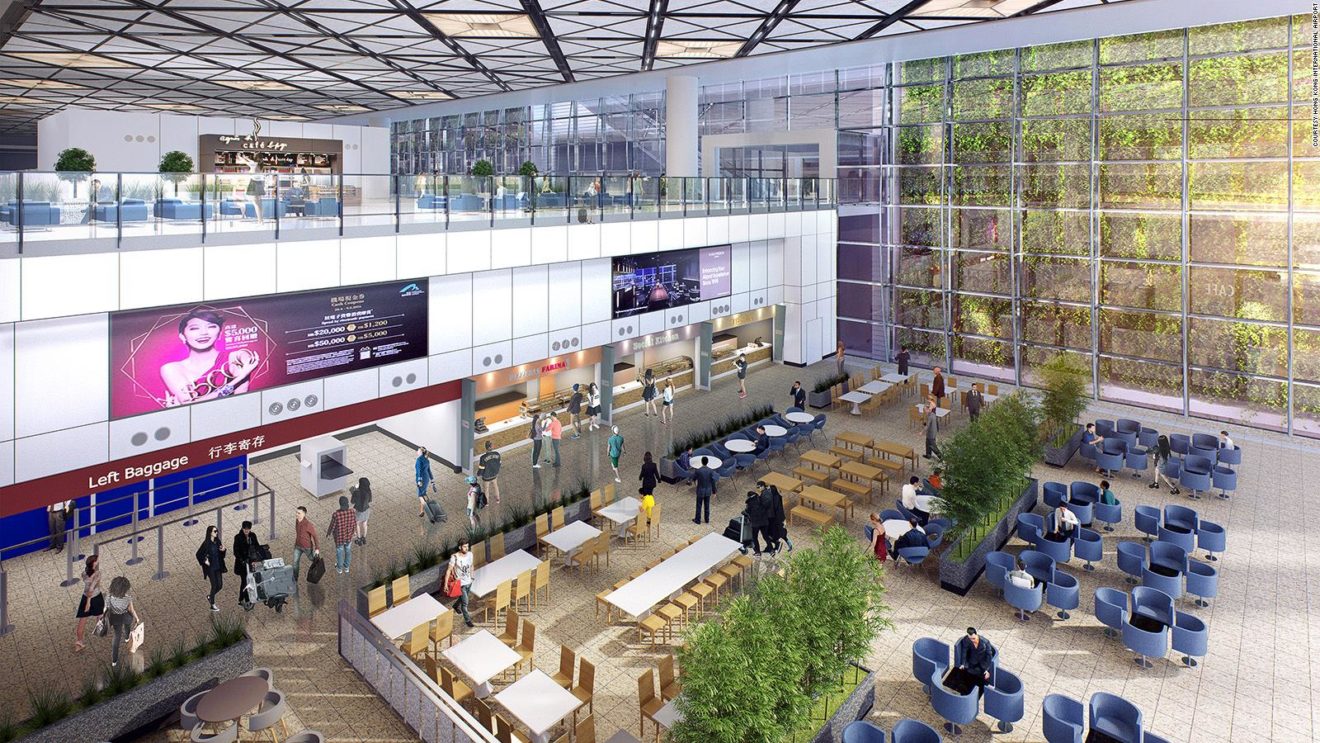
    Architectural firm Lead8 has been appointed lead designer for the planned Hong Kong International Airport (HKIA) Terminal 1 renovation.

    Working with Airport Authority Hong Kong, Lead8 will spearhead a collaboration of international consultants to deliver a “transformative upgrade” to the passenger halls of the 21-year-old aviation hub.

    The Boarding Gate Transformation project is expected to be completed in 2021. Lead8’s design scope includes a total overhaul and upgrade of the 49 boarding gates and adjacent areas of the Level 6 departure concourses.

    The renovation work will include upgraded technologies at all boarding gates, along with new and refreshed beam seating across all departure waiting areas. Retail and service cabins will be upgraded with more convenience for passenger access, all aimed at delivering “a more fluid experience for travelers”.

    “The refreshed look of the terminal will bring an inviting ambiance that combines new technological features to convey convenience and comfort to the terminal’s local and international travelers when transiting to and from Hong Kong,” said Lead8’s co-founder & executive director Chris Lohan.

    Contemporary seating designs with upgraded charging facilities will provide passengers with convenient and comfortable waiting experiences. The retail and service cabin facilities will also be upgraded to offer a rejuvenating environment for waiting passengers.

    Lead8 have also curated a number of entirely new experiential zones that will provide places of entertainment, relaxation, on-the-go work and general down-time spaces for passengers awaiting flights.

    “The combined enhancements of the transformed facilities at Hong Kong International Airport’s signature Terminal 1 building will further solidify our city’s status as a key international and regional aviation hub,” added Lohan.

  • Nam Cheong Place Market gets complete makeover

    Nam Cheong Place Market gets complete makeover

    Link’s Nam Cheong Place Market has had a complete makeover, with the refurbished venue containing nearly 40 stalls and an enhanced tenant mix offering premium ingredients and delicacies from around the world.

    The diverse shop mix includes fishmongers and greengrocers, frozen-meat shops and florists, and a cooked-food area. The market’s proximity to Cheung Sha Wan Wholesale Fish Market allows the freshest daily catch from local waters to be on offer at Fu Cheong fishmongers.

    There are many seasonal fruits and vegetables at Hou Yeung, Sum Kui, and other greengrocers.

    In addition to fresh local produce and meats, the market also showcases a colorful array of specialty stalls. JC Fruit, for example, is a treasure trove of all fruits imaginable, offering rose apples and Rockit apples from New Zealand; musk melons from Japan; and rambutans from Thailand, depending on the season. Ocean Three offers fresh oysters and other top-of-the-line ingredients from around the world.

    In the cooked-food area, diners can also savor such local bites as cart noodles, buns, and herbal tea, as well as the popular souffle pancake at Bove Express and Taiwanese drinks at Bittersweet Teahouse.

  • Montblanc unveils new store design with brand new ink bar

    Montblanc unveils new store design with brand new ink bar

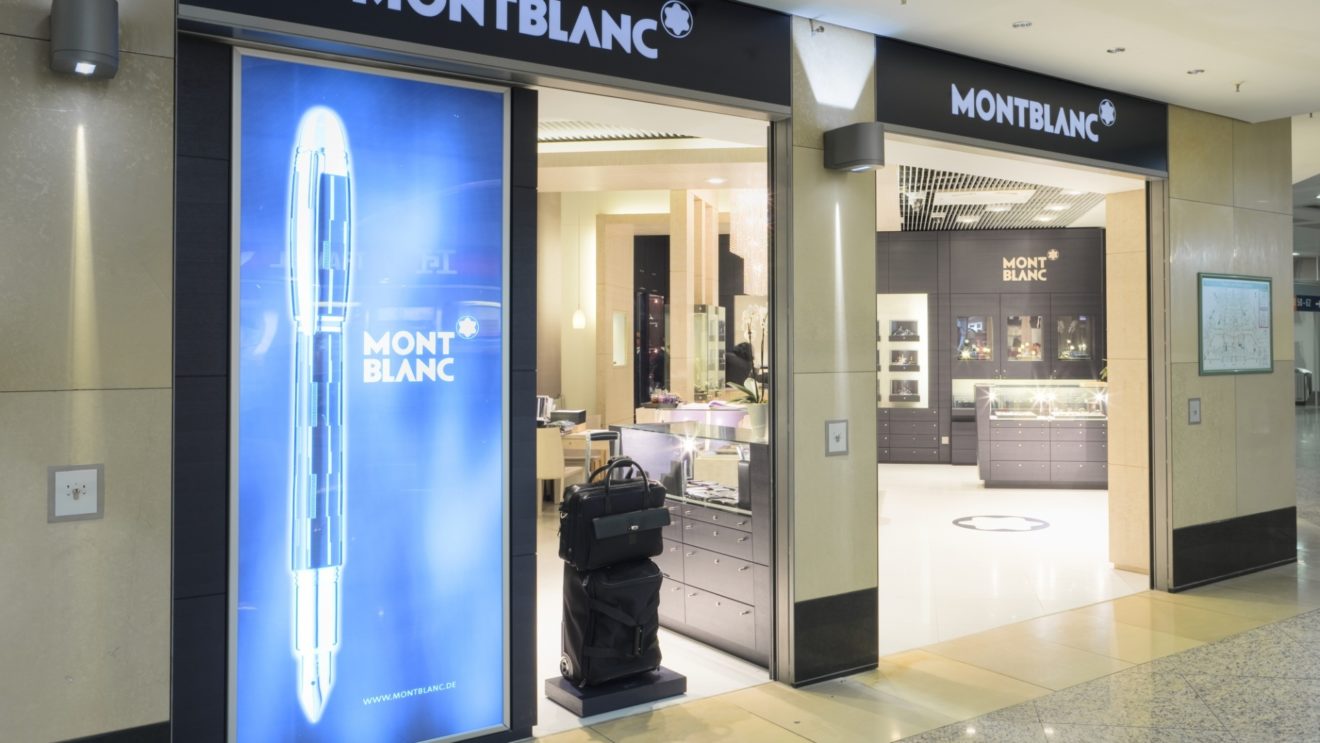
    Montblanc has unveiled its newly renovated store in Castlereagh Street, Sydney, which features the luxury brand’s first ever ink bar in Australia, and a digital corner to house its growing range of tech products.

    The new look, designed by French designer Noé Duchaufour-Lawrance, is built around three design themes. Cursive handwriting is the starting point for the overall design and evokes calligraphy and the culture of writing; the emblem, which is inspired by the snowcapped peak of Mont Blanc, is paired with ink shades to represent the life and soul of the brand; and passion for craftsmanship is narrated through the structured architecture and dark wood composition.

    Beyond the store’s aesthetic design, elements like the ink bar and digital corner contribute to an immersive retail environment, where customers can test all types of writing instruments, including the brand’s unique range of scented inks, Elixir Parfumeur, which come in orange-brown (leather scent), gray (wood and tobacco scent) and green (vetiver scent).

    “Venturing into the boutique, clients will enjoy the true expression of luxury in an inviting atmosphere,” Montblanc said in a statement about the new store.

    According to the retailer, trained associates will guide customers through the digital corner, where they can test the store’s latest smartwatches and augmented notebook, which converts handwritten notes into digital text and copy.

    Montblanc is also offering on-the-spot embossing and engraving in-store, where customers can choose from a curated selection of fonts and colors to personalize their purchases.

    “The excitement of setting foot into a physical store, receiving personalized VIP services and leaving immediately with your purchases is a large part of the luxury experience,” said Matthieu Dupont, president, Montblanc Southeast Asia.

    “We’re committed to giving our clients the best possible products and services.”

  • Woolworths expands Scan&Go to five more stores

    Woolworths expands Scan&Go to five more stores

    Following the first successful trial of Scan&Go at Woolworths’ Double Bay store, the supermarket giant has expanded the smartphone shopping trial to five more locations. Four Metro stores in Sydney’s CBD will offer a checkout-free experience from Thursday along with the supermarket’s Mona Vale store on the Northern Beaches.

    Customers will have the option to scan products with their smartphone and pay in the app, before tapping off at a dedicated kiosk. But those who prefer the human experience or are a little less tech savvy will still have the option of traditional and self serve checkouts at each of these stores.

    Woolworths became the first major supermarket in the country to offer a checkout-free shopping experience when it launched the first Scan&Go trial at Double Bay over 10 months ago.

    Head of payments Paul Monnington said the Double Bay trial was a success with “positive feedback” from customers and team members, and expects time-poor shoppers in Sydney’s business district to appreciate the convenience of the new service.

    “Most customers in our CBD Metro stores just want to duck in and out for a few items, so we expect the speed and ease of Scan&Go will be quite a popular offer in this setting,” Monnington said in a statement.

    The Metro stores selected for the trial include Pitt Street, Met Centre, George Street and York Street.

    The retailer is also keen to see how consumers beyond the CBD take to the technology, with another trial in operation since last week at its recently renewed Mona Vale store on the Northern Beaches.

    “This will allow us to test the offer with even more customers in a different setting, so we can determine the best role for it in the future,” Monnington said.

    Last month 7-Eleven Australia opened its first cashless and cardless convenience store in Melbourne, in which customers choose products, scan the barcodes at checkout counters and pay via the app.

    The convenience chain is hopeful the technology will free up workers to now focus on customers and delivering its food offerings. It was first trialed at 7-Eleven’s Exhibition Street Melbourne store while still having the traditional point of sale system, before going the fully cashless and cardless offering.

    The Scan&Go app, developed by the WooliesX digital team, is available on the App and Google Play stores, with customers required to upload a credit or debit card prior to shopping.

  • Lotsa Goodies fined over unsafe toys

    Lotsa Goodies fined over unsafe toys

    Toy importer and retailer 2 Boys Trading, which operates Lotsa Goodies, was fined for selling unsafe toys for a period of seven years.

    2 Boys was slapped with a $74,250 on 13 toy safety-related charges under the Fair Trading Act 1986 after a Commerce Commission investigation.

    The Commerce Commission said 2 Boys had been importing toys and selling them in eight Lotsa Goodies retail outlets, which are owned by companies linked to the 2 Boys owners. The shops are in Auckland, Hamilton and Christchurch.

    “2 Boys sold approximately 1700 units of three toys, all of which failed to pass testing undertaken by the Commission,” the Commerce Commision NZ said.

    The Commission said small parts came free from the toys during testing, and those parts were small enough to be a choking hazard for young children. In addition, some toys fitted fully inside a testing template, meaning they were also a choking hazard.

    The toys in question include an aquatic toy set, supplied between October 2015 and March 2018; baby star baby rattles, supplied between May 2012 and November 2016 and a 5.5-inch soft plastic doll, supplied between May and December 2017.

    The baby rattle packaging was labeled “3+” and “not suitable for children under 3 years”. The aquatic toy set was labeled “Warning: Choking Hazard – Small parts, Not for children under 3 years” and the same wording was on the rear of the doll packaging.

    Judge Chris Field said during the sentencing on June 20 at the Manukau District Court that they needed to “send a clear message to other companies trading in this way that significant penalties can be imposed for breaches of this kind.”

    Field said 2 Boys “did not conduct any of its own checks apart from generally checking the product was as ordered and relied on guidelines which stated the toys were for use for children aged 3 and over.”

    Commission chair Anna Rawlings said the labeling is a notable feature of the case.

    “It attempts to suggest the toys are not suitable for children under 3 years of age,” she said. “These are clearly toys intended for children 36 months of age and under, and traders cannot avoid their legal obligations by including ‘3+’ labeling or similar.”

  • Steel production and their Basic Methods

    Steel production and their Basic Methods

    Steel is a durable material and the main structural material for engineering.  It represents an alloy of iron with carbon, the content of which in its structure contains 0.01–2.14%.  The composition also includes insignificant amounts of silicon, manganese and sulfur. This material has exceptional mechanical properties: hardness and malleability, thanks to which it is considered the main structural material in mechanical engineering.  It is difficult to imagine what could replace the steel. A wide variety of products are made of steel – from paper clips to the beds of multi-ton presses and construction pieces of ships. Let’s consider main methods of steel production to understand the process better.

    •       Open-hearth process  (Siemens-Martin process)

    This method is used for the production of high quality steels used in especially important parts of machines and precise mechanisms. At one time this method replaced the labor-intensive and inefficient crucible and pulping melts used before. The loading capacity of a single reflective furnace used in this method reaches 500 tons.  The peculiarity of the open-hearth method is the possibility of remelting not only pig iron, but also metallurgical wastes and scrap metal. The heating temperature of the liquid steel reaches 2 thousand degrees. The melting process takes 4 to 12 hours. In order to accelerate the melting process, the volume of injected oxygen exceeds demand, which increases the melting capacity by 20–30%.

    •       Bessemer converter method

     When it comes to this method, smelted steel is good for the production of automotive sheet, tool steel, welded structures and other steel billets.  By quality, it is inferior to an open-hearth method, and is used for the manufacture of less demanding products. It contains more impurities than in the open-hearth manufacture.  Due to the high volume of loading of one furnace up to 900 tons, the method is considered the most productive, therefore, it became widespread.

    The processing is transient and lasts up to 20 minutes.  During this time, the oxidation of carbon, silicon and manganese contained in the raw materials, happens, and they are further removed from the bath with the molten slag. The converter is a retort-shaped (pear-shaped) vessel, consisting of steel sheets with lining from the inside.  One hole is used for casting iron and producing finished steel; it also loads iron and scrap.

    •       Oxygen converter process (Linz–Donawitz-steelmaking)

    Steel production today is carried out mainly this way.  (You can buy steel for sale) The share of oxygen-converter production quite recently accounted for up to 60% of world steel production. However, this percentage is reduced due to the appearance of electric arc furnaces (EAF).  The furnaces are purged with pure oxygen (99.5%) under high pressure.

    •       Electric steelmaking method

    The production of steel by electric smelting has a number of undeniable advantages.  This method is considered to be the main one in the smelting of high-quality alloy steels.  High quality is achieved by the practical absence of phosphorus, sulfur and oxygen in the steels.  This method is also used for the production of a wide range of building steels.


  • Takashimaya Closing Shanghai store

    Takashimaya Closing Shanghai store

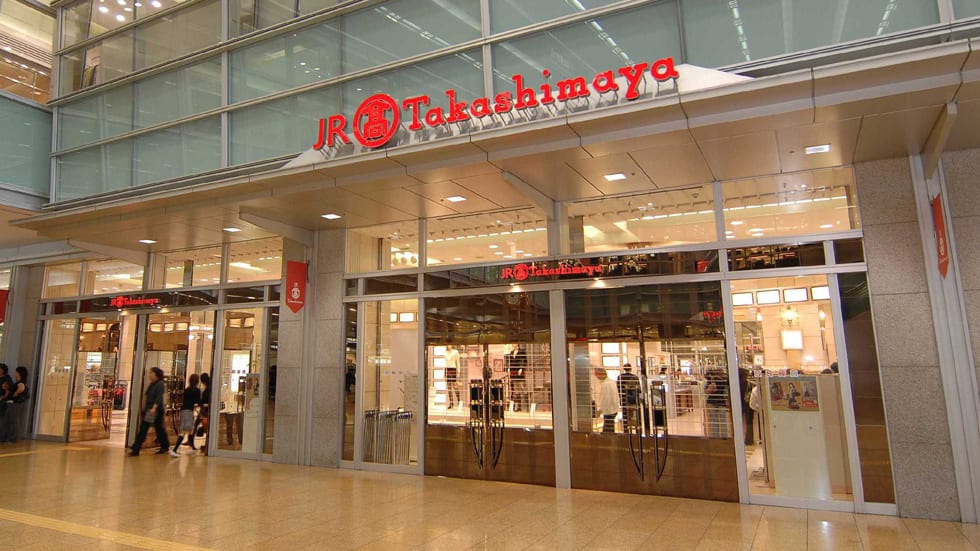
    Japanese department-store operator Takashimaya is to close its Shanghai department store after years of losses, and exit China.

    The company said it would recommend to shareholders at a special meeting on August 25 that its Shanghai Takashimaya Co subsidiary be liquidated after it failed to negotiate a rent reduction from its Chinese landlord. Assuming approval – essentially a formality – the store will close on the same date.

    Located in the city’s Changning District, the store had sought to deliver an authentic Japanese-style department store experience, and Takashimaya says it had developed “a large local following”.

    However, figures supplied by the company show net sales rose from US$59.2 million in the year to February 2017 to $65.44 million last year and then slumped to just $29.78 million this year. The division’s loss attributable to shareholders was $15 million in 2017, $28.84 million last year and $14.28 million this year.

    Takashimaya says the proposed dissolution and liquidation may lead to a further loss for the parent company of $18.69 million to $28.04 million.

    In a statement, Takashimaya said the lack of profitability is largely due to tough competition within the industry coupled with delays and changes in development projects for adjacent commercial facilities.

    “These problems have been compounded by China’s economic slowdown and falling consumer spending, which reflect the protracted US-China trade friction. In view of these developments, the board of directors concluded that it was no longer feasible for Shanghai Takashimaya to continue.”

    The Japanese company will now focus its growth and expansion planning to Southeast Asia where it sees greater opportunities. It currently has stores in Singapore, Bangkok and Ho Chi Minh City, Vietnam. The company will expand the Ho Chi Minh City store to carry more items suited to families and is considering opening another department store in Vietnam.

    The Takashimaya Shanghai store opened in 2012 and has a floor space of 40,000sqm, a similar size to one of its larger stores in Japan.

  • YouTube promises to give users better control

    YouTube promises to give users better control

    In a surprising move, YouTube revealed plans to offer users more control over their Homepage and Up Next videos. Apparently, three specific changes will be introduced in the coming days, which will allow YouTube users to set their preferences when it comes to what videos appears on their page.

    For starters, YouTube users will be able t explore topics and related videos easier than before. A new set of options will be added, which are based on their existing personalized suggestions and should help them find what they’re looking for faster than ever. The new feature will be implemented directly on the homepage, so you should see it when you scroll up. It’s also on Up Next when browsing. Initially, the feature will be available on the YouTube app for Android, while iOS users will get it soon.

    Another new tool that will give users better control over their videos is a new option that will make it easy to stop suggesting videos from a particular channel. This is very useful when YouTube gets your suggested videos wrong and a way to permanently fix the problem. Simply tap the three-dot menu next to a video on the homepage or Up next and choose “Don’t recommend channel.” This specific new feature will be available globally on the YouTube app for Android and iOS today.

    Last but not least, YouTube users will now receive more information about the videos they’re recommended from channels they haven’t seen before, which are based on what other viewers with similar interests have liked and watched in the past. A small box under the video will offer more information on these suggested videos. As per YouTube’s announcement, this feature is now available to everyone on the YouTube app for iOS, while Android users will get it “soon.”

  • Google now allows users to auto-delete user data

    Google now allows users to auto-delete user data

    Google is making it possible for Android and iOS users to auto-delete location history and activity data starting today. Although the search giant already provided the ability to turn on or off the Location History and Web & App Activity directly from the Google Account, including the option to manually delete the data recorded, there was one feature that makes it so much easier to get rid of this data.

    Starting today, a new set of auto-delete controls are available in the Google app, which will allow users to manage their data easier than before. Simply choose a time limit for how long you want your activity data to be saved, and any data that’s older than that will be automatically deleted from your account.

    Google mentions that you’ll be able to set a time limit for how long your activity data to be saved from anywhere between 3 and 18 months, so there’s that.

    According to Google, users should start seeing the new auto-delete controls soon, and that they will come first to Location History and Web & App Activity. A broader rollout should happen in the coming weeks, so if you don’t see the new feature right away, you’ll have to wait.

  • YouTube Music update adds new Smart Downloads feature

    YouTube Music update adds new Smart Downloads feature

    Google’s music streaming service, YouTube Music is bringing users a brand new feature that will allow them to listen to their favorite songs even when they’re offline. The new feature is called Smart Downloads and will automatically download up to 500 songs that a YouTube Music user “liked.”

    That new feature will be available on Android devices first, but only for YouTube Music Premium subscribers. In order for the feature to work, you’ll have to enable Smart Downloads from the app’s menu. All downloads will happen while your phone is connected to Wi-Fi, hence the name Smart Downloads.

    Make sure that you have enough free storage though and if you don’t think your phone can take all your “liked” songs, you can select how many you want YouTube Music to download from within the settings.

    Unlike Offline Mixtape, a feature that’s available for YouTube Music users for quite some time, Smart Downloads doesn’t create a mix of songs that fit your taste profile and makes it available offline but rather downloads exactly the songs you like.

  • Thai AirAsia X begins new service to Brisbane

    Thai AirAsia X begins new service to Brisbane

    Thai AirAsia X has started its newest service from Bangkok to Brisbane, with the first arrival touching down at 11:46 am local time on Wednesday. This marks the first AirAsia service to Brisbane Airport. The aircraft received a water salute on arrival, courtesy of the airport’s fire and emergency service.

    The route is operated by Thai AirAsia X under flight number XJ310 (Bangkok to Brisbane) and XJ311 (Brisbane to Bangkok); duration of the flight is approximately nine hours and 20 minutes. Before this connection, the only non-stop service between Brisbane and Bangkok was operated by Thai Airways using the Boeing 777-200. The Malaysian AirAsia X serves Gold Coast Airport, which is located 90 kilometres (56 miles) south of Brisbane.

    We are delighted to have a new home in Queensland, adding Brisbane to our Queensland ports after we commenced operating flights from the Gold Coast in 2007. This direct service between Bangkok and Brisbane strengthens our connections into Australia and adds to our extensive network of more than 140 destinations worldwide.Nadda Buranasiri, AirAsia X CEO
    Asia is a key market for Queensland’s tourism industry and this new service will bring more than 235,000 inbound seats to Brisbane over the next three years, providing a $156 million boost to the state’s economy and supporting 660 jobs.Kate Jones, Minister for Tourism Industry Development

    Thai AirAsia X is a sister airline of AirAsia’s long haul carrier AirAsia X. The Thai airline is based at Bangkok Don Mueang Airport. Together with AirAsia X and Indonesia AirAsia X, it operates a fleet of 36 Airbus A330-300 with up to 100 of the new generation A330-900neo on order. Thai AirAsia X will soon receive its first A330neo and become the Asian launch-customer of the aircraft type. The airplane, which is already due for delivery, was on display at Paris Air Show 2019.

  • Instagram announces ads will be served to users Explore feed

    Instagram announces ads will be served to users Explore feed

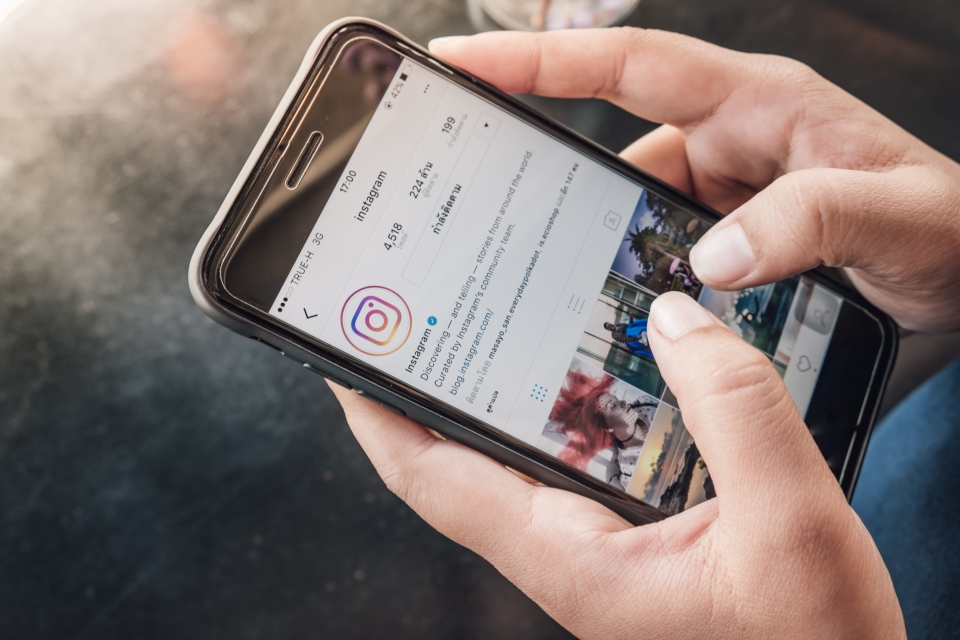
    Instagram has just confirmed it will bring ads to your Explore feed. As one of the go-to features for Instagram users who search for places, shops and connect with people businesses and creators, Explore looks like a great monetization tool.

    According to Instagram, more than 50% accounts on its social network use Explore every month to see photos and videos related to their interests from accounts they aren’t following. Apparently, the company considers brands an important part of the Instagram experience for its users, which is why over the next few months, it will introduce ads in Explore feed.

    Instagram says it will release ads in Explore “slowly and thoughtfully,” so not everyone will see them at the same time. Here is how it works for users: after tapping on a photo or video in Explore, you may see ads as part of your browsing experience just like in the main feed.

    For advertisers, it’s quite obvious that this is an opportunity to reach larger audiences in Explore. And they will be able to do that by extending their campaigns with a simple opt-in. So, there you have it, folks, expect to start seeing ads in your Explore feed pretty soon.

  • AuMake sees online sales growing

    AuMake sees online sales growing

    Online sales now make up 30 percent of AuMake’s total sales, and they are continuing to grow.

    The daigou business announced its unaudited FY19 earnings in an investor presentation on Thursday, reporting an estimated $40-45 million in revenue for the year. That’s more than double the revenue it generated in FY18 of $21 million.

    The company said it is experiencing strong trading conditions even in the traditional low season of June and is anticipating significant growth from its recent Broadway acquisition, which will be effective next month.

    AuMake expects own-brand sales through the Broadway channel to reach $15 million to $20 million in FY20.

    In the presentation, AuMake said most of its online sales come from the Chinese social media app, WeChat.

    In April, the company reported that its online customer database had grown more than six times over from 20,000 in Q3 FY18 to 130,000 in Q3 FY19.

    It continues to invest heavily in its online infrastructure to maintain this growth. This includes a larger online customer service team, improvements to its various online sales platforms, such as WeChat and JD.com, and a new packaging facility.

  • Singapore digital accessories chain Uniq enters the Philippines

    Singapore digital accessories chain Uniq enters the Philippines

    Singaporean gadget and mobile-accessories retailer Uniq has opened its first Philippine store.

    Located at Cyberzone in Quezon’s SM North Edsa Annex, the store targets young professionals who are particular about style.

    Its products known for their “minimalist mobility” and “smart simplicity” to the country’s digitally connected populace.

    “Most of our products are for iPhones and Mac but we also have charging solutions that are more universal,” said Andy Wong, MD and co-founder of Uniq.

    Established in Singapore in 2010, Uniq started out as a phone-case design company.

    The company has entered the Philippines with the help of Macpower Marketing Corporation, which is also partner of Globe, Power Mac Center, and Lazada.

    Uniq products are available in 22 countries via an online store and the company plans to partner with online stores such as Shopee and Lazada.

  • Black forecast for Hong Kong retail sales

    Black forecast for Hong Kong retail sales

    Hong Kong retail sales will shrink by 5 per cent this year according to projections by PWC.

    Citing uncertainty clouding consumer markets across Mainland China and Hong Kong, PWC also says macroeconomic uncertainty has prompted Chinese retailers to refocus on customer experience.

    “Hong Kong retail sales is estimated to fall by 5 per cent to approximately HK$460 billion this year, as the ongoing Sino-US trade dispute, equity market turbulence and volatility of Renminbi continue to cast a long shadow on consumers sentiment and actual spending”, says Michael Cheng, PWC’s Asia Pacific and Hong Kong/China consumer markets leader.

    PWC had earlier forecast a 3-per-cent decline in Hong Kong retail sales and says its downgrade reflects a weaker outlook for the second half of the year, due to a combination of factors including external headwinds, economic instability, as well as the projected decrease in tourist arrivals and spending.

    The projections are included in the consultancy’s report Back to the Core: Reinvigorate Experience-driven Retail at a Time of Uncertainty.

    Government data shows Hong Kong retail sales for the first four months of this year fell by 2 per cent, with electrical and luxury goods among the sectors suffering the biggest decline, against the backdrop of a weak Renminbi and waning consumer confidence. On the back of the completion of major infrastructures such as the Hong Kong–Zhuhai–Macau Bridge and the Guangzhou–Shenzhen–Hong Kong Express Rail Link, mainland tourist arrivals grew steadily in the last quarter of last year, reaching a record high in January, aided by the Chinese New Year holiday-shopping season. However, mainland tourist arrivals started to drop from the peak three months in a row since February.

    “Local retail sales and mainland tourist arrivals are expected to continue on a downward trend through the rest of this year, indicating a slowing consumer market in Hong Kong,” says Cheng.

    “Electrical and luxury goods are set to shrink further, while consumer goods like health-and-beauty products will hold well with a modest growth. The recent political and social unrest, temporary closure of the Peak Tram due to renovations, coupled with a lack of new tourist attractions might lower mainland tourists’ appetite to visit Hong Kong in the short term. Meanwhile, a weakening economy as well as uncertainty surrounding the trade dispute present risks to the outlook in the medium to longer run,” he says.

    Adapt or suffer

    Cheng says this year’s tough Hong Kong retail climate underlines the importance for retailers to adapt to changing consumer preferences and spending patterns in order to maintain competitiveness and profitability.

    “As shoppers nowadays have put a bigger focus on consumer experience, more and more retailers are moving to create a more engaging and experience-driven shopping journey with innovative and unconventional retail strategies such as ‘retailtainment’ and ‘coopetition’. Moreover, brands are increasingly tapping the power of emerging technologies like AR and VR to appeal to a new generation of tech-savvy shoppers who value personalised experience.”

    The report, which builds on the survey findings of PWC’s Global Consumer Insights Survey 2019, also points to an increasing emphasis on customer experience among retailers in China, who are refocusing on business fundamentals such as profitability and cost management in the light of growing economic headwinds.

    He says this year continues to be challenging for mainland Chinese retailers amid uncertain outcome of trade negotiations with the US and a slowdown in the economy. Mainland retail sales growth fell to a 15-year low at 9 per cent last year, signalling sluggish demand among Chinese consumers. As part of its wider efforts to transition towards a consumption-driven economy, the Chinese government has rolled out a range of stimulus policies including tax cuts, reduction in social insurance costs and incentives for high-tech consumption, with a view to building a more resilient domestic economy to mitigate external risks.

    “In the face of a slowing economy and consumer market, retailers are going back to basics by pursuing a more defensive strategy, characterised by profitability focus, consumer-centricity and operational excellence,” says Phil Lai, PWC China consulting partner. “The story of New Retail continues, as retailers strengthen digitisation along the retail value chain through smart supply chain management enabled by technology and big data, with a laser focus on experience.”

    Thanks to extensive mobile connectivity and established technology infrastructure, digital-savvy Chinese consumers tend to accept and embrace emerging technologies to a greater extent than their global counterparts. Sixty-eight per cent of Chinese consumers surveyed purchase products online at least once a week.

    Technology enablement consequently fuels the hunt for new experiences that integrate digital into the offline environment. Close to 40 per cent of Chinese respondents said their in-store experience would be enhanced by the use of technology including IoT scanners, tablet and mobile checkout, and self-service kiosks.

    As Chinese shoppers seek to redefine their experience with a frictionless purchase journey and a blend of both physical and digital interactions, retailers are thinking beyond the traditional return on investment (ROI) metrics to adopt a consumer-centred return on experience (ROX) strategy.

    “Specifically, retailers need to map out their consumers’ purchase journey, isolate key customer touch points and factors that drive experiential moments, and invest more in aspects which directly impact those interactions and yield measurable results,” said the report.

    Lai concludes: “From end-to-end digitisation to the rise of experience-based business models, the New Retail evolution in China has come a long way. To thrive in the world’s largest consumer market, we see retailers and brands becoming more digitally-agile and data-driven, using new technologies to fuse customer experience across the entire value chain, while monetising discrete moments and building communities with a purpose to ensure long term profitability and sustainability.”