Category: General

Retail News Asia is committed to providing both local and global retailers with the latest General Retail news throughout the Asian market. This on a daily base.

  • SM Investments to consolidate its retail assets under one entity

    SM Investments to consolidate its retail assets under one entity

    SM Investments Corp (SM), the holding company of Philippine-based conglomerate SM Group of Companies, is merging its retail arm SM Retail Inc with related retail firms earning revenues up to $1 billion.

    SM earlier disclosed that its board of directors approved the merger of SM Retail with companies operating leading local retail chains such as Ace Hardware, SM Appliance Center, Homeworld, Our Home, Toy Kingdom, Watsons, Kultura, Baby Company, Sports Station and several other specialty stores. Together they operate 1,374 outlets and in 2015 delivered total revenues of P53 billion.

    SM is expected to own 77.3 per cent of the enlarged SM Retail.

    The merger will complement the existing retail portfolio of SM Retail which includes 53 SM department stores, 44 hypermarkets and 213 supermarkets as well as majority stakes in the local operations of Alfamart, Forever21, Crate & Barrel and other specialty and apparel retailers in addition to a minority stake in Uniqlo.

    The combined entity will have 1,927 outlets and 2.4 million sq m of gross floor area across a diverse portfolio of food, household appliances, DIY, furniture, apparel, footwear, pharmaceuticals/cosmetics and specialty retailing stores. The portfolio will serve a wide range of Filipino consumer needs in both staple and discretionary goods categories and will continue to leverage extensive synergies across the SM group.

    SM president Harley Sy said, the move is similar to the consolidation the company undertook in 2013 to create its large-scale, mixed-use property business.

    “The merger adds greater diversity and a more extensive footprint to SM Retail’s portfolio and is consistent with our goal of simplifying our corporate structure,” Sy said. “As a result, SM Retail will be even better positioned to address the growing needs of Filipino consumers and we expect the merger to be accretive to SM Retail earnings in future years.”

    SM’s net income increased 13 per cent in 2015, while consolidated net income stood at P28.4 billion, posting the same level in 2014. Consolidated revenues grew 7 per cent to P295.9 billion for the period.

    “Our strong underlying earnings growth in 2015 was due to favorable domestic market conditions and improved efficiencies which helped us widen our margins particularly in retail and property,” Sy noted.

    SM’s underlying earnings increase was driven by a 17 per cent growth in retail earnings, 14 per cent growth in property recurring net income and 10 per cent growth in bank net income. For 2015, banks accounted for 40 per cent of SM’s consolidated earnings, property 38 per cent and retail 22 per cent.

    SM’s last trading price decreased 2.96 per cent or P25 to close at P820.


  • Singapore economy grew 2% in 2015, weakest since 2009

    Singapore economy grew 2% in 2015, weakest since 2009

    The Republic’s economy expanded by 2 per cent in 2015, the weakest annual growth since 2009 when the economy was hit by the global financial crisis, according to figures released by the Ministry of Trade and Industry (MTI) on Wednesday (Feb 24).

    The figure was a sharp drop from the 3.3 per cent growth the previous year, and was revised downwards from the 2.1 per cent growth initially projected.

    Growth was mainly supported by the wholesale and retail trade, and finance and insurance sectors, according to MTI.

    For the fourth quarter, the economy expanded by a slower-than-expected 1.8 per cent from a year ago, after industrial production in December suffered its biggest year-on-year slump in eight months. The initial estimate was for a growth of 2 per cent.

    On a quarter-on-quarter seasonally-adjusted annualised basis, the economy expanded by 6.2 per cent in the fourth quarter, MTI said.

    The MTI has maintained its forecast of growth between 1 per cent and 3 per cent this year.

    “Even though global growth is expected to improve, the continued slowdown in China, the services-driven nature of growth in the US, as well as the trends of in-sourcing in China and the US, may mean that external demand for our exporters may not see a significant boost this year,” said MTI’s Permanent Secretary Ow Foong Pheng.

    “Lower oil prices have weakened the prospects for new rig orders for firms in the marine and offshore segment, and heightened the risks of further deterrents and cancellations of existing orders,” she added.

    The economic data also showed that labour productivity, as measured by value added per worker, grew by 0.5 per cent in the fourth quarter – the first improvement since the first quarter of 2014 – driven by the wholesale and retail trade, and construction sectors.

    For 2015 as a whole, overall labour productivity fell by 0.1 per cent, marginally improving from the decline of 0.5 per cent in 2014.

  • Watsons pioneers cosmetics takeaway in China

    Watsons pioneers cosmetics takeaway in China

    Watsons has kicked off an initiative for selling and delivering cosmetics and groceries as takeaway via Baidu Waimai (takeaway in Chinese).

    Expanding online to boost sales

    The initiative has been launched in Beijing, Shanghai and Guangzhou and will be extended to all the cities that Watsons operates in. Products on Baidu Waimai include personal care, snack and beverages.

    As the leading Health & Beauty chain in China, Watsons has launched various online initiatives, such as its own online shop, stores on online platforms Amazon, Alibaba and JD.com, as well as Watsons app. The launch of takeaway service aims to attract more customers and generate new revenue streams for the retailer.

    Other initiatives to drive growth

    As the growth slows down and margins being squeezed, Watsons has been focusing on satisfying the needs of the ever-changing consumers.

    • store expansion, especially in third and fourth tier cities to reach more shoppers
    • introducing more local brands to lift profitability
    • launching more loyalty schemes and membership cards to attract young shoppers
  • Japan manufacturing output up in January, retail sales fall

    Japan manufacturing output up in January, retail sales fall

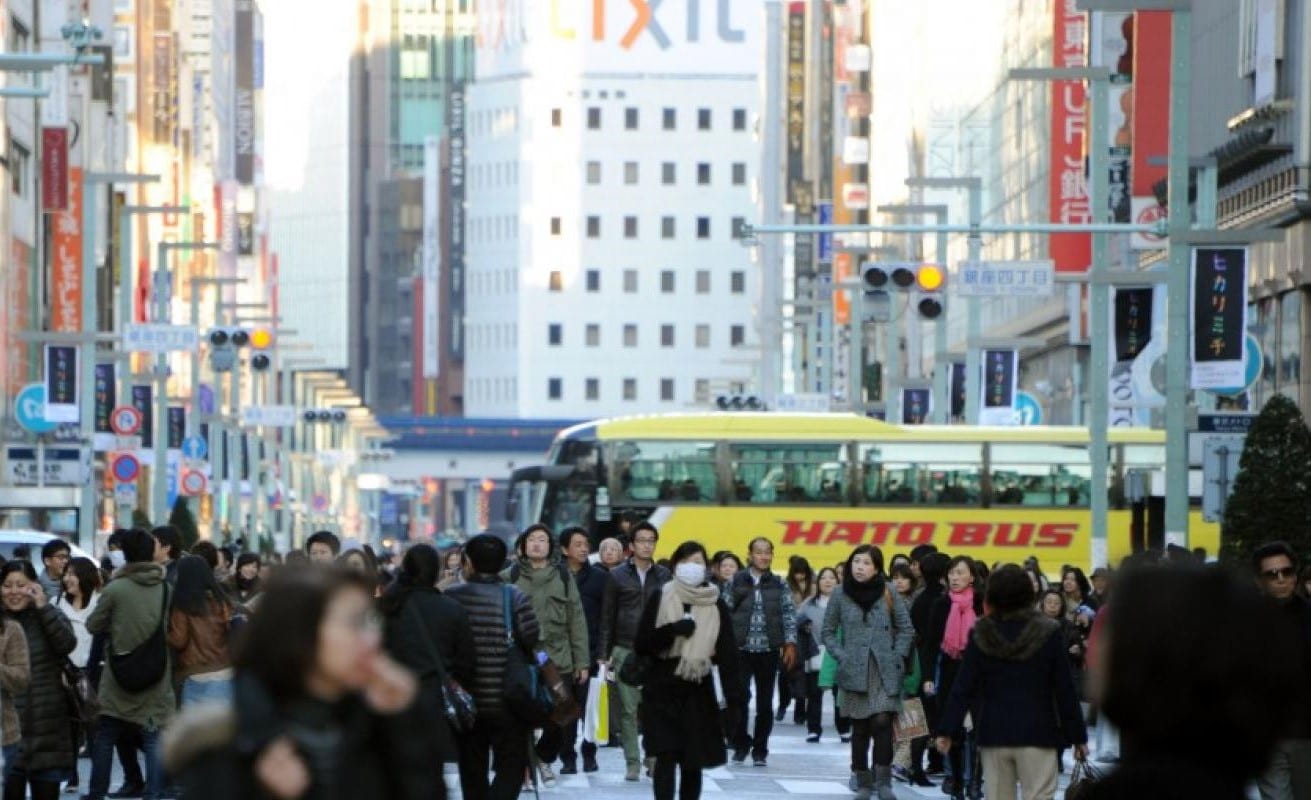
    Japan’s industrial production rose in January from the month before, beating forecasts, while retail sales fell, suggesting the recovery of the world’s third-largest economy is still on the ropes.

    January’s increase in factory output was a turnaround from month-on-month declines in November and December. But production was down 3.8 percent from January 2015, and is forecast to fall by 5.2 percent month-on-month in February, partly due to weak demand as the world economy slows.

    Marcel Thieliant of Capital Economics said in a note that the economy would likely remain in the doldrums in this quarter.

    “The rebound in industrial production in January is unlikely to assuage concerns about the health of Japan’s economy as firms are predicting a renewed slump in February,” he said.

    Japan’s central bank recently began a negative interest rate policy aimed at getting banks to lend more to help spur business activity and fend off deflation. Japan’s inflation rate was flat in January, according to data reported earlier.

    Finance ministers and central bank governors of the Group of 20 rich and developing economies called for using all policy tools available to help fend off recession as they wrapped up a meeting in Shanghai over the weekend.

    Data released Monday showed Japan’s manufacturing index was at 99.8 in January compared with a base of 100 in 2010. Prime Minister Shinzo Abe has sought to rekindle growth with a three-pronged approach of monetary stimulus, government spending and reforms.

    Retail sales fell 1.1 percent in January from the month before and were down 4.3 percent from a year earlier. Other key data, such as wages, household spending and the jobless rate, are due Tuesday.

    So far, the “Abenomics” strategy has leaned heavily on the Bank of Japan’s unprecedented barrage of monetary stimulus through massive asset purchases. The injections of trillions of dollars into the economy each year have helped weaken the yen, boosting the profits of corporations and, for a time, pushing share prices higher.

    But since companies have shied away from raising wages or making sizable investments in operations in Japan, growth has remained tepid.

  • China will bounce back and continue to drive global growth for decades

    China will bounce back and continue to drive global growth for decades

    Economists have often said “when America sneezes, the world catches a cold” reflecting the importance of the US to the global economy.  But the past 12 months suggest the world’s immune system is more sensitive to China’s sniffles than was previously thought.

    The country’s economic slowdown and the overdue lancing of the bubble in its stock market have made the world’s central bankers and policymakers realise that China now has a huge influence on global markets.

    I was in Beijing and Shanghai last week in part to attend the G20 summit in my role as a board member of the Institute of International Finance but also to see for myself what is happening in China. There is no substitute for visiting a country if you really want to understand what is going on there. Get there, meet companies and policymakers and listen to what the people you meet have to say.

    This is especially the case with somewhere like China because it can be opaque and a lot of what is written about the country is nonsense. You can only get so much information to form a view from sitting in an office 6,000 miles away.

    One of my most interesting meetings was with Dr Pan Gongsheng, deputy governor of China’s central bank. It is true that the economy is slowing. Never mind the validity of the official figures, the 6.9pc growth achieved last year is a far cry from the double-digit expansion achieved a few years ago.

    But is this slowdown really so bad? The change in the pace of growth is as much by design as by accident. China’s policymakers made a deliberate decision a few years ago, to move the economy away from an investment-led, export-driven model towards one in which domestic consumption plays the dominant role. The country’s leaders want growth that is sustainable.

    For a long time investors have focused on China’s manufacturing data as an indicator to how well or badly the economy is doing. Recent weakness in the manufacturing data has been interpreted as a big negative and has ignored the growth of service industries, especially in the private sector.

    Real estate, finance, hospitality, retail, transport, construction and other services accounted for some 55pc of GDP in 2014, up from 47pc in 2006, according to data compiled by CLSA and Citic Securities.

    As the economy continues to move to a more domestic focus, this share will continue to rise. This is not to say everything is rosy in China. In recent years, western leaders watched with wide-eyed wonder at their Chinese counterparts’ handling of the economy. They looked on in envy at Beijing’s ability to manage the economy at a time when the world seemed to be closing in.

    That reputation has taken a major dent recently. They successfully deflated a bubble in the property market but that meant that China’s army of retail investors piled into the domestic stock markets. The authorities should not have tried to prop this over-leveraged and speculative bubble. They should have let it pop but chose to intervene and then did so in a messy, unclear and unsuccessful way.

    While they were bungling the rescue of the stock market, the authorities made a mess of communicating a loosening in renminbi policy, which fuelled suspicions the country was seeking to devalue its way out of trouble. This is prompting wealthy locals to move their cash offshore and in response the government is making it harder for money to be moved overseas.

    Local government and corporate debt are big problems, the state sector is bloated and inefficient, while the property market remains fragile. Whilst my trip provided comfort on the state of the economy, my views on the stock market remain unchanged. We have always been very cautious about investing in Chinese companies because so many are opaque and many have woeful corporate governance.

    It’s obvious if you spend time in China to see that the Shanghai and Shenzhen stock markets operate like casinos. Trading activity is dominated by retail investors who buy on rumours and flee at the first sign of trouble. It’s much more sensible to expose yourself to China’s growth by investing in companies which aren’t based there but do business there.


    It’s a much easier way of investing in companies with decent growth prospects, that have quality management and adhere to good levels of transparency and accounting standards. From speaking to companies, economists and analysts in China, it’s clear to me that the country is heading for a softer, rather than harder, landing. You need to look beyond the stock market for the clues of why, though. China’s consumer spending is still motoring. Consumers have taken to internet shopping at a startling pace.

    Barely 15pc of the population had shopped on the internet a few years ago. Now over 40pc have. Chinese shoppers spent nearly $8bn (£5.7bn) in the first 10 hours of the country’s equivalent of Cyber Monday or Black Friday. Chinese authorities might have lost some of their reputation for financial competency, but they have $3.4 trillion in foreign exchange reserves to soften the blow of a slowing economy.

    Unlike many policymakers in the West, those in Beijing still have plenty of tools at their disposal to avert economic disaster and to help the country to develop. The announcement last week of the opening up of the bond market to long-term international investors is a prime example and is a step in the right direction.

    Ultimately China will shake off its current sniffles to continue to be a driver of global growth for decades to come.

  • Why are many Thai buyers in the Vietnam retail market?

    Why are many Thai buyers in the Vietnam retail market?

    Berli Jucker Plc (BJC), has taken over the Japanese chain of 42 FamilyMarts and renamed it as B’mart. The Vietnamese retail market recently witnessed a series of mergers and acquisitions (M&A) in which the buyers were businessmen from Thailand.

    In mid-2014, BJC made a deal on buying Metro Cash & Carry Vietnam at $880 million, the biggest affair in the retail sector in Vietnam so far. The deal wrapped up 1.5 years later, in January 2016.

    In early 2015, Central Group successfully acquired a 49 percent stake of the Nguyen Kim home appliance distribution chain.

    Right after French Casino Group announced the plan to sell Big C Vietnam, analysts predicted that Big C chain in Vietnam was likely to fall into Thai hands. Later, BJC stated it was vying for Big C Vietnam.

    This is because, according to Phu, the Vietnamese market promises great potential: while other countries in the world focus on developing the home market, Vietnam has been gathering strength on boosting export, while paying less attention to the domestic market.Vu Vinh Phu, chair of the Hanoi Supermarket Association, who was deputy director of the Hanoi Trade Department, noted that only a few foreign retailers came to Vietnam in the past, but things are quite different now. Nearly all big retailers in the world are present in Vietnam, especially Thais.

    This explains why foreign investors have to spend several months only to find retail premises and penetrate the home market. Meanwhile, a domestic retailer told Phu that it took him three years to do this.

    “Business opportunities will be missed after such a long time,” Phu said, adding that domestic and foreign retailers are in an unequal competition.

    An analyst commented that many Thai businessmen eye Vietnam because Thailand is near Vietnam in geographical position. Thai businesspeople understand Vietnamese consumers’ taste and hobbies.

    “Thai businessmen kicked off plans to penetrate the Vietnamese market a long time ago. And they have been doing this in a methodical way and they have been step by step expanding both production and distribution in Vietnam,” he commented.

    At first, Thai businesses usually organize trade fairs in Vietnam to familiarize Vietnamese with Thai products.

    “I believe that 100 percent of families in Hanoi and HCMC use Thai products, from washing liquid to knives,” he said, adding that Thai products are present in every Vietnamese family.

    Phu commented that though Thai is less strong than Japanese and South Korean; therefore, they have been ‘waging guerilla warfare’ when attacking the Vietnamese market.

  • Filipino supermarket giant comes to Canada

    Filipino supermarket giant comes to Canada

    A prominent Filipino supermarket announced its entry to the Canadian soil, thanks to the ever growing number of Filipino population in the Americas. Seafood City Supermarket, one of the biggest supermarkets in the Philippines announced that it would open the first grocery store in the country early next year.

    Mildred Smith, the marketing manager for Seafood City Supermarket said, “Whatever culture you belong to, everybody eats seafood.” Apart from Filipinos, the newly proposed supermarket intends to lure in people who has a  love  for international cuisine as well. Seafood  City supermarket has almost 22 store in America along with some other nearby locations like West Coast and Hawaii.

    One could find fresh ingredients for cooking Filipino and pan Asian dishes in the new supermarket. The first store would open at Heartland Town Centre in Mississauga, Ont., in the first quarter of 2017. The Canadian Seafood City Supermarket will include a Grill City, a Filipino barbecue fast-food joint, and a Crispy Town, which sells fried Filipino snack food.

    In 2011, more than 662,000 Filipino people lived in Canada, according to Statistics Canada’s 2011 national household survey, making up about five per cent of the country’s population. In 2014, the Philippines pushed ahead of China and India as Canada’s top source country for immigrants, according to the federal agency. The Greater Toronto Area and Vancouver are home to the largest Filipino communities in Canada. There are also reports that one of the major fast food chains in Philippines,  Jollibee would also come to Canada later this year. The food giant which has more than 750 stores in the Philippines serves burgers, noodles and rice meals.

  • Singapore’s Sun Electric begins solar power distribution

    Singapore’s Sun Electric begins solar power distribution

    Providing an environmentally friendlier alternative to power generation fired by coal or natural gas, home-grown Sun Electric kicked-off its first live distribution of solar power today (Feb 29) to local businesses. The solar power is distributed through Singapore’s power grid and supplied by solar energy generators installed in collaboration with JTC Corporation (JTC) and SPRING Singapore.

    The first solar energy company to obtain an electricity retail license in Singapore – Sun Electric also launched an array of clean energy products under SolarSpaceTM, a platform that enables consumers in cities to buy solar energy even if they do not have a roof of their own to install solar panels.

    “Our programme was developed to change the way cities obtain energy, and to allow cities to harness clean energy that can be obtained from their environment. Smaller consumers of energy such as SMEs can now do their part for the environment and sustainability by adopting clean energy,” Dr Matthew Peloso, CEO of Sun Electric said at a press conference attended by Mr Loh Khum Yean, Chairman of the Energy Market Authority (EMA).

    The programme, Dr Peloso said, allows rooftop owners to capture sunlight striking their roofs, and sell it to energy consumers in their city. Rooftop owners can install solar panels and generate energy while tracking their contributions to their city in real-time, and customers who buy the energy can monitor their usage easily on Sun Electric’s platform. This means that a city can now blend in solar energy as a component of its power supply with various consumers, the company said in a media release.

    Previously, only building owners who bought energy themselves could use solar power. Now, building owners can install solar energy generators on those rooftops while energy consumers who do not own rooftops can buy clean energy from them. “This system harnesses the power and connection of people who can put this city on a sustainable footing. This system requires no subsidies, and allows any competitive and open energy market to adopt solar energy,” Dr Peloso noted.

    Dr Peloso also announced the launch of Sun Electric in the USA, Japan, Australia, and the Philippines with “strategic partners abroad”.

    “By the second half of 2018 we aim open the electricity retail market to full retail competition. This will empower the remaining 1.3 million small consumers, mainly households , with more option on how to better meet their electricity needs,” Mr Loh Khum Yean, Chairman of the Energy Market Authority (EMA).

    Market interest in clean energy, Mr Loh said, has been growing significantly in Singapore where the total installed solar PV capacity has increased from 1.5 megawatt in 2009 to 43.8 megawatt by end 2015, enough to power around 14000 four-roomflats a year. “We expect the strong growth of solar to continue as technology improves and cost goes down… The demand for Cleantech solutions is growing both locally and overseas. This presents business growth opportunities not just for established companies but also for SMEs,” Mr Loh added.

    The company said, its portfolio of products including – SolarFlexTM, SolarLiteTM, SolarPeakTM and Solar100TM offer tailored electricity packages according to the percentage of clean energy required by individual consumers.

    Seven local companies including The Chope Group, Sky Tower on Sentosa, Pilatique, Seagift, Lotto Carpets Gallery, Absolute Living, and Duta Holdings, are the first set of clients receiving electricity from the solar energy generators installed on JTC rooftops in Tuas South under the test-bedding programme.

  • Fund expands Indonesia exposure, buys into retail

    Fund expands Indonesia exposure, buys into retail

    Singapore sovereign wealth fund GIC has increased its exposure to Indonesia’s growing middle class by investing 5.2 trillion rupiah ($385 million) in Trans Retail, the main retail arm of conglomerate CT Corp.

    CT Corp’s businesses span television and online media to retail, banking and amusement parks. Its retail arm Trans Retail, formerly a local unit of French retail group Carrefour, currently runs 86 hypermarkets and supermarkets in the country under the Carrefour and TRANSmart brands.

    GIC said in a press release on Wednesday that Trans Retail is taking advantage of the rapidly expanding consumer class as Indonesia’s retail scene shifts from traditional mom-and-pop stores to modern trade formats.

    “We are keen to build lasting partnerships with reputable local partners,” said Amit Kunal, GIC’s head of direct investments group for Southeast Asia.

    CT Corp’s owner Chairul Tanjung, Indonesia’s fifth richest businessman in 2015 according to U.S. magazine Forbes, is a rare breed of non-ethnic Chinese tycoons in the country who built his business from scratch. CT Corp gained full ownership of Trans Retail after it increased its stake to 100% in 2013 for 525 million euros ($578 million). The group also has a stake in Garuda Indonesia, the country’s flag carrier.

    GIC has been boosting investments in consumer sectors overseas, especially in emerging markets where the middle class population is growing. Its investments include retail, e-commerce, education and medical sectors.

    In 2014, the sovereign wealth fund participated in a round of investment for Indian e-commerce company Flipkart, which raised a total of $1 billion, and invested $104 million in Taiwanese music-streaming company KKBOX. The fund has also actively invested in various shopping malls overseas, including in the U.S., South Korea and Brazil.

    Nonetheless, uncertainties remain in the outlook for Indonesia’s retail scene. Trans Retail does not disclose its financial performance, but the earnings of Indonesian retailers have been under pressure amid a slowdown in consumer spending.

    Matahari Putra Prima, a listed hypermarket operator affiliated with the Lippo Group conglomerate, reported a 30% year-on-year decline in net profit for the nine months ended in September 2015. On Wednesday, supermarket operator Hero Supermarket said it would sell off its convenience store business.

  • Shinsegae unveils revamped Gangnam department store

    Shinsegae unveils revamped Gangnam department store

    The revamped Shinsegae department store in Gangnam will officially open on Friday.

    The store’s concept is heavily inspired by the high-end department store chains Le Bon Marche in France and Saks Fifth Avenue in the U.S.

    The Shinsegae Group, which is Korea’s second-largest retailer, has added six new floors to the annex building of its store in the affluent area of southern Seoul. This makes the 86,500 square-meter store the largest department store in Seoul. It also now houses 1,000 brands, up from about 600 brands previously.

    “The Gangnam store is important in every way. We are striving to suggest shopping as a lifestyle rather than to seek for simply sales growth,” said Jang Jae-young, CEO of Shinsegae Department Store, at the press briefing to mark the opening.

    The company has seen sales come to a standstill over the past few years, mainly due to the global economic slowdown as well as competition from other retail channels such as e-commerce.

    The revamped store is designed to attract people who prefer a luxurious in-store shopping experience and Shinsegae expects it to be a game changer. Its Gangnam branch is expected to generate 1.7 trillion won ($1.2 billion) in its first year and 2 trillion won by 2019.

    Brands within the store are categorized into four major themes – shoes, contemporary, kids and living. Products Items are divided based on themes rather than by brand names. Hence luxury brands, such as Christian Louboutin, and domestic brands, such as Soda, mingle in the same zone.

    For those preparing for marriage, the store has dedicated a whole floor to wedding gifts and lifestyle goods. There, you can find anything from luxury goods, such as jewelry and watches worth hundreds of millions of won, to silver three-story tea trays or zen-style flower arrangements.

    “According to our research, people from countries exceeding gross domestic production per capita of $30,000 value the experience of shopping, its process and services they receive. We think the Korean market is ready for this,” said Ryu Sin-yul, vice president of the Gangnam store.

    Shinsegae plans to open five more stores this year — Busan Centum City Mall in March, an urban duty free store in May, two stores in Gimhae of South Gyeongsang Province and Daegu in June and December respectively as well as Hanam Union Square shopping mall in September.

    “We are not trying to compete with (other retail powerhouses such as) Hyundai or Lotte. We will create a new generation of shoppers who have never been to department stores before,” Ryu said.

  • HCL Care Wins Asia Retail Excellence Award in ‘Mobile and Telecom Service’

    HCL Care Wins Asia Retail Excellence Award in ‘Mobile and Telecom Service’

    The HCL Care division (HCL Care Services) of HCL Services Ltd., a wholly owned subsidiary of HCL Infosystems Ltd. (India’s premier IT Services and Distribution Company), has won the prestigious Asia Retail Excellence award in the ‘Mobile and Telecom Service’ category at an award ceremony held in Mumbai. This recognition was conferred on HCL Care Services for providing excellent end-to-end support services for various product categories across locations in India.

    On receiving this recognition, Mr. Sharad Talwar, Head, HCL Care Ltd. said, ” We are honored to receive the prestigious Asia Retail Excellence award in the ‘Mobile and Telecom Service’ category. This award encourages us to continue delivering service excellence and exceptional after-sales support to our customers. Today we provide world-class service support, including setting up exclusive Service Centres to leading OEMs, and are the preferred partner for leading Indian and international brands.”

    HCL Care Services provide support across telecom, IT, consumer electronics and consumer durables products for multiple brands through its contact centres, walk-in centres, on-site support, supply-chain operations, reverse logistics, repair factory and value-added services. HCL Care Services, under its specialized retail outlets ‘Touch’, have a network of more than 300 service centres across 250 cities in India, and serves more than 3 million consumers in a year. HCL Consumer Services has further expanded its retail presence by opening up exclusive service centres for various brands.

    Asia Retail Congress is an important global platform to promote world-class retail practices. The forum is aimed at company chairs, presidents and CEOs from leading international and national retailers, directors of international and national retailers, and directors of international brands, who believe in making a change. Their awards recognize best practices in the retail industry across various categories like fashion, consumer durables, mobile and telecom services, food, travel and hospitality, health, real estate, etc.

  • China’s Dalian Wanda Group to Invest in France’s Europa City

    China’s Dalian Wanda Group to Invest in France’s Europa City

    China’s Dalian Wanda Group Co. is planning to make big investments in France, sources said on Thursday. The Chinese entertainment and real-estate conglomerate is aggressively targeting foreign acquisitions in an attempt to continue business growth amid a slowdown in China.

    The Chinese company is broadening its global ambitions and in advance talks to make a large investment in a retail and development hub called Europa City, located on the outskirts of Paris, sources said. Europa City, the multibillion-dollar development, is expected to open in 2024, according to the company’s official website. The development will include a theme park, cultural exhibitions, retail shops, restaurants, and sports venues. In addition, the project will spread across 200 acres of land, according to reports.

    The deal, if successfully close down, would check Wanda’s first real move into France. Yet, it has greater arrangements for the nation. Wanda, owned by Chinese billionaire Wang Jianlin, is keen on possibly purchasing Amaury Sport Organization, an organization that runs cycling’s Tour de France race, individuals acquainted with Wanda’s deal said. However, the deal is still in its early stages.

    Wanda owns most of the shopping malls and different theme parks in China. The Europa City deal will likely strengthen the company’s position both in home and overseas market. Likewise, it will also mark a victory for the Chinese based investor as it was keen to expand its business outside China and diversify its investments. Earlier in January, Wanda Group also announced that the company is looking to construct an industrial park in Haryana, a province in northern India, with an investment of around $10 billion.

    The Group’s goal of expanding globally is clear and it underwent a buying spree in the past three years. In January 2016, it acquired Legendary Entertainment for an amount close to $3.5 billion. The investment was the result of the Chinese commercial property developer’s ambitions to become a global film giant. Legendary was responsible for providing the finances for popular box office hits such “Godzilla,” “Inception,” and “Jurassic World.” In China, the Hollywood company co-financed “Pacific Rim,” which later turned out to be a box office hit. Recently, Wanda Group also financed “Southpaw,” a hit Hollywood boxing movie.

    Moreover, the company also invested $2.6 billion in US movie-theater chain, AMC Entertainment. Likewise, it has also made an entrance into the sports industry. Last year, the Chinese group bought Infront Sports & Media AG for approximately $1.2 billion. It has also purchased a reasonable 20% stake in Atletico Madrid, a Spanish soccer club for around $49.6 million. If it’s successfully able to acquire the organization that runs Tour de France, the company will make a very prominent investor in the sports industry.

    A larger proportion of Wanda’s business is in China, but the country’s cooling real-estate sector has encouraged the company to focus on overseas acquisitions. It has already closed down some of its retail stores in the country amid poor sales. As for now, in China, the company is focusing towards investing in the e-commerce and financial sector.

  • Revamped Siam Discovery to embrace ‘lifestyle’ concept

    Revamped Siam Discovery to embrace ‘lifestyle’ concept

    The 18-year-old mall in central Bangkok has been closed for a Bt4-billion overhaul since May and expects to reopen under the new title “Siam Discovery – The Exploratorium” next quarter.

    “We want to create a unique shopping experience for all customers. To make the new Siam Discovery different from its neighbouring shopping malls Siam Center and Siam Paragon, we want to introduce a revolutionary new retail concept in Thailand,” said Chadatip Chutrakul, chief executive officer of Siam Piwat, which also owns and operates Siam Paragon and Siam Center.

    To turn this shopping venue into a hybrid retail destination, Siam Piwat decided to ensure that its 40,000 square metres of retail space would offer a range of products and undertake sales and marketing strategies that would be more flexible and respond to customers’ demands.

    Previously, Siam Discovery hosted at least 120 retail tenants.

    After the reopening, there will be hundreds of categories and more than 5,000 international and local brands on offer.

    “We invited [Japanese design studio] Nendo to provide the inspirational design concept for Siam Discovery because Siam Piwat looks at the future from a global perspective rather than just the potential of the Thai market,” Chadatip said.

    To turn this vision into reality, the Siam Discovery renovation was overseen by Oki Sato, one of the world’s top designers.

    “Our role as a retailer has advanced to another level and become one of managing visitors’ experiences and emotions at the destination, rather than just one of managing products, categories and displays,” Chadatip stressed.

    Besides being Nendo’s largest project in Thailand, this is the first major facelift of the 18-year old shopping complex. The aim is to cash in on the potential growth in shopping and retail markets in Thailand following the implementation of the Asean Economic Community (AEC) early this year.

    Chadatip said the 2 million square metres comprising the Siam area was considered one of top-ranked retail destinations in Bangkok, which annually attracts more than 200,000 visitors. The number of foreign-tourist arrivals is expected to rise, particularly after the full implementation of the AEC.

    Give this potential, one year after the reopening, Siam Discovery is expected to welcome 100,000 visitors a day, of whom about 65 per cent will be local shoppers while the remaining 30-35 per cent will be foreign tourists.

    “We aim to double our sales revenue within one year compared the sales in the year before this major renovation,” she said.

    Siam Piwat targets recovering the cost of this renovation within five to six year as it believes that this is a long-term investment. By the end of this year, the company hopes to see at least 10-per-cent revenue growth, partly driven by the new Siam Discovery.

  • 2016 Chinese business gets off to a roaring start in Korea

    2016 Chinese business gets off to a roaring start in Korea

    The Chinese tourism and travel retail business began with a bang in January with arrivals up by +32.4% year-on-year to 521,981, according to Korea Tourism Organization.

    The growth is all the more impressive for coming off a strong base. January 2015 saw a similarly robust +32.9% rise to 394,345.

    Departures by Koreans also rose strongly, up +15.1% in January to 2,112,337, following an impressive +20.1% increase in 2015.

    The January figures will be much welcomed by Korean travel retailers after a difficult 2015 caused by the mid-year MERS crisis. Chinese arrivals dipped by -2.3% last year, a fall driven entirely by the catastrophic slump in tourism from June through August.

    Japanese visitor arrivals remained soft in January, falling -2.0% to 136,884, following a -19.4% fall in 2015.

    For 2015, Chinese visitors accounted for 45.2% of all arrivals, with the once dominant Japanese representing a mere 13.9% share.

    Visitor arrivals by gender for January; Source: Korea Tourism Organization
    Visitor arrivals by purpose and nationality for January; Source: Korea Tourism Organization
    Outbound departures of Korean nationals by gender for January; Source: Korea Tourism Organization
    Visitor arrivals by gender for 2015; Source: Korea Tourism Organization
  • Korean’s Eland To Build Tourism JV With China’s Wanda

    Korean’s Eland To Build Tourism JV With China’s Wanda

    South Korea’s apparel brand Eland recently signed an agreement with China’s Wanda Group to establish a tourism joint venture in South Korea.

    This is reportedly the first cooperating result of the two parties since they signed their leisure industry investment agreement in June 2014.

    According to the agreement, Eland and Wanda will each hold a 50% stake in the tourism JV and they will each account for half of the board of directors. However, Eland will be responsible for the operation of the JV. The two parties are expected to agree on actual processes, including deciding on a corporate name, in March 2016 at the latest.

    A representative from Eland said that by combining Eland’s diversity with Wanda’s online advantage in China, the two parties will achieve better results. Wanda Group operates in various industries such as department stores, hotels, real estate, and tourism in China. By cooperating with Wanda, Eland plans to transfer its major business from fashion to logistics.