Category: General

Retail News Asia is committed to providing both local and global retailers with the latest General Retail news throughout the Asian market. This on a daily base.

  • CMHL to expand Retail Industry

    CMHL to expand Retail Industry

    International Finance Corporation (IFC), a leading global development institution and a member of the World Bank Group has provided a loan to City Mart Holding Company Limited (CMHL), a supermarket outlet, worth $25 million loan, with the aim of development, to boost the country’s retail sector, and create much-needed jobs along the supply chain.

    IFC’s funding will help CMHL to build approximately 20 more supermarkets and hypermarkets globally, over the next 3 years. CMHLs’ expansion will also enable it to integrate more farmers, micro, small and medium enterprises, and other suppliers into its supply chain and distribution networks.

    The contract was inked on 11th January’ 2016 and it was closed on 10th February’ 2016.

    CMHL is likely to raise its purchases from domestic suppliers six fold, reaching around $150 million by 2021, and create nearly 4,000 new jobs – half of which will be for women.

    “IFC’s investment is a sign of confidence in our business plan as well as in Myanmar’s retail sector potential,” “in addition to funding, IFC’s expertise and advice on food safety, good social and environmental practices and corporate governance will also help us take the company to the next level,” said Win Win Tint, Managing Director of CMHL.

    At present, Myanmar’s $12-billion retail sector is predominantly informal, with formal retailers holding less than 10 per cent of the market. However, economic growth and the opening up of the market after years of isolation have boosted demand for consumer goods.

    “IFC supports the development of a modern retail sector in developing countries as it helps spur growth and job creation, develop supply chain and logistics infrastructure, and support smaller businesses,” “With our global expertise and industry knowledge, we will be delighted to work with CMHL to improve efficiency and standards to become a model retailer in Myanmar,” said Vivek Pathak, IFC’s Regional Director for East Asia and Pacific.

    With the aim of enhancing the country’s investment climate, access to finance, and infrastructure, with an initial focus on the power and telecommunications sectors, IFC is functioning with the government and the private sector.

    On this transaction, AZB & Partners advised IFC. And it’s concerned partner and Associates were Gautam Saha & Amrita Patnaik (Partners), Swati Chauhan & Pallavi Meena (Senior Associates).

  • South Korea January dept, discount store sales seen rebounding from December

    South Korea January dept, discount store sales seen rebounding from December

    Annual sales at South Korea’s top department and discount stores in January were seen rebounding from the previous month, finance ministry estimates showed on Friday, backing recent policymaker comments that consumption is steadily recovering.

    Combined sales at department stores run by Hyundai Department Store, Lotte Shopping and Shinsegae rose 9.6 percent in January from a year ago, the finance ministry said in a monthly report.

    Sales at major discount stores were seen to jump 13.4 percent over the same period, the data showed.

    Figures from the trade ministry, which will publish confirmed numbers later in the month, had shown department stores’ December sales fell 5.7 percent and discount store sales had been down 5.1 percent on-year.

    The finance ministry data also showed gasoline and diesel sales in volume terms had gained 8.5 percent in January from a year ago, which was the fastest rise in three months and compared to a 4.3 percent rise in December.

    The ministry said in the report that domestic consumption had steadily posted positive growth while production and investment were showing signs of improvement. However, it noted that external risks to the economy were increased by slowing Chinese growth, geopolitical risks sparked by a rocket launch from North Korea on Sunday, falling oil prices, and jitters stemming from the direction of U.S. monetary policy.


  • Singapore retail chains look to Muslim market

    Singapore retail chains look to Muslim market

    Amid the rows of blue jeans lining the walls of apparel chain Uniqlo are headscarves, baju kurung and kebaya — part of the Japanese retailer’s new section in Singapore that caters mainly to Muslim shoppers.

    While these garments are usually sold at niche stores in Geylang Serai and Kampong Glam, they can now be found at Uniqlo stores in town or at neighborhood centers.

    Uniqlo is one of the first mainstream retailers in Singapore to turn its focus to the Muslim market.

    The current selection is the second collection launched by Uniqlo following a successful initial run last July. The range is carried at five of its outlets — 313@Somerset, Causeway Point, Jem, One KM and Suntec City Mall — and its website.

    Another retailer that has jumped on the bandwagon is Singapore-based online store Zalora. Each month, it introduces about 50 to 60 products such as long and flowy tops and dresses under its “Zalia” collection. Managing director Dione Song described these as “trendy yet modest” pieces.

    The budding trend here mirrors the global boom in Islamic fashion in recent years. Muslims across the globe spent SG$266 billion (US$188.77 billion) on clothing in 2013 — more than the combined spending in Japan and Italy on fashion. This is set to almost double to SG$484 billion by 2019.

    Observers say the market potential in Singapore is large, with 15 percent of the resident population being Muslims. Also, unlike certain ethnic or cultural wear that is seasonal, such as the cheongsam, this clothing is everyday wear for a substantial proportion of Muslim women.

    Uniqlo said that it is discussing expansion plans for upcoming fashion seasons. It “acknowledges that there is a need among the markets where we are present for stylish and comfortable modest wear.”

    The collection is also retailing in Malaysia, Indonesia and Thailand.

    There is yet to be a major international clothing brand for Muslim wear, but over the past two years brands such as DKNY, Tommy Hilfiger, Zara and Mango have started to offer Muslim-oriented collections in their Middle Eastern stores.

    Major retailers here like H&M, Topshop, Topman and Dorothy Perkins say they have not rolled out any cultural or religious products.

    Although many here have welcomed the greater diversity of choice for consumers, a handful of netizens have voiced their displeasure about Uniqlo’s sale of religious and ethnic wear.

    Associate professor Ang Swee Hoon of the National University of Singapore’s business school said a secular chain offering religious wear could raise eyebrows.

    But Ustaz Firdaus Yahya, manager of an Islamic learning center, said it “reflects their acknowledgement of diversity, and those who do not welcome it may be ignorant or have their own personal bias.”


  • Hong Kong retail sales plummet

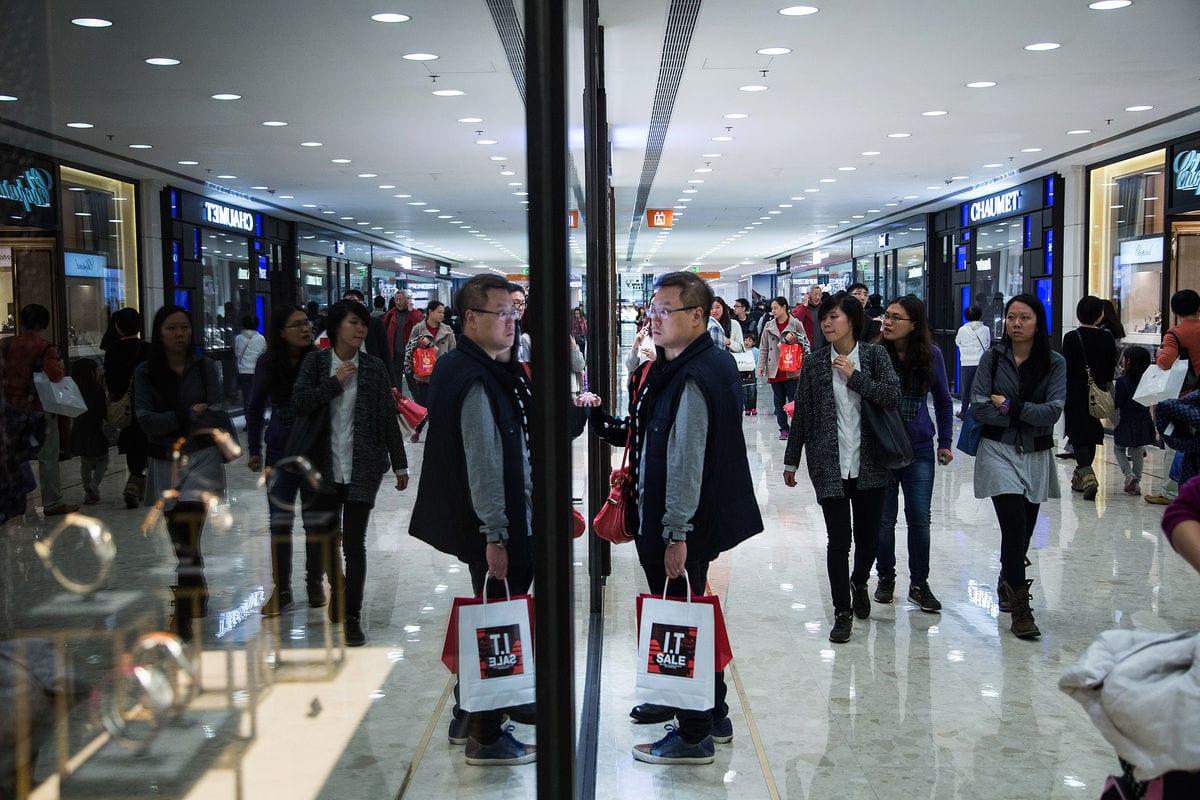
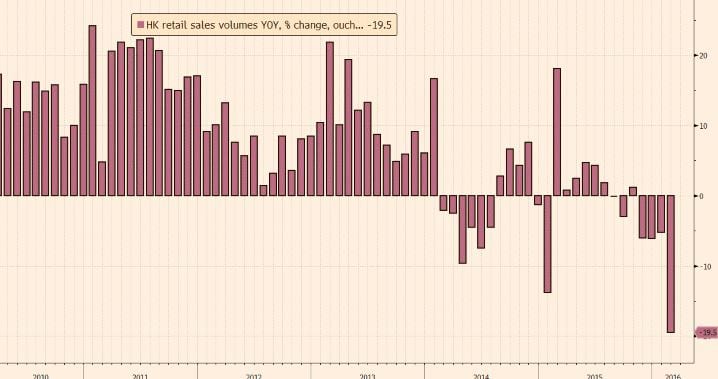
    Hong Kong retail sales plummeted 8.5 per cent year on year in December, ending a dismal year for retailers.

    It followed a revised 7.8 per cent fall in November.

    For the full 2015 year, Hong Kong retail sales fell 3.7 per cent in value and 0.3 per cent in volume according to data released by the Census and Statistics Department (C&SD).

    The value of total retail sales in December 2015 was provisionally estimated at $43.7 billion.

    And a government spokesman, commenting on the data, warns there is little chance of respite in the short term.

    “Apart from the continued slowdown in inbound tourism, the uncertain economic outlook and asset market corrections may also have dented local consumption sentiment.

    “Looking ahead, the near-term outlook for retail sales will still be constrained by the weak performance of inbound tourism,” he said.

    “The negative spillovers on consumer sentiment from the consolidation of asset markets in recent periods, as well as from external headwinds including dimmer global economic prospects amid the US interest rate normalisation, also need to be closely watched.

    “The government will continue to monitor the performance of retail business and its repercussions on the wider economy and the job market.”

    After netting out the effect of price changes year on year, the volume of total retail sales in December decreased by 6.1 per cent. The revised estimate of the volume of total retail sales in November 2015 decreased by 6 per cent.

    Sales of jewellery, watches and clocks and valuable gifts decreased by 17 per cent. This was followed by sales of wearing apparel (down 12.1 per cent); commodities in department stores (down 12.3 per cent); medicines and cosmetics (down 7.5 per cent); electrical goods and photographic equipment (down 9.3 per cent); miscellaneous consumer durable goods (down 10.6 per cent); footwear, allied products and other clothing accessories (down 8.7 per cent); furniture and fixtures (down 3.3 per cent); books, newspapers, stationery and gifts (down 1.6 per cent); Chinese drugs and herbs (down 6.1 per cent); and optical shops (down 3.8 per cent).

    The only categories to improve year on year in December were groceries: Sales of commodities in supermarkets increased by 3.6 per cent and of food, alcoholic drinks and tobacco by 1.1 per cent.

    On a full year basis, the value of sales of jewellery, watches and clocks and valuable gifts decreased by 15.6 per cent. This was followed by sales of wearing apparel (down 7.2 per cent); commodities in department stores (down 4.1 per cent); medicines and cosmetics (down 1.9 per cent); footwear, allied products and other clothing accessories (down 4.1 per cent); books, newspapers, stationery and gifts (down 2.6 per cent); furniture and fixtures (down 1.8 per cent); Chinese drugs and herbs (down 5.5 per cent); and optical shops (down 3.6 per cent).

    Supermarkets sales rose 1.3 per cent; food, alcoholic drinks and tobacco rose 5.9 per cent; and electrical goods and photographic equipment by 3 per cent.

    The C&SD says the retail sales statistics measure the sales receipts in respect of goods sold by local retail establishments and are primarily intended for gauging the short-term business performance of the local retail sector. They cover consumer spending on goods but not on services (such as those on housing, catering, medical care and health services, transport and communication, financial services, education and entertainment) which account for about 50 per cent of the overall consumer spending. Moreover, they include spending on goods in Hong Kong by visitors but exclude spending outside Hong Kong by Hong Kong residents. Hence they should not be regarded as indicators for measuring overall consumer spending.

  • Korean Manufacturers Witnessing More and More Idle Production Facilities

    Korean Manufacturers Witnessing More and More Idle Production Facilities

    It has been found that Korean manufacturing companies’ rate of operation reached a record low since the IMF bailout in 1998 due to the sluggish exports and domestic consumption.

    Under the circumstances, the manufacturers’ investment is forecast to decline to cause an increase in unemployment and the slowdown of the national economy as a whole.

    The Statistics Korea announced on February 11 that Korean manufacturers posted an average rate of operation of 74.2% last year, down 1.9 percentage points from a year ago, with their exports showing no signs of recovery amid the global economic recession. The percentage of 2015 was the lowest since 1998.

    According to the Bank of Korea, Korea’s total exports decreased by no less than 10.5% year-on-year to US$548.93 billion last year. Besides, Korea’s exports to the emerging markets including China, which account for 60% of the total exports, showed a decline of 7.9% in 2015.

    Sluggish domestic consumption is another reason for the low operating ratio of the manufacturing firms. According to the Statistics Korea’s report that was released on January 29, Korea’s retail sales index fell 1% from a month ago in November last year and 0.1% in the following month.

  • Worst post-Lunar New Year sell-off in 22 years

    Worst post-Lunar New Year sell-off in 22 years

    The Hong Kong stock market saw the worst post-Lunar New Year session in 22 years on Thursday, a day after U.S. Federal Reserve chair Janet Yellen confirmed fears of a global slowdown in her testimony to Congress.

    Yellen raised the likelihood that U.S. interest rate hikes will be put on hold and possibly even cut over concerns about external risks to the U.S. economy and convulsions across stock markets worldwide.

    “Foreign economic developments, in particular, pose risks to U.S. economic growth,” said Yellen, referring to the debilitating effects of China’s economic slowdown, most remarkably, in dragging commodities prices down.

    On the back of those comments, the Hong Kong bourse reopened after a three-day break to a sharp sell-off, with the benchmark Hang Seng Index shedding 3.8% to close at its lowest level since June 2012 at 18,545.80. The Hang Seng China Enterprise Index of Hong Kong-listed mainland companies fell 4.9% to end at 7,657.92.

    The city’s blue chips fell almost across the board, with technology company Lenovo Group, which recently posted disappointing top-line growth, leading the decline with a 6.7% drop to 6.35 Hong Kong dollars.

    Financials and oil stocks bore the brunt of the selldown. China Life Insurance slumped 6.6% to HK$16.44. Other insurers such as Ping An Insurance Group and AIA Group lost 5.6% at HK$39.15 and 3.7% at HK$37.95, respectively.

    HSBC fell 5.44% to HK$49.50. Its Chinese counterparts Agricultural Bank of China, China Construction Bank, Bank of China, and Industrial and Commercial Bank of China all dropped about 4% over worries about a mounting credit crisis on the mainland.

    China’s largest oil refiner China Petroleum & Chemical (Sinopec) skidded 6.4% to HK$4.10, while other mainland energy giants, PetroChina, CNOOC and China Shenhua Energy slipped more than 5%.

    Of all the property stocks, China Vanke took the deepest plunge to close 8.92% lower at HK$1.58, while China Overseas Land & Investment was down 4.3% to HK$21.10.

    Consumer stocks such as Belle International, Hengan International and Tingyi Holding all lost around 6%. A fierce riot in Mongkok, one of the most popular shopping districts in Hong Kong, during the holidays has hurt sentiment toward the city’s already-battered retail sector.

    Mainland internet and telecom heavyweights such as Tencent Holdings and China Mobile were not able to escape the selling pressure, falling 5.4% to HK$136.10 and 3.1% to HK$82, respectively.

    Bad news from China also contributed to the sell-off. Before the holiday, the People’s Bank of China reported that the country’s foreign exchange reserve had fallen to $3.23 trillion in January, the lowest level since 2012, depleted by the central bank’s defense of both its currency and stock market.

    On Wednesday, Yellen’s comments were scrutinized for clues about future interest rate direction. She said that “monetary policy is not on a pre-set course,” suggesting that a rate cut could be considered if necessary. Overnight, the Dow Jones Industrial Average and the S&P 500 indexes ended slightly down, posting their fourth consecutive day of losses, while the Nasdaq ended three days of decline.

    Investors looking for safe havens in the risk-off environment pushed the spot gold price up to $1,207.6, the highest level since May 22.

    While mainland China and Taiwan markets remained shut for the Chinese New Year holiday until next week, most bourses across Asia faltered.

    South Korea, which also reopened after a long Lunar New Year break, saw its benchmark Kospi Index lose 2.9%. Singapore’s Straits Times Index and Thailand’s SET index dropped 1.7% and 1.84%, respectively. India’s Sensex Index closed 3.3% lower to its weakest level since May 2014.

    The Indonesian and Philippine markets were the only ones bucking the trend, rising 0.9% and 0.3%, respectively.

  • J. Cort’s cements Part&Ma tie-up at CDG

    J. Cort’s cements Part&Ma tie-up at CDG

    Cigar house J. Cortès is intensifying its cooperation with commercial animation company, Part&Ma, at Lagardère Travel Retail stores at Paris Charles de Gaulle airport following good growth in 2015.

    This year, the partnership will reach a higher level to support the brands, J.Cortès and Neos, “with monthly reports and immediate interaction assuring that travellers will always find their products on the right spot, labelled with the right price” says Thomas Gryson, J. Cortès Travel Retail Coordinator.

    J.Cortès has invested in product training for Part&Ma staff (pictured) in Belgium where they had intensive and interactive sessions on the brand’s products and sales programmes. Later the group was taken to the cigar factory, Neos in Handzame, to see all aspects of the production of cigars/cigarillos.

    “J.Cortès Cigars is supporting its travel retail business by investing in many areas,” says Gryson. “One of the important is training the staff of airport shops and their partners. J. Cortès strongly believes that knowledge is the start of everything.”

    Last year the house invested in customised product and sales workshop for the staff of WDFG Queen Alia Airport, Jordan and for DFS staff at Changi, Singapore.

  • Eu Yan Sang reports 75% plunge in Q2 net profit

    Eu Yan Sang reports 75% plunge in Q2 net profit

    Mainboard-listed Eu Yan Sang International said on Friday (Feb 12) its net profit for the second quarter plummeted 75 per cent, hurt by a weak Malaysian ringgit and lower revenue from the Hong Kong market.

    Net profit for the three months to Dec 31 was S$498,000, down from S$1.98 million in the same period a year ago.

    Revenue, however, was up 1 per cent at S$85.61 million, compared with S$84.69 million a year ago, mainly due to higher sales from Singapore and Australia.

    Revenue from Hong Kong declined 13 per cent in the quarter, due to a decline in spending by mainland Chinese tourists and the “ongoing challenging retail environment”, the company said. This was partially offset by the strong Hong Kong dollar, which helped to reduce the revenue decline to 5 per cent when translated to Singapore dollars.

    Revenue from Malaysia rose 14 per cent due to higher sales, but as a result of the weak ringgit, was down 8 per cent when translated into Singapore dollars.

    In Australia, revenue rose by 18 per cent due to an increase in the number of outlets and higher sales. However, the appreciation of the Singapore dollar against the Australian currency resulted in only an 8 per cent increment in revenue in Singapore dollars, Eu Yan Sang said.

    Revenue from Singapore improved by 13 per cent during the quarter, due to the launch of new products and promotional campaigns.

    “Despite the challenging business environments in key markets of Hong Kong and Malaysia, we are glad that Hong Kong’s rate of decline is showing signs of moderation and an improvement in Malaysia. Singapore and Australia have continued to show positive growth and added resilience to our Group’s results,” Group CEO Richard Eu said.

    The company plans to expand its retail network in Australia and Malaysia, and will also launch several joint ventures in China to boost its growth in the Chinese market, he added.

    Looking forward, Eu Yan Sang said it remains cautious on its business outlook. The company plans to reduce costs through the “rationalisation” of weak performing retail outlets, while continuing to improve its operational efficiency through technology, it said.

  • Sistema floats $50M Asia fund to invest in niche retail technology

    Sistema floats $50M Asia fund to invest in niche retail technology

    sistema

    Russia-based Sistema has floated a $50 million Asia Fund to invest in startups in India and Asia, reports ET. The company will focus on making Series A to Series C investments in the technology and niche consumer retail sectors.

    Sistema mentions that the size of the fund is expected to be increased once the startup financing business grows. The fund will be advised by Insitel Services, a fully owned subsidiary of Sistema. Andrey Terebenin, former Sistema executive board member, has relocated to India as senior managing partner of Insitel to oversee the Asia Fund.

    Last month, Reliance Communications (RCOM) received permission for its merger with Sistema Shyam Teleservices Limited (SSTL), which operates as MTS in India, from the BSE and the NSE. The merger was first announced in November, under which MTS would hold 10% equity stake in Reliance Communications.

    In April last year, the company said it would provide free WiFi access for travelers at Varanasi, Ahmedabad, Agra, Mumbai CST, Howrah and Secunderabad railway stations.

    Some of the other funds in India:

    – Last month, VC firm Norwest Venture Partners (NVP) announced its latest fund Norwest Venture Partners XIII at $1.2 billion.

    – The same month, we reported that Storm Ventures had launched a new fund for software-as-a-service (SaaS) startups in India, with an allocation of at least $10 million for the fund.

    – In January, Unicorn India Ventures finished a first close of Rs 40 crore on its Rs 100 crore fund, which plans to invest in verticals like mobile, social media, analytics, cloud tech and Internet of Things (IoT).

    – In December, Mumbai-based seed fund investor Blume Ventures raised $30 million for its Fund II. The firm is targeting to raise an overall fund of $60 million by March.

    – In the same month, industrialist Sudhir Menon and digital marketer Atul Hegde set up a new $50 million early stage start-up fund called Rainmaker Ventures

    – The same month, China’s APUS Group launched a fund in India worth Rs 300 crore to invest in startups.

    – Tiger Global Management raised $2.5 billion for a new global fund. Read more here.

  • Thai conglomerate buys Big C for $3.4bn

    Thai conglomerate buys Big C for $3.4bn

    BANGKOK — Marking its first full-fledged step into the retail market, Thai conglomerate Thai Charoen Corporation (TCC) Group, owned by alcohol tycoon Charoen Sirivadhanabhakdi, has agreed to buy a majority stake in supermarket operator Big C Supercenter for 3.1 billion euros ($3.4 billion), excluding debts, from France’s Casino Group.

    Big C operates roughly 700 supermarkets, including 125 hypermarkets, throughout Thailand and is the second largest supermarket operator after Tesco Lotus, owned by the U.K.’s Tesco.

    According to a Casino Group release, Big C shares are valued at 252.88 baht ($7.1) per share, a 28% premium to the share price on Jan. 14 when Casino Group initially announced the disposal of its 58.56% stake, currently held through two local subsidiaries. The deal is to be closed by the end of March.

    TCC Group is the parent company of Thai Beverage, the flagship alcohol and beverages company known for its Chang beers.

    Billionaire Charoen has been expanding his reach within the Association of Southeast Asian Nations, including the 2013 takeover of Singapore beverage company Fraser and Neave, but until now his retail operations have been relatively small. In January, the group completed its acquisition of German cash-and-carry chain Metro’s Vietnamese unit.

    The Big C acquisition in Thailand, where consumers have a higher purchasing power than neighboring countries, will likely boost the conglomerate’s retail operations. Big C is expected to become a channel for the promotion of products of other companies within the group, such as Thai Beverage, F&N and Berli Jucker.

    The 28% premium may seem a somewhat high, but analysts say that this was one of the few chances left for Charoen to make a move into the Thai retail sector.

    After Carrefour’s Thai business was acquired by Big C in 2011 and Siam Makro, another cash-and-carry chain under a Dutch trading company was purchased by Charoen Pokphand Group in 2013, Big C and Tesco were the only foreign-owned retailers whose stake holdings could be put up for sale.

    “All the big family conglomerates are eager to acquire these foreign holdings,” Anuwat Srikajornratkul, analyst with Asia Plus Securities, said. “The retail market is already saturated and the best way to expand is to acquire an existing brand instead of building new brands,” he explained.

    Agribusiness conglomerate Charoen Pokphand Group, which runs Thailand’s Seven Eleven stores, is reportedly seeking to acquire Tesco Lotus.

    Casino Group, meanwhile, is expecting to reduce its debt by 3.3 billion euros through the sale. As part of its restructuring plan, it is also considering the disposal of its stake in Big C’s Vietnamese unit. Analysts speculate that TCC Group will likely compete for that acquisition too.

    Following the announcement, Big C shares shot up by 10% to 251 baht, a one-year-high during Monday’s trading hours. Berli Jucker shares soared nearly 20% also closing in to a one-year-high. Thai Beverage had no trading Monday as it is listed on the Singapore bourse, which was closed for the Lunar New Year holiday.

    According to Thai regulations, TCC Group will have to conduct a tender offer for all the remaining Big C shares after the deal is closed.

    Local media had reported that Thailand’s largest retailer Central Group was also interested in purchasing the Big C stake. Central initially founded Big C in Thailand and opened its first store in 1994. However, in the wake of the Asia Financial Crisis, it sold most of its stake to Casino Group in 1999.

    Central is also reportedly interested in bidding for Big C Vietnam.

    Central owners the Chirathiwat family currently hold a minority stake in Big C Thailand. Analysts say that the family could sell off all its remaining stake through TCC’s tender offer.

  • Emperor Akihito’s visit to Manila

    Emperor Akihito’s visit to Manila

    At the State Dinner in his honor hosted by President Aquino at Malacañang, Japan’s Emperor Akihito offered a toast to President Aquino for the “good health and happiness of the Filipino people” and said that Japan must never forget the loss of Filipino lives in World War II.

    The 82-year-old Emperor’s last trip to the Philippines was 52 years ago, when he was still Japan’s Crown Prince. This time he came with his wife, Empress Michiko, for a five-day visit which included side trips to the International Rice Research Institute at Los Baños, and to Baguio and Tagaytay. On each of his trips to the Philippines, the Emperor has included a visit to the Tomb of the Unknown Soldier at the Libingan ng mga Bayani at Fort Bonifacio. “Japan will never forget the loss of Filipino lives during World War II,” he told his audience at the State Dinner. “And I continue to enhance mutual understanding and friendly ties with the Philippines.”

    Referring to his earlier visit a half century ago, the Emperor said: “To this day the memory of the warm smiles we received from His Excellency, President Macapagal, and the First Lady, as they stood by our plane when we arrived at Manila Airport and the warm welcome we received from the people of the Philippines remain deep in our hearts.”

    The Emperor recalled that the Philippines’ National Hero, Jose Rizal, who spent a month and a half in Japan, and later wrote that he envisioned that the two nations would eventually engage in a full-fledged relationship.

    At a private meeting in Malacañang, President Aquino and the Emperor discussed the Emperor’s earlier visit to the Philippines in 1962, when he was still the Crown Prince. They also talked about Japan’s vast automobile sales to the Philippines, and the establishment of Japan’s retail store, Uniqlo, here in Manila.

    President Aquino and Foreign Secretary Albert del Rosario also spoke of the significant increase in the number of visitors from Japan to the Philippines, and from the Philippines to Japan.

    Today, Japan is the Philippines’ largest trading partner and its top donor of foreign aid.

    This was the first visit by an Emperor of Japan to the Philippines.

  • South Korean home shopping channel to launch in Thai market

    South Korean home shopping channel to launch in Thai market

    South Korean High Shopping Co, a joint venture between InTouch Media and Hyundai Home Shopping, is set to become the third South Korean home shopping operator to enter the Thai market, with a launch in Vietnam slated for the second quarter of 2016.

    High Shopping’s goal is to be among the top three players in Thailand’s 20-billion-baht home shopping market by 2020, according to the Bangkok Post. “Thailand’s home shopping market has a lot of potential, with annual 20 percent growth to reach 20 billion baht in 2020, double the revenue last year,” explained Lee Hae-seung, High Shopping’s Chief Executive.

    Home Shopping currently represents just 0.5 percent of Thailand’s retail industry, compared to 4 percent in South Korea. High Shopping is predicting that, of the 2,500 products it will offer for sale by mid-2016, cosmetics and kitchenware will be the best-sellers.

    The inventory will initially be made up of premium Korean brands, with international brands once the channel is established. The shopping channel is hoping to achieve sales of THB4.5 billion by 2020, with a 25 percent market share.

    The company is planning to broadcast on satellite TV platforms initially before expanding to cable and mobile devices.

  • IFC to provide $25m funding for Myanmar’s largest retail group City Mart

    IFC to provide $25m funding for Myanmar’s largest retail group City Mart

    Currently, CMHL has over 150 retail outlets in the country and plans to construct about 20 more supermarkets and hypermarkets over the next three years.

    Its plans are “to increase its purchases from domestic suppliers six fold, reaching around $150 million by 2021, and create nearly 4000 new jobs, half of which will be for women,” according to the filing.

    IFC hopes that CMHL’s expansion in the retail sector in the country, will help create jobs, develop supply chain and logistics infrastructure and support smaller businesses.

    “With our global expertise and industry knowledge, we will be delighted to work with CMHL to improve efficiency and standards to become a model retailer in Myanmar,” said Vivek Pathak, IFC’s regional director for East Asia and Pacific.

    CMHL’s shareholders are Win Win Tint, the founder and managing director and her relatives.

    “IFC’s investment is a sign of confidence in our business plan as well as in Myanmar’s retail sector potential,” said Win Win Tint. “In addition to funding, IFC’s expertise and advice on food safety, good social and environmental practices and corporate governance will also help us take the company to the next level.”

    Myanmar has a $12 billion retail sector that is predominantly informal with formal retailers holding less than 10 per cent of the market, according to the filing.

    IFC is supporting reforms and investments in Myanmar, to strengthen the private sector and create new jobs for poverty reduction and boost shared prosperity. IFC works together with the government, private sector to improve the investment climate, access to finance and infrastructure. Their initial focus is on power and telecommunications.

  • Monkey See, Monkey Do

    Monkey See, Monkey Do

    The Chinese New Year – the Year of the Monkey – has passed. The Gregorian calendar year has gotten off to a somewhat inauspicious start – certainly as far as commodities are concerned (although diamonds seem to have bucked that trend somewhat), so what is in store over the next 12 months?

    People born in the Year of the Monkey are characterized as quick-witted, curious, innovative and mischievous – all important traits (yes, including the mischievous) in running successful businesses. However, and this information might not be welcome news, it is also considered one of the unluckiest years in the Chinese calendar – if only we could go back to the Year of the Dragon, considered the luckiest of all the Chinese signs.

    The Chinese New Year comes at a bit of a crossroads as far as retail is concerned, both in mainland China and on the island city of Hong Kong. Recent stock market turbulence and a devalued yuan, which has hit retail sales in Hong Kong, causing a second consecutive annual decline, have contributed to a degree of uncertainty.

    Hong Kong has seen its dollar strengthening against the yuan, making it more expensive for mainlanders to shop there, with sales of jewelry and watches slumping 16 percent over the year. The Lunar New Year celebrations herald peak tourism season – with as many as 5 million visitors during the month =  with day trips from the mainland accounting for more than half of those.

    However, despite what might seem like slightly gloomy economic news, a growing middle class and increased disposable income has led to projections of Chinese consumption topping $2.3 trillion by 2020. A recent Forbes article estimated that according to the Hong Kong Trade and Development Centre (HKTDC), China’s share of diamond consumption is expected to increase 20 percent to 25 percent over the next 10 years.

    The HKTDC also said that more than 50 percent of jewelry sales are driven by weddings, with the bridal market being a unique segment in the jewelry retail industry. A surprising statistic also emerged from a recent De Beers survey; that 67 percent of men in China between the ages 30-44 said that they wanted to own diamonds. There is an opportunity here if brands can not only tap into the existing market, but push the idea of his and hers wedding bands. Interest and receptivity is already high, and perhaps it only needs a gentle nudge to really expand the bridal market further.

    In general, as Chinese consumers are increasingly exposed to luxury goods they have become more discerning about brands and the message they project – with exclusivity being a big selling point. According to a LuxuryDaily report, Hermès is considered the most exclusive brand, measured by a range of factors including the consistent quality of goods, brand prestige, valuation of the brand’s customers and its ability to justify a high price point. Although Hermès was considered the most exclusive brand, Chanel was thought to be the most desirable – a result that may have been influenced by Chanel’s brand exhibitions within China.

    So, with positive predictions about Chinese consumption and growing brand awareness and appreciation for luxury goods, perhaps the Year of the Monkey will turn out alright in the end. Its lucky colors can all be found in diamonds and jewelry – blue, gold and white. Famous monkeys include Julius Caesar, Charles Dickens and Elizabeth Taylor and if their successes can be mirrored, the Year of the Monkey won’t be half bad at all.

    Happy belated Chinese New Year.

  • Formoso new chairman of Asia Pacific Retail organization first for Philippines

    Formoso new chairman of Asia Pacific Retail organization first for Philippines

    Formoso becomes the first Filipino to chair this Asia Pacific Federation. The FAPRA consists of the recognized national retail trade organizations in 18 member-economies – Australia, China, Chinese Taipei, Fiji, Hong Kong, India, Indonesia, Japan, Korea, Malaysia, Mongolia, Myanmar, New Zealand, the Philippines, Singapore, Thailand, Turkey, and Vietnam.Formoso, COO of Duty Free Philippines, has assumed the FAPRA chairmanship from Mehmet T. Nane, chairman of the Turkish Council of Shopping Centers and Retailers and CEO of CarrefourSa, who formally turned over the Federation’s leadership to him during elaborate ceremonies at the recently concluded Asia Pacific Retailers Convention and Exhibition (APRCE) 2015 that Manila hosted last October. The APRCE is the biggest and longest running retail industry event in the region.

    “As a veteran in the retail industry and being the concurrent president of PRA, we are confident Formoso’s chairmanship of FAPRA would be very productive.  We are sure he will guide the FAPRA in the same way he ably shepherded the PRA,” the PRA Board said.

    Formoso also sits in the board of the Asia Pacific Travel Retail Association.

    Turkey held the FAPRA chairmanship for two years – from 2013, the year it hosted the APRCE, to 2015, the year the Philippines hosted it.  The Chairmanship of FAPRA devolves  to the immediate past host of the APRCE.

    The Philippines chairs the FAPRA until 2017.

    The FAPRA was founded in 1989. It has implemented various initiatives and programs designed to develop itself and promote information exchanges and sharing experiences and concerns towards the development of the retail industry and improving the retailers’ status and the welfare of their clients in the region.

    As new FAPRA Chairman, Formoso now presides over the Federation’s policies and programs aimed at helping promote the growth and development of retailing in the Asia Pacific region.