Category: General

Retail News Asia is committed to providing both local and global retailers with the latest General Retail news throughout the Asian market. This on a daily base.

  • Fans will love the new Nintendo Today app available now

    Fans will love the new Nintendo Today app available now

    For those of you who consider yourself big Nintendo fans, you might want to mosey on down to the App Store or the Google Play Store depending on whether you have an iPhone or Android device. The Japanese gaming and entertainment company has listed a new app called Nintendo Today! that is available now for both iOS and Android users. While the app will give you the daily diet of Nintendo news that you crave, there will be daily content related to the Switch 2 after that device is unveiled on April 2nd.

    The app is actually an animated calendar that allows you to choose different themes based on Super Mario, The Legend of Zelda, Animal Crossing, Splatoon, and Pikmin. The app also delivers news, and comics starring your favorite Nintendo characters and games. Each day, the user will see animation that includes his favorite Nintendo characters which will show the day of the week and the current date.

    To use the Nintendo Today! app, you will need to have a Nintendo account and a compatible smartphone. Besides the calendar and the daily Switch 2 content (again, this will start after the device becomes official on April 2nd) the app will include an event schedule giving you the date and time of future Nintendo Direct presentations. More importantly, you’ll find out the dates of future game releases, in-game events, and more.

    After installing the app on your iOS or Android hanset, you’ll be able to make your phone’s home screen more exciting by adding a calendar widget that displays art from your favorite Nintendo game series. The app is free although you might see some advertising. You will need to have your iPhone updated to iOS 16 or later. The Android version of the app requires Android 9 or higher.

    The app right now is showing a render of the Switch 2 and it includes the mysterious “C” button on the right “Joy-Con that was previously unmarked. While internet sleuths have been taking guesses, no one can figure out exactly what the button does. Some say it is for a rumored new “Chat” feature but we probably won’t know for sure until April 2nd when the Switch 2 is unveiled. And once that happens, those iOS and Android users who have installed Nintendo Today! will get news about the new hybrid gaming device every day.

  • Singapore experiences warmest year on record in 2024

    Singapore experiences warmest year on record in 2024

    In 2024, Singapore’s annual average temperature was 28.4 degrees Celsius, making it the warmest year on record, tied with 2019 and 2016, according to the Singaporean National Environment Agency.

    According to the agency’s annually report released on March 23, every month in 2024 was equal to or warmer than its corresponding long-term average temperature. Temperature records were broken on several occasions during the year, with record high daily minimum temperatures in February and record high daily maximum temperatures in December.

    The preceding decade from 2015 to 2024 was the country’s warmest decade on record, at 28.11 degrees Celsius. This was 0.05 degrees Celsius warmer than the decade from 2014 to 2023, and the fourth consecutive year that Singapore’s decadal mean temperature record had been broken.

    The report emphasized that while climate change contributed to warmer temperatures, climate variability in 2024 also played a role.

    The El Niño event that developed in 2023 and ended in the second quarter of 2024 likely contributed to the warm temperatures in 2024, including during Singapore’s hot season (March – May), which was the third warmest hot season on record, after 1998 and 2016 which were also associated with strong El Niño events.

    It is noted that Singapore’s annual temperature trend in 2024 was similar to the global trend recently reported by the World Meteorological Organization. Accordingly, the year 2024 was declared the warmest year on record globally since 1850.

  • Thailand to tax influencers and online sellers

    Thailand to tax influencers and online sellers

    The Thai Revenue Department has urged social media influencers and online sellers to file their annual income tax by the end of March to avoid fines and penalties.

    Director-General Pinsai Suraswadi expressed concern that many young earners, including e-commerce vendors, influencers, and product reviewers, have never filed income tax returns.

    Thailand’s e-commerce platforms, such as Shopee, Lazada, and TikTok, host around 3 million online sellers, while an estimated 2 million full-time influencers and content creators generate billions in revenue. A recent survey found that many in this group, particularly younger individuals, fail to report their earnings or pay taxes.

    Pinsai warned that the Revenue Department can audit records up to five years back and that failure to file tax documents will lead to penalties. However, he reassured earners that filing errors can be corrected.

    A study by Tellscore, FutureTales LAB, and the Thailand Institute for Mental Health Sustainability (Tims) estimated that Thailand’s content creator industry contributes at least THB45 billion (US$1.25 billion) annually to the economy.

    The country has around 2 million full-time content creators, rising to 9 million when part-time creators and “micro-influencers” are included.

  • Costco is pressuring Mainland China suppliers to cut prices as tariffs loom

    Costco is pressuring Mainland China suppliers to cut prices as tariffs loom

    The Financial Times reported on Tuesday, citing two suppliers, that Costco Wholesale is pressuring mainland China suppliers to cut prices in response to US tariffs.

    This follows Beijing officials meeting with Walmart earlier this month to discuss media reports that the US retailer asked Chinese suppliers to slash prices to offset tariff impacts.

    Costco’s chief executive officer, Ron Vachris, said during their quarterly earnings call earlier this month that the company would consider modifying its international supply chain if tariffs result in significant price increases.

    According to Vachris, about one-third of Costco’s US sales come from products imported from other countries, with less than half of that originating from China, Mexico, and Canada.

    Costco did not immediately respond to a Reuters request for comment.

  • China retail sales improve as Beijing looks to consumers to ease trade pressure

    China retail sales improve as Beijing looks to consumers to ease trade pressure

    China’s retail sales growth quickened in January-February in a welcome sign for policymakers’ efforts to boost domestic consumption even as joblessness rose and factory output eased, underscoring the strains on an economy facing fresh US tariff pressure.

    Policymakers have put expanding domestic demand as the top priority this year as they try to cushion the impact of the Trump administration’s tariffs on its crucial export engine.

    China’s top leaders have maintained an economic growth target of “around 5 per cent” for 2025, but analysts say that may be a tall order given pressure on exports, tepid household demand and a protracted property crisis.

    The data followed weaker-than-expected exports and inflation indicators earlier this month, highlighting the need for more policy support to foster a sustainable economic recovery.

    “The risk to the economy is the damage from higher US tariffs on China’s exports which will likely show up in the trade data over the next few months,” said Zhiwei Zhang, chief economist at Pinpoint Asset Management.

    “I think Beijing will continue its current policy stance. There is no urgency to loosen monetary policy by cutting RRR or interest rate at this stage,” he said, adding that policymakers may choose to wait for a few months before cutting rates given the trade uncertainties.

    Data released by the National Bureau of Statistics (NBS) on Monday showed retail sales, a gauge of consumption, rose 4 per cent in the January-February period, better than a 3.7 per cent rise in December and marking the quickest rate since November 2024. Analysts had expected retail sales to grow 4 per cent.

    Household consumption in the first two months was buoyed by holiday spending during the 8-day Lunar New Year holidays, when China’s box office raked in record takings with animated hit “Nezha 2”.

    In the annual parliament meeting earlier this month, China’s leaders pledged stronger fiscal and monetary support for the economy, with a particular emphasis on spurring domestic consumption.

    Among other measures, they have lined up 300 billion yuan (US$41.5 billion) for a recently-expanded consumer goods trade-in scheme for electric vehicles, appliances and other goods.

    “Retail sales growth was decent, reflecting the vital role of subsidies in supporting home appliance and mobile phone sales,” said Tianchen Xu, senior economist at the Economist Intelligence Unit.

    However, the effect of the scheme may “fade over time”, with auto sales already down in the first two months, he added.

    The NBS data showed home appliance and audio-visual device sales grew 10.9 per cent, compared with December’s 39.3 per cent jump. Catering revenue, however, rose 4.3 per cent underpinned by the festival boost, faster than the 2.7 per cent rise in December.

    On Sunday, China unveiled a “special action plan” to boost domestic consumption, featuring measures including increasing residents’ income and establishing a childcare subsidy scheme.

    Officials from the country’s top economic ministries will brief media on consumption-boosting measures later on Monday.

    Chinese stocks were roughly flat as investors assessed the mixed set of economic data.

    Unemployment, Trump woes

    Highlighting the stress facing households, the urban survey-based jobless rate in February climbed to 5.4 per cent, the highest in two years.

    US president Donald Trump has piled an additional 20 per cent of tariffs on all Chinese goods and is threatening more action. Exports were one of the lone bright spots for China’s economy last year.

    With factories shutting down temporarily during the Lunar New Year holidays, China’s industrial output grew 5.9 per cent year-on-year in the first two months, slowing from the 6.2 per cent expansion in December. However, it was ahead of expectations for a 5.3 per cent rise.

    China publishes data for the two months in a combined release to smooth out the impact of the LNY holidays, which fall in either of the two months.

    Fixed asset investment, which includes property and infrastructure investment, expanded 4.1 per cent in the January-February period year-on-year, versus expectations for a 3.6 per cent rise. It grew 3.2 per cent in 2024.

    The real estate sector, while showing some improvement, remained frail and underlined the low investor confidence.

    Property investment fell 9.8 per cent in the first two months of 2025 year-on-year, after tumbling 10.6 per cent in 2024. An NBS spokesperson said the country’s housing market faces some pressure despite signs of stabilising.

    That suggests policymakers will have their work cut out in their efforts to keep the economy on an even keel amid the threat of more US tariffs.

    In a note to clients, Goldman Sachs analysts said the boost from exporters’ frontloading late last year may have subsided and the adverse effect from higher US tariffs may have started to kick in.

    “January-February activity data and our high-frequency tracker for early March pointed to a modest slowdown in sequential GDP growth momentum in the first quarter vs the fourth quarter in 2024.”

    For 2025 as a whole, some analysts say the growth impulse could be uneven.

    “China’s economy had a decent start to the year, likely driven by fiscal stimulus,” said Zichun Huang, China economist at Capital Economics.

    “We expect the recovery to continue over the coming months, but given the wider headwinds weighing on China’s economy, we don’t expect any near-term improvement to be sustained for long.”

  • Indonesia to convert waste into fuel, power in 30 big cities

    Indonesia to convert waste into fuel, power in 30 big cities

    Indonesian Deputy Minister of Energy and Mineral Resources Yuliot Tanjung said that the government is targeting to process waste into fuel and electricity in 30 big cities by 2029.

    He added that each city can produce around 20 megawatts of electricity. The products obtained from waste processing will not be limited to electricity but also include fuel oil, which will be produced using pyrolysis technology.

    According to the official, waste can be converted into electricity and fuel oil through integrated waste processing with the help of technology.

    Earlier, the Ministry of Environment informed that the acceleration of waste utilization into energy is expected to support waste management efforts in regions, supported by new regulations regarding electrification.

    The government is unifying three presidential regulations related to waste management to support the utilization of waste to produce electrical energy through waste power plants.

  • Google Messages group conversations are about to become so much merrier

    Google Messages group conversations are about to become so much merrier

    The more people there are in a group chat, the more fun it is, but Google Messages’ current way of adding new contacts is quite tedious. Google is apparently working to make it easier to grow your group chats.

    Code in the latest beta version of Google Messages for Android hints that in the future, you might be able to join group chats using links, similar to how you can on WhatsApp.

    Android Authority, which came across this feature, was not able to activate it, which might suggest it could be a while before actually see it in action.

    People often create work groups or class groups on messaging apps, and since the pool of people who could be added to such groups is quite large, it’s easy to unintentionally leave some people out. This could cause friction with them and most importantly, they might miss out on critical or time-sensitive messages. A “join via link” feature would address this.

    Other changes are seemingly also in store for the apps. To bring uniformity to the design, the forward message screen might be switched to a card-based interface. Earlier reports suggest that the search UI and the start chat screen will also get the same treatment.

    Some other minor tweaks were also spotted. The profile info screen has been slightly updated and features filled icons. There is a little pencil icon beside the group chat picture, to make it easier for you to change the group chat image.

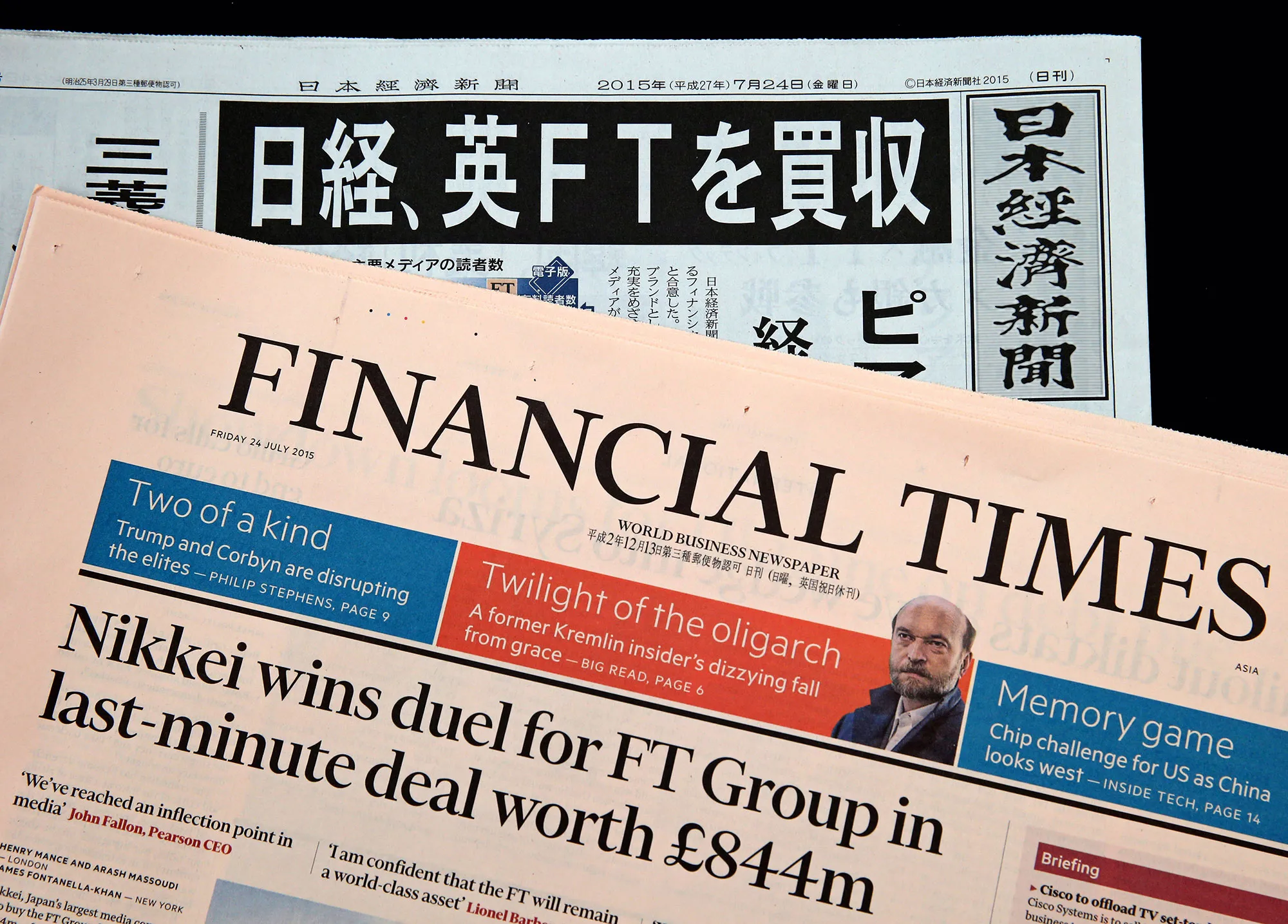
  • Financial Times to reopen Vietnam bureau

    Financial Times to reopen Vietnam bureau

    The London-based Financial Times (FT) was granted a license to reopen its permanent office in Vietnam at a ceremony held at the Ministry of Foreign Affairs on Wednesday.

    At the event, Deputy Minister of Foreign Affairs Le Thi Thu Hang commended the newspaper for its past contributions to connecting Vietnam with the U.K. and the wider world. She expressed her confidence that with its professionalism, credibility, and coordination with the ministry and other Vietnamese Government bodies, the FT would continue to play a key role in strengthening bilateral ties and promoting Vietnam’s image globally.

    The Deputy Minister stressed that Vietnam is entering a new era – the era of the nation’s rise and hoped that the FT would help spread this message to readers in the U.K. and the world. She also affirmed the ministry’s commitment to supporting the newspaper and the British Embassy in enhancing the Vietnam-U.K. strategic partnership.

    Anantha Lakshmi, FT resident correspondent and head of its bureau in Hanoi, noted that the newspaper has closely followed Vietnam’s economic trajectory for many years. Its decision to reopen a permanent presence in the country reflects Vietnam’s growing importance in global affairs, she said.

    She highlighted that amid increasing macroeconomic uncertainties and geopolitical tensions, many nations are seeking to diversify their economic ties by investing in Vietnam. This makes it a particularly critical time to share the Southeast Asian country’s story with the FT international readership.

    One of the world’s leading newspapers specializing in finance and trade, the FT previously operated in Vietnam from 1995 to 2000 and again from 2010 to 2022. With the reopening of its Vietnam bureau, the number of foreign news agencies with a permanent presence in the country has now risen to 30.

  • Vietjet launches Singapore-Phu Quoc direct flight route

    Vietjet launches Singapore-Phu Quoc direct flight route

    Party General Secretary To Lam and leaders of Vietnamese ministries, agencies and localities witnessed the announcement of Singapore – Phu Quoc direct flight service on Tuesday, as part of his official visit to the city state.

    Starting May 30, Vietnam’s budget carrier Vietjet Air will operate the new route with four weekly flights, connecting Singapore with Vietnam’s largest island. This addition brings the total number of weekly flights between Vietnam and Singapore to 78, catering to an estimated half a million passengers a year.

    It is the fourth direct air service between the two countries, joining existing routes to Ho Chi Minh City, Hanoi, and Da Nang. It is expected to not only boost tourism but also strengthen economic, trade, and cultural cooperation between the two nations.

    Chairwoman of the Vietjet Air Board of Directors Nguyen Thi Phuong Thao stressed that Vietjet is more than just an airline, it drives economic growth, trade, investment, education and cultural exchanges.

    Vietjet Air and its Singaporean partners, handling billions of USD in annual transactions, are deepening collaboration in finance, trade, and innovation to build a sustainable and prosperous future, she said.

    On this occasion, Vietjet Air and Carlyle Aviation Partners signed a US$300 million financing agreement to support the purchase of aircraft scheduled for delivery between 2025 and 2026. This deal is a pivotal step in Vietjet Air’s plan to acquire more than 400 new aircraft, as part of its fleet expansion strategy.

    Furthermore, Vietjet Air and Satair, an Airbus Group subsidiary, inked a cooperation deal on the use of Integrated Material Services (IMS), a comprehensive material supply solution for Vietjet’s entire fleet of Airbus A320 and A330 aircraft.

  • Unilever CEO eyes more opportunities in India

    Unilever CEO eyes more opportunities in India

    Unilever’s newly-appointed CEO Fernando Fernandez has voiced optimism about the Indian market, believing in its long-term growth potential despite quarterly revenue shortfall.

    In an interview with Barclays earlier this month, Fernandez highlighted the brand’s long-term prospects in India, despite the country’s substantial food inflation.

    He says India is unique since richer and poorer Indians dwell close together, resulting in a demand and supply of labour. That made quick commerce a logical channel to grow.

    “Our position in India is exceptional. We have great brands; we have a great portfolio,” he said.

    “The economic environment in India will get better in the second half of the year. There are significant changes in the channels in India. The rise of affluent India is very important. There are 60 million households of the 320 million households in India. They have serious money now.”

    According to Unilever’s financial results for the fourth quarter and full year 2024, India rose 1.8 percent, with underlying volume growth of 2.4 percent. Home care and beauty and well-being were the primary drivers, while personal care declined.

  • Fisheries exports grow by 6% in H1

    Fisheries exports grow by 6% in H1

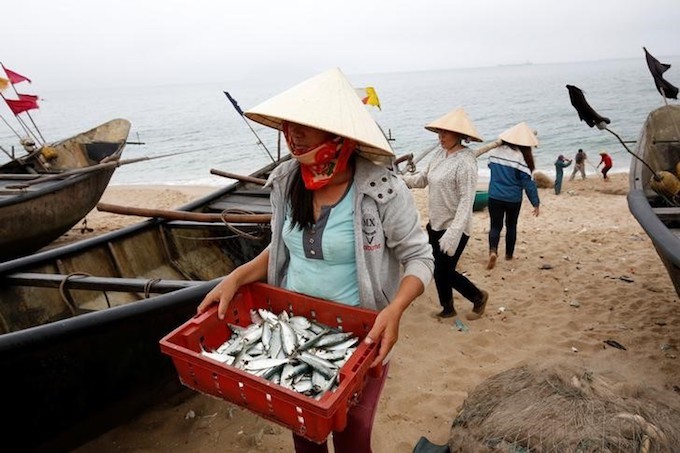
    Vietnam’s fisheries exports in the first half of 2024 were worth US$4.4 billion, up 6% year-on-year on higher demand in major markets like the U.S., China and the EU.

    Key items such as shrimp, pangasius and tuna did well, the Vietnam Association of Seafood Exporters and Producers said in its latest report.

    Pangasius accounted for $918 million and tuna for $472 million, up 5% and 23%. Shrimp fetched $1.6 billion, a 6% increase, while exports of other crustaceans jumped by 75% to $125 million.

    The U.S. and EU imported 18% and 56% more tuna. Shrimp exports to China and the EU rose by 17% and 13%.

    Top shrimp exporter Minh Phu said profits for the first half were VND7.2 billion (US$284,000) as against a loss of VND98 billion in the same period last year.

    Its CEO, Le Van Quang, said the company has been receiving more orders than last year and is planning to boost exports to China, Japan, South Korea, Australia, and New Zealand.

    Businesses are optimistic that seafood exports, especially of green and sustainable products, will grow even more in the coming months.

    But the seafood association said some challenges remain, such as fierce competition from Ecuador and India, rising transport costs and a shortage of raw materials for processing.

  • Telegram’s new update brings a highly popular feature to Android

    Telegram’s new update brings a highly popular feature to Android

    Telegram users on Android can now send video and audio content to their TVs through Chromecast, a key feature of the messaging app’s latest update. This enhancement arrives alongside other improvements, including enhanced message organization and a revamped interface for managing linked devices.

    The ability to cast media to a larger screen addresses a common desire for users who want to share content with others or simply enjoy it on a more immersive display. Before this update, users had to rely on third-party solutions or workarounds to achieve similar functionality.

    Now, within the Telegram app, a simple tap allows for the seamless transfer of videos and audio to any Chromecast-enabled device. This streamlining of the process makes sharing and viewing content more accessible. You can access this feature by opening a video, tapping the Settings icon, and then selecting “Chromecast.”

    Beyond the Chromecast addition, the update also introduces “Starred Messages 2.0.” This feature allows for better sorting and organizing of saved messages by letting users assign tags to their starred messages, creating a more structured way to later retrieve them. This aims to address the challenge of finding specific information within a large collection of saved content. For those who frequently save important messages or photos and videos, this organizational tool is a significant upgrade.

    Another notable aspect of the update is the refined interface for managing linked devices. As many users utilize Telegram across multiple platforms, the ability to control and monitor these connections is essential. The updated interface provides a clearer overview of active sessions and allows for easier disconnection of devices. This enhancement improves security and gives users more control over their accounts.

    Historically, Telegram has focused on privacy and speed, and these updates continue that trend by improving the user experience. Among those, the addition of Chromecast support reflects a growing trend of integrating messaging apps with other devices and platforms, while  the enhanced message organization and device management features also demonstrate a commitment to providing users with tools to manage their data and accounts effectively. I believe this update will make for a more connected experience for Telegram users.

  • Vietnam Airlines flights impacted by strikes in Germany

    Vietnam Airlines flights impacted by strikes in Germany

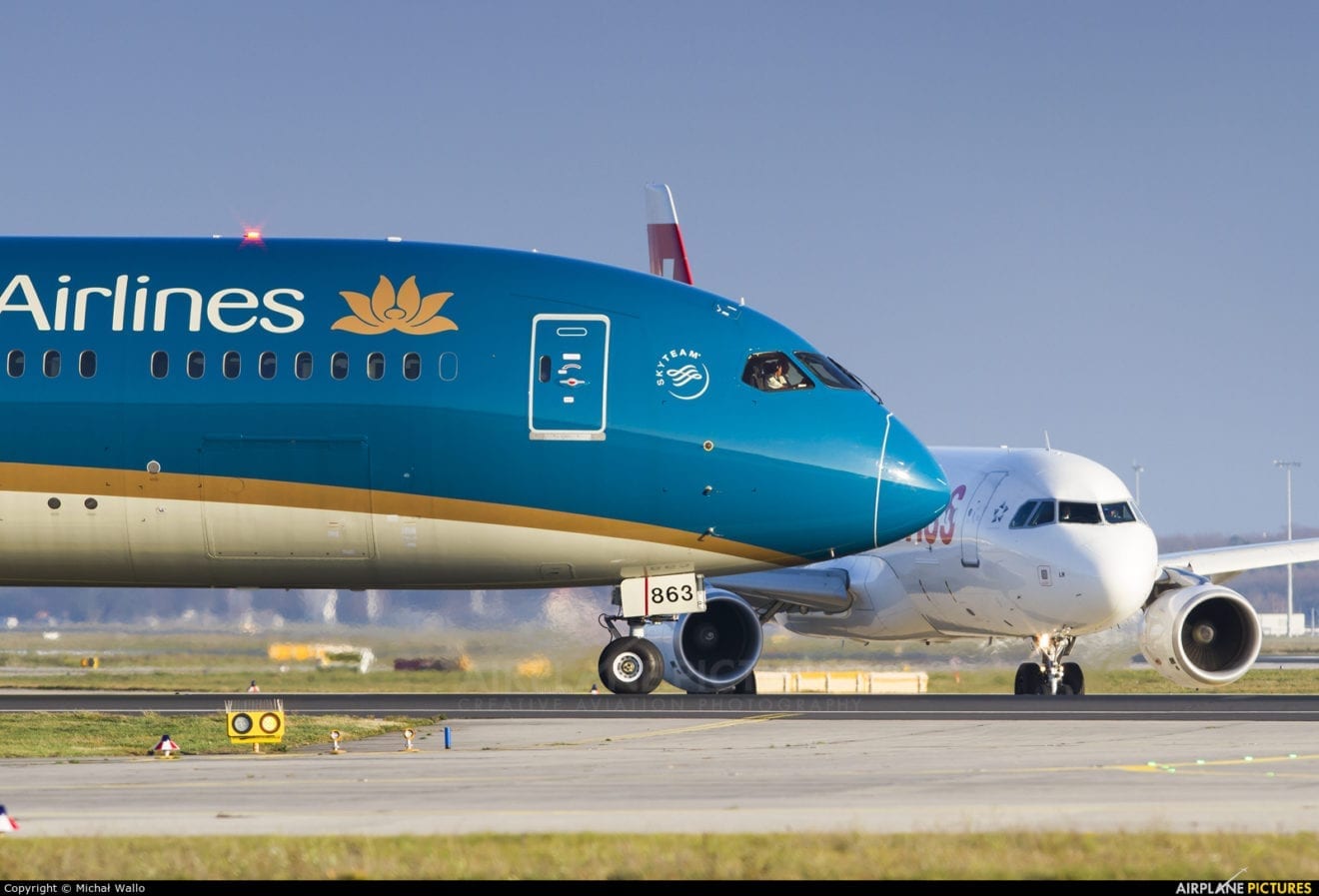
    According to an official announcement from the airline, Vietnam Airlines flights have changed their operating schedule due to a strike in Germany from midnight to 11.59 p.m. on March 10 (local time).

    This is the second time the airline has been affected by this reason this year.

    Specifically, flight VN36 from Frankfurt to Hanoi on March 10 will depart at 11:55 a.m. on March 11 (local time), flight VN30 from Frankfurt to Ho Chi Minh City on March 10 will depart at 11:05 a.m. on March 11 (local time), and flight VN34 from Munich to Hanoi on March 10 is planned to depart at 11:05 a.m. on March 11 (local time).

    In addition, due to the chain reaction from adjusting the fleet and general schedule, about 20 domestic and international flights of Vietnam Airlines from March 11 to 12 may be changed from wide-body to narrow-body aircrafts, delayed departure times or canceled.

    The airline representative informed me that the airline would regularly update the operation plan in the following newsletters.

    Affected passengers will be supported by the airline according to regulations.

    They also can check official Vietnam Airlines Facebook Fanpage; contact ticket offices, official agents, and Customer Care Center 1900 1100 (in Vietnam) or +84 24 38320320 (abroad).

  • Telegram banned across Russian regions in unprecedented twist of fate

    Telegram banned across Russian regions in unprecedented twist of fate

    Talk about an unexpected surprise: the popular messaging app Telegram has been banned across two regions in Russia for fear of enemies of the state using it to plan attacks. Telegram has long been heralded for its commitment to user privacy, but it has also been accused of being Russian spyware.

    The ban has been imposed across the Russian regions of Dagestan and Chechnya as authorities reported a rise in extremism. An example of a concerning instance from 2023 was provided as proof of the app being used for malicious purposes.

    This isn’t the first time that Telegram has gotten into trouble in Russia but the ban across Dagestan and Chechnya looks like it will stay for a long time. Authorities are urging residents to switch to alternatives and saying that Telegram may or may not be unbanned in the future.

    This is far from the first time that Telegram has made the news in the last few months. Telegram founder Pavel Durov was arrested in France last year on charges of facilitating organized crime on the platform. These charges alleged that due to Telegram’s stance on user privacy and anonymity the platform was responsible for whatever took place in its servers.

    Eventually, after so many years of resisting it, Telegram caved to legal pressure. Durov stated that the app would now provide users’ IP addresses and phone numbers to authorities upon request. Telegram had often been blamed for breeding radical cells in the past.

    Funnily enough, some people have always believed that Telegram is Russian spyware. With it now being blocked in regions of its own home country, that belief becomes all the more humorous, in my opinion. I’ve also always maintained that Telegram is no more to blame for nefarious activities than Discord or other platforms that offer end-to-end encryption.

    Some people view Telegram as part of the dark side of the internet: an app that only elite hackers or criminals use. But Telegram is a massively popular platform with all sorts of chat rooms and servers. I personally have met some amazing people on Telegram and I hope the situation in Russia can be handled sooner rather than later.

  • Thai Airlines halts certain domestic flights due to air pollution

    Thai Airlines halts certain domestic flights due to air pollution

    Bangkok Airways, one of Thailand’s main airlines, said on Wednesday that it will suspend flights between Bangkok and a northern province for more than a month because of poor visibility caused by air pollution.

    The carrier said flights from Bangkok to the north-western town of Mae Hong Son will be suspended because smog is expected to make visibility too poor to land. The company experienced the same problem in 2024, when smog levels were extremely high.

    The airport authority in Mae Hong Son, a popular stop of travelers in northern Thailand, announced on Facebook last week that flights would be suspended from March 15 to April 20.

    Air pollution spikes in Thailand, especially in the north, between December and April as farmers burn stubble to prepare land for the next crop season. The Thai government banned crop burning early in 2025, with violators facing fines and legal action, although it is not yet clear what impact the measures are having.

    The air quality index for Mae Hong Son was 7.9 times greater than World Health Organization guidelines, according to IQ Air data, which measures global air pollution.