Category: Living

Retail News Asia is committed to providing both local and global retailers with the latest Living news throughout the Asian market. This on a daily base.

  • Tencent, Hillhouse back MINISO

    Tencent, Hillhouse back MINISO

    Tencent and Hillhouse Capital have invested RMB1 billion (US$146 million) into fast-growing Chinese discount retailer Miniso.

    Founded just five years ago, Miniso has already grown to more than 3000 stores worldwide using what it describes as a “high quality, low price” philosophy.

    Three years ago, the China-headquartered retailer which pretends to be Japanese in its brand positioning and marketing, made its first foray abroad. One in three of its stores are now in overseas cities in 70 countries and markets, including Hong Kong, Singapore, Japan, Vietnam, Taiwan, Macau, India, South Korea, North Korea, Indonesia, Malaysia and the Philippines.

    In a statement, Miniso said the strategic investment from Tencent and Hillhouse Capital will enhance cooperation in big data analysis, smart outlets, intelligent retail and digital operations, among other areas.

    “The investment of Tencent and Hillhouse Capital will help the future development of Miniso by improving its ability in terms of information technology, capital operation, corporate governance, etc. The investment will also expand its layout in the field of intelligent retail and accelerate overseas market expansion, so as to help Miniso achieve its medium-term strategic goals.”

    That goal is to have 10,000 stores trading in 100 countries with RMB 100 billion in sales by 2022.

  • Malaysia Airlines, Jet Airways expand codeshare agreement

    Malaysia Airlines, Jet Airways expand codeshare agreement

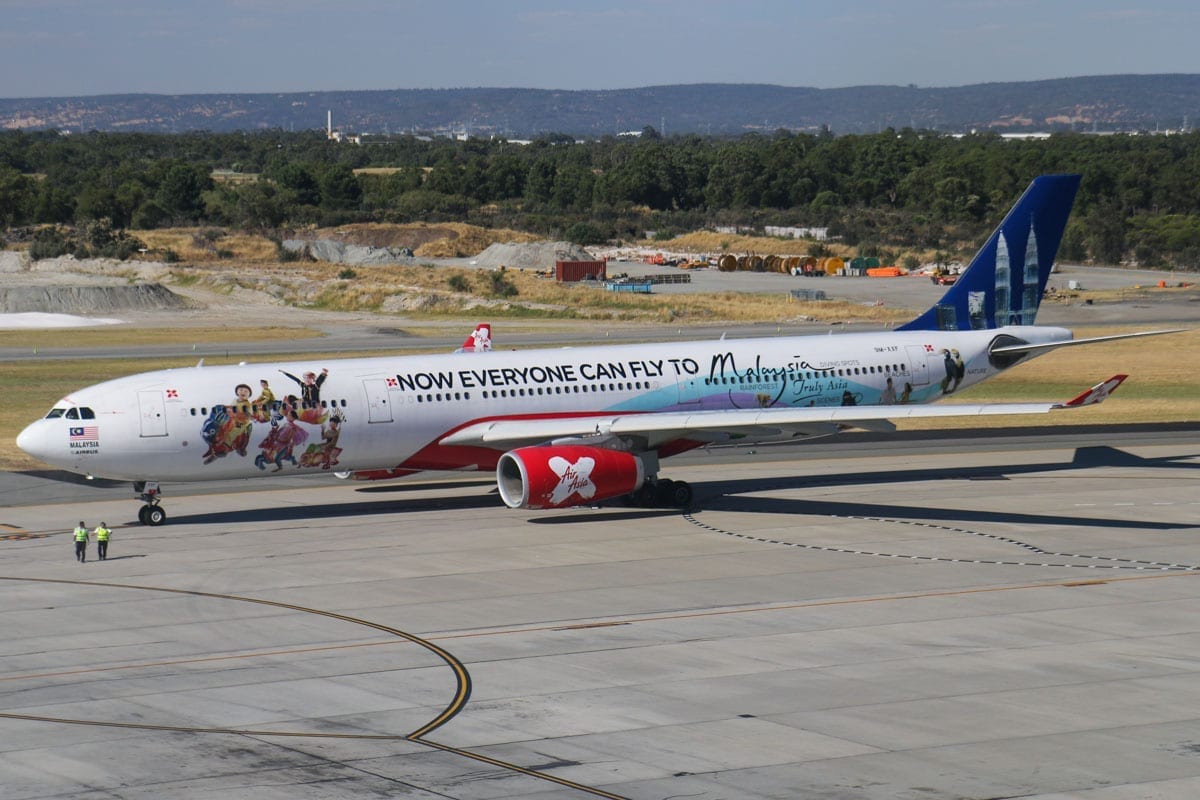
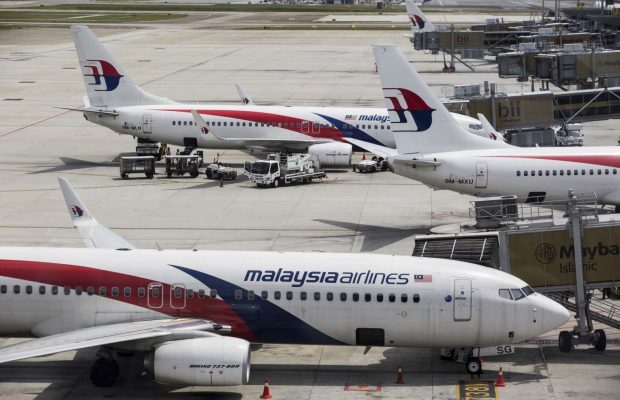
    Malaysia Airlines and Jet Airways have expanded their codeshare agreement to offer consumers a wider network of destinations effective Sept 24.

    Malaysia Airlines said in a statement that the wider network covers new routes with departures from Mumbai and Hyderabad to cities in India as well as Southeast Asia destinations including Hong Kong, Bangkok and Singapore.

    The agreement is an extension from existing codeshare with Malaysia Airlines on Malaysia Airlines routes from Kuala Lumpur to Mumbai, Bangalore, Hyderabad, Delhi and Chennai.

    “We are delighted to announce the codeshare expansion with Jet Airways to broaden our global reach into India, the third largest market in the aviation industry. Together with Jet Airways, we will be offering seamless connectivity to fast growing cities in India including Aurangabad, Dabolim (Goa), Ahmedabad, Kochi and Kolkata,” said Malaysia Airlines’ chief revenue officer Ignatius Ong.

    “This codeshare agreement serves as an important element towards Malaysia Airlines’ proposition of being the preferred way to fly to, from and around Malaysia,” he said.

    Malaysia Airlines’ codeshare on Jet Airways services include flights from Hyderabad to Bangalore as well as flights from Mumbai to Ahmedabad, Aurangabad, Bangalore, Chennai, Delhi, Goa, Hyderabad, Jaipur, Kochi and Kolkata.

    Meanwhile, Jet Airways codeshare on Malaysia Airlines services include flights from Kuala Lumpur to Bangkok, Hong Kong and Singapore.

  • Lotte prepares for verdict on chairman

    Lotte prepares for verdict on chairman

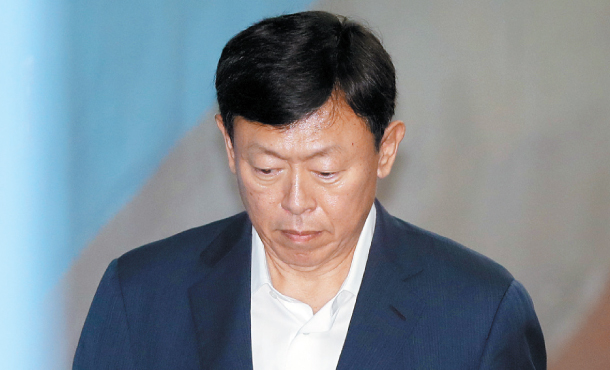
    Lotte Group Chairman Shin Dong-bin is due to receive his appeals court sentence tomorrow. The leader of Korea’s largest retail conglomerate is facing up to 14 years in jail.

    Shin has already served eight months of the 30-month sentence he received over charges of bribing former President Park Geun-hye to curry favor during her administration.

    Prosecutors requested a 14-year sentence for the Lotte Group chairman to the appeals court in August.

    Lotte employees last month submitted a petition that Shin be released on the grounds that the absence of the 62-year-old chairman is hurting Lotte’s business. Major business decisions have been on hold since Shin has been imprisoned, and recruitment and investment has been scaled back tremendously.

    The ruling tomorrow is expected to have major implications for Lotte, and potentially the Korean economy as well. Lotte, with a net worth valued at over 100 trillion won ($89.4 billion) and annual revenue of 90 trillion won, is Korea’s fifth-largest conglomerate.

    A chairman’s downfall

    On Feb. 13, Shin was put in jail after the Seoul Central District Court found him guilty of bribing former President Park in return for a business deal. According to prosecutors, he offered 7 billion won to a nonprofit foundation controlled by Park’s close friend Choi Soon-sil to score a license it needed to operate its duty-free business in Seoul.

    Lotte’s official stance, however, is that Shin and the company are simply victims of Park’s abuse of power. Shin offered the 7 billion won in May 2016, after Lotte had failed twice in 2015 to obtain approval to continue its duty-free operations in Seoul for the following year.

    In July 2017, the Board of Audit and Inspection found that the Korea Customs Service, which oversees the assessment of duty-free businesses, manipulated evaluation scores to disqualify Lotte. Lotte’s original score far exceeded those of the companies that obtained approval instead.

    “Like other businesses that had given money to Park [and her friend] after private meetings with her, Lotte was not giving out bribes, but paying a sort of ‘quasi-tax,’” said a Lotte spokesman.

    Frozen in time

    For the past eight months of Shin’s absence, Lotte Group has been wary of making major decisions on investment and recruitment.

    The conglomerate invested 879.1 billion won in its retail business during the first half of this year, a 20 percent decline from last year. Lotte also hit the brakes on hiring. It only hired some 2,300 new employees this year, whereas it had recruited between 12,000 and 13,000 new workers in other years.

    The conglomerate has also put some 10 trillion won worth of domestic and overseas investment and merger and acquisition plans on an indefinite hiatus. Projects on hold include large-scale oil complexes in Indonesia and Louisiana and acquiring Vietnamese confectionary, retail and hotel businesses.

    Shin’s imprisonment came as a complete surprise in February. Shin, then the chairman of the Korea Ski Association, had scheduled a dinner meeting with international ski authorities for the day following the first court ruling.

    “As we didn’t expect Shin’s imprisonment, we hadn’t made any provisions for such a development,” said a Lotte spokesman on Sunday. “Shin left a huge vacuum in Lotte’s management. Now, all of Lotte Group is paying careful attention to the appeals court ruling.”

    Though Lotte is far from being the only Korean conglomerate to see its leader go to jail, it is rare for companies to hold off on all major management decisions throughout their imprisonment.

    “Lotte’s dependence on Shin was especially high, especially because of the unique situation we have with Lotte in Japan,” said a Lotte spokesman.

    Shin played an instrumental role in helping Lotte grow to its present size. He led the acquisition of the home shopping and electronics retail businesses that became Lotte Homeshopping and Lotte Hi-mart. Shin also strengthened Lotte Chemical by purchasing Samsung’s chemical division for just 3 trillion won.

    In 2015, Shin also emerged as the sole leader of both Lotte’s Korean and Japanese businesses after ousting his own father – who founded Lotte in 1948 in Japan before expanding to Korea in 1967 – as well as older brother from the management of Lotte Holdings. The Tokyo-based holding company holds major stakes in Lotte’s Korean businesses.

    “After the Shin brothers’ power struggle [where Shin fought over the succession of the conglomerate with his older brother Shin Dong-joo], Lotte faced public scrutiny. This revealed the conglomerates’ backward management practices, including [the complex] cross-shareholding [control], which drew the attention of the prosecutors’ office,” said an industry source.

    Although Shin may have caused problems for management in the past, the consensus among Lotte employees is that only Shin can improve the conglomerate’s organizational structure.

    In recent years, Shin pushed for greater transparency and the separation of Lotte’s Japanese and Korean businesses. He also tried to remove cross-shareholding ties by merging Lotte subsidiaries under Lotte Corporation, a new Korean holding company. Cross-shareholding occurs when publicly traded companies own shares in each other, leading to double counting of equity and distorted assessment of the companies’ value.

    “Firms like Amazon are pushing the global retail industry towards new levels of competition,” said Park Ju-young, who teaches entrepreneurship and business at Soongsil University. “Because of its status as Korea’s largest retail conglomerate, Lotte’s defensive approach to management may eventually lead to economic loss for the country.”

    Loyal supporters

    Law authorities confirmed Monday that Lotte union members submitted a petition on Sept. 10 to the judge in charge of the case to free Shin for the upcoming appeals court sentence.

    According to the Seoul High Court, which is overseeing the case, the petition was signed by 19 people, including Lotte trade union members representing Lotte Shopping, Lotte Property & Development and Lotte World, as well as high-ranking officials from the Korean Federation of Tourist & Service Industry Worker’s Union.

    “Lotte did not gain any unlawful profit from handing out bribes to former President Park, and is instead a victim [of the Park administration],” read the 3-page-long petition. “When Lotte provided its golf course in Seongju, North Gyeongsang, as the grounds for the installation of the anti-missile system Thaad upon coercion from Park, China retaliated by closing down Lotte stores.”

    Lotte union members said they decided to submit a petition after hearing that prosecutors had recommended a 14-year sentence for Shin in late August.

    “We are not trying to persuade the judge that Shin is innocent,” said Kang Suk-yun, head of Lotte’s labor union. “But we believe that our plea for clemency does not contradict the sentiment of the Korean people, when the entire Korean economy, not just Lotte, is doing poorly.”
  • Companies offer Vietnamese households access to solar energy

    Companies offer Vietnamese households access to solar energy

    Bach Khoa solar energy has tied up with BIC Insurance to offer a five-year warranty for its products.

    It has also signed a deal with lender BIDV for providing loans to customers to buy its BigK solar energy solutions.

    SolarBK will subsidize the first year interest on loans for people borrowing to buy BigK solutions between September 20 and October 31 from BIDV Vung Tau-Con Dao.

    A BIDV spokesperson said, “This is the first time ever in Vietnam that a third party like BIC has come forward to guarantee the output and a bank has agreed to provide finance to a solar energy company.”

    With the government adopting policies to encourage the use of solar power, this market in Vietnam is growing rapidly. But public awareness of this field is quite low resulting in many new companies doing disorganized business and providing customers with poor quality products, discrediting the solar power industry and Vietnamese enterprises in particular.

    According to SolarBK, Vietnamese customers tend to prefer foreign brands when trying out a new product or service due to the belief they are superior to local products. Therefore, the company decided to bring in a third party to guarantee the quality.

    A SolarBK spokesperson said, “It not only helps enhance the Vietnam brand’s reputation, but is also a way to encourage other Vietnamese companies to invest in renewable energy, which remains a new field.”

    Nguyen Ngoc Quynh, chief business officer of SolarBK, said in the context that Circular 16 expires in less than a year the company has tried to find partners in insurance and banking for customer support.

    “The insurance is a chance for ‘Made in Vietnam’ solar energy products to prove their capacity and value are comparable with international products, SolarBK in this case.”

    The completion of its new factory, IREX (500 MWp capacity), helps SolarBK not only control the quality but also optimize costs, she said.Quynh also explained that the reasonable prices and good quality of her company’s products result from the fact that SolarBK has deployed initiatives in producing PV panels and technology.

    “IREX solar panels have a lifespan of 25-30 years and achieved international certification such as UL and TUV, which allows them to be exported to many countries.”

    Time for insurance, banking to join hands with solar

    BIC and BIDV are two of the first companies to join the solar energy market in Vietnam. At the signing ceremony Le Manh Hung, CEO of BIDV Vung Tau-Con Đao, said this is a new product pack that involves many techniques and long learning time, and it is an entirely new field that makes financial institutions extremely worried.

    “However, BIDV has shared with SolarBK the dream and aspiration of Vietnamese people in the field that we want to be pioneers. This is the reason for comprehensive warranty cooperation, and together we work to make the Vietnamese dream come true.”

    “To secure collaboration with BIDV and BIC within a short time, SolarBK had to prove its ability to develop projects. The partnerships reflect our commitments to product and service quality, showing the long-term vision, financial capacity and well-organized business developing plans in this field”.Tran Hoai An, CEO of BIC Insurance, said together with BIDV and SolarBK/SolarGATES his company would offer “Green Insurance for Clean Power Source” as a guarantee for SolarGATES’ customers.

    Within two months of introducing its BigK solar power solutions for households, the company has installed panels with a total capacity of nearly 180 kWp nation-wide.

    SolarBK’s goal is to bring solar power to millions of households in Vietnam and ensure people think of BigK whenever they talk about solar energy.

  • Korea Sale Festa kicked off last week

    Korea Sale Festa kicked off last week

    The Korea Sale Festa beginning Sept. 28 will fail to fulfill its aim of boosting consumption and helping small- and medium-sized enterprises (SMEs), as a growing number of retailers and consumers have turned away from the government-initiated discount event.

    Since 2016, the government has hosted the Korean version of Black Friday to stimulate domestic consumption.

    However, consumers have pointed out low discount rates and the poor quality of products sold during the event.

    Retailers have also complained about the ineffectiveness of the event. “Department stores and discount chains regularly hold discount events, so their sales do not grow significantly during the Korea Sale Festa,” a retail industry official said.

    Amid the growing criticism, the government even cut the budget for the event and its duration.

    According to Rep. Yoon Han-hong of the main opposition Liberty Korea Party, the Ministry of Trade, Industry and Energy will spend 3.45 billion won (US$3 million) on the Korea Sale Festa this year, down from 5.1 billion won last year.

    In particular, the budget for traditional markets and SMEs decreased to 1.3 billion won from 2.77 billion won, while that for the promotion of the event is 2.15 billion won, down from 2.32 billion won.

    Most of the 2.15 billion won has been used to cast SHINee’s Choi Min-ho as spokes-model for the Korea Sale Festa, and entertainers who will perform on the eve of the event. They include Red Velvet, EXO, NCT 127 and several other singers and comedians.

    The length of the Korea Sale Festa has also been shortened to 10 days this year from 34 days last year.

    Given that the event will be held after the peak shopping season of the Chuseok holidays, SMEs and vendors at traditional markets will face difficulties in boosting sales.

    Against this backdrop, the number of companies participating decreased to 231 this year from 446 last year, as a growing number of retailers, hotels and restaurants declined to offer discounts.

    “Despite the recent slump in domestic consumption, the trade ministry does not pay any attention to the Korea Sale Festa, as it focuses only on the shutting down of nuclear power plants,” Yoon said. “The government should come up with measures to boost consumption and support SMEs.”

    The ministry decided to spend 2 billion won on the Korea Sale Festa next year, down 1.45 billion won from this year. Some observers expect the Moon Jae-in administration will move to abolish the event initiated by the previous Park Geun-hye administration.

  • Vietnam warned it is planning too many airport

    Vietnam warned it is planning too many airport

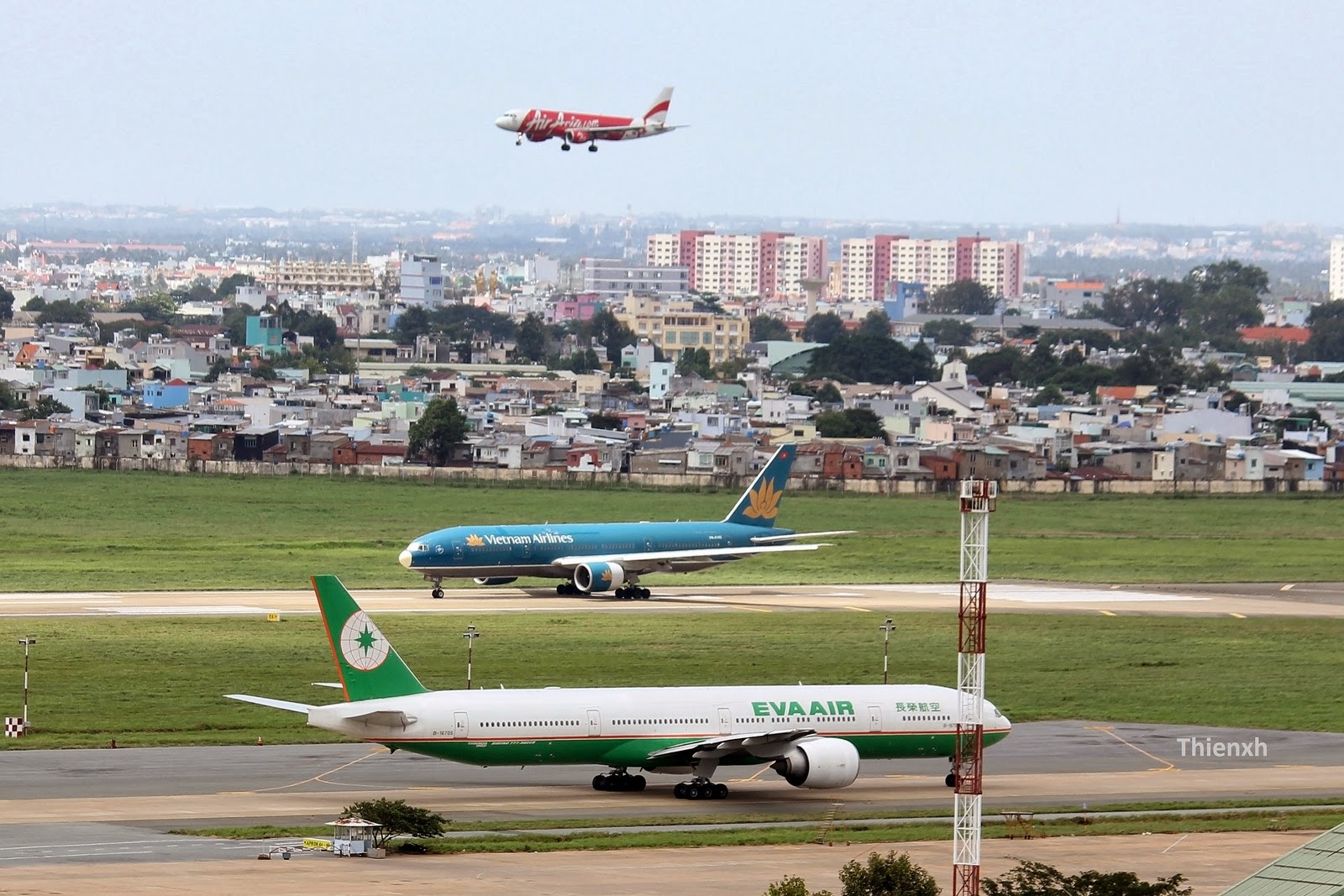
    Vietnamese provinces are proposing new airports without realizing that the country is already overloaded with these facilities, experts say.

    Authorities in the southern Ba Ria-Vung Tau province have been working with private firm Ho Tram Ltd. on constructing a civilian airport.

    The airport, estimated to cost VND4.2 trillion ($193.6 million), will cover 250 hectares (618 acres) with a runway of 2,400 meters. It will be invested in by Ho Tram, the investor of the Grand Ho Tram Strip resort nearby.

    The province had previously proposed another airport to serve military and cargo purposes, which is estimated to cost $1 billion.

    These two airports would be just 30 kilometers away from each other.

    Meanwhile, Ba Ria-Vung Tau already has an airport on Con Dao Island in operation and the mega Long Thanh International Airport being planned in southern Dong Nai Province is just 40 kilometers away.

    In July, the northern province of Lao Cai proposed that an airport built near Sa Pa, one of Vietnam’s top tourist attractions, for both civilian and military purposes.

    Provincial authorities estimated investment for the airport at over VND5.7 trillion ($246 million).

    Apart from the Noi Bai International Airport in Hanoi, the northern region is already set to get another one, the Van Don International Airport near Ha Long Bay, this December.

    Experts are concerned that Vietnam is building too many airports without carefully evaluating their necessity.

    ‘Airport race’

    Dr. Nguyen Thien Tong, former faculty head of aeronautical engineering at the Ho Chi Minh City University of Technology, said that there is an “airport race” in the country.

    “If every province in the country had an airport, things would be chaotic,” he said.

    It’s not necessary to have two new airports in Ba Ria-Vung Tau, as the province does not have a large number of tourists, Tong added.

    Echoing Tong, Ngo Viet Nam Son, an architect who participated in designing the Ninoy Aquino International Airport Terminal in the Philippines, said that the province should only have one helicopter airport.

    “It would be much more efficient if money is spent on building an expressway which connects Ba Ria-Vung Tau and HCMC,” Son said.

    Speaking of the proposed airport near Sa Pa, Tong said that roads should be the focus of this area, not airports.

    “There needs to be a very large number of tourists influx to result in profits for an airport, otherwise it would be a waste,” he said.

    Investing in roads in this area will allow different vehicles to travel to multiple destinations in the north, serving the majority of the population, Tong added.

    Son was concerned about the distance from the airport to Sa Pa town, which is about 100 kilometers away, a distance too long to attract tourists.

    Traveling from the airport to Sa Pa town will take two hours with that distance, the same time tourists have to spend for flight procedures, he noted.

    As travelling from Hanoi to Sapa now takes just five hours via expressway, roads should be the main focus of the area, not airports, Son said.

  • 90 percent of Vietnamese want tobacco tax raised

    90 percent of Vietnamese want tobacco tax raised

    Most Vietnamese want the tax on tobacco raised as a means to reduce smoking, a survey has found.

    The survey, by Canadian NGO HealthBridge, released at a conference Tuesday showed that 90 percent of Vietnamese think raising the price of a 20-pack of cigarettes to VND45,400 ($1.95) will have an impact on smoking.

    The average price now is VND15,000 (64 cents), the survey said.

    Over 80 percent of respondents said smokers would be deterred if the price is hiked to VND22,700 (97 cents), the survey, which polled around 600 people, said.

    The same number said the tax should be increased to 45-70 percent. The special consumption tax (SCT) on tobacco is currently 35.6 percent.

    Should tax on tobacco be raised?current tax 35.6% retail priceTax should not be changedTax should increase to at least 45%No comment

    Le Thi Thu, senior project manager at HealthBridge, said that studies have shown smoking is a greater financial burden on the poor than the rich since treatment of diseases caused by smoking costs a lot of money.

    “The negative impacts of smoking on Vietnamese people’s lives are undeniable.”

    Smoking gets easier

    But Vietnam’s policies on tobacco tax have not been effective in reducing smoking, experts said at the conference.

    Nguyen Thu Huong, communications officer at the Ministry of Health’s Tobacco Control Fund, said the average price of a 20-pack of cigarettes fell from VND12,700 (54 cents) in 2010 to VND11,000 (47 cents) in 2015.

    The low price allows more people, even children, to smoke, she added.

    Dr Nguyen Tuan Lam, a specialist at the World Health Organization (WHO) Vietnam, noted the current SCT of 35.6 percent on tobacco is lower than the global average of 56 percent.

    It is also lower than in several other Southeast Asian countries such as Thailand, Singapore, the Philippines, and Malaysia, he said.

    Vietnam’s tobacco prices are the second lowest among 20 western Pacific countries for which data is available, he said.

    The Ministry of Finance has proposed two options for raising the tax.

    The first option is a combination of an SCT and a fixed tax. With it, a 20-pack of cigarettes will attract an additional VND1,000 (4.3 cents) in fixed tax, and each cigar, VND1,500 (6.4 cents).

    The second option is to increase the SCT every year until it reaches 85 percent in 2021.

    Health officials favor the first option, but said the fixed tax should be higher at VND2,000-5,000.

    Lam said a tax of VND5,000 would reduce the number of male smokers by 6.3 percent and the number of people dying of tobacco use would fall by 900,000.

    Pham Thi Hoang Anh, country director of Healthbridge Vietnam, said the government should gradually increase the taxes on tobacco every year. “Thailand increased them every two years between 1992 and 2015, from 55 percent to 86 percent.”

    But that was on wholesale prices, which would be equivalent to 115-600 percent on retail prices in Vietnam, she explained.

    “No one is harmed when tobacco tax is raised. There are few industries that are growing as strongly as tobacco, which is growing at 9-10 percent a year.”

    A tax hike would not kill businesses, but would decrease the number of smokers and increase the government’s revenues, she added.

    Last June WHO advised the Vietnamese government to hike the tax on tobacco to deter people from smoking.

    Vietnam is among the 15 countries in the world with the lowest tobacco prices, WHO chief Kidong Park said.

    To achieve its target of reducing the rate of male smokers from 47 percent to 39 percent by 2020, the government would need to raise the fixed tax rate on tobacco by at least VND2,000 per pack, he said, referring to the finance ministry proposal.

    VND5,000 per pack would be better, he added.

    Vietnam has among the world’s highest numbers of smokers. An estimated 15.6 million Vietnamese spend VND31 trillion ($1.36 billion) on cigarettes each year.

    Smoking is a major cause of lung cancer and cardiovascular diseases in the country, and costs it VND23 trillion ($1 billion) in treatment and labor loss annually, according to the Ministry of Health.

  • Ministop South Korea is for sale, rivals compete

    Ministop South Korea is for sale, rivals compete

    South Korean retail operators Lotte and Shinsegae are competing to buy the 21-year-old local subsidiary of Japanese convenience-store operator Ministop.

    Shinsegae and Lotte respectively own rival chains Emart24 and 7-Eleven and are both reportedly seeking to take full ownership of Ministop South Korea. Both companies see the deal as a means to grow their respective businesses in a market where convenience-store penetration has reached saturation point, limiting opportunities for organic network growth.

    7-Eleven currently operates 9535 stores across South Korea and Emart24 3413. The Ministop network numbers just 2535.

    Japan’s Aeon, which owns the Ministop brand, owns a majority 76 per cent of the South Korean business.

    Daesang group owns 20 per cent and Mitsubishi the balance. Aeon has appointed Nomura Securities to find a buyer for the business as it sees little future for the convenience store brand in South Korea, a highly competitive market. Instead, Aeon is looking to Southeast Asian markets for growth, including Vietnam, Thailand and Cambodia.

    Last year, Ministop South Korea sales totalled 1.18 trillion won (US$1 billion), ranking it fourth in revenue terms behind GS25, CU and 7-Eleven.

  • Malaysia’s MAS’ 787 deal lapses, considering future widebody purchases

    Malaysia’s MAS’ 787 deal lapses, considering future widebody purchases

    Malaysia Airlines Bhd said a provisional deal to purchase eight Boeing Co 787 jets had lapsed and the airline was in talks with planemakers about the future of its widebody fleet.

    The national carrier last year signed a memorandum of understanding (MoU) with Boeing to purchase the 787 jets valued at US$2.25 billion (RM9.3 billion) at list prices during a visit to Washington by former prime minister Datuk Seri Najib Abdul Razak.

    In April, It is reported the carrier had expressed interest in buying 20 to 30 widebody jets from either Boeing or its rival Airbus SE that could expand or replace the Boeing MoU.

    The lapse of the MoU was confirmed by a Malaysia Airlines (MAS) spokesman today. A Boeing spokesman declined to comment on ongoing discussions with customers.

    Malaysia Airlines CEO Captain Izham Ismail said that the airline had issued a request for information from aircraft makers for new generation widebody jets, without specifying how many it intended to buy.

    It was open to the advice of the manufacturers on the fleet size the airline would need for further network development, he said, adding any order decision would be made in the fourth quarter at the earliest.

    The airline currently has an all-Airbus widebody fleet including A330s, A350s and A380s.

    Sources said in July that the airline was tapping banks to fund about nine Boeing 737 MAX planes in what would be the airline’s first jet financing with lenders since it was restructured more than three years ago.

    The airline last month said in a quarterly update that it was facing pressure from higher fuel prices, foreign exchange volatility and overcapacity in the domestic market, as well as a shortage of pilots, but it was putting in place strategies to return to a profit next year.

  • Facebook just lost two top executives

    Facebook just lost two top executives

    Facebook just lost two of its top executives, with Instagram co-founders Kevin Systrom and Mike Krieger announcing their departures.

    They join at least seven senior Facebook executives who have announced their departures this year.

    “Kevin and Mike are extraordinary product leaders and Instagram reflects their combined creative talents,” Facebook CEO Mark Zuckerberg said in a statement. “I’ve learned a lot working with them for the past six years and have really enjoyed it. I wish them all the best and I’m looking forward to seeing what they build next.”

    The departures come at a tumultuous time for Facebook, as it continues to lose senior executives. The company — which calls its top ranks a family and prides itself on keeping executives around — has been battling privacy scandals and declining community support.

    Instagram had become something of Facebook’s shining star, so the simultaneous exits of its two founders leave some big shoes to fill.

    Here are some other Facebook executives who have said they’re leaving so far in 2018:
    Jan Koum, co-founder of Facebook-owned WhatsApp, announced his exit in April in a Facebook post saying it was time to “move on.”

    “I’ve been blessed to work with such an incredibly small team,” Koum said in a statement at the time. “The team is stronger than ever and it’ll continue to do amazing things. I’m taking some time off to do things I enjoy outside of technology, such as collecting rare air-cooled Porsches, working on my cars and playing ultimate frisbee.”

    Koum led WhatsApp for nearly a decade and joined Facebook’s leadership team in 2014 when the social media giant bought WhatsApp for $19 billion.

    Elliot Schrage, head of communications and public policy, said in June he was leaving Facebook after more than 10 years.

    “I’ve decided it’s time to start a new chapter in my life,” Schrage said in a post to his Facebook page. “Leading policy and communications for hyper growth technology companies is a joy — but it’s also intense and leaves little room for much else.”

    Schrage didn’t address his next steps, but did include lengthy praise and words of gratitude for Facebook, Zuckerbergand COO Sheryl Sandberg.

    In July, Colin Stretch, Facebook’s top lawyer, announced he’d be leaving the company after more than eight years.

    “When my wife Alyse and I made the decision a few years ago to move back to DC from California, we knew it would be difficult for me to remain in this role indefinitely,” he said in a Facebook post. “As Facebook embraces the broader responsibility Mark has discussed in recent months, I’ve concluded that the company and the Legal team need sustained leadership in Menlo Park.”

    As general counsel, Stretch represented Facebook before Congress to address Russian interference in the 2016 presidential election.

    “I often stop myself and ask how I got so lucky to be a part of this,” Stretch said in the post announcing his exit.

  • Spotify to Offer Carrier Billing to Telkomsel, AIS and DTAC Subscribers via Fortumo’s Payments API

    Spotify to Offer Carrier Billing to Telkomsel, AIS and DTAC Subscribers via Fortumo’s Payments API

    Fortumo has expanded its partnership with Spotify in South-East Asia to offer an expanded carrier billing program specifically for Spotify users in Indonesia (Telkomsel) and Thailand (AIS and DTAC).

    In both Thailand and Indonesia, credit card ownership remains below 10% while more than 65% of the population already has smartphones. This means most consumers can access online entertainment but do not have a way to pay for premium content. Carrier billing solves this issue for digital service providers by giving any mobile phone owner the option to make online purchases and deduct the charges from their mobile account balance.

    Spotify launched direct carrier billing with the new telcos through Fortumo’s Payments API. Using Payments API gives Spotify full control of the checkout flow and access to advanced features of carrier billing such as token-based authentication, dynamic pricing and an automated refunding process.

    At the other end of the Payments API are Fortumo’s pre-integrated connections with telcos, which gives Spotify and other digital service providers a scalable way of rolling out carrier billing.

  • Daiso to limit its stationery sales

    Daiso to limit its stationery sales

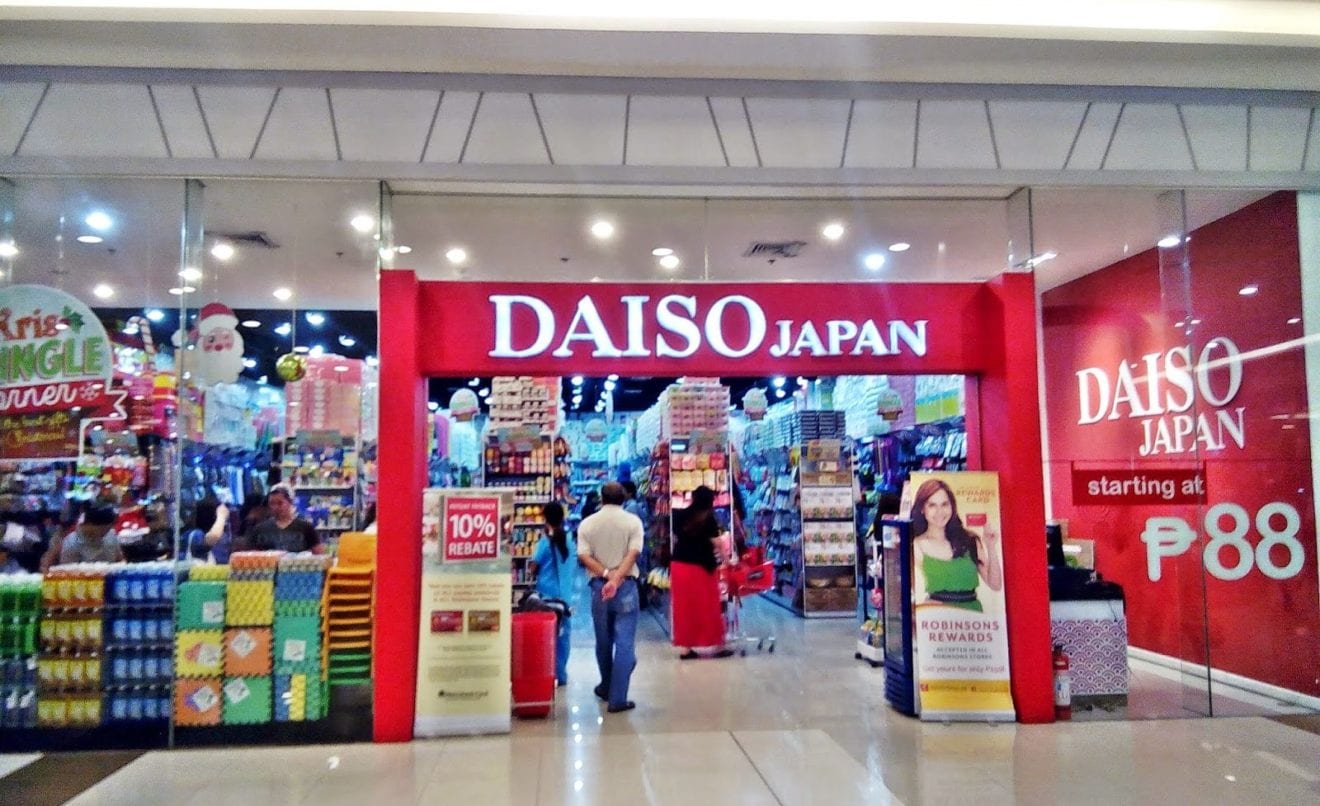
    Daiso stores will be forced to stop selling individual items of stationery in a bid to try and help struggling small and medium enterprises, Korea Commission for Corporate Partnership (KCCP) said Thursday.

    The KCCP is set to hold a final vote on Oct. 10 on adding the franchise to the list of major companies that are restricted in conducting businesses closely linked to the fortunes of small companies.

    A KCCP spokesman said Thursday that the process is an administrative one and that the agenda is likely to be passed as Daiso and the organization have already reached an agreement.

    Daiso, which now has over 1,200 stores in Korea, has faced criticism in recent years from local stationery store owners, who complain that the store is threatening their business. Last month, the franchise decided to voluntarily join the ranks of major companies that have restrictions on stationery sales.

    Starting from mid-October, Daiso stores will sell 18 types of stationery in bundles, including pencils, erasers, sketch books and crayons. As the franchise’s products are priced at 5,000 won ($4.46) or under, the stationery bundles will also stay within that range. During the early days, both bundles and individual products will be placed on the shelves until the latter sells out, a company spokesman said.

    The rule, however, will not apply to every Daiso store in the country. Only branches directly run by the company’s headquarters will have to follow such restrictions, which account for 60 percent of Daiso’s entire 1,200 or so stores nationwide. The 450 stores operated by franchisees will be recognized as small businesses, allowing them to continue selling individual items of stationery.

    A private commission that mediates conflicts between large and small-sized businesses, the KCCP designates industries and product categories, from food to daily necessities, that should be reserved for small enterprises and local merchants. It also lists major companies that should be restricted from conducting business in such fields in order to prevent them from threatening the revenue of smaller enterprises.

    Stationery stores were designated as a protected sector in 2015. That year, Emart, Lotte Mart and Homeplus stopped selling 18 types of stationery as individual items.

    At the time, Daiso wasn’t big enough to be a threat. But the company grew rapidly over the last few years, leading to an increase in complaints from local stationery store owners.

  • Watsons Elite Membership Programme Launched

    Watsons Elite Membership Programme Launched

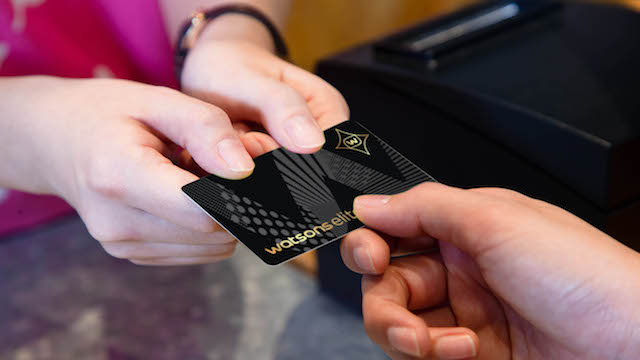
    International health and beauty retailer AS Watson has initiated a global VIP loyalty program.

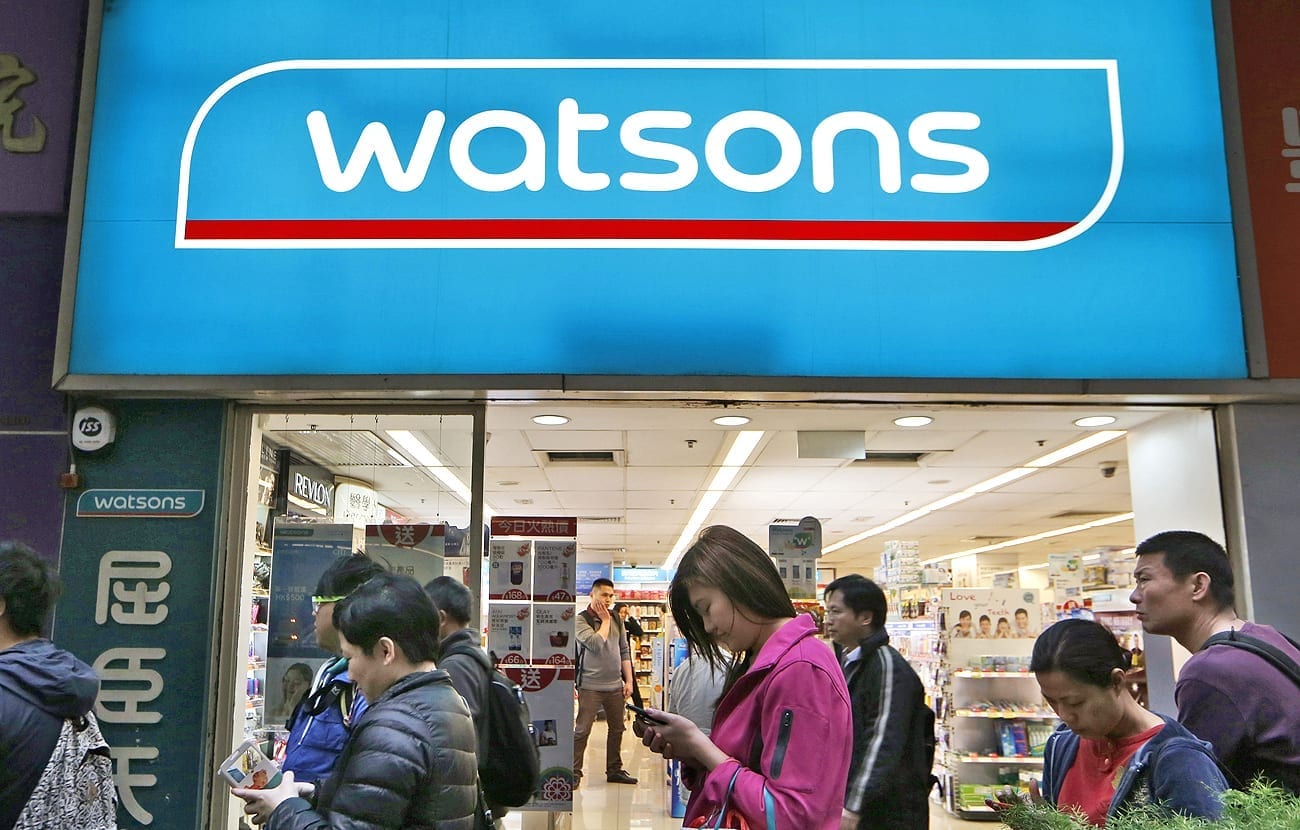
    The group has announced the program to enhance its connectivity with customers, planning to extend it to all of its 130 million loyalty members in 24 markets by early next year. It is an additional and invitation-only tier of membership which aims to reward and retain top customers.

    Malina Ngai, group COO of AS Watson Group, said: “We appreciate our customers, no matter how much they spend in our stores, and we know they love to feel valued. Our existing loyalty programs reward everyone with great offers, but our VIP programs thank our most loyal customers for shopping with us with amazing benefits and even more tailored rewards.”

    AS Watson first invested in CRM programmes back in 2010. Data insights and analysis of the programs have since revealed that around two thirds of the brand’s customers who qualify as “VIP members” continue their membership in the following year. These VIP members spend up to eight times more than average members annually. This year, the newly-qualified VIP members’ spending saw a year-on-year double-digit increase.

    Many of the new advantages are personalised to the individual or otherwise considered valuable to the lifestyle of the local customer – for example, free health and wellbeing classes in Watsons China, and cooking classes for Watsons Malaysia VIP members.

    This year, AS Watson has also launched its DataLab initiative to examine its average of 4300 terabytes of customer data every three years, extracting customer insights to provide more personalised, exclusive offers.

    Ngai added: “With cutting-edge data technology, we are turning transactions to interaction and that is how we are staying connected with our customers.”

  • Changi Airport :+7.9% passenger traffic increase in August

    Changi Airport :+7.9% passenger traffic increase in August

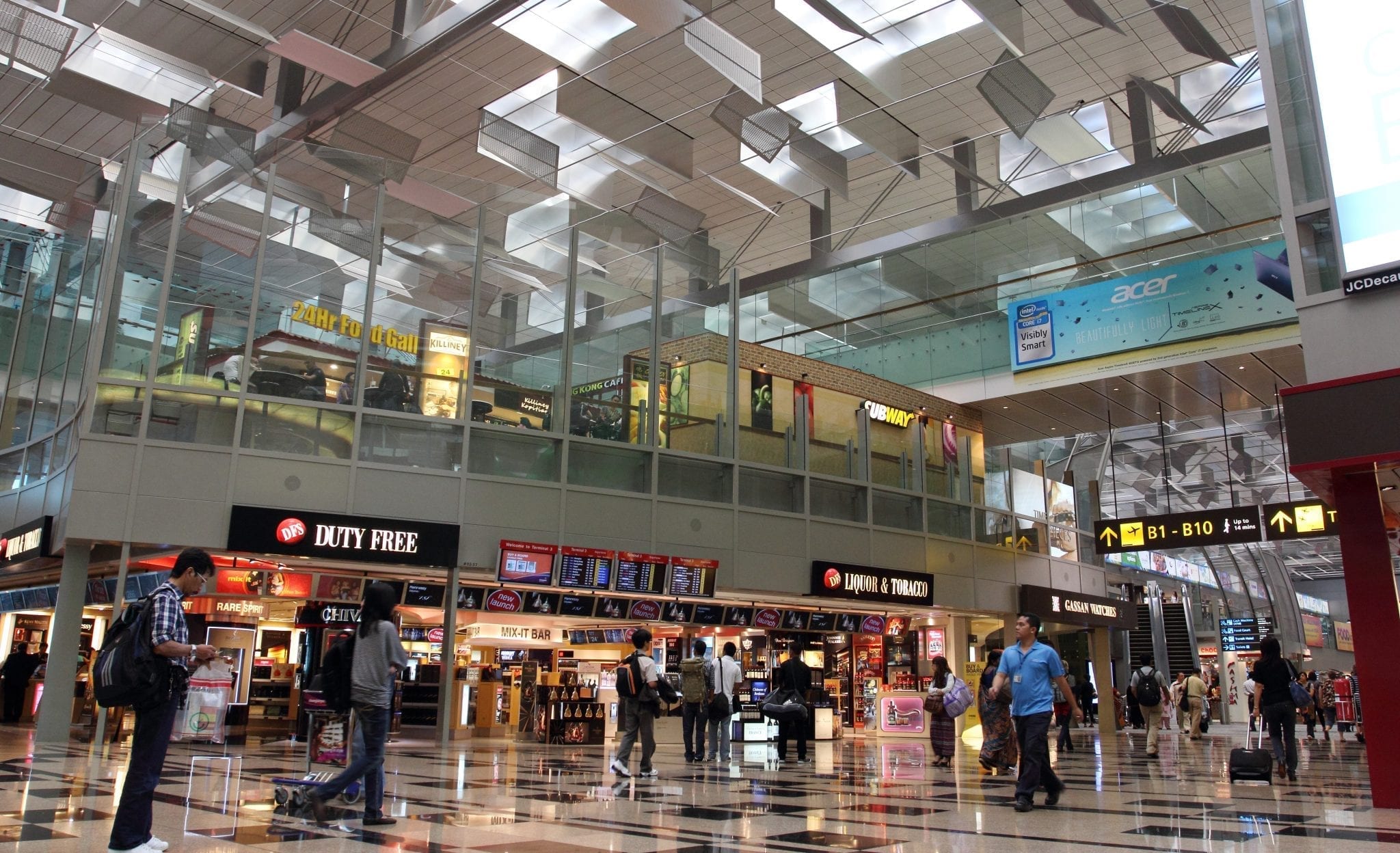
    Singapore Changi Airport recorded a +7.9% year-on-year increase in passenger traffic in August, to 5.68 million.

    Operator Changi Airport Group said there was growth across all regions. Traffic to and from Oceania was up+10%, the first double-digit increase of the year. Europe (+22%) and South Asia (+13%) also posted robust growth.

    Among Changi’s top ten markets, nine recorded higher traffic. Melbourne (+16%), Sydney (+13%) and Manila (+12%) were among the cities to register double-digit growth.

    Changi Airport Group also announced the opening of an E-Gadget Mini by Sprint-Cass electronics retail unit in the Terminal 2 departures hall. Seafood restaurant Fish & Co has also opened in T2.

    T3 saw two recent openings. Restaurant A-One Signature serves claypot-cooked cuisine while Seven Stop is a 24-hour vending machine concept store offering gifts, lifestyle products and has claw machines for play.

  • Seoul Design Cloud to promote city as design hub of Asia

    Seoul Design Cloud to promote city as design hub of Asia

    Seoul is promoting itself as Asia’s leading design hub with a series of design-related events.

    Hosted by the Seoul Design Foundation, Seoul Design Cloud, a mega design event comprising Seoul Design Week, Seoul Upcycling Week and Seoul Fashion Week – different from the biannual fashion event – kicked off Monday at Dongdaemun Design Plaza.

    “With Dongdaemun Design Plaza as the center, Seoul’s design will take a leap. And Seoul Design Cloud will show the way,” Choi Kyung-ran, the head of the Seoul Design Foundation, said at a press event on the opening day.

    Seoul Design Cloud is being held at the DDP – which is also being used as the main press center for the inter-Korean summit – through September 26.

    “DDP will receive attention (from around the world). We hope that through this opportunity, (the venue) can grab people’s attention,” Choi said.

    The 10-day event kicked off with the Human City Design Seoul conference, which discusses the city’s future in terms of design-related aspects.

    At the conference, Seoul Mayor Park Won-soon spoke as a social designer, suggesting Seoul move on as a design city. A related exhibition is being held at the DDP during the period of the event, introducing cases from 21 cities in which design has made people’s lives better.

    Ahn Gi-hyun, the head curator of the exhibition, and his team gathered examples from around the world, and contacted cities to receive videos that are being shown at individual kiosks.

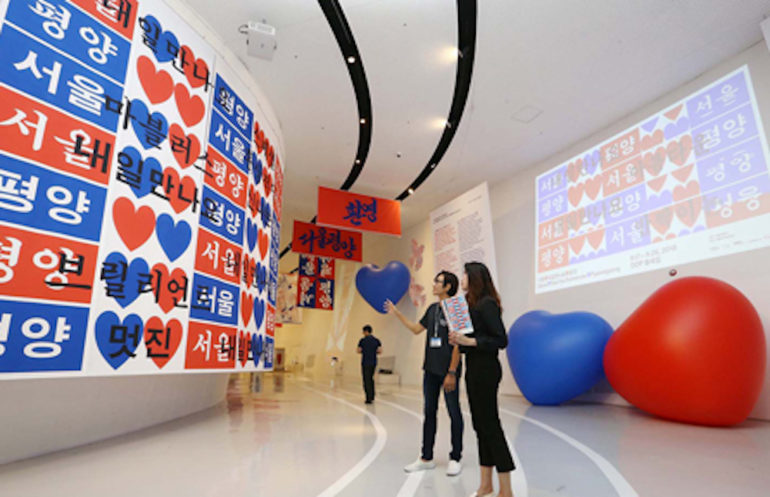
    “Seoul See You Tomorrow Pyeongyang” is an exhibition that celebrates cooperation and harmony between the two Koreas and hopes to link the two capital cities beyond physical and political boundaries.

    Around 41 graphic designers and illustrators from Korea and abroad participated in creating artworks that imagine what the two cities would be like in 2030, using mainly the colors of red and blue.

    Meanwhile, young student designers will showcase 100 new hanbok designs on Sunday at Changdeokgung, with student models wearing the designs walking around the palace garden. The outfits were shown to the public on Monday at a fashion show in line with the opening of Seoul Design Cloud.

    During the event period, a market will also be held at DDP to introduce local brands based in the Dongdaemun area, the fashion hub of Seoul.

    With Seoul Design Cloud covering a broad spectrum of design with diverse events, from conferences to markets, questions were raised at the press conference about the identity of the event.

    “We have obtained some fundamental results by cooperating with the Seoul Metropolitan Government on the topic of city revitalization,” said Jun Gi-hyun, an official from the Seoul Design Foundation, in response to the question.

    “Regarding design, there are numerous things happening. It is our role to show everything to the people, allowing them to be inspired,” he added.