Category: Living

Retail News Asia is committed to providing both local and global retailers with the latest Living news throughout the Asian market. This on a daily base.

  • Rising Inflation and the Risk of Recession

    Rising Inflation and the Risk of Recession

    While various stimulus packages got the global economy through the short-term challenges of COVID-19, they were always going to cause difficulties in the medium term. Inflation has risen and recessions look likely, so how can investors respond effectively?

    The global economic system appeared to cope with the COVID-19 pandemic and its associated lockdowns. Individual policymakers took different approaches to their economies, each of which had different impacts at a micro level and there were winners and losers throughout the process, but, broadly speaking, the wind kept filling the economic sails and countries kept moving forward.

    Inflationary Risk

    Keeping economies buoyant was economically and politically expedient in the short term, but it carried a significant medium-term inflationary risk. The complications created by the events in Ukraine have piled further pressure onto an already fragile structure and as we approach the final quarter of 2022, many countries face levels of inflation not seen since the 1990s.

    There is a very real threat of a global recession in 2023. Traditionally, economic policymakers have used interest rates to bring down inflation, raising them to make it more attractive to hold money in the bank or invest in government bonds rather than keep spending.

    Interest rates have been at historically low levels for the best part of a decade, so there is plenty of scope for them to rise and this is likely to have a significant impact on investment decisions.

    Why is Inflation Important?

    The aim of investment is to either create or preserve wealth, which means that during periods of high inflation, investors need to ensure that their portfolios work harder to stop value from being eroded. The challenge is that inflation impacts different asset classes in different ways.

    Inflation has been very tightly controlled in the developed markets over the last couple of decades, so there is relatively little experience of dealing with it in the markets. Understanding how individual asset classes have responded to periods of high inflation can offer a good gauge for what might be expected to happen during what is set to be a very challenging couple of years.

    How Should Investors React?

    At the same time though, even if it doesn’t evolve into a full-blown recession, smaller companies struggle with cash flow during a downturn no matter how innovative their idea and flexible their setup. In many ways though, it is in the difficult times that ideas are tested, teams are forged and world-beating companies are built.

    This makes investment during challenging times all the more important and can make the potential returns all the more tantalizing.

    Making losses More Manageable

    Most investors have experience with the 60/40 (equity/bond) portfolios but this asset allocation is struggling in 2022. As of August 2022, a balanced portfolio is down close to -15 percent in dollar. When the markets become challenging, it is no secret that diversifying an investment portfolio tends to help spread the risk and potentially make losses more manageable.

    Asset managers such as the team at Petiole Asset Management tend to have access and for many years expertise in a wide array of asset classes in the private markets which can give them a broader view of potential investment opportunities to improve the risk-return profile of their whole portfolio.

    Change, Flexibility and Transparency

    The investment space has obviously changed significantly over the last 15 years, with new digital tools that offer a level of transparency and of reporting that would have been inconceivable a generation ago. These tools enable investors of all sizes to be far more inventive and flexible in their approach to their private asset portfolios.

    In a lot of ways, investing is like sailing a yacht: with a little practice, most people can quite happily take a boat around a calm bay on a clear day with a light wind and get something positive from the experience. If conditions change though, the skies darken and the wind picks up, then the inexperienced can quickly find themselves in trouble.

    And it doesn’t take years of experience to see that going into the financial markets is likely to be very challenging for at least the next year.

  • Gasoline prices down 8th time in 3 months

    Gasoline prices down 8th time in 3 months

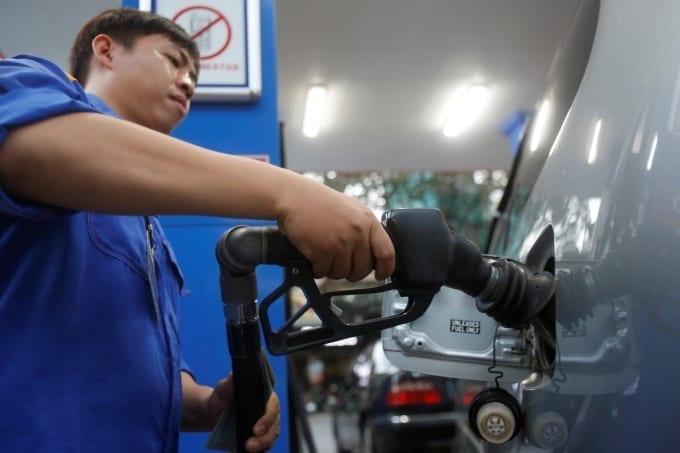
    Vietnam has cut gasoline prices for the eighth time in the last three months, seeking to contain inflation and boost consumption amid global economic woes.

    From 3 p.m. Wednesday, RON95 gasoline prices fell 4.21% to VND22,580 ($0.95) per liter.

    Prices for biofuel E5 RON92 dropped 2.42% to VND21,780.

    This means Vietnam’s gasoline prices have fallen by 31.31% since this year’s peak on June 21.

    Diesel prices dropped 6.82% to VND22,530.

    Vietnamese authorities said they adjusted down prices because global fuel prices have fallen by 3-10% in the last 10 days.

    The Asian Development Bank (ADB) warned Wednesday that Vietnam might face many inflationary risks this year due to rising commodity prices globally.

  • A new leak suggests that WhatsApp might soon let you edit your sent messages

    A new leak suggests that WhatsApp might soon let you edit your sent messages

    If you do a lot of typing on your phone, you know how embarrassing it is to send a message with misspelled words. Sometimes you see that you have typed the wrong key after you have sent the message. There are even instances when the autocorrect feature might replace some of your words without you even noticing. This is why every messaging app should have an edit message feature.

    The latest messaging app that has received such a feature is iMessage. With iOS 16, Apple added the functionality for iPhone users to edit their already sent messages, and — soon — another widely used app might also enable you to do the same.

    Back in June, we reported that WhatsApp is working on a new way to let you edit already sent messages. Now, a new leak from WABetaInfo suggests that WhatsApp hasn’t abandoned the project.

    In version 2.22.20.12 of the WhatsApp beta for Android, the folks from WABetaInfo found that WhatsApp is currently working on a way to let the app replace your sent messages with their edited counterparts. Furthermore, in order to read a received edited message, WhatsApp will prompt you to install the latest version of the app — once the edit function comes out, of course.

    At the moment, it’s still a mystery how much time WhatsApp will give you to edit your already-sent messages. We should also note that the feature is currently in development, and sadly, there is no information on when WhatsApp will release it to the public. However, we can be sure that it is coming.

  • IT recruitment demand soars

    IT recruitment demand soars

    Companies in Vietnam have hired 175,370 information technology staff this year, up 36.2% year-on-year, as the country’s tech sector continues to boom with rising investment, a report has found. Recruitment demand for IT staff is set to exceed 229,000 by 2023 and 290,000 by 2024, said the Vietnam IT Market Report 2022 by recruitment platform TopDev.

    Over half of 2,500 employers surveyed, or 55%, said they had hired more developers than in previous years, it said. Six out of 10 (64%) plan to expand their IT team with more hiring this year, it added. It takes an average 51 days to fill a position in the tech industry in Vietnam, TopDev said, explaining that this is a long period due to the high demand for recruitment and shortage of suitable candidates.

    One of the reasons for the upsurge in demand is Vietnam has drawn enough attention from IT companies from other countries, and they are coming in to hire or construct their product development teams, the report said.

    “The creative startup wave in technology sector is becoming stronger, especially after big investments for technology startups, while the the transformation wave of traditional businesses in sectors like tourism, agriculture, real estate all shift to digital transformation and e-commerce.”

    A fresh graduate earns from $331 a month, but that figure quadruples to $1,410 when he reaches the management level five years later. The Chief Technology Officer, one of the highest positions in the tech sector, earns around $5,900 a month. The top industries in terms of recruitment are NFT or blockchain, high tech (artificial intelligence), and fintech.

    Other recruitment platforms confirm the rising need for IT staff. Ha Nguyen, CEO of recruitment platform Adecco, said digital transformation in Vietnam is providing many job opportunities for IT candidates. They can be outsourced to companies in other countries also, she added.

    “Because of the high demand, companies still face difficulties in recruiting candidates with high skills despite offering attractive salaries and benefits.”

    Recruitment company Navigos said in its second quarter report that the Russia-Ukraine crisis has shifted many IT orders to Vietnam, which increases recruitment demand.

    There is a big shortage of IT candidates in the banking and financial sector, as well as in e-commerce, medical services and education, she added.

  • Ikea South Korea’s sales see first decline in eight years

    Ikea South Korea’s sales see first decline in eight years

    IKEA Korea said Wednesday its sales fell 10 percent in this fiscal year in the first decline after entering Korea in 2014 as more customers held back spending on home furnishing goods amid eased virus restrictions.

    The Korean arm of the Swedish furniture maker said it logged 618 billion won ($444.3 million) in sales in the fiscal year ending August 2022, compared with 687.2 billion won during the same period of last year.

    “Considering the COVID-19 situation, the revenge spending situation, and the availability situation during this fiscal year, this is a result we are very happy with,” said Fredrick Johansson, the country retail manager of IKEA Korea, citing various challenges, such as rising material costs and supply chain disruptions.

    The company blamed the first decline in sales on reduced spending on home furnishing goods, with more customers spending time outdoors after Korea lifted most COVID-19 restrictions in mid-April as part of efforts to return to pre-pandemic life.

    While IKEA Korea’s brick-and-mortar stores saw sales falter, its online and remote channels showed robust performance.

    Sales from its online and mobile shopping platforms increased 12 percent from the previous fiscal year, while its remote channels ― consisting of telesales channels, chat rooms and consulting services via video call ― increased by 18.5 percent from the previous 12-month period.

    IKEA Korea did not disclose operating profit or net income for the cited period. IKEA said it will focus on strengthening its “omni-channels” so customers can order, buy and access consulting services from various touch points beyond its offline retail stores.

    The furniture maker also plans to strengthen its “IKEA for business” service, a furnishing consulting service aimed at small and medium-sized business owners, to double its share in the upcoming fiscal year.

    Executives of the company also mentioned possibilities it could mark down the prices of popular products once supply chain bottle necks and inflation of raw material prices resolve in the near future.

    In August, IKEA Korea increased its retail prices by an average of 3.5 percent, citing a rise in production costs.

    “IKEA Korea has set the fiscal year of 2023 as the leap year of omni-channel. We, as a home furnishing leader with deep expertise, will continue to make best efforts to enable more people to create a happier and more sustainable life at home,” Johansson said.

  • Google launches YouTube Player for Education in the US

    Google launches YouTube Player for Education in the US

    YouTube considers education very important, which is why it dedicated an entire blog post to the announcement of its Player for Education, a new initiative now available in the United States and South Korea. Meant to improve the YouTube experience in educational environments, the new YouTube Player for Education is basically an embedded player that shows content that’s often used on education apps.

    More importantly, Player for Education does away with ads, external links and recommendations, so there’s absolutely no distractions embedded in the player. To cover as more people and institutions in need of such a tool, Google announced partnerships with edtech companies in the US, such as EDpuzzle, Purdue University and Purdue Global.

    Additionally, YouTube confirmed that its brand-new Player for Education will improve upon the existing YouTube embedded player in Google Classroom to provide users with an even better watching experience.

    As far as creators go, YouTube revealed that starting 2023, “qualified creators” can offer free or paid Courses to provide a learning experience for viewers. These courses can be watched ad-free and played in the background. As mentioned earlier, these learning courses will first be available in the United States and South Korea in beta before expanding to more countries.

    Another interesting tool announced this week by YouTube is called Quizzes, and it will allow creators to help viewers test their knowledge. Creators will be able to post their Quizzes on the Community tab whenever they wish to ask their viewers questions related to one of their previous videos.

    According to YouTube, the new tool will be rolled out in beta over the coming months, with all creators who have the Community tab gaining access to Quizzes sometime next year.

  • Sunscreen maker Ego admits misleading consumers over SP50 claim

    Sunscreen maker Ego admits misleading consumers over SP50 claim

    Australian skincare company Ego Pharmaceuticals has admitted making unsupported claims about the SPF (sun protection factor) on two of its sunscreens – Ego Sunsense Ultra SPF 50+ and Ego Sunsense Sensitive Invisible SPF 50+.

    The company supplies products into the New Zealand market via a wholesale distributor and has pleaded guilty to two charges under Section 12A of the Fair Trading Act.

    “If you can’t back it up, don’t say it,” observed the New Zealand Commerce Commission, which prosecuted the company.

    “Section 12A of the Fair Trading Act 1986 prohibits the making of unsubstantiated representations and came into effect in June 2014.

    The law prohibits a trader from making an unsubstantiated representation about goods or services. A representation is unsubstantiated if the trader does not, when the representation is made, have reasonable grounds for making it, said the commission.

    Vanessa Horne, GM of fair trading at the Commerce Commission, said Ego had accepted that between February 2019 and June 2020, it did not have any reasonable basis to make the SPF claims on the sunscreen products.

    “We opened an investigation into Ego following Consumer NZ’s testing in 2019 and a subsequent complaint filed with the commission,” she explained.

    “In 2019 and 2020, Ego claimed that both products provided ‘very high’ protection for consumers and were ‘SPF50+’ under an Australian and New Zealand Standard for sunscreen products.”

    Horne said that while Ego had grounds for those claims when first launched, the accumulation of test results between 2017 and 2019 said otherwise.

    The two sunscreen products have not been distributed in New Zealand since December 2019, and the company issued a withdrawal notice for the products in 2020.

    The case against the company is now before the court, and the commission said it cannot comment further on the matter. Sentencing is scheduled for October 26.

    A new mandatory safety standard for sunscreen supplied in New Zealand will be implemented this month. The commission said any businesses that import, manufacture and/or supply sunscreen products into the country must meet the new standard requirements.

  • Gasoline prices fall marginally, diesel surges

    Gasoline prices fall marginally, diesel surges

    Vietnam’s gasoline prices fell 1.56-1.74% on Monday while diesel prices surged 6%.

    A liter of RON 95 now costs VND24,230 ($1.03), down 1.74%. That of biofuel E5 RON 92 costs VND23,350, down 1.56%.

    Monday’s was the seventh consecutive downward adjustment made to gasoline prices, bringing prices down by 25.4-26.3% since this year’s peak on July 21.

    Meanwhile, diesel surged 6% to VND25,180 a liter, marking the first time it surpassed gasoline prices.

    Prices were hiked 9.7% in the two most recent adjustments but were 16.3% lower than this year’s peak.

    On the global market, gasoline has decreased by around 2% while diesel prices surged 9.3%, according to data from the Ministry of Industry and Trade and Ministry of Finance.

  • Indonesia Hikes Fuel Prices To Rein In Ballooning Subsidies

    Indonesia Hikes Fuel Prices To Rein In Ballooning Subsidies

    Indonesia raised subsidised fuel prices by about 30% on Saturday, as the government moves to rein in ballooning subsidies despite a risk of mass protests.

    The price of subsidized gasoline was raised to 10,000 rupiah ($67 U.S. cents) a litre from 7,650 rupiah, while that of subsidised diesel rose to 6,800 rupiah a litre from 5,150 rupiah, energy minister Arifin Tasrif said.

    “I actually wanted domestic fuel prices to remain affordable by providing subsidies, but the budget for subsidies has tripled and will continue to increase,” President Joko Widodo told a news conference.

    “Now the government has to decide in a difficult situation. This is the government’s last option,” said Jokowi, as the president is known.

    Southeast Asia’s largest economy had already jacked up its 2022 energy subsidies to 502 trillion rupiah ($34 billion), triple the original budget, pushed by rising global prices of oil and a depreciating rupiah currency.

    If prices were not raised, the budget would have ballooned to 698 trillion rupiah, said Finance Minister Sri Mulyani Indrawati.

    She estimated total energy subsidies would range between 591 trillion and 649 trillion rupiah for this year following the price hike, assuming the average crude price stays between $85 and $100 a barrel the rest of the year.

    High energy subsidies had restrained Indonesia’s inflation, at 4.69% in August, allowing the central bank to delay raising interest rates until last month, well behind regional and global peers.

    Hariyadi Sukamdani, head of the Indonesian Employers Association, said price pressure from the fuel price hike would not be too much, predicting inflation will top 6% at the end of the year.

    “If prices of goods are too expensive, people won’t buy. We can’t raise prices too much,” he said.

    Businesses are using unsubsidised fuels, but the price hike will affect logistics costs, Hariyadi said.

    Still, accelerating inflation could put pressure on Bank Indonesia (BI) to tighten monetary policy more quickly. The bank holds a two-day policy meeting ending on Sept. 22.

    Bank Mandiri economist Faisal Rachman estimated inflation could accelerate to between 6% and 7% and BI could raise the policy rate to 4.25% this year from 3.75% now.

    Faisal forecasts 5% economic growth this year despite the fuel price increase, supported by commodity exports and post-pandemic mobility, adding that the government’s cash distribution could help cushion some of the impact on consumption. The economy grew 5.44% in the April-June quarter.

    The government has allocated an additional 24.17 trillion rupiah for cash handouts to help the poor cope with the policy’s impact, Jokowi said.

    Fuel prices are politically sensitive in Indonesia, and the changes will have major implications for households and small businesses, as subsidised fuel accounts for more than 80% of state-owned oil giant Pertamina’s sales.

    The last fuel price hike was in 2014, months after Jokowi took office, aiming to free up fiscal space. That sparked protests across the archipelago.

    The opposition Labour Party has arranged a protest involving thousands of workers for Tuesday, chairman Said Iqbal, who also heads a trade union, told Reuters. He called on parliament to pressure the government to cancel the price hike.

    “This will hurt purchasing power,” he said. “Wages have not increased for three years and inflation is bound to rise sharply.”

    Small protests against any price hike, mostly led by students, had erupted in the recent days in several cities.

    After the price hike announcement, Pertamina said it was committed to ensuring adequate fuel supplies nationally. Cars were seen queuing in some stations in the capital Jakarta after the announcement.

    Pertamina, Asia’s biggest gasoline importer, had deferred some of its gasoline deliveries for September ahead of the price hike, due to an expected drop in fuel demand, traders said.

    Decades ago Indonesia was a major oil exporter, becoming a member of the Organization of Petroleum Exporting Countries in the 1960s, but its oil output declined and it turned to net oil importer in the 2000s. Indonesia is still an exporter of gas.

  • Gas stations run out of fuel in southern Vietnam

    Gas stations run out of fuel in southern Vietnam

    Gas stations in several southern localities have run out of supplies of petrol, diesel and other fuels and have stopped doing business.

    In Tinh Bien District, An Giang Province, six gas stations that get their supplies from Ho Chi Minh City-based Dai Dong Duong Petroleum JSC have stopped selling since Monday.

    A Dai Dong Duong representative said that they have not been able to buy fuel from distributors for the last five days.

    He attributed the supply shortage to seven fuel distributors who had their import license revoked for 1-2 months mid-August for violating safety and stockpiling regulations.

    Also, distributors are giving supply priority to companies in their own system on learning that market prices are going up.

    Huynh Van Thanh, owner of the Thanh Loi station in An Giang’s Cho Moi District, said his station had been out of diesel for two days as of Tuesday, but the distributor would not supply the fuel until Sep. 6.

    As for gasoline, his station has not bought enough to meet demand for fear of making losses.

    Thanh said that the station is given a discount of VND210 for each liter of gasoline and is allowed to buy a maximum of 3,000 liters at a time, which means a total profit of VND630,000 ($27).

    Meanwhile, the cost of renting a tank truck is VND900,000, which means the station has lost VND270,000 even before it has started selling. Then there is the cost of electricity and staff salaries. Every day the gas station loses VND1.5-2 million, he said.

    According to the An Giang Market Management Department, as of Monday, 19 petrol stations across the province had closed while 36 had announced they were running out of fuel, accounting for nearly 10% of gas stations in the province.

    The department said the stations were running out of fuel because it was difficult to get them from distributors

    A similar situation has been reported in the Mekong Delta province of Dong Thap.

    Nguyen Huu Dung, director of the province’s Industry-Trade Department, said Tuesday that in the past week, 10 petrol stations have asked to temporarily close for “personal reasons.”

    He said it is possible that they want to stop selling to avoid losses.

    “The department received an application from a station to suspend operation for three months because they were losing VND350 dong for every liter of gasoline,” he added.

    Also in the Mekong Delta, the Market Management Department of An Giang Province said two of 132 stations have halted operations while two others announced they’ve run out of gasoline.

    A representative of the Chau Thanh Petroleum Trading Service Co., Ltd in Tien Giang, which supplies fuel to 114 stations in the province, said it holy has enough in stock to distribute in three days.

    The reserves of this firm were running out and supply from its distributor, the Military Petroleum Company Region 4 based in HCMC was deficient, the rep said.

    In HCMC and neighboring Dong Nai Province, many dealers said that the amount of imported gasoline has dropped as increasing prices of oil and gas are making importers and distributors worry about suffering losses.

    The Vietnam Petroleum Association had proposed Monday that the Ministry of Industry and Trade regulate the price of gasoline on Sep. 1, instead of waiting until Sep. 5, given the strong fluctuations in global fuel prices.

    Nguyen Minh Duc with the legal department of the Vietnam Chamber of Commerce and Industry (VCCI), said the current regulation of waiting for ten days to make changes in gasoline prices does not still cannot allow local businesses to keep pace with price fluctuations in the international market.

    That leads to the situation wherein gas stations run out of stock before each price adjustment, he said.

  • Gold prices fall to one-month low

    Gold prices fall to one-month low

    Prices of gold bars branded SJC on Monday dropped VND250,000 ($10.67) to VND66.55 million per tael, the lowest in a month.

    Prices of gold bars of other brands like DOJI and Phu Quy dropped further, by VND300,000-350,000.

    Selling prices of gold rings also decreased VND200,000 to VND51.2 million per tael.

    Prices of gold bars have declined for three straight trading sessions to the lowest over the past month. SJC gold prices are higher than the world average by some VND17.7 million per tael.

    In the world market, gold dropped for a second day after Federal Reserve Chair Jerome Powell pushed back against hopes the U.S. central bank would start easing monetary policy soon, signaling instead that interest rates would keep rising and remain elevated to stamp out inflation.

    Spot gold fell as much as 1% to $1,720.45 an ounce, the lowest level since July 27, and traded at $1,723.70 as of 10:21 a.m. in London, according to Bloomberg.

  • Indonesia To Shift $1.6 Billion Portion Of Fuel Subsidy Budget To Welfare Programmes

    Indonesia To Shift $1.6 Billion Portion Of Fuel Subsidy Budget To Welfare Programmes

    Indonesia will reallocate 24.17 trillion rupiah ($1.62 billion), or nearly 5%, of its fuel subsidy budget to social spending, including cash handouts to 20.65 million households, its finance minister said on Monday.

    The move comes amid reports that the government has been considering raising subsidised fuel prices to manage rising fiscal pressure due to high global energy prices.

    Southeast Asia’s largest economy has already tripled its 2022 energy subsidy allocation from its original budget to 502 trillion rupiah – about 16% of total spending plans, but authorities have said more money could be needed if fuel prices were not increased throughout the year.

    Finance Minister Sri Mulyani Indrawati said the reallocation of spending will be enacted this week and was decided after discussing the fuel subsidy policy with President Joko Widodo.

    “The people will get social assistance in order to increase their purchasing power,” Sri Mulyani told an online news conference, speaking alongside Bank Indonesia Governor Perry Warjiyo.

    She did not take questions and did not mention fuel price hike plans.

    The government would also provide cash handouts to 16 million workers who make less than 3.5 million rupiah per month, she said.

    Regional governments would be instructed to use a portion of their fiscal transfer from the central government to subsidise transportation fares, she added.

    Lawmakers from parliament’s energy committee last week told Reuters the government may raise fuel prices by 30% to 40% and that such a move will add 1.9 percentage points to 2022’s inflation rate.

  • Netflix’s ad-supported plan expected to arrive at a $7-$9 price tag

    Netflix’s ad-supported plan expected to arrive at a $7-$9 price tag

    New details on Netflix’s controversial upcoming ad-supported plan have emerged. The information was first brought forward in a recent article by Bloomberg.

    The biggest questions on potential users’ minds – i.e. how much the ad-supported option is going to cost every month – has not received a definitive answer. Nevertheless, according to Bloomberg’s sources, we might be eying a figure of around $7-$9 a month.

    For reference, Netflix currently offers three subscription plans – at $9.99, $15.49, and $19.99, respectively. Currently, it seems that the midrange offering is the most popular one. With an ad-supported plan on the horizon (whose price will potentially be up to 30% less than that of the current entry-level option), we could see the figures shake up a bit.

    It should be noted that Netflix has historically opposed any form of ads on its platform. However, after the company reported a loss of monthly subscribers back in April, the streaming giant seems to have experienced a change of heart.

    With COVID-19 regulations easing up throughout the world, people are spending less and less time indoors and in front of their TVs. Hence, all streaming platforms are now doing everything they can to sway the remaining users their way. Perhaps the best tactic is offering a sweet subscription deal.

    Netflix’s ad-supported plan is nothing new per se as it replicates the approach of other streaming platforms like Hulu. Netflix, however, will reportedly be more reasonable with advertising time capping it at about 4 minutes per hour. The streaming service will also refrain from rolling ads after the end of a show.

    According to Bloomberg, the ad-supported plan is set to debut by the end of 2022, in the final quarter of the year. A more wide-scale release will reportedly take place in 2023.

  • Ikea bets on China with $772 million investment

    Ikea bets on China with $772 million investment

    Ingka Group, the parent group of Swedish home furnishing giant Ikea, will invest 5.3 billion yuan (RM3.5bil) in China in the fiscal year 2023.

    The investment will be used for further business digitalization, construction of new stores and shopping malls and integrating multiple distribution channels, CEO and president of Ikea China Anna Pawlak Kuliga told a press conference yesterday.

    Lydia Song, vice-president of Ikea China, said the company would announce the investment of a wind power project in China later this year.

    As for the store expansion plan in China for the fiscal year 2023, which will start on Sept 1, Ikea will open a smaller scale store in Hefei, the capital city of East China’s Anhui province. It will also launch a second store in Xi’an of Shaanxi province.

    In early July, Ikea shut down its 8,500-sq-m store in northeast Shanghai’s Yangpu district.

    The major purpose is to realize more effective mapping in the city.

    While Ikea will remain “agile” in China over the next few years, Shanghai will remain as one of the key investment destinations for Ikea.

    Ikea announced a three-year strategy in 2019, especially for the Chinese market, which included 10 billion yuan (RM6.5bil) of investment.

    The company said it has fulfilled that investment target, with which Ikea developed more products and solutions for Chinese consumers, set up an omnichannel distribution network and offered more discounts.

    Over the past three years, Ikea’s services have extended to nearly one billion Chinese consumers with the online platforms such as the Tmall store and online shopping mall on WeChat.

  • Instagram is working on a feature similar to BeReal

    Instagram is working on a feature similar to BeReal

    It appears that Instagram is working on another new feature. A popular tipster and reverse engineer, Alessandro Paluzzi, has recently tweeted that the social media is developing a feature called Candid Challenges.

    With Candid Challenges enabled, you will receive a notification every day, at a different time, reminding you to take a photo using both the front and rear-facing cameras of your phone and share it within two minutes. But wait, doesn’t this sound familiar? Isn’t this like the main feature of the BeReal app? Well, yeah, it appears so.

    As we know, tech companies constantly copy each other, which isn’t a bad thing at all. This way, we, as users, get to experience nice features on more apps and devices. The goal of the BeReal app is for people to show their true selves without any filters or preparations. Furthermore, the BeReal app is currently a complete hit among younger people. By implementing such a feature, Meta may increase the time young people spend on Instagram.

    After Alessandro Paluzzi’s tweet, an Instagram spokesperson confirmed that the social media is really working on Candid Challenges, but it’s just an “internal prototype” at the moment. In addition, the spokesperson stated that the new feature hadn’t even been tested externally. However, they didn’t say when Instagram would make Candid Challenges available to everyone. Also, as with all features still in development, Instagram might decide to scrap the project and not release it at all. At the moment, it doesn’t seem likely — given the popularity of BeReal — but it’s still a possibility nevertheless.