Category: Living

Retail News Asia is committed to providing both local and global retailers with the latest Living news throughout the Asian market. This on a daily base.

  • Hey Bud Skincare Partners with Pattern to Grow Sales through Online Marketplaces

    Hey Bud Skincare Partners with Pattern to Grow Sales through Online Marketplaces

    Booming Australian hemp skincare brand Hey Bud aims to grow online sales by 40% through new marketplace & eCommerce strategy

    Hey Bud, Australia’s #1 Hemp skincare brand has partnered with the category leader for global eCommerce acceleration Pattern Australia, to optimise its eCommerce operations and grow sales through online marketplaces.

    Founded as an online-only business, Hey Bud has rapidly grown to become one of the country’s most popular skincare brands. The company is aiming to grow overall online sales by 40% in two years through selling on online marketplaces.

    “Since our original product line – The Hydrating Clay Mask – sold out instantly in 2020, Hey Bud has rapidly expanded to become one of the most popular skincare brands in Australia, with a growing international audience. Today, we distribute our 8-piece product line from 3PL fulfilment centres in Australia, the US, New Zealand, and the UK, to consumers across the globe,” said Alex Roslaniec, Co-Founder of Hey Bud Skincare.

    Hey Bud’s sales and advertising model traditionally focused heavily on leveraging micro-influencers on social media, coupled with online advertising on Facebook and Instagram, with additional revenue streams flowing from its VIP Facebook group. However, since the recent IOS 14-15 privacy and security updates to iPhones, customer tracking and targeted advertising via social media became more difficult and less effective.

    Following a recent round of external funding to accelerate international business growth, Hey Bud has turned to Pattern to help diversify its sales channels and expand its customer base through online marketplaces like Amazon.com.

    “It’s been an amazing experience watching our brand grow and be loved by so many customers in Australia and internationally. While our social media following and our partnerships with micro-influencers have helped us reach where we are today, it was time to diversify our sales channels and route-to-market to fuel our next phase of growth. Digital marketplaces will enable Hey Bud to reach a new range of customers in Australia and internationally given our growing influence and popularity amongst consumers,” said Alex.

    Pattern will manage all end-to-end eCommerce processes for Hey Bud, including marketplace storefront set-up, product page management, and fulfilment and logistics operations to ship products from its own warehouse to Amazon, as well as implementing an overarching eCommerce and marketplace strategy.

    The strategy will first focus on the initial launch of Hey Bud on Amazon Australia, working also to oversee and perfect Hey Bud’s product creation and branding, content and marketing design, and listing optimisation.

    Additionally, Pattern will leverage its extensive experience in marketplaces to maximise growth for Hey Bud by:

    • Increasing Hey Bud’s product visibility on all marketplaces
    • Maximising marketplace conversion rates for Hey Bud
    • Managing marketplace customer support
    • Implementing various marketing campaigns for Amazon Australia
    • Aligning Hey Bud’s promotional activities on Amazon with the wider market
    • Ensuring continual stock in Amazon warehouse is available for fast delivery of customer orders via in-house proprietary forecasting & replenishment tools
    • Identifying new marketplace & growth opportunities for Hey Bud

    “Hey Bud has rapidly grown to become a much-loved Australian skincare brand. We are very excited to begin work and help Hey Bud diversify its sales model through new online marketplace activity,” said Merline McGregor, General Manager, at Pattern Australia.

    “We are partnering with Hey Bud to grow their Amazon channel through streamlined sales, customer reviews and optimised listing management, then using this same strategy to help them break into other digital marketplaces like eBay and Catch, and beauty marketplaces like Cult Beauty and Macy’s,” ended Merline.

    For more information on how retail brands can grow their market share through online marketplaces, please visit: www.pattern.com/au

     

  • Facebook launches new privacy tools to protect teens

    Facebook launches new privacy tools to protect teens

    Facebook is taking another step toward strengthening teens protection by introducing a new set of privacy tools. The social app announced today some updates to its policy of protecting young people from harm. After releasing similar features last year to restrict adults from messaging teens they aren’t connected to, this year Facebook plans to introduce new ways to protect teens from messaging suspicious adults they aren’t connected to.

    As per Facebook’s statement, a “suspicious” account is one that belongs to an adult that may have recently been blocked or reported by a young person (among other things). Additionally, Facebook introduced another layer of protection by removing the message button on teens’ Instagram accounts when suspicious adults view them. Both these features are now being tested by Facebook and will be made generally available if they prove to be efficient.

    New safety tools have been announced too, in the form of notifications which will prompt teens to report accounts after they block someone, as well as safety notices that contain information on how to navigate inappropriate messages from adults.

    More importantly, Facebook released new privacy defaults for teens using its social app. Starting today, Facebook users under the age of 16 (or under 18 in certain countries) will be defaulted into more private settings when they join the service. Those who are already on the app are encouraged to use these more private settings for:

    • Who can see their friends list
    • Who can see the people, Pages and lists they follow
    • Who can see posts they’re tagged in on their profile
    • Reviewing posts they’re tagged in before the post appears on their profile
    • Who is allowed to comment on their public posts

    Finally, Facebook announced that it’s working with the National Center for Missing and Exploited Children (NCMEC) to create a global platform for teens who are worried intimate images they made might be shared on public online platforms without their consent.

  • Gasoline prices drop after 4 consecutive hikes

    Gasoline prices drop after 4 consecutive hikes

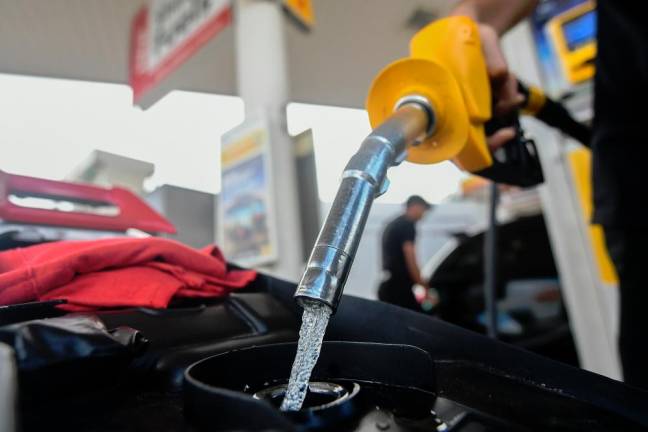
    Vietnam’s RON95 gasoline price dropped 0.34% to VND23,780 ($0.96) per liter after rising in the last four adjustments.

    E5 RON92 price fell 0.18% to VND22,670.

    Diesel dropped 0.72% to VND24,800. The Ministry of Finance has acknowledged an updated transportation cost of importing fuel to Vietnam in the Monday adjustment for the second time this month.

    Vietnam’s refined fuel imports in the first 10 months of 2022 rose 22.8% from a year earlier to 7.13 million tonnes, but costs rose 123.8% to $7.37 billion.

  • Low imports cause gasoline shortage

    Low imports cause gasoline shortage

    The current partial shortage of gasoline and oil has been caused by wholesalers not importing sufficient amounts, says said Deputy Minister of Industry and Trade Do Thang Hai.

    Commissions for retailers being cut amidst fluctuating world prices is also a factor, Hai told the press reporters Tuesday. Fuel retailers said they suffer losses after their commissions were adjusted downward and many want to close down.

    Wholesalers were importing gasoline and oil when their global prices surged, sometimes by 57-85% against the same period last year, but they had to sell it at lower prices.

    Currently, Vietnamese authorities adjust fuel retail prices every 10 days based on the average prices of the previous 10 days. However, many people including lawmakers have said this cycle is no longer suitable because it leaves domestic prices outdated compared to global prices, which have been unstable of late.

    Hai said wholesalers have to cover different costs like freight to bring imported gasoline and oil to Vietnam or to transport domestically produced fuels to ports nationwide, but the costs used by the ministry to calculate the base price are smaller than actual costs borne by the wholesalers.

    For these reasons, he said that wholesalers have incurred losses, so they cut back on imports and slashed commissions for retailers.

    Hai said that other reasons for the partial fuel shortage include lower production by two domestic refineries and the absence of some wholesalers.

    The two refineries produced 9.7 million tons of gasoline and oil in the first 10 months, some 170,000 tons lower than the yearly plan, according to the Ministry of Industry and Trade.

    Several wholesalers in the south have had their business licenses revoked for administrative wrongdoings, and some others have had customs clearance of imported fuel suspended for failing to meet customs-related requirements like electronic data connections.

    The Ministry of Finance has agreed to factor in an increase in the transportation cost of importing fuel, enabling a hike in retail prices.

    The costs is VND290-560 (1.2-2.3 cents) higher for a liter of gas and VND160-660 for diesel, and reflected in retail prices from Nov. 11.

    Another solution is increasing national gasoline and oil reserves, Hai said, noting that current reserves were equivalent to just 5-7 days of consumption.

  • Novartis campaign marks 10-year journey to improve Vietnamese family health

    Novartis campaign marks 10-year journey to improve Vietnamese family health

    A Novatis’s campaign has reached nearly 1.6 million people in 37 provinces and cities, providing them with information, examination and early treatment for chronic conditions such as hypertension and diabetes.

    Novartis Vietnam collaborated with Vietnam Cardiovascular Foundation and the southern Long An Province to celebrate the 10th anniversary of the “Healthy Family” program on Nov. 11, marking a decade of accompanying Vietnamese people in improving health quality.

    The event was attended by representatives of the Center for Disease Control (CDC) in Long An, Yen Bai, Bac Ninh, Phu Yen, Thai Nguyen, Dak Lak, Nghe An, Quang Binh, Soc Trang, Tra Vinh provinces.

    To create opportunities for more people to have easy access to medical services, since 2012, Novartis has implemented “Healthy Family” program, with the companionship of Vietnam Cardiovascular Foundation and local health departments. The program cooperates with health centers to conduct screening sessions and disseminate information about hypertension and diabetes for people over 40 years old in districts across the country, with priority given to remote areas.

    By 2021, “Healthy Family” program has reached nearly 1.6 million people in 37 provinces and cities such as Lang Son, Bac Giang, Yen Bai, Bac Ninh, Phu Yen, Thai Nguyen, Khanh Hoa, Dak Lak, Nghe An, Quang Binh, Soc Trang, Tra Vinh, Hau Giang, Dong Thap …

    Each year, the program reached approximately 200,000 people in 15 localities, with an annual budget of up to VND6-7 billion. Through the program, people could access basic knowledge about diseases and be screened for diabetes and hypertension.

    About 15-20% of participants were detected and diagnosed with signs of high blood pressure, 7-8% had high blood sugar and continued to be monitored at health stations.

    In addition, the program also strengthened the consulting capacity and expertise of local health workers, thereby improving the quality of community health care.

    “Overcoming geographical constraints, we implement “Healthy Family” program with the aim of helping people access good health services at an affordable cost. The 10-year journey has confirmed the sustainability and maintainability of the program as well as Novartis’ commitment to the health of Vietnamese people,” Carolyne Hall Director, Global Health Access Solution Center of Excellence, Novartis global, said.

    The Novartis representative also expressed her desire to expand the program scale year after year, with the first step of expanding to one more province each year, and at the same time, supplement interventions related to other chronic diseases such as heart failure and breast cancer.

    Grassroots medical care in remote areas

    Among the common chronic diseases, non-communicable diseases (NCDs) are now four times the cause of death than infectious diseases. Not only in developed countries but also in developing ones, the risk factors for NCDs – such as sedentary lifestyles and unhealthy diets – are being multiplied.

    Hypertension and diabetes are two common non-communicable diseases and require regular and long-term treatment. According to statistics from the Ministry of Health, 60% of people with high blood pressure in Vietnam have not been detected and over 80% have not been treated. In recent years, this pathology is getting younger. Hypertension is considered a silent killer and is the leading cause of death.

    Diabetes is increasing steadily in recent years globally. According to statistics from the International Diabetes Federation, in 2017, approximately 425 milion people had dibetes in the world. In Vietnam, about 3.5 milion peoples had been living with this disease.

    However, access to primary care and resources are scarce in some remote localities. In provinces such as Bac Giang, Yen Bai, Lang Son, and Dak Lak… health stations are far away from where they live, traffic is obstructed, human resources for medical staff, doctors and medicines are still limited.

    Therefore, many people have missed the opportunity to be screened early, and missed the golden time for treatment. On the other hand, some refuse to get medical examination and treatment locally, leading to overcrowding at central hospitals. This is also part of the reason for the widespread burden on the medical care in Vietnam, and at the same time hinders the long-term improvement of Vietnamese people’s health.

    Novartis is reimagining medicine to improve and extend people’s lives. As a leading global medicines company, Novartis uses innovative science and digital technologies to transform treatments in areas of great medical need.

    Novartis products reach nearly 800 million people globally. About 11

  • Spotify introduces new billing choice for Android users

    Spotify introduces new billing choice for Android users

    Spotify and Google announced over the weekend they have partnered to offer customers using Android devices a new purchase experience. The new feature was unveiled in March but wasn’t released immediately. After months of working to build the so-called User Choice Billing (UCB), the feature is now rolling out to Android users.

    With the new User Choice Billing feature, Spotify users will be able to subscribe and make purchases using the payment option they want. Starting this week, UCB is making its way to Spotify subscribers in select markets around the world. Although Spotify did not mention where exactly the feature should be available in the next few days, it did confirm that it will expand the test to more markets in the coming weeks.

    Spotify is one of the first companies to implement UCB with Google. First tested with Google Play, the new feature is meant to provide users and developers more flexibility and choice when it comes to purchasing and selling products.

    Google Play’s user choice billing was initially introduced in Australia, India, Indonesia, Japan, and the European Economic Area, and later on expanded to the United States, Brazil, and South Africa. We can’t confirm if Spotify targets the same regions, but at least some of these countries should have the new user billing choice available.

    Bumble and Spotify are the first companies to partner with Google to provide their customers with new user choice billing, but more names might pop up in the coming months if the new feature proves successful.

    That said, if you’re living in one of the select markets where Spotify introduced the new feature, and you’re using an Android device, you should soon be able to choose how to pay for your Spotify subscription. If you’re using an iOS device, you’ll probably never benefit from this option, or at least not anytime soon.

  • Telegram adds voice-to-text for video messages

    Telegram adds voice-to-text for video messages

    Telegram announced a new update that brings some new features for Premium users and some visual changes available to everyone. The most significant change included in the update is the addition of voice-to-text for video messages, which is now available for Telegram Premium users.

    Previously, subscribers could convert any voice message to text, but the latest update adds the same functionality to video messages. If you’re paying for Premium, you’ll now be allowed to get an instant text transcript of a video message.

    Apart from that, Telegram introduced Topics in Groups, a new feature that allows groups with over 200 members to enable topics and create separate spaces for any subject. The new feature works as individual chats within the group and supports their own shared media and notification settings.

    Another interesting new functionality included in the update, a collectible username, is meant to make it easy for others to contact Telegram users or find their public groups in channels. Besides one basic username, Telegram users can now assign multiple collectible usernames to each of their accounts and public chats. These can be less than 5 characters long and can be traded via blockchain.

    Once again, Telegram is showing emoji fans a lot of love. The latest update adds 12 new emoji packs available for Premium users, some made specifically for Halloween.

    Telegram users on iOS will be getting a redesigned Night Mode. Dark themes have been updated to make colors more balanced with better blurring effects as users scroll in chats and the chat list.

    As far as Android users go, the update introduces new options to resize text. If you want to increase the size of chat text, including link previews, reply headers and more, you’ll find the new functionality in Chat Settings.

    Finally, some minor design improvements have been implemented too. For example, a new animation has been added when swiping left to reply. Also, tapping a user’s phone number in their profile page will now open a new menu with several call options.

  • Disney Plus, Hulu raising prices in December

    Disney Plus, Hulu raising prices in December

    Disney Plus announced back in August that it will launch its own ad-tier service in December. One of the few streaming services that didn’t allow customers to pay less for its services and see ads, Disney Plus is aligning its offering to the market.

    Unfortunately, along with the new ad tier, Disney Plus announced a price hike for its ad-free streaming service. Starting December 8, Disney Plus will cost $11 per month, as opposed to just $8. Customers who don’t want to pay for the ad-free tier can keep paying $8 per month, but they will get ads.

    Since Disney Plus still allows customers to pay in advance for its streaming services, you have until December 7 to grab a Disney Plus annual subscription and avoid the upcoming price hike, at least for one more year.

    As far as Hulu goes, things are a bit more complicated. While the ad-supported and ad-free subs remain the same at $8 and $15 per month, respectively, all Hulu + Live TV bundles will be slightly more expensive starting next month.

    For example, the $70 per month bundle featuring Hulu with ads, Disney Plus without ads, ESPN+ with ads, and live TV with ads will cost $75 come December 8. Additionally, the same bundle but with no ads on Hulu will be priced at $83 per month, $7 more than the current price.

    From December 8 onward, the cheapest bundle including Disney Plus and Hulu will cost $70, but it will screen ads on all services included in the bundle. Customers who have already paid the $3 extra fee for ad-free Disney Plus via Hulu will get to keep service beyond December 7, but the option will no longer be available afterward.

    The only good news is that ESPN+, one of the streaming services included in the bundles, will not get a price hike and will still be available for $10 per month.

  • Why Ikea Australia is using tuk tuks for last-mile delivery Down Under

    Why Ikea Australia is using tuk tuks for last-mile delivery Down Under

    Electric Tuk Tuks are to make their debut in Australia as part of a new initiative by logistics giant ANC and retailing monolith Ikea get serious about the cleaning up of “last mile” delivery transport in Australia.

    “Last mile” refers to the final journey of cargo and parcels from distribution centre to the customer, and it is seen – because of the short distances and its operation in built up areas – as an obvious sector to target as the transport world dumps polluting fossil fuels for electric drive trains.

    In Europe, electric vans are being rolled out at pace – largely because residents and city and national governments are sick and tired of polluting trucks in their local area. Delivery times are tightly controlled, and within years it is expected that diesel and petrol vans will be banned from built up areas. They already are in some locatios.

    Australia, as with most things EV, is dragging the chain. But on Thursday, last-mile delivery specialist ANC and leasing specialist Orix announced a strategic partnership to show how fleet electrification can be achieved.

    ANC currently has ten electric vans – out of a total fleet of more than 1,100 vehicles – but wants to ramp this up rapidly, at least doubling the numbers in the next year and then again the next.

    On Thursday, it unveiled an Australian first: a specially-designed electric TukTuk manufactured by Biliti Electric in India and imported exclusively by Brisbane-based company EMoS.

    The electric three-wheelers will be used by Ikea’s Tempe store in Sydney and will feature swappable 9kWh batteries. However, they will be limited to speeds of 50km/h  due to Australian homologation rules.

    One Tuk Tuk was on display after being flown in from India, but without its battery which has to be shipped. Their drivers will need to wear helmets.

    “We’re very excited to be pioneering these new 3-wheel EVs in Australia,” says ANC CEO Joe Sofra.

    “They’re being used globally – including by IKEA – and will be launched into the US market in coming months. Initially, our two e-TukTuks – which we’ve nicknamed BUDDe – will be deployed to carry out deliveries for IKEA Australia’s Tempe store for a 3-month trial to prove concept.”

    Sofra says there is a global revolution underway as the last-mile delivery sector accelerates fleet electrification and EVs are a perfect match for the sector.

    “We didn’t want to sit idly by and wait for the perfect economic environment to accelerate our EV goals. We could miss the boast, or in this case truck, van or Tuk Tuk. We now urge other last-mile delivery providers to take up the challenge.

    “It’s just a question of how hard and fast we can go.”

    Sofra is hopeful that the deal with Ikea can trigger other big retailers and suppliers to follow suit, and is hopeful also for government to also lend its support to ease the cost of the transition. Electric trucks remain expensive, and although there is an expected “after-market” in used batteries – for homes and the grid – the monetary benefits of that remain ill defined.

    The partnership with Orix will help create a “capital light” expansion into EVs, and demonstrate that the running costs are favourable, and better than renting.

    “It’s still early days for EVs as fleet vehicles and there are still many challenges, however, partnering with like-minded organisations helps overcome barriers and creates greener, more sustainable outcomes,” says Reggie Cabal, the CEO of Orix.

    He says many companies are in a “holding pattern” as they seek to undertand the market and the technology.

    “We are helping remove the complexity for delivery professionals to adopt EVs by aligning vehicles, infrastructure, energy and optimisation into a single, practical plan for a decarbonised fleet future,” he said. “It’s important we act now.”

    Ikea is aiming for 100 per cent zero emissions delivery by 2025, and is also calling on government to provide incentives and to help with charging infrastructure.

    “We are committed to this goal and want to bring the retail sector on the journey with us,” said Mirja Viinanen, the CEO of Ikea and its chief sustainability officer.

    “So we are calling on the government to help us get there by introducing targeted incentives and charging infrastructure for last-mile delivery and logistics to boost the uptake of EVs.”  

  • Gasoline wholesalers required to sell reserves amid fuel shortage

    Gasoline wholesalers required to sell reserves amid fuel shortage

    The Ministry of Industry and Trade has requested state-run gasoline and oil wholesalers to sell their commercial reserves to mitigate fuel shortages in some localities.

    Minister of Industry and Trade Nguyen Hong Dien on Wednesday asked PVN, Petrolimex, Mipec, Petimex and Thanh Le General Import-Export Trading Corporation to sell their reserves. Usually, wholesalers are supposed to ensure enough reserves to cover 20 days.

    As of Sept. 30, the state-owned wholesalers’ commercial reserves were over 1.25 million cubic meters of gasoline and oil, equivalent to 74% of Vietnam’s total consumption in one month.

    Relevant state agencies will consider punishing 14 gasoline and oil enterprises, mostly private wholesalers, which have not supplied fuel to distributors and retailers as planned, the minister said.

    Currently, two domestic oil refineries meet 70-80% of the country’s demand for gasoline and oil. However, half of the two refineries’ supplies depend on imported crude oil, he noted.

    “In reality, Vietnam still has to import around 70% of materials for gasoline and oil production and finished products. Local crude oil and finished fuel products account for only 30%,” said the minister.

    The Government on Wednesday asked the Ministry of Industry and Trade, in coordination with the Ministry of Finance, to ensure sufficient supplies of gasoline and oil for production and daily life in all circumstances.

    After retail prices of gasoline and oil increased on Nov. 1, partial fuel shortages have still occurred in Hanoi and Ho Chi Minh City and some other cities and provinces nationwide. The HCMC Department of Industry and Trade said nearly 20% of local gasoline stations faced gasoline shortages.

    Many retailers said the commissions they receive from wholesalers remain very low, while supplies from wholesalers are still insufficient.

  • Indonesia Hikes Fuel Prices To Rein In Ballooning Subsidies

    Indonesia Hikes Fuel Prices To Rein In Ballooning Subsidies

    Indonesia raised subsidized fuel prices by about 30% on Saturday, as the government moves to rein in ballooning subsidies despite a risk of mass protests.

    The price of subsidized gasoline was raised to 10,000 rupiah ($67 U.S. cents) a litre from 7,650 rupiah, while that of subsidized diesel rose to 6,800 rupiah a litre from 5,150 rupiah, energy minister Arifin Tasrif said.

    “I actually wanted domestic fuel prices to remain affordable by providing subsidies, but the budget for subsidies has tripled and will continue to increase,” President Joko Widodo told a news conference.

    “Now the government has to decide in a difficult situation. This is the government’s last option,” said Jokowi, as the president is known.

    Southeast Asia’s largest economy had already jacked up its 2022 energy subsidies to 502 trillion rupiah ($34 billion), triple the original budget, pushed by rising global oil prices and a depreciating rupiah currency.

    If prices were not raised, the budget would have ballooned to 698 trillion rupiah, said Finance Minister Sri Mulyani Indrawati.

    She estimated total energy subsidies would range between 591 trillion and 649 trillion rupiah for this year following the price hike, assuming the average crude price stays between $85 and $100 a barrel the rest of the year.

    High energy subsidies had restrained Indonesia’s inflation, at 4.69% in August, allowing the central bank to delay raising interest rates until last month, well behind regional and global peers.

    Hariyadi Sukamdani, head of the Indonesian Employers Association, said price pressure from the fuel price hike would not be too much, predicting inflation will top 6% at the end of the year.

    “If prices of goods are too expensive, people won’t buy. We can’t raise prices too much,” he said.

    Businesses are using unsubsidised fuels, but the price hike will affect logistics costs, Hariyadi said.

    Still, accelerating inflation could put pressure on Bank Indonesia (BI) to tighten monetary policy more quickly. The bank holds a two-day policy meeting ending on Sept. 22.

    Bank Mandiri economist Faisal Rachman estimated inflation could accelerate to between 6% and 7% and BI could raise the policy rate to 4.25% this year from 3.75% now.

    Faisal forecasts 5% economic growth this year despite the fuel price increase, supported by commodity exports and post-pandemic mobility, adding that the government’s cash distribution could help cushion some of the impact on consumption. The economy grew 5.44% in the April-June quarter.

    The government has allocated an additional 24.17 trillion rupiah for cash handouts to help the poor cope with the policy’s impact, Jokowi said.

    POLITICALLY SENSITIVE

    Fuel prices are politically sensitive in Indonesia, and the changes will have major implications for households and small businesses, as subsidised fuel accounts for more than 80% of state-owned oil giant Pertamina’s sales.

    The last fuel price hike was in 2014, months after Jokowi took office, aiming to free up fiscal space. That sparked protests across the archipelago.

    The opposition Labour Party has arranged a protest involving thousands of workers for Tuesday, chairman Said Iqbal, who also heads a trade union, told Reuters. He called on parliament to pressure the government to cancel the price hike.

    “This will hurt purchasing power,” he said. “Wages have not increased for three years and inflation is bound to rise sharply.”

    Small protests against any price hike, mostly led by students, had erupted in the recent days in several cities.

    After the price hike announcement, Pertamina said it was committed to ensuring adequate fuel supplies nationally. Cars were seen queuing in some stations in the capital Jakarta after the announcement.

    Pertamina, Asia’s biggest gasoline importer, had deferred some of its gasoline deliveries for September ahead of the price hike, due to an expected drop in fuel demand, traders said.

    Decades ago Indonesia was a major oil exporter, becoming a member of the Organization of Petroleum Exporting Countries in the 1960s, but its oil output declined and it turned to net oil importer in the 2000s. Indonesia is still an exporter of gas.

  • Carlyle eyes investing in Malaysia’s Caring Pharmacy

    Carlyle eyes investing in Malaysia’s Caring Pharmacy

    Multinational private equity investor Carlyle Group is reportedly in talks with Caring Pharmacy to acquire a majority stake in the Malaysian drugstore chain.

    According to DealStreetAsia, the deal is projected to reach more than US$300 million in size.

    Earlier this year, Caring Pharmacy’s majority owner, 7-Eleven Malaysia Holdings was said to be in talks with several potential Japanese investors about a potential divestment of Caring Pharmacy. The chain was previously estimated to be worth around US$400 million.

    Established in 1994 by five pharmacists who were course-mates in the School of Pharmacy at Universiti Sains Malaysia (USM), Caring offers pharmaceuticals, healthcare, and personal care products. As of 2019, the company had more than 120 stores nationwide.

    7-Eleven Malaysia recently forayed into the Indonesian pharmacy business through a joint venture between Caring Pharmacy and PI Era Prima Indonesia.

  • WhatsApp’s new feature Call Links begins rollout

    WhatsApp’s new feature Call Links begins rollout

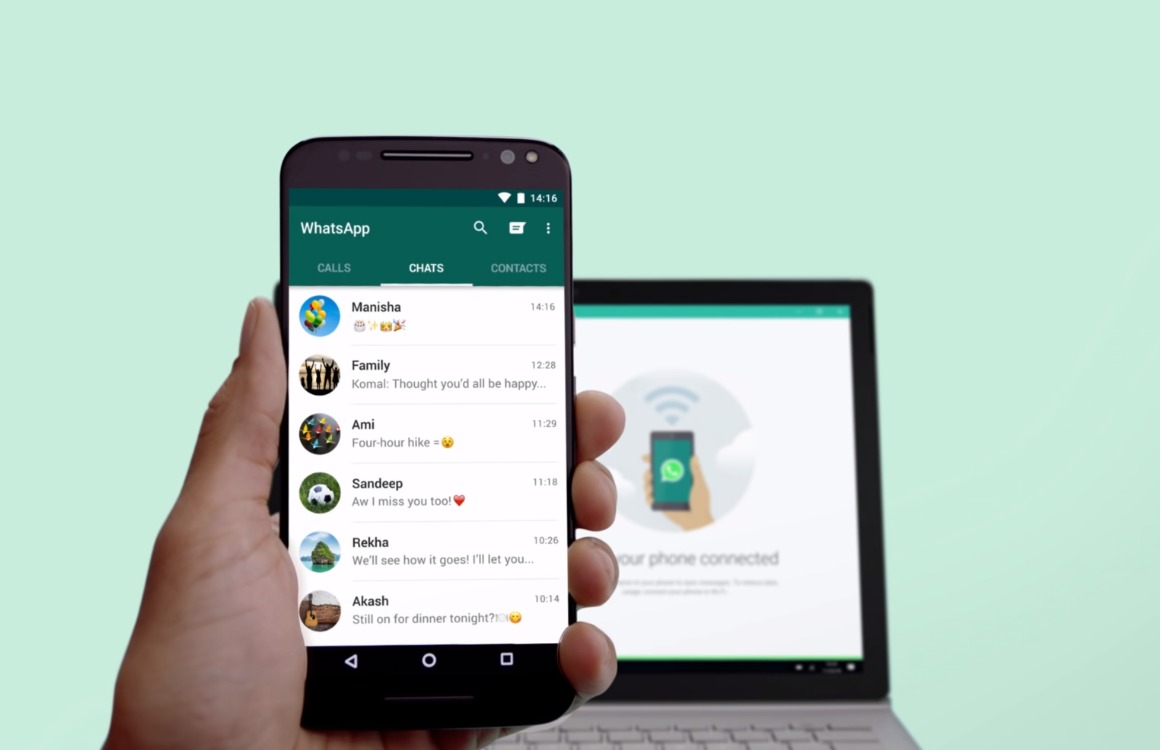
    WhatsApp announced a new feature last month called Call Links. Those excited to utilize secure group calls that only take a few seconds to set up may rejoice: the feature has officially started rolling out on a larger scale.

    As the name suggests, the feature allows WhatsApp users to create group calls, with or without video, accessible only by a simple link. These calls can host up to 32 people at a time, while the link itself is valid for 90 days.

    Naturally, all invitees must have a WhatsApp account and as of now, the feature is only supported on mobile phones. If you should open a Call Link on the WhatsApp desktop web app, it will inform you of the limitation and provide you with several options to get on the group call via your phone, like another link and a QR code.

    While it may seem redundant, as if you can open the link on the web app, then you must already have access to it on your phone, having an easy way to generate QR codes for calls that can last 3 months sounds like a nice hidden feature.

    Those interested in trying out Call Links can check if it’s available to them via these simple steps:

    1. Open WhatsApp on your smartphone
    2. Navigate to the rightmost tab labeled “Calls”
    3. On the top you should see the “Create call link” option

    And that’s all it takes to get a group call started on WhatsApp! While this is a significant improvement for individuals yearning for fast options that are known to be secure, the process is a tad more complicated than that of competitors.

    Zoom and Google Meet come to mind almost immediately. Both services provide video calls for up to 100 participants without any extra fees. You can also get access to extra options at a premium. Zoom’s calls can go up to 300 participants, while Google offers features such as streaming directly to YouTube.

    Both services will let you join in on a call without an account, which makes them a bit more accessible. Google even has an additional merit here: most people already have accounts set up, as you can’t really make the most of an Android device without one.

    You can even use your Google account to log into Zoom. While WhatsApp still requires your phone number, meaning that the only barrier that Call Links actually lifts is having another person’s number in your contact list.

    While WhatsApp’s service is completely free, it doesn’t have any extra features beyond voice calls. But their mission is different too: to let people communicate freely, without barriers. And Call Links completely matches that criteria.

    … And that would’ve been a poetic finale, if WhatsApp hadn’t been reported on testing calls for groups of over 1000 people. Given their ambitious experiments, this might just be the start for Call Links. Its future renditions may give competitors a run for their money.

  • Netflix to charge extra fees for extra users in 2023

    Netflix to charge extra fees for extra users in 2023

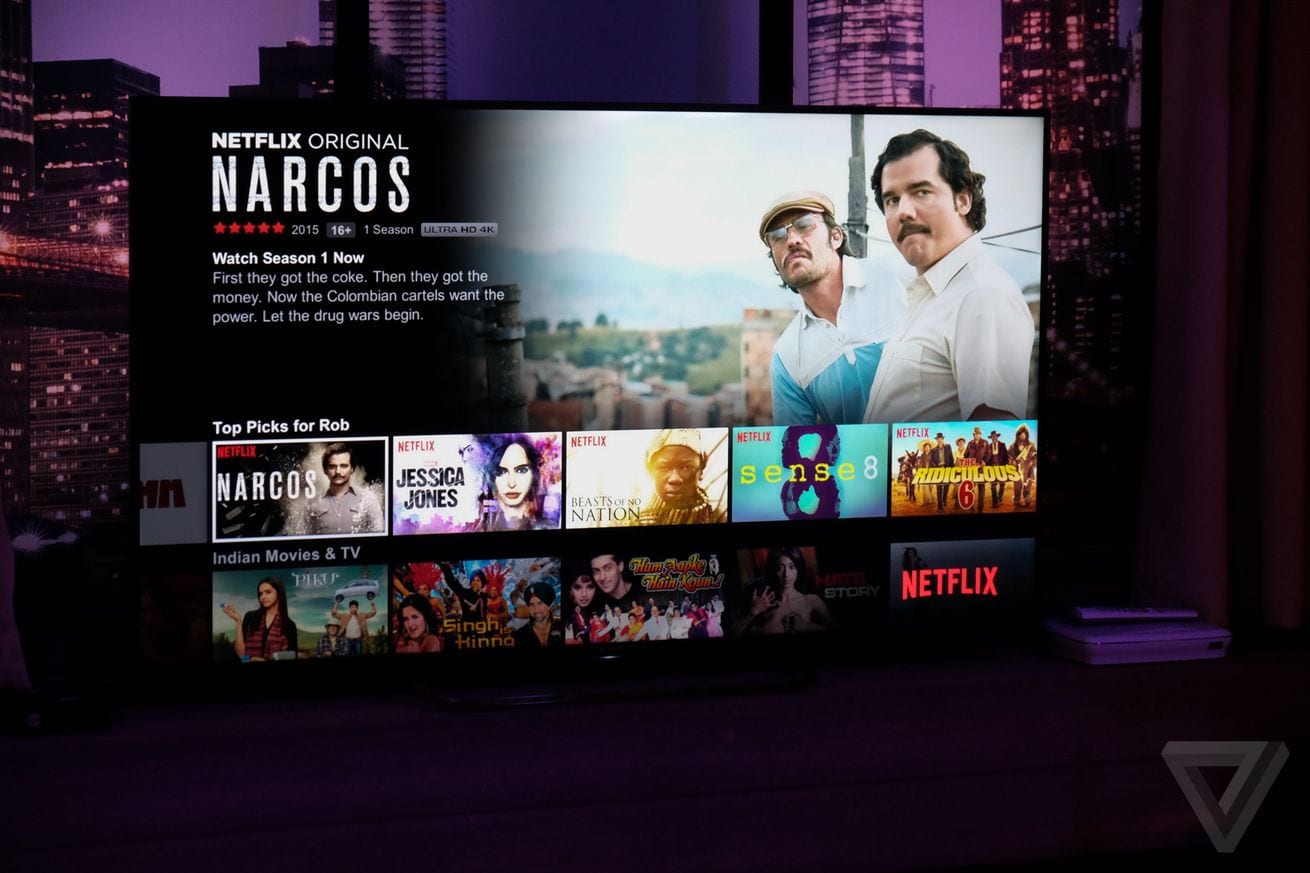
    The latest development in Netflix’s plans to dissuade account sharing has surfaced via a quarterly earnings letter. It reveals extra charges for each separate user on the account of the owner, that isn’t from the same household, starting 2023.

    While the final rates have not been officially announced, what we can infer from the document is that the charge will be up to a quarter of the initial basic rate. That would result in about a $3-4 charge per user outside of the household.

    Netflix began its crackdown on unauthorized account sharing earlier this year. What started with tests of account verification in the style of 2FA (2-factor authentication) and device count limitations ended with the creative workarounds as provided by the Internet.

    The tests had caught the attention of many users online, some of whom even shared their plans on how to circumvent the possible limitations via tricks as simple as “I’ll just text them the verification code”, while others provided their own take on solutions that Netflix should adopt.

    We can’t say if the Internet’s reaction had an impact on the decision, it was clear that a change of plans was needed. After all, Netflix’s estimated loss from account sharing is around the $6 billion mark, as per Citi analyst Jason Bazinet. From Netflix’s point of view, that is a sum that should flow in naturally from actual user subscriptions.

    While that does seem fair, let’s check in with Netflix’s competition:

    • HBO Max doesn’t have any limitations
    • Disney Plus limits the amount of devices connected to the account
    • Amazon Prime Video requires users of shared accounts to be within the same country or region

    How these will measure up against Netflix’s decision will become clear once we truly find out how the term “household” is defined and when the penalty is live.

    Netflix is still the major player on the market with over 220 million active users. Now, imagine if account sharing would cease? Those numbers would jump significantly, with a doubtless positive business effect, given Netflix’s recent financial troubles.

    It’s worth pointing out that the company is also making it easier to detach your profile from a shared account. Earlier this month, Netflix announced a profile migration tool, which allows users to keep their settings when creating their own subscription.

    Also, set to release in November, is a cheaper, ad-supported plan for $6.99. All of these announcements point to Netflix trying to gently nudge users into creating separate accounts, instead of sharing.

    Regardless of financial reports or planned actions, at the end of the day, Netflix are the trendmakers of the video streaming scene. Their actions are sure to stir up the market and it would be interesting to see how competitors react to Netflix’s decision.

  • Netflix announces that it’s working on a cloud gaming service and 55 new games

    Netflix announces that it’s working on a cloud gaming service and 55 new games

    After losing its dominance over the video streaming space, it appears that Netflix is ready to embark on a new venture and try to succeed where Google failed. Simply put, Netflix will try to enter the cloud gaming space as well.

    As Netflix VP of Gaming Mike Verdu revealed at TechCrunch Disrupt, the streaming giant is “seriously exploring a cloud gaming offering.”

    This comes after Netflix already launched a Games tab in its stock Netflix app, which holds some 25 mobile games. But apparently — this was only a first step.

    Verdu also stated that Netflix’s answer to Luna and GeForce Now won’t be a subscription service that will play as a console replacement. He said that it will be a “value add” and will work in a “completely different business model” than the recently-failed Stadia.

    According to Verdu, Stadia’s struggles to gain traction with customers wasn’t the technology it utilized, it was precisely the business model Google used. But Netflix hopes that, over time, its way of implementing its cloud gaming service will become the “very natural way to play games wherever you are.”

    Verdu didn’t say when we could expect Netflix to launch its cloud gaming service, but he shared that the streaming company is currently working on 55 new games, and it’s opening a gaming studio in Southern California. The games are based on original properties like “Stranger Things,” as well as licensed ones like “Spongebob Squarepants.”

    As for the new gaming studio, Verdu said that the former executive producer of “Overwatch,” Chacko Sonny, will get behind the wheel and lead it. According to Verdu, Sonny joining Netflix shows that the streaming giant is in the gaming industry for “the long haul” and “for the right reasons.”