Category: Living

Retail News Asia is committed to providing both local and global retailers with the latest Living news throughout the Asian market. This on a daily base.

  • TikTok banned on government devices in Kansas

    TikTok banned on government devices in Kansas

    The saga of TikTok and its security issues has taken yet another turn. After news broke that TikTok admittedly spied on journalists a few days ago, US government officials have started to take serious measures against the popular app. First, TikTok was banned on US House of Representatives-issued devices, and now the app will disappear from government devices in the state of Kansas.

    Kansas Governor Laura Kelly has announced a ban on TikTok on state government devices due to national security and data mining concerns. Kelly stated that TikTok could make users’ data available to the Chinese Communist Party.

    15 other states have already banned the app, but Kansas is among the first Democratic states to implement such a ban. TikTok spokesperson Jamal Brown called the ban “politically motivated” and said it was based on “unfounded falsehoods.”

    TikTok is the second most popular domain on the internet right now, after Google. It has grown quickly and now has more users than Facebook, Instagram, Twitter, and Snapchat combined. Things might become even bleaker for TikTok users in the US if the proposed bipartisan bill helmed by Marco Rubio, a member of the Senate Intelligence Committee, passes.

    The legislation from both parties is called “Averting the National Threat of Internet Surveillance, Oppressive Censorship and Influence, and Algorithmic Learning by the Chinese Communist Party Act (ANTI-SOCIAL CCP Act)” and Rubio officially stated that “The federal government has yet to take a single meaningful action to protect American users from the threat of TikTok. This isn’t about creative videos; this is about an app collecting data on tens of millions of American children and adults every day.”

  • Hanoi’s first metro line gets $38M capital hike

    Hanoi’s first metro line gets $38M capital hike

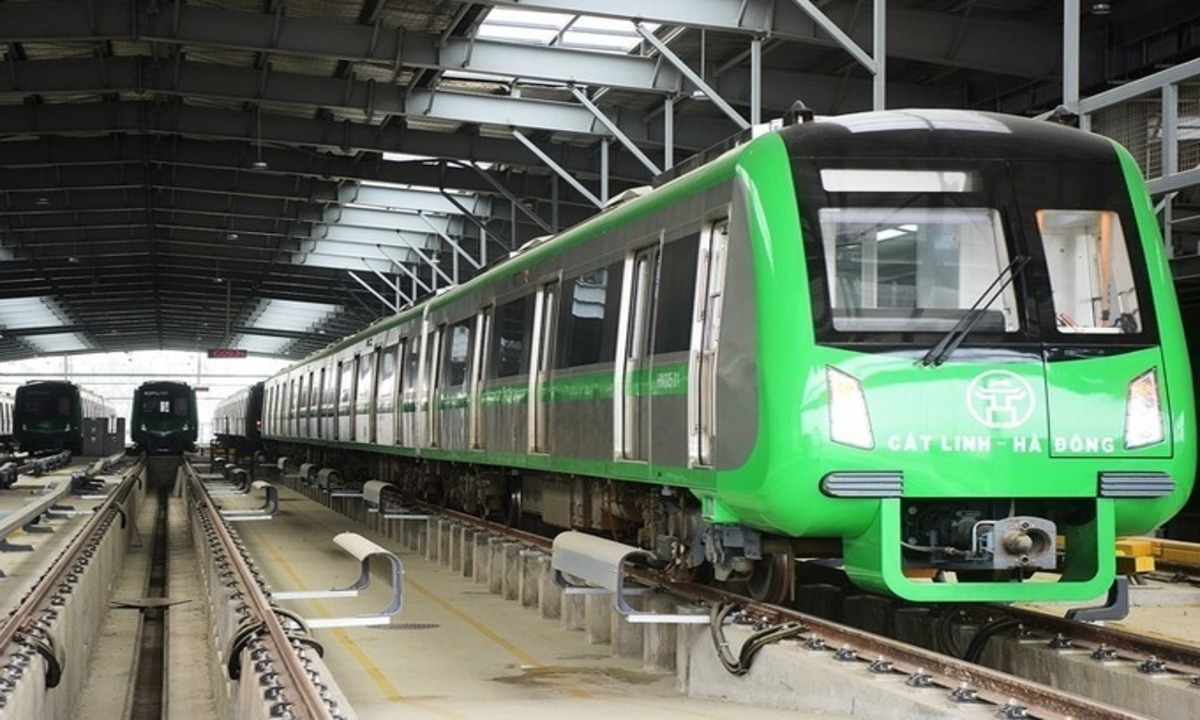
    The Cat Linh – Ha Dong Metro Line in Hanoi has received an additional VND911 billion ($38.6 million) capital increase.

    The money will come from state coffers, with 24.4% of it from domestic funds and the rest foreign funds, according to a decision signed by Deputy Prime Minister Le Minh Khai.

    The Ministry of Planning and Investment and the Ministry of Finance are responsible for reporting the disbursement of this capital to the Prime Minister’s Office.

    The 13-kilometer Cat Linh – Ha Dong Metro Line earlier saw its cost increase from VND8.77 trillion in 2008 to VND18 trillion in 2017.

    It is one of five metro lines nationwide that has seen cost increases.

    The Cat Linh – Ha Dong Metro Line started operating commercially at the end of last year and so far it has served 7.3 million passengers, among them 10,000 monthly subscribers.

    The line has recorded a revenue of around $53 billion so far with a monthly growth of 20%.

  • 900,000 Apax Holdings shares force sold

    900,000 Apax Holdings shares force sold

    Over 900,000 shares of Apax Holdings have been forced sold by stock brokerages after hitting the floor 16 sessions in a row.

    Apax Holdings chairman Nguyen Ngoc Thuy, also known as Shark Thuy, said that 113,000 of his IBC shares were forced sold by Bao Viet Securities last week, according to a filing to the Ho Chi Minh Stock Exchange.

    This reduced his ownership in the company from 8.05% to 7.91%.

    In the last two weeks Bao Viet Securities and Mirae Asset Securities also forced sold 788,700 IBC shares owned by Apax Holdings’ parent company Egroup.

    Egroup has seen its ownership in Apax Holdings reduced from 59.76% to 58.81% as a result.

    A brokerage typically requires shares to be sold if it issues a margin call and the investor is unable to come up with the money.

    Apax Holdings has seen its IBC shares plunging since November 11 as the company has been accused of delaying salary payments and of failing to uphold high quality.

    In the last five weeks share prices has fallen by 83%.

    Thuy said that a cash shortage caused by the impact of Covid-19 has put the company in crisis.

    He said he would lead the business to recovery but that he will need around three years to accomplish this.

  • Netflix vows to put an end to free password sharing in 2023

    Netflix vows to put an end to free password sharing in 2023

    Netflix has been trying to limit the use of password sharing since 2019 when its researchers informed the higher-ups that this is a major concern for the service’s revenues. However, Netflix’s willingness to stop the problem took a pause when COVID-19 started to spread worldwide.

    Now that the pandemic is over and because Netflix’s market share stalled, the streaming service is actively looking for ways to end password sharing without “alienating” its customers. One of the steps toward achieving this has already been made, as Netflix now offers a much cheaper alternative to those who can’t afford to pay for the basic plan.

    The new $6.99 ad-supported Netflix plan is a solid alternative for those who are currently getting the service for free thanks to password sharing. In the next couple months, however, things will become even more serious.

    According to the report, more than 100 million Netflix viewers currently watch the service via password sharing, which is quite a lot of revenue that the service is not getting. Netflix now revealed plans to end password sharing starting 2023, so those who are now taking advantage of the feature will be asked to pay for the service.

    Since Netflix is able to track down viewers who use password sharing, it will start rolling out changes to the service in the US early this year. One thing that Netflix is worried about is that customers will not like the chances, so it’s probably now trying to find ways to make it worth paying for the service.

    One possible solution would be to gradually pressure customers into dropping password sharing, which should prevent some backlash. However, that would mean offering them something in return for their willingness to start paying for the service.

  • Apple pulls HomeKit software update that brings the Matter protocol on board

    Apple pulls HomeKit software update that brings the Matter protocol on board

    Apple has apparently halted the update that completely revamps the underlying HomeKit architecture and brings the Matter standard to Apple’s smart home solution. The update was brought alongside the iOS 16./iPad OS 16.2 that arrived last week, and was available as soon as you opened the Home app, but the option to do so seems to have been disabled server-side by Apple.
    The reason for the unpleasant situation seem to be some pretty big problems that the transition to the Matter standard could have potentially brought upon HomeKit enthusiasts. Matter, hailed as the next big thing in the smart home space, is a smart home protocol that allows smart home gadgets to be interoperable and seamlessly communicate with one another, as well as be mostly ecosystem-agnostic, meaning that you might use them either with Apple’s HomeKit, Google Home, Amazon Alexa, Samsung SmartThings, or any other.
    If you’ve already jumped the gun and upgraded your HomeKit architecture, the update seems to be intact, though users who missed their chance to grab the software update are currently unable to move to the new architecture. That’s for the good, as there were seemingly more than enough issues to force Apple to pause the rollout.

    Hopefully, HomeKit users wouldn’t have toZwait for too long before the option to upgrade HomeKit pops up once again. Optimistically, we wouldn’t have to wait for iOS 16.3 to do so.

  • Spotify might soon know when your workout calls for a pump-up song

    Spotify might soon know when your workout calls for a pump-up song

    It appears that Spotify is working on an interesting new feature. The music streaming service is currently developing a HealthKit integration for its app. Chris Messina found this in Spotify’s iOS app code.

    For those unfamiliar with HealthKit, it is an iOS API that allows third-party apps to access data from Apple’s Health app. But why is Spotify working on a HealthKit integration? Well, a message found by Messina — a product designer, who constantly keeps his eyes open for upcoming features in Spotify — states that Spotify is developing this feature to be able to “get the right music for your workout.”

    The message further explains that the app will collect data like distance, pace, or speed during your training. The collected information will let Spotify match your training sessions with what you listen to and understand what songs motivate you most.

    Now, we must note that for an app to access your health data, you must first grant it permission. So, Spotify won’t be able to obtain your health information if you don’t want it to.

    However, you will surely agree that a good pump-up song at the right moment can put you in the necessary state of mind and help you break your deadlift or bench press records in the gym. With such a feature, Spotify would know the perfect moment to play that one song that makes your blood pump every time you hear it, thus helping you achieve greater results during your workout.

    Unfortunately, there is no word from Spotify about this new feature, and we don’t know when the music streaming platform plans to release it.

  • TikTok will soon let you see why it has recommended a specific video to you

    TikTok will soon let you see why it has recommended a specific video to you

    Have you ever wondered why TikTok recommends certain videos to your “For You” feed? Well, if you have, you will soon know the answer. As TikTok announced in a new blog post, it will introduce a new tool in the coming weeks that will allow you to see why a particular video appears in your “For You” feed.

    Once TikTok releases the feature, you will be able to find it in the share panel on your For You feed. When you tap the share button, you will see a new question mark icon named “Why this video.” Choosing it will reveal why TikTok recommended the video you are currently watching.

    For example, the app may let you know that it is showing this clip because of your previous interactions with the application, such as content you watched, liked, or shared comments you posted, or searches you performed. It may also tell you that you’re seeing this video because it was uploaded from an account you follow or from an account that has been suggested to you.

    Another reason the app could give is that the displayed video is popular in your region, which is why it is being shown to you, or that the clip was just recently posted in your area.

    In its blog post, the social media platform also shared that it is currently working on many other ways to bring “meaningful transparency” to its users.

    We should not be surprised by TikTok’s sudden desire to offer more transparency because it’s most likely due to the attacks that it is currently facing. The social media platform is once again under fire by the US government.

    Recently, a new bill was introduced that would prevent TikTok from operating in the country. The bill follows on the heels of a proposal prohibiting the app’s installation on government-owned devices. As you probably know, a similar ban already exists for devices used by the United States military, the State Department, and the Department of Homeland Security.

  • Gasoline prices dip to 18-month low

    Gasoline prices dip to 18-month low

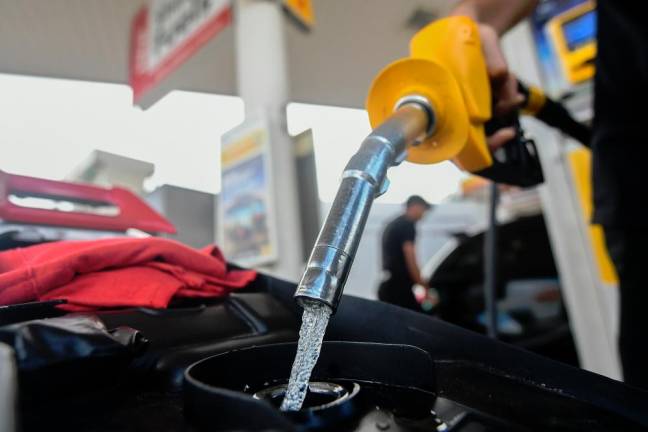
    Gasoline prices plunged to the lowest since June 2021, with RON95 dropping 2.36% to VND20,700 ($0.87) per liter.

    E5 RON92 fell 1.82% to VND19,970. Diesel dropped 0.32% to VND21,600. Gasoline prices have fallen four times in a row since mid-November.

    They are now 37% lower than the previous peak on June 21.

    Vietnam fuel prices are adjusted on the first, 11th and 21st of each month.

    Ho Chi Minh City has proposed that prices are adjusted every three to five days instead of the current 10 to resolve the recent supply issues.

  • Netflix denies accuracy of report that says its new ad-supported tier is off to a sluggish start

    Netflix denies accuracy of report that says its new ad-supported tier is off to a sluggish start

    According to data released by Antenna, Netflix’s new ad-supported monthly service is not off to such a great start. The lower-priced service launched on November 3rd and for the month, the “Basic with Ads” plan was responsible for only 9% of U.S. sign-ups in November. Last month, 0.1% of existing Netflix subscribers switched from another plan to the streamer’s ad-supported service.
    The data posted by Antenna shows that in the U.S. from May through October of this year, 29% of Netflix subscribers were signed up for the Premium service, 31% were members of the Standard tier, and 40% were subscribers to the Basic plan. At the end of last month, when the “Basic with Ads” service had been around for about four weeks, the plan made up 9% of Netflix’s total subscriber count in the states.
    The new ad-supported plan reduced the percentage of Premium subscribers to the platform by 14% to 25%. The Standard plan was hit the hardest as the percentage of U.S. Netflix subscribers signed up to that plan declined by 23% to 24% from 31%. The Basic tier actually added 3% to 41%. Antenna computes its numbers from millions of raw transaction records including online purchases, and credit and banking data.
    According to LightReading, Antenna “cleans and models” the raw data to compute the numbers you see in this article. But the Journal says that Netflix doesn’t believe that the data presented by Antenna is accurate. A Netflix official stated, “[it’s] still very early days for our ad-supported tier and we’re pleased with its launch and engagement, as well as the eagerness of advertisers to partner with Netflix.”
    Still, Netflix reportedly had to return some ad revenue back to advertisers after failing to meet viewing estimates for its “Basic with ads” service. This was the subject of a report published earlier this month by Digiday. According to unnamed agency executives, in some cases, Netflix delivered approximately 80% of the expected audience. “They can’t deliver. They don’t have enough inventory to deliver. So they’re literally giving the money back,” said one agency executive.
    Ted Sarandos, Netflix’s co-CEO, said at the UBS Global Technology, Media & Telecom Conference earlier this month, “Advertising for us is ‘crawl, walk, run.’ We just turned it on, and it works.” Calling advertising a “long-term initiative” for the streamer, the executive hinted that there will “likely” be more than one ad-supported tier of service available to Netflix customers in the future.
    The “Basic with ads” service is $6.99 per month. Netflix describes it this way: “Basic with ads is a great way to enjoy movies and TV shows at a lower price. You can stream your favorites on any device with limited ad breaks. This plan does not allow downloads and a limited number of movies and TV shows are not available due to licensing restrictions. Some location and device restrictions also apply.” Video streams in HD resolution with this plan.
    The Basic service is priced at $9.99 per month and while content is also available on just one supported device at a time, with Basic you can download content. Subscribers to the Basic tier see Unlimited movies, TV shows, and mobile games in HD resolution.
    There is a big jump between the $9.99 monthly cost for the Basic plan and the next tier up, Standard. The latter is priced at $15.49 per month and delivers content to two supported devices at a time in Full HD resolution. Subscribers can view Unlimited movies, TV shows, and mobile games and download them.
    For $19.99 per month, Netflix offers its top-tier service called Premium which allows content to be viewed by four supported devices at a time. The content, which includes Unlimited movies, TV shows, and mobile games, is streamed in Ultra HD resolution.
  • Vietnam Electricity wants power prices to be dynamic, based on production cost

    Vietnam Electricity wants power prices to be dynamic, based on production cost

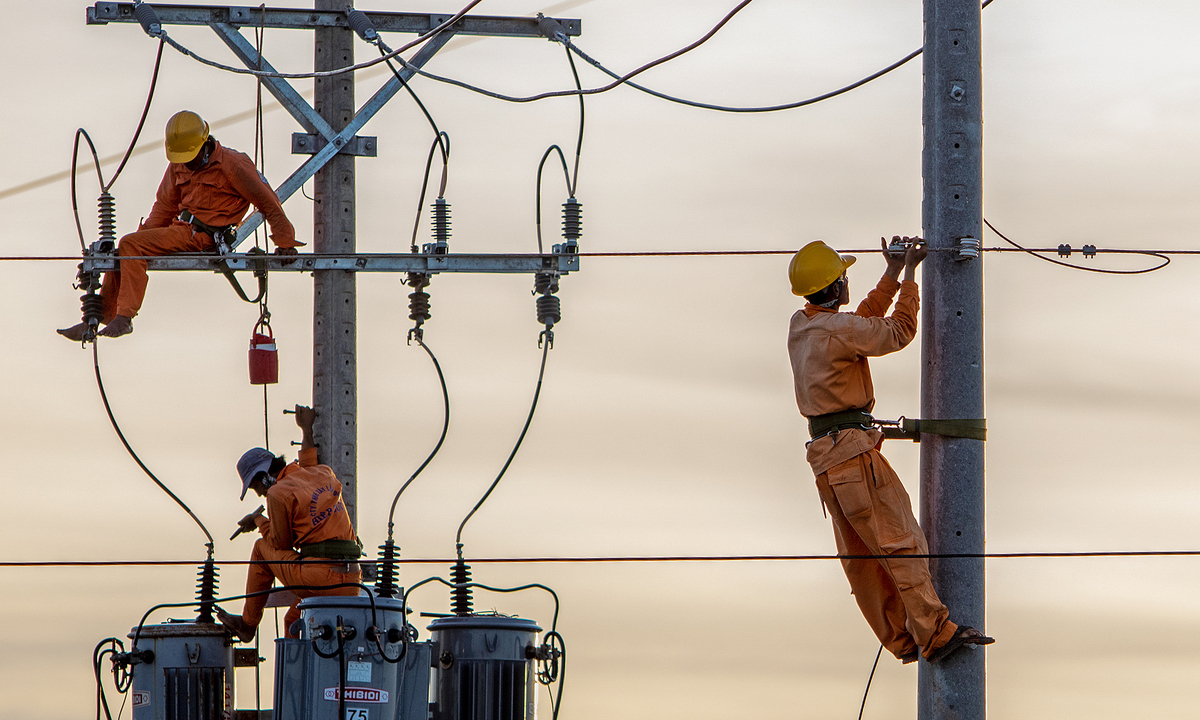
    Vietnam Electricity wants power prices to be managed in the same way as fuel by taking into account the changing costs of production and not fixed at certain levels.

    Input costs surged to high this year, with oil and gas prices rising by double-digits and coal by 600%, EVN CEO Tran Dinh Nhan said at a meeting on December 12.

    Yet electricity prices remained the same as in 2019, he said.

    He blamed this for his company’s severe financial challenges and the risk of not paying its partners.

    “Eventually EVN’s credit ratings will be lowered. The company will have difficulty accessing loans and this will affect national security.”

    EVN said last month it faced losses of VND31 trillion this year and called for increasing retail prices.

    The government allows EVN to adjust prices by up to 5% a year, a 5-10% change needs approval from the Ministry of Industry and Trade and anything more than 10% requires the Cabinet’s green light.

    EVN also wants Power Development Plan 8 to be approved quickly so that it can start building new plants and grids to keep up with demand.

  • Employees twiddle thumbs after being overworked earlier this year

    Employees twiddle thumbs after being overworked earlier this year

    Roughly one year ago, when the Covid pandemic hard hit southern factories, Trinh and many other garment workers in the southern province of Binh Duong covered a distance of nearly 2,000 km to return to their hometown, the central province of Thanh Hoa.

    After Tet (Lunar New Year holiday) in early 2022, she intended to seek a job in the hometown to have conditions to take care of her little daughter. But her garment factory phoned her, telling her back to work because it was receiving more orders and facing a labor shortage.

    Many such a call were made as businesses started to resume full operation after the pandemic was put under control. Employers were afraid of encountering severe shortages of labor because a large number of workers had returned to their native provinces, and been reluctant to back to work.

    Nong Van Dung, deputy director of the Dong Nai Department of Labor, Invalids and Social Affairs, said the department’s officers went to the Central Highlands region and the Mekong Delta to persuade workers to come back to work in the southern province. At that time, factories in Dong Nai needed some 60,000 workers.

    Phi Ngoc Trinh, general director of Ho Guom Garment Company, said garment firms, which created 3 million jobs, received increasing orders, and they could choose the most suitable ones.

    Garment 10 Company even prepared materials for production slated for the next six months to serve big markets.

    However, some months later, everything suddenly changed.

    Garment 10 Company’s general director Than Duc Viet said 10-15% of foreign clients told his company to delay production, explaining that they had big inventories till Christmas, while the firm had already prepared materials for production.

    “Returning to this land (Binh Duong), I have never thought that we would be underemployed in the year-end like this,” garment worker Trinh said in late November, sitting in a boarding house in the province’s Di An City.

    After six months of working overtime, she and over 100 colleagues in the garment factory are now working only five days a week.

    Receiving fewer orders, a plethora of garment factories have had to scale down production. The number of orders, mainly from Japan’s Uniqlo and the U.S.’s Nike and Adidas, a garment firm in the northern province of Hai Duong received in October decreased 30% against October 2021, so it told workers to stop working overtime.

    In September, the firm planned to open a new factory, but now it has stopped the plan on hiring more workers, and tried to maintain the current workforce of 17,000 after laying off some 4,000 people.

    Truong Van Cam, president of the Vietnam Textile and Apparel Association, forecasted the order shortage will last till mid-2023 at the earliest.

    Like garment makers, footwear and construction materials firms faced the same gloomy situation.

    “We, footwear producers, have never seen such a strange market over the past 40 years. Orders have dropped en masse in a short period of time,” said a Vietnam Leather, Footwear and Handbag Association official.

    The official said that in June factories still received orders and hired more workers, but only one month later, orders started to decrease gradually. Most factories encountered order shortages of 50-70%, even some got no orders, he recalled.

    Dinh Hong Ky, vice president of the Vietnam Association for Building Materials, told VnExpress that construction material firms have recently laid off more workers than in early 2021 when the pandemic situation was serious.

    In April 2021, the firms also reduced their workforce and working hours, but mainly to follow pandemic prevention rules, while market demands remained stable, he explained.

    Ky’s firm, Secoin, whose nine factories produce bricks and tiles for export to 60 countries, has had to cut jobs. One of the factories has recently reduced its workforce by 40%.

    “In October, the first time in our company’s history, clients in Japan told us to stop production for new orders. They will only receive products for orders placed earlier,” he said, noting that even in the 2008-2009 Asian financial crisis, his company’s export to Japan did not decrease.

    “No one in the building materials industry, neither Vietnamese factories nor foreign customers, can confidently predict when the difficulties will end,” Ky said.

    According to Ky, unfavorable conditions for production include the uncertainties of geopolitical tensions, China’s unpredictability with anti-pandemic policies and high inflation, and Vietnam’s sluggish real estate market and tightened credit growth.

    Massive layoffs

    According to statistics from the Vietnam General Confederation of Labor, 472,000 workers have recently been fired or underemployed, with 41,500 people having their labor contracts terminated. Most of them worked in such labor-intensive industries as garment and textile, footwear, wood processing, seafood, electronic component and mechanics.

    Shrunken working hours and salaries have happened at not only blue-collar workers but also white-collar ones.

    In late November, a leading construction firm with a workforce of more than 5,000 asked office clerks to work only 40 hours a week, from Monday to Friday, and lowered salary-based allowances of managerial post holders.

    Hoai Anh, a communication staff of an advertisement company in Hanoi, was shocked last weekend when she was informed that her income would decrease by 30% starting in December due to the company’s receiving fewer customers. Smaller salary means smaller social insurance premium.

  • Cooking gas prices up 3%

    Cooking gas prices up 3%

    Cooking gas prices rose on Thursday in Ho Chi Minh City and other southern localities, with a 12-liter cylinder now costing VND438,000 (US$17.78), 3.06% higher than before.

    This is the second increase since November after prices fell for six months in a row from May.

    Global rates have gone up by 1.56% to $650 per ton as demand for heating surges amid winter, according to local distributor Saigon Petro.

    In Vietnam, domestic supply meets only around 60% of the demand, which means prices are partially dependent on global rates.

  • California Fitness slows expansion to improve member retention

    California Fitness slows expansion to improve member retention

    California Fitness & Yoga, one of the most popular high-end gym chains in Vietnam, is suspending its expansion to focus on retaining members while its competitors’ race to open more facilities.

    “We are not perfect,” said Dane Fort, CEO of FLG Vietnam, which operates California Fitness & Yoga. “We developed and expanded too fast and had to face certain difficulties. That is why we have not opened new clubs in recent years.”

    With 35 facilities, California Fitness & Yoga was the biggest gym chain in Vietnam. However, it has now been overtaken by 25 Fit, which has 41 facilities. Third-ranking Curves only serves female members and has 27 facilities around the country.

    Fort said that anyone with money could build a gym chain with quality similar to that of California Fitness, but what his company is focusing on now is retaining members.

    It costs 10 times more to acquire a new member than to keep a current one. California Fitness, with 250,000 subscribers (including 30,000 daily users), accounts for more than three-quarters of the market in Vietnam.

    According to FLG, its members account for around 72-73% of the market. This is why Fort plans to invest $2 million into upgrading the current clubs to retain members.

    Fort said that staff training is important as new salespeople could make customers have a negative view about the chain during their sales pitch. Fort wants to train his staff more deeply for the next two years to increase their professionalism and consistency.

    Vietnam’s gym market is estimated to reach $3.5 billion by the end of next year, according to a forecast by Ken Research in June 2019.

    But this forecast was made before Covid-19 hit and forced many independent gyms to shut down.

    Gym chains, however, seem to have been expanding in the last two years.

    Fort said that the pandemic has made people take better care of their health and that this is giving the fitness industry new opportunities.

    FLG has been seeing growth compared to pre-pandemic levels in some areas, such as the number of active members, new members and revenues, he said.

    Growth potential in Vietnam remains, he said, adding that the penetration of the health and fitness industry among the middle-class is 14% in Hong Kong, 17% in the U.S. and 23% in Australia, while in Vietnam it is still below 1%.

    By the end of this year, the rate is set to rise to 1.25%, and in the next five years it could reach 5%, Fort said.

    FLG Vietnam has been making moves to assert its market dominance, such as importing new technology from Australia and opening Jetts Fitness, a 24-hour gym chain, which is set to expand to 12 facilities in the next two years from the current two.

  • Vietnam Electricity reports losses of $635 mln

    Vietnam Electricity reports losses of $635 mln

    Vietnam Electricity (EVN) posted losses of VND15.758 trillion ($635.4 million) between January and October, with higher fuel prices a major contributing factor.

    EVN said fluctuations in the world prices of coal, oil, and gas since the beginning of this year had caused its production costs and purchase prices of electricity it bought from other power plants to soar.

    According to its financial statements, EVN racked up after-tax losses of more than VND16.586 trillion ($668.79 million) in the first half of this year.

    With world prices of fuels in 2023 predicted to remain high, it would be hard for EVN to achieve good business results next year, the utility said. It estimates losses of VND31.36 trillion in 2022.

    According to a report by the Ministry of Industry and Trade, prices of input materials for electricity production have skyrocketed since the beginning of the year, with that of imported coal doubling to $304.8 per ton, so retail prices of electricity may increase shortly.

    The average retail price of electricity currently stands at VND1,864.44 (7.5 cents) per kWh, excluding value-added tax. In June, EVN said the year’s price should increase to VND1,915.59 (7.7 cents) per kWh.

  • Fuel market cannot be regulated by administrative diktats

    Fuel market cannot be regulated by administrative diktats

    The recent fuel shortages happened because retail prices did not follow the market economy principles, and the government cannot mandate prices, Prime Minister Pham Minh Chinh said.

    “Businesses only operate if they gain profits. It is difficult for the government to use administrative measures with them in a market economy.”

    He pointed out that calling on businesses to sacrifice their own interests for the nation could only be done during wartime, and authorities need to be flexible and keep up with the market.

    “When retail prices correctly reflect costs, retailers started to sell again because they see profits.”

    The government has instructed the Ministry of Industry and Trade to amend regulations to ensure demand and supply principles are followed.

    Many localities, including Hanoi and Ho Chi Minh City, reported fuel shortages for weeks in October and early November as gas stations said they were selling at a loss since retail prices were too low.

    The situation has improved in the last three weeks, with long queues no longer seen at filling stations.

    State-owned fuel distributor Petrolimex said it is set to increase supply by 40% to 2,000 cubic meters daily.