Category: Living

Retail News Asia is committed to providing both local and global retailers with the latest Living news throughout the Asian market. This on a daily base.

  • Vietnam raises electricity price range

    Vietnam raises electricity price range

    Vietnam has raised its electricity price range by double-digits for the first time since 2017, paving the way for a hike in retail prices.

    The minimum electricity price was increased 13.7% to VND1,826.22 (7.8 U.S. cents) per kilowatt-hour beginning February 3, according to a decision signed by Deputy Prime Minister Le Minh Khai.

    The maximum price was raised 28.2% to VND2,444.09 per kilowatt-hour.

    An increase in the electricity price range does not necessarily equate to a retail price hikevi. However, the new range, along with an updated cost of electricity production in 2022, will be key inputs for the Ministry of Industry and Trade to determine Vietnam’s retail prices for this year.

    Vietnam’s electricity retail price had remained unchanged since 2019 at VND1,864.44 per kilowatt-hour.

    Vietnam Electricity posted a loss of VND31 trillion last year, which it blamed on rising input and production costs. It recently proposed an increase in retail prices.

    The industry ministry has said that it was reviewing the proposal and will announce a “reasonable plan” to raise prices.

    Prime Minister Pham Minh Chinh said last week that the electricity price hike should be kept reasonable and in line with real Vietnamese incomes.

    Vietnam’s electricity price is 50% lower than that of the Philippines, where electricity is more expensive than anywhere else in Southeast Asia. Vietnamese prices are also lower than those in Indonesia and Thailand, according to energy data platform GlobalPetroPrices.

    On the other hand, electricity costs more in Vietnam than it does in Laos, Russia, Bangladesh, India and Turkey.

  • Popular social media app accused of hooking kids up with drug dealers

    Popular social media app accused of hooking kids up with drug dealers

    Some parents are accusing social media app Snapchat of helping their kids find easy access to drugs. These parents have filed a lawsuit against Snapchat and its parent company SNAP. Amy Neville’s 14-year-old son allegedly used the app to connect with a drug dealer who sold him pills that were laced with fentanyl. The latter is a powerful narcotic that is 100x stronger than morphine and it doesn’t take much to kill an unsuspecting user.

    Neville, talking about kids who have died after buying pills containing fentanyl from dealers via Snapchat said, “And they’re gone because apps like Snapchat…make these dangers accessible to our kids.” More than 50 parents have filed what NBC News calls “a string of lawsuits” that say Snapchat “ignored the harms its product was causing users” and said that the company turned the reins of the app over to drug dealers.

    Matthew Bergman, an attorney with the Social Media Victims Law Center, is representing several of the grieving parents and noted that calls continue to come into his office. “I had no idea how pervasive this problem was, Bergman said.” The attorney added that he had just received calls from seven more families that had lost children to drugs purchased through dealers that were supposedly discovered on Snapchat.
    Bergman points out that while other social media platforms have unintentionally hosted drug dealers, certain features of Snapchat make it more favorable for drug transactions. One is the disappearing messages feature that allows messages to vanish. And the Snap Map can be used to find the exact location of dealers.
    NBC’s Seattle affiliate KING-TV filmed one overdose survivor as he used his phone and the Snapchat app to find a dealer showing how easy the whole process is. The dealer he found was willing to deliver the narcotics to the survivor’s home. “It’s pretty much Amazon for drugs,” he said.
    In a statement given Snapchat said that it works closely with law enforcement and “uses cutting-edge technology to…find and shut down drug dealers’ accounts…block search results for drug-related terms.” It also redirects such searches to resources that explain to Snapchat users about the dangers of fentanyl. Snapchat also helped produce a public service announcement about the dangers of fentanyl.
  • Spotify has officially crossed 200 million premium subscribers

    Spotify has officially crossed 200 million premium subscribers

    The recently concluded holiday shopping season may not have been as auspicious for the global smartphone market as we’ve expected over the years, but for some reason, the music streaming industry doesn’t appear to be suffering any consequences of a tough economic climate around the world.

    Not yet, at least, and not as far as said industry’s heavyweight champion is concerned, with some of Spotify’s key success indicators surging higher than initially anticipated during the final quarter of 2022 compared to the same period of 2021 and last year’s third calendar quarter.
    There are now 205 million people worldwide paying for Spotify’s “Premium” service tier, up no less than 10 million from Q3 2022 and a cool 25 million versus Q4 2021. How does the new milestone compare to the competition? Unfortunately, there’s no way to know… for sure.
    That’s because Apple effectively stopped making those kinds of figures public back in 2019, when around 60 million people were subscribed to the company’s paid Music platform. Of course, many unofficial guesses and estimates followed, with one from 2021 boosting that number to 78 million and one from last year circling 88 million.
    What’s crystal clear is that Apple Music still has a long way to go before hoping to catch up to Spotify’s usage digits, which also include 295 million ad-supported monthly active users (up from 273 million in Q3 2022) and a grand total of 489 (!!!) million Q4 2022 MAUs, representing a massive increase from 456 million the previous quarter and 406 million in Q4 2021.
    It’s equally true that Apple is very clearly prioritizing the profitability of its “Services” division as a whole over the subscriber growth of each individual platform, while Spotify continues to bleed money as it brings in more and more listeners.
    We’re talking a €231 million ($250 million) operating loss for the Sweden-based company behind the world’s most popular audio streaming product between October and December 2022 alone, and although things like “higher personnel costs” and “higher advertising costs” are blamed for this latest financial deficit, the truth is Spotify last posted a quarterly profit all the way back in 2019.
    Looking ahead to the near future, Spotify doesn’t expect its financials to bounce back all of a sudden despite predicting another boost to 207 million premium subscribers and, yes, half a billion total monthly active users. Now that’s a number for the ages!
  • Apple Music Rewind 2023 is available for those subs who can’t help but track everything

    Apple Music Rewind 2023 is available for those subs who can’t help but track everything

    Apple Rewind. Like Spotify Wrapped, right? No, not really. Spotify keeps things under wraps and surprises you with stats at the end of the year, while Apple Rewind is a feature that lets you check what you are listening to most at all times.

    Redundant, since you’d be doing it in real time, but hey — remember that you can do it for the entire year! As in, if you feel like checking your playlist history from months ago, through this feature you can do that, so it’s not that surface level.

    And if that got you interested in checking it out, you can do that right now. Apple Rewind for 2023 is live now, and it allows you to check what you expect: top songs, albums, artists and so forth. But it also starts automatically drafting you a playlist with your most played songs of the year, which is always neat.

    If you want to check out your own playlist, you can open your Apple Music app under the Listen Now tab. At the very bottom, you should be able to see all of the yearly playlist that the service has drafted for you, ever since you were a subscriber and as far back as 2015, when Apple Music initially launched.

    At the end of the year, however, Apple will give you a quick hit of dopamine and release a more in-depth overview of your musical journey. If you’d like to follow how the entire process is going, you can check back with the website every Monday, as usually the data is refreshed every Sunday.

    You’ve had to have reached a certain threshold of listening activity in order for the feature to kick in for your account. In other words: If you aren’t seeing anything by next Monday, you might want to add “Listen to more music” to your list of goals to achieve in 2023.

  • Vietnam fuel imports doubled in 2022

    Vietnam fuel imports doubled in 2022

    Vietnam’s fuel oil and gasoline imports almost doubled to US$9 billion last year from $4.9 billion in 2021.

    Volumes were 28% up to 8.9 million tons. Diesel accounted for 54% of the volume, gasoline for 19% and jet fuel for 16%.

    South Korea was the biggest supplier, providing 3.2 million tons, followed by Singapore and Malaysia.

    The fuel market saw major turbulence last year with many gas stations across the country shutting down in the second and third quarters as retail prices were too low for them to break even.

    The Ministry of Industry and Trade has instructed distributors to increase supply by 10-15% from last year to 25.9-26.7 million tons this year.

    The country’s largest refinery, Nghi Son, cut production by 25% earlier this month due to a technical issue, but fixed it by January 15 and promised to increase production during the rest of the month to make up.

    It will again have to shut down starting August 25, this time for 55 days, for major maintenance work.

    Some retailers said recently that since authorities did not fix new retail prices on January 21 as scheduled and instead put off the announcement to February 1 they are selling at low commissions and even making losses after global prices shot up during the Tet holidays which lasted from January 20-26.

  • TikTok starts labeling accounts that have anything to do with the government

    TikTok starts labeling accounts that have anything to do with the government

    As of today, TikTok content will have flags to signify if a video is coming from a state-controlled media. This feature was initially introduced last year, and was limited only to Russia, Ukraine, and Belarus. In the spirit of transparency, however, this feature will become available in more countries.

    The company’s goal, as described in its own statement, is to help users recognize accounts whose content might be influenced by a government entity. They hope to provide users context when consuming such content — especially news — as it may not always be clearly stated within the video itself. As many of us know, subjectivity and presentation play a huge role in the way in how people understand information.

    This decision is the product of long-term research that the company has conducted across numerous countries. The definition of “state-controlled media” that the TikTok specialists have agreed upon is “an entity where there is evidence of clear editorial control and decision-making bystate memberse”.

    However, this change also means that TikTok should be capable of defining “editorial independence” as well. When trying to prove that, the company’s Trust and Safety and Policy and Partnership teams are looking at things such as a publication’s mission statement, leadership behavior and what type of editorial decisions they typically make. As an example, when reviewing news outlets, they ask questions such as “Are they funded by a state entity?”. If the answer is “yes”, then objectivity may not be on the agenda.

    TikTok’s statement emphasizes that they’ve done their best to create an objective evaluation methodn. They hope that it can continuously help users make informed decisions when consuming news-related content on the platform. That being said, the team is aware that errors aren’t out of the question, so a new appeal process is also being introduced.

    While all of this is well and good, TikTok leadership understands that this doesn’t mean that the battle has been won. It’s great to see the team behind one of the most controversial social media platforms remain vigilant and attempt to provide something that can so easily become lost in fast-form media: context.

  • Spotify urges the EU to reign in Apple’s App Store monopoly

    Spotify urges the EU to reign in Apple’s App Store monopoly

    As many of you probably know, there’s always heated competition between tech companies. And sometimes, a company is bigger than another… in one way or another. Battles between competitors are not a rarity in the tech world. One such battle has been undertaken by Spotify, which is, let’s say, unhappy with Apple Music and has taken it to file an antitrust case against Cupertino. And now, 9to5Mac reports things are getting a little heated.

    Basically, Spotify is alleging Apple is competing with it via Apple Music in an unfair manner. Spotify is stating that Apple can offer subscriptions within Apple Music with no penalty, but Spotify needs to pay 30% to Apple for doing the same (or 15% from year two).

    Back in 2019, Spotify filed an antitrust complaint against Cupertino in Europe. Since then, the European Commission has reached a preliminary conclusion siding with Spotify but a final decision has not been reached yet.Now, Spotify has sent an open letter (backed by 7 other companies) to the Executive Vice President of the European Commission, Margrethe Vestager. The companies that backed the music-streaming platforms represent digital organizations for audio streaming, web software, communications, publishing, and marketplaces.

    Here’s the list of the companies that signed the open letter:

    • Basecamp
    • Deezer
    • Proton
    • Schibsted
    • Spotify
    • European Publishers Council
    • France Digitale
    • News Media Europ

    Read the full open letter here.

    In the letter, the companies request “swift and decisive action” to be taken from the European Commission against “anti-competitive and unfair practices by certain global digital gatekeepers” – namely Apple. The letter goes on to indicate that Apple has been imposing unfair restrictions on businesses. Additionally, the letter states those alleged anti-competitive practices are harming innovation, European consumers, and the development of apps and services.

    The letter also underlines that a decision has to be reached quickly, as “every day that passes is a loss for innovation and for the welfare of European consumers.”

    In the fall of last year, Europe’s Digital Markets Act (DMA) entered into force, after being adopted in the summer. The DMA is addressing App Store monopoly, third-party app payments, and cross-OS support for iMessage. Spotify’s letter signifies that enforcement of the new legislation is needed against Apple and underlines that any attempts to circumvent the new legislation by “misleading and vague grounds of privacy and security” should be resisted.
    All in all, the letter urges the European Commission to make a decision on the case against Apple. It will be interesting to see whether or not the EC accelerates its decision making and what results from this battle.
  • Netflix and Disney+ ad-supported tiers are not that attractive

    Netflix and Disney+ ad-supported tiers are not that attractive

    While Apple may probably be venturing into figuring out an ad-supported tier for Apple TV+, Netflix and Disney+ are seeing some unsatisfying results in acquiring subscribers for their ad-supported plans. Variety reports that a recent survey is indicating not many people are willing to go for an ad-supported tier on Netflix or Disney+.

    The survey also indicates that Netflix’s “Basic With Ads” tier is not reaching its goals. The cheaper plan with ads was launched back in November. The survey indicates that 5% of current Netflix subs were thinking of downgrading to the ad-supported plan in December, and only 6.5% of non-members indicated that they would join Netflix in the next month because of its ad-supported plan.

    On the other hand, Disney+’s ad-supported tier is not doing much better, according to the survey. Results show 19% of the non-subscribers were “very” or “somewhat” likely to pick a Disney+ ad-supported tier at some point (keep in mind, the question did not specify a time frame for subscribing).

    6% of current Disney+ subscribers said they planned to downgrade. Basically, a bit more people than Netflix, but still, pretty much a similar percentage.

    Overall, by surveying 2,089 people, 13% only wished to downgrade to an ad-supported tier for their subscription plans.
    Interestingly, when the survey divided people by earnings, those who earned $100,000+ a year were the most likely to downgrade (19%) versus those earning under $50,000 (11%).

    All in all, this trend shows that the interest in ad-supported subscription plans may not be as high as one would suppose. We will have to wait and see how these plans grow over time (and much more time is needed for some conclusive results, for sure), but for now, maybe Netflix or Disney+ will have some food for thought as to how to make these plans more attractive.

  • Netflix app has just become more fluid on iPhone

    Netflix app has just become more fluid on iPhone

    Netflix has made headlines quite a few times in the last couple of months, but we’ve mostly talked about the company’s attempts to prevent password sharing and its new ad-based plan, which might or might not be as popular as it was expected.

    Today’s headline is about the Netflix app, the gateway to the service’s library of entertainment and the first thing customers see before diving deep into their favorite TV shows and movies. This is why the app is getting updates all the time, some adding new features, while others simply improving already existing perks.

    Early this week, a new update for the Netflix app dropped, although it’s limited to iOS. The good news is the update is supposedly making the app more fluid, as seen in the video embedded below. Also, former Netflix UI designer Janum Trivedi revealed some of the changes he worked on last year before leaving the company.

    Here are some of the most significant changes included in this update, besides the under-the-hood improvements that make the app run more fluid than ever:

    • New billboard layout responds as you move your device, with a subtle lighting effect
    • Beautiful wallpaper gradients that are created on-the-fly from the art
    • A new card transition that’s fully interruptible/interactive
    • New launch/profile animations, haptics, and more

    Meanwhile, Netflix’s new Basic plan with ads is available for customers in the United States, Australia, Brazil, Canada, France, Germany, Italy, Japan, South Korea, and United Kingdom. Depending on how well the adoption among customers will go, we’ll probably see the new ad-based plan introduced in other territories.

    Surprisingly, Netflix’s cheapest plan doesn’t work on Apple TV yet, regardless of location. Perhaps that will change in the future, but we currently have no explanation as to why it doesn’t work yet.

  • HBO Max is getting pricier with no ads effective immediately

    HBO Max is getting pricier with no ads effective immediately

    Are you excited for the impending arrival of HBO’s hugely anticipated “The Last of Us” series based on the massively popular video game of the same name? Did you miss the glorious second season of Mike White’s “The White Lotus” and want to see what all that hype (and those awards) are about… eventually?

    Your excitement and/or eagerness to check out new HBO Max content is likely to take a (small) hit, as the streaming service just got its first-ever price hike. This is reportedly coming into effect immediately as far as new subscriptions go, with existing users also looking at paying an extra buck a month starting from their next billing cycle (but no earlier than February 11).
    Since its debut under this name was released in May 2020 for $14.99 a month with no ads, HBO Max is jumping to $15.99, which doesn’t sound like a big deal… by itself. But if you’re subscribed to more than one streaming platform (and you probably are), the price increases of the last couple of years are likely to add up after a while to a pretty hefty sum.
    Netflix, for instance, revised its monthly charges for both Basic and Standard plans in early 2022… after previously pulling a similar stunt in 2019. The only HBO Max option without commercials is now 50 cents costlier than Netflix’s standard streaming tier, but at $19.99, the industry leader’s Premium plan remains unrivaled… in a bad way.
    With (almost) all the negative attention in the world pointed in Netflix’s direction after a string of inexplicable show cancellations and a very unpopular crackdown on password sharing, this was probably the best moment to bring about an HBO Max price hike that had frankly been a long time coming.
    Of course, the Warner Discovery-owned platform is not in an ideal spot from a public perception standpoint either on the heels of some unpopular content… managing decisions of its own, but at least the aforementioned “Last of Us” series is getting glowing reviews and the first season of “House of the Dragon” broke all the possible viewership records.
  • Diesel price falls

    Diesel price falls

    Diesel dropped 2.3% to VND21,630 ($0.92) per liter while gasoline prices remained unchanged Wednesday afternoon.

    Kerosene fell 4.2% to VND21,800 per liter. Mazut decreased by 2.8% to VND13,360 per kilogram.

    Global gasoline and oil prices gained 0.5-6.6% between the last and this adjustment.

    RON95 gasoline dropped 0.53% to over $92 per barrel, while diesel fell nearly 4.3% to $109.71.

    Mazut lost 6.6% to an average of $371.15 per ton.

  • Jobs pay 16% higher average income in 2022

    Jobs pay 16% higher average income in 2022

    The monthly income of people in jobs averaged VND6.7 million (US$283.8) last year, up 16%, from 2021, the General Statistics Office said Tuesday.

    Incomes rose in all sectors as growth was broad-based.

    The biggest rise, of 17.6% and equivalent to more than VND1.1 million, was in industry and construction.
    It was followed by services (15.4%, VND1 million) and then agriculture-forestry-fisheries (9.8%, VND448,000).

    Salaried employees received an average of VND7.5 million, up 15.1% and equivalent to VND992,000. Male employees averaged VND8 million, 14% higher than that of their women colleagues.

    Employees in urban areas earned VND8.4 million, 23% higher than that of their rural peers whose income averaged VND6.9 million.

    Last year the number of unemployed people of working age was nearly 1.07 million, a decrease of more than 359,000 from 2021, for a jobless rate of 2.32%.

    There was a sharp increase in the number of underemployed and laid-off workers in the final months of 2022 as many factories, especially in the garment and textile, footwear and wood processing industries, had no orders due to the global economic meltdown and high inflation.

    The office said this situation could persist through the first quarter and even the beginning of the second quarter of this year.

  • Netflix executive explains why it can charge premium ad rates for its ad-supported tier

    Netflix executive explains why it can charge premium ad rates for its ad-supported tier

    After a news report back in November said that the new Netflix “Basic with Ads” service tier was off to a slow start, the company denied that the ad-supported service was failing to meet expectations. The streamer’s co-CEO Ted Sarandos said at a conference last month, “Advertising for us is ‘crawl, walk, run.’ We just turned it on, and it works.” But data from Antenna showed that in the first four weeks of availability, the ad-supported tier was responsible for only 9% of U.S. subscriptions.
    Not only was the “Basic with Ads” the least popular service tier for November but only 0.1% of existing Netflix subscribers switched from another plan to the streamer’s ad-supported service. The latest update on how this tier of service is doing came during CES in Las Vegas when Netflix President of Worldwide Advertising, Jeremi Gorman, was being interviewed at Variety’s Entertainment Summit.
    The executive was talking about the quality and the diversity of advertisers when she said, “It’s really across the board. We’re seeing CPG companies, luxury companies, automotive companies…[and] retail. We’re seeing a broad swath. There’s a wide variety of advertising types, and I think we’ll continue to see that.” The breadth of the industries represented in the ads is considered good for subscribers to the “Basic with Ads” service since they won’t see have to sit through several boring car ads in a row.
    Gorman says that the initial ads in Netflix’s mix for “Basic with Ads” includes automotive spots, ads for consumer packaged goods, and commercials for retail and luxury marketers. Because Netflix originally launched without an ad-supported tier of service, many of the deals it made for content to stream didn’t include AVOD rights (advertising video on demand). This gives Netflix limited ad inventory limiting revenue opportunities although the company is working on the licensing situation.
    Some of the complaints about the ads come from advertisers who aren’t happy about what they call “Super Bowl CPMs.” CPMs, or cost per thousand, is the price charged for 1,000 impressions of an ad on a website or app. Calling them Super Bowl CPMs is a way of complaining that Netflix is charging advertisers too much money. Gorman isn’t denying that Netflix charges what she calls “premium” rates. She says that they are justified.
    “From a supply-demand perspective, the premium CPMs are reflective of two things: one is that we just couldn’t take that many advertisers. We certainly didn’t want to disappoint anybody.” She continues, “Then secondarily, the premium content environment in which the ads run I think warrants a high CPM.” She also states, “I think we’re certainly humble enough to very much understand we’re top of market, and in addition to that, the market will more or less dictate to us what are reasonable CPMs.”
    Right now Netflix is running traditional 15-second and 30-second ads but is considering offering other types of sponsorships in the future. For example, eventually a particular show could have a single sponsor. Netflix could also allow advertisers to target the placement of certain ads depending on the content or based on demographics such as age and gender.
    The “Basic with Ads” service is $6.99 per month and video streams in HD (720p) resolution over a single device. The company describes it by writing, “Basic with ads is a great way to enjoy movies and TV shows at a lower price. You can stream your favorites on any device with limited ad breaks. This plan does not allow downloads and a limited number of movies and TV shows are not available due to licensing restrictions. Some location and device restrictions also apply.”
    The ad-supported tier is available in the U.S., the U.K., France, Germany, Spain, Italy, Australia, Japan, Korea, Brazil, Canada, and Mexico.  At the moment, there are no plans to expand the reach of the service. While Gorman’s comments don’t mention how well the tier is doing in terms of subscribers, from the standpoint of attracting different advertisers in various industries, it sounds like a success for the company.
  • Electricity supply set for nearly 6% increase in 2023

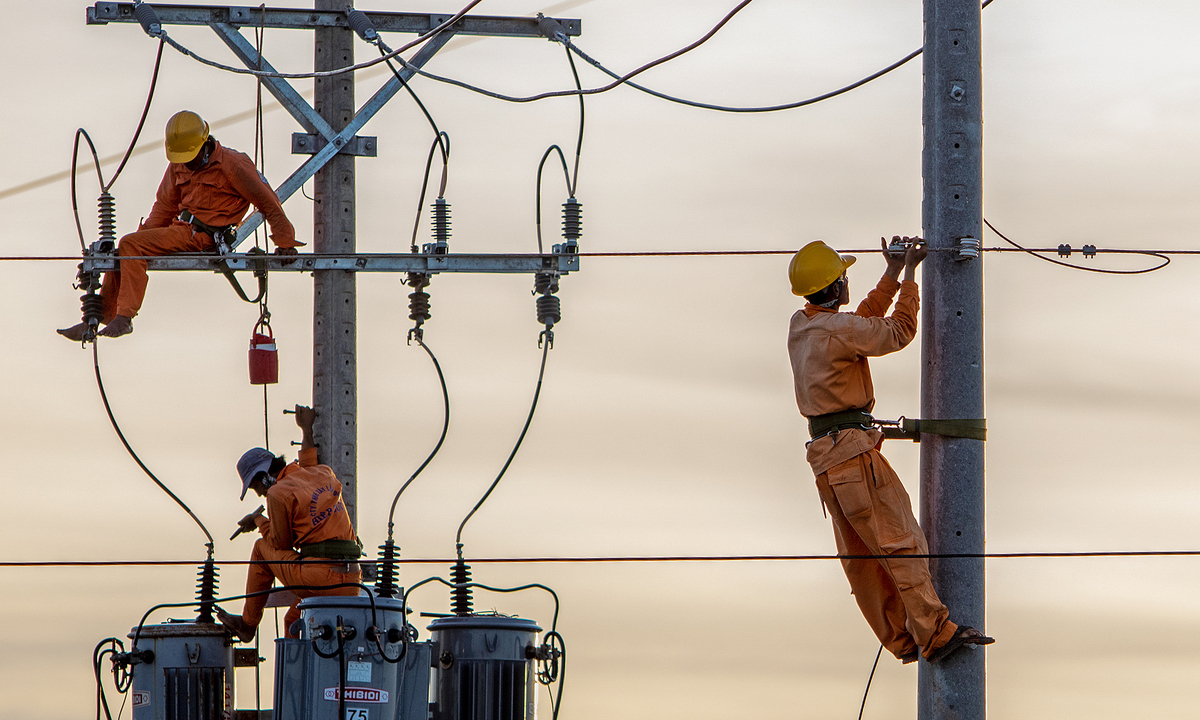
    Electricity supply set for nearly 6% increase in 2023

    Electricity supply, made up of both domestic production and imports, is set to increase by 5.96% from last year to 284.5 billion kilowatt-hours in 2023.

    The Ministry of Industry and Trade ordered the country’s main coal producers, Vinacomin and Dong Bac Corp, to ensure adequate supply for power production this year.

    Last year Vinacomin supplied 97% of the volume it had promised and Dong Bac, 82%.

    Monopoly state utility Vietnam Electricity reported a loss of over VND31 trillion last year, and attributed it to surging expenses.

    The government allows EVN to raise electricity prices by up to 5% annually but has to seek Ministry of Industry and Trade approval if it wants to increase them 5-10%. Cabinet approval is needed for anything higher.

    The country’s installed capacity is nearly 77,800 megawatts now, up 1.83% from 2021, with renewables accounting for 26.4%.

  • Gasoline prices rise

    Gasoline prices rise

    Gasoline prices went up Tuesday for the second time this year.

    The price of the popular fuel RON95 went up 1.6% to VND22,150 ($0.94) per liter.

    E5 RON92 price also rose 1.6% to VND21,350.

    Diesel price stayed unchanged at VND22,150.

    This is the second fuel hike in three days.

    The government raised gasoline prices up more than 5% on January 1 as a VND2,000 environmental tax was applied.

    The tax has been lowered by half from the pre-pandemic level as the National Assembly wants to boost economic recovery.