Retail News Asia is committed to providing both local and global retailers with the latest Logistics news throughout the Asian market. This on a daily base.
Nearly half of online shoppers in Asia are dissatisfied with the experience, according to the latest UPS Pulse of the Online Shopper study.
With negativity from 43 per cent of Asian shoppers surveyed, they again emerged the least satisfied of shoppers internationally. The rate of 57 per cent satisfaction was actually an improvement on 2015, but of only 11 points, demonstrating the slow pace of change in addressing customer satisfaction, says the study.
It notes that free shipping is still critical as online shoppers in Asia pay for shipping on an average of only 15 per cent of orders, the lowest percentage globally. To qualify for free shipping, 46 per cent of shoppers have added items to their cart. Moreover, about half of Asia online shoppers have abandoned a cart because of no delivery date being stipulated or delivery time being too long. The average delivery wait leading to cart abandonment was 11 days.
Meanwhile, a convenient and transparent return policy increases sales and customer satisfaction, with 67 per cent of shoppers in Asia indicating that free shipping on returns is important.
In its sixth year, the study reveals enduring constants as well as emerging trends across China, Hong Kong and Japan. Two key categories are Movers and Emergers.
Movers: Consumers in Asia have become increasingly comfortable with shopping on smartphones, choosing ship-to-store, and buying from international retailers and small businesses. In fact, smartphone purchases are becoming the norm with 77 per cent of shoppers surveyed having placed orders by phone – the highest percentage globally – up from 55 per cent in 2015. This compares with only 48 per cent in the US.
Ship-to-store is growing in popularity (with 37 per cent of shoppers using it in the past year and 59 per cent planning to use it even more this year). It can be a lucrative offering for retailers, says the report, as 60 per cent of Asia shoppers who used ship-to-store in the past year made extra purchases while in store. This trend is even stronger in China at 74 per cent.
“One revealing finding is that Asia’s online shoppers are now buying from a more diverse set of retailers, ranging from major marketplaces to boutique shops, from domestic and foreign stores,” says UPS Asia Pacific VP of marketing Sylvie Van den Kerkhof. “This tells us is there is a viable opportunity and customer base for small businesses in Asia to expand internationally.”
Promisingly, the research found that 55 per cent of online shoppers in Asia are embracing international retailers. Among those, 49 per cent ventured to overseas retailers because the brand or product was not available domestically, or the quality (39 per cent) or price (38 per cent) was better internationally.
Hong Kong had most online shoppers buying internationally at 82 per cent, followed by China at 64 per cent. Meanwhile, only 21 per cent of Japanese shoppers did so.
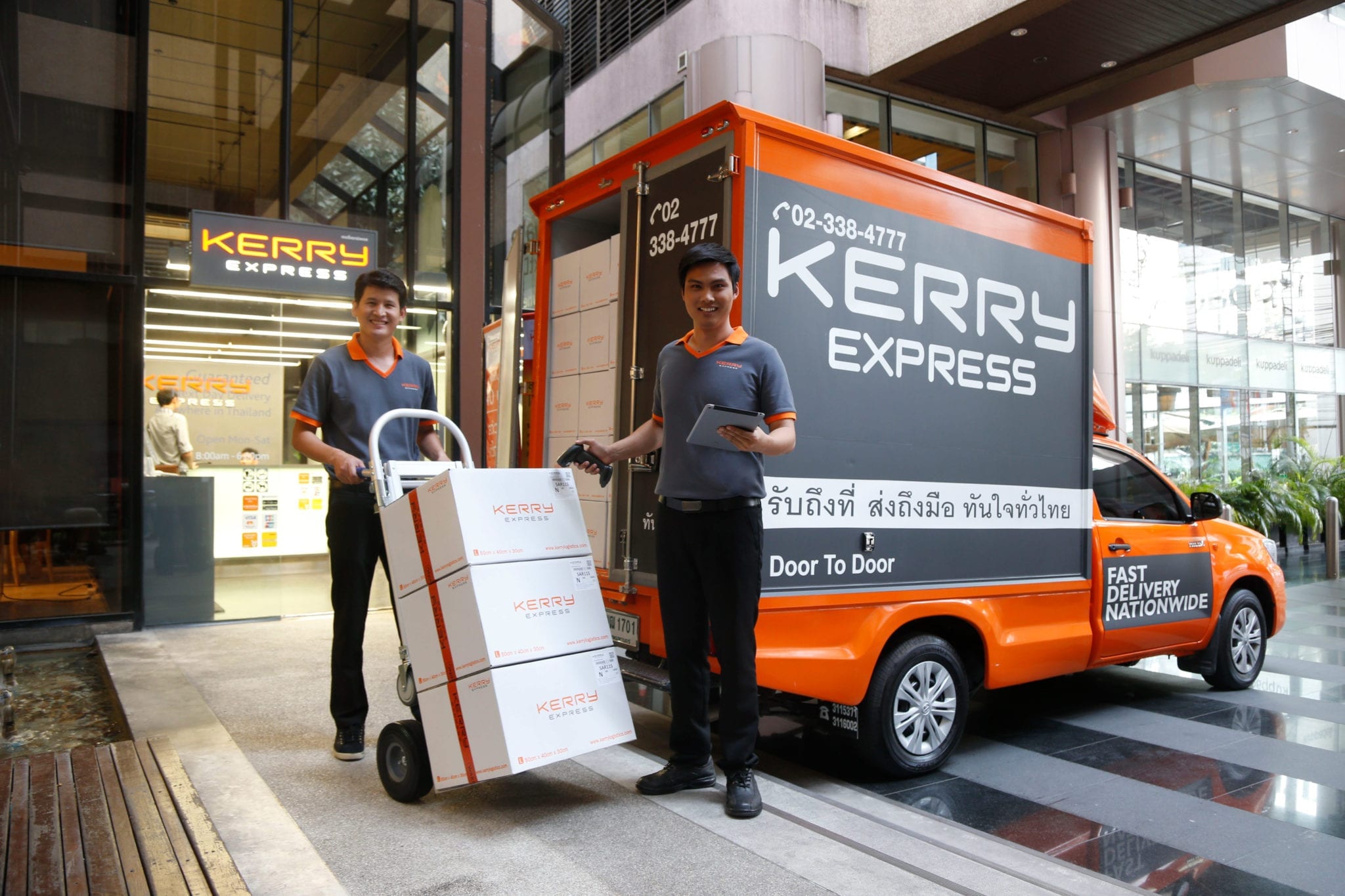
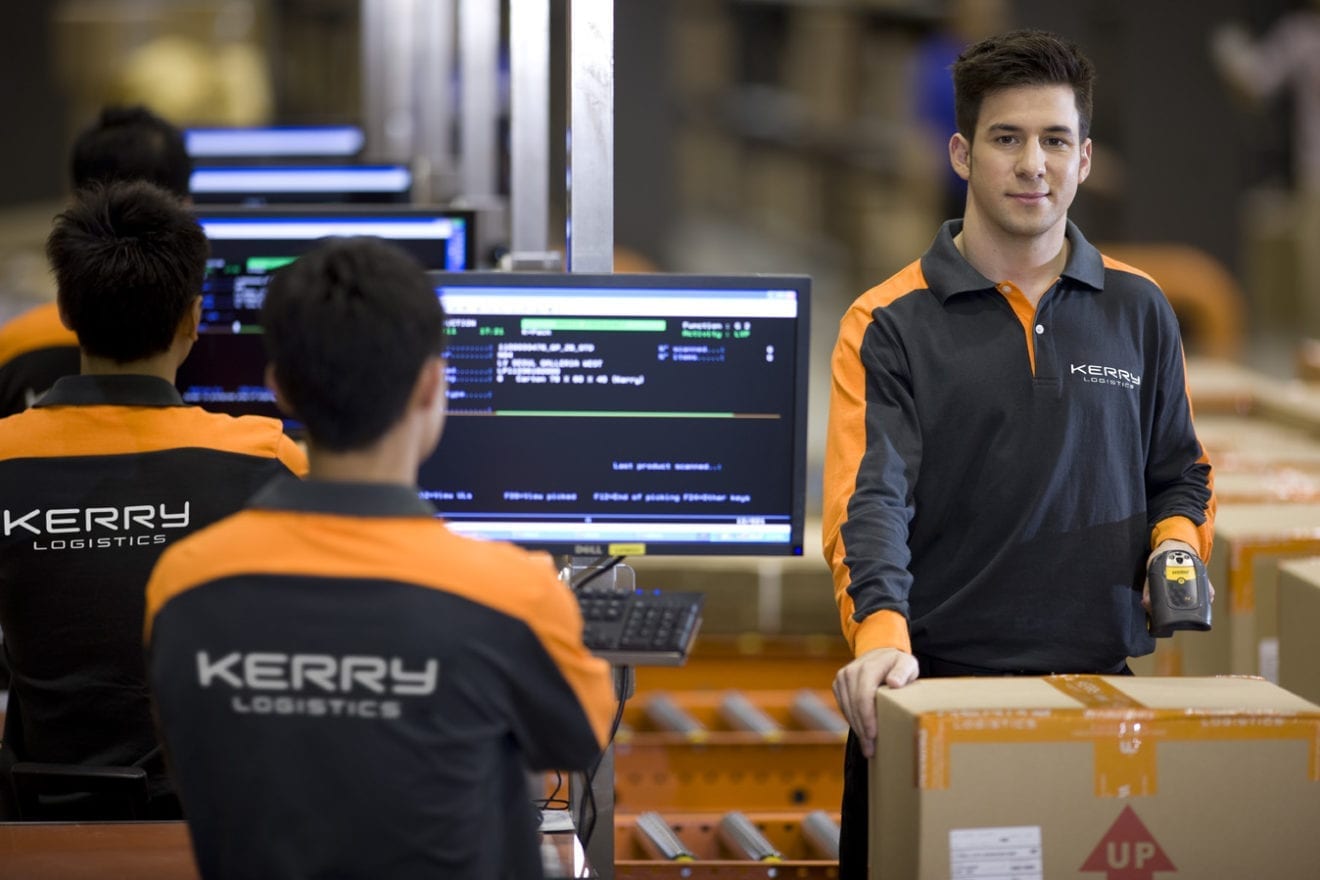
Rising competition and costs in China saw Kerry Logistics’ business on the mainland decline in 2017, with the Hong Kong-listed third-party logistics provider (3PL) planning to increase its focus on cross-border trade to capitalize on Asia’s rapidly growing e-commerce market.
More than 78 percent of the group profit is derived from its integrated logistics division, which covers e-commerce and the express business where the logistics operator is seeing considerable growth. The Asia segment within integrated logistics in 2017 grew by 56 percent from 2016.
Kerry Logistics’ year-over-year revenue for 2017 rose 28 percent to $3.9 billion, with operating profit increasing 13 percent to $271 million and net profit up 7 percent to $150 million. William Ma, group managing director of Kerry Logistics, said global economic growth was behind the recovery in investment, manufacturing, and trade activity, especially in Asian markets.
“The overall performance of Asia remained robust, driven by pronounced external demand and rising domestic consumption,” Ma said. “Kerry Logistics performed better in the second half of 2017 when compared to the first half, buoyed by the continued strength in global e-commerce, the sound performance of Apex in the Americas, and the accelerating growth of our express business in Thailand.”
The 3PL will be looking to build on the strong momentum that has developed in cross-border e-commerce, particularly between greater China and Association of Southeast Asian Nations (ASEAN). “In light of the outstanding performance of the express business in Thailand, the group plans to extend the success to other ASEAN markets such as Vietnam, Malaysia, and Singapore,” Kerry Logistics noted in its earnings release.
The international freight forwarding division in 2017 recorded a 41 percent increase in revenue and a 14 percent rise in segment profit, fueled by overall volume growth and a significant contribution from Apex Maritime, a trans-Pacific trade specialist in the United States that Kerry Logistics acquired in mid-2016.
Yet even with increasing cargo volume, rising freight rates in 2017 — caused by carrier consolidation, reshuffled alliances, and managed capacity — compressed the profit margin of the forwarding division.
George Yeo, chairman of Kerry Logistics, said the group was widening its network. “With the addition of Globalink Logistics and Lanzhou Pacific Logistics [both acquired in 2017], we now have the strongest road and rail freight network across Eurasia,” he said. Globalink Logistics extends the group’s reach into the Commonwealth of Independent States and Central Asia, while Lanzhou Pacific adds rail logistics to its portfolio.
“The deepening and widening of our capabilities positions us well for rapidly growing, cross-border e-commerce, which is facilitated by better physical connectivity and greater international cooperation,” Yeo said.
Paris-based French and Cambodian startup ShopRunBack was launched in 2014 and has been revolutionising returns management for e-merchants and retailers, it is established by a group of experts in e-commerce, supply chain and the latest web technologies. ShopRunBack is looking to expand into Asia, especially Southeast Asia, and Cambodia is the starting point for a new branch to be opened this year.
The company is finalising its cooperation model with 4PX, which is partially owned by Alibaba Group and by SingPost and is part of Alibaba Cainiao Logistics, to seek ways to use Cambodia as a regional hub for e-commerce in Southeast Asia. Eddy Richauvet, CEO of ShopRunBack, spoke to us about e-commerce, business expansion and the introduction of the 4PX Group to Cambodia.
RN: ShopRunBack was established a few years ago in France. You and your wife both graduated in both logistics for e-commerce and web technologies. Why France? How are you progressing?
Eddy: I have spent the last 20 years in Paris in logistics and supply chain management and we started our company ShopRunBack five years ago, specialising in reverse logistics solutions for e-commerce and retail.
Why France? Because, it is strategically located within Europe where one can easily span out one’s services throughout the other European countries. That is why our first company was established in Paris.
So far, we have been doing very well because we focused over the last five years on a nice segment which is reverse logistics for e-commerce.
The objective is to improve customers’ experience during and post-shopping, that is after-sales services.
E-commerce is not only a process to deliver goods ordered online but it also involves shipping goods to customers who may also seek to return goods due to manufacturing faults or wrong orders.
Hence, ShopRunBack built its platform and expertise in after-sales service to meet customers’ satisfaction and merchants’ obligations.
We were the first one to embrace that niche service five years ago, which was an innovating model since most service providers mainly focus on delivery, including the last-mile option.
Thus our business growth is satisfactory and we are developing and improving the platform as well the markets. To date, our services stretch to 70 countries worldwide.
RN: What sort of products have you been dealing with primarily?
Eddy: Well, on a global scale, cross-border e-commerce transactions mainly involve clothing, electronics and furniture. But throughout the years, we can see that e-commerce transacted items have varied from small to big items. Today, all types of products are offered and transacted online.
RN: Does your company have any operations in Cambodia? And if not, why?
Eddy: We built our logistics network first in Europe and America and have been looking into Asia since 2017, especially Southeast Asia.
We are starting with Cambodia first. We have operations in China and Hong Kong through our partners and Southeast Asia is our natural expansion in the region.
We intend to use Cambodia as a springboard and offer to train Cambodian SMEs to sell their products online to global customers as well as introduce global merchants’ products into the Cambodian market.
We are in the process of customising our platform for Southeast Asia with our tech team.
RN: The government announced its intention to have Cambodia become a digital economy by 2023. How do you view the trend of tech business now? How may this be relevant to your business?
Eddy: I think the government’s intention to embrace the digital economy within the next five years is a very good strategic move.
In Europe for instance, we have seen transformations in the traditional business to business (B2B) and business to customer (B2C) models.
Digital technology is the enabling medium to improve people’s standard of living by facilitating trade and extending connectivity and collaboration with each other.
Therefore, we are happy to contribute our expertise to the government vision and strategy to integrate further with the region, that is Asean.
RN: Since Cambodia doesn’t have e-commerce legislation in place yet, do you view it as a constraint to start your business here?
Eddy: We understand that the law is being finalised and should be passed soon, probably right after the elections at the end of July.
We would need such legislation to facilitate and regulate e-commerce transactions. Just like back in Europe, over a decade ago they initiated similar legislation.
No one was familiar at that time with e-commerce, consumer protection and online business, but they improved the legislation as time went on and regulators gained more experience.
RN: Logistics cost is one of the major constraints in Cambodia that hamper the flow of foreign direct investment. Since you are involved in that domain, how do you think Cambodia can improve its logistics costs?
Eddy: This is indeed a crucial matter. We started our business in traditional logistics and B2B, which is not solely about networks but also about collaboration.
Of course, logistics providers will compete with each other but they also need to cooperate with each other to improve connectivity and smoother functioning of the supply chain network.
As far as Cambodia is concerned right now, we are at the gestation phase of an e-commerce logistics base and platform.
We need to enhance the regional and domestic network by establishing more hub-and-spoke networks because in logistics, consolidation through better distribution and last-mile services enable cost reduction.
Eddy Richauvet says Cambodian special economic zones are being established successfully. KT/Mai Vireak
In this market, I see many service providers competing with each other instead of collaborating with each other. In Europe and elsewhere, businesses embrace the “competition collaboration” modus operandi.
Sure, you have businesses competing but cost-effective and efficient logistics is about collaborating.
Cambodian infrastructure has been gradually improving over the last decade as we see better roads and bridges, and lower electricity costs thanks to the many hydropower schemes built with Chinese funding and to the many special economic zones being established successfully.
Our ports and airports are continuously being upgraded to augment their capacity and this has improved the hard aspects.
However, the soft part such as cross-border goods clearance. Trade-facilitation wise, still need more work to facilitate faster transit times.
RN: Last December, the government approved the establishment of the National Logistics Council to deal with logistics in a holistic and cohesive manner. Do you think this can work out well?
Eddy: From my understanding, the NLC aims to improve efficiency and inter-ministerial collaboration.
As said earlier, logistics is about connection, collaboration, communication, and anything related to supply chains across multiple businesses from different sectors and across countries.
Therefore, establishing the NLC does make sense as the government seeks to better comprehend this complex topic and enhance logistics efficiency.
The government should conduct more stakeholder consultation or dialogue with the private sector, the real business practitioners, to better assess businesses’ needs and how they may contribute better inputs.
RN: Earlier last month, you met the Minister of Public Works and Transport with 4PX, part of the Alibaba Cainiao Logistics arm. Are you going to cooperate with them to set up operations in Cambodia? If so, when will that happen?
Eddy: 4PX is a Shenzhen-based Chinese firm and is one of the largest logistic players for cross-border e-commerce in China and they also have worldwide branches.
They are already our strategic partner in Europe and in the US. As you mentioned, they are part of the Alibaba Cainiao Group.
Together with Singpost, they are a 45 percent equity holder in 4PX. 4PX is presently handling a million packages daily for Ali-Express in Southern China with a capacity of two million packages daily.
Cainiao Network is a 100 percent owned subsidiary of Alibaba Group and basically their logistics arm.
Its business is operating a logistics network for all Alibaba’s market places. 4PX is the only one doing cross-border logistics among companies invested by Alibaba Cainiao.
The reason they invested into 4PX was because 4PX has been in cross-border e-commerce logistics for more than 14 years and was considered a market leader in this field.
When we discussed with them about how to carry out the 4PX’s objectives, we shared with them the strategy and vision on how to train local SMEs to use the platform to sell from Cambodia to customers around the world and for make it easier for international merchants to sell to Cambodia.
We also told them Cambodia was a very strategic location as a possible regional hub for Southeast Asia. So the 4PX chairman and his team came for the first time on a fact-finding visit to Cambodia and appreciated the opportunities.
So yes, we will cooperate with 4PX in Cambodia. We will bring together our experience, the technological platform and our existing trained human capital to provide professional e-commerce services.
Most importantly, together with 4PX, we will transfer knowledge to Cambodians to beef up domestic expertise.
The online shopping experience will be improved much more than before. So the primary goal is to bring new high-tech, professional technology to Cambodia, create job opportunities and provide better services.
Though the market size is small, Cambodia possesses a high percentage of tech-savvy young people which makes it an ideal place for more innovation.
Our partner 4PX is a company skilled in innovation. They have to be, since e-commerce is a very fast-growing and fast-moving sector.
Three years ago, 4PX’s revenue was about $450 million but this increased to about $900 million last year.
As a very young market, we could bring many innovations without confronting much historical luggage or impediments.
Think about how the Americans used new technology to nurture the development boom during the second industrial revolution.
Now, it is time for us to leverage e-commerce and the digital economy to help Cambodian people leapfrog and improve their living standards.
Logistics is always a business of support and collaboration. As a pioneer of this industry, our friend and partner, Kevin Li, the founder and group CEO of 4PX, is always scouting for investments in new markets. We should become operational in Cambodia soon enough within the second half of 2018.
On Thursday, March 29, Bolloré Logistics USA inaugurated its new Foreign Trade Zone facility in Miami, in presence of Clément Leclerc – Consul general of France in Miami, Cyrille Bolloré – Chairman of Bolloré Transport & Logistics and Thierry Ehrenbogen – CEO of Bolloré Logistics.
The new site of more than 200,000 square feet consolidates freight forwarding and contract logistics activities previously housed at two different locations and will support operational synergies and cargo turnaround time for customers with time-critica! logistics requirements.
By combining traditional freight forwarding with value added logistics services, coupled with industry vertical expertise, the Miami hub hos become a multimodal platform meeting the needs of its various customers. The new logistics hub is designed to deliver logistics excellence with an end-to-end solution offering and to create value to its customers, especially in the cosmetics, aerospace and travel retail industries.
The secure facility hos on-site 24/7 guard coverage, biometrie access control, CCTV monitoring and recording, perimeter fencing and fire sprinkler systems engineered to handle specific commodity classifications. The warehouse offers state of the art infrastructure with 52 doek doors, 32′ clear height. 60′ speed boy and a line of material handling equipment that can handle the warehouse challenges with reliability, power, productivity, performance, and efficiency.
The facility also reflects the environmental dimension required today for any real estate project of Bolloré Logistics and is built to Silver LEED.
“Weare extremely proud of our newest logistics center. Miami is geographically pivotal to regional trade and a strategie location for Bolloré Logistics Americas. With this investment. we aim to play a key role in supporting the supply chain transformation of this industry,” said Tony Rodrigues, CEO Americas.
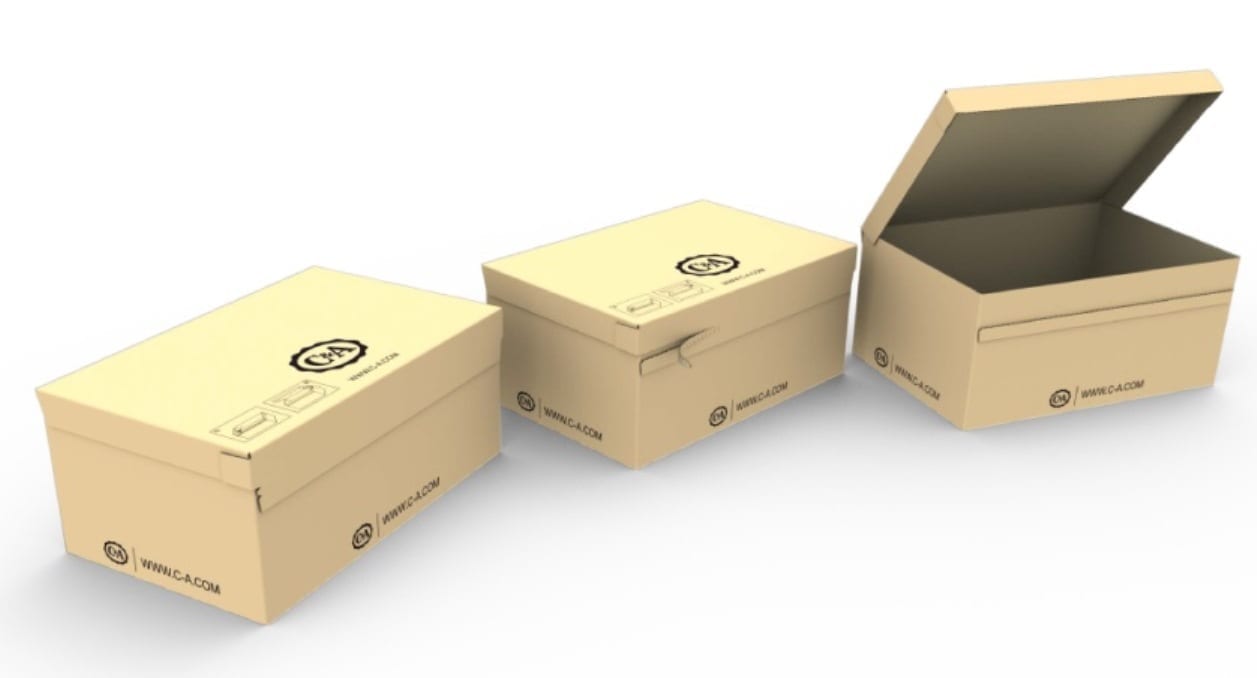
Arvato SCM Solutions and C & A have jointly developed a new packaging solution for shipping fashion items in the online business. So far, cartons have already been automatically cut to the actual size required, which saves costs on the material and optimizes shipping, as less air is transported. Now, the lid has been redesigned, and is fixed to the back and front of the carton after being positioned. The punched tear strip on the front of the lid enables easy opening as well as re-closing in case of a return of the package. The cardboard itself, which adeptly displays C & A branding on all sides, is made from unbleached recycled material.
“We have noticed that many of our customers are not sure where to open packages,” says Knut Brüggemann, Head of E-Commerce Operations at C & A. “That’s why we analysed our packaging concept together with Arvato and developed a more functional design that now displays our C & A branding even more prominently.”
Efficient use of materials saves costs
But not only simple handling and an appealing design are required for modern packaging solutions. Sustainability also plays an increasingly important role against the backdrop of steadily increasing transport volumes in online commerce. For this reason, C & A not only uses recycled materials in its cardboard packaging, but also uses as little material and space as possible to protect the environment: for this reason, the cardboard is automatically cut to the correct size before the package is sealed.
In practice, this process is as follows: after the articles have been picked and automatically pre-sorted for the customer’s order, an employee at the shipping packing station checks the ordered goods for completeness and packs all articles in a prepared cardboard base. After that, the open carton is transported to the sealing machine by means of conveyor technology that is equipped with both photo and video documentation as well as weight determination. After the delivery papers and a return label have been automatically attached to the packaging, a pressure-sensitive unit measures the box filling height. Once this has been determined, the cardboard is reduced at the corners to the exact size in millimetres by means of cutting knives and is then glued to the newly developed cardboard lid.
Through this cutting process, less filler material such as air cushioning is needed because the cut-down material remains in the carton as a space filler. In addition, adhesive material is saved because, thanks to the
innovative cover, only an adhesive strip for closing a return shipment is required at the most.
A further environmental aspect: “If the boxes contain less air, they require less space on the truck. This reduces the transport volume by around 250 truck journeys per year. Not only does this benefit the environment through less CO2 pollution, but also the consumer who has less packaging material to dispose of,” explains Michael Sorge, site manager of the 45,000 m² Arvato distribution centre in Hannover-Langenhagen, from where C & A customers in 20 European countries will soon be supplied. “Space-saving packaging brings the requirements of environmental compatibility, resource avoidance, damage limitation and customer experience into an optimal relationship.”
Maersk Line may have captured the headlines with its new focus on becoming a global provider of integrated container logistics, but it is a strategy that China’s Cosco has been pushing for the last couple of years with increasing assertiveness.
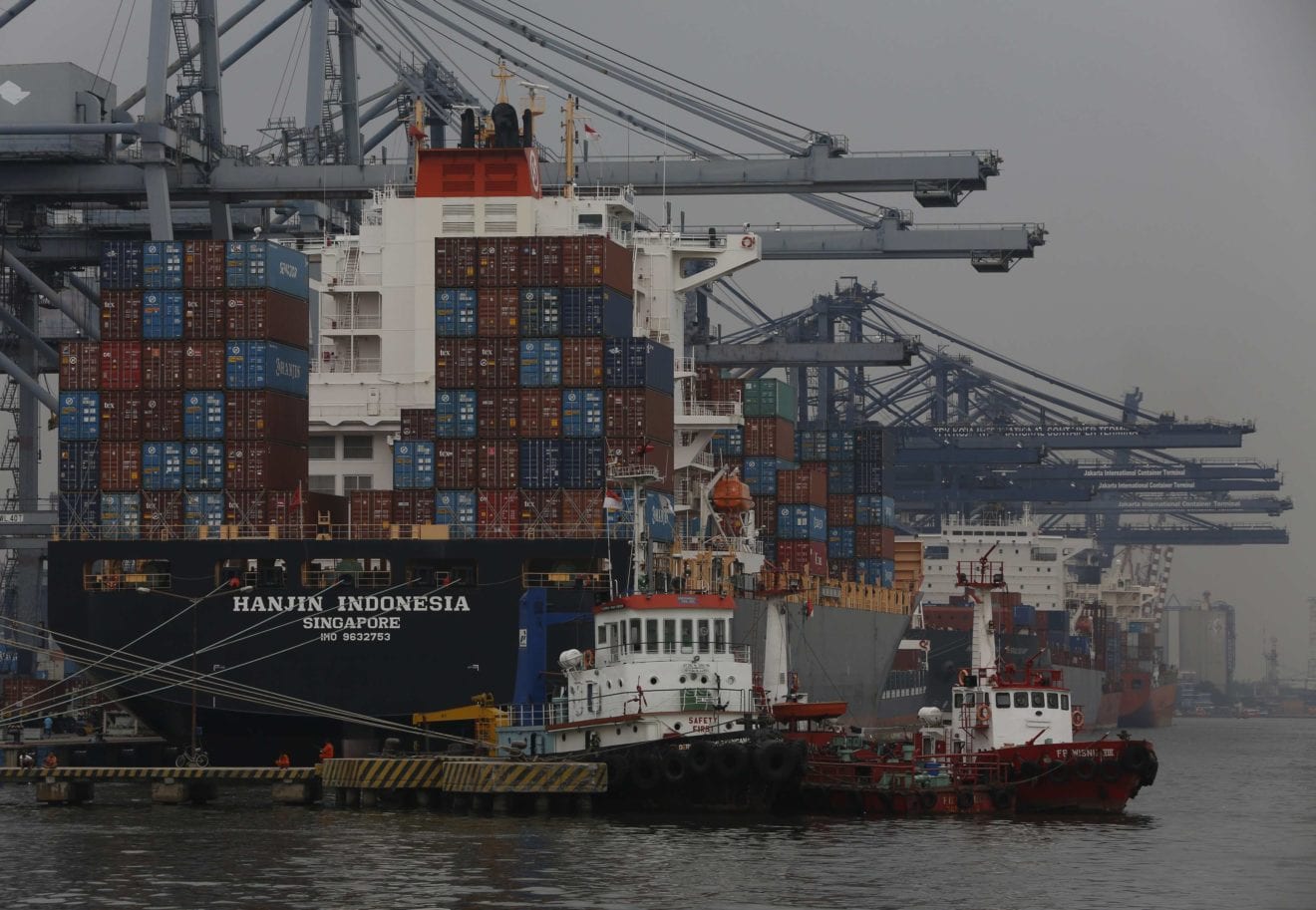
Cosco Shipping Holdings, China’s largest shipping company, has continued to aggressively expand into landside logistics, building on Beijing’s Belt and Road strategy to grow its terminal and inland footprint in Asia and Europe.
The group — which consists of carrier unit Cosco Shipping and terminal operator Cosco Shipping Ports — steamed back to profitability in 2017, with a recovering market and freight rates driving up revenue 22 percent compared with 2016 to $14.3 billion, with generous government subsidies leading the company to a $423 million net profit.
Cosco has returned to profitability at the right time. Not only is the container shipping market recovering — the carrier’s volume in 2017 increased by 23.7 percent to 20.9 million TEU while Cosco Shipping Ports handled more than 100 million TEU during the year — Beijing’s is also placing increasing importance on investment along the land and ocean Belt and Road routes.
Belt and Road logistics channels progress
Cosco Shipping Holdings said it had made progress regarding the construction of logistics channels along the Belt and Road route. By consolidating its global shipping networks, the company said it has increased service frequency and efficiency along the ocean route, and also connected the shipping routes with other important, emerging, regional markets, such as the United States, West Africa, the Caribbean, and North Europe.
It is difficult to separate Cosco’s global shipping network from its Belt and Road routes, with the carrier including most of its services under the trade strategy umbrella. For instance, Cosco said 62 percent of its entire container shipping capacity was deployed on the Belt and Road routes, comprising 180 container vessels with a total capacity of 1.15 million TEU.
But it is in the terminal and inland services where the carrier’s move into controlling the landside supply chain can be seen more clearly. This is especially true within China, where Cosco operates more than 150 sea-rail container transportation routes, covering more than 100 major ports and hinterland stations across 27 provinces, autonomous regions, and centrally administered municipalities.
Cosco stated early last year, “The company will also increase its efforts in construction of ancillary facilities in important logistic nodes in the supply chain, and gradually achieve the transition from a shipping carrier to a provider of comprehensive container logistics solutions.”
Logistics solutions push started in 2017
Those efforts in 2017 began in January when Cosco Shipping Ports entered into a strategic cooperation agreement with Qingdao Port International, taking an 18.41 percent equity interest.
Outside China, Cosco continues to strengthen the position of Piraeus Port in Greece as a transportation hub and accelerate the development of what it called the China-European sea-rail express business. In 2017, the freight volume carried on the service, which includes China-Europe rail, increased by 134 percent compared with the previous year, Cosco said in its earnings statement. Cosco Shipping in May 2017 acquired 24.5 percent equity interest in the KTZE-Khorgos Gateway, the rail hub on the Kazakhstan-China border that is a key point in the landbridge.
Then in October 2017, Cosco Shipping Ports completed its acquisition of a 51 percent equity interest in Noatum Port Holdings, a port company in Spain. The controlling stake gives China’s second-largest port operator access to several terminals on the Iberian Peninsula.
In November 2017, Cosco Shipping Ports began the construction of a terminal in Abu Dhabi, and in the same month completed the acquisition of additional equity interests in APM Terminals Zeebrugge in Belgium, taking full control of operations.
Alibaba is in talks with the Thai government to set up a logistics centre in the country as part of its aggressive expansion into the Southeast Asia region, bringing the company a step closer to fulfilling founder and executive chairman Jack Ma Yun’s dream of empowering small companies to trade globally.
According to a report on Monday, Thailand’s Industry Minister Uttama Savanayana said that Alibaba plans to set up the logistics centre in Chachoengsao, one of the three provinces the government hopes to develop into a leading economic zone in the region as part of its flagship Eastern Economic Corridor scheme.
The plans for a Thailand-based logistics centre is Alibaba’s latest move in Southeast Asia’s burgeoning e-commerce landscape, following a recent US$2 billion additional investment into e-commerce firm Lazada and last year’s joint establishment of an electronic trading hub with the Malaysian government.
Southeast Asia boasts more than 370 million internet users as of January 2018, according to a recent “Digital in 2018 in Southeast Asia” report by We Are Social and Hootsuite. With the majority of its internet users going online with their mobile devices, as well as a growing middle class population eager to spend money online, Southeast Asia represents a lucrative region for e-commerce companies.
Alibaba wants to use Thailand as a logistics base for e-commerce not just to link small and medium enterprises from Thailand, but also Cambodia, Laos, Myanmar and Vietnam to the global market, Uttama said.
Calls made to Thailand’s Industry Ministry went unanswered.
When reached, an Alibaba spokesperson said that the company is firmly established in Southeast Asia and understands the needs of local businesses and consumers.
“Our focus for the region is to drive partnerships with merchants, offering them access to new customers and markets, enabling SMEs as drivers of economic growth and foster hassle-free trade and e-commerce across borders,” the spokesperson said, without elaborating on its Thailand plans.
In March last year, Alibaba made the first move in linking Southeast Asia e-commerce trade with the rest of the world by setting up a trading and logistics hub in cooperation with the Malaysian government, as part of an electronic world trade platform that is expected to become a modern version of the ancient Silk Road trade route.
The Malaysian “e-hub” comprises a regional logistics centre and an accompanying electronic platform that will help facilitate cross-border trade for SMEs.
Alibaba’s additional injection of US$2 billion into Lazada last week also takes its total investment into the Singapore-based e-commerce platform to US$4 billion, as it seeks to carve out market share and compete with regional rivals such as Sea’s Shopee and Singapore-based Zalora. Alibaba also appointed Lucy Peng, executive chairman of its financial affiliate Ant Financial, as new chief executive of Lazada.
In Singapore, Alibaba has also set up a joint research institute in conjunction with Singapore’s Nanyang Technological University to develop artificial intelligence technologies that can help tackle issues from ageing societies to urban transport.
Launched in January 2018, the DHL Global Trade Barometer uses large amounts of logistics data to forecast demand for the next three months. In its second report, the barometer increased to 66 points, up from 64 points in January.
According to DHL, an index value above 50 signals solid positive growth for global trade, while the increase from the initial forecast in January indicates that growth is gaining momentum.
Compared to the findings in January, the improved global index is mainly driven by an increasingly positive outlook for South Korean and trade in the USA. In contrast, the prospects for German trade eased after the strong peak seen in 2017.
India continues to show the highest index value of all seven countries for the overall trade predictions, while the UK, after a modest decline since January, scores the same level as China at the lower end of the country ranking.
The outlook for global airfreight, according to DHL, remains positive despite dropping slightly by one point compared to January. With 70 points, airfreight remains robust as air trade growth in China and the USA is expected to accelerate.
Meanwhile, the outlook for global ocean trade improved to 63 points in March from 60 points in January. This growth is also driven by the USA and China, together with a strong increase in South Korea, offsetting a slightly reduced growth outlook for UK and German oceanfreight.
The DHL Global Barometer is published four times a year. The next release date is June 27, 2018.
Amazon has nearly mastered e-commerce deliveries in the U.S. Sure, there are occasional hiccups, particularly due to surges at the holidays, but the company has built a solid network of partners – particularly UPS, FedEx and USPS – that have large logistic networks that have gotten the job done.
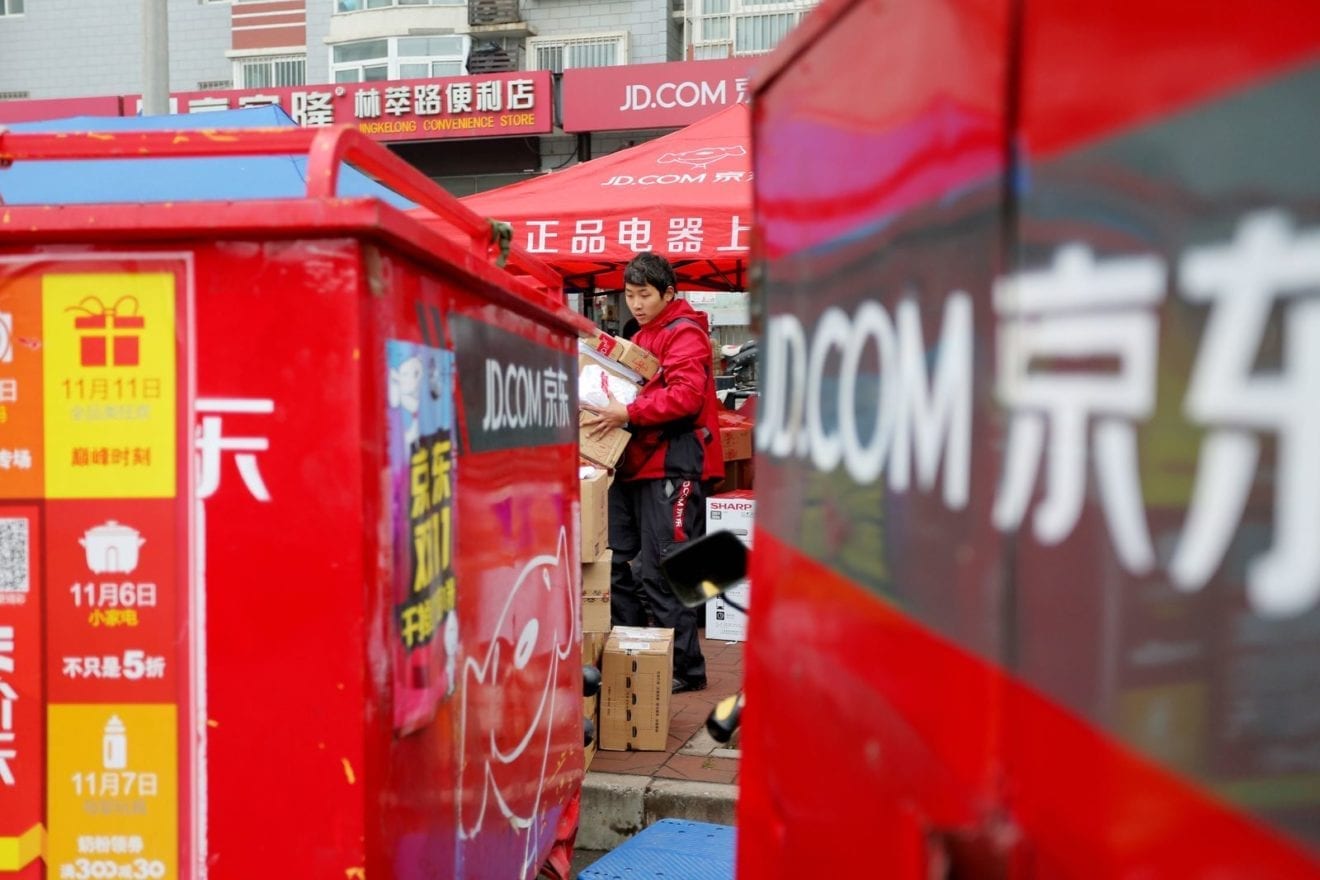
While Amazon was able to lean on established partners in the U.S., JD.com did not have that luxury when building its logistics network in China, a country of some 1.4 billion people covering 3.7 million square miles. Consequently, if JD.com wanted to become a major e-commerce player in Asia, it needed to build its own network.
“One [factor] is that the 3PLs in China are pretty fractured,” Josh Gartner, vice president of international corporate affairs, explained to FreightWaves. “That is why we decided to build out our own system.”
JD.com built its logistics operation, JD Logistics, which is now a subsidiary of the e-commerce company. JD Logistics was just infused with $2.5 billion in investment, led by Tencent Holdings and Sequoia Capital China, to help to further develop its logistics operations, which already include everything from warehousing to packaging and last-mile delivery. It is also now offering services to third-party companies as well. There is also rumors that some of that money will be used to develop a U.S. operation to support online sales in this country.
The funding valued JD Logistics at about $11 billion. JD.com holds 81.4% of that after only starting the logistics business in early 2017.
Gartner walked FreightWaves through the company’s logistics operations, but like Amazon’s, it all starts with providing quality service to the customer, and that means last-mile efficiencies. According to Gartner, the last-mile services cover 99% of China’s population and it is done through a variety of methods, from vehicles, to drones, to electric bikes.
Gartner says that final mile delivery for much of China is handled by electric, three-wheeled vehicles. These vehicles collect packages from local facilities for home deliveries.
“We have what we call ‘delivery stations’ and those are in neighborhoods,” Gartner said. “We deliver by truck from warehouses to these smaller stations and they have about 50 to 100 last-mile delivery drivers (based on the size of the city) making the final delivery.”
To JD Logistics, the value of having its own drivers make those final deliveries is important. “When people look at our logistics, they see our couriers,” Gartner said.
Like all e-commerce companies, JD.com has learned that to deliver goods quickly requires proper positioning of product. JD Logistics uses technology to help predict where product will be needed.
“Most of the efficiency and speed is done at the warehouse level and predicting where [product will be needed],” Gartner said. Full truckloads of freight are loaded at the warehouse level and brought to the delivery stations for final delivery. This keeps the larger trucks running set routes back and forth and speeds the delivery process.
JD Logistics also offers a “white glove” service for shoppers, complete with specially-trained JD employees wearing white gloves. These drivers deliver special luxury brands that qualify for the service in electric vehicles rather than the tricycles and scooters often used.
Technology plays a big role in JD Logistics’ efficiency, and that includes automation, drones and more, both on vehicles and in warehouses.
Last year, JD Logistics opened the world’s first fully automated B2C warehouse in Shanghai. The warehouse can reportedly process over 200,000 items a day at full operation. Technology in general helps JD Logistics plan where product should be located and helps ensure that customers are receiving one delivery a day with their complete order, regardless of where any individual product is sourced.
“A few months ago, we had a logistics expert come through and order a few things and he was really impressed with the operation,” Gartner said, adding that the expert ordered items from several locations and received a single order with all items.
Gartner credits the network design – larger trucks moving products from warehouse to delivery station – for that delivery success.
“It’s a much more efficient process, otherwise you would have more vehicles,” he said.
On the vehicle equipment front, the company has been utilizing electric vehicles and entered into an agreement last year with SAIC Maxus and Dongfeng Motor Corp. to develop autonomous delivery vehicles. JD Logistics has jointly researched two models of autonomous light electric vans with SAIC Maxus and Dongfeng, respectively, for delivery of goods from JD’s distribution centers to delivery stations in the future.
The company began testing autonomous delivery via robots at Renmin University and Tsinghua University among other schools last June. The autonomous robots deliver goods to a designated location and customers receive a unique passcode to open the robot’s secure locker to retrieve their packages.
“With technology as the driving force, JD operates the most advanced retail operation in the world,” said Zhenhui Wang, CEO of JD Logistics. “Our extensive in-house logistics network provides the ideal real-world scenario in which to test autonomous vans. Working with our partners, we will continue to enhance our smart logistics and push the bounds of traditional logistics solutions.”
Like Amazon, JD Logistics is also venturing into drone delivery. Currently, the company is using drones to make deliveries to remote areas of China, bringing online shopping and quick delivery to residents of these areas.
The program works by dispatching orders from regional delivery stations to JD’s network of dedicated “village promoters” in each village, who then distribute the orders directly to customers, significantly shortening delivery times and reducing logistics costs. JD.com currently has more than 300,000 village promoters across the country.
“The focus is one rural areas that have lower order densities,” Gartner said.
On a larger scale, the company has also started testing “heavy-load drones” capable of carrying 1 ton of goods at a time. Gartner noted these drones will move product traditionally carried by truck between warehouses.
JD signed a strategic cooperation agreement with the municipal government of Hangcheng, in Shaanxi Province, to set up the first urban drone delivery platform in the world. JD will explore the model and plans to test city drone delivery in Hancheng to evaluate its viability. Additionally, the company will also test its automated delivery vehicle and logistics facilities and hopes to build Hancheng City into a model city for smart logistics.
Having conquered China delivery – more than 92% of products sold by JD.com are delivered within one day, including many that are delivered same day – JD Logistics may be looking abroad, specifically the U.S.
According to a report in January, the company is planning U.S. operations later this year and will use some of the $2.5 billion in funding to do so. Gartner declined to confirm any U.S. plans, saying only that “we’re still focused on China and Asia.”
The Bloomberg article quoted founder Richard Liu as saying the company will begin selling online to U.S. customers in the second half of this year.
“This year, Vietnam, India, Philippines, Malaysia – every Southeast Asian country – we will come by the end of this year,” Liu is quoted as saying. “Our future is we will invest in U.S. and build a warehouse fulfillment center in U.S. so you can get same-day delivery.”
The story noted that JD.com could leverage its relationship with Walmart Stores, which is an investor in the company, for help in building a U.S. logistics network.
The approach to last-mile delivery in China is very different than it is in the U.S., so it remains to be seen how JD Logistics would handle that operation in America. If the stories are true, we may find out very soon.
A delivery service launched by DHL eCommerce that makes use of shops as drop-off points has received a boost with the participation of nationwide retailer SE-ED Book Center.The logistics operator yesterday said the operator of the bookstore chain was joining its domestic delivery service known as e ServicePoints, tapping demand in the fast-growing e-commerce sector.
The collaboration announced yesterday between DHL eCommerce and SE-ED Book Center means that the book retailers’ outlets nationwide will become part of the ServicePoints network. Until now, the participating shops had been small operators. DHL eCommerce started the service nine months ago.
Under the service, registered and walk-in customers can drop off their parcels at ServicePoints for nationwide delivery. Soon, shoppers will also be able collect their e-commerce orders from these ServicePoints
Kiattichai Pitpreecha, managing director of DHL eCommerce Thailand and Southeast Asia, said that the ServicePoints service is designed to offer a convenient domestic logistics service for small online merchants that typically need to send out five to 10 products a day. For such deliveries, the customers are usually nearby.
“Thailand’s e-commerce sector is the second largest in Southeast Asia and has 22 to 25 per cent growth per year,” Kiattichai said.
“This pattern of growth is expected to continue over the next five years. The Thailand 4.0 initiatives also are encouraging a lot more small and medium-sized enterprises (SMEs) to turn to e-commerce. Therefore, there are a lot of demand for domestic delivery services. We want to offer Thai merchants and consumers a quality choice for logistics with an easy and convenient service.”
There are around 100,000 small online merchants on the four main e-marketplaces in the country, Lazada, 11Street, Shoppee, and JD.com.
Through the partnership, ServicePoints will be available at 150 SE-ED Book Center shops in Bangkok and across the country. The service rollout will reach all 394 branches by end of this year.
DHL eCommerce plans to expand the DHL ServicePoint network to more than 1,000 locations by the end of 2018, before increasing this number to 3,000 in 2019.
“ServicePoints is a shop-within-a-shop concept that facilitates the need for people to drop products for delivery at a retail shop,” said Kiattichai.
“The parcels can be processed within seconds and customers will receive immediate shipment confirmation via SMS or email. The process at the ServicePoint is quick and hassle free, with no need to stand in long queues. The DHL ServicePoint network aims to serve the growing SME and C2C markets’ unmet demands.”
In addition, consumers will soon be able to use SE-ED Book Center outlets as an alternative delivery address for their domestic e-commerce orders.
“We will continue to offer more access points, more payment options and an integrated service delivering the quality to enable easier and simpler access to the rapidly growing Thai e-commerce ecosystem,” added Kiattichai.
He expected that over the next 12 months, some 25 to 30 per cent of all parcels handled by DHL eCommerce will be delivered via ServicePoints. This would represent an increase from 5 per cent for previous nine-month operation.
“The total volume of parcels we delivered in 2017 increased by four times from 2016. We expect the same growth for this year,” Kiattichai said.
Today, FedEx announced the acquisition of UK-based P2P Mailing Limited for £92 million, in a move that bolsters the global integrator’s worldwide e-commerce delivery capabilities.
P2P facilitates cross-border e-commerce deliveries with an asset-light model that relies on a proprietary IT platform to string together final-mile delivery and customs partners in different regions to deliver e-commerce parcels. Like FedEx, P2P offers a range of delivery services targeting varying customer needs, including international, domestic, tracked, untracked and express delivery services.
But unlike FedEx, which relies primarily on its own assets and infrastructure for deliveries, P2P leverages “relationships with private, postal, retail and clearance providers” to provide “plug-and play options with carrier networks and customer systems” in hundreds of markets, according to FedEx.
Although on a smaller scale, P2P’s business model is somewhat similar to that of the Cainiao logistics platform owned by Chinese e-tailer Alibaba. Cainiao links fragmented logistics service providers together in order to ship goods sold on the company’s various e-commerce platforms.
Moving forward, P2P will operate as a subsidiary of FedEx Cross Border, which following recent reorganization, operates as a unit within FedEx Trade Networks. Carl W. Asmus, president and CEO, FedEx Cross Border said, “Global e-commerce continues to grow at a rapid pace, and more and more merchants, marketplaces, e-commerce and social platforms are looking for innovative, cost-effective ways to get merchandise from distribution points in one country to customers in another.”
Cross-border e-commerce is sure to be a hot topic at this year’s Cargo Facts Asia. We invite you to join us in Shanghai 23-25 April at the Mandarin Oriental Pudong to hear more from FedEx and other e-commerce giants, including Alibaba’s Lazada and JD.com Logistics.
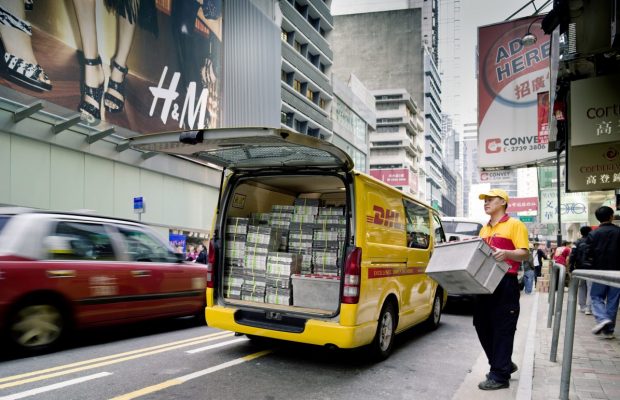
DHL is making headway in Southeast Asia’s highly competitive ground shipping market largely by adopting a so-called microdelivery model employing motorcycles.
In the two years since entering Thailand’s door-to-door-delivery sector, DHL has built up a network of 200 service locations and will raise the tally to at least 1,000 this year. It has also amassed a fleet of motorcycle couriers, recognizable by the yellow shipping containers on their bikes.
“I feel at ease whenever I see the DHL logo,” said a 43-year-old man who frequently purchases clothing and electronics online.
Retailers have similarly warm sentiment. “Delivery satisfaction is directly linked to an online store’s ratings,” said a representative of a womenswear seller that does business with DHL.
DHL has already established a strong track record in Thailand through its international air transport and corporate-client logistics businesses. Its regular local staffers number more than 500.
The package volume DHL handles for e-commerce clients has climbed to 15 million units a year. DHL can pick up and pack an item for a seller when needed, and deliver the item to the recipient in one or two days. Customers can pay with cash upon receiving the item.
This type of home delivery service has yet to fully take root throughout Southeast Asia. DHL has sought to get a head start by setting up shop in Malaysia and Vietnam last year. It now has 1,000-plus service locations in three countries, with short-term plans to expand the network to thousands of locations.
Online shopping is on the verge of igniting the home delivery business in Southeast Asia. The home delivery market in six key nations of the region will grow to $7.5 billion in 2020, or more than double 2015 levels, according to Nomura International (Hong Kong). Online retailing’s share is expected to rise to 38% from 15%.
“There is currently no single global player in e-commerce logistics that is able to offer an end-to-end solution from fulfillment, cross-border to last-mile delivery” besides DHL, said Charles Brewer, CEO of DHL eCommerce.
The DHL group also has the Chinese market, where it established a footprint before heading to Southeast Asia. “China has massive growth potential for outbound cross-border e-commerce,” Brewer said. Southeast Asia, with its population of 600 million, is key to realizing its promise.
Asia powered Kerry Logistics to a strong 2017 performance, with double-digit growth in revenue and profits. Turnover was up 28% year on year to HK$30.7bn (US$3.9bn) generating an operating profit of HK$2.1bn (up 13%) and net profit of HK$1.2bn (up 7%). Group managing director William Ma said the company had benefited from the “upswing” in the global economy, but singled out one region for praise.
“The overall performance of Asia remained robust, driven by pronounced external demand and rising domestic consumption,” said Mr Ma.
“We did better in the second half of the year, buoyed by the strength of e-commerce, the sound performance of subsidiary APEX in the Americas and accelerating growth in express business in Thailand.”
However, it wasn’t all good news for Kerry’s Asian operations – profits from Chinese forwarding and logistics were down 6.9% and 7.5%, respectively.
Worse performance, though, was from the Taiwanese forwarding division, where profits plummeted more than 39% to HK$4.8m. And European forwarding stayed flat, dipping 0.1% to HK$23.54m.
However, with the company’s Asian logistics segment seeing a profit surge of 56% to HK$425m, the real figure drop in Taiwan will hardly dent Kerry’s optimism. Group chairman George Yeo said the firm had responded to the needs of its customers over the last 12 months, which had allowed it to improve efficiencies.
“With the addition of Globalink Logistics and Lanzhou Pacific Logistics, we now have the strongest road and rail freight network across Eurasia,” Mr Yeo said. “The deepening and widening of our capabilities positions us well for rapidly growing cross-border e-commerce, which is facilitated by better physical connectivity and greater international cooperation.
“As we continue to bring in catalysts to drive the scale, volume, and efficiency of our global IFF network, the Group is optimistic to deliver sustainable results.”
Considering the strong express performance, powered by e-commerce, the company said it planned to roll out express operations in Malaysia, Singapore, and Vietnam.
But it also announced it had disposed of its rail terminal business in Adelaide, in January, and would be selling its 15% stake in Asia Airfreight Terminal.
DHL eCommerce launched a same-day and next-day delivery service for online retailers that is targeted to compete with Amazon, FedEx Corp., UPS Inc., and the U.S. Postal Service.
The Parcel Metro service is a network of local and regional delivery vendors and crowd-sourced drivers and vehicles designed to ensure flexibility and capacity in last-mile deliveries, according to DHL. It has begun operating in Chicago, Los Angeles and New York, and DHL plans to expand the service to Atlanta and Dallas in the second quarter, San Francisco in the third, and Washington, D.C., later this year.
DHL’s software platform allows it to find the best drivers for each route. Customers can choose from several delivery time windows, including two-hour, same day and next day, as well as their preferred delivery address. Consumers can use a mobile device to track shipments in real-time, send instructions to their courier, reschedule a delivery and rate the experience. Retailers can customize the mobile interface with their own branding.
“DHL Parcel Metro is part of a number of innovations we are actively implementing, including augmented reality glasses for greater pick accuracy, ‘follow me’ robots and autonomous vehicles,” said Charles Brewer, CEO, DHL eCommerce.
E-commerce sales grew 16% in 2017 while total retail sales grew 4.4%, according to the U.S. Census Bureau.
DHL Express, the worldwide leader in logistics and express delivery, today opened its new regional hub at Brussels Airport. The state-of-the-art hub is equipped with the most recent logistics technology and will almost quadruple the capacity of DHL Express in Brussels to 42,000 shipments per hour. The hub, an investment of over 140 million euros including lease expenses, has seen the creation of an additional 200 new DHL jobs to date at the airport, three years earlier than initially planned.
Ken Allen, CEO DHL Express said: “Brussels plays a crucial role in the worldwide DHL Express network. Brussels Hub is one of our largest hubs in the world and because of its location in the logistics heart of Europe, it also plays an important role in connecting companies from this region with the world. This new hub is a key part of our worldwide investment plan and will support our growth, the efficiency of our network and the high level of quality for which customers turn to DHL Express.”
The new 36,500m² hub (including warehousing and offices) almost quadruples the capacity of DHL Express in Brussels. At full capacity, the hub’s two automated sorting systems can process up to 42,000 packages per hour, making it the fifth largest hub in the global DHL network. It offers air and ground links to a broad number of European destinations, as well as direct intercontinental connections to the Americas, Middle East and Africa.
Koen Gouweloose, Vice President of DHL Brussels Hub, said: “This new hub is a great example of some of the latest state-of-the-art logistics technology. It allows us to process even more packages even more quickly and efficiently. As a hub, this allows us to play an important role in the network, while paying close attention to security and working conditions for our 1,200 employees, who are in turn ensuring that our clients are receiving the great service they expect from DHL Express.”
At the official opening of the new hub, DHL Express welcomed 200 VIP guests, among them Belgian politicans, including Vice Prime Minister and Minister of the Interior Jan Jambon, Vice Prime Minister and Minister of Digital Agenda, Telecom and Postal Services Alexander De Croo, Federal Minister of Mobility François Bellot, and Flemish Minister of Mobility Ben Weyts, and major customers, such as the RSC Anderlecht football club and luxury leatherwear producer Delvaux.
Danny Van Himste, Managing Director of DHL Express Belgium and Luxembourg, said: “The new hub allows us to provide an even better service to our customers. We can help Belgium be even better connected to Europe and the world. We are addressing the needs of customers of all sizes and from all industry sectors in the Belgian market. With the hub giving us extra capacity, speed and flexibility, national borders should be no barrier to our customers.”
As part of DHL’s GoGreen program the new hub reduces the company’s ecological footprint by 768 tons of CO² per year, thanks to its more efficient sorting techniques and better insulation. It is also certified to the TAPA ‘A’ security standards.