Category: Real Estate

Retail News Asia is committed to providing both local and global retailers with the latest Real Estate news throughout the Asian market. This on a daily base.

  • More Headwinds for Bangkok’s Already Hollowing Condos

    More Headwinds for Bangkok’s Already Hollowing Condos

    There are an estimated 100,00 vacant condominiums in and around Thailand’s capital as a plunge in Chinese demand hits the property sector.

    Foreign buyers accounted for one-fifth of the Bangkok’s real estate purchases two years ago, according to estimate from local consultancy Agency for Real Estate Affairs, but the ongoing coronavirus outbreak is set to cut the figure in half. This is especially due to the fact that the majority of foreign demand is from Chinese buyers who are being hindered by travel curbs in addition to economic risks at home.

    The projections if materialized will further exacerbate damage being felt in Bangkok’s real estate market especially in the condominium segment where the consultancy estimates up there are up to 100,000 vacant units.

    In addition to the real estate sector, Thailand’s broader economy was already feeling the pressure in 2019 from a strengthening baht and an ongoing U.S.-China trade war. Gross domestic product growth is projected to grow as little as 1.5 percent in 2020 – a six-year low – according to the government.

    Local authorities are already rolling out measures to support the property market including loosened mortgage lending rules from the Bank of Thailand to encourage domestic purchases. Still, the outlook remains gloomy and a report citing an estimate by global real estate consultant Collier places the number of newly developed condo units at 6,000 in the first quarter of 2020, a 40 percent year-on-year drop.

    To date, the coronavirus outbreak has infected nearly 80,000 individuals with a kill count of 2,495.

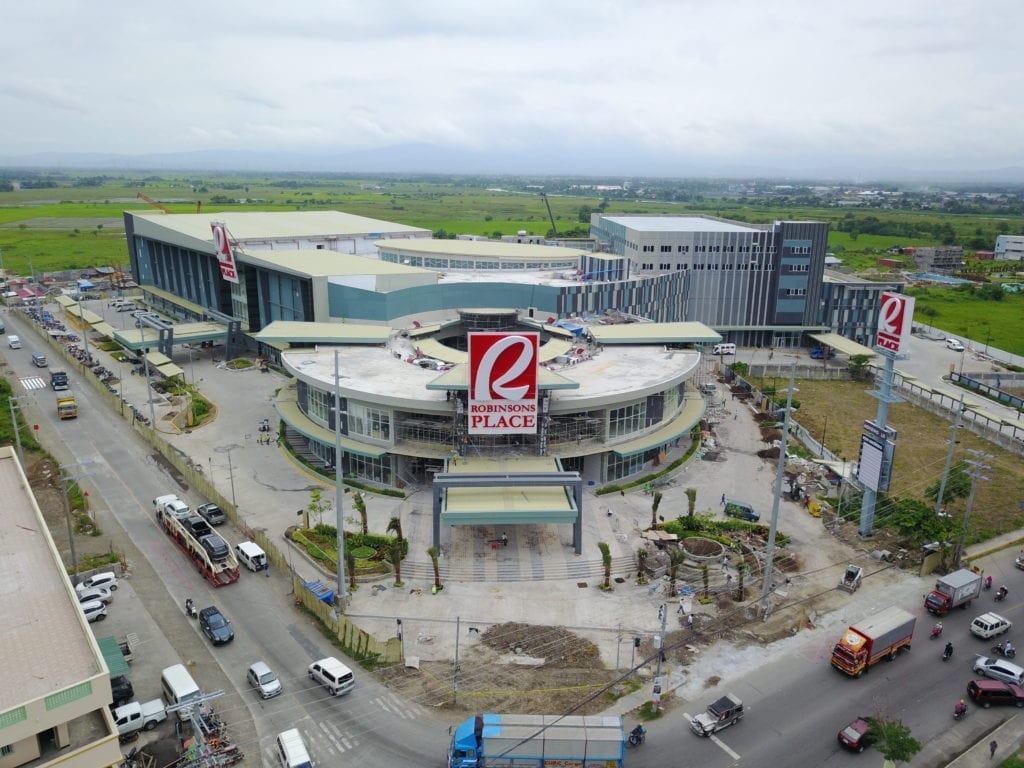
  • Robinsons developed a loyalty and engagement app

    Robinsons developed a loyalty and engagement app

    Singapore-headquartered department-store chain Robinsons has built a 120,000-strong loyalty program database in just 18 months using an app-based solution.

    The program, called R, is signing up new customers every day through interactions with customers of the company’s five stores in Singapore and Malaysia.

    The 161-year-old department store has reinvented its customer relationship strategy since teaming with Capillary Technologies to develop the app and associated data management and interpretation activities.

    Danny Lim, Senior GM at Robinson, said the program evolved because the store wanted to communicate and interact better with its customer base than the previous credit-card anchored loyalty programs allowed. The application can be used by OCBC Robinsons Group Visa Card Members and Private Label Card Members and those signing up directly to the app, called ‘R-Listers’.

    “We really needed to have more flexibility to reach out to our customers in the way that best resonates and works well with them,” Lim told Inside Retail Asia. “So through Capillary, we undertook a couple of initiatives towards integrating our customer base. And today we’ve got a relatively much more robust program that we are taking to the next level, year by year.”

    Charuvagun S, who is regional director of Southeast Asia for customer success at Capillary, said the two companies decided a mobile application was the best way to start improving engagement with customers.

    As a department store, Robinsons has hundreds of brands it is constantly trying to share news about with its customers – and shoppers in general. The app enables people to learn what is new in stores, something difficult or costly to achieve through traditional media like newspapers.

    At the same time, the company is building a rewards program so people can acquire points and then spend them on items from a catalog of products.

    “The mobile application has a lot of content in it that the consumer can interact with. They can look at the different brands available in the department stores, learn more about the brands and also understand where they are on the loyalty journey, how many points they have, and what they can do with those points.”

    To build interest in the program the app highlights a catalog of items that they can redeem points to buy.

    “So the idea was to make the engagement stronger, not just through push mechanisms, which are traditionally used – and we continue to use EDMs and SMS notifications – but also for customers,” said Charuvagun S. “Whatever they want to know about Robinson’s they can use the app to find out.”

    The app was an immediate success upon launch. Robinsons’ customer-acquisition rate rose four-fold, from around 1000-1200 per month to 5000. Within 12 months, 60,000 customers had installed it on their phones.

    Perhaps the most significant measure of the app’s success is the spending behavior of members. The average transaction value of members is running at 25 percent more than that of nonmembers, and there was a 25-per-cent increase in the average basket size.

    Lim says a positive spinoff from developing the program is the additional insights into their customers’ shopping behavior, such as how much they spend by demographic group and what promotions or communications they are responding to. An early lesson was recognizing that the retailer did not offer as many reward options for customers wanting to redeem their points as they should have had.

    “It was really important for us to be able to quickly react to this and increase our offering,” said Lim.

    He believes that upgrading the reward system and developing a custom app for the business is an important step in preparing for future trends in digital commerce and customer relationships. He feels there is a lot of hype surrounding e-commerce when consumers are increasingly turning to mobile commerce: people are using their mobiles to shop, or they are viewing websites on their phones rather than a computer.

    “There needs to be a lot of synergy in terms of omnichannel, of having a physical store presence and also really connecting to the digital world itself. E-commerce also serves as a marketing platform, aside from a selling channel.”

    Charuvagun S agrees. “One of the challenges that retailers are facing is that there is this big movement of different technologies coming into the picture, of different solutions in the market. Being able to choose what is the right technology that fits into the overall plan and how the technology is to be leveraged to continue the brand story as well as improving the customer experiences is key.

    “Somebody has to have a good understanding of retailers, to understand the whole ecosystem and to bring solutions that fit into the brand story. Also, like with so many things around, prioritization becomes key. Having a crawl-walk-run strategy and a six-month plan every half year to see what is to be implemented so as to learn more from those six months and take that feedback into the next six months; to continuously improve on the journey itself. That digital transformation journey itself becomes key.”

    The next step for Lim is to integrate the rewards program app with the e-commerce platform so the entire pathway is seamless and that customers can buy products via the app.

    Charuvagun S says the current rewards platform solution is focused on engagement. “It’s like having a salesperson sit inside a customer’s mobile phone to constantly engage the customer. Apart from that, we also bring data from different sources like transactional data, and other data like NPS (net promoter score) survey data into the platform.”

    Pulling that data and engagement together via machine learning can provide a lot of insights into the business which can be used to refine and improve communication with customers.

    Capillary has also been running tests to see how the app can be used to create more engagement when customers are in store. During the Black Friday sales, for example, new offers were added every 15 minutes, which would run for limited time spans, such as 30 or 60 minutes.

    Filtering is a key part of the app which Capillary says it will continue to develop.

    “If you have a specific communication going out to customers to talk about a new product that is being launched, we can be specific, communicating only with customers who have bought similar products or similar color or a range of products. All these can be filtered,” says Charuvagun S.

    “It is a tactical communication where we can reach exactly the segment of customers who would be likely to respond to such a campaign.

    “What’s happening today is that with the different technology touchpoints that we have, we’re getting a lot of data about customers from multiple places. If you go to an e-commerce site, you get a lot of clickstream data. If you browse for 10 minutes on an e-commerce website, I’ll get 1000 data points about all that you have been doing on the side. And we get a lot of data from social media on what you’re saying about the brand, whether you are talking good things or not, if you like the brand pages, etc. That is the other data that we are getting from social media.

    “Then, we also get transactional information from what you do in the retail store and on other e-commerce sites. The challenge now is how do we make all this data actionable.”

    Charuvagun S says the software should be able to ascertain what products customers are interested in on the site, down to the color and specific features. That information should enable personalized communication to a customer talking specifically about those products.

    “That’s the key to how you leverage all the data that is coming into the system, in terms of providing that insight to the marketing team so it can take action, or automate the action.”

    That, he says, is the focus area for both Capillary and Robinson’s during the coming months.

  • Lotte Duty Free to build Sydney CBD flagship

    Lotte Duty Free to build Sydney CBD flagship

    Lotte Duty-Free is to open a flagship store in Sydney’s CBD early next year, planning to tap into the 4 million visitors to the city each year.

    The three-level 3000sqm store will be built by Mirvac on a prime site at the corner of Pitt and Market Streets. It will stock beauty and skincare brands, a prestige-watch boutique, fine and rare liquor and wine shopping experience, and a number of VIP services including concierge and limousine transfers to Sydney’s top hotels and dining.

    The store is Lotte Duty-Free’s first ground-up build in Australia and follows the acquisition of JR Duty-Free in 2018 and the subsequent opening of its first airport store, in Brisbane.

    Lotte Duty-Free Oceania CEO Stephen Timms said the downtown Sydney site is in the heart of the city’s luxury-retail precinct

    “We couldn’t have asked for a more premium location to showcase our quality curated offer.”

    Last year Timms said that the business was looking to lead the duty-free market in Australia by 2023, and is forecasting over AU$280 million (US$188 million)  revenue in its first year in the region.

    “Travel retail is a unique sector. No other industry has such a divisive target audience, which provides both possibilities and challenges,” Timms said.

    “It’s crucial to have an understanding of the types of people who are traveling through a region – their nationalities, their shopping motivations and the special occasions they celebrate in order to generate strong and targeted sales.”

  • CapitaLand launches fund to help retailers impacted by coronavirus

    CapitaLand launches fund to help retailers impacted by coronavirus

    Capitaland is taking measures to support its 3500 retail tenants across its malls in Singapore in the midst of the coronavirus epidemic.

    The support includes a SGD10 million (US$7.2 million) marketing assistance program.

    While Capitaland’s malls’ operating hours will remain as standard – from 10 am to 10 pm – stores may open from as late as 11am and close as early as 8pm.

    “We are reaching out first to our retailers as their businesses have been directly impacted,” said Capitaland Group president (Singapore & International) Jason Leow. “The customized support we offer our Singapore retail partners will be based on their specific needs and trades. It will take into consideration the impact of the situation on the performance of their stores across the malls within CapitaLand’s network. This will allow us to leverage the strength of CapitaLand’s shopping mall network to offer holistic support.”

    “As the operator of Singapore’s largest shopping mall network, it is incumbent on Capitaland to take the lead in showing support for our retailers,” said Capitaland Singapore MD Chris Chong. “The wide-ranging support measures we have put in place during this period include the flexibility to operate shorter store hours and targeted marketing assistance. We will continue to monitor the situation and stand ready to offer more support.”

    Capitaland’s marketing assistance program will be used to support both retailer-driven promotions and mall-wide marketing initiatives. These include complimentary booking of atrium spaces for retailers and free parking for shoppers during lunch or dinner hours.

  • T Galleria by DFS closes Hong Kong stores due to corona virus outbreak

    T Galleria by DFS closes Hong Kong stores due to corona virus outbreak

    Two of the four T Galleria by DFS stores in Hong Kong have been closed indefinitely due to coronavirus concerns.

    “To protect our employees and customers in the current environment, we are temporarily closing T Galleria by DFS Tsim Sha Tsui East and T Galleria Beauty by DFS Moko,” the LVMH-owned company said in a message posted on its website during the weekend.

    “We have no cases of coronavirus in any of our stores and we continue to take all necessary precautions to keep our stores hygienic and safe for all.”

    The company said its T Galleria by DFS Canton Road store and T Galleria Beauty by DFS in Causeway Bay are continuing to trade as usual and the company’s online store remained open.

    “We look forward to reopening as soon as possible.”

    Last week luxury brand Fendi closed one of its stores for disinfecting after reports a person infected with coronavirus had visited.

    Japanese homewares and apparel brand Muji also closed one of its stores – at Lee Garden in Causeway Bay – over the weekend for disinfecting, the company said it planned to reopen on Monday.

    As at 1 pm ICT on Sunday, there were 26 confirmed cases of coronavirus infections in Hong Kong, with one fatality.

    However the number of confirmed recoveries is growing and the mortality rate remains at approximately 2.1 percent, leaving a likelihood of survival at about 98 percent, even greater if the patient has no pre-existing respiratory conditions.

  • Central Group to take stake in Globus

    Central Group to take stake in Globus

    Thai retail and mall conglomerate Central Group is partnering with an Austrian property developer to buy Swiss department store chain Globus.

    According to the Sonntagszeitung, a Swiss newspaper, both companies will take an equal 50-per-cent share in the business.

    Globus reportedly has significant property assets making it an attractive target for Austrian property investor Rene Benko. Benko’s Signa Holding already owns the Germany department store Galeria Kaufhof.

    Central Group, on the other hand, has already enjoyed success investing in department stores in Europe, its network now including the Rinascente Turin and a share in Germany’s KaDeWe Group, which also owns the Oberpollinger and Alsterhaus stores in Munich and Hamburg. It has another luxury department store under construction in Vienna.

    Globus is valued at about US$1 billion and has a flagship store on the main street of Zurich.

    The deal has not yet been officially confirmed with final details under negotiation, but current owner Migros-Genossenschafts-Bund has confirmed a sale is proceeding according to plan.

  • CapitaLand shuts six Chinese malls in response to corona outbreak

    CapitaLand shuts six Chinese malls in response to corona outbreak

    CapitaLand has closed six shopping malls in China in wake of the coronavirus outbreak and set up a task force to coordinate its response across its operations in China and other markets where it operates.

    The Singapore-headquartered company says it has also put in place business continuity plans under the leadership of Manohar Khiatani, its group senior executive director.

    The six malls were closed at the command of local governments. They are all four CapitaLand malls in Wuhan and both of its malls in Xi’an. However, supermarkets in CapitaMall Westgate, Wuhan and CapitaMall Xindicheng, Xi’an are still trading so as to allow locals to source food and essential daily supplies.

    “CapitaLand is monitoring developments of the [coronavirus] closely as the situation remains uncertain and continues to evolve,” said Lee Chee Koon, group CEO of CapitaLand Group in a statement issued Wednesday.

    “To date, the group’s business operations, including in China and Singapore, remain largely stable. Our priority is to focus on ensuring the well-being of our tenants, shoppers, guests and employees. We are all in this together during these trying times. CapitaLand will continue to work closely with the different local authorities in our markets to offer our support.”

    Beyond the closures, a raft of procedures has been implemented in malls still operational to protect tenants, staff and customers.

    CapitaLand properties in China have adopted precautionary measures including conducting temperature checks and intensifying cleaning and disinfecting of common areas. CapitaLand will conduct contact tracing and have designated premises at its properties for the isolation of persons suspected to be infected with the virus. The company is also providing hand sanitizers and face masks for tenants, shoppers, and guests.

    Trading hours of the remaining 45 malls CapitaLand operates across China have been reduced in line with directives issued by local authorities.

    In Singapore, CapitaLand has to step up cleaning procedures and made hand sanitizers available for tenants, shoppers and guests. There are also designated premises with predetermined routes within its properties for the isolation of persons suspected to be infected with the virus. Security teams will escort any suspected cases to the ambulance pickup point. CapitaLand will step up precautionary measures further where necessary.

    Employees have been told to defer all non-critical travel, especially to China and affected countries with known or suspected cases of coronavirus. Those who have recently returned from China have been advised to check their temperature twice daily for 14 days and during that time work remotely.

    “CapitaLand’s business continuity plans guide our operations which includes how and when to limit the interaction of business-critical staff, to include working from alternate sites, working from home and the use of teleconferencing,” said Khiatani in a statement.

    “Where necessary, operational personnel will be divided into primary and alternate teams. We will continue to monitor developments and the authorities’ directives, take the necessary steps to minimize impact to our operations and update our stakeholders in a timely manner.”

  • Luxury Real Estate in Singapore Draws Rich Chinese

    Luxury Real Estate in Singapore Draws Rich Chinese

    Rich Chinese continue to snap up luxury homes in the city-state as they seek a safe and calm offshore location to park their wealth.

    Protests in Hong Kong are driving rich Chinese property buyers away from the special administrative region to relatively calm and stable Singapore.

    The Lunar New Year period is a particularly busy period for property agents in Singapore catering to this group of buyers – three interviewed by the publication said inquiries among mainland Chinese in the lead up to this period typically jump by 15 percent, with demand intensifying in the past two years.

    Property cooling measures, which raised the additional buyer stamp duty on foreigners buying any residential property to 20 percent in July 2018, up from 15 percent, have had little effect on the demand for luxury apartments in Singapore – Chinese buyers of apartments S$5 million ($3.7 million) or more doubled in the third quarter of 2019 from the same period the year before, the report said.

    Most buyers purchase properties as an investment and prefer those near landmark locations, according to realtors interviewed by the publication. However, they noted that a growing number of buyers are also buying apartments with the sole purpose of parking their wealth here.

  • CapitaLand wins 9 year rights to manage Bugis Village

    CapitaLand wins 9 year rights to manage Bugis Village

    Singapore property developer CapitaLand is set to refurbish the Bugis Village and Bugis Street retail spaces after winning a tender to manage both from the Singapore Land Authority.

    CapitaLand told selected media outlets that it will build on the existing character and heritage of the sites when it takes over the management on April 1 for an initial three-year term. It has the right of renewal for two further three-year terms. The developer – which manages the nearby Bugis Junction shopping center – says it will use the existing shophouses and a spiral staircase to appeal to Instagrammers.

    Described as Singapore’s largest street market, the Bugis spaces have suffered from declining footfalls in recent years.

    According to the New Paper, CapitaLand plans to install colorful container boxes, creating open spaces that could serve as retail incubators for established brands and local start-ups, and a Singaporean and South-east Asian hawker food hub.

    “CapitaLand will be introducing a modern interpretation of Bugis’ street-market concept while celebrating the iconic architecture of the shophouses,” a CapitaLand spokesperson said.

    “Together with curated retail concepts and public spaces, we want to create a vibrant experience for both locals and tourists… We will also explore hosting marquee events such as programs, exhibitions, and events celebrating heritage, youth, and the arts community which are unique and distinct to the Bugis precinct.”

  • Hyundai Department Store aims to eliminate paper receipts

    Hyundai Department Store aims to eliminate paper receipts

    Hyundai Department Store says it will launch an electronic receipt issuance service with the aim of “zero” paper receipts within three years.

    Electronic receipts will be issued in the form of the automatic issuance of receipts through mobile applications instead of paper receipts when purchasing goods.

    Last year, about 160 million paper receipts were issued by Hyundai Department Store and Hyundai outlets.

    If an average length of paper receipt is 25cm, the total length of issued paper receipt would be able to circle the earth once – about 40,000km.

    Even if one is not a member of the department store’s loyalty program, the company will introduce a “mobile receipt” service that sends receipts by text message if a mobile phone number is entered in the process of product payment, which will also eliminate paper receipts.

    The issuance of electronic receipts is a measure under the “paper receipt elimination” agreement signed with the Ministry of Environment and other government ministries last August.

    The department store expects that the issuance of electronic receipts will have the effect of eliminating paper waste and waste disposal issues as well as minimizing concerns over personal information leaks.

  • Bangkok’s Thaniya Plaza to be refurbished for the first time in 30 years

    Bangkok’s Thaniya Plaza to be refurbished for the first time in 30 years

    Thai developer Thaniya Group plans to invest more than THB1 billion (US$33 million) on renovating Thaniya Plaza, its first major makeover project in 30 years.

    The project will cover the refurbishment of its exterior and interior design as well as the transformation of Thaniya Road, the company said in a statement.

    Located in the heart of the tourist precinct of Silom, Thaniya Plaza is a major drawcard for golfers, especially visitors from Japan and South Korea.

    “Thaniya Plaza will further strengthen our position as the well-known landmark on Silom Road and fulfill needs of people in the Silom area,” said Tasnawat Sombuntham, MD of Thaniya Group. “We are confident that we can cater to a need for business operators in terms of the customer traffic and the prime location in Bangkok’s CBD. We have also improved our space-rental services to align with today’s business landscape.”

    Thaniya Group chose a design concept emphasizing modern and green, based on public feedback suggesting there was a need for more green spaces in the Silom area. The 12,000sqm retail space spans four floors in two buildings connected by bridges. The landscape on the ground floor will be transformed to increase more green area and create a link between the two buildings.

    The first phase of the renovation will start in April with the work expected to be completed by early next year. During the renovation, the mall will continue to trade.

  • Parkson to exit MyTown Shopping Centre in February

    Parkson to exit MyTown Shopping Centre in February

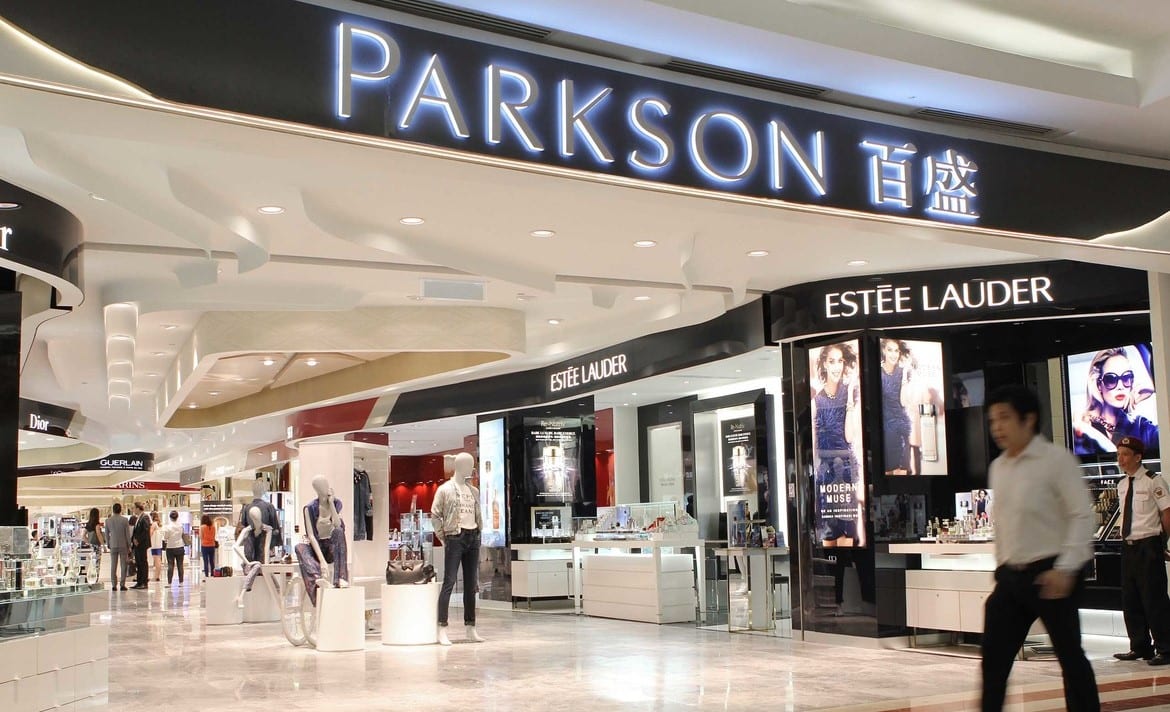
    Malaysian department store chain Parkson will close its outlet in MyTown Shopping Centre, Cheras next month.

    The closure will come fast on the heels of recent shut-downs of Parkson stores at Suria KLCC and M Square Mall in Puchong, and occurs less than three years after the 150,000sqft store started trading.

    “The retail market is very dynamic,” said a Parkson spokesperson in a statement to The Edge Markets. “Store opening and closing is part and parcel of doing business. In Malaysia, shopping malls are mushrooming everywhere and the demographics are ever changing.

    “The retail scene is increasingly competitive; when sales do not meet expectations, we have to cut losses and move on. Similarly, shopper demographics are constantly evolving.”

    The chain has closed several stores over the past two years within its Malaysian market, including stores at Megamall Kuantan, Melaka Mall, Maju Junction and Sungei Wang. It has also closed most of its Vietnam stores.

  • Central Group launches Porto de Phuket lifestyle mall

    Central Group launches Porto de Phuket lifestyle mall

    Thailand’s Central Group has launched a new shopping mall, Porto de Phuket, in Phuket.

    Located at Thalang District, the 40,000sqm development is divided into seven highlighted zones, featuring a wide range of stores and Michelin-starred restaurants.

    The Central Food Hall provides service in standalone formats outside for the first time, offering a variety of products and the first Cheese Room in Phuket.

    Restaurant and cafe zone, The Fame, brings together famous restaurants and cafes for hipsters and the chilled, including Suay, serving a fusion of Thai and western food by the iron chef, Russian restaurant Spice House, Wine Connection and French style cafe Lady Coco.

    The third zone, Multi Design House, presents home decoration where individual styles can be found. Visitors can also find vintage furniture and furnishings from Soul of Asia, artwork from local art celebrity Sunthorn Papan at Napas Art Gallery. A Jim Thompson pop-up store will be opened in this zone, featuring ready-to-wear silk men’s and womenswear, bags and wraps. There is also a B2S store, and a Run Lab created by Supersports, which analyses customers’ walking traits and running mannerisms to find the most appropriate style and shape of footwear.

    Healthy Heaven is a zone of relaxation and health, offering different spas such as Let’s Relax, with the first Spa Gallery in the world and wax salon The Strip, which has 10 branches worldwide including New York, London and Singapore. The project also has beauty outlets from Phuket such as Devadiva and Villa Aura.

    Beside Kid Learning Space, Porto de Phuket also opens a Pet Friendly Zone with facilities provided by Phuket International Petcare (PIPC).

    Decorated under the concept of a Tin Mining Factory which recreates the atmosphere of an old tin mine with Sino-Portuguese architecture, food station The Mercado will open early this year.

    Movie theatre, fitness gym, indoor playground, edutainment and an Art Home and Decorative zone are expected to be completed by the end of this year.

  • NWP Retail to buy five Indonesian malls

    NWP Retail to buy five Indonesian malls

    Indonesian retail shopping mall platform NWP Retail is set to acquire five shopping malls, two owned by local subsidiaries of Singapore-listed Lippo Malls Indonesia Retail Trust.

    The two Lippo Malls will be purchased for a total price of IDR1.30 trillion (US$92 million), while the other three mall purchases total approximately IDR440 billion (US$31.5 million). The Lippo malls are located in Pejaten Village just out of Jakarta, and Binjai – a satellite city of Medan. The remaining three malls are in Bandar Lampung, Denpasar, and Depok.

    “This acquisition represents a milestone in NWP Retail’s rapid expansion,” said NWP Retail president director and CEO Timothy Daly. “It will strengthen the company’s presence across key markets in Tier-1 and Tier-2 cities in Indonesia and further expand its market leading position as Indonesia’s largest independent retail shopping mall platform.”

    NWP has expanded from four seed assets in 2015 to more than 40 today.

    “NWP Retail has executed a clear and consistent strategy since its founding, pillared on Indonesia’s strong consumption growth story,” added Daly. “Our unique strength lies in the ability to create value through a scalable and well-managed platform and to generate synergies across different retail asset classes. The company continues to seek high-potential, attractively priced retail acquisitions and development opportunities across key markets in Indonesia.”

    Earlier this year, NWP raised nearly US$200 million in its latest round of equity fundraising, one of the largest ever for a private real estate company in Indonesia.

  • Tata subsidiary sells two giant Indian malls

    Tata subsidiary sells two giant Indian malls

    Two giant Indian malls, in Nagpur and Amritsar, have been snapped up by Virtuous Retail South Asia for US$100 million.

    The 1 million sqft Amritsar centre and 700,000 sqft Nagpur property were bought from Tata Realty and Infrastructure’s Trilium shopping mall portfolio, according to a report on Livemint. Virtuous, which is building a portfolio of Indian malls, is the retail development subsidiary of investment company The Xander Group. The company also recently acquired a 20-acre site from Raymond Limited in Thane, near Mumbai, where it plans to develop a mall.

    “This has been a year of active investments for us to broaden our shopping centre portfolio,” said Sid Yog, VRSA’s founder and chairman told Livemint. “Going forward, we would also explore acquisition opportunities in Kolkata and Hyderabad and add properties to the cities we are already present in.

    “We believe even gateway regional cities like Nagpur and Amritsar have significant population and retail consumption to make them attractive for us.”.

    VRSA now has more than 13 million sqft of Indian malls operating or under development across Delhi-National Capital Region(NCR), Mumbai, Bengaluru and Chennai along with smaller cities such as Surat, Mohali, Amritsar and Nagpur.

    The company says it plans to renovate and rebrand the newly acquired Indian malls.

    Meanwhile, Sanjay Dutt, MD and CEO of Trilium says the sale reflects the company’s strategy of exiting tier 2 and 3 cities.