Category: Real Estate

Retail News Asia is committed to providing both local and global retailers with the latest Real Estate news throughout the Asian market. This on a daily base.

  • Datem, Metro Retail Stores IPO plans okayed by SEC

    Datem, Metro Retail Stores IPO plans okayed by SEC

    The Securities and Exchange Commission (SEC) on Friday approved two initial public offering (IPO) plans worth a combined P10.82 billion.

    In a special meeting, the corporate regulator greenlighted construction firm Datem, Inc. and Gaisano’s Metro Retail Stores Group, Inc.’s bids to raise P4.65 billion and P6.17 billion, respectively, by going public.

    The IPO plans still have to be approved by the Philippine Stock Exchange (PSE). If accepted, the market debuts would be the third and fourth for this year.

    The bourse has said that it was targeting nine to 10 IPOs for this year but PSE President Hans Sicat has revised this to five given market volatility.

    Metro Retail
    Gaisano family’s Metro Retail Stores Group Inc. is looking to raise up to P6.17 billion from the IPO, offering a total of 1.012 billion shares (920 million for the base offer and 92 million for oversubscription) at P6.10 each.

    Final pricing has been scheduled for October 29 and the offer period will run from November 2 to 6. Listing at the PSE Main Board is expected on November 12.

    Expected net proceeds of P5.285 billion — without the overallotment option — after offer and listing expenses and taxes will be used for expansion of the firm’s store network (P3.752 billion), construction of a logistics and distribution center (P1.215 billion) and working capital requirements (P317.2 million), mostly for 2016 up to 2017.

    BPI Capital Corp. and Deutsche Bank AG have been appointed joint global coordinators.

    Metro Retail is the operator of Gaisano stores, including Market! Market! in Bonifacio Global City. As of end-June, the company had 45 stores nationwide, including nine in Metro Manila, with a total net selling space of about 197,873 square meters.

    Datem
    Datem, Inc., meanwhile, wants to raise P4.65 billion to expand its activities in construction, housing and bulk water.

    It wants to sell up to 329.046 million shares (286.127 million for the base offer and 42.919 million for oversubscription) at P14.15 per.

    The offer period is scheduled to run from November 16 to 24, while listing at the PSE Main
    Board is targeted by the end of November.

    BPI Capital Corp. and First Metro Investment Corp. have been appointed joint issue coordinators, lead underwriters and bookrunners.

    Datem has ongoing projects with big developers, including eight residential developments for Megaworld Corp., One Shangri-La Place for Shang Properties Inc., Twin Oaks Place for Greenfields Development Corp., Arya Residences for Arthaland Corp., Grand Hyatt Residences for Federal Land Inc., Axis Residences for Robinsons Land Corp., The Makati Place for Alphaland Corp. and Parksuites for Anchor Land Holdings Inc.

    Other IPO hopefuls for this year, and the amounts they want to raise, include D.M. Wenceslao & Associates Inc. (P21.7 billion), restaurant chain operator Gweilo Corp. (P75 million), Green Power Panay Philippines Inc. (P290 million), property developer Italpinas Development Corp. (P242 million), brokerage firm Philstocks Financial Inc. (P185.89 million), Philippine Primark Properties Inc. (P1.2 billion) and BPO firm Pointwest Technologies Corp. (P2.09 billion).

    Only two firms have listed so far this year: Crown Asia Chemicals and SBS Philippines Corp.

    Arman Pan, SEC acting corporate secretary, said the final decision on whether or not to go public lay with the firms themselves.

    “Approval [of IPO plans] is easy. It is just a question of whether firms will push their listings this year given the market volatility,” Pan said.

  • Newcastle student flats sold for £40m sale to Singapore developers

    Newcastle student flats sold for £40m sale to Singapore developers

    Developers Metnor Group has built and sold a portfolio of student accommodation properties in Newcastle to one of Singapore’s largest private property developers for £40.6m.

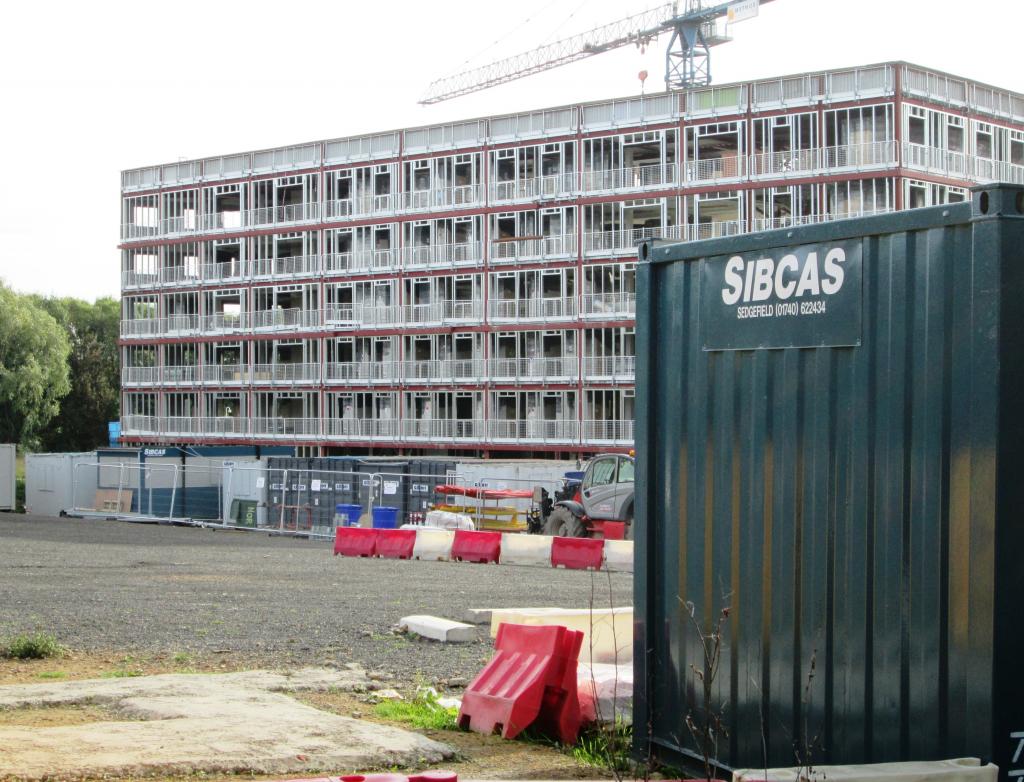
    The Killingworth-headquartered firm acquired the brownfield site in Shieldfield, Newcastle, nine years ago and has transformed it into quality student apartments and retail units using a predominantly local workforce.

    Metnor has now been appointed to build the next phase of student accommodation on Portland Road, Newcastle, which will be ready for the 2017 academic year.

    The group’s building division, Metnor Construction, completed the first of the four-phase build with a 274-bedroom luxury student accommodation building and two retail units in August 2013.

    Known as Turner Court, the development was fully let to students from both of the city’s universities, as well as students studying at Newcastle College, within days of opening.

    Tesco and Subway occupy the two retail units on the ground floor.

    The second phase, known as Rosedale Court, was completed in August 2015 and is a 338-bedroom accommodation building developed, along with 4,500sqft of retail or commercial space.

    The building is being managed and operated by specialist student operator South Street Asset Management under its DIGS brand.

    Metnor was advised on the substantial deal by the real estate team at Newcastle law firm Muckle LLP, who advised and negotiated on the preparation of all legal documents with Far East Orchard Plc.

    Legal advice was led by Muckle partner, Will McKay, and supported by Kevin Maloney, a partner in the banking team who negotiated the financing of investment and development facilities with the Israeli owned Bank Leumi.

    The properties are located in Shieldfield, Newcastle and within walking distance of Northumbria and Newcastle Universities and Newcastle College.

    Keith Atkinson, chief executive of the Metnor Group, said: “We have worked closely with Muckle LLP since we acquired the site in 2006 and we are proud to have helped to regenerate this area of the city by transforming a once derelict brownfield site into a vibrant student hub.

    “The financial crisis which occurred in the middle of the development was an additional challenge but with the help of the team at Muckle we were able to secure funding through Bank Leumi and we are pleased to continue our work with Far East Orchard as the regeneration is a significant investment into the region.”

    Will McKay said: “We’re delighted to have worked with Metnor Group once again. This was a challenging and complex project.

    “We had to overcome many environmental factors during the development phase involving mineshafts and land contamination.”

    Metnor Construction has worked on some of the most high-profile buildings within Newcastle over the last few years including the Sleeperz Hotel development on Westgate Road, the Hotel du Vin development on Byker Road and the Hampton by Hilton hotel opposite the Central Station.

    Metnor Construction’s managing director, Chris Cant, added: “Student accommodation projects have critical deadlines as they must be ready for the start of an academic year, otherwise the owner is unable to let them out to students and risks sitting with an empty building for a year if the deadline is missed.

    “We completed our first project, the 396 bed Winn Studios, for Northumbria University in 2011 after a 21-month construction period.

    “Since then we have built Turner Court and now Rosedale Court.

    “We currently have a strong order book, a dedicated workforce and are actively looking to expand our presence in our native North East.

    “We have seen a steady increase in turnover over the last two years and we have taken on 13 new staff since the start of the year at all levels including a number of apprentices.”

  • Capital Group, Samsung Asset Management form strategic partnership in Korea

    Capital Group, Samsung Asset Management form strategic partnership in Korea

    Capital Group and Seoul-based Samsung Asset Management on Wednesday announced a strategic partnership to cooperate on developing active investment strategies for institutional and retail investors in Korea.

    Capital Group, with $1.4 trillion in assets under management, and Samsung Asset Management, Korea’s top manager with $166 billion in AUM, “will work together to co-develop retirement solutions and asset allocation products and enhance SAM’s active investment capability,” a news release said.

    Under the agreement, Capital Group will help its Korean partner become familiar with “Capital-style active management,” and work to provide management know-how in areas such as business management and client management.

    A Seoul-based spokesman for Samsung Asset Management said the partnership with Capital Group would be a cornerstone of the firm’s goal of becoming one of Asia’s top three home-grown asset management companies by 2020.

    Sung-hoon Koo, SAM’s CEO, said in the release that the partnership will pave the way for his firm to “upgrade its active equity investment capability and implement life cycle asset allocation product strategies.”

    The news release also quoted Tim Armour, chairman of the Capital Group, saying the “broader plan is to co-design investment solutions to fulfill the savings, retirement and insurance-linked needs of Korean investors.”

    The Samsung spokesman, in a telephone interview, and Tom Joyce, Capital’s head of global media relations, in an e-mail, said details of the economics of the relationship — specifically how co-developed products would be distributed and revenues shared — had yet to be worked out. “It is too early to say what the pricing and structures will be,” noted Mr. Joyce, adding “the economics will be worked through.”

    Separately, the news release said the partnership will include selecting and using “appropriate Capital Group products and services across multiple Samsung distribution channels.”

    Mr. Joyce didn’t respond directly to a question about whether this was the first time Capital Group had entered into such a partnership. Instead, he cited Samsung’s interest in learning more about Capital’s system and “way of investing,” while noting Capital’s interest in learning “how Samsung markets and distributes products to Korean investors.”

    According to data provider eVestment, Capital Group listed roughly $275 million in AUM managed on behalf of Korean investors.

  • Aeon opens B300m mall in Si Racha

    Aeon opens B300m mall in Si Racha

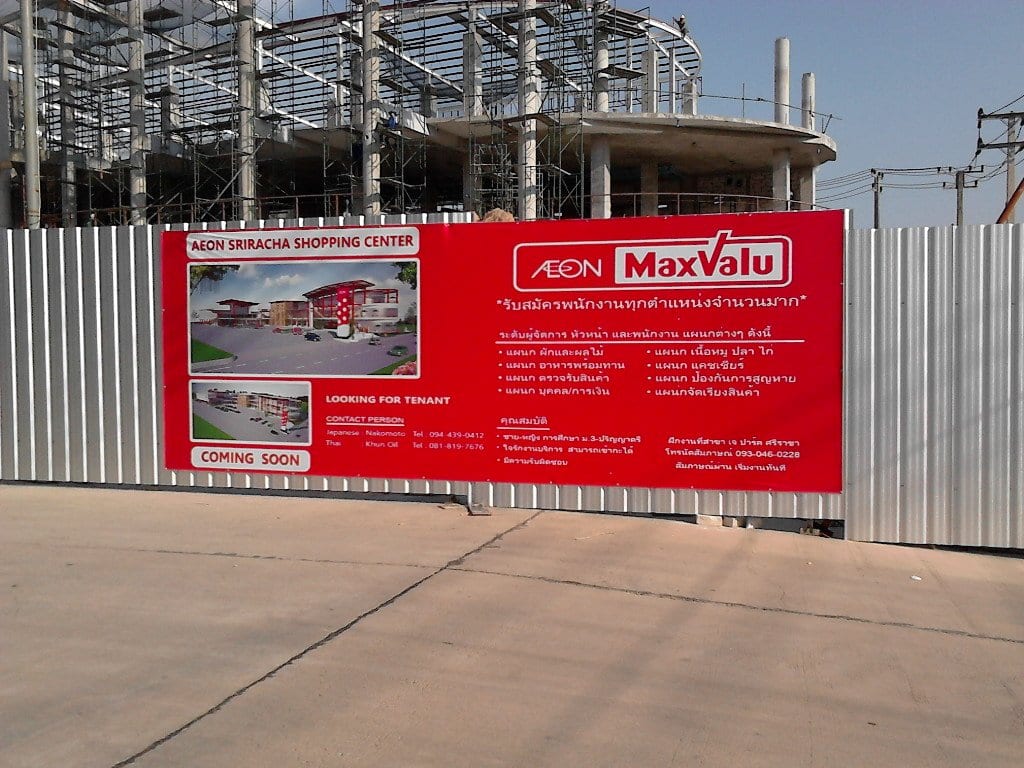
    Aeon (Thailand), the local operator of MaxValu supermarkets and Tanjai minimarts, has resumed its investment with a big retail project after suspending its expansion since 1997.

    The company will today have the soft opening of Aeon Sriracha shopping centre in Chon Buri’s Si Racha district to serve growing demand from Japanese expats working nearby.

    The move is part of Japanese parent Aeon Group’s efforts to expand its retail business in Asean with an expectation to drive sales to reach US$16 billion by 2020, a company source said.

    Before Thailand, Aeon Group opened various retail formats in the Asean market including Indonesia, Vietnam and Cambodia.

    The company spent about 300 million baht to develop Aeon Sriracha near Assumption College Sriracha.

    The three-storey shopping centre has saleable space of 11,000 square metres and will serve Thai and Japanese customers who work and live nearby.

    “Major frequent customers will be Japanese housewives who have free time to shop and dine at our shopping centre. They like shopping in a Japanese ambience,” the source said.

    Aeon Sriracha is surrounded by 1,300 households of Thai and Japanese people with high spending power. It has parking space for 220 cars.

    The shopping centre houses 21 tenants providing services related to Japanese lifestyle. MaxValu supermarket provides service around the clock, while other anchors are Ringer Hut Nagasaki Champon, a Japanese fast food restaurant chain with more than 600 branches worldwide, and Tackle Berry, Japan’s largest used fishing gear chain.

    Si Racha district also has Japanese community mall J-Park Sriracha.

    The artist impression of the Aeon Sriracha shopping centre.

    This is the first time in 18 years that Aeon (Thailand) has invested in a big retail project in Thailand after suspending its expansion plan due mainly to the 1997 financial crisis.

    Aeon Group has had a presence in Thailand for more than 30 years.

    Aeon (Thailand) now operates 78 retail outlets here, with 48 Tanjai minimarts and 30 MaxValu supermarkets.

    Apart from developing its new complex in Si Racha, the company will strengthen its food and information technology facilities to support its aggressive expansion in Thailand from now until 2020.

    It has plans to expand its retail business outside Bangkok, particularly in Northeastern provinces such as Ubon Ratchathani and Udon Thani, in a bid to tap opportunities from booming border trade after the launch of the Asean Economic Community by year-end.

    Aeon (Thailand) had earlier announced plans to open 40 MaxValu stores next year.

    After that, it will add 100 outlets each year for four years until 2020 for a total of 500 branches.

    Of the 500 stores, 400 will be Tanjai minimarts and the remaining 100 will be under the MaxValu supermarket brand.

    Sales at MaxValu supermarkets are estimated to reach 6.6 billion baht this year.

  • Metro Retail Stores Philippines IPO approved

    Metro Retail Stores Philippines IPO approved

    The Philippines Securities and Exchange Commission has approved Metro Retail Stores Philippines’ initial public offering, with the retail chain expected to raise P6.17bn (US$135m) next month.

    Run by the Gaisano family, Metro Retail Stores operates hypermarkets and supermarkets across the country, and plans to use the proceeds from the float to expand its network of stores, and construct a new distribution centre.

    Metro Retail Stores plans to sell up to 1.01bn shares at P6.1 (US$0.13) each, with the price to be finalised on 28 October head of an expected 12 November listing.

  • Hong Kong Suffers for Its Devotion to the Peg

    Hong Kong Suffers for Its Devotion to the Peg

    Hong Kong has pegged the value of its dollar to the greenback since 1983. The peg was meant to ensure financial stability as the city embarked on the long process of re-integrating with China. Since then its currency has been one of the most stable in the region. To lock the HK ­dollar’s trading range against the greenback into a narrow band, about 7.75 to the US dollar, the Hong Kong Monetary Authority (HKMA) buys and sells the two currencies. Whenever the Federal Reserve raises or lowers interest rates, Hong Kong follows suit.

    That means Hong Kong is caught between tightening monetary policy in the US and the economic slump of its main trading partner, China. If the Fed moves on the rate soon, Hong Kong will have to raise interest rates even as the mainland’s slowdown puts pressure on the city’s wages and property prices. “It’s a double whammy,” says BNP Paribas economist Mole Hau.

    “Nobody was in the mood to buy an apartment”

    China’s surprise devaluation of the yuan last month helped trigger currency declines worldwide and increased speculation about Hong Kong’s willingness to keep putting up with such pain. In the options market, bets on an end to the peg jumped to their highest in more than a decade. On his blog in late August, Hong Kong Financial Secretary John Tsang warned that the economy may slow from the 2.6 per cent growth rate it managed in the first half of the year. “Hong Kong still needs to face the challenges brought by the fluctuating financial markets, weak foreign trade, and slower tourism,” he wrote.

    Hurt by the Chinese devaluation as well as low prices for oil and other commodities, regional currencies have declined an average 6.4 per cent against the US dollar in the past six months. That’s making the prices at the city’s stores more expensive for visitors, including the Chinese.

    As tourist arrivals from China fell 9.8 per cent in July compared with a year earlier, the Hong Kong retail industry’s sales for the month fell 2.8 per cent to HK$37.6 billion ($4.85 billion). That was the fifth consecutive month of declines, and much worse than the 1.2 per cent contraction economists surveyed by Bloomberg had predicted.

    Home prices in Hong Kong have increased 60 per cent since 2010, fuelled by strong demand from the mainland and low interest rates. But Hong Kong in August had the weakest home sales in 17 months. With the stock market plummeting, “nobody was in the mood to buy an apartment,” says Louis Chan, chief executive officer of the residential unit of Centaline Property Agency, one of the city’s two largest brokers. Home prices may start falling as much as 10 per cent a year starting in 2016, says Cusson Leung, an analyst with JPMorgan Chase.

    Investors and economists have been talking about the peg’s demise since China regained control of the city in 1997. There’s always the possibility of the HKMA pegging the HK dollar to the yuan instead of the greenback. Zhang Yichen, chairman and CEO of Citic Capital, the Chinese investment bank, says that won’t occur soon. Speaking at the World Economic Forum in the Chinese city of Dalian on 9 September, Zhang said the Hong Kong government will be hard-pressed to end the peg until the yuan becomes a truly convertible currency, meaning that it must be exchangeable for foreign currencies in unlimited amounts.

  • Garuda Indonesia expands maintenance facility

    Garuda Indonesia expands maintenance facility

    Garuda Indonesia opened its biggest aircraft maintenance facility at Soekarno-Hatta International Airport on Monday, which will support the state-owned airline’s fleet as well as regional carriers tapping into Indonesia’s growing aviation market.

    The maintenance facility is the fourth for group subsidiary, Garuda Maintenance Facility (GMF) AeroAsia. With an area of about 67,000 sq. meters, it will nearly double GMF’s current capacity. The facility can store 16 narrow body aircraft, although due to limited personnel and technical capabilities, it can only handle 12 aircraft at the moment. GMF will invest a total of about 500 billion rupiah ($35 million) until it reaches full capacity in 2018.

    The facility’s main purpose is to serve Garuda’s growing number of aircraft. The airline plans to add 21 aircraft this year to reach a total of 190. At the Paris Air Show in June, it inked a deal to purchase 60 aircraft from Boeing and 30 from Airbus, together worth nearly $20 billion at catalogue prices.

    GMF posted revenue of $264 million in 2014, a 15% increase from the previous year. About 70% of its revenue comes from servicing Garuda aircraft, including those of budget carrier spin-off Citilink.

    GMF’s President and Chief Executive Officer Richard Budihadianto said it also aims to increase revenue from foreign carriers. The company has plans to build a maintenance facility in Bintang Island, which is close to Singapore. Airlines in Asian countries such as Singapore and Australia can save time by stopping in Bintang instead of at Soekarno-Hatta. “We want at least 40-45% of revenue coming from third party carriers,” Budihadianto said.

  • Marina Bay Sands Shoppes expands children’s collection

    Marina Bay Sands Shoppes expands children’s collection

    The Shoppes at Marina Bay Sands has added luxury label Dolce & Gabbana Junior to its growing line-up of luxury childrenswear retailers.

    The high end Singapore shopping centre which relaunched with a luxury focus in April, had already attracted Fendi Kids and Baby Dior to its retail store portfolio, part of a plan to build on its Children’s Collection to present more stylish options for “little adults”.

    Dolce & Gabbana Junior is the Italian designer label’s first Junior store in Southeast Asia.  Spanning more than 1400 sqft, the new boutique is painted with a pearl finish and furnished with lacquered wood furniture frames to create a shopping ambience that is soothing and refined. The Dolce & Gabbana Junior collection includes ready-to-wear for girls, boys, and newborn from ages up to 8.

    And more brands are yet to arrive.

    Come December, Armani Junior and Bonpoint will also be joining the The Shoppes’ Children’s Collection. Set to be its largest store in Singapore, the Armani Junior store will be showcased as a sleek and modernised concept for stylish juniors. It completes the family of Armani collections at The Shoppes – namely Armani/Marina Bay, the first and only duplex in Southeast Asia to house both Giorgio Armani and Emporio Armani, as well as Armani Collezioni.

    Armani Junior will open with its soon-to-launch Spring Summer 2016 collection featuring colorful and fun prints, while Bonpoint will unveil a selection of Shoppes-exclusive pieces from its Christmas 2015 collection and Cruise 2016 collection. Unique to the store is a special corner dedicated to its YAM collection which caters for young ladies and mothers, allowing for perfect mini-me looks that could be worn with their sisters or daughters. Bonpoint will also carry its full hypoallergenic skincare and signature perfume range in-store.

    The launch of Armani Junior and Bonpoint brings along a plethora of trendy ready-to-wear for newborns and children up to the ages of 16.

    Aside from the Children’s Collection, other boutiques that are opening at The Shoppes in the fourth quarter of 2015 include Ted Baker, the only Loro Piana store in Singapore, as well as the largest Michael Kors and Valentino stores in Singapore to date, spanning 3200 sqft and 3500 sqft respectively. More recently, the mall celebrated the opening of Furla’s Singapore flagship store and the biggest in Southeast Asia at 1600 sqft.

  • GIC, Macerich to invest in five retail properties

    GIC, Macerich to invest in five retail properties

    GIC has entered into a joint venture with United States-listed real estate firm Macerich to invest in a 40 per cent interest in five retail properties in the world’s largest economy, the Singapore sovereign fund said yesterday.

    When contacted by Today, GIC declined to disclose how much it would pay for the stakes. Macerich had said in a separate announcement that it agreed to sell minority stakes in eight US malls for a total of US$2.3 billion (S$3.3 billion) to GIC and US property investor Heitman, a deal that will allow the landlord to pay a special dividend, buy back shares and cut debt.

    GIC will own stakes in: Washington Square in Portland, Oregon; Los Cerritos Centre in Cerritos, California; Arrowhead Towne Centre in Glendale, Arizona; Lakewood Centre in Lakewood, California; and South Plains Mall in Lubbock, Texas.

    The transactions are expected to close in phases starting this month and concluding in the first quarter of next year, GIC said. Mr Lee Kok Sun, regional head for Americas, GIC Real Estate, said: “We expect these high-quality assets to continue generating steady income streams and are confident of their growth … As a long-term value investor, we look forward to partnering with Macerich … as they share our core investment belief of being long-term.”

  • Siam Piwat, launches  Siam Piwat Academy

    Siam Piwat, launches Siam Piwat Academy

    Siam Piwat Company Limited the leader of innovative retail and real estate business – launches Siam Piwat Academy. The academy is Thailand’s first in collecting and gathering every aspect of shopping mall and property facility management, which will be shared by professional executives who are specialized in the area. Moreover, Siam Piwat collaborated with Thailand’s two leading educational institutions: Chulalongkorn University and Thammasat University, introducing Thailand’s first specific course of facility management.

    Chanisa Chutipat, President of Siam Piwat Co., Ltd. said: “Siam Piwat’s 56 years of success in shopping mall and retail business has led the company to the creation of Siam Piwat Academy – Thailand’s first leading educational institution offering Shopping Mall and Public Assembly Facility Management. The academy proceeds on the company’s vision of sharing the knowhow and long experiences of the company with retail business people through Siam Piwat’s high executives who have long been in the business. By introducing Siam Piwat Academy, the company has emphasized its main strategy of being the advanced creative leader, and strengthened the capability of those high executives, who are the main supporters in driving business to success. The essential goal of the academy is to give back to the society by enhance the quality of life and education standard for Thais. We expect to share our business knowhow to support the development of retail business industry, to increase Thais’ competitiveness for them to be ready for global platforms – thus, leading to the strong and sustainable retail business management.”

    Assist. Prof. Vorapat Inkarojrit, Distinguished Scholar Mr. Wicha Hanamornroongruang, Mrs. Chanisa Chutipat, Assist. Prof. Jittaporn Sribonnjit

    Mr. Wicha Hanamornroongruang, Distinguished Scholar, Faculty of Architecture and Siam Piwat’s Advisor, revealed that: “Siam Piwat Academy is established with Siam Piwat’s determination in sharing its excellent knowhow collected for 56 years, along with the willingness to develop the project until it is internationally recognized by retail and real estate industry. Our executives has often been invited to give lecture to business personnels. We foresee that such business expansion will call for an increase in human resources. Thus, in 2015, we decide to officially launch the course of Public Assembly Facility Management for the first time in Thailand. The course is the result of Siam Piwat’s collaboration with two leading educational institutions: Chulalongkorn and Thammasat Universities. The course will feature both theoretical knowhow taught by honorable professors of each university, and real and practical working experiences by Siam Piwat’s executives. By enrolling in the course, one will also be granted a chance to observe businesses in Siam Piwat Company Limited. In the next three years, we plan to elevate such vocational education to the level that Thailand becomes ASEAN’s largest learning center in shopping mall and retail business management, along with to collaborate with more of international institutions and the company’s partners in order that the course will be developed to efficiently cover all dimensions of shopping mall and retail business management.”

    Siam Piwat academy has opened a short 3-month intensive program for executives in Shopping Mall Facility Management in collaboration with the Faculty of Architecture, Chulalongkorn University, on 15th August – 10th October 2015. Next on schedule is Public Assembly Facility Management course – the collaboration with Thammasat University – which will start in November 2015 to February 2016. Siam Piwat academy expects about 100 persons who will graduate from Facility Management course, and within 5 years Siam Piwat Academy will empower people in the major of Facility Management over than 500 persons.

    Assist. Prof. Vorapat Inkarojrit, Ph.D., Deputy Dean of Faculty of Architecture, Chulalongkorn University comments on the importance of Shopping Mall Facility Management study:  “The University foresees that well-rounded knowhow and understanding in business are what will significantly drive the business forward. Our Faculty of  Architecture works with Siam Piwat to develop academic knowhow in architectural researches, industrial design, physical environment, real estate, and urban planning design. The collaboration aims to share useful knowhow with the public, society, and country, in order to elevate retail and real estate industry, and trigger the development in retail and real estate human resources to achieve competitiveness with global platforms.”

    Assist. Prof. Jittaporn Sribonnjit, Lecturer of Real Estate Business Program, Thammasat University says “The University is pleased to collaborate with Siam Piwat in human resource development. The courses co-created by the university will provide understanding in public facility design, commercial marketing and trade development and standardized management, for the sustainable business growth. The curriculum does not only include lecture from honarary professors and instructors, but also field observation, and group project activities supervised by instructors.”

    Thailand’s current retail market is growing and expanding so fast that it becomes yet another business with high competitiveness. Siam Piwat’s role as the innovative leader in retail and real estate business, along with its long expertise in the business, and the establishment of Siam Piwat Academy, are regarded as significant step to drive Thai retail industry towards international standard equivalent, and to create quality human resorce to respond to the expansion of retail business, and the role of being ASEAN’s largest learning center in the near future.

  • Hong Kong house prices to fall by 30% by 2017

    Hong Kong house prices to fall by 30% by 2017

    The price of buying a home in Hong Kong could fall by 30 percent between now and 2017, according to forecasts.

    Quick, cut down on bubble tea and start saving for the property bubble to burst!

    Eva Lee of market leader USB says buying demand will be hurt by lower inflation, rising unemployment rates and a deteriorating economy. Something to look forward to then.

    “Unlike past down cycles that were triggered by global economic shocks, we believe this round of price reversals will be triggered by a deteriorating local economy. Thus, we think price drops may come more gradually and over multiple years,” Lee said in a briefing, according to the SCMP.

    Home prices have jumped 340 percent since Hong Kong was in the grip of the SARS epidemic in 2003. This quarter, however, the Hang Seng Properties Index fell 15 percent, with property stocks declining an average of 20 percent over the past four months.

    Lee also notes that 42 percent of Hong Kong’s retail sales were contributed by tourists last year.

    “It is the highest level we have ever seen in the world and it is an unhealthy market. Hong Kong will get hit immediately once the number of tourist arrivals falls,” she said.

    While that may be bad news for the economy, it’s also good news for renters, who could see residential rents falling 10 percent and luxury retail rents by 25 percent over the same period.

    Can you see your landlord actually putting your rent down though? Nah, us neither.

  • Inside Wuhan 1818 mall

    Inside Wuhan 1818 mall

    Wuhan 1818 mall has recently opened in China, delivering a new generation retail and lifestyle centre set to energise the precinct’s urban core.

    The 70,000 sqm, seven storey mall was developed by CapitaMalls Asia  and caters to the needs of the 2.4 million people living and working in the district. It provides a diverse range of quality lifestyle, food and entertainment tenancies, anchored by rooftop cinemas and a basement supermarket and car parking.

    Capitalmall-1818-Wuhan-China1

    “The project opens at a dynamic point in space and time for Wuhan, coinciding with a period of unprecedented change,” said Buchan Group principal, David Macleod.

    “Our design for the centre fits well with the contemporary facelift of the district as Wuhan rapidly evolves into a Future City.”

    The design for the development was inspired by the unique cultural catchment and captures the essence of its past, whilst responding to evolving retail trends of the future.

    “We felt both a responsibility to be respectful of Wuhan’s history and culture in our design, but to look to its future,” said Macleod.  “We felt a need to embrace the needs and aspirations of the new modern urban community.”

    Capitalmall-1818-Wuhan-China

    The interior design concept for the mall expresses aspects of this dynamic through restrained organic patterns crowned by splashes of vibrant colour and dappled light effects.  The prominent podium facade creates an impressive street-edge to the integrated office and residential mixed use precinct, and adds an impressive addition to the quality development portfolio of The Buchan Group and CapitaMalls Asia.

    The centre’s planning was engineered to ensure the mall performs a civic function as an urban meeting place for the local community, encouraging social connections and redefining the art of placemaking in the district. This informed the predominance of formal and informal food and entertainment spaces in the planning and tenancy mix.

    The Buchan Group provided integrated design and delivery services for this ambitious project, including facade and interior architecture, interior design and graphic and wayfinding design services from concept design through to construction site services.

  • KidZania India enters Delhi

    KidZania India enters Delhi

    KidZania, the global chain of role-play centres for children, will invest over US$15 million in a facility in Delhi-NCR, CEO Sanjeev Kumar, has said.

    “The project funding will be done through 70 per cent equity and 30 per cent debt, Kumar said.

    The new KidZania will be located on a 147-acre facility in Noida and will open in 2016.

    The Kidzania India franchise rights are owned by Imagination Edutainment. Singapore-based KidZ Inc, whose shareholders are Comcraft Group, Xander Group and Maxfield Management, owns 74 per cent of the franchise and actor Shah Rukh Khan the remaining 26 per cent.

    “We are very bullish about the Delhi NCR market. While we will be targeting kids between four and 14 years and their parents residing in Delhi, Noida and Gurgaon and we feel there is a great potential in the surrounding cities of Sonipat, Panipat, Mathura, Agra and Meerut.

    “Our feasibility report has also shown interest of inbound tourists and school groups from Punjab and Haryana. We are confident of hosting 600,000+ visitors in the first year,” said Kumar.

    The indoor theme-park, built-to-scale across three levels, will be spread over nearly 100,000 sqft and have a capacity for 1800 visitors a day – 65 per cent children and 35 per cent adults.

    The KidZania Delhi operation will follow on from the successful Mumbai destination which has now hosted 700,000 children in the last two years.

    But this one will feature new zones, including an underground archaeology facility, a stadium and a hanging aircraft at the entrance.

    There are now 20 KidZanias, operating in cities including London, Dubai, Jeddah, Lisbon, Tokyo and Santa Fe.

    KidZania Delhi facility has signed on brands including Parle-G for a biscuit factory, Bajaj Electricals for a culinary school and an energy conservation hub, Kellogg’s for a cereal factory, Big Bazaar for a supermarket, and E-Zone for an electronics store.

  • Croesus Singapore buys Fukuoka mall

    Croesus Singapore buys Fukuoka mall

    Singapore’s Croesus Retail Trust  has bought Torius Property in Fukuoka Prefecture, Japan, for JPY 7,997 million (S$95.2 million).

    Torius, comprising 36 separate retail buildings, will be Croesus Singapore’s eighth Japanese property and marks its first foray into Kyushu Island. It is the fourth property to be bought by the trust since its IPO in May 2013.

    One of the largest properties in Fukuoka Prefecture with a diverse and unique tenant mix, Torius has a yield of 7.8 per cent.

    The deal will be funded by a rights issue.

    Torius is a large-scale suburban retail mall located in the satellite town of Hisayama-machi of Kasuya-gun, which is approximately 13 km from central Fukuoka City in Fukuoka Prefecture, on Japan’s Kyushu Island. The property occupies a land area of 257,173 sqm and has a net lettable area of 77,032 sqm. Torius Property is situated on leasehold land, with the leasehold interest in respect of the main parcel of land on which Torius Property is sited (comprising a land area of 205,543 sqm) expiring in February 2060.

  • SM Prime Holdings received gold award for its first mall in China

    SM Prime Holdings received gold award for its first mall in China

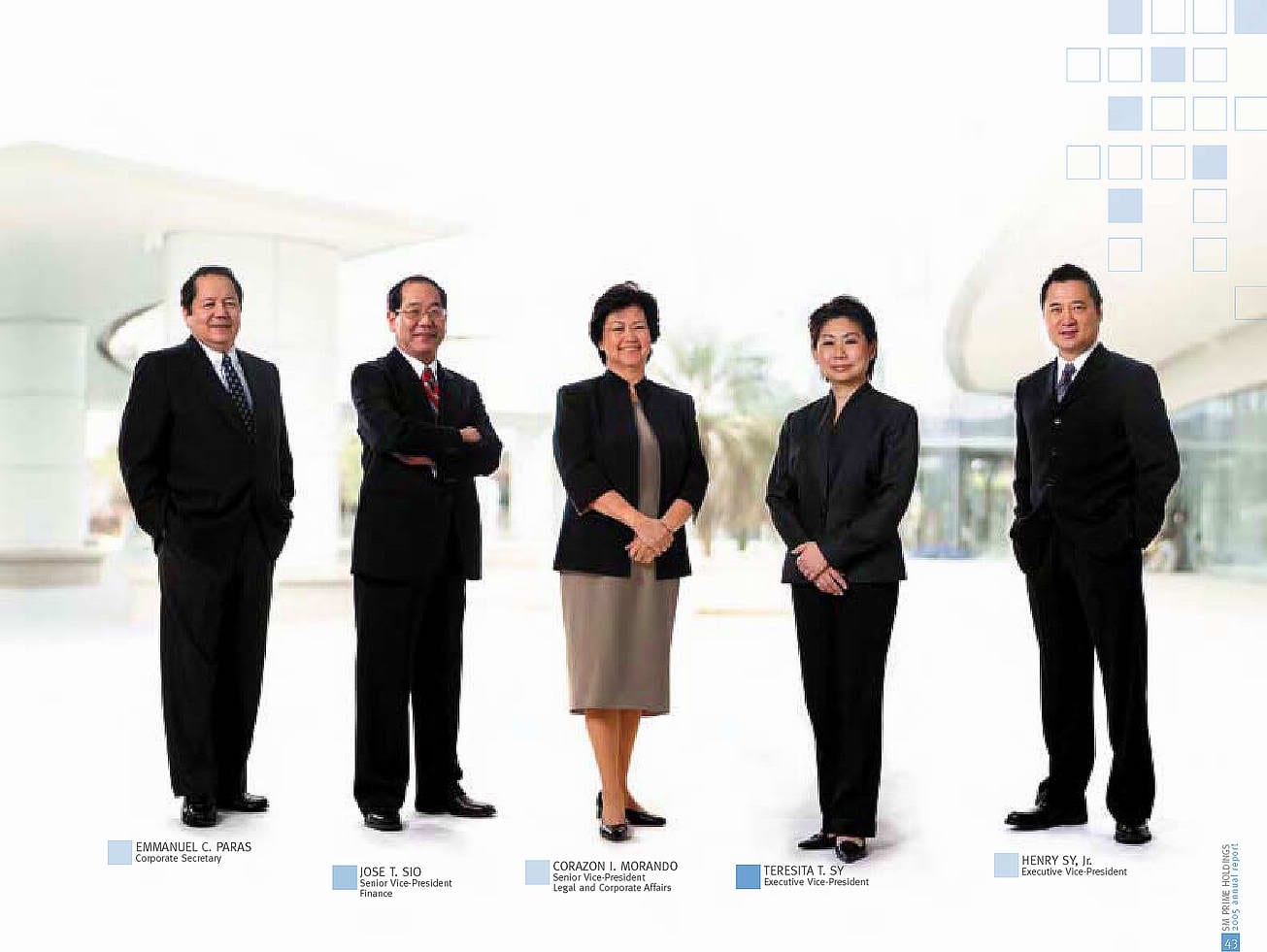
    Property conglomerate SM Prime Holdings, Inc. received a prestigious gold award for SM City Xiamen, Fujian Province, its first mall in China.

    SM City Xiamen/SM Lifestyle Center won the Mall China Golden Mall Awards 2015 Commercial Asset Management Company Gold Award. Only eight companies were given the prestigious gold award during the 13th Annual Conference of Mall China International Symposium hosted by China Shopping Center Development Association (Mall China), an annual gathering of major shopping malls and retailers in China.

    “On behalf of SM, I would like to express gratitude to our valued partners and loyal customers. Without your continued support, SM will not thrive in China, among the world’s largest retail markets. We maintain to drive retail service as our main backbone, with an aim to create an environment people can call their second home,” SM Prime’s mall group, SM Supermalls Senior Vice President Steven Tan said.

    The awarding ceremony was held on September 4th, 2015 in Shenzhen,China. Mall China highly recognized SM Prime’s insight and expertise into retail, commercial real estate and shopping center development in China. SM Xiamen was also voted number 1 in WeChat, a popular messaging service in China.

    This is the sixth time since 2011that SM Prime has been recognized by Mall China.

    Mr. Tan, for his part, received the 2015 International Professional Leader Award for his insight into retail, commercial real estate and shopping center industry in China and promoting and giving significance guidance on development strategy.

    SM opened its first mall in China, SM City Xiamen in 2001 with a gross floor area (GFA) of 128,203 square meters. In 2009, the upscale SM Lifestyle Center in Xiamen was opened with a GFA of 109,922 sqm. In 2013, the SM Skywalk was launched, linking SM Xiamen and SM Lifestyle Center, providing more convenience to customers.In the last two years, SM Xiamen and SM Lifestyle Center offered WiFI services, increased parking lots, added facilities for persons with special needs and a nursery room for mothers, installed LED facilities and installed an intelligent parking system all aimed at a better customer experience. Aside from these, SM also upgraded the brands inside the mall.

    Established in 2002, Mall China is the first non-profit organization in Mainland China catering to China’s retail property sector. It is likewise the largest shopping center retail organization in China. It has 700 corporate members of investors, developers, operators, retailers and relevant service agencies.

    Mall China established the Golden Mall Awards to promote the best malls and encourage enterprises which have made outstanding contributions to the development of the shopping mall industry. Golden Mall Awards recognize and evaluate recent opening or under-construction projects.