Category: Research

Retail News Asia is committed to providing both local and global retailers with the latest Research throughout the Asian market. This on a daily base.

  • Mobile money industry reached record $1 trillion in 2021

    Mobile money industry reached record $1 trillion in 2021

    Mobile money adoption and use saw continued growth in 2021, processing a record $1 trillion annually, according to the GSMA’s 10th annual “State of the industry report on mobile money”.

    The industry enjoyed a substantial increase in the number of registered accounts, up 18% since 2020 to reach 1.35 billion globally. The volume of person-to-person transactions were up to more than 1.5 million every hour. The report reveals that one of the most significant drivers of growth was merchant payments, which almost doubled year on year. It also highlights how mobile money continues to act as a core pillar of financial and economic inclusion, particularly for women.

    Providing significant growth in merchant payments

    Mobile money diversified its value proposition beyond person-to-person transfers and cash-in/cash-out transactions in 2021. It is now playing an important role in the daily lives of people and businesses, especially in low and middle-income countries (LMICs). The growth of ecosystem transactions such as merchant payments, international remittances, bill payments and bulk disbursements, together with interoperable transactions, are accounting for a more significant share of the global mobile money transaction mix.

    Merchant payments were instrumental in the growth of the mobile money industry in 2021. The value of merchant payments almost doubled, reaching an average of $5.5 billion in transactions per month. Providers are demonstrating that they can attract businesses to their platform with better incentives, such as efficient remote onboarding processes. For example, since Safaricom’s M-PESA began allowing companies to register for an account online in Kenya, more than 18% of new merchants are self-onboarding.

    “2021 was the year mobile money started to really diversify to B2B services. Beyond traditional person-to-person transactions, such as transferring money to family or friends, the industry is now central in helping small businesses operate more efficiently, and serve their customers better” said Max Cuvellier, head of mobile for development, GSMA.

    Increasing financial inclusion for women

    Mobile money has also been a driving force for financial inclusion for the world’s most vulnerable, particularly women. Mobile money is empowering women to take more control over their finances and purchase goods that they urgently need. Additionally, 44% of  providers responding to the GSMA Global Adoption Survey now offer credit, savings or insurance products, creating opportunities for underserved individuals to invest in their livelihoods and futures.

    With the gender gap in mobile money account ownership raging from 7% in Kenya to 71% in Pakistan – there remain some barriers to vulnerable people benefitting from mobile money. Owning a mobile phone is an obvious pre-requisite to using mobile money, and women across LMIC’s are 7% less likely than men to own a mobile phone. Overall, 143 million fewer women own a mobile than men. Additional barriers to mobile money access include a lack of awareness of mobile money and a deficit in perceived relevance, knowledge and skills.

    While some progress has been made, the report makes clear that more must be done to address the mobile money gender gap across LMICs. Concerted action is required from policymakers, the private sector, donors and other stakeholders to learn from success stories, address the issue and ensure that existing gender inequalities are not further entrenched, especially in light of the COVID-19 pandemic.

    Mobile money enables access to humanitarian aid, utilities and agricultural solutions

    As highlighted in the report, in 2022, the number of people needing humanitarian assistance is predicted to soar to 274 million. Mobile money is expected to play an increasingly important role in both donations – where it makes delivery systems more efficient and transparent for humanitarian actors and donors – and the receipt of aid.

    The UN Refugee Agency sent $700 million in cash and value assistance (CVA) to 8.5 million recipients in 100 countries in 2020. They have set up digital payment programmes in 47 countries,15 of which use mobile money. In many humanitarian settings, the digitisation of CVA via mobile money has the potential to promote agency and dignity, and foster financial inclusion.

    Mobile money also helps to enable access to basic utility services and agricultural solutions in LMICs. And to ensure this work continues, the mobile industry and humanitarian sector must keep working together to advance inclusive digital and financial inclusion even further for those who need it most.

  • Will Ethereum Replace Bitcoin?

    Will Ethereum Replace Bitcoin?

    Backed by Greenpeace USA, a group of environmentalists wants bitcoin to switch from its current method of mining to a more energy-efficient model.

    An upgrade of the cryptocurrency Ethereum is planned for next summer. The big question here is whether it will be possible to switch to a more environmentally friendly scheme for mining. The only thing stopping bitcoin from switching from its energy-intensive method of consensus known as Proof of Work (PoW) to the less energy-intensive Proof of Stake (PoS) procedure is the cost of transitioning, supporters of the campaign Change the Code Not the Climate, say.

    If only it were that simple.

    PoS is not a perfect substitute for PoW, Professor for distributed ledger technology & fintech at the University of Basel Fabian Schaer, says. PoS is an alternative way to reach a consensus, he says. But what does that actually mean?

    Unequal Consensus Methods

    Both PoW and PoS are so-called consensus protocols used to maintain Blockchains in a decentralized way. While efficiency is an important metric in this process, it’s certainly not the only one. Framing PoS and PoW as being equivalent, except for their energy consumption, is problematic, Schaer says.

    PoW has the disadvantage of requiring immense computational resources, yet it also has the benefits of being extremely simple and open to anyone who wants to join in the verification process. There is no need to get permissions, nor to hold specific assets to be able to start proposing blocks, Schaer says.

    The PoS method, where owners stake their digital assets as locked-in collateral for the consensus process, is extremely complex. Although there has been impressive progress in the past ten years, PoS is certainly more prone to unforeseen security issues than PoW,  Schaer says.

    Bitcoin vs Ethereum

    Since Bitcoin was launchged in 2009, all cryptocurrencies have been based on the PoW concept. Crypto miners operate and secure the network and in return are compensated with the fees paid by the users of the network. At the same time they receive new Bitcoins, but this dilutes supply.

    Ethereum is a cryptocurrency used on the blockchain. If the PoS method is used, the participants will also be compensated with fees and new digital assets, thus not diluting the supply of Etherum. The downside, is there are still many technical issues to be resolved with this system.

    Market-Driven

    There are indications that if Etherum succeeds in introducing the PoS method, Bitcoin would lose massive importance.

    In the end, the market will decide as bitcoin exists in an ecosystem where companies, users and developers choose the system which suits them best. More likely than a fully-fledged shift, the blockchain road will arrive at a fork on which both consensus methods continue to co-exist.

    VHS vs Betamax

    The current debate calls the mind the video cassette recorder (VCR) battle in the 1970s between Sony’s Betamax and VHS formats. Betamax was arguably the better system and was initially the leader. As prices for VCRs came down, the VHS format pulled ahead and eventually won, because they were more attuned to the market.

    In the end, it comes down to preferences and the question what is an open database worth? Schaer says.

  • Global broadband less affordable in 2021

    Global broadband less affordable in 2021

    Internet connectivity became less affordable around the world in 2021, according to the latest statistical analysis by the International Telecommunication Union (ITU) and the Alliance for Affordable Internet (A4AI).

    The share of people’s incomes spent on fixed broadband and mobile Internet services increased globally last year, in parallel with upticks in demand and usage compared to 2020, reveals an ITU-A4AI policy brief, “The affordability of ICT services 2021”.

    Relative prices of fixed broadband services climbed to 3.5% of gross national income (GNI) per capita globally in 2021, up from 2.9% in 2020. The relative prices of mobile broadband services around the world also edged up to 2% of GNI per capita, from 1.9% a year earlier.

    Yet people have sacrificed other goods and services to maintain reliable Internet access during the COVID-19 pandemic. Those who can have largely stayed connected, even at relatively higher prices.

    “Broadband services have ceased to be a mere luxury,” said ITU secretary-general Houlin Zhao. “They are a necessity for communication, teleworking, online education, and other essential services. Still, we must urgently address the issue of affordability if we hope to achieve our goal of universal and meaningful connectivity.”

    Affordability gaps have persisted or widened over the past year. Fewer economies now meet the affordable cost target of 2% of monthly GNI per capita for entry-level broadband service, as set out by the United Nations Broadband Commission.

    Consumers in low- and middle-income economies typically paid five to six times more, relative to their income, to use information and communication technology (ICT) services than consumers in high-income economies did in 2021.

    At the regional level, users in Africa paid more than three times the global median price for mobile broadband services, and over five times the global median for fixed broadband.

    “The affordability gap for Internet access between those living in low- and middle-income countries and those living in high income countries is inexcusably high,” said Sonia Jorge, executive director of A4AI. “Moreover, people in rural areas, and women everywhere, are disproportionately affected. A continued failure to address this worsens the situation for those who need help the most. The public and private sectors must work together to connect humanity with affordable and meaningful access.”

    Worldwide, only 96 economies met the UN Broadband Commission target for the prices of data-only mobile broadband prices in 2021, seven fewer than in 2020. At the same time, only 64 economies met the Commission’s target for fixed-broadband prices, down by two from 2020.

    “These findings are a warning sign, and significant improvement is needed as the Broadband Commission’s 2025 target date for achieving global broadband affordability edges ever closer,” said Doreen Bogdan-Martin, director of ITU’s Telecommunication Development Bureau. “The past few years have proven that connectivity is vital. As we move to post-pandemic recovery, we need to make connectivity affordable for everyone to ensure that we leave no one behind in this digital era.”

    Among the world’s 46 least developed countries, entry-level fixed or mobile broadband Internet costs less than 2% of GNI per capita in only four cases: Bangladesh, Bhutan, Myanmar, and the Republic of Nepal.

    Fixed broadband services saw the highest jump, with prices increasing by 8% last year (as measured in US dollars, adjusting for inflation).

    This meant fixed broadband became less affordable for many users, with relative prices climbing from 2.9% of GNI per capita in 2020 to 3.5% in 2021. The price of mobile broadband services also increased slightly, from 1.9 to 2.0% of GNI per capita worldwide.

    Historically, global demand for broadband services and their overall affordability have appeared to climb hand in hand, with price drops typically prompting more subscriptions.

    Even with last year’s price rises, both data usage and the number of fixed and mobile broadband subscriptions continued growing globally, suggesting people were cutting other expenses to be able to keep using the Internet.

    To some extent, the relative price increase for broadband services reflects a global economic downturn triggered by the COVID-19 pandemic. Many countries have seen GNI reductions, offsetting gains for consumers even where prices declined.

    On the positive side, broadband operators in many countries increased the data allowance included in their benchmark baskets. Users who could afford those baskets, therefore, received greater value for money.

  • Startups pin high hopes on blockchain, NFT technologies

    Startups pin high hopes on blockchain, NFT technologies

    Vietnamese startups have great expectations of the blockchain technology, envisaging practical e-commerce and entertainment impacts as the country pursues digital transformation.

    “We dream of becoming a billion-dollar company,” said Nguyen Tuan Quynh, chairman of book distributor Saigon Books, as he talked about a new project which uses blockchain in podcast and audiobook production.

    He said he wanted to create a blockchain-based platform for users, including celebrities, to produce audio content and make money. The audios will be distributed as non-fungible tokens (NFT), which are digital assets that represent objects like art, music, in-game items and videos, and have unique identifying codes. They are bought and sold online, frequently with cryptocurrency.

    “It will be a long run but we have taken the first steps. We also aim to have foreign-language to take this platform overseas,” Quynh said.

    Nguyen Tran Phi Yen, communications director of online event hosting platform Fan8.Club, is working on a project in collaboration with a hospitality partner that will create one million booking NFTs at premium hotels in Vietnam.

    “Blockchain is no longer something of the future. It has real products now.”

    Vietnamese startups have made headlines since last year with their use of the blockchain technology. Blockchain games like Axie Infinity and finance apps like Coin98 Finance have raised millions of dollars.

    Vietnam’s blockchain market is set to enjoy double-digit growth in the 2023-2027 period as 5G development across the country facilitates the formation of smart cities, according to a report by TechSci Research.

    Nguyen Thanh Nam, chairman of blockchain solutions provider OneBlock Labs, said that the technology could be used to trace origins of agriculture products, develop web browsers with better privacy protection and facilitate e-governance.

    “The government has made many efforts to create a national database using technology. With blockchain, more potentials can be reached,” he said.

    In 2020, the Vietnamese government listed blockchain a top tech research priority for application in the Fourth Industrial Revolution era.

    The Ministry of Science and Technology plans to let some blockchain companies to use the technology to try out some of their ideas for social benefits this year. Startups say they are aware of the challenges in developing the blockchain technology, high programmer salaries being one of them.

    “Hiring programmers to build a blockchain app costs four to five times that of a normal app,” said Quynh of Saigon Books said.

    Finding a team of experienced blockchain techies who understand the market is very difficult, said Nam of OneBlock Labs.

    “It is therefore crucial to start developing blockchain human resources.”

    Yen of Fan8.Club said that the world will soon have pre-established blockchain platforms for businesses to use and create their own products, and Vietnamese firms can take advantage of these instead of building everything from scratch.

    Some industry insiders have also warned about the potential to misuse blockchain.

    Pham Phuoc Nguyen, digital operations head at Coin98 Finance, said: “Not everything needs blockchain. Some can be done the traditional way.”

  • Siam Piwat reports surging sales despite lack of tourists in Thailand

    Siam Piwat reports surging sales despite lack of tourists in Thailand

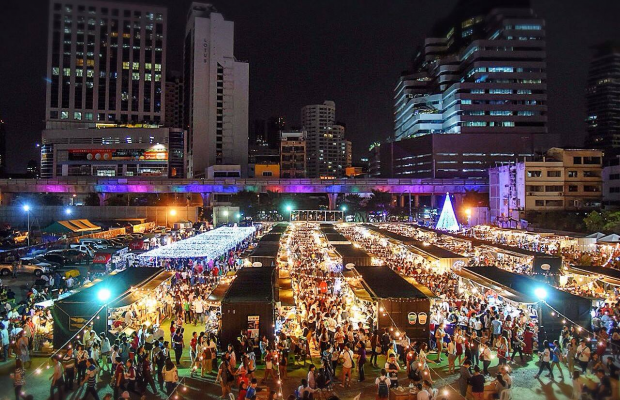
    Solid economic growth averaging roughly 4% annually since 2000 along with the country’s solid industrial and export base has fuelled a steady rise in domestic income across all income levels over the past decade and a half, leading directly to a rise in consumer spending power. Although the sector has been buffered by several shocks in recent years, including the 2015 bombing in the central Ratchaprasong luxury retail district, political upheaval in 2014 and devastating floods in 2011, the Thai retail market has proved resilient due to these strong underlying foundations.

    Thailand’s retail market has attracted a wide variety of local and foreign retailers all vying for their share of the consumer base, resulting in a highly competitive environment. In 2015 a number of key companies continued to assert themselves as major players within the retail landscape. These include CP All and its ever-expanding national network of 7-Eleven outlets along with Tesco Lotus and network of supermarkets and hypermarkets. Central Retail remains active as well in the hypermarket and supermarket segments while Big C and Home Pro stores operate mostly in upcountry areas.

    Recent Recovery

    Retail sales expansion peaked in November 2012 at 54% year-on-year growth before political turmoil engulfed the country two years later, sending growth into the negative for the entirety of 2014 and most of 2015.

    The downturn was largely the result of widespread protests and an eventual military coup in Bangkok, which effectively restricted the flow of traffic into major commercial and retail districts while also dissuading a large portion of foreign tourists from entering the country.

    As the situation normalised somewhat through 2015, retail sales began to recover late in the year with purchases in September increasing 2.79% over the same month in 2014 followed by a 1.04% bump the following month, according to data from the Bank of Thailand. This translated into consumer spending of B1.21bn ($36.4m) in Q3 2015, up a tick from the BT1.20bn ($36.1m) spent the previous quarter.

    “Retail has remained resilient over recent years of slowing economic growth,” Pascal Billaud, the CEO of Central Food Retail Group, told OBG. “The wholesale segment continues to grow at a rate of around 10% annually, while convenience stores and supermarkets are each posting more than 5% annual growth.”

    Strong Base

    Thailand’s 68m-strong population provides retailers with a substantial domestic market to tap into, and while these numbers are eclipsed by larger populations within the region, Thais are among the more financially well-off within the Asia-Pacific region. The country’s GDP per capita increased to an estimated $6108 in 2015 from $6041 the previous year, according to official data. Strong economic growth over the past decade similarly pushed up the adjusted gross disposable income in Thailand 73% between 2005 and 2014, growing from BT7.4trn ($222.7bn) in 2005 to BT12.8trn ($385.3m) by 2014, according to the Office of the National Economic and Social Development Board, providing a greater cash flow available for the retail sector to tap into.

    Overall individual consumption expenditure of households increased to BT8.69bn ($261.6m) in 2014, up from BT7.58bn ($228.2m) the previous year and BT4.40bn ($132.4m) in 2005.

    Spending is becoming focused on the major population centres around the country as a result of a well-trodden path of urban migration as people from the villages aspire for better jobs and living conditions in the cities. This trend is magnified by another demographic shift which has seen increasing amounts of young city dwellers moving out of the parental homes and into condominiums closer to the central business districts, resulting in a reduction of households composed mostly of working adults and middle-class consumers along with shrinking family sizes in general.

    Trending Upwards

    Strong economic growth over the past decade has resulted not only in a quantitative expansion of the retail sector, but also a fundamental shift in consumer preferences and behaviour, particularly in the major urban areas.

    Once dominated by smaller local shops, these traditional mom and pop stores are now being slowly but relentlessly phased out and replaced by new, modern retail centres and shopping malls. This effect is being compounded by the second wave of smaller convenience stores proliferating across the landscape, led by the ubiquitous 7-Eleven franchise which held a 53% sales market share at the end of 2014, according to PwC’s 2015-16 “Outlook for the Retail and Consumer Products Sector in Asia” report.

    Convenience stores now rank as the fastest-growing retail channel in the country and numbered more than 12,000 outlets nationwide by the end of 2014. This growth is being driven in large part by demographic shifts as the proportion of young city-dwelling adults continues to increase.

    These urban consumers have shown increasing propensity for convenience, frequenting smaller shops, stores and supermarkets near their workplaces or transportation routes to purchase daily necessities and meals rather than less-frequent, higher purchases at larger traditional markets. Preferences among this demographic for predictable, higher-quality branded products and ready-to-eat food, along with a greater acceptance for imported food, are also shifting consumption habits.

    The rise of hypermarkets in Thailand largely follows similar expansions seen across the region as foreign retailers continue to make inroads in the market, although sales growth has lagged behind that of convenience stores and supermarkets. The composition of Thai hypermarkets, however, is somewhat unique in one aspect as their product offerings and atmosphere often seek to replicate those of traditional wet markets such as Khlong Toei, which still hold a strong position within the retail sector. These informal local markets often include dozens of separate stalls with vendors hawking all manner of food ranging from fresh meat and fish to fruits and vegetables and have proven to be stubborn competition for newer hypermarkets. But what they lack in traditional experience and reputation, hypermarkets try to make up for with a wider variety of fresh food while also offering lifestyle and entertainment options.

    The two leading players in the hypermarket segment are Big C, a subsidiary of TCC Group, and Tesco Lotus of the UK. In 2010 Big C acquired more than 40 Carrefour outlets, which have since been rebranded and operate as part of the Big C franchise, while Tesco has countered with its recently introduced Extra lifestyle hypermarket store concept offering a wider range of food and non-food products. The intense battle between the two companies for market share has also driven volume sales growth in recent years.

    Continued economic and population growth are projected to boost cumulative hypermarket sales to BT589.24bn ($17.7bn) by 2017, according to Business Monitor International data, with modest annual sales growth rates of 1.55% and 1.27% in 2016 and 2017, respectively. Supermarket sales are expected to increase at a slightly faster clip, up 3.08% and 2.25% over the same time period with national sales totalling BT187.6bn ($5.6bn) by 2017.

    Bolstered by the strongest growth rates in the retail industry, convenience store sales are on pace to eclipse those of supermarket purchases by 2017, with the sector expected to tally BT188.65bn ($5.7bn) in receipts for the year on the back of strong growth rates of 4.11% and 3.21% in 2016 and 2017.

    Bang For The Buck

    Operating at the forefront of the industry, Bangkok’s retail infrastructure continues to expand dramatically with hundreds of thousands of square metres of new retail space being added every year. In spite of the stagnating retail sales in early 2015, there were more than 1.1m sq metres of new retail space under construction in the capital city slated for completion by 2017, according to property services provider CBRE. Of this supply, nearly 500,000 sq metres is located in suburban areas with 41% situated in midtown and another 15% in downtown. This ratio follows the trend of increased focus on the suburbs by both foreign and domestic retailers, which has pushed occupancy rates in suburban Bangkok to 91.2% in Q3 2015.

    As of Q3 2015, the Bangkok retail supply totalled 7m sq metres, up 2.4% compared to the previous quarter and 6.3% greater than the same quarter the previous year. This expansion was due to the opening of six new retail centres in the city which added a combined 162,058 sq metres of net lettable area to the market. The majority of this space was attributed to the opening of the new 132,000-sq-metre CentralPlaza WestGate shopping centre situated at Bang Yai intersection. Roughly half of the total retail space is spread throughout the Bangkok suburbs totalling 3.5m sq metres, with another 2m sq metres of space situated in midtown and the remaining 1.5m sq metres located downtown. In spite of continuous expansion of stock, demand remains high in the city, with vacancy rates running at 8.7% in Q3 2015, with the more expensive downtown locations posting a slightly more elevated rate of 14%.

    International commercial real estate company Colliers put the figure slightly higher with 7.25m sq metres of retail space located in Bangkok and the surrounding area as of Q3 2015.

    Shopping malls accounted for the largest share in the market with approximately 4.23m sq metres of lettable floor space, followed closely by the rapidly growing community mall segment.

    In addition to the growing stock of retail space slated to open up in the next few years, retail developers are also embarking on a wave of renovation projects in order to attract new brands, more customers and ultimately, higher rents. Some of these refurbishment projects include Siam Discovery, MBK Centre, CentralPlaza Pinklao and CentralPlaza Bangna.

    E-Commerce

    Thailand is becoming increasingly digitally connected since the launch of 3G services in 2013, having achieved 94m mobile phone subscribers by mid-2014, one-third of which used smartphones, according to the Hong Kong Trade Development Council (HKTDC). This connectivity is translating directly into the advertising and sales sector, with 58% of Thais reporting that they shopped online using smartphones in 2014, ranking them in the top 10 markets globally for use of a mobile phone to shop online, according to Nielsen. This growing penetration rate, along with increased credit and debit card circulation, has given rise to a dramatic uptake in online retail sales which have grown at a compound annual growth rate of 21% during the 2009-14 period.

    Companies are beginning to take notice, both in terms of advertising and direct sales, as traditional store-based retailers are shifting towards multi-channel sales strategies to tap into this growing market. Although online sales are still relatively new to the country and currently represent only a small fraction of overall sales, digital advertising is providing new avenues to boost sales in traditional brick-and-mortar outlets as well.

    Key Thai retailers such as the Central Group and The Mall Group have launched mobile applications that include their latest products and promotion activities, while numerous other companies have launched their own marketing-oriented apps to promote products and communicate directly with consumers.

    Moving Upcountry

    Moving outward from the shopping epicentre of Bangkok, retailers have become increasingly eager to tap into the north and north-east regions of Thailand which are home to roughly half the country’s population. Often referred to as the “upcountry”, the economic growth of the region topped 25% from 2007 to 2012, surpassing even the impressive 16% expansion of Bangkok during the time, according to HKTDC data. Although the substantial population base has always been attractive as a relatively underserved market in terms of modern retail opportunities, it has been only recently that accelerating economic growth of the area has drawn more tangible action from retailers. Much of this is driven by the increased trade with the neighbouring countries of Myanmar, Laos, Cambodia and Vietnam as a result of formation of the ASEAN Economic Community at the end of 2015.

    Attracted by the prospects of a free flow of goods, capital and labour across borders, industrial activity has gained traction in the uplands, bringing a surge in investments across a number of industries such as food processing, electronics and rubber products. From 2009 to 2014, the inflow of foreign direct investment (FDI) into the north-east region surged at a compound annual growth rate of 49%, more than double the overall FDI growth of the Thai economy as a whole over the same period. Cross-border trade has likewise increased with the removal of tariffs and other barriers, with bilateral trade with Laos more than tripling between 2006 and 2014 to $5.4bn. This flow of money to the north is fuelling job growth in the area, leading to a labour migration to fill new manufacturing positions along cities near the Thailand-Laos border. This windfall has in turn attracted numerous prominent retailers to the region eager to establish a foothold in the budding market. These players include the Central Group, which has established its Robinson Department Stores in Chiang Mai, Udonthani and Mukdahan, while cash-and-carry chain Makro has bolstered its presence in the border areas by launching six megastores in the north and north-east regions in 2014-15. Other companies including Central Plaza, Tesco Lotus and Big C have also established outposts in Udonthani and Nong Khai, which have become busy transit hubs for travellers moving between Thailand and Laos.

    Food & Beverage

    As the largest single component of household spending, the food and beverage (F&B) sector remains a key factor in Thailand’s retail sector. In 2014 food and non-alcoholic beverage purchases made up a quarter of total household consumption valued at BT1.94trn ($58.4bn) on the year. This was up slightly from the BT1.87trn ($56.3bn) purchased the previous year and nearly double the B1.0trn ($30.1bn) consumed in 2005. Alcoholic beverages, tobacco and narcotics consumption contributed another BT265bn ($8bn) in household consumption in 2014, up from BT205bn ($6.2bn) in 2005.

    The types and quality of food consumed in Thailand are also shifting along with rising incomes and greater economic security. The increasingly urbanised customer base is demanding a wider array of processed foods now available in larger supermarkets and hypermarkets, moving away from traditional unprocessed foods sold in fresh markets. A greater exposure to international cultures and foreign food products is also exerting change within the sector in terms of diversifying the product base while the increase in women entering the workplace is also driving demand for convenient, ready-to-eat meals. Frozen food products, particularly frozen-ready meals, desserts and seafood, have shown the strongest growth in recent years along with Western processed food products, which are perceived as being of higher quality than domestically processed food.

    Thailand’s growth in this area is representative of larger overall global retail trends in which Asia as a whole has emerged as the primary growth driver for consumer expenditure on food, beverages and tobacco. Driven by shifts in consumer preferences across the region towards packaged, processed and value-added food and drink products, nominal growth for the sector is expected to average 9% annually, well above the 6.4% global average, according to the Economist Intelligence Unit (EIU). Customers purchased $3.9trn worth of F&B and tobacco in Asia in 2014, and this figure is expected to surge to $5.9trn by 2018, at which time the region will account for around 60% of global consumer expenditure in this category.

    With a stable and expansive retail base already established for the sector across Thailand, demand growth is expected to continue at a moderate pace over the next few years, increasing by 2.9%, 2.9% and 2.8% annually each year in the 2016-18 period, EIU estimates. If realised, this expansion would exceed average annual demand growth for F&B in the Asia and Australia region, which is projected at 2.0%, 1.9% and 1.9% over the same three-year span.


  • The Short Shift: 67% of Australian Workers Unable to Secure Desired Shifts Today

    The Short Shift: 67% of Australian Workers Unable to Secure Desired Shifts Today

    Lack of technology options limiting retail workplace flexibility, forcing 62% of employees to work at multiple businesses to get the number of shifts they need

    Research by Humanforce, a provider of intelligent workforce management solutions, has shown that in spite of a talent shortage across many key industries today, 67% of Australian part-time and casual workers including retail sector employees are still unable to secure the shifts that they desire each week.

    This is leading to over 62% of part-time or casual retail employees seeking work at multiple businesses to get the number of shifts they need.

    “Many Australian retailers have faced worker shortages due to closed borders and Omicron isolation requirements, creating operational and customer service challenges. While there may be an assumption that there is an overabundance of retail work today, new research shows that there is a disconnect with the local flexible workforce who are not able to secure work when they want it each week,” says Bruce Mackenzie, Founder & Managing Director at Humanforce.

    A key workplace challenge for part-time or casual retail employees was the lack of workplace flexibility, with 61% of workers stating that they had experienced multiple instances of being unable to swap shifts with a co-worker over the last twelve months.

    For workers that need to swap shifts, 30% reported they had to find someone to cover their shift themselves, with 63% having to call or text message managers and fellow workers to swap shifts.

    Only 18% of respondents currently work for employees that automate shift-swapping via online or mobile apps – with a further 44% of people saying that such a system would be important in their workplace in the future.

    “A lack of technology in the retail workplace is limiting the flexible working options of many part-time and casual employees. Advanced workplace management solutions can help facilitate a flexible work environment for employees, through automating shift management, onboarding, training, leave management and more,” said Mackenzie.

    “People undertaking flexible work want to be able to fulfill their employment obligations around other important life commitments. They are attracted to flexible work and in a tight labour market, businesses need to position themselves as an employer of choice by having systems in place that can make the lives of their workers easier.”

    About Humanforce

    The intelligent platform for your shift-based workforce.

    Almost every shift has its no-shows, late arrivals, and special requests, but you’ve also got to stay up to date with the big shifts in how people work – everything from new employee expectations to new technologies, new regulations and more. Humanforce brings a whole new approach to managing your teams by simplifying the process, giving you complete visibility and allowing you to stay ahead of the curve. That’s why thousands of businesses of all sizes – from hotels to hospitals, resources to recreation, stadiums to shops and more – use Humanforce to get ready for the next shift. www.humanforce.com


  • Retail Trends Set to Shape the Customer Experience in 2022

    Retail Trends Set to Shape the Customer Experience in 2022

    The Asian retail landscape is significantly challenged today. With supply chain issues impacting on stock levels, increasing volumes of returns and increased customer expectations in relation to online deliveries – local brands will have a hard time in satisfying customers in 2022. As a result, retailers will find that they quickly need to adopt new systems and approaches that help meet the consumer demand for a seamless and more personalised shopping experience today and into the future.

    So what trends will shape the customer experience over the next year across Asia and what do retailers need to know?

    Returns management will increasingly impact consumers’ perception retail brands

    While eCommerce has served as a lifeline for retailers over the past year, the ever-increasing volume of returns is posing significant challenges, including impacting consumer perceptions of a retail brand. The returns process can regularly make or break the overall brand experience and savvy retailers are increasingly viewing the return process as an opportunity to further engage with customers, providing as it does, an additional touchpoint to enhance the overall customer experience.

    Retailers today need to have greater visibility and more intelligence around their inventory, regardless of where it is currently residing in their network. Smarter front-end omnichannel systems capable of efficiently dealing with customer enquiries and greater insight into data around transportation processes will be the key areas for brands looking to solve the challenges presented by the growing returns trend.

    The war for talent will put pressure on supply chain operations

    Given the extent to which a positive or negative customer service interaction can have on a shopper’s perception of a retail brand, the war for talent and need to retain high performing staff will create additional business pressures. In such an environment, organisations need to focus on selling themselves as an employer of choice and create and promote initiatives that set their business apart in a competitive hiring field.

    Given the need to retain IP in a challenging hiring market, more employers are focusing on career planning and succession internally to ensure adequate support and training for workers to move up the ladder. Many supply chain and retail organisations are also offering financial support for further tertiary education studies or providing retention bonuses to ensure continuity.

    Micro-fulfilment will help drive supply chain efficiencies and cost savings

    As eCommerce and ‘store to door’ delivery continues to grow, many retailers are struggling to turn a profit from online sales. The challenges of the last two years didn’t just fast-track eCommerce uptake, they also accelerated advances in technology, pushed businesses to revaluate traditional models, and forced many to rethink relationships between retailers, disruptive start-ups and automation; setting the scene for a radical shake up of fulfilment strategies over the coming year.

    One of these fulfilment strategies, and one of the most cost-effective trends retailers and supply chains are adopting is micro-fulfilment. Micro-fulfilment involves moving out of large singular DCs to smaller and more local and convenient hubs. By expediting the fulfilment process, micro-fulfilment gives brands the opportunity to get goods to their customers quicker; whilst also providing convenient collection point for consumers. With the adoption of this kind of smart fulfilment method, retailers can get their goods to consumers faster, cheaper and more efficiently.

    Visibility and forward planning will help future-proof retail and supply chain operations

    With supply chain issues leading to stock level challenges for many retailers, the last thing any business wants is to run out of stock – or worse, to later find out that the stock they needed was in the warehouse the whole time.

    To mitigate this, operational visibility and forward planning remain fundamental to retail and supply chain continuity and efficiency. To gain these insights, solutions like a Warehouse Management System (WMS), which integrate all sales and distribution channels into one place are requried. With innovations like a WMS, retailers have absolute transparency around their goods and are able to review the rules of stock allocation, temporarily giving priority to in-store stock over warehouse stock, thus, freeing up any trapped inventory confined within closed stores.

    For more information on how your retailer business can enhance the customer experience in 2022, please visit: www.manh.com/en-sg

    Written by Richard Wright, Managing Director, SEA, at Manhattan Associates

  • Feeding a Nation – RedMart West Fulfilment Centre, Singapore

    Feeding a Nation – RedMart West Fulfilment Centre, Singapore

    Providing productivity, space efficiency, speed, and accuracy – with the bonus of increased safety and social distancing.

    An Advanced Grocery Online Fulfilment Centre – Scaling Up to Meet Growing Demand

    Occupying 32,500 square metres (350,000 square feet), one of the largest logistics facilities in the country belongs to the biggest online grocery platform in Singapore –RedMart. RedMart is the online grocery service of e-commerce giant, Lazada, which serves all of Singapore. The RedMart West Fulfilment Centre has been able to build up its logistical prowess through automation, thanks to intelligent, innovative solutions from Dematic.

    “At RedMart, we offer over 100,000 assorted products to Singaporeans”, said Mr. Gerald Glauerdt, Co-Founder & Chief Logistics Officer at RedMart and Lazada. “This RedMart Fulfilment Centre is our main hub, seeing a lot of hustle and bustle as we are open 24/7, fulfilling orders for our customers as soon as they are placed.”  Mr. Glauerdt also went on to add that this advanced fulfilment centre for groceries is the first one of this scale and complexity in Singapore.

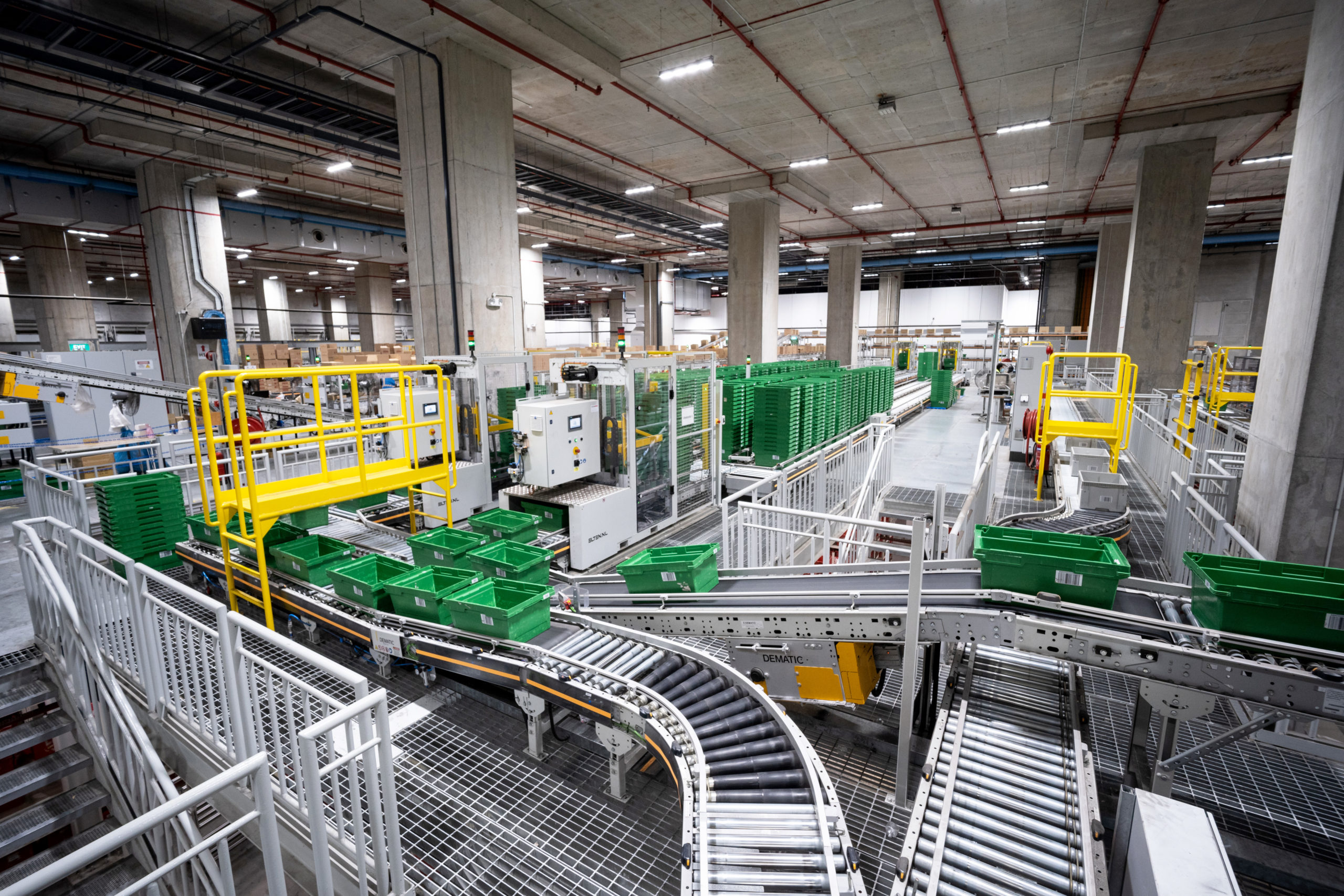
    RedMart’s West Fulfilment Centre is powered by market leading automation from Dematic to meet the increasing demand for online grocery shopping. The Dematic automated solution includes robotic shuttles, ergonomic high-speed pick stations, an intelligent conveying system, and a high-rate sortation system, all managed by a sophisticated software platform to make processes incredibly easy and efficient for pickers, packers, and management staff.

    In its previous setup, RedMart operators would have to manually travel around aisles and aisles of shelving to pick the items required for orders. In addition to spending a lot of time travelling, pickers would need additional time for receiving instructions, locating products, and loading and unloading trolleys, resulting in a highly inefficient process that was not only time-consuming, but prone to errors. Errors made by the pickers in such a manual process are difficult to detect, hard to prevent and extremely costly to resolve. With the automated solution provided by Dematic, RedMart’s productivity and accuracy have both improved significantly.

    Another key factor in developing the overall infrastructure for the RedMart West Fulfilment Centre was the building footprint. In Singapore, a big component for businesses is the cost of space. When RedMart first started talking to Dematic, they were receiving less than 2,000 orders per day, and had around 5,000 products in their range. However, the RedMart West Fulfilment Centre needed to be designed to handle a significantly greater number of orders and products on a daily basis. RedMart realised they would not be able to find the space or the workforce to meet their growth target using their current practices.

    The COVID-19 Pandemic – Providing Solutions to meet this Disruption

    Online grocery shopping had been experiencing strong growth in Singapore for several years but saw some explosive growth because of the pandemic.

    Mr. Glauerdt mentioned that the decision to install a high level of automation at this facility was made well before the onset of COVID-19, but the importance of the automated solution to RedMart’s business has been underscored by the pandemic, where the rate at which consumers have turned to online platforms to purchase their groceries has grown exponentially.

    According to RedMart, sales jumped by more than four times during the start of the pandemic, with unique visitors to the website rising by more than 11 times.

    “A lot of elements that we designed into these solutions put RedMart in a really good position to adapt and respond to the pandemic”, said Mr. Michael Bradshaw, Senior Regional Director, Sales & Solutions Development, Dematic. “They now have operators working at socially distanced workstations, rather than crossing paths, pushing a trolley around to pick an order. With the pandemic, we saw an incredible surge in demand for online grocery shopping, and the volume that Redmart had planned for several years in the future, was brought forward.  With the capacity they had available with the automated solution, Redmart were able to take on the increased demand and service their new customers.”

    Challenges faced by RedMart – Exponential Growth Required Scalable Infrastructure

    The online market for groceries had seen a growth rate of 300% since 2017, however with RedMart’s previous infrastructure and manual processes, it would not have been able to cost-effectively take advantage of this growth opportunity.

    “Our previous model was no longer working for us as we continued to grow. To meet the demand of consumers when it comes to online grocery shopping, the old method of manually hand-picking an order to pack and send to customers was too time-consuming, inefficient, and low in productivity,” said Mr. Glauerdt. “We knew we needed to scale our model of operations up, and we needed to find a solutions provider who was highly experienced in warehouse and logistics automation. Dematic was chosen as they were able to provide us with highly customisable solutions that would bring us the productivity increases that we were looking for.”

    One of the technologies Dematic has provided as part of the automated solution is the Dematic Multishuttle® system. Products are placed in totes, which are automatically stored in high-density racks by robotic shuttles. The Dematic Multishuttles automatically transport totes between storage locations and operator pick stations, eliminating the need for operators to travel and preventing them from picking the wrong product. These towering racks extend from floor to ceiling, maximising the storage density of the warehouse.

    “The automated solution uses robotic shuttles to store and retrieve products automatically and deliver them to goods-to-person (GTP) workstations where operators can work up to 5 times faster than they were previously”, said Mr. Bradshaw. “This part of the solution covers a huge product range in a small footprint, with an extremely effective picking method. The shuttles are also used to automatically replenish pick locations allocated for faster moving products where we use light picking technology to direct the operators, making the picking process as fast and accurate as possible.”

    Whenever there is an order to be fulfilled from the goods-to-person area, the Dematic Multishuttle system automatically retrieves totes containing the required items. Totes are retrieved in a specific sequence and conveyed to the GTP workstations where they are picked and placed into order containers. The operator stays in one place while items are delivered to their pick station automatically, increasing picking speeds and productivity by eliminating the need for the picker to walk around many aisles of shelving.

    “This example of the GTP brings a highly productive solution in terms of processes, where a picker could now pick and pack 500 items in the same time that it used to take us to pick and pack 100 items in the past using the manual process”, said Mr. Glauerdt. “Dematic was able to offer this customised solution to help reduce the burden on our pickers, whilst boosting productivity and efficiency, helping us to meet the growing demand of online grocery shopping.”

    Dematic’s system also includes order fulfilment of fresh produce in multiple temperature zones including a freezer pick area. Customer orders are transported through the various picking areas of the facility as required using an intelligent routing conveying system and consolidated at ergonomic packing stations in preparation for despatch. Once packed, orders are conveyed and automatically sorted to specific delivery vehicles using one of Dematic’s high rate sliding shoe sorter. The solution minimises customer orders touch points, maximising both productivity and hygiene.

    Challenges met with Challenges – Maintaining Customer Service Levels

    “To make sure that the system keeps running around the clock, Dematic provides service and support that’s available 24/7”, said Mr. Bradshaw. “We have technicians located on-site to help look after the equipment and attend to any issues faced by RedMart during their operations. The early warning system integrated into our software tells us about something that might cause us a problem before it actually does, ensuring that our system runs at the highest level of availability for RedMart and its customers.”

    The whole system is covered by support from the Dematic Software Centre, staffed by a dedicated team of specialist engineers available 24 hours a day, who can be dialled into the system in a matter of minutes to provide help whenever needed.

    RedMart Fulfilment Centre System Benefits

    • Increased productivity with intelligent order routing, paperless picking technology, automated replenishment and Goods to Person picking stations supported by the Dematic Multishuttle
    • Improved ergonomics and safety at operator workstations
    • Reduced order fulfilment times
    • Improved space efficiency and storage capacity, with high-density storage provided by the Dematic Multishuttle.
    • Improved inventory and order accuracy ensures customer orders are fulfilled correctly and reduces the cost of resolving errors and addressing returns
    • Products in multiple temperature zones handled by the one system streamlining the order fulfilment process and speed of delivery to customers.
    • Flexibility to handle a growing product range and diversity of order profiles.
    • Improved operational efficiency with real-time monitoring of inventory, orders, workload progress and system performance.
  • Profitability, customer experience & environmentalism: Streamline ecommerce returns

    Profitability, customer experience & environmentalism: Streamline ecommerce returns

    While ecommerce has been a lifeline for many retailers over the last 18 months, the inadvertent explosion of returns has manifested itself as a major pain-point too. These days many retailers are struggling to address how to get the vast volumes of goods bought online returned either to stores, pickup-points or distribution hubs accurately, and back into your inventory and ready to be sold again?

    Minimising the financial costs and logistical challenges of the ongoing ecommerce wave is certainly a primary factor for brands all over the globe, but there are other motivations to consider too, including potential benefits to the overall customer experience.

    THE FINANCIAL IMPLICATIONS OF RETURNS

    In the USA alone, consumers returned over $101 billion worth of merchandise bought during the 2020 holiday season according to recent data from the National Retail Federation.

    While in another recent study from Retail Economics, it was revealed that UK consumers returned over 17% of the online clothing & footwear purchases on ecommerce sales across the whole of 2020, compared to a returns rate of less than 12% for store purchases. As a whole, this meant that retailers dealt with £4.3bn of returns across physical stores & online purchases in 2020.

    The report also discovered that the Gen Z age group (18-24) was the most prolific age group of returners, particularly for online purchases. As a comparison, like-for-like online orders for Gen Z returns doubled the entire value of apparel purchases compared for the over 65s age bracket.

    The true cost of trading online is being weighed heavily by higher return rates compared to store sales. This also comes on top of a competitive digital landscape and a backdrop of a rising cost per acquisition for online customers too.

    In the USA, processing online returns can cost anywhere between $10 & $20, & that’s not taking into consideration freight charges. For items under a certain price point or large items that may incur hefty shipping charges (that merchants can’t pass off to consumers), the cost-saving benefits of simply allowing consumers to keep certain items is a possibility as demonstrated over the US holiday period with Walmart & Amazon.

    The variability of online costs is putting pressure on traditional retailers to pivot their propositions and streamline legacy fixed costs. In doing so, retailers are increasingly opening their minds to digital investment, technologic advancements (such as microservice architecture and automation) to ease costs and increase overall supply chain agility.

    CUSTOMER EXPERIENCE & THE RETURNS PROCESS               

    Let’s consider customer experience for a moment now. Over the course of the last year, most of us will have experienced the excitement and let down of opening a new item of clothing delivered to the front door, only to find that it doesn’t fit or look quite as you had expected when you ordered it online, followed by the lethargy of realisation that you’ll need to return it.

    According to a December 2020 survey conducted by CivicScience, one in four consumers said that having to drop off packages at a mail facility or collection point (especially during the pandemic), is a major pain point when trying to return online purchases.

    As is often the case, the returns process can regularly make or break the overall brand experience and savvy retailers are increasingly viewing the return process as an opportunity to further engage with customers, providing as it does, an additional touchpoint to enhance the overall customer experience.

    BALANCING RETURNS WITH ENVIRONMENTAL IMPACTS

    Returns come with environmental baggage too, in the form of boxes, plastic bags, bubble wrap, and other packaging, not to mention the added carbon footprint associated with additional courier and freight journeys.

    If a returns process can be streamlined and economised, brands can make significant, positive and meaningful environmental gains. And, at a time when there is an increasing shift in the consumer psyche towards environmentally aware and responsible brands, this is not something that can simply be ignored when it comes to returns.

    Retailers today need to have greater visibility and more intelligence around inventory (regardless of where it is currently residing in your network), smarter front-end omnichannel systems capable of efficiently dealing with customer enquiries and greater insight into data around transportation processes. These are key areas for brands going forward looking to solve challenges presented by the growing returns trend.

    For more information on how your retail outlet can better manage returns processes, please visit: https://www.manh.com/en-sg

    By Richard Wright, Managing Director, SEA, at Manhattan Associates


  • Automate data center network to simplify, modernize operations

    Automate data center network to simplify, modernize operations

    Cloud-Ready Data Center solutions from Juniper Networks enable businesses to simplify operations and experience with a modern, automated data center.

    Vietnam is one of 10 emerging markets in the global data center sector, with an impressive growth rate of $858 million in 2020, and is predicted to have a compound growth rate of nearly 15 percent annually by 2026.

    Amid the Covid-19 pandemic, Vietnamese businesses in the fields of finance, health, retail and consulting are tending to shift data to cloud computing solutions for its data management platform to keep pace with global technology. As a result, there is an unprecedented wave of data center investment.

    To meet the increasing demand for data center solutions, Juniper Networks has made significant investments to its Cloud-Ready Data Center portfolio providing reliable and secure products, including Juniper Apstra System, QFX Series Switches, PTX Series Routers, MX Series Universal Routing Platforms, SRX Series Services Gateways and Contrail Networking to help organizations save time and reduce costs for the deployment of complex data center networks.

    New era of automated data center operations with Juniper Apstra

    Juniper Apstra System offers a new way of thinking about data center network operations. The software enables users to automate the entire network lifecycle in a single system, easing their adoption of network automation.

    A key principle of the Juniper Apstra System is that optimum operations start with the best design. The system ties the architect’s design to everyday operations with a single source of truth, continuous validation, and powerful analytics and root cause identification. By automating Day 2 operations, the software raises efficiency and results by providing visibility and insights, incident management, change management, compliance and audit, and maintenance and updates.

    For fabric management of EVPN-VXLAN and IP fabrics, the system’s Apstra Fabric Conductor toolset automates each aspect of design, deployment, and operation. The toolset reduces the time from design to deployment from months or weeks to days or even hours, with validated templates and ZTP that sets up the network for you. When problems occur, the same toolset averts outages with predictive insights, shortens time to resolution, and diminishes human error with change control and fast, all-network rollback.

    Juniper’s switching, routing, and security platforms stand apart in their robust capabilities and scale, including complete EVPN-VXLAN, IP fabric, and threat-prevention capabilities. In particular, Juniper’s QFX, PTX, and ACX Series continue to lead the industry with best-in-class throughput and scalability, including 400G interfaces, renowned routing, the open programmability of the Junos OS, and comprehensive EVPN-VXLAN and IP fabric capabilities.

    In terms of network policy and control, Juniper Contrail Networking provides dynamic end-to-end networking policy and control for any cloud, any workload, and any deployment, from a single user interface. It translates abstract workflows into specific policies, simplifying the orchestration of virtual overlay connectivity across all environments.

    With Juniper Connected Security, users can safeguard their applications, data, and infrastructure across all network connection points. Also, users can use contrail networking to consistently define, manage, enforce, and view policies across the entire application-oriented overlay network from a central location.

    One of the most impressive cases is three-time NBA champion, Miami Heat. Since 2010, Miami Heat has been using and consistently investing in Juniper’s latest innovations including QFX5100, MX960, EX4300, SRX5400 and JSA Virtual Appliance to modernize the arena and build a network for media-hungry fans. Miami Heat was the first NBA team to offer ticketless entry for fans, and the digital innovation team is constantly adding to that success.

    The Heat also tapped into Juniper SRX5400 Services Gateway to protect the data center and enterprise edge with next-generation firewall services and Juniper Secure Analytics to monitor security events in real-time. Working together, the team of advanced Juniper solutions let Miami Heat innovate with new experiences without worrying about what the technology can handle.

    Additionally, Net One Systems, a leading independent Japanese integrator, also relies on Juniper Networks Contrail Enterprise Multicloud to orchestrate its multi-cloud environment. As hundreds of customers rely on Net One to operate and manage their cloud environments and when the number of customers have grown, their diverse needs have put a strain on network operations.

    Net One finds managing multiple cloud services more difficult with each new customer and growing complexity created challenges in building, establishing, and efficiently operating cloud services. However, with the assistance of Contrail Enterprise Multicloud, Net One can create seamless end-to-end multitenant environments by separating from physical networks using overlay models and managing tenants from a centralized controller.

    To further reaffirm Juniper’s strength in providing businesses with secure, automated, and AI-driven solutions, last year, Juniper Networks was named as the leader in “Magic Quadrant for Data Center and Cloud Networking”. This is Gartner’s latest report evaluating data center and cloud networking hardware and software for enterprises that procure and manage their own data center networking infrastructures for installation on-premises or in colocation facilities.

    The report mentioned Juniper Networks has a strong portfolio of hardware and software, with feature depth and excellent automation capabilities, which can meet the technical needs of nearly all cases in the market. Furthermore, Juniper’s roadmap to apply AI to improve data center networking efficiency also aligns with the emerging needs of customers.

    “We believe our recognition as a leader for the third year in a row comes from Juniper’s proven attributes, including automated fabrics, AI-driven insight, best-in-class security and scalable 400G designs. As technology leaders are driving the digital transformation of their businesses and rethinking how they measure the advancement of their data center and cloud infrastructure, I take great pride in how Juniper has continued to empower our customers in innovative new ways,” Manoj Leelanivas, Chief Product Officer at Juniper Networks said.

  • Southeast Asia’s online food delivery to soar through 2025

    Southeast Asia’s online food delivery to soar through 2025

    Southeast Asia’s online food-delivery market is expected to treble in the next five years, reaching US$28 billion in transactions, according to a report released by Grab and Euromonitor International.

    The growth is expected to be seen in emerging markets such as Myanmar, Vietnam, and the Philippines. The regional online food delivery gross merchandise value (GMV) is estimated to grow from US$9 billion last year to US$28 billion in 2025.

    “The pandemic has accelerated the shift in consumer behavior towards buying food and groceries online,” said Russell Cohen, group MD for Operations at Grab. “However, online grocery delivery penetration is extremely low in the region, at just over 1 percent here compared to 8 percent in China and 9 percent in the US.

    “With infrastructure and connectivity improvements, we believe that the next wave of growth will come from smaller cities,” Cohen added.

    By 2025, the region’s overall prepared meal sales is projected to reach US$170.5 billion, with online food delivery penetration increasing to 16.4 percent. This will be driven in part by a rising middle class and increasing smartphone adoption in Tier 2 cities.

    Meanwhile, spending on online food delivery is expected to increase two times faster than foodservice spending in the next five years, with a compound annual growth rate of 24.4 percent.

  • The Competitive Landscape is Changing: What Amazon’s Physical Stores Will Mean for Asian Retailers

    The Competitive Landscape is Changing: What Amazon’s Physical Stores Will Mean for Asian Retailers

    The decline of brick-and-mortar retail has long been discussed in the industry, to the extent that some alarmists started to talk about its inevitable death. However, recent reports of Amazon’s plans to create a network of physical retail outlets demonstrates that in-store shopping is far from ending up on life-support. In fact, brick-and-mortar retail still remains strong among consumers, and for retailers it continues to be a critical way to connect with customers and drive sales.

    The ‘great disrupter’, Amazon, has revolutionised the way people shop online over the last twenty years to become one of the largest retail groups in the world. So, what does Amazon creating a physical store presence mean for retailers?

    Until now, established brick-and-mortar retailers’ primary defence against the eCommerce giant has been their local store presence. The ability to be close to shoppers and offer a physical shopping experience that allows consumers to interact in-person with retailers in real-time has for many stood out as a better customer experience. However, once the ‘moat’ (or point of differentiation of having physical stores) starts to be breached, defending the ‘castle’ against Amazon becomes much more challenging.

    Amazon is very good at what it does and bringing a digital-first approach to brick-and-mortar retailing will introduce new, creative and technology-centric options for the consumer. In addition to the purchase of Whole Foods and its partnership with Kohls, this latest move into the physical retail space by Amazon clearly validates that physical stores are a vital element of the omnichannel shopping experience.

    Amazon’s push to develop physical stores means that all retailers need to go ‘all in’ on omnichannel. To survive the next phase in Amazon’s evolution retailers should prepare their systems and processes for a new marketplace that will be dominated by those brands that are able to deliver seamless, personalised shopping experiences simultaneously across physical and digital channels.

    But what does this mean for Asian retailers today? How can they create omnichannel experiences that engage with and maintain customer loyalty in the face of new competition from Amazon?

    Modernise the customer journey

    The rise of online shopping, click and collect and the world of social media has transformed the buying experience. Customers have access to information, expertise, and validation at every step of their online journey, but today they want an in-store and offline experience that complements and meets the same standards of excellence they have already experienced online. Whether it’s an in-store associate tracking down stock in another store and organising delivery to the customer’s home, allowing a customer to return online purchases without complication in-store, or ringing the call centre to change an existing order mid-delivery – today’s consumers expect service excellence at every stage of the purchase cycle, including in-store and on the phone.

    The problem is, many retailers still perceive the customer journey to be one that is linear, when that’s not the case. Customers often flit between in-store and online, with social feedback, phone interaction and email for communication. Consumers do not always buy where they browse, instead looking in-store and then buying online or vice versa, and then if they change their mind they expect to be able to arrange a return via email, chat, phone or in-store. Retailers must be aware of this and provide solutions to meet customer expectations.

    Store associates today need applications that give complete command and control of the customer buying experience, as well as all store inventory and fulfilment functions. From mobile checkout to guided fulfilment and inventory location notification, when provided with the right technology store associates are made more efficient and are better able to serve customers and meet their needs.

    Seamlessly manage customer orders

    Never has omnichannel execution played such a significant role in determining a retailer’s brand image. Consumers now expect retailers to provide seamless, ‘buy and deliver or pick-up anywhere’ experiences. To compete with Amazon across all aspects of retail, brands need to consistently meet the delivery promises they make to customers and ensure that the turnaround between order and delivery is shorter than ever.

    To assist, new business-to-consumer distribution models are coming to market, with a core focus on the importance of ‘living’ the omnichannel customer experience, rather than just talking about it. One such model is Order Management Systems (OMS), which integrate all sales and distribution channels into one place, bringing absolute transparency and making it easier for retailers to manage customer orders. An OMS helps retailers to see what inventory they have where, what’s been allocated, what is in transit, what’s been sold, what is available, what needs to be replenished and what’s being returned.

    Manage business disruption, customer expectations with an OMS

    Innovation is occurring in the retail sector at an unprecedented pace and increased competition from Amazon will only speed the adoption of new systems to meet customer demand.

    Without this push towards efficiency-boosting technology, retailers risk being left behind the competition. With innovations like advanced OMS, retailers have been able to navigate disruptions caused by COVID-19 by reviewing the rules of stock allocation, temporarily giving priority to in-store stock over warehouse stock, thus, freeing up any trapped inventory confined within closed stores. This is a great advantage for the many retailers whose physical stores have been closed for long periods during lockdowns.

    Optimising order sourcing allows retailers to use the stock available in their entire network, wherever it is located. A smart OMS allows retailers to use the ‘pool’ of physical stores in large urban areas to offer same day, or next day delivery by couriers, whilst also favouring the warehouse stock for less immediate orders. This increased delivery efficiency will help build a stronger connection and more favourable brand perception amongst consumers.

    In addition to using store level inventory to ship orders to a customer’s home, it can also be deployed for click-and-collect orders. With new fulfilment options enabled by the store, consumers can click, collect, and return goods at their own convenience, which works to achieve satisfaction in the short-term, as well as long-term loyalty.

    If you can’t offer seamless shopping experiences, someone else will

    The importance of brick-and-mortar retail to the overall equation of profitable sales is (again) attracting renewed attention following the move by Amazon to create its own store network. In fact, it makes sense for Amazon to create a store presence, given that stores themselves create the conditions for a sale. The experience that consumers can be given in-store is often more immersive, tactile, and engaging. These more emotional connections can lead to immediate sales and an increase in long-term loyalty.

    However, the increased competition that will come from Amazon establishing their own in-store presence means that Asian retailers need to focus on meeting customer demands through technological innovation. Customers expect seamless, personalised shopping experiences across all physical and digital buying channels today and you can bet that if you can’t offer that, Amazon definitely will.

    By Richard Wright, Managing Director, SEA, at Manhattan Associates

    For more information on how your retail outlet can create seamless shopping experiences across multiple channels, please visit: https://www.manh.com/en-in/active/omni


  • Online retailers in APAC drew 154 million new customers last year

    Online retailers in APAC drew 154 million new customers last year

    Asia Pacific’s online retail market is in good form, despite being one of the slowest growth markets when compared to global rates.

    According to new research from Forrester, Asia Pacific’s online retail market will be worth $2.8 trillion by 2025, up from $1.7 trillion in 2020.

    Last year Asia Pacific achieved $230 billion in online retail sales, with China accounting for almost an entire third of global sales.

    Within the e-commerce space China also dominates with an 82% share of the market, supporting overall APAC market growth of 16%.

    The grocery category will reach $473 billion by 2025, surpassing the consumer electronics category for the first time.

    The pandemic also drove newcomers to online retail – in Asia Pacific, 154 million more people bought online last year, which Forrester says is the highest number of new users ever in a single year. Of all the new buyers added globally in 2020, 69% came from Asia Pacific and 53% specifically from China.

    The Australian market experienced the fastest growth, while India was the slowest. Retailers also see the online market as a key way to leverage their distribution centres as a way of improving their reach.

    Forrester notes, “Alibaba took a controlling stake in Sun Art Retail, China’s largest supermarket chain, which has 76% of its stores outside urban areas, allowing Alibaba to break into the underserved nonurban customer market.”

    The strong grocery category attracted players such as Reliance Retail in India, which opened an online grocery company that covers more than 200 cities across the country.

    Forrester notes, “Flipkart in India had a limited presence in grocery; it then added a 90-minute delivery service to make the most of the fastest-growing category in India. Tata Group acquired BigBasket, the largest online grocery player in India, to make inroads into the Indian e-commerce market.”

    Organisations are increasingly looking to livestreams as a way of promoting their companies and fostering brand engagement.

    “ Farmers used livestreaming sessions on Douyin — Tiktok in China — to sell fresh produce, with some earning more than $1 million per month.”

    Social commerce also gained momentum. Forrester notes, “Meesho, a pure-play social commerce retailer in India, reports seeing monthly users grow from just 0.5 million to 5.5 million and monthly orders jump by 500% from 2019 to 2020. In China, community buyers (i.e., buyers congregating on WeChat) purchase grocery in bulk and pick it up from a nearby drop location. Retailers save on the last-mile shipping cost, and buyers get groceries at a discounted price.”

  • Order Management – a lifeline for Asian retailers in a COVID-19 world

    Order Management – a lifeline for Asian retailers in a COVID-19 world

    The ongoing pandemic has changed the way that people purchase and acquire goods. Soaring demand for eCommerce and increased interest in new ways of collecting purchases, such as curb side pickup and click & collect, mean that Asian retailers are now faced with the challenge of recalibrating their business strategy to serve an increasingly complex omnichannel environment. Alongside various city and state lockdowns, many brands have had to get creative and accelerate their journey towards digital services over the last year. However, not all of them have successfully managed the transition.

    To assist, new business-to-consumer distribution models are coming to market, with a core focus on the importance of ‘living’ the omnichannel customer experience, rather than just talking about it. One such model is Order Management Systems (OMS), which integrate all sales and distribution channels into one place, bringing absolute transparency and making it easier for retailers to manage customer orders. An OMS helps retailers to see what inventory they have where, what’s been allocated, what is in transit, what’s been sold, what is available, what needs to be replenished and what’s being returned.

    Optimising order sourcing

    New demands being placed on retailers today have forced innovation to occur at an unprecedented pace. From adding drop-shipped items to websites to quickly beefing up sales, launching quick ‘on ramp’ digital solutions, or streamlining operations to maximise strained employee bandwidth, the need for innovation through technology has never been greater. In fact, in the latest Forrester Wave Report, it was revealed that 39% of retailers increased their investments in technology immediately after the pandemic began to disrupt supply chain operations.

    Without this necessary push towards efficiency-boosting technology, retailers would be left behind their competition. With innovations like OMS, retailers have even been able to review the rules of stock allocation, temporarily giving priority to in-store stock over warehouse stock, thus, freeing up any trapped inventory confined within closed stores. This comes as a great advantage to the many retailers whose physical stores were closed for long periods during lockdowns.

    Optimising order sourcing is a new focus for retailers, allowing brands to use the stock available in their entire network, wherever it is located. A smart OMS allows retailers to use the ‘pool’ of physical stores in large urban areas to offer same day, or next day delivery by couriers, whilst also favouring the warehouse stock for less immediate orders.

    Addressing multiple shipments

    Recent research undertaken by Manhattan Associates has shown that due to the ongoing impacts of the pandemic and its convenience, home delivery is now the preferred delivery option for 69% of online shoppers. Interestingly, 60% of consumers indicated they often receive their online order in multiple shipments and 81% of them said that they think this is an inefficient and unsustainable way of delivering goods. In fact, the same number (81%) also said they would prefer to receive their order at a later date if it meant that it would arrive in one consolidated delivery. These changing consumer preferences pose challenges for retailers and their supply chains to match their inventory and delivery capabilities against what customers actually want. 

    For those orders that have to be shipped in multiple deliveries, advanced OMS systems allow customers to view the status of all items within an order in a Digital Self-Service order tracking page. If an order is shipped in multiple packages, customers can view all tracking details, estimated time of arrival, and the delivery date of each package from a single page. If all items have not been shipped, the customer can view the status of all items, including items which are in in-process or cancelled. By providing customers with complete order transparency there is less uncertainty around an order’s status, working to substantially reduce customer call volumes to the contact centre to check where an order is.

    Cost-effective omnichannel offerings

     In a recent study, conducted by Manhattan Associates and IHL Group, it was revealed that retailers who optimised their digital customer journey saw their margins improve by three to eight points more than those who didn’t. Additionally, by enhancing the customer journey through the use of technology, retailers are equipped with the knowledge they need to understand what their consumers want, and in turn, they can clearly communicate their promises to consumers – such as delivery dates and returns processes – leading to a positive bump in overall margins.

    According to several independent studies, the conversion rate is said to increase up to 30% when a brand communicates a precise delivery date promise on a product page. However, 50% of consumers agree that they would in fact abandon a purchase if there was no delivery date indicated at the checkout. This is a good signal of the importance of offering total transparency to the customer regarding their order, as without it, consumers are left uneasy about not only the wait time for delivery, but the credibility of the brand itself.

    Turning returns into a positive customer experience

    Since the pandemic, the ability to promote a more efficient returns process for eCommerce purchases in-store has become an increasingly important all-round service for brands looking to maintain an adequate retailer-to-consumer relationship. Using an OMS in-store application, customer service teams can directly search for customers’ original orders and records of the returned items. Then, the products that are in return-worthy condition are immediately integrated into the global stock pool, making them available for sale online, even if the item was not originally listed at the point of sale.

    For consumers who are on-the-go, new QR code solutions exist which allow customers to drop a return item at a carrier location. The QR code can be made available to customers via email. This avoids situations where customers previously had issues printing a return label at home.

    More efficient returns processes enables faster refunds, improved order accuracy, and delivery transparency, develop a greater peace of mind for consumers, and ultimately, improve overall brand advocacy and loyalty – which comes as the biggest advantage to retailers in the long-term.

    Managing order cancellations

    With more online orders being placed, today’s consumers expect to have full visibility of their order’s progress, as well the flexibility to cancel their order if needed. With an advanced OMS, customers can cancel items that are being shipped to their address before the items have been packed, without having to reach out to the contact centre. Customers can view which items are eligible for cancellation, select items and reasons for cancellation, and preview their new order total before confirming the cancellation.

    Supporting order cancellations and changes as late as possible prevents the situation where a customer wants to cancel an item that has already reached the ‘point of no return’ in the fulfilment process. When these situations occur, it causes friction and frustration for the customer who has to receive and return the item, plus time and cost for the retailer who will often have to absorb the shipping and handling costs for both the shipment and the return.

    Order Management for future-proof retailing

    With the everchanging nature of the retail landscape, and the increasing demands and expectations of consumers, enhancing retail operations with innovative technology such as OMS will serve as a way for retailers to optimise their operations for the future, to withstand even the harshest fulfilment, delivery, and customer services challenges.

    By Richard Wright, Managing Director, SEA, at Manhattan Associates

    For more information on Order Management from Manhattan Associates, go to: https://www.manh.com/en-sg/products/order-management


  • Singapore to invest $70 million in research, innovation and enterprise

    Singapore to invest $70 million in research, innovation and enterprise

    Speaking at the opening address of the ATxSummit, Singapore Deputy Prime Minister and Coordinating Minister for Economic Policies, Mr Heng Swee Keat announced that Singapore will be stepping up investments to unlock the full potential of the digital revolution through collective action.

    Investment in research and innovation is key to building solutions for the future and staying at the forefront of the digital economy. Singapore will invest close to S$70 million (US$50 million) under the Research, Innovation and Enterprise (RIE) plan, to launch our first national Future Communications Research & Development Programme (FCP).

    The FCP supports cutting-edge communications and connectivity research, and will in turn grow local capability to translate that into innovative products, services, and companies. This will be accomplished through the setup of new communications testbeds in 5G and beyond-5G, and support technology development, translation and training, while building up the talent pool in the areas of communications and connectivity technologies. As a start, the FCP has established a Memorandum of Understanding (MOU) with the 6G Flagship of Finland.

    As the Global-Asia node for technology and innovation, such digital cooperation with like-minded partners reaffirms Singapore’s role in bolstering growth opportunities in the global digital economy. Singapore Minister for Communications and Information Mrs Josephine Teo also signed a Memorandum of Cooperation (MOC) with Japan and an MOU with Thailand, at the sidelines of the ATxSummit.

    The MOC seeks to strengthen ICT collaboration between Singapore and Japan, enabling closer policy alignment and regulation on businesses. The MOC will facilitate a pilot project on electronic transferable records and the exchange of information on best practices and policies relating to the Digital Economy, Artificial Intelligence, and cybersecurity. It also includes closer collaborations through joint training and programs on AI implementation, AI governance and ethics, as well as cybersecurity capacity building.

    The longstanding Thailand-Singapore relationship will deepen with the signing of this MOU, which has been expanded to include new areas of cooperation in the Digital Economy such as digital connectivity, smart cities and AI governance. Both sides are also exploring interoperability between digital systems and frameworks that enable e-documentation.

    The pandemic has accelerated the overall shift to digital. Building a common “digital infrastructure” to underpin and ease data sharing will enable multiple stakeholders to come together and drive economic transformation. A new common data infrastructure and framework, the Singapore Trade Data Exchange, or SGTraDex was therefore launched to enable this trusted sharing of trade data. Designed as a neutral and open digital infrastructure through a public-private partnership, it was conceptualized by the Alliance for Action (AfA) on Supply Chain Digitalisation. SGTraDex will support ecosystem-wide digital transformation, connecting supply chain ecosystems both locally and globally.

    Three initial use cases were developed to push the boundaries of a trusted data exchange. The use cases demonstrated how SGTraDex can enable participants to strengthen the financing integrity of trade flows, enhance operational efficiency by optimizing logistics functions across partners, and provide visibility on supply chain transactions. The use cases have the potential to unlock more than S$200 million (US$150 million) of value annually when fully developed.

    SGTraDex will continue to build on this initial momentum, develop more use cases, and drive adoption locally and globally. SGTraDex also has the flexibility to be the data infrastructure for many other sectors ranging from construction to aviation, unlocking even more potential value. This is part of a suite of digital infrastructure and utilities being developed, including the SGFinDex for the financial sector, that provides a strong foundation for Singapore’s Digital Economy.