Category: Research

Retail News Asia is committed to providing both local and global retailers with the latest Research throughout the Asian market. This on a daily base.

  • Retail spend on AI services to Multiply by 2023

    Retail spend on AI services to Multiply by 2023

    Global spending by retailers on AI services will reach US$12 billion by 2023, according to Juniper Research.

    That figure is more than three times the amount expected to be spent this year, of $3.6 billion and represents investment by more than 325,000 retailers expected to adopt the technology during the next four years.

    According to Juniper Research’s report, AI in Retail: Segment Analysis, Vendor Positioning & Market Forecasts 2019-2023, AI use by retailers will unlock efficiencies across back office operations. Advanced analytics employed in functions such as demand forecasting and automated marketing will make retailers more agile and improve margins.

    Juniper forecasts that retailers will face an AI adoption race, where AI-equipped retailers, which have adopted systems as early movers, will displace slower moving retailers, offering superior service at optimised price points.

    Demand forecasting crucial

    The use of machine learning in demand forecasting will prove to be a key market for AI vendors, with associated service revenues reaching $3 billion by 2023, up from $760 million in 2019.

    Juniper Research says demand forecasting will be essential to enable an effective omnichannel experience and drive higher margins.

    “With the rise of collect-in-store and one-off events such as Black Friday, understanding demand and supply chains is more crucial than ever with AI playing the central role,” said research author Nick Maynard.

    The research also found that smart checkouts, largely powered by AI technologies such as computer vision, will have a strong future in the convenience area; leading to annual transaction volumes of more than 1.4 billion by 2023, compared with just 42 million this year.

    While Amazon is currently highly visible with its Go model, China will be the biggest driver of future growth. This reflects the rapidly growing Chinese market, as well as the backlash Amazon has had recently due to its cashless model.

    Juniper Research provides research and analytical services to the global hi-tech communications sector, providing consultancy, analyst reports and industry commentary.

  • Do election periods impact retail spending by consumers ?

    Do election periods impact retail spending by consumers ?

    It is well known that retail sales have regular cycles that can be disrupted by external events, such as federal elections. While anecdotally it has been suggested that uncertainty around elections causes shoppers to curtail their spending, there appears to be very little evidence either domestically or globally to support the claim that an election campaign will negatively impact consumer spending.

    Retailers are notorious at playing the ‘blame game’ when it comes to their sales and profit reporting. They too quickly point the finger at Mother Nature – unseasonal hot weather, or cold weather impacting apparel sales. The release of blockbuster movies has been blamed for distracting shoppers, and even customers themselves for being too price-conscious, chasing discounts that erode their margins.

    Facts matter

    Researchers from Princeton and the University of Chicago found elections had very little impact on consumer spending. In their study, spanning four presidential elections, their initial findings identified a correlation between a voter’s ‘opposition towards a winning candidate’ and a lower score on a Consumer Sentiment Survey. Simply, if your chosen candidate doesn’t win, you’re apparently less likely to start spending.

    However, the correlation did not prove causality. They found, for example, when President George W. Bush was elected in 2000, shopper’s opposition to President Bush had no effect on consumers’ self-reported spending plans or on their subsequent automobile purchases and credit-card use.

    It is a similar picture here in Australia, where commentators are looking a little more closely at claims elections negatively impact retail sales. A review of the ANZ-Roy Morgan
    Consumer Confidence Index demonstrates a similar phenomenon to that in the US. With the exception of the November 2001 election, marred by the 9/11 attacks in the US, confidence remained positive.

    In 2019, ANZ’s Australian economics team analysed 14 elections since 1980, finding that, “elections don’t have all that much influence on the economy”.

    A ‘wait and see’ approach

    During times of uncertainty, we often hear that shoppers are ‘deferring’ their spending. IBISWorld chairman Phil Ruthven finds that shoppers tend to take a “wait-and-see approach” during election campaigns. This simply means that shoppers will curtail purchasing big ticket items like cars, consumer electronics and high-end fashion, but household basics such as food and basics generally remain insulated. In most cases, consumer confidence tends to bounce directly after elections.

    There are far too many variables in play to suggest that a federal election alone will derail consumer confidence and stifle retail spending. In fact, some consumers who expect to be the
    recipients of election sweeteners such as tax cuts, infrastructure projects and or job opportunities, may actually increase spending.

    Once consumers anticipate a specific positive outcome will occur, they believe their subsequent thoughts and behaviours will actually help to bring about that outcome.

    Categories exposed

    Food, groceries, fuel and basic clothing generally remain well protected during uncertain times. Despite increasing competition from new players like Amazon, the growth of Aldi and the entry of Kaufland, both Coles and Woolworths food, grocery and liquor divisions will remain moderately strong. However, most exposed are ‘big ticket’ retailers selling furniture, consumer electronics and automobiles. This will be a challenging quarter for JB Hi-Fi, Harvey Norman and Steinhoff.

    The future of fashion

    Footwear, apparel and accessories retailers are expected to struggle, as such purchases are tied to discretionary spending. However, the challenges incumbent players like Myer, David Jones, Target, Big W and Premier Investments are facing are mostly related to new entrants, not elections.

    The growth of global fashion retailers like H&M, Uniqlo, Zara, Forever 21, and online marketplaces like The Iconic, Amazon and eBay in the domestic market, will definitely pose a challenge for these retailers.

    While most consumers remain confident, some retailers are certainly looking towards challenging times ahead.

    An unseasonably warm autumn and a glut of global fashion retailers in the market, will encourage incumbent retailers to cut prices little deeper this year. Great for shoppers, but tough on the books. It is looking to be a tough year ahead for retailers.

  • Online reviews are terrible and useless

    Online reviews are terrible and useless

    Online reviews sound good in theory. In practice, however, they don’t work so well. Reviews were initially important as proxies of trust for e-commerce businesses, but they have now well and truly spilled over to bricks-and-mortar businesses, where the weakness of the review system is being amplified as some consumers have figured out how to weaponize it.

    The general idea is that users provide their personal and honest feedback and other users are able to make more informed choices (like avoiding scammers). Even the business owner can use “learnings” to improve the business.

    It just doesn’t work.

    Amazon is plagued by fake reviews and trolls. In the book space, for instance, small groups and even bots target specific authors over spurious disagreements the trolls may have, and downvote their books accordingly so that they never appear in algorithmically-driven searches.

    On AirBnB and Uber, providers and users review each other. Another great idea, but in practice, since no one can afford to be given a 1-star review (the host wouldn’t get guests and the guest wouldn’t get accommodation) – the unspoken rule is that everyone gives each other 5-star reviews all the time. A 4-star review should set alarm bells ringing.

    Reviews are not a fair representation of the business, because reviewers have suspect motives, are unqualified, unreliable and the process is flawed and without proper context.

    The problem with online reviews

    Here are just a few of the drawbacks with online reviews, as they currently exist:

    • The motive of the reviewer is not always apparent, and neither is it always pure. Even positive reviews may have little to do with the actual service experience, and people who are motivated to review, often have an axe to grind.

    • Those who prefer not to review products and services are often bombarded by reminder emails until they relent, only to give a less than well-thought-through review long after the fact.

    • You usually only get one side of the story in a review.

    • Most people doing the reviewing have zero insight into the business’s operations, and criticisms and expectations are often unrealistic. Negative reviews are not merely limited to articulating a personal negative experience, but often are about perceptions of staffing levels, time, production, etc.

    • Compulsive reviewers operate under the misguided belief they are helping other consumers, but they are usually on a power trip.

    • Is ANY consumer really equipped to judge and compare Bunnings to McDonald’s?

    • Is the person’s subjective experience actually useful? Does the fact that a person doesn’t like a burger mean no one else will? Or vice versa?

    • A business would need to have thousands of reviews across different times, different experiences and different contexts for the sample to be considered statistically relevant. I suspect the average small business would rarely reach this sample size. Few real world, independent retail businesses boast sufficient reviews, so the results are invariably skewed. It takes more than a hundred or so reviews for the law of averages to apply, but whether a rating is valid or not does not deter the reviewing platform, with most of them showing reviews after a handful has been received.

    • Different people have different standards – what one reviewer considers value for money, another will consider expensive another to cheap. That is, the reviewer does not necessarily reflect the market that the operator seeks to attract.

    • Generally speaking, our culture – and it is amplified in the online space – has a tendency to reward victimhood.

    • It is impossible for different people with different expectations to apply the same standard. Can you have a 5-star experience at a 3-star motel, and is the average punter equipped to make that distinction?

    Any run-of-the mill establishment gets reviewed as well, whether they like it or not. If you want to exist on Google Maps, you get Google Reviews. TripAdvisor has excellent SEO juice, so any business reviews will come up with your own listing at all times. If you want to keep a recent poor review off the top of your results, it will set you back $70 per month to feature a good review instead.

    What now?

    Review results are statistically and psychologically unreliable, but there is no way of avoiding them. They are here to stay, flawed or not.

    Retailers should learn how to play the reviewing game, and the options are to (a) ignore and (b) embrace or (c) fight.

    Our strategy has been:

    1. Avoid channels where the trolls feed in vast numbers (Facebook: reviews disabled; Twitter: no account; Instagram: no account).

    2. On Google and Tripadvisor, respond to every review positive or negative to at least put both sides of the story out there.

    3. Resist seeking positive reviews or attempt to ‘game’ the reviews and don’t display/promote any reviews, even positive ones.

    4. Learn what you can from a review as objectively as possible – in some instances, reviews are simply the old “world of mouth” now made visible and there is a benefit in knowing what is being said.

    In the early days of e-commerce, when consumers were still sceptical, a 5-star review simply meant the product was as advertised and arrived when promised.

    Any scammer who wanted to take money without sending the goods wouldn’t last long. These trust issues are not as prevalent, and there are different mechanisms to root out the bad apples today.

    Businesses – and the delivery of customer experience – are too complex to be reduced to a simple star system or a subjective comment.

    Maybe that is an opportunity for an entrepreneur.

  • Mobility driving China’s economic growth

    Mobility driving China’s economic growth

    China’s mobile ecosystem added 5.2 trillion yuan ($750 billion) in value to the country’s economy in 2018, according to a new GSMA report.

    Mats Granryd, director general of the GSMA says the report confirms how China’s mobile industry has been a key driver of economic growth, inclusion and modernization – creating a new generation of digital consumers and transforming industry and society.

    Grandryd says China’s mobile operators will invest a further 401 million yuan with the rollout of 5G.

    Numbers speak volumes

    • China is the largest mobile market in the world with 1.2 billion unique mobile subscribers at the end of 2018, about 82% of the country’s population;
    • 69% of mobile connections in China are smartphones, with smartphone adoption expected to reach 88% by 2025;
    • 4G networks cover 77% of China’s connections peaking in the coming years before falling as consumers migrate to 5G services;
    • By 2025, there will be 460 million 5G connections – this will, however, only account for 28% of China’s total network connection;
    • By 2023, mobile connection will contribute 6 trillion yuan to the economy, up from 5.2 trillion yuan in 2018;
    • China’s mobile ecosystem directly and indirectly supported 8.5 million jobs in 2018 and contributed 583 yuan in tax revenue;
    • The number of licensed cellular IoT connections in China stood at 672 million at the end of 2018, supporting various industrial and smart cities applications.


  • How to get leg up on e-tail with digital POP displays

    How to get leg up on e-tail with digital POP displays

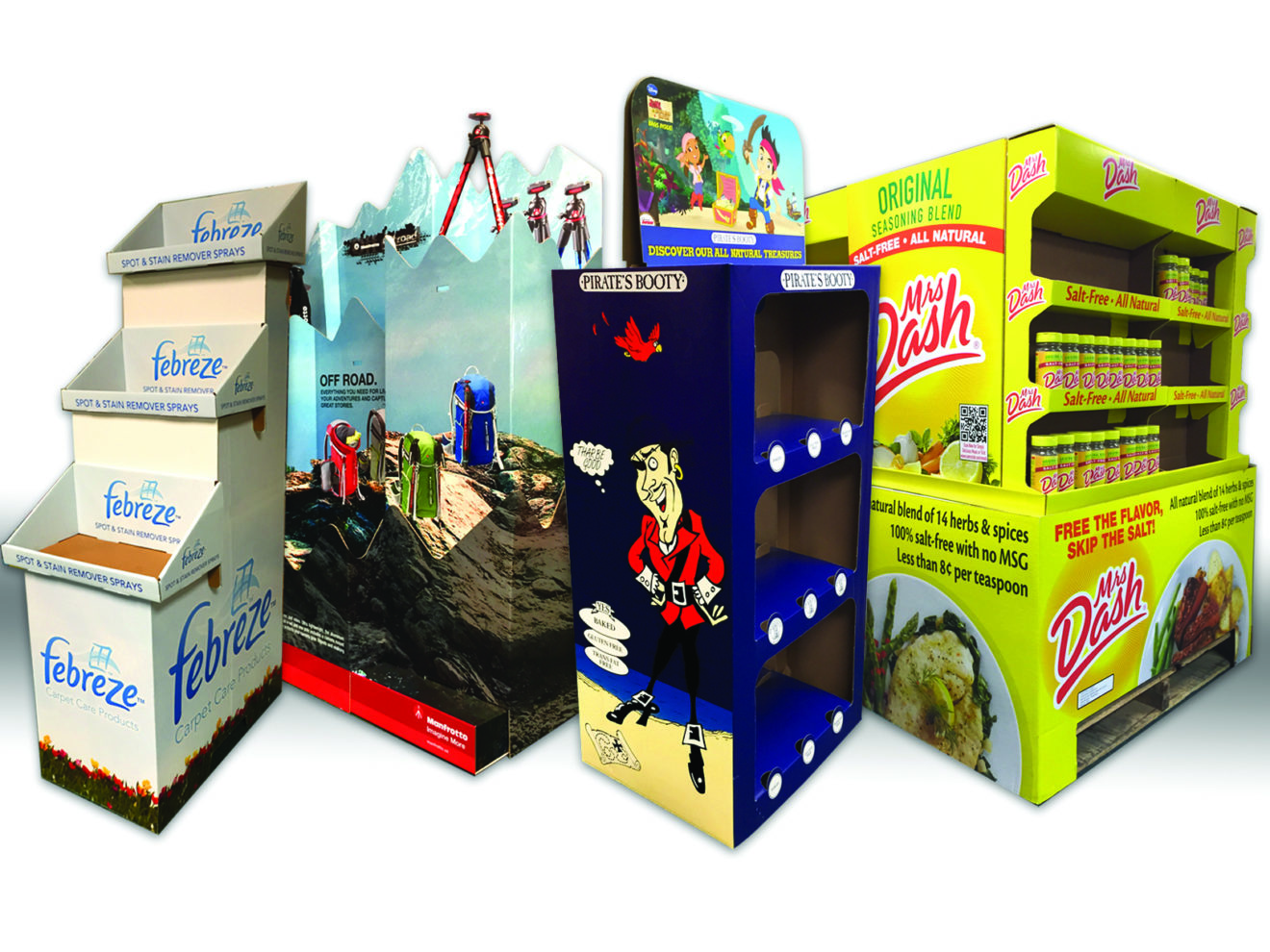
    If there’s anything we’ve learned from the “retail apocalypse,” it’s that consumer shopping habits are changing, and fast. More consumers are making purchases online today than ever before, but surprisingly, several still prefer to shop in-store for a range of goods – mostly because of the immediacy factor, shipping savings and a chance to test drive products before purchase. While no one can predict the future, one thing is certain – to stay afloat, traditional brick-and-mortar stores will need to rethink their approach to the in-store experience. Embracing digital point-of-purchase (POP) displays is one strategy, helping retailers attract and engage customers as well as earn their loyalty.  
    POP signage, both digital and static, has not only been shown to catch the consumer’s eye but also to improve the brand experience and ultimately influence purchasing decisions. In a recent report, 62% of shoppers expressed an increased likelihood to search for a product advertised on a POP display during a future visit, with 43% also noting they’d be more likely to purchase it right away. With technology advancing at breakneck speeds and the cost of screens coming down, the digital POP display in particular is quickly becoming more appealing. Here are 5 ways retailers can improve the in-store customer experience this year using digital POP displays:
    1. Make a lasting impression with moving images
    Capturing the attention of consumers amidst everyday distractions is more difficult than ever, but digital POP displays can help retailers break through the noise with moving imagery. Moving imagery in digital signage has proven to be more than two times as effective at yielding an emotional response than static images and also corresponds to greater recall, which can help boost brand loyalty and ultimately revenue.
    1. Encourage relevant impulse purchases
    Digital POP displays help automate the delivery of “in the moment” ads, promos and other content that can improve the consumer’s day-to-day. For example, a digital promo showcasing “50 percent off all jackets” or a “buy one, get one free” offer for a warm beverage on a cold, rainy day can encourage unplanned purchases based on real-time conditions catered to the shopper. This sort of promo is easy to launch on in-store displays with APIs from digital signage providers having made the integration of real-time data into displays simpler and more efficient.
    1. Get interactive
    Digital POP displays can help you create unique experiences that can’t be found elsewhere, which is important, considering 89% of companies expect to compete on the basis of customer experience.  From a virtual dressing room to on-demand assistance and beyond, touchscreen technology can be used to help stores better engage with customers, so that they leave with a more positive brand association.  
    1. Enhance audience targeting with real-time data
    Today’s digital POP displays easily integrate with measurement tools to provide a clearer overview of audience demographics as well as the types of promotions that might appeal to them. This data can be used to display product information or promos that the customer might find useful. In terms of ROI, measurement technology can also provide insight into how many people on average checked out a particular display as well as the duration of each view. It can also be used to generate reports showing correlations between the number of promo plays and total sales of promoted goods.
    1. Highlight loyalty programs
    Today’s consumer is willing to exchange data for deals, with 77% of consumers reporting that loyalty programs make them more likely to be a repeat customer according to Bond Brand Loyalty’s “The Loyalty Report 2018.”This trend has created a loyalty program fever pitch among retailers. Marketing loyalty and membership programs via in-store digital POP displays can help draw attention to related promotions, and also trigger the delivery of relevant creative to individual consumers whenever they scan their card or enter their phone number in-store.
    For retailers investigating digital POP displays as a way to improve their in-store experience and their customer interactions, there are a host of screens and software available that make it easy to deploy and automate the population of content across displays. But, don’t treat this as a technology-only project. Focusing on the shopper experience that you want to deliver or enhance should also be a priority. It’s important to budget for a content strategy and ongoing content production tailored to the context of these screens versus repurposing TV or web content.
    In today’s shifting market, it’s never been more crucial for retailers to put themselves in the shoes of the modern consumer and think outside the box; digital POP displays offer a smart and flexible way to ensure your brand isn’t left in the dust.
  • Six great marketing lessons Learned from MarketingPulse

    Six great marketing lessons Learned from MarketingPulse

    “Great ideas should be scary,” advocates Marcelo Pascoa, head of global brand marketing at Burger King, one of the keynote speakers at the recent MarketingPulse event in Wanchai. “When new things come to be, it is often associated with fear. So, my advice to marketers is: be very afraid! If you sleep well the night before your project launches, then the promotion wouldn’t be too spectacular.”

    Pascoa’s projects are known to be bold and daring, even making fun of competitors in the market. One example was a marketing stunt in which people were asked to open the Burger King app at a McDonald’s to win a free burger. As a result, there was a huge leap in interest in the Burger King app and it became the most downloaded app on the store. He said that knowing your work aligns with the brand value is key when facing challenges and criticism. “My biggest fear is being irrelevant. Marketers live in fantasies where they control everything, but social media has proved that we cannot control everything.”

    MarketingPulse second edition

    Pascoa was one of many speakers at the second edition of MarketingPulse, Asia’s premier conference for marketers and brands, held at the Hong Kong Convention and Exhibition Centre. Organised by the Hong Kong Trade Development Council (HKTDC), the key morning session at the event, “Dear Brands, Let’s Sail to the Future!”, featured a heavyweight line-up of industry experts who shared their tricks and tips on how to keep ahead of marketing trends to develop successful brand stories.

    Respect cultural differences

    Endeavor is a brand focusing on entertainment, sports and marketing services. Bozoma Saint John, the company’s chief marketing officer, shared her success stories at Endeavor and in previous high-profile marketing roles at Uber and Apple Music.

    St John recounted some of the marketing stunts that helped to push her brands, from inviting Beyonce to perform at the Super Bowl and promoting Apple Music’s breakup song services through private chat messages between three famous black actresses, to featuring two superstar athletes sharing their thoughts on cultural differences during an Uber ride. These stunts were not only successful in capturing the attention of consumers, but also raised discussions on cultural issues relevant to society as a whole.

    “I am addicted to popular culture,” she declared. “I am always fascinated by the latest and most trendy things and would like to know how they come to be and how they connect with history. People working in the marketing sector represent various cultural differences between different places. We have to know its meaning, why it comes to be, and how cultures interact in order to use popular culture as a marketing tool.”

    Saint John pointed out that there are currently tensions in society which make it important for marketers to understand different communities well and build connections through various emotions in order to avoid controversies such as cultural appropriation.

    Think before you speak

    One of Hong Kong’s best-known creative talents, Juno Mak, creator at Kudos Films, began his presentation by sharing his experience in the entertainment industry and explaining how marketing became part of his everyday life.

    “We do not need to be a businessman to do marketing, as we are already marketing ourselves in our daily lives − our sitting posture, our favourite colours, and our watches, these are all making a promotion out of a life. When you know yourself better, you will know how to do marketing,” he said.

    Mak also made the bold suggestion that we should abandon two things: our resumes, and thoughts that come from the mouth, not the head.

    “Things you write in your resume are tasks completed in the past. But we have to think: what’s next? We should also give up on thoughts that come from our mouths, as they might be copies of other people’s ideas. Thoughts should come from your head − a creation that you agree with.”

    Storytelling techniques

    Jonathan Mildenhall, co-founder and CEO of TwentyFirstCenturyBrand and former chief marketing officer at Airbnb, offered the audience a whole new definition of marketing in the 21st century. “Marketers create assets for the company, including its finance, consumers, employees and cultural assets. Marketing with a clear focus creates unparalleled value,” he said.

    Mildenhall emphasised that storytelling techniques are key to any marketing campaign.

    “I am 100 per cent a supporter of emotional storytelling. If a marketing campaign does not contain a story behind it, it is only market pollution. Stories help us build a signature super-brand that people care about.”

    He shared his experience at Airbnb to illustrate how consumption begins with emotion − for example, bringing the room in a Van Gogh painting to life, or sharing true stories from the community to bring out cultural values.

    “We rationalise our choice of consumption after we create the emotion,” he explained.

    Understanding local tastes

    Keiei Sho, executive officer, GM of overseas business division at Calbee, distributed his company’s popular grilled corn sticks to conference visitors to demonstrate how market tastes can change.

    “People used to say that the corn sticks were too hard and that consumers would not like them,” he said, before revealing that sales were now in the region of US$300-400 million. Sho recounted Calbee’s history, explaining that after the Second World War, Japan was left with devastated industries and faced food shortages. Calbee stepped in to manufacture prawn crackers using the flour left behind by the US Army and shrimps from the Seto Inland Sea, which proved to be a hit.

    The company continues its creative legacy, recently working with 47 Japanese prefectures to create a successful campaign by developing 47 different flavours of chips.

    “We collaborated with local governments to learn about local tastes, hoping to know what would resonate with consumers, while showcasing promotions from various prefectural governments on the back of the bag,” he explained.

    Using its advantages in the areas of food safety and convenient packaging, the brand has continued to push the envelope by launching breakfast food items to attract Chinese visitors and promoting Kyoto’s breakfast culture using online celebrities.

    Embracing consumer insights

    The lingerie brand created by Michelle Cordeiro Grant, founder and CEO of Lively, has embraced the concepts of female empowerment and body acceptance. The company created a new definition of what sexiness means, building a brand that brings community, experience and products together.


    Advocating “high style and comfort”, the brand has been communicating with 100 brand ambassadors right from the start to learn about consumers’ needs and elicit useful feedback. Many of Lively’s new underwear lines are launched in accordance with customer preferences.

    Grant said Lively is an experience-focused brand, with its retail stores devoting only 30 per cent of the space to products while the rest is used for events such as hip-hop experiences and movie nights.

    “Lively is an organism with a human soul,” she said. “Normally, females purchase underwear once or twice a year, while our consumers purchase underwear on average four to five times per year. This shows that they are purchasing not out of their ‘needs’, but their ‘desires’.

    “This is key to how we create our market share.”

  • Strong potential’ for sharing economy in China

    Strong potential’ for sharing economy in China

    New research suggests strong potential for the sharing economy in China, with just 30 per cent of consumers there saying they only want to use brand-new products.

    Mintel says the figures highlight the significant market for selling second-hand products and targeting consumers who will rent out rather than buy.

    Mintel says 91 per cent of Chinese consumers said they have rented or bought second-hand bicycles/electric bicycles in the past year. This was followed by cars (61 per cent), books/audio-visual products (25 per cent), digital products such as mobile phones and cameras (25 per cent), furniture (18 per cent) and home appliances such as fridges (12 per cent). While the clothes and accessories sharing category has been making headlines, just 9 per cent of urban Chinese consumers have rented or bought them second-hand.

    “The current consumer landscape in China shows great potential for the sharing economy to develop further,” said Mintel China associate research analyst Scarlett Zhao. “Largely driven by substantial promotions and subsidies, high penetration in rental and second-hand businesses is more focused on the transportation industry; including cars and bicycles. But while the sharing economy in China is dominated by transportation, we see this trend slowly extending to knowledge sharing through books or audio-visual products.

    “At the moment, consumers are not as open to other product categories in the sharing economy space such as clothes and accessories, probably because consumers have not yet cultivated the habit to rent or buy second-hand products. China’s sharing economy still stands in an emerging to growth stage, where market rules and regulations need to be further improved. As a result, this has caused many to remain on the sidelines just like when e-commerce was first introduced.”

    Mintel research reveals that the majority of consumers in China acknowledge the benefits of the sharing economy, with as many as 86 per cent of them appreciating the convenience that sharing products and services bring. Meanwhile, 59 per cent of Chinese consumers cite affordability as a reason to participate in the sharing economy, making it the greatest motivation for them to choose renting or buying second-hand products.

    Environmental factors are also proving important to consumers. Fifty-one per cent of urban Chinese consumers say that they will rent or buy second-hand products as it is good for the environment.

    “Under the healthy wave, consumers today not only look inward to their body health, but are also paying more attention to the whole ecosystem they are interacting with,” added Zhao. “When communicating with and marketing to consumers, companies in the sharing economy space can make consumers feel good about themselves by emphasising how this concept can help reduce the carbon footprint – benefiting the public and the environment.”

  • The tech advancements transforming the Hong Kong retail environment

    The tech advancements transforming the Hong Kong retail environment

    Ever-changing market dynamics and audience preferences are pushing retailers into a digital-driven world to respond promptly to consumer needs. Though e-payment machines are an increasingly common in-store sight, there are other retail tech trends that will have a longer lasting impact and help businesses stay one step ahead.

    Despite the rise of eCommerce, physical stores are not going anywhere. Customers will always want the option of visiting a physical store to try on jeans and dresses rather than buying three different sizes online. Sue Temple, vice president of global consumer insights at Nielsen, sees the trend of shoppers doing smaller, but more shopping trips in general, including online and physical stores. Connecting online and physical store experiences remains a major focus this year.

    Shops without shopkeepers

    When Amazon launched its Amazon Go to the public last year, the cashier-free store concept was seen as a revolutionary model for the future of retail, enticing the rest of the industry worldwide to play catch up. This year we are likely to witness more movements on smart, automated and cashier-less checkout schemes. Unmanned stores will eventually become ubiquitous in retail.

    Hong Kong shoppers had a taste of this kind of smart retail experience during the Chinese New Year. Tencent’s WeChat Pay HK and JOOX collaborated with Sun Hung Kai Properties to open an unmanned shop at the apm mall in January. The 1,000 square foot unmanned shop featured five themed zones offering trendy gaming, Chinese New Year merchandise, limited edition souvenirs, a self-service karaoke station and an AI mechanical arm interactive experience zone.

    The highlight of the unmanned store was a digitised consumer journey with more than 1,000 assorted goods in the store embedded with RFID chips. Customers could pick out items they wanted to purchase and then scan the QR code. The RFID system would automatically detect their chosen goods at the store exit, at which point, customers could use the Wechat Pay HK system to settle their transactions and leave.

    Tencent’s International Business Group (Tencent IBG) tells Marketing: “The unmanned store has been well-received by shoppers. It is a real-life demonstration for consumers to experience smart retail through a seamless and secure mobile payment solution. We aim to enhance the overall consumer journey, and empower consumers through greater flexibility and convenience as they go about their daily lives.”

    In the unmanned store, Tencent’s technologies not only enhanced the consumer experience, but also reduced operation costs for the retailer. It also provided analysable data to allow businesses and marketers to better understand consumer traffic, preferences and behaviour.

    Tencent IBG has noticed a number of challenges that traditional retailers are currently face: rising offline operating costs, declining revenue as shoppers move online, and increased consumer demand. At the same time, there are visible opportunities for retailers to drive business efficiency by disrupting old channels, gaining a better understanding of consumers, and exploring new technological possibilities such as facial recognition and voice recognition.

    Unmanned stores are all about removing friction and increasing productivity. While the minimisation of time in store has proven particularly effective for some retail categories (such as convenience and groceries) they are not suitable for other categories. Luxury, for instance, relies on the experience and time spent in-store, along with a high-touch service, as part of its value proposition.

    Reality bytes

    Great customer experiences will come from blending technology with a personal touch. Retailers are continuing to strive towards more personalised experiences with the use of AR and VR tech in their marketing campaigns and consumer journeys.

    Recently, L’Oréal Group brand Lancôme partnered with Alibaba Cloud to introduce an AR game to Hong Kong customers. The launch of a seasonal mobile app coincided with the opening of a Lancôme pop-up store in Harbour City. The partnership leveraged Alibaba Cloud’s data, image search and AR technologies with Lancôme’s beauty product lines to create a holistic online-to-offline experience.

    Customers could activate and play the AR game on their smartphones from anywhere in the city. Moving their cameras around, they were able to find and capture AR images of Lancôme’s signature beauty products.

    “The retail store is no longer simply a place for making a purchase, it is also an entertainment destination.”

    Larry Luk, CMO at L’Oréal Group, says, “As a beauty-tech company, L’Oréal combines beauty-tech with integrated marketing plans to drive the ‘retailtainment’ trend. This adds an entertainment element into the traditional retail approach, providing consumers with better interactive experiences.”

    Alibaba aims to demonstrate that cloud technology can also be used in offline retail shops, by not only offering innovative ways of engaging consumers, but also showing how Lancôme will better understand customers’ needs by using data analytic tools.

    “Lancôme began the Year of the Pig by breaking its daily sales record and achieving double-digit growth in Hong Kong by leveraging AR, Alibaba Cloud’s image search technology and cloud services,” Luk says. “Employing Lancôme as the pilot brand, the Chinese New Year campaign succeeded in creating unique and fun experiences and establishing personalised relationships with consumers.”

    The ultimate goal of all these types of innovative and interactive campaigns is to stimulate customers’ interest in the products and drive business growth. Nevertheless, in 2019, retailers may go a step further from AR and VR to the  world of IR (immersive reality).

    The potential of IR could be immense. While AR overlays digital content onto an existing physical space and VR transports users into a synthesised 3D world through sight and sound input, IR is a dramatic advancement. It provides an immersion of all five senses (sight, sound, touch, smell and taste) and far more interactivity. Which could, of course, result in far more data.

    Consumer soothsayers

    While marketers believe collecting big data is enough to understand current consumer behaviour for planning campaigns or business strategies, building accurate predictions of future consumer behaviour may be the game changer.

    “A lot of big data looks backwards. It is what happened five minutes ago, an hour ago or last week. Now we are trying to predict what happens next,” Nielsen’s Temple explains.

    Shopper behaviour is changing rapidly; a tool that enables retailers to keep up with the speed of change, or even stay ahead of it, will be the key to winning. Temple says: “If we can get quicker at research, we can model more things, more quickly, and we can look forwards not backwards, then the retailers have a real chance to win, to differentiate themselves from competitors, to deliver something the shopper wants.”

    After rolling out in 12 markets in 2018, in February 2019, Nielsen’s Smartstore launched in Hong Kong. Smartstore is a digital solution that captures shopper insights in a 3D virtual immersive environment. Respondents will be tested in multiple live scenarios in a variety of custom store formats to gather predictive information. Their shopper experience will provide tracked head, eye and feet movements, alongside 3D heat maps for analysis. The turnaround for results can be as fast as one week.

    This solution combines store planning, merchandising and marketing research. Retailers can measure, evaluate and optimise a range of retail concepts on sales and profit, based on how target shoppers react at the moment of truth. The solution allows retailers to measure the effectiveness of point of sale merchandise based on what shoppers “see, think and do”.

    Technological advancements help businesses to create better marketing strategies with a better understanding of consumer behaviour, and ultimately, achieve greater business uplift with higher conversion. However, Temple thinks Hong Kong is lagging behind adopting retail tech.

    “Digital is not an option anymore, it is not about being a digital marketeer, it is about being a marketeer that embraces all of that, the traditional and the digital, and getting the right mix for your brand, your category and your store.”

  • Thinking about creating an e-commerce shop in Asia?

    Thinking about creating an e-commerce shop in Asia?

    Thinking about how to create your e-commerce store in Asia? This exclusive event has all your answers.

    Moni, a digital commerce and brand experience agency, providing an end-to-end suite of e-commerce services in the region, is set to take centre stage on April 2 in Central, Hong Kong.

    Moni, with more than 12 years of experience of delivering digital-commerce experiences, joins together with Magento – the world’s No 1 e-commerce platform – to host an exclusive event to teach merchants how to kickstart and grow their online store. The insightful event will also explore the best practices of ever-evolving online shopping experiences. Moni is one of the few Certified Magento Partner Agencies in Asia.

    Who should attend?

    Retailers, B2B companies, and brands who are looking to expand their online presence and reach through e-commerce, or who are interested in understanding the nuances of Magento platform.

    Join the conversation and network with knowledgeable community members who will help you grow your business to the next level. The event will help you discover why Magento is right for your business, how to drive traffic and sales to your e-commerce store, with some of the best practices detailed along with case studies to learn from.

    The event hosts developers, system integrators, subject-matter experts, merchants, service providers, speakers and technology partners from Hong Kong and Singapore under one roof. Moreover, the event will also host an interactive talk session enabling attendees to get the queries answered in real-time.

    What will you gain?

    The session will equip attendees with a broad understanding of the Magento platform and its benefits such as modernised technology stack, better performance and scalability, smooth customisation, seamless integration and minimised testing efforts.

    David François, MD at Moni, will direct the audience through several successful e-commerce projects in Asia. For more than 20 years he has specialised in helping brands create digital customer experiences that drive tangible results and outcomes.

    Mel Lim, enterprise sales manager at Magento, comes from Singapore, and will share details about the full suite of Magento capabilities. She has a decade of experience working with brands across Asia Pacific on their digital-transformation journeys, specialising in commerce customer experience.

    Each merchant today can capitalise on commerce system flexibility, buying patterns, maximising gross margins, driving innovation and meeting end-to-end customer expectations.

    To attend this exclusive event, click here to RSVP.

  • Why retailers struggle to expand globally

    Why retailers struggle to expand globally

    Global retail may be becoming more homogeneous due to international expansion by various chains, but the success of internalisation is patchy within and across retailers, and there have been failures on an industrial scale.

    This made me curious as to why a retailer fails in some markets and not others. It turns out there are a few common themes. Here’s what I’ve been able to discern from some of the more notable and/or recent failures and market withdrawals.

    Walmart loses the culture wars

    The Arkansas-based behemoth closed 269 stores worldwide in 2016, just over half of which (154) were in the US. Its efforts in Germany and Korea were two examples of a lack of cultural understanding and demonstrate why cut-and-paste is ineffective.

    Walmart pulled out of Germany in the late noughties, having learned that what is “customer service” in one country may be offensive in another. German customers, for example, were offended by greeters and Walmart’s 10-foot rule (greeting/interaction/eye contact if coming within 10 feet of a customer). Germans didn’t like having their groceries bagged or taken to their cars. Walmart was also using plastic bags in a country that’s very eco-conscious. Walmart’s employee policies and lack of understanding of German labour laws and unions resulted in it being considered anti-democratic, and its employee “no fraternisation” policy grated. To add insult to injury, EDLP pricing wasn’t a differentiator in a country with Aldi, Lidl and Kaufland.

    Walmart also pulled out of South Korea in the late noughties. The retailer didn’t understand the cultural importance of Korea’s local fresh food markets and that Koreans understood the nature of supermarkets as having a dry-goods focus rather than food and beverage. Koreans are frequent shoppers doing top-up shops, not the stock-up trip nature of a Walmart format. And the company’s locations outside cities didn’t work because Koreans wouldn’t travel to shop.

  • The future of retail has arrived

    The future of retail has arrived

    Once upon a time, the future seemed a long way off. Remember Tom Cruise in 2002’s Minority Report? And the famous shopping centre scene?

    Director Steven Spielberg recruited a panel of futurists to predict a far-off tomorrow that included responsive, personalised advertising and sales assistants, triggered by iris and facial recognition.

    Well, today, we’re living in that future. Geo-location is ho-hum, facial recognition is a feature built into our phones and Alibaba in China has already tested “smile to pay” in kiosk screens in KFC stores, that replace the need for a wallet.

    Way back in 1994 (was that really 25 years ago?) American phone carrier AT&T ran a TV ad that forecast a future where shoppers could check out “a whole shopping cart at a time” through a scanner, and you could receive “a phone call on your wrist”.

    Fast forward to today, and frictionless grocery retail is a reality with Amazon Go stores (now rolling out across the US), and when I visited one in Seattle recently the receipt was pinged to my Apple Watch along with my trip time. Shoppers are actively gamifying grocery shopping, seeing how fast they can get in and out of the store.

    AmazonGo receipts are pinged to your wrist.

    The future, as science fiction writer William Gibson famously wrote, is already here. It’s just not very evenly distributed. Or, as Matt Thompson from American grocery giant Kroger put it even more succinctly: “The future is now”.

    I see examples of the “future of retail” in the US every day. Creator Burger in San Francisco has a burger-making robot. Nordstrom’s “Local” retail concept centres around click-and-collect, and services, and has no stock in store. Amazon’s 4-Star stores stream ratings and reviews live to the shelf. Kroger is testing self-driving grocery delivery vehicles with Nuro in Arizona.

    China takes things to a whole new level. When I attended Singles’ Day in China last year, I witnessed first-hand a shopping culture that was more “Bladerunner” than suburban mall. There, the mobile rules and stores are not destinations but “nodes”, designed to be interacted with both physically and virtually as the need fits. (My colleague in China ran out of garlic while cooking at home. No problem – he jumped on his app, and had the ingredient delivered in time to finish preparing the meal.)

    As I write this, I am about to return to Australia for a visit. I can’t wait to share my experiences and observations of perhaps the most dynamic time in the history of retail. At the same time, I’m also looking forward to seeing what’s new and exciting in our part of the world. The truth is that, particularly today, the future of retail is not limited to a geographic region. From Telstra stores to innovative supermarket and convenience store design, there is a lot to learn from what’s going on in the Southern hemisphere. You just have to look. Because the future is already here.

  • Employers are more trusted than government,

    Employers are more trusted than government,

    New Zealanders trust their employers significantly more than they trust the government, NGOs, business or the media, according to the 2019 Acumen Edelman Trust Barometer.

    According to the report, “my employer” was more trusted (74 per cent) than government (50 per cent), NGOs (48 per cent), business (47 per cent) and the media (34 per cent).

    This is the result of trust in other institutions remaining flat, while trust in employers is on the rise. The finding aligns with the trend of employees seeking out purpose in the their jobs and organisations shifting away from being ‘customer-first’ to being ‘employee-first’.

    Acumen Republic’s chief executive Adelle Keely said organisations should see this finding as an opportunity to play a more critical role in the lives of their employees, and reap the benefits of loyalty and productivity.

    “Employees are looking for trusted sources of information in a time of change and disruption and there is an opportunity for employers to provide education and useful insights that help them navigate the new world,” she said.

    Keely noted there is a growing expectation for business leaders to step up as change-makers, with three-quarters of employees wanting CEOs to take the lead on change instead of waiting for government to impose it. This is 15 points higher than last year, she said.

    “Employers need to lead on change, address workers’ concerns, provide information and equip employees for the future. They should demonstrate their relevance and contribute to the communities where they operate. This is particularly important for those not headquartered in New Zealand.”

    Interestingly, there is a gender divide in trust in institutions, with women being less trusting than men. Women trust only government, while men have trust in both business and NGOs.

    “Trust in business shows the biggest gender divide. This is likely the result of lack of female representation and reporting around pay equity and the #metoo movement,” Keely said.

  • Getting The Right Roof for Your House Location

    Getting The Right Roof for Your House Location

    The roof is just about the biggest investment in any residential property. The kind of roof you choose for your home will determine the level of protection from the elements you’re bound to enjoy. It will also determine how much you spend on maintenance through the lifetime of the roof. Today, there are many different kinds of roofs by style, design, and roofing material. Before choosing any option however, it is highly important to consider the geographical location of the home you’re choosing the roof for. In other words, not all roofs are created to withstand the climatic conditions of all locations.

    With this in mind, here are some helpful pointers on getting the right roof for your house based on its location.

    Climate Factors

    According to Mr. Mike LaPointe of Point Roof Restoration, one of the most experienced roofing contractors Boise has to offer, some types of roofs do better than others in certain weather conditions. Needless to mention, different geographic locations have different climates and weather patterns. This means that when choosing a roof for your home, it is important to consider its location as well as the following important climate/weather factors.

    • Heat – Needless to mention, some locations are generally hotter than others throughout the year. If your home is built in such an area, it is always better to go for a roof with the ability to reflect heat and absorb as little as possible. This allows your home to stay cooler, which can reduce the amount of money you spend on cooling and air conditioning. Experts also suggest that flat roofing systems are more ideal for buildings in regions that generally experience hot and dry weather.
    • Wind – Again, some areas are generally windier than others. In the Southern coastal areas, for instance, winds can have an average speed of 17 mph but may also be prone to high winds, tropical storms and hurricanes. In such an area, you need a roof made from thicker material that is tried and tested to withstand high winds. You don’t want to wake up and find your entire roof blown off!
    • Humidity – Airborne moisture is one of the most damaging elements to roofing. If your home is built in a high-humidity area, say near the eastern coasts, you need a quality roof that can withstand just that.
    • Rainfall – This is where your roof’s design will count most. In rainy regions, a sloped roof could work best as it would reduce pooling and increase rainwater drainage. When ponds of water get trapped on various surfaces of the roof, it leads to rotting, leaks, and weaknesses on the entire building. In most cases, sloped roofs are accompanied with gutter systems that help eliminate the possibility of ponding on the roof.
    • Salt – If your home is built near the coastline, it is important to note that some roofs are prone to corrosion by salt from the ocean. This is especially the case with certain metal roofs. If you have to use a metal roof system, in this case, it is important to ensure that it has an alloy coating to extend its lifespan.
    • Fire Risks – Some areas are prone to forest fires. For homes in such areas, it can be an extra precaution to use fireproof roofing.

    Common Types of Roof by Material

    • Metallic roofs – As you can tell from the name, these are roofs made from metal. The most common options include iron, copper, and aluminum roofing. As far as quality goes, copper tends to be more superior than the rest. this is because it is generally heavier and can thus withstand high winds, not forgetting its high ability to withstand corrosion by salt and moisture. Unlike iron, it is less prone to rusting. However, copper roofing tends to be a bit more expensive compared to the other alternatives. Depending on the metal type, metal roofing can last somewhere from 40 to 100 years.
    • Slate roofs – This one is considered the most durable roofing options. With proper installation and maintenance, slate tiles can last up to 100 years of service. They are also excellent at withstanding the elements and can greatly increase the value of your home.
    • Shingles – These are also known as asphalt or composition shingles. Most people prefer them for their enormous versatility and the fact that they come in numerous patterns and colors to choose from. Well maintained, asphalt shingles have an average lifetime of 20-30 years.

    Other common options in the roofing industry today include wood shakes and EPDM (rubber) roofing, which can last from 20 to 40 years with proper installation and maintenance.

    Once you get it right on the elements and choose a suitable roofing material, you just need to figure out which roof design will work out best for you. This is both in terms of functionality and aesthetic appeal. With the above tips, however, choosing the right roof for your home based on its location becomes a breeze.


  • Understanding shopping centre traffic trends to adapt consumer strategies

    Understanding shopping centre traffic trends to adapt consumer strategies

    Kepler Analytics is in a unique and privileged position. We have our sensors in over 60 retail brands within 1,700 locations across Australia. We collect traffic and other consumer behaviour measures. By aggregating and anonymising our information we can provide the retail industry with benchmark measures on traffic, sales, conversion and other related KPIs focussed on understanding sales and the drivers of retail sales.

    The Kepler Retail Radar newsletter is published every 6-8 weeks. We try to keep our analysis relevant and deliver helpful insights which assist in understand historical performance but also highlight where learnings can be implemented to deliver better retail results in future.

    Below are the key learnings from October 2018 to the End of February 2019, calculated on a Year on Year, Like for Like Basis.

    • There is a sustained drop in foot traffic into shopping centres in general.
    • Those consumers visiting the centres are doing so with a greater propensity to purchase – there is less of a browsing element than in the past.
    • Retailers are converting a higher percentage of inside traffic (in store traffic) into sales – due to the more serious nature of the ‘buying trip’ and the greater ability of store staff to satisfy their needs – either there is a lower ratio of staff:customer giving more time to focus on each sale opportunity or better abilities to convert (as these stores have been using the Kepler Conversion Programme for some time).
    • The reduction in dwell time and repeat visits and the increase in ATV reaffirm the premise that customers come into stores better equipped to make the purchasing decision than before – it takes less time and less visits to get to the buying decision point.
    • Retailers should consider tweaking their sales approach – it might not be a case of ‘how can I help you?’ but rather ‘what can I help you with?’ – subtle change of focus acknowledging the customer can done their homework and is prepared to buy.

    Where have all the browsers gone?

    The key metrics reveal that whilst centre traffic was down by approximately -8% in October and November (and Black Friday did little to stem the decline), the rate of decline has increased to -17.5% in February
    2019.

    The desire for customers to enter stores as they pass by (Shopfront Conversion) is also in decline, though it is improving. Whilst the rate of Year on Year decline in February 2019 is -1% on prior year, the November
    2018 result reached its nadir at -4.7%. Black Friday delivered its promise to drive the bargain shoppers into store… just not as many stores as retailers would have liked.

    The combination of these two elements means that retailers are having to cope with as much as a -18.4% change in their store traffic levels. This could well lead to catastrophic sales results. And those customers that do enter, are spending -7.6% less time in store. The impacts for merchandising and service focus can also be felt.

    Thankfully stores have been able to offset most of this decline through huge boosts in the Sales Conversion. Once a customer has entered a store, their propensity to purchase has increased by as much as +18.2%. For those retailers that had a softer than desired Christmas 2018, contemplate the result you would have had if your staff, stores (not to mention your online assets to support consumer research pre-visit) had not delivered a +17% change in sales conversion.

    The final piece that has returned sales for Australian stores into a marginally positive result is boosts in the average purchase value. These real aggregated figures show that a change in ATV of +3.8% are what is required to maintain
    even the smallest LFL growth.

    Your store staff are now facing vastly lower potential customers who are more aware of what they want, and willing to spend less time to find it. At the same time, they need to convert a greater proportion of them, and at higher values just to stay flat. Both simple and complex, all at the same time.

    The ability for Australian retailers to respond to these changes are critical. Awareness of the underlying factors that deliver the sales capability and potential of stores is the starting point. Modifying and supporting positive behavioural shifts both at a store and support office level are now the fundamental drivers of sales parity.

  • Consumers are in control and searching for Experiences

    Consumers are in control and searching for Experiences

    Retailers must recognise consumers are in control and they are looking for experiences above all else, according to US trend expert Tom Mirabile.

    Speaking at the International Housewares Association’s annual show in Chicago, Mirabile said housewares suppliers and retailers need to focus all their efforts on what the consumer wants, how the consumer sees themselves, and how the industry can help create solutions for them.

    “We need to stop looking at objects and start looking at what those objects deliver,” he said. “People aren’t buying objects, they’re buying experiences.”

    Mirabile began his presentation with an overview of generational distinctions and key “need-to-knows” about each generation right now. Generation Z is on track to be the most well-educated generation (according to Pew Research), with a liberal set of attitudes and openness to emerging social trends. They also may be the first generation where cooking is truly no longer a gendered task, viewing “cooking as a craft or a skill,” according to Mirabile. This generation skews more toward traditional life cycles, with many saying they want to start a family and own a home.

    A much less traditional generation, millennials prefer staying home over going out. But they’re less likely to eat around the kitchen table; many eat in their bedrooms and even bathrooms. They also report replacing one meal a day with snacks.

    Another way of bucking the norms: “Millennials don’t see a brand as religion,” said Mirabile. “Loyalty does exist, but you have to constantly earn it.”

    Generation X is smaller in numbers but is entering its prime earning years. Thirty-one percent of discretionary spending in the US right now is coming from this generation, Mirabile said.

    Gen X is very self-sufficient and does more product research than any other generation. They’re also a true shopping hybrid; they still enjoy a trip in-store but have fully embraced online shopping.

    Many Baby Boomers are retiring, moving or remodeling their homes, which means they will be buying more items for their homes. Many are also in a period of personal reinvention. “Boomers are still looking to Millennials and Generation Z to see what they want to be,” Mirabile said.

    As for seniors, many are still economically active but much of their consumption has shifted to experiences and healthcare. By 2035, one in three US households (versus today’s one in five) will be headed by someone over 65 years old.

    Next up, Mirabile shared some key tenets that are important for housewares suppliers and retailers as they adjust to the quickly-changing marketplace where consumers hold all the control. He tied them to the acronym ‘FASTR’:

    F – Be flexible, be fun, be fearless. Change is constant, but even the most established brands can reinvent themselves. Mirabile cited Ikea and KitchenAid as examples. He also cited recent amusing commercials from Skittles, Wayfair and Geico, “(Brands) who can have fun and make fun of themselves send a message of self-confidence,” Mirabile said. And be fearless – don’t be afraid to take a stand or do something different from the norm. It helps make your brand feel authentic and helps you stand out from the crowd.

    A – Be addictive, be aware, be aspirational. American adults spend more than 11 hours per day listening to, watching, reading or generally interacting with media, according to the Nielsen Total Audience Report. The challenge is in hooking them in. Be aware: there’s a tremendous amount of information out there, but “you’ve got to be self-educated, you’ve got to be a culture vulture,” said Mirabile, and keep up with what consumers want. Be aspirational: “Today’s consumer doesn’t dream of owning, but of becoming,” said Mirabile. “Stop telling the customer who you are and start telling them you know who they are.”

    S – Be surprising, be shareable, be simple. The subscription e-commerce market has grown by more than 100 per cent a year over the past five years, said Mirabile. A reason? They deliver boxes of surprising items a consumer may never had found on their own (or without a lot of time and effort). Be shareable: these days, this doesn’t simply mean sharing an image, though that still does have value. It’s more about inspiring people to physically share something, such as the opportunity for a family to cook and eat a meal together. And be simple: “Instead of big claims, sometimes it’s about the little obsessions,” was a finding shared from PHD Worldwide.

    T – Be true, be transparent, be trustworthy. Consumer trust levels are at an all-time low, whether it comes to government institutions, businesses or media. Be transparent: This is important whether you’re talking about ingredients, labor usage, or product materials. Significant numbers of people across all generations will pay more money for eco-friendly materials, said Mirabile. Be true: this often starts within your own company culture and then rises through the ranks of everything you do.

    R – Be real world, be responsible, be reactive. “To me, this is all about looking at real-world problems people are having, and how you’re going to solve them for them,” said Mirabile. Be responsible: a large part of this has to do with sustainability, a key issue for many generations of consumers these days. Be reactive: getting negative reviews? You must be quick to react, explain and make things right online. eMarketer data finds that roughly two-thirds of US internet users reference product reviews at least often before making a purchase.