Category: Research

Retail News Asia is committed to providing both local and global retailers with the latest Research throughout the Asian market. This on a daily base.

  • Shoppers prefer human interaction over bots, says study

    Shoppers prefer human interaction over bots, says study

    New research reveals 75 per cent of shoppers prefer live-agent support for customer service verses 25 per cent support for self service and chatbots. The research, from cloud contact-centre operator NewVoiceMedia, identified consumer concerns about sharing sensitive information, a lack of understanding of bots and their inability to resolve issues.

    “Chatbots can provide customers with quick answers to frequently asked questions or issues, and the survey notes the benefit of chatbots for certain interactions, such as 24-seven service,” the survey’s authors concluded.

    But when it comes to handling sensitive financial and personal information, most customers are more comfortable with a live agent, and just 13 per cent say they would be happy if all service interactions are replaced by bots in the future.

    Foremost among consumer concerns about using chatbots include:

    • A lack of understanding of the issue (65 per cent).
    • The inability to solve complex issues (63 per cent).
    • The inability of chatbots to provide answers to simple questions (49 per cent).
    • The lack of a personal service experience (45 per cent).

    While less than half of the people surveyed (48 per cent) said they would be willing to use chat bots for service – versus the 38 per cent who wouldn’t – 46 per cent also felt that bots kept them from reaching a live person.

    Banks (82 per cent) and medical services (75 per cent) were the businesses that people were least likely to want to deal with bots.

    Customers prefer live agents for technical support (91 per cent); getting a quick response in an emergency (89 per cent); making a complaint (86 per cent); buying an expensive item (82 per cent); purchase inquiries (79 per cent); returns and cancellations (73 per cent); booking appointments and reservations (59 per cent); and paying a bill (54 per cent). However, when asked about buying”a basic item”, 56 per cent would choose a chatbot over a live interaction.

    The top benefit cited for dealing with chat bots was 24-hour service.

    “When a situation becomes emotional or complex, people want to engage with people”, says Dennis Fois, president of NewVoiceMedia. “As businesses add more customer service channels, conversations are becoming more complex and higher value, and personal, emotive customer interactions play a critical role in bridging the gap for what digital innovation alone cannot solve,” he said.

    “For this reason, companies must find the right balance between automation and human support to deliver the service that customers demand. Frontline contact centre teams will continue to be the difference makers on the battlefield to win the hearts and minds of customers, and organisations deploying self-service solutions should ensure that there is always an option to reach a live agent”.

    There is a sense consumers may warm to chatbots in the future, however, given that younger respondents (aged 18-44) were more open to using chatbots overall and across the individual scenarios compared to older consumers (45-60+).

  • How to get the right online pricing strategy in 2019

    How to get the right online pricing strategy in 2019

    More than 70 per cent of e-commerce retailers are leaving money on the table – and it all comes down to a single digit in their online pricing strategy.

    ‘Left-digit bias’, or the economic behavior where consumers use the leftmost-digit of a price tag in guiding their decision making, is an age-old observation in the brick-and-mortar world. (For example, $5 is perceived as significantly more expensive than $4.99, while $4.99 is perceived as just one cent more than $4.98.)

    While this concept isn’t new – research was conducted as early as 1936 – with consumer spending increasingly moving online, the more pressing question now is whether the same principle can be applied to online businesses.

    It turns out the answer is “yes.” In looking at more than six years of anonymised data from 100,000+ online businesses operating on Stripe, we discovered that the left-digit bias holds the same sway over consumers online, as it does offline. And this is especially acute across subscription businesses models, such as media streaming services and even software-as-a-service.

    Today, more than 70 per cent of online businesses worldwide are not taking advantage of this pricing model, potentially costing their businesses millions of dollars. Meanwhile, online merchants that have made the switch to an optimal pricing model stand to gain a potential revenue uptick of several percentage points or more.

    Here are some key takeaways for online businesses looking to tune up their pricing strategies in 2019 and take advantage of left-digit bias:

    0 is the most popular pricing strategy:

    Despite the popularity of prices ending in 9 offline, the most popular pricing strategy for online merchants is actually 0. The only exception here were items priced in euros.

    Pricing ending in 9 are only second-most popular, with 27 per cent of subscription prices ending in 9.

    Prices ending in 5 are also popular, perhaps because the number is an optically pleasing midpoint.

    While these are the patterns for pricing among merchants, it does not mean that they are optimal for consumers, as we’ll see below.

    It’s time to bring back 9:

    Cross referencing merchant pricing with merchants that received the most website traffic and those that are VC-funded revealed that more sophisticated businesses are more likely to set prices ending in 9 compared to other online businesses.

    While correlation doesn’t equal causation, it is reasonable to assume that these more ‘popular’ businesses are likely larger, more well-funded, or have made it a priority for them to analyse a different online pricing strategy.

    This could be an opportunity for smaller firms that do not have the same resources to analyse pricing strategies to take advantage of the left-digit bias identified by their larger or better funded counterparts.

    .

    Left-digit bias applies to luxury items too:

    There is a widely-held opinion that only sale items should end in 9. However, this misconception may actually be causing merchants to miss out on significant gains.

    According to the study, left-digit pricing was found to be influential with both luxury ($700, $800, $900 and greater in cost) and non-luxury items. In fact, new customers cluster at these higher-priced cutoff points, buying products whose prices end in 9.

    Implementing your pricing strategy:

    For online businesses looking to test the 9-digit pricing in the new year, there are a few considerations to keep in mind:

    • Larger online merchants with the benefit of higher volumes should consider testing 9-digit pricing on a portion of their offerings. The evidence shows that pricing items and subscriptions in such a way stimulates consumer buying behaviour for items as inexpensive as $0.99, all the way up to the hundreds of dollars.
    • Smaller, high-growth merchants should simply consider 9-digit pricing as a smart default. At lower volumes, running pricing experiments can take a much longer time and are prone to data ‘noise’. Instead, these businesses ought to consider 9-digit pricing as standard practice, helping to potentially level the playing field against larger competitors.

    Pricing is key in today’s competitive market, especially for lean online businesses. It can set a business apart from competitors and close a transaction with a fickle consumer. This is especially crucial in an industry where revenue gains of even a few percentage points can go a long way to ensuring long-term growth and success.

  • An Overview on M-commerce in Asia

    An Overview on M-commerce in Asia

    A number of factors have contributed to make Asia a mobile first region. Affordable smartphones and an emerging middle class, coupled with increased network speeds and relative decreases in mobile data costs have lead to a situation where mobile is the internet, as more than 90% of Southeast Asia’s internet users are on smartphones, revealed Google’s e-Conomy SEA Spotlight 2017 report.

    This democratisation of access to technology has extended to other areas like cloud computing, the internet of things (IoT), big data processing capabilities and advanced analytics. These technologies have helped to create vibrant start-up environments around the region that are exploring and exploiting new ways of reaching customers, new businesses and commerce models.

    Global digital platforms, as well as more and more locally founded players, are building their capabilities here for good reason. Increasingly, the unique needs and behaviours of people in this region will shape the product and experience development for global audiences.

    User behaviour and attitudes to things like technology and privacy are different in this region; globally, 27% of people are willing to share their data in exchange for benefits or rewards, revealed in Gfk’s Willingness to Share Personal Data in Exchange for Benefits or Rewards survey. In China, 38% of people are willing to make the same transaction. Globally, 34% of people use a mobile to compare the prices of a product in store, in Asia that percentage rises to 45%.

    7 Asian countries (South Korea, Thailand, Taiwan, Malaysia, Hong Kong, China, Singapore) were ranked in the top 10 countries with the highest m-Commerce penetration rates, We Are Social’s Digital in 2018 report revealed. In Q2 2017, Global Web Index Asia Pacific Region reported 79% of adults in APAC accessing the internet claim to have recently purchased a product.

    Unsurprisingly, given the cultural and economic diversity across APAC and the blistering pace of technology adoption by the emerging middle classes around the region, there are many, many approaches to mCommerce on display here. Here we explore some noteworthy trends and developments:

    Mobile Hero 1 – Go Jek

    Go-Jek had humble beginnings in 2010 as a call centre that enabled riders to order a Gojek (a motorcycle taxi) by phone. In 2014, Go-Jek was launched as a smartphone app.   Anticipating that ride-hailing services alone were insufficient to achieve lift-off and scale, Go-Jek launched Go-Send (a courier service) and Go-Food (food delivery) in the same year.

    Within 14 months, the app registered 100 million transactions. Added services launched in quick succession, including Go-Mart (grocery delivery), Go-Clean (a housekeeping and cleaning service) and even Go-Massage (for booking spa treatments anywhere). Almost anything can be delivered to customers’ doorsteps by Go-Jek drivers, from lunch to home massage services.

    Mobile Hero 2 – Paytm

    Paytm is one of the most successful payment and money transfer apps used in India, allowing users to transfer cash into the integrated wallet via online banking, debit cards, and credit cards, or depositing cash via select banks and partners. Allowing customers to go cash-free and pay merchants with their smartphones, Paytm received a huge surge of user demand following the demonetization of the Indian economy and a cash shortage. Nearly overnight, from villages to cities, small mom-and-pop shops to large retailers, people embraced the new payment method.

    Through Paytm, users are able to recharge mobile phones, metro cards, data cards, as well as make postpaid payments for mobile phones, landline and broadband, electricity, water and gas bills. Users can also book tickets for buses, trains, flights, movies, hotel rooms, and pay for taxi rides using the platform.

    Paytm Mall

    Paytm gradually transformed into an e-marketplace where users can purchase goods on the platform using the wallet, and even make offline payments at selected merchants. According to eMarketer, Paytm Mall has provided customers with access to about 68 million products sold by 140,000 vendors. Cashless payments can be made without internet connectivity, via the use of QR codes or bar codes and a One-time Password.

    Mobile Hero 3 – Tencent

    Tencent and Facebook have spent 2018 in a battle for the title of the world’s most valuable social network company. East versus West has never been more at the fore.

    Starting out as a free PC-based instant messaging service, Tencent capitalised on the increased importance of mobile and launched WeChat in 2011. Since then, Tencent has added official accounts, payment services, a game center and even an office chat app to WeChat, becoming an integral part of modern Chinese life.

    WeChat’s one billion monthly active users provide business opportunities for e-commerce platforms based on social media. And as WeChat targets growth in payments and offline services, the company has leveraged on its social foundations and is moving into the eCommerce sphere in its own unique way. And at the bottom of every transaction on WeChat is WeChat Pay, the app’s digital wallet.

    WeChat Mini Programs

    The WeChat mini program allows stores to sell their product in new ways; such as group purchases facilitated by chat groups. It is a lightweight application that does not require installation, and can include novel services such as car and food delivery on top of shopping. And, owing to the giant social network of WeChat, stores and brands can make the most of the billion active users on the platform.

    Between launching in 2017 to the end of January 2018, a total of 580,000 mini-programs involving one million developers, linking with 2,300 third-party platforms and over 170 million daily active users were already found on the app.

    The WeChat mini programs have also changed how social influencers make money from their fanbase. In the past, influential bloggers were only able to direct their followers to a link at in a blog post. Now, social media influences can embed a store’s mini program directly inside their article. Key opinion leaders are now able to monetize more easily.

    Pinduoduo

    A fine example is the Tencent-backed Pinduoduo having embedded its entire eCommerce platform inside WeChat. This startup leverages on every user’s social network by offering group discounts for purchases. A packet of sweets cost US$3 if you buy it alone – the price drops to about US$2 if you rope in other friends. This offers peer-to-peer marketing as well.

    In 2017, Alibaba had a higher gross market value at $701 billion (to Amazon’s $225 billion) while Amazon had higher revenue ($178 billion to Alibaba’s $34 billion), according to Kleiner, Perkins, Caufield & Byers Partner Mary Meeker’s 2018 Internet Trends Report. In China, the rise of local players will continue to grow and potentially formerly global leaders. Local Mobile Heroes are attuned to the cultural needs and norms of their users and the businesses that want to reach them, which is a strong accelerator of adoption by consumers and brands. As our local audiences look to the East rather than the West for solutions this has never been a more exciting time for the region.

    PART 2: SOCIAL COMMERCE

    Social commerce is the use of social media as a channel to allow customers to purchase products directly from their newsfeed.  Social media as an entity is no longer just one component of a customer’s purchase journey. It’s becoming an eCommerce platform in its own right.

    Social commerce in Southeast Asia has taken a very unique journey. The fragmented market, dominance of mobile and the use of social networks and apps for business communications has created a growth in ‘conversational commerce’ and the rise of  these channels as a purchasing route – consulting firm Bain & Co. estimates that roughly 30% of digital sales in the region took place via a social network in 2016 and is likely to increase.

    Social commerce isn’t just about social media – it is centred around community and trust. In crowded eCommerce spaces, using the positive feedback of others represents a sure-fire way to both signal trust and set a brand apart from its competitors giving consumers an active voice in the marketing ecosystem. KPMG’s 2017 Global Online Consumer Report revealed that Asia has the highest proportion of shoppers who share product feedback online.

    Consumer behaviour is demonstrating clear preferences for ‘real people’ living ‘real lives’.  Therefore, micro-influencers are a rapidly growing trend on platforms like Instagram for good reasons – they are considered more authentic than celebrities, they have more targeted audiences, high engagement rates and are clearing living particular brand ideals.

    In December 2017, Maybelline Philippines used a variety of creative assets designed for mobile and ran their campaign exclusively on Facebook. The campaign yielded 27 times higher returns on ad spend than in the previous year. As a result, Maybelline became the number one health and beauty brand on Lazada during the period of their campaign in the Philippines.

    The concept of social media as a black hole of marketing ROI  is no longer valid. Social commerce is looking to be an extremely effective way to reach an audience today that is largely social media-oriented. A fundamental aspect of social media is the one-to-one connection with users. In 2016, Bain & Company partnered with Google to survey more than 6,000 consumers in Singapore, Thailand, Malaysia, Indonesia, Philippines and Vietnam. While 100 million consumers in Southeast Asia have made a digital purchase, a far larger group — 150 million — has taken the first big step of researching products or engaging with sellers online, reported Bain & Company. As eCommerce sales grow, brands who understand the principles of social commerce will inevitably drive more sales than those who do not engage effectively in social media.

    PART 3: EMERGING TRENDS

    Increasingly, brands are experimenting with Augmented Reality(AR), Virtual Reality (VR) and Gamification to enhance a shopping experience and drive sales both instore and online. Mobile phones are central to delivering these immersive experiences to consumers.

    A Worldpay study of more than 16,000 consumers across eight Asia-Pacific (APAC) markets revealed that 95% of respondents used VR or AR technology in the past three months. This high percentage was partly due to the inclusion of China which is paving the way in these emerging technologies. In Japan, the adoption was much lower, with only 19% in of consumers having ever tried VR technology. Most interestingly for Commerce brands was that only 1% of consumers across 8 APAC markets would never be comfortable making a purchase in a virtual environment.

    Augmented Reality

    eCommerce remains relatively underdeveloped in SEA, contributing to only 3.2% of total retail sales in 2018, revealed Forrester Analytics in their Online Retail Forecast. AR could offer a viable alternative in eCommerce to boost online sales by enabling consumers to try and visualise the products in their environment before buying.

    In the US, eBay is embracing AR to remove the friction against buying and selling online. In March this year, eBay launched a tool running on Google’s new ARCore platform to help sellers find the best sized box to ship items to buyers.

    While the use of AR is considerably nascent in the region, AR is becoming a scalable medium to engage and impress consumers. When done well, it’s an opportunity to redefine how people shop.

    Virtual Reality

    VR is the use of computer technology to create a simulated environment completely different from reality. When Unity and Lionsgate created a virtual room” to promote the release of the horror film Jigsaw, an emotional efficacy study by Isobar compared watching the trailer in VR versus non-VR and saw elevated heart rate of over 24%.

    Many industry experts predict VR to be a major factor in changing how we’ll shop and socialize in the future. Facebook CEO Mark Zuckerberg predicts VR will become the “most social platform” out there. Greenlight Insights, a market research company specialising in VR and AR industries, released results from its Virtual Reality Consumer Report with a majority of respondents claiming that they would be more inclined to purchase from a brand that uses VR than from one that doesn’t.

    VR technology can evoke a powerful response but there are added complexities when bringing to life a VR experience. The development can be timely, costly and often still require a headset for full impact making it less scalable when compared to AR.

    Gamification

    In China, Pinduoduo, a social commerce app has gained immense popularity ranking the 2nd most popular eCommerce app in the country. The shopping app is seamlessly integrated with WeChat, allowing its customers to lock in low-price deals by rounding up a group of friends to purchase the same item. Using simple gamification methods involving discounts, cash back incentives and product giveaways to loyal customers the app has a receipt for success.

    When considering AR, VR or Gamification as part of your mCommerce experience, it’s important to develop something consumer centric that offers genuine value and purpose. How can experimental technology save someone’s time, increase satisfaction or save them money? At the heart of any new technology is a seamless user experience and when compromised, this may negatively impact satisfaction levels.

    PART 4: BEST PRACTICES FOR MCOMMERCE

    Even with the diversity on display across mCommerce in the region there are certain key elements to keep in mind as you develop your own commerce roadmap, whether you’re at the start of the journey or further down the road towards your goal of infinite moments of truth.

    Mobile users typically search for specific information, and are more likely to perform pre-purchase research on mobile devices. According to Google’s Consumer Barometer, 91% of mobile searches in Malaysia lead to further action – whether it’s looking for more information or purchasing a product or service – and in Singapore this figure is 84%.

    It is also important to note that mobile users tend to be more impatient, and tend to leave a website which takes more than three seconds to load, affecting potential leads for brands.

    Location

    Beyond the signals consumers receive, what is truly helping to shape the consumer journey are the signals they send via their mobile devices while connected and on-the-go. Location signals enable marketers to surface relevant messaging to surrounding offers. Contextual signals help brands understand what type of content they are interested in so they can infer and define taste and preference personas to further refine the way media is placed, augmenting relevancy. These signals, coupled with the use of more precise and persistent identifiers such as device IDs, generate richer and deeper graphs of consumer digital behavior and shopper preference.

    Mobile Ready Hero Images

    Mobile Ready Hero Images are images in product listings that contain additional information in the form of copy, badges or icons. Ensuring that these images are built with clear visuals and key product information served (e.g. type, size, number of contents, origin) allow consumers to recognize and make their purchase decisions easily without having to refer to the titles or product cards. This enables marketers to optimize their mobile shopping experience for speed, clarity and ease.

    Titles and descriptions

     Other crucial elements of your mCommerce content are titles and descriptions of your products. With the limitations of a smaller mobile screen, key information has to be delivered with shorter titles and descriptions. For many marketplaces, the capabilities on their desktop and mobile versions are different and solutions offered may be different on mobile web versus app versus desktop.  Assets need to be optimised and fit for use for all platforms.

    User Experience (UX)

    To generate social sales through content, simple social platform solutions allow marketers to create direct commerce channels via Facebook Messenger. Instagram’s direct in-post sales integration allow easy links from product through to check-out. For small and medium-sized enterprises, it reduces the need to invest in technical support and platform maintenance.

    Vendors are now bringing to the digital high street tools that have traditionally been customised enterprise level solutions. Numerous web hosting services on the market can be leveraged on to create a commerce portal that is optimised for desktop and mobile. Many come with the flexibility of adding more sophisticated tools such as inventory management or integration into fulfilment services. Peripheral service plug-ins for loyalty and engagement, gamification, managing payment gateways, review management can be integrated as well.

    The future looks like selecting and integrating a range of complimentary service providers that can complete your own ecosystem without having to invest heavily in bespoke services, with everything optimised and responsive for mobile device use. And to this point, with fundamental infrastructure well taken care of, the onus for effective mCommerce falls on creating excellent user experiences.

    Optimizations to your mCommerce sites should be cross-referenced with behavioural insights related to performance. Businesses are increasingly turning to conversion rate optimisation (CRO) as a practice as integral to success as well executed SEM and SEO. CRO combines research hypothesis with UX optimisation and performance analysis to continually tune mCommerce sites for better conversion results.

    Zooming in further, this can extend to site components such as dynamic checkout buttons which can accelerate mobile conversions by reducing the number of steps to complete a purchase. It is also possible to deliver personalised mobile checkout experiences by serving up your customer’s preferred payment method or wallet.

    Process and experience enablement through accessible technology will increasingly be an automated and high frequency activity, suitably tailored for each customer’s user expectation and behaviour. This is incredibly empowering for businesses who can focus resources on delivering excellent products and services without diverting effort into marketing and platform activity that is has long evaded becoming the commodity that it is.

    This series was contributed by members of IAB SEA+India’s Commerce Committee, comprising local and regional experts from the industry.

    • Anna Trybocka, CEO, CrescoData
    • Annie McNamara, Head of Sales, APAC, LoopMe
    • Divya Acharya, Director, Product, APAC, Xaxis
    • Gosia Rakowska, Head of eMerchandising, Asia Pacific, Publicis Media
    • Pedro Ramirez, Digital Lead, Team Unilever AAR, Mindshare Asia Pacific
    • Rohan Lightfoot, Chief Growth Officer, Mindshare APAC

  • 6 Tips and Tricks to Boost your eCommerce Business

    6 Tips and Tricks to Boost your eCommerce Business

    We have heard it all before, eCommerce is the future of retail sales. In 2018 the worldwide online retail sales amounted to 2.84 trillion US dollars. By 2021, the market will evolve to 4.88 trillion US dollars in worldwide online retail sales. This is a growth rate of 72% in just three years!

    The big question now is, how can you be a part of this exponential growth and enjoy a piece of the cake? There are many different alternatives to exploit eCommerce sales. One is to sell through established marketplaces like Amazon, eBay and Walmart; the other option is to build your own eCommerce store. It is even possible to do both at the same time, thereby creating a truly omnichannel experience.

    Whatever online sales channels you pursue, one thing is clear – the eCommerce industry is marked by growth, also in terms of buyers. In 2017, 21.8% of the world’s population made an online purchase. By 2021 this figure is projected to increase to 28.2%. As more people buy online, there will be more businesses that will move their retail stores online. This will foster a competitive environment, where only the best will survive.

    To boost your eCommerce business and maintain a strong market position, there are a range of tips and tricks that can be applied. These will pave the way for success!

    Source the RIGHT products

    As you might assume, the specific products you sell have an effect on your sales. But how do you know which products to source in the first place?

    Well, products that are high in demand, low in competition and sell at a profitable margin. Of course, this is easier said than done. In fact, such analyses require in-depth product market research. However, manual estimations of product sales data are subject to human error and will require extensive effort.

    However, there is a solution to this problem! Product market research BI platforms like Algopix provide actionable data that sellers can leverage to identify the RIGHT products to sell. Algopix shows product specific profit analyses, demand levels, sales performances, average seller ratings, number of competitive offerings, keyword insights and product details.

    The platform services 16 international Amazon, eBay and Walmart marketplaces. This data can be exploited to either develop smart sales strategies in established marketplaces or get insights needed to build your own eCommerce store.

    The success of your eCommerce business starts with sourcing the RIGHT products: They are the foundation of your business and should be selected with careful consideration. Making use of BI platforms like Algopix will significantly improve your ability to source high demand and margin products that are low in competition. Naturally, your products will sell better.

    Generate high-quality traffic

    It is a number one priority to generate traffic! If there is no traffic to your online store, nobody will look at your products and your sales will be low or even close to zero.

    However, increased traffic is not enough! If the traffic to your website is not relevant to the offered product or service, customers will likely not engage on the website (i.e. sign-up, subscribe, etc.). The quality of the traffic also plays a critical role and companies should aim to concentrate their marketing efforts on targeted customer groups.

    So, how do you stimulate traffic and get buyers to your online store? The best ways to do this is to exploit a range of different marketing channels and improve SEO.

    The list of different marketing channels is long. Companies can make use of paid advertising, email campaigns, social media coverage, affiliate programs, influencer marketing and content creation (e.g. guest blogs). By harnessing these channels, online store owners can target specific audiences and draw them to their website. Of course, the importance of these channels depends on unique business needs.

    Marketing channels are not the only ways to attract buyers. In fact, 70%-80% of Google users are solely focused on organic search results. This shows that SEO is the most important factor in generating traffic. To position your company perfectly and allow your target audience to navigate to your online store easily, SEO is critical but not easy to master. In fact, SEO should be handled by professionals to promote an online store through effective channels, thereby organically navigating buyers to the online store.

    Content is king

    The content of an online store plays a fundamental role in customer acquisition and retention. The most important factor is that the content is targeted to the right audience and is relevant to them. Next to the written content, visual content is nearly as important and of course, should also be in high resolutions. Why should anybody buy a product that is not clearly described or displayed?

    To create exceptional content on your website, there are a couple of tips and tricks that can be applied. First, it is vital to have convincing landing pages! The first impression of a customer on your online store often determines if you are able to convert him or not. Also, good landing pages will lower your bounce rate and keep customers engaged, moving them down the sales funnel. It is also important to note that convincing landing pages will need to have effective Call to Action (CTA) buttons. Especially the UI and UX are critical for driving conversions.

    Another tip is to make use of videos to explain a complex service to customers. They don’t want to read long texts and be bothered by minor details. Instead, make a short video explaining the value of your product or service that can be accessed fast and understood easily.

    Businesses or online stores that have a blog are more likely to generate traffic towards their website. In fact, these companies will have improved SEO because Blog posts on selected topics will likely have high rankings in search results. It is also an excellent way to engage readers and inform them about news, developments or any other topic of interest.

    Foster trust among your customers

    Trust is one of the biggest hurdles in eCommerce. Due to the fact that online retail businesses find it hard to replicate an in-store customer experience, they have to convince their buyers in different ways.

    One such way is through customer reviews and testimonials: Inside knowledge on a product or service is valuable and a key decision maker in online purchases. According to a study, 77% of shoppers take the time to read product reviews before they make any purchases online. This shows that reviews and testimonials will make or break your online business. To avoid any negative reviews, make sure to offer exceptional customer service.

    This includes being available on phone, email and chat for any inquiries, no matter how superficial they are. Customers want immediate service as well. The longer you keep them waiting, the more likely they will feel irrelevant. In contrast, if you reply fast, customers will remember the outstanding experience they had and the capable company they were buying from.

    Good customer service can also be expressed by offering a free return policy and free shipping. These are like unspoken rules of eCommerce. In fact, 9 out of 10 customers say that free shipping is the top incentive to shop online. Return policies have a similar effect because it reduces the risk for the buyer. If the product does not fit or is broken, it can simply be returned at the expense of the seller.

    There are also other ways to signal trust to your customer base. One of them is to work with established brands and integrate them. For example, offering payment services such as PayPal signals to the buyer that there is a secure payment channel. This will improve your brand reputation because you have trusted companies in your ecosystem which customers probably have already had contact with. Similarly, quality badges or rewards from reputable institutions or organizations will signal trust.

    Drive conversions

    The average conversion rate for eCommerce websites is 2.86%, which is close to nothing! To get a different view, 97.14% of the customers visiting your landing page do not subscribe to the newsletter, do not sign-up and will not make a purchase. This shows how hard it is to move customers through the sales funnel and convert them. There are some tips and tricks though…

    Discounts are a great way to incentivize conversions. Everybody likes to shop at reduced prices and customers are willing to search for the best deal that they can find out there. 88% of online buyers compare different marketplaces and online stores to find the offer with the best price. Hence, discounts attract buyers and drive sales.

    Another effective way to drive conversions is to create a sense of urgency on your landing pages and website. A good example would be a discount that is restricted in time (e.g. get 30% discounts if you buy in the next hour). Subconsciously, this influences buyers to engage and convert quickly.

    The UX and UI of a landing page or website are also important to encourage conversions. Customers should not have to search for CTA buttons and the whole experience should be effortless. This will allow customers to navigate your online store intuitively and keep engaged until conversion. UX and UI are also not tasks that can be delivered in perfection. It is important to objectively evaluate the performance of different landing pages, CTA buttons and illustrations based on A/B testing. Only this will reliably show how effective they are and what preferences your customers have.

    Frictionless checkout process

    The checkout process or shopping cart on your website is the last step before completing a purchase. Buyers have come all the way through the sales funnel and are now finally ready to make a purchase! Or are they…? A study by the Baymard Institute shows that 27% of customers leave the customer checkout process because it is too long and complex.

    You, as an online seller, do not want to lose those sales! To avoid this, make your checkout process as smooth as possible. Most important is reducing the number of stages in the checkout process to the bare minimum. Get rid of anything that seems unnecessary, as it only annoys customers.

    To make this possible, online businesses will have to include the option to checkout without signing-up. Just enable them to make a purchase as a guest user. It will likely take customers 2-3 minutes to sign-up and they will feel unnecessary commitment. Therefore, enable the option to checkout directly and fast as a guest.

    Lastly, a progress bar in the checkout can be extremely helpful because it shows the buyer progress. It comes naturally that he will be less likely to abandon the shopping cart if he has already completed 80% of it. These are small details that can make a big difference in purchasing decisions.

    eCommerce success is not a piece of cake

    These six tips and tricks will boost your eCommerce business and empower your success. Of course, there are also other recommendations, but these are the most valuable ones along the sourcing and buying process. They often intersect and are dependent on each other, because online sellers need to create a completely integrated and fluid sales process that runs smoothly. To achieve this, sellers will most likely have to facilitate technology and BI as well. It is a journey and there is competition, but don’t forget: The market is huge and the opportunities are endless. Therefore, your effort will be rewarded!

    Company Description:

    Algopix is a comprehensive product market research platform that provides essential data to analyze market demand, possible margins and shipping costs for current and future inventory.

    By providing rapid actionable product insights, Algopix helps sellers save time on manual research, increase sales volume and reduce risks of buying low-demand or low margin inventory.

  • Smartwatch market set for a shakeup: Juniper Research

    Smartwatch market set for a shakeup: Juniper Research

    Big brands are set to lose share in a major shakeup of the smartwatch market. According to Juniper Research, the largest brands in the category now will see their market share fall by 2023 as new niche players gain ground. Four leading brands including Apple, Samsung, Fitbit, and Fossil will see sales decline from an estimated 58 per cent of the market last year to 47 per cent by 2023. The decline is due to the growth of smaller players such as Garmin, Huami and Huawei.

    Smaller players will thrive thanks to strategies tailored for niche markets, their choice of cases or price points, while other brands are releasing premium smartwatches combining the best of fitness, outdoor activity and health features. While Apple will remain the largest single vendor in terms of shipments over the next four years, Huawei will enjoy the fastest growth, at a CAGR of 20 per cent.

    An intensified focus on healthcare integration will also contribute to an increase in smartwatch shipments over the next few years. Juniper forecasts that Apple and Withings will lead this section, followed by Fitbit and Garmin.

    China to become the biggest market

    The rise of smaller players is linked to the rapid expansion of the Chinese market offering lower-priced smartwatches. The Far East and China have now overtaken North America as the largest geographical market, with more than 24 million smartwatches shipped last year, compared to 19.5 million in North America.

    The gap between these two markets will widen by 2023, with the Far East and China trebling its shipments by then.

    Slower hybrid market

    The adoption of hybrid smartwatches will be slower than expected. Last year, hybrid smartwatches represented about 22 per cent of all smartwatch sales. The slower growth is linked to smaller players focusing on digital smartwatches offering more possibilities in terms of apps, connectivity and sensors than hybrid watches, which remain limited in their functionality.

  • Consumer’s Guide To Selecting The Perfect Office Chair

    Consumer’s Guide To Selecting The Perfect Office Chair

    If you work in an office environment be it on a full time or part-time basis, then you must be aware of how much time you spend on that office chair. But ironically, most businesses opt to spend a greater percentage of their furniture expense allocations money on an office desk as opposed to a chair. All this while forgetting the vital role played by quality office chairs on the health, general well-being and productivity at work. Therefore, it’s only fair that you purchase an office chair that’s both supportive and comfortable.

    But before deciding on one, here are a few considerations that should keep in mind;

    Don’t Forget To Examine The Fabric

    What’s important in a piece of fabric if you’re not going to wear it? Well, believe it or not, fabric plays a critical role in determining the quality of an office chair. It’s responsible for maintaining the breath-ability of the chair such that it doesn’t get too hot or cold. This can become extremely uncomfortable especially after long hours of sitting on it. Additionally, still on the fabric, ensure that it comes with a quality cushion to protect the person sitting on it from feeling the hard base of the chair.

    How Adjustable Is it?

    The best description of a perfect office chair revolves around its adjust-ability. Take time to check if the chair can be tilted backward for a more relaxed position, adjusted in height depending on the occupant for better use of the desk and the armrest should be adjustable as well. So when sourcing out for an office chair for sale, ensure to look out for such features. In most cases, these office chairs come with dial-controlled features that allow users to adjust with ease. However, there are still others that allow manual control, which is still okay.

    How Flexible Is The Base?

    While the market is mainly filled wheel-based chairs, you should give special considerations when selecting one. There are specific wheels made specifically for carpets, tiles and even wooden floors. Remember the ability to roll freely gives users the flexibility they require to reach out for stuff around the office. While at it, also ensure that the base can swivel freely to allow you access to various parts of the work desk.

    Does It Have Lumbar Support?

    Remember the back is one of the most important parts of the body when it comes to working in an office setting that requires a lot of sitting. Therefore you have to take care of it. Therefore a quality office chair should offer nothing less but good support for the lower back. If possible go for one with an adjustable lumbar to suit the needs of different users. This helps to prevent back strains that can affect the quality of work.

    To Conclude

    Selecting the correct office that’s not only comfortable but also offers solutions and cushion to back issues is vital for productivity in the workplace. All this can be made possible if you pay close attention to the fabric used, examine its flexibility and ensuring it has an adjustable lumbar support.


  • Food trends and their impact on consumption

    Food trends and their impact on consumption

    We are a young nation of 1.2 billion consumers. We are more connected to each other and the rest of the world than ever before. We travel within India and outside India more frequently. We are more informed about ourselves, about what we eat, about our environment and also about the impact of our consumption on environment. We see a large number of trends and counter trends that influence us. Some of these are fads that just pass away and some are here to stay. Here are some key trends that will have an impact on the way we consume.

    Food is an experience

    Indians have historically valued pure, freshly cooked home-made meals. The trend of eating out, widely prevalent in the West, has slowly emerged in India over the past few years. Eating out is no longer considered as a means of satiating hunger nor is it limited to the rare occasions. Shopping and casual outings, spending free time and experimentation are, not surprisingly, the new reasons for eating out!

    As per a recent Nielsen report, on average, Indians spend Rs 6,300 per year on eating out with affluent Indians spending approximately twice as much as their middle class counterparts.

    Usage of “Let’s Do…” for food is a true reflection of Food as an Experience. Consumers are frequently experimenting with a variety of cuisines, flavors, and combinations of food that were hitherto either unavailable or unheard of in the Indian market.

    Cross-cultural influences abound in dishes. Some examples of the innovative confluence of flavors are peri peri bhel, Schezwan and chocolate dosas and a wide variety of Frankies. Even the quintessential lassi can be found with a multitude of western influences such as chia seed additions and imported fruit flavors. Tikka and tandoori flavored mayonnaise, Indian versions of Chinese dishes, Chettinad sandwiches and paneer tikka pizzas are instances of Indian flavors seeping into western culinary dishes. The same is reflected in some of the food product launches.

    Variants range from quinoa rawa upma insta mix, smoky tikka mayonnaise & tamarind date chutney to beverages such as jamun kalakhatta, kokum, gol gappe ka pani, aam panna, and jal jeera made specifically as substitutes to fruit- based juice. These immensely popular products reveal the inclination of the Indian consumer towards mixing flavors.

    Health is Imperative

    As a nation, India is performing better on all indices of health such as quality and longevity of life. Indians are living better, longer and have healthier life spans. Thanks to mobile apps and wearable devices, it is possible to constantly monitor the heartbeat, quality of sleep, blood pressure and even the number of steps taken during the day. The entire idea of health has transformed from being curative to becoming preventive in nature.

    Although consumers are time constrained due to hectic work schedules, especially in urban areas, they are looking for avenues to build and maintain a healthy life style. While physical activity forms a core part of this endeavor, Indians are proactively choosing the right food products to meet their diet and health goals.

    Food products in the market range from breakfast cereals such as oats and muesli to vitamin pills. There is a marked rise in the consumption of baked goods, health biscuits, multi-grain flours, green tea and other health drinks. Furthermore, consumers are willingly buying premium products that promise health benefits. Some of the health attributes perceived to be the most important are high protein, high fiber, low cholesterol and low fat.

    Oats-based mango flavored, calcium and fibre-rich ready-to-drink breakfast option and power sprouts, honey dates flavored malt-based food drinks are good illustrations of healthy beverages available on the shelves. Snack packs of sweet and savory yoghurt and snack combos such as the Jalapeno Greek yoghurt with barley puffs are healthy replacements for the “in between meals” snacks that Indians are prone to eating. Packed khichdi mix infuses the health quotient of broccoli, carrots and almonds in the consumer’s diet. Another unique example is the gluten-free alternative to spaghetti made by cutting vegetables into thin noodle shapes or curls.

    Consumption of dietary supplements, especially in relation to adult nutrition, has also boomed. There is an emergence of “immunity boosting” foods as a major category in the market.

    These supplements can induce weight gain or weight loss or nourish the body with vital elements such as calcium, iron, omega 3 and vitamins. Moreover, active adults are consuming copious amounts of whey proteins and energy beverages.

    Consumers are as conscious of the wellness of their children as they are of their own. For instance, consumers are willing to experiment with chocolate-flavored nutritional supplements for children in a bid to ensure holistic growth. Busy parents who rely on prepackaged food or ready-to-eat meals are some of the key purchasers of probiotic drinks meant for children.

    The wide acceptance of health and wellness foods has created a Rs 10,352 crore market with a growth rate of about 10 percent. The sales contribution is the highest in non-metro but urban cities, at 40 percent. This is closely followed by rural areas at 32 percent and urban areas at 28 percent. The category penetration is highest in the south followed by the east.

    Natural & Ayurvedic Way of Life

    We see both these trends- Health and Tradition- coming together in Ayurveda and Natural Foods. The growing belief that natural products are uncontaminated and best is getting firmly ingrained in the minds of Indian consumers as the word “processed” implies a negative connotation of unoriginality. Ingredients recommended by our ancestors such as tulsi, turmeric, neem, lemon, mustard oil, ghee, saffron, amla juice, cold pressed oils of nuts and seeds are all finding their way on to the consumer’s plate. Food items made with these ingredients are not only considered as healthy but also as comfort food since consumers perceive that they have made a special effort to look after themselves. The re-emergence of yoga has only served to boost this trend. Consumers will continue to turn to nature to search for viable but healthy food options. This trend also manifests itself in organic foods though they are still a niche and are hampered by a lack of trust and high premiums. We foresee that the natural and ayurvedic trend will be stronger in the years to come and that multiple entrepreneurs will establish profitable ventures in these categories.

    Increasing Share of Proteins & Dairy

    The biggest trend as a Nation that we see is the shift to Proteins and Fats. For the first time in Indian history, milk has become the biggest agriculture crop at almost INR 5 lakh crore. It’s now bigger than all cereals and pulses put together and is 20% of the agricultural output. This shift towards fats and proteins from the traditional intake of carbohydrates for subsistence is the biggest perceptible proof of prosperity of the people. Though India is 70% non-vegetarian, it apparently has not yet crept into daily dietary preferences. Milk appears to be the most economic and culturally accepted protein source of daily diet in our country. It can also be seen as the reflection of the dietary habits of a younger India. In Modern Trade, we have seen milk and value-added milk products increasing their share and new entrepreneurs and new products coming up. We envision this trend to become stronger in the times to come.

    Startups in Food

    The emergence of modern trade and e-commerce has made it easy to be a single product company and has fostered innovation and entrepreneurship. Launching a new FMCG product is no longer the domain of multinationals or big players with financial and distribution muscle. Small and medium enterprises that were previously deterred by the huge capital investments required for distribution networks while launching new products can now easily develop and bring their products to the market in a cost effective manner.

    This has had a profound effect on the number of launches of innovative products in the market. Quinoa puffs, butter spreads, health and energy bars, pasta kits, packaged ready to cook idli/ dosa batters, raw juices, water based functional beverages, are all excellent examples of new age products built and marketed by small companies being widely accepted by the consumer base.

    In conclusion, the purchasing decisions of consumers are affected by trends to a large extent. As enablers in the consumer’s shopping journey, recognizing and translating these trends into viable business opportunities remains a key concern for manufacturers and retailers today.

  • SEA e-commerce market to grow at 23 per cent

    SEA e-commerce market to grow at 23 per cent

    Southeast Asia’s online retail market is expected to reach US$53 billion in the next five years, according to a recent analysis by Forrester Consulting. The report anticipated a compound annual growth rate (CAGR) for the industry of 23 per cent over the period, given the momentum of smartphone penetration and fast-growing economies in the region. Currently the area’s largest online retail market is Indonesia – which took 41 per cent of Southeast Asian online sales last year – followed by the Philippines with its strong base of social media users.

    The report identified fashion as the main driver of growth in Southeast Asia’s online retail market, while consumer electronics retains the greatest market share at 24.2 per cent. Fashion and cosmetics brands launched online are likely to be a more regular marketplace feature in the near future.

  • How to deal with centennials

    How to deal with centennials

    All eyes are on Southeast Asia as the world’s next consumer powerhouse, with its young population and increasing purchasing power. Almost 280 million centennials – those born since 1995, also known as Generation Z, currently call this region home. While the size of this new generation alone makes them attractive prospects for retailers, their distinct behaviours set them apart as the ones to watch to crack Asia’s hyper-competitive retail landscape during the next few decades.

    Born into the digital age and mobile natives, centennials will soon be one of the world’s most demanding consumer groups with high standards and expectations of the online-shopping experience.

    Here’s what we know about the centennials….

    Webrooming vs showrooming

    Almost all centennials in Southeast Asia use the internet as part of their buying journeys, but their route is much more converged than other generations. Latest research commissioned by Dentsu Aegis Network, Here Comes the Centennial reveals that centennials like to use both online and offline channels – 97 per cent browse for products online before purchasing online (‘webrooming’) and 90 per cent look for products in store before buying online (‘showrooming’). Detailed research is a key part of their buying decisions – whether online or offline – to ensure they get the best price, as well as the best quality by going into stores to experience the product. Some 70 per cent browse online to find the best price, while 67 per cent use the internet for checking out product details and specifications and 65 per cent are checking out reviews.

    Smartphones have also created an environment where centennials can browse products wherever they are, whatever they are doing – multi-tasking to the extreme. For example, 52 per cent look at products online while eating, watching TV or hanging out with friends or family, while 38 per cent do so while commuting, and 34 per cent browse products while at school or college.

    Centennials use social-media platforms differently to previous generations, as an important and intimate touchpoint in their purchase and decision-making journey.  Social media applications (47 per cent) such as Facebook and Instagram are the second most popular place for them to shop in, while 49 per cent turn to such platforms for research on their future purchases, rather than asking friends (45 per cent) or family (27 per cent). Even a good reputation with friends and family does not feature highly as a motivator to purchase – just 15 per cent choose this as an option.

    Digital natives

    As digital natives, centennials expect technology to be an integral part of the experience, and are highly optimistic about the use of technology.

    Eighty-two per cent of centennials are excited about futuristic shopping technology such as virtual reality. They demand fast-and-easy experiences that allow them to research and buy products with minimal frustration.

    To this audience, commerce has moved beyond “buying something on a website” to a series of interactions, from enticing them to view a product to providing a personalised purchase experience, to where and when the product should be delivered. In this context, online retailers need to focus on understanding the centennial customer journey, specific to the category being sold. This can be done by incorporating relevant technologies which seamlessly enhance engagement along the path to purchase. For example, the research showed that “Good customer service/reliability” ranks third among qualities of an online store with this audience, with delivering a superior and excellent customer service option using chatbots rather than call centres a more significant differentiator than low prices and free/fast delivery that every other marketplace claims to offer.

    Brand irrelevance

    Brand name and image are no longer a priority of centennials. Only 11 per cent of centennials cite having a prestigious or famous brand as one of their top three attributes when choosing where to shop online. Instead, personalisation and convenience are key, as 76 per cent of respondents are happy to share data with websites, if it makes more relevant recommendations.

    E-commerce payments provide a unique example of this; despite being digital natives, the concept of a cashless society has yet to fully take off for centennials in the six countries surveyed, with 56 per cent of respondents still preferring to pay cash on delivery for their purchases. Whilst preferring digital shopping experiences, the next generation of online shoppers enjoy having a variety of payment methods to choose from, and 43 per cent of centennials will readily abandon their purchases because their preferred payment option is not available.

    This is also accompanied by a shift towards values-based purchasing, with 82 per cent agreeing that they “prefer to buy products from ethical or sustainable brands,” while 70 per cent express a preference for local brands.

    With centennials less responsive to traditional campaign and brand-based purchasing, and increasingly influenced by disparate sources of dynamic information and opinions, retailers can no longer just rely on well-designed stores or brand campaigns to drive sales. Instead, driving a unified brand experience across multiple touchpoints will be key to unlocking the centennial consumer opportunity.

    This year

    So what does this all mean for retail this year and beyond?

    Southeast Asia’s internet economy is expected to exceed US$240 billion by 2025, according to research from Google and Temasek. One in two of centennials surveyed are already spending more than $30 per month online. Nine per cent indicated that they spend more than $100 a month – and as the centennial generation comes of age and joins the workforce, their disposable incomes will increase further.

    This combination of large populations, high connectivity and smartphone penetration rates, and increasing online spending power means the centennial opportunity in Asia is large and growing. We will increasingly see e-commerce technology accelerating this year to help create innovative and memorable brand experiences of the consumer.

    Centennials represent tomorrow’s consumer. They are looking for integrated solutions and a seamless experience that will allow them to purchase anywhere, anytime, and on their own terms. As this new group of consumers become increasingly elusive and multi-channel savvy, retailers need to harness creativity and technology in new ways. Combining new media and technology to deliver innovative and memorable brand experiences is the key to success – and brands are learning quickly in order to tap the huge centennial opportunity here in Asia.

    For example, in Thailand, Cotton USA worked with Vizeum and Isobar to launch the Cotton USA online store through an experiential shopping campaign “Shop the Runway”, partnering e-commerce marketplace 11Street.

    Targeted at the Centennial audience, Shop the Runway was the first real-time online shopping fashion show in Thailand which streamed the live programme on 11Street, while clothes from the catwalk were displayed in real time – within the same page – so viewers could purchase their favourite looks direct from the runway.

    At the heart of the campaign was a unique offline-to-online (O2O) feature within the 11Street mobile application which allowed fashion-show attendees to simultaneously view and shop the runway outfits.

    Shopping coupons were also given to all customers who downloaded and registered their details on the app to further encourage conversions. The campaign drew close to 500,000 campaign visitors, a 13 per cent increase in 11Street app downloads following the campaign, and ultimately boosted Cotton USA sales and brand awareness amongst the target centennial audience.

    Shop the Runway is one example demonstrating how brands can leverage technology and O2O features in innovative ways to reach consumers in today’s competitive e-commerce environment. Combined with a seamless shopping experience, and varied account and purchase options to suit different consumers, moments like these will attract tomorrow’s consumers on their terms, arrest their attention in a hyper-competitive commerce landscape, and allow brands to win in Asia’s digital-led retail landscape.

  • Has China’s poker ban affected the Asian market?

    Has China’s poker ban affected the Asian market?

    It’s been almost a year since the government decided to ban online poker apps and promotion in China. In the months since the ban took effect, both the live and online industry continued to rumble on in neighboring countries. But did the local Asian market experience any negative or even positive effects from the ban?

    Chinese Black Friday

    In April of 2018, the Chinese Government shocked the local poker industry by announcing that as of the 1st of June that year, poker would no longer be recognized as a competitive sport. The day the ban was due to take effect was quickly dubbed “Chinese Black Friday,” and Texas Hold ‘em lovers across the nation reeled as they took in the news. But the fact that poker was no longer a competitive sport was the least of their worries.

    The government decided to prohibit any poker-related apps for mobile devices or desktops, too. They also went so far as to prohibit all social media channels from mentioning poker in any way whatsoever. In one fell swoop, they had crippled the local poker community that now had no means of connecting to play or even discuss the game.

    The local poker industry had been experiencing a period of steady growth to make matters worse. Revenues had increased year-on-year, and in 2017, they were projections to increase by 73 percent per paying customer. Not only would players no longer be able to play, but businesses who had invested heavily in the booming industry stood to lose everything.

    What Happened Next

    Poker experts the world over predicted a dire situation for the Asian poker market, and while it didn’t quite pan out that way, the industry did feel the effects. Many neighboring countries that would hold live tournaments in their casinos had previously held online qualifying events in China using play money. The ban resulted in a significant drop in the number of Chinese players making the trips abroad to play.

    The promotion ban had the most far-reaching effects, though. With Chinese tourists providing a massive boost to many neighboring nations, promoting poker events and casino trips were commonplace. But the ban prevented such marketing tactics, and casinos and gambling destinations were no longer able to promote their services to the biggest tourism market in Asia.

    However, all was not lost, especially in Macau. The expectation was that the self-governing region would suffer the most from the ban as much of its tourism business comes from China, with a large portion of that being poker players who have qualified for live events. But surprisingly enough, the tourist numbers increased once the ban took effect.

    It seems that the poker ban had little effect on their tourism figures. Perhaps this was due to Chinese poker players now realizing that their only opportunity to play was while on holiday in Macau. Whatever the reason, it’s clear that the negative impact of China’s ban on its neighbors was temporary.

    Current Online Poker Business Trends

    It’s safe to say that while live events across Asia weren’t affected too badly, the online market was a little different. The biggest negative effects were, of course, felt by the top online providers who had invested heavily in the local online industry. China had the potential to become one of the biggest online poker markets in the world, but unfortunately, that chance has now passed. Local players were no longer able to play in any way, shape or form with the market now closed.
    However, the Asian market has continued to grow, although at a slower rate now that China has left the table. Online poker tournaments are still quite popular, with global tournaments often boasting a large percentage of Asian players, hinting at the fact that there is still a hunger for the online version of the game in Asia. This point brings us to India.

    In 2017, the Indian online gaming industry was worth an estimated $290 million (USD). And with the industry set to grow further, the top players have looked to this market to replace the losses from China. Admittedly, not every one of the nation’s 120 million online gamers play poker, and there are several states where the game is not permitted, but the potential to increase online poker’s share of that rather large pie is there for all to see.

    The Future

    It’s hard to predict what may happen in the future, but since the Chinese ban came into effect, one thing has become abundantly clear: the poker industry both online and live still thrives. Existing poker markets, such as the Philippines, Malaysia and Macau have flourished while emerging markets such as Vietnam are finally starting to see the returns on their investment in poker. And with Japan also set to enter the market with casinos ready to open by 2024, the future does look bright for live poker.

    Such will likely have a positive effect on the online game in the region. Online poker providers usually sponsor major events, and with more casinos opening than closing, there will be a significant market for local online satellites to qualify for live tournaments held throughout the region. The future also looks bright for online poker.

    So, to answer our earlier question on the effects of the Chinese online poker ban, we’d have to say that yes, the ban has affected the Asian market, but not in the way we expected. While local players struggle to play, tourism in neighboring countries has enjoyed a boost while live poker and online poker both look set to boom in the coming years. Perhaps China will retake their seat at the poker table soon, but for now, the industry survives without them.

  • Tourists devote a quarter of budget to shopping

    Tourists devote a quarter of budget to shopping

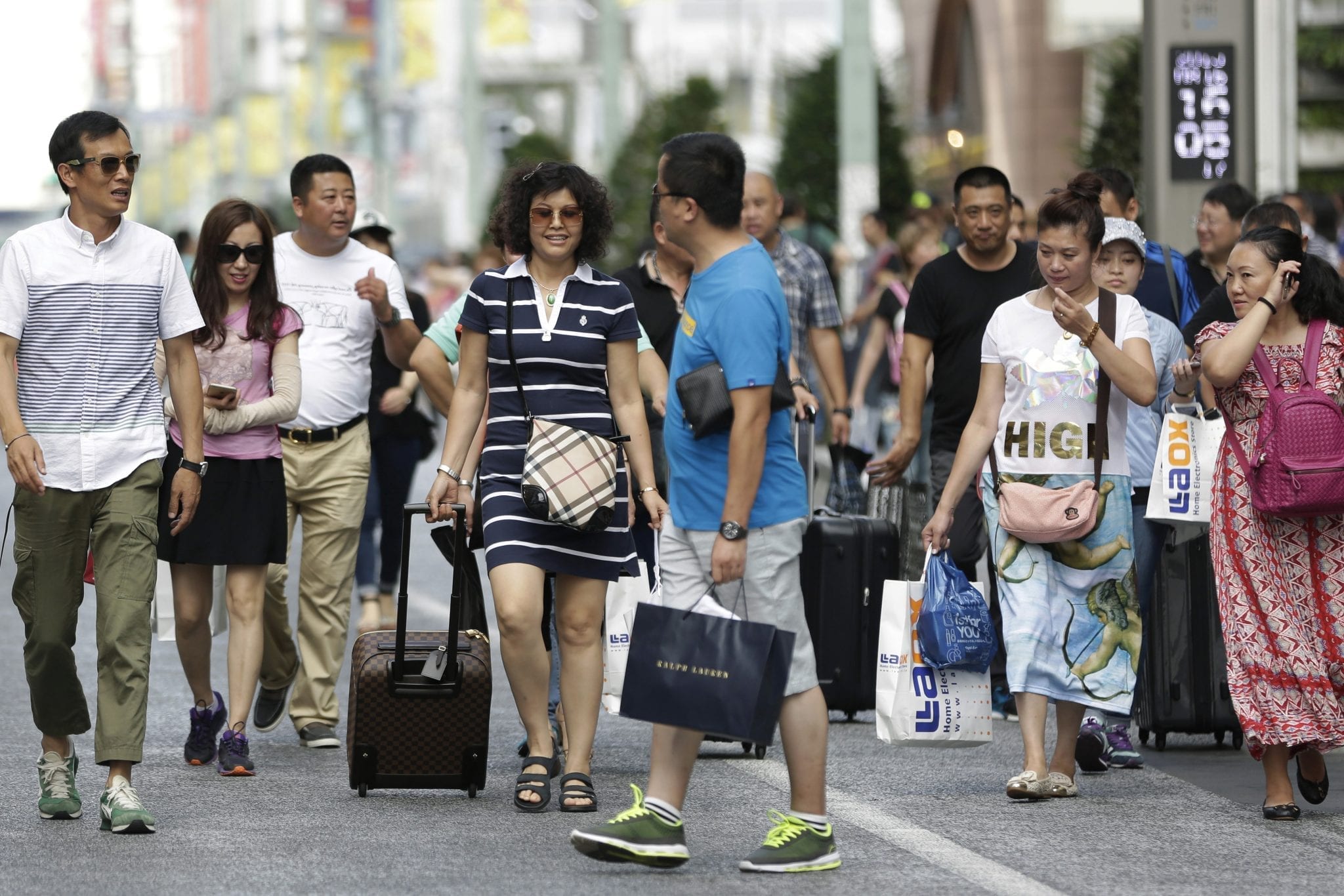
    Retail shopping continues to be the largest expense for tourists from China, according to a survey from Nielsen and Alipay, accounting for almost a quarter of total spend. The 2018 trends of Chinese mobile payment in outbound tourism survey revealed that retail spending took up 24.6 per cent of Chinese tourists average spend, followed by accommodation, dining and tourist attractions.

    Interestingly, the report found that Chinese millennials are no longer the single most dominant user of mobile payments.

    “In 2017, 55 per cent of Chinese tourists born between 1960-1979 used mobile payments while travelling overseas – significantly lower than the proportion of millennial tourists,” the report reads.

    “In 2018, the usage rate rose to 68 per cent, almost equalling their younger peers.”

    Average budget for the typical Chinese tourist increased 15 per cent to AU$9,382 over the year, and a familiarity with mobile payments drove increased spend, with 56 per cent of surveyed merchants claiming improved sales after adopting mobile payment system Alipay.

    However, a study by Coresight research in October 2018 found that, while Chinese tourists were travelling more often they were spending around 18 per cent less in the retail environment – a figure driven by a recorded 24 per cent decline in average shopping trip spend.

  • Indian retail drew Rs 1,300 crore investment in 2018

    Indian retail drew Rs 1,300 crore investment in 2018

    The hallmark of a market’s increasing maturity is how organized it is – and in any developing country, the state of ‘organized’ business is usually kick-started by the entry of foreign players who bring in structured deployment and business philosophies wherever they go. This philosophy of organized retail players covers a lot of ground, from the aptness of locations to size and visibility of a mall or high street, from store sizes to layouts, tech enablements and promotion parameters, and from pricing to financial accountability. The arrival of foreign brands forces domestic brands to up their game, as well. This is exactly what is happening in Indian retail, and what ‘getting organized’ is all about.

    By definition, organized retailing essentially refers to any trading activity conducted by licensed retailers from modern retail formats such as hypermarkets, supermarkets or departmental stores. Organized retail formats can exist either as stand-alone shops or occupy space in a mall. Unorganized retailing, which is what all developing nations start out with, are usually family-run neighbourhood shops (referred as ‘kirana’ shops in India) and in open markets.

    Bringing organized flavour into a previously disorganized market first disruption, then gradual acceptance and emulation, and finally prosperity to all stakeholders and immeasurable benefits to customers. Getting organized has certainly benefited Indian retail, causing massive growth spurts.

    Growth of Organized Retail

    From a mere 9 percent share in 2017, the organized retail market in India is gearing up for a significant 20-25 percent growth jump across the top 7 cities. By 2020, organized retail will have captured approximately 19 percent of overall market share. The fact that it accounted for only 4 percent just 10 years ago tells its own story. Indian retail is coming of age.

    The growth of organized retail obviously involves organized retail real estate – especially modern, well-researched and fully-equipped malls in the right locations – and organized mall space is definitely proliferating across India.

    As per ANAROCK data:

    – Around 39 mn sq. ft. of organized retail space is slated to hit the market between 2019-2022
    – Out of this supply, approximately 71 percent is in metros and Tier 1 cities and the remaining 29 percent in Tier 2 & 3 cities

    Ahmedabad, Bhubaneshwar, Ranchi, Kochi, Lucknow, Surat and Amritsar, among others, are the new stages where the next chapters of the Indian organized retail saga will play out. Global retailers are now also eyeing cities like Chandigarh, Lucknow and Jaipur, to name a few.

    As they catch this growth wave, mall developers and big-banner brands have grasped the utmost importance of providing a metropolitan-grade shopping experience to customers in these smaller cities. This is hardly surprising.

    In these cities, customers’ shopping options were previously limited to whatever was available locally. Today, they are being aggressively wooed by hyper-capitalized e-commerce giants who sensed the latent opportunity in Tier 2 and Tier 3 long before brick-and-mortar retail did.

    To counter this onslaught, albeit belatedly, retailers whose business model is largely based on physical retail are prevailing on mall developers to build metro-grade shopping centres in areas they had never considered before.

    Policy Impetus Fuels Growth

    Foreign retailers, to whom India owes most of its turbo-charged growth in organized retail, took their time to view India as worthy of their attention. For the longest time, this country was an unattractive destination for them, largely because of regressive Government policies.

    All this changed when the Government decided to give a major impetus to the retail industry. By liberalizing its hitherto restrictive FDI policies, it repositioned Indian retail and finally put it on the global map. Consequently, global retailers and foreign investments made a beeline for the Indian retail industry. The decision to allow 51 percent FDI in multi-brand retail and 100 percent FDI in single-brand retail under the automatic route has caused global retail giants like Walmart and IKEA to foray into India.

    Thereafter, the rebooted regulatory environment post DeMo, RERA and GST implementation put even more wind into organized retail’s sails and allowed organized players to race ahead of the unorganized sector.

    Investments Surge

    The Indian retail sector has attracted cumulative investments of more than Rs 5,500 crore between 2015-2018, and close to Rs 1,300 crore in 2018 alone. This made 2018 one of the best years ever for the Indian retail sector, and the momentum is eminently sustainable. The increasing involvement of foreign and private players in India’s retail infrastructure indicates long-term growth potential for organized retail in the country.

    The growth of organized retail is also evident in the stock prices of listed retail firms, which were major wealth generators for investors in 2018. If we check the performance of these stocks on the basis of their 52-weeks high and low, some very interesting data emerges:

    Untapped Potential

    The fact that despite this growth, 91% of India’s retail market still remains unorganised underscores the huge latent potential that remains to be explored by organised players. Despite the deliriously positive numbers, organized retail in India is nowhere close to the level in more developed countries. For instance, in the US, 85 percent of the overall retail market is organized.

    Advantage Brick-and-mortar in 2019?

    The most recent policy developments will give physical organized retail a leg up in its fierce battle with e-commerce. The Government is pushing a new e-commerce policy from February 2019 wherein the concept of ‘exclusivity’ will no longer hold good. This means that online retail players will scramble to grab a larger pie of the offline market, so physical stores will get the upper hand.

    2019 will hopefully be the year in which the Government embarks on the next stage of ushering more unorganized retail into organized formats – thereby making Indian retail a worthy contender as a global grade market.

  • Strategies that will differentiate leaders in Indian retail in 2019

    Strategies that will differentiate leaders in Indian retail in 2019

    Indian retail industry has seen tremendous transformation and growth in the last few years and has become one of the most favourable market for global investment. The vibrant industry, hugely shaped by changing policies and consumer behaviour is adopting technology not only to understand changing consumer preferences but also to enhance shopping experiences. Innovations have defined a gradual shift in how companies approach retail altogether.

    Technology disruptions have taken all industries in its stride and the cash and carry business is no exception, despite it dealing with B2B customers. Technology has been a pivot for the creation of personalised, ‘instant’ buyer experiences. The players who leverage technology well will be industry leaders of the next decade.

    As we have stepped in 2019, here are some retail trends that will make news this year.

    Integrated Omnichannel presence for retail analytics – Omnichannel in retail has been a high talk point and some retailers have successfully expanded their presence across platforms. However, integration is the key to success in this game. Unless the platforms are integrated, they will present an inconsistent experience to the customers, creating confusion about the product, pricing and promotions.

    Besides ensuring an unswerving experience, a bigger advantage of an integrated Omnichannel approach would be to share and cross-leverage customer behaviour data. For instance, if a customer has a specific purchasing pattern for a product offline, the retailer can use these insights for targeted marketing on various digital platforms. It will not only help the shopper find what they need but also help the retailer generate higher sales through relevant product suggestions and repeat business.

    Shaping in-store experience through proximity marketing – Internet of Things has transformed many industries and has the potential to enable real-time interaction between retailers and consumers, providing them with a truly connected experience. It not only brings about a seamless experience but also enable guided discovery and shopping, using a network of beacons in store. These beacons can help retailers in marketing, mapping the consumer movement patterns and time spent at various sites, in-store messaging, building consumer loyalty etc. This will offer the opportunity to revolutionise in-store experience for consumers.

    Increasing focus towards sustainability – The consumer dynamics have evolved considerably over the last few years. They feel connected to a company or a brand that helps them contribute to social and environmental issues. The inclination of Indian consumers towards building a sustainable future will provide an edge to brands operating sustainably.

    The dynamic regulatory environment and shifting consumer preferences are making it imperative for retailers to decrease the social and environmental impact of their operations. Companies will be seen instituting practices and initiatives to address this need, and, the players who will ace this, will be the most preferred brands for consumers in the future.

    Decreasing wastage, promoting recycling and energy conservation will be certain immediate outcomes of bringing sustainable practices within business operations. Over a longer period, the impact of sustainability will run much deeper, with local community engagement and expected economic benefits.

    Employing Blockchain to enhance credibility through responsible and ethical sourcing –Blockchain technology helps retailers with core functions including supply chain management, inventory management, authenticity verification, auto-renewal and subscription services, customer data and loyalty programmes. However, the key benefits that the technology is delivering to retailers are to ensure authenticity and improve accuracy in tracing the origin of any product swiftly.

    Incorporating blockchain technology will enable retailers to track data right from sourcing stage to customer purchase while ensuring authenticity for their customers. It will also help establish sustainable sourcing practices being followed by the company, making a stronger connect with the millennial consumer.

  • Remarkable Asian Enterprises That Will Have an Impact in 2019

    Remarkable Asian Enterprises That Will Have an Impact in 2019

    Southeast Asia has become a shining star with its several enterprises in the area. Singapore, especially, has become one of South Asia’s most attractive countries for entrepreneurs and investors, thanks to investments by technology companies, government support, and low tax rates. Singapore is closely followed by Malaysia and Indonesia in this competition.

    Malaysia, one of the three strongest economies in Southeast Asia, is one of the few countries that provide state support to entrepreneurs. These competing enterprises of the region have been developing products in the fields of machine learning and blockchain to keep up with the technology age. Entrepreneurs focus on developing problem-solving oriented products to preserve and expand their market shares. Here is a list of five Asian enterprises, which will have a great impact on the industry in 2019.

    Naulo

    Naulo is a restaurant in Kathmandu, Nepal. What makes it unique is the fact that it operates with five waiter robots, two named Ferry and three named Ginger. Customers choose their orders by touching the screen on the robots and then the robots serve the orders to the tables. With this digital service, the restaurant was the first venue in Southern Asia to use robots as waiters.

    Designed and manufactured by the Nepali technology company Paaila Technology, Robot Ginger has the ability to recognize objects and conversations, process natural language, auto-dock and even make jokes and answer basic IQ questions in both English and Nepali. Binay Raut, CEO of Paaila Technology and Naulo Restaurant, said that their new target is “to introduce this Nepali innovation in the international market.” So, we are highly like to see more robots in the restaurants in 2019 as well!

    Groove X

    Japanese engineers have a great invention for those who feel lonely! The start-up company, Groove X’s robot has the name Lovot, a combination of the words ‘love’ and ‘robot’. This penguin-looking robot uses artificial intelligence technology to move, react when it is called or loved, and sleep when it is cuddled. Lovot will compete with Sony’s artificial intelligence-equipped robot dog, Aibo, and will be released towards the end of 2019. As Groove X says, it will be “the one and only robot in this universe that heals your heart.”

    Glueck Technologies

    It goes without saying that we all depend on technology. Various technologies impact and improve almost every aspect of our lives: online education to space travels, self-driving cars to online poker are all astonishing features of technology once thought to be impossible.

    Glueck takes technology and artificial intelligence to another level. Using artificial intelligence and deep learning technologies, Glueck offers a product that enables machines to understand people’s emotions. With the algorithm they’ve developed, the analyzes people’s emotional states and their responses to real-life alerts. This unique product is designed to produce the right message to the right audience in the media, advertising and e-commerce fields.

    Dahmakan

    Dahmakan has become the first food distribution company to create an important capital in Southeast Asia. It provides first-class, chef-made food delivered to customers’ doorsteps, and appeals to a niche audience. The company’s founders are former FoodPanda employees, which is the biggest food distribution chain in Asia. Dahmakan plans to rapidly expand to other countries besides Malaysia and Thailand. You can also expect Dahmakan at your own doorstep in 2019!

    GrabCar

    GrabCar is a car-sharing app with a Southeast Asian origin. While studying at Harvard Business School in 2011, Tan Hooi Ling and her classmate, Anthony Tan, decide to take part in an entrepreneurship competition and at the end of the competition GrabCar, first known as MyTeksi, was born.

    Although it was first designed to adopt a smart local business strategy, GrabCar is currently one of the biggest shareholders in Asia in the car-sharing applications market. It operates in eight Southeast Asian countries from Malaysia to Singapore, Vietnam to Myanmar, Thailand to the Philippines.

    In March 2018, Grab announced that it had acquired Uber’s Southeast Asia operations integrating Uber’s ridesharing and food delivery business in the region into its own platform. As Grab said, in 2019 it “will drive towards becoming the number one online-to-offline mobile platform in Southeast Asia and a major player in food delivery.”


  • Top 3 reasons why Fintech is rising in Asia

    Top 3 reasons why Fintech is rising in Asia

    Fintech or financial technology is a new trend in the financial sector that is set to blow away the banking industry and you are a part of it. Yes, if you are making online payments and indulging in virtual currencies you are helping fintech grow. From what was just a startup is now a multimillion-dollar Philemon. From the United States to Asia it has quickly progressed into various regions across the globe. We will be looking into the 3 main reason for Fintech progression in Asia. Here is how fintech is rising in Asia

    1. Supports Start-ups

    Fintech has massively supported start-ups with its financial techniques. Instead of depending on banks, start-up have financial technologies to develop their businesses. From automatic payment methods, managing in and outflow of cash to a cloud-based system for all financial depositories Fintech provides a better more advanced way of money management to start-ups. Hence, a lot of companies have quickly adapted to this new wave of technology. With the introduction of Fintech Asia and especially in Asia, there are more than a thousand Fintech companies running strong helping these start-ups with all their financial needs.

    1. Rise of Internet

    Application of the internet has seen a sudden steep in Asia. Contributors being widespread internet connection and cheap smartphone availability. From small grocery shops to super markets all have accept the trend of virtual currency. Individuals knowing that they don’t have to visit the banks when they can manage their finances with the click of a button, they have entrusted their finances with Fintech. Fintech has successfully penetrated Asia’s local market with the support of rise in internet connectivity in recent years.

    1. Young Population

    The key to success for Fintech in Asia has a lot to do with its young population. Millennials are widespread amongst Hong- Kong, Singapore, Tokyo and other regions. This group of population is tech-savvy, digitally advanced and very accepting of the digital norms. They have been quick in adapting to fintech’s functionalities. Be it young entrepreneurs or working class individuals everyone has found a better more easy way to deal with their finances. Hence, Financial Technology has easily found its way into various regions of Asia.

    To sum it up

    Fintech is projected to become a billion dollar industry by the end of 2020 in Asia. Financial Technology has also merged with various banking institutes and financial organization in India. Applying for credit cards , personal loans, making your credit card bill payments and cashless transaction easier than before.

    Especially with the low margins of credit card users in India due to trust factors Fintech plans on providing a better substitute. Although a part Fintech i.e Cryptocurrency is still a controversy around the globe. It’s another service including investment techniques, finance management, and virtual payments are widely appreciated and used.

    Yes, the question of security is still up. Being an online phenomenon major questions are about security and spamming. However, Fintech organizations are making their security stronger by the day.