Category: Research

Retail News Asia is committed to providing both local and global retailers with the latest Research throughout the Asian market. This on a daily base.

  • Sometimes all you need is a fresh breeze

    Sometimes all you need is a fresh breeze

    Antwerp Underwater Solutions was founded in 2005. Shortly afterwards AUS became a part of a holding including several ship repair companies. The current structure and order books urged the need for a new manager to maintain and improve the level of service.

    We strongly believe we found the right  man for the job in Hans Cuylits, his career speaks for itself….

    He started his career as diver in a diving company where the main focus was on shipping. After 2 years he made a leap to the offshore industry. Here his drive and accuracy did not go unnoticed and pretty soon he was project superintendent for one of the major players in the offshore industry.

    In 2012 Hans and his wife had the courage to follow their dream and start a three year  journey around the world with their two kids.

    They returned in June 2016 and shortly afterwards  we welcomed Hans  with open arms in our team. We consider him to be a great asset not only for Antwerp Underwater Solutions but also for our customers.

    There might have been some changes in our management structure – our core business and commitment  hasn’t change. Antwerp Underwater Solutions is your ideal  underwater contractor for all  inspections, repairs and maintenance.

    Approved by all major classification bureaus DNV Gl, Lloyds Register, Bureau Veritas, ABS, Rina,… to perform all underwater inspections; pre-sale inspections, inspection after grounding, pre-docking inspection, in lieu of dry-dock inspection…

    For the underwater repairs we can draw on a number of  certificated and very experienced underwater  welders.  Antwerp Underwater Solutions has different types and sizes of cofferdams. In addition we have all the skills and equipment  to provide a customized cofferdam within the available time frame.

    You might be surprised to learn the maintenance that can be performed underwater; installation of anodes, cleaning of sea chest, blanking of overboard valves in order to allow valves to be changed from the inside, re-tightening bolts to reduce bearings wear down,  cleaning of sea chests,   replacement of echo sounder or speed log, replacement of rope guards, clearing propellers or rope guards, rudder maintenance   A great return on investment can be achieved by our propeller maintenance program,  which enable us to keep ships propellers smooth at all time, all blades are  polished in a multi stage to grade ‘A’ on the Rupert scale. This has an immediate effect on the fuel consumption.

    Antwerp Underwater Solutions is at your service 24/7, we have a fast response time and operate in all major European ports; Antwerp, Rotterdam, Flushing, Zeebrugge , Ghent, Le havre, Dunkirke,…

    Please allow yourself the experience to work with Antwerp Underwater Solutions as your underwater contractor and contact us

  • IDTechEx Research Releases Brand New Report on 3D Printing Software

    IDTechEx Research Releases Brand New Report on 3D Printing Software

    The 3D printing software market was characterised by multiple free and open source build processors, with one or two organisations catering to the industrial user with commercial offerings. In 2017, the landscape has changed considerably: there have been several new entrants following acquisition of smaller start-ups with both established CAD/PLM developers and 3D printer manufacturers keen to carve out a share of this rapidly growing market. The push to develop software that enables Design for Additive Manufacture for users looking to fully leverage the design freedoms offered by 3D printing is one of the key drivers of this growth. Given these market trends, the new IDTechEx Research report 3D Printing Software 2018-2028: Technology and Market Analysis forecasts that the global market for 3D printing metals will grow at a CAGR of 22% and will be worth $966 million by the year 2028.


    3D printing software encompasses all software required to realise a 3D model from CAD to print. This report provides a detailed overview of the functions of different 3D printing software technologies including this includes scanning for reverse engineering, CAD, CAE, CAM and workflow management, as well as evaluating the strengths and weaknesses of the most common file formats for 3D printing and their potential alternatives. Areas in which users’ needs remain unmet by current technologies are highlighted.


    New developments and trends within the 3D printing software market are discussed in the report including printer-specific software solutions developed by printer hardware manufacturers, as well as recent applications of leading-edge software tools for generative design, mass customisation and multimaterial printing.


    This report forecasts the overall 3D printing software market to 2028, with in-depth SWOT analyses of the major CAE, CAM and workflow management products available on the market today. The current state of the 3D printing software market is analysed, and long-range forecasts from 2018-2028 for revenue per annum segmented by commercialised CAE, CAM and workflow management product groups are evaluated.


    IDTechEx conducted exhaustive primary research with companies within the 3D printing value chain for key insights into the trends impacting growth to 2028. Over 25 company profiles have been included in the report including Materialise, Dassault Systèmes and Autodesk, among others.

  • Things you might not know about ballistic bitcoin

    Things you might not know about ballistic bitcoin

    Bitcoin rocketed to another record high close of $16,000 on the Luxembourg-based Bitstamp exchange on Thursday after gaining more than $4,000 in just 48 hours, stoking concerns that a rapidly swelling bubble could be set to burst.

    There were huge disparities between prices across different exchanges. On GDAX, one of the biggest, the price reached $19,500.

    Here are some facts that you might not know about the largest and best-known cryptocurrency.

    How many are there? Bitcoin’s supply is limited to 21 million – a number that is expected to be reached around the year 2140. So far, around 16.7 million bitcoins have been released into the system, with 12.5 new ones released roughly every 10 minutes via a process called “mining”, in which a global network of computers competes to solve complex algorithms in reward for the new bitcoins.

    Energy drain These mining computers require a vast amount of energy to run. As the price increases, more miners enter the market, driving up the energy consumption further. A recent estimate by tech news site Motherboard put the energy cost of a single bitcoin transaction at 215 kilowatt-hours, assuming that there are around 300,000 bitcoin transactions per day. That’s almost enough energy as the average American household consumes in a whole week.

    Bits of Bitcoin If you want to buy bitcoin, you do not need to buy a whole one. Bitcoin’s smallest unit is a Satoshi, named after the elusive creator of the cryptocurrency, Satoshi Nakamoto. One Satoshi is one hundred-millionth of a bitcoin, making it worth around $0.0002 at current exchange rates.

    Bitcoin billionaires Bitcoin has performed better than every central bank-issued currency in every year since 2011 except for 2014, when it performed worse than any traditional currency. So far in 2017, it is up more than 1,400 percent. If you had bought $1,000 of bitcoin at the start of 2013 and had never sold any of it, you would now be sitting on around $1.2 million. Many people consider bitcoin to be more of a speculative instrument than a currency, because of its volatility, high transaction fees, and the fact that relatively few merchants accept it.

    Exchange heists More than 980,000 bitcoins have been stolen from exchanges, either by hackers or insiders. That’s a total of more than $15 billion at current exchange rates. Few have been recovered.

    Mystery creator Despite many attempts to find the creator of bitcoin, and a number of claims, we still do not know who Satoshi Nakamoto is, or was. Australian computer scientist and entrepreneur Craig Wright convinced some prominent members of the bitcoin community that he was Nakamoto in May 2016, but he then refused to provide the evidence that most of the community said was necessary. It is not clear whether Satoshi Nakamoto, assumed to be a pseudonym, was a name used by a group of developers or by one individual. Nor is it clear that Nakamoto is still alive – the late computer scientist Hal Finney’s name is sometimes put forward. Developer Nick Szabo has denied claims that he is Nakamoto, as has tech entrepreneur Elon Musk more recently.

    Inflated Chinese trading Until earlier this year, it was thought that Chinese exchanges accounted for around 90 percent of trading volume. But it has become clear that some exchanges inflated their volumes through so-called wash trades, repeatedly trading nominal amounts of bitcoin back and forth between accounts. Since the Chinese authorities imposed transaction fees, Chinese trading volumes have fallen sharply, and now represent less than 20 percent, according to data from website Bitcoinity.

    “Market cap” The total value of all bitcoins released into the system so far has now reached as high as $283 billion. That makes its total value – sometimes dubbed its “market cap” – greater than that of Visa, and bigger than the market cap of BlackRock and Citigroup combined.

    Crypto-rivals Bitcoin is far from the only cryptocurrency. There are now well over 1,000 rivals, according to trade website Coinmarketcap.

    “Shorting” It is already possible to short bitcoin on a number of retail platforms and exchanges, via contracts for difference (CFDs), leveraged-up margin trading or by borrowing bitcoin from exchanges without leverage. But a number of big financial institutions – including CME Group, CBOE and Nasdaq – have recently announced that they will offer bitcoin futures, which will open up the possibility of shorting the cryptocurrency to the mainstream professional investment universe.

    Lost Bitcoins Many fewer than the 16.7 bitcoins that have been mined are actually in circulation and accessible, because of forgotten passwords, accidental losses, hoarding, owners forgetting about coins or even dying. It is impossible to know for sure how many bitcoins have been permanently lost, because those that have are still in the system, in dormant addresses. But according to a December 2013 research paper by the University of San Diego and George Mason University, 64 percent of the 12 million bitcoins that had by then been mined had never been spent. Bitcoin developer Sergio Lerner estimates that almost 1 million unspent bitcoins belong to the cryptocurrency’s mysterious creator.

    Rich list There are 5,638,155 bitcoins in the 1,000 biggest wallets – more than a third of all bitcoins in circulation. That makes the 1,000 biggest wallet-holders worth a collective $87 billion, at current rates.

    High fees The average fee paid to process bitcoin transactions has soared over the past year, outpacing even the staggering price increase of the cryptocurrency itself. Each bitcoin transaction now costs around $7.30 to process, up from around 30 cents at the start of the year, according to trade website BitInfoCharts.

    Forking off If you owned bitcoin prior to Aug. 1, 2017, you also own Bitcoin Cash – a clone of the original. That is because on that date bitcoin underwent a so-called “fork”, in which the underlying software code was split into two. One unit of Bitcoin Cash is now worth more than $1,300. That adds roughly another 135 percent to the returns from a bitcoin investment at the start of the year.

  • The Importance of Regular Underwater Inspections

    The Importance of Regular Underwater Inspections

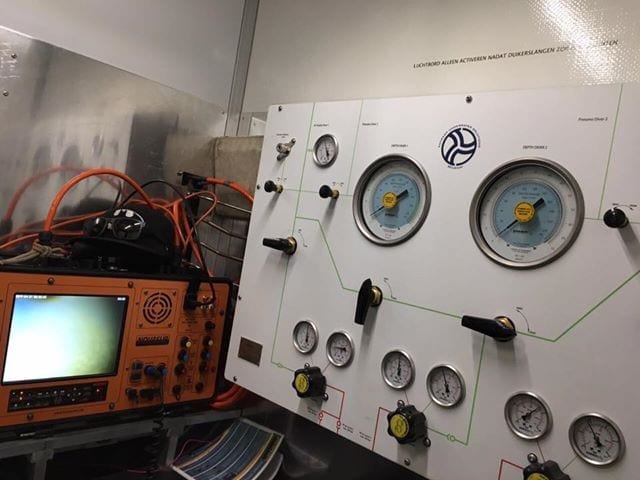
    Combining the experience of professional divers with certified ship repair knowledge, underwater inspections can help keep your vessel in top shape for years to come. Though only a small monetary investment, the inspections can offer an incredible return as you save enormous amounts of money on repairs that would be done when problems become more severe.

    By using a professional underwater inspection service, you can find a wide variety of potential issues that may slowly be damaging your ship. Bent or damaged propeller blades, hull corrosion and cracks, leaking thruster seals, damaged rudders, obstructed sea chests and many more common issues can be identified immediately. By completing a thorough inspection, the dive team provides an intensive report that outlines all the issues with the vessel and the possible fixes.

    These reports allow ship owners to understand the true condition of their vessel, which lets them decide whether or not they immediately want to repair the problem. In almost all cases, it is recommended that the repairs be done as soon as possible, as they only worsen with time and can lead to safety issues, expensive repairs and the ship being out of commission for weeks.

    Prior to the inspection process, the team will speak to the vessel owner to get an early understanding of any issues that may already be known. This will allow them to focus on those problematic areas to gain a better idea of where exactly the damage lies.

    Save Money by Inspecting Before You Drydock

    As any vessel owner knows, drydocking is an extremely expensive and time consuming process which means your ship can be unusable for an extended period of time. By conducting an underwater inspection before you drydock, you may be able to save large amounts of time and money through a simple underwater welding or maintenance job.

    Furthermore, ship owners avoid the potential issue of a low quote before the boat comes out of the water, then the repair company exponentially increasing the price once the boat is in the drydock.

    Fast and Efficient Inspections

    The biggest benefit of an underwater inspection is the short amount of time it takes to get a full understanding of the condition of the vessel. The diving experts can come to your ship quickly and the entire process only takes hours, meaning that you will immediately know if you are in need of repairs or if you can continue on your voyage. Also, the price quotes come almost instantly, so you can budget for the appropriate repairs when they are necessary.

    Antwerp Underwater Solutions and HC Diving offers full underwater inspection services carried out by our expert certified diving teams. Affordable and fast, we can help you discover any issues with your vessel to help save money by avoiding drydocking and having your ship repaired as soon as possible.


  • Why Has Bitcoin’s Price Gone Up So Fast ?

    Why Has Bitcoin’s Price Gone Up So Fast ?

    Bitcoin has been in a bull market like few the world has ever seen. At the beginning of the year, the price of a Bitcoin was below $1,000. It hit $5,000 in October, then doubled by late November. And on Thursday, less than two weeks later, the price of a single Bitcoin rose above $20,000 on some exchanges, according to Coinmarketcap.

    The latest price spike has been credited to signs that Wall Street companies plan on bringing their financial heft into the market.

    At the current cost, the value of all Bitcoin in circulation is about $300 billion. To get a sense of how big that is, all the shares of Goldman Sachs are worth about $90 billion.

    The gains have been driven by several other factors — perhaps the most important being the irrational mentality that can take over in speculative bubbles.

    But most people buying Bitcoin are doing so in the belief that others will want it even more in the future. The gains, though, have many people, even Bitcoin believers, anticipating a big crash.

    Currently, the average price of one Bitcoin is about $15.435, according to Blockchain.info, a news and data site.

    Bitcoin used to be all about libertarians and black-market trade. Are those still driving the price?

    The fringe communities that drove Bitcoin in its early years are playing a much less important role in the current rally.

    Many investors have said the most important factor driving the current enthusiasm is the entry of hedge funds and other institutional investors.

    The path for large investors has been smoothed by the Chicago Mercantile Exchange and Chicago Board Options Exchange, which have been racing to roll out Bitcoin futures contracts. Most banks are already signed up with these exchanges and consequently can immediately begin trading the contracts. The options exchange has said it plans to start trading on Sunday.

    It is still unclear how the arrival of Bitcoin futures will influence the demand for the digital tokens.

    With a futures contract, banks can bet on the price of Bitcoin without holding the underlying Bitcoins. This is expected to bring many new players into the market who don’t want to deal with the complications of holding Bitcoins.

    But the futures contract will also allow investors to short Bitcoin, or bet on the price’s going down, which has been hard to do until now. Some analysts think this could put downward pressure on the price. Other market participants have worried that Bitcoin futures could spread the risks of Bitcoin into the rest of the financial system.

    People still use Bitcoin and other virtual currencies to make ransom payments and buy illegal goods online, including synthetic opioids. But that activity has been on the wane since the authorities shut down some of the largest online black markets this year.

    What role are smaller investors playing in the virtual currency markets?

    Individual investors have been just as active as large investors. Nowhere has the phenomenon of ordinary people buying virtual currencies been more visible than in South Korea, where several exchanges have storefronts to help new customers. This is all the more remarkable because just a year ago, Koreans showed almost no interest in these markets.

    Small Japanese investors have also been investing in Bitcoin. They have been encouraged by laws passed this year that essentially legalized Bitcoin and allowed Bitcoin exchanges to get regulatory licenses.

    Most small-time investors have gone to the San Francisco company Coinbase, which provides a Bitcoin brokerage service, similar to Charles Schwab, as well as an exchange for larger investors. Coinbase now has more account holders than Schwab, and it has struggled to keep up with the growth.

    China used to be the most active country for Bitcoin trading and mining, but the authorities there have cracked down this year.

    What are the dangers of getting into this market?

    Many of the largest exchanges, including in South Korea, are essentially unregulated. The lack of oversight means that no one is checking that the exchanges are properly securing their customers’ money or that large players are not able to manipulate the price. One of the largest exchanges in the world, Bitfinex, has been hacked numerous times and provides little transparency about where it is keeping its money.

    Even regulated exchanges, like Coinbase in the United States, have not been battle tested like larger financial institutions, and their operations have gone down at key moments.

    Once people buy Bitcoin or other virtual currencies, they are often targeted by hackers who have become experts at penetrating Bitcoin accounts.Bitcoin “wallets” are vulnerable to new kinds of attacks that are not a problem for ordinary financial accounts.

    Most important, in contrast to money in a bank account, when a Bitcoin is gone there is essentially no way to get it back and no insurance covering its loss.

    Are more people using Bitcoin to pay for things?

    When Bitcoin was released in 2009, it was described as a new kind of electronic cash.

    Recently, though, many programmers working on Bitcoin have said the system in its current form is not a particularly good way to pay for things.They argue that it is best designed to serve as a sort of scarce commodity, like digital gold, allowing people to keep their money outside the control of governments and companies.

    Many people who want to use virtual currencies for online payments are looking to Bitcoin competitors, like Bitcoin Cash and Monero.

    What role are the other virtual currencies playing in this frenzy?

    Earlier this year, bullish sentiment was focused on Ethereum, a virtual currency network that is more adaptable than Bitcoin. The price of Ether, the virtual currency on the Ethereum network, has continued to rise in recent months, but not as fast as Bitcoin.

    Many investors were also putting their money into custom virtual currencies released by entrepreneurs in so-called initial coin offerings. These new virtual currencies have generally been designed to serve as the internal payment mechanisms on new software the entrepreneurs are building.

    This fall, though, regulators have signaled that they are planning to crack down on coin offerings.

    Where did virtual currencies come from, and how do they work?

    The Bitcoin software was released in early 2009 by a mysterious creator who went by the name of Satoshi Nakamoto. The search is still on for the true identity of Satoshi.

    The software released by Satoshi set out the basic rules for Bitcoin and the computer network on which it lives. Unlike other forms of money, which are controlled by governments and financial institutions, Bitcoin operates on a decentralized network of computers that no one institution controls.

  • Common Myths About Doing Business in Indonesia

    Common Myths About Doing Business in Indonesia

    Some claims are so ingrained that even those who have lived in Indonesia for a length of time have trouble differentiating between what is true and false. The rumors shared through the expat community are not usually spread with bad intentions, but perhaps are based on misguided and outdated information. Many of these myths can be (and are) easily debunked below.

    The Local Shareholder Myth

    One of the most common misconceptions about doing business in Indonesia is that a local shareholder is required for starting a company. In reality, many business lines are open to full foreign ownership.

    Foreign investors are allowed to set up 100 percent foreign-owned trading and real estate companies in Indonesia. In the hospitality industry, that means hotels with three or more stars classification can be fully controlled by a foreign business entity. However, it’s the lesser rated hotels that requires percentage ownership with a cap at 67 percent for foreign holdings and the remaining stakes held by Indonesian shareholders.

    Foreign shareholding depends on your business classification. The document regulating restricted industries is the Negative Investment List or Daftar Negatif Investasi (DNI), and it is revised every three years. The purpose of the DNI is to protect local companies, especially smaller and aspiring businesses, from foreign competition.

    Business through Partnerships

    Another common misconception in Indonesia is that partnerships, specifically marital partnerships, allows business in Indonesia to be more conducive. Whether these partnerships are purely to secure residence permits, company registration or simply for further insight into the Indonesian business culture; it’s all speculative. And, although Indonesians do have a smaller capital requirement when starting a company, asset control is a huge issue–especially if the expat partner in question doesn’t legally hold any.

    For local perspective, it is oftentimes wiser to turn to a professional consultant or lawyer as regulations in Indonesia can change overnight and the information from a “trusted” advisor might become outdated or simply untrue. And, there are alternatives to partnerships for all other issues such as visas and company establishment,.

    Indeed, building a company under a local spouse’s name might seem like a good idea, but it carries high risks.

    Unsecure nominee agreements is one of the diciest ways of starting a business anywhere. As a foreigner in Indonesia, you would not have any legal claims to your business should the marriage go south.

    There are non-financial ways to contribute since paid up capital can be in the form of money or other assets. A personal nominee is only based on good will whereas professionally pledged shareholding agreements keep your assets safe.

    The Question of Marriage

    In Indonesia, religion plays a significant role. Foreigners who wish to marry an Indonesian partner often think they are required to convert to their future spouse’s religion, but there are ways around this statute. Most foreigners who change their faith do it because it is the wish of their spouse or their spouse’s family and they do it by choice, and perhaps a bit of obligation.

    Weddings conducted abroad are currently recognized in Indonesia. It takes a little bit of time and paperwork, but your marriage can be acknowledged by the Indonesian government. However, dual citizenship is not recognized in Indonesia so any move to change citizenship must be scrutinized with a fine-toothed comb.

    Land and Property Ownership

    The Basic Agrarian Law No. 5 Year 1960 dictates that foreigners are not allowed to own freehold land in Indonesia. The same law stipulates that foreigners can only obtain land under the following rights: Hak Guna Bangunan – Right to Build, Hak Guna Usaha – Right to Cultivate, and Hak Pakai – Right to Use.

    It is common practice among foreign investors to buy land or real estate using a local nominee, but this is a high risk maneuver that would waive any legal protection over your investment. Human relations have a tendency to change and there is no guarantee that your nominee won’t take over your land or property. The safest option to invest in property in Indonesia is through a foreign-owned company, which would allow legal ownership of the property.

    Conclusion

    Conducting business in Indonesia may seem arduous. Most businesses that struggle in Indonesia struggle for the same reason anywhere in the world–for lack of demand, high competition or poor management.

    The real issue here is red tape, so be prepared to invest a lot of time into your business venture. Seek advice from experienced people who have a proven track record in the relevant industry and try to ignore hearsay and horror stories. Investors entering Indonesia face entry barriers, but these obstacles are some of the reasons why the competition is relatively low. Opportunities abound, and playing it wisely can provide some lucrative rewards.

  • Solid Advice For A Successful Distribution Business

    Solid Advice For A Successful Distribution Business

    Retail stores depend heavily on wholesale distributors, seeing as they make sure all products get transported and delivered. And just like retail stores depend on distributors, distributors depend on retail stores for business. However, this is just a basic explanation that typically comes with several challenges, difficult choices, and complexities. Here is a deeper look at what builds the foundation of a strong and successful wholesale distribution company.

    1. Retail Clients

    There are several ways to approach retail clients, but keep in mind, the size of the network plays a huge part in terms of the profit margin. Locking in as many retailers as possible (while still being able to handle the workload), will directly influence how much profit the company stands to make. In addition to gaining more clients, there has to be a focus on how regularly orders come in.

    Ultimately, it works in the distributors best interest to get closer to manufacturers as well, because they represent another source of business on its own.

    1. Manufacturing Clients

    A very effective tactic used by successful distributors is to offer products directly to the retail store, which they purchase or carry from manufacturers. This makes it more convenient for the retail store, and possibly more practical depending on the circumstances.

    However, manufacturers typically have a vetting system in place, especially if they produce popular brand products. In other words, they are going to assess the distributor before allowing them to re-sell or transport their products. When this is the case, pay close attention to the requirements they have according to the application form. Read on if you want more about distribution.

    1. Marketing Team

    Yes, if the service is good and the retailers along with the manufacturers are impressed, there will be referrals. This will lead to expansion and better opportunities. But it doesn’t mean a marketing team shouldn’t be on the outside, focused on selling the distributor. In fact, it only makes sense to build a client base via the help of a professional marketing team.

    1. Minimizing Expenses

    Like any other business, wholesale distributors also aim to cut expenses as much as possible. One way of doing so is by investing in a warehouse facility that is closer to your clients. This reduces the shipping costs, enabling the distributor to offer more competitive prices. Although, this is only a good plan if the network of the distributor reaches a significant extent. If all the retailers are in a concentrated area, a warehouse will be redundant.

    The advice above is solid and no nonsense and could help you either improve your current business or to start a new one up successfully.

  • The five pitfalls that threaten FMCG brand growth in the SEA

    The five pitfalls that threaten FMCG brand growth in the SEA

    Asia’s developing markets are some of the most promising places on Earth to sell fast-moving consumer goods (FMCG).

    They can also be a place to fail fast: The rules of the game are changing at an ever-increasing pace, and many multinational and local brands are struggling to keep up.

    According to new analysis from Bain & Company, Turbocharging Consumer Products in Developing Asia, despite developing Asia’s massive opportunities, fewer than 20 percent of brands outgrow their categories in this region—roughly the same proportion as in low-growth developed markets. To successfully compete in these markets, brands need to push themselves more than ever to swiftly and continuously adapt to the new realities.

    Accelerating market changes, combined with a few basic challenges, serve as obstacles for brands aiming to achieve sustainable growth in developing Asia. Consumers in the region are increasingly willing to pay for convenience, and they are more digitally connected than ever.

    Each of these shifts has caused an accompanying change in retailing. For example, throughout developing Asia, consumers now make fewer trips to larger stores, instead flocking to convenience stores. Further, the steady rise in digital connectivity is fueling a boom in online sales and transforming the way brands talk to consumers to influence purchase decisions.

    Several fundamental factors have also made it tough for brands in developing Asia.

    Because the region’s distribution channels are highly fragmented, it is harder to gain household penetration, the most important contributor to brand growth. Another new complication for companies trying to plot a winning strategy is bifurcated demand. In the last 20 years, most value growth came from the “belly” of the market. Now the middle is shrinking, while a category’s premium and discount ends grow faster.

    “Fundamental consumer shifts in developing Asia have accelerated in the past few years, making it tougher for brands to survive and win in a region that remains critical for multinationals,” said Paolo Misurale, Partner and head of Bain & Company’s SEA consumer products practice. “All of this is altering the rules of the game for consumer products companies, requiring them to rethink their strategies from ‘where to play’ to ‘how to win’. Then they need to deliver the change, building new capabilities and forging alignment across stakeholders and functions. Those that fail to adapt – even large and establish brands – will be left gasping for air.”

    Amid these challenges, nimble local players manage to gain traction by revising their playbooks to new market realities. Developing Asia also offers huge opportunities for incumbents (whether local or multinational) that are able to adapt quickly and use their scale advantages to both capitalize on these emerging trends and further consolidate their competitive positions. Yet, even with the best plans, too many brands in the region get tripped up by predictable hazards.

    Through its extensive work with multinational, national and local brands across Asia’s developing markets, Bain has identified five common pitfalls and ways to overcome them.

    Pitfall 1: Sailing with outdated maps

    Bain finds that too many brands in developing Asia underinvest when it comes to learning the basics to support that big decision. They also fail to understand other essential elements of their category rules, such as whether the category is more repertoire or less repertoire. Successful companies know where they fit in, and then determine where and how to compete. They set growth initiatives that are consistent with category fundamentals and then translate those initiatives to operational metrics to track progress and capture value.

    Pitfall 2: Saying it wrong

    In developing Asia, it is easy to get brand messaging wrong. The goal is to anchor a brand (or a brand story) in consumers’ long-term memories. However, many brands have a relatively short history in these markets, and haven’t yet established and reinforced the kinds of memory structures that have worked so well for them in the developed world. Winning companies overcome this pitfall by understanding the guiding principles for building high-quality brand memorability.

    Pitfall 3: Succumbing to the lure of the new and different

    Traditional trade still abounds in developing Asia, and convenience stores are gaining in popularity. Both small formats offer limited shelf space. Yet, Bain finds that many brands are unwilling to reduce their product assortments (or tailor their ranges to unique channel needs) in order to focus on the proven and profitable hero SKUs with the highest velocity on the shelf, year after year. Winners invest to understand their heroes by brand and SKU, determining the value propositions they present over non-heroes. Then they look for the gaps in their current assortments, ultimately creating portfolio and investment strategies focused on the top sellers for target consumers and occasions.

    Pitfall 4: Losing at the first moment of truth

    Many brands, especially domestic brands selling in developing Asian markets, lack the abundance of data that allows for sophisticated account planning in developed markets. Without such data, FMCG players need to be as focused as they can on making their hero SKUs available and visible to fundamentally repertoire shoppers, while ensuring the retailer has incentives to push those SKUs. The most successful companies play by the real category rules: Solid consumer insights inform their priority in-store execution and activation moves. Winners are also clear about what matters most to increase sales on a channel-by-channel basis.

    Pitfall 5: Failing to build the right route to market

    In developing Asia’s fragmented retail environment, many brands fall short on their efforts to ensure that products get through the last mile and retain their ability to influence consumers’ decisions at the point of sale. The winners in this area are mostly “local champions” that use direct distribution (or a high-touch managed distribution model) in high-density areas, where modern trade is typically more established.

    At the same time, they build a multi-tiered distribution network and collaborate with hundreds of wholesalers in low-density rural areas, making the big trade-off between having influence over outlets and having penetration across outlets to maintain a sustainable cost to serve.

    “Brands can turbocharge their growth through a relentless focus on increasing penetration and consideration,” said Nader Stefano Elkhweet, Partner and head of Bain & Company’s Indonesian consumer products and retail practices. “This requires focusing on what shoppers actually do – as opposed to what they say they do in surveys – planning from the ‘shelf back’ to win the battle in stores, and relying heavily on advanced analytics tools to generate the insights that help brands make the smartest trade-off decisions.”

  • Online retail grocery in South East Asia : Alibaba or Amazon?

    Online retail grocery in South East Asia : Alibaba or Amazon?

    In South East Asia, online retail grocery is growing as an increasing number of  Singaporeans  prefer to do their shopping online.

    “It is getting better and better,” said Mr Vikram Rupani, president of RedMart, an online grocery company based in Singapore that is part of Alibaba‘s push into the region, “but it’s a continuous process that never ends.”

    Alibaba and American giant Amazon already dominate online retail in their home markets. Increasingly, they are competing against each other on neutral ground.

    Alibaba’s bigger bet is in South East Asia. It has spent more than US$2 billion (S$2.7 billion) to take control of Lazada, a five-year-old online shopping company based in Singapore and doing business in six countries. In 2016, Lazada bought RedMart, the online retail grocery.

    The promise is there, as the region’s young middle class grows and goes online. South East Asia’s e-commerce sales could total US$88 billion by 2025, projections from Google and Temasek Holdings, the Singaporean sovereign wealth fund, show. Volume was less than one-tenth that in 2015.

    Alibaba and Amazon are seeking consumers like Singaporean Janice Lee Fang, who decided she needed to buy a robot to amuse her six-year-old daughter home sick from school. Through Amazon’s Prime Now service, introduced in Singapore in July 2017, she bought a Sphero SPRK Plus – a clear plastic ball that can skitter across the floor with a tap of a smartphone – that arrived in less than a day.

    But South East Asia is no China. A diffuse area of 600 million people, the region is divided by politics, language and culture. Some places are modern, like Singapore. Others lack the roads and other infrastructure to get people what they need.

    The challenges have forced Lazada, Alibaba’s biggest South East Asian operation, to be creative.

    In Vietnam, local post offices take customer returns and give cash refunds. In Malaysia, customers can collect merchandise from lockers at 7-Eleven stores. And in the Philippines, Lazada uses petrol stations as places where merchants can drop off their goods for delivery personnel to pick up.

    Alibaba’s international arm has seen its latest quarterly sales more than double in a year, in part from Lazada’s contribution. Still, Lazada and its RedMart subsidiary remain a tiny, and unprofitable, part of Alibaba’s empire. Lazada’s chief executive Max Bittner said its Chinese parent has been willing to spend money to build its delivery capabilities and draw more customers.

    “E-commerce is an economy-of-scale game,” Mr Bittner said. “I can go after this opportunity with the amount of firepower I need.”

    Amazon so far counts Singapore as its only South-east Asian market, though industry experts expect it will expand into other countries.

    Until recently, direct Alibaba-Amazon rivalry has been rare. Amazon has a modest presence in China. Alibaba sells goods in the United States through its AliExpress platform but has backed away from further expansion efforts.

    South East Asia could offer a test of their vastly different business models on neutral turf.

    Amazon owns more of the inventory it sells. By contrast, most of Lazada’s sales are from outside vendors who use its platform as a digital middleman to reach customers. That approach, which keeps costs low, is similar to what Alibaba does in China. But in China, the company’s Taobao platform has been accused of offering counterfeit goods. Alibaba says it is working to fight fakes.

  • World’s largest online retailers ranked on site usability

    World’s largest online retailers ranked on site usability

    The world’s largest online retailers, including Walmart, Sephora and Starbucks, have been ranked according to the health and usability of their websites.

    Released by e-commerce monitoring company, Shoppimon, the inaugural OSHU (Online Site Health & Usability) Index compares the performance of leading e-commerce sites across a variety of KPIs, including site speed, server downtime, business downtime (% of time a purchase cannot be completed on the site), and technical issues.

    The inaugural Index compares online stores within nine vertical industry categories: apparel, automotive supplies, beauty, consumer electronics, department store, food & beverage, health & wellness, home & garden, and jewelry.

    Seven of the nine categories were represented in the top 10 top-ranking sites overall, with auto parts company Summit Racing, mattress company Saatva Mattress, subscription beauty business Birchbox, auto manufacturer Toyota and grocery company Whole Foods Market rounding out the top five.

    Notably, no jewelry or consumer electronics sites made it into the top 10.

    Roy Rosinnes, CEO and co-founder of Shoppimon pointed out that no site in the top 10 had business downtime of more than 0.1 per cent and all had 0.0 per cent server downtime during the period evaluated.

    “Top performing online stores on the Shoppimon OSHU Index like Summit Racing, which earned the top spot on our inaugural ranking, are able to maintain lightning fast speed with minimal downtime and disruption for shoppers,” Rosinnes said.

    “With a full load time of 0.36 seconds and zero business downtime, Summit Racing deserves kudos for providing a great brand experience for consumers as well as maximizing bottom line sales.

    Shoppimon said it will update the OSHU Index monthly to help educate site owners and operators on best practices in running a stable, profitable online store.

    Here are the Top 10 Shoppimon OSHU Index Overall Winners for September 2017:

      1. Summit Racing, OSHU Score: 99.10 (Category: automotive supplies)
      2. Saatva Mattress, OSHU Score: 98.67 (Category: home & garden)
      3. Birchbox, OSHU Score: 98.66 (Category: beauty)
      4. Toyota, OSHU Score: 98.25 (Category: automotive supplies)
      5. Whole Foods Market, OSHU Score: 98.24 (Category: food & beverage)
      6. Dollar Shave Club, OSHU Score: 98.08 (Category: health & wellness)
      7. J.Crew, OSHU Score: 97.47 (Category: apparel)
      8. JCPenney, OSHU Score: 97.45 (Category: department store)
      9. Nuts.com, OSHU Score: 97.14 (Category: food & beverage)
      10. lookfantastic, OSHU Score: 97.13 (Category: beauty)

    Top OSHU Index Vertical Category Winners for September 2017

    Below are the Top 3 winners per category, based on OSHU Index, with their relative OSHU Scores.

    Apparel

    1. J.Crew, OSHU Score: 97.47
    2. ASOS, OSHU Score: 96.94
    3. Talbots, OSHU Score: 96.78

    Automotive Supplies

    1. Summit Racing, OSHU Score: 99.10,
    2. Toyota, OSHU Score: 98.25,
    3. Tire Rack, OSHU Score: 95.47

    Beauty

    1. Birchbox, OSHU Score: 98.66
    2. lookfantastic, OSHU Score: 97.13
    3. Beauty Bay, OSHU Score: 97.02

    Consumer Electronics

    1. Fitbit, OSHU Score: 95.77
    2. Samsung, OSHU Score: 95.56
    3. Apple, OSHU Score: 93.70

    Department Store

    1. JCPenney OSHU Score: 97.45
    2. Marks & SpencerOSHU Score: 96.86
    3. SearsOSHU Score: 96.62

    Food & Beverage

    1. Whole Foods Market, OSHU Score: 98.24
    2. Nuts.com, OSHU Score: 97.14
    3. SodaStream, OSHU Score: 94.97

    Health & Wellness

    1. Dollar Shave Club, OSHU Score: 98.08
    2. iHerb, OSHU Score: 97.09
    3. Weight Watchers, OSHU Score: 95.06

    Home & Garden

    1. Saatva Mattress, OSHU Score: 98.67
    2. Wayfair, OSHU Score: 95.09
    3. RH, OSHU Score: 94.34

    Jewelry

    1. Ritani, OSHU Score: 96.83
    2. Tiffany & Co., OSHU Score: 94.16
    3. Zales, OSHU Score: 92.81

    OSHU Index Insights on Amazon

    Amazon is noticeably missing from the overall Shoppimon OSHU Index, because unlike companies such as ASOS or Bloomingdale’s that run e-commerce sites like the online equivalent of a brick and mortar retail store, Amazon behaves as a huge online mall – with many independent, and separately managed stores, open for shoppers to visit 24/7.

    Shoppimon did monitor a small sample of Amazon stores to determine if Amazon’s “gold standard” in customer experience extends to its onsite shopping performance. The Amazon stores Shoppimon evaluated received an average OSHU Score of 92.08, nearly 4 points ahead of the average score of the full index, but 6 points behind OSHU’s Top 3. Shoppimon plans to expand its sample size of Amazon stores in the future to better understand how Amazon is performing.

    Here are the Top 3 Amazon stores:

    1. Summit Racing, OSHU Score: 99.10,
    2. Saatva Mattress, OSHU Score: 98.67
    3. Birchbox, OSHU Score: 98.66
  • Five tips for using messaging in retail

    Five tips for using messaging in retail

    Messaging in retail is increasingly becoming a tool of choice both online and offline. Instead of just phone or email, companies can now reach people through social messaging channels, such as Facebook’s Messenger, Twitter Direct Messages, Line or WhatsApp.

    Business Insider Intelligence recently reported the use of messaging apps has surpassed the use of social networks, while a report by The Economist states over 2.5 billion people have installed at least one messaging app on their smartphones. And while messaging may have started out as a way for friends to chat socially, its high engagement levels means customers are on these channels and that messaging is an ideal way to reach out to them.

    For example, by using Facebook Messenger – which has more than 1.2 billion active monthly users – customers can shop, purchase and communicate with businesses. Two years ago, global customer support software company Zendesk partnered with Facebook to allow businesses to easily manage conversations on Messenger.

    Many businesses chose to use messaging as a way of improving their customer service. For instance, when BarkBox, a service provider for dog owners, began managing customer conversations on Messenger, it saw a dramatic decrease in average response time from 60 minutes to four minutes. This helped earn the company a ‘responsive badge’ on their Facebook page.

    Effective engagement

    In today’s connected world, no one leaves home without their mobile phone. Therefore, when used correctly, messaging can be very effective for retailers to engage with customers. Here are some practical tips on how businesses should get started when it comes to messaging their customers:

    Know your entry points:  Not everyone may be comfortable with messaging a company, so it’s best to introduce them to the concept. Businesses with existing Facebook pages or Twitter handles should use the “Message us” button to bring relevant conversations from a social media platform into a one-to-one setting. Similarly, various messaging apps have embeddable buttons that allow customers to message businesses from the website. For retailers without a website, you can encourage customers online through QR codes, which they can scan at retail outlets and start following your messaging profiles. Usually pairing this with a discount or promotional item, helps incentivise the customers.

    Identify your audience and the needs: Don’t try and put all customer conversations onto a messaging platform.

    Instead identify who will be best served by messaging, and which are the best situations. Generally, messaging works well when relatively short answers need to be provided quickly, but not necessarily immediately. For example, if you run a travel business, and offer online travel bookings, things can get complicated due to the many different permutations. In situations where you need to explain numerous details on a particular travel destination, it may be better for the customer to talk over the phone to one of your staff, who can convert the sale more effectively. However, if you want to send out an alert on a price reduction or communicate how to make payment via the website, then messaging is ideal.

    Contextual information: Customers hate having to repeat themselves, so if you need to transfer a conversation from one support agent to another, make sure you pass the necessary context, like customer details, previous purchases, outstanding queries, or shipping updates. When using Facebook Messenger, it is also helpful to link their Facebook identity with your records.

    Response time matters: Response time has a strong correlation with customer satisfaction scores. This is particularly important with messaging, as it’s meant to be a way to get answers fast. Messaging is often used for time-sensitive communications, such as someone asking about their food delivery, or a customer having problems in the middle of his/her e-commerce purchase. The golden rule is to answer at least 90 per cent of your messages within 15 minutes. If you can hit this goal, you will earn a “Very responsive” badge on Facebook. In situations where you are not able to respond quickly, for instance after office hours, set an auto-responder so that customers are aware and not left waiting.

    Pair humans with bots: This works well as long as you have boundaries about how you use your bots. As the accuracy of conversational bots isn’t there yet, masquerading your bots as a human or having open-ended conversations is not recommended. Instead, use bots for repetitious answers, such as checking account balances, tracking delivery, or handling FAQs. Whenever a bot is driving the conversations, make sure the customer has the option to switch over the conversation to a human agent, with the full context available. The bot space is very exciting and has great potential. For example, one of our customers allows people to order online from restaurants, grocery stores and other businesses. They are leveraging Facebook’s AI-powered concierge that inserts recommendations on Messenger. So, if two friends are messaging each other, discussing dinner, the bot can suggest placing an order online. Ordering and payment can all be seamlessly completed within the same messaging app.

    The messaging space has evolved significantly over the past few years, and is still evolving. As this technology and the way people are using it is still so new, the best way for retailers to use messaging is to start slowly and test each approach. Then evaluate the response and if it works well, expand your messaging channels.

  • China’s internet users spent $967b online last year

    China’s internet users spent $967b online last year

    China’s online market has joined that of the US as one of the two engines driving the global internet economy, research shows.

    The number of Chinese internet users has grown at 25% per year over the past 15 years, to reach 710 million in 2016—20% of the world total.

    Online spending in the country has increased by 32% per year in the last five years, reaching $967 billion in 2016. Still, only 52% of China’s population uses the internet, leaving significant room for growth.

    A new report by The Boston Consulting Group (BCG), AliResearch and the Baidu Development Research Center takes a detailed look at what is driving this rapid growth. The report, Decoding the Chinese Internet, offers a window into China’s online landscape, its unique characteristics and competitive dynamics, and what the future holds.

    Rapid growth, power players, fast-cycle innovation, and mobile connectivity are shaping this growth market. Over the last three years, Alibaba has become the world’s largest retailer, and mobile payments in China have reached $8.5 trillion – 70 times more than in the US.

    In April 2017, Ant Financial’s Yu’ebao became the world’s biggest money market fund, with $165.6 billion in assets under management. And three technologies developed by Baidu, including autonomous driving, were selected by MIT Tech Review among “the 10 Breakthrough Technologies in 2017.”

    Although China lags the US in terms of total connectivity, more Chinese go online using mobile phones (90% versus 78%). Mobile internet users in China love to try new apps, but lose interest quickly: the typical user has 38 apps, 43% of which are used only once.

    Overnight success is more likely in China than in the US. On average, it takes only four years for a Chinese startup to become a unicorn (valued at over $1 billion), compared with seven years for a new company in the US.

    Shu Li, a BCG partner and coauthor of the report, said that “both the economic environment and a high degree of transparency within the internet industry have propelled China’s internet boom, but the most important force is the leapfrog growth of undeveloped sectors that the internet enabled.”

    In certain industries such as retail and financial services, internet-based solutions that address efficiency gaps and other pain points have quickly gained traction and become mainstream.

    François Candelon, a BCG senior partner and coauthor of the report, notes that “China’s internet landscape is fast changing and volatile. Ongoing innovation in business models, applications, and content leads to intense competition.”

    The hottest areas see many microchanges that can better meet evolving market demand, as well as higher innovation frequency, more quick wins, and greater volatility.

    Online competition is fierce, with many companies vying for a piece of the pie. This is especially the case when a fad is peaking, after which many companies are unlikely to survive. For instance, the number of group-buying websites soared to 5,000 at the height of their popularity in 2011, then plummeted to only 200 sites three years later.

    Can China maintain its online growth and momentum? All signs point to yes. The country has a massive supply of available capital, 850 million people under the age of 40 – internet users skew young in the nation – a low-cost talent pool of science and engineering grads, and ongoing investments by the Chinese government in infrastructure—in areas such as broadband, mobile internet, and cloud computing—with the goal of providing ubiquitous internet access.

    In addition, China’s major players are pioneering new internet development models, which should also drive growth. Hongbing Gao, vice president of Alibaba Group and dean of AliResearch, said, “The new development models will create new opportunities for the Chinese internet market.”

    Cheng Zhao, Baidu’s editor-in-chief and general manager of public affairs, commented that “we expect that China’s internet landscape will shift from application-driven to technology-driven innovations, which will likely stabilize the market.”

  • Global e-commerce expected to double in next five years

    Global e-commerce expected to double in next five years

    Global e-commerce continues to revolutionise the air cargo industry, and is forecast to increase 19 per cent a year over the next five years, from US$1.9 trillion in 2016 to US$4.5 trillion in 2021, according to the annual E-Commerce Revolution Report released recently by Air Cargo Management Group (ACMG). The 2017 E-Commerce Revolution Report provides an in-depth look at the explosive growth of global e-commerce air logistics.

    The report features fresh and insightful analysis of the major marketplaces, sellers, and logistics providers that are fuelling this revolution. It is not just the best-known participants, such as Amazon and Alibaba, driving this revolution, but also global express airlines, along with players lesser known outside their home countries, such as JD.com in China and Otto in Germany. The report tracks the companies using and providing e-commerce air logistics, and offers insights on global trends in the industry.

    “E-commerce has disrupted retail and is now revolutionising logistics,” said Alan Hedge, senior director of Air Cargo Management Group. “This, our second annual report, builds on the strengths of the first and covers new territory by offering descriptions of additional e-commerce companies and additional discussion of fulfilment networks in China, the largest e-commerce market on the planet.”

    New for the E-Commerce Revolution Report this year is a web-based companion database tool for exploring relationships between major e-commerce players and logistics providers. The tool allows users to search particular logistics providers and users to isolate logistics transactions worldwide. Additionally, the tool can be used to quantify e-commerce air logistics transactions on a global basis.

  • The Australian shopper has never had so much power

    The Australian shopper has never had so much power

    As the retail sector evolves, the average customer’s expectations are changing. To stay ahead of the curve, businesses need to adapt.

    The average Australian has been quick to adopt online shopping. In 2016, online sales exceeded $20 billion for the first time. Key emerging trends signify beyond doubt that the retail landscape is changing rapidly. To avoid being left behind, Australian retailers need to act now.

    The recent Salesforce Empowered Shopper report highlights the challenge: “We’re in the age of the customer. They expect personalised experiences everywhere, not just in marketing communications, and physical stores are just one touch-point in their increasingly dynamic retail interactions.”

    So what does this mean for Australian retailers as they develop their approach to e-commerce over the next few years? Uber has created an expectation that when a traveller finishes a journey they simply need to get out of the car. The same shift in expectations is happening in the online retail world. Local e-commerce stores such as The Iconic and Showpo are continuously making the ways their customers engage with them easier, faster and more relevant. Step by step, they are raising the bar for all digital retailers.

    Australia’s e-commerce revenue is sitting at $9.54 billion USD, but it is expected to hit $14.151 billion USD by 2020. For retailers this means focusing on a connected customer experience where competitive advantage can be created, with 66 per cent of customers expecting consistent experiences across every brand interaction.

    Another key insight from the report is the evolving view of privacy as part of the overall customer experience. Consumers expect businesses they deal with to maintain their personal privacy. This means brands that focus on transparency around what data they have and how it is being used are rapidly gaining consumer trust.

    While the Amazon and Apple global giants will always exist, Australian businesses can compete through adopting established customer-centric technologies and processes to ensure you maintain the right focus for your business:

    1. Don’t think about catching up, focus on leading in one area

    You can’t do everything. Maintaining focus on a core brand experience is where you can build momentum and differentiation. It’s the harder path initially as the work may not impact sales results in the short term, but it can pay off in a big way.

    A great example of this is The Iconic, they’re all about providing consistent, amazing customer experience. They do this by delivering on what they say they will; next day delivery and free returns. They back this up by being available via multiple channels to resolve issues efficiently and with autonomy, should they arise.

    Action: Use design research techniques to map the customer experience, identify one customer problem that will have a major impact and differentiate. Focus on addressing that issue to build capability and velocity within your organisation.

    2. The customer is central

    The customer, as always, is king. Each interaction with your customer is an opportunity to understand them better. Transactional data allows you to build profiles so you get to know what makes them tick.

    But now you can build profiles that allow you to understand them in greater detail. This knowledge also gives you great power. But, at the risk of sounding like a superhero comic, with that power comes great responsibility. Misuse turns customers off fast. Used correctly, this information can help you focus on driving value for your customer firstand foremost.

    Action: Use the data you have, and may be able to access, to build rich views of Customer Lifetime Value. This will ensure your organisation can see the impact of action in a more holistic and long term way.

    3. Create experiences that allow the customer to live your brand

    Consumers no longer want to passively watch brands tell stories. They want to be part of the action. Design experiences, in the real and digital world, that allows the customer to experience your brand promise.

    Take a look at Nike, and you’ll see they’ve become much more than a brand that sells shoes and sportswear. Their invention of Nike+, first as a sensor in a shoe, then as a wristband and now as a suite of apps, allowed them to focus on what their brand is really about: athletic performance. In doing so they gathered vast amounts of information about how their customers were using their products and created a very ‘sticky’ digital ecosystem.

    Action: Create user experience projects, with design researchers, data analysts and interaction designers, with the intent of defining how your brand would be experienced as an interaction or digital product.

    4. Focus on a long term competitive advantage

    Marketing through technology is not like delivering passive media. You now have the opportunity to introduce technology to your strategy that can help you communicate with your customer, empower your customer and allow you to build relationships over time. Spend more time on creating long term connections, and less time on flashes in the pan.

    Don’t rely on gimmicks and promotions to create loyal customers, utilise customer data and insights to build relevant, meaningful conversations, and stay focused on what your customer needs. Everything else will follow.

    Action: Use hypothesis based testing to build knowledge of what customers actually want. Then use this knowledge to design and build online experiences that create a long term brand differentiator, and a unique relationship between the brand and each customer.

    While many commentators will say that traditional forms of advertising still have their place, what recent events have shown us is that place is increasingly at the bottom of the pile. What’s clear is that businesses need to ‘become digital’ – simply doing digital marketing won’t cut it. Now is the time to invest seriously in your customer, digital technologies and data-driven communications.

    To win in today’s environment it’s critical that businesses start to create a balance between digital advertising and customer focused digital innovation. They need to make the shift from just making people want things, to creating things and experiences that people want.

  • Three reasons why we are addicted to smartphones

    Three reasons why we are addicted to smartphones

    Apple recently announced the launch of its iPhone 8 and iPhone X, which come with sleek, new features. Apple also hopes to start a new community around the iPhones. Ahead of the launch, Angela Ahrendts, head of retail at Apple, said their stores will be called “Town Squares,”and would double as public spaces, complete with outdoor plazas, indoor forums and boardrooms.

    The much-anticipated product launch was followed by millions who watched the event via livestream and on internet forums, blogs and in the news media.

    I, too, was among them.

    So, what draws people to these phones? Surely, it is not just the groundbreaking design or the connection with a community. As a minister, psychotherapist and scholar studying our relationship with hand-held devices, I believe there is much more going on.

    In fact, I’d argue, as I do in my book “Growing Down: Theology and Human Nature in the Virtual Age,” the phones tap into our basic yearnings as humans.

    Here are my three reasons why we love our phones.

    1. Part of an extended self

    Our sense of self is shaped while we are still in the womb. The development of the self, however, accelerates after birth. A newborn, first and foremost, attaches herself to the primary caregiver and later to things – acquiring what has been called an “extended self.”

    The leading 20th-century American psychologist William James was among the first to argue for an extended self. In his “Principles of Psychology,” James defined the self as “the sum total of all that a man can call his, not only his body and his psychic powers, but his clothes and his house, his wife and children.” Losing any of this extended self, which could include money or another prized object, as he explained, could lead to a sense of great loss. In early childhood, for example, babies and toddlers cry if they suddenly lose their pacifier or favorite soft toy, objects that become part of their extended selves.

    Phones, I argue, play a similar role. It is not uncommon for me to feel a sudden onset of anxiety should I drop my phone or am unable to find it. In my experience, many individuals feel the same way. It is also reflected in how often many of us check our devices.

    Psychologist Larry Rosen and his colleagues at California State University found that 51 percent of individuals born in the 1980s and 1990s experienced moderate to high levels of anxiety when they were kept from checking in with their devices for more than 15 minutes. Interestingly, the percentage drops slightly – to 42 percent – for those born between 1965 and 1979.

    This is primarily because they came into being during a time where hand-held technologies were only beginning to make their entry. For this group, phones became part of their extended self only as late teens or as young adults.

    2. Recalling caring relationships

    Not just extended selves, smartphones in particular, with their games, apps and notifications, have become an essential aspect of our sense of self.

    And here’s how:

    Drawing on psychodynamic theory, which holds that childhood experiences shape personality, I argue that our relationship with technology mirrors the environment our parents created in caring for us. This environment, as British psychiatrist Donald W. Winnicott writes, functions around touch, a keen awareness of what the infant needs, and establishing and maintaining eye contact.

    In the same way, we, as adults, reexperience touching and belonging through our phones. Technology affords a space where the self can be satisfied, play and feel alive – a space previously provided by caregivers.

    When we hold our phones, it reminds us of moments of intimacy – whether from our childhood or from our adult life. The brain chemical dopamine and love hormone oxytocin, which play a role in the addiction “high,” kick in. These chemicals also create a sense of belonging and attachment.

    Holding our phone has the same effect as when a parent looks lovingly at her child or when two lovers gaze into each other’s eyes. In the words of Apple executive Philip Schiller: The iPhone X “learns who you are.”

    Theological reflection also supports what we have learned about dopamine and oxytocin. The Judeo-Christian tradition, for example, identifies God as an intimate God who seeks face time and creates caring environments. In Bible, Numbers 6:24-26, we read:

    “The Lord bless you and protect you. The Lord make his face shine on you and be gracious to you. The Lord lift up his face to you and grant you peace.”

    3. Fulfills need to produce and reproduce

    Anthropologist Michael Taussig reminds us that it is in our “second nature to copy, imitate, make models, [and] explore difference” as we try to become a better or different self.

    Phones help us do that. We take pictures, manipulate images, join discussions, curate a selfie and reach out to others. By texting back and forth, we weave together a conversation. Through searching, we become knowledgeable (even if we lack wisdom). Thus, we join ancestors who painted on cave walls and told stories around fires.

    It should not come as a surprise then that smartphones currently account for 46 percent of all internet use. This is expected to grow to 75 percent by 2021. We are destined, it seems, to live with our phones in hand.

    Living with technology

    Having said this, sometimes, however, I would argue, we need to show up in person and make a difference.

    We can be disappointed if we limit our spaces and relationships to small screens or to “town squares.” We need intimate relationships where we give and receive touch, where we gaze into someone’s eyes. We also need spaces – some will be online – where deep connections can be made, where we can rest, play and discover.

    So, as some of us head over to the Town Square to purchase the latest iPhone or venture online, it would be best to remember the dictum of historian of technology Melvin Kranzberg:

    “Technology is neither good nor bad; nor is it neutral.”