Category: Telecom

Retail News Asia is committed to providing both local and global retailers with the latest Telecom & Telco news throughout the Asian market. This on a daily base.

  • StarHub has no plans to buy M1

    StarHub has no plans to buy M1

    Despite speculation, Singapore operator StarHub has no intention of acquiring or merging with struggling rival M1, according to reports.

    StarHub’s management does not plan to acquire M1, Singapore’s smallest major operator whose major shareholders recently revealed are conducting strategic reviews of their ownership.

    But the research report noted that it will be up to StarHub’s majority owner ST Telemedia to decide whether to pursue a purchase or merger.

    ST Telemedia owns 56% of StarHub, and is itself wholly owned by Singapore state investment company Temasek Holdings.

    But even if ST Telemedia is interested in a deal, the report notes that Singapore’s regulator is not likely to permit a deal that would result in spectrum holding even if it would allow another operator to acquire M1.

    Maybank Kim Eng has maintained a sell rating for StarHub shares due to what it says are structurally poorer margins.

    StarHub has separately recently announced the appointment of a new chief for its enterprise business group – former Integrated Health Information Systems CEO Chong Yoke Sin.

  • ZTE launches Big Video offering for telcos

    ZTE launches Big Video offering for telcos

    ZTE launched a new Big Video Premium OTT solution for operators at last week’s TV Connect 2017.

    The new solution is designed to help operators cut costs and shorten time to market with OTT video offerings, while ensuring end-users have a quality video experience.

    It incorporates technologies including multicast adaptive bit rate, cloud DVR and low latency technologies to provide video segmentation, aggregation and optimization capabilities.

    The solution also supports just-in-time packaging (JITP), which packages and transmits content only upon subscriber request, so only one copy needs to be stored to cut down on storage, as well as and multi-digital rights management technology to reduce investment on terminal DRM licenses.

    Operators will be able to adopt multiple potential business models to maximize profit-earning opportunities.

    ZTE said it has to date deployed a big video ecosystem comprising more than 90 commercial offices with a total system capacity of 80 million and more than 100 CDN commercial offices with a total concurrency throughput over 100Tbps.

  • China Telecom Global teams with HKT on m-payment

    China Telecom Global teams with HKT on m-payment

    China Telecom Global (CTG) has entered an agreement with HKT Payment, the mobile payment subsidiary of Hong Kong operator HKT, to issue a co-branded mobile payment solution.

    The companies will collaborate to issue a co-branded virtual Tap & Go card for subscribers to CTG’s CTExcel multinational mobile brand.

    Tap and Go is the contactless mobile payment technology used by HKT Payment for its stored value facilities (SVF) mobile payment service.

    Through the collaboration CTExcel customers will be able to take advantage of the payment option at a wide range of merchants, China Telecom Global CEO Deng Xiaofeng said.

    “We think mobile payment is an area that will help CTG to differentiate its mobile solution with extra benefits. This partnership is the first step into this space in Hong Kong and aims at empowering CTExcel users to enjoy smart and convenient mobile payment at over 6 million merchant outlets worldwide as well as online,” he said.

    HKT Payment head Monita Leung added that in addition to the extensive global payment network, “the unique Tap & Go peer-to-peer payment services PayBuddy and PayMaster enable our partner to reach and engage wider markets including children and young adults.”

    CTG has separately agreed to provide the network in China and Hong Kong for for global roaming and IoT solutions provider UROS Uni-fi Roaming Solutions.

    Under the agreement, CTG will provide 4G mobile services in both markets, delivered via both traditional SIM cards and eSIM technology.

    ““CTG is excited to support UROS for its connectivity requirements across HK and mainland China. With its CTExcel brand, CTG is committed to providing high quality mobile service across the regions for both consumers and enterprises without compromising quality and reliability,” Deng said.

  • AirAsia to start Vietnamese carrier

    AirAsia to start Vietnamese carrier

    AirAsia, the low-cost carrier headed by Malaysian tycoon Tony Fernandes, plans to start a Vietnamese carrier in a local partnership, as cheap fares and rising incomes fuel a travel surge in the South-east Asian nation.

    The region’s largest budget airline will partner Gumin, Hai Au Aviation Joint Stock and businessman Tran Trong Kien for the venture, which is expected to start flying early next year, AirAsia said.

    Gumin will own about 70 per cent of the new venture, with AirAsia holding the rest.

    Vietnam is the latest country to woo Mr Fernandes, who is seeking to build a pan-Asian budget airline, as the 28 per cent growth in passenger traffic was triple the pace in other South-east Asian nations. The fifth-biggest market in the region has seen domestic traffic double since 2013, and the middle-class will comprise close to a quarter of its population by 2010, AirAsia said.

    AirAsia has over the years established affiliates in Indonesia, Thailand, India and Japan, and is betting on a low-cost, long-haul model for global travel via its AirAsia X unit. It has ordered hundreds of planes from Airbus, and is selling a plane- leasing unit to raise more cash.

    Vietnam will continue to see a double-digit gain in passenger numbers in the next decade, said ACB Securities in December.

  • Singtel launches global optimized internet service

    Singtel launches global optimized internet service

    Singtel has launched an optimized internet service promising to provide enterprises with up to ten times faster access to cloud applications.

    The operator’s new ConnectPlus Optimized Internet Service provides assured internet connectivity between enterprise’s offices worldwide by taking advantage of the ConnectPlus IP VPN network comprising around 430 PoPs worldwide.

    Enterprises can take advantage of the network by connecting their offices worldwide using a hybrid WAN configuration capable of delivering assured, high-performance connectivity, which will also allow enterprises to expose less critical data to attack over the public internet.

    The second component of the service is the ConnectPlus Optimised Internet Cloud Access service, which Singtel said can overcome latency problems to boost cloud connection speeds tenfold.

    “Many enterprises use the internet to access their applications on public clouds as it is convenient and widely available. However, internet access can be affected by unstable connectivity or latency issues,” Singtel CEO Bill Chang said.

    “With the Singtel ConnectPlus Optimized Internet service, enterprises are not only assured of reliable and secure internet connectivity, they can also raise their productivity by accessing their data and business solutions in the cloud much faster.”

  • Viettel aims to complete 4G rollout by April 10

    Viettel aims to complete 4G rollout by April 10

    Vietnam’s Viettel aims to be complete with its nationwide 4G rollout by April 10 after a frenzy of base station installations over the past six months.

    The military-run operator has deployed 36,000 4G base stations since commencing the rollout in November last year. The company has completed the installation of 1,000 4G base stations per day.

    At this pace, Viettel has been installing in one week as many base stations as it took a year to deploy during the operator’s 2G rollout.

    Viettel now has a number of 4G base stations comparable to that of its 2G network and exceeding the number of 3G base stations. Its network spans all provinces and cities in the nation, covering around 99% of all districts.

    According to the report, the pace of Viettel’s 4G rollout is considered unprecedented globally. As well as its base station footprint, Viettel has 320,000km of fiber domestically and around another 180,000km in overseas markets.

    The report also states that Viettel has set a target of ensuring that by 2020 every Vietnamese citizen has a smartphone and access to the internet. To achieve this goal the company plans to offer 4G-capab le handsets for as little as 1 million dong ($43.90).

  • PLDT, Globe launch cut-price call packages

    PLDT, Globe launch cut-price call packages

    Philippines operators PLDT and Globe Telecom have both cut mobile voice rates to as low as 1 peso ($0.02) per minute, in response to slumping voice usage and a regulator-encouraged cut in mobile termination rates last year.

    Globe and PLDT’s wireless division Smart have both introduced add-on packages for mobile subscribers offering a set allocation of calls for low rates.

    Globe has introduced an add-on pack for its higher-tier postpaid customers that costs 299 pesos for 300 minutes of calls to any network.

    Prepaid customers will be able to take advantage of a GoCall50 add-on pack providing 50 minutes of calls to any network valid for three days, while subscribers to Globe’s TM service can pay 5 pesos for 5 minutes of calls to any network for a day.

    Smart has meanwhile introduced a Call 50 promo providing 50 minutes of calls to any network valid for three days.

    Late last year, Globe and PLDT both agreed to cut voice interconnection rates by 16.7% to 4 pesos per minute for mobile calls and by 38% to 4 pesos per minute for mobile calls, in response to encouragement from regulator NTC. As part of the agreement to cut the mobile termination rate, the operators also committed to reduce rates for customers over time.

    Both operators have also been facing the common industry issue of subscribers continuing to substitute traditional voice calls with OTT messaging and VoIP usage, which has been contributing to a decline in voice revenue.

  • Singtel, Telkomsel to Launch Mobile Remittance Service in Indonesia

    Singtel, Telkomsel to Launch Mobile Remittance Service in Indonesia

    Singapore Telecommunications, known as Singtel, is partnering with Indonesian operator Telkomsel to launch a real-time mobile remittance service in Indonesia, to boost its mobile money initiatives and tap into the relatively unbanked market in that country.

    The service is the first collaboration for Singtel and Telkomsel “on mobile money initiatives to drive innovation in both markets,” according to a press release on Sunday.

    The new service allows customers in Singapore to send money to about 4,500 cash withdrawal points across Indonesia via the Singtel Dash app, a mobile payments solution. The locations are post office branches managed by PT Pos Indonesia, a state-owned company responsible for providing the country’s postal services.

    Both telcos have also announced future plans to offer a mobile remittance service to Telkomsel’s TCash, an app which offers a digital mobile money service in Indonesia.The remittance service will involve SingCash, a subsidiary formed by Singtel in 2011 to provide mobile remittance and payment services.

    “Indonesia is one of our main remittance corridors,” said Yuen Kuan Moon, chief executive of Consumer Singapore at Singtel. There are 200,000 Indonesians living and working in Singapore, with outward remittances from Singapore to Indonesia worth over $409 million annually.

    Currently, remittance money services in Singapore remain limited and many workers resort to taking days off to go to remittance outlets in order to send money home.

    Singtel is making a push into digital technologies as competition in Singapore’s telcos industry continues to intensify. It announced earlier in March that it is working with e-commerce player Lazada Singapore to create an online marketing portal for small and midsize enterprises.

  • Alibaba exploring blockchain to counter food fraud

    Alibaba exploring blockchain to counter food fraud

    Chinese e-commerce giant Alibaba will work with Australia Post and natural health firm Blackmores to combat the rise of counterfeit food being sold across China.

    The partners said they will work together to increase the traceability of food products and reduce the risk of fraud, and will explore new technologies for the initiative.

    The technologies to be explored include blockchain technology – a decentralised and highly available database – which could obtain crucial details from suppliers about where and how their food was grown and map its journey across the supply chain.

    The technology has the potential to enable up-to-date audits, increasing transparency between producers and consumers.

    Australia Post executive general manager for parcels and StarTrack CEO Bob Black said the project would help guarantee that only genuine Australian products arrive safely into the hands of Chinese consumers. Australia prides itself as a trusted exporter of high quality food.

    “Our food producers have a global reputation as being a clean, green and safe provider of food and we are pleased to help deliver a solution to enhance the integrity of their produce,” Black said.

    Food fraud is known to be one of the biggest issues facing the global food industry, considering the potential health risks associated with adulteration and loss of trust from consumers and governments. In recent years counterfeiters have targeted popular Australian products such as health supplements, beer and wine, honey and cherries.

    Last month, the two companies also signed an agreement to extend Australia Post’s online storefronts beyond China to Malaysia, Singapore and Indonesia using the e-commerce network Lazada, which Alibaba has a majority stake.

  • APAC to have nearly 1b IoT connections by 2025

    APAC to have nearly 1b IoT connections by 2025

    Asia Pacific will remain the single largest region for IoT cellular connections through to 2025, with the market accounting for nearly 1 billion connections by this time, Strategy Analytics predicts.

    The automotive, utility and security vertical markets will drive growth in connections over the forecast period, the research firm said.

    Strategy Analytics expects IoT cellular connections to grow to more than 2.4 billion in 2025, with automotive, utilities and security together accounting for over 46% of global connections.

    Across the forecast period, the automotive vertical market will not only remain the single largest global consumer of IoT cellular connections, but increase its market share position by 2025.

    ”With the industry focusing on the path to 5G and low power 3GPP offerings, such as LTE Cat M1 and NB IoT, coupled with a variety of established connectivity platforms, there are lots of choices for cellular connectivity in IoT and the outlook has never been brighter,” Strategy Analytics executive director of enterprise and IoT research Andrew Brown said.

    “However, the bewildering array of choices also runs the risk of creating confusion for customers with regard to which technologies should be employed in which use cases.”

    Matt Wilkins, Senior Analyst IoT Research at Strategy Analytics added that “the growth in cellular connections underlines the importance of cellular networks in IoT, with networks not just being used to facilitate simple connections, but increasingly supporting rich data that will enable new and compelling use cases.”

  • Ericsson to book up to $1.7b in charges in Q1

    Ericsson to book up to $1.7b in charges in Q1

    Ericsson has announced plans for a major strategic refocus after allocating up to $1.7 billion in provisions, writedowns and restructuring charges for the first quarter.

    The company announced it will take provisions of around 7 billion to 9 billion krona ($792.8 million to $1.02 billion) during the first quarter, triggered by “recent negative developments related to certain large customer projects.”

    Ericsson did not provide further details of the reason for the provision, which has raised the eyebrows of investment analysts.

    In addition, the company will write down assets during the first quarter that will have an estimated impact on operating income of 3 billion to 4 billlion krona ($339.8 million to $453.1 million), and has allocated around 2 billion krona for restructuring charges for the period.

    As a result of the challenges it is facing, Ericsson said it will pursue a more focused business strategy to restore profitability and healthy operating margins, focused on leveraging the potential of 5G, IoT and cloud.

    Ericsson’s portfolio will be reduced to fewer areas, and the company will be more focused on developing solutions combining products and services. The company aims to simplify its organizations structure and accelerate its R&D investments in certain core areas.

    “For some time Ericsson has been challenged on both technology and market leadership and the group strategy has not yielded expected returns,” Ericsson CEO Börje Ekholm said.

    “In our strategy review we have listened carefully to customers around the world and made an in-depth analysis of our portfolio and performance. To enable us to immediately take action and move with speed in execution we are today outlining our path to restoring profitability and to lead with innovation and best in class solutions in areas we have decided to focus on.”

    Focus areas will include networks and network rollouts, digital services, the IoT, managed services as well as ICT cloud infrastructure hardware.

  • ITU to hold summit on AI for social good

    ITU to hold summit on AI for social good

    Can artificial intelligence (AI) help resolve global challenges such as poverty, hunger, health, education, equality and environmental protection?

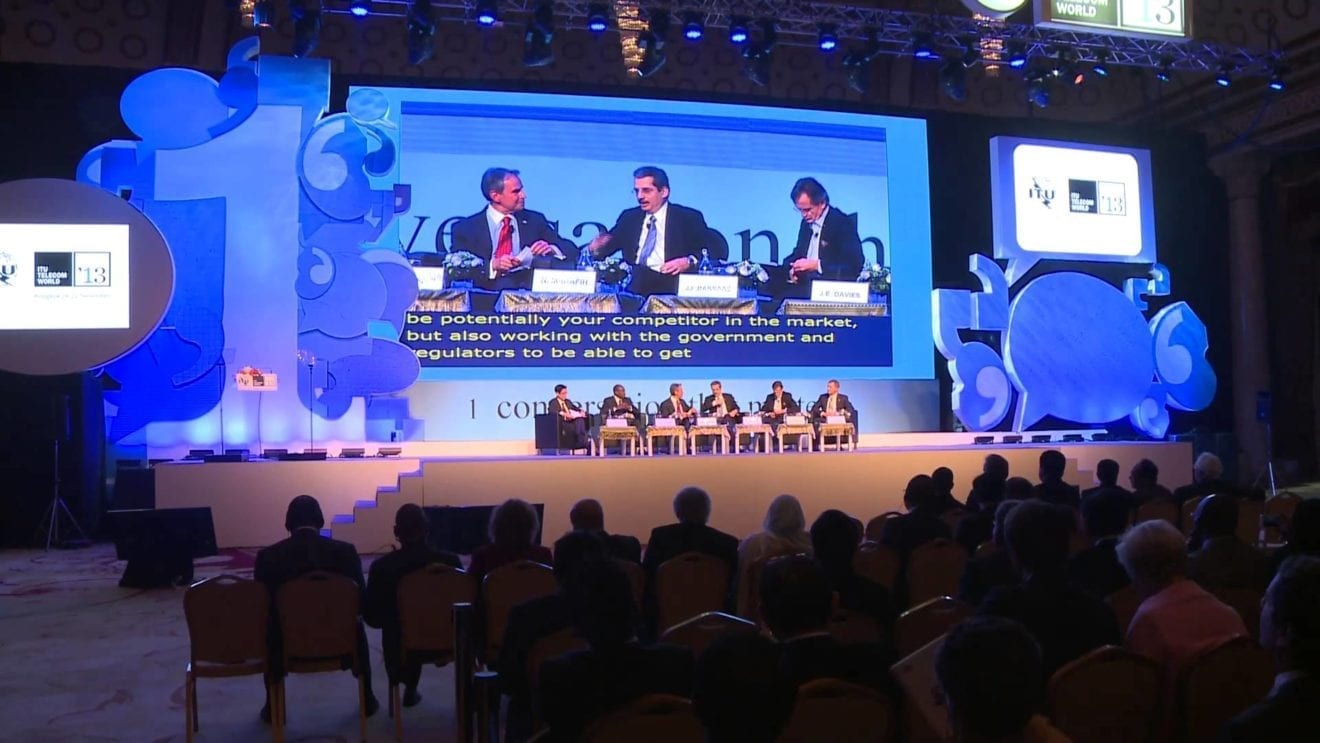
    The International Telecommunications Union (ITU) is hosting the AI for Good Global Summit in Geneva this June.

    The summit, to be held in partnership with UN agencies, including OHCHR, UNESCO, UNICEF, UNICRI, UNIDO, UNITAR and UN Global Pulse, will evaluate opportunities presented by AI and how it can benefit humanity.

    It seeks to convene representatives of government, industry, UN agencies, civil society, and the AI research community to explore the latest developments in AI and their implications for regulation, ethics and security and privacy.

    Breakout sessions will invite participants to collaborate and propose strategies for the development of AI applications and systems to promote sustainable living, reduce poverty and deliver citizen-centric public services.

    “As the UN specialized agency for information and communication technologies, ITU aims to guide AI innovation towards the achievement of the UN Sustainable Development Goals,” said ITU Secretary-General Houlin Zhao. “We are providing a neutral platform for international dialogue to build a common understanding of the capabilities of emerging AI technologies.”

    Some of the confirmed speakers include Peter Norvig, Director of Research at Google; Peter Lee , Corporate Vice President of Microsoft AI and Research at Microsoft; Jing Wang, Senior VP and Head of Research at Baidu; Manuela Veloso, Professor in Computer Science and Robotics at Carnegie Mellon University; and Gary Marcus, Professor of Psychology and Neural Science at New York University.

    Marcus Shingles, CEO of XPRIZE, said that with the acceleration and democratization of AI, the organizers recognize the tremendous opportunity for an emerging generation of problem solvers to tackle global challenges.

    “We are seeing teams use AI as an underlying tool across a variety of domains, from creating personalized learning experiences for children with no access to formal education in Tanzania, to empowering consumers to make healthcare decisions with a medical Tricorder device, to guiding advanced and autonomous robotic vehicles to explore the deep sea or to find their way to the lunar surface,” he said.

  • Indian cellcos told to re-verify all customers

    Indian cellcos told to re-verify all customers

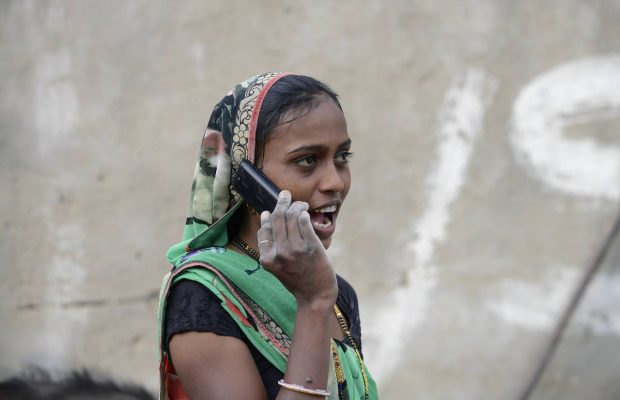
    The Indian government has instructed the nation’s mobile operators to re-verify all their mobile subscribers with a system that uses biometric authentication by next February.

    All existing subscribers will need to be re-verified using the Aadhaar-based system, which includes a unique identifying number and biometric data.

    Both prepaid and postpaid subscribers will need to be registered under the new system, and all licensees will need to inform existing subscribers about the requirement through advertisements in print and electronic media as well as SMS.

    The new requirement stems from a Supreme Court order in February that requires operators to complete the verification system for existing subscribers within one year.

    Operators plan to use and share a common device ecosystem for the verification process and will work on mechanisms to limit public inconvenience.

    But the Cellular Operators’ Association of India (COAI), the peak body for India’s GSM operators, has complained that the re-verification exercise will cost 10 billion rupees in infrastructure and training costs, and these expenses will need to be borne by operators.

    COAI also indicated it may need to seek an extension from regulator Trai if its members are not able to complete the process of re-verifying millions of subscribers within a year.

  • Singtel, Telkomsel enter mobile money alliance

    Singtel, Telkomsel enter mobile money alliance

    Singapore’s Singtel and Indonesia’s Telkomsel have teamed up to launch a real-time mobile remittance service to Indonesia.

    The new service is being offered by SingCash under the Singtel Dash brand. It will allow customers in Singapore to send money to the state-owned PT Pos Indonesia’s 4,500 cash-out points across the nation.

    The initiative marks the first collaboration between Singtel and Telkomsel on a mobile money initiative.

    The agreement is expected to be expanded in the future to cover more cash pick-up points, and to support mobile remittance directly to Telkomsel’s TCash mobile wallet from Singtel mobile wallets.

    According to the Embassy of the Republic of Indonesia in Singapore, there are 200,000 Indonesians living and working in Singapore, and outward remittance from Singapore to Indonesia totals more than $409 million per year.

    “Telkomsel’s partnership in Singtel’s remittance service is one effort to support our government in promoting financial inclusion for Indonesian people, especially the unbanked segment,” Telkomsel CEO Ririek Adriansyah said.

    “Foreign remittance enables them to improve their quality of life as well as provide an opportunity to begin saving for the future. We believe every little effort to promote financial inclusion will also accelerate the growth of Indonesia’s economy.”

  • Singapore operators to switch off 2G from Sunday

    Singapore operators to switch off 2G from Sunday

    Singapore’s mobile operators will commence the process of switching off their 2G networks on Sunday as part of a scheduled sunsetting of the aging networking technology.

    Operators M1, Singtel and StarHub plan to conduct the switch-off in stages, and complete the process by April 18Singapore’s mobile operators will commence the process of switching off their 2G networks on Sunday as part of a scheduled sunsetting of the aging networking technology.

    Operators M1, Singtel and StarHub plan to conduct the switch-off in stages, and complete the process by April 18.

    As part of an agreement with regulator the Infocomm Media Development Authority (IMDA), operators are giving 2G users the ability to retain their numbers and subscription plans on 3G and 4G networks at no additional cost or requirement to re-contract.

    The IMDA has urged the nation’s remaining 2G-only users to switch to a 3G or 4G handset by this time.

    The regulator is holding information sessions for seniors wishing to learn how to use smartphones as part of the transition process, and has also worked with the operators to ensure that handset models costing below S$50 ($36) are available for the holdouts.

    The IMDA banned the sale of all 2G-only devices from January as part of the switch-off process, which is aimed at allowing 2G spectrum to be re-allocated for advanced mobile services.

    Singtel’s wholly-owned Australian subsidiary Optus is meanwhile following its parent in switching off 2G. Optus announced it will commence a staggered shutdown process from April 3, starting in the states of the Northern Territory and Western Australia..

    As part of an agreement with regulator the Infocomm Media Development Authority (IMDA), operators are giving 2G users the ability to retain their numbers and subscription plans on 3G and 4G networks at no additional cost or requirement to re-contract.

    The IMDA has urged the nation’s remaining 2G-only users to switch to a 3G or 4G handset by this time.

    The regulator is holding information sessions for seniors wishing to learn how to use smartphones as part of the transition process, and has also worked with the operators to ensure that handset models costing below S$50 ($36) are available for the holdouts.

    The IMDA banned the sale of all 2G-only devices from January as part of the switch-off process, which is aimed at allowing 2G spectrum to be re-allocated for advanced mobile services.

    Singtel’s wholly-owned Australian subsidiary Optus is meanwhile following its parent in switching off 2G. Optus announced it will commence a staggered shutdown process from April 3, starting in the states of the Northern Territory and Western Australia.