Category: Telecom

Retail News Asia is committed to providing both local and global retailers with the latest Telecom & Telco news throughout the Asian market. This on a daily base.

  • NTT Communications to Launch Prepaid SIM Vending Machines for Tourists and Business

    NTT Communications to Launch Prepaid SIM Vending Machines for Tourists and Business

    NTT Communications Corporation (NTT Com), the ICT solutions and international communications business within the NTT Group, announced today that it will begin operating prepaid SIM card vending machines for foreign visitors to Japan at Narita International Airport from July 24.

    The prepaid SIM vending machines, the first to be installed at Narita International Airport, will give foreign tourists and business travelers access to low-cost mobile data communications while in Japan.

    One machine each will be installed in the international arrival lobbies of Terminal 1 and Terminal 2. In addition to NTT Com’s Prepaid SIM for JAPAN for short-term use, the machines will offer smartphones, mobile routers, accessories and more.

    Touch panel screens in English or Chinese guide the user through the purchase procedure. Payment is via credit card, so there is no need to prepare Japanese yen cash. After making their purchase, the user can register their name, birthday, etc. via either the machine’s touch panel or passport scanner to begin accessing the Internet immediately.

    NTT Com already operates SIM card vending machines at the AQUA CITY ODAIBA mall in Tokyo and Kansai International Airport near Osaka. NTT Com’s Prepaid SIM cards are also sold at airports, electronics stores and travel agencies.

    Given that a record 13 million tourists visited Japan in 2014 and more are expected this year, NTT Com expects to continue adding retail outlets for its Prepaid SIM, mainly at airports, electronics retail stores and travel agents. NTT Com also will gradually expand its range of optional services to support mobile communication experiences for foreign visitors.

    Products & Costs           Prepaid SIM for JAPAN (7-day plan)
    Prepaid SIM for JAPAN (14-day plan)
    Accepted Credit Cards     VISA, MasterCard, JCB, American Express and Diners Club
    (Payment is available via credit card only.)
    Operating Time           24 hours every day

    Note: Information as of July 17, 2015. Products and prices are subject to change without notice.
    Prepaid SIM for JAPAN prices may vary by retail location.

    Prepaid SIM for JAPAN
    Package                            Prepaid SIM for JAPAN          Prepaid SIM for JAPAN
    7 days                                   14 days

    Plan                                                     7-day plan                         14-day plan
    Max. data                                         100 Mb/day                   100 Mb/day
    Charges                           JPY 3,450 (excluding tax)            JPY 4,950 (excluding tax)

    Max. speed                                Download:150 Mbps; Upload 50Mbps

    Max. speed after
    100 Mb/day                                                       200 Kbps (until midnight of that day)
    Service extension                                        Neither plan can be extended
    SIM card sizes                                            Regular, Micro and Nano
    Service area                                                   Japan (nationwide)

    During the purchase procedures, instructions are provided on how users many apply for the no-charge Japan Connected-free Wi-Fi service provided by NTT Broadband Platform Inc. at some 130,000 locations, including airports, train stations, commercial facilities, convenience stores and more. (www.ntt-bp.net/jcfw/en.html).
  • AIS Partners with TNS to Strengthen ATM and Retail Network Offer

    AIS Partners with TNS to Strengthen ATM and Retail Network Offer

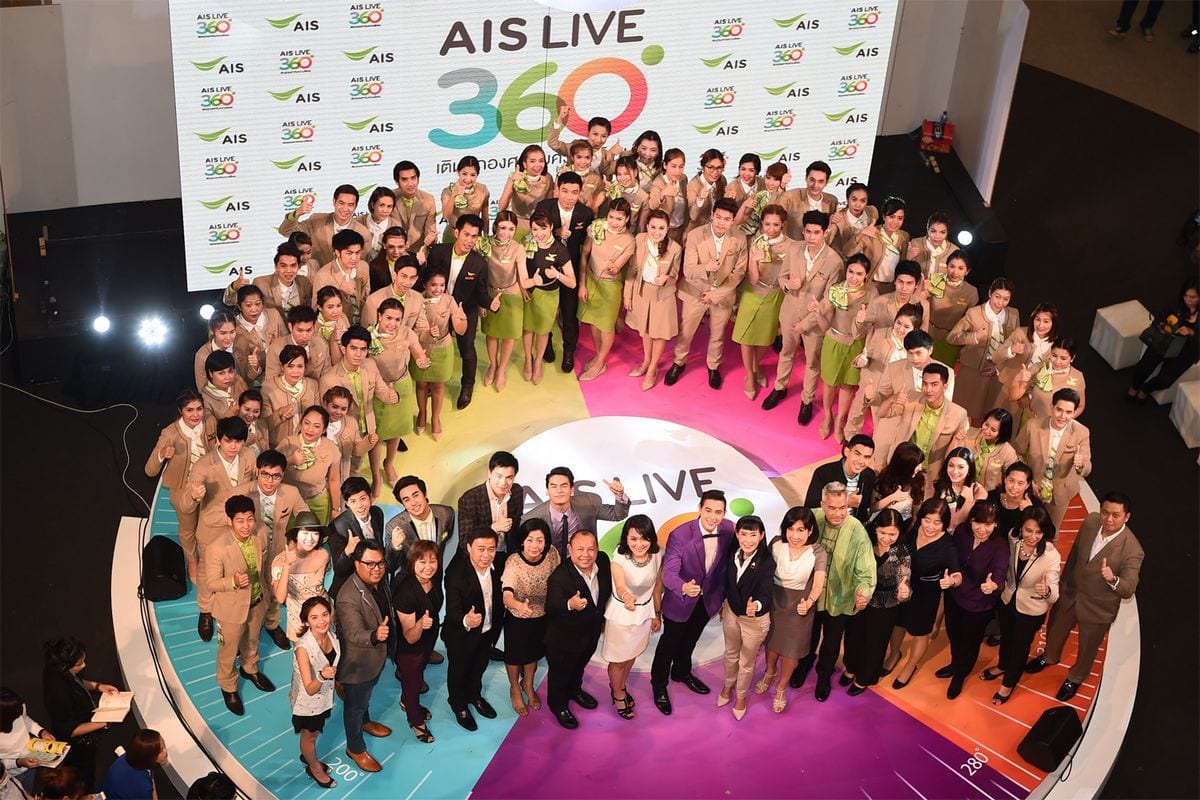
    Thailand’s leading mobile operator, Advanced Info Service (AIS), is partnering with Transaction Network Services (TNS) to enhance its product portfolio to address the specific PCI DSS needs of its merchant customers.

    The new ATM and retail store communications solution, called PCI DSS Certified Hybrid MPLS, is a fully managed service which uses AIS’ mobile 3G and fixed MPLS network, combined with TNSLink. In addition to connectivity to Thailand’s banks, AIS merchant customers will be able to utilise the TNSLink solution to reach more than 400 payments-specific endpoints, including the world’s major card schemes, banks, acquirers, processors and value added financial service suppliers, which are connected to TNS’ worldwide network.

    Weerachai Patcharopartwong, Senior Vice President Corporate Marketing and Sales at AIS said: “AIS’ vision is to create a digital service for customers and Thai people which helps them do more and live better, as well as creates new opportunities for corporate customers to use digital technology to support business operations.

    “We’re delighted to be partnering with TNS and offering its specialised TNSLink product portfolio to our customer base across Thailand. TNS’ long-standing PCI DSS credentials, feature-rich solution and reliable technology make it the premier payments solutions provider in Thailand and a natural choice for our business.

    “This agreement with TNS makes AIS the first and only mobile operator in Thailand to offer a solution providing a communication network with high standard PCI DSS system support and this demonstrates our determination to enhance customer data protection.”

    TNSLink is a fully managed, PCI DSS compliant solution that allows customer to reduce capital outlay, lower operating costs and increase revenue for ATMs and point-of-sale (POS) terminals. A near real-time web reporting portal, TNSOnline, ensures ATM and POS systems operate with maximum uptime. In March, TNS announced it had launched 4G LTE network support for its TNSLink suite of solutions.

    Lisa Shipley, Executive Vice President and Managing Director of TNS’ Payment Network Solutions, said: “Our agreement with AIS is an excellent example of how we partner with local market leaders, such as AIS, to empower their bank and retail customers with the highest level of security for ATM and branch network access. We look forward to helping AIS grow its business using its superior 3G coverage across Thailand.”

    TNS is a Level 1 PCI DSS certified service provider and its secure network is supported 24x7x365 by TNS’ Network Operating Centres around the world. With a strong payments heritage and more than 20 years of expertise, TNS now provides services in more than 60 countries across Europe, the Americas and the Asia Pacific region.

    ENDS

    About Transaction Network Services:

    Transaction Network Services (TNS) is a leading global provider of data communications and interoperability solutions. TNS offers a broad range of network and innovative value-added services that enable transactions and the exchange of information in diverse industries such as retail, banking, payment processing, telecommunications and the financial markets.

    Founded in 1990 in the United States, TNS has grown steadily and now provides services in over 60 countries across the Americas, Europe and the Asia Pacific region, with our reach extending to many more. TNS has designed and implemented multiple data networks that support a variety of widely accepted communications protocols and are designed to be scalable and accessible by multiple methods.

  • Five Indonesian telcos launch LTE on 1800-MHz

    Five Indonesian telcos launch LTE on 1800-MHz

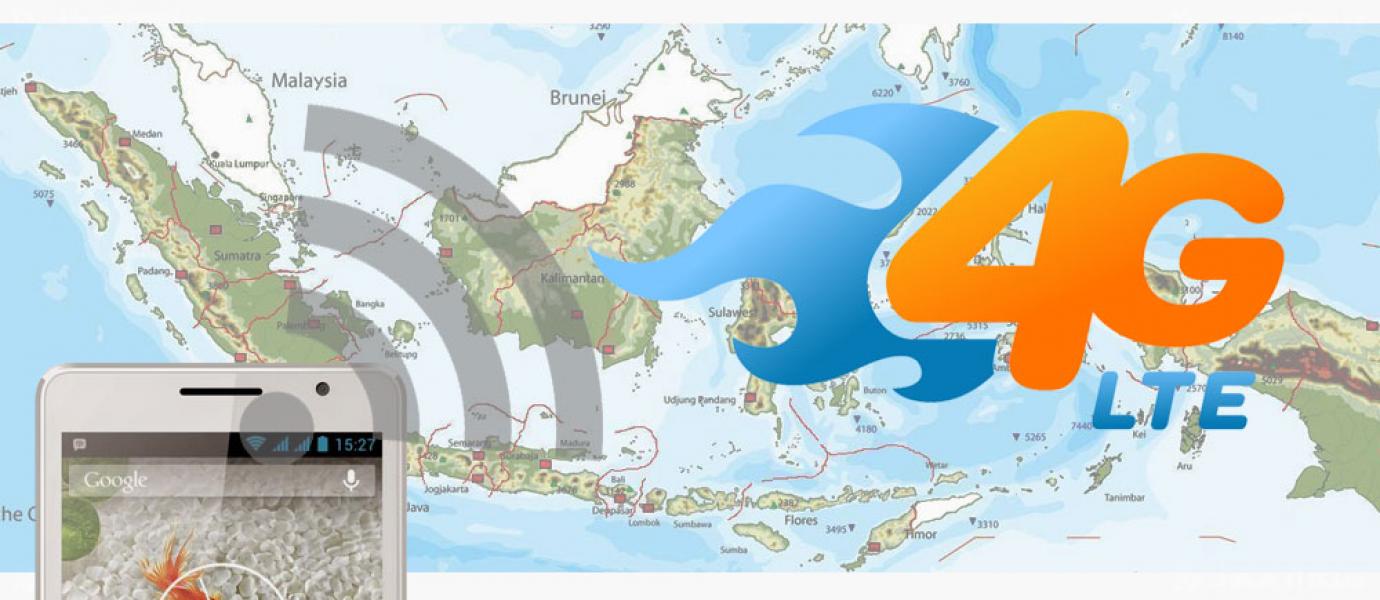
    Indonesia’s five largest mobile operators have all launched 1800-MHz LTE services, while a new player has indicated an intention to enter the LTE market.

    Telkomsel, PT Indosat, XL Axiata, Hutchison’s 3 and Smartfren all recently rolled out 4G services over the band in various cities and regions.

    Telkomsel switched on its network in Makassar, South Sulawesi, Indosat went live in Balikpapan, East Kalimantan, XL held a lunch on the island of Lombok, 3’s network has been rolled out to Banjarmasin, South Kalimantan, while Smartfren activated its network in Batam, Riau Islands.

    Mobile operators have been rushing to roll out LTE services in Indonesia after the government opened up use of the 1800-MHz band for 4G.

    Telkomsel, XL Axiata and Indosat have already launched LTE over the 900-MHz band. Incumbent Telkomsel already has 620,000 LTE subscribers, while XL Axiata has around 200,000.

    The report adds that Berca Hardayaperkasa, a unit of Central Cipta Murdaya, has revealed plans to enter the increasingly crowded 4G market as well. The company is targeting a launch in Bali, Makassar and Pekanbaru in October.

    Central Cipta Murdaya has committed up to $150 million to deploy the service in the three cities. The company is ultimately planning to launch in 12 cities outside Java. Berca was originally a Wimax operator, having secured 2300-MHz spectrum in 2009.

  • XL Axiata launches LTE in Lombok; Indosat to accelerate 4G rollout

    XL Axiata launches LTE in Lombok; Indosat to accelerate 4G rollout

    Indonesian mobile operator XL Axiata today launched a commercial 4G Long Term Evolution (LTE) service in the 1800MHz band in Mataram, Lombok. The firm’s director of service management Ongki Kurniawan explained that the decision to choose Lombok was based on its ‘special relationship’ with the area. ‘Since entering this region, we [have built an] affinity [with the people living here]. People accept and have confidence in XL when it comes to their telecommunication needs, and [that relationship is] now evolving into data and internet services. Our market share currently stands at more than 85% in Lombok,’ he said, ahead of the official launch of the service in the area.

    XL Axiata has deployed 14 4G base transceiver stations (BTS) in the Capital NTB area, as well as covering centres of government and business, and some shopping centres such as Mataram Mall. The cellco claims it can offer peak download speeds of 100Mbps on the new network which is supported by a range of affordable 4G handsets and devices from the likes of LG, Sony, Huawei, Sharp, Siemens and Lenovo. Its new service also supports Voice-over-LTE (VoLTE) it says and, having launched in Mataram, XL Axiata is now looking to roll out 1800MHz BTS in Bandung, Surabaya, Denpasar and Jakarta later this year. Additionally, the operator notes that cities that already have 4G LTE service capability in the 900MHz band – namely Medan, Bogor, and Yogyakarta – will also benefit from 1800MHz services in the near future. To date, it claims to have deployed more than 200 LTE-900 BTS in these cities and has amassed a total of 200,000 4G subscribers.

    In a separate development, XL Axiata rival PT Indosat claims that it is ready to accelerate its own 4G rollout throughout Indonesia. The cellco says its readiness to speed up its LTE deployment is thanks to its nationwide Indosat Network Modernisation programme which is designed ultimately to upgrade its entire infrastructure to support LTE with peak speeds of 185Mbps/41Mbps (down/uplink). The national programme kicked off two years ago, initially with the aim of boosting coverage, improving internet access speeds and providing clearer voice call quality (i.e. high definition voice) services. By the end of this year Indosat aims to have upgraded 42 cities and their environs (equivalent to districts/municipalities across Indonesia), under the expansion plan. IndoTelko quotes Indosat head of corporate communications, Fuad Fachroeddin, as saying that in April it launched its Super 4G-LTEservice in Jakarta, Bandung, Yogyakarta and Bali, and aims to add other cities throughout Indonesia in the near future. ‘We are optimistic we will soon be able to accelerate the deployment of 4G LTE throughout Indonesia under the ongoing Network Modernisation programme,’ he said.

  • Huawei, Telkomsel trial Wi-Fi calling and VoLTE based on NFV

    Huawei, Telkomsel trial Wi-Fi calling and VoLTE based on NFV

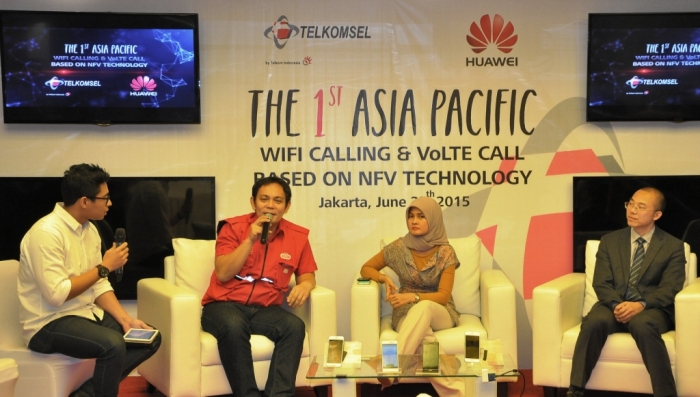
    Huawei Technologies said Telkomsel, a telecom operator in Indonesia, has demonstrated its 4G convergent communication service trial for Wi-Fi calling and VoLTE (Voice over LTE) based on NFV technology (Network Function Virtualization) in Jakarta.

    Wi-Fi calling and VoLTE will enable Indonesia’s 280 million mobile users to experiences HD voice and HD video within the shortest connecting time. When a subscriber switches between 4G and Wi-Fi environment, the call will not be interrupted.

    “This Wi-Fi Calling and VoLTE trial is part of our efforts to provide better service quality, and will also create an exciting new experience for customers in using our services,” said Ivan Permana, vice president, Technology & System, Telkomsel.
    Telkomsel in pact with Huawei
    Telkomsel, the #1 telecom operator, has more than 141 million subscribers Indonesia. Telkomsel has built more than 95,000 BTSs. Telkomsel’s broadband now reaches 300 cities. Telkomsel operates a 24-hour call center and more than 400 service centers GraPARI across Indonesia.

    Image: Tommy G Tanjung, engineer of Technology Strategy, Telkomsel, Ivan Cahya Permana, VP of Technology and System, Adita Irawati, VP of Corporate Communications, and Zhang Qin, head of Core Network Marketing, Huawei

  • Malaysia successful in launching the first Intel Atom x3 powered Smartphone

    Malaysia successful in launching the first Intel Atom x3 powered Smartphone

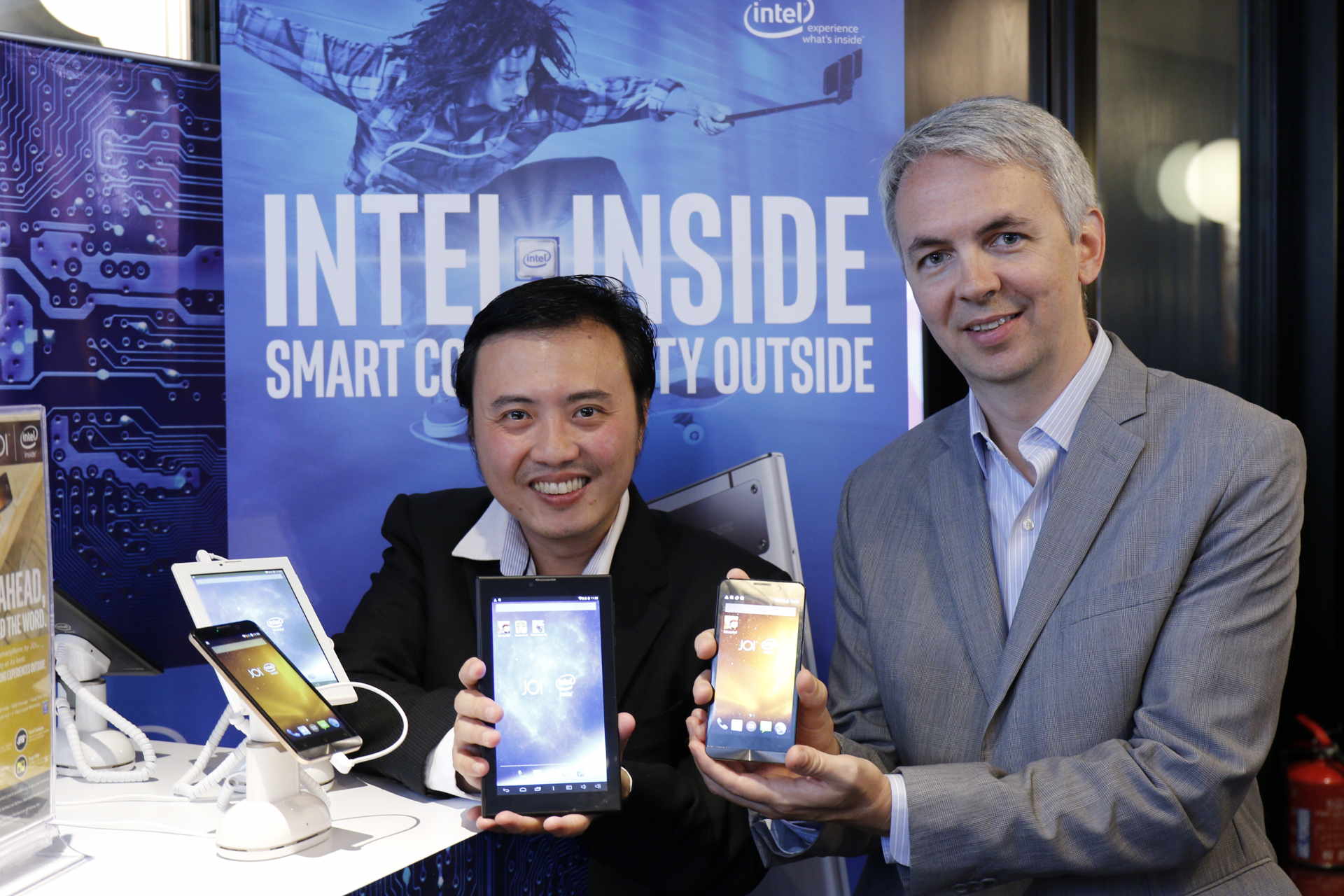
    A new cell phone was uncovered by SNS Company in Malaysia powered by an Intel Atom x3 “S0FIA” chipset. JOI Phone 5, is a mid range cell phone with dual SIM abilities which will be available through GLOO’s retail company in Malaysia. The device is powered by a 64-bit dual-core Intel Atom X3-C3130 chipset packaged with Mali-400MP2 GPU .
    The cell phone has an internal memory of 8GB along with just 1GB of RAM. It runs on Android 4.4 KitKat and has a design somewhat similar to Asus Zenfone 2, which was released a bit earlier. JOI Phone 5 brandishes a 5-inch 720p IPS LCD show with an 8MegaPixel camera on the back while the front camera is 2MegaPixel.

    Connectivity options are plenty with Wi-Fi 802.11 b/g/n, Bluetooth 4.0 as integration alternatives and has a battery capacity of 2,100mAH. The JOI Phone 5 will hit the businesses with a starting sticker of 399 Malaysian Ringgit which is around $106. JOI 7 lite phablet was also revealed and highlights a 7-inch IPS show (1024×600 pixels) and runs on an Intel Atom X3 chipset combined with 1GB RAM and 8GB interior memory.

    The JOI 7 lite phablet will be available at a cost of 299 Malaysian Ringgit, which equals to $79, and will run on Android 4.4 KitKat. The phablet highlights a 2MegaPixel camera at the back while a VGA camera on the front and has Wi-Fi, GPS, and Bluetooth 4.0 as integration alternatives.

    Although JOI 7lite is getting sweeping publicity, but it is not the first tablet of its kind, A Chinese Telecast X70 3G tablet with phone calling support was the first Atom x3 tablet with a cheap price tag of $70.

  • IIJ, Biznet launch GIO Cloud JV in Indonesia

    IIJ, Biznet launch GIO Cloud JV in Indonesia

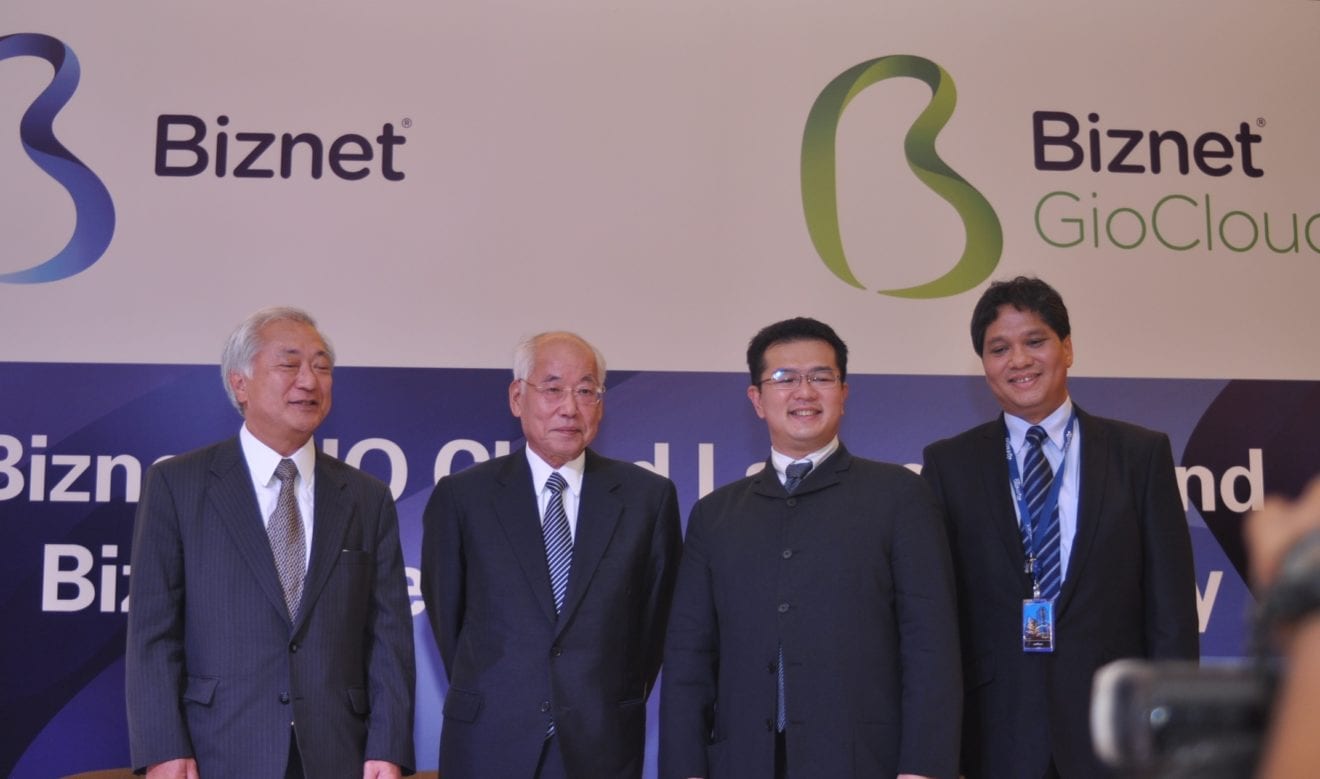
    Japanese internet and network services provider Internet Initiative Japan (IIJ) and Indonesian telecommunications services provider Biznet Networks have launched their Biznet GIO Cloud service in Indonesia. IIJ and Biznet initially announced their joint venture in November 2014 and established it in January this year. Prior to launch, the service had already been implemented on a trial basis at a Japanese insurance company, a retailer and an Indonesian tobacco company among others.

    The joint venture will leverage Biznet’s broadband backbone network and IIJ’s cloud operation technologies to provide cloud services to both local and Japanese companies. The Biznet GIO Cloud service was developed based on the operation and system architecture technologies of IIJ. The service uses Biznet’s broadband network infrastructure in Indonesia to minimize access delays.

    The Biznet GIO Cloud offers two types of services: GIO Cloud, an auto-self provisioning public cloud service, and GIO Enterprise Cloud, a private cloud service for enterprises. Internet access fees are included as standard in both products, and the products offer connectivity through closed networks as well as over the internet. Additionally, the public cloud service comes standard with a host of security functions (including firewalls and load balancers), offers 24/7 support, and provides a service level agreement (SLA) guaranteeing 99.9 percent server uptime.

  • Sharp launches Aquos Crystal 4G smartphone in Indonesia

    Sharp launches Aquos Crystal 4G smartphone in Indonesia

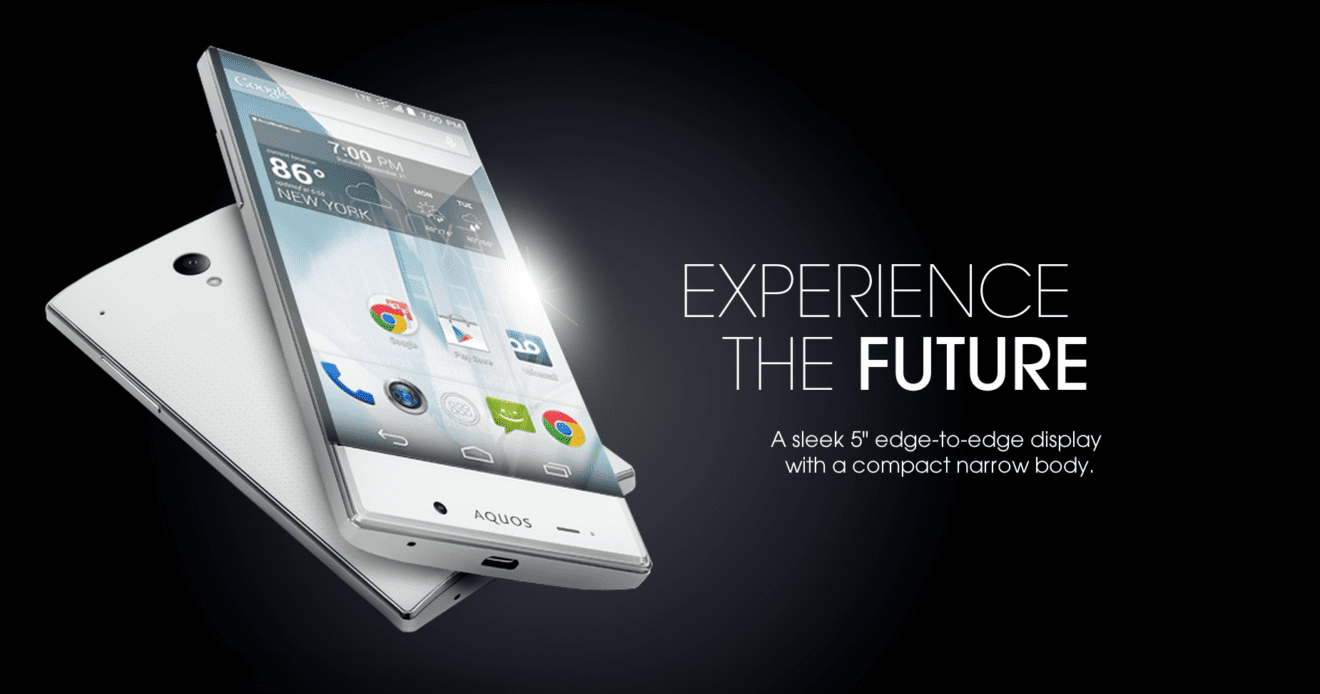
    Japanese electronics company Sharp has launched its first Aquos wireless phone, the Sharp Aquos Crystal, in Indonesia, The Jakarta Post reports. The Aquos Crystal will be on sale in Indonesia for IDR 3.99 million (approximately USD 302.9). Sharp targets sales of over 100,000 Aquos Crystal units during the first six months of this year.

    The 4G-ready smartphone runs on Android 4.4 KitKat and features a 5-inch edge-to-edge HD screen, Clari-Fi technology for enhanced digital sound quality, an 8-megapixel rear-facing camera, a 1.2-megapixel front-facing camera, HD voice, an embedded 2,040mAh battery, a 1.2GHz quad-core processor, and 1.5GB RAM and 8GB ROM.

    Indonesia accounts for 40 percent of Sharp’s total sales in India, Southeast Asia, Oceania and the Middle East, said Sharp Electronics Indonesia president director Fumihiro Irie. “Our target is to obtain sales from the middle to high-end market, which accounts for only 30 percent of the country’s smartphone market. We won’t enter into low-end products that account for 70 percent of the market,” Irie said.

    According to Sharp Electronics Indonesia’s national sales manager for smartphone, David Leonard, the manufacturer already has 20,000 ready-stocks available across distribution channels owned by its distributor partner Surya Citra Multimedia. “We’re also partnering with online store blibli.com to sell the product. We remain open to similar partnerships with other online stores or marketplaces,” he said.

  • Smartac Group and HGC Intend to Build “Smart Travel Cloud” in Hong Kong

    Smartac Group and HGC Intend to Build “Smart Travel Cloud” in Hong Kong

    Smartac Group China Holdings Limited (“Smartac Group” or the “Company”, together with its subsidiaries, the “Group”, stock code: 395) announces that its wholly-owned subsidiary Solomedia Asia Limited (“Solomedia Asia”) has signed a Memorandum of Understanding (“MOU”) with Hutchison Global Communications Limited (HGC), the fixed-line division of Hutchison Telecommunications Hong Kong Holdings Limited regarding the collaboration to research on and establish “Smart Travel Cloud – Hong Kong Stop”, a mobile internet service that will enable visitors to receive travel and shopping information in Hong Kong.

    Hong Kong is Smartac Group’s first stop to develop its “Smart Travel Cloud” in an overseas market, aiming to resolve the problems encountered by mainland travellers regarding the use of Wi-Fi networks while travelling abroad. By integrating with an Online to Offline (O2O) business model, “Smart Travel Cloud” will provide visitors with real-time travel and shopping information, and will help drive traffic and users to traditional offline businesses.

    Pursuant to the MOU, HGC will leverage its optical fibre network and Wi-Fi network in Hong Kong to provide visitors with stable and reliable Wi-Fi internet access. Solomedia Asia will deploy its innovative technology of O2O big data platform (combining Wi-Fi, bluetooth Beacon, smart interactive screen) to provide visitors with personalised and interactive information for hassle-free travel abroad.

    Solomedia Asia and HGC intend to research on the introduction of mobile commerce, mobile payment platform, and commercial smart data platform, to popularise O2O mobile commerce and introduce a new business model to the retail, hotel and other tourism-related service industries in Hong Kong. Meanwhile, both parties will further carry out feasibility study and explore opportunities to establish and operate a big data platform for Hong Kong travelling.

    Jason Kwan, Executive Director of Smartac Group, commented: “The collaboration on establishing ‘Smart Travel Cloud’ via a Wi-Fi network will assist Hong Kong retail and tourism industries to effectively connect with and serve the visitors and consumers in Hong Kong. We are glad to join hands with HGC, the largest Wi-Fi service provider in Hong Kong1, in initialising ‘Internet + Tourist Consumption’. Such collaboration will incorporate the strength of each party to seize development opportunities in mobile internet services. This also caters to the current global trend of transitioning to the big data era and adds impetus to Hong Kong tourism and retail industry.”

    Jennifer Tan, Chief Operating Officer of HTHKH, said: “HGC is the largest Wi-Fi service provider in Hong Kong1. We are pleased to work with Smartac Group and are going to provide its subsidiary Solomedia Asia high-speed wireless internet services in order to develop ‘Smart Travel Cloud’ services in Hong Kong. Our extensive Wi-Fi network provides over 16,000 hotspots in large shopping arcades, at coffee shop chains, fast food outlets, popular restaurants, commercial buildings, large residential estates, tertiary institutions and car parks. This will enable ‘Smart Travel Cloud’ users to obtain the latest travel information anytime, anywhere in Hong Kong.”

  • Singapore pulls plug on 2G mobile networks, to reuse airwaves for newer 4G services

    Singapore pulls plug on 2G mobile networks, to reuse airwaves for newer 4G services

    All 2G voice and messaging services will end in Singapore as the airwave-starved island moves to reuse existing 2G airwaves to boost the capacity and speeds of newer 4G services.

    The three local telcos Singtel, StarHub and M1 said in a statement on Monday afternoon that the number of customers affected are an “extremely small percentage” of their current base.

    “Mobile networks have evolved since the launch of 2G services in 1994… Singapore’s extensive modern 3G and 4G mobile networks have led to high smartphone ownership and usage,” the telcos said.

    “To cater for consumers’ increased demand for mobile data and faster access speeds, the spectrum currently used for 2G will be used to provide faster, more advanced 3G and 4G services.”

    The Infocomm Development Authority (IDA) of Singapore said there are some 250,000 2G mobile users today, forming only 3 per cent of the total mobile user base of 8 million subscriptions. The authority expects the proportion of 2G users to taper off in the next two years.

    Customers on 2G-only handsets will only need to place their existing SIM cards into a 3G or 4G handset. Their mobile services will not be disrupted. Those currently using 3G and 4G handsets will also not be affected.

    In the last few years, the three telcos said they have been conducting outreach programmes to encourage customers to migrate to newer networks. They have pledged to continue reaching out to affected 2G users through SMS, calls and posters at their retail outlets in the run-up to the service cessation.

    Singapore is not the first country to end 2G services. Korea and Japan ceased offering 2G services in March 2012. Australia is expected to pull the plug on its 2G networks, starting with Telstra, by the end of next year.

  • Smartfren Telecom Launches Andromax Q Smartphone in Indonesia

    Smartfren Telecom Launches Andromax Q Smartphone in Indonesia

    Cyanogen wants to challenge the dominion Google has in the mobile market by taking Android from under its wing bit by bit. And one way for Cyanogen to ensure this happens is to put its custom ROMs on more and more phones.

    The startup already partnered up with several device makers like Micromax Yu, OnePlus or BLU, but today we bring you word of a new handset running the platform.

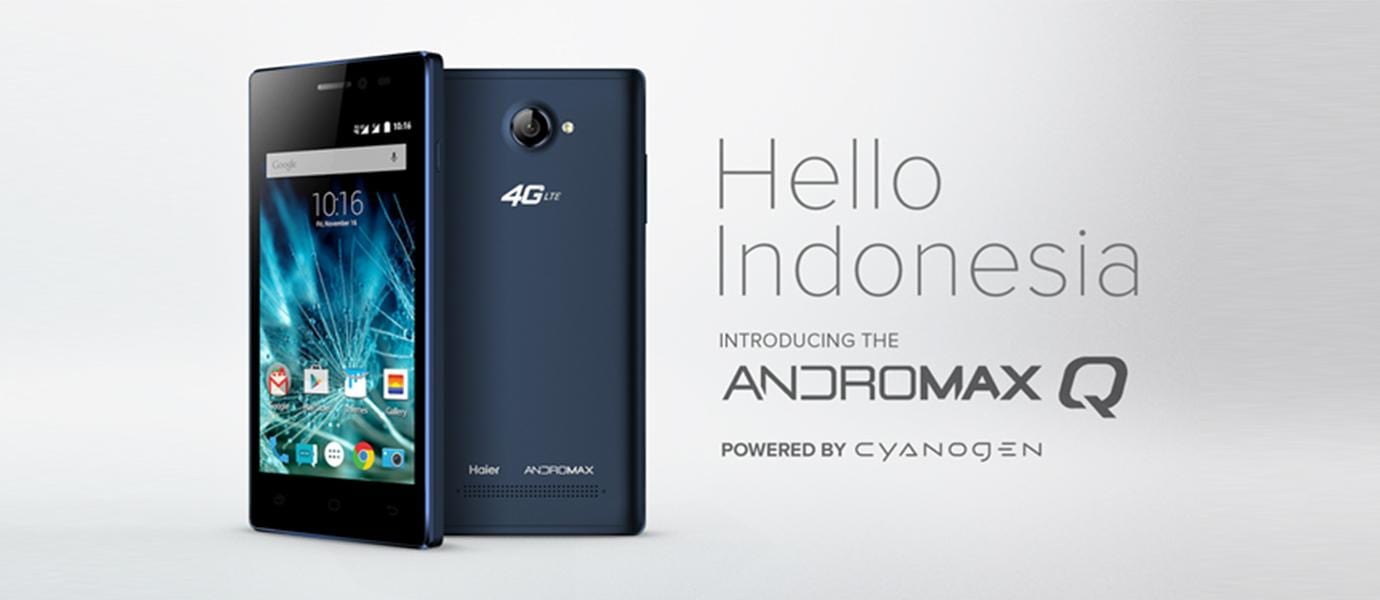
    This time, Cyanogen is doing business with Indonesian telecom operator Smartfren Telecom, and together they have launched the Cyanogen OS 12-powered Adromax Q.

    The phone has actually been manufactured by China’s Qingdao Haier Telecom and will become shortly available on the market in Indonesia.

    The Andromax Q brings basic specs

    The phone is apparently part of the new Adromax family of 4G LTE smartphones and will be sold for a super affordable price tag of $97 / €86.

    Naturally, for this amount of money, you shouldn’t be expecting anything too spectacular in terms of specifications. The Andromax Q is an entry-level flagship that arrives into the wild with a 4.5-inch FWVGA (854 x 480 pixel resolution) display and a Snapdragon 410 SoC clocked at 1.2GHz under the hood.

    Smartfren Telecom also throws in 1GB of RAM, 8GB of internal storage (expandable via microSD card slot), dual-SIM support and 4G LTE. The handset relies on a 2,000 mAh battery to maintain the juices flowing.

    Last but not least, the phone also offers the services of a 5MP primary camera with LED flash and a 2MP secondary shooter.

    If you didn’t know until now, Smartfren Telecom happens to be an investor in Cyanogen Inc, and this partnership birthed the Andromax Q model. And as a Smartfren executive confirms, this means we should be expecting to see more Cyanogen OS smartphones launch in the near future, under the carrier’s banner.

    Customers looking to purchase a Cyanogen OS smartphone in Indonesia also have the option of picking up the OnePlus One handset.

  • SK Telecom Wins Most Innovative Telecom Project Award

    SK Telecom Wins Most Innovative Telecom Project Award

    SK Telecom won the Most Innovative Telecom Project (MITP) award on May 20 from the Telecom Asia Award (TAA) held in Jakarta, Indonesia, the company said.

    SK Telecom could win the Most Innovative Telecom Project award because TAA recognized the company’s continuous efforts for LTE technology development, particularly the commercialization of the “3 band LTE-A,” which provides a speed of 300Mbps maximum, SK Telecom said.

    TTA is held by Telecom Asia, a Hong Kong-based media company specializing in information technology, SK Telecom said. TTA has been awarding Asian companies for providing communication services or technologies, SK Telecom said.

    Park Jin-hyo, head of the network technology institution of SK Telecom, said that the company will continually innovate its network technology, with ambitions of being the world’s representative mobile communication company.

  • Korean cellular carriers open unified app retailer

    Korean cellular carriers open unified app retailer

    South Korean cellular carriers have opened a unified app retailer for his or her smartphone customers, as a part of an effort to bolster their presence within the rising app content material sector dominated by two app giants: Google and Apple.

    The One Retailer is a consolidated cellular model of KT‘s Olleh Market; T Retailer operated by SK Planet, the platform arm of SK Telecom; and U+ Retailer by LG Uplus.

    It’s out there for a smartphone consumer by way of a model improve of the prevailing app market on the handset.

    An app developer can now promote their product on the app market by importing the product solely as soon as on the One Retailer, whereas up to now they needed to register it individually on the prevailing app shops.

    The requirements for creating an app have additionally been harmonised so app creators gained’t have to make totally different apps for every app retailer, the cellular carriers stated.

    The launch of the One Retailer got here two months after saying the plan to combine the web content material market that had been run individually by every telecom firm.

    In accordance with market watchers, cellular carriers felt the necessity to be a part of forces for the app content material sector towards Google’s Android market and Apple App Retailer which have dominated the native app enterprise.

    In response to the newest knowledge by the Korea Cellular Web Enterprise Affiliation, Android is estimated to have taken up 51.eight per cent of the app market in Korea value roughly four.5 trillion gained (US$four.06 billion) as of end-2014, adopted by Apple’s 31.three per cent. The mixed share of native app platform suppliers solely stood at 13 per cent.

    The Korean cellular carriers hope the One Retailer will create new alternatives for native app builders, in addition to cellular shoppers, to take pleasure in numerous and certified content material based mostly on a extra handy and higher consumer expertise.

    About 1.7 million smartphone customers are anticipated to go to the One Retailer each month, the cellular carriers stated. They didn’t give particulars on the variety of apps registered with the unified market.

  • Indonesian telco giant XL Axiata appoints Mindshare for $18m media duties

    Indonesian telco giant XL Axiata appoints Mindshare for $18m media duties

    Indonesia’s second largest mobile telecommunications firm, XL Axiata, has concluded a multi-agency pitch that sees its media account change hands.

    Mindshare takes on the planning and buying business from Havas Media after three rounds of pitching against the country’s top agencies. Starcom MediaVest Group, Maxus, Zenith Optimedia and the incumbent were among those involved in the pitch, Mumbrella understands.

    The account is estimated to be worth around US$15-18 million, according to agency sources.

    A creative review of the business earlier in the year, which covered both of XL Axiata’s brands – XL and Axis – saw Lowe emerge the winner of a pitch involving Dentsu, Coleman, Saatchi & Saatchi and Bates Chi & Partners. Y&R was the incumbent.

    Digital marketing duties were awarded to STW Group-owned Xion, taking on the business from Mirum Jakarta, in March.

    The companies agencies will be working on briefs to differentiate XL and Axis, and reposition XL as a leading player in data.

  • Indosat, Smaato Launch IMX for Real Time Ads Spot Bidding

    Indosat, Smaato Launch IMX for Real Time Ads Spot Bidding

    Indosat, Indonesia’s third largest mobile telecommunication operator based on customer size, has teamed up with Smaato, a company offering advertising tools for mobile publishers and developers, to launch an advertising spot bidding platform for local and international advertisers.

    Indonesia Mobile Exchange (IMX) allows advertisers to connect with publishers which provide mobile advertising spots and bid for the spots in real time.

    “This Exchange platform can reach out all cellular customers. We start it by cooperating directly with Indonesian leading publishers, such as the Indonesia Digital Association [IDA] members,” said IMX chief executive Citra Agus in Jakarta.

    IDA members include Indonesia’s oldest online news site Detik.com, and Viva.co.id, the online news portal unit of Visi Media Asia.

    IMX will allow publishers to monetize their mobile platforms better with advertisers from Indonesia and abroad. Meanwhile, advertisers should better targets their customers based on mobile customers’ behavior, Citra said.