Category: Telecom

Retail News Asia is committed to providing both local and global retailers with the latest Telecom & Telco news throughout the Asian market. This on a daily base.

  • Indonesian telecom minister slams operator inefficiency

    Indonesian telecom minister slams operator inefficiency

    Operators in Indonesia have been warned by the country’s telecoms minister that their licences could be revoked unless they consolidate or improve their build-out efforts.

    Minister Rudiantara – who follows the Indonesian tradition of using a single name – has set out the consolidation goal of no more than four operators by the end of his term in 2019. To achieve this, he has advised smaller operators to either merge with rivals or leave the market.

    Rudiantara worked at two of the largest operators in Indonesia prior to his appointment to the government. “My background is in the private sector, so I’m pragmatic. I will suggest they consolidate to have the capability to invest and retain their permits”, he said. “Each permit has requirements for the operator to invest and to build, so if they don’t build anything, I can revoke their permit.”

    There are currently seven players in the Indonesian market; at the end of Q4 15 Telkomsel took the lead with around 153.3 million connections. It is tailed by Indosat with 69 million, 3 Hutchison with 51.2 million, and XL Axiata with 40.8 million. At the lower end of the scale are Smartfren with 12.5 million connections, Bolt with 2.4 million, and Ceria with 68,688.

    Rudiantara’s frustration with the inefficient coverage in Indonesia is widespread throughout the upper echelons of government. Without identifying specific companies, the minster has hit out at operators for not delivering on promises to develop and build out infrastructure, adding that the government had already fined some firms for this transgression.

    “So far we’ve handed them fines and penalties, but my job isn’t to accumulate funds for the government,” he said. “I only need to enforce the permits and I’m prepared to do that, but I’d rather take a friendly approach and suggest they merge to keep operating.”

    Indonesia has over 300 million mobile connections. The country’s five largest operators have stated that they will begin offering 4G services over 1.8GHz spectrum following investment in the technology.

  • Netflix blocked by Indonesia’s biggest telecom

    Netflix blocked by Indonesia’s biggest telecom

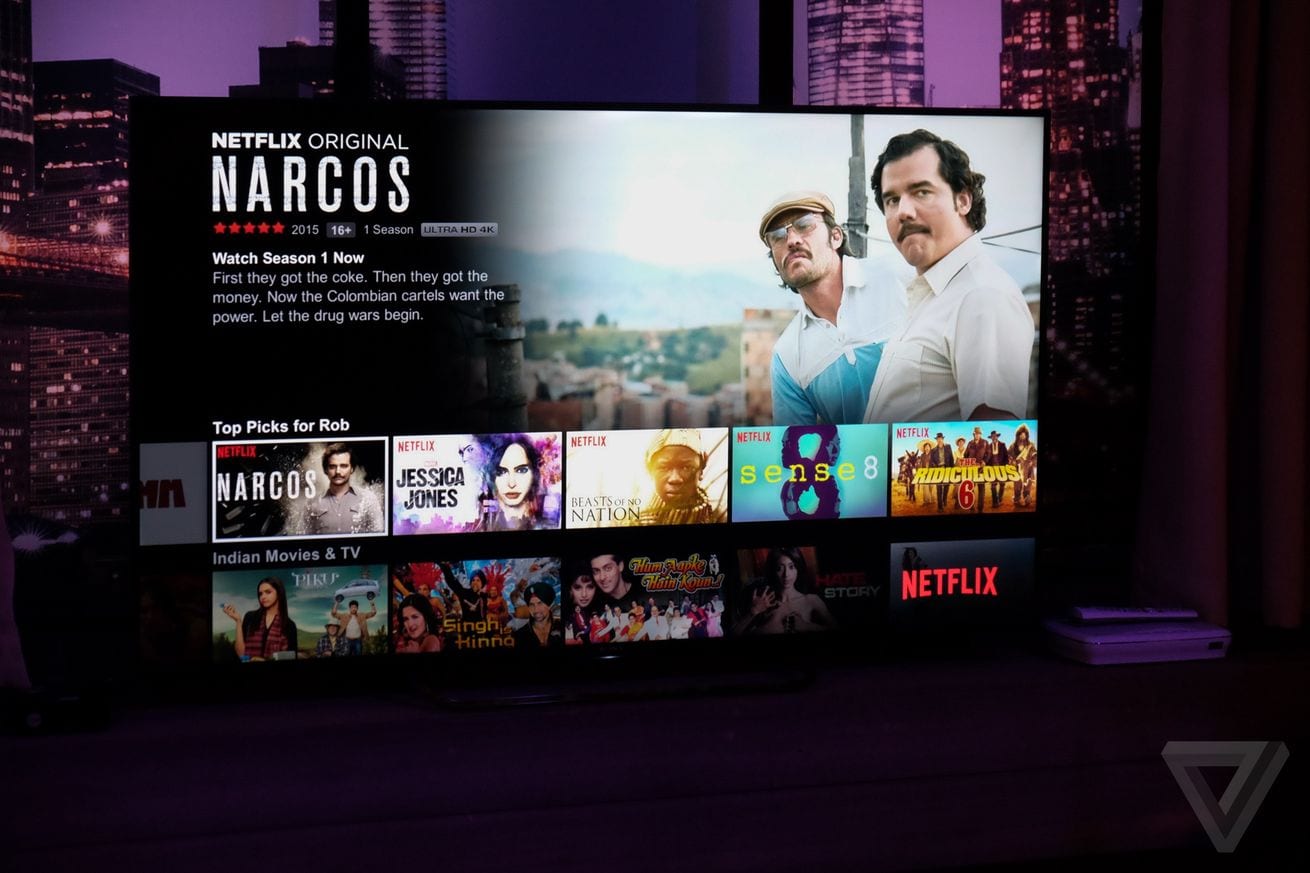
    Netflix hit a snafu during its expansion today, with the biggest telecom in Indonesia, PT Telekomuniksai Indonesia Tbk, blocking access to the service. The blockage is said to be over Netflix’s lack of a content provider permit, as well as objections to some content made available through Netflix. Concerns about adult and violent shows were cited as part of the reason for the banhammer.

    Earlier this month, Netflix’s CEO Reed Hastings announced that 130 new countries would be getting access to the streaming service, something that would hugely bump the number of regions where Netflix is available (from 60 to 190). The announcement came a short while ahead of the company’s crackdown against VPN users, a business move largely criticized.

    One of those 130 news countries is Indonesia, but rolling out there won’t go as smoothly as the company may have hoped. The nation’s Censor Board had made it clear earlier this month that it objects to some content made available on Netflix; furthermore, cable operators in the nation had expressed upset about the business move, likely due to the competition Netflix would pose.

    Telkom’s Netflix block is a big one, as the telecom controls both ISPs Wi-Fi.id and IndiHome, covering a large number of Internet users in Indonesia. Telekom also happens to be the company behind a local VOD service called UseeTV.

    Telekom’s VP Arif Prabowo said in a statement today, “Netflix’s content should adjust to regulations in Indonesia,” claiming the block is for the good of the people. It isn’t clear how Netflix will proceed, though it has said it will comply with whatever laws in the region it must.

  • Malaysia provides Tweakker with entry into Asian MVNO market

    Malaysia provides Tweakker with entry into Asian MVNO market

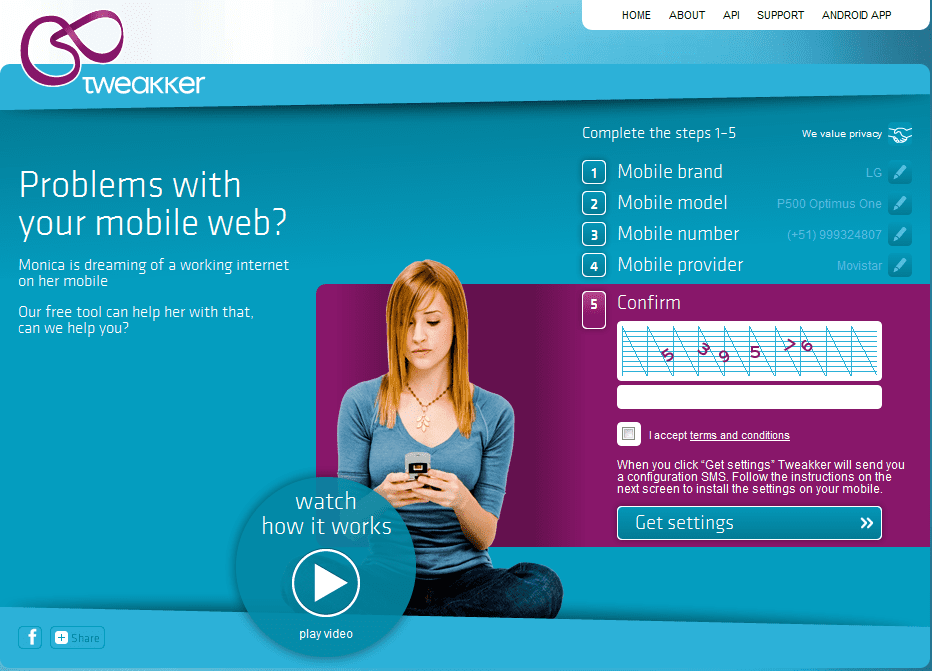
    Spirent Communications has announced  that the firm’s mobile device intelligence unit -Tweakker, has won its first contract with a mobile virtual network operator [MVNO] in Asia. Called redONE , the contract enables the MVNO to embed Tweakker’s self-care smartphone Device Guides on its website with a link to Tweakker’s cloud. After training provided by Tweakker, customer care agents will be able to reference them to minimize the time it takes when on-boarding new subscribers if they experience difficulties in getting online.

    During calls, agents will simply direct callers to the correct place in the self-care device guide library on redONE’s website through a link delivered by SMS or email. “Over 51 per cent of Malaysia’s 35 million mobile subscribers now have smartphones and this figure can only rise in the years ahead as feature phones gradually disappear,” said redONE’s CEO, Farid Yunus.

    He continued, “With a highly-diverse smartphone market, the only way our care agents can handle our growth and on-boarding connectivity issues as a result is having access to Tweakker’s how-to Device Guides.”

    Tweakker’s general manager Dennis Poulsen added, “This groundbreaking contract in the Asian market paves the way for Tweakker to quickly expand its presence in this young, vibrant smartphone region.”

    “redONE and other agile MVNOs know only too well the painful consequences of poor customer care.”

    “Tweakker’s market-proven Device Guides will help them to deliver best-practice customer engagement and solution.”

    Founded in 2012, redONE built its customer base to one million in just under three years.

    With plans to open more retail outlets across the country next year, the MVNO expects to double its customer base by end 2016 through ambitious customer acquisition campaigns. Key to achieving its growth target will be the ability to offer postpaid mobile plans at the lowest rates as well as delivering the best possible customer engagement on-boarding experience.

    Tweakker’s cloud-based Device Guides enable mobile virtual network operators (MVNOs) to provide end-users flexible self-care and high quality customer care experience with radically reduced customer care costs.

    Through its market leading device intelligence library and APN Setup, Tweakker provides MVNOs fast and seamless zero-touch on-boarding for new subscribers ensuring rapid revenue uptake.

    By connecting with Spirent’s device library, MVNOs can tap into the world’s richest and most accurate device capability data, with over 150 data points per device, and to enrich their subscriber insight for marketing and business decision purposes.

  • Telecoms, internet come up strong

    Telecoms, internet come up strong

    A mascot promoting the spectrum auctions for fourth generation (4G) service is seen at the headquarters of the National Broadcasting and Telecommunications Commission. Winning bidders for the 1800- and 900-megahertz spectrums are set to launch commercial 4G service early next year. Outlook for next year even rosier.

    Mobile firms ready to start 4G network

    The mobile sector is one of the big winners this year, escaping the country’s sluggish economy as mobile communications are expected to have an effect on nearly every aspect of life and business.

    Major mobile operators project a slight increase in revenue this year.

    Thailand has 110 million mobile subscribers, expected to rise to 150 million in 2016, says the National Broadcasting and Telecommunications Commission (NBTC).

    This gain will be fuelled by the continued growth of mobile data users and the arrival of machine-to-machine communications or the Internet of Things.

    Thailand has more than 40 million mobile internet users and only 35 million desktop internet users. It is a mobile-first country.

    Pete Bodharamik, chief executive of Jasmine International, the parent firm of JAS Mobile Broadband, said its average fixed-line broadband household owned up to five internet-enabled devices, with at least three of the devices mobile.

    JAS will launch its commercial fourth-generation (4G) service early next year.

    Thailand’s mobile market is valued at 300 billion baht annually.

    Somchai Lertsutiwong, chief executive of Advanced Info Service Plc, the country’s largest mobile operator, said his company’s 2015 data revenue surged thanks to mobile traffic, which is driven primarily by the proliferation of data-hungry mobile devices.

    “The mobile data market is going to explode in 2016 thanks to the arrival of full commercial nationwide 4G service,” he said.

    An Ericsson ConsumerLab report shows 89% of Thai consumers use social media on a weekly basis.

    Traffic on mobile networks will continue to grow at an impressive rate, driven by the uptake of smart devices and apps. This rapid growth is having a significant impact on networks.

    Global research firm IDC said average mobile internet usage in Thailand would increase to 192,265 Mbps per number per month over the next five years, up by 165% from this year.

    Mobile internet service could also generate new revenue streams for other ICT-related businesses, particularly e-commerce. Thailand has more than 500,000 e-commerce merchants via many channels including social media, websites and online marketplaces. The country’s e-commerce sector has grown by 20% annually.

    The value of Thailand’s e-commerce market is expected to reach 2.1 trillion baht this year, up by 3.65% from last year, which surged 165% from 700 billion in 2013 thanks to intense discount promotions and greater availability of high-speed wireless broadband networks.

    Studies suggest doubling internet broadband speeds can add 0.3% to GDP.

    Tech start-ups ready to ring in innovation

    Thailand’s tech start-up industry is one of the three most attractive in Southeast Asia thanks to a proliferation of mobile internet users and capable world-class tech talent.

    The development of tech start-ups is part of the government’s policy of promoting innovation among small and medium-sized enterprises.

    According to Thailand’s “Tech Startup Report 2015” compiled by TechSauce.co, as of last month Thai tech start-ups had raised US$84.5 million from 53 projects compared with three projects worth $2.1 million in 2012.

    The biggest tech start-up investment in Thailand in 2015 was worth $10.7 million, while the biggest in 2012 was worth $2 million.

    The number of venture capital funds in Thailand jumped to 12 worth $79 million in 2015 from three in 2012 worth $7 million.

    Nattawut Pungjarernpong, fund manager at Bangkok venture capital firm 500 Tuktuk, said the early stage of the local start-up market was just blossoming.

    Indonesia and Malaysia are other attractive destinations for global venture capital in Southeast Asia, given their large populations and strong start-up ecosystems.

    Mr Nattawut urged policymakers in Thailand to provide more attractive incentives for tech start-ups and ease regulations to promote investment.

    The government provides tax exemptions for capital gains when companies invest in tech start-ups, but the country needs more incentives to reduce the risk of investment losses, he said. Thai tech start-ups can continue to grow for another few years as capital pours into Southeast Asia.

    E-commerce continues to bloom

    E-commerce saw strong growth this year thanks to the proliferation of smartphone and mobile internet users.

    Thailand has 40 million mobile internet users, with the smartphone penetration rate exceeding half the population.

    The e-commerce market will continue to blossom next year, with a host of key regional players jumping on the bandwagon.

    The local e-commerce market increased at a double-digit rate this year, overtaking GDP, thanks to aggressive marketing and attractive discount campaigns among e-commerce companies.

    There are an estimated 14 million online shoppers in Thailand and more than 500,000 online merchants.

    The advent of full commercial fourth-generation (4G) wireless broadband service next year will transform the local mobile commerce and mobile payment markets.

    “Thailand’s retail e-commerce [business-to-consumer or B2C] market was Southeast Asia’s largest in 2014, worth US$11.7 billion,” said Surangkana Wayuparb, chief executive of the Electronic Transactions Development Agency (ETDA).

    Malaysia’s B2C market was valued at $9.6 billion, followed by Singapore ($3.4 billion), Vietnam ($2.9 billion), Indonesia ($2.6 billion) and the Philippines ($2.3 billion).

    However, compared to developed countries, Thailand trailed the US ($359 billion), China ($322 billion), Japan ($118 billion) and South Korea ($25.4 billion).

    Mrs Surangkana said Thailand’s B2C market was expected to grow by 15.2% to 475 billion baht in 2015.

    An ETDA survey of 502,676 e-commerce operators countrywide from April-October showed electronics, cosmetics and fashion were the three best-selling products in retail e-commerce.

    The survey found the top three payment channels were e-banking, credit or debit cards and mobile payment.

    Mrs Surangkana expects mobile payment will surpass other channels in 2016 thanks to the proliferation of smartphones.

    Pawoot Pongvitayapanu, president of the Thai e-Commerce Association, said operators must expand abroad, particularly to other Asean members, instead of focusing only on the domestic market.

    Paul Srivorakul, chief executive of aCommerce Group, said next year’s launch of commercial 4G service would further cement Thailand’s leading position in mobile internet and accelerate the growth of mobile commerce.

    Thailand is already one of the most mobile-enabled countries in the world, with the average Thai user having 1.4 mobile devices, he said.

    The country’s mobile internet penetration of 56% already exceeds that of the US and China, at 40% and 34%, respectively.

    However, e-commerce accounts for only 1% of Thailand’s total retail market. Local e-commerce is expected to reach double-digit figures within the next four or five years.

    Local e-commerce has grown by 20-25% year-on-year despite the stuttering economy, Mr Paul said.

    Meanwhile, a number of retailers and manufacturers have been tapping opportunities from the online channel.

    Among them are major retailers such as Central, The Mall and Tesco Lotus as well as furniture chain Index Living Mall and Mc Jeans, which already have online shopping platforms.

    Their online sales have grown in the range of 10-100% this year, depending on product category.

    Popular items are cosmetics, apparel and electrical appliances.

    Next year, these operators hope to boost online sales and attract more young-generation customers.

    An increasing number of companies plan to expand via the online channel, as they can access customers not only in the domestic market but also abroad.

    When they have succeeded in providing online shopping platforms on their own, some operators such as Central plan to serve as a marketplace, selling products for other producers, Mr Paul said.

    High hopes pinned on tourism rebound

    Tourism has been singled out as the economy’s biggest hope and a powerhouse this year amid the export slump.

    The sector has strongly recovered from the last year’s political instability and passed through the economic storm and the deadly Erawan Shrine bombing.

    Foreign tourist arrivals are expected to reach almost 30 million in 2015, exceeding the official target of 28.8 million.

    The Erawan bombing on Aug 17 caused a brief hiccup in tourism’s recovery, and the industry bounced back in a couple of months.

    The sector’s resilience led Tourism and Sports Minister Kobkarn Wattanavrangkul to declare her ministry was confident total international tourist arrivals would hit 29.5 million by year-end.

    As of last Wednesday, Thailand had welcomed 29 million foreign visitors.

    The tourism revenue target of 2.2 trillion baht is being maintained.

    Of that total, 1.4 trillion baht will come from foreign tourists and 800 billion from local travellers.

    Tourism’s strong recovery has benefited the hotel business, with many chains reporting healthy performances this year.

    Thai hotel chain Onyx Hospitality saw its operating profit rise 36% year-on-year in the first nine months, with properties in Thailand contributing 70% of revenue, president and chief executive Peter Henley said.

    He expects the strong performance will continue next year.

    For next year’s first quarter, Onyx forecast an 8.1% increase in room revenue for properties in Thailand.

    Patrick Basset, AccorHotels’ chief operating officer for East and upper Southeast Asia, called Thailand an attractive destination for tourists from around the world.

    The country’s tourism has a strong reputation, boasting natural beauty and a rich cultural heritage.

    It also offers a variety of attractions that appeal to a wide range of visitors from business travellers to eco-tourists.

    Mr Basset remains concerned about political uncertainty, which could emerge as a major risk for Thailand and tourism in the future. Tourism has been very sensitive to political problems.

    Meanwhile, the Association of Thai Travel Agents (ATTA) is satisfied with tourism’s recovery this year and projects the sector will continue to outperform next year even though Thailand will face many negative factors such as the global economic slowdown and risks of terrorism.

    “Thailand remains a popular destination, with many main feeder markets within three hours’ flying time,” ATTA president Charoen Wangananont said.

    Prior experience of dealing with crises provides proof that Thailand can sail through many negative situations and recover in a short period.

    As of Dec 20, ATTA reported the number of international tourist arrivals via its member agents had grown by 63% to 5.06 million.

    ATTA said 2015 was another good year for tourism after several years of stagnation due to political conflict.

    However, the government must boost all industries next year, not just rely on tourism revenue, Mr Chareon said.

    Tourism and sports permanent secretary Pongpanu Svetarundra said the weaker baht following the interest rate hike by the US Federal Reserve would benefit both the export and the tourism sectors.

    Budget carriers seize the helm in air wars

    Low-cost carriers (LCCs) have continued to evolve and flourish in 2015 to outshine other business sectors against the backdrop of economic doldrums.

    Having opened the skies over Thailand and other parts of the world for millions of travellers, budget airlines are now a force to be reckoned with in the aviation industry.

    Growth has been particularly dramatic in Thailand, where LCCs continue to raise their passenger share and spur traffic in a way that full-service carriers (FSCs) are unable to mimic.

    Several LCCs in Thailand continue to stimulate air travel by lowering fares and opening new routes and destinations — the primary drivers of their proliferation.

    Higher growth in Thailand’s tourism industry due largely to political stability has sent traffic soaring for LCCs, a popular transport mode for leisure travellers.

    Passengers travelling on budget airlines through the six major Thai airports run by SET-listed Airports of Thailand Plc (AoT) surged 34.1% in the first nine months of 2015 to a record 33.4 million from 24.9 million in the year-earlier period.

    That pushed LCCs’ share of the overall passengers passing through those airports during the same period including Suvarnabhumi and Don Mueang to 41.3%, up from 38.5% in the year-ago before period.

    LCC aircraft movements — take-offs and landings — rose in tandem to 229,921, up by 28.9% year-on-year, according to AoT statistics.

    Tassapon Bijleveld, chief executive of Thai AirAsia (TAA), Thailand’s biggest LCC, said the foregone conclusion was LCCs in places such as Thailand in particular and Southeast Asia in general would continue to consolidate their profiles in air transport.

    “What we see taking place in Southeast Asia is similar to Europe, where LCCs account for up to 75% of intra-European air travel,” he told the Bangkok Post.

    In Thailand, the share of LCCs in the overall passenger market is set to rise by 3-4% annually over the next several years to reach the high levels seen in Europe.

    Given the trend apparent in the first 10 months of this year, indications are the LCC passenger tally for the whole of 2015 will reach 45.5 million, according to industry executives.

    Next year, the LCC share of passenger totals will grow to 46%, Mr Tassapon said.

    Several LCCs have seen improvement in their balance sheets due to enhanced business performance.

    For instance, TAA posted a record net profit of 1.47 billion baht in the first nine months of 2015 compared with a net loss of 265 million in the same period last year.

    AOT shares closed yesterday on the SET at 344 baht, down three baht, in trade worth 427 million baht.
  • Malaysian Axiata’s Indonesia arm said to weigh US$500mil fundraising

    Malaysian Axiata’s Indonesia arm said to weigh US$500mil fundraising

    PT XL Axiata, the most indebted of Indonesia’s listed wireless carriers, is considering raising as much as US$500mil next year, people with knowledge of the matter said.

    The company, a unit of Malaysia’s Axiata Group Bhd., is weighing several fundraising options including selling stock to existing investors through a rights offering, according to the people. It could sell shares in the first half of next year depending on market conditions, the people said, asking not to be named as the information is private.

    XL Axiata, led by chief executive officer Dian Siswarini, said earlier this year it’s seeking to strengthen its balance sheet and focus on more profitable subscribers. The company’s net debt has more than doubled in three years to 25.7 trillion rupiah (US$1.8bil) at the end of September, from 12.5 trillion rupiah the same time in 2012, according to data compiled by Bloomberg.

    “The potential fundraising through stock issuance would be credit positive for XL Axiata,” Nitin Soni, a Singapore-based director at Fitch Ratings, said by phone. “It will strengthen the highly-indebted company’s balance sheet by increasing its equity base and repaying some existing debt.”

    Fitch has a BBB rating on XL Axiata, or two grades above junk, while Moody’s Investors Service rates the company Ba1, the highest non-investment grade rating. XL Axiata shares rose 3.1% at the close in Jakarta yesterday, the most in a week.

    Turina Farouk, a spokeswoman for XL Axiata, said in a mobile-phone text message that the company was “still open for any options” regarding raising funds.

    XL Axiata has accumulated total debt equal to 216% of its total equity at the end of the latest quarter, the highest ratio among Indonesia’s eight listed wireless carriers, the Bloomberg-compiled data show. It said in October that it eliminated all of its unhedged US dollar borrowings, repaying part of the US$580mil of unhedged debt early and converting the rest to rupiah borrowings.

    The company bought Saudi Telecom Co’s Indonesian unit in 2013 to increase its service coverage, paying a nominal fee to acquire the business and assuming US$865mil of the carrier’s debt. It sold 3,500 telecommunication towers last year to PT Solusi Tunas Pratama for 5.6 trillion rupiah.

  • Singtel taps third-party developers for new apps

    Singtel taps third-party developers for new apps

    A Singtel strategy to pick up ideas from independent developers across the region has resulted in affiliates of the telco adopting new revenue-boosting apps and technologies.

    The initiative seems to have helped boost revenue at some of these affiliates while also bolstering Singtel’s role as an incubator of new technology.

    Globe in the Philippines and Telkomsel in Indonesia have lifted turnover in their mobile segments, thanks, in part, to new apps devised by third-party software developers. This came about after Filippino customers downloaded an app called Epic Life, a mobile adventure game, while the photo app Jepret Story proved popular in Indonesia.

    Both apps were developed by outside software firms, which then worked with the telcos to fine-tune the final products.

    Mr Mark Chong, Singtel’s chief executive international, said the telco’s different business units share product ideas among themselves.

    “Our thinking was to shorten the product development cycle. So we decided to combine our own products with apps from external sources to present a more holistic suite of products and services.”

    Singtel’s challenge was to select new content that its customers would find useful, so it held app competitions in different countries for local software developers. This resulted in fresh apps customers in those countries could relate to.

    Take Jepret Story, which won the app challenge in Indonesia. It struck a chord with mobile customers because Indonesians are big social media users. An eMarketer report this year said 63 million people in Indonesia will access Facebook via mobile phones.

    A new round in the process is under way.

    Singtel affiliates will have a chance to work with the 14 apps featured in the Singtel-Samsung mobile app challenge held last Tuesday in Jakarta. The apps cover sectors such as lifestyle, on-demand economy, smart living and health .

    Chief judge Edgar Hardless from Singtel said the affiliates can check out the apps to see if they are suitable for their own markets.

    Among other things, the affiliates must ensure that the apps work seamlessly on their mobile networks and that they would be able to scale up so that millions of customers can use the service.

    Mr Hardless, who is also chief executive of Innov8, Singtel’s venture unit, said investing in start-ups has allowed the telco to innovate as well.

    Since it began in 2010, Innov8 has invested in nearly 40 start-ups here and around the world, giving it an insight into the latest emerging technologies and business solutions.

    “Through these activities, there’re start-ups that we can refer to our business units, leading to commercial arrangements,” he added.

    One of Innov8’s portfolio companies is Jasper Wireless, which has been used by Singtel here and by Optus, its Australian subsidiary.

    Jasper helps companies rapidly and cost-effectively manage and monetise Internet of Things services such as security and analytics.

  • Telstra retail boss resigns after short stint in the job

    Telstra retail boss resigns after short stint in the job

    Telstra head of retail Karsten Wildberger has resigned after less than two months in the job.

    Wildberger is leaving the telco for ‘personal reasons’ and will return to Germany around the middle of next year to take up an executive role outside the telecommunications industry.

    Wildberger was appointed to the retail role when Telstra undertook a management reshuffle after of the resignation of Gordon Ballantyne. Wildberger, who had been an executive in Telstra’s consumer division since 2013, replaced Ballantyne as retail group executive.

    Telstra CEO Andy Penn announced Wildberger’s resignation this morning, saying he was sorry that Dr Wildberger would be leaving Telstra, “as he was a very capable telecommunications executive who had contributed to Telstra’s progress”.

    “Karsten is a great executive.  We will be disappointed to see him go but understand his personal reasons.  Karsten brings great energy and passion to our business and has significant global experience.”

    Penn said a successor to Wildberger will be announced in the near future.

    Wildberger is a former partner and managing director with The Boston Consulting Group and held Executive Vice President roles in Finance, Sales and Marketing for Deutsche Telekom in the UK and Germany. He also worked with Vodafone as an executive and interim CEO in Romania and is a Director of the Telstra Foundation and Telstra Ventures.

    The Telstra Retail business includes consumer and business divisions, product and digital business units with broader enterprise-wide responsibilities and a strong focus on customer advocacy.  The division is responsible for a significant portion of the Telstra’s revenue and profit.

    In a brief statement, Wildberger said “I have thoroughly enjoyed my time at Telstra and in Australia and am excited by the company’s prospects.

    “I was privileged to be selected by Andy Penn to lead the retail team.  I am grateful to this incredible company, its people and its customers for three years of achievement and inspiration.”

  • XL Axiata targets Bandung, Jakarta for next 4G 1800MHz launch

    XL Axiata targets Bandung, Jakarta for next 4G 1800MHz launch

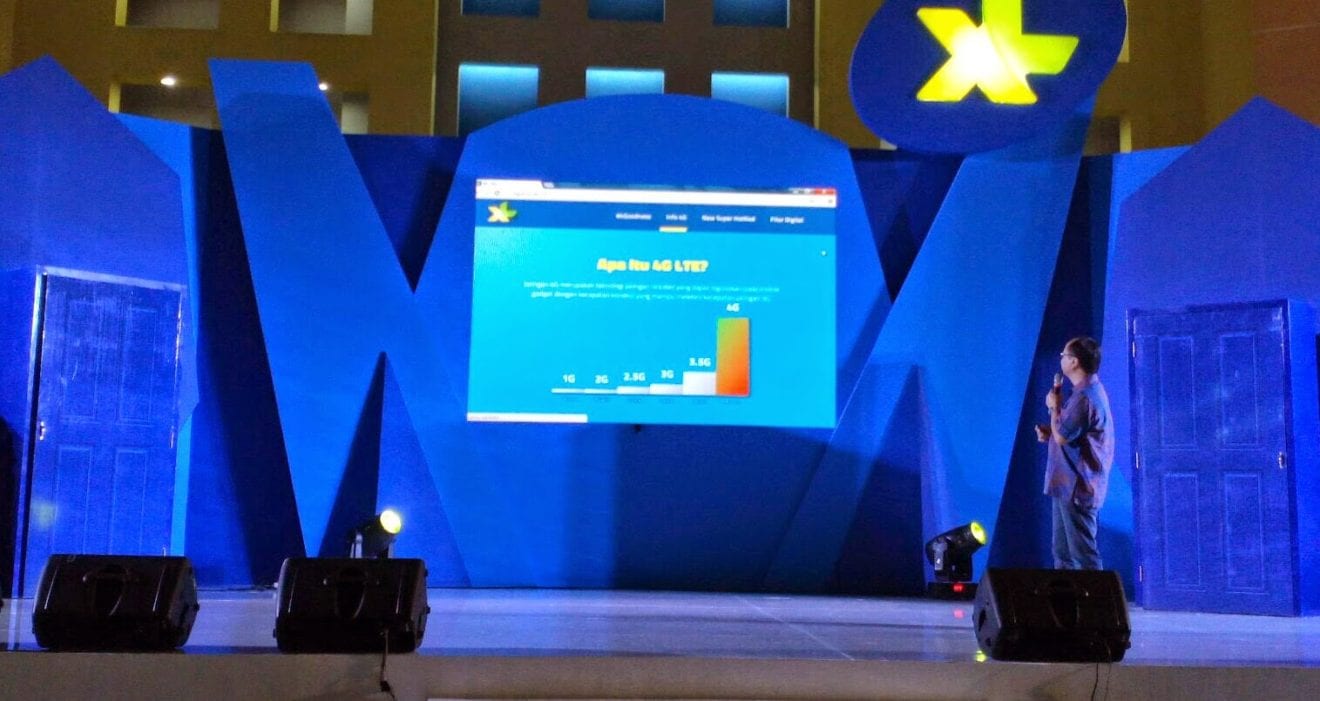
    The Indonesian mobile operator XL Axiata has revealed that the ongoing phased rollout of 1800MHz 4G LTEservices will target a commercial launch in Bandung, West Java by the end of the month, followed soon after by Jakarta in November, after the company concludes its nationwide spectrum refarming programme. Dian Siswarini, President Director and CEO of XL Axiata, notes that the process has already reached Central Java and will be completed next month to comply with the ministry’s 23 November deadline. ‘There have been minimal obstacles in the refarming process. That’s why we are confident to say that we are able to have 4G LTE services operating in Bandung by the end of October, and in Jakarta by November,’ she said.

    XL introduced its first 1800MHz 4G service in Lombok, West Nusa Tenggara in July 2015, followed soon after by Denpasar (Bali) and Surabaya (East Java). It currently has around 1.2 million 4G users to its 900MHz service, although Dian concedes that some customers have complained that LTE-900 is proving to be little faster than XL’s W-CDMA-based 3G network. Last month XL Axiata, which is 66.5%-owned by Axiata Group of Malaysia through Axiata Investments (Indonesia), selected Ericsson to act as its turnkey supplier for 4G LTE design and implementation in Jakarta and Central Java, as well as for 2G and 3G upgrades to meet an explosion in demand for data traffic. Under a three-year contract, the Swedish vendor will supply all necessary hardware, software and services to deliver 4G services for XL Axiata’s subscribers. The pair say the deployment will improve both network capacity and data transmission speeds.

    In another development regarding the government’s recent plan to tighten procedures on the purchase of mobileSIM cards, The Jakarta Post quotes Dian as saying that XL Axiata had prepared for the regulation in terms of its data systems and forging standard operating procedures (SOPs) with retail outlets to make them aware of the regulation. The telecoms ministry and the telecommunications regulatory authority (BRTI) issued a regulation in September, requiring customers to show an ID upon the purchase of pre-paid SIM cards starting 15 December.

  • M1 launches M2M platform and solutions

    M1 launches M2M platform and solutions

    Strategic partnerships with multiple technology providers to deliver a wide range of smart M2M solutions for transport, retail, healthcare and security sectors.

    Singapore – M1 Limited (M1) today announced the launch of its advanced M2M (machine-to-machine) platform, M1 M2M Connect. Through M1 M2M Connect, corporate customers will be able to access, track and manage all their connected devices conveniently, from any authorised computer or mobile phone. They will also be able to set and change business rules, perform device troubleshooting and obtain detailed reporting of all M2M activities.

    Additionally, M1 has partnered multiple technology providers, including Aerolion Technologies, Napier Healthcare Solutions, Quantum Inventions, and Parametric Technology to introduce customised solutions to meet the needs of Singapore’s transport, retail, healthcare, and security industries, and enable more customers to enjoy the benefits of a M2M rollout on Singapore’s fastest 4G network¹.

    According to a recent Forbes² article, connected devices are expected to grow from 10 billion today to as many as 30 billion devices by 2020, deployed across homes, offices, and public spaces worldwide. At the M2M platform launch event today at the St. Regis Hotel for corporate customers, M1 and its partners demonstrated several innovative solutions, including smart healthcare monitoring solutions, and how security firms can deploy drones to stream real-time surveillance video over protected premises.

    Mr Willis Sim, Chief Product Development & Corporate Solutions Officer, M1, said:

    “Much has been made of the benefits of M2M and the Internet of Things. To make it even easier for our customers to leverage on M2M technology, we engaged them to understand their needs, and worked with our partners to develop and offer effective solutions that improve our customers’ productivity, lower their costs and help them tap on new market opportunities.”

    “M1 is a leader in communications infrastructure and we are excited to be their strategic partner. Our relationship has been proven to be successful during the lab trials for the Smart Nation program. Consequently M1’s leading edge connectivity solutions form the backbone of our Home Care solution making it really affordable for our elderly population. Taking preventive healthcare one step forward, this solution provides the chronically ill with on-demand access to healthcare service providers who can help monitor and maintain their health,” said Mr Tirupathi Karthik, Chief Executive Officer, Napier Healthcare Solutions.

    M1 is Singapore’s most vibrant and dynamic communications company, providing mobile and fixed services to over 2 million customers. Since the launch of commercial services in 1997, M1 has achieved many firsts, including the first operator to offer nationwide 4G service, as well as ultra high-speed fixed broadband, fixed voice and other services on the Next Generation Nationwide Broadband Network (NGNBN). With a continual focus on network quality, customer service, value and innovation, M1 links anyone and anything; anytime, anywhere. For more information, visit www.m1.com.sg.
  • Mobile commerce on rise

    Mobile commerce on rise

    Mobile commerce in Thailand has continued to cement itself as a significant online marketplace thanks to the greater availability of high-speed wireless broadband internet and affordable smartphones, say global internet and online retail companies.

    Attractive mobile commerce campaigns by e-commerce operators is also attributed to the surge in mobile commerce.

    Compared with the US, Japan and South Korea, Thailand’s online retail industry remains tiny, accounting for less than 1% of the total retail market, Lazada Thailand chief executive Alessandro Piscini told a seminar yesterday entitled “E-Commerce: The Secret Success for the Online Generation”.


    However, he said imminent fourth-generation commercial wireless broadband service was expected to boost the number of mobile internet users and lower mobile tariff rates.

    “Half of Lazada Thailand’s total online sales came from mobile phones, a five-fold increase from last year,” Mr Piscini said, adding that health and beauty products, mobile devices and fashion items were the top-three sellers.

    To further boost sales, Lazada Southeast Asia and its partners will hold its biggest sale of the year, Online Festival, from Nov 11 to Dec 12, providing up to 10 million products in 13 categories.

    Ratthasart Korrasud, senior director of the Electronic Transactions Development Agency (ETDA), said it encouraged retailers and manufacturers to comply with the UN Standard Products and Services Code, a taxonomy of products and services for use in e-commerce, for more efficient and accurate classification of products and services.

    The ETDA is also promoting the use of its online complaint centre among e-commerce users to ensure consumers’ trust and confidence in e-commerce.

    Wanna Swuddigul, director of digital and online business at Ek-Chai Distribution System, said local retailers must quickly expand to the online channel to accommodate rapidly changing consumer lifestyles.

    Thailand’s e-commerce is among Southeast Asia’s top three for growth potential thanks to its population, greater development of wireless infrastructure and Thais being highly engaged online.

    Tesco Thailand’s online sales, expected to account for less than 1% of total sales this year, are forecast to rise to 5% of the total by 2020, said Ms Wanna.

    Deepesh Trivedi, Facebook’s head of retail and e-commerce for Southeast Asia, said Thailand’s e-commerce would continue growing, driven mainly by the increasing number of mobile internet users.

  • 4G auctions set to generate B1.3tn

    4G auctions set to generate B1.3tn

    A woman walks past telecom and cable lines along Phahon Yothin road. The 4G auction is expected to spur huge investment in telecom lines. PATTARAPONG CHATPATTARASILL

    The imminent fourth generation (4G) spectrum auctions could stimulate direct and indirect investment valued at 1.3 trillion baht over the next five years.

    The development will also transform Thailand into an internet-empowered economy and add impetus to the country becoming an Asean digital infrastructure hub by 2020, said Takorn Tantasith, secretary-general of the National Broadcasting and Telecommunications Commission (NBTC).

    The private sector, meanwhile, believes that having faster high-speed mobile network technology will promote the country’s e-commerce.

    The NBTC expects to receive at least 73 billion baht from the 4G spectrum auctions of four licences in November. The revenue will pass directly to state coffers, Mr Takorn said at a seminar entitled ‘4G: the turning point of the country’.

    The winning bidders of the 4G auctions must roll out networks worth a combined 160 billion baht in 2016.

    An additional 260 billion baht will come from telecom-related businesses and employment in 2017, plus another 300 billion baht in 2018.

    Based on an internal estimate, Mr Takorn said all direct and indirect investment stemming from the 4G auctions would reach 1.3 trillion bay by 2020, in line with a study by the economics faculty of Chiang Mai University.

    “Thailand can no longer afford to lose this opportunity for the sake of our country and our people,” he said.

    There are 104 million mobile subscribers in Thailand, only 4 million of whom are 2G users.

    Worawoot Aunjai, chief executive of Central Online Plc, said having a 4G infrastructure would directly benefit the local e-commerce and online trading industry. It will also encourage small and medium-sized enterprises to grab a bigger slice of the e-commerce market.

    “Companies without technology will find it nearly impossible to flourish in the current business environment,” he said.

    Mr Worawoot said development of the 4G infrastructure was essential to accommodate the rapidly changing needs and growth of businesses.

    He said Thailand’s retail trade via online transactions accounted for only 1% of total retail trading value, compared with 5.8% of the average global retail market and 12% in China.

    Global online trading is expected to account for some 20% of total retail trade by 2020.

    Mr Worawoot said online trading was expected to reach 8% of the total retail trade in Thailand by 2020.

    “The growth of online trading will be in line with the quality of wireless connection and affordable mobile devices,” he said, adding that 4G service will play a crucial role in driving the local e-commerce industry.

    Mr Worawoot said Central Group’s annual retail sales were expected to reach 260 billion baht this year, half of which will be conducted via mobile devices.

    Ariya Banomyong, managing director of Line Thailand, said the quality of wireless connections and telecom infrastructure could attract foreign investment from global tech companies such as Google, Facebook, Amazon and Apple.

    “This will promote Thailand as a regional digital infrastructure hub,” he added.

    Vichai Bencharongkul, honorary president of the Telecommunications Association of Thailand, said developing an internet-based economy would essentially need a high-speed telecom infrastructure, developing knowledge workers and building organisational confidence with digital practices.

    4G service is expected to ensure wireless service continuity and provide business recovery experience, thanks to the greater speed of wireless data services, said Mr Vichai.

  • M1 rolls out machine-to-machine platform for corporate customers

    M1 rolls out machine-to-machine platform for corporate customers

    Users can manage connected devices from their phones. The member of Singapore’s telco triumvirate boosted convenience and ease of access for its corporate customer-base as it launches its advanced M2M platform, M1 Connect.

    According to a statement by M1, the platform will enable customers to access, track, and manage all their connected devices from any authorised computer or mobile phone.

    Through the platform, M1 also says the users will be able to set and change business rules, perform device troubleshooting and obtain detailed reporting of all M2M activities.

    M1 said they have also partnered with technology providers for this project.

    “M1 has partnered multiple technology providers, including Aerolion Technologies, Napier Healthcare Solutions, Quantum Inventions, and Parametric Technology to introduce customised solutions to meet the needs of Singapore’s transport, retail, healthcare, and security industries,” the statement said.

  • Axiata’s Indonesia unit plans RM1.4bil sukuk programme

    Axiata’s Indonesia unit plans RM1.4bil sukuk programme

    Axiata Group Bhd’s Indonesian unit, PT XL Axiata Tbk, plans to establish a five trillion rupiah (RM1.4bil) sukuk programme to optimise its balance sheet and improve its capital efficiency.

    In a filing with Bursa Malaysia, Axiata said the sukuk programme would be established under a two-year shelf registration programme.

    The first tranche or Shelf Sukuk Ijarah I XL Axiata Tranche I Year 2015 will see the issuance of up to 1.5 trillion rupiah based on the syariah principle of Ijarah, with the payment of Ujrah to be made quarterly in arrears.

    The Tranche I sukuk will have four series, with Series A having a maturity of 370 calendar days, Series B (three years), Series C (five years) and Series D (seven years).

    The net proceeds from Tranche I sukuk are to be utilised for working capital purposes to support PT XL Axiata’s business activity in terms of 2G radio frequency fee payment to the Government for the period of December 2015 to  December 2016.

    The Tranche I sukuk has been assigned a rating of AAA(idn) by PT Fitch Ratings Indonesia.

    A major cellular provider in Indonesia, PT XL Axiata is 66.43% owned by Axiata through Axiata Investments (Indonesia) Sdn Bhd, and currently serves 62.9 million subscribers.

  • Indonesia’s Trikomsel says it will likely default on Singapore-issued bonds

    Indonesia’s Trikomsel says it will likely default on Singapore-issued bonds

    Indonesian mobile phone retailer PT Trikomsel Oke Tbk warned on Monday that it will likely default on its S$215 million (US$155 million) bonds, in what would be the first in the Singapore bond market since the global financial crisis.

    The announcement by Trikomsel, which is 19.9 per cent-owned by Japan’s SoftBank Group Corp, could decrease investor appetite for debt issued by Indonesian companies.

    Some Indonesian firms already are under pressure due to the rupiah’s depreciation, sagging domestic economic growth and concern about outflows whenever United States interest rates are hiked. “It will highlight the risks that a number of other Indonesian businesses face and should put pressure on the bonds and equities of other companies with high foreign exchange debt,” said Vaninder Singh, an economist at RBS.

    Indonesia’s sovereign credit default swaps (CDS) underperformed their regional peers on Monday, reflecting some of these concerns. Its five-year contract rose by one basis point versus a general decline in other Asian sovereign CDS.

    Jakarta-based Trikomselhad issued a S$115 million bond due 2016 bearing a 5.25 per cent coupon rate, and a S$100 million bond due 2017 paying 7.875 per cent.

    In a filing to Singapore’s stock exchange on Monday, Trikomsel said that more than 80 per cent of its total debt of around US$460 million, which includes the two Singapore dollar bonds, will fall due in the next two years. “With the depleting and volatile cash flow, the company anticipates that it is unlikely to be in a position to service interest and repay debts as they fall due,” Trikomsel said, adding that it will come up with restructuring proposals in the next 2-3 weeks.

    Trikomsel said its mobile phone sales have been hit by a reduction of the number of its retail shops and increased competition in the market, while the weak rupiah has dampened the purchasing power of consumers.

    Cash flow from operations was negative 53.5 billion rupiah (US$3.9 million) for the six months ended June, Trikomsel said.

    The rupiah has fallen more than 9 per cent against the dollar this year, making it the second-worst performing Asian emerging market currency after Malaysia’s ringgit. markets.

  • Indonesia tightens prepaid SIM card registration rules

    Indonesia tightens prepaid SIM card registration rules

    The Ministry of Communications and Information Technology has tightened the country’s prepaid SIM card registration process to combat high churn rates and abuse, including SMS spam.

    The registration requirement for prepaid SIM cards was first rolled out a decade ago, but has proven to be ineffective. Regulation No 23/2005, which allows registration via the 4444 SNS shortcode, has long been abused, industry pundits say.

    Minister of Communication and Information Technology Rudiantara said the new registration system for prepaid SIM (Subscriber Identity Module) cards will be more “accurate and careful,” especially with regards to the identity of both users as well as retailers.

    Under the new regulation, which will come into effect on Dec 15, registration will not be done by users but by authorised retailers or outlets, and will only work with valid identification.

    “The registration system for new prepaid SIM cards will be done in a one-stop manner at the reseller where users get their numbers,” Rudiantara told Digital News Asia (DNA) Oct 19.

    He said the new registration system will be applied nationwide, including remote areas, but added that the time needed to complete the process will be dependent on the number of customers.

    Once the new regulation goes live on Dec 15, manual registration via the 4444 shortcode will be discontinued, Rudiantara said.

    The chairman of Indonesia’s Telecommunication and Cellular Association (ATSI), Alexander Rusli, hailed the new policy, adding that industry players have already put in place the infrastructure to support its implementation.

    This preparation includes the ‘Retail Outlet Identity’ (ROID) system for prepaid SIM card resellers.

    But Alexander acknowledged that getting the systems ready was merely one aspect. “Technology support would not be as difficult as educating the outlets, which are huge in number.

    “Training people can’t be done in one or two days,” he told DNA in Jakarta.

    According to Alexander, under the new policy, all outlets will have to use the ROID system to identify their owners. In the case of any abuse – such as the reselling of user data, or fraud – it would be easy for the Government to track down the outlet responsible.

    Any retail or outlet which does not use the ROID system will be automatically blocked from conducting further business. It might also face further action, but such punitive measures are still being discussed, he added.

    Telco industry response

    Telecommunication service operators PT XL Axiata Tbk, PT Indosat Tbk and PT Hutchison 3 (Tri) told DNA they are prepared for the new regulation.

    XL Axiata president director and chief executive officer Dian Siswarini said her company has already prepared its IT system and educated its retail outlets on how to handle the new requirement.

    Education was the most challenging aspect, she added.

    “Actually, education for retail outlets for the first phase is done, but it must be continuous because not all retail outlet are big businesses or well educated,” she said.

    This education also included the measures resellers might face if there are violations. In fact, discussions on violations were conducted earlier this year, according to Dian.

    XL prepared its IT infrastructure to handle the new regulation in May last year, and has introduced a new standard operation procedure (SOP) for its retail outlets.

    Meanwhile ATSI’s Alexander, also Indosat president director and chief executive officer, said around 160,000 retail outlets have been educated on the ROID registration system.

    For its part, Hutchison Tri already had an online registration system in place, according to its chief sales and marketing officer Dolly Susanto.

    “We developed a next-generation system we have been using since June 2012, for the online registration of all retail outlet identities,” she said.

    Dolly said Hutchison Tri has around 200,000 resellers on its integrated online identity system. With a total of 54.8 million customers, she said her company was ready to support the new regulation.