Category: Telecom

Retail News Asia is committed to providing both local and global retailers with the latest Telecom & Telco news throughout the Asian market. This on a daily base.

  • Price war in Singapore over mobile data

    Price war in Singapore over mobile data

    A price war has erupted in Singapore for the first time in four years, as operators seek to stay competitive by lifting their data allowances.

    SingTel recently introduced a new add-on plan giving customers the option of doubling their mobile data allowance for an extra S$5.90 per month.

    Both M1 and StarHub quickly followed suit, with M1 introducing a similar option to SingTel and StarHub offering an extra 3GB of mobile data for a promotional rate of S$3 per month, rising to S$6 from April.

    The offers mean the operators have effectively halved their mobile plan charges in some cases. The biggest discounts are for more high-end plans.

    The cuts follow the ISP seeking to become Singapore’s fourth mobile operator, that it plans to charge as little as S$8 for a mobile plan with 2GB of data, with value added services charged at market rates.

    MyRepublic also plans to offer an unlimited data plan for S$80 per month. The incumbent operators currently do not offer unlimited data options.

  • Thailand’s AIS facing 2G switch-off

    Thailand’s AIS facing 2G switch-off

    Subscribers to Thai operator AIS’ 900-MHz 2G service could face having their services disconnected by midnight tonight amid an ongoing dispute over spectrum usage.

    AIS still has around 400,000 2G subscribers left on its 900-MHz 2G network, but spectrum AIS had been using for the service has been reallocated at auction to True Move H Universal Communication.

    True’s 900-MHz license is due to take effect from today, leaving the fate of the remaining subscribers hanging in the balance. According to the report, AIS is expected to announce that its 2G subscribers will not face any disruption as a result of the reallocation, even though the rules stipulate that AIS will have to switch off its 900-MHz service after the spectrum changes hands.

    The NBTC recently held meetings with AIS, state-owned TOT and True over ways to prevent disruption to the remaining customers. But the companies were reportedly unable to reach a mutual agreement.

    True had offered to let AIS use its 900-MHz spectrum in exchange for a usage fee, but AIS has insisted on using the 900-MHz spectrum from the other winner of 900-MHz spectrum, Jas Mobile Broadband. The NBTC has rejected this proposal.

    Meanwhile the regulator has ordered that the applications of around 800,000 2G subscribers of AIS and rival Dtac be port their mobile number to True’s network be expedited.

  • Dtac launches social media campaign in support of AIS

    Dtac launches social media campaign in support of AIS

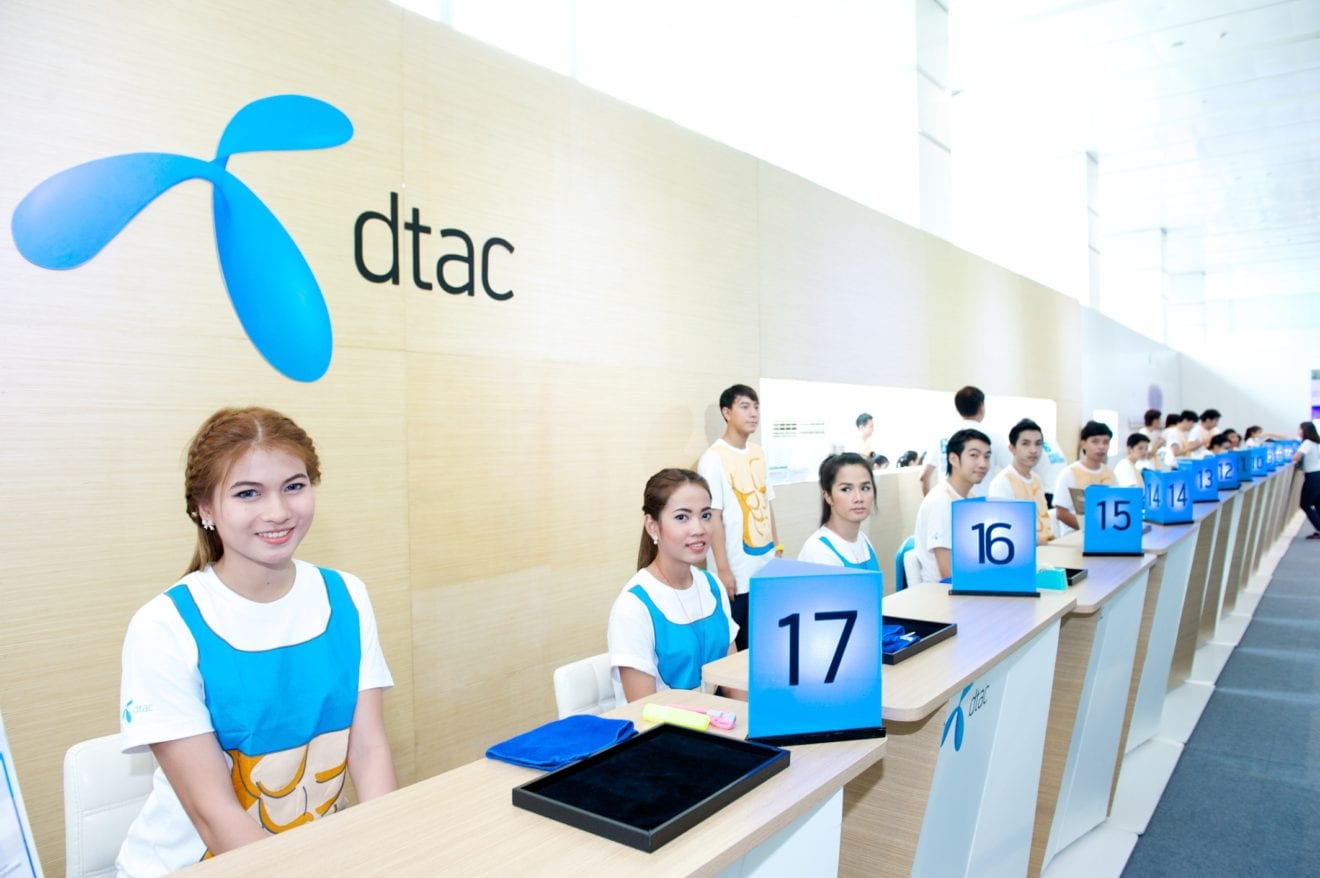
    Dtac has launched a social media campaign under the hashtag #fairfight pledging support for AIS and its subscribers.

    The campaign features Dtac CEO Lars Norling saying that he cares for all mobile users and that AIS 2G subscribers are welcome to roam on Dtac and do not have to worry about their SIM cards being cut off. AIS subscribers do not need to port their numbers to any new network to continue using their phones.

    This is a thinly veiled reference to TrueMove’s ongoing campaign to win customers from both their networks.

    However, at the last moment literally minutes before the planned network switch-off, AIS was granted an injunction by administrative court nullifying the NBTC order that AIS would have to switch off its 2G network on midnight of 15 March.

    AIS CEO Somchai Lertsutiwong asked the court that it be allowed to continue to use 5 MHz of Jas’ 900-MHz spectrum (that it is already using). Somchai argued that continuing to use Jasmine’s as yet unclaimed spectrum would have no effect on TrueMove’s 900-MHz licence that was granted on Monday 14 March.

    The court order allowed AIS to continue using the 900-MHz spectrum for another 30 days until 14 April. The deadline for Jasmine to pay for its 900-MHz spectrum is 21 March.

    AIS has an estimated 400,000 users still dependent on its 2G network, most with 3G capable SIMs but old 3G handsets.

    Meanwhile AIS has been ordered by the supreme court to pay state-owned CAT Telecom $200,000 (7 million baht) plus interest for negligence. The court ruled in CAT’s favour that AIS was responsible for negligence in allowing 165 subscribers to take out 185 numbers with incomplete or falsified identity documents or signatures and make overseas calls on CAT’s network that could not be traced and billed.

  • Lenovo, Juniper enter data center alliance

    Lenovo, Juniper enter data center alliance

    Lenovo and Juniper Networks have inked a global partnership to jointly build new converged, hyper-converged, and hyper-scale data center infrastructure.

    As part of the partnership, customers will be able to purchase Juniper’s networking products directly from Lenovo for easier acquisition, as well as consolidated support.

    In line with the move to disaggregate of hardware and software in the data center, the two companies intend to bring open, flexible solutions to market, leveraging the ONIE (Open Network Install Environment) model.

    To meet customer needs for fast provisioning and easy administration, both companies expect to collaborate to offer simplified management and orchestration in the data center leveraging Lenovo’s xClarity management software as well as Juniper’s Network Director and Contrail SDN software.

    In addition, the two companies plan to collaborate around go to market on a worldwide basis targeting enterprise customers, service providers, channel partners as well as system integrators.

    Lenovo and Juniper aim to develop joint go-to-market plans and a tailor-made resell model to address unique localization requirements in China.

  • Thai telecom market let down by state mis-investment

    Thai telecom market let down by state mis-investment

    Telecoms consultancy Yozzo has released a report on Thailand’s telecom market at the end of 2015 in which it highlighted a vibrant, healthy market that is let down by mis-investment by the state.

    Report author Allan Rasmussen told TelecomAsia that according to the ICT Ministry’s own national statistical office 25 million Thai citizens do not use the internet because they do not know how, 47,000 do not use the internet because of network access issues and 216,000 because they find it too expensive. However, the ICT Ministry is spending $427 million (15 billion baht) [on the state telcos] to roll out internet so that everyone can get online at cheaper prices – when that is obviously not the issue.

    “It would be a wise move to teach them how to surf [the internet] as obviously neither lack of network nor pricing is the major issue,” he said.

    On the plus side Rasmussen noted that overall the data shows that the Thai population is very well positioned when it comes to mobile communication with very high mobile internet usage as part of a daily routine.

    “It is especially great to see the female population having a small upper hand with 83.9% using a smartphone to access the internet while ‘only’ 79.6% of males do the same,” he said.

    The report also shows that 2015 was a record year in terms of smartphone sales, with 22 million units.

    “Samsung is probably also smiling as 20% of this volume carried their brand, mostly due to the introduction of their Galaxy J series (J2, J5 and J7) but overall the 47% year-on-year growth in sales was due to the fierce handset promotions from the operators as they tried to move users from 2G to 3G or 4G handsets.

    “In June 2015 alone, there were a staggering 1,800 different mobile device models competing in the market Thai market a clear indication on just how interesting the Thai market is for mobile device manufactures,” he noted.

    In terms of social media YouTube stood out with a 70% growth in watch time and equal (70%) growth in uploaded content. But the real killer was that Thailand now has 18 local YouTube channels with more than a million subscribers each, which is 4.5 times the average.

    The full report can be accessed here.

  • Dtac’s 4G rollout proposal rejected for now

    Dtac’s 4G rollout proposal rejected for now

    Thai regulator NBTC has rejected a request from mobile operator Dtac to be allowed to deploy a 4G service based on its existing unused 1800-MHz spectrum.

    Dtac has access to 50MHz of 1800-MHz spectrum under its existing 2G concession arrangement with state-owned CAT Telecom, which is due to expire in 2018.

    But the NBTC has declared that approving the proposal to use an unused portion of the 1800-MHz spectrum would violate the concession agreement.

    The regulator stated that Dtac must present formal evidence demonstrating that CAT and Dtac have mutually agreed on the 4G proposal, noting that it has no authority to allow companies to violate the terms of concession agreements.

    Dtac currently uses 25MHz of its 1800-MHz spectrum for 2G, and after returning 5MHz of the remainder for the 4G auction last year now has 20MHz left unused.

    But securing the go-ahead from CAT will require the companies to negotiate on a revised revenue sharing agreement. This threatens to delay Dtac’s 4G rollout, which would potentially be a significant disadvantage if rival operators are able to deploy LTE services more rapidly.

  • BlackBerry launches security consulting practice

    BlackBerry launches security consulting practice

    BlackBerry Limited has launched a new Professional Cybersecurity Services practice to offer organizations new consulting services, tools and best practices.

    The new practice will address strategic security; technical security; automotive and IoT security; and detection, testing and analysis.

    As part of the new initiative, BlackBerry recently acquired UK-based Encription Limited, which brings years of cybersecurity consulting experience to the organization. The acquisition of Encription was completed last month.

    Encription’s offers span both software security and hardware capabilities, as well as penetration testing – mimicking the techniques of malicious hackers to ensure organizations are aware of cyber risks posed by criminal hackers and how to address them.

    Cybersecurity is a persistent and increasing business risk for organizations that depend on mobile endpoints that connect through networked and cloud-enabled platforms. It is estimated that data breaches currently cost the global economy more than $400 billion every year.

    Some industry sectors, such as automotive, are being forced to grapple with cybersecurity threats for the first time as cars become more connected, intelligent and self-sufficient.

    Cybersecurity consulting is currently estimated to be a $16.5 billion annual global business that is forecast to grow to $23 billion per annum by 2019.

  • Airtel to allow prepaid data top-ups for postpaid plans

    Airtel to allow prepaid data top-ups for postpaid plans

    India’s Bharti Airtel has introduced an innovative new service allowing post-paid business customers to top up their data allocations with prepaid credit.

    The operator will allow customers to recharge their accounts through retail or online credit purchases or mobile wallets.

    The new Prepaid on Postpaid feature has been introduced to give business customers more flexibility in how they use their mobile plans while simplifying the data experience.

    Users of corporate plans that lack mobile data, for example, could pay for their own allocations rather than needing to swap SIMs or devices every time they want to use their data allocations.

    Standard prepaid data recharges start at 99 rupees ($1.48), the company said. Airtel has asserted that allowing prepaid top-ups for postpaid plans is an industry first.

    Bharti Airtel is India’s largest mobile operator with an estimated 245.8 million customers as of the end of January.

  • Vodafone India aims to double SME base in Bangalore

    Vodafone India aims to double SME base in Bangalore

    Vodafone India has outlined a strategy aimed at doubling its SME customer base in Bangalore, known as the Silicon Valley of India.

    Vodafone Business Services announced a three-pronged plan to increase its SME coverage in the state of Karnataka – particularly capital Bangalore (Bengaluru) – and across India.

    The three spokes of the strategy are coverage, intelligence and automation. Coverage involves widening the company’s ecosystem of channel partners and advanced resellers.

    Automation will involve making it easier for SMEs to do business with Vodafone through initiatives involving opening a system access partner portal. Intelligence will involve launching six new services tailored for specific industry verticals, to complement the six already launched.

    In addition Vodafone will use the newly launched VBS cloud platform to provide SaaS to Indian SMEs. The operator has also introduced Ready Business 2.0 – an integrated suite of Vodafone communications services designed to help SMEs find answers to business problems.

    “Vodafone Business Services will help growing businesses become ready for their next phase of growth. Our newly launched cloud platform will act as a one-stop shop for SMEs for all their ICT related business needs,” VBS national head for SMEs Ajay Sehgal said.

    “With our Ready Business 2.0 proposition, our fixed, mobile and cloud solutions can empower SMEs in scaling up faster, enhancing operational efficiencies and building a more connected and productive workforce, thus making their business more responsive to customers.”

  • Telstra to plans another free data day after outage

    Telstra to plans another free data day after outage

    Australia’s largest operator Telstra will offer customers another free data day as an apology for its third mobile network outage in less than a month.

    Telstra CEO Andy Penn said he is “deeply disappointed” and acknowledged that multiple outages in such a short period is “absolutely unacceptable.

    The outage took place on Thursday, and was caused by a large number of customers who were disconnected due to an international connectivity issue all reconnecting at once.

    An estimated 8 million subscribers were affected, or around half of Telstra’s total mobile customer base.

    While services were restored for most customers within two hours, the company was still responding to customer complaints over Twitter as of Friday with a message that the company was progressively restoring mobile services, the report notes.

    The disruption followed another outage affecting millions of customers  – which led the operator to offer customers a free data day by way of an apology – and another affecting around 500,000 pre-paid customers earlier this month.

    Also last week, Telstra announced it has appointed former Nokia CEO Stephen Elopto the newly created role of group executive for technology, innovation and strategy.

    In his new role Elop will help Telstra meet its ambitions of becoming a world-class technology company, Penn said in a statement.

    “Stephen will immediately add major firepower to our team with his extensive and deep technology experience and an innate sense of customer expectations. He is a recognized international technology leader and strategist from across a range of global organizations,” he said.

  • TrueMove H taps Ericsson for LTE-A rollout

    TrueMove H taps Ericsson for LTE-A rollout

    Thailand’s TrueMove H has appointed Ericsson to support its LTE-Advanced rollout in north, central west and south Thailand.

    Under the contract Ericsson will help deploy LTE-A carrier aggregation and further expand TrueMove H’s 2G and 3G networks on the 900-MHz, 1800-MHz and 2100-MHz spectrum bands.

    The three year contract will see Ericsson provide multi-standard radio equipment using the new Ericsson Radio System, ranging from indoor small cells to macro cells.

    “We are committed to offering our customers the best mobile broadband experience,” True Corp COO Vichaow Rakphongphairoj said.

    “Our Partnership with Ericsson will further strengthen our 3G/WCDMA and 4G/LTE leadership in Thailand and enable us to offer optimized mobile data service with the best smartphone performance to our customers.”

    TrueMove H was one of two winners of 900-MHz 4G spectrum during an expensive auction last year, after bidding 76 billion baht ($2.1 billion).  But fellow license winner Jasmine appears likely to  miss the deadline for paying the first installment of its own bid.

  • TrueMove, StarHub and China Mobile enter in an alliance

    TrueMove, StarHub and China Mobile enter in an alliance

    StarHub has signed an MoU with China Mobile and TrueMove covering hand-in-Hand collaboration.

    Under the agreement, China Mobile Communications Corporation, the world’s largest telco, will play host to the collaboration in five areas: device collaboration on research initiatives for mobile network evolution technologies; strengthening complementary capabilities for data business services; enhancing mobile business through global roaming cooperation and information sharing; leveraging network resources to maximize efficiency; and co-developing new business opportunities in relation to innovation and the IoT.

    StarHub CEO Tan Tong Hai said the signing was an important milestone for StarHub, and a timely one as China embarks on its One Belt One Road project in which Singapore is well poised to facilitate the journey.

    Tan said that Singapore being the regional hub for Southeast Asia is the best place to build this bridge between Southeast Asia and China. He spoke of the investments China Mobile had made in submarine infrastructure linking the region to East China.

    The One Belt One Road project is the combination of the Silk Road and the Maritime Silk Road under a vision by Xi Jinping that focuses on connectivity and cooperation among countries primarily in Eurasia.

    Tan promised seamless cross-border experience for his China Mobile partners.

    “As part of this partnership, we will also look into other areas of collaboration such as data analytics, content, cyber security and Internet of Things,” he said.

  • Macau casinos deploy Avaya technology

    Macau casinos deploy Avaya technology

    Four out of the six casino operators in Macao have engaged Avaya to provide telephony and other technology services to drive their digital transformation strategies.

    The four operators are using Avaya’s IP telephony technology to ensure staff can be reached with a single number, enabling them to respond promptly to guest enquiries.

    Avaya IP telephones in the guest rooms are also being used to provide guests with easy access to rich information and hotel services, such as room service and speed check-out. 

    One casino resort has meanwhile centralized a contact center to serve a number of hotels, with agent resources allocated dynamically according to the volume of calls that the hotels receive, so that all customer enquiries are responded promptly.

    In addition, a number of the operators have deployed Avaya’s SDN Fx architecture, which is based on Fabric Connect networking technology.

    To improve security, one casino resort has configured all applications with individual Avaya Virtual Service Network configurations, so that they are all isolated from each other.

    While gaming is still the pillar industry of Macao – the “Las Vegas of the East” – operators are increasingly focusing on the wider tourism market, entertainment and non-gaming revenue streams, along with cost-cutting initiatives and efficiencies to drive profitability.

    With Macao in the midst of a multi-billion dollar development boom, operators also need to provide competitive differentiation, while looking to future-proof investments.

  • China Telecom FY15 profit grows 13.4%

    China Telecom FY15 profit grows 13.4%

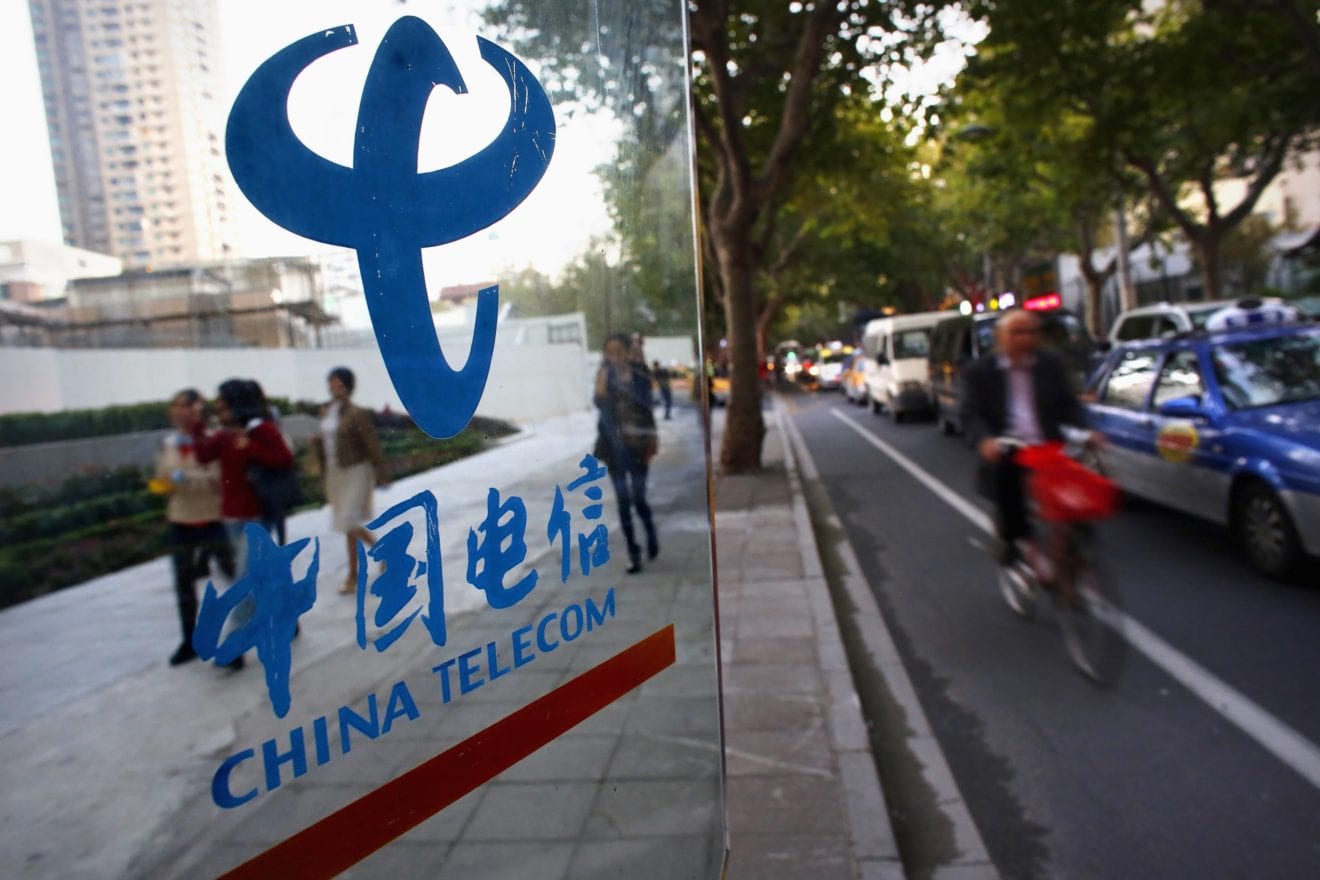
    China Telecom has reported a sharp increase in its net profit for 2015 thanks to one-off gains from the sale of telecom towers and related assets last year.

    Profit surged 13.4% year-on-year to 20.05 billion yuan ($3.07 billion) on the back of a one-time gain of 3.94 billion yuan from the transfer of towers and other infrastructure to China Tower, the JV formed by the three telcos last year.

    Revenues rose 2.1% to 331.20 billion yuan, while EBITDA fell 0.8% to 94.11 billion yuan, impacted by a number of regulatory changes and higher costs.

    In its 2015 annual results, China Telecom said revenue growth was mainly driven by its mobile businesses, with revenue rising 3.5% to 124.50 billion yuan.  Fixed service revenue increased 1% to 168.76 billion yuan.

    China Telecom finished the year with 58.46 million 4G customers, or more than a quarter of its total mobile subscriber base of nearly 200 million customers. The operator’s 4G ARPU stood at 78 yuan, against the 58.46 yuan of blended ARPU.

    The operator added more than 51 million 4G customers last year after it received government approval to provide a nationwide 4G service in February.

    Mobile data traffic doubled last year, with 4G contributing 51%.  Monthly average data traffic per 4G user increased by 25% year-on-year to 751 MB. By January-February this year, 4G customers averaged 850 MB per month.

    By comparison, biggest rival China Mobile had 312 million TD-LTE customers, while China Unicom, the country’s second largest mobile carrier, had 44 million 4G customers.

    China Mobile last week reported a 0.6% dip in its full-year net profit for 2015, while Unicom posted its first decline in net profit since 2010 for last year.

    Looking ahead, China Telecom said “2016 is a crucial year for the Company in building up a more favorable market position for the future,” adding that the company will strengthen the core competence in network and operation and grasp the opportunities from the scale-up and value enhancement of its 4G and fiber broadband businesses.

    China Telecom president and COO Yang Jie said China Telecom aims to add 60 million 4G subscribers this year. The operator plans to add 290,000 more 4G base stations by the year-end, bringing the total to around 800,000, as it expands coverage in towns and rural areas.

    China Telecom also plans to deploy 4G+ in all cities, start testing 800-MHz band spectrum and prepare for the launch of VoLTE in 2017.

    The company expects capex to fall to around 97 billion this year from 109 billion in 2015, with nearly half of spending going towards 4G.

    In addition, the operator will expand its FTTH network by another 50 million homes passed, to a total 270 million.

    China Telecom saw a strong growth in its FTTH business last year, with net additions of 28.38 million customers for a total 70.99 million of wireline broadband subscribers.


  • HDS launches churn-predicting software

    HDS launches churn-predicting software

    Hitachi Data Systems (HDS) has launched a new Hitachi Unified Compute Platform (UCP) 6000 for Predictive Analytics solution, with integrated next-generation advanced analytics software that predicts churn.

    The solution gives telecom and media service providers insight into customer behavior with predictive scoring for real-time decision making. It uses the open and scalable Hitachi UCP architecture, which is designed to support high-performance, mission critical workloads and scale without disruption.

    With the ability to proactively address customer attrition, service providers can gain competitive advantage and increase customer satisfaction and loyalty by identifying churn-prone subscribers and creating targeted retention offers before customers defect.

    “With continuous technological advancements, relatively short product and service lifecycles, growing content consumption, and highly competitive marketing among vendors, customer churn is a significant issue in today’s global telecom marketplace,” said Sean Moser, SVP for global portfolio and product management at HDS.

    “Equally important is a proactive approach to customer retention, satisfaction and loyalty, which can all grow revenue and increase profit,” said Moser.

    The new solution promises deeper insight into customer behavior and provides data that improves the customer experience.

    With its fully integrated enterprise-class storage, networking and blade servers, UCP 6000 for SAP HANA delivers promises deployment of SAP solution environments, speeds time to value, and removes IT infrastructure disruption.