Category: Telecom

Retail News Asia is committed to providing both local and global retailers with the latest Telecom & Telco news throughout the Asian market. This on a daily base.

  • Optus Business enters $9.1m partnership with Cisco

    Optus Business enters $9.1m partnership with Cisco

    Australia’s Optus Business has teamed up with Cisco to develop new technological capabilities aimed at helping local businesses and government become more agile in the innovation economy.

    The companies will invest A$12 million ($9.1 million) over three years to develop local capabilities based on cyber security, the cloud, the IoT and future networks.

    The co-investment is designed to prototype, develop and launch new capabilities in collaboration with customers.

    Optus Business managing director John Paitaridis said the investment is in line with the current Australian government’s focus on transitioning the nation from a resource-based to an innovation-based economy.

    “Many of the services and capabilities our economy will need tomorrow don’t exist today. This alliance with Cisco bolsters our commitment to bridge this innovation gap for business and government, to help them navigate a complex and evolving technology landscape,” he said.

    “Innovation and responding to change are critical challenges for all Australian businesses and enterprises, to ensure they adapt to changing customer needs and market forces.”

    Optus Business is a subsidiary of Australia’s second-largest operator Optus, which is itself a wholly-owned subsidiary of SingTel.

    Optus Business has a history of collaboration with Cisco, including being named the vendor’s 2015 Australian partner of the year.

  • Ericsson wins 4G network deal from XL Axiata

    Ericsson wins 4G network deal from XL Axiata

    Swedish telecom gear maker Ericsson said that it has signed a three-year contract with Indonesian telco XL Axiata for design and implementation of 4G/LTE network and upgrade of existing 2G and 3G networks in Jakarta and Central Java.

    The agreement includes all hardware, software and services to deliver 4G/LTE services for XL Axiata’s subscribers.

    “We are keen to work with Ericsson to bring this next generation technology to Indonesia. We are looking forward to the implementation of the 4G/LTE network and the improved mobile broadband experience this will deliver for our subscribers,” Dian Siswarini, President Director and CEO of XL Axiata, said in a statement.

    This 4G/LTE network deployment will improve network capacity and enhance speeds to allow Indonesian users to enjoy improved smartphone and network performance, as well as faster web browsing and downloads.

    “Ericsson’s LTE solution will enable XL Axiata to deliver unique experiences for people, society and businesses, thus shaping and accelerating the Networked Society in Indonesia,” Thomas Jul, Head of Ericsson Indonesia and Timor Leste, said.

    Ericsson is today present in all high traffic LTE markets including the US, Japan, and South Korea, and is ranked first for handling the most global LTE traffic – 40 percent of the world’s mobile traffic is carried over Ericsson networks.

    Ericsson is number one in LTE market share within the world’s top 100 cities. More than 220 LTE RAN and evolved Packet Core networks have been delivered worldwide, of which 170 are live commercially.

  • StarHub acquires 9% stake in MM2 Asia for SGD 18 mln

    StarHub acquires 9% stake in MM2 Asia for SGD 18 mln

    Singapore operator StarHub has acquired a 9.05 percent stake in film and TV content producer MM2 Asia for SGD 18.04 million. StarHub will collaborate with MM2 to expand and differentiate its pay TV offerings through original content creation. In addition, StarHub can leverage MM2’s regional presence to market and distribute its own localised content beyond Singapore.

    StarHub has agreed to subscribe for an aggregate of 44,000,000 new ordinary shares in the capital of MM2, by way of a private placement. The aggregate consideration for the placement shares is SGD 18.04 million. The price per placement share is SGD 0.41.

  • Governement Prepare Regulation for Foreign OTT Companies

    Governement Prepare Regulation for Foreign OTT Companies

    Communication and Informatics (Kominfo) Ministry is reported to have been preparing a regulation on foreign over the top (OTT) content provider companies operating in Indonesia. The regulation is expected to be issued at the end of March 2016. One of the articles in the regulation will oblige foreign OTT companies to form establish a legal entity in Indonesia. Bambang Heru Tjahjono,

    Director General of Informatics Application of the Kominfo, confirmed the plan. “Yes, [the regulation will be issued] at the end of March,” Bambang told us on Sunday, March 20, 2016.

    Bambang however, dismissed reports saying that the Kominfo would ban foreign OTTs who failed to establish a business entity in Indonesia.

    In an attempt to response to emerging foreign OTTs, Bambang said that the government will offer win-win solutions. “We will not necessarily ban foreign OTTs. The most important thing for Kominfo is [to focus on] customer service and consumer protection issues,” Bambang said.

    According to Nonot Harsono, Chairman of the Indonesian Telematics Society, regulation on foreign OTTs, particularly related to the obligation to establish a business entity in Indonesia, is required to maintain Indonesia’s sovereignty.

    Nonot explained that the presence of foreign OTTs in Indonesia without permanent business entity is comparable to vendors selling their merchandises inside a house without permission. The lack of license and business entity, Nonot added, could be considered as unethical conduct and ignoring the government’s sovereignty.

  • OTT Content Providers Must Establish Office, Ministry Says

    OTT Content Providers Must Establish Office, Ministry Says

    The Communication and Informatics Ministry (Ministry) plans to issue a regulation that mandates over the top (OTT) content provider companies to establish a permanent business entity in Indonesia starting on April 2016.

    “The Ministry obliges OTT content provider companies to establish a business entity,” said Ismail Cawidu, Head of Information and Public Relation of the Ministry on Friday, March 18, 2016.

    The obligation will also apply to foreign OTT content provider companies in Indonesia, including Facebook, Twitter, and Whatsapp. Ismail said that these companies can still operate in Indonesia if they could establish a permanent representative office in the country. Ismail added that foreign OTT content provider companies must also cooperate to protect consumers’ confidential information.

    Ismail said that if foreign OTT content provider companies cannot establish a permanent business entity, they are allowed to cooperate with similar companies in Indonesia.

    Ismail stated that the Communication and Informatics Minister Rudiantara had promised that the regulation will be completed on April 2016. “The regulation will be announced in the beginning of April 2016, but we don’t know whether it will be immediately enter into force or there will be a transition period,” Ismail said.

    Failing to comply with the regulation, Ismail said, OTT content provider companies will be subjected to sanctions. “The app could be blocked, or the company’s bandwidth may be reduced so the company cannot operate its website freely,” Ismail said.

  • Telkom Books Rp102tn in Revenues

    Telkom Books Rp102tn in Revenues

    State telecom company PT Telekomunikasi Indonesia Tbk. (IDX: TLKM)—also known as Telkom—booked Rp102.47 trillion in revenues last year. The figure represents a 14.24-percent annual growth from 2014’s Rp89.70 trillion.

    “Telkom’s revenue growth to Rp102.47 trillion was mainly supported by a surge of income in the data, internet and IT services business lines,” Telkom President director Alex J Sinaga said in a press release in Jakarta, Monday, March 7

    Telkom’s 2015 revenue increase led to a net profit growth of 7.0 percent to Rp15.49 trillion.

    According to Alex, data, internet and IT segments contributed Rp32.69 trillion to the company’s revenue. This is a 37.5 percent increase from the year before.

    Telkom also noted an increase in the number of fixed broadband customers last year to 3.98 million subscribers, a 17.2 percent annual increase. This increase is attributable to the company’s newest service, IndiHome, which in 2015 pooled in more than a million new customers.

    In the cellular business, Telkom remains as the country’s market leader with 152.64 million subscribers

    The company’s earnings before interest, taxes, depreciation and amortization (EBITDA) in 2015 amounted to Rp51.42 trillion, a 12.6-percent year-on-year growth.

    Meanwhile, the company recorded an operating cost increase of 15.8 percent to Rp70.05 trillion. The rise in expense is mostly due to the company’s aggressive activities in building and modernizing its infrastructure, especially broadband facilities.

  • Indonesia’s Emtek, Murdoch invest in Malaysia’s

    Indonesia’s Emtek, Murdoch invest in Malaysia’s

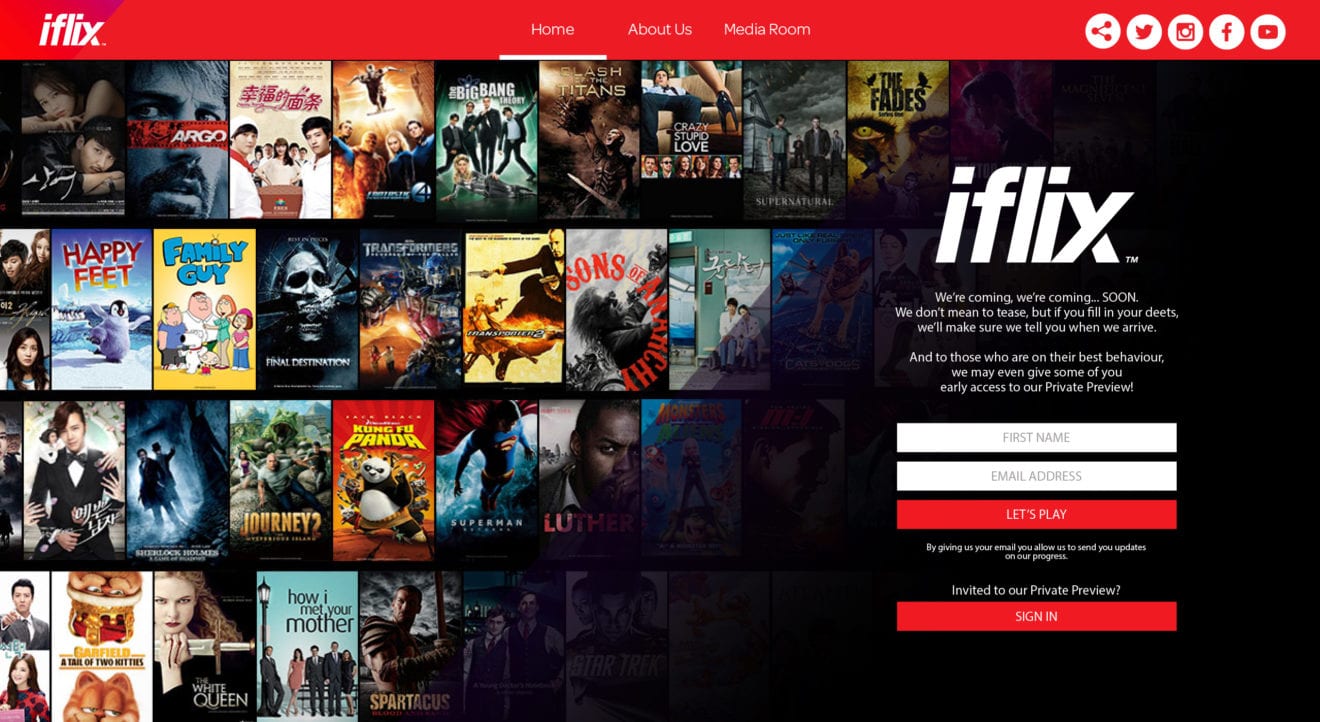
    iFlix CEO Mark Britt shows his company’s streaming TV series and video service on a gadget. The Malaysia-based company has just received a capital injection from Indonesia’s Emtek and Rupert Murdoch’s Sky plc., the owner of national TV stations SCTV and Indosiar, has spread its wings by investing in Malaysia’s streaming movies and TV series provider iFlix.

    Along with European investor Sky plc, owned by mogul Rupert Murdoch, Emtek through PT Surya Citra Media has become a new investor in iFlix. Sky said it has injected $45 million into the company.

    “The investment will support our continuing commitment to providing our members with the best in entertainment,” said iFlix CEO and co-founder Mark Britt in Kuala Lumpur on Thursday.

    Providing a service similar to Netflix’s, iFlix is available in Malaysia, Thailand and the Philippines. Indonesia is likely to be the company’s next market for expansion.

    In April 2015, iFlix got a $30 million injection from Malaysia’s Catcha Group and Philippine Long Distance Telephone Company (PLDT). PLDT is owned by Indonesian tycoon Anthony Salim and his family through Hong Kong-based First Pacific Finance.

    Sariaatmadja family, who owns Emtek, is known to have tight business relations with the Salim family. It can be seen from the share ownership-swap deal between Sariaatmaja’s London Sumatera Plantations (Lonsum) and Salim’s Indosiar Visual Mandiri (Indosiar TV).

    Salim bought Lonsum from Sariaatmadja in 2007 through plantation company PT Salim Ivomas Pratama In 2011, Sariaatmadja bought Indosiar through PT Surya Citra Media.

    It strengthened both families in their core business. Salim is prominent in the consumer goods business, mainly with Indofood, while Sariaatmadja is strong in the media business.

  • New Rule for Foreign Internet Data and Content Providers

    New Rule for Foreign Internet Data and Content Providers

    The rapid development of the digital world has encouraged internet data and content providers to expand their business to developing countries like Indonesia. The problem is that Indonesia is not prepared for this development. Although there are almost 100 million internet users in Indonesia, this business is not adequately regulated.

    Today, internet data and content providers can run their businesses in Indonesia without having to establish a legal business entity in the country. Telecom operators, meanwhile, have to invest significant amounts developing the network infrastructure used by these ‘over the top’ (OTT) companies.

    Minister of communications and informatics, Rudiantara, said that regulations are to be put in force to govern the presence of foreign OTTs in Indonesia. “They will have to be permanent legal entities in Indonesia,” said Rudiantara, Jakarta, Friday (11/3).

    The government believes that consumer protection, equality before the law in tax matters, and properly handling of customer complaints are three reasons that these companies need to have a presence in Indonesia.

    Under current rules, collecting taxes from foreign OTT companies, which are not registered in Indonesia, is difficult. Meanwhile, the telecom firms that provide internet services that are vital to the running of the OTT business in Indonesia, pay substantial amounts of tax to the government.

    Data from the Ministry of Communications and Informatics revealed that the value of digital advertising, a major source of revenue for OTT firms in Indonesia, was more than US$ 800 million a year ago. “Two major global firms account for seventy percent of digital ads,” he added.

    While Rudiantara admitted that setting up a permanent business entity in Indonesia is not easy, the government will make it easier by offering three options: setting up a business entity individually, entering into a joint venture with other companies, or partnering with a mobile operator in the country.

    The new rules, which are expected to be passed early next month, aim to benefit the Indonesian people as users of OTT services. “Indonesia is not just a market; the people of Indonesia should benefit from this, too,” said Rudiantara.

  • Inside SingTel Singapore

    Inside SingTel Singapore

    SingTel Singapore has repositioned itself as a ‘human services brand’ by putting the customer at the core of its retail store design rationale.

    The latest generation store rendition was created by Sydney­-based design agency Public Design Group. Co-­founder and director of retail strategy and business development, Jason Pollard, says the agency is focused on ensuring that SingTel’s store design strategy supports the market opportunity and the business opportunity – with particular focus on recognising the rapid technological change driving the telecommunications sector and business model.

    “It’s not about device sale, the plans or the data,” he explained. “That’s only one-­third of the total revenue that’s going to be made in the future; the other two­ thirds is called the Internet of Things or information and communications technology.”

    Singtel store 2

    Since launching the partnership with SingTel Singapore, Public Design Group has implemented the new design across four additional SingTel stores, with the telco embracing the concept of ‘brand experience’ as opposed to ‘branded space’.

    Pollard explains that taking lifestyle propositions and fully enabling them across a variety of devices with different services represents the fundamental design ethos of the store.

    The approach to designing the store represents a departure from that of other telecommunications retail stores, which often emulate the streamlined devices and technology.

    “We’re not celebrating devices anymore, we’re celebrating what they can do,” said Pollard.

    Singtel store 6

    Customer ­centric design

    The store’s entrance features a digital portal showpiece, identified by Public Design Group as a gateway into the new market of information and communications technology solutions. The portal’s purpose is to emphasise SingTel’s shift in brand focus from product to people. “SingTel as a brand no longer wants to be perceived as a technology organisation,” Pollard said.

    Singtel store

    “They want to be perceived as a service brand, which is mirrored in providing the very latest greatest lifestyle solutions for their customers.”

    Singaporean retailers have widely adopted an electronic queuing system, as part of dealing with high volumes of traffic. Public Design Group saw an opportunity for personalising the customer experience and collaborated with digital agency, Texture, in Singapore to develop a bar code system, which allows waiting customers to explore the store instead of standing in a queue.

    Singtel store 1

    The ‘Q ticket’ is imbued with a barcode that can be scanned on any of the hundreds of micro screens around the store. Each screen is associated with a product or accessory, providing detail and price. Once scanned, the detail is stored in a virtual shopping basket, which is viewed by the store assistant prior to them meeting the customer.

    “That barcode allows you build a virtual shopping basket of things that interest you, so that by the time you go to meet the service staff and do whatever you want to do, you can hand them your virtual shopping basket,” explained Pollard. “Immediately that opens conversations relevant to the customer and empowers the staff to be more relevant to their customer.”

    Singtel store 5

    A customer service lounge, featuring leather wing back chairs, is designed with the purpose of creating an environment that encourages more consultative conversations. Placing the service proposition in the front window of the store as opposed to the back of the store emphasises SingTel’s focus on providing a premium customer experience.

    “One of the key factors of having to deal with a Telco is addressing how well they are going to look after me when it all goes wrong, so that service lounge is a key part of winning market share and making a statement in the market place,” Pollard said. “At SingTel, we’re looking after our customers – even if they’re not buying, we’re solving problems.”

    Singtel store 3

    Pull over push

    As part of the new ‘pull’ sales strategy for SingTel, promotional material in the store is significantly reduced, with statistics showing high value transactions typically come from conversations rather than communications.

    Similarly, new social trends and customer behaviours were studied to showcase lifestyle themed propositions on gesture­ controlled displays.

    Gesture control for the large format screens within the store was employed to allow customers to scroll through the various ‘integrated technology’ stories in the same way as they would on a tablet.

    Singtel store 7

    “People don’t like touching big technology because it’s hot, expensive and it puts them in the spotlight,” argued Pollard.

    “SingTel has put the customer first,” said Pollard. “We have developed a customer centric store and that’s why it’s such a great experience.”

  • Telkom Nets Rp15.5tn Profit

    Telkom Nets Rp15.5tn Profit

    State-owned telecom operator company PT Telekomunikasi Indonesia (Persero) Tbk., booked a net profit of Rp15.5 trillion last year. The figure reflects a six-percent increase from 2014’s Rp14.4 trillion net profit.

    Telkom official says that the net profit climb was mainly supported by an increase in revenue.

    “Last year our revenue rose 14.2 percent to Rp102.4 trillion,” president director Alex J. Sinaga said in an official statement to the Indonesia Stock Exchange (IDX) yesterday.

    Despite the revenue increase, Telkom’s net profit achievement last year was held back by the 26 percent increase of operating, maintenance and telecommunications services costs. Interconnection charges also rose 21.6 percent.

    As a result, last year’s operating income only rose 10.9 percent to Rp32.4 trillion.

    Telkom is currently the only listed telecommunications operators Indonesia that still managed to book profits. Other operators have been noting losses or profit declines. PT XL Axiata Tbk (EXCL), for example, suffered a loss of Rp506 billion in the period of January-September 2015. Not unlike with PT Indosat Tbk (ISAT), who posted a loss of Rp733.8 billion in the first half of 2015.

  • Sanction for SMS Cartel

    Sanction for SMS Cartel

    The verdict delivered by the Supreme Court (MA) that punishes six cellular phone operators is a new hope for consumer protection efforts.

    For years, the Business Competition Supervisory Commission (KPPU) has been trying to bring shady businessmen to justice but it was always to no avail.

    The win is not only for KPPU, but also for consumers.

    The appeal panel of the Supreme Court on Monday last week imposed a fine of Rp77 billion to six cellular operators after it is proven that they were involved in the short message services (SMS) tariff cartel in the period of 2004 – 2007.

    The verdict also strengthened the ruling made by the KPPU in 2008, that was annulled by the Central Jakarta District Court.

    The sanction is actually very light.

    The Supreme Court should have imposed a more severe sanction, considering financial losses suffered by consumers are quite big.

    Based on the calculation done by the KPPU, financial losses suffered by consumers due to the SMS cartel reached Rp2.87 trillion.

    In addition, the fine is nothing compared with the profits gained by those cellular operators.

    The suspicion of conspiracy to determine the SMS tariff was apparent when the KPPU began investigation of this case.

    The indication of the violation of Law Number of 5 on 1999 on the ban of Monopoly Practices and Unhealthy Business Competition is seen from the SMS tariff that did not move from the figure of Rp250-350 since 2001.

    In fact, according to the calculation of the Regulation Board of PT Telekomunikasi Indonesia, tariff of sending text messages (SMS) should have been lower.

    Besides, since 1 January 2007, the calculation of the tariff is based on production costs.

    If we follow the pattern, there should be no reason to set the tariff high.

    From the calculation of the Regulation Board, production costs of sending a single SMS should be only Rp76 at most.The money is divided for the sending operator and the recipient operator.

    The evidence that the cartel did exist was getting stronger when the KPPU found a written agreement among them.

    This conspiracy must be stopped.

    Over the years, users of cellular phones had to pay higher tariffs of sending text messages, even higher compared with the tariffs in developed countries.

    For the record, users of cellular phones are not only bosses in skyscrapers, but also construction workers and meatball vendors.

    Consumer protection is indeed a rare item in this country.

    It is often much talked about and even regulated by laws but the practice is non-existent.

    Our consumers are virtually without power.

    The verdict delivered by the Supreme Court can serve as an ammunition for consumers to retrieve their rights stolen by cellular operators.

    The verdict can also be used as evidence to file a class action at the district court.

    The class action can also give deterrent effects for those shady businessmen.

    As an institution mandated to conduct supervision, the KPPU should be more active in unveiling nasty practices in the business world.

    If ‘economic diseases’ such as monopoly, cartels, and unhealthy business continue to get rampant, the economy will not be efficient and will be difficult to compete with other countries.

    Eventually, not only consumers in certain business sectors who will suffer, but the whole nation will also bear the brunt.

  • Indonesia could block internet services

    Indonesia could block internet services

    Indonesia is the latest country to question the tax arrangements of the world’s internet giants, issuing a threat to block their services if they fail to comply with local set-up requirements and pay tax.

    “All have to create a permanent establishment, like the contractors for the oil sector, so they can be taxed,” stated Bambang Brodjonegoro, the finance minister, although the Jakarta Globe reported that he did not name any particular businesses.

    According to Communications Ministry estimates, digital advertising was worth around $800m last year but was untaxed because of the loopholes in regulations.

    A spokesman for the Ministry said that imminent new regulations would address this issue and would apply to streaming and messaging providers as well as social media websites.

    Indonesia is one of the most social media-connected countries in the world. It is Facebook’s fourth-largest market target, while Jakarta is the most active city for Twitter – Jakartans account for 2.4% of all tweets worldwide.

    Accordingly, major brands are looking to tap into this high level of digital social engagement while local entrepreneurs have been able to use social networks as an inexpensive platform to build their brands and do business.

    But these activities could be at risk if the government carries out its threats: the Communications Ministry spokesman, Ismail Cawidu, indicated that those internet businesses that did not comply with the new regulations faced a reduction in bandwidth or, in extremis, being blocked completely.

    While some of the businesses potentially affected have already set up legal entities in Indonesia, others only have representative offices.

    And even those, such as Google, that do have a properly constituted business may not be immune from government scrutiny.

    “Google has an office in Indonesia, but digital age transactions do not go through that office,” Communication Minister Rudiantara told Metro TV. “That is what we’re looking to straighten out,” he added.

  • Indonesia to Block Line, WhatsApp, Other Unlicensed OTT Apps

    Indonesia to Block Line, WhatsApp, Other Unlicensed OTT Apps

    The Indonesian government plans to block over-the-top (OTT) applications that fail to meet the state regulation on permanent business entities.

    Rudiantara, Minister of Communication and Informatics, said his department is finalizing a bill related to the obligations of permanent business entities for OTT players operating in Indonesia. The bill is expected to be released in March 2016.

    The minister said the rule will stipulate a transition period for these OTT developers to meet the requirements.

    “The punishment is easy technically, they will be blocked by the cellular carrier,” he said on Wednesday, February 24.

    Rudiantara also said that he does not want these OTT developers to only open branches in Indonesia. Instead he wants them to become an incorporated business entity in the country,

    The OTT players, he said, can also opt to establish a joint venture or form a partnership with local cellular carriers.

    According to Rudiantara, this is the government’s way of protecting Indonesian consumers. The regulation, he said, can also pool in tax potentials that Indonesia are losing since the OTTs are not a legal entity working in Indonesia.

    As an example, he said that in 2015 the value of digital ad revenues from Indonesia stood at US$430 million. “If these ad revenues are imposed a 10-percent income tax, the state could get US$43 million,” he said.

    Some time ago, the Indonesian Telematics Society (Mastel) urged the government to block foreign OTTs that have been operating for quite a long time in Indonesia without contributing anything to the state; only making Indonesia a market to rake in profits.

    Mastel Institute chairman Nonot Harsono projects the growth of foreign OTTs in Indonesia will be more significant, as indicated by the rapid growth of the country’s internet and smartphone users.

    “Most of these OTT players are running their business in Indonesia without licenses; like LINE, Whatsapp, Kakao Talk, Netflix, and plenty of others. They should have filed for a license first if they wish to sell here,” he said.

    Of Indonesia’s 255.5 million citizens, 72.2 million are active internet users. Meanwhile, the number of smartphone users in the country has exceeded the population with 308 million.

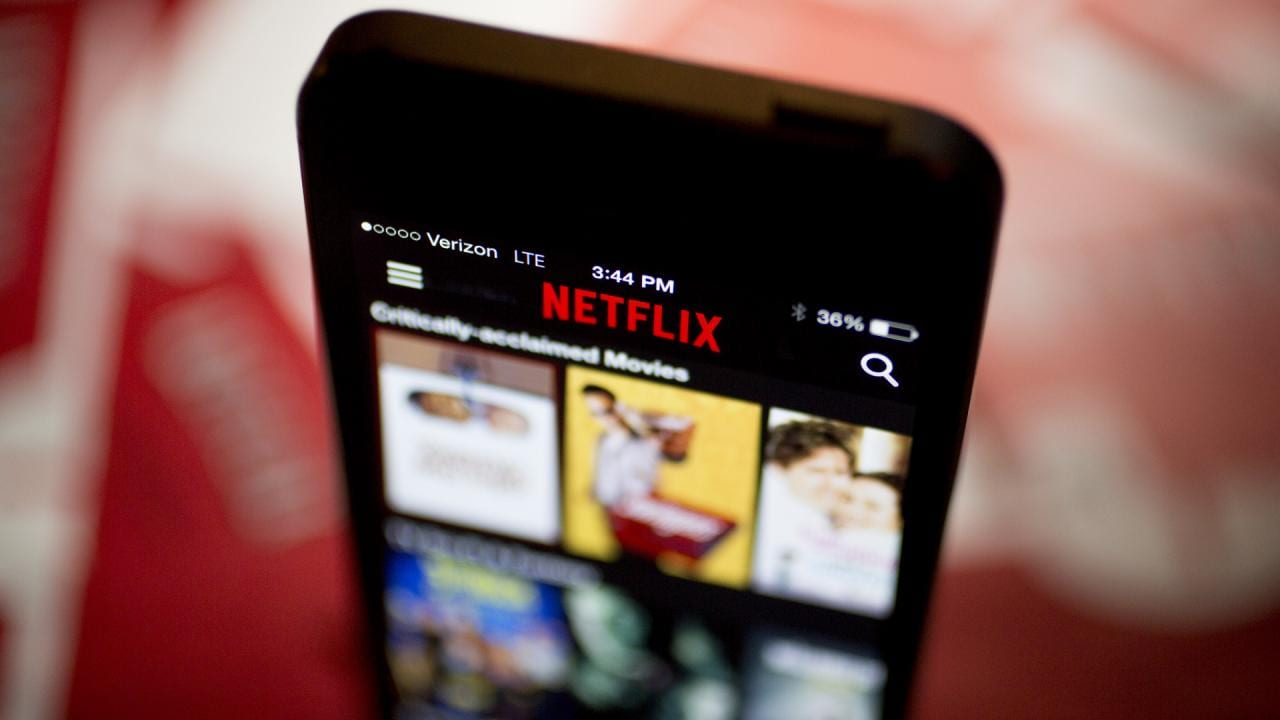
  • Telkom Indonesia Blocking Netflix For Pornographic Content

    Telkom Indonesia Blocking Netflix For Pornographic Content

    News of the service’s entry was quickly embraced by social media by Indonesia’s young and urban population who were familiar with the service due to pop culture references, as well as Netflix’s award-winning productions.

    Netflix has indicated that it is willing to adhere to Indonesia’s laws and regulations, but it believes that it doesn’t have to follow the same procedures as cable networks.

    Be that as it may, it’s hard to imagine that the decision wasn’t also influenced by a desire to protect the company’s own business interests. Uber argued that it does not own any vehicles, but eventually said it will set up a subsidiary to better comply with local regulations.

    Regardless, many worry that Telkom’s move suggests that a blanket ban on Netflix is imminent.

    Some Telkom competitors were capitalising on the ban Thursday, promoting their Netflix packages in a bid to lure Telkom customers angered by the move. The ministry now monitors websites and blocks content on a case-by-case basis.

    Arif Prabowo, Telkom’s vice president for corporate communications said in a statement that Netflix needed to adjust to Indonesia’s regulations-namely a 2009 film law. With technological advancement comes both increased access to tools such as virtual private networks, and the debate on censorship.

    On the other hand, Netflix is also posing a threat to Telkom’s pay TV business, which is jointly operated with an Indonesian conglomerate.

  • Premium SMS Scam in Thailand by Foreign Content Providers

    Premium SMS Scam in Thailand by Foreign Content Providers

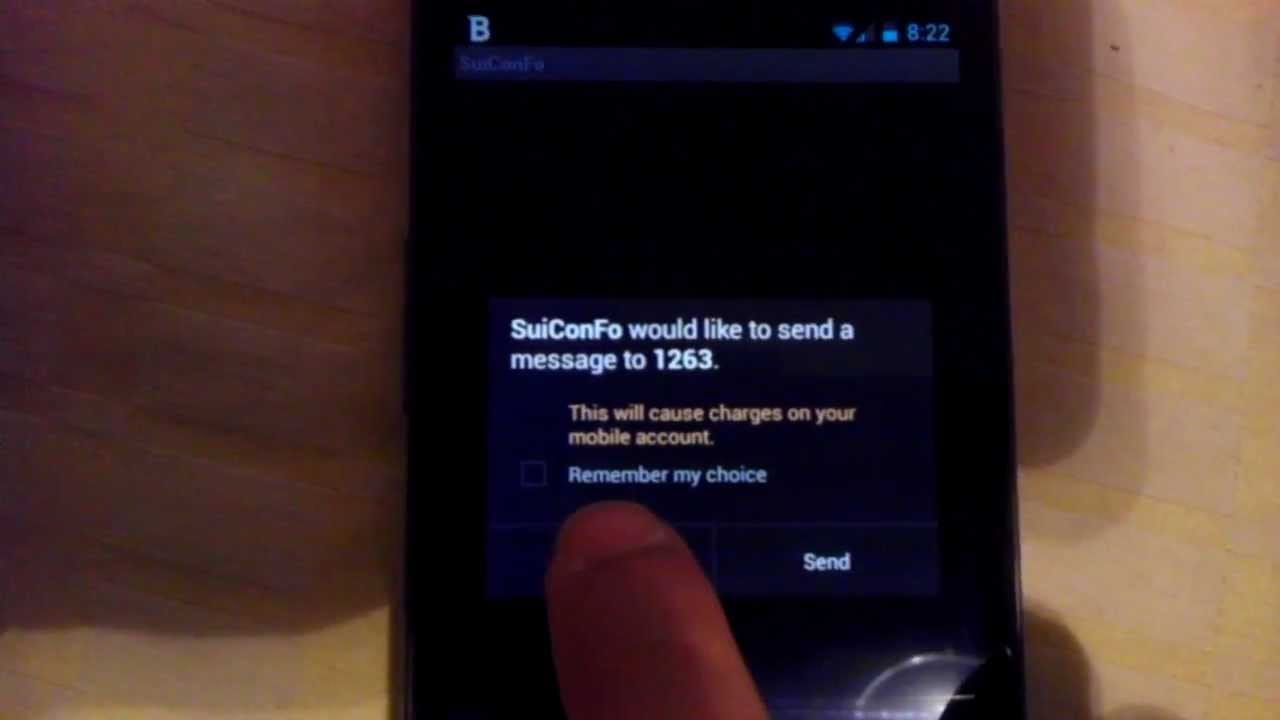
    Scammers create SMS competitions or trivia scams to trick you into paying extremely high call or text rates when replying to an unsolicited text message on your mobile or smart phone. Over the last few months mobile operators in Thailand managed to close some sms gateways from frauduleus foreign content providers like Mexcomm.

    A Malaysian company, with offices in Thailand who’s tricking mobile users offering free gifts and promises to win numerous prizes. All fake. True Move together with AIS and DTAC are doing everything they can and even created mobile scam teams to reveal the companies behind these marketing techniques. Shortcode 4741777 was used by one of them, to trick unwilling clients and let them pay high mobile fees. Mobile operators have shut down the companies shortcode and is on the look for other companies who’r running similar marketing campaigns.

    According to their website, Mexcomm has won several mobile content prizes. You can question this, as most of the events were sponsored direct or indirectly by the company over the last decade.

    How this scam works

    An unsolicited text message may invite you to enter a competition for a great prize—for example, a smart phone or tablet or gift vouchers for a well-known retailer. You will be required to send a text message back. You may also receive an email or encounter a pop-up window online asking you to enter your mobile number in order to claim a prize you’ve supposedly won. Sometimes these come in the guise of a ‘customer survey’ in which you are prompted to provide your mobile number.

    Alternatively the message may invite you to take part in a trivia contest with a great prize on offer if you answer a certain number of questions correctly. The first lot of questions will be very easy – scammers do this intentionally to encourage you to keep playing. However, the last one or two questions that you need to answer to claim your ‘prize’ could be very difficult or impossible to answer correctly and may even require you to guess a random number.

    The scammers make money by charging extremely high rates for the text messages you send, and any further messages they send to you. These charges will not be made clear to you, and could be as high as $4 for each message sent and/or received. You may also be automatically subscribed to ongoing charges. You will not discover these charges until you see your next itemised phone bill.

    Warning signs

    • You receive a text message, which may look like an advertisement, offering you the chance to win a great prize by sending a return text to enter a competition.
    • A text message tells you that you could win a great prize by participating in a trivia competition over SMS. The first message may even contain a very easy question to tempt you.
    • The text message (or advertisement) does not contain all the terms and conditions, or an ‘opt out’ to stop receiving more messages.

    Protect yourself

    • Do not respond to text messages or missed calls that come from numbers you don’t recognise.
    • Look out for SMS and MMS numbers that start with 19 or phone numbers beginning with 190. These are charged at a premium rate, even sometimes for receiving a message, and can be very expensive.
    • Contact your mobile phone service provider to ask about the number—they will know if it comes from a premium rate service. Ask your telephone company to put a bar on premium rate services (190 numbers) to and from your phone.
    • If you did not want to participate and you receive more messages, contact your mobile phone service provider and explain that the charges are being made without your permission.
    • Do not provide your mobile number to websites or in response to unsolicited emails claiming you can win a prize without very carefully checking the terms and conditions. If there are no terms and conditions or they seem to be hidden from plain view, don’t risk it.
    • Read all terms and conditions of any offer very carefully. Claims of ‘free’ or ‘very cheap’ offers often have hidden costs. Before you sign up to a subscription service check that there is an option to ‘unsubscribe’.

    Retail News will hold a close watch and will monitor this more the next few weeks and months.