Category: Telecom

Retail News Asia is committed to providing both local and global retailers with the latest Telecom & Telco news throughout the Asian market. This on a daily base.

  • New Zealand cellcos to blacklist Note7’s next week

    New Zealand cellcos to blacklist Note7’s next week

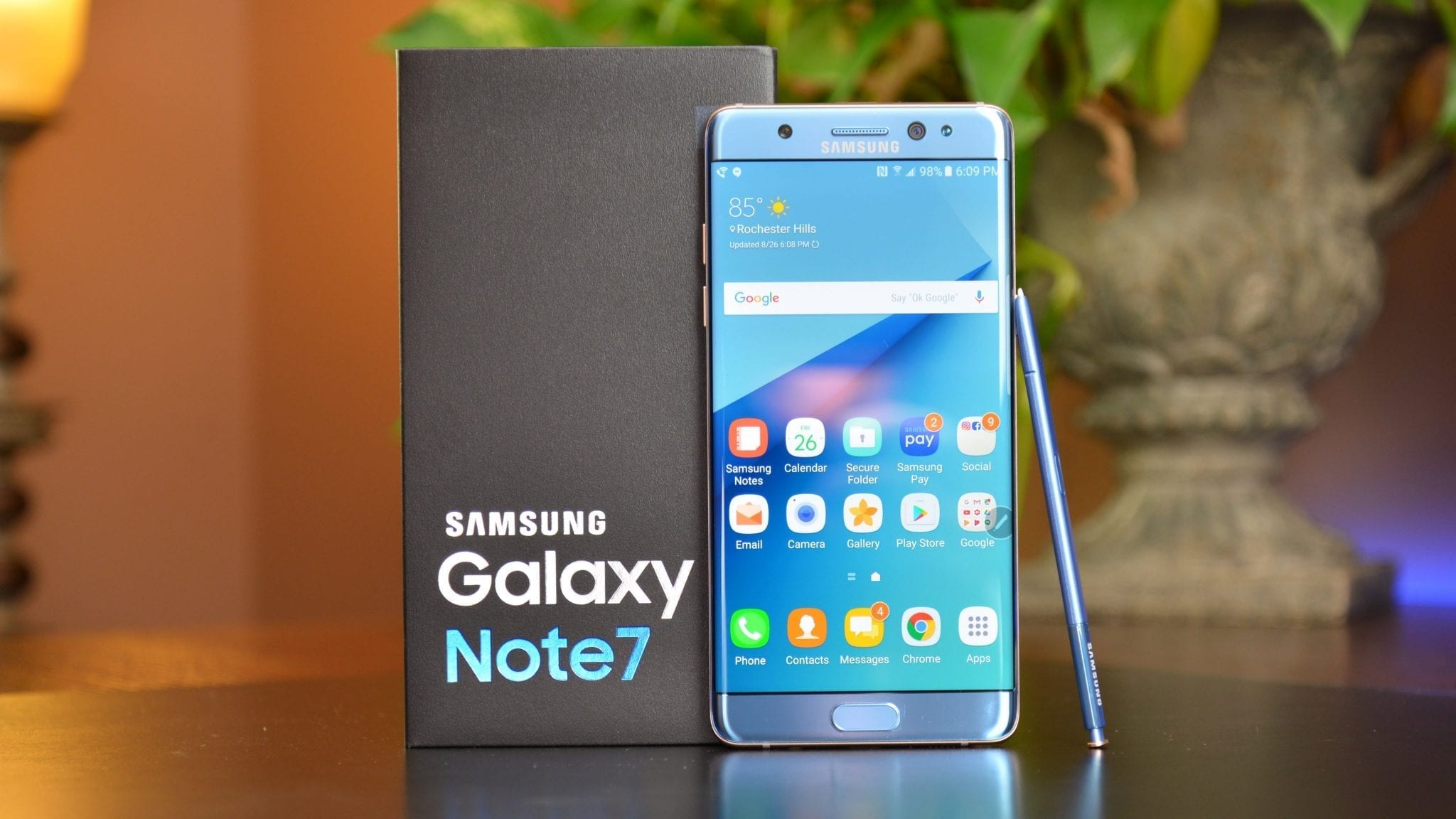
    New Zealand’s mobile operators have hammered a nail into the coffin of Samsung’s discontinued Galaxy Note7 smartphones, arranging to blacklist use of the device across all of their mobile networks.

    Industry body the New Zealand Telecommunications Forum (TCF) is working with Samsung to cut off access to Note7 owners from November 18.

    After this date, the devices will not be able to be used across any New Zealand mobile network, although Wi-Fi services will still be available.

    TCF CEO Geoff Thorn said the blacklisting represents an additional safety measure by the nation’s mobile operators.

    “Numerous attempts by all providers have been made to contact owners and ask them to bring the phones in for replacement or refund, this action should further aid the return of the remaining handsets,” he said.

    The blacklisting marks and attempt by operators to coerce the hold-outs to take advantage of the global recall of the device and be refunded or swap their handsets with a Galaxy S7 or S7 Edge.

    Samsung permanently ended production of Note7 smartphones last month after reports that even some devices that had been replaced in the September recallhad suffered from the same overheating battery problem that led to a handful of devices exploding. Airlines worldwide had already banned in-flight use of the devices.

  • VinaPhone launches Vietnam’s first 4G services

    VinaPhone launches Vietnam’s first 4G services

    Vietnam’s VinaPhone has become the market’s first operator to launch 4G services, commencing with a deployment providing full coverage of Phu Quoc Island.

    The VNPT mobile subsidiary has deployed 100 4G base stations to provide total coverage of the island.

    The operator plans to rapidly deploy 4G services in 2017, installing 21,000 base stations nationwide.

    Pricing will be set at the same or in some cases lower rates than 3G services. The company will use the network for services including mobile TV and cloud video conferencing.

    VinaPhone began commercial 4G trials in January, and was awarded a commercial license in the 1800-MHz band last month, along with MobiFone and Viettel.

    Viettel has separately revealed plans to launch its own 4G services in the first quarter of next year. The operator is ready to deploy services nationwide following extensive testing in the province of Vung Tau.

    According to the report, Viettel plans to differentiate by focusing on nationwide expansion, in contrast to deploying in major cities first. The company took a similar approach during it 2G rollout around a decade earlier.

  • Unicom trials ADVA’s G.metro technology

    Unicom trials ADVA’s G.metro technology

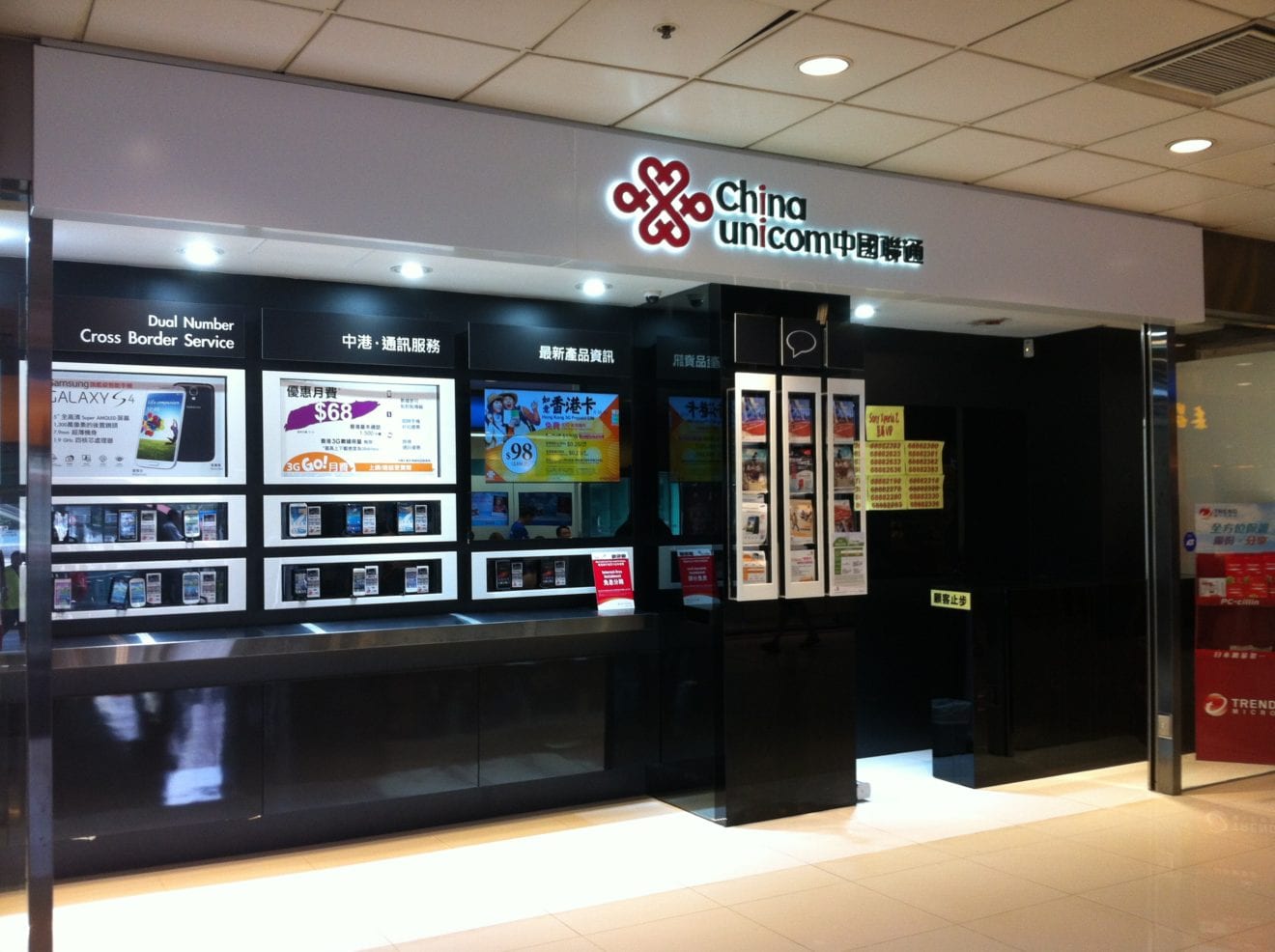
    China Unicom has completed a field trial of ADVA Optical Networking’s prototype G.metro (WDM-PON) technology in a fronthaul network.

    The operator demonstrated the use of a prototype technology involving using a single bidirectional fiber link between head-end and tail-end equipment during a lab demonstration in Beijing.

    The prototype uses autonomous transponders to help reduce the costs and complexity involved in metro access network applications.

    “Due to booming demand for mobile data, it’s become essential that we find innovative ways to increase capacity. Converged metro-access networks are key to this, but so are reducing complexity and improving operational efficiency,” China Unicom network technology research institute director Guangquan Wang commented.

    “During the trial, the prototype was installed in one of our central offices in Tianjin to replace the transmission link of one of our working LTE stations. The results showed that the new technology integrated seamlessly with our current wireless equipment and had no impact on services whatsoever.”

    G.metro directly distributes DWDM wavelengths to remote radio units, base stations, desktops or end users, enabling up to 40 DWDM wavelength channels with a 100GHz grid. Each channel is able to transmit data at 10Gbps over a 20km fiber distance without optical amplification.

  • VMware, AWS to launch joint hybrid cloud service

    VMware, AWS to launch joint hybrid cloud service

    VMware and AWS have teamed up to provide an integrated hybrid offering that promises to give customers the full software-defined data center (SDDC) experience.

    VMware Cloud on AWS will enable customers to run applications across VMware vSphere-based private, public, and hybrid cloud environments.

    To be available in mid-2017, the service will be delivered, sold, and supported by VMware as an on-demand, elastically scalable service. VMware Cloud on AWS will allow VMware customers to use their existing VMware software and tools to leverage AWS’s global footprint and breadth of services, including storage, databases, analytics and more.

    VMware Cloud on AWS is powered by VMware Cloud Foundation, a unified SDDC platform that integrates VMware vSphere, VMware Virtual SAN and NSX virtualization technologies, and will provide access to the full range of AWS services.

    This new service will run on next-generation, elastic, bare metal AWS infrastructure.

    Pat Gelsinger, CEO of VMware, said the new service will make it easier for customers to preserve their investment in existing applications and processes while taking advantage of the global footprint, advanced capabilities, and scale of the AWS public cloud.

    “Our customers continue to ask us to make it easier for them to run their existing datacenter investments alongside AWS,” said Andy Jassy, CEO of AWS.

    “Most enterprises are already virtualized using VMware, and now with VMware Cloud on AWS, for the first time, it will be easy for customers to operate a consistent and seamless hybrid IT environment using their existing VMware tools on AWS, and without having to purchase custom hardware, rewrite their applications, or modify their operating model.”

  • Singapore’s MyRepublic launches in Australia

    Singapore’s MyRepublic launches in Australia

    Singapore-based ISP MyRepublic will launch in the Australian market later this month over the national broadband network (NBN), as part of the company’s ongoing regional expansion.

    MyRepublic will launch an unlimited data service at the fastest NBN speeds available in that area at the single price of A$59.99 ($46.10) per month.

    Unlimited data plans are still relatively rare in the Australian market due to a lack of competitive fixed-line infrastructure, even as the NBN wholesale network is progressively deployed.

    MyRepublic Australia managing director Nicolas Demos said the company plans to differentiate by offering the best speeds possible with unlimited allocations.

    “It is time to educate Australians on the value of quicker speeds without the restrictions of data caps,” he said.

    “Australia has the 48th fastest average internet connection speed in the world. Over 80% of Australian customers on the NBN are currently running on speeds similar to ADSL technology. We will deliver customers the best speed they can get – at their location – with our unlimited plan offer with local support at a fair price.”

    MyRepublic was founded in 2011 and was the first company is Singapore to offer 1Gbps broadand services for under S$50 ($36) per month. The company has been pursuing regional expansion, and has so far also launched services in New Zealand and Indonesia. At home, the company is vying to become Singapore’s fourth mobile operator.

  • M1 equips first building with fiber under FRS

    M1 equips first building with fiber under FRS

    Singapore’s M1 has been selected as the Fibre Ready Scheme (FRS) partner for property developer Ascendas-Singbridge, and has completed the first commercial fiber upgrade installation under the deal.

    The companies have equipped seven-storey integrated business park Ascent with fiber, making the Singapore Science Park facility the first FRS-enabled building.

    M1 and Ascendas-Singbridge plan to install and enhance fiber infrastructure at 70 commercial deals by 2018 as part of the alliance.

    “M1 was the first to launch commercial fiber broadband service in 2010, and we are pleased to build on that effort to partner Ascendas-Singbridge to install and upgrade the fiber infrastructure across its commercial buildings island-wide,” M1 chief corporate solutions and sales officer Willis Sim said.

    “This will enable even more corporates to rapidly enjoy M1’s innovative, competitively priced, and highly effective business connectivity service and corporate solutions such as cyber security and unified communications.”

    The FRS is an initiative of the Infocomm Media Development Authority (IMDA) as part of an S$200 million fund to help owners of commercial buildings enhance the location’s telecoms infrastructure. It involves offering a one-time subsidy to defray the costs of an upgrade.

    “With the addition of Ascendas-Singbridge’s 70 buildings, close to 200 buildings have applied for FRS to date,” IMDA assistant CEO Khoong Hock Yun said.

    “We strongly encourage more commercial building developers and owners to leverage on the FRS to enhance and future-proof its buildings’ fiber infrastructure before the program and funding ends in March 2018.”

    strongly encourage more commercial building developers and owners to leverage on the FRS to enhance and future-proof its buildings’ fibre infrastructure before the programme and funding ends in March 2018,”

  • Ciena aims to usher in age of self-driving network

    Ciena aims to usher in age of self-driving network

    Ciena has unveiled WaveLogic Ai, a programmable coherent modem that aims to serve as a  foundational enabling technology for a self-driving network.

    WaveLogic Ai sets new performance benchmarks designed to improve transport network economics and flexibility across a broad set of network applications.

    In metro and DCI applications, it drives 400G single carrier transmission with power and density metrics. In regional and long-haul networks, WaveLogic Ai establishes 200G and 300G as the new reference line rates for backbone transmission, doubling capacity and dramatically lowering cost per bit. In submarine networks, it provides maximum capacity with ultimate reach at distances up to 14,000 kilometers.

    WaveLogic Ai offers enhanced intelligence for new levels of visibility into the network that enables autonomous decisions to further improve network performance.

    Through open interfaces, it monitors and gathers critical networking data, including embedded real-time link measurements, to make intelligent capacity decisions in real time. For instance, WaveLogic Ai helps determine the optimal capacity for any path across the network and can tune to different capacity levels from 100G to 400G in 50G increments.

    WaveLogic Ai uses an advanced 400G-optimized technology engine with a higher baud rate to drive twice the capacity per channel, three times the distance at the equivalent capacity, and four times the service density at less than half the power. This scalability supports 400GE and flexible client services to best match service throughput to flexible line capacity.

    WaveLogic Ai is designed to calculate and then make available massive amounts of optical networking performance data through open interfaces that can be mined to build on-demand, programmable networks.

    To better match capacity to system margin, WaveLogic Ai provides unprecedented tweakability via open software interfaces that help drive automated and intelligent decisions to reduce operational expense and avoid manual errors.

    WaveLogic Ai provides access to real-time link monitoring information, thereby giving operators new levels of network visibility and the ability to accurately engineer the network for optimal capacity and maximum efficiency.

    The company says WaveLogic Ai will be available in the second quarter of 2017.

  • Myanmar’s hyper growth era has ended according to Telenor

    Myanmar’s hyper growth era has ended according to Telenor

    Telenor Myanmar will shift focus towards data services as the era of rapid initial subscriber growth comes to a close.

    Telenor Myanamar CEO Lars Erik Tellmann told that the competitive environment is rapidly changing, with operators targeting internet service use.

    Since launching services in September 2014, Telenor Myanmar’s subscriber base has rapidly increased to 18 million, making the operator the second largest industry player. Myanmar’s telecoms market has been experiencing unprecedented growth after the sector was liberalized in 2011.

    But Tellmann said this growth has slowed significantly now that anybody who wants to own a SIM has now purchased one, so the fight is turning to existing customers. “Super hyper growth has flattened,” Tellman told.

    As of the third quarter, around 40% of Telenor Myanmar’s revenue was generated from data services. In a market with very low fixed line penetration and few PCs, smartphones are the primary way Myanmar consumers are accessing the internet, he said.

    Social media is helping drive increased data consumption, with Facebook, WhatsApp and Viber proving particularly popular in the market.

  • StarHub, Nokia achieve 4.3Gbps speeds over cmWave

    StarHub, Nokia achieve 4.3Gbps speeds over cmWave

    Nokia and Singapore’s StarHub have jointly demonstrated speeds of 4.3Gbps and 1ms latency using 5G centimeter wave (cmWave) frequencies.

    The company’s have been trialing Nokia’s AirScale integrated radio access network platform over StarHub’s live mobile network.

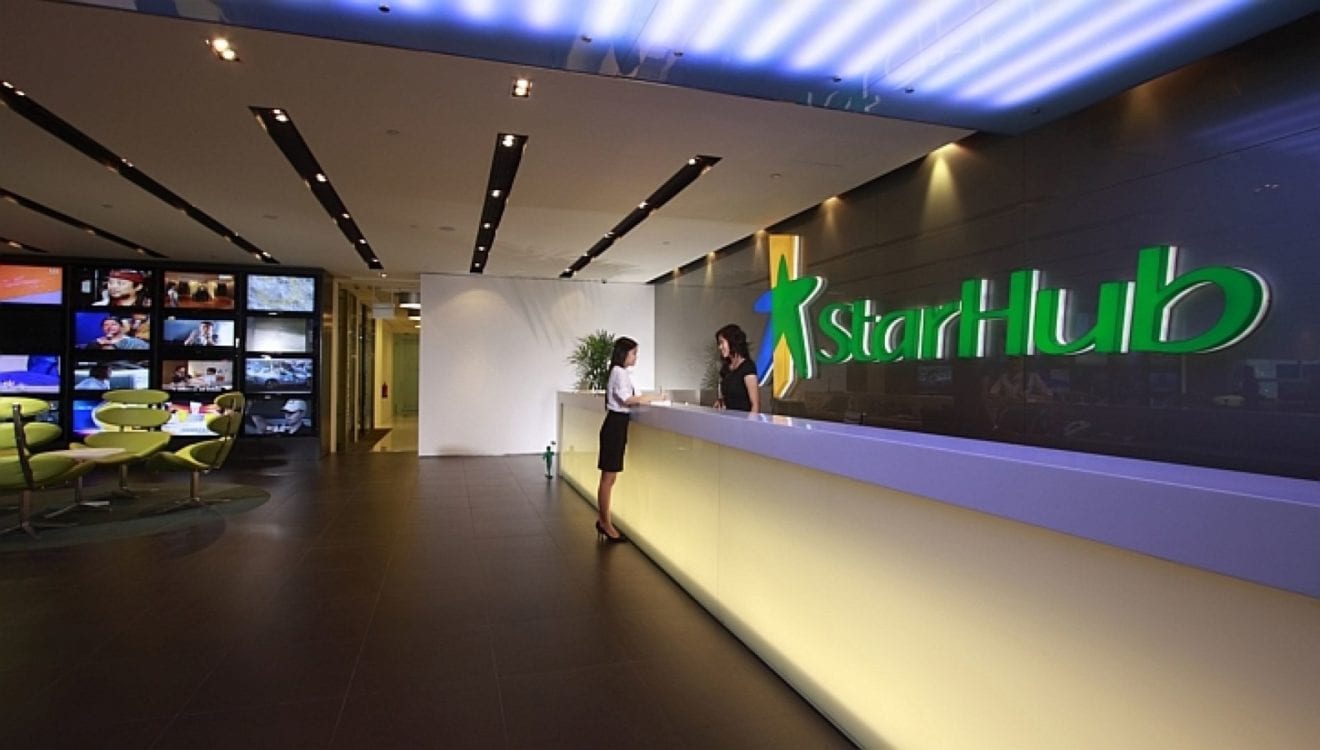
    The 5G demonstration was conducted at StarHub’s headquarters as part of the operator’s ongoing trials into future technologies to facilitate emerging use cases such as virtual and augmented reality streaming and e-health applications.

    Centimeter wave refers to carrier frequencies between 3-GHz and 30-GHz, which compares to millimeter wave frequencies above 30-GHz. These higher-band frequencies are expected to form a key component of future 5G networks.

    “5G, while still a distance away, will become reality in the time to come. Through our ongoing trials of new technologies such as Nokia’s integrated AirScale solution, we are exploring how we can use 5G technologies to enrich the lives of our customers,” StarHub head of network engineering Chong Siew Loong said.

    AirScale is designed to allow the simultaneous operation of multiple generations of network technologies, such as 3G, 4G and 5G. The platform promises 60% lower energy consumption and a smaller physical footprint compared to previous generation radio access technologies.

  • SpeedCast buys Harris CapRock for $425m

    SpeedCast buys Harris CapRock for $425m

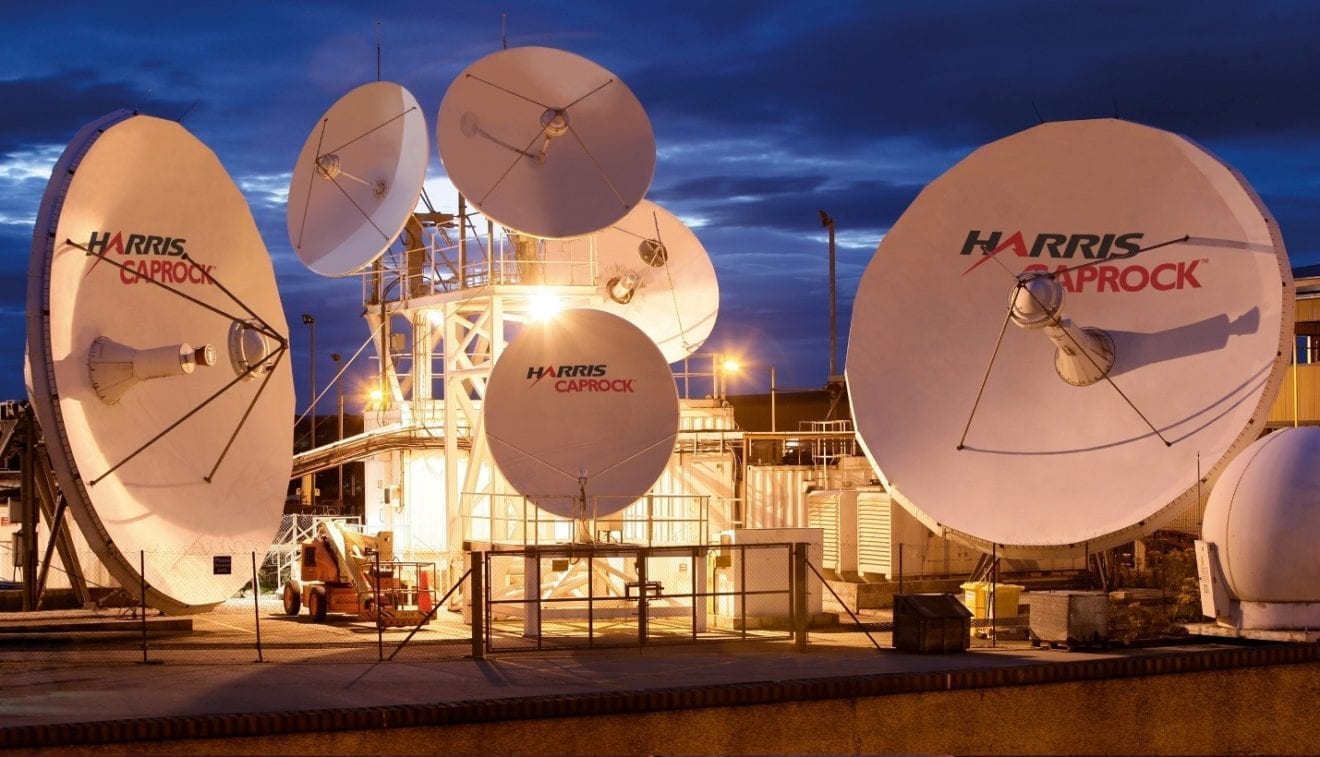
    Satellite services provider SpeedCast has arranged to acquire Harris CapRock for $425 million, to strengthen its presence in the maritime industry.

    CapRock also has a large presence in the energy industry, giving SpeedCast an avenue for future expansion.

    The combined company will service over 6,200 maritime vessels, hundreds of offshore edge and platforms, as well as enterprise and government customers worldwide.

    “The acquisition of Harris CapRock is a transformational opportunity for SpeedCast. With this acquisition SpeedCast becomes the global leader in the industry, with a scale that enables us to deliver world-class services and support in over 100 countries,” Speedcast CEO Pieere-Jean Beylier said.

    “Harris CapRock’s industry-leading product and technology portfolio also gives us the ability to deliver innovative new offerings to customers across the maritime, energy, enterprise, telecom and government segments.”

    He said the acquisition will also help SpeedCast expand its presence in the cruise ship segment of the maritime market, building on the company’s acquisition of Europe-based WINS Limited from Eutelsat Communications and Maltasat for €60 million ($66.3 million) earlier this year.

    The deal requires anti-trust and regulatory approval, and is expected to be complete by the end of the first quarter next year.

  • India’s Trai sets 512kbps broadband speed minimum

    India’s Trai sets 512kbps broadband speed minimum

    The Telecommunications Regulatory Authority of India (Trai) has instructed the market’s fixed line operators to guarantee a minimum download speed of 512kbps at all times.

    In a new directive, Trai set the minimum required speed to be considered broadband at 512kbs and ordered the nation’s operators not to reduce their speeds below this even when throttling customers for excess data use.

    ISPs as well as mobile broadband subscribers have also been told to provide information on data usage limits, connection speeds and capped speeds in any advertisements published in any media covering broadband plans.

    New and existing subscribers must also be informed of this information over email or SMS.

    Finally, operators will need to provide alerts to customers via these channels when their data usage reaches 50%, 90% and 100% of their allocation, and to maintain a portal or website to allow users to access their usage at any time.

    Operators including Bharti Airtel, Reliance Communications and Sistema Shyam Teleservices had urged the regulator to allow throttling to speeds of just 64kbps to prevent misuse of fixed broadband services. With the directive this request has now been rebuffed.

    But on the other hand, the government had previously considered setting 2Mbps rather than 512kbps as the minimum speed.

  • Smartfren launches carrier billing with Fortumo

    Smartfren launches carrier billing with Fortumo

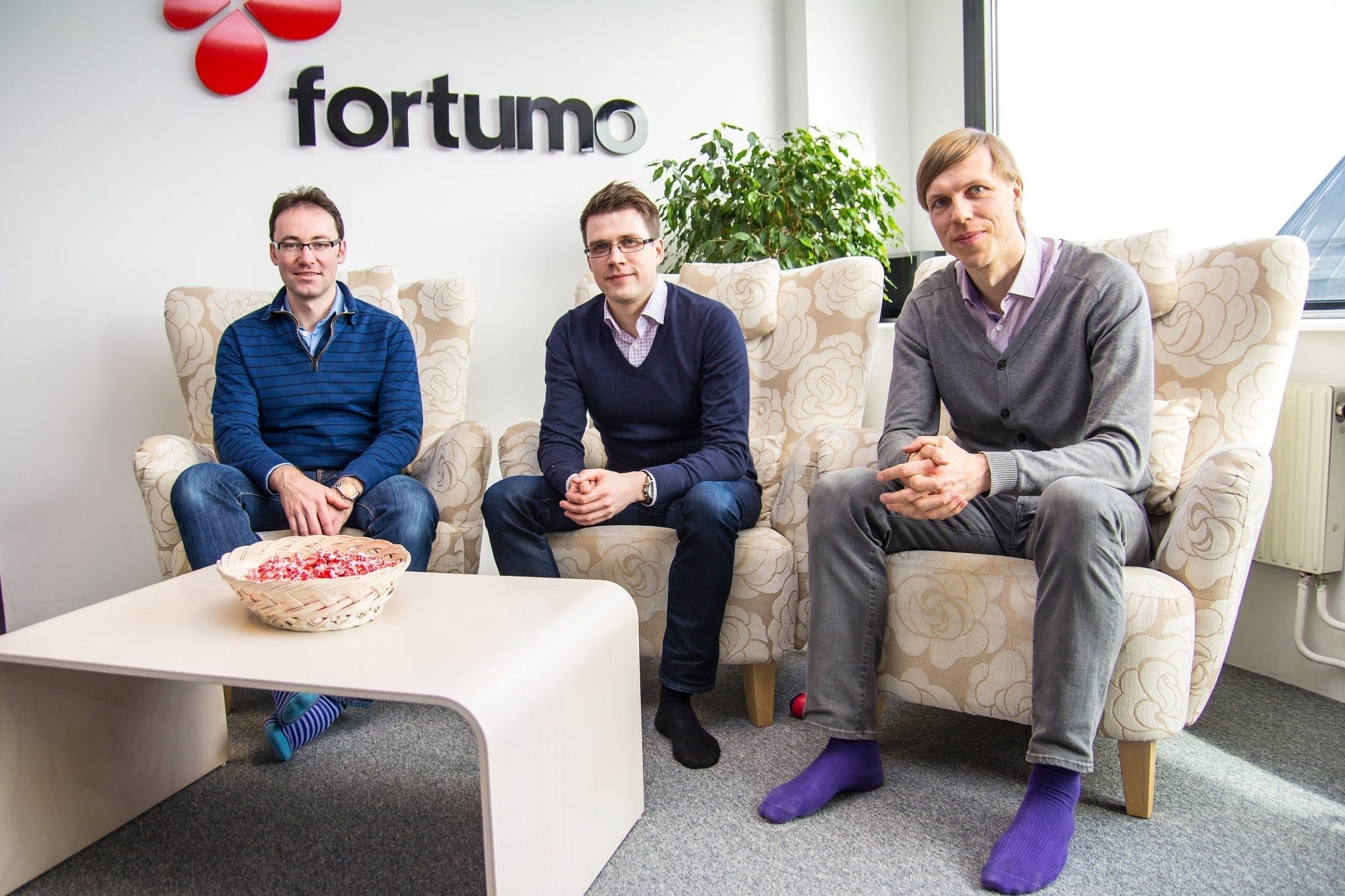
    Indonesia’s Smartfren has launched direct carrier billing for the operator’s 12.5 million subscribers, in collaboration with mobile payments company Fortumo.

    The partnership will allow Smartfren to support carrier billing from Google Play and the Windows Phone Store, as well as select digital media and gaming companies.

    The World Bank estimates that only around 5 million of Indonesia’s 250 million citizens have a credit card, limiting most customers’ access to online content. By contrast over 65 million Indonesians own a smartphone.

    “With direct carrier billing supported by Fortumo, our subscriber will be able to purchase their in-app items and premium memberships as easy as deducting their own Smartfren balance or bill, and this is fully supported by our widest 4G LTE network for the best experience to enjoy the services,” Smartfren SVP of digital services Revie Sylvaina said.

    In August, Smartfren rival Indosat Ooredoo made a similar deal to bring Fortumo’s direct carrier billing services to its own mobile customer base. Fortumo has also recently announced partnerships with Tri in Indonesia and Globe Telecom in the Philippines.

  • Globe Telecom expands Cartoon Network app in Philippines

    Globe Telecom expands Cartoon Network app in Philippines

    Globe Telecom in the Philippines is providing a major enhancement to its Cartoon Network Watch and Play app, allowing customers to livestream Cartoon Network and on-demand content via a new authenticated service.

    Globe customers will soon be able to log in to the free app using their username and password to unlock an array of value-added services, which includes livestreaming the channel on devices, games and access to full episodes on demand.

    In addition, Cartoon Network Anything – a micro-network that presents short-form content – is now offered as part of the Globe app bundle.

    “This partnership creates a truly unique and enjoyable second-screen brand experience for kids to enjoy and for parents to trust,” said Phil Nelson, Turner’s managing director in Southeast Asia.

    Both apps let kids enjoy their favorite characters and shows whenever. Fueling their imagination, they allow them to be a hero with Ben 10 and the Omnitrix, rule the Candy Kingdom with Princess Bubblegum, flip out with The Powerpuff Girls, or embark on mathematical adventures with Finn and Jake whenever they want.

    “Together with Turner, we are able to give our customers a more wonderful digital entertainment experience on mobile,” said Dan Horan, Globe senior advisor for consumer business.

    Dedicated data usage for the apps will be offset via a data wallet system, available via users’ subscription plans, meaning they won’t have to worry about eating into their monthly allowance.

  • Oculeus introduces real-time fraud traffic blocking

    Oculeus introduces real-time fraud traffic blocking

    OSS/BSS vendor Oculeus has introduced real-time traffic fraud blocking capabilities to its Oculeus Anti-Fraud offering.

    The new capabilities are designed to eliminate or significantly reduce revenue losses caused by fraudulent traffic by conducting the fraud evaluation and blocking in real-time before the start of a call.

    The new functionality, introduced in the new version 5.0 of Oculeus Anti-Fraud, uses a SIP redirect server and pre-call fraud detection engine to monitor and evaluate pre-call attempts.

    “Combating fraud and finding a solution to stop the severe revenue losses that fraud is causing are high on the agendas of executives and account managers of most providers of voice-based communications services in all regions around the world,” Oculeus CEO Amd Baranowski said.

    “The new Live Traffic Fraud Blocking capabilities will uniquely help services providers prevent more fraud than ever, even before revenue losses occur.”

    Baranowski said demand for Oculeus’ anti-fraud solution is high in Asia, and that as well as traditional operators, the company is experiencing demand from OTT players.

    “As many OTT players expand their services and functionality, their exposure to fraud also grows,” he said.

    “For instance, when the incoming and outgoing calls from an OTT service interact with the telephony network, the OTT is exposed to fraudulent activity, especially to expensive call durations and destinations.

  • ZTE launches Big Video 4K+ solution

    ZTE launches Big Video 4K+ solution

    ZTE has launched its Big Video 4K+ solution for the European market, which includes ZTE’s latest smart terminals and Big Video-based smart home service.

    ZTE’s Big Video 4K+ solution consists of four sub-solutions, namely fixed-mobile convergence, intelligent operation, intelligent maintenance and 4K smart terminal.

    “The market consolidation is accelerating and it is important for operators to quickly integrate their fixed network and mobile networks to offer Big Video services that can address this increasing customer need,” said Cui Liangjun, VP of ZTE.

    “ZTE’s 4K+ solution provides fixed-mobile convergence to support the convergence of fixed and mobile service platforms, content delivery networks (CDN) and multi-screen terminals.”

    The solution is designed to meet diversified customer requirements and bring users an ultimate video experience with key features including unified platform, cloudized deployment, intelligent operation and maintenance (O&M), multi-screen access and ultra-high definition.

    The ZTE Big Video 4K+ solution provides intelligent operation and intelligent maintenance based on a big data platform. With powerful data mining and analysis, management, and scalability, the solution offers customers a visualized online maintenance management (OMM) portal and end-to-end intelligent fault location to improve terminal users’ video experience.

    Meanwhile, the intelligent operation platform supports precision marketing, targeted advertising, personalized EPG, as well as providing data support for innovative digital services required by industries such as medical care, education and travel. The solution’s big data based multi-dimension user analysis and modelling capability provides reference for users when making operation-related decisions.